Past/Lives Flashback #5: The Hartee’s Saga, Part V: Hartee’s Revenge – Manly Vale, NSW
Original articles: The Hartee’s Saga Parts I, II, III and IV
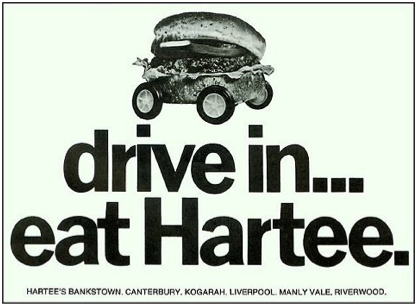
Sometimes it’s hard to keep a good burger down. For those who haven’t followed the long, sad story of the Hartee’s hamburger franchise, here’s a quick recap.

Hartee’s Earlwood
With the advent of American fast food franchises in Australia in the late 60s and early 70s, Kelloggs teamed with the US-based Hardees burger chain to start Hartee’s, the first Australian fast food restaurant (despite its very red white and blue beginnings).
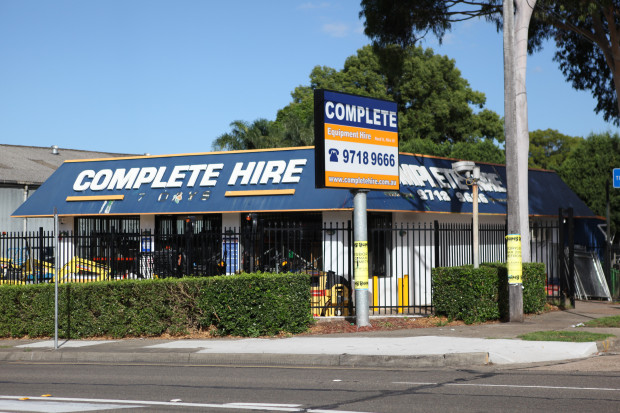
Hartee’s Canterbury.
It was a near-instant success. Whether it was down to underlying xenophobia towards overseas brand names, smart management or just plain delicious burgers, by 1973 Hartee’s was king of the fast food hill in Australia.

Hartee’s Punchbowl.
Complacency became the daily special from then on, with a series of extravagant HQ upgrades and new outlets sprouting like weeds all over Sydney. Despite this, the chain was beginning to haemorrhage cash at a pretty severe rate, and McDonald’s was aggressively making major headway into the Australian scene. Something had to give.
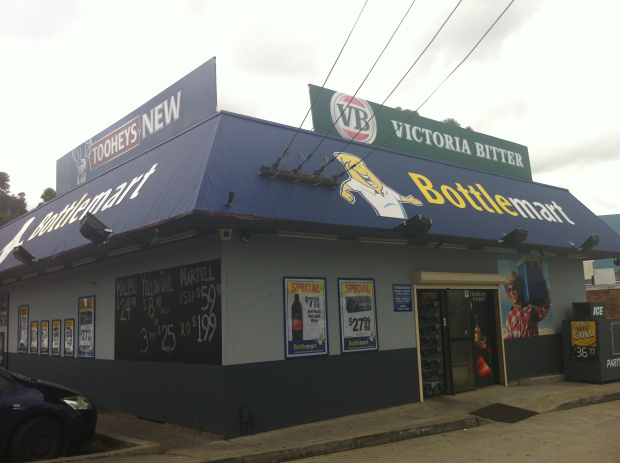
Hartee’s Bankstown. Not pictured: the Pal delivery truck.
And give it did, here at the Bankstown Hartee’s in 1975, when a current affairs program, acting on a tip-off, exposed the outlet as having served dog food in burgers. Overnight, Hartee’s packed up and disappeared, leaving only husks behind, and that’s where the story seems to end.
Except thanks to reader Phil, there’s a final piece of the puzzle to be put in place. I’d previously written that only the four former Hartee’s above still existed in any form around Sydney… Well, we all make mistakes. Just ask Bankstown Hartee’s.
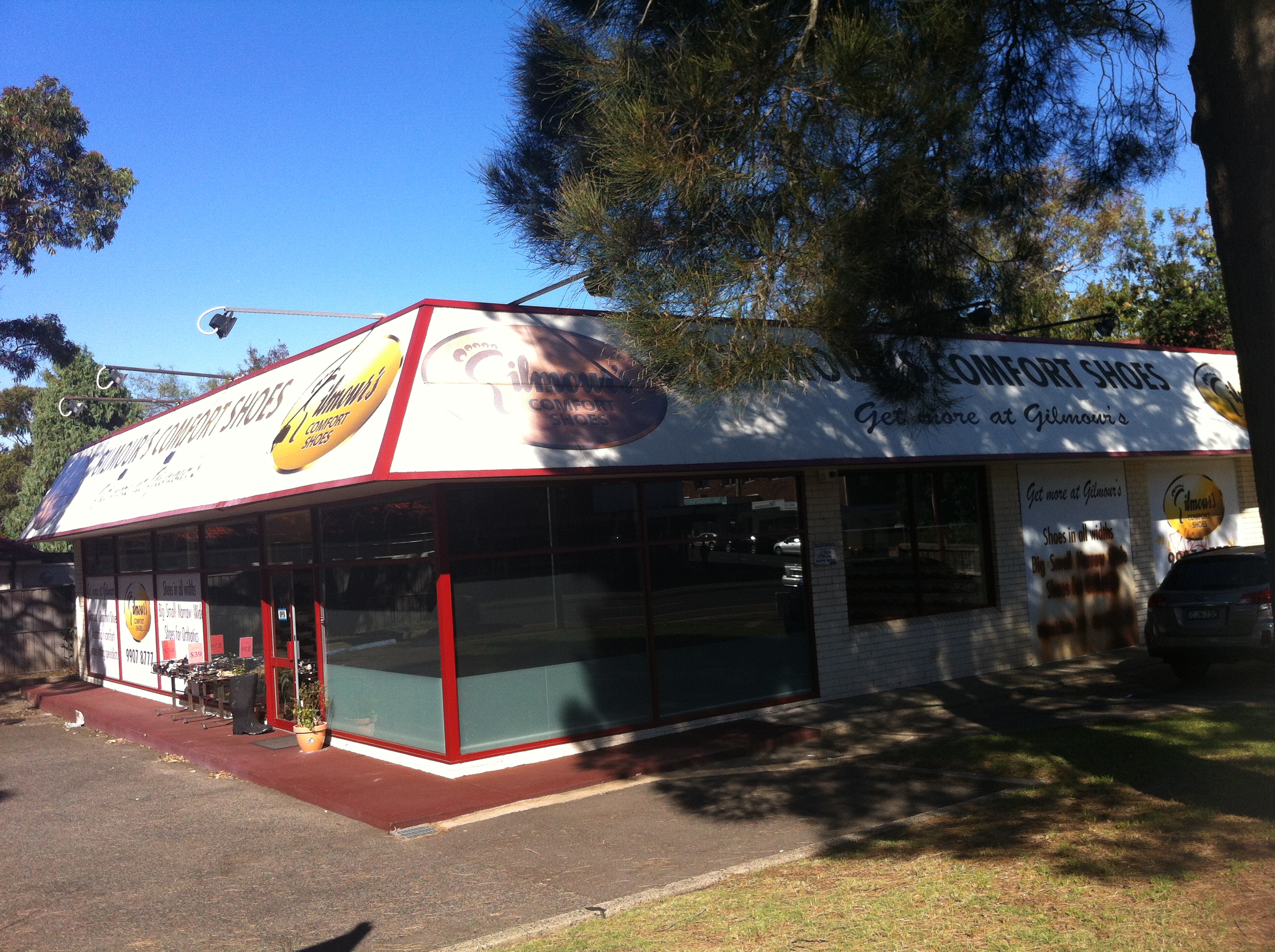
Behold, the Manly Vale Hartee’s still stands. It’s currently Gilmour’s Comfort Shoes, but it pretty obviously fits in with the Hartee design.

In fact, this may be the most well-preserved Hartee’s still in existence. The Gilmour’s sign appears to be stuck on over the red roof, so it’s possible the Hartee’s logo remains underneath.

The original lights are still in place, designed to illuminate the Hartee’s name. Also still in place, as per Phil’s advice…

The original outdoor seating area! Now it’s presumably the shoe shop manager’s car park (c’mon, look at the prestige offered by that strange piece of land). Inside are just shoes, but really, they’ve served worse and called it burgers.
It’s not really a happy ending, or an ending at all, but it is (I’m guessing) the final footnote on what by now must be the most definitive account of the Hartee’s affair out there. There are still many mysteries surrounding the story (truly, more questions are raised than answered), but maybe one day one of those faceless, guilt-ridden Hartee’s executives will come out of hiding and reveal more. Hell, I’d even settle for the guy who served the dog food. As ever, if you know more, please let Past/Lives know. And RIP Hartee’s – we hartlee knew ye.
In the meantime, let’s take a minute to remember those four powerful words that watered more mouths than Mount Franklin, that were a city’s guilty pleasure in a time before Big Macs and Whoppers…in a time when a nation could feed itself.

Hartee’s Kogarah, November 1973. Image courtesy State Library of NSW.
Past/Lives Flashback #7: Rick Damelian – Leichhardt, NSW
Original article: Rick Damelian/For Sale – Leichhardt, NSW

Over the last year, you’re likely (I would hope) to have enjoyed a healthy bank balance, a good credit rating, a roof over your head. Simple stuff that the people of Sydney take for granted. Rick Damelian on the other hand…

When we last left the epic tragedy that is the Rick Damelian saga, things weren’t looking too good for both Rick and his former dealerships. Despite their desirable location along Parramatta Road at Leichhardt, the caryards, weren’t attracting any offers, and Rick himself was staring down the barrel of a pretty severe bankruptcy.
But hold on. Look there, in the window…is that what I think it is? Let’s take a closer look.

Your eyes aren’t deceiving you. In November 2012, these showrooms finally sold, and since then have returned to doing what they did so well at the peak of Rick’s success – selling cars.

Even on the roof, Rick’s private helipad has been obscured by a legion of cars. The staff might want to check to make sure Rick isn’t living in one of them.

Remember Ric’s Cafe, the on-site licenced restaurant that was the jewel in the crown of Rick’s decadence? It’s since been replaced by even more cars! It’s funny, Rick might not be in the situation he’s in today if he’d just thought to sell a few more cars instead of food and helicopter rides. Live and learn, I guess.

Further down the road, a modestly priced used car dealership has set up shop on Rick’s old turf. So toxic was the land, so tarnished was the site’s reputation as a car seller that the signs feel the need to be as explicit as possible: “WE BUY CARS! WE SELL CARS!”. It’s a trick Rick didn’t seem to be able to employ in his last years: speaking the language of the customer. Having cars onsite helps too, I’d imagine.

Rick’s old bedfellow, Honda, has returned as well. Formerly the core of Rick’s sales strategy, Honda left Rick holding the bag when the Japanese tsunami decimated their inventory, and some speculate that this marked the beginning of the end of the Damelian empire.
Yet here they are.
Fancy that: it’s easier to come back from the ravages of a tsunami than it is to survive Rick’s management.

One thing Honda has held onto are Rick’s ‘Dealer of the Year’ awards. I can see what Honda’s trying to do…but Honda – you issued these awards. It’d be like me giving myself the ‘Blog called Past/Lives of the Year’ award.

Over the road, Morris has set up shop at the old Rick Damelian Prestige lot. A few examples of Rick’s flamboyance remain: the floodlights, the pointless sign on the far left, the Hollywood-style palm trees. But the cold, impersonal MG style sits heavily at odds with these elements, further highlighting their uselessness. But fortune hasn’t been so kind to the man himself. As Rick Damelian and his wife sit together in their $3.3m McMahons Point townhouses, arguing over whose turn it is to heat up the beans tonight, the banks and other creditors hover over him like a hawk. Should he decide to sell his two townhouses – thereby leaving himself, his wife and his mother homeless – he’s so in debt that he’s likely to receive nothing. It’s reported that Rick has just $73 left in his bank account, and can’t even afford to buy a car. You really have to feel for his wife at a time like this…with no car, she may never get off her Ls.
After nearly 40 years in car sales, Rick’s biggest accomplishment was establishing his own name. That’s not necessarily a bad thing – take Dick Smith for instance – but it meant that Rick’s triumphs and tragedies didn’t stick to Honda, or Fiat or whatever brand of car he was flogging at the time, they stuck to him.
$200m-a-year sales? “Damelian’s business savvy creates sales juggernaut.”
Your new car sucks? “I wouldn’t buy from Rick Damelian again.”
While it’s true that the financial crisis hit everyone hard, Rick’s lavish showrooms didn’t help him weather the storm. And since he put himself forward so often, it was his name that thousands daily saw stagnating as they passed his high-visibility caryards at the top of Taverner’s Hill.
No matter what should happen in the future, the name Rick Damelian will forever be tied to car sales, and there are plenty of dealers who would kill for that kind of association. At least in his downfall, Rick has provided a cautionary tale for the next generation hungry to make an impact as the world’s financial situation improves. Fitting then, that it appears it’s harder to expunge Rick’s name from his old dealerships than it is from bankruptcy court.
Past/Lives Flashback #9: Hire One – Hurstville, NSW
Original article: Homestead Golden Fried Chicken/Kentucky Fried Chicken/Hire One – Hurstville, NSW
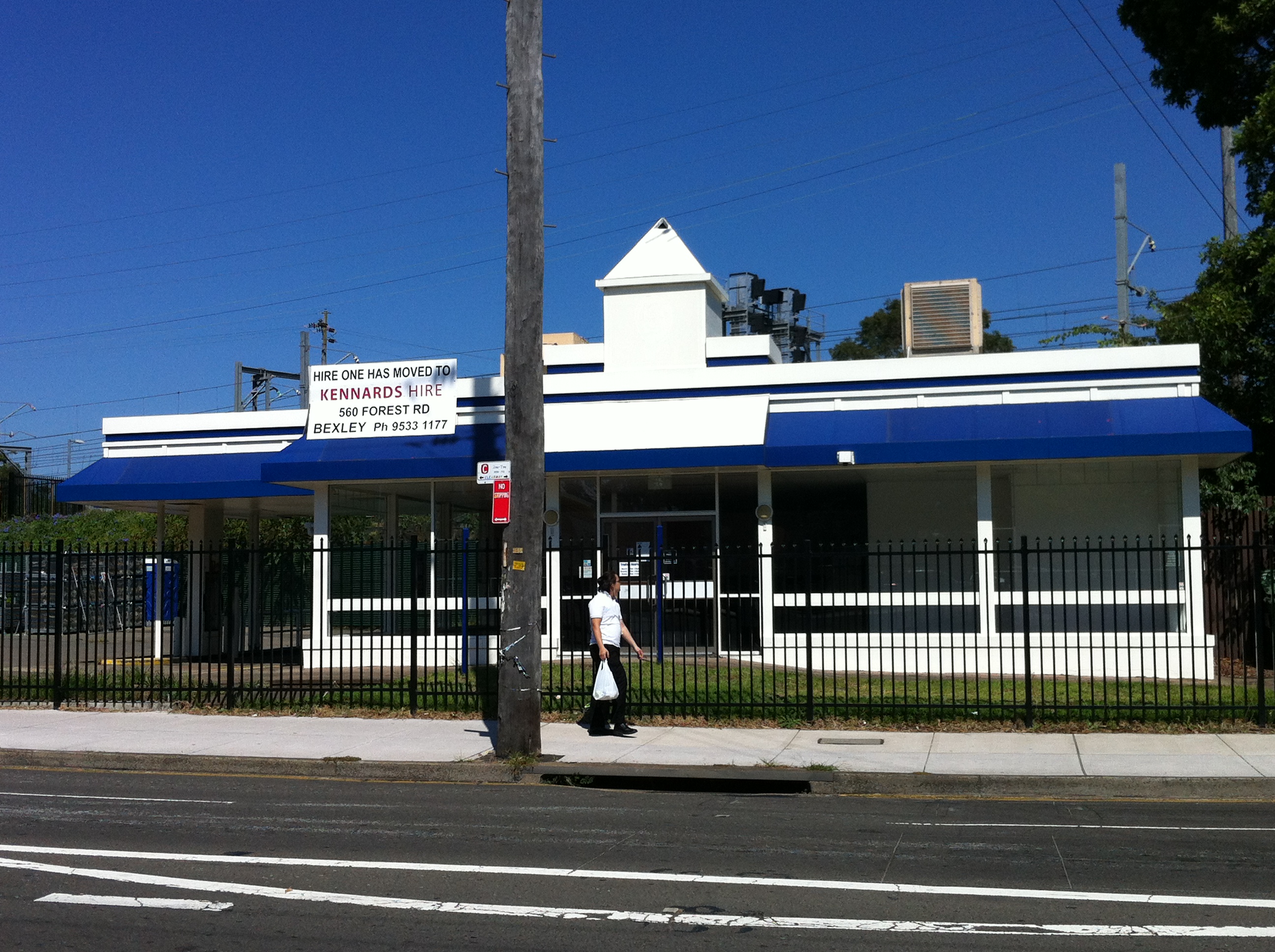
One of the most interesting aspects of revisiting these places one year on is discovering whether history has repeated itself. As you’ll no doubt recall, this location was formerly the fondly-remembered Homestead Golden Fried Chicken and later KFC, until an outbreak of stupidity and negligence caused its closure. Oh, you need a refresher? Hope you haven’t just eaten:
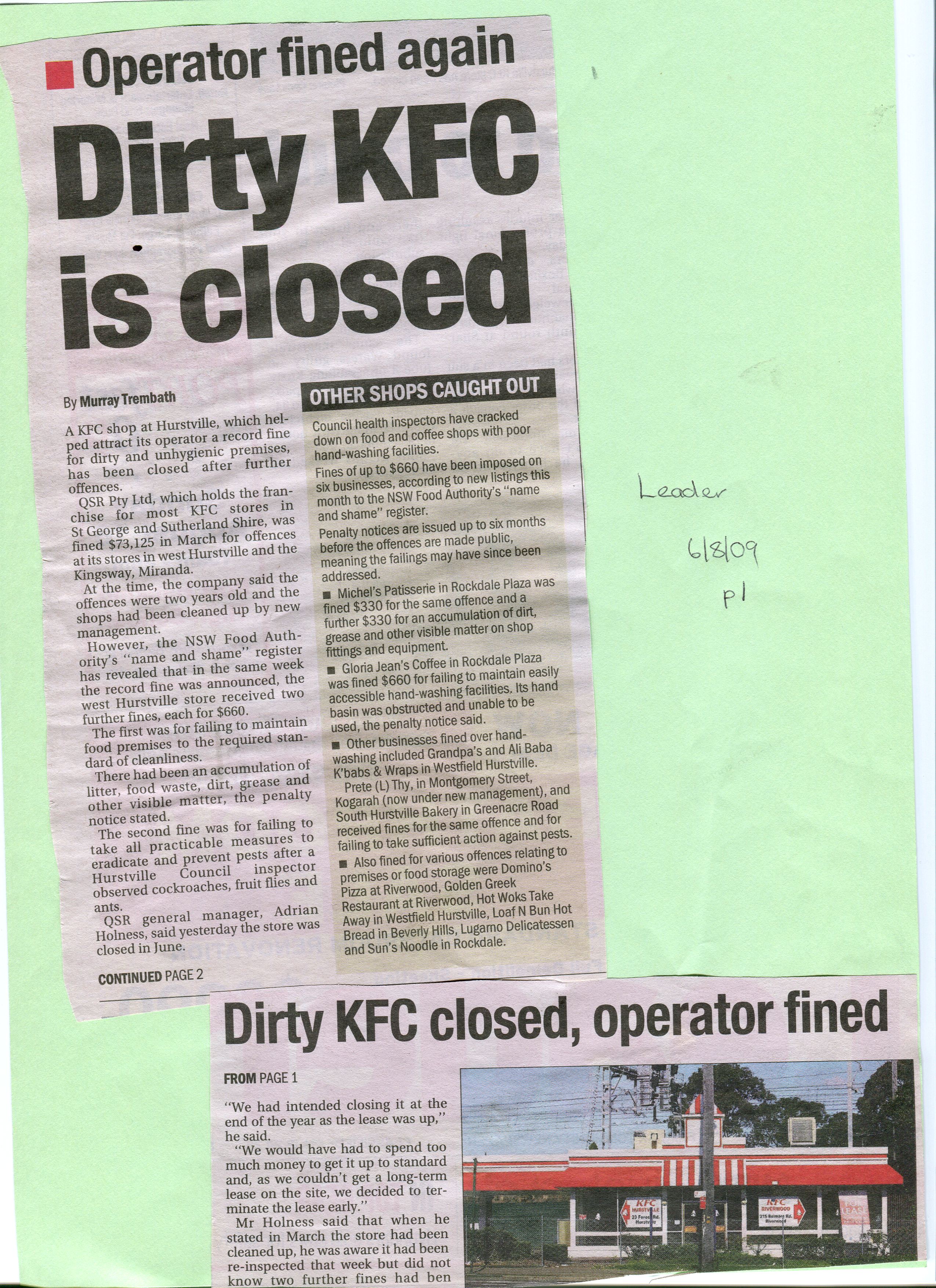
The Leader, August 6 2009.
Hire One was quick to jump in and seize the reins of that deep fried legacy…
Alas, one won’t be hiring anything anymore at this husk. Hire One was apparently absorbed into the Kennards empire, the coffers of which were deep enough to break the lease and free up the site for a potential Homestead comeback. Or perhaps given the sordid history of the site, a Hartee’s comeback is more likely.

Allied with the powerful Captain Hindsight, Cerno agent Donovan Moodie wisely buried ‘restaurant’ deep within the list of potential usages. Note that first part: “Previously successful Hire One plant hire business”. No mention of the hapless KFC, which is probably the building’s longest tenant (and certainly the least hygienic).

But there’s no need to mention it; the eerie visage of the Colonel hangs over the place like a bespectacled ghost. Look closely and you can still see him smiling, just as he did after each Hire One customer walked out with their temporary cement mixers. I hope you washed your hands…
F4 Expressway/SWR Western Motorway/M4 Freeway – Concord, NSW

Image courtesy RTA Magazine/OzRoads
As promised, we’re now going to plunge into the half-assed history of the M4 freeway’s eastern terminus. I’m imagining you’re already as joyful and excited as those people on the bridge above, but don’t peak early – we’ll dig up some good stuff. If I do a half-assed job, consider it an homage.
After World War II it became clear that Parramatta Road wasn’t going to cut it anymore as a way of getting people to and from the western suburbs of Sydney, which had exploded in terms of population. Of course, in those days, Leichhardt was a western suburb, but you get the idea. In 1947, the newly created County of Cumberland Planning Scheme identified a possible route for an expressway which would connect Glebe to the Great Western Highway at Lapstone (of the treacherous Lapstone Incline fame). In reliably speedy NSW Government fashion, the corridor of land was reserved in 1951.
As an aside, I’d just like to shine the spotlight on my ignorance: I had no idea what Cumberland County was, and I was surprised to learn that not only was it created by Governor Arthur Phillip in 1789 and encompasses most of the Sydney metro area, but that there are 141 counties in New South Wales. A shadowy cabal of local government councillors would elect the Cumberland County Council, which then had a powerful influence over town planning in metro Sydney. Spooky stuff.
Anyway, the M4’s construction started backwards, with the first stage completed at Emu Plains in the late 60s. The late 60s. After the plan was formed in 1947. Yeah.
As the freeway crept closer and closer to Sydney, the pocket of land set aside to relieve the ever-building traffic pressure in the city waited patiently for its turn.
It’s still waiting.

This is the start and end of the M4, and as close as the freeway gets to the city. Every day, traffic from the western suburbs and beyond is ripped from the (theoretically) 90km+ flow into the waiting 60km arms of Parramatta Road, Concord. Citybound motorists must then contend with the stop/start rhythm of Sydney’s oldest road and a new nightmare: traffic lights. If this sounds awkward, it’s because it is. And it looks even more awkward:

Image courtesy Google Maps
In 1976, the F4 freeway (as it was then known) was all set to drill right through the inner west and end up at its intended starting point in the city, Glebe. But Glebians (?) had had over 20 years to prepare their outrage and protests, so the Department of Main Roads found itself staring down a pissed off neighbourhood that feared the freeway would shatter its layout and atmosphere. In what would be the first of many such moves for the NSW Government, it backed down. The Concord to Glebe section of the freeway was abandoned, and a backup plan was hastily slapped together.
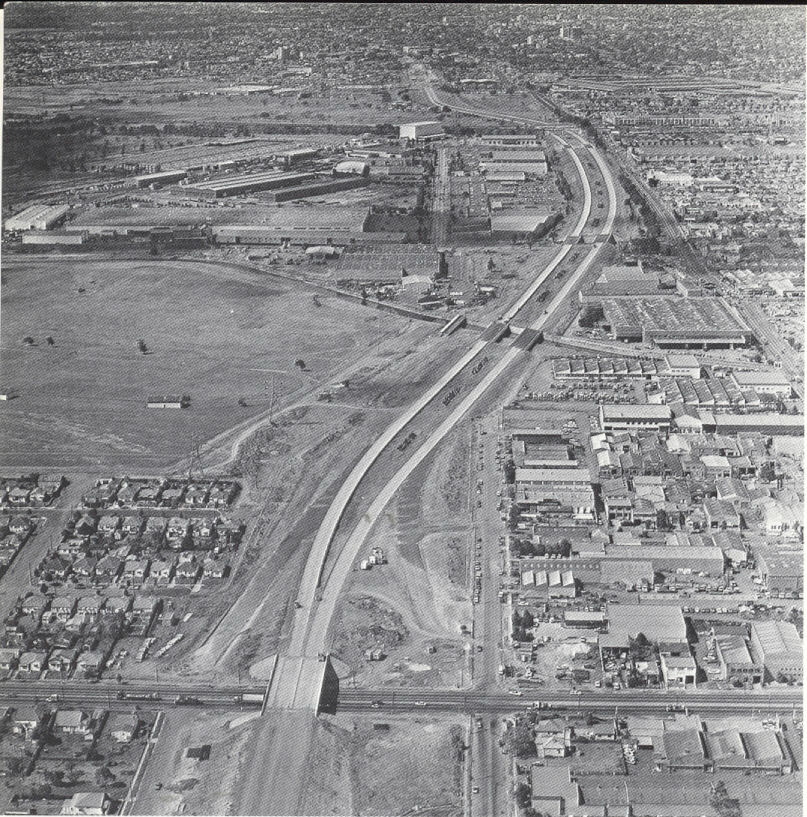
The F4 prepares to cross Silverwater Road, 1979. Courtesy Main Roads Journal/OzRoads
Also hastily slapped together were the physical components of the eventual fix, which was to spill the M4 onto Parramatta Road and hope that it all worked fine. In 1982, more than 30 years after planning had commenced, the section of the M4 between Concord and Auburn was opened to traffic, despite the next section between Auburn and Granville not being complete.

Concord reforged: the F4 ends, 1985. Courtesy Main Roads Journal/OzRoads
What a shemozzle! Although the rest of the freeway west of Concord was eventually completed (pretty much), it’s the section between Concord and Auburn that remains the most interesting and telling of the struggles that went into constructing it. With the O’Farrell Government now gearing up to deliver on its promise to complete the M4 (via a tunnel system, natch), it’s as good a time as any to see what kind of stopgap measures we can look forward to.

Where the M4 itself joins Parramatta Road, it LITERALLY joins Parramatta Road in a series of glued on slabs of cement. It’s easy to see the difference in road material here..

…here…

…and here. This is because the entrance to the M4 as it is today was originally part of Concord Road, which was relocated a block to the west. Why? Bear with me…
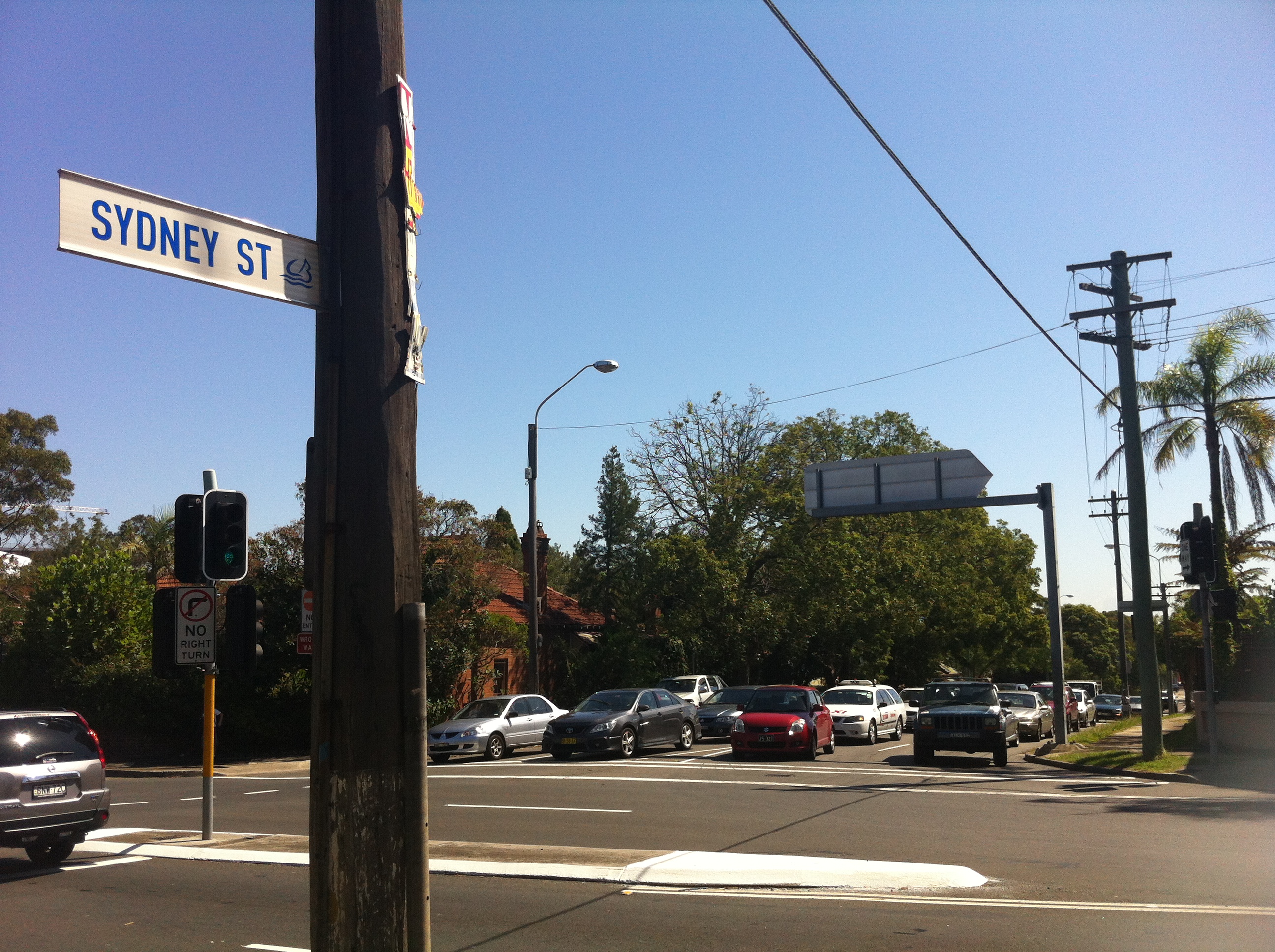
When this section was completed in 1982, the one-way Sydney Street was the only way off the M4. Traffic would then spill into Concord Road, which at the time followed a different alignment…

…being this, the current end of the M4. To accommodate more traffic, Concord Road was realigned to cross Parramatta Road instead of joining it.
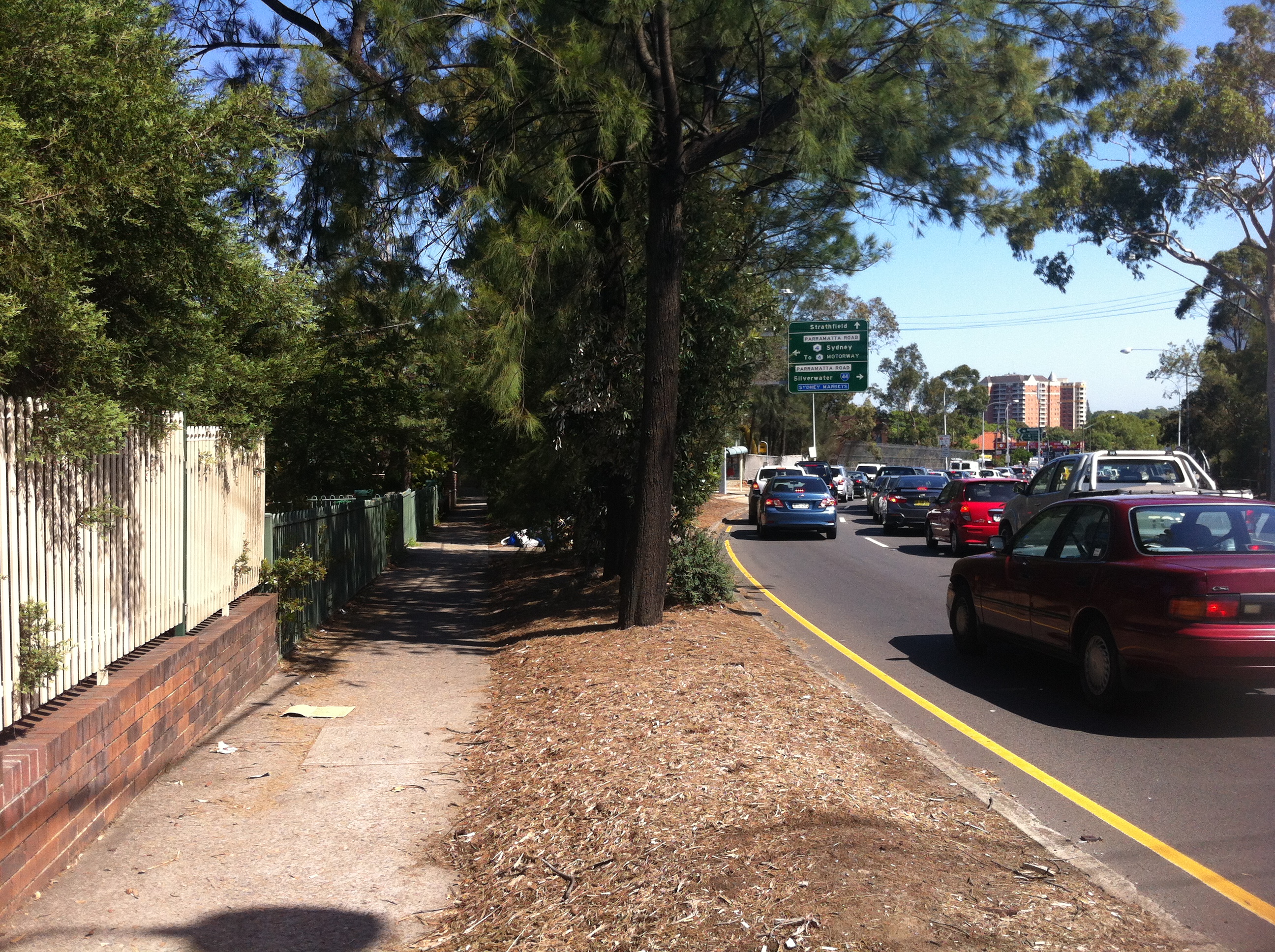
Concord Road was extended towards Leicester Street on the other side of Parramatta Road, and the former curve was filled in by parkland and a bus stop:
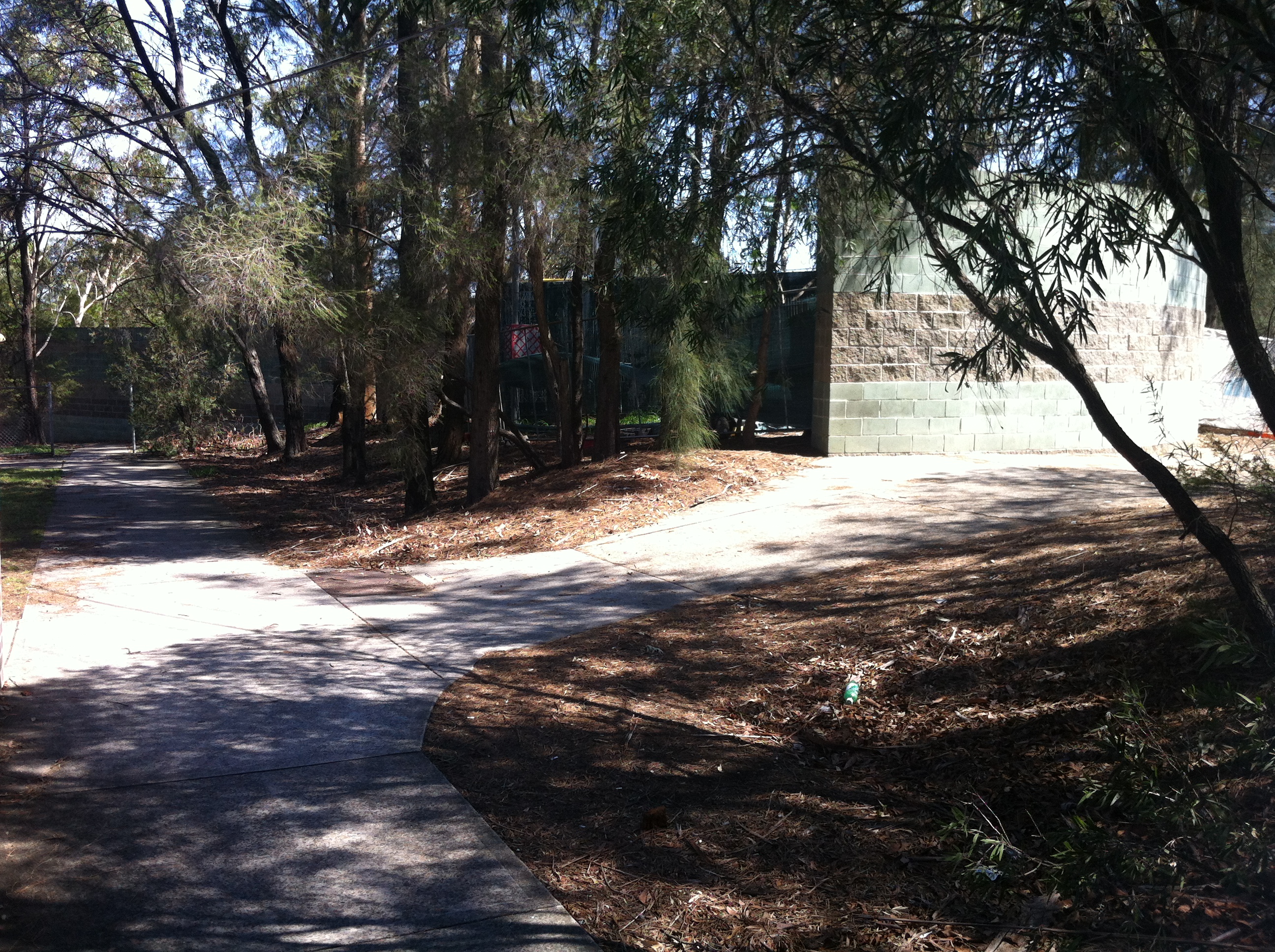
So if you’ve ever wondered what this big bit of nothing was all about, that’s the story, although it could be argued that providing more access for buses adds to Parramatta Road’s problems, but that’s another story.

A tunnel was dug here between the M4 and Concord Road to form the overpass that exists there today, and to direct the traffic flow onto Parramatta Road. What was the fruit of all of this effort? One set of traffic lights is bypassed by eastbound traffic.

This restructure meant that Young Street, which in 1982 acted as the eastmost on-ramp for the M4, was cut in half by the new end of Concord Road. What was once one of the most important streets in Sydney now ends with a whimper:

…where once it would have joined the M4 it now provides access to a unit block’s carpark.
As mentioned, the other problem the M4 faced in 1982 was that it stopped at Silverwater. You could get on at Young Street, belt down the freeway at 90km/h in your Holden Monaro for about five minutes before being dumped back onto Parramatta Road, the defacto western expressway, at our old friend Melton Street.
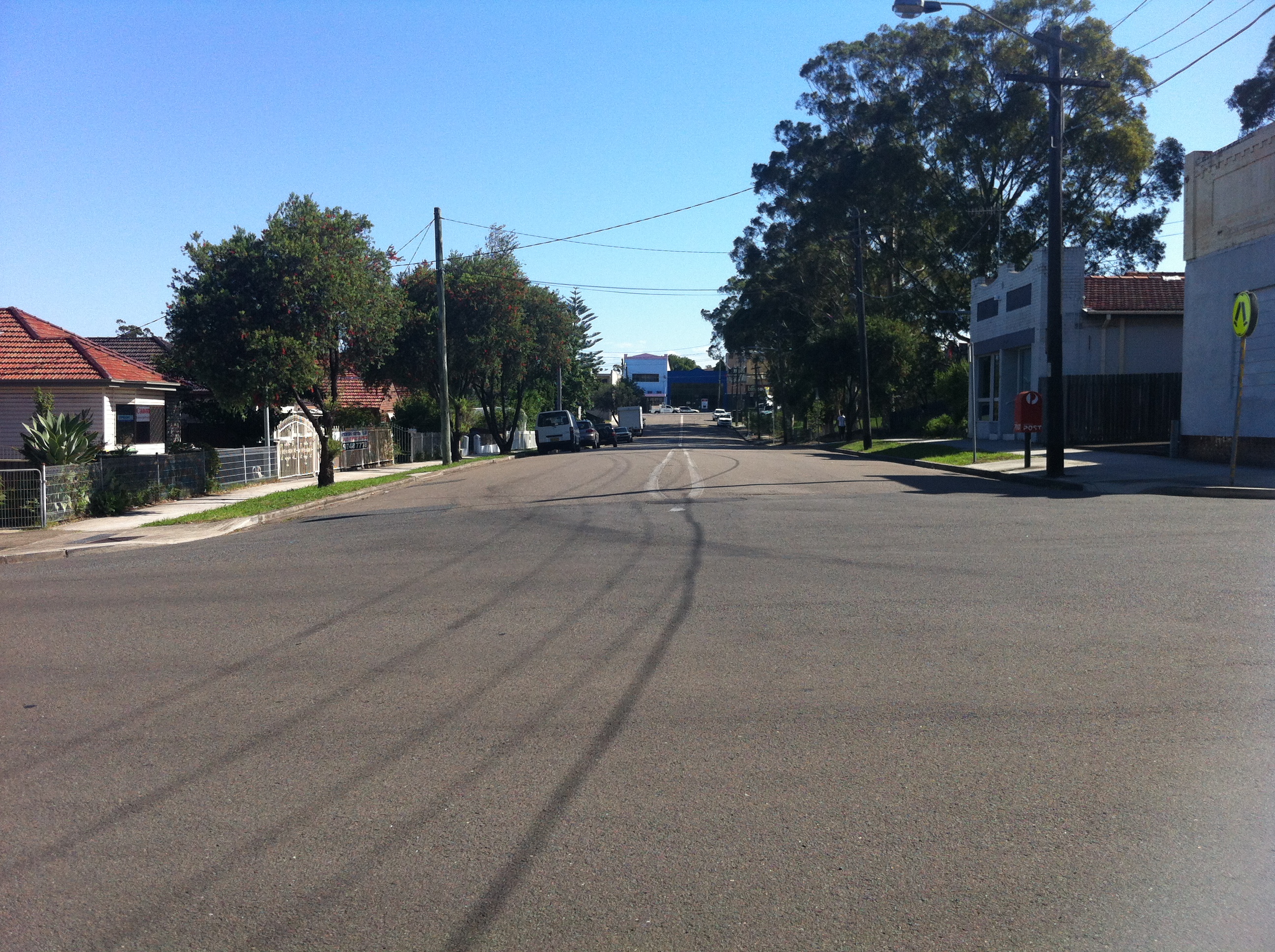
Yes, this is the sight you would have faced exiting the M4 between 1982 and 1984, when the next segment was completed. You would have zoomed up past the school and the Melton Hotel, and then back onto Parramatta Road for the next million years if you were trying to get to Springwood. If we look a bit closer, we can see where the exit ramp used to be:

In the bushes between Adderley Street and the M4 you can see a clear path the motorists would have taken to rejoin Sydney traffic. I’m assuming the RTA has set this land aside for future widening of the freeway, as if that will ever happen, but in the meantime it gives us that vital link to the past. Once again, a seemingly insignificant little road like Melton Street actually did have a grander place in the scheme of things. Parramatta Road: where anything can happen.
Further up from Melton Street is the Silverwater mainstay Stubbs Street, as seen in the very first picture in this article. The M4 proceeds under the Stubbs Street overpass…
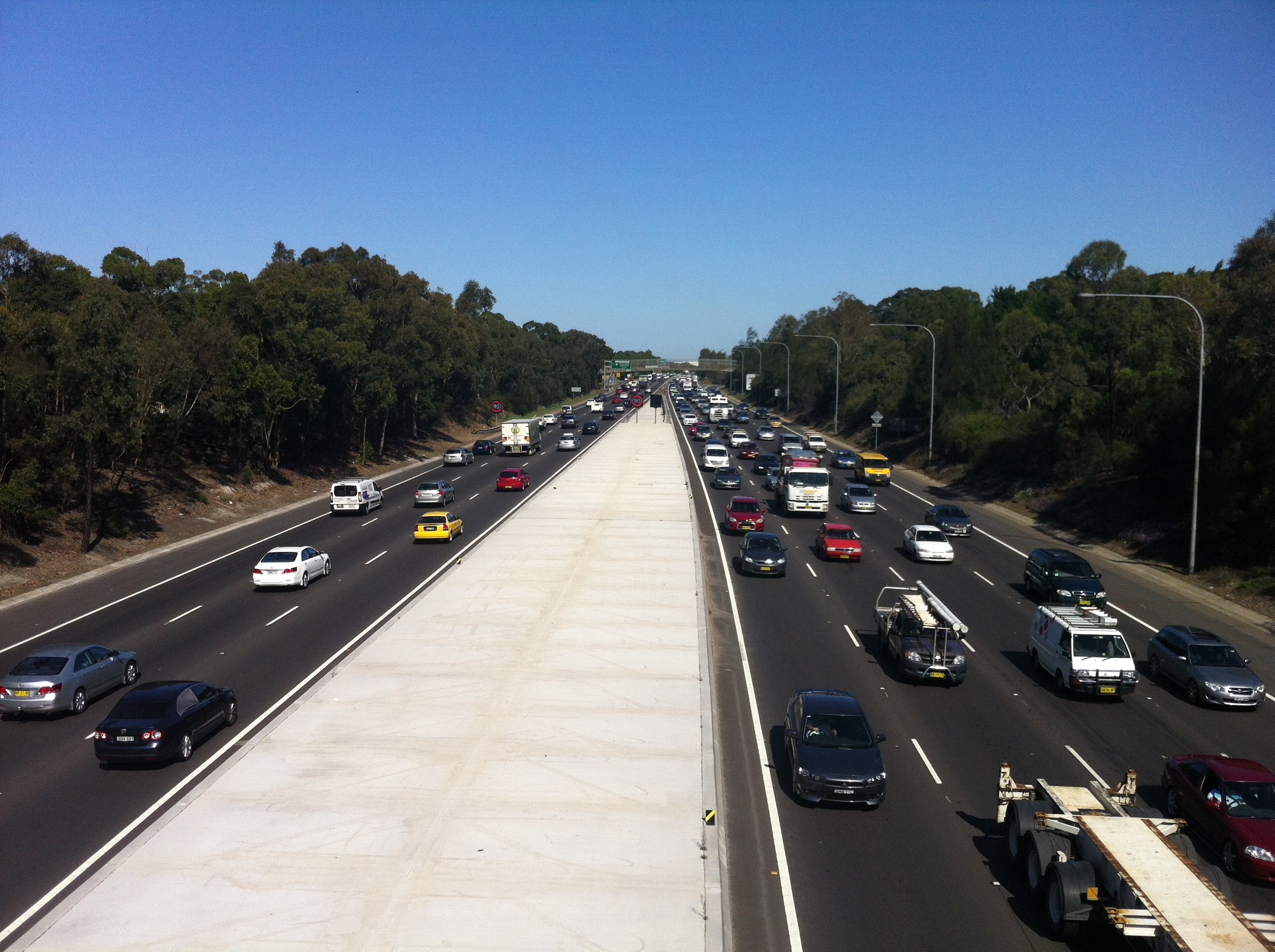
…which was completed in 1981 to mark the end of this section of the freeway.

Once the next section between here and Granville was completed in 1984, Melton Street was once again exclusive to pub patrons and parents dropping off their kids, while motorists were free to drive on to the west.
Or were they?

By 1989 only a small section of the M4 as we know it today was missing, and a private consortium, StateWideRoads, was contracted by an exhausted NSW Government to finish the job. As we all know, a grand don’t come for free, so by the time this missing link (and some hastily approved widening) was completed in 1992, someone had to pay.
That someone was you.

SWR tollbooths, 2007. Image courtesy someone who isn’t me.
It was determined that the section between James Ruse Drive at Granville and Stubbs Street, Silverwater was the section through which the majority of cars would pass, thus ensuring the shortest possible time for a toll to be in place. In May 1992, $1.50 was required to continue out to the western suburbs. By the time the toll was removed in February 2010, over $970 million had been paid to pass these booths.

Today, there’s little apart from the alignment of the lanes to suggest that the toll booths were ever there, but other remnants of the M4 project have left a more lasting mark all over Sydney. The freeway is back in the hands of the NSW Government, which is akin to returning an abused child to their abusive parent. As the battle to complete the M4’s route into the city rages on in state parliament, Federal Opposition Leader Tony Abbott has even expressed support for the completion should he win government at the next election. Thousands of motorists a day are still inconvenienced by the half-finished freeway. One accident on the M4 causes traffic chaos all over the city. The Eastern Suburbs are still effectively isolated from the rest of Sydney due to a lack of motorways….so I guess there are always upsides. There’s been talk of reinstating the toll to pay for what would by now be a very expensive couple of kilometres. In 1977, the projected cost of completing the M4 from Concord to Glebe as intended would have been $287m.
The M4 is only 46km long.
Maybe if it ever gets finished, it’ll be linked up to the Western Distributor so that it can actually start distributing people to the west instead of, you know, nowhere.
TRAFFIC STOPPING UPDATE: Thanks to Burwood Library’s archive of interesting old stuff, you can now enjoy this old pamphlet detailing the opening of TWO new segments of the F4 back in 1982. Even better is that this article’s diagrams illustrate the progress of the F4 almost as well as the above article. You all thought I was mad when I wrote this one, but who’s mad now?


The Melton Hotel – Auburn, NSW
Get comfy, this’ll be a long one.
 Sometimes, it’s not so much about what a place has become as it is about how it got that way. This is certainly true in the case of Auburn’s Melton Hotel. Ordinarily I, like any passer-by, would take one look at the Melton and think ‘I value my life too much to go in there,’ subsequent to the instinctual thought of ‘Just another pub.’ Situated along Parramatta Road at the corner of Station Street, there’s just nothing that sticks out about the hotel in any way; not even the jovially named ‘Hey Hey Kebab’ adjoining gives cause for anything more than a mild double-take.
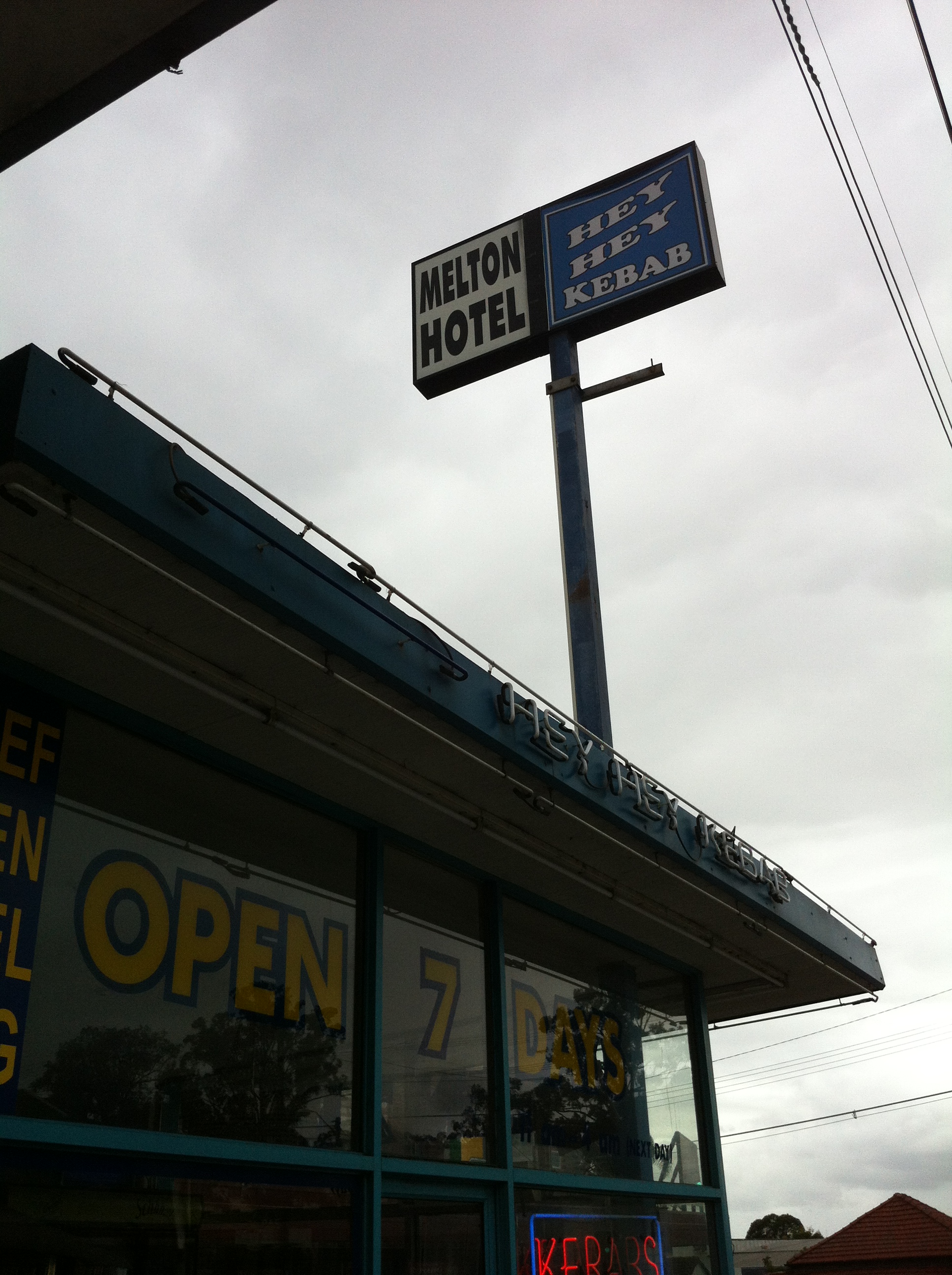 So why, dear reader, am I subjecting you to this dry account of a seemingly humdrum pub? Well, what piqued my interest (as I’m sure it will yours) was the simple fact that the street running parallel to the hotel’s side of the block is called Melton Street South.

Not pictured: Melton Street North
This got me thinking: why was the pub named the Melton Hotel if it wasn’t actually on Melton Street? Clearly it was time for some field detective work, because I knew if I didn’t solve the mystery it would bother me all day. I couldn’t find anything about anyone named Melton in the area’s history (it’s not even clear to historians why the area itself is named Silverwater), but I had a feeling if they were honouring some local hero, they wouldn’t just name a pub and a street after them. First port of call: the Atlas of the Suburbs of Sydney, ca 1885-1890.

Courtesy the Atlas of the Suburbs of Sydney, ca. 1885-1890
This map of Auburn shows that neither Station Street nor Melton Street South existed at the time. Today, they’re located between the map’s Stubbs Street and Sutherland Street (now Silverwater Road).
Next: time to research the pub itself. Thankfully, the pub in question has an illustrious history; according to the hoteliers, its license dates back to 1811 (when it was owned by Samuel Haslem, of Haslem’s Creek fame), attached to an inn located not too far from the current site. In 1877 a former jockey, Fred Martineer, became the licensee of the Melton Hotel and held that position for over 30 years, firmly establishing the pub as a favourite of the area’s myriad meat workers.
Tragedy struck in 1914 when, after too many cases like this…
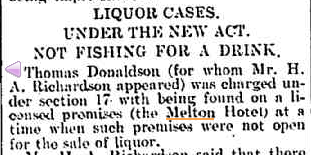
The Cumberland Argus and Fruitgrowers Advocate, 21 February 1906
…the public was swept up by a need to reinstill a sense of public decency via a series of local option acts. The acts enforced a six o’clock closing time for pubs and resulted in 293 hoteliers losing their licenses, including Martineer. Despite the pub’s closure and with flagrant disregard to the after hours prohibition, he continued to live in what became known as the ‘old Melton Hotel’ until his death in 1918:
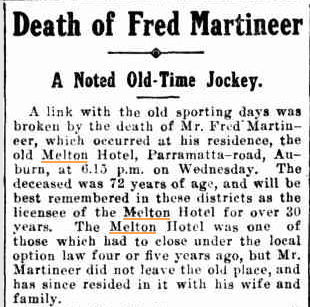
The Cumberland Argus and Fruitgrowers Advocate, 16 March 1918
The Old Melton had been named sometime prior to 1895, when it appeared on that year’s list of Hotel Licensees. It’s this hotel that sat on the corner of Melton Street South (then Melton Road), so from this we can assume the street was named after the pub. But, like me, the Martineers couldn’t let it go. In 1929, the Martineers built the NEW Melton Hotel at its current location, which at the time seemed to take up the entire section of Parramatta Road between Melton Street and Station Street.
That’s all well and good, but today it’s a very different story. Nothing remains of the Old Melton, the New Melton is nowhere near the corner of Melton Street, and there’s a string of dingy shops between it and its namesake street. What happened?
 Discounting the obvious greed associated with subletting the Melton Street side of the block to said dingy shops, the true answer seems to lie in the Melton Hotel’s parking lot. The hyperbolic claim of “stacks & stacks of parking” is betrayed by the truncated nature of the car park itself. Here it is, seen from Station Street:
 Further encroachment into the lot reveals a flimsily constructed wall on the Melton Street side. Hmm…
 And a gap in the northern end of that wall. HMM…
 The gap leads out to Melton Street, whereupon you’re immediately facing a school. This sign:
 …is all that remains of this side’s former life as an entrance/exit to the Melton’s car park, and indeed of the Melton’s connection to the street it inspired. A closer look at the other side of the fence backs this deep bit of insight up.
 The kerb is clearly a lighter shade of cement, indicating the spot where the driveway used to be. The two bushes are doing a laughable job of hiding the wooden fencing that blocks off those driveways.
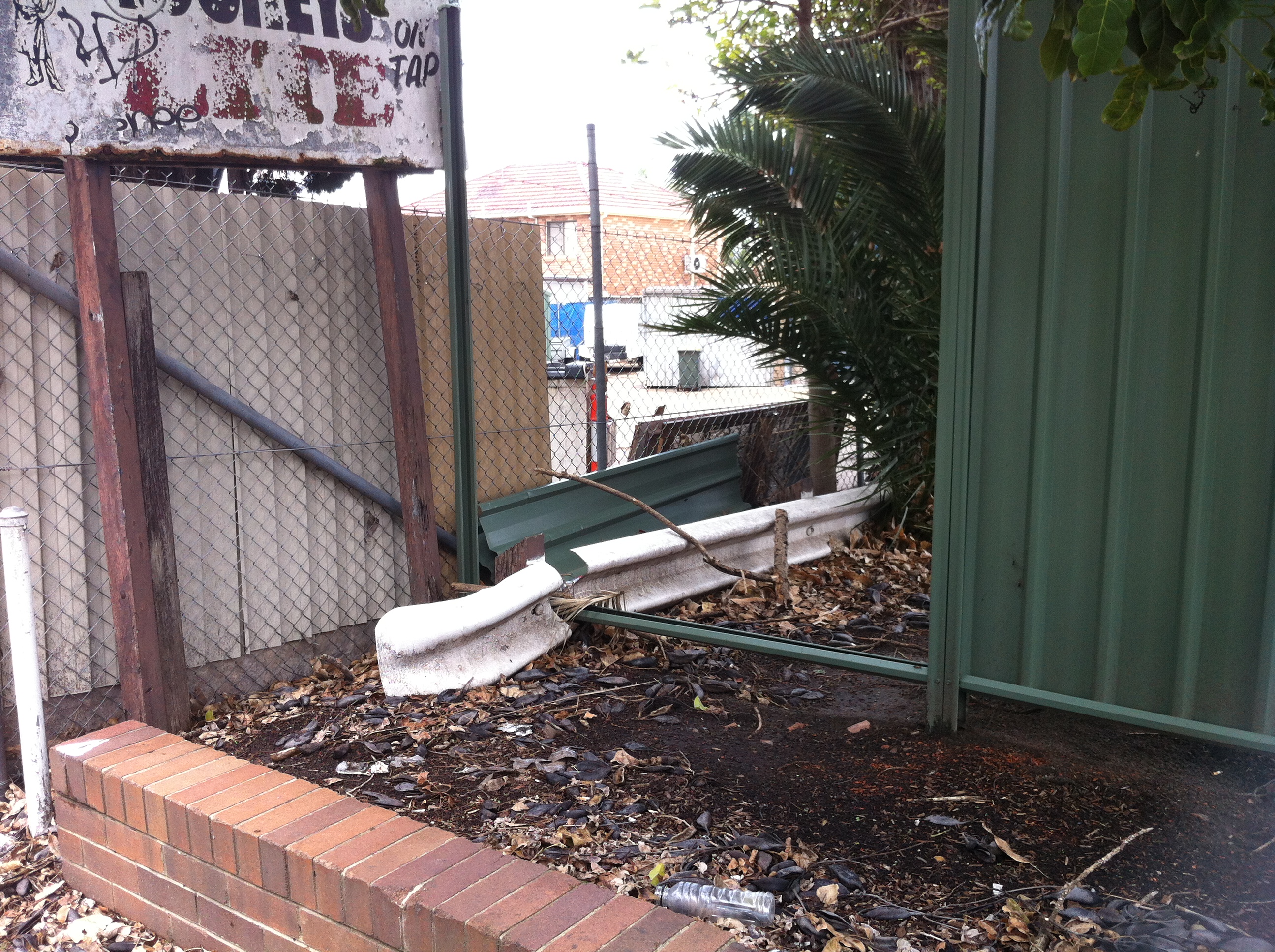 Even stranger is the choice to keep these former barriers, and simply cut them where the new fence intersects.
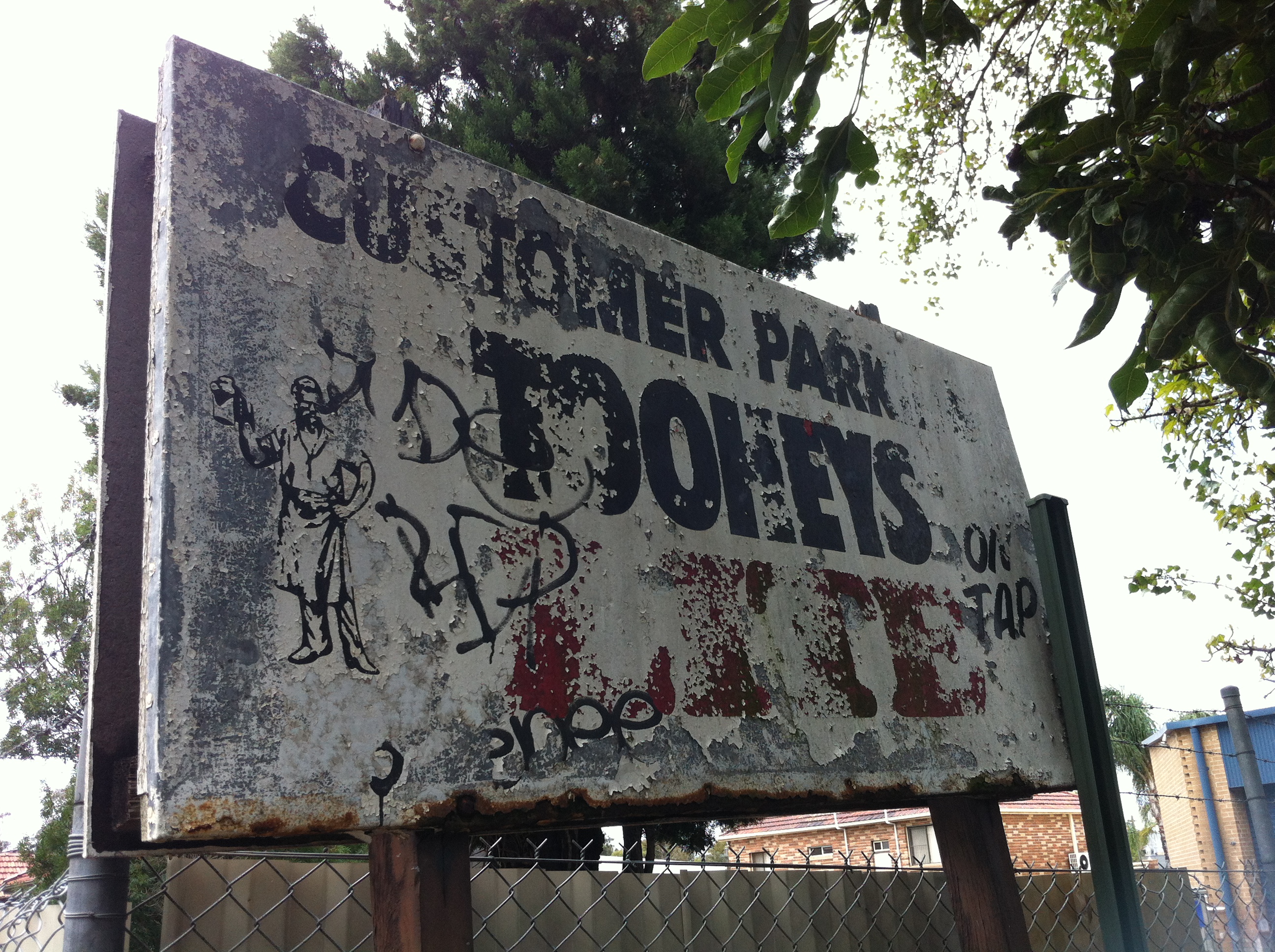 One of the more interesting aspects of all of this is the sign that once guided thirsty drivers into the parking lot. Hidden by overgrown branches and worn away by years of neglect, there’s no real reason for the hoteliers to have left it there – least of all what it’s advertising. After all, if it hadn’t been for the sign, I never would have stumbled upon this madness in the first place. No, for me, the real gold is the sign’s reverse side:
 Remarkably well-preserved, the sign advertises Tooheys 2.2, which was an attempt by Tooheys to introduce a light beer to their otherwise heavy range in the late 1980s.
While it would be nice to think that this was Tooheys doing its part to avoid another 1914 Local Option fiasco, the way the ad puts a jokey spin on drunken violence and employs a disturbing tagline clearly aimed at the breathalyser crowd suggests a more cynical set of motives. For better or worse, this didn’t take, and by 1995, 40 years after the Local Option acts were repealed, 2.2 was 6.0 feet under. It’s worth pointing out that 2.2 was supplanted in 1998 by Hahn Premium Light, which is now Australia’s top selling light beer…and owned by Tooheys. A fascinating trail of the significant episodes of 2.2’s short life can be found here (WORTH READING). I think the lesson here is don’t give your beer a name that invites terrible Richie Benaud impressions.
But back to the Melton. Also of note are the apparent remains of either a garbage can or a phone box (remember those?) located between the two driveways.
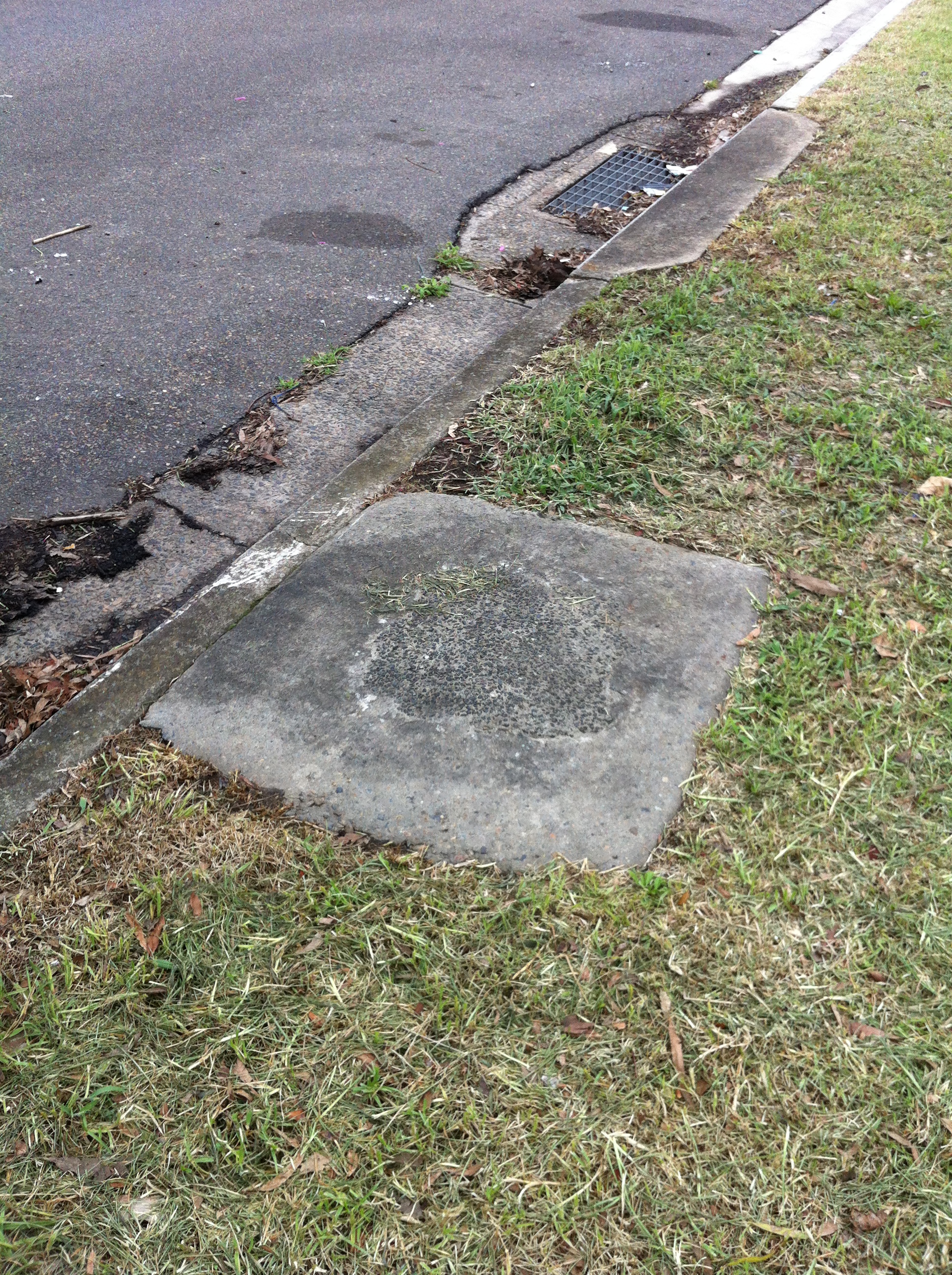 Let’s stop for just a second to process this. Regardless of whether this was in fact a garbage can which spent countless nights being chundered into by melting Meltonians, or a phone booth which spent its Friday and Saturday nights listening to endless pleas by hopelessly pissed pub patrons for their wives, girlfriends, parents or less drunk mates to come and pick them up, and then being chundered into, the fact remains that it was located BETWEEN the two driveways. How is this a spot for either of those objects which both appear as bright flames to drunken moths? The line for the phone alone would have been both long and drunkenly ignorant enough to queue across the nearest driveway. You can’t tell me this didn’t cause at least one clipped wing.
Even worse is the pub’s proximity to Auburn North Public School. Anyone foolish and drunk enough to ‘breathe easy’ and attempt to drive home via the Melton Street exit (or entrance, depending on the level of drunkenness) on a weekday afternoon ran the risk of knocking over a kid on their way home. If it didn’t happen or nearly happen, I’d be surprised.
With these reasons in mind, it’s easy to imagine just how and why the Melton would have had these driveways sealed up, thereby severing its ties to its own history. It’s also easy (and funny) to imagine particularly OCD and DUI pub patrons attempting to drive out of their usual exit and smashing the fence, otherwise why the need for the bushes and the potplants? Sure, the Melton could have chosen to seal up the Station Road driveways, which face the old Joyce Mayne complex, but it turns out that a child’s life is worth more than that of a shopper looking for bargain whitegoods. Who knew?
And all because some public spirited men didn’t know their limits and couldn’t hold their beer.
Of course, I could be wrong about everything, and I might owe both the Melton and overdrinkers everywhere an apology, but have a look at this:

The Cumberland Argus and Fruitgrowers Advocate, 10 July 1915
EPILOGUE
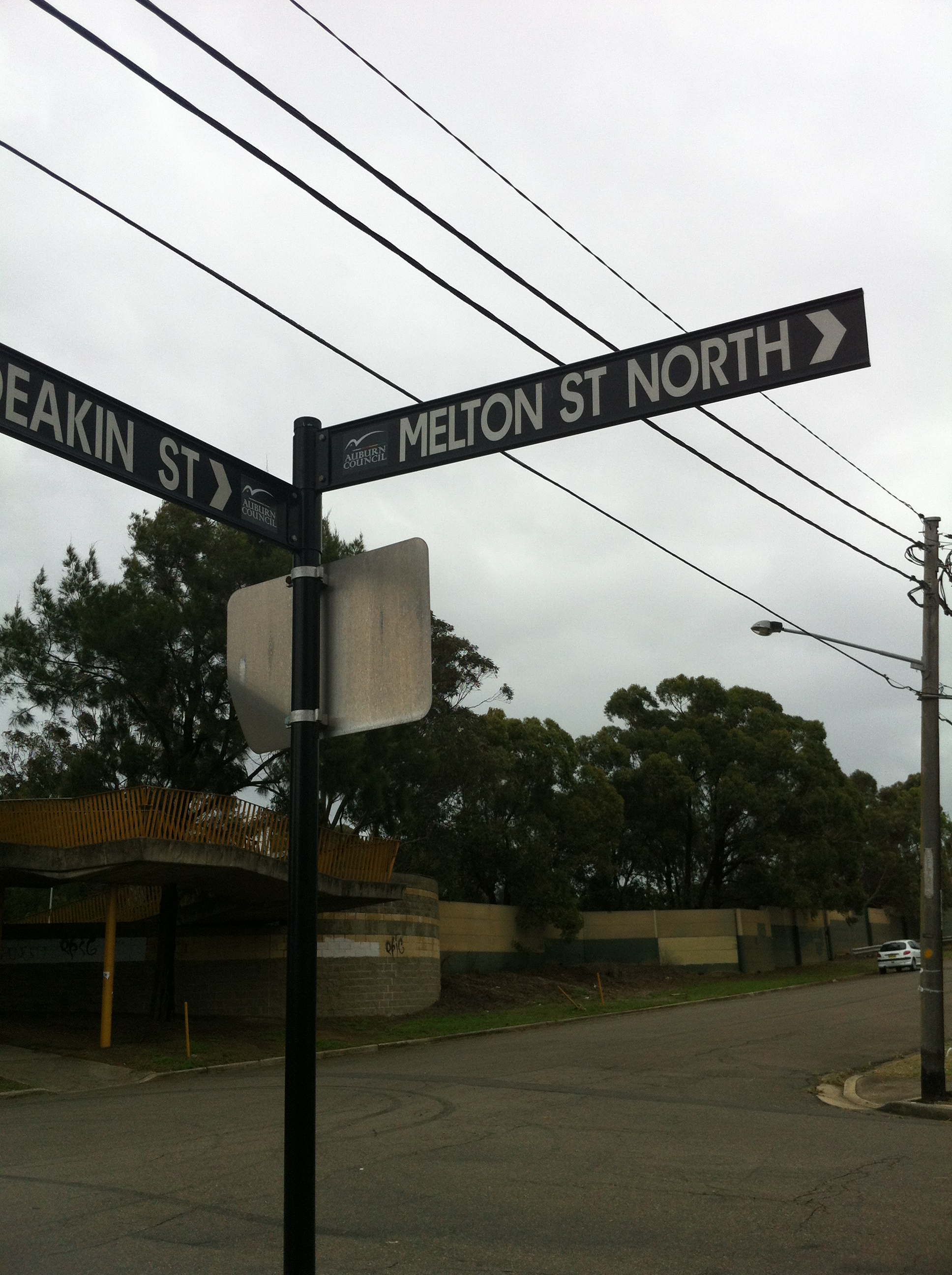
Not pictured: Melton Street South
You may have just read all that and be wondering ‘what was the point?’ or ‘where’s the remove bookmark button?’, but more inquisitive (or less demanding) readers may be wondering ‘What was so drastic that happened to Melton Road to cause it to be split into Melton Road South and Melton Road North?’
Next time, baby.

 Past/Lives of the Near Future