Good Fortune Chinese Takeaway/Nothing – Penshurst, NSW
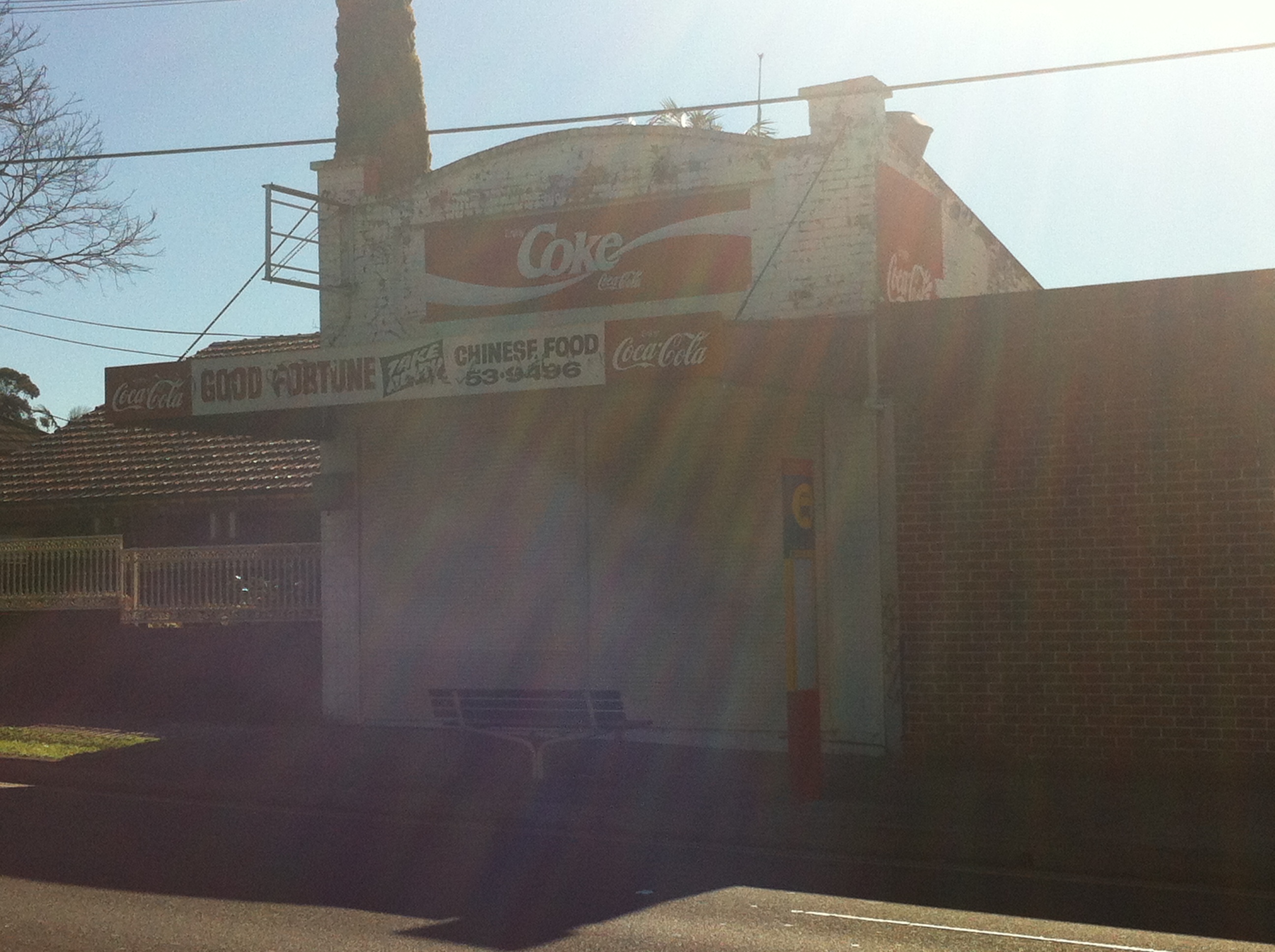
Proudly presented by Coca-Cola is the Good Fortune takeaway. Over the years, I have never, ever seen this place open. Coke’s absolutely saturated it with signage, and there’s faded evidence that there was once even more. I’m guessing this wasn’t a place you headed to when you felt like a Pepsi.
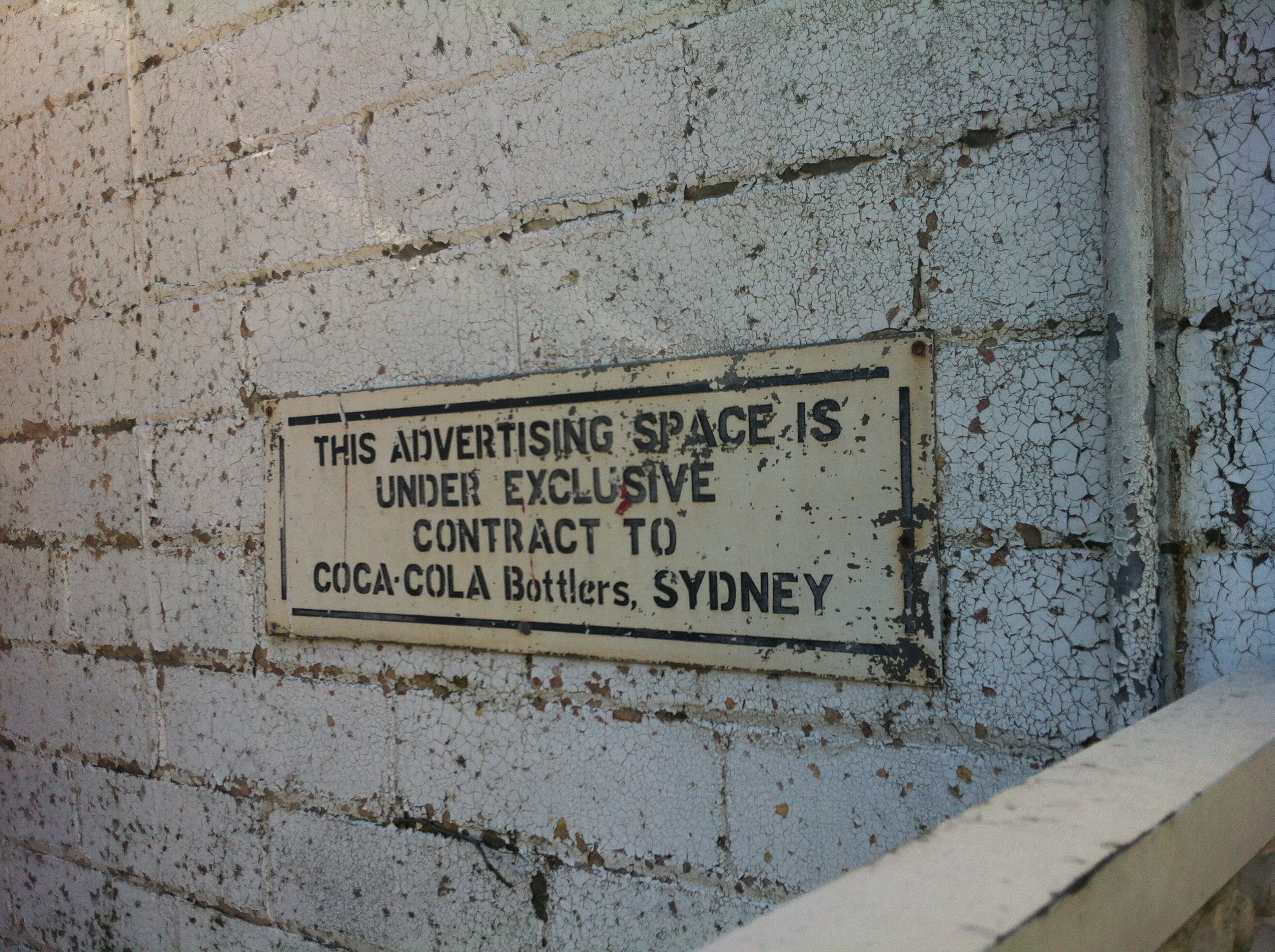
If I were conspiracy minded, I might argue that Coke has paid (or threatened) the current owners to keep the signs up for the free advertising. Does this work as advertising? Is anyone looking at the dead husk of a Chinese restaurant and getting thirsty? The small, weathered sign on the side informs us that the advertising space (not a shop, an advertising space) is under exclusive contract to Coca-Cola. Can I ask why? It’s not like this is the Centerpoint Tower, or a place with amazing exposure. It is across the road from a school, however…the conspiracy deepens.
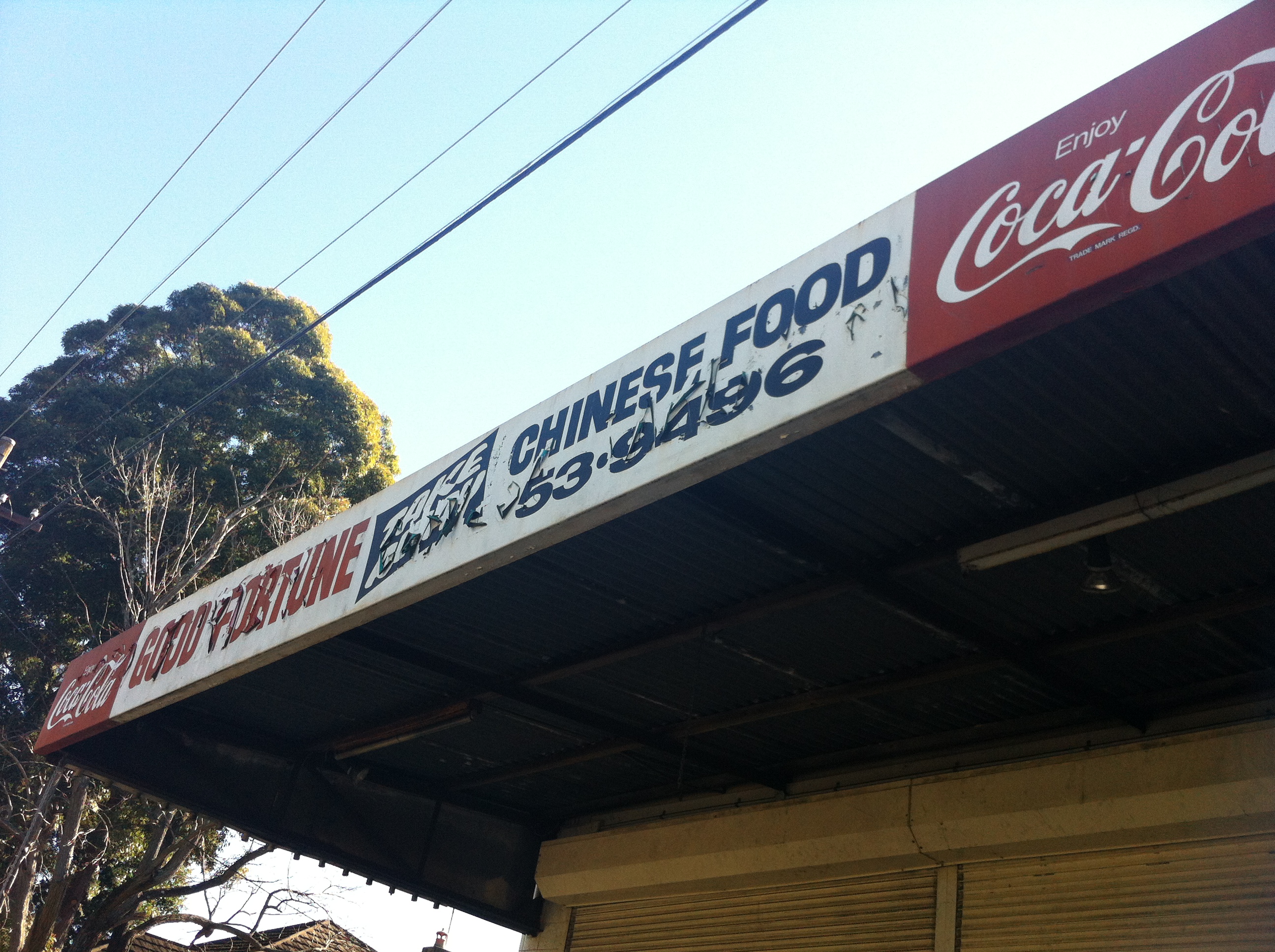
As old as the place is already (six digit phone number), the peeling paint on the awning suggests there’s an even older entity waiting to expose itself to the world. The shop appears to be part of the residential complex behind it, so it’s likely that someone bought the house and closed the shop. Good fortune for the homeowner, bad luck for the Good Fortune.
Oatley Village Video/Car park – Oatley, NSW

Here’s another victim of the video shop exodus. This one didn’t even have a franchise attached while it was alive, making it even harder for it to stay afloat once the VHS ocean started to get rough. I bought an ex-rental copy of Surf Ninjas on VHS from here years ago, so I know I did my part. I can sleep at night. Can you?
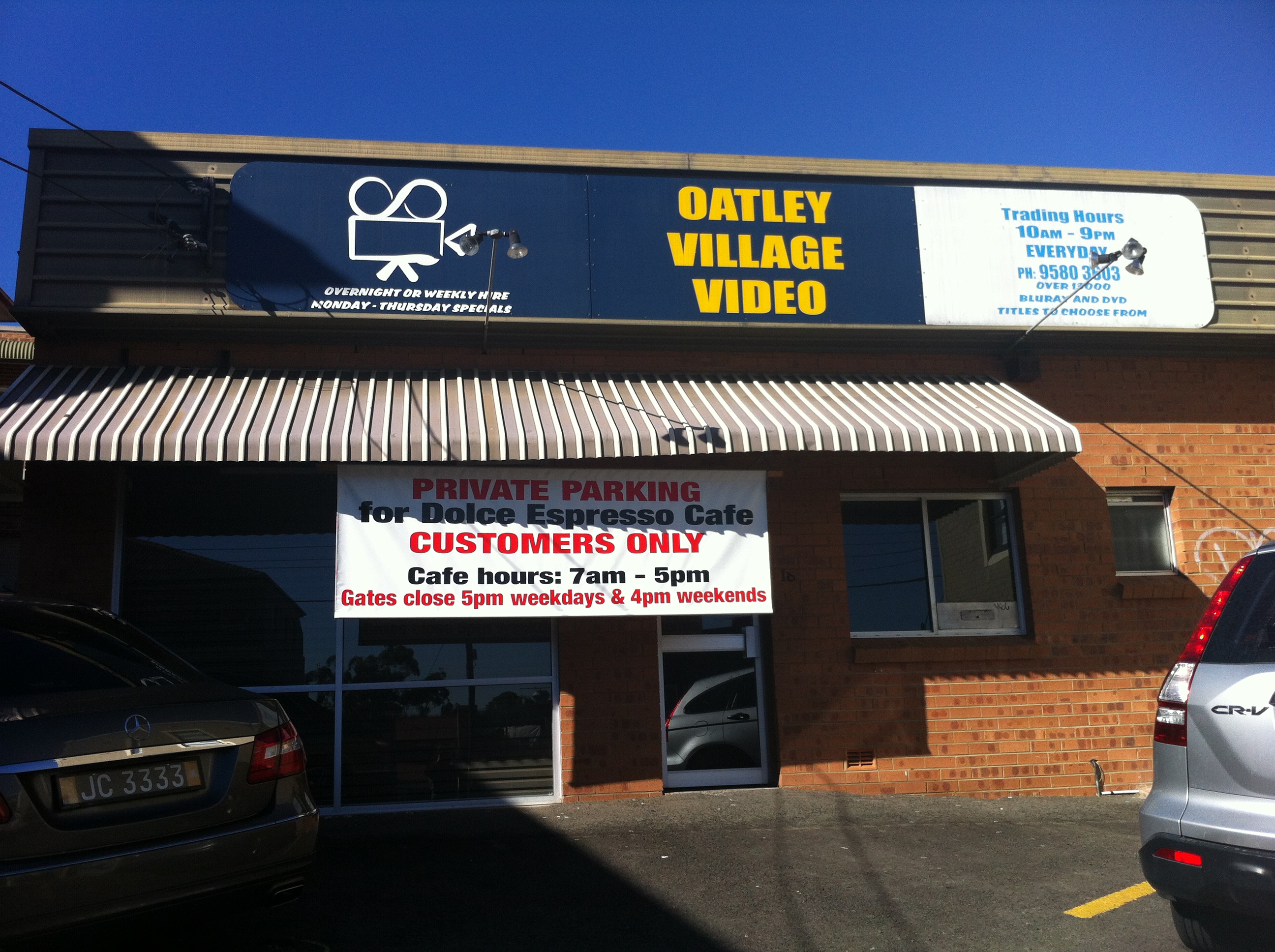
It’s since been turned into a car park of all things. You couldn’t even use the building for anything else? The cafe next door is that popular that it needs the three or four extra car spaces afforded it by this tiny space? Oatley is full of wide, long, empty streets to park in, especially since Coles won’t be setting up there. Oh, wait.
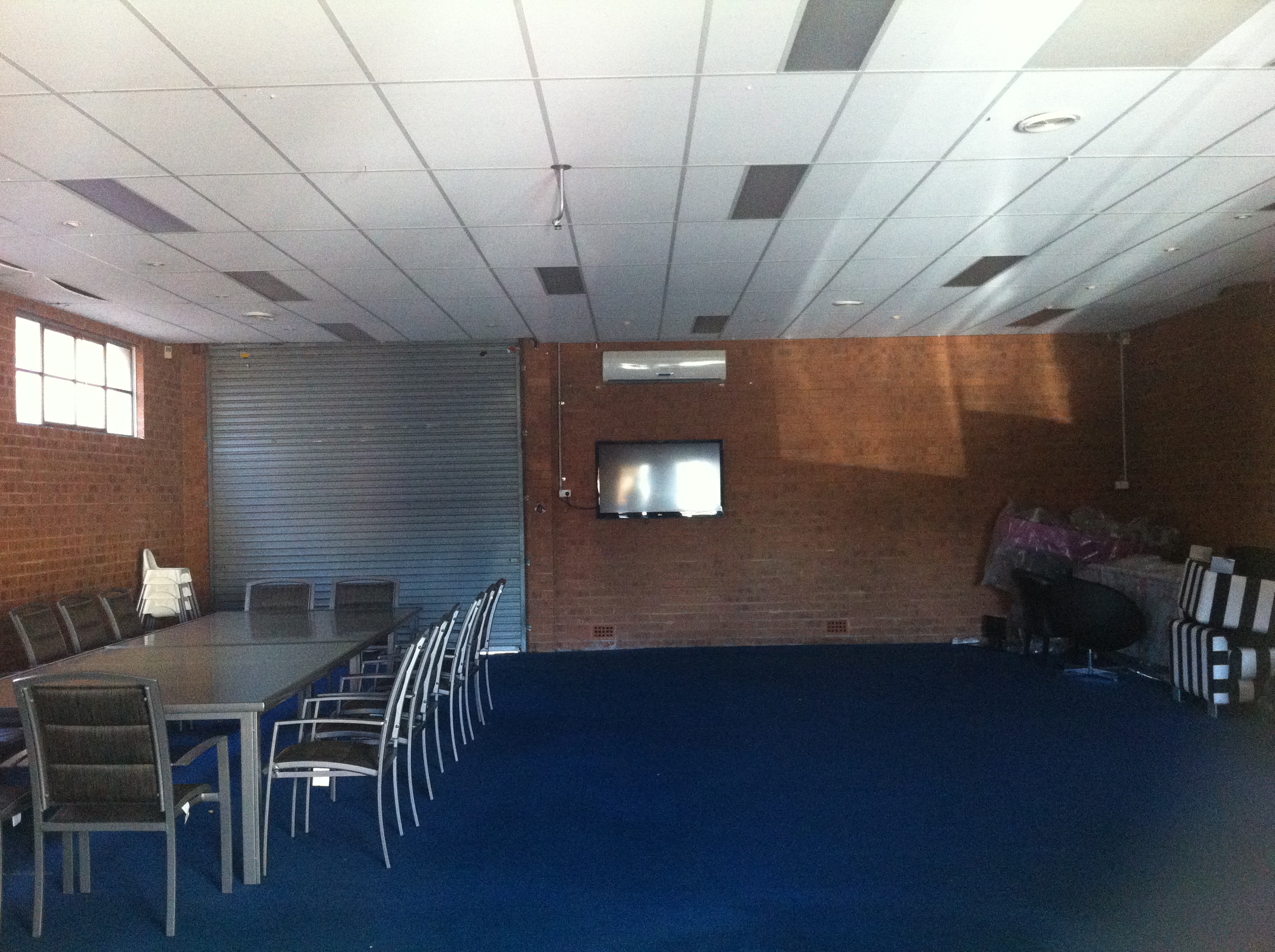
Inside it looks like a supervillain meeting room, where the Oatley Star Chamber plots world domination…or at least the downfall of Coles, their mortal enemy. It’s so barebones that you can see the rollerdoor that would have been used for new shipments of pure VHS goodness back in that time.
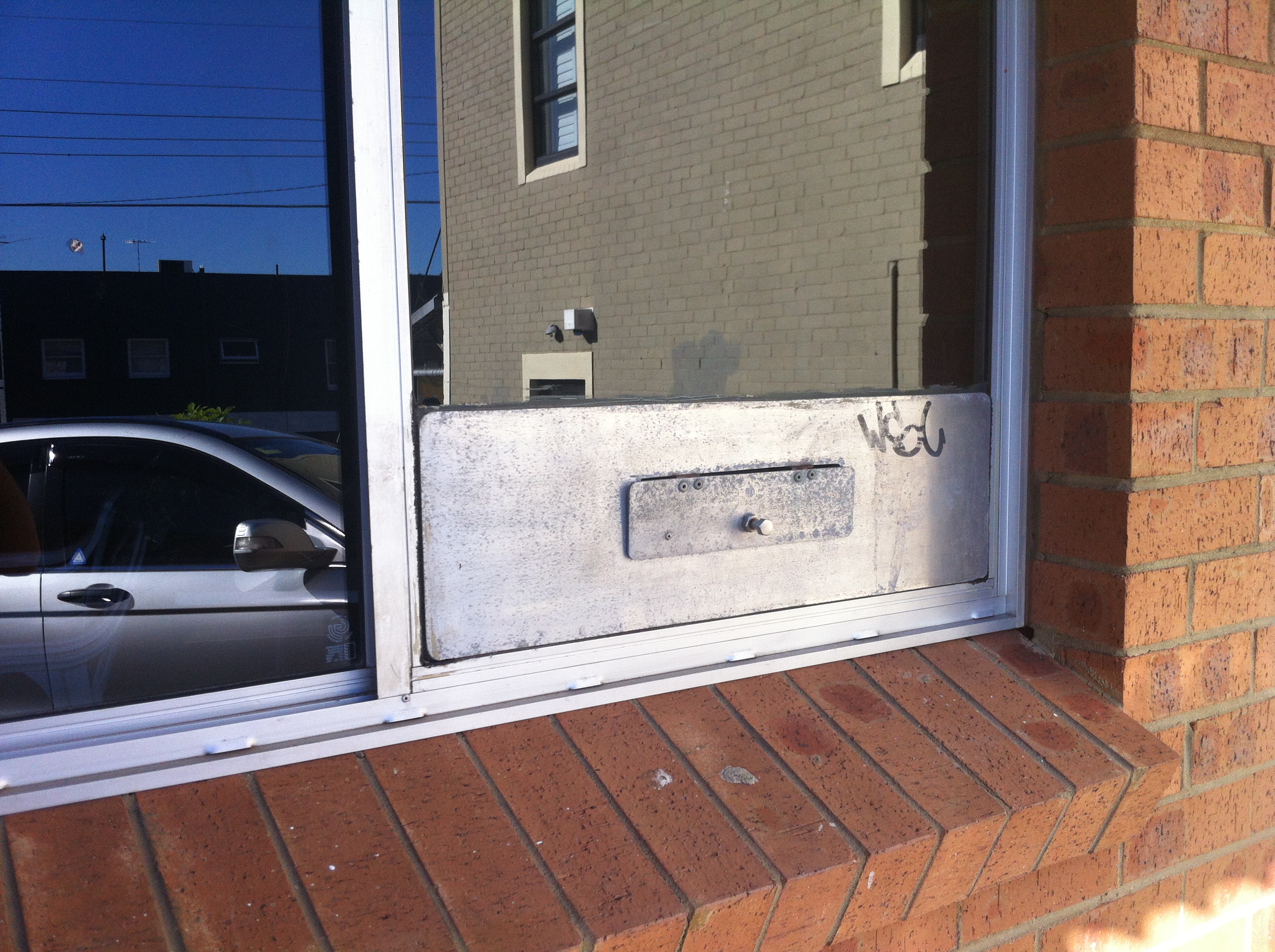
Here’s the after hours return chute the tardy denizens of Oatley would have used to return videos after the shop had closed for the day. Or, in some cases, never used at all:

That was three years ago. If you do that for long enough, of course you’re going to go out of business. This must have occurred to the kindly owner at some point, because a year before closing down he changed his tactics:
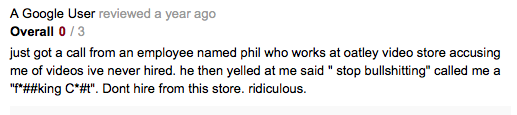
Take note, Darrell Lea.
Sharpie’s Golf House/Harmex Golf/Derelict – Sydney, NSW

I see you back there, Edwards & Co. Ltd. You’ll get your turn…
Yes, the kitschy neon sign is what Sharpie’s Golf House is best known for, but there’s a bit more to it than that. For starters, the sign has been gone for years, having been taken down by the City of Sydney in 2007 for ‘refurbishment’. How long does it take to replace a few tubes?
The origins of Sharpie’s Golf House lie in the shop next door. It’s currently the empty shell of the former Gold Sun Supermarket, but in 1918, when Russian immigrant Harry Landis bought it, it was the Railway Loan Office, named for its proximity to Central Station. Landis moved into the current Sharpie’s address in 1923, and proceeded to divide the pawn shop into two sections: musical instruments and sporting goods, with an emphasis on golf.

After the Second World War, the sporting side was renamed The Golf House, and in 1964 the animated neon sign featuring the world’s best golfer (he always gets a hole-in-one) was erected after six years of construction. Until its removal, it was Australia’s second oldest neon sign (Melbourne features the oldest. You gonna take that lying down, Sydney?). The music business moved to Park Street in 1977, and the Golf House became Sydney’s premier golf store. This prestige attracted pro golfer Lindsay Sharp, who bought the shop in 1985 and renamed it after himself, forcing a change to the neon sign. That’s why the red ‘Sharpie’s’ part looks so out of place.

Sharp himself sold the ever-declining business in 1999, and in 2004 it became Korean-owned Harmex Golf, which limped on for a few years before closing its doors for good in 2007. Looking around the area it’s not a surprise – what was once a thriving business zone has become a wasteland with a bad reputation, filled with backpacker hostels and husks of businesses long gone. I’m not complaining; it’s great for what I’m doing. But it’s a sad look for the city, especially so close to the train line. Besides, it’s not like there are any golf courses in the immediate vicinity, so it’s not hard to imagine the golfing community getting fed up with making the trek out here every time they wanted a decent 5-iron. At least they made for good weapons when they stepped back out into the street.

The building today is a mess. Sharpie’s has been dulled. It’s dirty, covered in posters and falling apart. Even by Elizabeth Street standards it’s an eyesore. The part I’m having a hard time getting over is the indoor driving range. It had an indoor driving range! For how long? How did it work? I’ve played those virtual golf simulators indoors before, but surely this was set up long before those were around. It’s not even that long a building, how did Sharpie have room to get his drive on?

Do all those hole-in-ones count if he’s been playing the 19th hole all these years? Image courtesy SMH, 25 Aug 2003
It’s alleged that the sign sits inside, heritage listed, waiting for a spit and polish that’ll likely never come. There have been a few proposals submitted to the Sydney City Council to demolish the current site and reincorporate the sign into whatever is built in its place, but all have been declined. It’s not like they’re going to build another Golf House, so why not just leave it in the past? Why not take the opportunity to breathe some life back into this part of town, and create tomorrow’s heritage listed signs? For all the talk of preservation, Sharpie was quick to flush a 20-year-old sign down the toilet to remake it in his image. It’ll likely go the way of the Regent Theatre on George Street, and we’ll be able to live in Sharpie Tower in 20 years time. There’s something to look forward to.
Chinese Restaurant/Hyang Won Korean Restaurant/For Lease – Strathfield, NSW
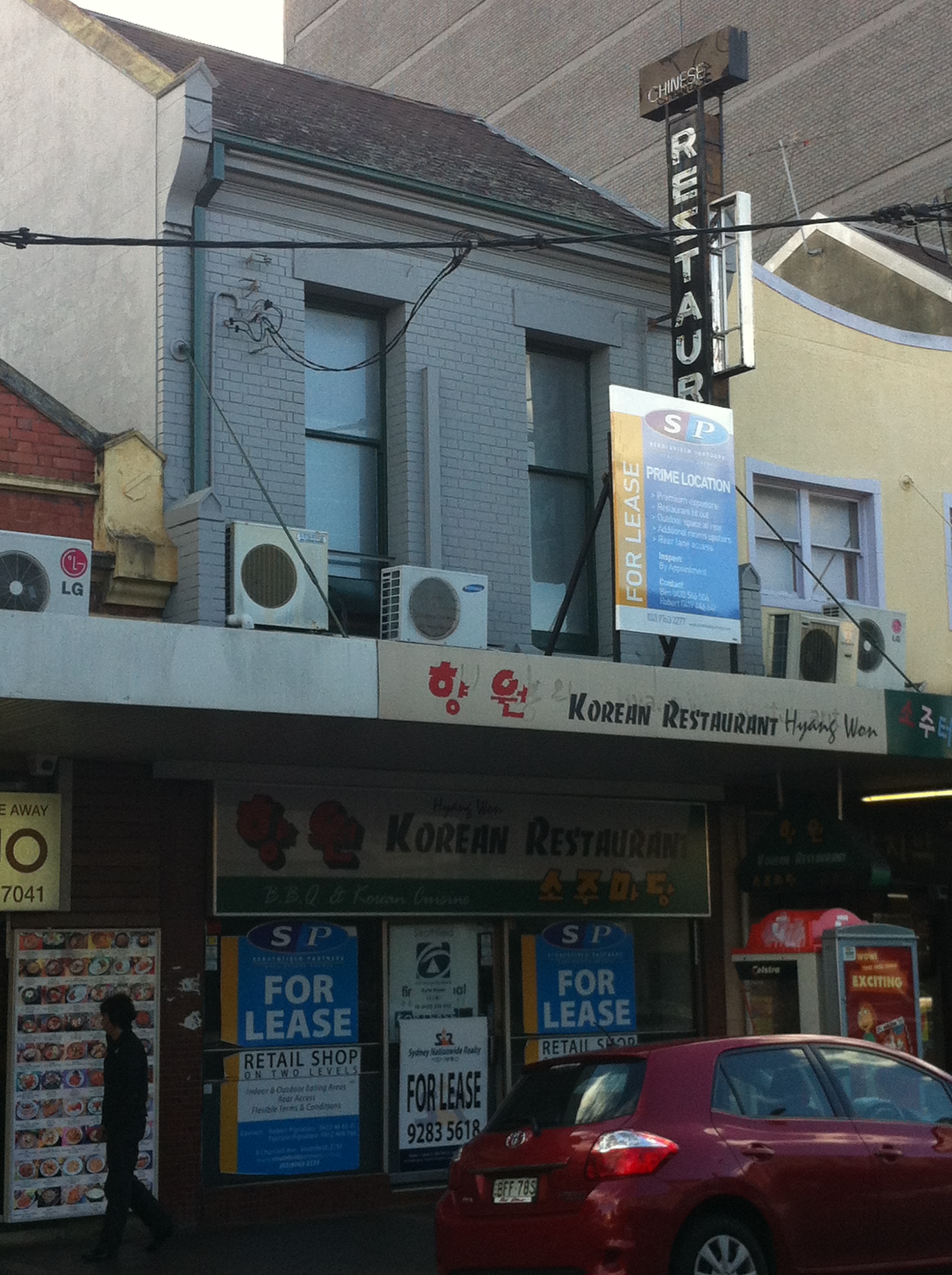
By leaving the previous tenant’s neon ‘Chinese Restaurant’ sign up, this Korean restaurant hoped to bank on an underlying current of the ‘they all look alike’ mentality to put bums on seats. Perhaps it’s a good thing then that they’re no longer in business? In reality it looks like this restaurant was part of the ‘by the people, for the people’ trend that saw Chinese restaurants originally established to appeal to the more adventurous members of white Australian communities replaced with Korean restaurants designed to cater to the area’s blossoming Korean community…and it closed because apparently, the food sucked. Japanese next time?
Rookwood Necropolis Railway – Lidcombe, NSW
A fact which escapes many people is that Rookwood Necropolis, located in Sydney’s west, is the largest of its kind in the Southern Hemisphere. It’s huge. It has its own postcode. Originally named Haslem’s Creek Cemetery, it opened in 1867 as a replacement for the close-to-capacity Devonshire Street Cemetery, itself a replacement for Sydney’s old burial ground, where Town Hall now stands. For once, they chose a winner – nearly 150 years later and it’s still not full.
A visit to the cemetery makes clear that although much of it is made up of graves from the distant past, it’s still a working cemetery and there are new additions all the time. But back when cars weren’t so commonplace, the easiest way to get a corpse and mourners from point a to point b was by train, and the premier way to do that from 1867 onwards was by rail. Trains would depart from Regent Street’s Mortuary Station and deviate at Lidcombe to the Rookwood line.
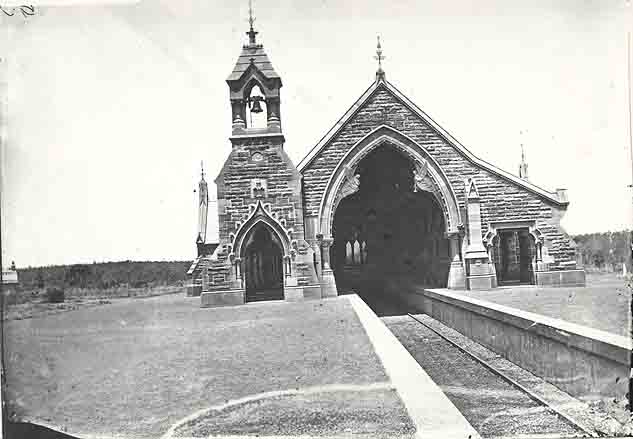
Rookwood’s Mortuary Receiving House No. 1, 1870. Image courtesy State Records NSW.
Once a train entered the Necropolis, there were four stations within the grounds at which to stop (that’s three more than Castle Hill ever had), with the main one romantically named Mortuary Receiving Station No. 1. Once again designed by James Barnet (currently a Rookwood resident), this was the most ornate of the four, and was a sister station to the one on Regent Street. Crafted to be reminiscent of a church, like Regent Street, Rookwood No. 1 featured a bell that would ring out half an hour before departure so as to let mourners know to get back on the train or get left behind. Looking at both this one and the Regent Street station it’s easy to see that they fit in perfectly with the Victorian era’s fascination with death and the afterlife (not to mention trains). It’s powerful imagery – your journey ended with angels holding scrolls and trumpets as you arrived at your final destination. Can’t say that about Epping Station. Once again, the station proved to be as murderous as its twin. That, or these are just some cases of people being in the right place at the wrong time:
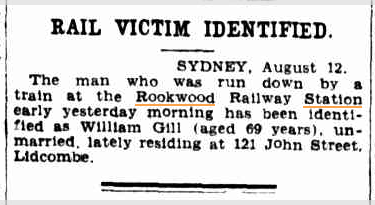
Brisbane Courier, 13 Aug 1932.
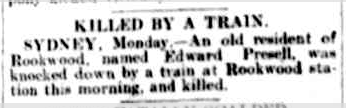
Argus, 27 Feb 1906.
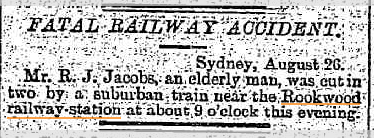
Adelaide Advertiser, 27 Aug 1896.
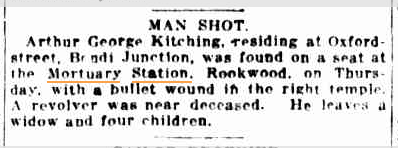
SMH, 20 Nov 1915.
In 1901, the line was expanded to include more stations within Rookwood, but none were constructed with such grandeur as No. 1 (which incidentally wasn’t as grand after the expansion, as part of its waiting rooms had to be removed to make way for the through line). No. 2 featured just a timber shelter:
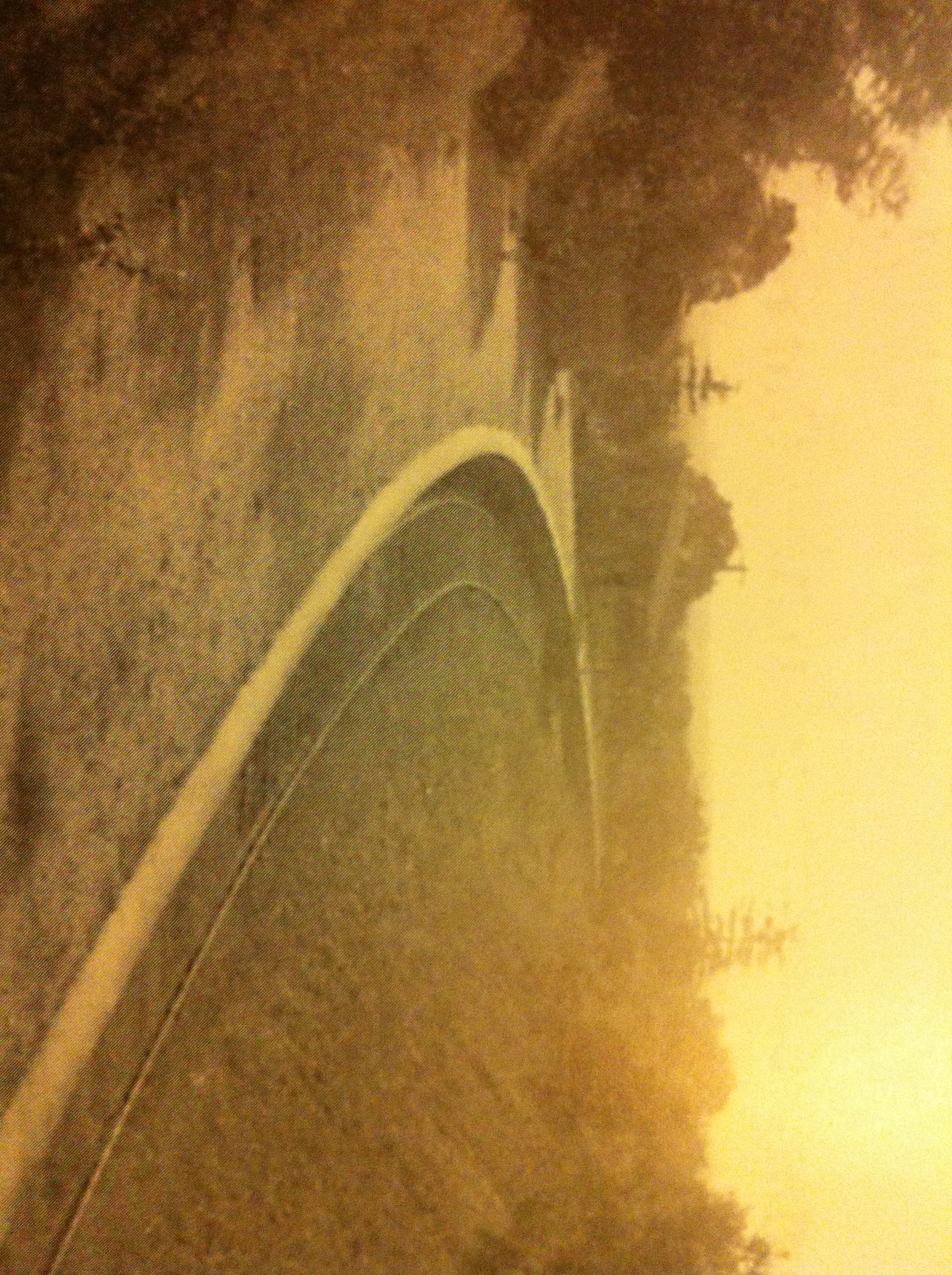
Rookwood’s Mortuary No. 2 Station, 1948. Image courtesy I. K. Winney/John Oakes.
No. 3 was the only other station in the line to have had any kind of thought put into its design, and that’s partly because it was built from the former waiting rooms of No. 1.
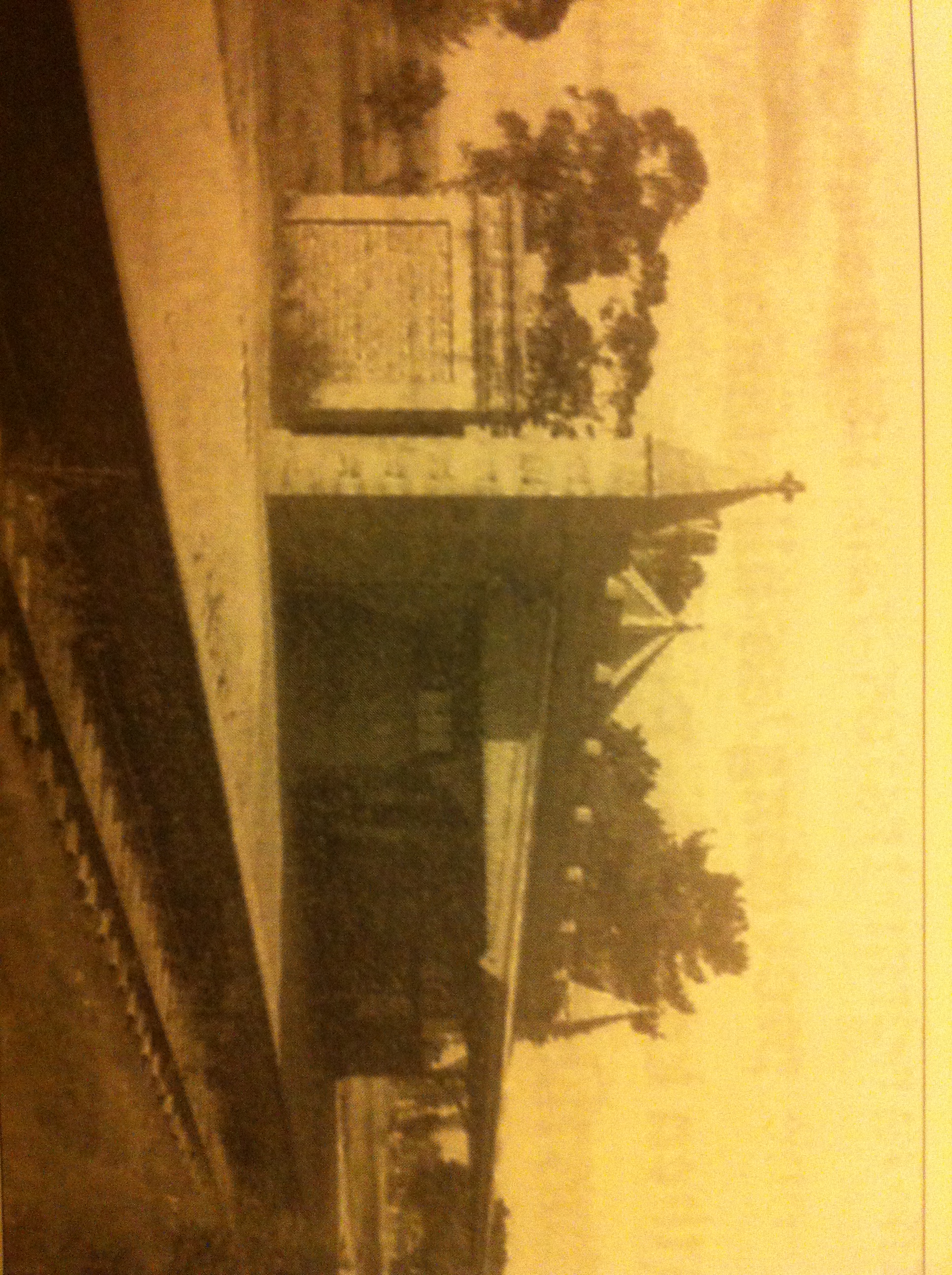
Rookwood’s Mortuary No. 3 Station, 1948. Image courtesy I. K. Winney/John Oakes.
No. 4 was added in 1908, when the line was at its peak (particularly on Mothers’ Day). Again there’s no disguising it’s really just a shack along the platform.
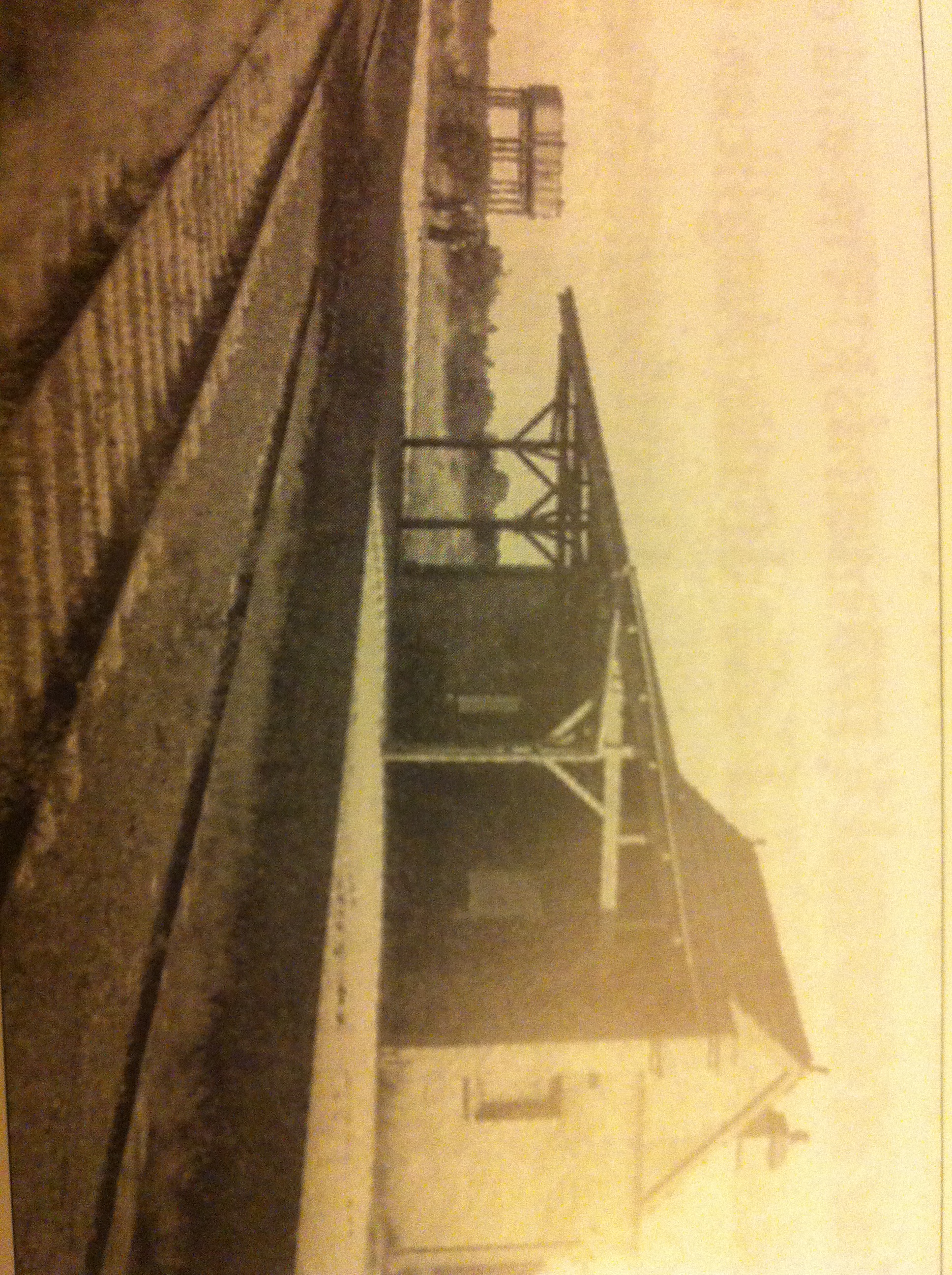
Rookwood’s Mortuary No. 4 Station, 1948. Image courtesy I. K. Winney/John Oakes.
As with Regent Street, as cars became the preferred way to get to and from (or in some cases, just to) a Rookwood funeral, the train line’s usefulness declined. It’s not like residents could catch the trains to and from work. In 1948, the line was decommissioned, and in typical CityRail style wasn’t completely removed until 1965 (even now, a Cemetery siding still exists off Lidcombe Station. Nice work, fellas). The stations themselves then passed on to their next life, some more interesting than others.
The site of No. 4 has since become a bus stop. Buses replaced trains as the public transport of choice to Rookwood after 1948. I’m assuming corpses still ride for free. Neither No. 4 or No. 2, the lesser stations, appear on the current Rookwood map. It’s almost like they don’t want you to know where they were, but the truth is that there’s not much at either site, so there’s almost no point in going there. No. 2, the least impressive of any of the stations, is today just a large green curve of grassy land bordered by tombstones – not exactly a standout spot at Rookwood.
No. 3, however, is a different story. Because it actually featured a building that would require things like foundations, the site is marked on the map, and today exists outside the Catholic Cemetery Trust office and carpark. It’s fascinating:
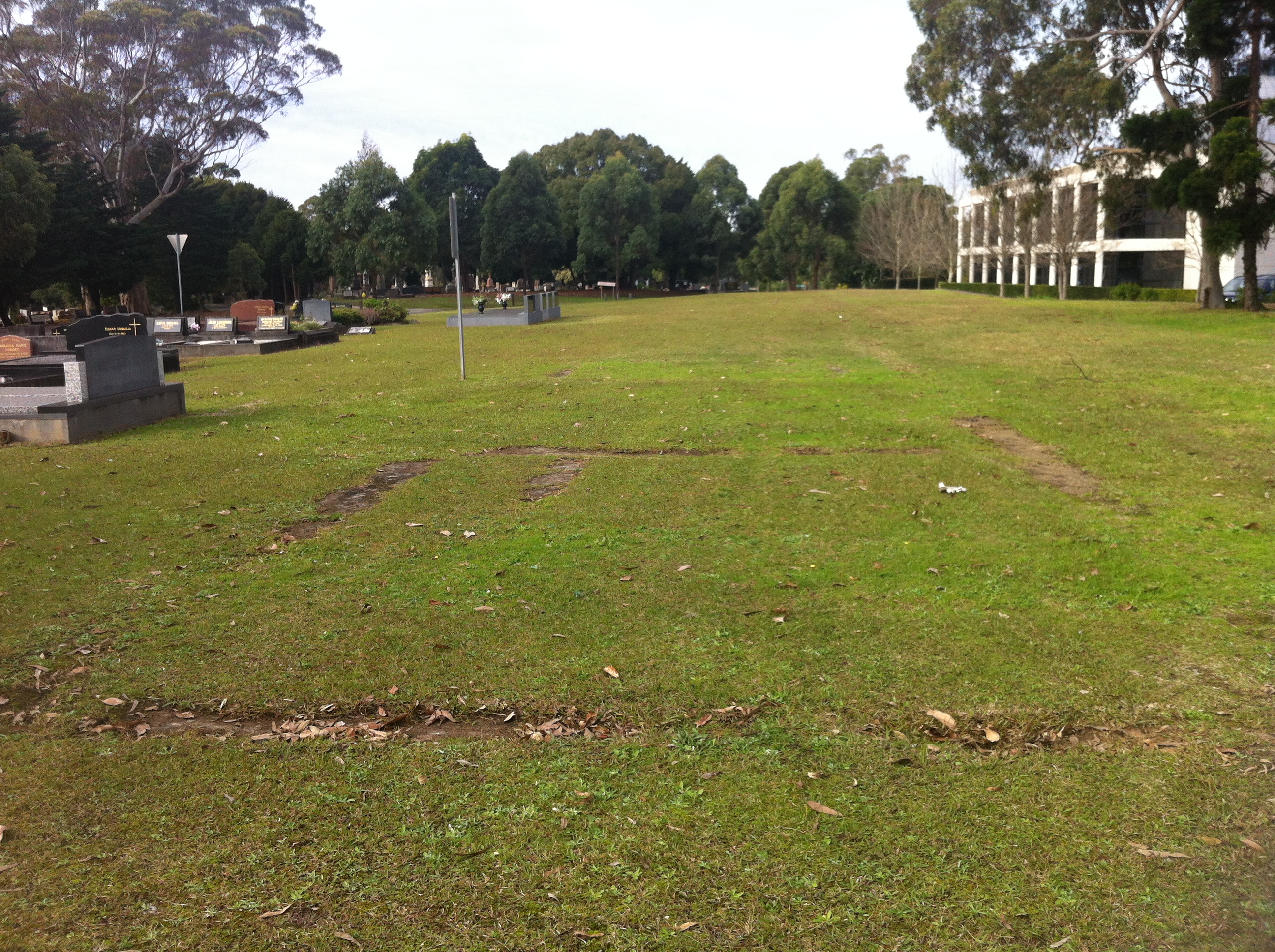
No. 3 Station, 2012.
There’s no sign or anything apart from the hint on the map to let you know what this is. It’s so nothing that you almost wonder why they bothered leaving it there, but there it is.
No, the real story behind the Rookwood stations is the fate of Receiving House No. 1.
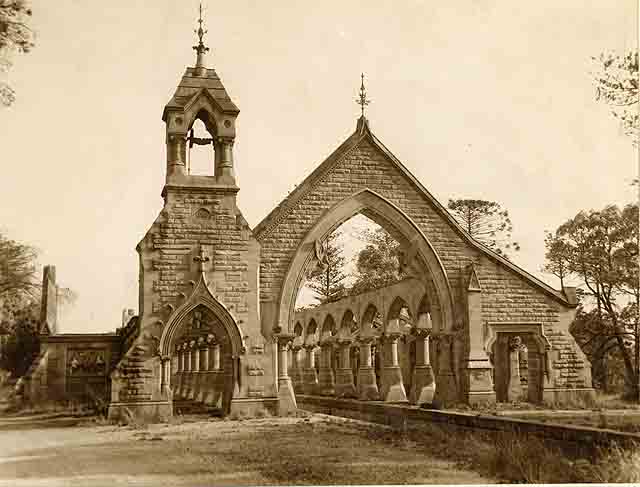
Rookwood’s Mortuary Station No. 1, 1952. Image courtesy State Records NSW.
After 1948 it fell into dereliction. A bushfire destroyed all the woodwork, it became a popular place to drink at night (why?!) and, indignity of indignities, someone pinched the bell. Now let me stop this right there; someone stole the heavy bell? Who does that? How do they do it? Did they plan it? Case the bell for a few weeks before realising that the residents couldn’t do anything about it even if they tried? Did they back up the ute and load it up? Where is it today? Baffling.
The Railway Department needed to offload this bomb, and in 1952 it went on the market. It’s a strange decision; if RailCorp suddenly decided to close, say, Croydon Station, would it appear on the market not long after? Or maybe on eBay, with the Rookwood bell? Presumably because no one had internet back then, the station still hadn’t sold by 1959, when a Reverend Ted Buckle had a brilliant notion.
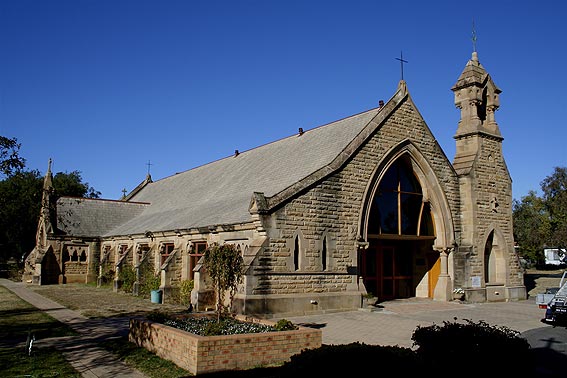
All Saints Anglican Church, Ainslie, Canberra.
The station was bought by the All Saints Anglican Church in Ainslie, Canberra, to be its new building. It was demolished and reconstructed brick for brick…well, almost. Notice anything different? First off, they had to get a new bell, but second, the bell tower’s on the opposite side. Did they just forget where it had been in the first place? Didn’t the bricks not match up? Anyway, churchgoers in Ainslie still attend Mortuary Receiving House No. 1 each week, mostly unaware of the building’s history (despite the fact that it’s discussed in detail on the Church’s website).
Meanwhile, back at Rookwood, a monument has been built to commemorate No. 1 and the Necropolis’ rail history in general.
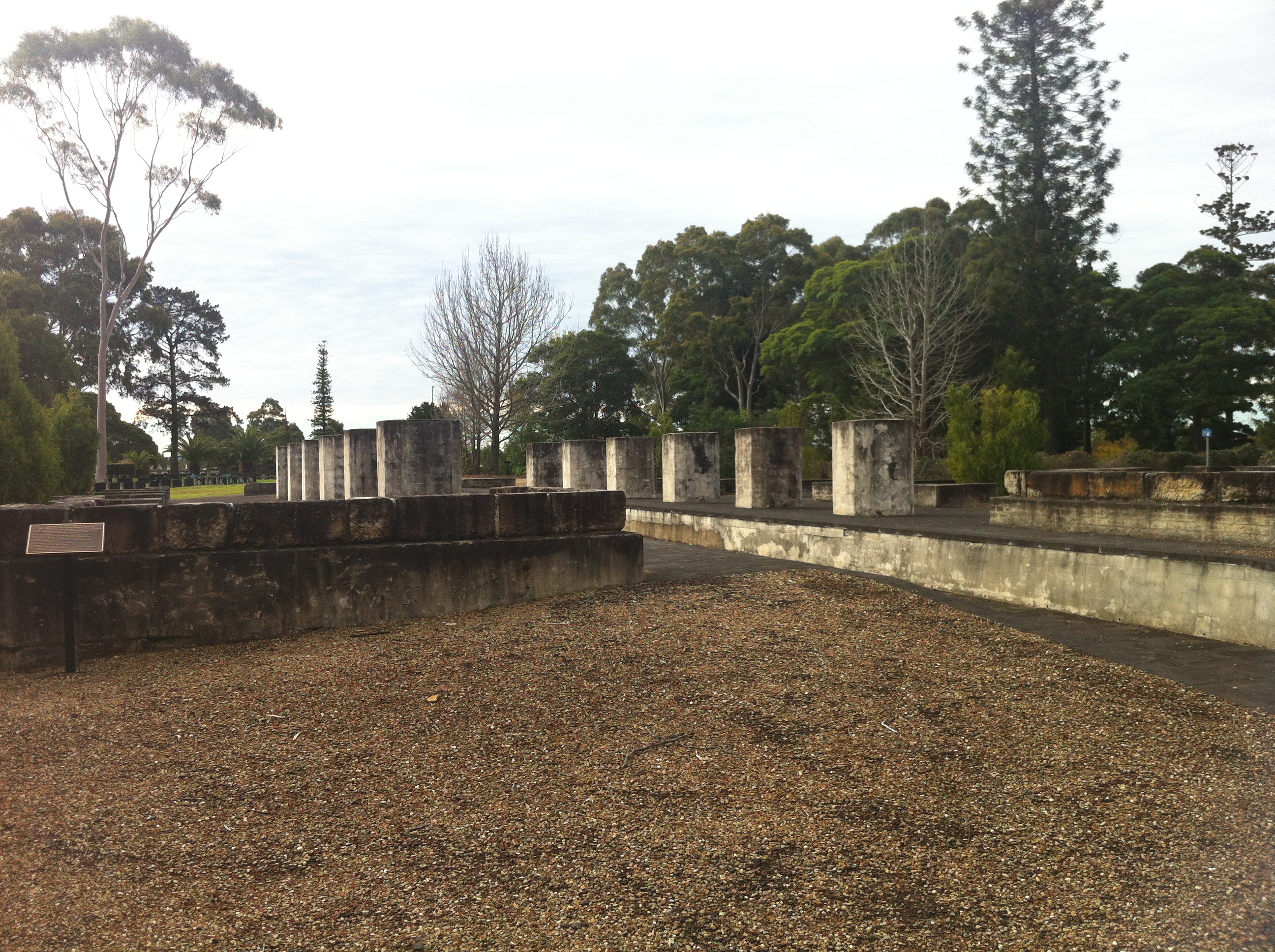
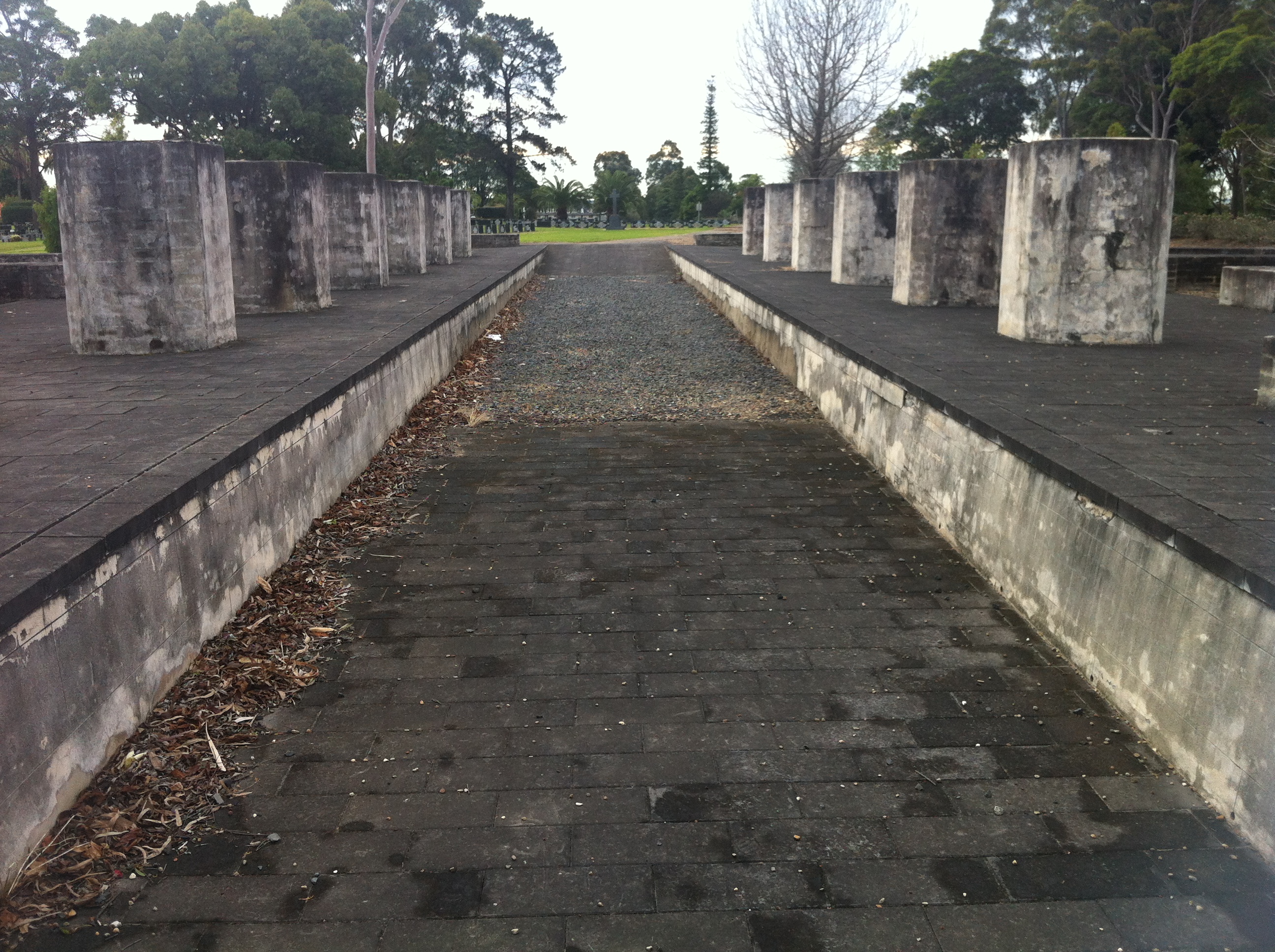
It looks nice, and it’s very subdued. It doesn’t look out of place in the gloomy surrounds of Rookwood, and residents no longer need to worry about the noise pollution of the trains. Happy endings all around…especially for that sicko who’s out there somewhere, gleefully ringing his ill-gotten bell over and over, laughing maniacally.

 Past/Lives of the Near Future