F4 Expressway/SWR Western Motorway/M4 Freeway – Concord, NSW

Image courtesy RTA Magazine/OzRoads
As promised, we’re now going to plunge into the half-assed history of the M4 freeway’s eastern terminus. I’m imagining you’re already as joyful and excited as those people on the bridge above, but don’t peak early – we’ll dig up some good stuff. If I do a half-assed job, consider it an homage.
After World War II it became clear that Parramatta Road wasn’t going to cut it anymore as a way of getting people to and from the western suburbs of Sydney, which had exploded in terms of population. Of course, in those days, Leichhardt was a western suburb, but you get the idea. In 1947, the newly created County of Cumberland Planning Scheme identified a possible route for an expressway which would connect Glebe to the Great Western Highway at Lapstone (of the treacherous Lapstone Incline fame). In reliably speedy NSW Government fashion, the corridor of land was reserved in 1951.
As an aside, I’d just like to shine the spotlight on my ignorance: I had no idea what Cumberland County was, and I was surprised to learn that not only was it created by Governor Arthur Phillip in 1789 and encompasses most of the Sydney metro area, but that there are 141 counties in New South Wales. A shadowy cabal of local government councillors would elect the Cumberland County Council, which then had a powerful influence over town planning in metro Sydney. Spooky stuff.
Anyway, the M4’s construction started backwards, with the first stage completed at Emu Plains in the late 60s. The late 60s. After the plan was formed in 1947. Yeah.
As the freeway crept closer and closer to Sydney, the pocket of land set aside to relieve the ever-building traffic pressure in the city waited patiently for its turn.
It’s still waiting.

This is the start and end of the M4, and as close as the freeway gets to the city. Every day, traffic from the western suburbs and beyond is ripped from the (theoretically) 90km+ flow into the waiting 60km arms of Parramatta Road, Concord. Citybound motorists must then contend with the stop/start rhythm of Sydney’s oldest road and a new nightmare: traffic lights. If this sounds awkward, it’s because it is. And it looks even more awkward:

Image courtesy Google Maps
In 1976, the F4 freeway (as it was then known) was all set to drill right through the inner west and end up at its intended starting point in the city, Glebe. But Glebians (?) had had over 20 years to prepare their outrage and protests, so the Department of Main Roads found itself staring down a pissed off neighbourhood that feared the freeway would shatter its layout and atmosphere. In what would be the first of many such moves for the NSW Government, it backed down. The Concord to Glebe section of the freeway was abandoned, and a backup plan was hastily slapped together.
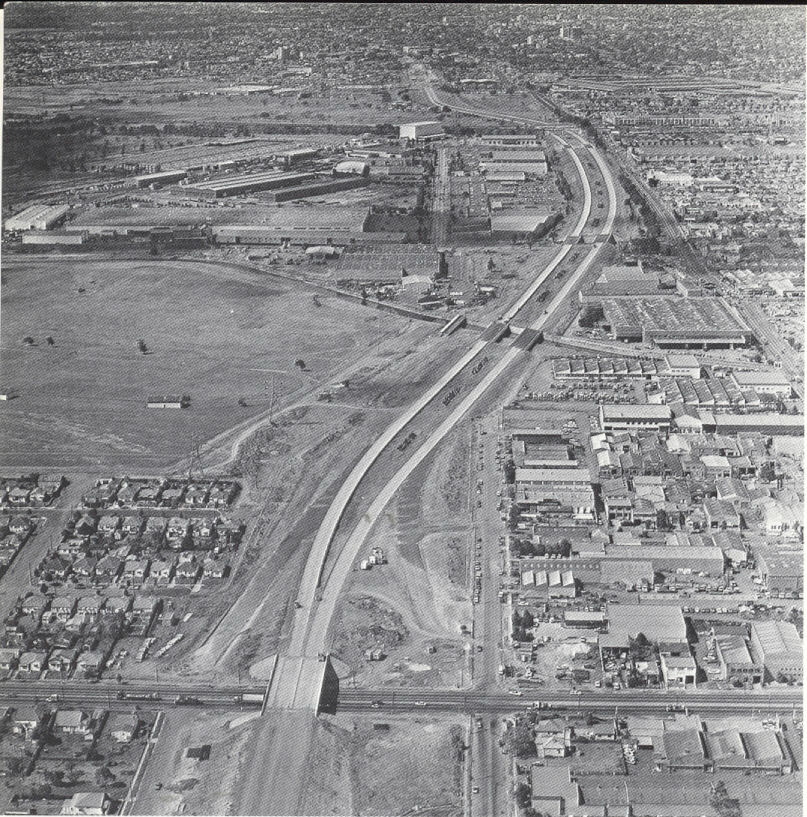
The F4 prepares to cross Silverwater Road, 1979. Courtesy Main Roads Journal/OzRoads
Also hastily slapped together were the physical components of the eventual fix, which was to spill the M4 onto Parramatta Road and hope that it all worked fine. In 1982, more than 30 years after planning had commenced, the section of the M4 between Concord and Auburn was opened to traffic, despite the next section between Auburn and Granville not being complete.

Concord reforged: the F4 ends, 1985. Courtesy Main Roads Journal/OzRoads
What a shemozzle! Although the rest of the freeway west of Concord was eventually completed (pretty much), it’s the section between Concord and Auburn that remains the most interesting and telling of the struggles that went into constructing it. With the O’Farrell Government now gearing up to deliver on its promise to complete the M4 (via a tunnel system, natch), it’s as good a time as any to see what kind of stopgap measures we can look forward to.

Where the M4 itself joins Parramatta Road, it LITERALLY joins Parramatta Road in a series of glued on slabs of cement. It’s easy to see the difference in road material here..

…here…

…and here. This is because the entrance to the M4 as it is today was originally part of Concord Road, which was relocated a block to the west. Why? Bear with me…
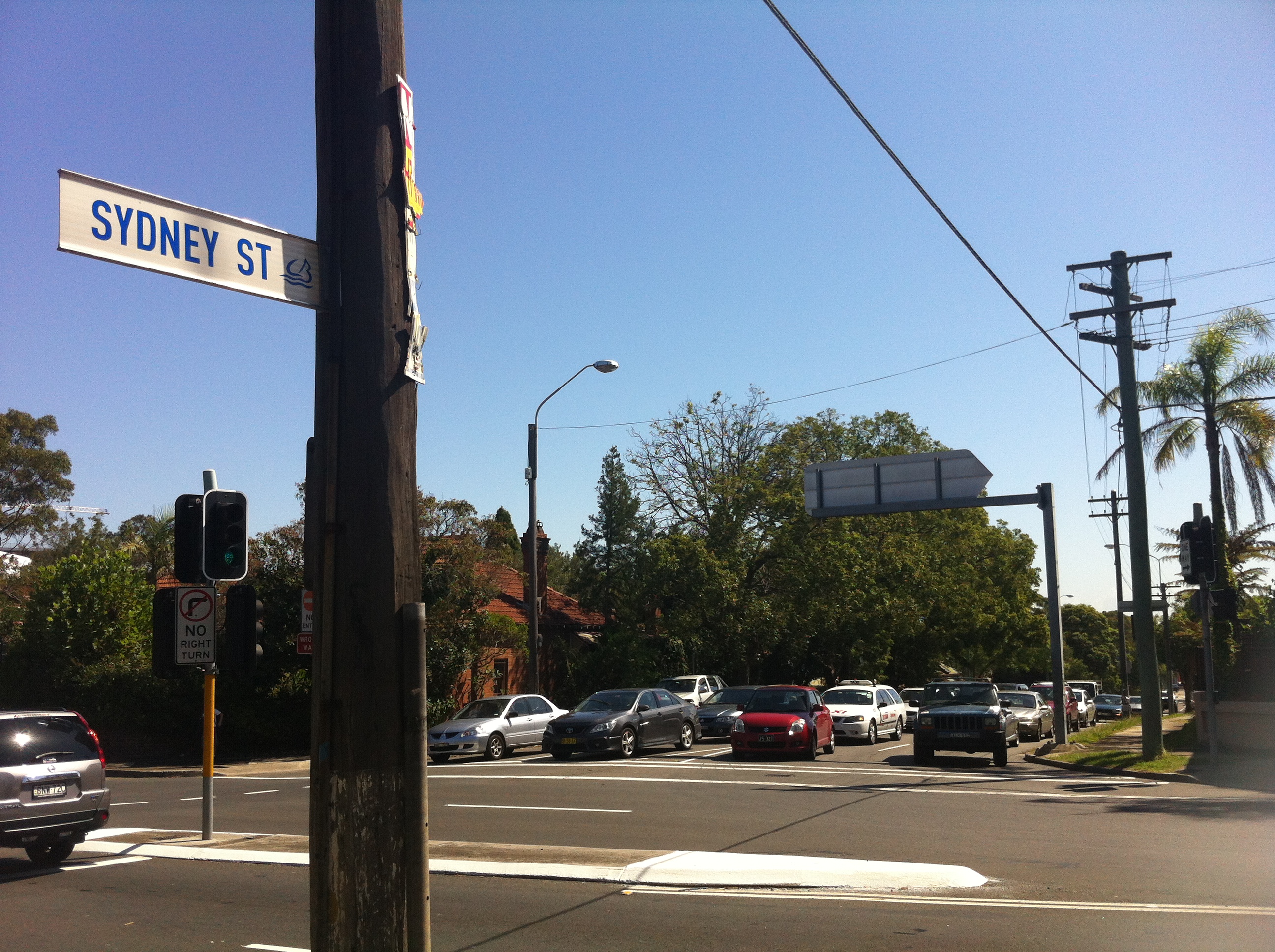
When this section was completed in 1982, the one-way Sydney Street was the only way off the M4. Traffic would then spill into Concord Road, which at the time followed a different alignment…

…being this, the current end of the M4. To accommodate more traffic, Concord Road was realigned to cross Parramatta Road instead of joining it.
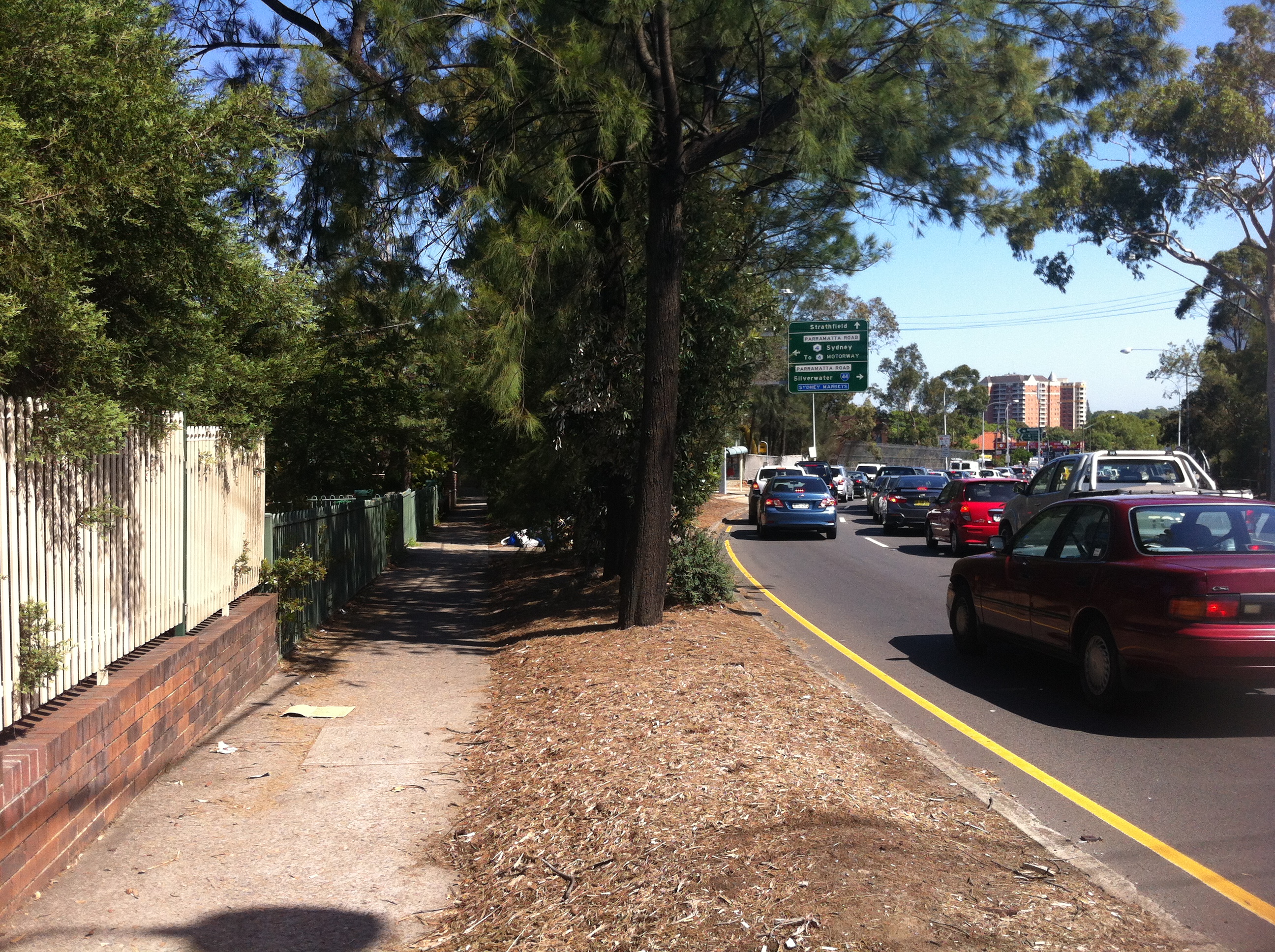
Concord Road was extended towards Leicester Street on the other side of Parramatta Road, and the former curve was filled in by parkland and a bus stop:
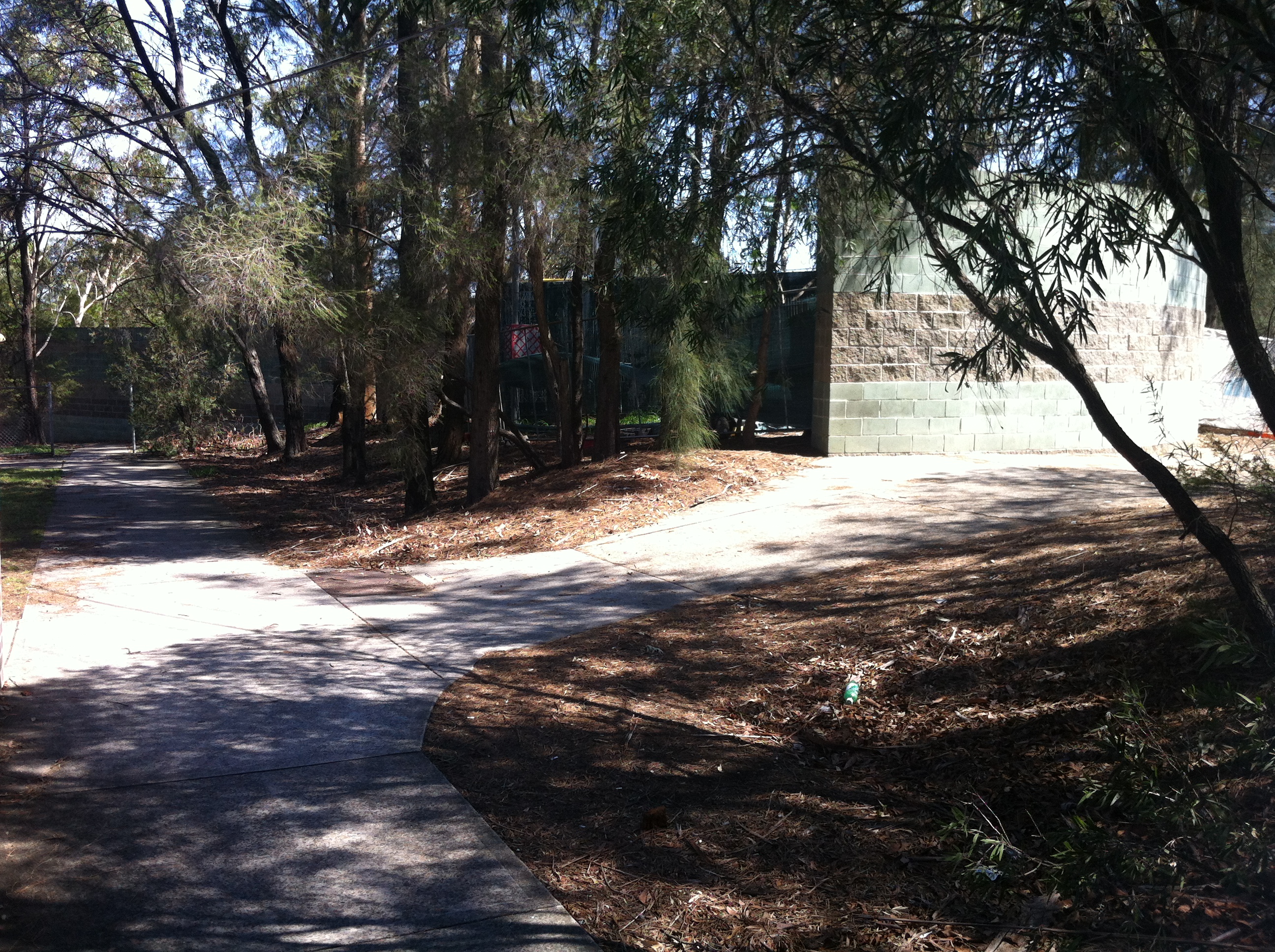
So if you’ve ever wondered what this big bit of nothing was all about, that’s the story, although it could be argued that providing more access for buses adds to Parramatta Road’s problems, but that’s another story.

A tunnel was dug here between the M4 and Concord Road to form the overpass that exists there today, and to direct the traffic flow onto Parramatta Road. What was the fruit of all of this effort? One set of traffic lights is bypassed by eastbound traffic.

This restructure meant that Young Street, which in 1982 acted as the eastmost on-ramp for the M4, was cut in half by the new end of Concord Road. What was once one of the most important streets in Sydney now ends with a whimper:

…where once it would have joined the M4 it now provides access to a unit block’s carpark.
As mentioned, the other problem the M4 faced in 1982 was that it stopped at Silverwater. You could get on at Young Street, belt down the freeway at 90km/h in your Holden Monaro for about five minutes before being dumped back onto Parramatta Road, the defacto western expressway, at our old friend Melton Street.
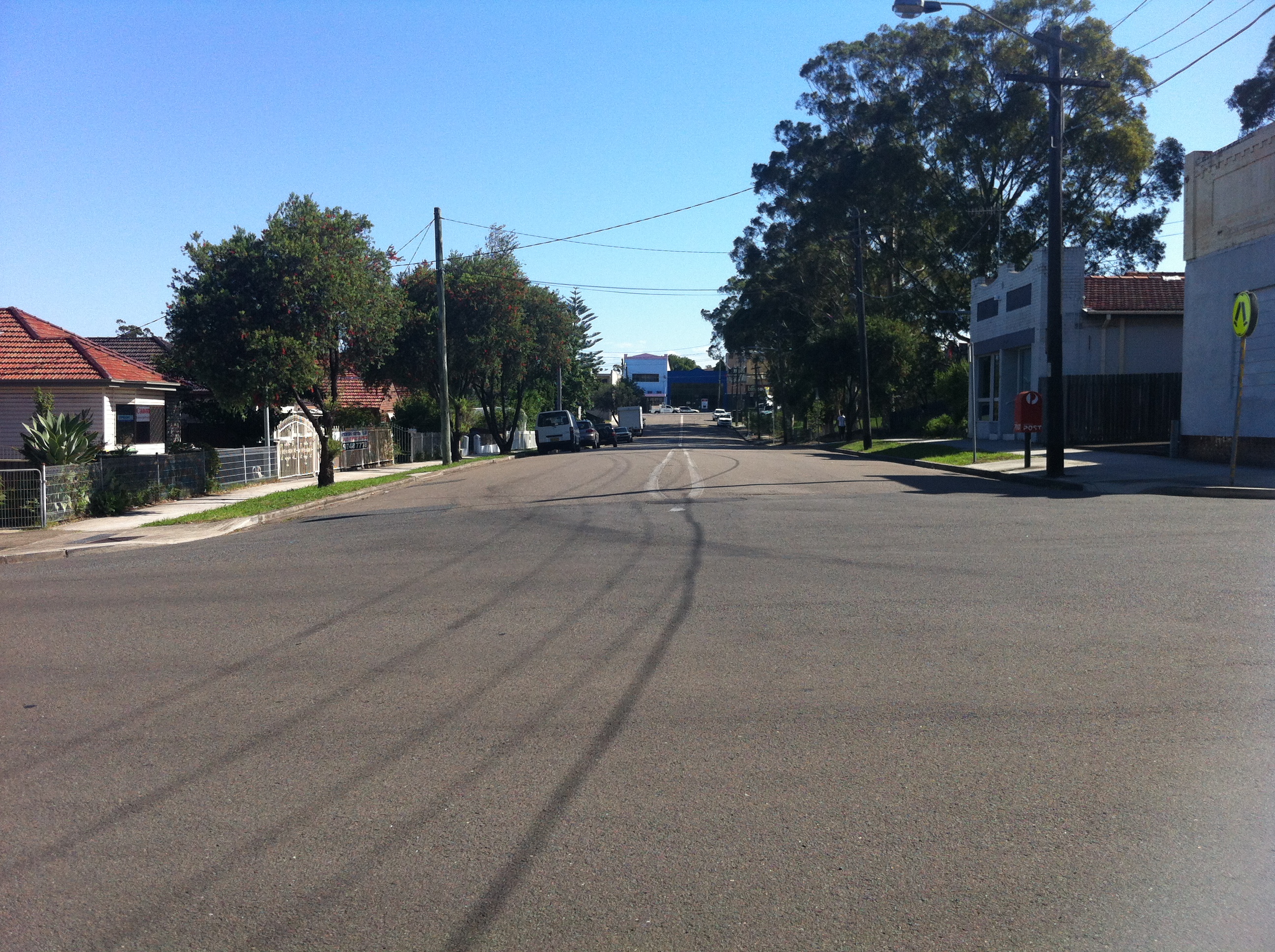
Yes, this is the sight you would have faced exiting the M4 between 1982 and 1984, when the next segment was completed. You would have zoomed up past the school and the Melton Hotel, and then back onto Parramatta Road for the next million years if you were trying to get to Springwood. If we look a bit closer, we can see where the exit ramp used to be:

In the bushes between Adderley Street and the M4 you can see a clear path the motorists would have taken to rejoin Sydney traffic. I’m assuming the RTA has set this land aside for future widening of the freeway, as if that will ever happen, but in the meantime it gives us that vital link to the past. Once again, a seemingly insignificant little road like Melton Street actually did have a grander place in the scheme of things. Parramatta Road: where anything can happen.
Further up from Melton Street is the Silverwater mainstay Stubbs Street, as seen in the very first picture in this article. The M4 proceeds under the Stubbs Street overpass…
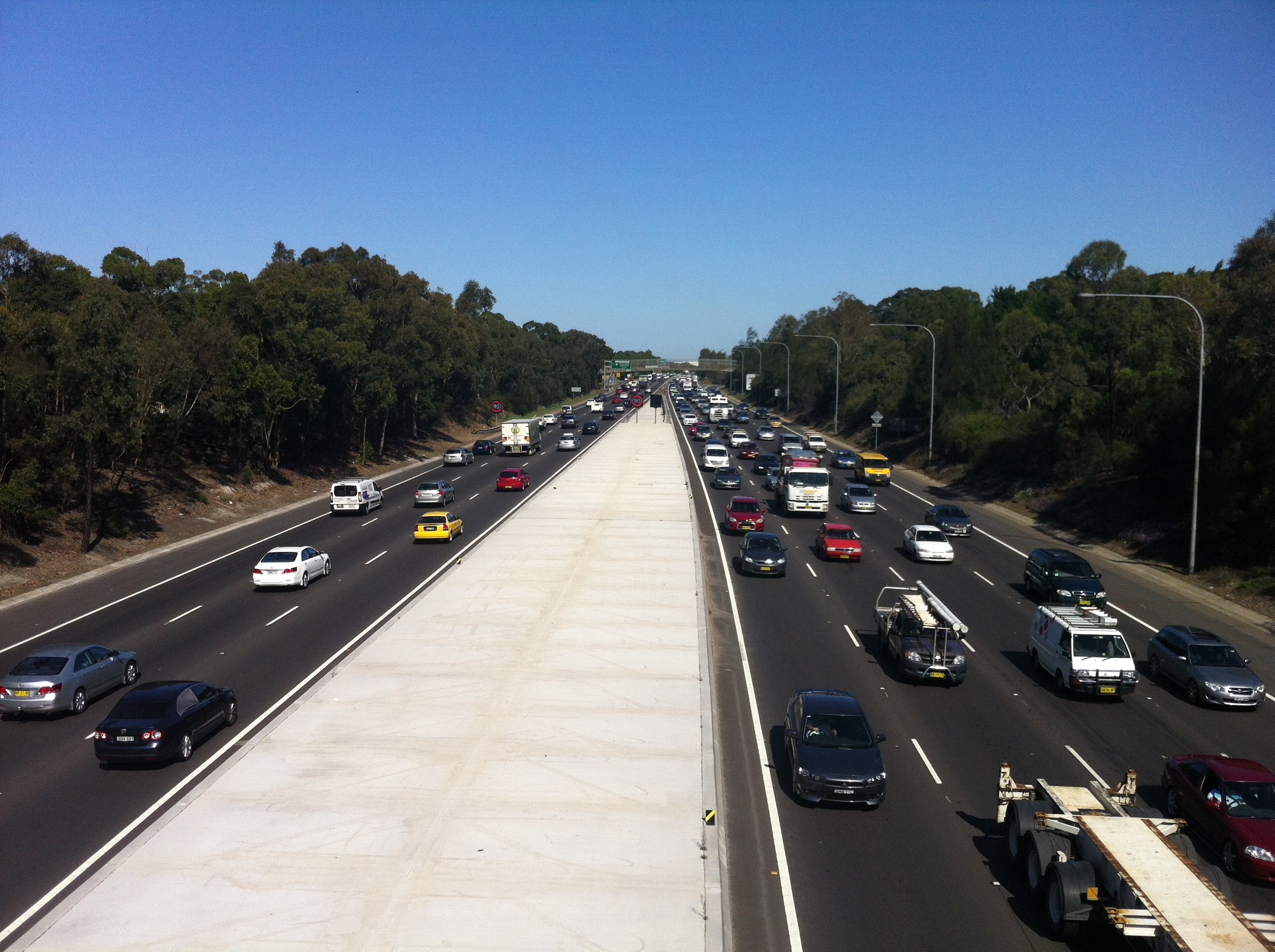
…which was completed in 1981 to mark the end of this section of the freeway.

Once the next section between here and Granville was completed in 1984, Melton Street was once again exclusive to pub patrons and parents dropping off their kids, while motorists were free to drive on to the west.
Or were they?

By 1989 only a small section of the M4 as we know it today was missing, and a private consortium, StateWideRoads, was contracted by an exhausted NSW Government to finish the job. As we all know, a grand don’t come for free, so by the time this missing link (and some hastily approved widening) was completed in 1992, someone had to pay.
That someone was you.

SWR tollbooths, 2007. Image courtesy someone who isn’t me.
It was determined that the section between James Ruse Drive at Granville and Stubbs Street, Silverwater was the section through which the majority of cars would pass, thus ensuring the shortest possible time for a toll to be in place. In May 1992, $1.50 was required to continue out to the western suburbs. By the time the toll was removed in February 2010, over $970 million had been paid to pass these booths.

Today, there’s little apart from the alignment of the lanes to suggest that the toll booths were ever there, but other remnants of the M4 project have left a more lasting mark all over Sydney. The freeway is back in the hands of the NSW Government, which is akin to returning an abused child to their abusive parent. As the battle to complete the M4’s route into the city rages on in state parliament, Federal Opposition Leader Tony Abbott has even expressed support for the completion should he win government at the next election. Thousands of motorists a day are still inconvenienced by the half-finished freeway. One accident on the M4 causes traffic chaos all over the city. The Eastern Suburbs are still effectively isolated from the rest of Sydney due to a lack of motorways….so I guess there are always upsides. There’s been talk of reinstating the toll to pay for what would by now be a very expensive couple of kilometres. In 1977, the projected cost of completing the M4 from Concord to Glebe as intended would have been $287m.
The M4 is only 46km long.
Maybe if it ever gets finished, it’ll be linked up to the Western Distributor so that it can actually start distributing people to the west instead of, you know, nowhere.
TRAFFIC STOPPING UPDATE: Thanks to Burwood Library’s archive of interesting old stuff, you can now enjoy this old pamphlet detailing the opening of TWO new segments of the F4 back in 1982. Even better is that this article’s diagrams illustrate the progress of the F4 almost as well as the above article. You all thought I was mad when I wrote this one, but who’s mad now?


Darrell Lea Chocolates/Newsagent – Roselands, NSW
No doubt you’ve heard about the financial struggles faced by Darrell Lea over the past few months, and if you haven’t, you might want to rethink buying Mum and Dad a Rocklea Road for Christmas. It’s a sad thing when suddenly chocolate isn’t financially viable enough. What, did everyone just decide it was terrible after 85 years? Enough terrible puns were made by the papers at the time of Darrell Lea’s collapse, so I’ll spare us all that nightmare as today we look at the Roselands outlet of the chocolate maker.
Roselands Shopping Centre is up for an entry itself in the future, so watch this space (at the rate I’ve been going lately, it should only take another six years), but the part of Roselands Darrell Lea ended up in is one of its older areas. Located almost at the bottom of a downward escalator, you’d think maximum exposure + delicious chocolate would = maximum delicious profits. Well…
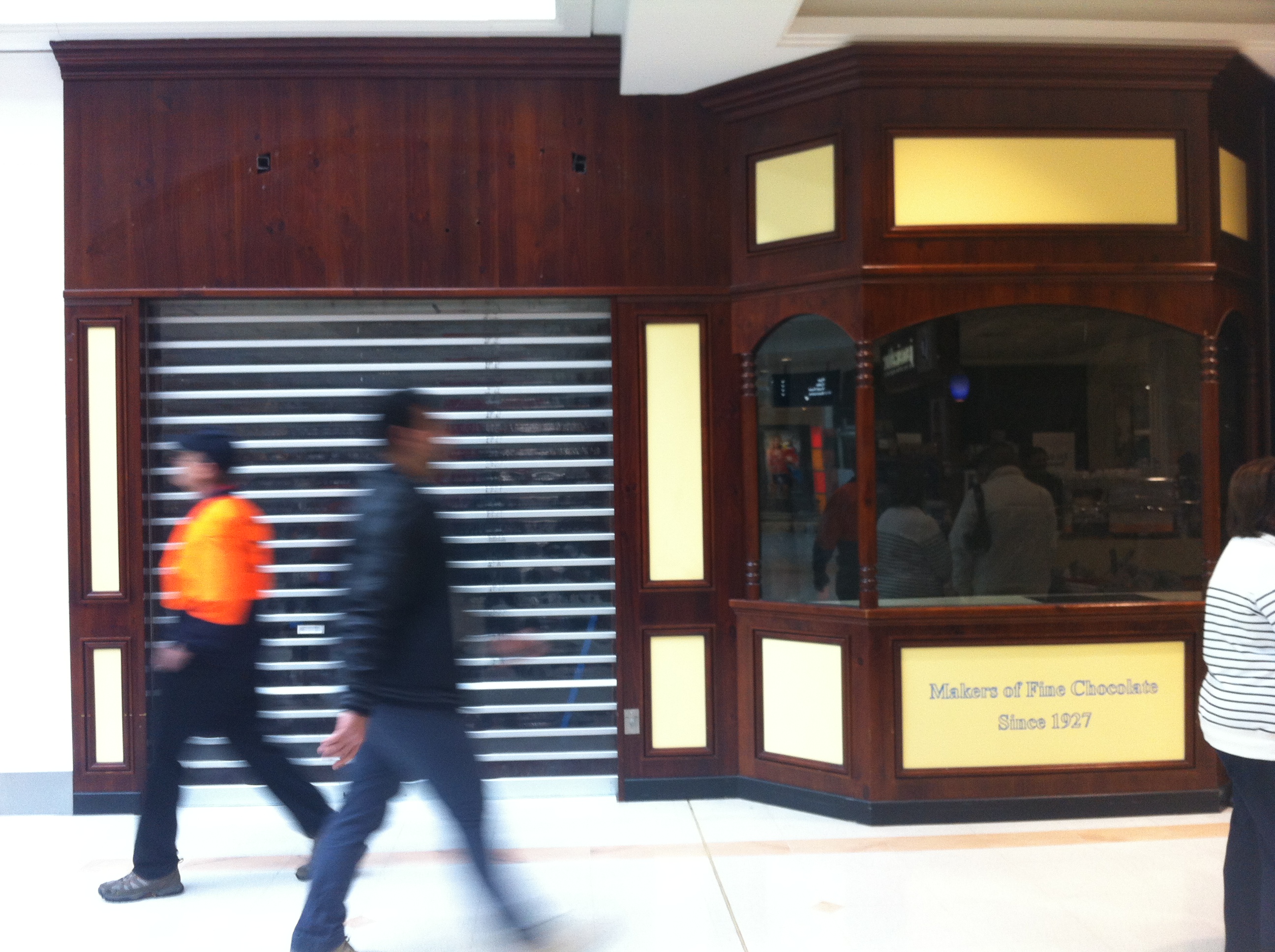
Plans for the empty shop involve an expansion by the neighbouring newsagent, which is so cramped and old it wouldn’t surprise me if they’d built the entire shopping centre around it. Hopefully, the doubling of their floorspace will allow much more room for their diligent army of plain-clothed guards to continue their campaign of death-staring at anyone they think might be shoplifting.
According to this article on the store’s closure, Darrell Lea admin chose to close Roselands (looks like I’ve met my assonance quota for the day), yet kept the Bankstown Centro store open. But commenter Brad Edwards reveals the truth:
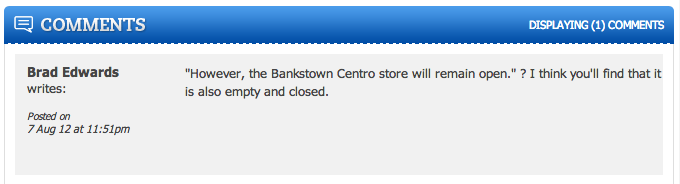 More like…Darrell LIE! Oh, sorry.
Griffiths Teas/Derelict – Surry Hills, NSW

In 1873, English grocer James Griffiths migrated to Melbourne with his wife and cousin (one and the same) in order to start a tea business. By 1875 Griffiths Brothers Teas had become a sensation, providing tea, coffee, cocoa and chocolate to caffeine junkies all over Australia. The Sydney outlet of the Melbourne-based company, built in 1915 as a Budden and Greenwell joint, banked heavily on thirsty train travellers staggering out of nearby Central Station looking for a cuppa.

Image courtesy AusPostalHistory.com
In a memorable ad campaign, a series of these signs were situated at varying intervals along the train trip into Central, designed to gee up incoming arrivals by counting down the miles until they could drink up. It’s hard to imagine anyone being so excited about tea in this day and age, although I wonder if any of the signs are still out there, amping people up for phantom tea?
 But we’re not here to talk about the glory days, are we? In 1925, James Griffiths was killed by a train (apparently the train driver missed the ‘1 mile to Griffiths’ signs), and the tea company was sold to Robur Tea, which itself lasted until 1974. Griffiths’ death meant downsizing within the company (maybe today isn’t so different after all), and the Sydney building was transferred to the Sydney City Council, who then leased it back to Griffiths Teas. Talk about keeping up appearances!
 The tea fad was over by 1965, and Griffiths relinquished control of the building to a variety of tenants, some of which have left their mark on the exterior. For example:
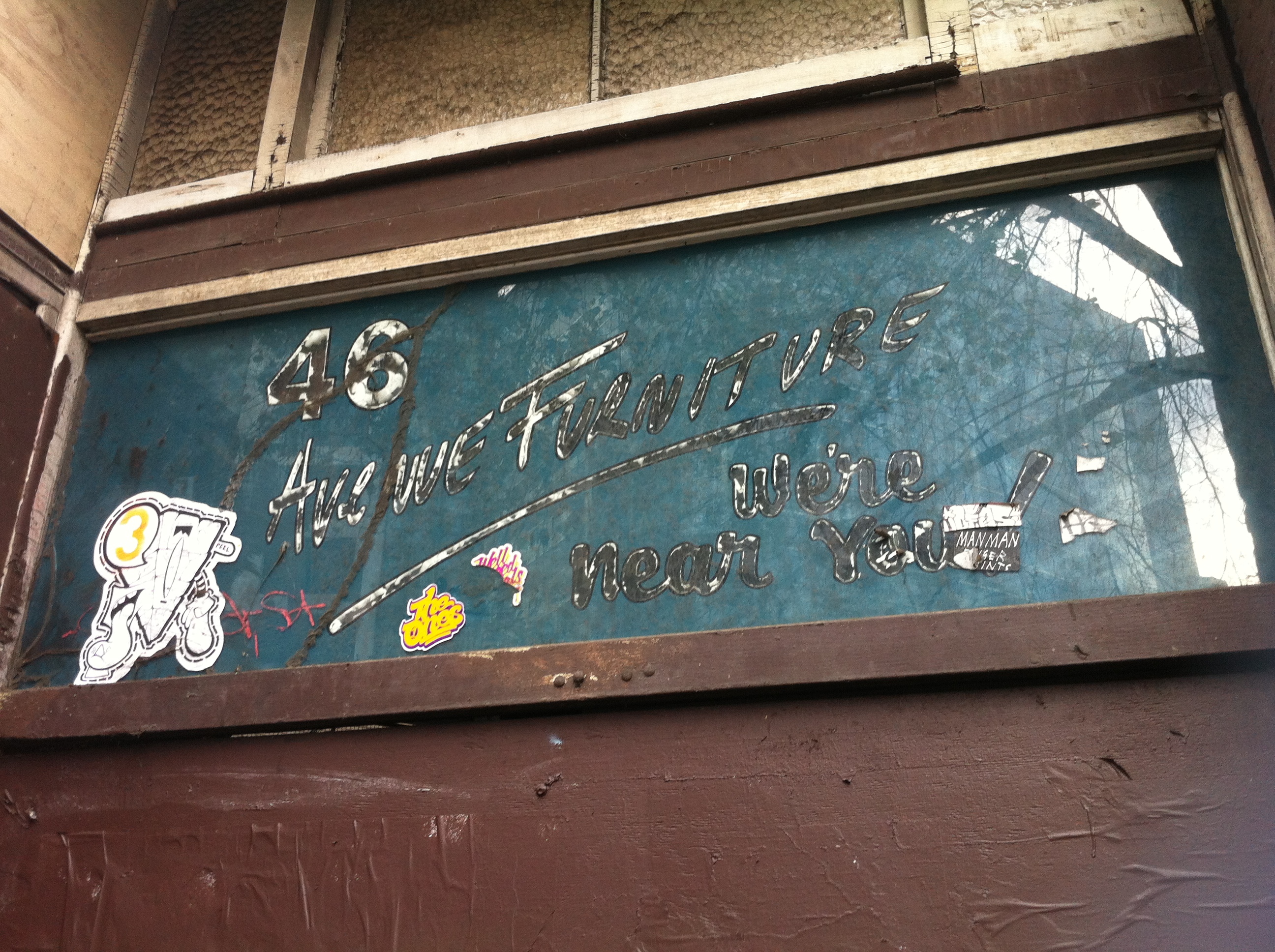 ‘We’re near you!’ if you happen to live in the neighbouring few blocks or like the idea of hauling furniture home via train.
 I’d have to imagine that whoever was selling Makita and Metabo power tools out of this place weren’t using the entire building. These signs have been here as long as I can remember, and probably even longer still. Bear in mind that while these power tools were being sold, there were still signs up for Avenue Furniture and Griffiths Teas; that’s confusing and sloppy. I mean, that’d be like if…or, maybe if…no, I mean like…hm. Never mind.
 It’s no surprise to find that Citilease, owned by Sydney’s own Howard Hughes, Isaac Wakil, is the villain of this piece, completely responsible for the disgusting state of this site. As previously mentioned, Isaac and Susan Wakil own millions of dollars worth of property around Sydney that they insist on leaving vacant. As a result, viable real estate close to public transport and universities is being left to rot. Wakil’s Citilease outfit (here disguised as ‘City Leasing’) has owned the building for at least 25 years, and don’t be fooled by the ‘for lease’ sign – there’s no 9 in front of the number.
 Late last year, some Sydney anarchists decided to conduct an inspection of the property on New Year’s Eve. Perhaps they had intentions of leasing? Of course, they made a few alterations while they were there and had to be forcibly evicted, but don’t worry Citilease, I think they’ll be back.
It’s worth pointing out that the Melbourne Griffiths Teas building, which you’ll remember was the headquarters for the whole operation, has been well preserved and turned into an upmarket hotel with vintage trappings, the Lindrum. Now, why didn’t we think of that?
Joyce Mayne Shopping Complex/Domayne – Auburn, NSW
If you grew up glued to the TV as some of us were, you may remember this funny old lady. You might have smiled as she used her elderly belligerence to implore you to buy a washing machine, but then threw in an interest free period as if to remind you that the kindly granny look wasn’t entirely an act. You might have cringed as she attempted to entice you into her complex from a bubble bath. You might also have wondered whatever happened to Joyce Mayne, the doyenne of discount whitegoods in the dying decades of the 20th century.
 Just in case we were confused.
Born in London, Mayne started out as an actress (and who’s surprised, given those ads) and a tap dancer. She arrived in Sydney in 1956, and the very next day got a job selling TVs at a shop in Penrith. A background in demoing gas and electrical appliances back in England, not to mention being the first woman to pass her all-male management course, didn’t hurt. When the shop owner’s wife learned that *gasp* a woman was selling TVs, she demanded Joyce be fired and replaced by a respectable gentleman. Unperturbed, Mayne went on to a job managing an electrical goods store in the same area, and in 1973 opened three of her own outlets. So great was her devotion to astrology that staff were recruited according to their star signs. “We prefer to employ Sagittarians, Scorpios, Capricornians and Aquarians – they’re the birth signs that produce the best sales people,” Joyce told the Sydney Morning Herald in January, 1979 – the eve of her greatest triumph as a retailer.
The ‘Joyce Mayne Shopping Complex’ on Parramatta Road, Auburn opened amid controversial circumstances in early 1980; filling the void left in the electrical retail scene by the 1978 death of Keith Lord, Joyce had the balls to hold the grand opening on a Sunday despite Sunday trading being completely illegal for a company of her size at the time. Damn. By exploiting a loophole in the law – subletting the 25 shops that made up her complex, thereby establishing herself and her tenants as equals – she was able to cash in on the more than 7,000 shoppers the centre would receive each Sunday. The downside? As a tenant, you had to endure the indignity of managing a store with a name like ‘Joycie’s Jean Barn’ (an actual 1982 store name), but for Joyce herself, business was booming. Aside from an abortive flirtation with car sales in 1982, Joyce stuck largely to whitegoods and furniture, with locations soon sprouting at Taren Point, Camperdown, Alexandria and Newcastle. So involved was Joyce with the business that you’d often find her manning the registers during busy weekends. I bet you didn’t see Jean Lord doing that.
Once she’d created the Joyce Mayne chain, she quickly became a star of Sydney television in a long-running series of commercials. Anyone who watched late night commercial TV between 1978 and 1996 would at some point have caught a glimpse of Mayne’s ads, which showcased a shameless, unique kitsch and a garish sense of glamour, even for that era. This was in an age where furniture and whitegood chain owners all had a crack at fronting their own commercials, thus forcing an unsuspecting public to invite the vacant John Coote or the reptilian Gerry Harvey into their living rooms on an uncomfortably regular basis.
Joyce’s borderline offensive commercials, including one involving Mayne enjoying a bubble bath with Mafia types and making them offers they couldn’t refuse, didn’t immediately endear her to the public (something the low, low prices and interest free periods must have done instead). A subscriber to the ‘any publicity is good publicity’ tenet, the ads kept coming despite the public’s distaste. So too the profits – by 1990 Mayne, Harvey and Bing Lee had risen to the top of the industry. The woman herself attributes her winning ways to astrology (and a lifelong love of gambling, particularly on the horses). She took the riskiest punt of all in 1985 when she published Joyce’s Winning Ways, a bizarre part-memoir in which she claimed the stars picked winners. Unfortunately for Joyce, the stars never divined any victory for her own horse, Defilace.
 Forever second, eh Defilace?
In 1986, Joyce began winding down her involvement in the brand she’d fronted for so long, with hopes of retiring to Queensland. She’d spent the year writing a never-released followup to Joyce’s Winning Ways (perhaps she’d discovered a few more) and had fallen in love with the Sunshine State, retiring to Townsville in the late 80s but sporadically appearing in further, increasingly cantankerous TV ads in Sydney. In just a few short years she was calling herself Queensland’s Leading Progressive Astrologer, and claimed she could forecast up to ten years into the future. Given that the ads seemed to stop in about 1996, it makes you wonder…did you see this coming, Joyce?
Information on the end of Mayne’s life is scarce; she appears to have died in Townsville sometime prior to 2006, in relative obscurity. This obituary of Bing Lee’s son and Mayne contemporary Ken Lee (d. 2007) mentions that ‘the reclusive multimillionaire was last seen at the funeral of Joyce Mayne‘. Just to make sure she was dead, right Ken? The electrical retail industry is cutthroat, as evidenced by the way Mayne’s turf was carved up after her death. 1998 saw ubiquitous retail overlord Gerry Harvey step in to purchase the Mayne stores for his wife to run. Something feels very…misogynistic about that. The Joyce Mayne brand name has since been banished from Sydney, with only a handful of outlets remaining in regional NSW and Queensland. Six of Mayne’s seven ageing stores inherited by Harvey Norman were rebranded Domayne in 1999 and given a more upmarket makeover; gone were the lurid pinks and greens and all the associated tacky charm, replaced with a sleek modern finish and a very cold, corporate feel.
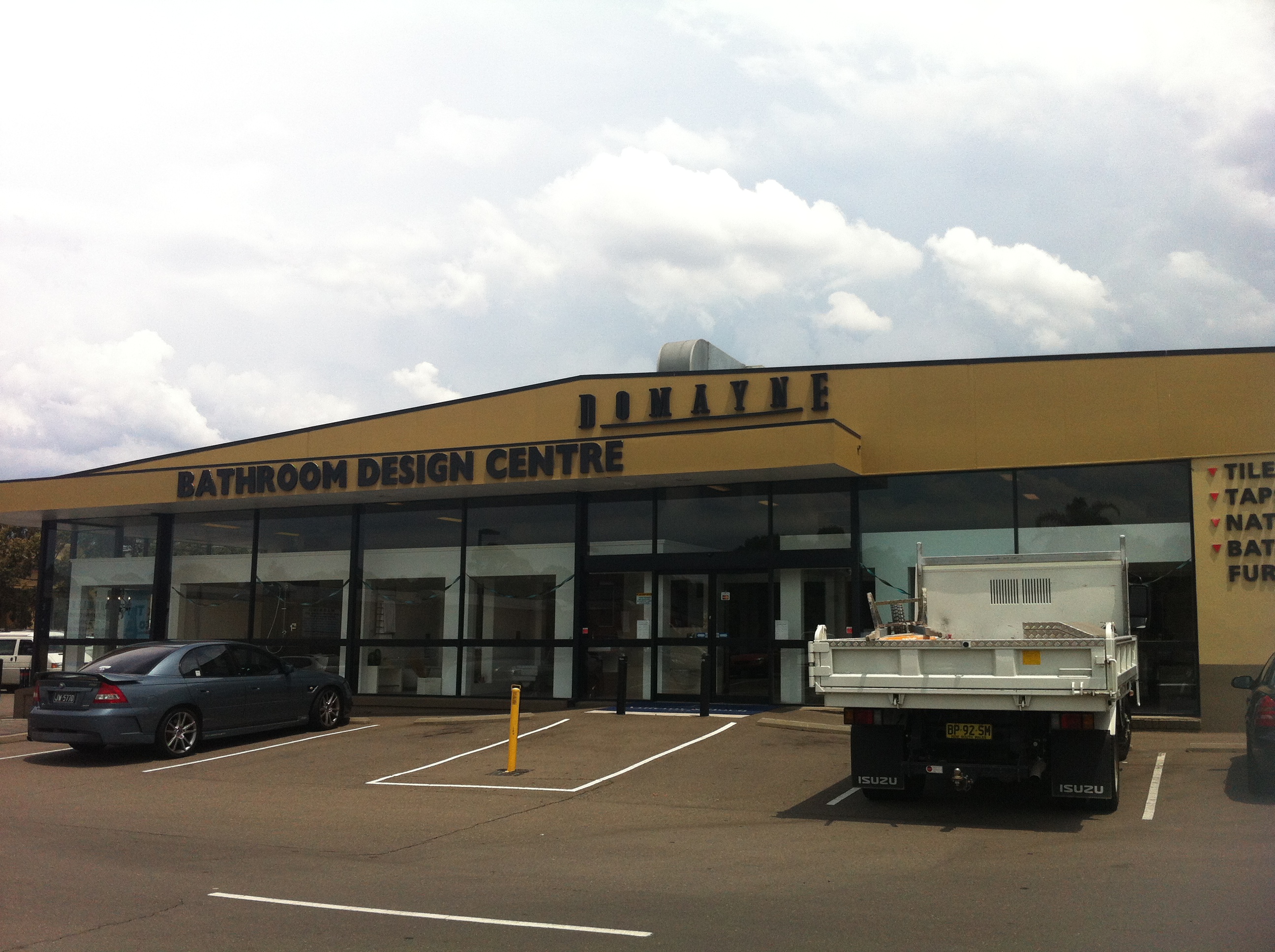 I bet there aren’t too many bubble baths in here.
And so it is at Auburn, formerly the site of the aforementioned Joyce Mayne Shopping Complex. The complex has been largely replaced by a Harvey Norman outlet and the Domayne centre itself…it’s a far cry from the pink and brown monument splashed all over town in Mayne’s commercials throughout the 1980s.
 You are the .01%…
But Joyce’s spirit lives on in this, the only feature in the entire complex that still bears her name. Yes, every time an item is taken away from the premises without a receipt, a part or fitting is pinched from a unit, a graffiti artist damages the property or the 99.99% of sensible, honest people feel the need for an apology, Joyce and her legion of invisible security cameras are there. The brutal juxtaposition of strongly worded threats in a bold, dangerous font signed by Mayne’s dainty typeface is classic Joyce, and wouldn’t seem out of place in one of her ads.
It’s sad that a pioneer like Mayne has been so thoroughly relegated to the annals of history, but by making herself the brand, Joyce may have inadvertently brought it on herself. Who was the real Joyce Mayne? An amusing excerpt from the SMH interview, January 1979 provides little illumination:
‘”And in another life I’d like to be a criminal law barrister,” she added mysteriously, without further explanation.’
Perhaps that life is being lived now, and maybe someday the full story will be told. For the time being, as always, if you know more, let Past/Lives know. Vaya con dios, Joycie.
Fat Pizza/For Sale – Chullora, NSW

Given the success of his new comedy series Housos (with a movie, Housos vs. Authority, released earlier this month), Sydney filmmaker Paul Fenech probably doesn’t spend much time thinking about this place anymore. In 2000, Fenech launched Pizza, a sitcom set in the world of pizza delivery in southwest Sydney.

The Pizza crew.
A big hit at a time when Australian television comedy was in dire straits, Pizza acted as a kind of modern Acropolis Now, and its unique approach of challenging ethnic stereotypes through very black comedy was able to sustain a five series run which ended in 2007, and its own movie, Fat Pizza, in 2003.

Located along the Hume Highway at Chullora, this low-key pizza restaurant provided the backdrop to the mayhem of the show. Since Pizza ended, the shop has sat dormant, although for much of the period between 2000 and about 2009 it operated as an actual pizzeria, reopening earlier this year after a long period of disuse…before closing again soon after. During its last era, the walls were adorned with Pizza memorabilia, making it a kind of Planet Hollywood for southwest Sydney. It’s likely it was an operating restaurant before Fenech and the Pizza crew made it their filming location – the row of shops it’s a part of is absolutely ancient.

The shop was recently purchased after having been on the market for some time. The interior’s been gutted, making the likelihood of any kind of Pizza revival here pretty unlikely. But who knows, perhaps it’s being prepared for a sixth series? It’s unknown whether Fenech’s team owned the restaurant during Pizza‘s run, but either way, they wouldn’t own it anymore. For a long time, it seemed that this little pizzeria in Chullora was as far west of Sydney Australian television was willing to go, but the success of Pizza made it possible for shows like Fenech’s Housos to further highlight the ‘inconvenient frontier’ that is western Sydney.
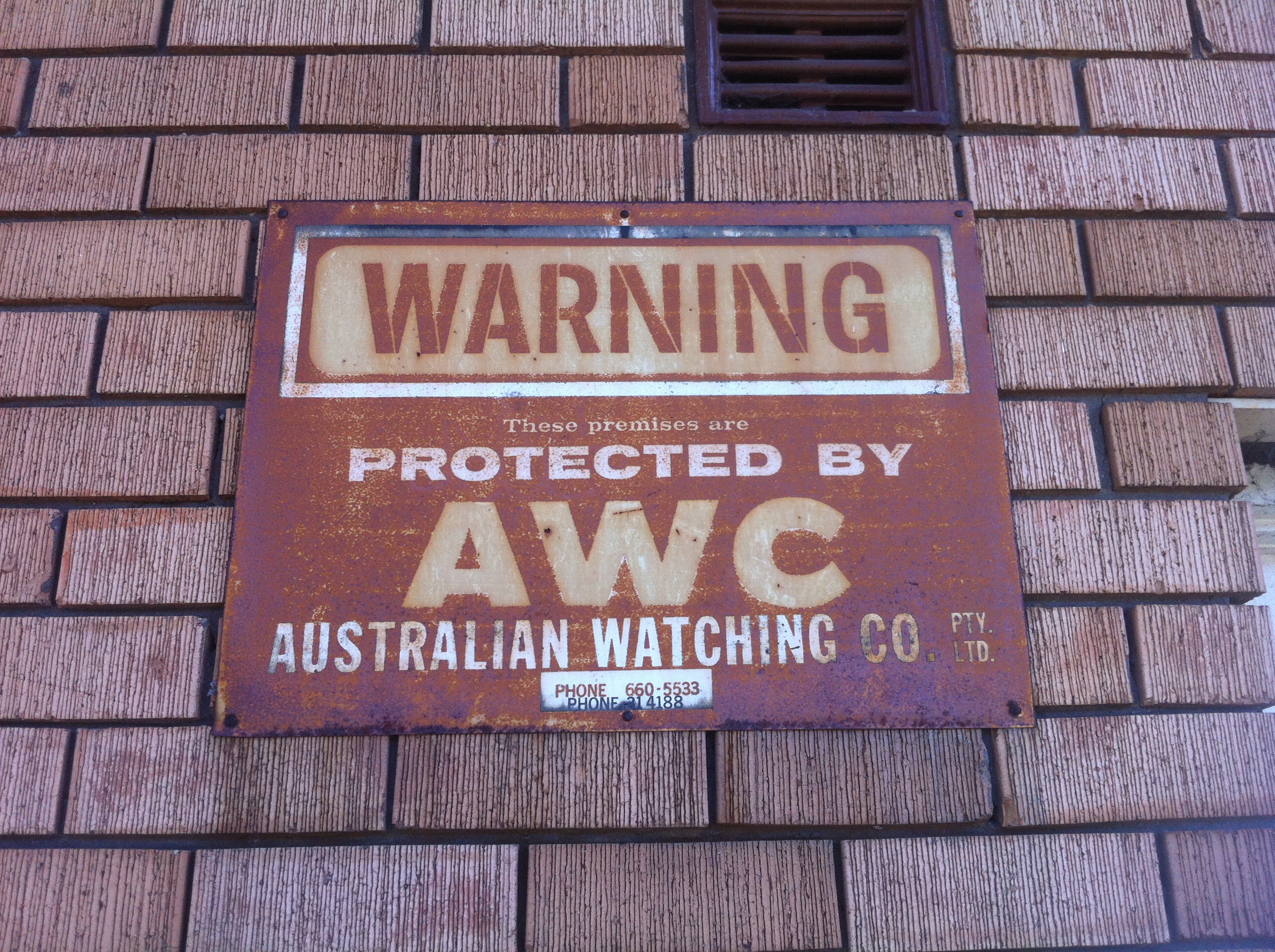
Ever get the feeling you’re being…watched?
Speaking of which, if you’re starting a security company, a surefire way to NOT intimidate anyone would be to name it the Australian Watching Co. The AWC protects the block Fat Pizza is located on (or it did a hundred years ago). Uh-oh…I think we’re being WATCHED! Here’s an interesting aside completely unrelated to Pizza: the Australian Watching Company was formed shortly after the First World War (I knew it), and in 1992 was acquired by Chubb. Now it goes under the name Southern Cross Protection – but clearly not South Western Cross Protection.

 Past/Lives of the Near Future