Past/Lives Flashback #5: The Hartee’s Saga, Part V: Hartee’s Revenge – Manly Vale, NSW
Original articles: The Hartee’s Saga Parts I, II, III and IV
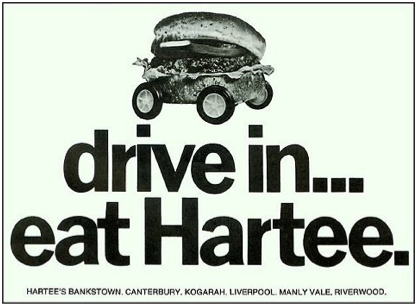
Sometimes it’s hard to keep a good burger down. For those who haven’t followed the long, sad story of the Hartee’s hamburger franchise, here’s a quick recap.

Hartee’s Earlwood
With the advent of American fast food franchises in Australia in the late 60s and early 70s, Kelloggs teamed with the US-based Hardees burger chain to start Hartee’s, the first Australian fast food restaurant (despite its very red white and blue beginnings).
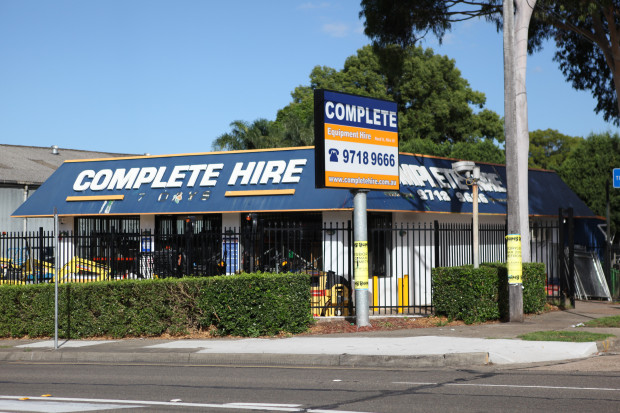
Hartee’s Canterbury.
It was a near-instant success. Whether it was down to underlying xenophobia towards overseas brand names, smart management or just plain delicious burgers, by 1973 Hartee’s was king of the fast food hill in Australia.

Hartee’s Punchbowl.
Complacency became the daily special from then on, with a series of extravagant HQ upgrades and new outlets sprouting like weeds all over Sydney. Despite this, the chain was beginning to haemorrhage cash at a pretty severe rate, and McDonald’s was aggressively making major headway into the Australian scene. Something had to give.
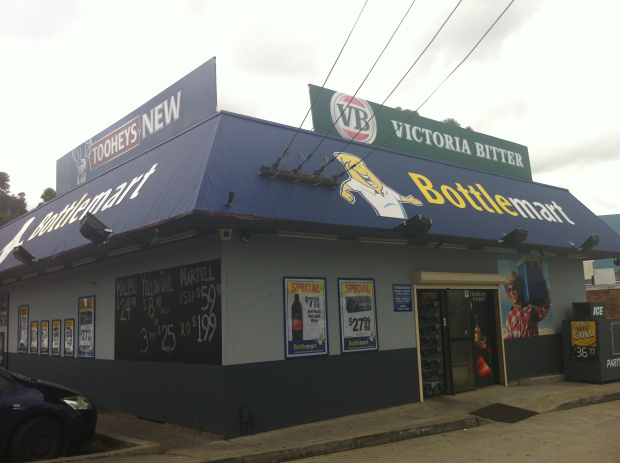
Hartee’s Bankstown. Not pictured: the Pal delivery truck.
And give it did, here at the Bankstown Hartee’s in 1975, when a current affairs program, acting on a tip-off, exposed the outlet as having served dog food in burgers. Overnight, Hartee’s packed up and disappeared, leaving only husks behind, and that’s where the story seems to end.
Except thanks to reader Phil, there’s a final piece of the puzzle to be put in place. I’d previously written that only the four former Hartee’s above still existed in any form around Sydney… Well, we all make mistakes. Just ask Bankstown Hartee’s.
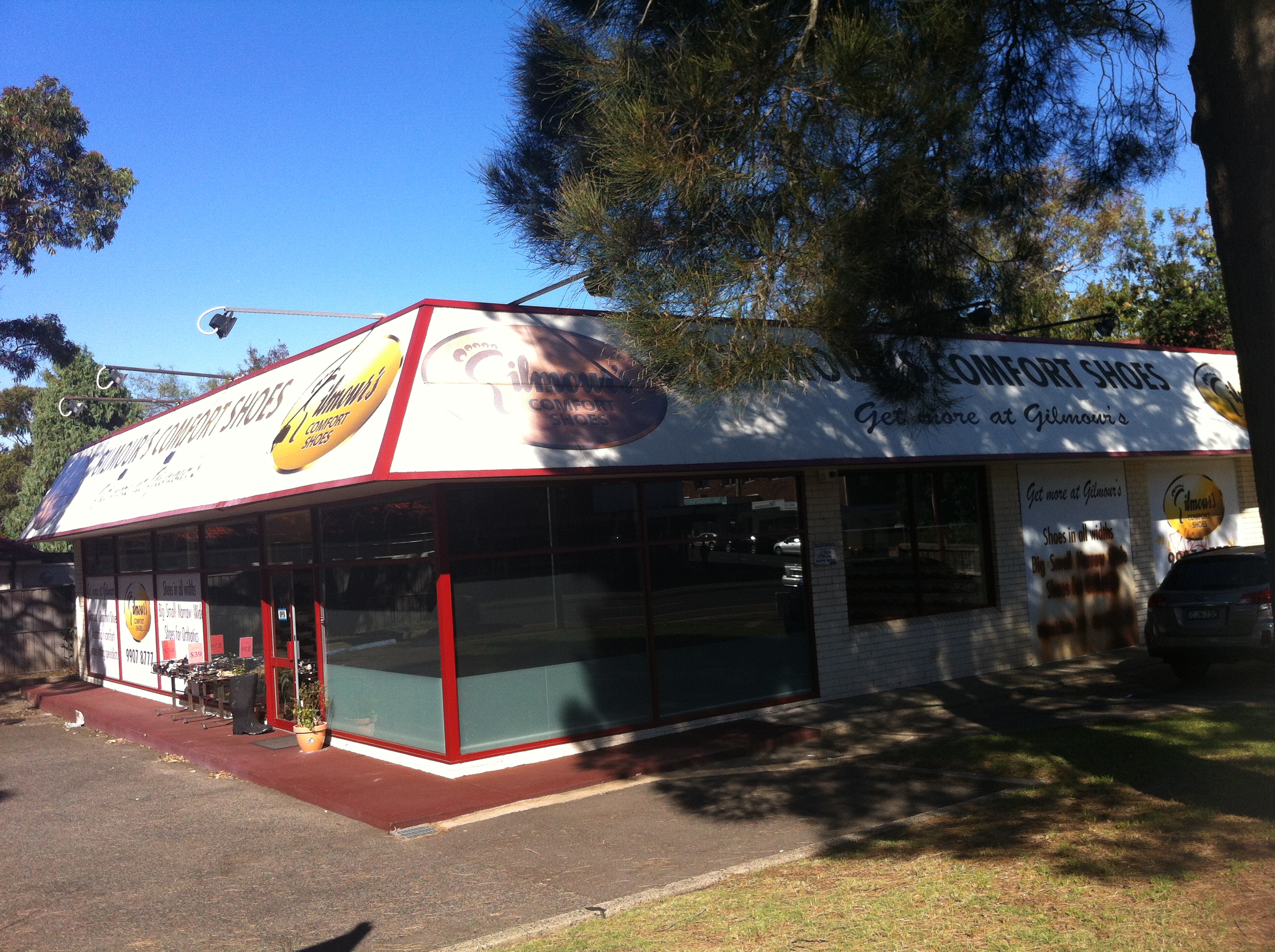
Behold, the Manly Vale Hartee’s still stands. It’s currently Gilmour’s Comfort Shoes, but it pretty obviously fits in with the Hartee design.

In fact, this may be the most well-preserved Hartee’s still in existence. The Gilmour’s sign appears to be stuck on over the red roof, so it’s possible the Hartee’s logo remains underneath.

The original lights are still in place, designed to illuminate the Hartee’s name. Also still in place, as per Phil’s advice…

The original outdoor seating area! Now it’s presumably the shoe shop manager’s car park (c’mon, look at the prestige offered by that strange piece of land). Inside are just shoes, but really, they’ve served worse and called it burgers.
It’s not really a happy ending, or an ending at all, but it is (I’m guessing) the final footnote on what by now must be the most definitive account of the Hartee’s affair out there. There are still many mysteries surrounding the story (truly, more questions are raised than answered), but maybe one day one of those faceless, guilt-ridden Hartee’s executives will come out of hiding and reveal more. Hell, I’d even settle for the guy who served the dog food. As ever, if you know more, please let Past/Lives know. And RIP Hartee’s – we hartlee knew ye.
In the meantime, let’s take a minute to remember those four powerful words that watered more mouths than Mount Franklin, that were a city’s guilty pleasure in a time before Big Macs and Whoppers…in a time when a nation could feed itself.

Hartee’s Kogarah, November 1973. Image courtesy State Library of NSW.
Past/Lives Flashback #6: Regent Street Station – Chippendale, NSW
Original article: Mortuary Station/Regent Street Station – Chippendale, NSW
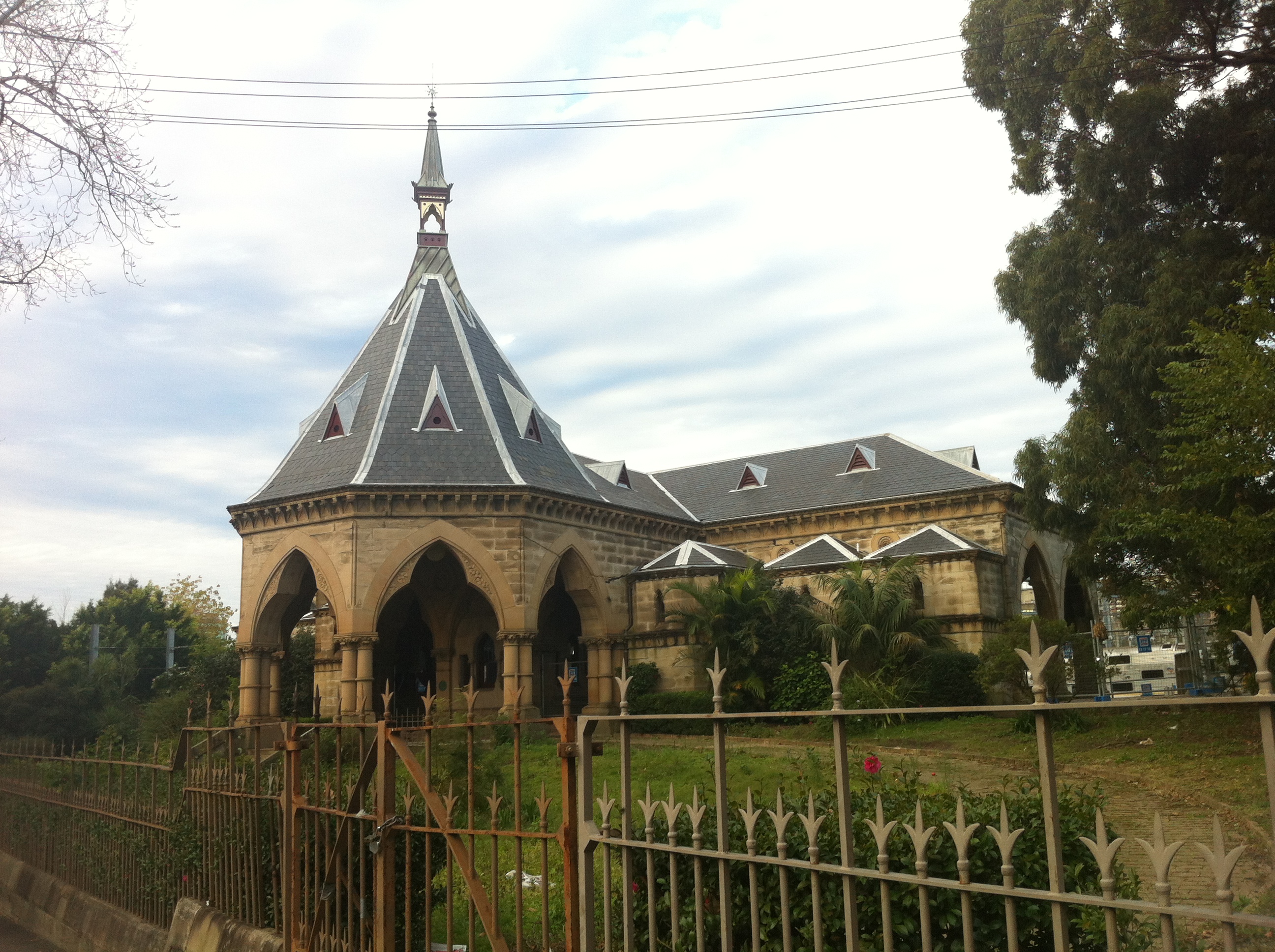
When you’re a 144-year-old building custom built for a purpose long redundant, excitement comes in fits and starts. A renovation here, a graffiti attack there. Occasionally you’ll have a tour group come through, but with today’s concerns, even that’s a rare treat.
And so goes the continued existence of Regent Street’s Mortuary train station.

Continually hogging the city’s rail refurbishment efforts (c’mon, Central needs some attention! It’s a dive), ‘Ol’ Morty’ sits where it’s always sat, a stranger to change and a fully functioning time warp. If you want to go and see it, it’s a safe bet to put it at the bottom of your ‘To Do’ list – this place will likely outlive you.
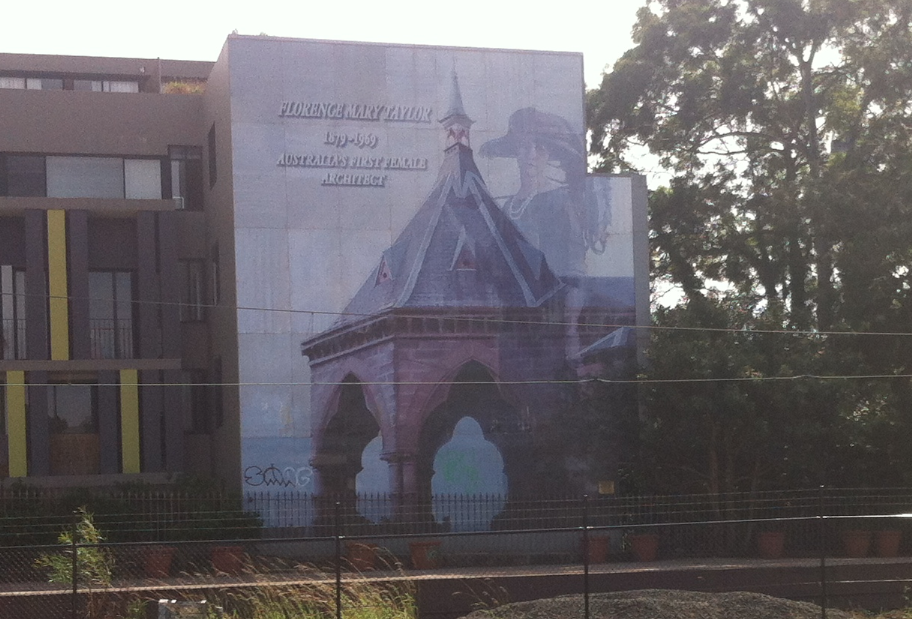
So with that in mind, let’s take a look at the curious mural that stands beside the station facing east. I mentioned this last time, and it continues to baffle me.
Florence Mary Taylor arrived in Sydney in 1884. Her father worked for the sewerage division of the Department of Public Works, and she would assist him in his work. When he died in 1899, Florence studied architecture and became a draftsman, going on to co-found the Town Planning Association of NSW in 1913 and joining the Institute of Architects in 1920. As the mural itself says, she was Australia’s first female architect.
When her husband George Taylor died in 1928, Florence continued to edit and publish three of their eleven engineering journals. She died at Potts Point in 1969, leaving behind a legacy of achievements (including becoming the first Australian woman to fly in 1909) that did much to further the public acceptance of women in industry.
Which is all fine – but I’m still not sure what she has to do with the Mortuary Station, which was completed ten years before her birth. As I’ve mentioned, the Regent Street station and its receiving end were designed by colonial architect James Barnet.
Still, using the ever eye-catching station to highlight Taylor and her achievements isn’t a bad thing at all, even if her ideas are more ingrained in Sydney’s layout than seems obvious. Throughout her career, Taylor was an advocate of, among other things, a harbour tunnel crossing, a distributor freeway in the Eastern Suburbs, and somewhat less popularly, the demolition of Hyde Park Barracks. Maybe that’s why there’s no mural of her there.
Past/Lives Flashback #8: Sydney Olympic Park – Homebush, NSW
Original article: NSW State Abattoirs/Sydney Olympic Park – Homebush, NSW
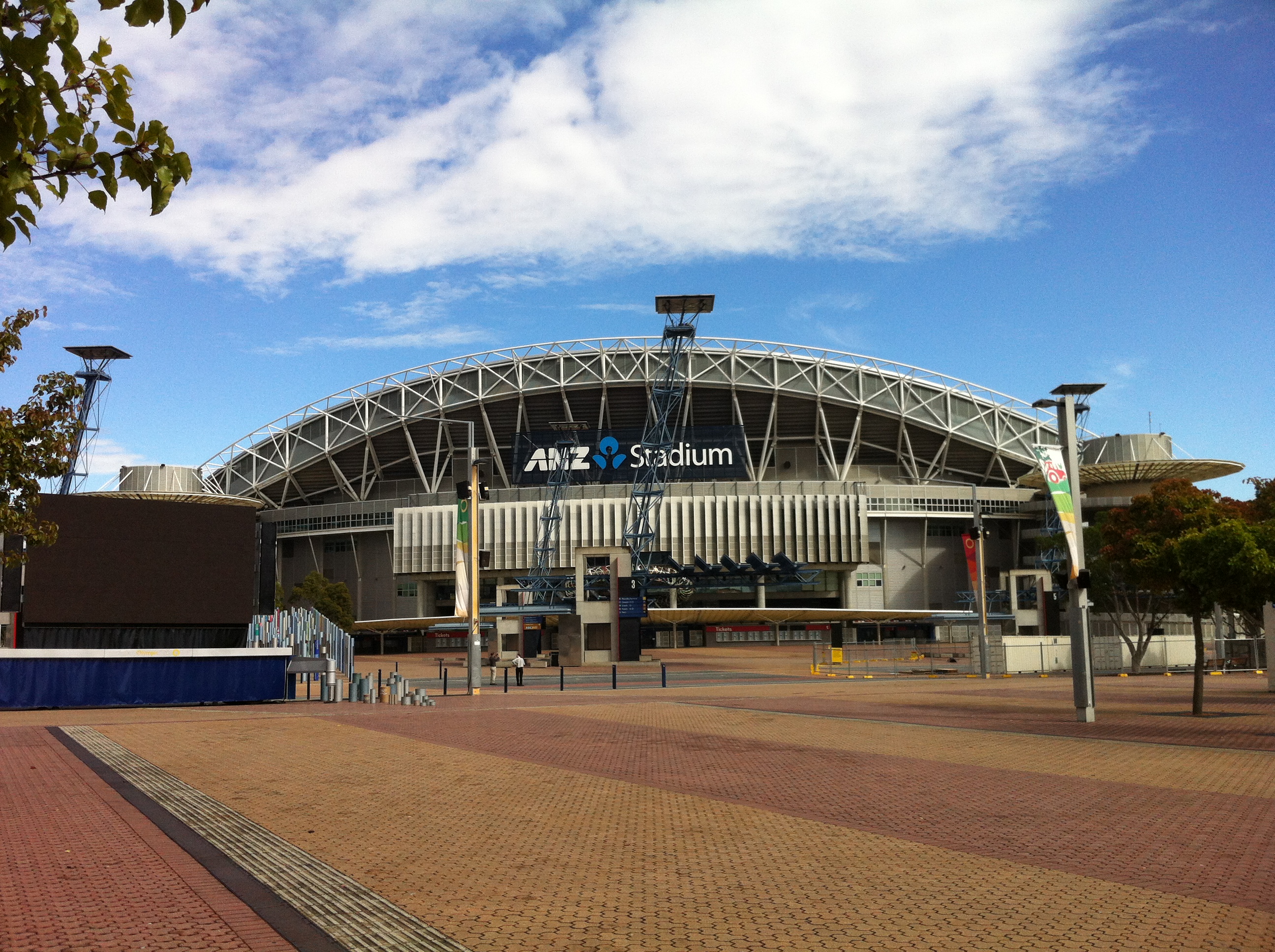 It’s hard to believe it’s been a year since I last visited this place. The blood-soaked history of Sydney Olympic Park is perhaps the most heavily researched article on Past/Lives, yet all that knowledge is quick to fall away when you’re actually standing on site, inhabiting the space where it all went down. The post-Easter Show cleanup only serves to strip back the gaudy decorations designed to distract from the past, leaving today’s visitors with one of two visions: the glorious Olympics, or the violent abattoirs.
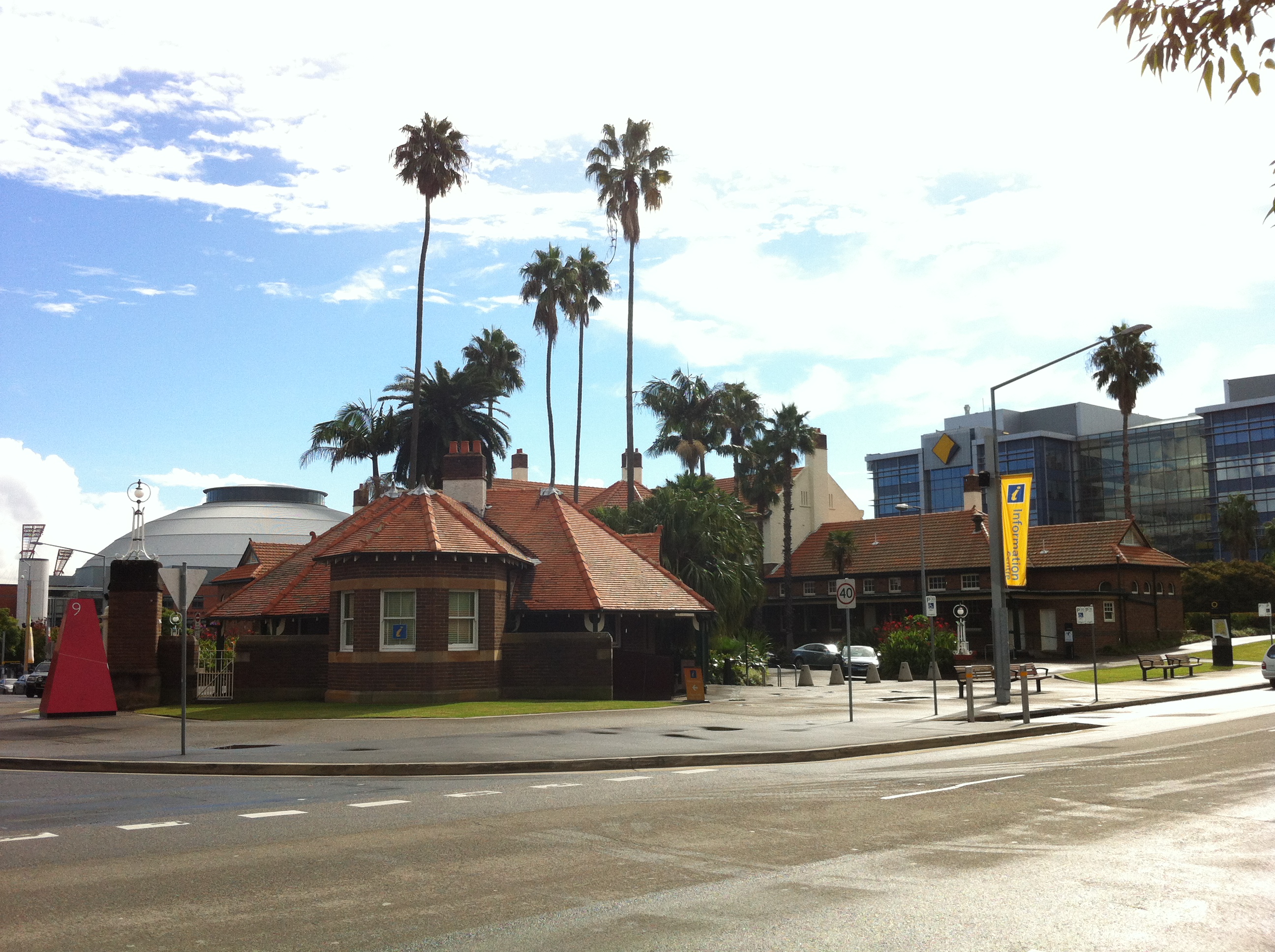
Apart from the hubbub surrounding the Easter Show, change visits the Olympic zone about as often as I do (read: not much). The stadium seems to have settled on ANZ as its name for the time being, just as the arena’s heart still belongs to Allphones. During my refresher course on the ins and outs of the Olympic era of the site’s history, I laughed when I learned the arena’s actual name is the ‘Sydney Super Dome’. For the first time ever, Allphones sounds comparatively low-key.
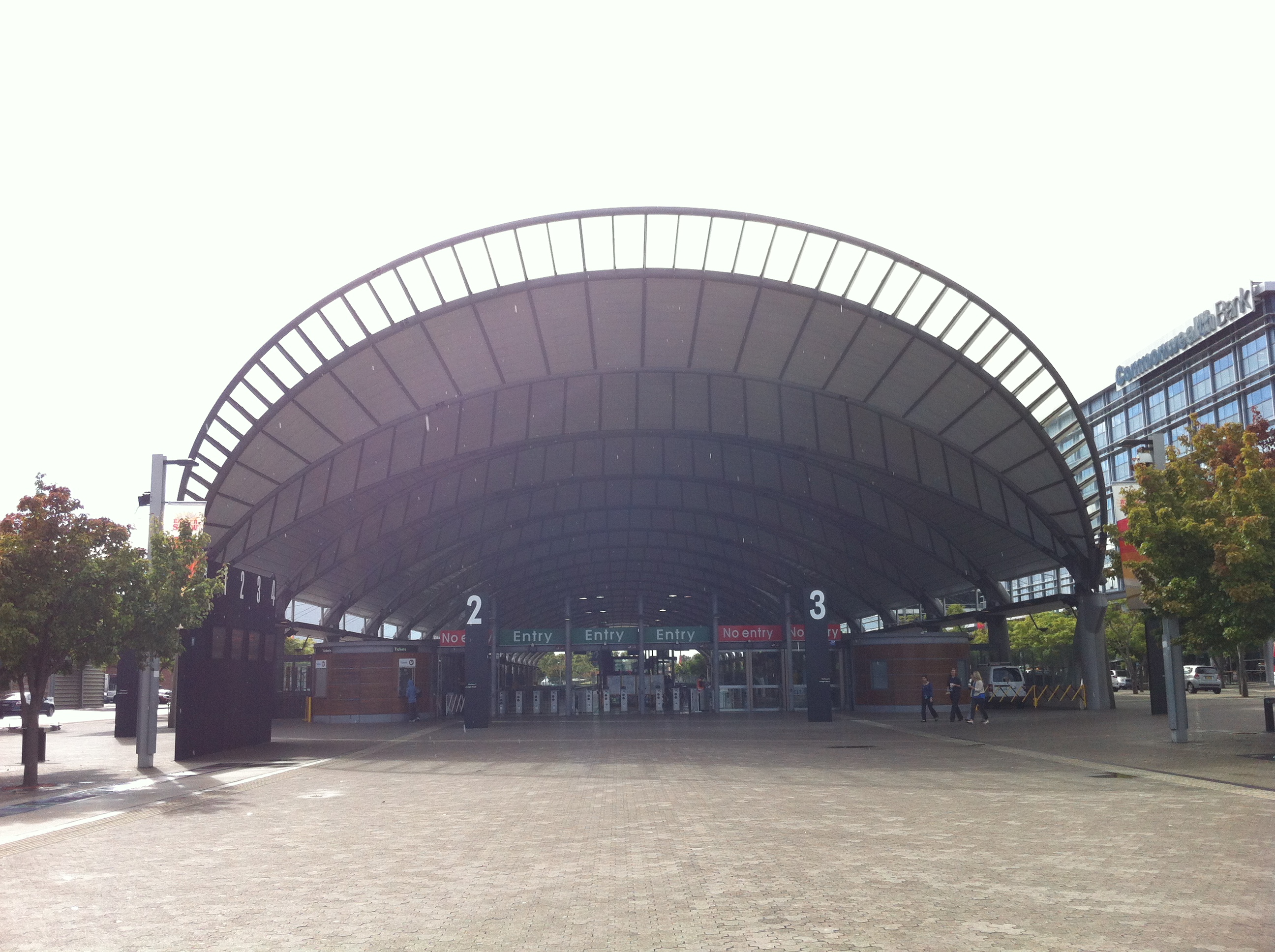
So since change is such a stranger here, it’s going to be more beneficial to take a look at some of the landmarks around the Olympic site that betray its brutal past. We didn’t touch on too many last time, with the Abattoir Heritage Precinct being the natural focus. First up is Olympic Park station, the last stop of the train line which delivers thousands of Easter Show-goers to the park each year…
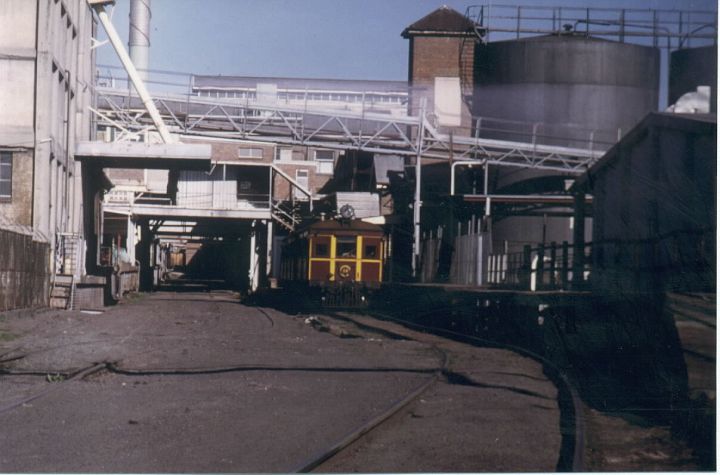
Abattoir platform, 1982. Image courtesy Graeme Skeet/NSWrail.net
…just as it delivered hundreds of thousands of animals to their deaths each year for decades, some as recently as 25 years ago. Granted, it isn’t the exact same station (although if it was, abattoir workers would have enjoyed the most stylish station in Sydney), but its location is approximate to the original. A complete train line (with stations opening from 1915) served the abattoir and the nearby brickworks, with country trains deviating from the existing rail network at Lidcombe and Flemington to deposit country animals to the abattoir. Employees could catch their own trains from a small platform at the end of Pippita Street, Lidcombe.
As the abattoir declined, the need for employees did so as well, and in 1984 the abattoir line was closed, with the facility itself closing in 1988. The entire Homebush Salesyard Loop, on which the Olympic Park line is based, was closed in 1991. In 1996, the Pippita Street station became the last of the abattoir stations to be demolished, and interestingly, the street itself was absorbed into the huge Dairy Farmers site nearby (now, why do you think that’s there?). The brand-spanking-new Olympic Park loop line opened in 1998, with most of the Homebush Salesyard Loop repurposed to be a part of it.
Now, since that was a little…dry, let’s get wet.

The Sydney Olympic Park Aquatic Centre was the first part of Olympic Park to be constructed following the closure of the abattoir, unless you count Bicentennial Park, which opened in 1988. The Aquatic Centre opened in 1994, with the rest of the park completed by 1996. As such, the Aquatic Centre is the ‘middle child’ of the Olympic Park, with a design sensibility halfway between Bicentennial Park and the stadiums that followed. It’s a strange beast, and one made even stranger by my near-absolute certainty that when it first opened, its entrance was in fact this:
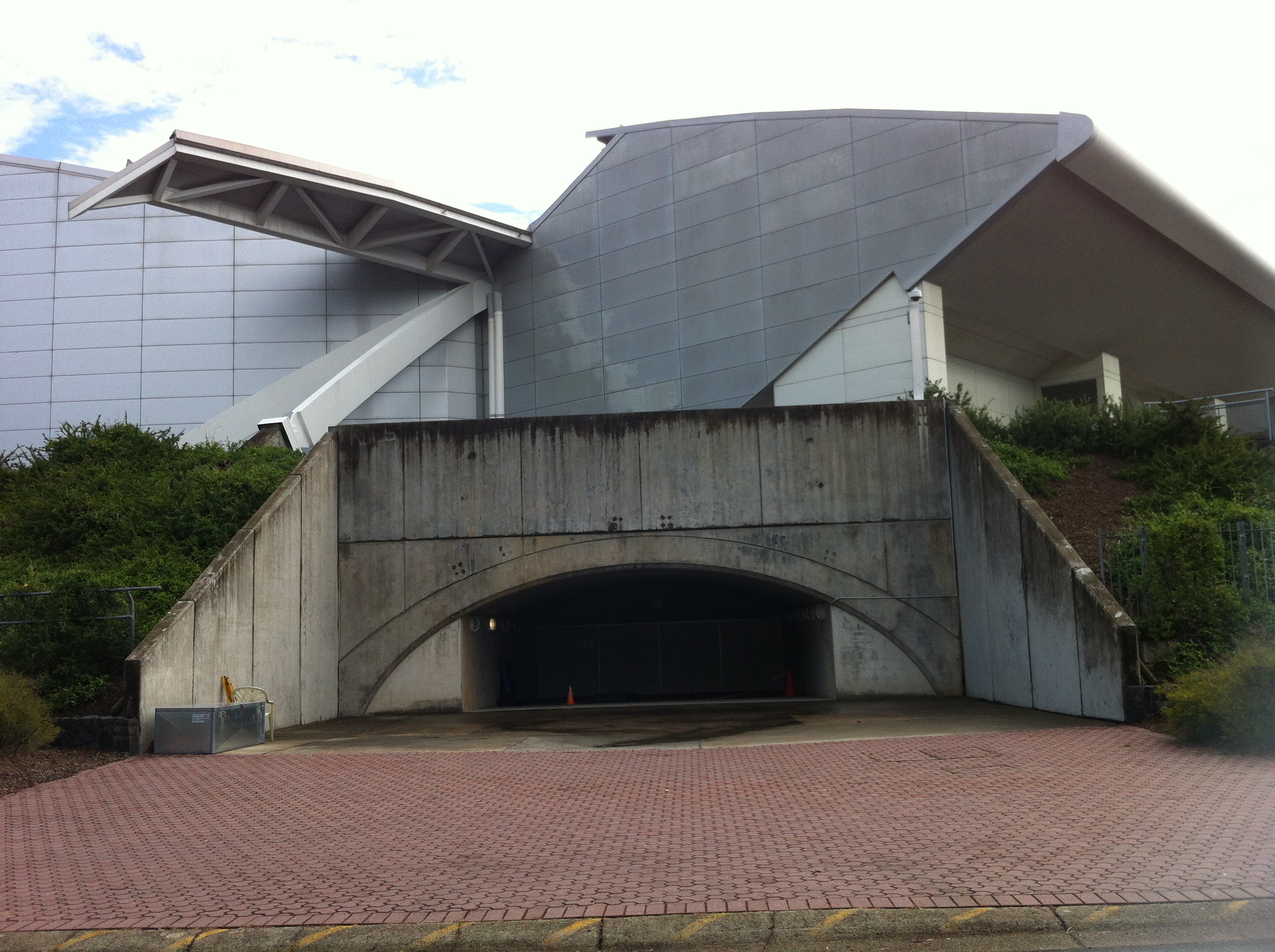 Sometime in 1995, I attended a birthday party at the exciting new Aquatic Centre, which was rumoured on the playground to have a whirlpool and slides. I don’t remember any slides, but I do have a distinct memory of our posse leaving behind a rubber WWF wrestler toy, tossed high up in those bushes on the left in a fit of excitement…while we were hanging around the entrance. Does the Iron Sheik still reside in those bushes today, subsisting on a diet of ants, rainwater and the occasional small bird? Nearly 20 years later, I still wasn’t game enough to climb up and find out. But I did go in for a closer look…
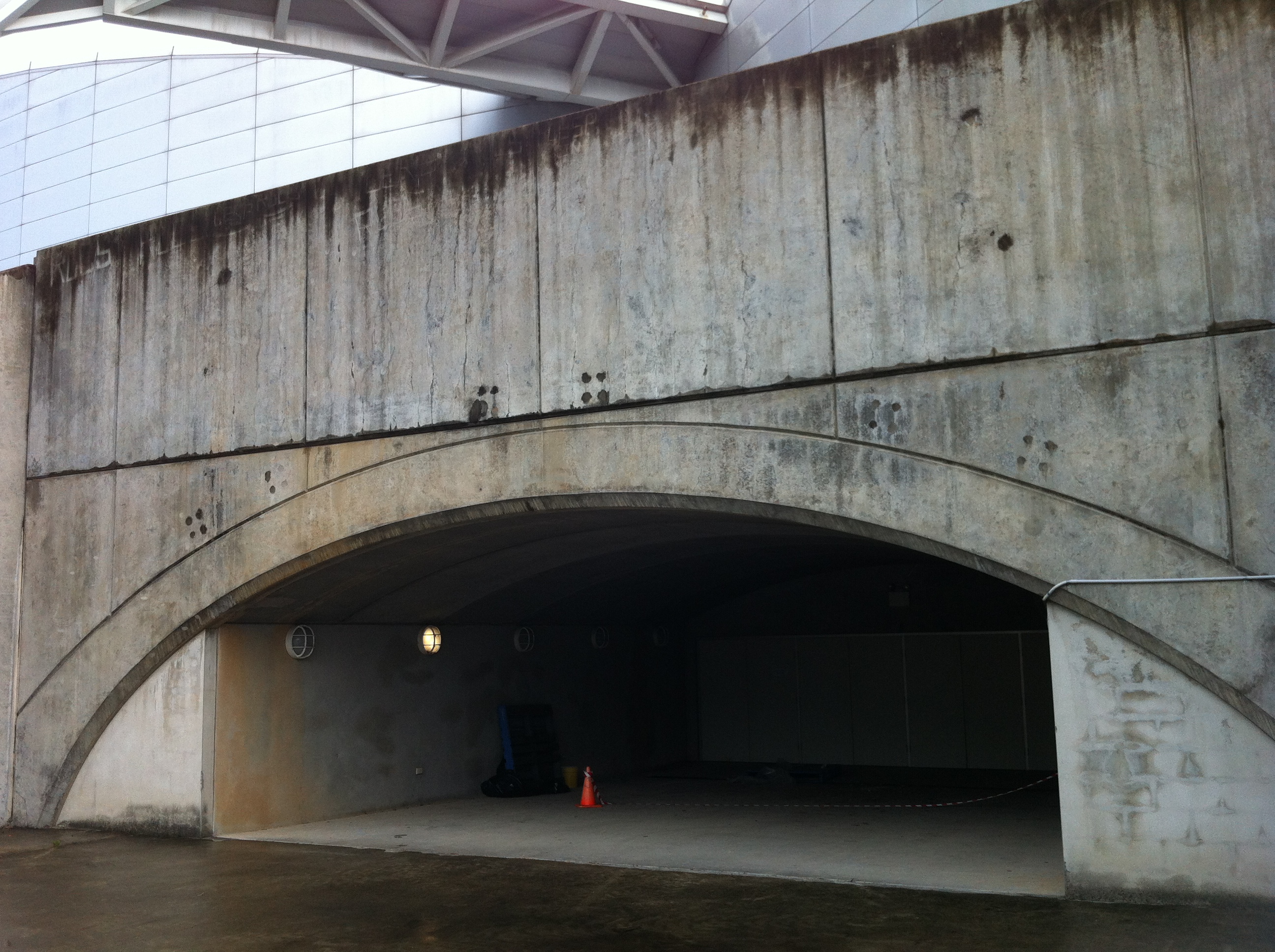
The appearance of those bolt marks, where the original entry sign was probably attached, seems to validate my memory of this being the main entrance. The doors underneath now serve as an emergency exit. If anyone can shed some light on this mystery, drop a line in the comments below. My theory is that when the Aquatic Centre opened, the entrance was here because it faced away from the abattoir site (and at the time, a huge construction site), but when the rest of the park was completed, the entrance was moved around to the opposite end of the facility, a spot which pretty much faces the Abattoir Heritage Precinct (and everything else, in keeping with the Olympic spirit of inclusion and togetherness). Today’s entrance looks a lot more ‘Olympic’ anyway, so it was probably a change for the best. Still…
 Our last stop is just down the road from the Aquatic Centre. Back in the 70s and 80s, Swire (then Woodmasons Cold Storage) would have been one of the places to store the freshly processed animal carcasses on ice before being shipped to the nearby butcheries and markets. For a cold storage facility (and for Dairy Farmers), this was the perfect location…when the abattoir was there. How it’s still able to do business is a stone cold mystery, but I guess that’s why they’re no longer Woodmasons.
See you next time, when we’ll attempt to go for a drive…
Past/Lives Flashback #10: Butchery No. 1 – Hurstville, NSW
As promised, here’s the first in a series of articles taking a look back at the top ten most popular Past/Lives posts of the last year. If I was smart, I would have picked the ten least popular posts so as to boost their views, but there’s a good reason the Belfield denture clinic never found its audience.
With that in mind, it’s to my complete amazement that I present the tenth most popular entry, Hurstville’s No. 1 Butchery.
Original article: Food Fair/ANZ Bank/The Base Store/No1 Butchery – Hurstville, NSW

First things first: there are no obvious changes. Given the building’s colourful history, it’s almost a surprise there’s been no activity over the last 12 months, but there you have it…NO changes whatsoever (perhaps with the exception of the chemist next door having become “Australia’s cheapest chemist”. Yeah, right). It’s as ugly a shopfront as ever, and that demonic pig in the logo is just as disturbing. I’d be willing to bet those people walking past are the same as last year, too.
What’s really interesting to me about this place is that just over the last few weeks, it’s exploded in terms of page views. Why? The whole point of this series was to show you how things have changed over a year, and to find something new to add, so this is a great start. What’s so special about this place? Then again, that’s probably what you were saying when I published the original article a year ago. Wait! Do you feel that? It’s moments like these that bring us closer, dear reader.
Don’t worry, they won’t all be like this.
St. James Theatre/Beverly Hills Cinemas – Beverly Hills, NSW
 Let’s cut to the chase: the Beverly Hills Cinemas are looking a little…porky these days. It’s hard not to notice the expanding waistline anymore, even for the sake of politeness. What I’m saying is, if the Beverly Hills Cinemas were a person, they’d need to take the Kayla Itsines challenge a few times to squeeze back into those trackpants.
But it wasn’t always this way. Back before the cinema was built, the suburb was known as Dumbleton, after a nearby farm. The opening of the Dumbleton train station in 1931 had opened up the suburb to the rest of Sydney in a way the previous public transport option – a coach service from Hurstville station – had not.
Dumbleton’s first shop had only opened in 1908 (on the site of the present day Beverly Hills Hotel), so there wasn’t exactly a major reason to go there. Dumbleton residents hoped to change this in 1910, when a post office was opened within the existing store. It was like the proto-Westfield.
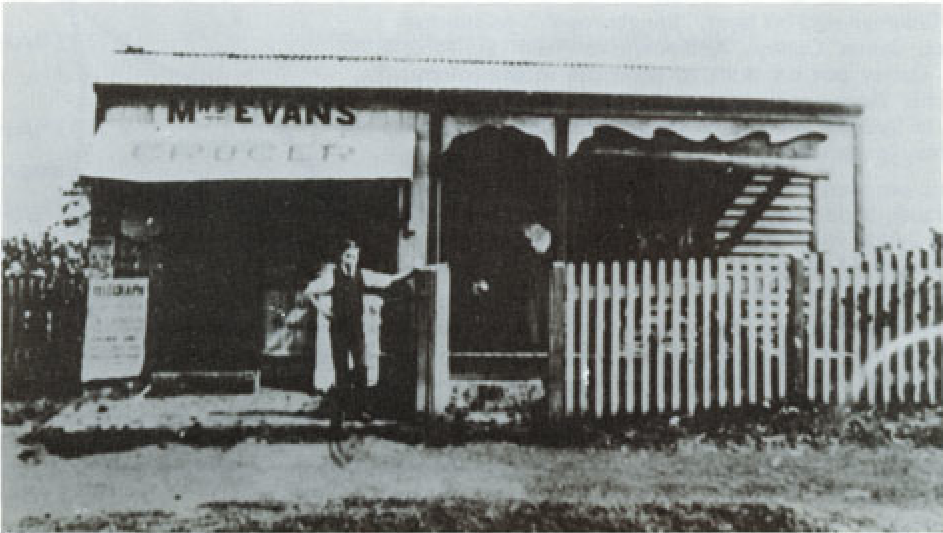
This is that shop, circa 1916. Image courtesy Regina Coeli Parish, Beverly Hills.
The Second World War brought military personnel to Dumbleton, further increasing its population and forcing it to come up with more shops to keep people entertained, but it’s kinda hard to make anything entertaining when your suburb’s name is Dumbleton.
In late 1938, plans began for a picture theatre along King Georges Road with a projected completion date of 1940. I suppose the Dumbletonians were hoping to emulate the success of the Savoy theatre in nearby Hurstville, but they still had the nagging problem of that name.
An American cultural influence had been building in the outskirts of Sydney with the advent of cinema, so with an impending theatre and the belief that the USA would soon be joining the war effort, a move was made in 1940 to change the suburb’s name to the much more glamourous sounding Beverly Hills – Hollywood on the East Hills line. The Californian equivalent was home to famous movie stars, and with the completion of the St. James Theatre later that year, so would Dumbleton.
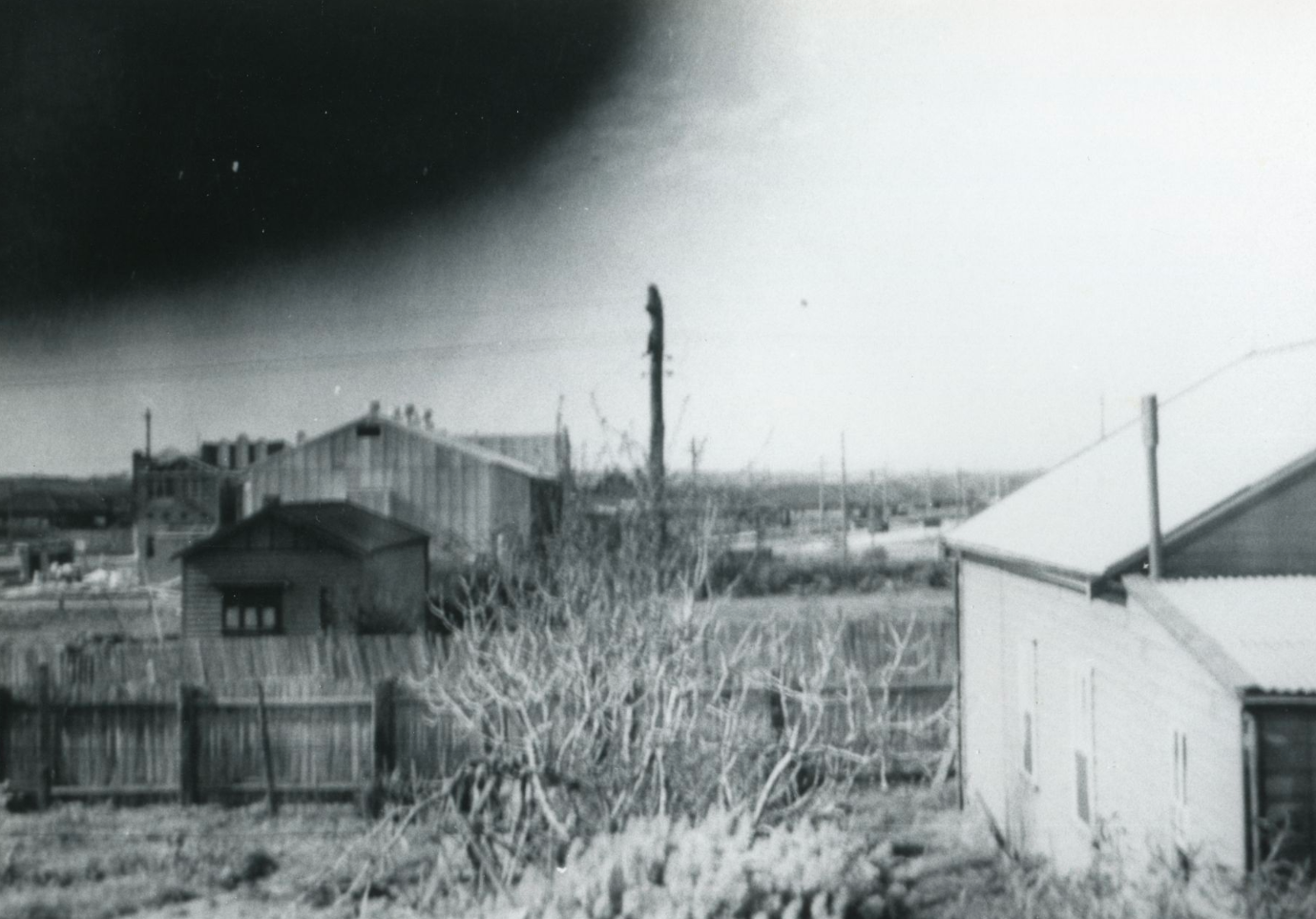
Dumbleton bites the dust as the St. James (centre left) gives rise to Beverly Hills, 1940. Image courtesy Georges River Libraries
A strip of palm trees down the centre of King Georges Road was added to complement the Hollywood theme in a move no one in the 1940s could have predicted would become so tacky by the present day.
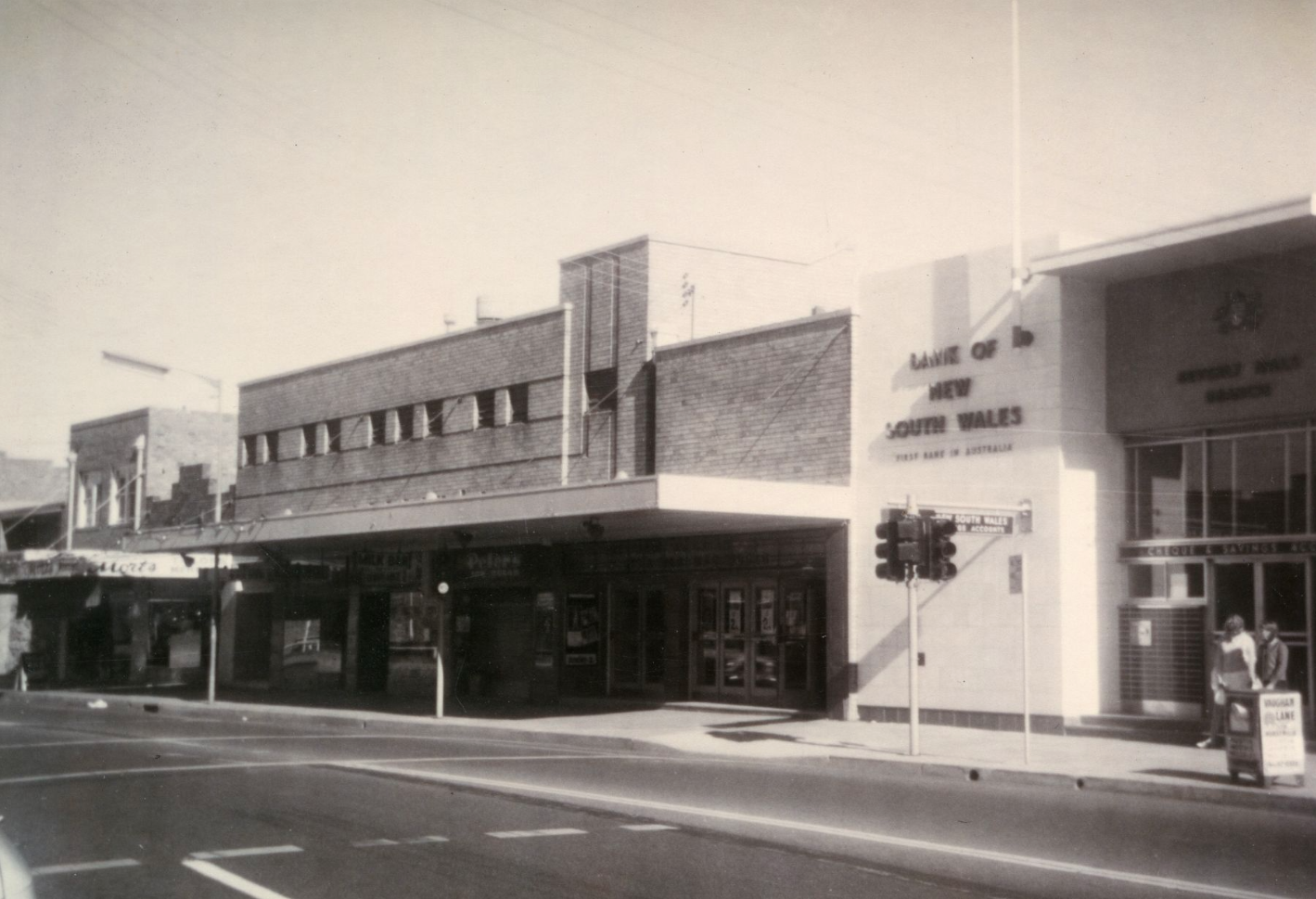
St. James Theatre looking very much like a bank, 1966. Image courtesy Georges River Libraries
The St. James Theatre entertained the residents of the growing suburb (even those older residents who had loudly complained about the name change) for decades until the 1970s, when the voracious Hoyts incorporated it into its suburban chain.
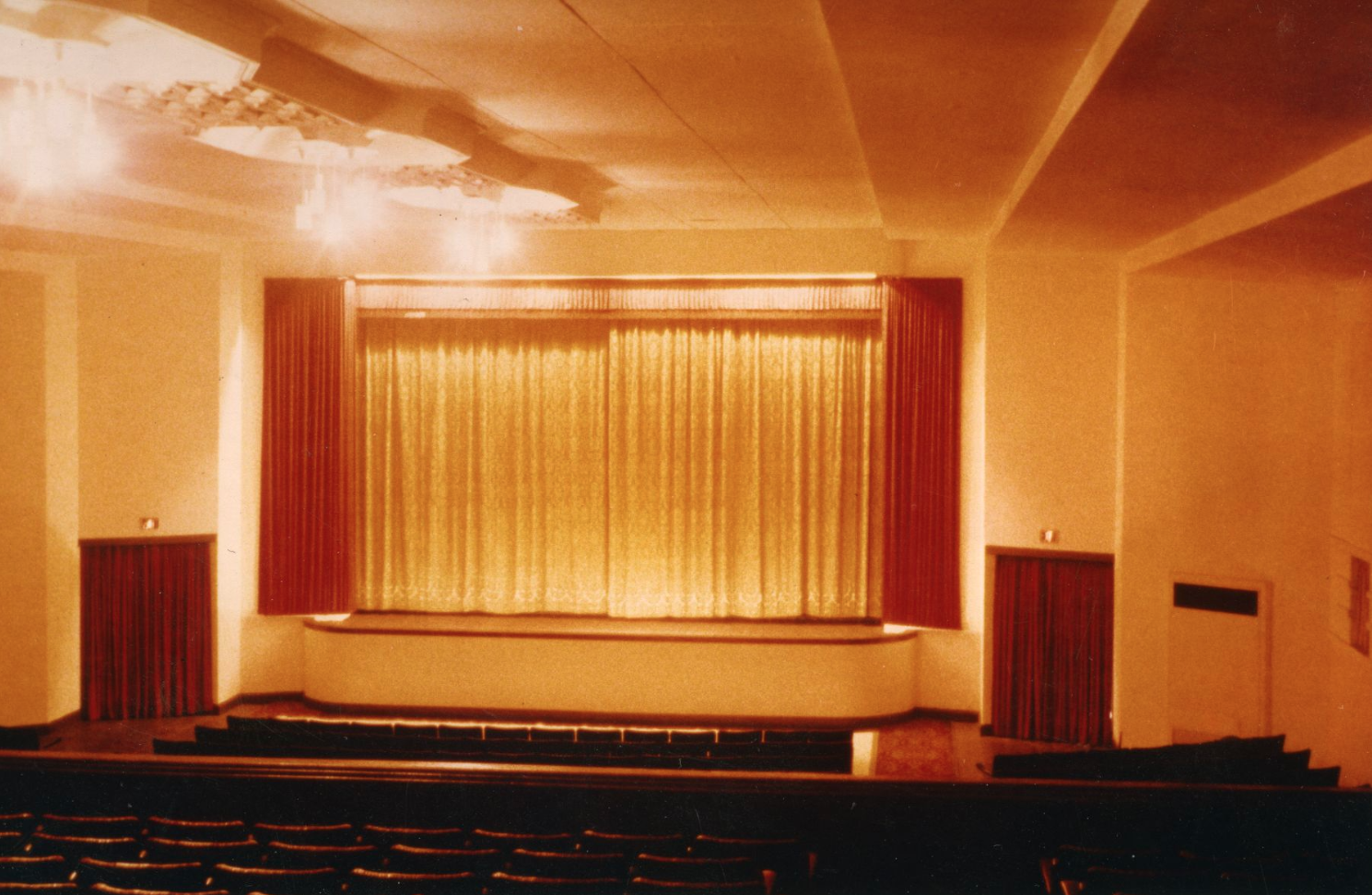
Inside the St. James Theatre, 1981. Image courtesy Georges River Libraries
By 1978, it had fallen into disrepair like many of its suburban cousins that had survived the mass demolition of such cinemas during the progressive 60s, and was showing adult films. Saint James indeed.
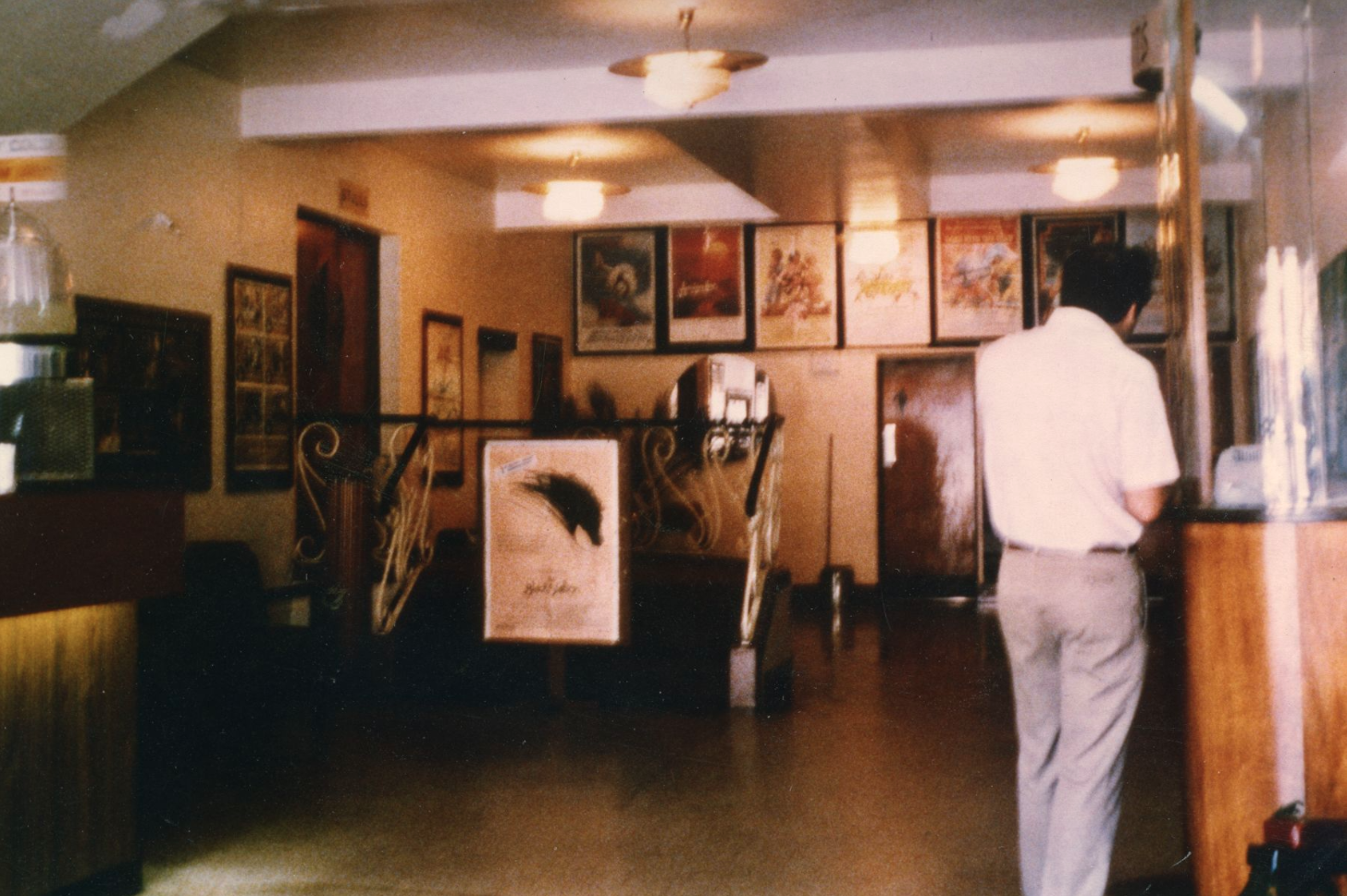
St. James Theatre lobby, 1980. Image courtesy Georges River Libraries
It was that year when developer Jim Tsagias bought the St. James, with plans to transform it into a function centre. Something changed his mind (perhaps the palm trees) and he decided to restore it as a cinema.
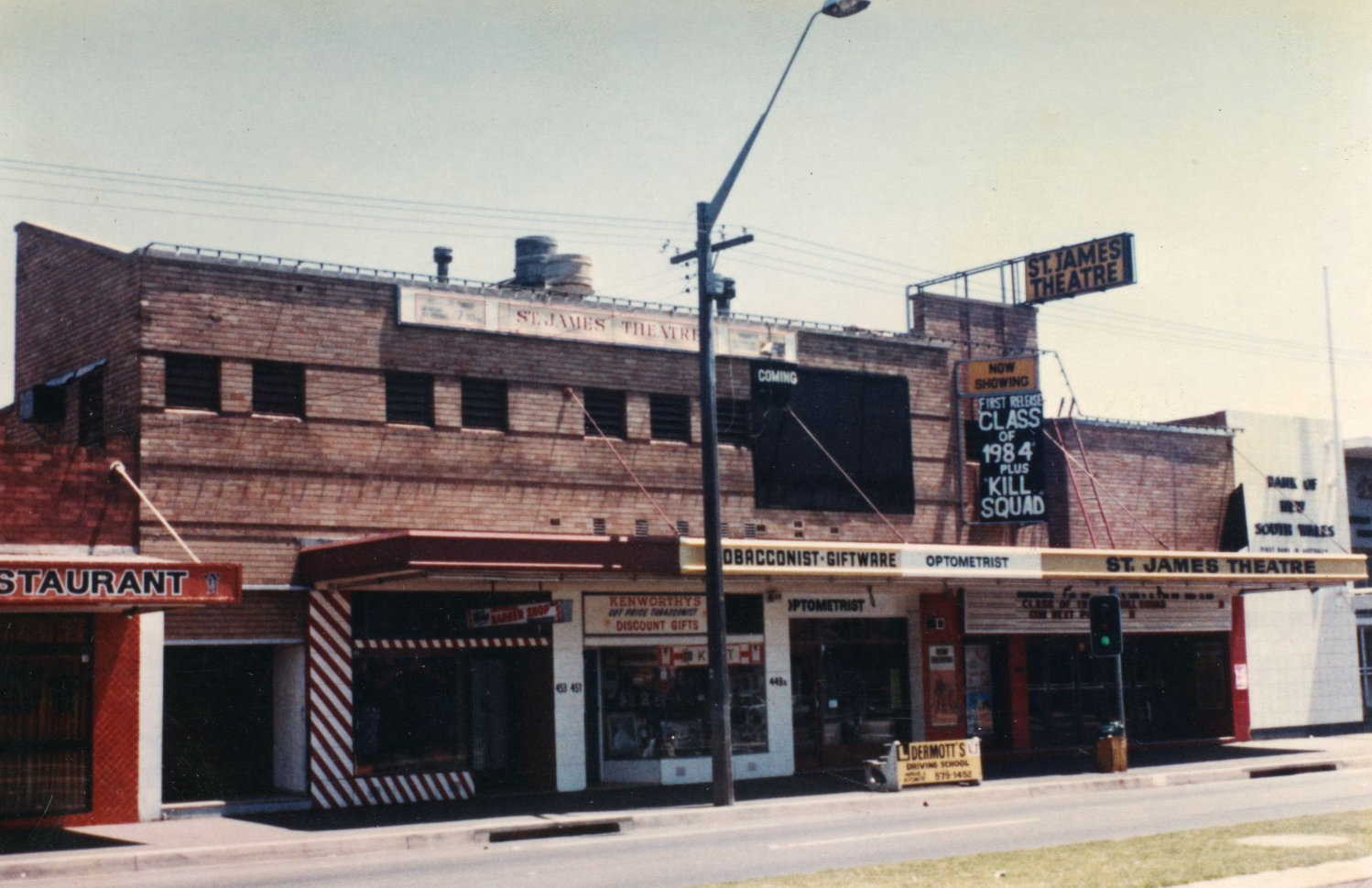
The final reel of St. James Theatre, 1982. Image courtesy Georges River Libraries
In 1982 it was reopened as the one-screen Beverly Hills Cinema, and in 1983 it was converted to a twin.
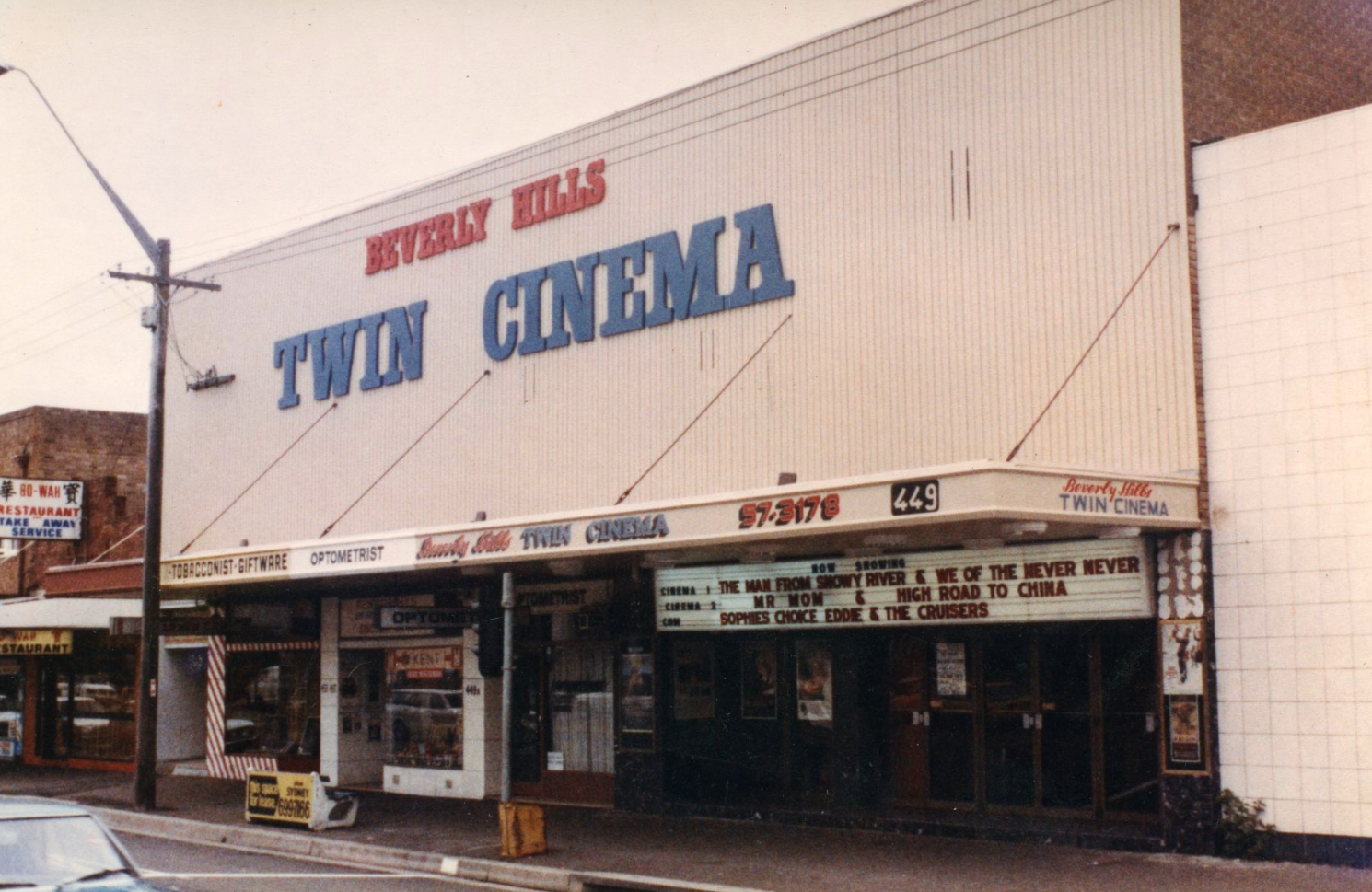
Seeing double at Beverly Hills Twin Cinema, 1983. Image courtesy Georges River Libraries
And couldn’t you tell. For years, the bigger Cinema No. 1 would play host to the big budget blockbusters, while smaller, more intimate pictures or films late in their run were relegated to the tiny Cinema No. 2, which had been shoehorned in above the first. It was an awkward setup, but one that built a reputation as the cheapest cinema in Sydney (based on ticket prices, of course), and became one of the most popular family venues in the south west, especially when coupled with the nearby Beverly Hills Pizza Hut. Movies then all-you-can-eat pizza: it doesn’t get much more 90s than that.
The cinema was looking a bit dated by the early 2000s, but not as bad as the bank next door (originally a Bank of NSW, later a Westpac). Sandwiched between the cinema and the Pizza Hut was one of so many suburban bank branches closed during that time, and it sat dormant for many years just like the Hut.
Perhaps realising it wasn’t a good look, and that there was an opportunity to expand, the Tsagias family bought the bank in 2004 and moved in, creating a video arcade in the new space which greatly relieved pressure from the cramped waiting area.
But this wasn’t enough. In 2008, a complete redevelopment saw the Beverly Hills upgraded to a six-screen cinema. The derelict Pizza Hut was cut in half to make room for more screens and a mini-power station, and the entire facade facing King Georges Road was given the facelift (in true Beverly Hills fashion) that it sports today.
Not quite the case around the back, though.

From the alley behind the cinema, it’s easy to see the layout of the original St James and the bank next door. The structure on the extreme left is new, and sits on the Pizza Hut’s territory. The Pizza Hut recently vanished from existence, perhaps to make way for more parking for the cinema, or a new restaurant (just what BH needs). Whenever you see extensive renovations going on, it’s usually a safe bet that it’s being done to prepare the property for sale. Sure enough, the Tsagias family placed the Beverly Hills Cinema on the market late last year. It seems as if Event Cinemas has taken control, at least of the screening coordination, but it remains to be seen if the Beverly Hills will remain a cinema under a new owner.
If it doesn’t, they may have to change the suburb’s name again.

 Past/Lives of the Near Future