Enfield RSL Club/IJK Computers – Enfield, NSW
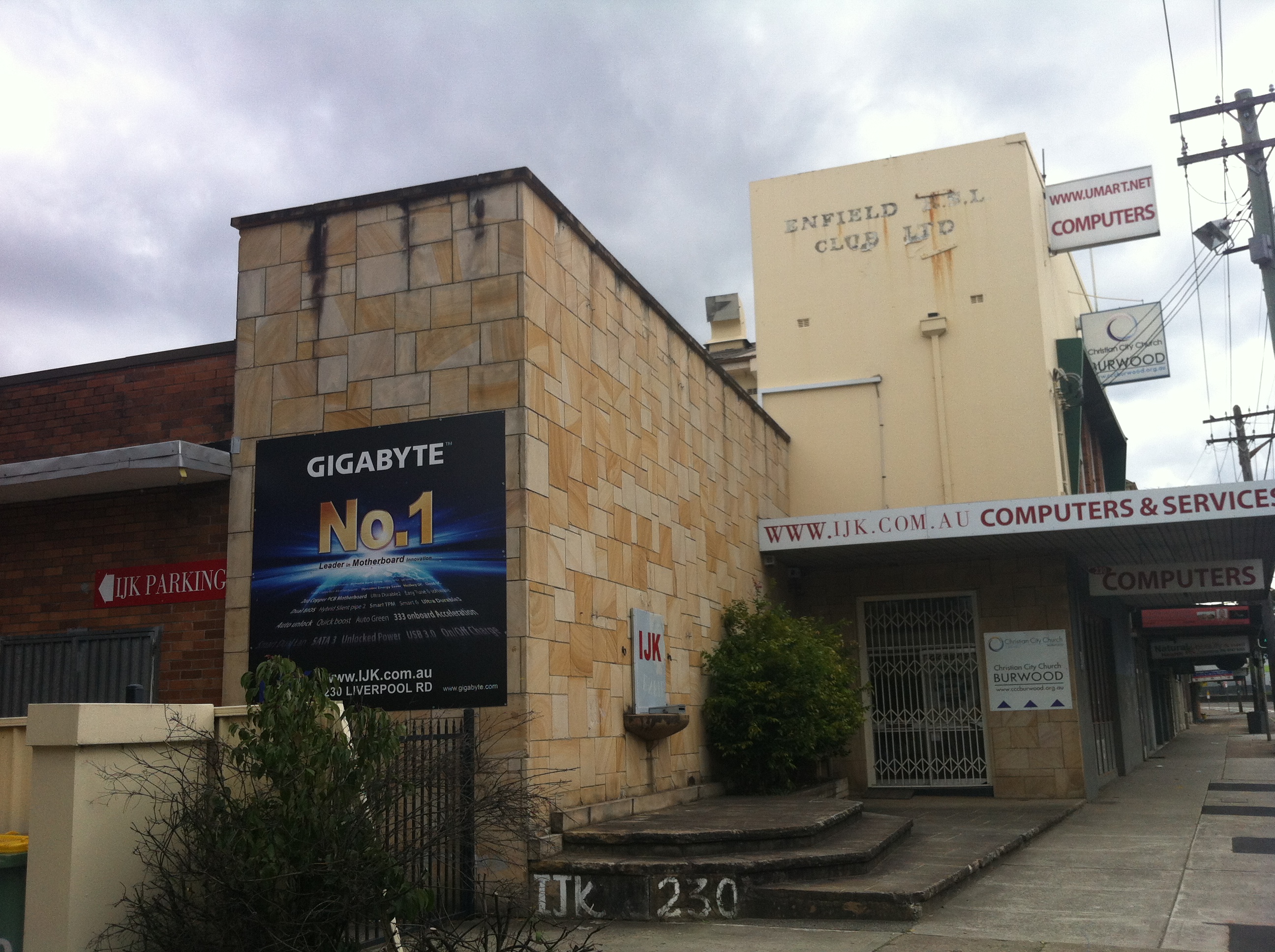
IJK Computers have the right idea. By replacing Enfield RSL with a computer shop, they’ve guaranteed that oldsters looking for the former establishment won’t dare to come inside. It’s like replacing McDonald’s with a gym. Confusing matters is the Christian City Church, which also resides inside (or C3 to their friends, as per their mind-blowing website).
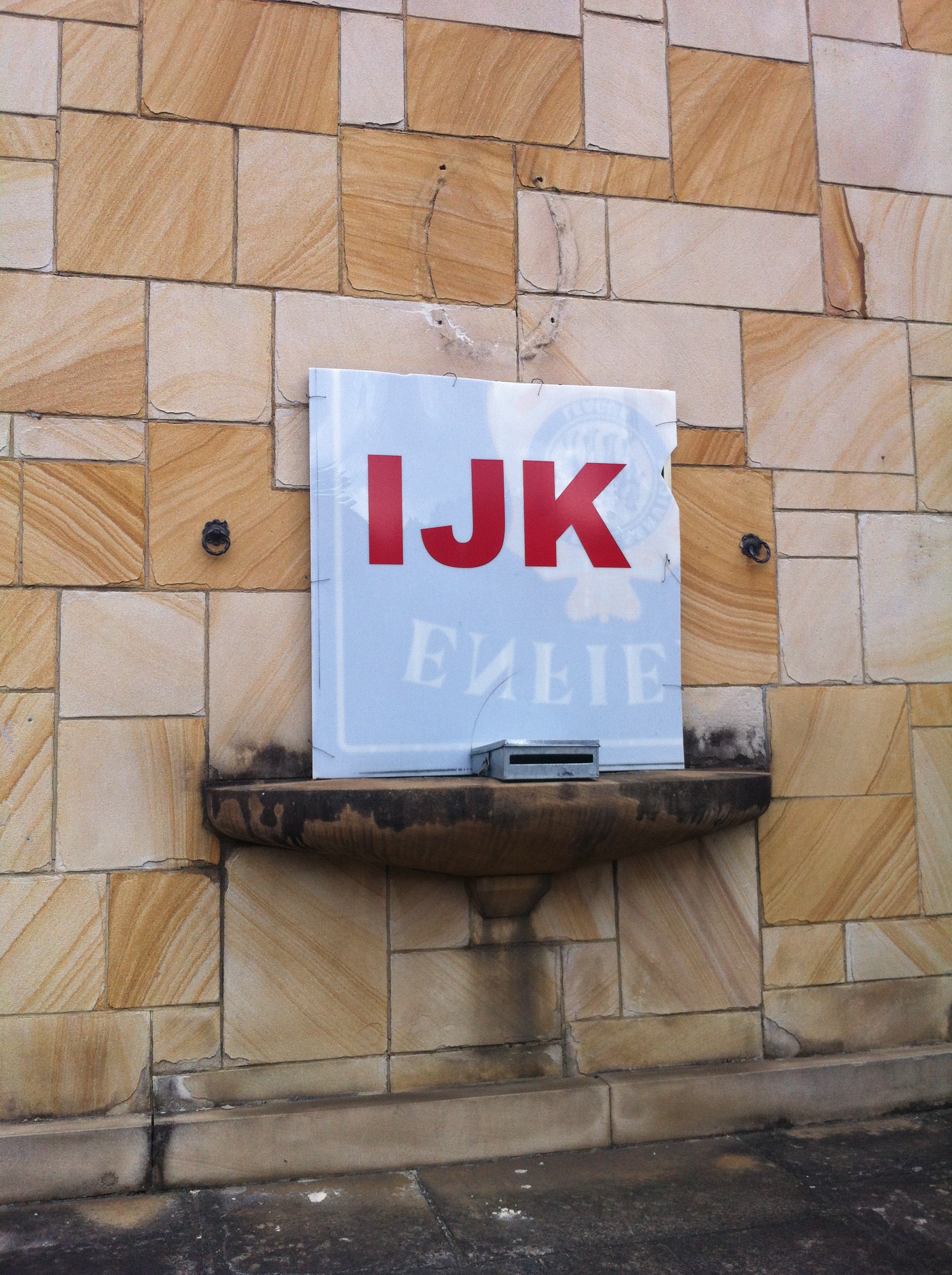
In what seems like surefire talkback radio fodder, even the memorial fountain outside has been removed, and the old RSL sign repurposed as a canvas for IJK’s striking logo. How did Alan Jones not stop this crime against Australia? As wars are fought less frequently and pokies tighten their stranglehold on clubs and pubs, we have to face the reality of a diminishing need for RSL clubs. Who knows, one day IJK may have replaced RSL as a familiar acronym.
Pizza Hut/Nothing – Beverly Hills, NSW

In Beverly Hills, these sad, wide, expressive eyes stare out at the busy King Georges Road rushing by, just like they have every day for the last 40 years. They don’t blink, even when the tears well up. They don’t close, even when all they want to do is sleep. Ever vigilant, they’re waiting for that sight that was once so familiar, so welcome – the happy family walking over the little bridge across the canal, looking forward to a special treat for dinner. Where else could we be talking about?

Back when it was still possible, it was a special treat. Home delivery was only introduced around 1985, so prior to that if you wanted Pizza Hut, you had to either pick it up yourself (effort) or eat in. Today, Pizza Hut is purely a pickup/delivery racket operating out of tiny, charmless shopfronts, but back then, Pizza Huts announced themselves with bold red roofs and hut-like restaurants. Why do you think they called it Pizza Hut?
Picture it – it’s a Friday night, your parents have just come home from work and they can’t be assed cooking. You know what you want, but you don’t want to nag them for it. And then suddenly…it happens. The TV captures everyone’s attention and says the unspoken:
The low-rent, completely not-fancy atmosphere of a Pizza Hut dining experience has yet to be replicated in this modern age. If regular restaurants are Dendy, Pizza Hut was Greater Union. For starters, the walls were all brick, and the chairs were all red. The first Pizza Hut in Australia was established in 1970, and all subsequent restaurants followed the design template laid down at Belfield. It showed; as late as 1999 you could still travel back in time to the 70s when dining at Pizza Hut. Don’t forget the restaurant-exclusive menu item, gingerbread man Pizza Pete, either. No other gingerbread man tastes like Pizza Pete.

In the 90s, with the advent of delivery and all-you-can-eat restaurants like Sizzler, Pizza Hut knew they had to step things up a notch. After all, they’d created delivery. They could destroy it. Unfortunately, by creating possibly the catchiest jingle in the history of advertising, they hadn’t made it easy for themselves:
So they introduced the Works, which was their attempt at all you can eat. Honestly, I think this is where Pizza Hut’s dine-in experience started to go wrong. Now, I know you’re thinking ‘hey, I remember all you can eat at Pizza Hut, and it was awesome’, and I’m not disagreeing. But before the advent of the Works, you’d just rock up, get a table, order a pizza and they’d bring it to your table. The Works required you to grab a plate and go up to the pizza bar, which was adorned with a variety of ‘popular toppings’. If you were a vegetarian, for instance, you had to put up with either plain cheese or thin crust vegetarian, and that’s IF someone hadn’t spilled meat on them, and IF wussy kids who couldn’t handle pineapple or other adventurous toppings had left any of the plainer varieties for you. And I won’t even get started on the obscene advertising for the Kids Works, which wouldn’t be allowed on TV these days:
Then you’d start wondering how often people coughed on these public pizzas. How often they were sneezed on. How long they’d been sitting there. They didn’t seem as hot anymore because they’d been sitting there so long. It didn’t take long for the whole experience, as well intentioned as it may have been, to become completely unpalatable. Add to that some kid having a noisy, messy birthday party in there every time you’d visit, and you were suddenly a delivery convert. Pizza Hut was Greater Union.

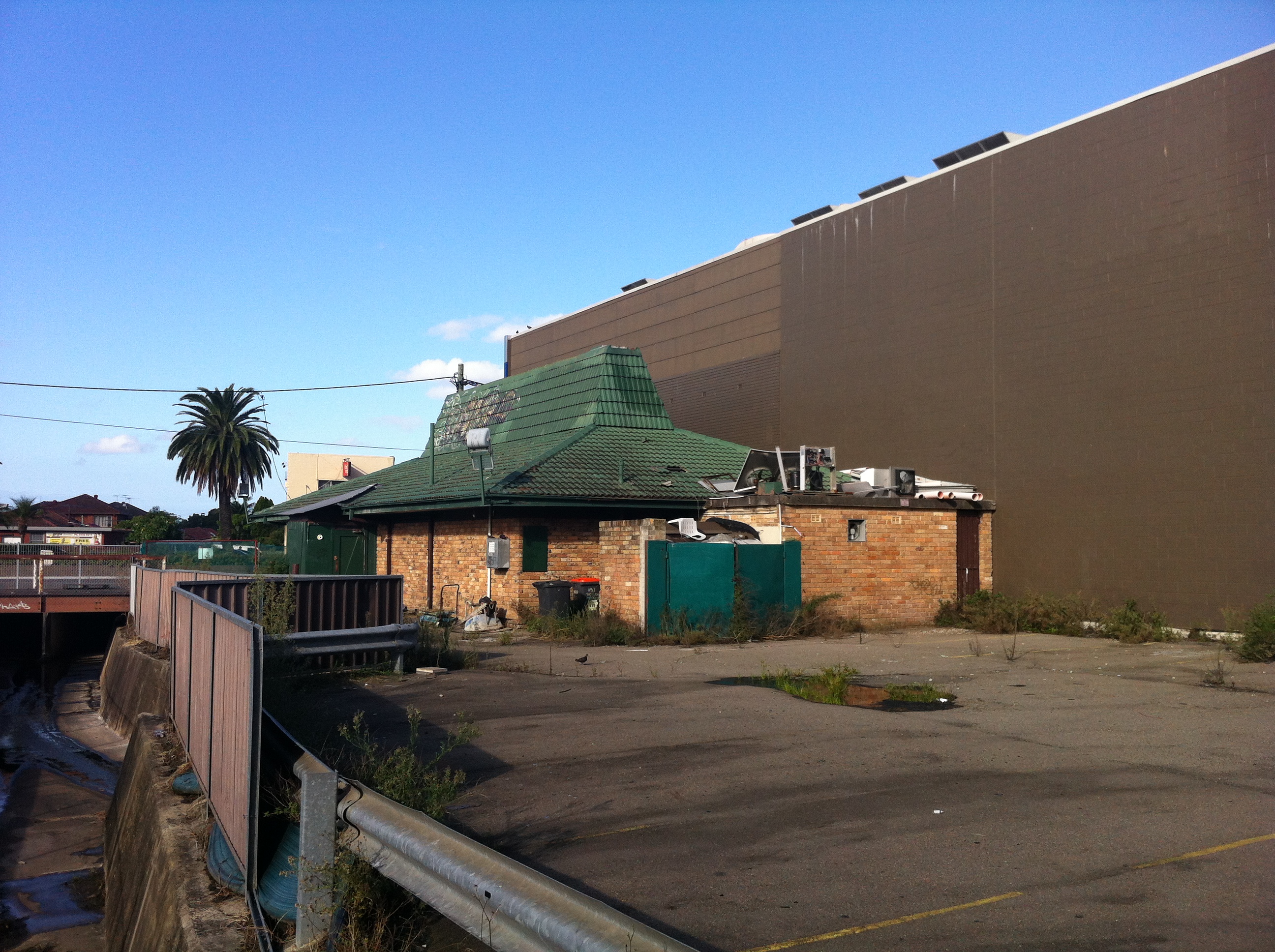
In 1999, Pizza Hut boasted 230 restaurants across Australia and NZ compared to just 185 delivery units. By 2002, there were less than 100 restaurants. Today, there’s the one on George Street in the city, and that’s about it. What happened? Pizza Hut claim that rising costs and diminished returns forced the closure of the restaurant arm of the company, and maybe that’s true. What happened to this particular Pizza Hut, though? Located right beside the ancient Beverly Hills Cinema, the two provided a wildly entertaining and impossibly well-matched double team for anyone wanting a night out in Beverly Hills (I’m sure those people are out there). But once the Pizza Hut closed, it was subjected to a variety of indignities, including being painted completely green, being used as a political headquarters for NSW MP Kevin Greene (groan [thanks, reader Catherine!]), and finally, being cut in half when the cinema expanded to include the former bank that sat between them.
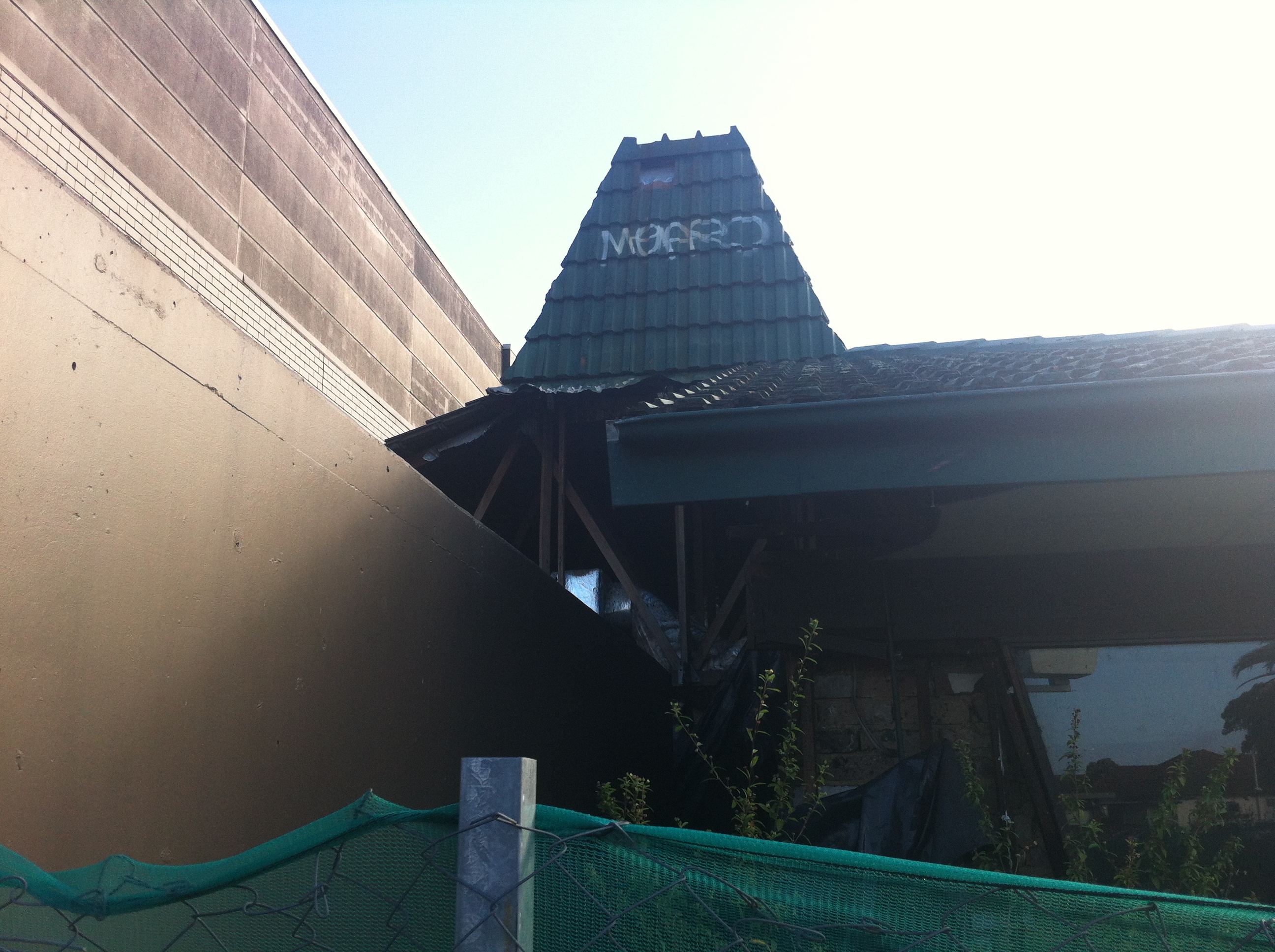
The cinema had owned the bank for a while, filling it with arcade games and such, but when it took the opportunity to renovate and incorporate the building completely, Pizza Hut paid the price. The cinema’s power generator now occupies the southeastern corner of the restaurant, and the insides are exposed to the elements. Why not just get rid of it completely? Instead of putting the space to good use, the corpse of the Beverly Hills family dining experience is left to fester, acting as a reminder to us all of a time when $5 would get you all you could eat, and when home delivery was seen as the anti-social option. It still is.
INFLUENTIAL UPDATE: It seems as if someone took my advice, because the Pizza Hut is now entirely gone: Why couldn’t it have happened to Dominos instead?
Food Fair/ANZ Bank/The Base Store/No1 Butchery – Hurstville, NSW
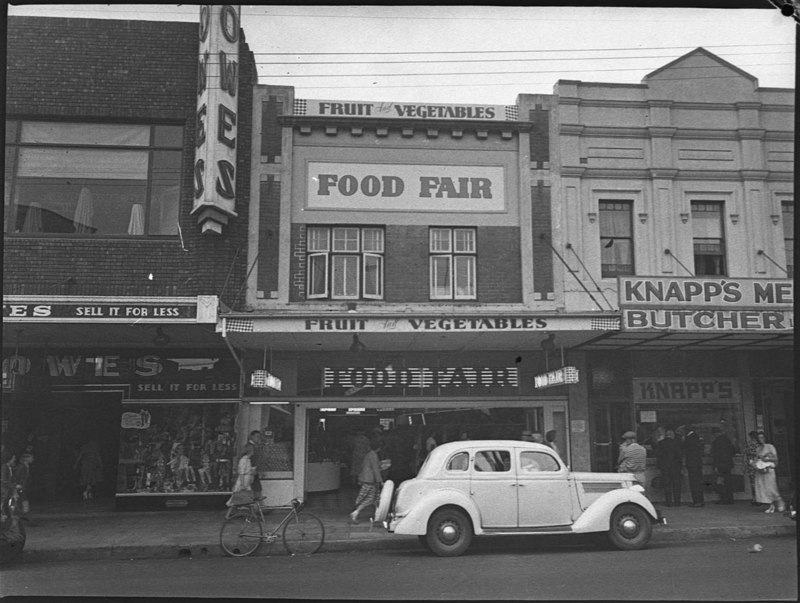
Food Fair, Forest Road, 1951. Image courtesy State Library of NSW.
Sometimes it can be fun to take a look at the evolution of a shop over time. It reveals a lot about the changing face of the suburb, shoppers’ tastes and the sensibilities of the time, among many other things. In this case, we’re looking at 274 Forest Road, Hurstville. In 1951, it was Food Fair, an extremely 50s looking fruit and vegetable shop. Now, take a good look at this picture. You’d never get away with parking a car on Forest Road like that these days, and you certainly wouldn’t ever see your bike again if you just left it unattended and unchained like that. Before the advent of the Westfield, or the Super Centre above the Hurstville train station, these shops were the lifeblood of the suburb that coursed through the vein that is Forest Road.
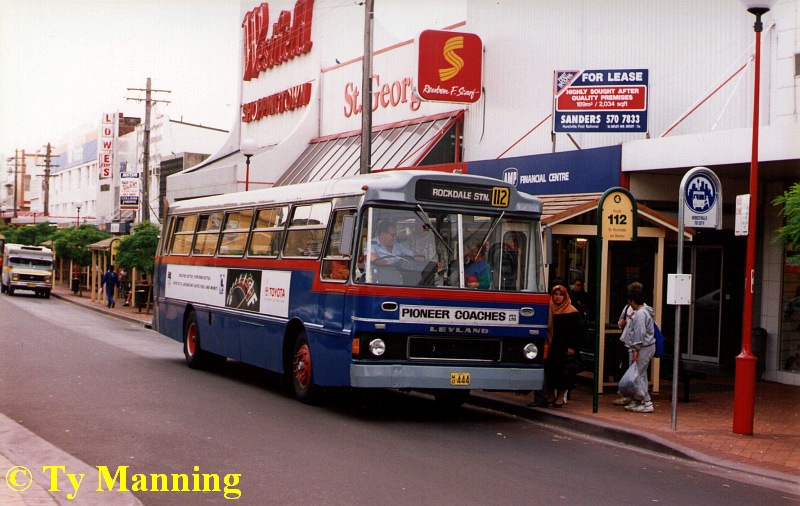
Hurstville, circa 1986. Image courtesy Ty Manning, clearly.
This one’s a stretch, but use your enthusiasm to zero in on the barely visible ANZ logo next to the Lowes, which is still there 30 years later. It makes sense that by the 80s, the banks had staked out territory amongst the little shops along the street. Food Fair would have had nowhere else to go but bust even if it had survived the 1978 opening of Westfield (which I’m guessing it didn’t).

Hurstville, 2002.
Here we are again, in the new millennium. Now the shop is home to The Base Store, a $2 shop/party goods outlet. How shops like these were able to flourish in the 90s/00s is beyond me, but think back – they were everywhere. It all started with the novelty of the Reject Shop, and then things got out of hand. We only have ourselves to blame. By this point the bank is long gone, a victim of the online revolution and branch closures. Firing workers is the best way to save money, you know.
 Which brings us to today. Oh, how things have changed (except Lowes, which appears to be the foundation Hurstville was built around). The former Knapps Butchery has become a Chemist Warehouse, and the party’s over for the Base Store. It’s now Butchery No. 1, or No1 Butchery as Google likes to call it, and fittingly too – it’s anonymous as hell. There’s the Rav 4 parked in the same place as the car in 1951, and they both have the spare tyre on the back. The custom facade of the Food Fair has long since been covered up by the dirty venetian look of ANZ, which itself has left an ugly stain (what a visual metaphor). The ubiquitous-yet-defunct Anata Awning has ensured that Food Fair’s legacy is lost to the world, but I can’t help but think if you tore that facade down, the Food Fair shopfront would be waiting patiently behind it for one more day in the sun. It sounds fair to me.
UPDATE: One year later, No. 1 Butchery is #10 in the Past/Lives Flashback series. Check it out.
Washington H. Soul Pattinson & Co. Chemist/Key College House/Derelict – Sydney, NSW
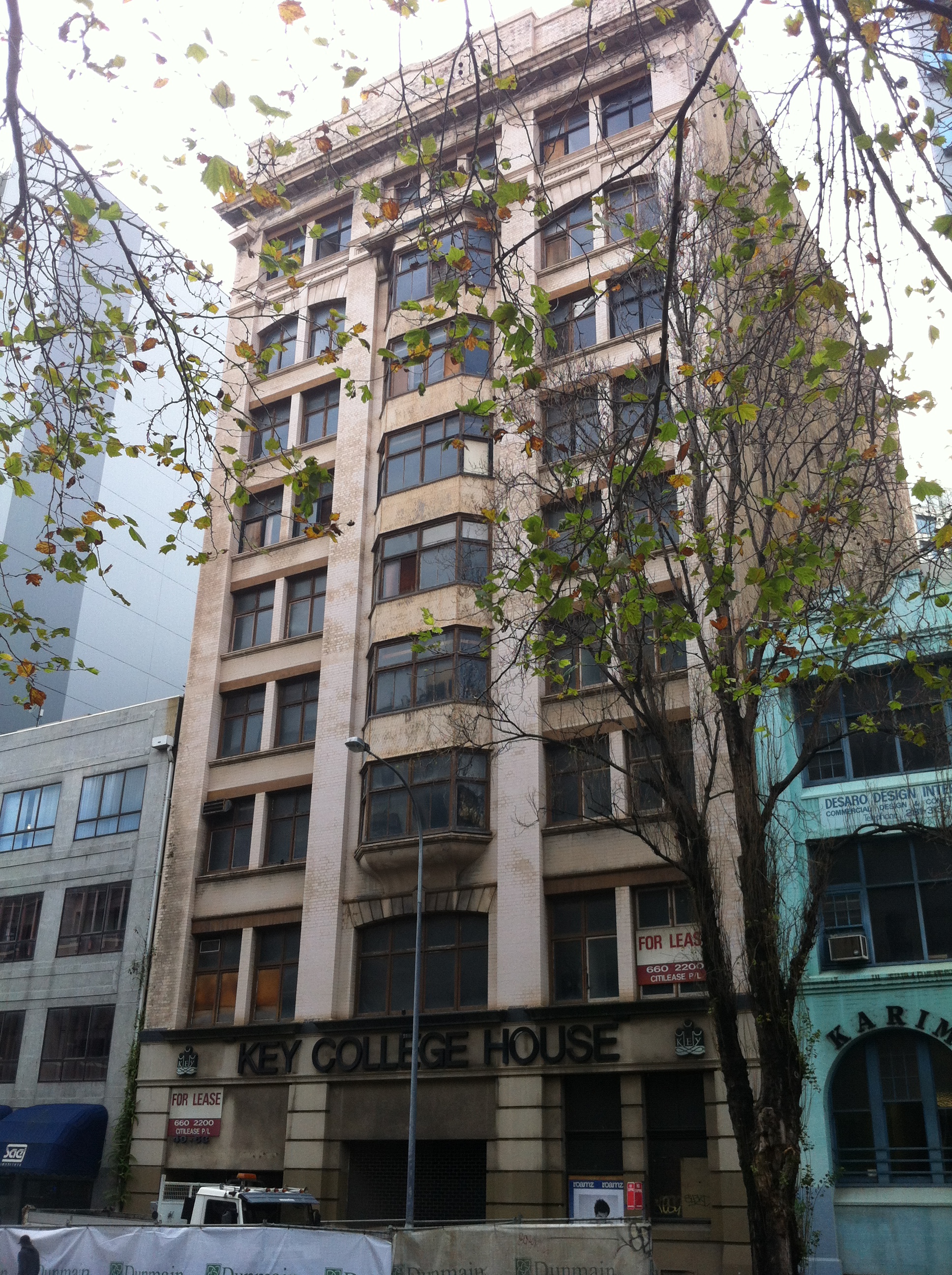
Thanks in part to the TV show, hoarding has recently risen in prominence in the public consciousness. That strange compulsion to keep every little thing ‘just in case’ quickly turns houses into landfills and cars into garbage trucks. It’s heartbreaking. When you’re rich, being a hoarder means you have to step things up a notch; for example, Sydney real estate moguls Isaac and Susan Wakil. The Wakils, through their essentially-defunct Citilease company, own a variety of vacant buildings around the inner city and Pyrmont, including the Terminus Hotel, the Griffiths Tea building, and Key College House. In true hoarder fashion, those wacky Wakils refuse to allow anything to be done with these buildings, even if it makes financial sense, and as a result they’ve become either a squatter’s paradise or in the case of the Key College House, a neglected monolith spreading an atmosphere of dereliction amid an already destitute area.

Courtesy SMH, 25 Aug 2003.
It’s hard to find much on the building’s history. Depending on who you listen to (Soul Pattinson or the city), the building was constructed in either 1916 or 1930 as a modern warehouse and factory for Washington H. Soul Pattinson & Co, and still features a huge, partially obscured sign for the chemist on its side. Soul Pattinson’s operations outgrew the building and moved to Kingsgrove in 1960.
Key College House features For Lease signs with six digit numbers, so they’ve been there since before 1994. Key College itself is located in Surry Hills, an initiative of Youth Off the Streets. I’m not entirely certain if there’s a connection, but even if there isn’t, think of all the youth that could be kept off the streets should Key College House be redeveloped into viable accommodation.
Newsagent/Dalat Hot Bread – Concord West, NSW

Here’s a fun instance of ‘street musical chairs’. Exhibit A: Dalat Hot Bread in Concord West. An ordinary shop with an ordinary awning…

But on closer inspection we can see that it says Financial Review. Clearly, this was once a newsagent. But Concord Westians still need newspapers, so where did it go?

A few doors up along Concord Road is what is now the newsagent, but looking at that sign it was clearly once something else. It’s a tough sign to read, so I’ll leave open to interpretation, but I wonder why the newsagent moved? Was the rent too high two doors along? Were there not as many customers at that specific latitude?

 Past/Lives of the Near Future