Pizza Hut/Nothing – Beverly Hills, NSW

In Beverly Hills, these sad, wide, expressive eyes stare out at the busy King Georges Road rushing by, just like they have every day for the last 40 years. They don’t blink, even when the tears well up. They don’t close, even when all they want to do is sleep. Ever vigilant, they’re waiting for that sight that was once so familiar, so welcome – the happy family walking over the little bridge across the canal, looking forward to a special treat for dinner. Where else could we be talking about?

Back when it was still possible, it was a special treat. Home delivery was only introduced around 1985, so prior to that if you wanted Pizza Hut, you had to either pick it up yourself (effort) or eat in. Today, Pizza Hut is purely a pickup/delivery racket operating out of tiny, charmless shopfronts, but back then, Pizza Huts announced themselves with bold red roofs and hut-like restaurants. Why do you think they called it Pizza Hut?
Picture it – it’s a Friday night, your parents have just come home from work and they can’t be assed cooking. You know what you want, but you don’t want to nag them for it. And then suddenly…it happens. The TV captures everyone’s attention and says the unspoken:
The low-rent, completely not-fancy atmosphere of a Pizza Hut dining experience has yet to be replicated in this modern age. If regular restaurants are Dendy, Pizza Hut was Greater Union. For starters, the walls were all brick, and the chairs were all red. The first Pizza Hut in Australia was established in 1970, and all subsequent restaurants followed the design template laid down at Belfield. It showed; as late as 1999 you could still travel back in time to the 70s when dining at Pizza Hut. Don’t forget the restaurant-exclusive menu item, gingerbread man Pizza Pete, either. No other gingerbread man tastes like Pizza Pete.

In the 90s, with the advent of delivery and all-you-can-eat restaurants like Sizzler, Pizza Hut knew they had to step things up a notch. After all, they’d created delivery. They could destroy it. Unfortunately, by creating possibly the catchiest jingle in the history of advertising, they hadn’t made it easy for themselves:
So they introduced the Works, which was their attempt at all you can eat. Honestly, I think this is where Pizza Hut’s dine-in experience started to go wrong. Now, I know you’re thinking ‘hey, I remember all you can eat at Pizza Hut, and it was awesome’, and I’m not disagreeing. But before the advent of the Works, you’d just rock up, get a table, order a pizza and they’d bring it to your table. The Works required you to grab a plate and go up to the pizza bar, which was adorned with a variety of ‘popular toppings’. If you were a vegetarian, for instance, you had to put up with either plain cheese or thin crust vegetarian, and that’s IF someone hadn’t spilled meat on them, and IF wussy kids who couldn’t handle pineapple or other adventurous toppings had left any of the plainer varieties for you. And I won’t even get started on the obscene advertising for the Kids Works, which wouldn’t be allowed on TV these days:
Then you’d start wondering how often people coughed on these public pizzas. How often they were sneezed on. How long they’d been sitting there. They didn’t seem as hot anymore because they’d been sitting there so long. It didn’t take long for the whole experience, as well intentioned as it may have been, to become completely unpalatable. Add to that some kid having a noisy, messy birthday party in there every time you’d visit, and you were suddenly a delivery convert. Pizza Hut was Greater Union.

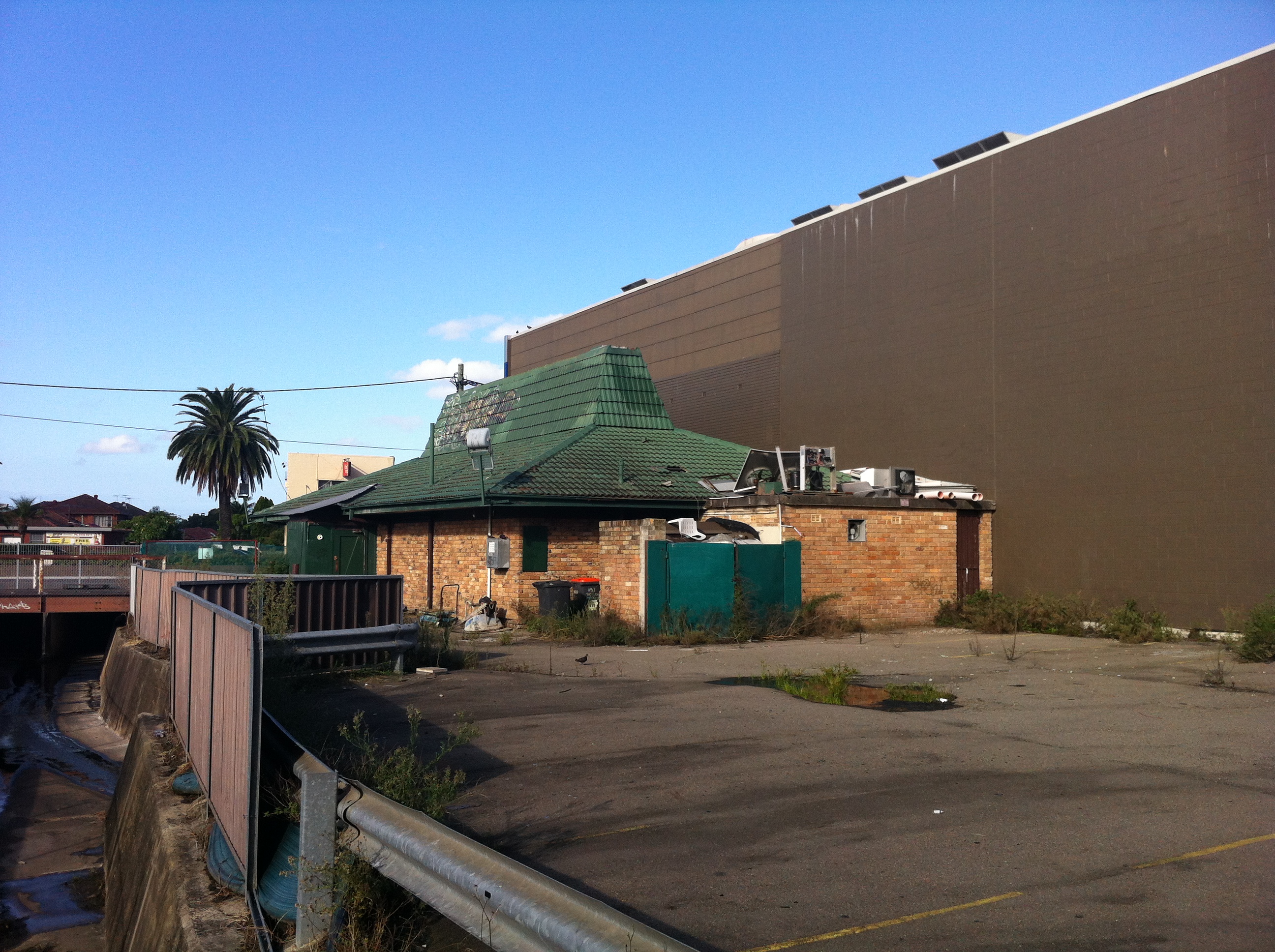
In 1999, Pizza Hut boasted 230 restaurants across Australia and NZ compared to just 185 delivery units. By 2002, there were less than 100 restaurants. Today, there’s the one on George Street in the city, and that’s about it. What happened? Pizza Hut claim that rising costs and diminished returns forced the closure of the restaurant arm of the company, and maybe that’s true. What happened to this particular Pizza Hut, though? Located right beside the ancient Beverly Hills Cinema, the two provided a wildly entertaining and impossibly well-matched double team for anyone wanting a night out in Beverly Hills (I’m sure those people are out there). But once the Pizza Hut closed, it was subjected to a variety of indignities, including being painted completely green, being used as a political headquarters for NSW MP Kevin Greene (groan [thanks, reader Catherine!]), and finally, being cut in half when the cinema expanded to include the former bank that sat between them.
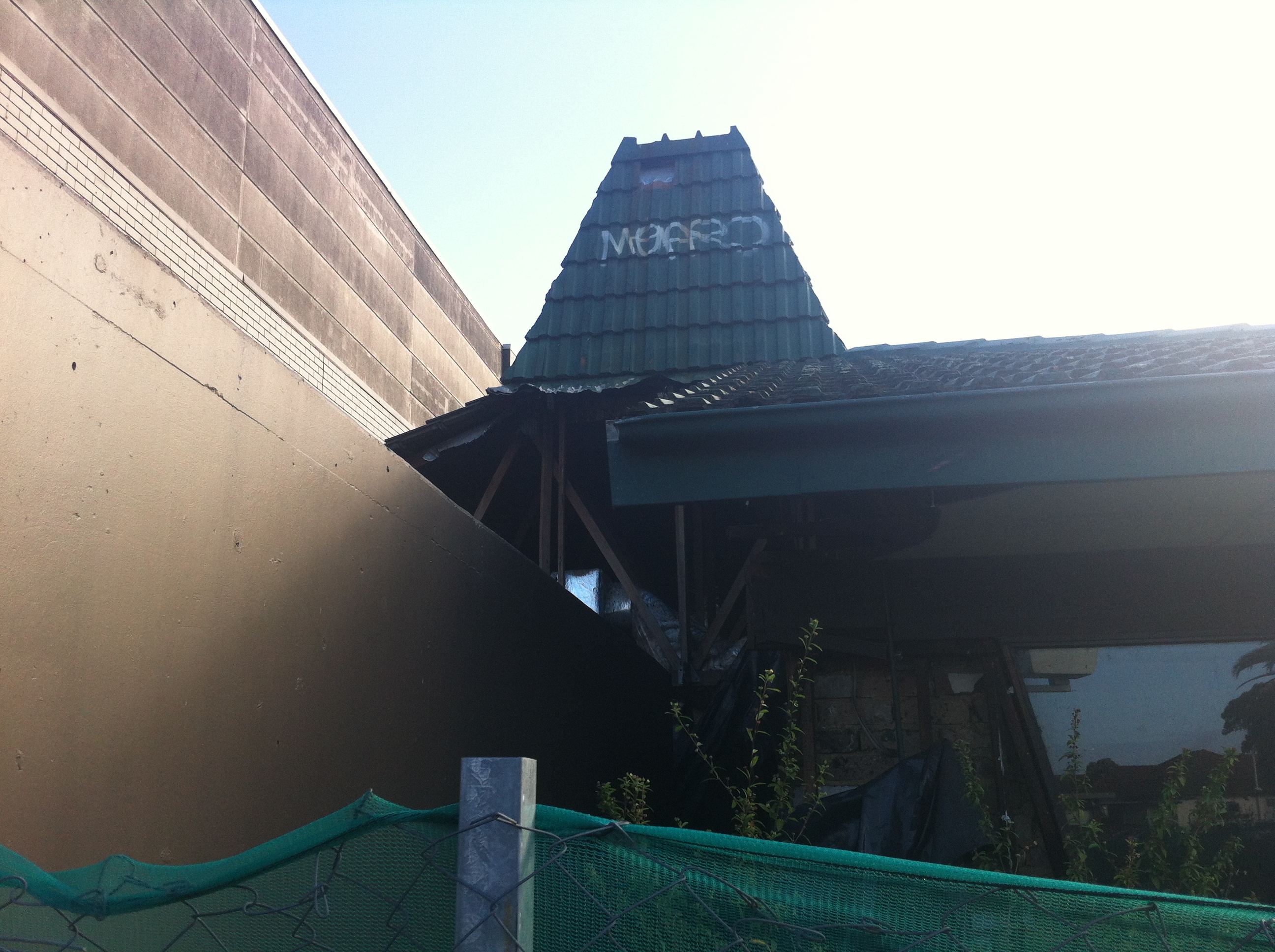
The cinema had owned the bank for a while, filling it with arcade games and such, but when it took the opportunity to renovate and incorporate the building completely, Pizza Hut paid the price. The cinema’s power generator now occupies the southeastern corner of the restaurant, and the insides are exposed to the elements. Why not just get rid of it completely? Instead of putting the space to good use, the corpse of the Beverly Hills family dining experience is left to fester, acting as a reminder to us all of a time when $5 would get you all you could eat, and when home delivery was seen as the anti-social option. It still is.
INFLUENTIAL UPDATE: It seems as if someone took my advice, because the Pizza Hut is now entirely gone: Why couldn’t it have happened to Dominos instead?
Washington H. Soul Pattinson & Co. Chemist/Key College House/Derelict – Sydney, NSW
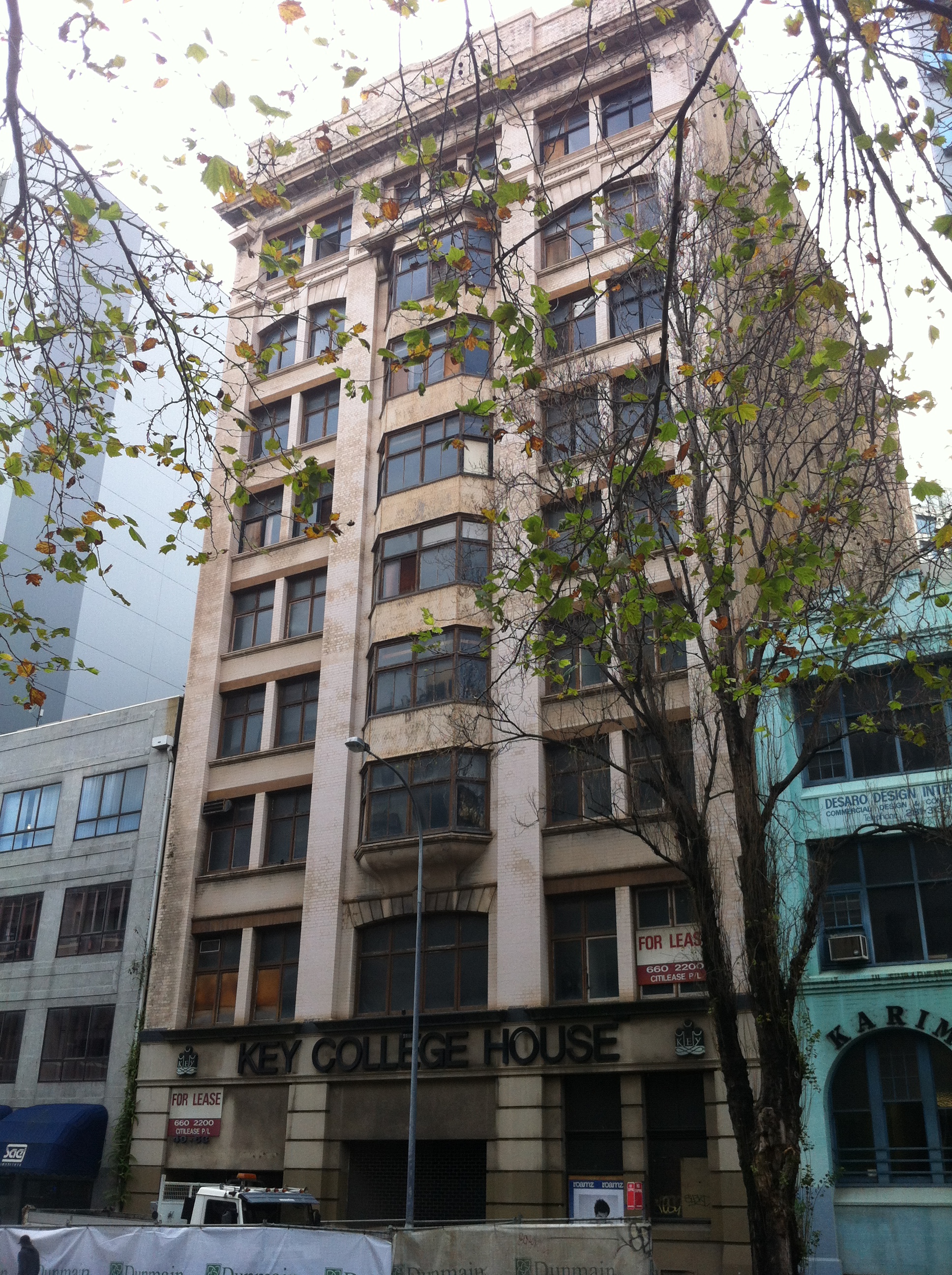
Thanks in part to the TV show, hoarding has recently risen in prominence in the public consciousness. That strange compulsion to keep every little thing ‘just in case’ quickly turns houses into landfills and cars into garbage trucks. It’s heartbreaking. When you’re rich, being a hoarder means you have to step things up a notch; for example, Sydney real estate moguls Isaac and Susan Wakil. The Wakils, through their essentially-defunct Citilease company, own a variety of vacant buildings around the inner city and Pyrmont, including the Terminus Hotel, the Griffiths Tea building, and Key College House. In true hoarder fashion, those wacky Wakils refuse to allow anything to be done with these buildings, even if it makes financial sense, and as a result they’ve become either a squatter’s paradise or in the case of the Key College House, a neglected monolith spreading an atmosphere of dereliction amid an already destitute area.

Courtesy SMH, 25 Aug 2003.
It’s hard to find much on the building’s history. Depending on who you listen to (Soul Pattinson or the city), the building was constructed in either 1916 or 1930 as a modern warehouse and factory for Washington H. Soul Pattinson & Co, and still features a huge, partially obscured sign for the chemist on its side. Soul Pattinson’s operations outgrew the building and moved to Kingsgrove in 1960.
Key College House features For Lease signs with six digit numbers, so they’ve been there since before 1994. Key College itself is located in Surry Hills, an initiative of Youth Off the Streets. I’m not entirely certain if there’s a connection, but even if there isn’t, think of all the youth that could be kept off the streets should Key College House be redeveloped into viable accommodation.
Good Fortune Chinese Takeaway/Nothing – Penshurst, NSW
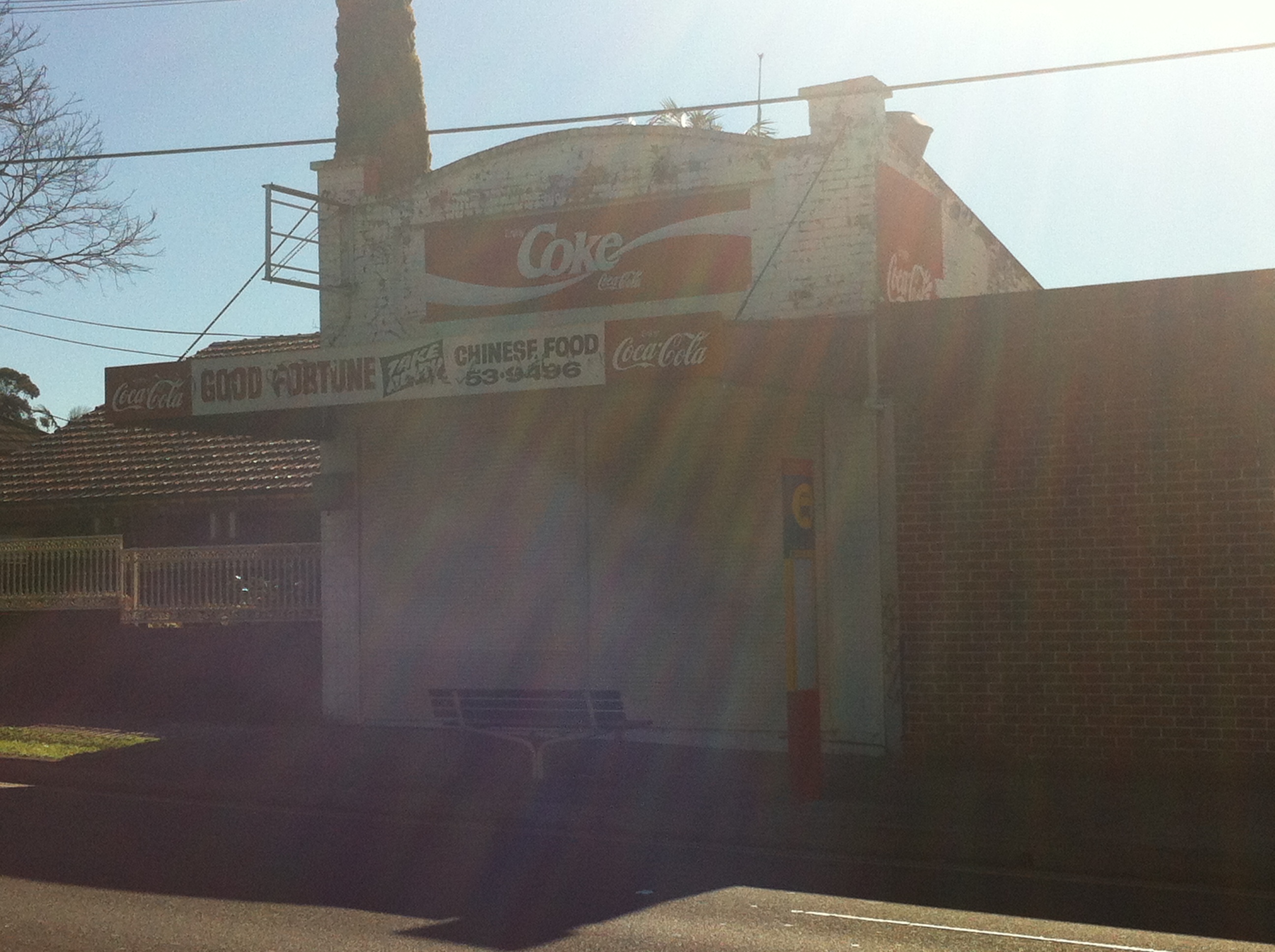
Proudly presented by Coca-Cola is the Good Fortune takeaway. Over the years, I have never, ever seen this place open. Coke’s absolutely saturated it with signage, and there’s faded evidence that there was once even more. I’m guessing this wasn’t a place you headed to when you felt like a Pepsi.
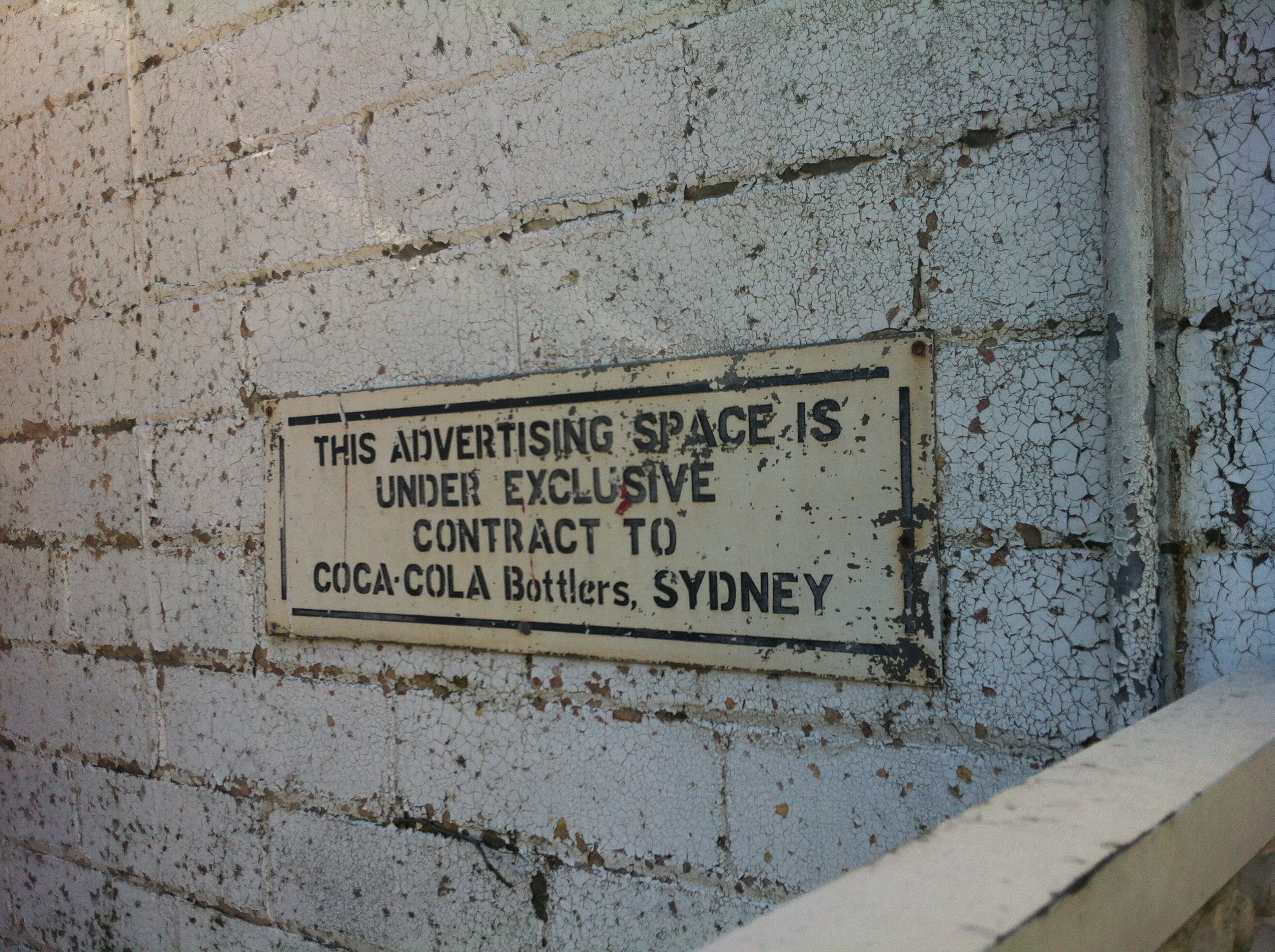
If I were conspiracy minded, I might argue that Coke has paid (or threatened) the current owners to keep the signs up for the free advertising. Does this work as advertising? Is anyone looking at the dead husk of a Chinese restaurant and getting thirsty? The small, weathered sign on the side informs us that the advertising space (not a shop, an advertising space) is under exclusive contract to Coca-Cola. Can I ask why? It’s not like this is the Centerpoint Tower, or a place with amazing exposure. It is across the road from a school, however…the conspiracy deepens.
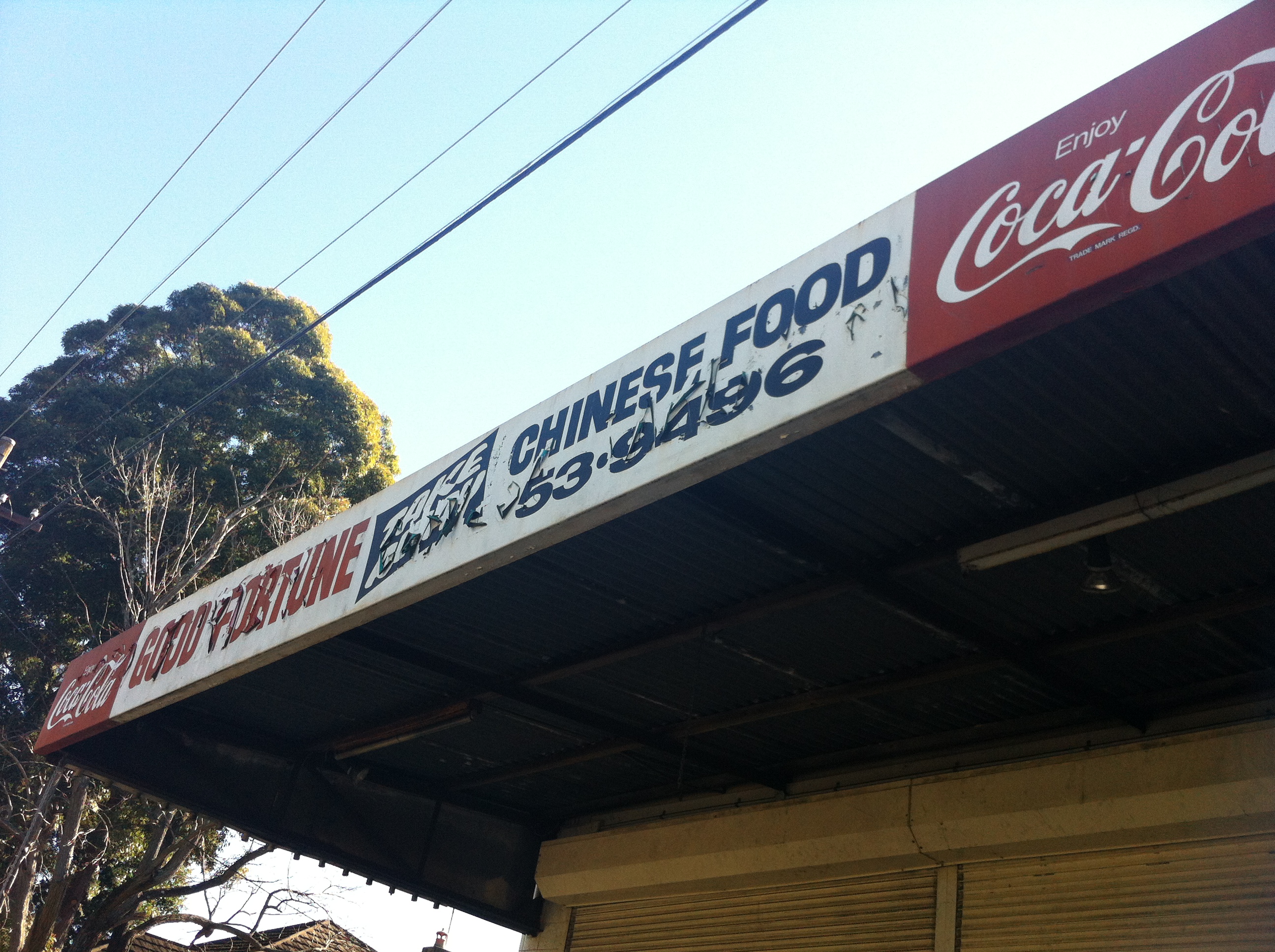
As old as the place is already (six digit phone number), the peeling paint on the awning suggests there’s an even older entity waiting to expose itself to the world. The shop appears to be part of the residential complex behind it, so it’s likely that someone bought the house and closed the shop. Good fortune for the homeowner, bad luck for the Good Fortune.
Sharpie’s Golf House/Harmex Golf/Derelict – Sydney, NSW

I see you back there, Edwards & Co. Ltd. You’ll get your turn…
Yes, the kitschy neon sign is what Sharpie’s Golf House is best known for, but there’s a bit more to it than that. For starters, the sign has been gone for years, having been taken down by the City of Sydney in 2007 for ‘refurbishment’. How long does it take to replace a few tubes?
The origins of Sharpie’s Golf House lie in the shop next door. It’s currently the empty shell of the former Gold Sun Supermarket, but in 1918, when Russian immigrant Harry Landis bought it, it was the Railway Loan Office, named for its proximity to Central Station. Landis moved into the current Sharpie’s address in 1923, and proceeded to divide the pawn shop into two sections: musical instruments and sporting goods, with an emphasis on golf.

After the Second World War, the sporting side was renamed The Golf House, and in 1964 the animated neon sign featuring the world’s best golfer (he always gets a hole-in-one) was erected after six years of construction. Until its removal, it was Australia’s second oldest neon sign (Melbourne features the oldest. You gonna take that lying down, Sydney?). The music business moved to Park Street in 1977, and the Golf House became Sydney’s premier golf store. This prestige attracted pro golfer Lindsay Sharp, who bought the shop in 1985 and renamed it after himself, forcing a change to the neon sign. That’s why the red ‘Sharpie’s’ part looks so out of place.

Sharp himself sold the ever-declining business in 1999, and in 2004 it became Korean-owned Harmex Golf, which limped on for a few years before closing its doors for good in 2007. Looking around the area it’s not a surprise – what was once a thriving business zone has become a wasteland with a bad reputation, filled with backpacker hostels and husks of businesses long gone. I’m not complaining; it’s great for what I’m doing. But it’s a sad look for the city, especially so close to the train line. Besides, it’s not like there are any golf courses in the immediate vicinity, so it’s not hard to imagine the golfing community getting fed up with making the trek out here every time they wanted a decent 5-iron. At least they made for good weapons when they stepped back out into the street.

The building today is a mess. Sharpie’s has been dulled. It’s dirty, covered in posters and falling apart. Even by Elizabeth Street standards it’s an eyesore. The part I’m having a hard time getting over is the indoor driving range. It had an indoor driving range! For how long? How did it work? I’ve played those virtual golf simulators indoors before, but surely this was set up long before those were around. It’s not even that long a building, how did Sharpie have room to get his drive on?

Do all those hole-in-ones count if he’s been playing the 19th hole all these years? Image courtesy SMH, 25 Aug 2003
It’s alleged that the sign sits inside, heritage listed, waiting for a spit and polish that’ll likely never come. There have been a few proposals submitted to the Sydney City Council to demolish the current site and reincorporate the sign into whatever is built in its place, but all have been declined. It’s not like they’re going to build another Golf House, so why not just leave it in the past? Why not take the opportunity to breathe some life back into this part of town, and create tomorrow’s heritage listed signs? For all the talk of preservation, Sharpie was quick to flush a 20-year-old sign down the toilet to remake it in his image. It’ll likely go the way of the Regent Theatre on George Street, and we’ll be able to live in Sharpie Tower in 20 years time. There’s something to look forward to.
Botany Water Pumping Station/Botany Rockdale Sewage Farm/SWSOOS – Mascot, NSW

Cooks River, Kyeemagh. Courtesy Sydney – City and Suburbs Photo Blog.
When Sydney began to run out of fresh water in 1850, having abused both the Tank Stream and Busby’s Bore in Centennial Park, consideration was given to where a new supply would come from. It took four thirsty years to decide upon a plan to build a series of dams leading to a pumping station out near Botany (beside the site of Sydney Airport). Water was pumped from the Botany site to two city reservoirs: one in Crown Street and one in Paddington.

Ruins of the Botany Water Pumping Station, 1996. Courtesy City of Botany Bay.
The scheme didn’t really work out, and water again ran dry by 1862. This new crisis led to the creation of the Upper Nepean Scheme, which is still providing us with fresh water today. The Botany Station kept pumping, topping up shortages until 1893.

The great minds at the top weren’t finished with the Botany site, however. In the 1870s it became ground zero for the Botany-Rockdale Sewage Farm, Sydney’s earliest attempt at purifying human waste products in the hope of beating the repulsive sounding sanitary problems of the era. A farm was created using human waste as fertiliser, and while the crops were successful, there just weren’t enough of them to sustain operating costs. That, and this monstrosity was right next to a fresh water supply. The farm was closed in 1916 and deemed a failure, but as they say, shit happens.

Botany Rockdale Sewage Farm, circa 1900. Courtesy Water Board Archives.
All physical evidence of the farm was destroyed or removed. Unbelievably, it was decided that a better solution was to just pump all the sewage out into the ocean near Long Bay, and the current buildings here were built for that purpose. Even more unbelievable is that in this day and age, this system (known as SWSOOS, or Southern and Western Suburbs Ocean Outfall Sewer System) is still deemed the best way, because it’s still happening. This one in particular services the Cooks River Estuary and the Ascot Racecourse (now Mascot Airport). So much cement was required for this project that Australia’s first steam powered concrete mixer was imported for the job. Wow.
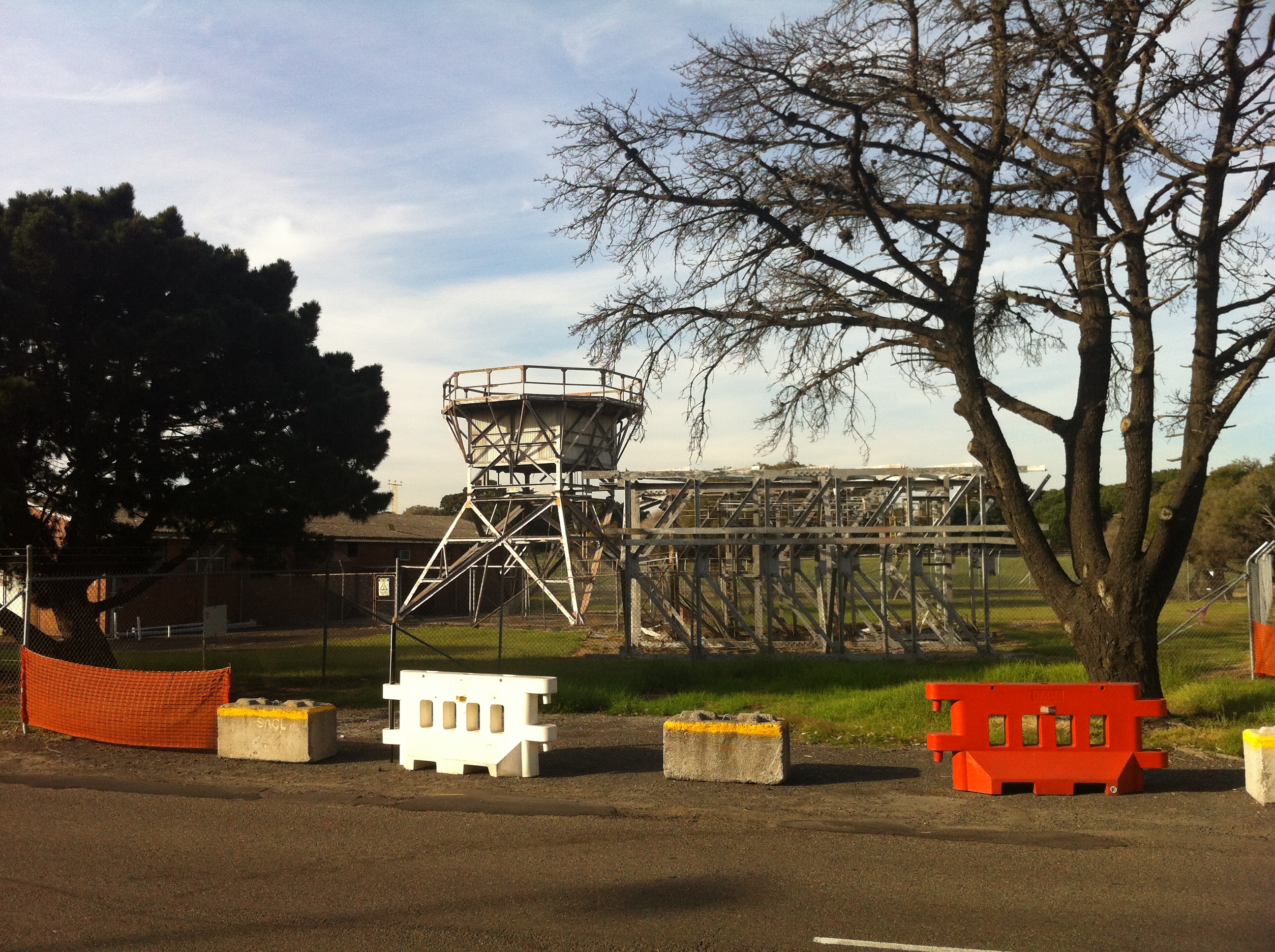
It’s a quick yet perilous walk from the McDonald’s (a sewage farm of another kind) on General Holmes Drive to the scene of the action, and your first port of call is this. I had the eerie feeling I was being watched as I approached, and not by the Federal Police.

When I reached the site I was greeted by some friendly bunny rabbits, who have taken up residence in this…that. Whatever that is. The bunnies appeared to be doing their best to make sure the site was still well fertilised. Some things never change.

 Past/Lives of the Near Future