Stan’s Burgers/Dolan’s Burgers/Kayems’ Cafe Takeaway – Beverly Hills, NSW
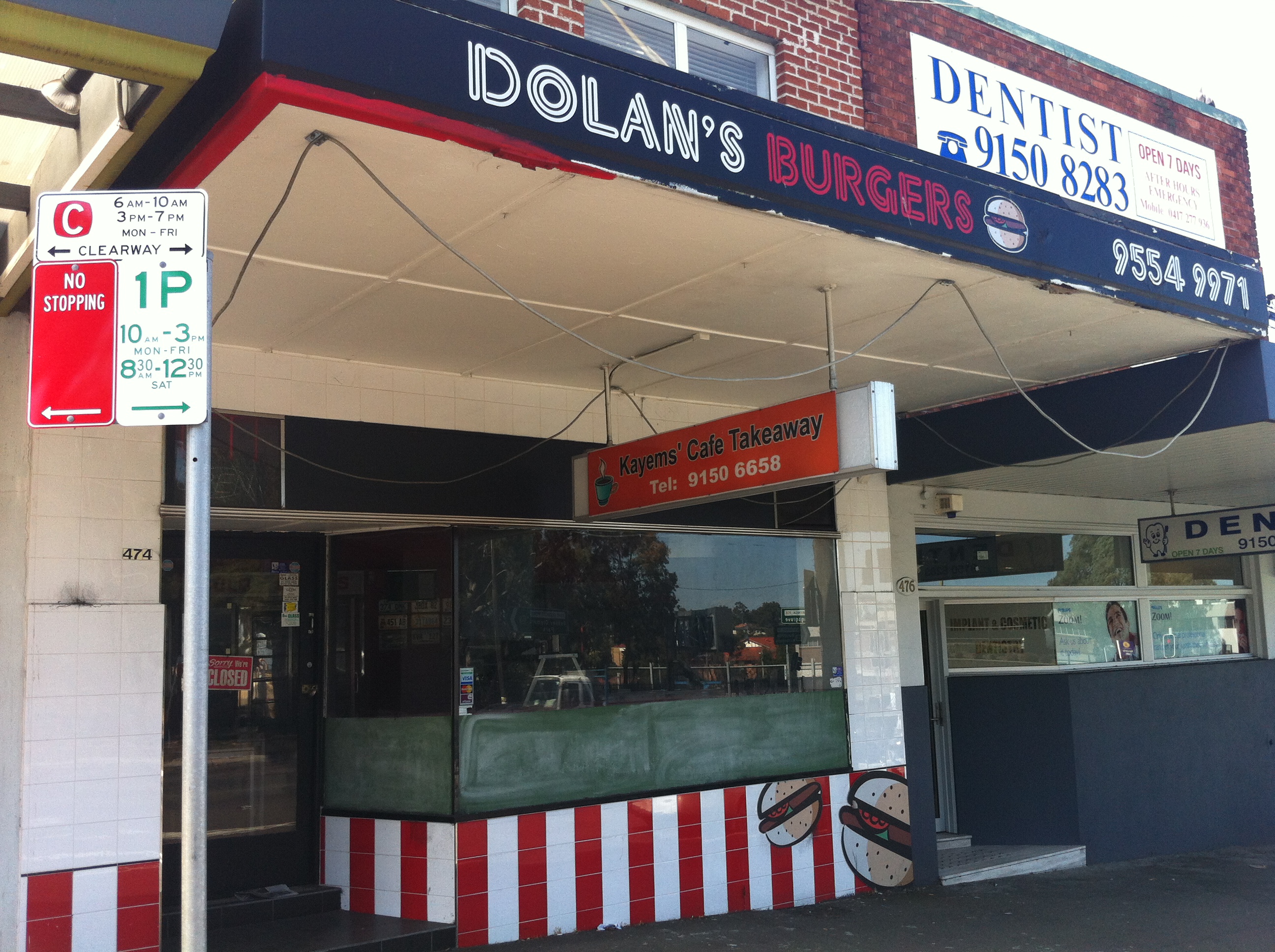
kayem pls
In many ways, the Beverly Hills of the southern hemisphere has absolutely nothing in common with the sun-soaked haven of Hollywood decadence up north, but I’d argue this – it’s even tougher to make it here than it is in that notoriously tough town.
Case in point: this small takeaway shop on yet another strip of pointless shops is rarely open, a unique approach to customer service anywhere but Beverly Hills. Why? Do people not need to eat? Why can’t this place just be open on a hot afternoon when someone might want to take a drink away and refresh themselves? What was it about the concept of a cafe/takeaway that Stan, Kayem, and even the infinitely more aesthetically pleasing Dolan all failed to understand? Somewhere, some landlord is laughing as they review their fourth tenancy application in as many years.
Pizza Hut/Moo-ers Steakhouse/For Lease – Long Jetty, NSW

When someone or something beloved is replaced, it’s not unusual for the usurper to find itself under fire, the subject of blistering scorn (and never moreso than right here on this blog). In the case of Moo-ers, a steakhouse up near The Entrance, it seemed like they picked the wrong shoes to fill.
In 2008, Moo-ers maa-nagement became concerned about the quality of meat they were receiving; hogget and mutton were being misrepresented as lamb, yearling as veal. The definition of beef cuts was being stretched by local suppliers; a shipment claiming to include sirloin, porterhouse and striploin cuts would be found to contain nothing but the one generic cut of beef. I wonder if this was happening with their seafood as well: shrimp instead of prawns, carp instead of everything else.
Moo-ers raised the issue with the Senate Rural and Regional Affairs and Transport Committee (SRARAATC *ahem* excuse me), hoping for tighter naming guidelines for meat. With most of their menu being meat, any substitution or downgrade in quality was hurting the Moo-ers brand.
Was anything ever done? Was the integrity of the Moo-ers menu salvaged? To answer those questions, cast your eyes upwards to the picture. Notice anything…for lease? My expert guess is that Moo-ers’ shipments of generic meat was in keeping with what the previous tenants had received. I mean seriously, if you can tell me what kind of “meat” the Pizza Hut “ground beef” is meant to be, then congratulations – there may be a spot for you on the SRARAATC.
Devonshire Street Cemetery/Central Station – Sydney, NSW
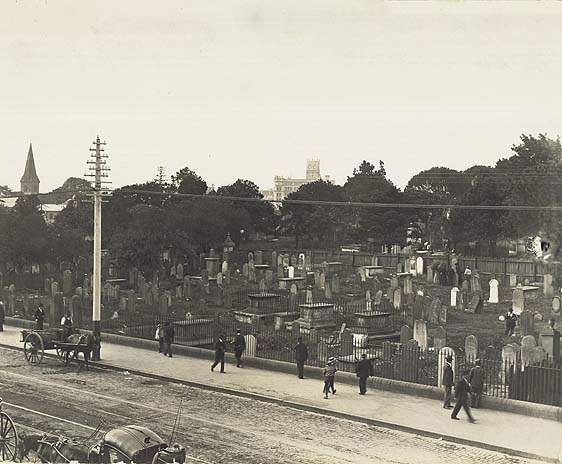
Devonshire Street Cemetery, 1901. Image courtesy State Records NSW
“I once walked through the burial grounds on the Surry Hills, in the commencement of Spring, just as the flowers were beginning to bloom forth in all their beauty…”
Bridget Flood was in the same situation too many of us have found ourselves in all too often: stranded at Sydney’s Central train station, hopelessly late. The big difference is that she was waiting there for over 60 years.
As we’ve previously learned, 1820 was a good year to die in Sydney. Rather than ending up beneath the public piss-pot that was once the colony’s first burial ground, you could find yourself in a brand new plot freshly dug at the just-consecrated Devonshire Street Cemetery.
Yes, that Devonshire Street.

Location, location, location. South Sydney plan, 1842. Image courtesy K Johnson and M Sainty.
Chosen for its abundance of space and central (heh) location, the area bordered by Elizabeth and Devonshire streets was chosen to replace the Old Burial Ground as Sydney’s premier final resting place. Quartermaster Hugh McDonald, 40, was the first lucky stiff to be buried there following his death in 1819. Long waiting lists…so Sydney so chic.
“It was early in the morning when I commenced rambling amongst the tombs, the dew had not yet been dissipated by the genial rays of the invigorating luminary, and the cool fragrance of the atmosphere had not yet given way to the noon-day heat…”
Bridget Flood died in October 1836 at the age of 49 and, like virtually all deaths in Sydney at the time, was interred at the Devonshire Street site. Quoth her headstone:
“Pain was my potion
Physic was my food
Groans were my devotion
Drugs did me no good
Christ was my physician
Knew what way was best
To ease me of my pain
He took my soul to rest.”
They don’t write ’em like that anymore. And rest she did, as did all those buried at Devonshire Street Cemetery well past its 1867 closure.

Go home, we’re full. Devonshire Street Cemetery, 1901. Image courtesy RAHS.
Although steadily employed by the city’s dead between 1820 and 1866, the nail in the coffin (heh heh) for the cemetery was the latter year’s introduction of the Sydney Burial Grounds Act (NSW), which prohibited burials “within the city of Sydney from 1 January 1867, with the exception that persons with exclusive rights of burial at that date could still be buried on application to the Colonial Secretary who needed to be satisfied that ‘the exercise of such right will not be injurious to health’“. Phew. Just tie some rocks to me and throw me in the harbour!

Devonshire Street Cemetery, 1901. Image courtesy Royal Australian Historical Society.
You’d think this act would be in anticipation of some kind of grand plan for the burial ground, but no. With the exception of infrequent additions to family plots as outlined by the overly wordy act (and even these ceased in 1888), Devonshire Street was largely ignored by the growing city while new sites like Waverley Cemetery and the Rookwood Necropolis served the public’s burial needs.

Prince Alfred Park’s Exhibition Building looms large. Devonshire Street Cemetery, 1901. Image courtesy Royal Australian Historical Society.
By 1900, its advanced state of neglect and decay reflected its residents and disturbed the public:

Illustrated Sydney News, 1878.
…although it wasn’t all bad:

SMH, January 26 1878.
“In short, it was exactly such an hour as an imaginative or sensitive being would delight to rove about, and lose himself in the regions of fancy…”
It wasn’t long before some of the more opportunistic voices began to speak out about the the site’s real estate value:
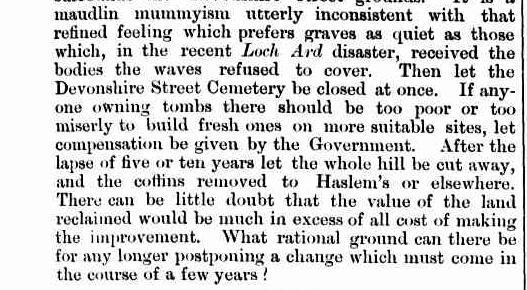
Illustrated Sydney News, 1878.
And as early as 1888 there were rumblings about how best to use the land:
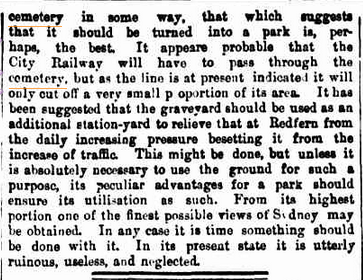
SMH, March 3 1888.
It made sense, given that Central Station’s predecessor, ‘Sydney Station’, lay opposite the cemetery along Devonshire Street.
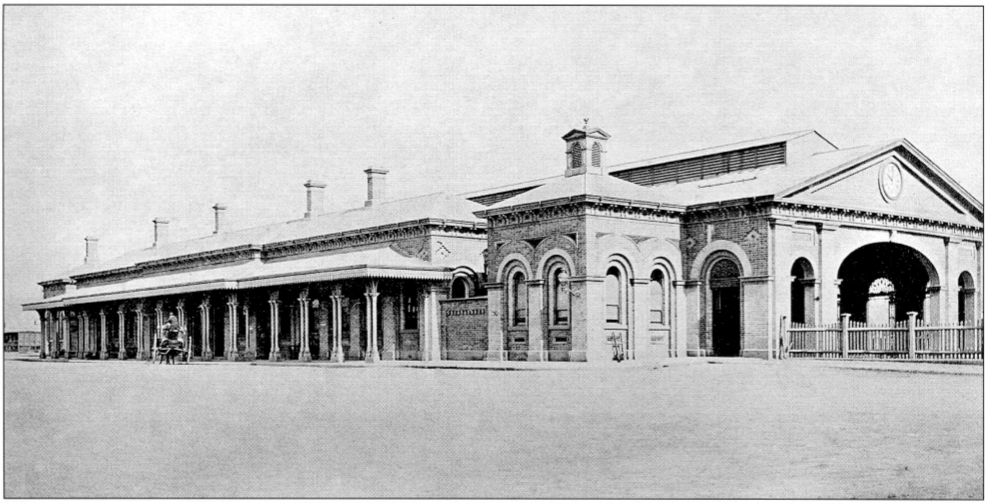
Sydney Station, the forerunner of Central Station, 1874. Image courtesy ARHS Rail Resource Centre.
Since 1884, Sydney’s existing rail network had been under the stress of increasing traffic and a limited reach (sounds familiar, doesn’t it?). Sydney Station was constantly receiving upgrades and additional platforms, culminating in a messy setup of 13 train platforms and numerous tram sheds (sounds familiar, doesn’t it?). The city’s railway commissioners initially struggled to decide upon a plan for the future which would provide Sydney with a central hub expansive enough to extend the rail network to the suburbs (sounds- never mind).

The planned terminus for Hyde Park. Image courtesy RailCorp.
An 1897 royal commission proposed the resumption of Hyde Park for use as the central terminal and, to counter the public outrage over the loss of parkland, the Devonshire Street Cemetery would be converted into a park. For a time this plan seemed to be a go until the unexpected death of Railway Commissioner E M G Eddy (of Eddy Avenue fame) that same year. This forced a literal return to the drawing board, where it was decided that it was probably easier to resume just one giant park instead of two. Nice thinking, guys.

The new plan. Image courtesy Public Works Committee.

The undertakers size up the corpse, December 1900. Image courtesy State Records NSW.
In January 1901, the Department of Public Works served notice that anyone with relatives buried at Devonshire Street were to front up and make known their desire to have the remains reinterred at other cemeteries by train, with the cost to be borne by the NSW Government. These days, they’d just tell you to bring a shovel.

Devonshire Street Cemetery, 1901. Image courtesy RAHS.
Unfortunately, these relatives were given a strict time limit of two months to act, and by the end of that time, only 8,460 bodies had been claimed (not among these was Eddy, who had been buried at Waverley following his death). This left 30,000 remains unclaimed, most of which were transferred to other cemeteries anyway, but due to the rushed nature of construction and given they did such a bang-up job the last time, it’s safe to say there are more than a few commuters at Central waiting for a train that will never come.
With that many bodies to exhume, you can imagine just how many creepy stories must have come out of the venture. Here’s just one:
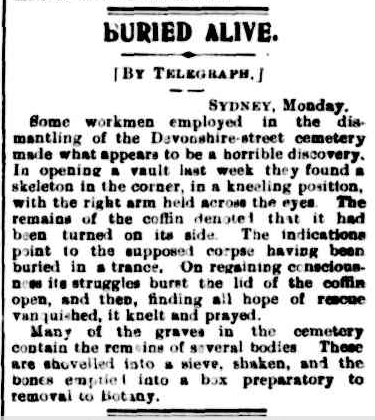
Barrier Miner, July 29 1901.
The reason for the rush was that Melbourne had started work on their Central equivalent, Flinders Street Station, that same year. Sydney was determined to get the drop on Melbourne this time, as Flinders predecessor ‘Melbourne Terminus’ had been Australia’s first city railway station back in 1854, pipping Sydney by a year. The Devonshire Cemetery site had been completely cleared by 1902, and stage one of Central’s construction, which aimed to have the station operational, was completed in 1906. On opening day, the new station featured…13 platforms. Despite being twice the size of its predecessor, this was no improvement, and did nothing to alleviate Sydney’s transport woes (but then again, what ever does?).

Central Station, 1906. Image courtesy State Records NSW.
“I directed my footsteps to a cluster of tombs on an eminence, which was thickly covered with green and blooming geraniums…”
But the unexpected fruit of the Department of Public Works’ labour was the emergence of commercial activity in the areas surrounding the new station. Its proximity to the city made department store shopping for those out in the sticks a treat, with Grace Bros., Marcus Clark, Anthony Hordern, Bon Marche and Mark Foy all within walking distance of Central by 1908. The Tivoli and Capitol theatres became entertainment meccas for those starved of entertainment in the ‘burbs.
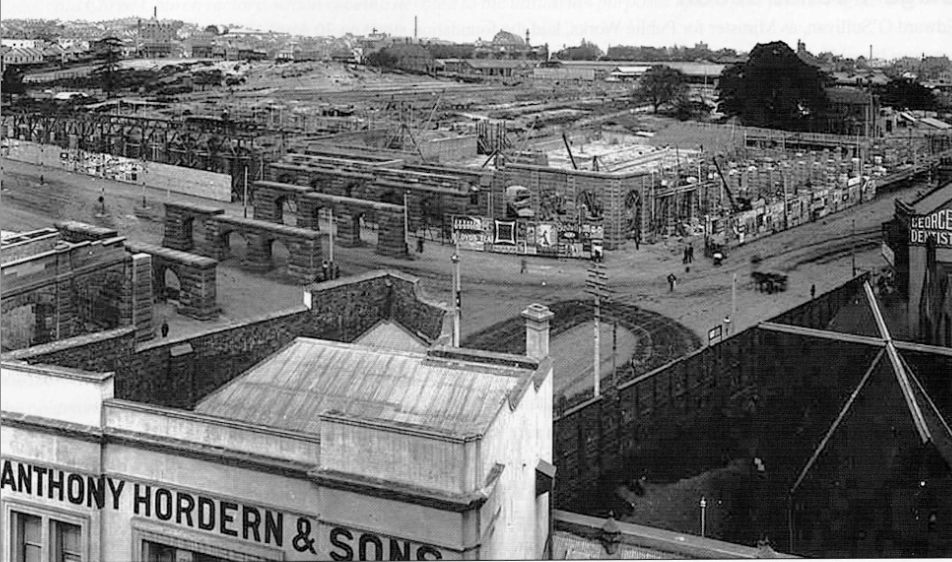
Anthony Hordern awaits new business during Central’s construction, April 1903. Image courtesy ARHS Rail Resource Centre.
The station itself was hardly the thing of beauty its early designs had suggested, with the rushed development cycle omitting many intended features – least of all Central’s iconic clock tower, which wasn’t completed until 1924.

Always on time: Central Station’s clock tower completed, 1924. Image courtesy State Records NSW.
The construction wasn’t just focused on making sure the station would be operational before Flinders Street, though; there was particular care taken to ensure no trace of the Devonshire Street Cemetery remained, going so far as to completely eradicate Devonshire Street west of its intersection with Elizabeth. Other structures that once stood on the land now occupied by Central and its surrounds – the Belmore Police Barracks, the Benevolent Asylum, the womens refuge – have similarly been lost to time.
“I at first almost forgot the ravages of the grave in contemplating the enchanting appearance of the place.” – James Martin, 1838.
Today, nothing remains to remind commuters of the morbid nature of Central’s past. The cemetery itself was largely situated underneath today’s platforms:

Devonshire Street Tunnel, once Devonshire Street, runs directly underneath the path once carved between the cemetery and Sydney Station, depositing Surry Hills pedestrians into Railway Square amid el-cheapo bargain shops, youth hostels and fast food joints.

Looking east toward Devonshire Street, 2013.

Looking west toward Railway Square, 2013.
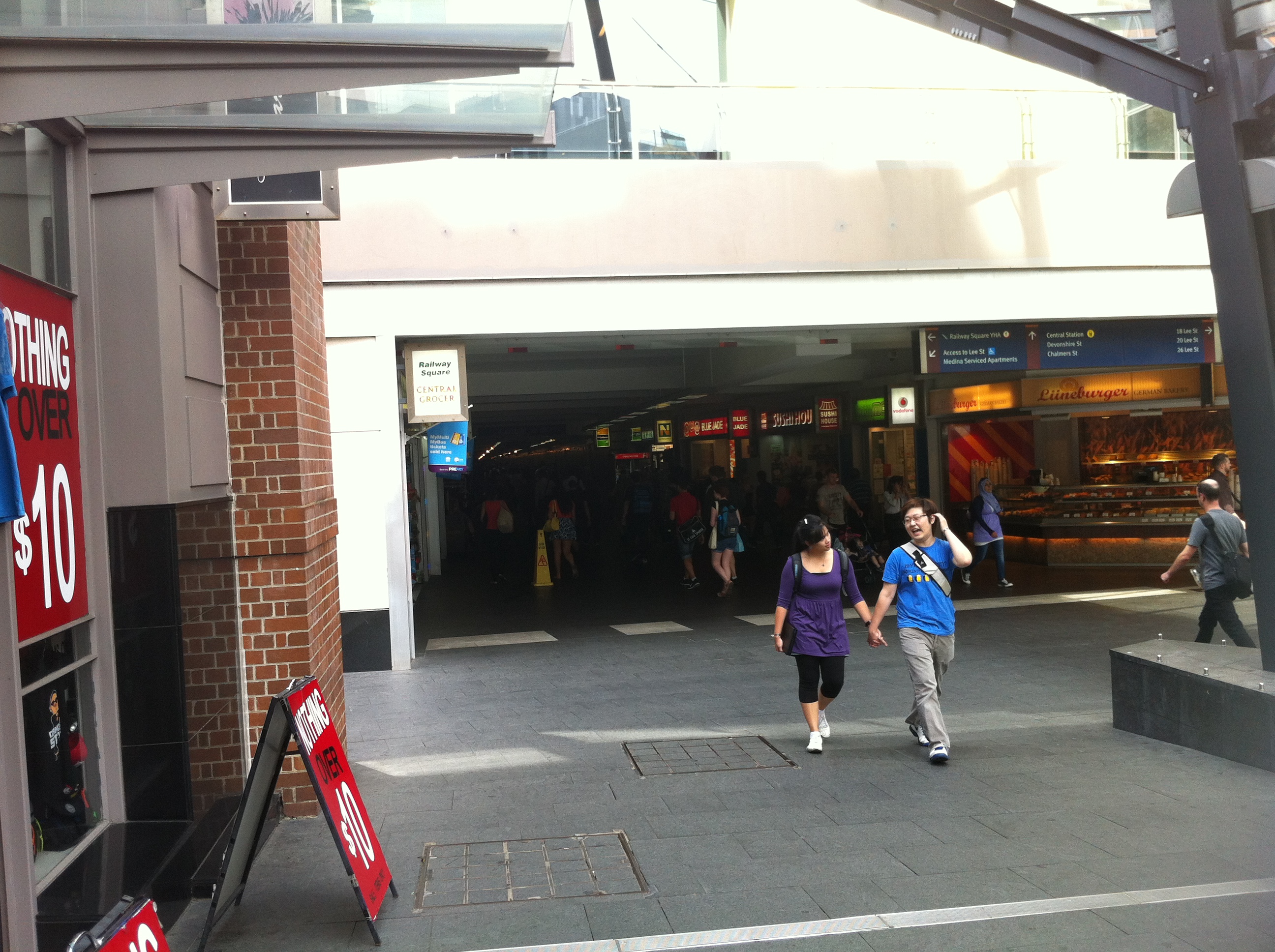
Emerging into Railway Square, 2013.
Also in Railway Square is a series of plaques designed to inform passers-by on the history of Central Station and railway in NSW. The cemetery is mentioned in passing (heh).
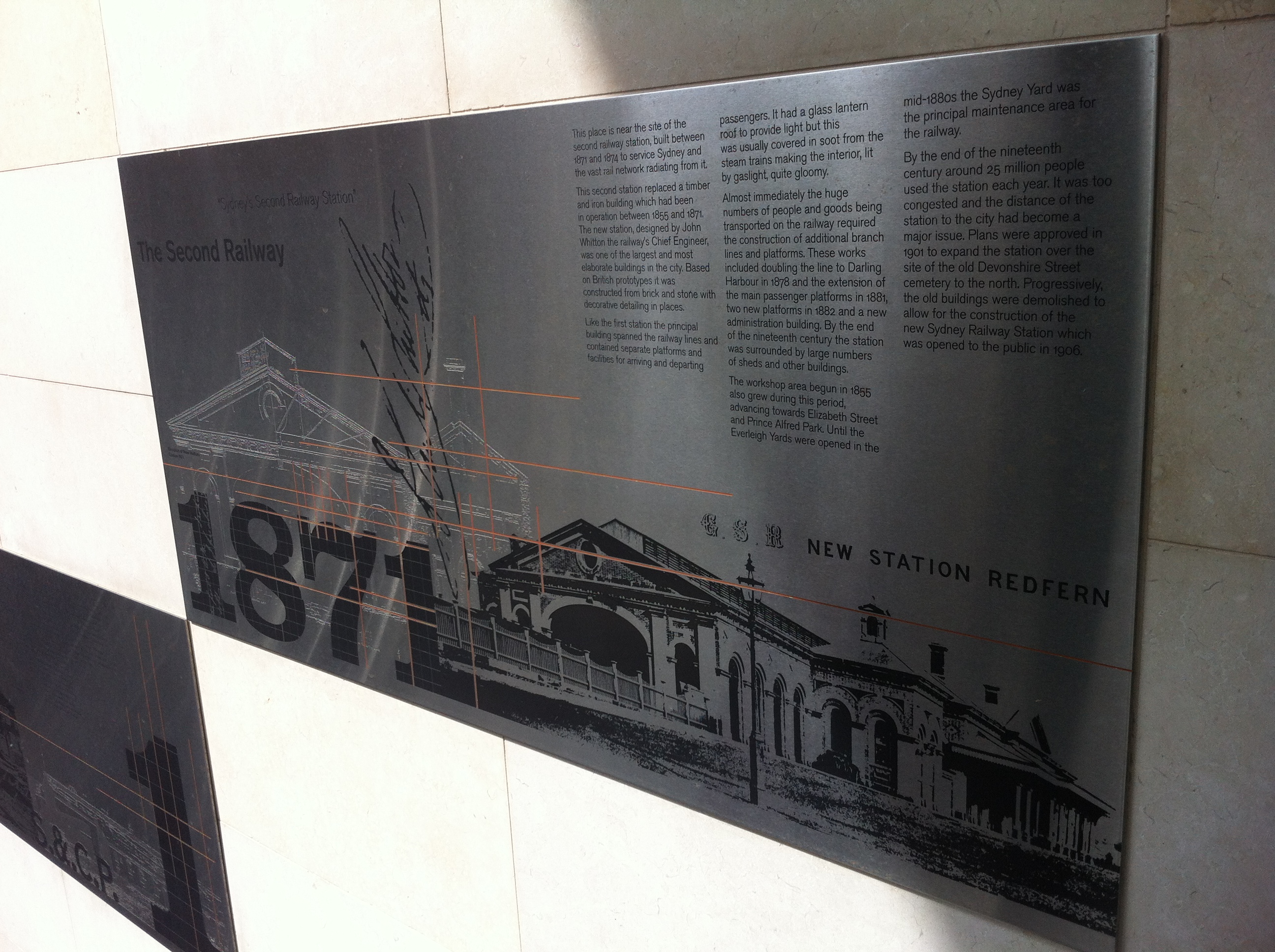
Revisionist history part one, 2013.

Revisionist history part two, 2013.

Revisionist history part three, 2013.
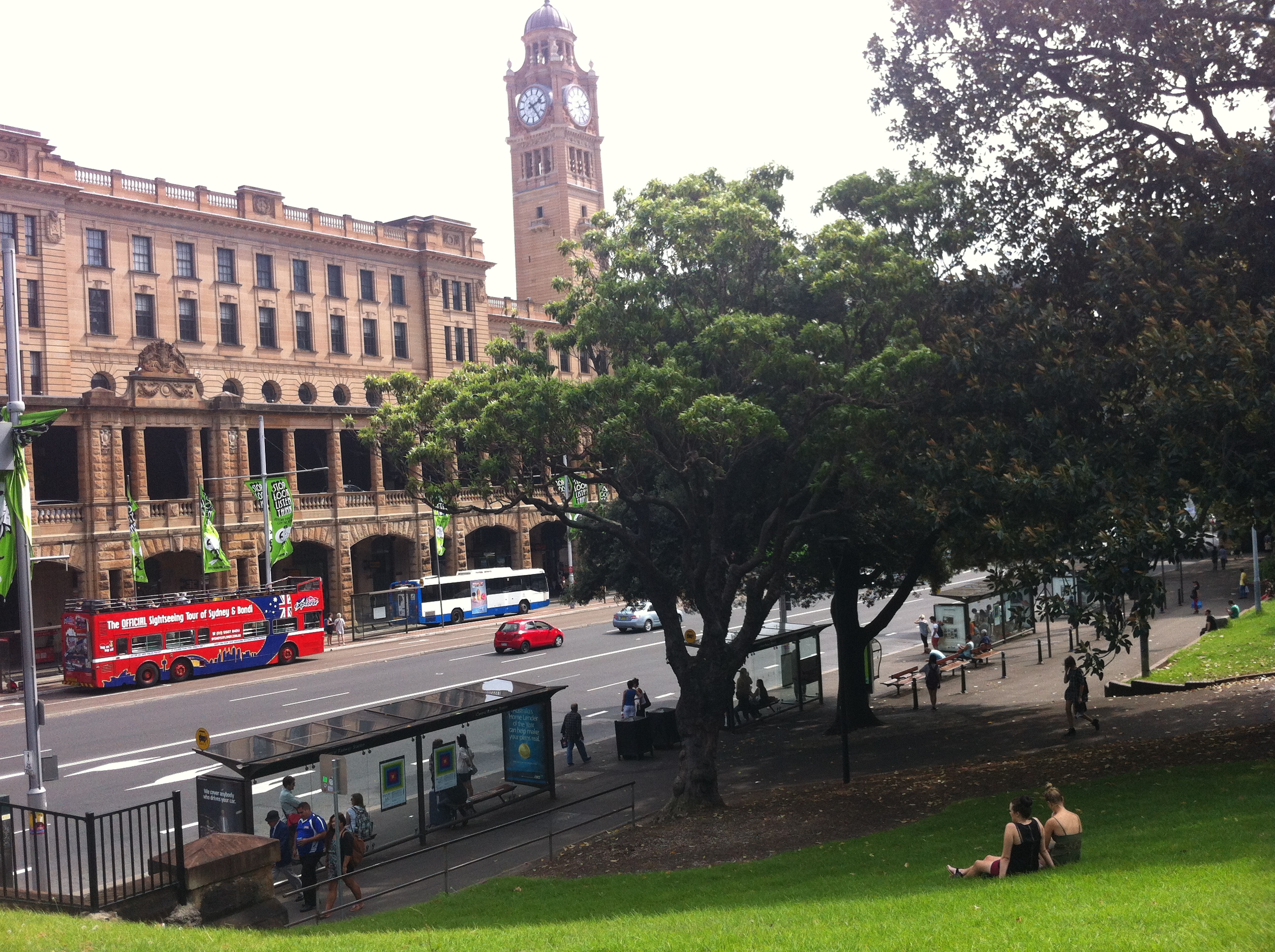
Belmore Park, 2013.
The uneven terrain of Belmore Park perhaps provides us with the nearest idea of what the Devonshire Street Cemetery was like in its natural state as is possible today, although even it has a sordid and ugly past as an open gutter for the refuse of the nearby Belmore Produce Markets and Paddys Markets.

Belmore Park, 2013.

Gateway to limbo. Camperdown Cemetery, 2013.
Rookwood Necropolis, Eastern Suburbs Memorial Park, Woronora Cemetery and many others were the recipients of many of the (not so) permanent residents of Devonshire Street, but none feature as striking and immediate a memorial as the tiny, eerie Camperdown Memorial Rest Park. Here, amongst the sombre atmosphere of tombstones and gloomy, gnarled trees lie what were once the gate posts met by visitors to Devonshire Street. These were removed along with everything else in 1901, and mysteriously disappeared from existence until 1946, when…

SMH, October 9 1946.

It’s kinda graffiti. Camperdown Cemetery, 2012.
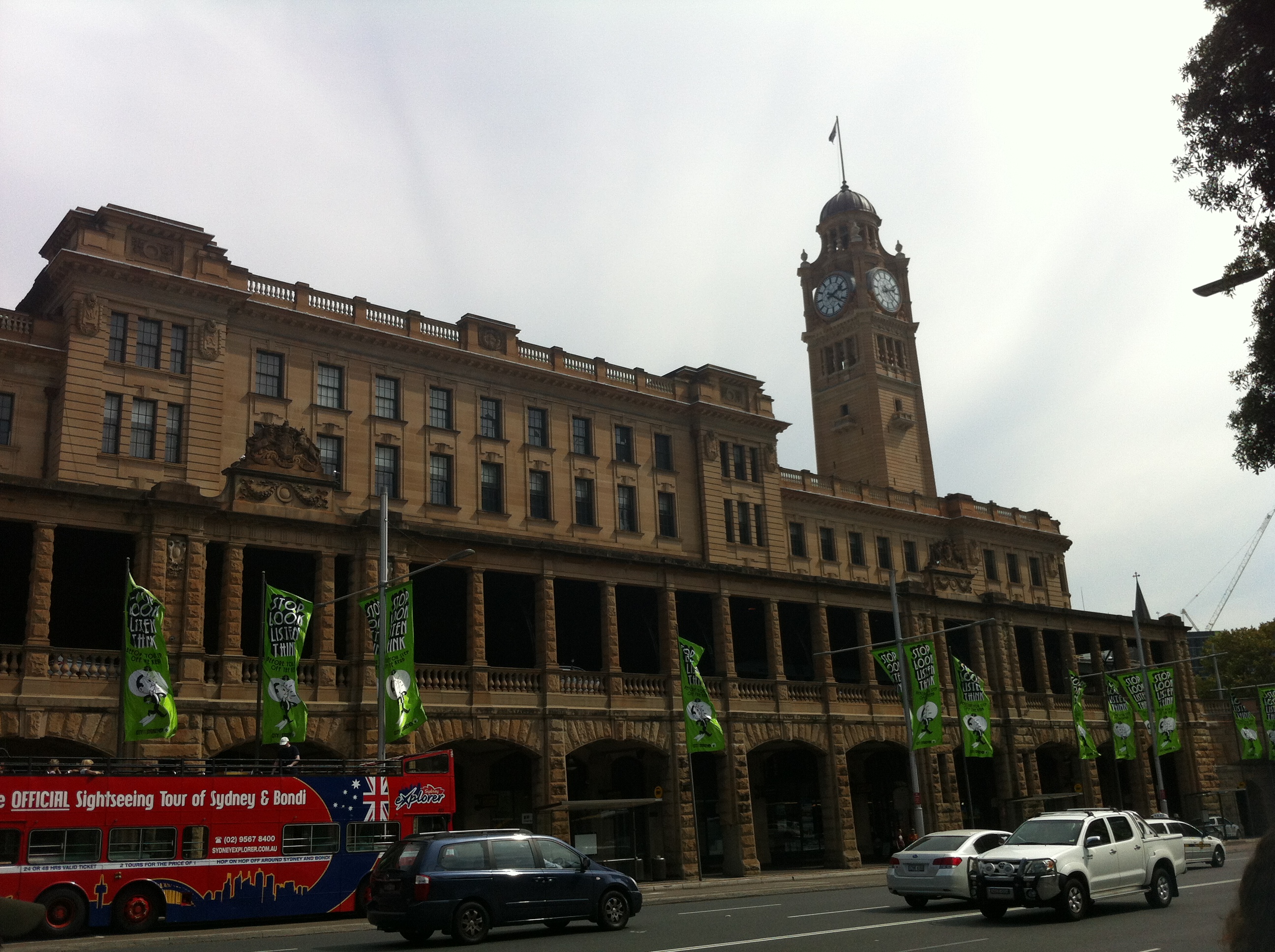
It seems almost sacrilegious that thousands of commuters tread all over this once-consecrated ground every day without any kind of marker to signify what was and who mattered, even if it was nearly 200 years ago. C’mon, NSW Government! They’re even in the right electorate! Meanwhile, to the 30,000 Sydneysiders scattered to the four corners by the winds of progress, the term ‘final resting place’ has little meaning.
Finally, here’s a fascinating account of a visit to Devonshire Street Cemetery just as its demolition was beginning. It originally appeared in the Clarence and Richmond Examiner, October 1 1901.


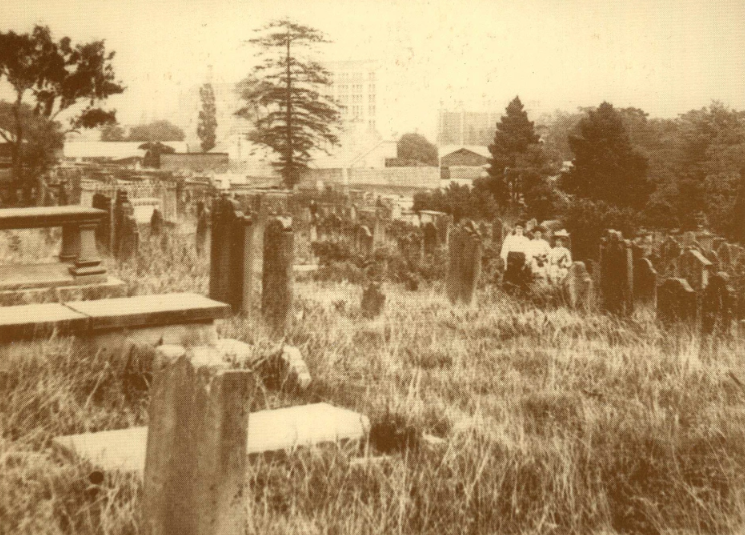
Ghouls, not girls. Devonshire Street Cemetery, 1901. Image courtesy RAHS.
Past/Lives Flashback #4: Videomania – Rosebery, NSW
Original article: The Marina Picture Palace/Videomania/For Lease – Rosebery, NSW

The Marina, 1941. Image courtesy City of Botany Bay Local History Image Archive.
Sometimes revisiting a place can reveal secrets you missed the first time. Case in point, the rotting behemoth on the side of Gardeners Road formerly known as Videomania. In its glory days this was the grand Marina picture palace, which operated until 1984 – a time when video killed the theatre star.
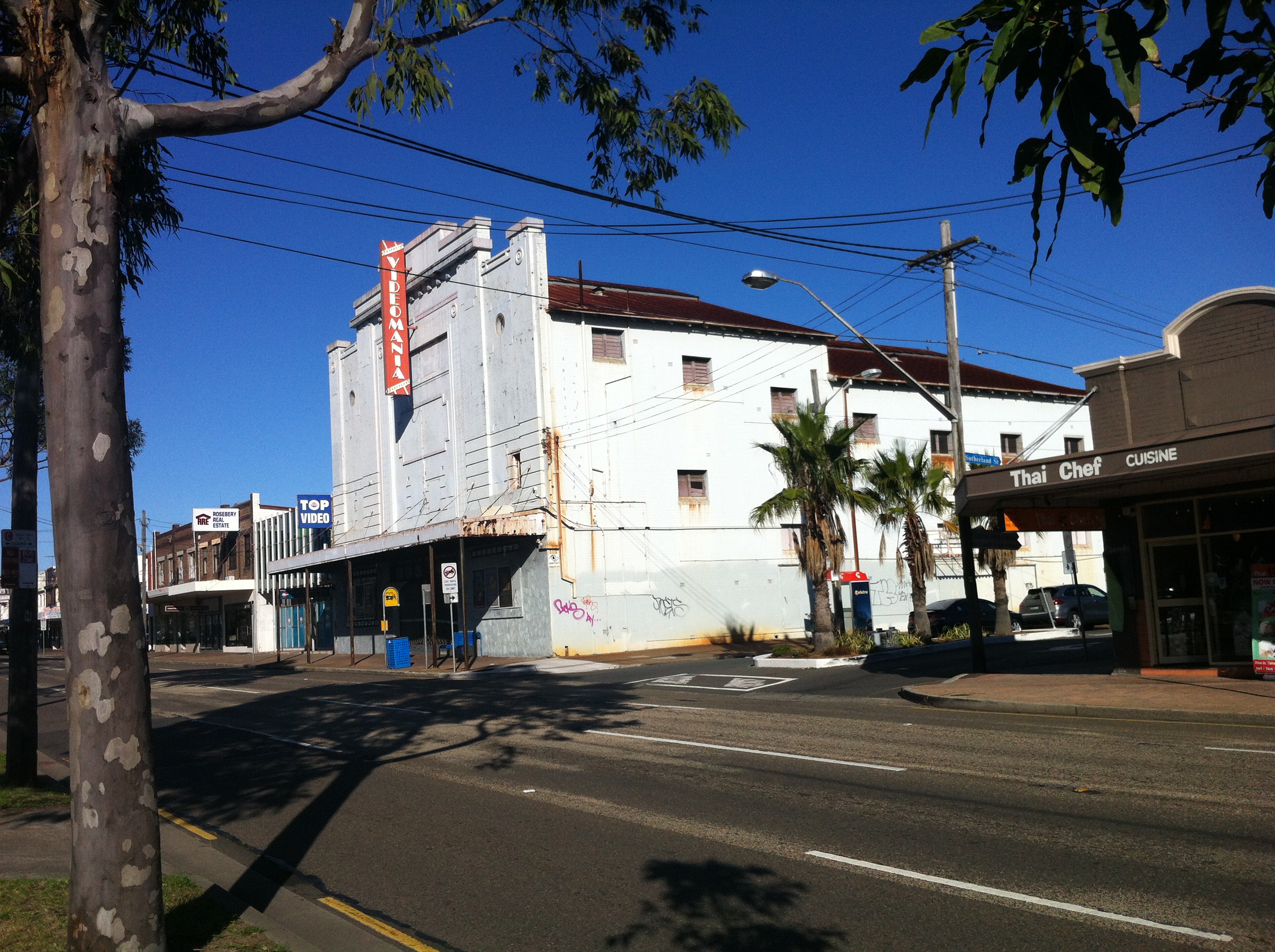
I tried to get the same angle as above, I really did.
Another place for which time seems to stand still, Videomania remains relatively unchanged since last year. Sure, there are some new posters up along its face and there’s a new cupcake shop in the old bank next door, but the building itself is no different.

We can only speculate as to how long those promo guys were waiting, longing to plaster the front of the place with their posters. I suppose the temptation became too much at some point, much to Jack Dee’s benefit.

Even Leonardo is still there, ever vigilant. And he’d want to be, given the former theatre’s seedy surroundings…
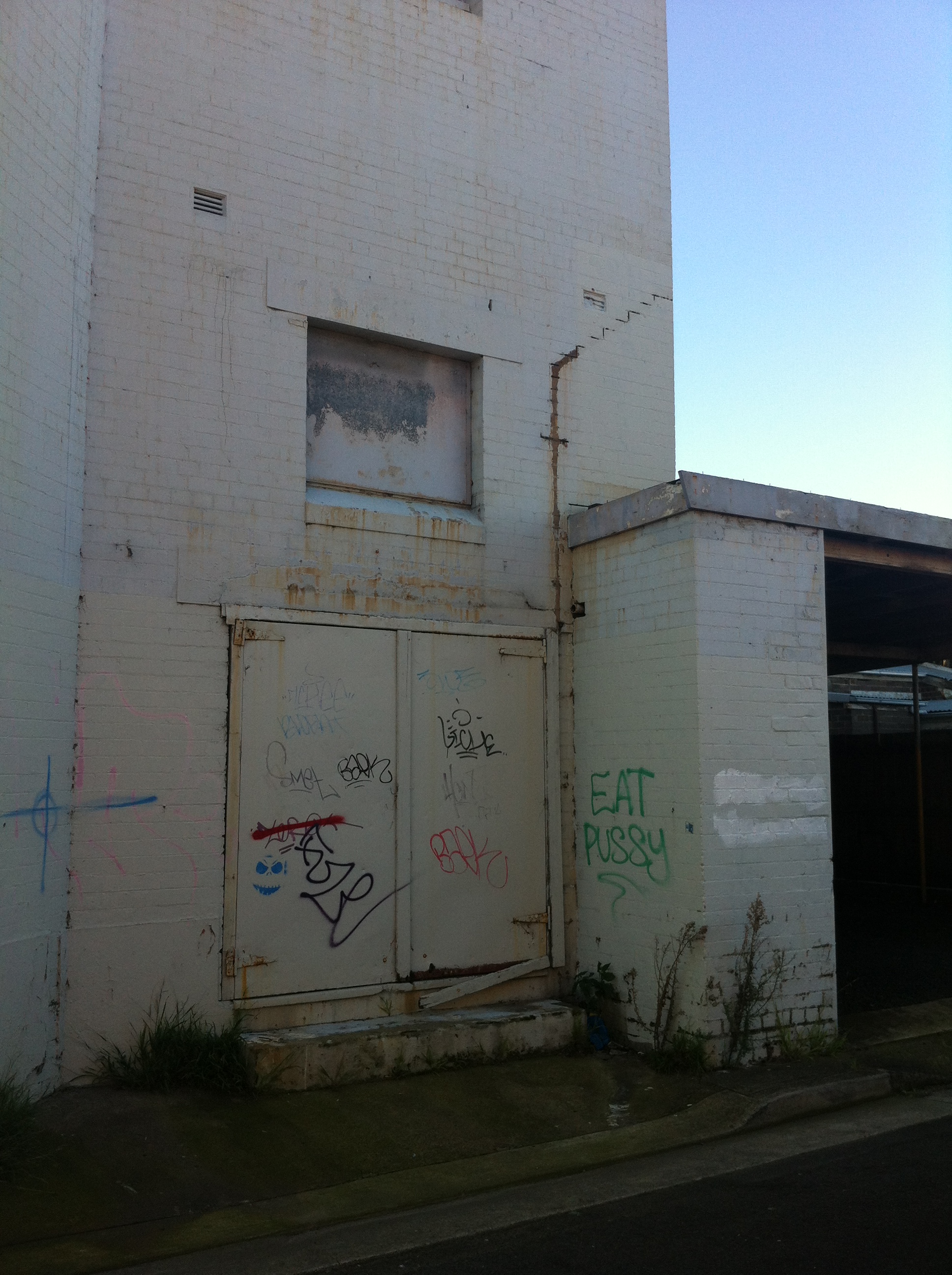
Out the back, I encounter some inspiring graffiti and little else. The place may still be for lease, but they certainly haven’t expended any effort making it presentable.

I’m guessing that vacuum doesn’t work.

Just when I was thinking to myself that there was nothing left to discover here, I found it. It’s something that was probably there last time, but I just happened to miss in the excitement of seeing a Ninja Turtle in the last place you’d expect to see one. See? The gluey remnants still attached to the side appear to vaguely form the word ‘Roxy’, another name this theatre went by at some point in its illustrious life. But that was just the primer. Have a look at this:
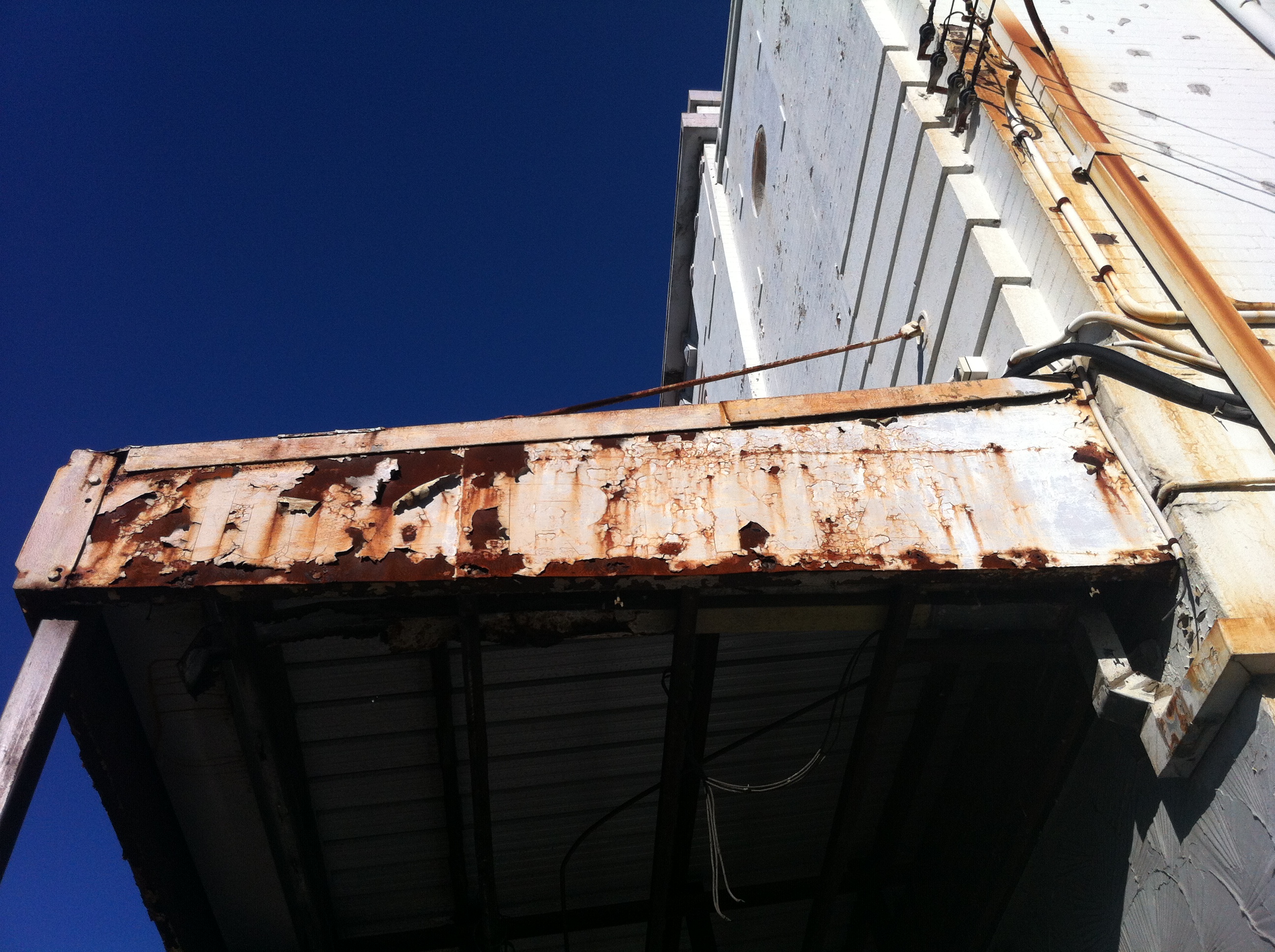
Can you see it? Look really closely, and maybe try squinting. Still no good? Okay, let’s get a bit closer…

How about now? The ‘R’ or maybe the ‘N’ should hit you first, and then from there it’s easy. Yes, amazingly, the awning’s decorative ‘MARINA’ lettering has somehow survived, allowing us an even deeper glimpse into the past than it was thought possible. Now all we need to do is arrange a screening of ‘Puddin’ Head’ inside. Maybe we should get in touch with the owners?
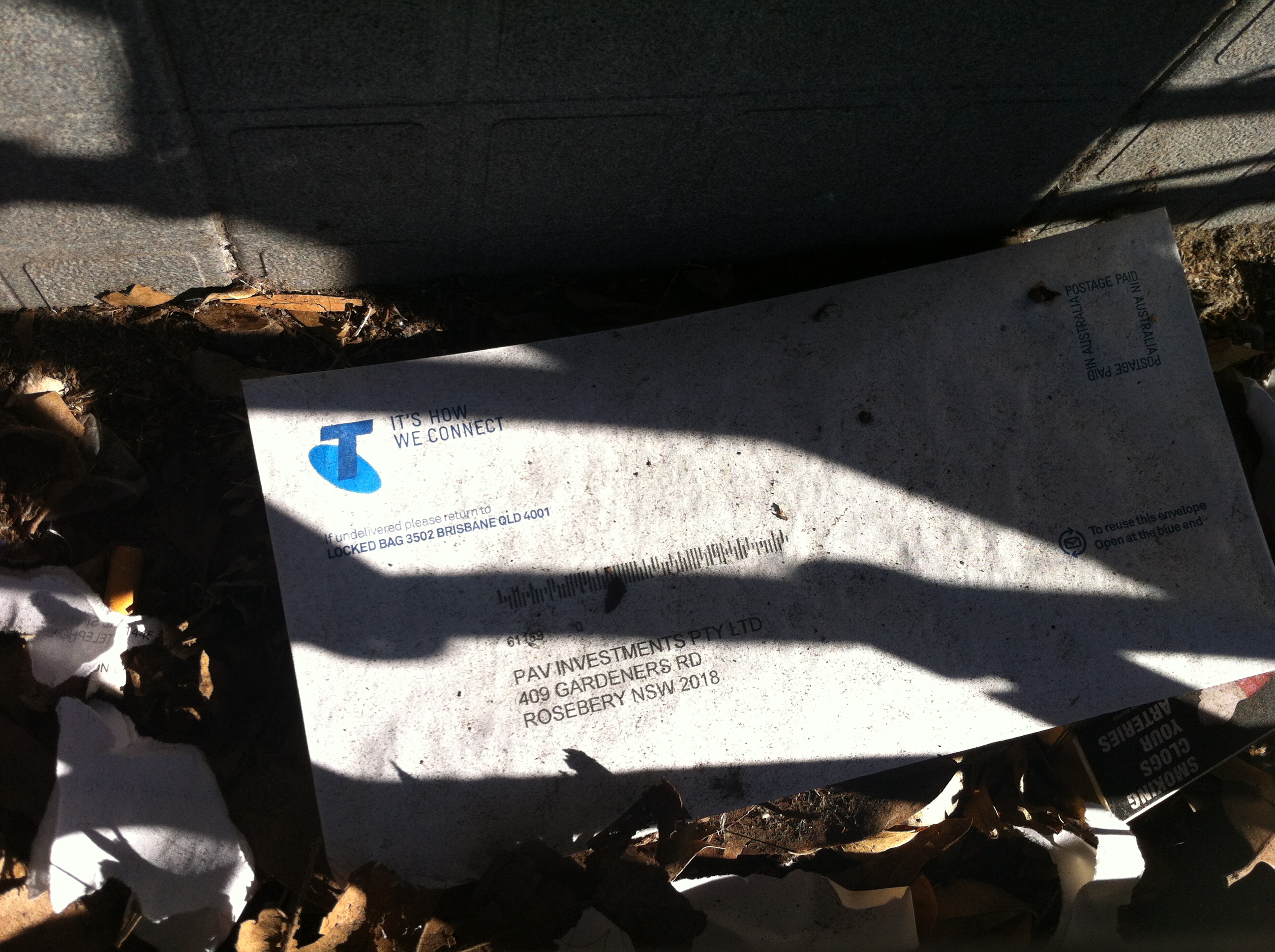
We’re in the home stretch now, only three to go. Here’s a clue for the next entry: it’s another theatre.
ROCKIN’ UPDATE: The development-minded Vlattas family, owners of the Cleveland Street Theatre and the Newtown Hub, are currently renovating the Marina with the aim of turning it into a live music venue. My suggestion: keep Leonardo as your bouncer. Thanks, reader Rozie!
Past/Lives Flashback #5: The Hartee’s Saga, Part V: Hartee’s Revenge – Manly Vale, NSW
Original articles: The Hartee’s Saga Parts I, II, III and IV
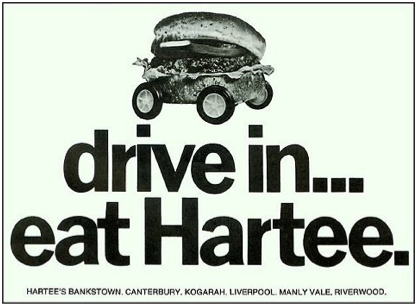
Sometimes it’s hard to keep a good burger down. For those who haven’t followed the long, sad story of the Hartee’s hamburger franchise, here’s a quick recap.

Hartee’s Earlwood
With the advent of American fast food franchises in Australia in the late 60s and early 70s, Kelloggs teamed with the US-based Hardees burger chain to start Hartee’s, the first Australian fast food restaurant (despite its very red white and blue beginnings).
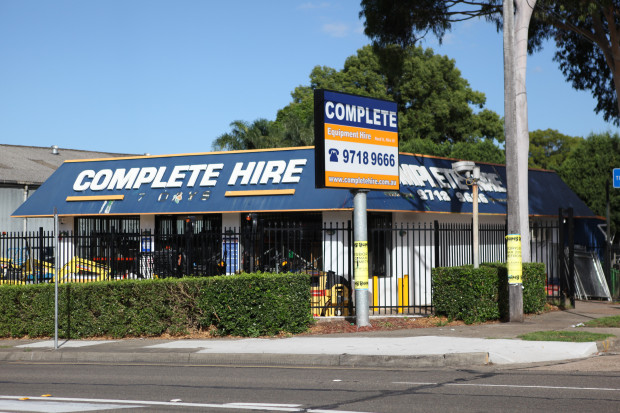
Hartee’s Canterbury.
It was a near-instant success. Whether it was down to underlying xenophobia towards overseas brand names, smart management or just plain delicious burgers, by 1973 Hartee’s was king of the fast food hill in Australia.

Hartee’s Punchbowl.
Complacency became the daily special from then on, with a series of extravagant HQ upgrades and new outlets sprouting like weeds all over Sydney. Despite this, the chain was beginning to haemorrhage cash at a pretty severe rate, and McDonald’s was aggressively making major headway into the Australian scene. Something had to give.
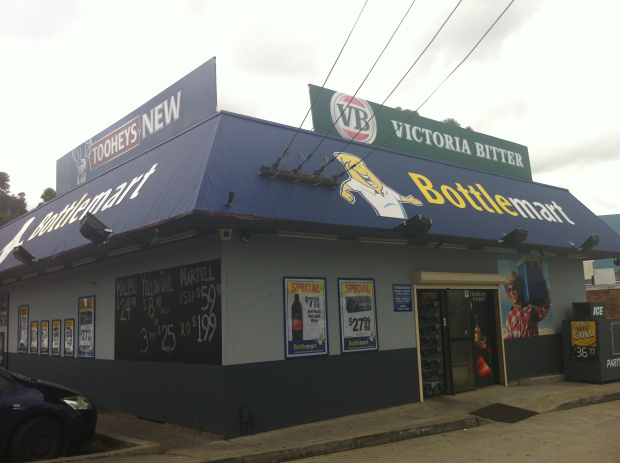
Hartee’s Bankstown. Not pictured: the Pal delivery truck.
And give it did, here at the Bankstown Hartee’s in 1975, when a current affairs program, acting on a tip-off, exposed the outlet as having served dog food in burgers. Overnight, Hartee’s packed up and disappeared, leaving only husks behind, and that’s where the story seems to end.
Except thanks to reader Phil, there’s a final piece of the puzzle to be put in place. I’d previously written that only the four former Hartee’s above still existed in any form around Sydney… Well, we all make mistakes. Just ask Bankstown Hartee’s.
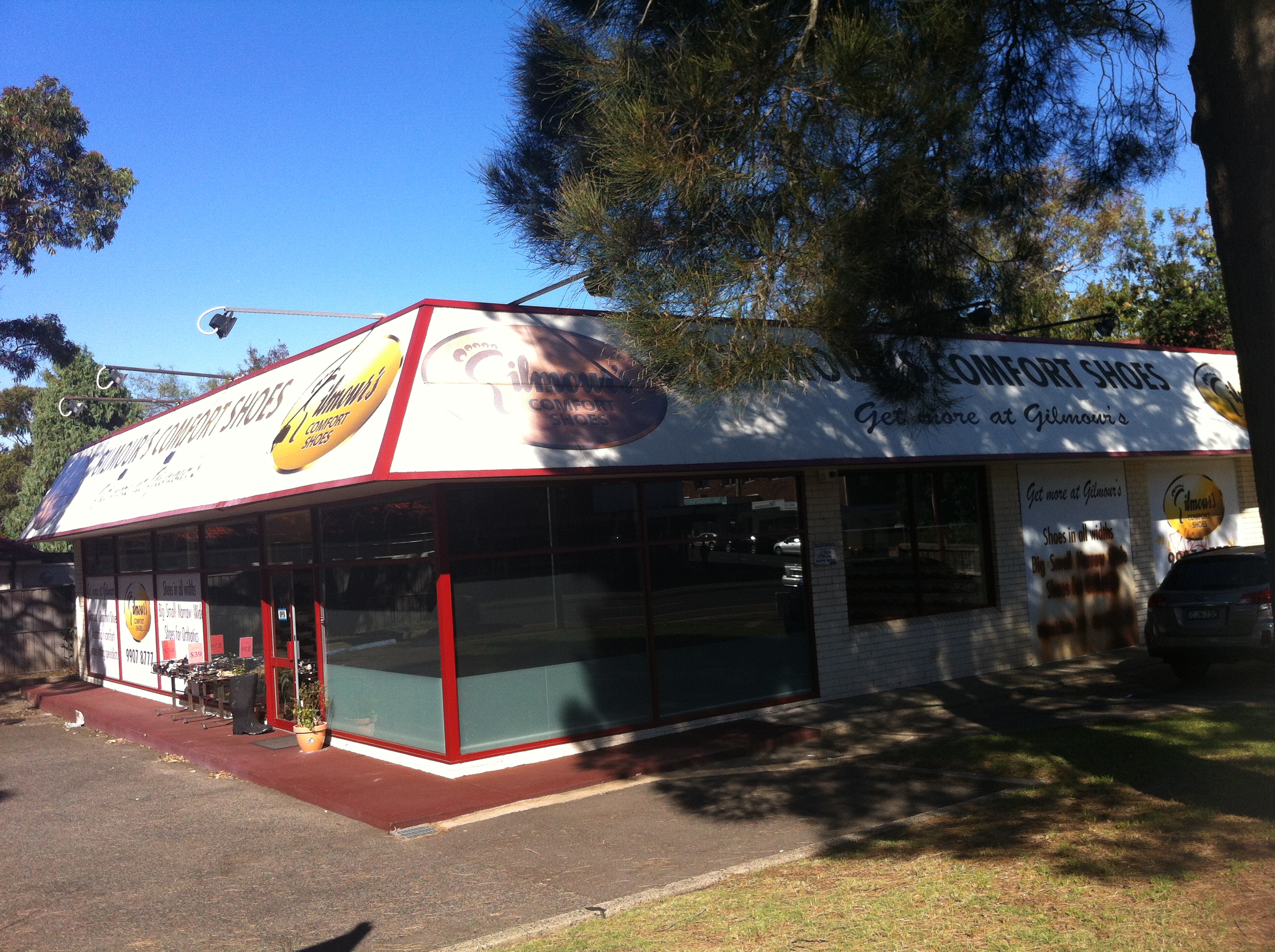
Behold, the Manly Vale Hartee’s still stands. It’s currently Gilmour’s Comfort Shoes, but it pretty obviously fits in with the Hartee design.

In fact, this may be the most well-preserved Hartee’s still in existence. The Gilmour’s sign appears to be stuck on over the red roof, so it’s possible the Hartee’s logo remains underneath.

The original lights are still in place, designed to illuminate the Hartee’s name. Also still in place, as per Phil’s advice…

The original outdoor seating area! Now it’s presumably the shoe shop manager’s car park (c’mon, look at the prestige offered by that strange piece of land). Inside are just shoes, but really, they’ve served worse and called it burgers.
It’s not really a happy ending, or an ending at all, but it is (I’m guessing) the final footnote on what by now must be the most definitive account of the Hartee’s affair out there. There are still many mysteries surrounding the story (truly, more questions are raised than answered), but maybe one day one of those faceless, guilt-ridden Hartee’s executives will come out of hiding and reveal more. Hell, I’d even settle for the guy who served the dog food. As ever, if you know more, please let Past/Lives know. And RIP Hartee’s – we hartlee knew ye.
In the meantime, let’s take a minute to remember those four powerful words that watered more mouths than Mount Franklin, that were a city’s guilty pleasure in a time before Big Macs and Whoppers…in a time when a nation could feed itself.

Hartee’s Kogarah, November 1973. Image courtesy State Library of NSW.

 Past/Lives of the Near Future