Hurstfield – Act I: Genesis (1875-1975)
Yes, we’ve been on a bit of a Hurstville bender recently, but it’s all been leading up to this. This is arguably the defining story of a suburb intrinsically linked to its biggest resident. The story of Hurstville cannot be told without Westfield, and vice versa. It’s a long story spanning 150 years and a lot of parking spaces. Get comfy – it’s one of those ones. And away we go…
I was dreaming of the past…

The view from above, 1986. Image courtesy Hurstville Council
Our story begins in the 1870s, at which time the St George area was home to a grand total of 2038 happy people. Suburbs such as Lugarno, Oatley, Bexley and Kingsgrove had been growing steadily for a few decades. In the midst of all this action was a large, heavily timbered area scandalously known as Lord’s Bush (after its longtime owner, Simeon Lord).

Michael Gannon, artist’s impression.
Purchased by a Michael Gannon in 1850, the area was renamed Gannon’s Forest, and the road running through the forest from Lugarno to Tempe was renamed Gannon’s Forest Road. See where this is going? The area got its first frothy taste of the commercial life in the early 1850s when – wait for this – a PUB was built. Turns out pubs and the seedy goings-on within attract people, and soon the people came. By 1864 a post office had arisen beside the Blue Post Inn, and was later joined by another pub (the Currency Lass, later the Free and Easy), a bakery (but not that bakery), and some other exciting retail outlets. A growing population means breeding, and that means kids, and kids means education (most of the time), so in 1876 a decision was made to erect a school for dem kidz wat cudnt spel ore reed no gud. A forward thinking inspector suggested the school be named Hurstville, and because it’s undeniably catchy, it stuck. Soon the post office was renamed thusly, and the population continued to grow.
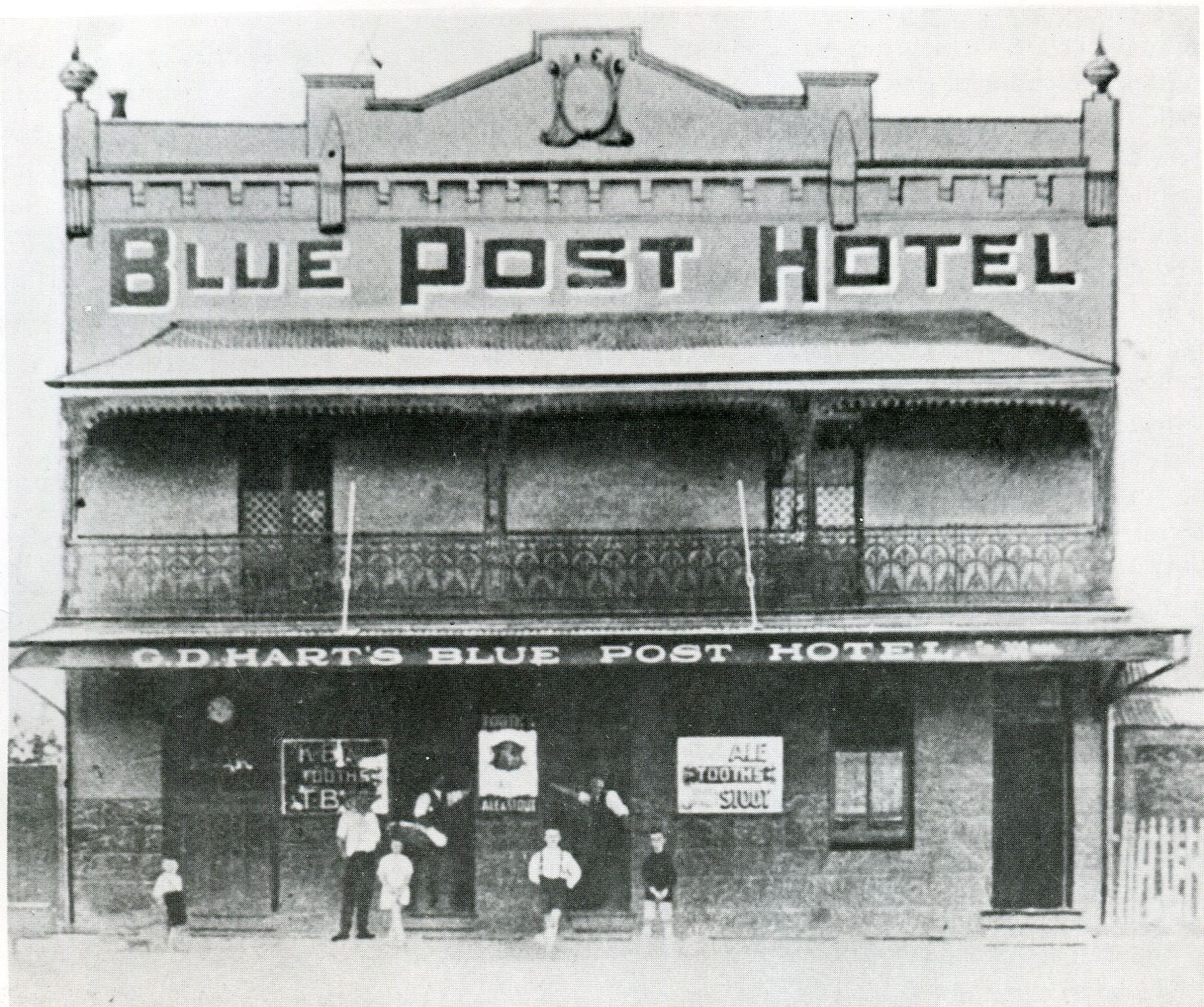
Blue Post Hotel, 1880s. Image courtesy Hurstville Council
Until the mid-1880s, the development of the town had centred around that original pub, the Blue Post Inn, which had become an unofficial meeting place for town development discussions and the like. It was during one of those meetings that a railway station was proposed, and if those walls could talk, I feel certain they would have uttered “Well, shit.”

Hurstville Station, 1910. Image courtesy Hurstville Council
Hurstville Station was built in 1884, one kilometre away from the pub. Businesses changed tack accordingly, and suddenly no one cared about the Blue Post. Perhaps it would have preferred being instantly euthanised like the Free and Easy, which was resumed to make way for the train station. Instead, the Blue Post had its licence transferred to the nearby White Horse Hotel – the greatest dishonour a pub can experience. More like the White Flag Inn, right?
The advent of the public transport hub was like the shot from a starting gun. Hurstville just couldn’t, wouldn’t, be stopped. It became a municipality in 1887, a local newspaper started up (the St George Observer, NOT The Leader, although you could be forgiven for thinking it had been around that long), those big expensive looking mansions were being built all over the place. Even a bank crash/mini depression in 1893 was made less severe by the commercial area that had prospered in the area surrounding the train station.
The land opposite Hurstville Station was swampy marsh named ‘Frog Hollow’. Originally one of the sources of Bardwell Creek, it had been further softened by runoff from both the station and the increasingly busy Forest Road. But Hurstville’s insatiable need for retail saw the swamps drained in 1907 to make suitable foundations for an all new concept in shopping – Croft’s, a two-storey building with four shops within. Why…that means I could get FOUR times the shopping done AT ONCE!
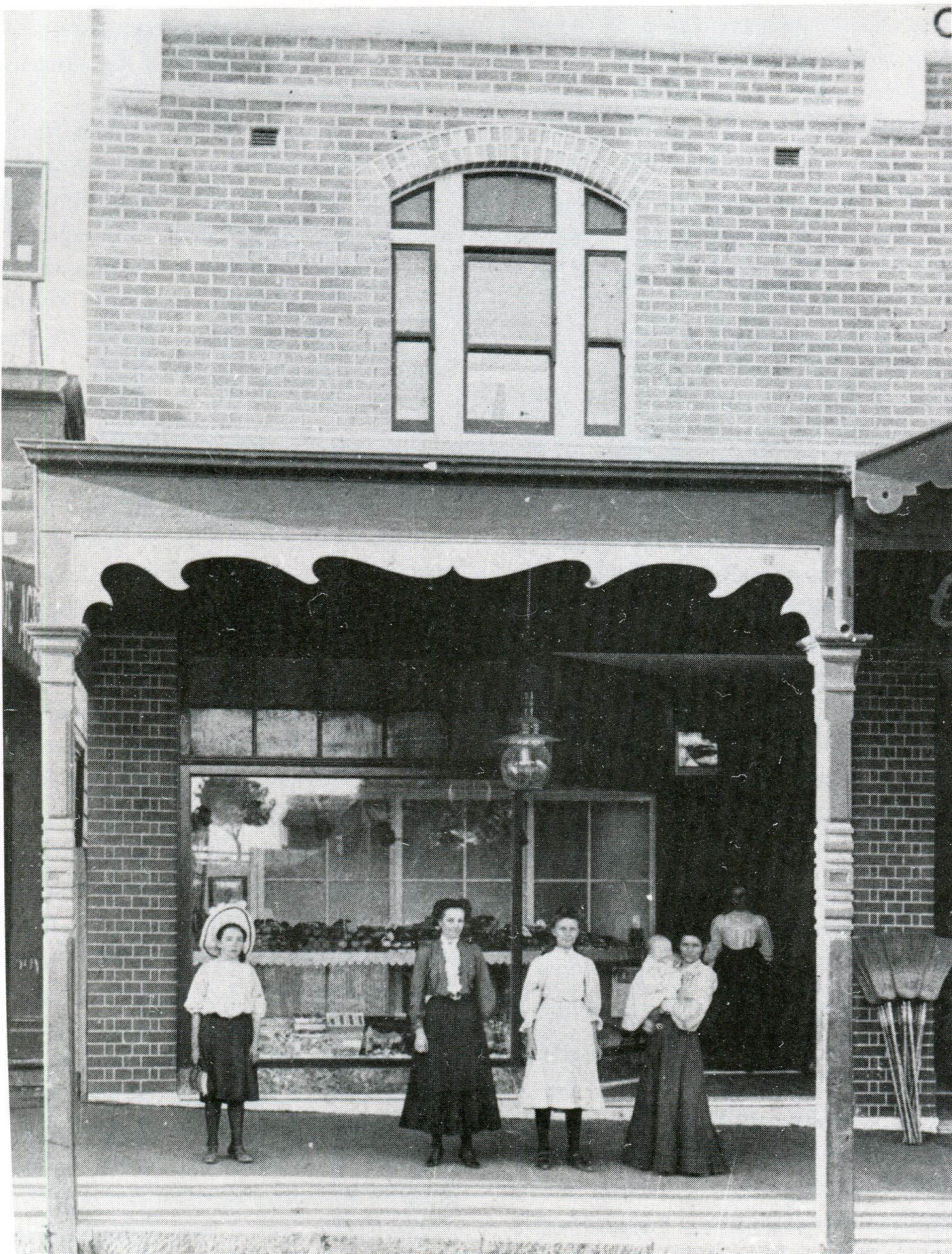
Smile! Croft’s, 1908. Image courtesy Hurstville Council
One of these shops was occupied by a mercer named Bert Jolley, who would later describe himself as “a young man with more confidence than money”. Success wasn’t instant; three months after opening, Jolley’s ledger recorded this lacklustre return: ‘Total Customers, 1; Total Sales, 1’, despite being open from 7am to 8pm.
Meow?
The story goes that Jolley, despondent and faced with bankruptcy, found himself moping around the city looking for a cup of coffee. He ended up at the Black Cat Cafe beneath Her Majesty’s Theatre, and as he drank his black coffee he was transfixed by the walls of the cafe, which were plastered in pictures of black cats. In his crazed desperation, Jolley became convinced the black cat was his spirit animal and good luck charm, and immediately devised a ‘Lucky Black Cat Sale’ for his store. Amazingly, the gamble paid off: by 1910 he’d bought the whole building, leaving both he and his variety-starved customers very jolly indeed.

Jolley 1.0, 1910. Image courtesy B Jolley’s
Jolley’s success as a suburban department store inspired plenty of copycats (heh); in 1917 local trader Diments, a hardware and produce store, expanded in size to rival Jolley, while 1921 saw the advent of Barter’s, a rival department store.

Cash only, 1962. Image courtesy Barter’s
In a tale so similar to Jolley’s that these days copyright lawyers would be involved, Charles Barter bought a single-storey shop at the approximate location of the former ANZ Bank on Forest Road. Before long it wasn’t enough, so Barter very shrewdly bought a piece of land beside the entrance to the railway station with the intention of building the greatest department store the suburbs had ever known.
Can I just interrupt the narrative for a moment to ask where Hurstvillians were getting all this money to spend with these guys? Like maybe you wouldn’t have had to live on a swamp filled with frogs if you’d invested in making your town nice instead of buying hats and black armbands or whatever it was they bought back in those days.

Oh no, please let me walk up three storeys under my own power.
Anyway, during excavation for his wonderful new three-storey building, Barter unearthed an old horseshoe, which he hung in his office for luck. Yes, Barter was such a plagiarist he even swiped Jolley’s good luck charm concept. But Barter would get a taste of his own medicine in 1922 when the Allen brothers opened their own department store (with an emphasis on menswear) further up Forest Road.
Now, do you think that’s enough department stores? Let’s review – at this point, there’s Barter’s, Diments, Jolley’s and Allen Bros., all on Forest Road, all creepily surrounding the station like vultures. Spoiled for choice much, Hurstville? Wouldn’t it be more convenient if, oh, I dunno, they were able to combine many stores and even department stores into one giant superstore?
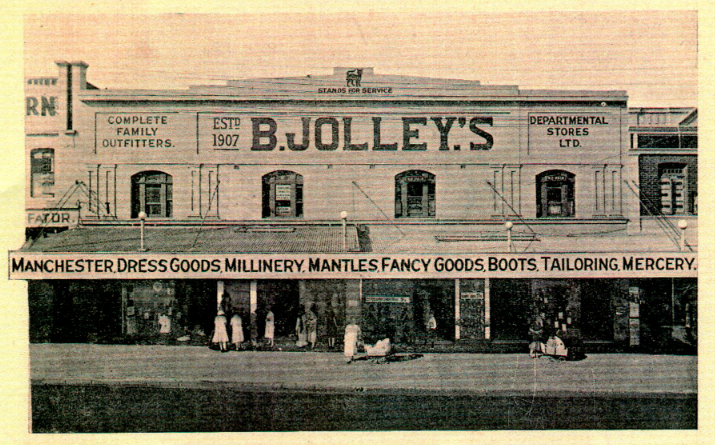
Jolley’s, Mk. II, 1927. Image courtesy B Jolley’s
Jolley was somehow able to stave off these attacks, maintaining a healthy profit throughout. Healthy enough to – you guessed it – expand yet again in 1933. Jolley had grown tired of paying council rates for his ever-expanding shop frontage on Forest Road, so in an ingenious move, he dug out an arcade of shops beneath his existing building, allowing for several new businesses without having to pay any excess rates. The move opened Hurstville’s eyes to the idea of an even greater shopping experience at the expense of cutting into the heart of Hurstville itself. But you can’t make an omelette without breaking some eggs, right?

Suck it, council. Image courtesy Hurstville Council
Jolley’s clever tactic paid off so well that he was able to retire in 1937, selling his 24-shop building and arcade to Woolworths. While at the time it was seen as a ‘local boy done good’ success story, today it’s easier to see the development as the beginning of a pattern; local businesses nurtured by the community being taken over by the big boys and allowed to rot. And oh, how the big boys were beginning to sit up and take notice of Hurstville successes.

Stepping out at Ashleys, 1954. Image courtesy Hurstville Council
Ashleys, a big city clothing store, swallowed its pride and expanded to the sticks of Hurstville in 1940 (the 1926 electrification of the Hurstville train line meant it was easier than ever to get to the retail paradise from the city should Mark Foy not satisfy your desires). When eponymous owner Ashley Buckingham died in 1962, Woolworths were there to buy up his stores. Uh-oh.

C. Diment Store, undated. Image courtesy Hurstville Council
Diments had done its dash by 1961, and the 40-year-old business was liquidated that year. The empty store, on the corner of Forest Road and what is now Diments Way, was bought by Coles. Double uh-oh.
Perhaps the biggest boy to observe what was happening in Hurstville was Grace Bros., which was arguably the biggest department store chain in Sydney at that time. In a show of true spite, and indicative of just how worried they were by this commercial boom they weren’t getting a piece of, Grace Bros. schemed to sap Hurstville’s custom by buying up a disused golf course in a nearby suburb. It was far enough away to appear innocuous, but the intent was clear.

The three Bs. Leader, October 6 1965
When Roselands Shopping Centre opened on the site in October 1965, it was only the biggest shopping centre in the southern hemisphere. To top things off, the beating heart of this beast was – yep – a giant Grace Bros. department store. You hear that, Hurstville? Oh, does Barter’s have a rain-themed water feature? Does Jolley’s Arcade have a cinema? I didn’t think so. Roselands has parking space for 3500 cars, what have you got?

Council Car Park, Crofts Ave & Cross Street, 1976. Image courtesy Hurstville Council.
Ooh, I’m shaking!
Hurstville’s commercial sector was starting to feel the heat. No, Roselands didn’t have a train station nearby, but who cared when it had that much parking space? Could Barter’s three storeys really compare to the 30 acres occupied by Roselands’ 80 stores? No. No, they couldn’t. With Miranda Fair having opened the year before, Hurstville found itself besieged on two fronts, and immediately began taking stock of its assets and liabilities. Coles Variety and Woolworths just weren’t cutting the mustard. The train station was no longer pulling its weight…weight…wait a minute…
In 1956, a cake shop owner at Wynyard Station lodged an unusual application with Hurstville Council. Inspired by the way shops sat above Wynyard’s train line, he proposed an five-storey development above Hurstville Station. Flush with cash from years of financial prosperity, council approved the plan. The Railways Department approved the plan. Kogarah Council, which had jurisdiction over the Ormonde Parade side of the train station, approved the plan. With all this approval, what could go wrong?

More like Blows. Image courtesy Hurstville Council
Construction of the Bowes Supercentre began in 1957 by Bowes Corporation, but was pipped at the post by that year’s opening of the Top Ryde Shopping Centre, the first American-style retail hub to open in Sydney. Plans for the Super Centre, already changed from five storeys to eight storeys during development, were altered again, with final plans blowing up to ten storeys. And parking? You’d better believe it:

Leader, August 26 1959
But Bowes was more adept at making increasingly outlandish promises (‘LUXURY HOTEL TO STRADDLE RAIL LINES’ read one headline) than he was at construction, which ground to a halt in 1959, the same year two former delicatessen owners opened a small shopping centre, ‘Westfield Place’, at Blacktown.

No shit. Express, August 30 1961
In 1961, the project, now known as the Hurstville Super Centre, was taken over by W H Duffy, who projected a completion date of late 1962. The Supercentre became the object of special interest of both Hurstville Mayor G W “Snowy” Hill and the Federal Transport Minister John McMahon, even as setback after setback stalled construction.

Ominous, isn’t it? Image courtesy Hurstville Council.
I hope not. Leader, September 15 1963
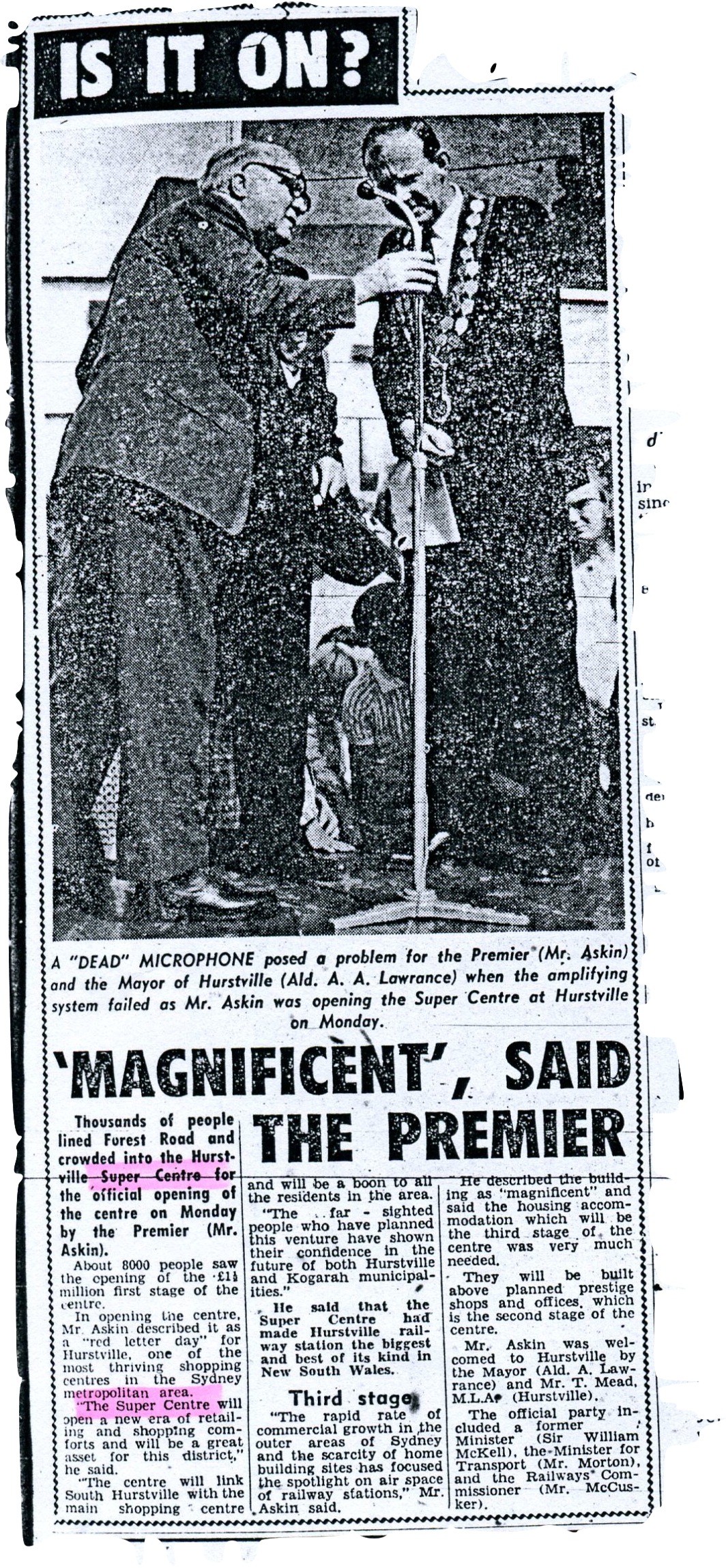
By the time of the Hurstville Super Centre’s grand opening in September 1965, only the first stage had been completed and Roselands was only a month from opening. Even worse, attendees who could get a park then had to endure an appearance by Premier Robert “Don’t call me Robin” Askin among others:

Oh…goody.
In the same year, Transport Minister McMahon lost his position following election defeat, and was criticised by the Opposition for a “lack of vision in providing transport infrastructure”. Even Snowy Hill was no longer mayor by the time it opened. Am I calling the Super Centre a total failure that stained the character and reputation of all involved? Yes.
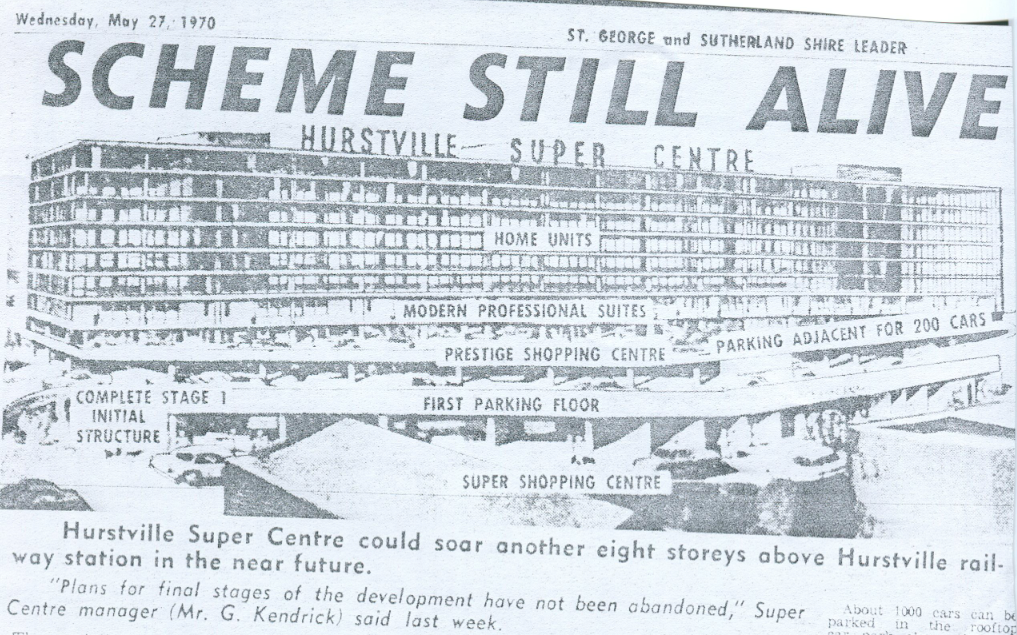
Interest still dead. Leader, May 27 1970
Throughout the late 60s and early 70s, empty promises were made to finish the Centre and bring it up to speed with the original vision, as if anyone was hanging out for that to happen. It was the modern age, no one relied on trains anymore. Department stores and giant shopping centres were a thing of the past in the city, and Roselands and Miranda (purchased by Westfield in 1969) were only quick drives away.
Away…from Hurstville. It seemed that despite that initial promise, no one had the vision to truly exploit Hurstville to the full extent of its commercial potential. Of the giants of the 20s, only Barter’s was still around (I guess that horseshoe worked), and even it had been overshadowed (literally) by the disastrous Super Centre. With no money coming in, council was sweating. Retailers were coasting on fumes. The swamp suddenly seemed thicker than ever.
Sid Steele Tobacconist/Little Big Tween – Newtown, NSW

Careful and considered research tells us that as far back as 1914, Sid Steele (yes, the Sid Steele) was providing King Street’s St Peters end with all the tobacco they desired. Had Sid kept his ego in check, we of the future may never have known of his long-ago dominance of the industry, but the forward-thinking Steele made sure his name would be as resilient as his namesake by emblazoning it across the top of this otherwise generic ’14 model. Future tenants were not so precious…

1991. Image courtesy City of Sydney Archives.
For example, Martin chose to leave his mark on his customers rather than the buildi- oh sorry, studio. Note that Martin doesn’t have the air conditioner that later tenants have. What’s with that, Martin?

2007. Image courtesy LanceDriver/Flickr.
In the new millennium, it’s as naff to include your name in your business name as it is to use the term ‘naff’. The proprietors of CHINESE ANTIQUE FURNITURE may not have had staying power, but they didn’t need it; hoping to capitalise on the zeitgeist of the Chinese Antique Furniture boom of 2007-2010.

2013.
These days, the folks behind Little Big Tween are striking the tween craze while the iron is hot, admirably attempting provide the childrens clothing market with ‘age appropriate’ designs. If it means seeing one less kid in an ‘I’m with the MILF’ shirt, more power to ’em.
Stan’s Burgers/Dolan’s Burgers/Kayems’ Cafe Takeaway – Beverly Hills, NSW
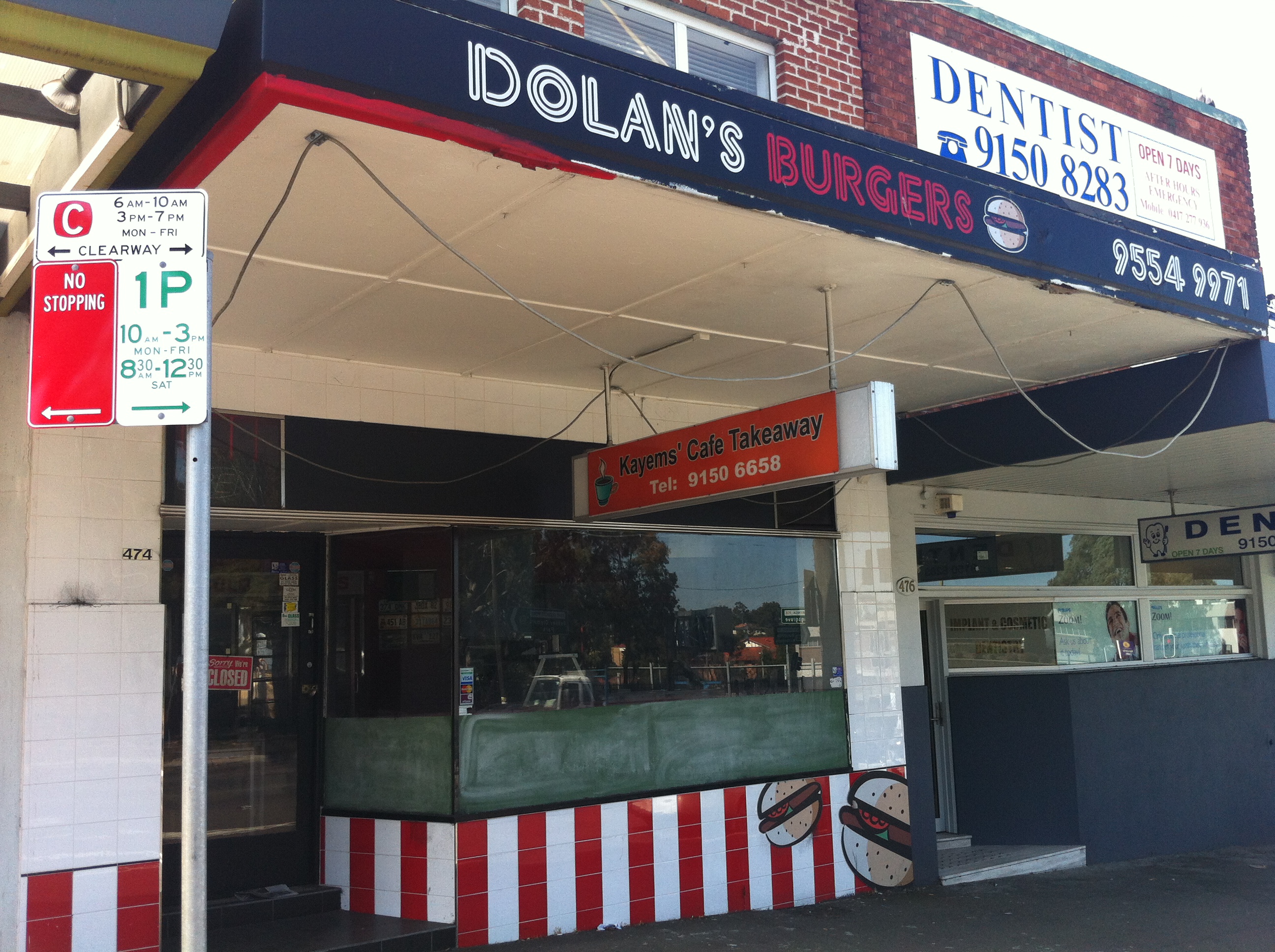
kayem pls
In many ways, the Beverly Hills of the southern hemisphere has absolutely nothing in common with the sun-soaked haven of Hollywood decadence up north, but I’d argue this – it’s even tougher to make it here than it is in that notoriously tough town.
Case in point: this small takeaway shop on yet another strip of pointless shops is rarely open, a unique approach to customer service anywhere but Beverly Hills. Why? Do people not need to eat? Why can’t this place just be open on a hot afternoon when someone might want to take a drink away and refresh themselves? What was it about the concept of a cafe/takeaway that Stan, Kayem, and even the infinitely more aesthetically pleasing Dolan all failed to understand? Somewhere, some landlord is laughing as they review their fourth tenancy application in as many years.
Bank of New South Wales/Westpac/Embassy Conference Centre – Chippendale, NSW

Oh, that’s nice.

But what’s this? Couldn’t make it through century two, then?
Actually, the Bank of NSW (later Westpac) held on here for a good 30 or so years past 1960. Let’s take a look:
As we’ve previously been over, the Bank of NSW has a long and illustrious hiszzz…huh, wha? Oh, do excuse me. The revered financial institution was established in 1817 without a safe. Yes, you read that right:
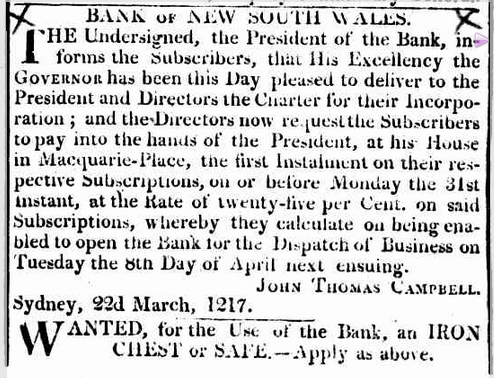
Right, 1217. We trust these guys with numbers? Sydney Gazette, March 29 1817
In the spirit of that ridiculousness, tomorrow I’ll be establishing an amusement park: Fast Rides of the Near Future. Anyone got any rides I can borrow? Free entry for a year if you do!
In 1860, the BoNSW started to branch out – literally. The bank’s first branch was established here on Broadway that year. But what flies in the ’60s sinks in the ’90s, and by 1894 changes had to be made. The powers that be summoned Varney Parkes (son of Sir Henry and former Bank of NSW employee) to design the current building (complete with it’s own gold smelting facility), unceremoniously treating their number one son like number two in the process. In fact (as we’ll see), that plaque at the top of the page is about as sentimental as Westpac cares to get (but remember, you’re not just a number 🙂 ).

Bank of NSW, 1955. Image courtesy City of Sydney Archives
Actually, maybe in 1955 you were. Oh, check it out: the postbox by the corner is still there!

Bank of NSW, 1989. Image courtesy City of Sydney Archives
1982 saw the Bank of NSW merge with the Commercial Bank of Australia to form Westpac, presumably to confuse customers. You can guarantee they would have netted some poor old biddy’s cash in the changeover. To aid the public through this confusing time, all branches were poorly rebranded with the Westpac name, and the Railway Square spot was no different.

Bank of NSW, 1992. Image courtesy City of Sydney Archives
Here it is in 1992, in glorious colour for the first time. In that same year, Westpac suffered a $1.6b loss, a record for any Australian corporation at the time. Staff were let go en masse, and that would had to have affected this branch. Luckily, anyone forced out the door would have seen the old Sydney City Mission logo behind them there. I wonder whatever happened to that? Someone should get on that.
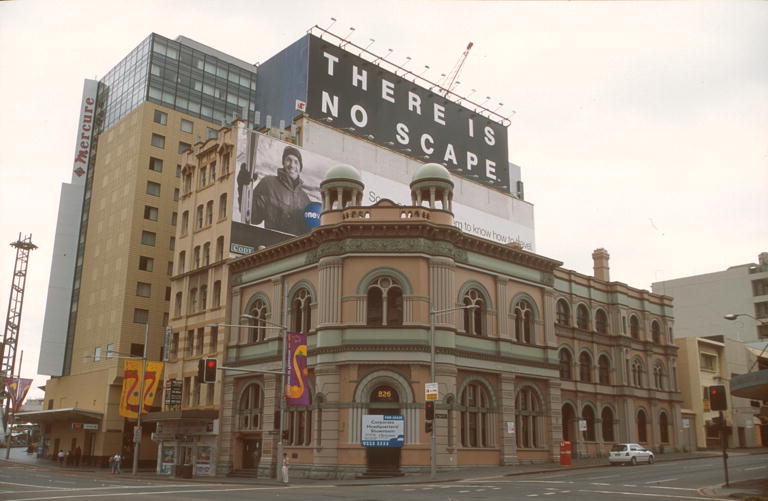
Bank of NSW, 2000. Image courtesy City of Sydney Archives
Despite Westpac’s extensive refurbishment of the building in 1989-90, the bank was hit too hard by ’92’s recession. By 2000, the building that had once been the bank’s pride and joy was just another ‘For Lease’ along George Street, just in time for the Olympics.
Today, the bank’s purpose is to serve as a function centre. Why one would be needed right beside the Mercure, which presumably has its own, boggles the mind…unless. UNLESS…when the Mercure set themselves up, they put an ad in the paper advertising for the lend of a conference room…
Pizza Hut/Moo-ers Steakhouse/For Lease – Long Jetty, NSW

When someone or something beloved is replaced, it’s not unusual for the usurper to find itself under fire, the subject of blistering scorn (and never moreso than right here on this blog). In the case of Moo-ers, a steakhouse up near The Entrance, it seemed like they picked the wrong shoes to fill.
In 2008, Moo-ers maa-nagement became concerned about the quality of meat they were receiving; hogget and mutton were being misrepresented as lamb, yearling as veal. The definition of beef cuts was being stretched by local suppliers; a shipment claiming to include sirloin, porterhouse and striploin cuts would be found to contain nothing but the one generic cut of beef. I wonder if this was happening with their seafood as well: shrimp instead of prawns, carp instead of everything else.
Moo-ers raised the issue with the Senate Rural and Regional Affairs and Transport Committee (SRARAATC *ahem* excuse me), hoping for tighter naming guidelines for meat. With most of their menu being meat, any substitution or downgrade in quality was hurting the Moo-ers brand.
Was anything ever done? Was the integrity of the Moo-ers menu salvaged? To answer those questions, cast your eyes upwards to the picture. Notice anything…for lease? My expert guess is that Moo-ers’ shipments of generic meat was in keeping with what the previous tenants had received. I mean seriously, if you can tell me what kind of “meat” the Pizza Hut “ground beef” is meant to be, then congratulations – there may be a spot for you on the SRARAATC.

 Past/Lives of the Near Future