William Arnott Ltd/Bakehouse Quarter – Homebush, NSW
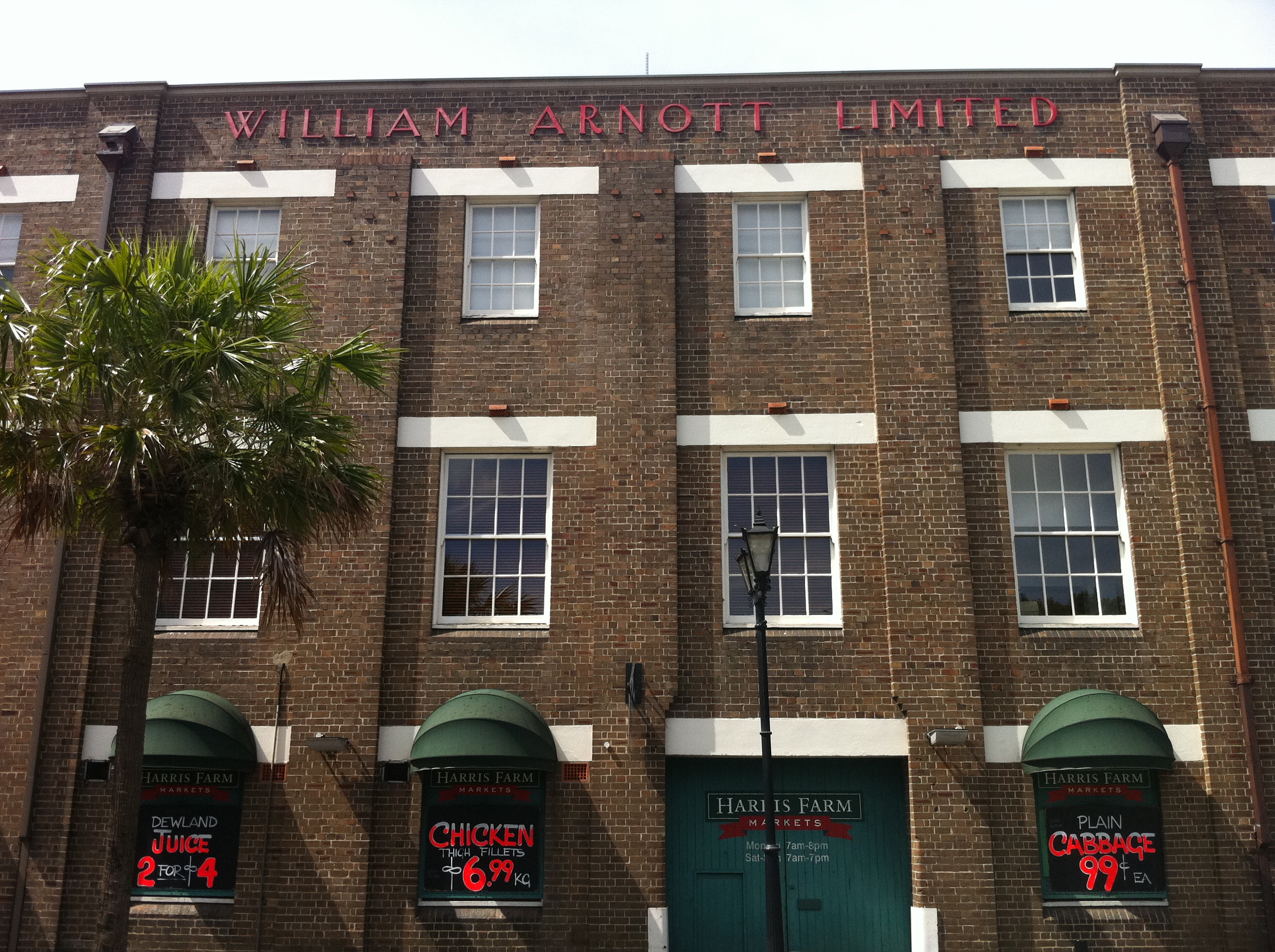
For decades, passers-by of the Arnott’s Biscuit factory at Homebush would experience delicious smells emanating from the place. From 1908 to 1997, this was where the action was for the large variety of Arnott’s products. Since the factory’s relocation to Huntingwood, the site has undergone a remarkable transformation.
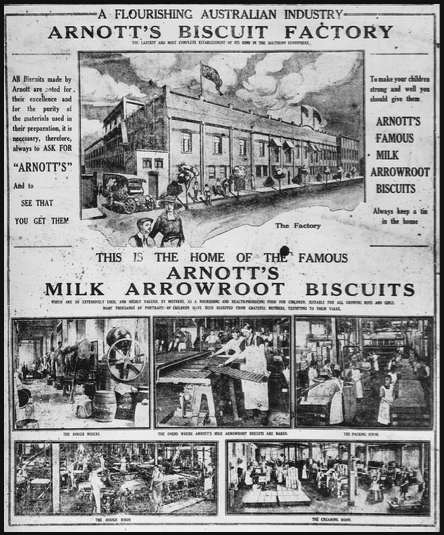
Image courtesy City of Canada Bay Library Service.
The first Arnott’s Biscuits factory opened at Forest Lodge in 1894, but when demand created the need for a larger factory, Homebush was chosen as the best location because of its proximity to the rail system. Company founder William Arnott had made the decision to move the factory closer to Sydney, but died in 1901, before he could see his dream realised. Seen at the time as a mistake on Arnott’s part due to Homebush’s then-long distance from the city, the factory eventually became the largest of its kind in the Southern Hemisphere. In fact, the Arnott’s factory was one of the foundations of economic prosperity in the growing residential suburb of Homebush in those days; there were few families in the suburb that didn’t work for Arnott’s.

Image courtesy City of Canada Bay Library Service.
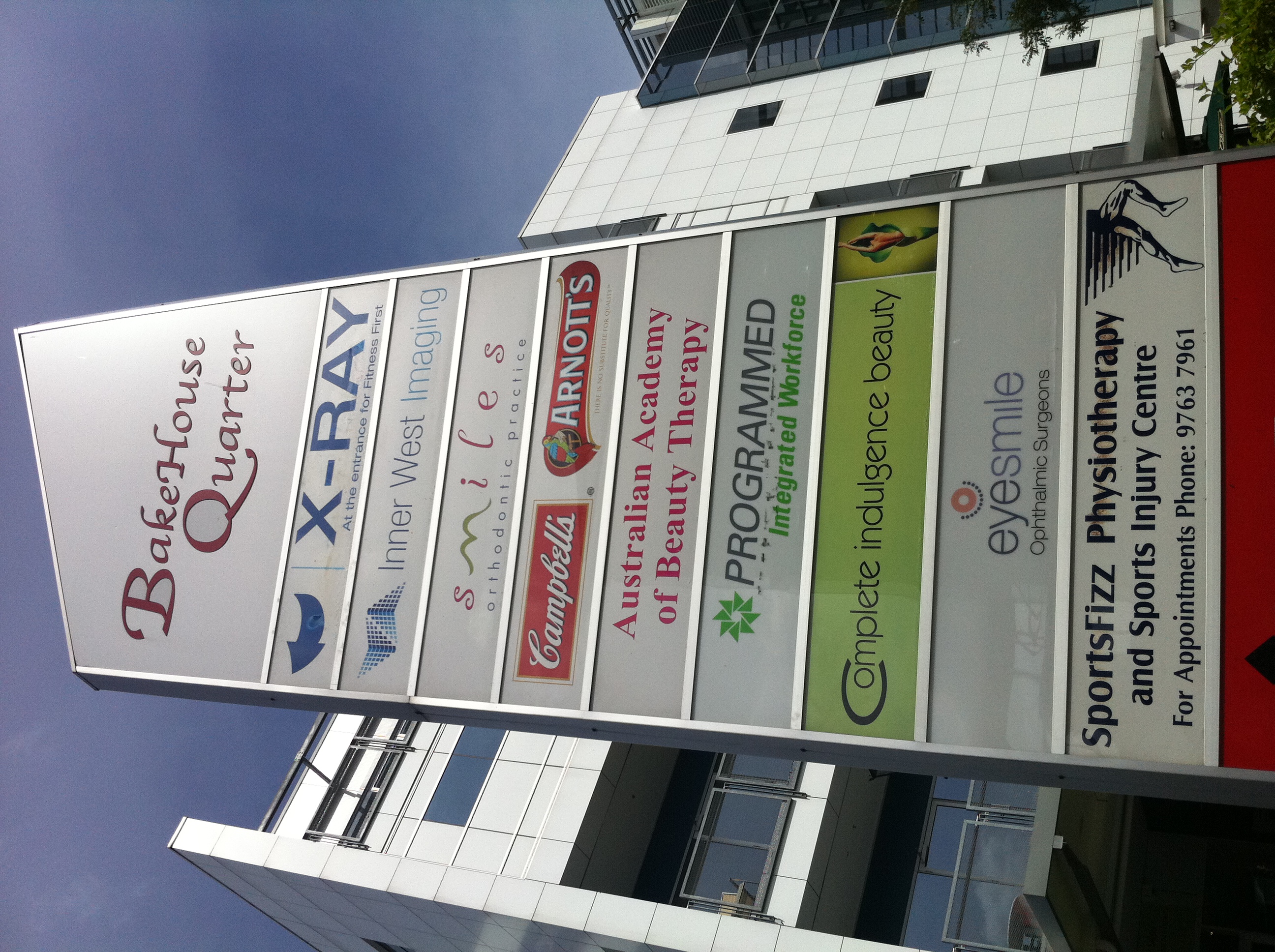
SportsFizz sounds like a drink, doesn’t it?
Arnott’s may have moved on from this location, but their biscuit range is still the most popular in Australia. Scotch Fingers, Milk Arrowroots, Iced Vo-Vos, Tiny Teddies and Sao (I get the feeling that the plural of Sao should still just be Sao, like sheep) are exported all over the world, and all the while the Homebush factory still stands, albeit with a very different purpose.
The Bakehouse Quarter redevelopment started in 1998, taking the Arnott’s factory that was so familiar to locals and converting it into a shopping and leisure precinct akin to Birkenhead Point.

While you can’t spit without hitting a cafe, there’s also the obligatory business sector, which includes the corporate HQ for Arnott’s. No substitute for a good location, I guess. That’s not the extent of the Arnott’s involvement, either: plenty of heritage Arnott’s paraphernalia exists at the site, all part of the old factory. The giant neon Sao sign is the most prominent, but even Arnie (groan), the Arnott’s parrot, gets a look-in.


Cobbled roads and Edwardian-style lighting make up the section of George Street that passes through the vicinity.

A large part of the factory itself has been converted into an AMF bowling alley and laser tag site. It’s not as farfetched as it seems – back in the day, Arnott’s had a bowling green included on the grounds, presumably as a showcase for the Iced Vo-Vo.

A car park has replaced the former oven area, which is still keen to reveal itself to those on the lookout.

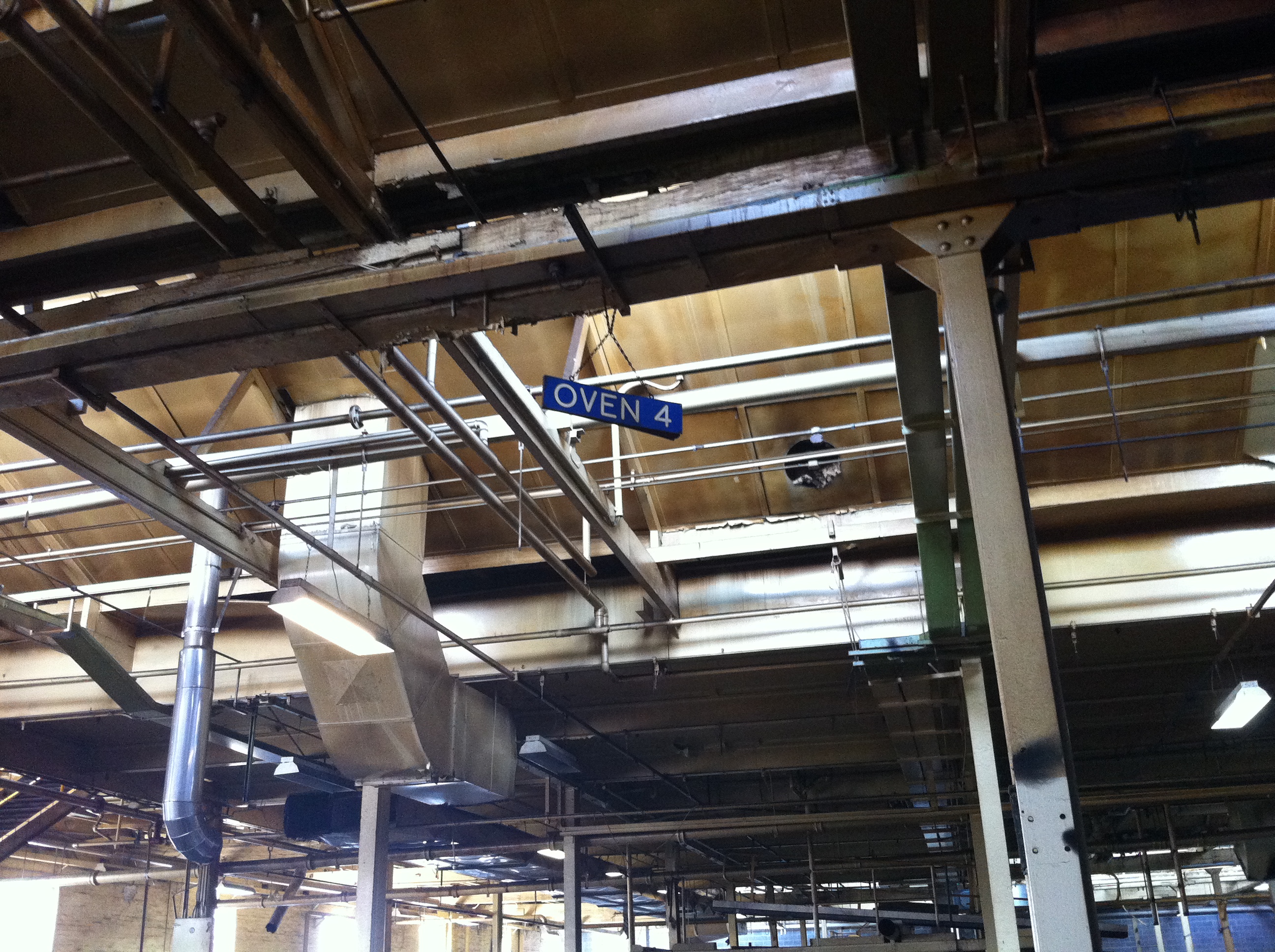
The site’s still growing, and there’s still a lot of work to do. Zumba classes and conversations over meals at the steakhouse are still constantly interrupted by the sound of construction workers striving to turn the more industrial parts of the factory into a heritage paradise.
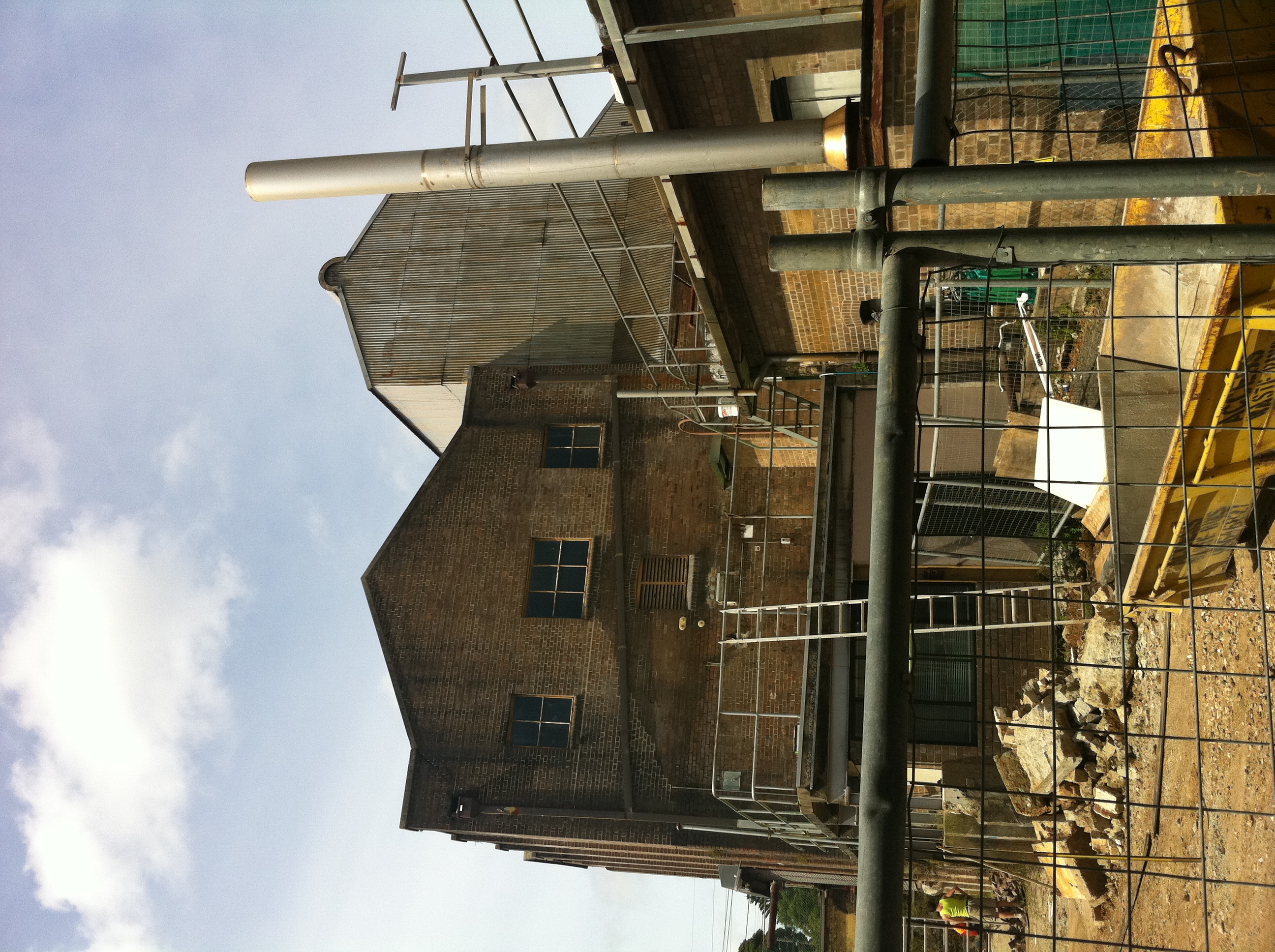
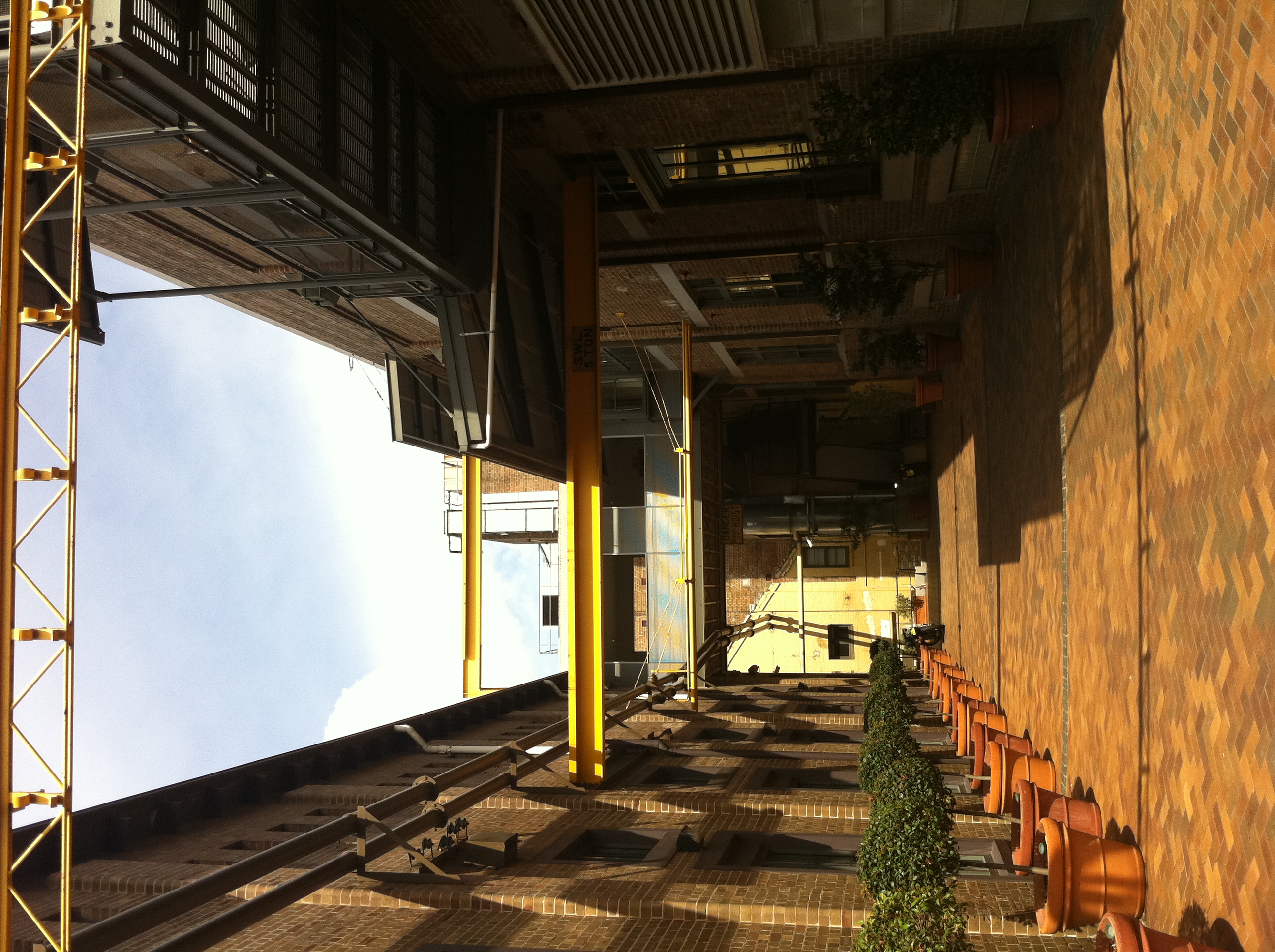
My favourite element untouched from the old days was this, the toilet to nowhere.
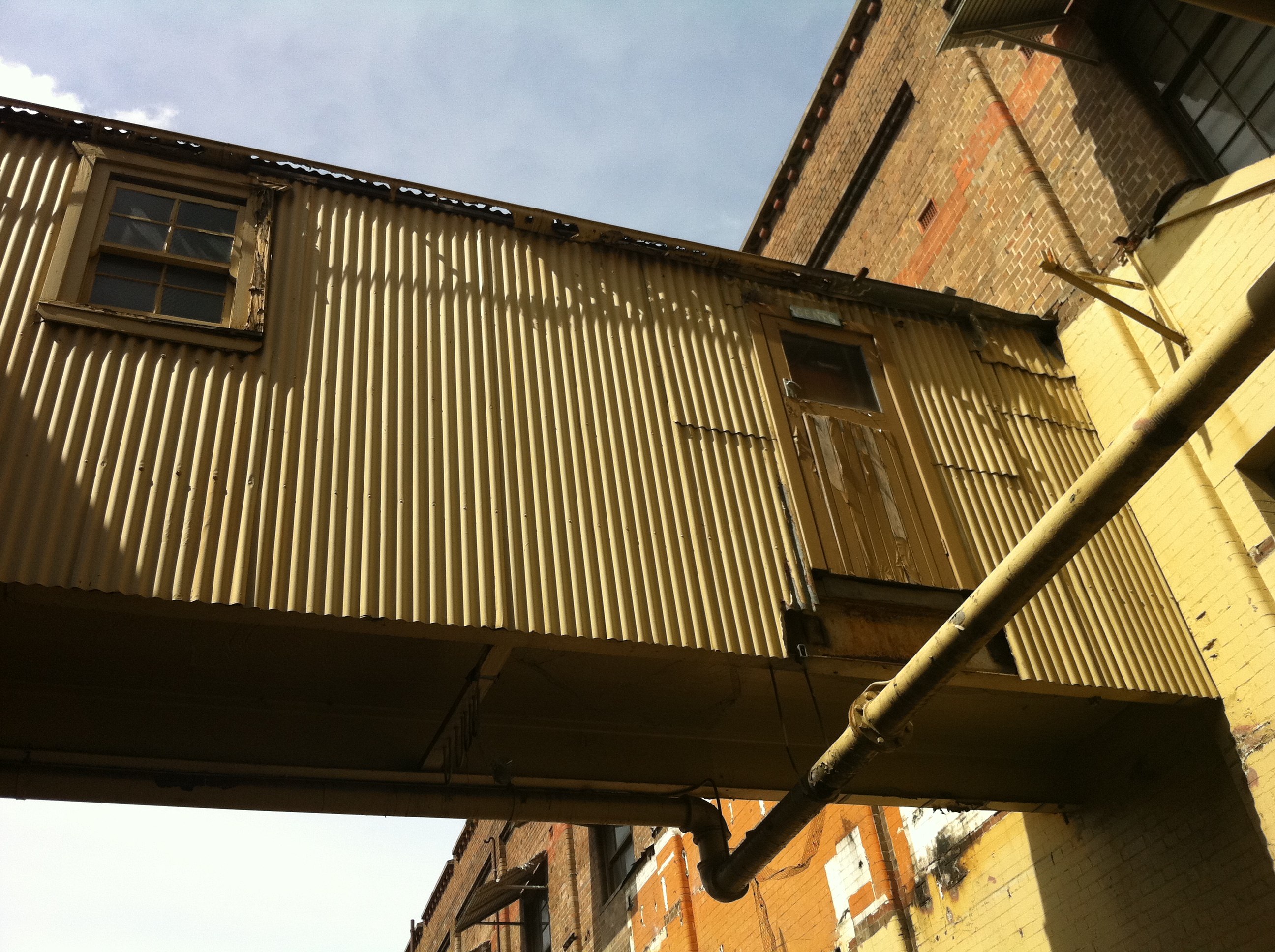
I wouldn’t be surprised if it ended up with a fair portion of residential area set aside within it, but whether that would be incorporated into the extant factory is anyone’s guess. Would it be cool or trendy to live in a former Tim Tam chocolate coating room? Probably.

One of the reasons the site was chosen by Arnott’s in the first place was because of its excellent rail infrastructure. You can still get a good view of the factory by train as you pass by between Strathfield and North Strathfield stations, and this bit of free advertising still passes over the busy Parramatta Road.

Huntingwood should keep a close eye on the Bakehouse Quarter, because when Tiny Teddies eventually grow up to become Standard Teddies, and Scotch Fingers grow to represent the entire hand, Arnott’s are gonna need more room, and that’s precisely when AMF and Zumba are gonna move in, ably proving that there is indeed no substitute for quality.
T.W. Green Wool Stores/Trojan Workforce Recruitment/For Lease – Glebe, NSW

Thomas W. Green established his wool handling and broking business in 1905, a time long before recruitment agencies. The Green empire spread itself over two locations; one in Queanbeyan and one here at Glebe. This was at a time when Glebe’s stores were full of first-hand wool. Stunning, I know.

TWG Wool, presumably renamed KFC-style in the 90s by a pony-tailed marketing man, was purchased by Landmark in 2005, and has practically disappeared since. The Glebe location was taken over by the terribly named Trojan Workforce recruitment company on the first level, and the awesomely named Ultraceuticals Pty Ltd on the second. They could literally put heroin or mutagen in a bottle marked Ultraceuticals and I’d down it without thinking twice.
While researching this place, I stumbled upon what may have been a contributing factor to T. W. Green’s desertion of this location:

Barrier Miner, Mar 22 1950
“I’m sorry, sir, but only the J. Wilson from J. W. Green is allowed to redeem this prize!”
It wouldn’t surprise me if a. that actually happened and b. NSW Lotteries did this kind of thing more often. “Oh, sorry Mr. Smith, but this prize can only be claimed by Mr. Snith. Check the results again.” Talk about pulling the wool over your eyes.
Demco Machinery/Mao & More – Surry Hills, NSW

Demco Machinery, 1989. Image courtesy City of Sydney Archives, SRC15993.
The Demco Machinery site, on Cleveland Street in Surry Hills, is made up of two separate buildings. The one in the foreground here is the oldest, first used as a tobacco factory in 1911, and then a tea company until the 1920s. Once Demco moved in around 1930, they patiently waited for the St Margarets Hospital for Women Dispensary next door, built in 1906, to fall on hard times. They didn’t have to wait long:

SMH, April 19, 1938.
Strangely, although the building’s address is currently 267-271 Cleveland Street, advertisements prior to 1953 give Demco’s address, as well as that of the hospital and the tobacco factory, as 243-247 Cleveland Street. There must have been a renumbering of Cleveland Street around that time, as to avoid confusion, from 1948 Demco started advertising their address as ‘corner of Cleveland and Buckingham Streets’.
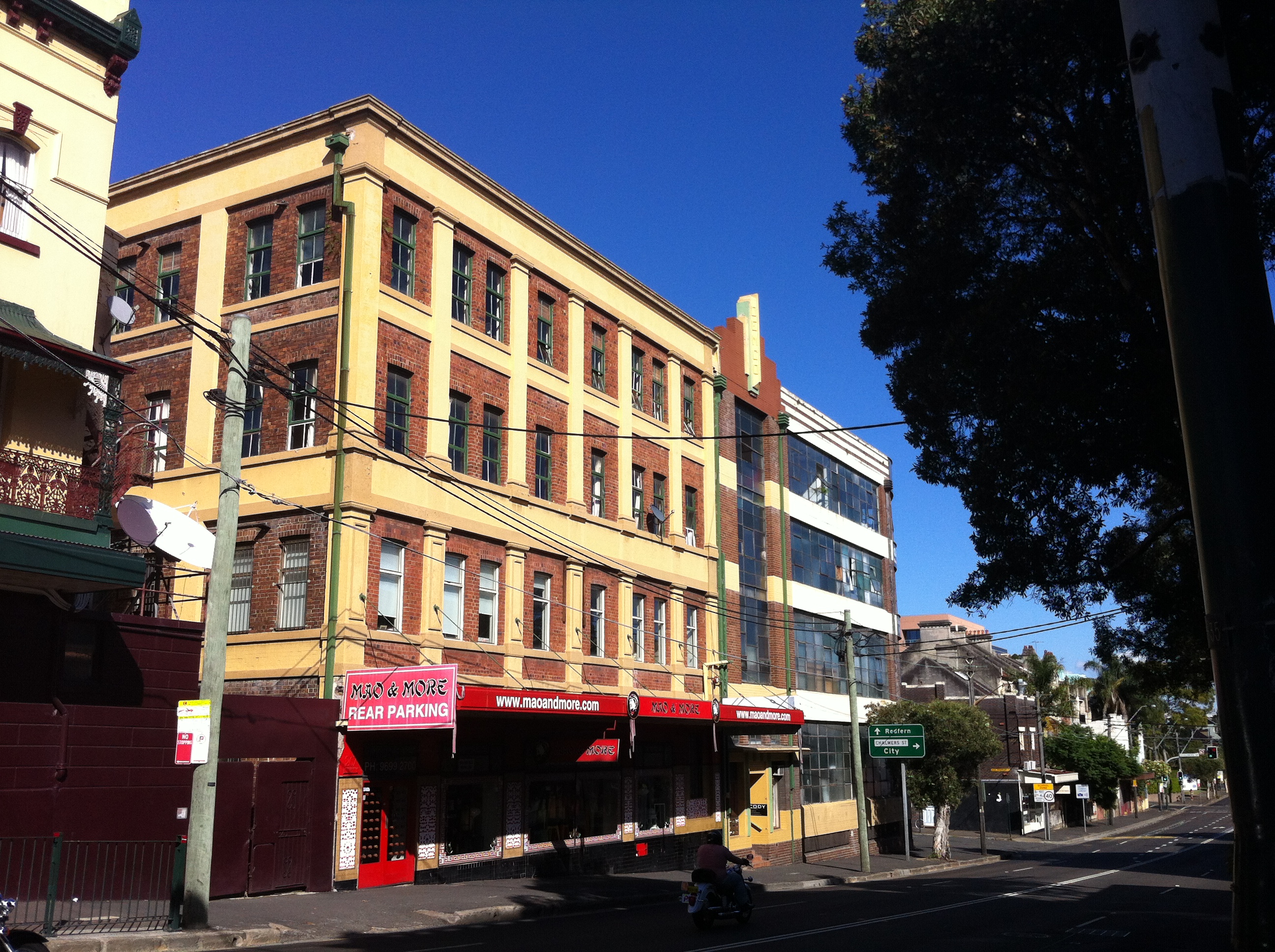
Demco building, 2012.
Demco packed up its city operations in 1989, moving out to Greenacre as part of the industrial migration to Sydney’s west. Since 2002, the older half has been occupied by Mao & More, a Sinophile’s paradise of kitschy Oriental paraphernalia very at home in the increasingly gentrified area. The showroom half of ‘modern design’ Demco were so proud of currently consists of several businesses, including The Gingerbread Man, a film and web production company located in the basement; and a sportswear manufacturer. The only evidence of Demco’s time here is the art deco Demco sign still sitting atop the building.
Strathfield Burwood Evening College/Junk Shop – Homebush, NSW

Another relic sitting along Parramatta Road (where would I be without it), this…I don’t really know what this is.

The building itself doesn’t help, with all its allusions to great deals and hard to obtain articles. The place is full of strange old junk…

It might have sold office supplies once, before the owner went mad and decided to hoard everything instead of selling it. Some people collect vinyl records, others collect filing cabinets. At one stage, the building also appears to have housed the Strathfield Burwood Evening College:
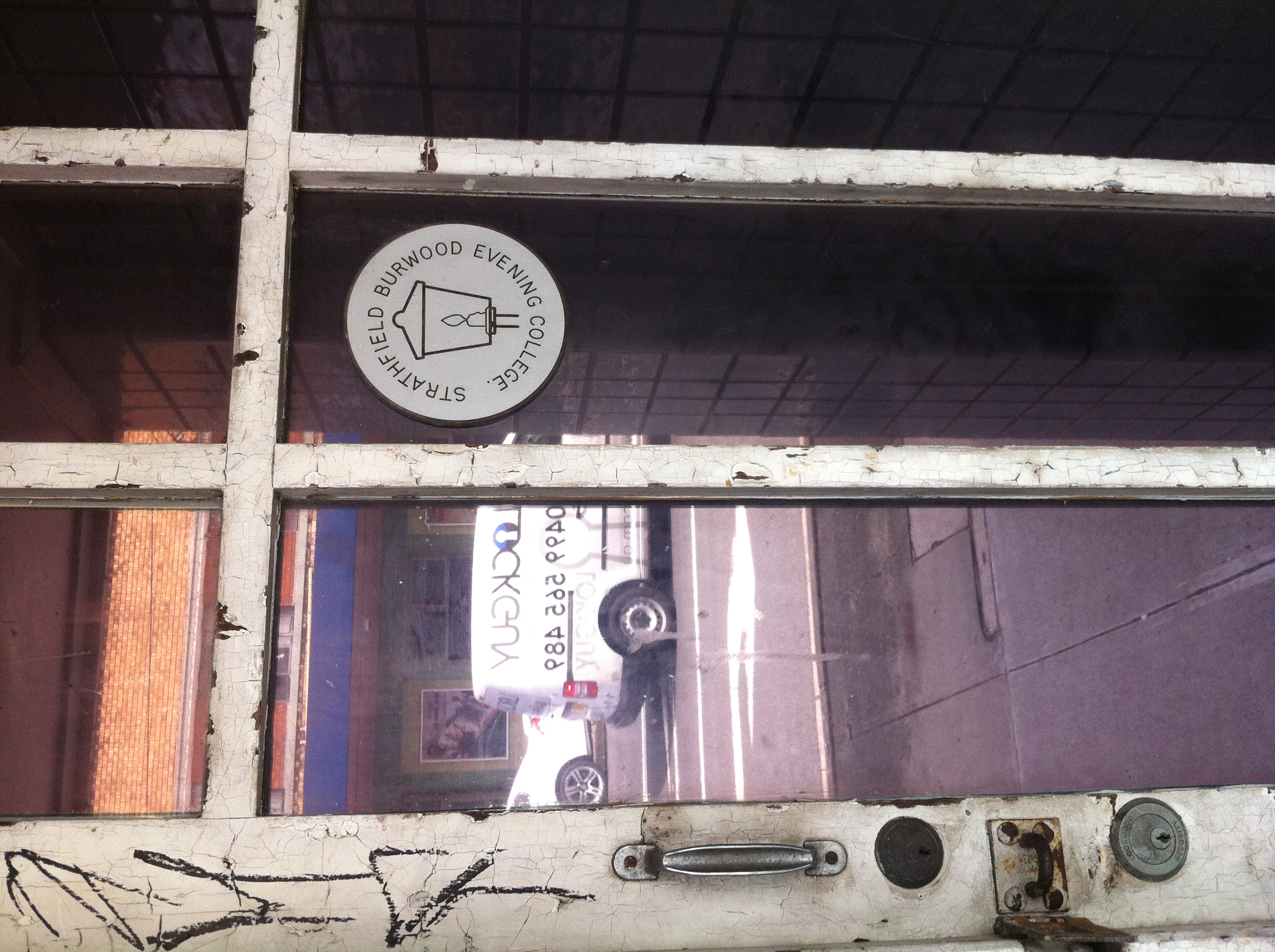
Not…entirely sure what you could learn in a place like this, but I bet they had a damn good filing system. Still, a closer inspection of the windows proves they weren’t kidding about those hard to obtain articles:

That’s wisdom.
BARREN UPDATE: According to reader Claire, this place – that was absolutely stuffed with goods – was suddenly mysteriously empty when she passed it a few months back. This I had to see.
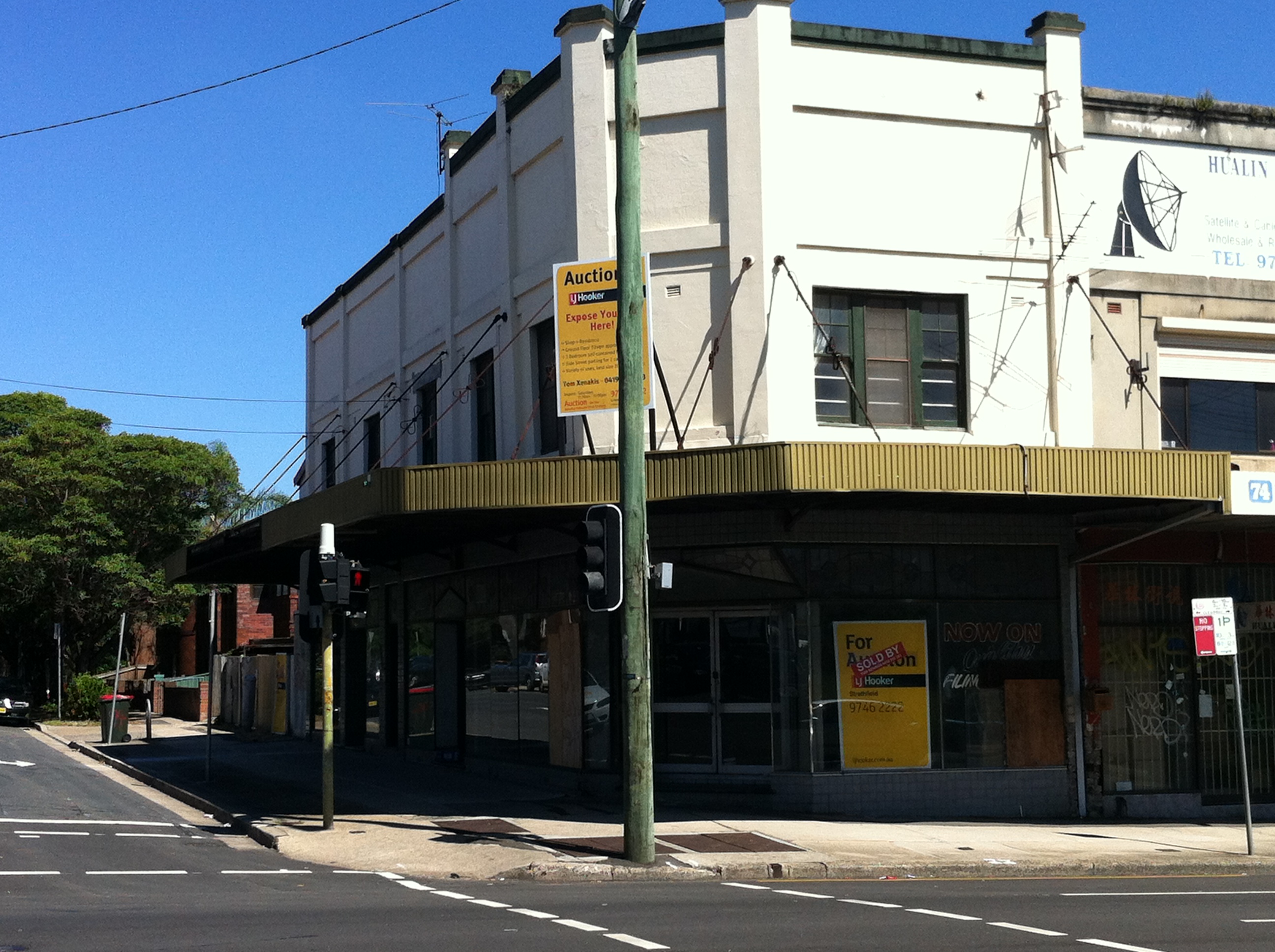
Not only was it for auction, but it sold, unlike 100% of the merch that once filled the room. But what of that merch? Let’s zoom in.

The boasts of discount prices and the eye-catching stained glass windows were still there, and surely added to the value of the property at auction.
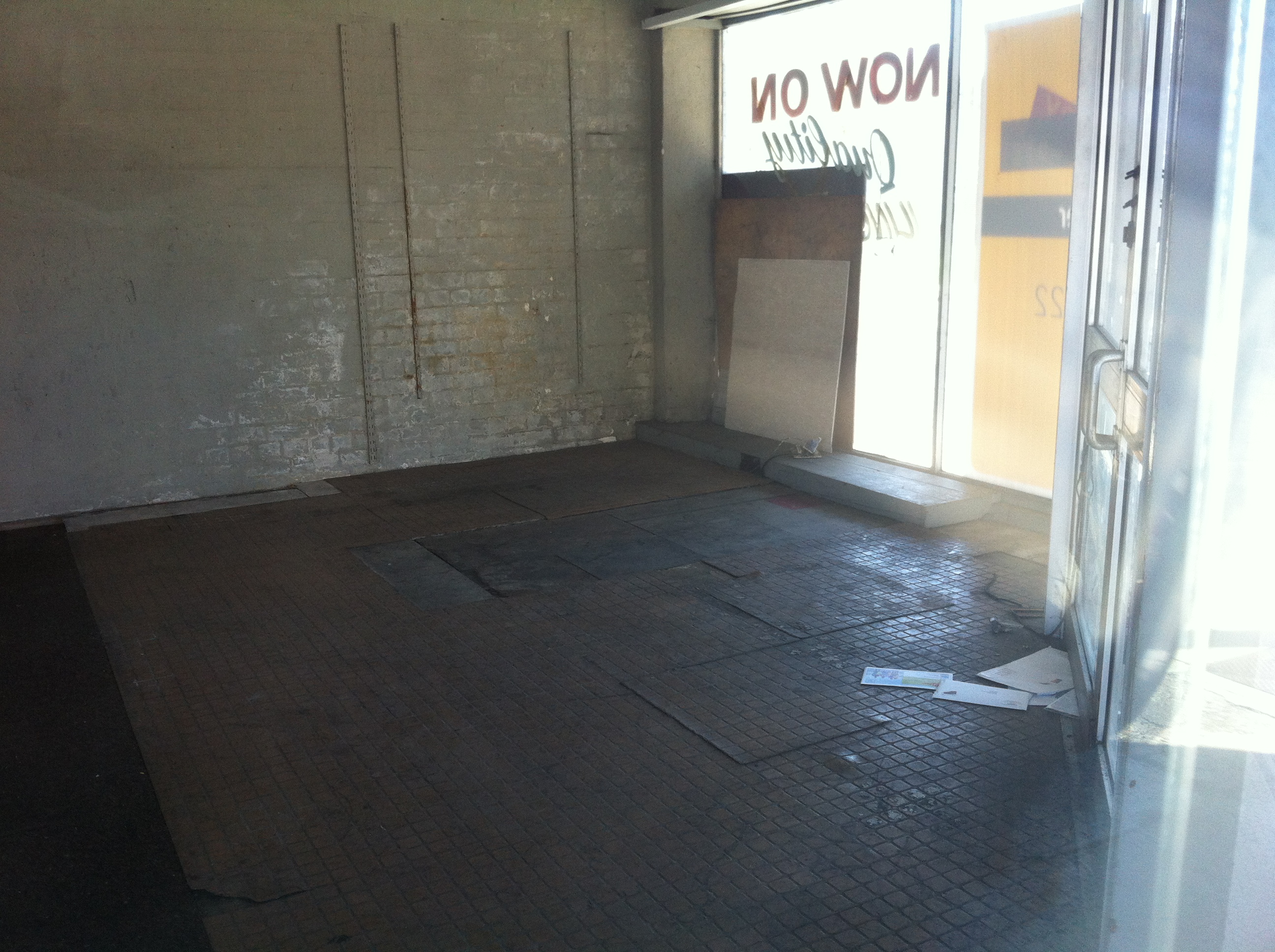 Now those articles really are hard to obtain. Thanks, Claire!
For more on the history of this peculiar building, including a picture from when it was still Homebush Newsagency, check out Strathfield Heritage.
Coles Variety/Fossey’s/Bag A Bargain/Stokland – Hurstville, NSW

The Hurstville building currently featuring Stokland Furniture Depot is a bit like your old fridge covered in magnets that vary wildly in their level of ancientness. The site has put up with a variety of variety shops (sorry) since 1914.

While it’s currently Stokland Furniture Depot (at last, furniture shopping without the c—s), in a previous life the building played host to…

…Bag A Bargain, and that Escher-esque door to nowhere – a sight so crazy it’s clearly driven the Bag A Bargain mascot downright nutty. Earlier still, the building was…

…Coles Variety store (later Fossey’s), which acted as a thoroughfare to Forest Road. I hope the equivalent sign at the front of the building on Forest Road warned thoroughfare users of the doozy of a step waiting for them on the other side of the door.
UPDATE: Thanks to this Leader article from December 1989, we can finally know what caused Coles Variety to pack up and leave. Spoiler: it was Westfield.
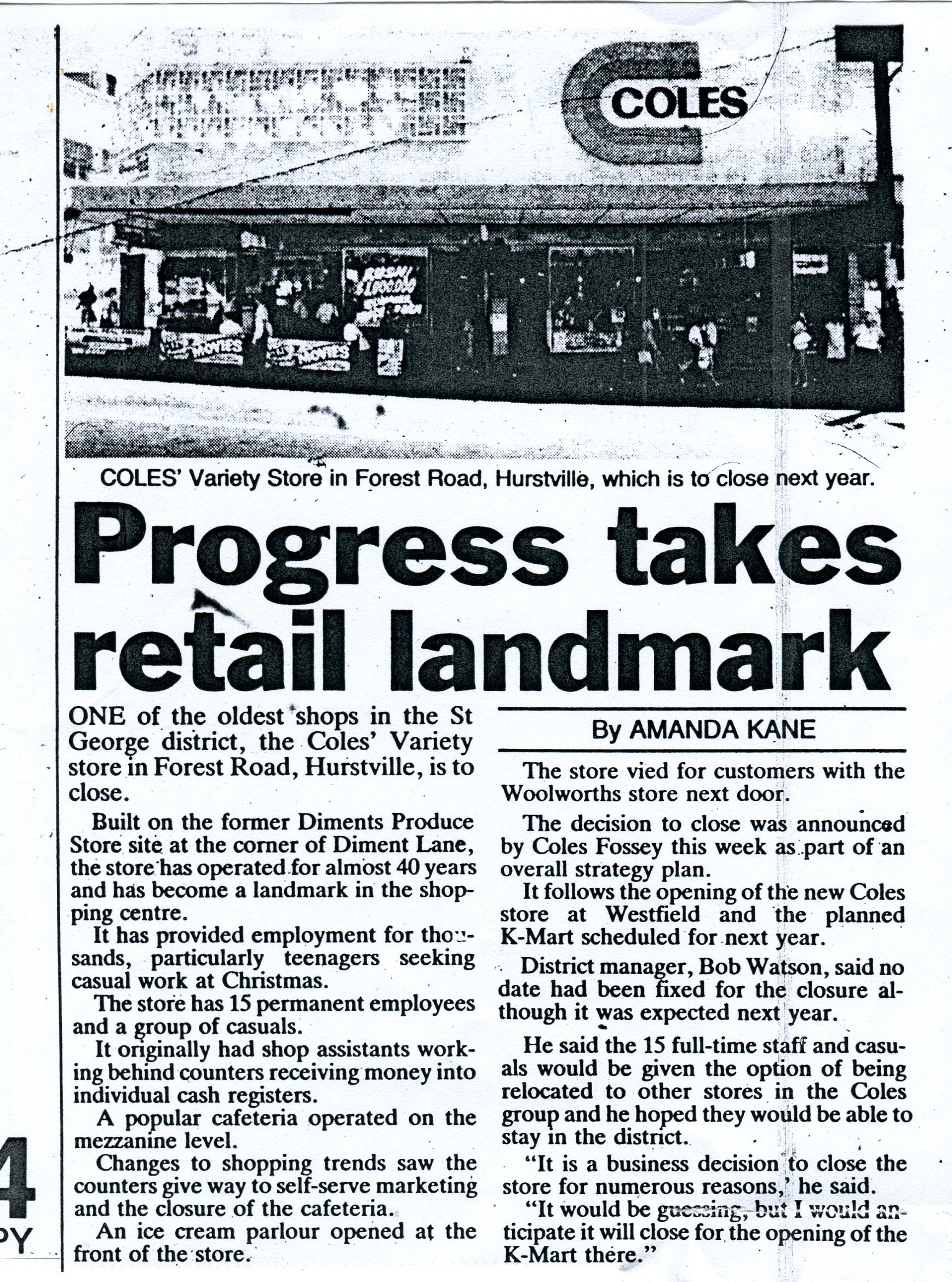
The Leader, December 5 1989
Even if we choose to accept K-Mart as the spiritual successor to Coles Variety – which I don’t – can its champions boast that it has an ice cream parlour at the front of the store? I didn’t think so.

 Past/Lives of the Near Future