H. & E. Yee Mixed Business/Beverly Hills Pharmacy/Nothing – Beverly Hills, NSW
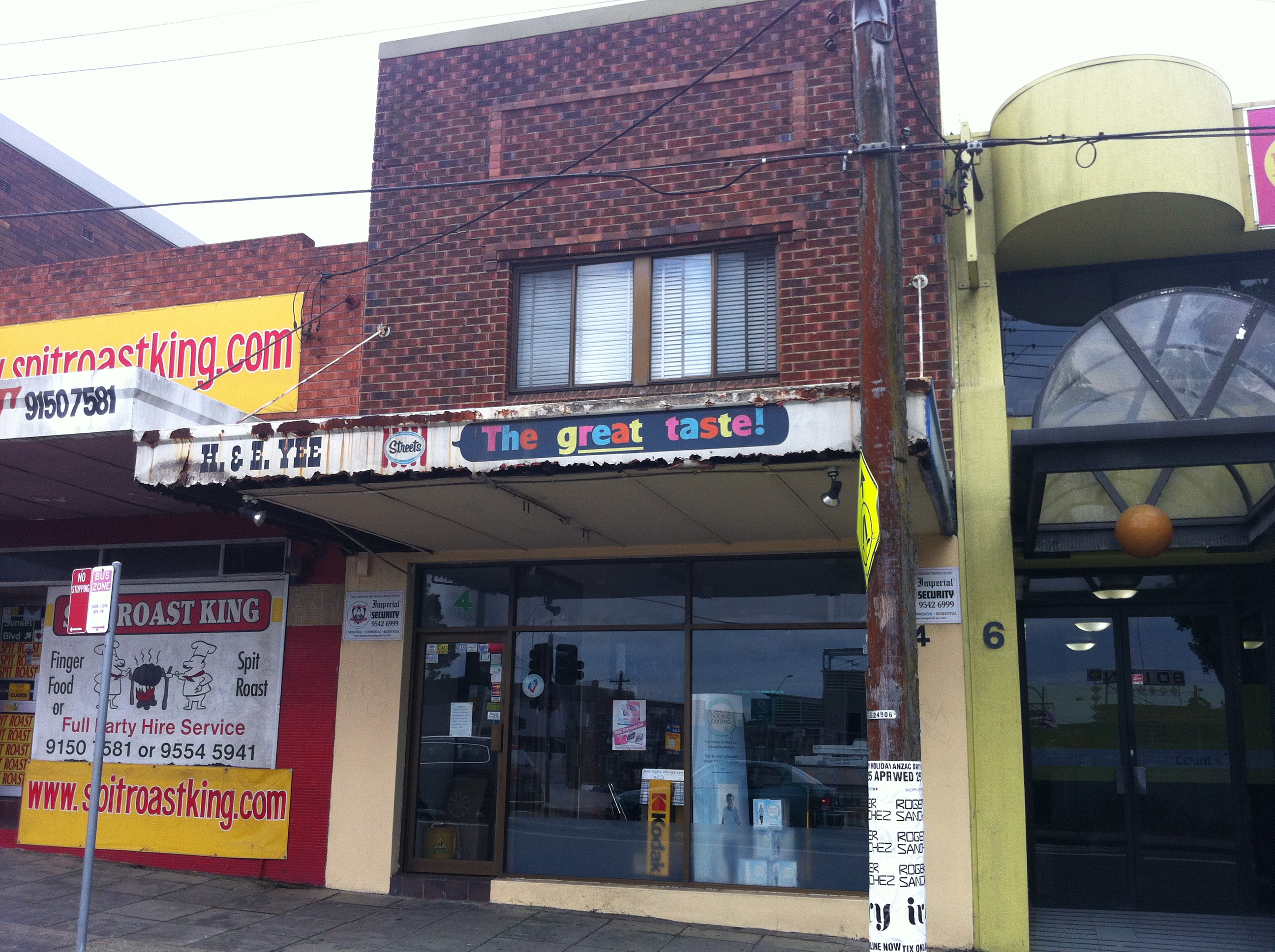
Here’s something bound to make you feel giddy – an old ice cream logo. H. & E. Yee packed it in years ago, and the new tenants, Beverly Hills Pharmacy, lazily stapled their awning sign over the top of the colourful Streets ad:

Image courtesy Google Street View.
We should have a day where we go around tearing down these stuck-on signs, revealing the age-old signs of yesterday perfectly preserved underneath. Stanmore alone would provide this blog with enough material to last into the next century.
Anyway, because everyone in Beverly Hills suddenly and instantaneously became immune to all illnesses, the pharmacy closed. The stuff is still inside, as you can see, but it’s never open. The sour taste…
World 4 Kids/Best & Less and The Reject Shop – Bankstown, NSW

Toys R Us was coming. The American toy giant had lingered on the horizon of the Australian retail scene since 1984, when it had first ventured overseas. Now, in 1993, Toys R Us had made its intentions to establish itself in Australia very clear. In a panic, and desperate to beat Toys R Us to the punch, Coles Myer set up their own chain of toy stores that attempted to outdo the American company in every conceivable way; a ‘category killer’. It wasn’t the first time Coles Myer had employed the tactic: in the same year, it had established Officeworks, basing it on the US stationery chain Office Depot. To give you an idea of just how contrived the whole concept was, here’s a 1993 ad preempting the World 4 Kids launch. If you can look past the kid’s stylish fashion, note the cynical overuse of the dinosaur to ride the success of the year’s biggest film.
I can still remember the hype surrounding World 4 Kids at the time of its launch. It was relentless. The Bankstown Square location was enormous, taking up an entire floor. To a kid, it was mind-blowing. They had video games available to try everywhere around the shop. They had aisles – not just a few shelves, like Grace Bros, but aisles – of action figures. They even had a ‘kids entry gate’ as an alternative to the regular entrance. Sure, it was just an archway over a little bridge, but that was for YOU! You weren’t meant to walk in the normal way like the grown-ups! This wasn’t just some toy department of a bigger shop. There was no threat of being dragged off to look at clothes or other boring stuff. It was ALL TOYS.
The launch of World 4 Kids didn’t stop Toys R Us from opening, and the closest store to the Bankstown World 4 Kids was at Hurstville. As expected, the Toys R Us store blew World 4 Kids away: it was two-storey, they had more of everything, and the name explicitly promised toys, rather than merely alluding to them in the case of World 4 Kids, which sounds like it could easily have been one of those lame play centres with the ball rooms.
1993 was about the start of the last big era for toys. By the end of the 90s, video games had eclipsed toys by a wide margin. Also by the end of the 90s, World 4 Kids was a world about to end. The company had bombed hard in the wake of Toys R Us, haemorrhaging millions of dollars each year it was open. By the end, it was losing $36m a year, and cost Coles Myer more than $200m during its short lifespan. World 4 Kids, supposed to be the successor to K-Mart’s dominance of the toy market prior to 1993, closed in 2002, and the brand name was absorbed back into K-Mart, which adopted it as the name of its toy department.
This particular World 4 Kids took over the floorspace of Venture, itself formerly Waltons Department Store (but more on that another time), so by failing miserably, it was only carrying on the strong tradition established by those two brands. Where the one store once took up the entire floor, a chemist, the Reject Shop and Best & Less have taken up residence. Immediately following World 4 Kids’ departure, a JB Hifi was set up in its place, but in a rare move for JB it was closed a few years later. Even Toys R Us is struggling these days, with the Hurstville location having long since been reduced to just one floor.
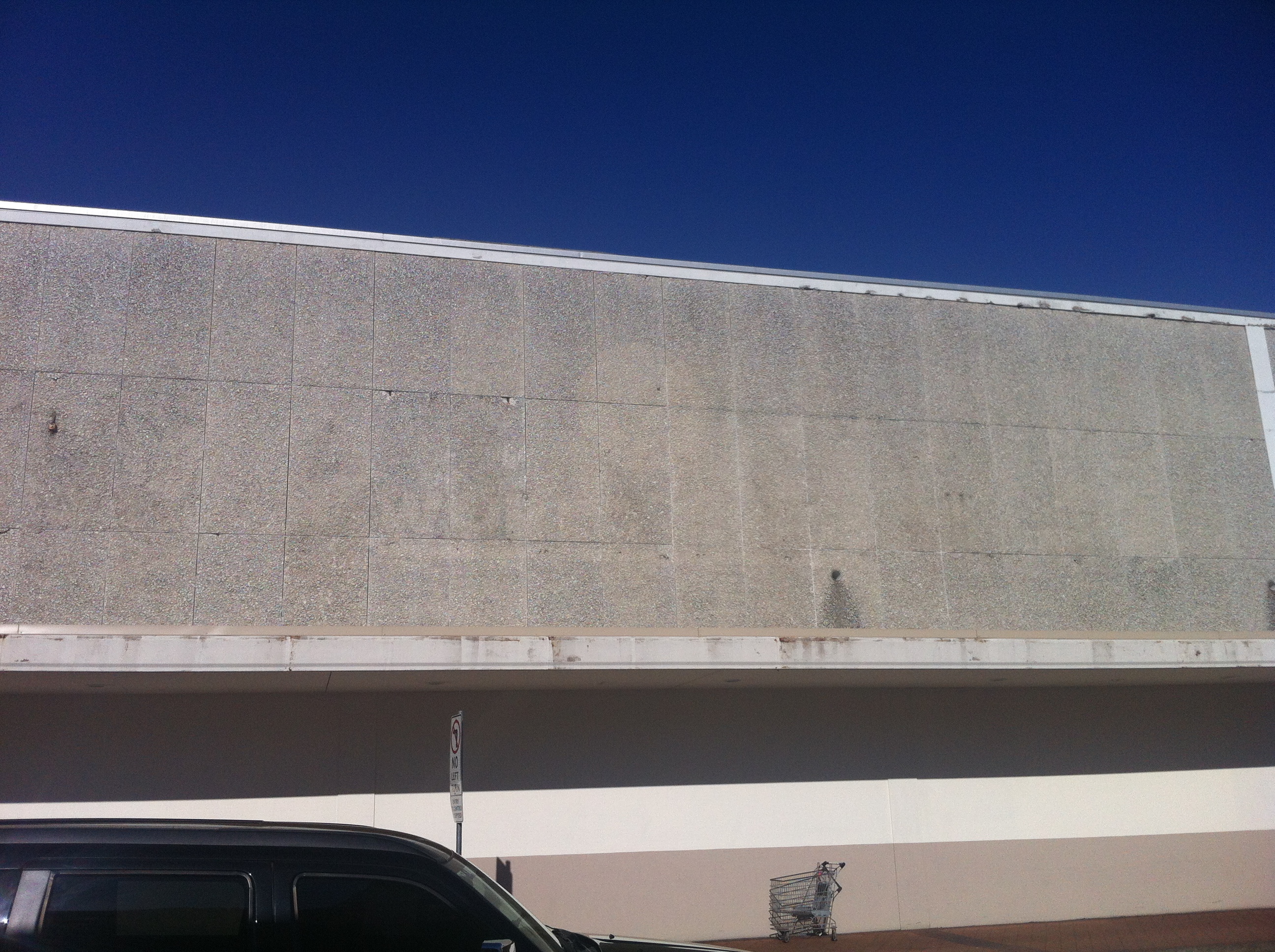
Note the poignant empty trolley.
The only evidence that World 4 Kids, the place that meant the world to so many kids in 1993, was ever a part of Bankstown Square is the faint afterimage of its sign on the outside facade of the building, along the Appian Way. Yesterday’s great hope is now just a stain on the wall. It’s a stark reminder that no matter how personally a store may appeal to you, it’s always business. After all, that’s the way of the World.
Orchard’s Corner/Raben Footwear – Haymarket, NSW

Raben Footwear may seem like it’s been at this Haymarket corner location for a thousand years, but in a time before Doc Martens and skinheads, the site belonged to Richard Beaumont Orchard, a watchmaker, jeweller and politician. Orchard’s original building had been demolished by the city in order to extend Quay Street to George Street, so to compensate he was given this building. Not sure whose idea it was to add the cheesy orchard-themed clock, though.

Orchard was a Sydney personality in the early 20th century; a sailor, an actor, founding Commissioner of the ABC and Federal Member for Nepean (Lib). By all accounts he seems like the kind of guy who’d have the ‘My Family’ stickers on the back of his car. His skills as a sloganeer left much to be desired, however; ‘Orchard’s: where the watches grow’. These days, you can find Orchard at Rookwood Cemetery, where he was buried after his watch stopped for good in 1942.
Christian Science Reading Rooms/Duo – Mosman, NSW
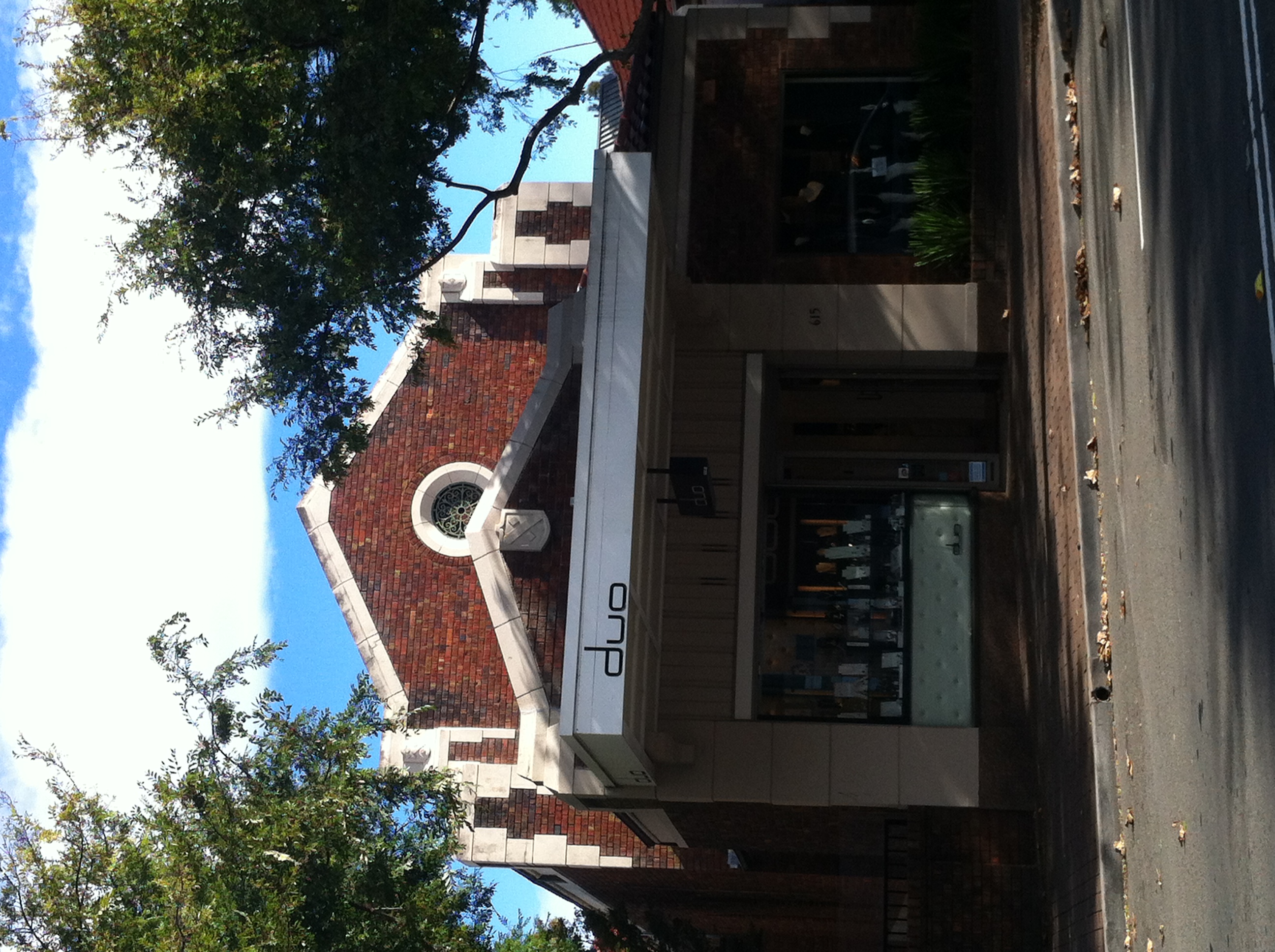
Behold: Sydney’s only consecrated fashion boutique.
William Arnott Ltd/Bakehouse Quarter – Homebush, NSW
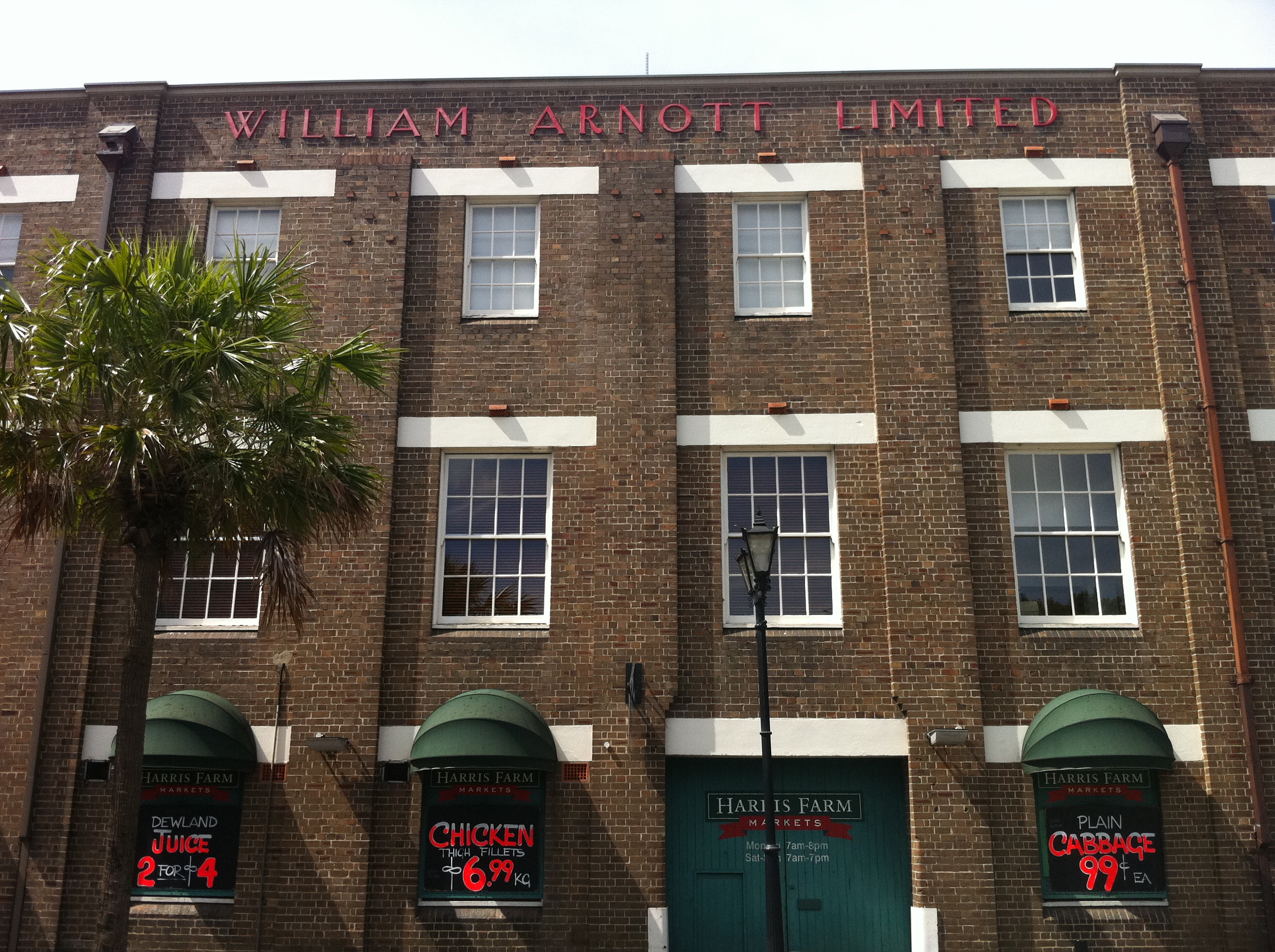
For decades, passers-by of the Arnott’s Biscuit factory at Homebush would experience delicious smells emanating from the place. From 1908 to 1997, this was where the action was for the large variety of Arnott’s products. Since the factory’s relocation to Huntingwood, the site has undergone a remarkable transformation.
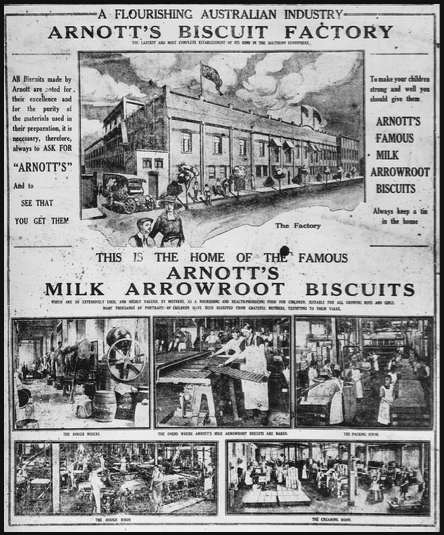
Image courtesy City of Canada Bay Library Service.
The first Arnott’s Biscuits factory opened at Forest Lodge in 1894, but when demand created the need for a larger factory, Homebush was chosen as the best location because of its proximity to the rail system. Company founder William Arnott had made the decision to move the factory closer to Sydney, but died in 1901, before he could see his dream realised. Seen at the time as a mistake on Arnott’s part due to Homebush’s then-long distance from the city, the factory eventually became the largest of its kind in the Southern Hemisphere. In fact, the Arnott’s factory was one of the foundations of economic prosperity in the growing residential suburb of Homebush in those days; there were few families in the suburb that didn’t work for Arnott’s.

Image courtesy City of Canada Bay Library Service.
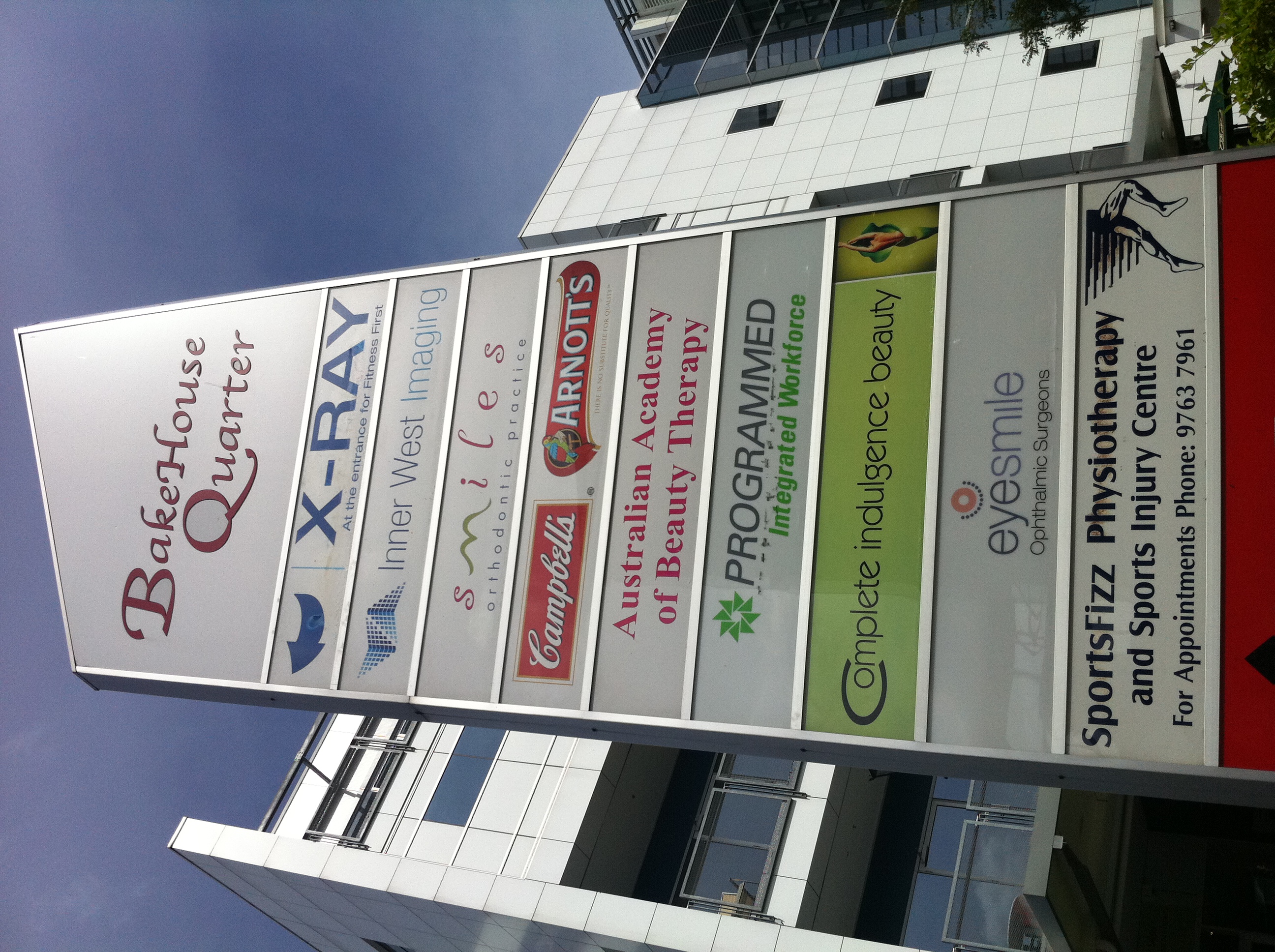
SportsFizz sounds like a drink, doesn’t it?
Arnott’s may have moved on from this location, but their biscuit range is still the most popular in Australia. Scotch Fingers, Milk Arrowroots, Iced Vo-Vos, Tiny Teddies and Sao (I get the feeling that the plural of Sao should still just be Sao, like sheep) are exported all over the world, and all the while the Homebush factory still stands, albeit with a very different purpose.
The Bakehouse Quarter redevelopment started in 1998, taking the Arnott’s factory that was so familiar to locals and converting it into a shopping and leisure precinct akin to Birkenhead Point.

While you can’t spit without hitting a cafe, there’s also the obligatory business sector, which includes the corporate HQ for Arnott’s. No substitute for a good location, I guess. That’s not the extent of the Arnott’s involvement, either: plenty of heritage Arnott’s paraphernalia exists at the site, all part of the old factory. The giant neon Sao sign is the most prominent, but even Arnie (groan), the Arnott’s parrot, gets a look-in.


Cobbled roads and Edwardian-style lighting make up the section of George Street that passes through the vicinity.

A large part of the factory itself has been converted into an AMF bowling alley and laser tag site. It’s not as farfetched as it seems – back in the day, Arnott’s had a bowling green included on the grounds, presumably as a showcase for the Iced Vo-Vo.

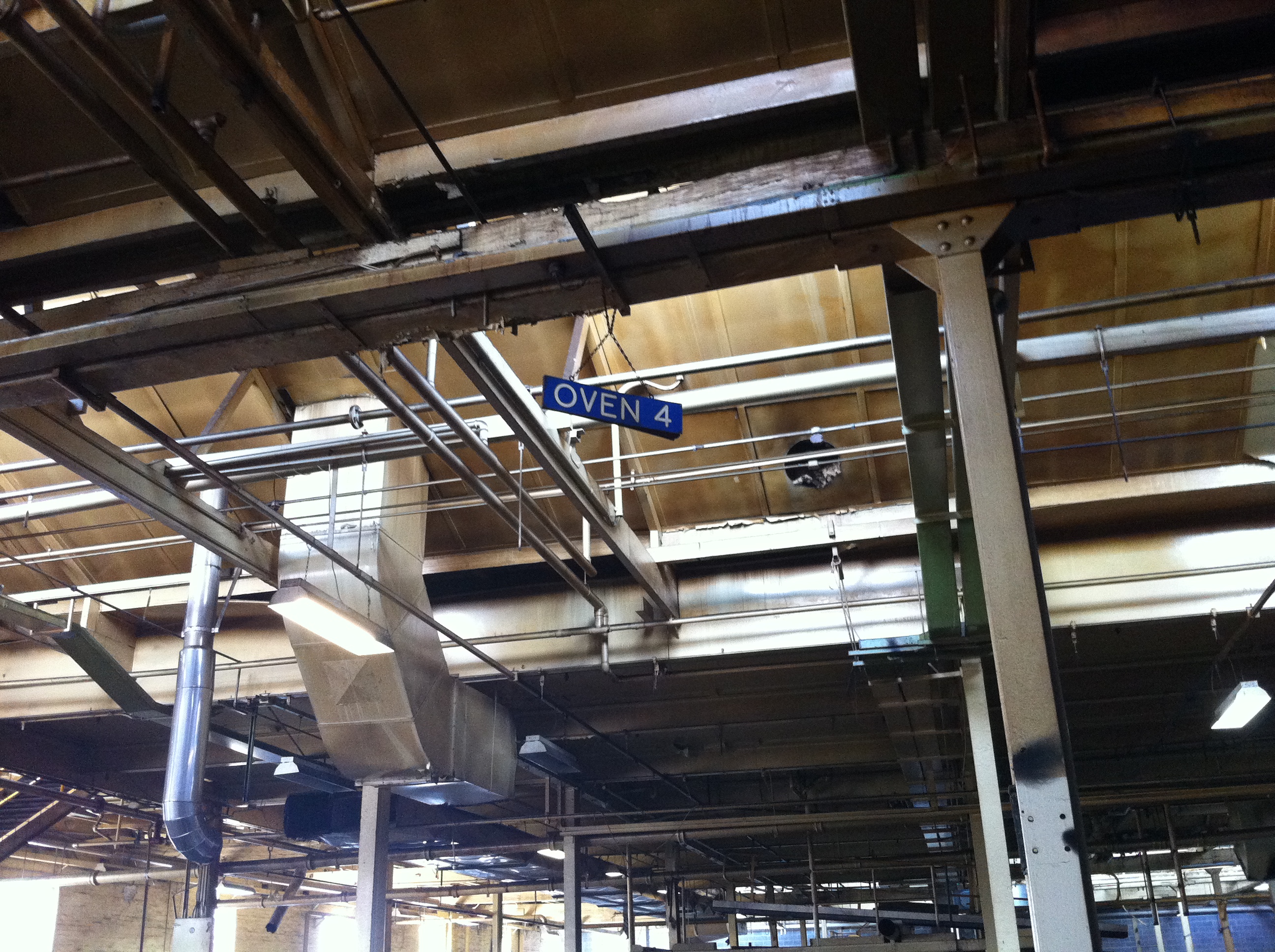
A car park has replaced the former oven area, which is still keen to reveal itself to those on the lookout.

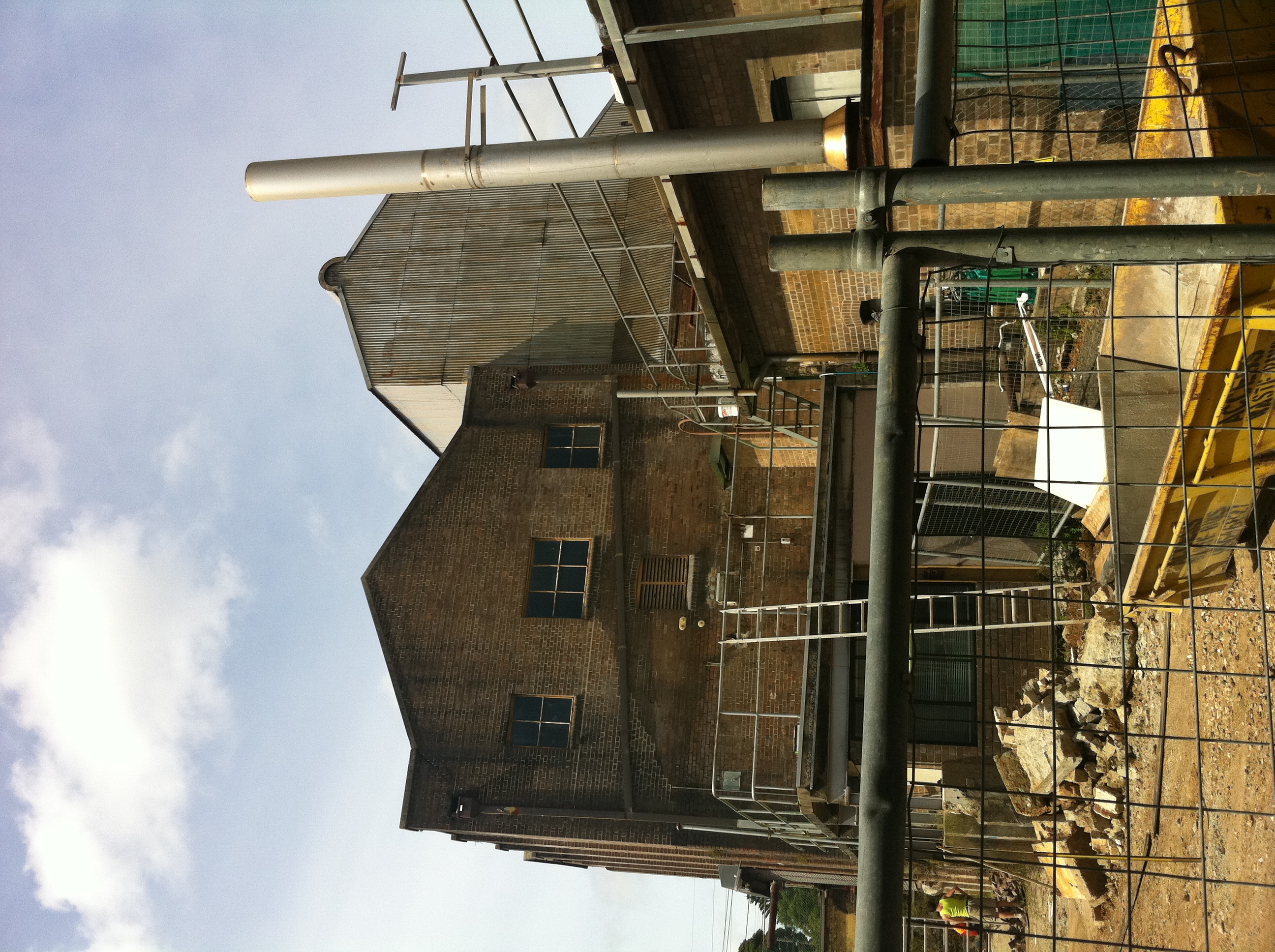
The site’s still growing, and there’s still a lot of work to do. Zumba classes and conversations over meals at the steakhouse are still constantly interrupted by the sound of construction workers striving to turn the more industrial parts of the factory into a heritage paradise.
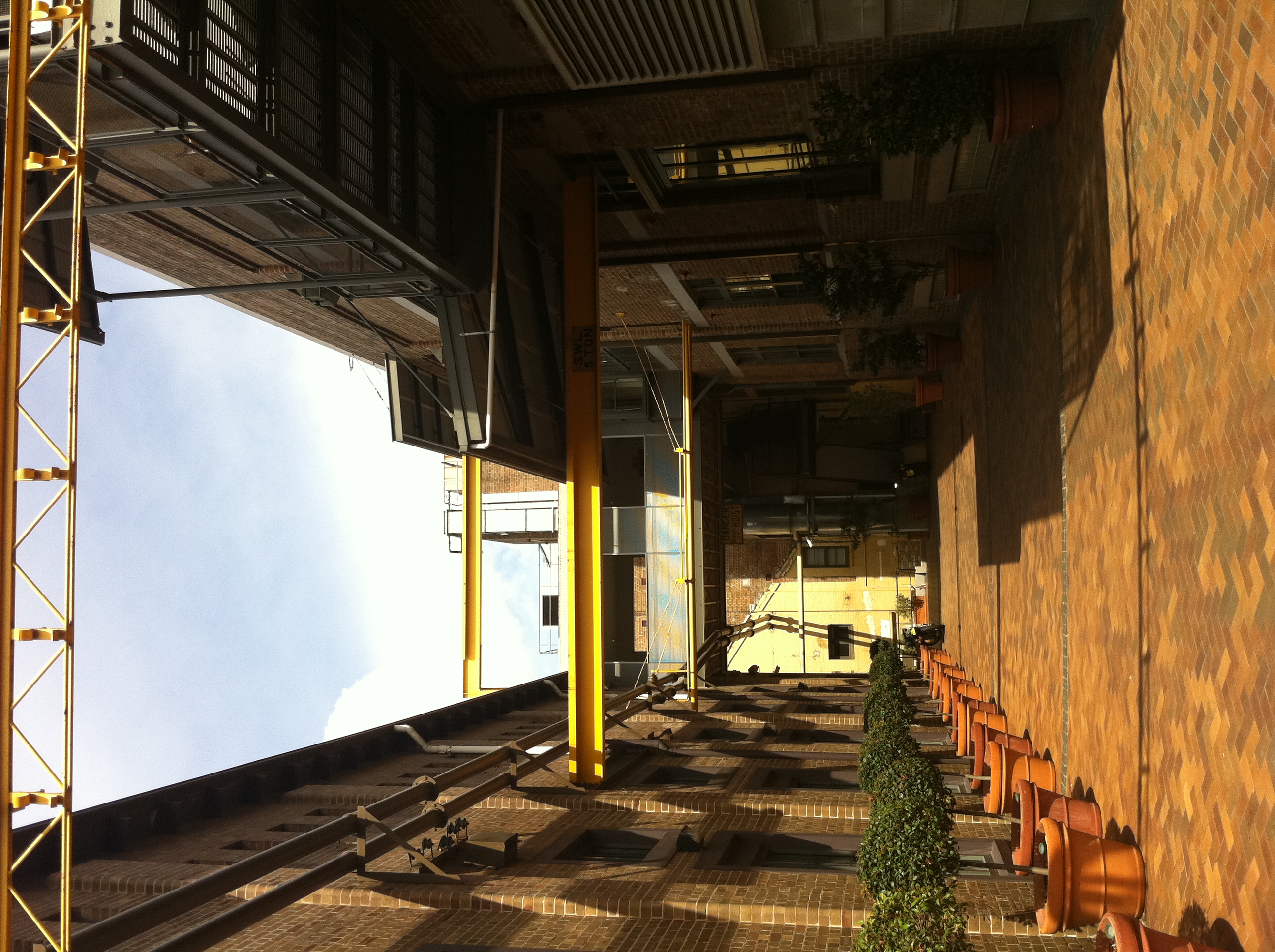
My favourite element untouched from the old days was this, the toilet to nowhere.
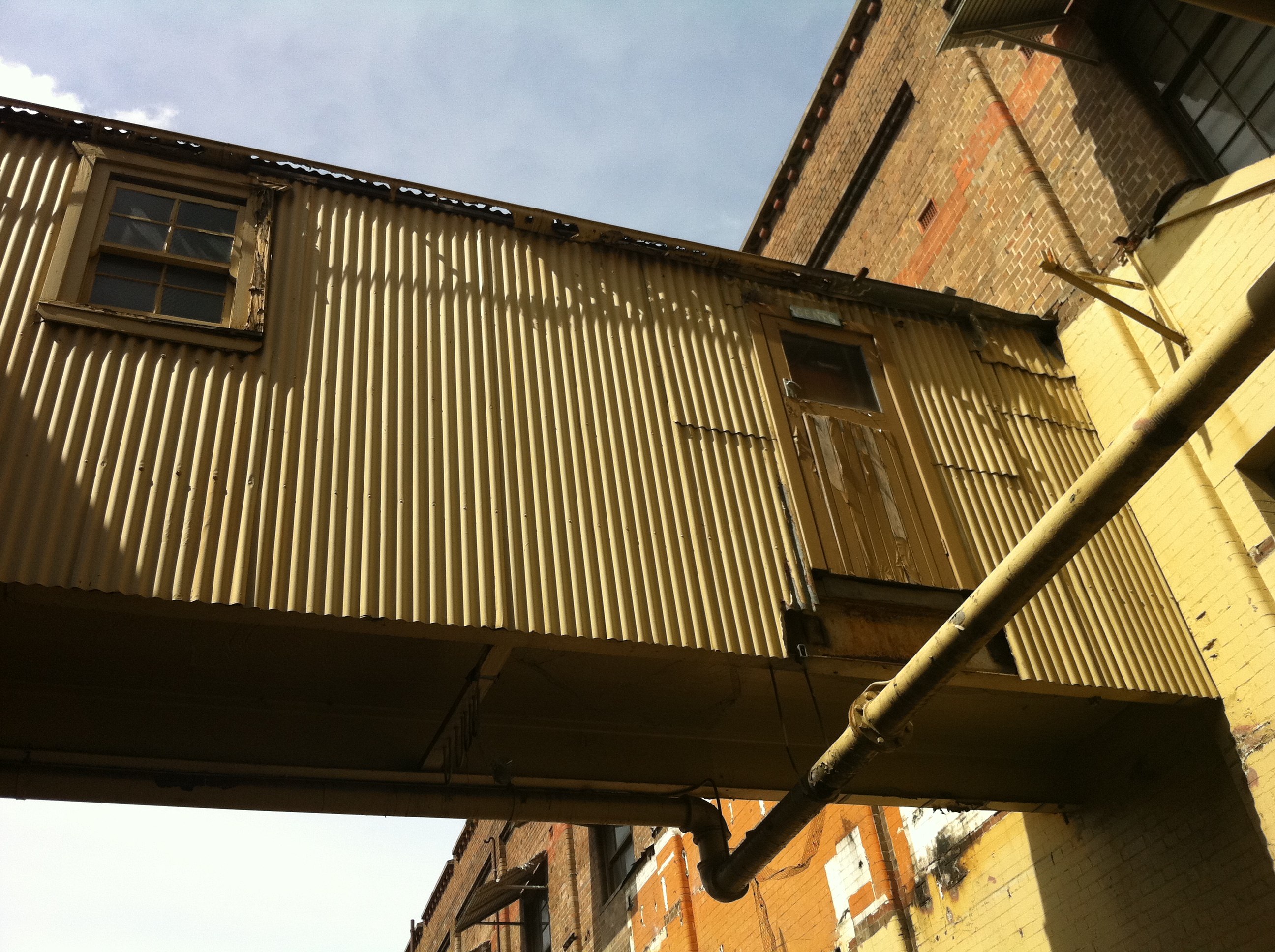
I wouldn’t be surprised if it ended up with a fair portion of residential area set aside within it, but whether that would be incorporated into the extant factory is anyone’s guess. Would it be cool or trendy to live in a former Tim Tam chocolate coating room? Probably.

One of the reasons the site was chosen by Arnott’s in the first place was because of its excellent rail infrastructure. You can still get a good view of the factory by train as you pass by between Strathfield and North Strathfield stations, and this bit of free advertising still passes over the busy Parramatta Road.

Huntingwood should keep a close eye on the Bakehouse Quarter, because when Tiny Teddies eventually grow up to become Standard Teddies, and Scotch Fingers grow to represent the entire hand, Arnott’s are gonna need more room, and that’s precisely when AMF and Zumba are gonna move in, ably proving that there is indeed no substitute for quality.

 Past/Lives of the Near Future