Past/Lives Flashback #8: Sydney Olympic Park – Homebush, NSW
Original article: NSW State Abattoirs/Sydney Olympic Park – Homebush, NSW
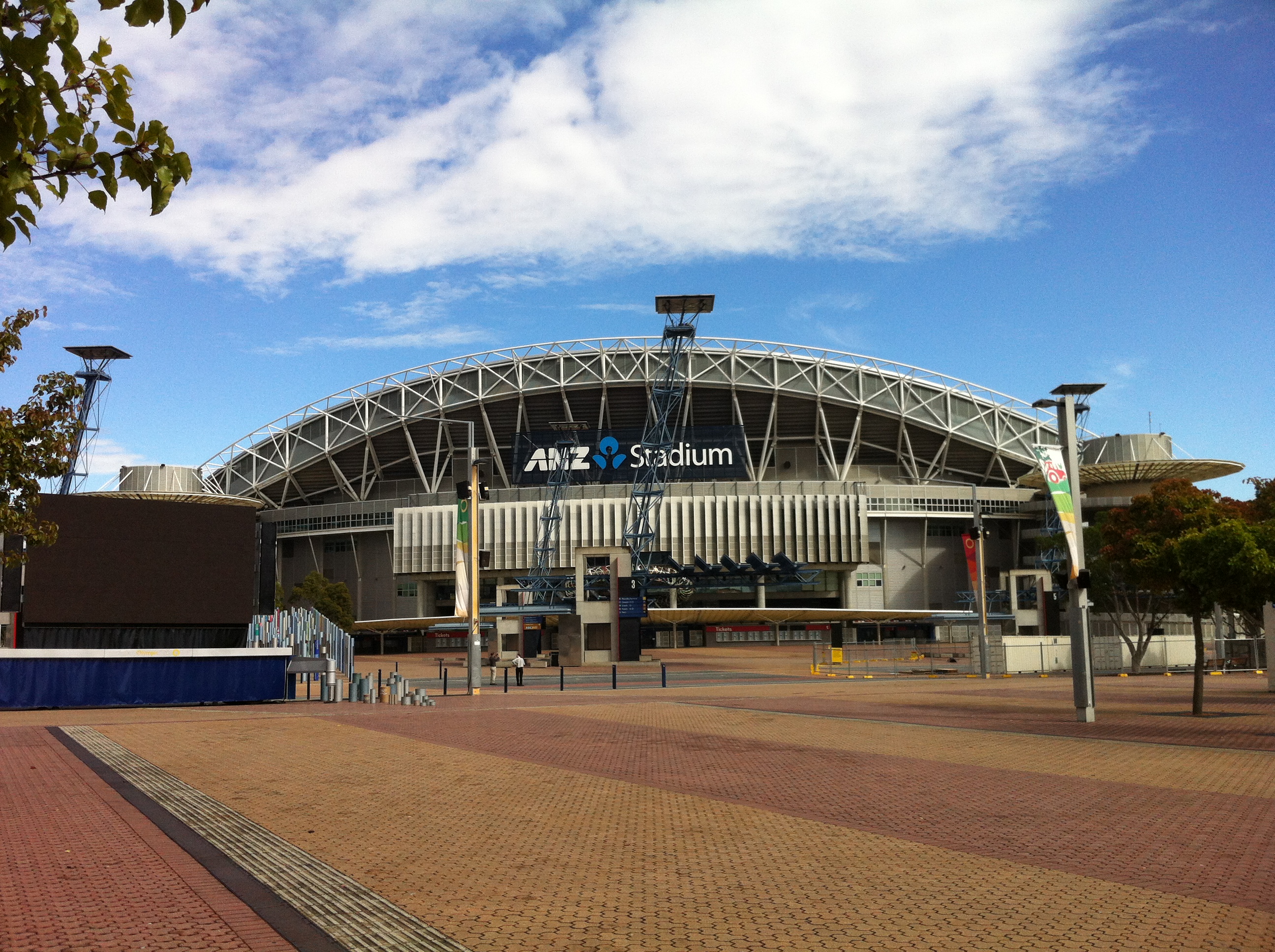 It’s hard to believe it’s been a year since I last visited this place. The blood-soaked history of Sydney Olympic Park is perhaps the most heavily researched article on Past/Lives, yet all that knowledge is quick to fall away when you’re actually standing on site, inhabiting the space where it all went down. The post-Easter Show cleanup only serves to strip back the gaudy decorations designed to distract from the past, leaving today’s visitors with one of two visions: the glorious Olympics, or the violent abattoirs.
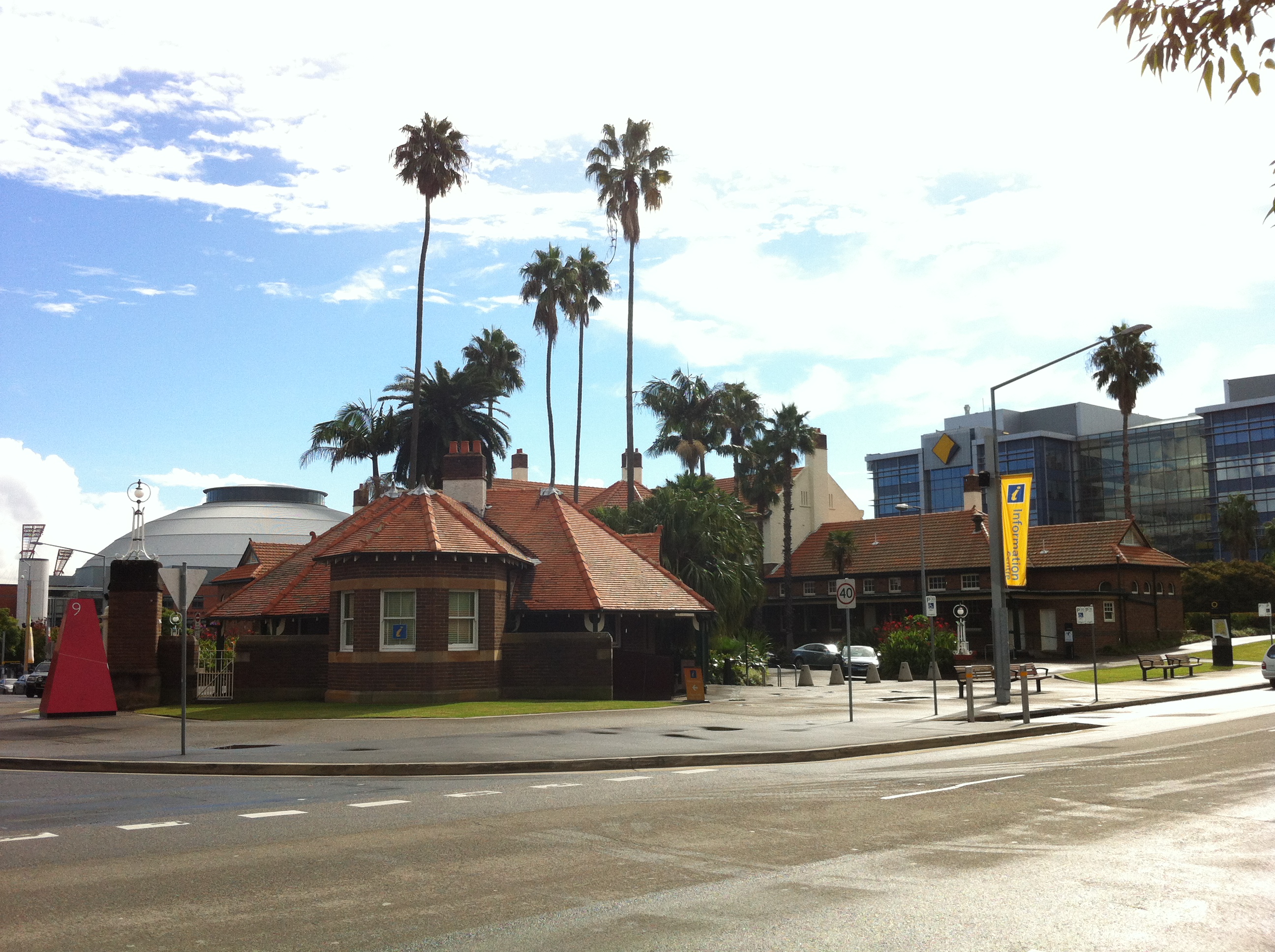
Apart from the hubbub surrounding the Easter Show, change visits the Olympic zone about as often as I do (read: not much). The stadium seems to have settled on ANZ as its name for the time being, just as the arena’s heart still belongs to Allphones. During my refresher course on the ins and outs of the Olympic era of the site’s history, I laughed when I learned the arena’s actual name is the ‘Sydney Super Dome’. For the first time ever, Allphones sounds comparatively low-key.
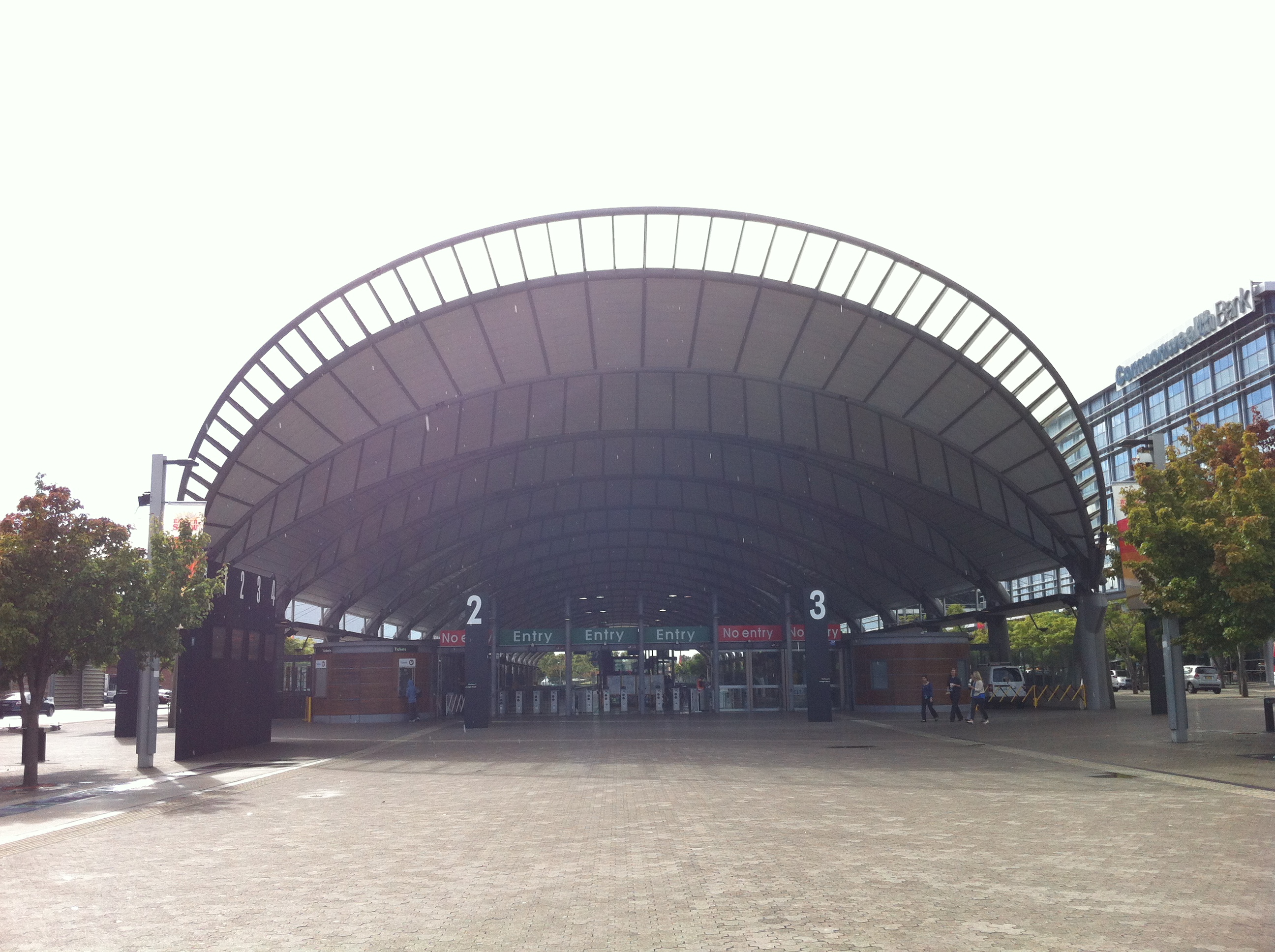
So since change is such a stranger here, it’s going to be more beneficial to take a look at some of the landmarks around the Olympic site that betray its brutal past. We didn’t touch on too many last time, with the Abattoir Heritage Precinct being the natural focus. First up is Olympic Park station, the last stop of the train line which delivers thousands of Easter Show-goers to the park each year…
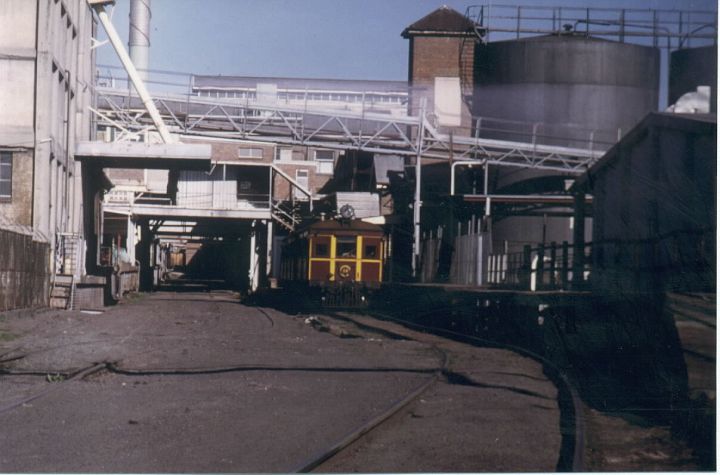
Abattoir platform, 1982. Image courtesy Graeme Skeet/NSWrail.net
…just as it delivered hundreds of thousands of animals to their deaths each year for decades, some as recently as 25 years ago. Granted, it isn’t the exact same station (although if it was, abattoir workers would have enjoyed the most stylish station in Sydney), but its location is approximate to the original. A complete train line (with stations opening from 1915) served the abattoir and the nearby brickworks, with country trains deviating from the existing rail network at Lidcombe and Flemington to deposit country animals to the abattoir. Employees could catch their own trains from a small platform at the end of Pippita Street, Lidcombe.
As the abattoir declined, the need for employees did so as well, and in 1984 the abattoir line was closed, with the facility itself closing in 1988. The entire Homebush Salesyard Loop, on which the Olympic Park line is based, was closed in 1991. In 1996, the Pippita Street station became the last of the abattoir stations to be demolished, and interestingly, the street itself was absorbed into the huge Dairy Farmers site nearby (now, why do you think that’s there?). The brand-spanking-new Olympic Park loop line opened in 1998, with most of the Homebush Salesyard Loop repurposed to be a part of it.
Now, since that was a little…dry, let’s get wet.

The Sydney Olympic Park Aquatic Centre was the first part of Olympic Park to be constructed following the closure of the abattoir, unless you count Bicentennial Park, which opened in 1988. The Aquatic Centre opened in 1994, with the rest of the park completed by 1996. As such, the Aquatic Centre is the ‘middle child’ of the Olympic Park, with a design sensibility halfway between Bicentennial Park and the stadiums that followed. It’s a strange beast, and one made even stranger by my near-absolute certainty that when it first opened, its entrance was in fact this:
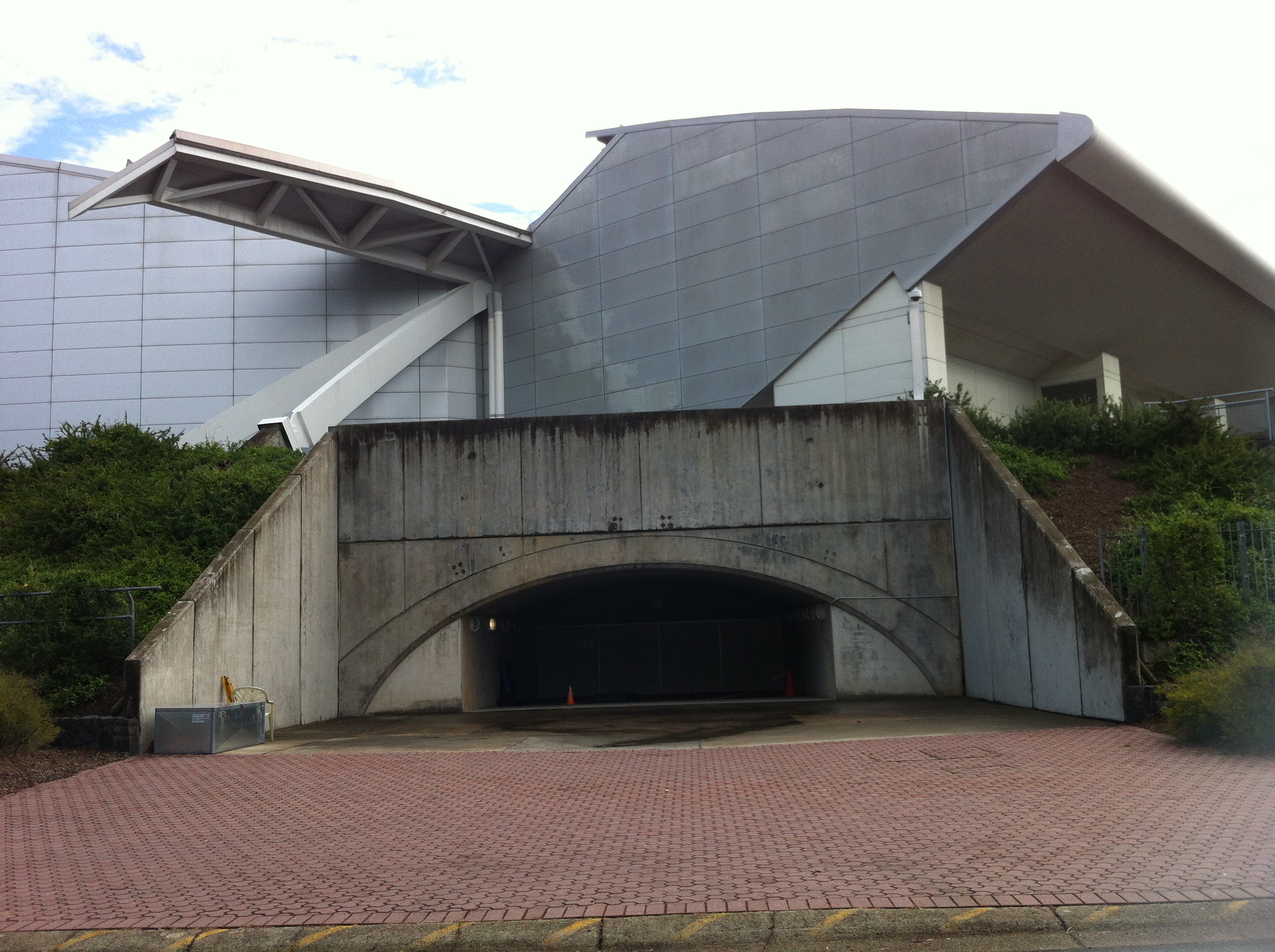 Sometime in 1995, I attended a birthday party at the exciting new Aquatic Centre, which was rumoured on the playground to have a whirlpool and slides. I don’t remember any slides, but I do have a distinct memory of our posse leaving behind a rubber WWF wrestler toy, tossed high up in those bushes on the left in a fit of excitement…while we were hanging around the entrance. Does the Iron Sheik still reside in those bushes today, subsisting on a diet of ants, rainwater and the occasional small bird? Nearly 20 years later, I still wasn’t game enough to climb up and find out. But I did go in for a closer look…
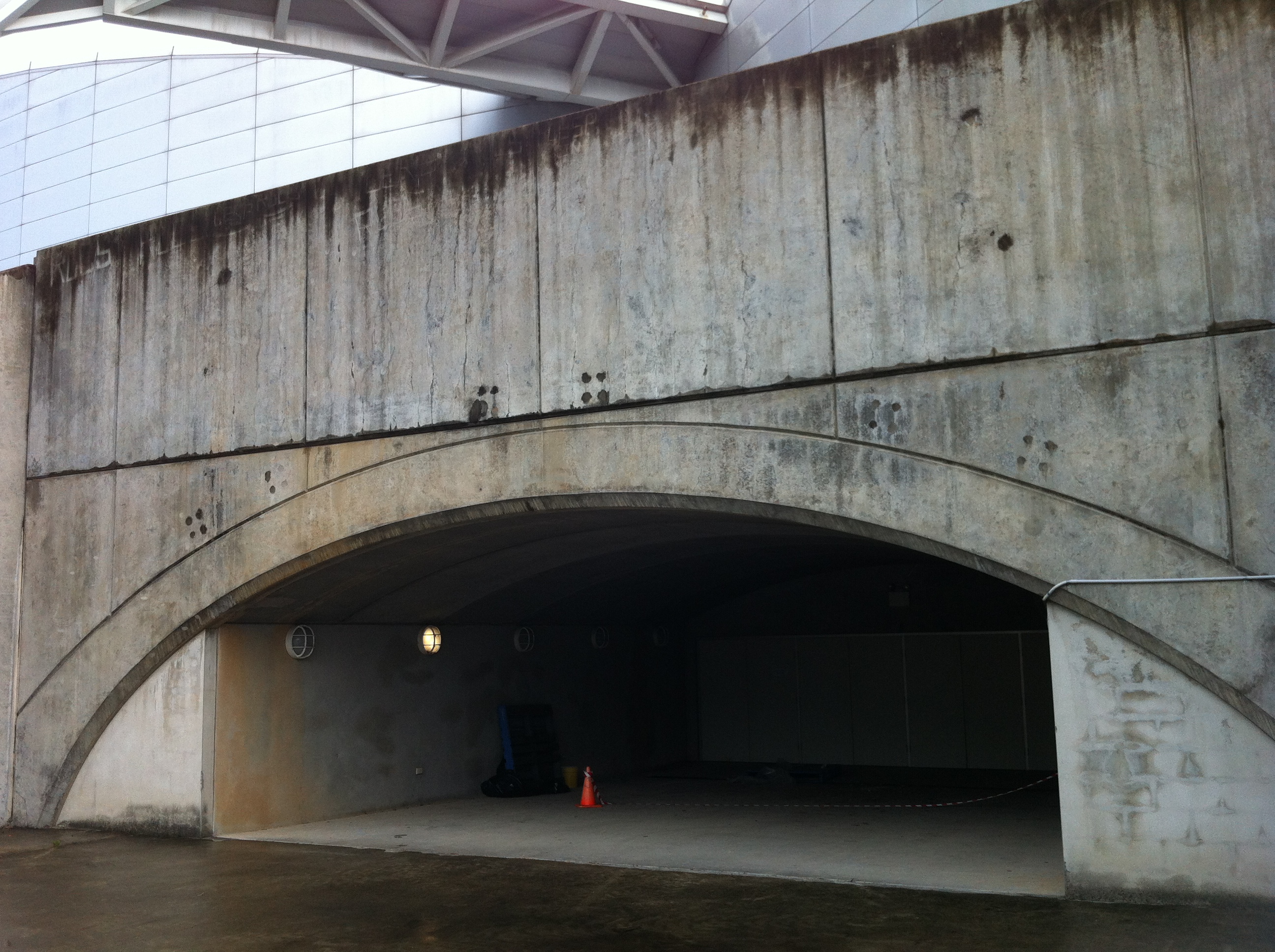
The appearance of those bolt marks, where the original entry sign was probably attached, seems to validate my memory of this being the main entrance. The doors underneath now serve as an emergency exit. If anyone can shed some light on this mystery, drop a line in the comments below. My theory is that when the Aquatic Centre opened, the entrance was here because it faced away from the abattoir site (and at the time, a huge construction site), but when the rest of the park was completed, the entrance was moved around to the opposite end of the facility, a spot which pretty much faces the Abattoir Heritage Precinct (and everything else, in keeping with the Olympic spirit of inclusion and togetherness). Today’s entrance looks a lot more ‘Olympic’ anyway, so it was probably a change for the best. Still…
 Our last stop is just down the road from the Aquatic Centre. Back in the 70s and 80s, Swire (then Woodmasons Cold Storage) would have been one of the places to store the freshly processed animal carcasses on ice before being shipped to the nearby butcheries and markets. For a cold storage facility (and for Dairy Farmers), this was the perfect location…when the abattoir was there. How it’s still able to do business is a stone cold mystery, but I guess that’s why they’re no longer Woodmasons.
See you next time, when we’ll attempt to go for a drive…
Rookwood Necropolis Railway – Lidcombe, NSW
A fact which escapes many people is that Rookwood Necropolis, located in Sydney’s west, is the largest of its kind in the Southern Hemisphere. It’s huge. It has its own postcode. Originally named Haslem’s Creek Cemetery, it opened in 1867 as a replacement for the close-to-capacity Devonshire Street Cemetery, itself a replacement for Sydney’s old burial ground, where Town Hall now stands. For once, they chose a winner – nearly 150 years later and it’s still not full.
A visit to the cemetery makes clear that although much of it is made up of graves from the distant past, it’s still a working cemetery and there are new additions all the time. But back when cars weren’t so commonplace, the easiest way to get a corpse and mourners from point a to point b was by train, and the premier way to do that from 1867 onwards was by rail. Trains would depart from Regent Street’s Mortuary Station and deviate at Lidcombe to the Rookwood line.
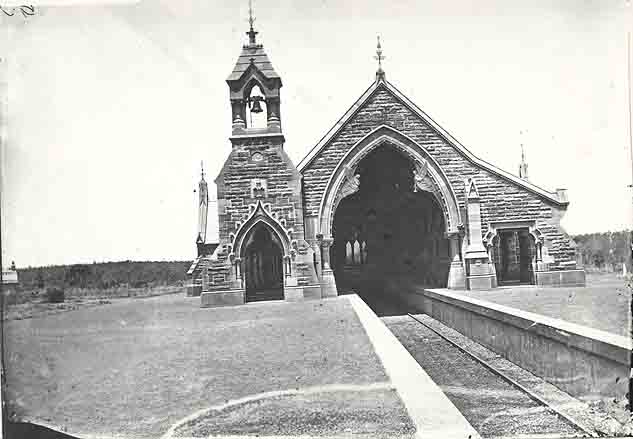
Rookwood’s Mortuary Receiving House No. 1, 1870. Image courtesy State Records NSW.
Once a train entered the Necropolis, there were four stations within the grounds at which to stop (that’s three more than Castle Hill ever had), with the main one romantically named Mortuary Receiving Station No. 1. Once again designed by James Barnet (currently a Rookwood resident), this was the most ornate of the four, and was a sister station to the one on Regent Street. Crafted to be reminiscent of a church, like Regent Street, Rookwood No. 1 featured a bell that would ring out half an hour before departure so as to let mourners know to get back on the train or get left behind. Looking at both this one and the Regent Street station it’s easy to see that they fit in perfectly with the Victorian era’s fascination with death and the afterlife (not to mention trains). It’s powerful imagery – your journey ended with angels holding scrolls and trumpets as you arrived at your final destination. Can’t say that about Epping Station. Once again, the station proved to be as murderous as its twin. That, or these are just some cases of people being in the right place at the wrong time:
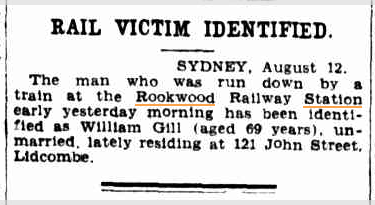
Brisbane Courier, 13 Aug 1932.
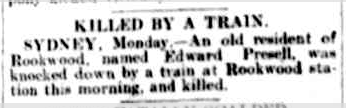
Argus, 27 Feb 1906.
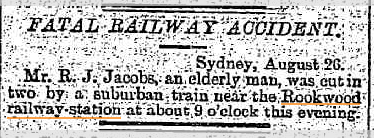
Adelaide Advertiser, 27 Aug 1896.
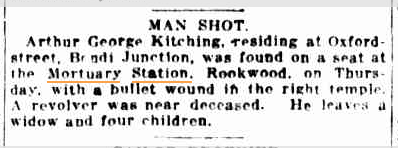
SMH, 20 Nov 1915.
In 1901, the line was expanded to include more stations within Rookwood, but none were constructed with such grandeur as No. 1 (which incidentally wasn’t as grand after the expansion, as part of its waiting rooms had to be removed to make way for the through line). No. 2 featured just a timber shelter:
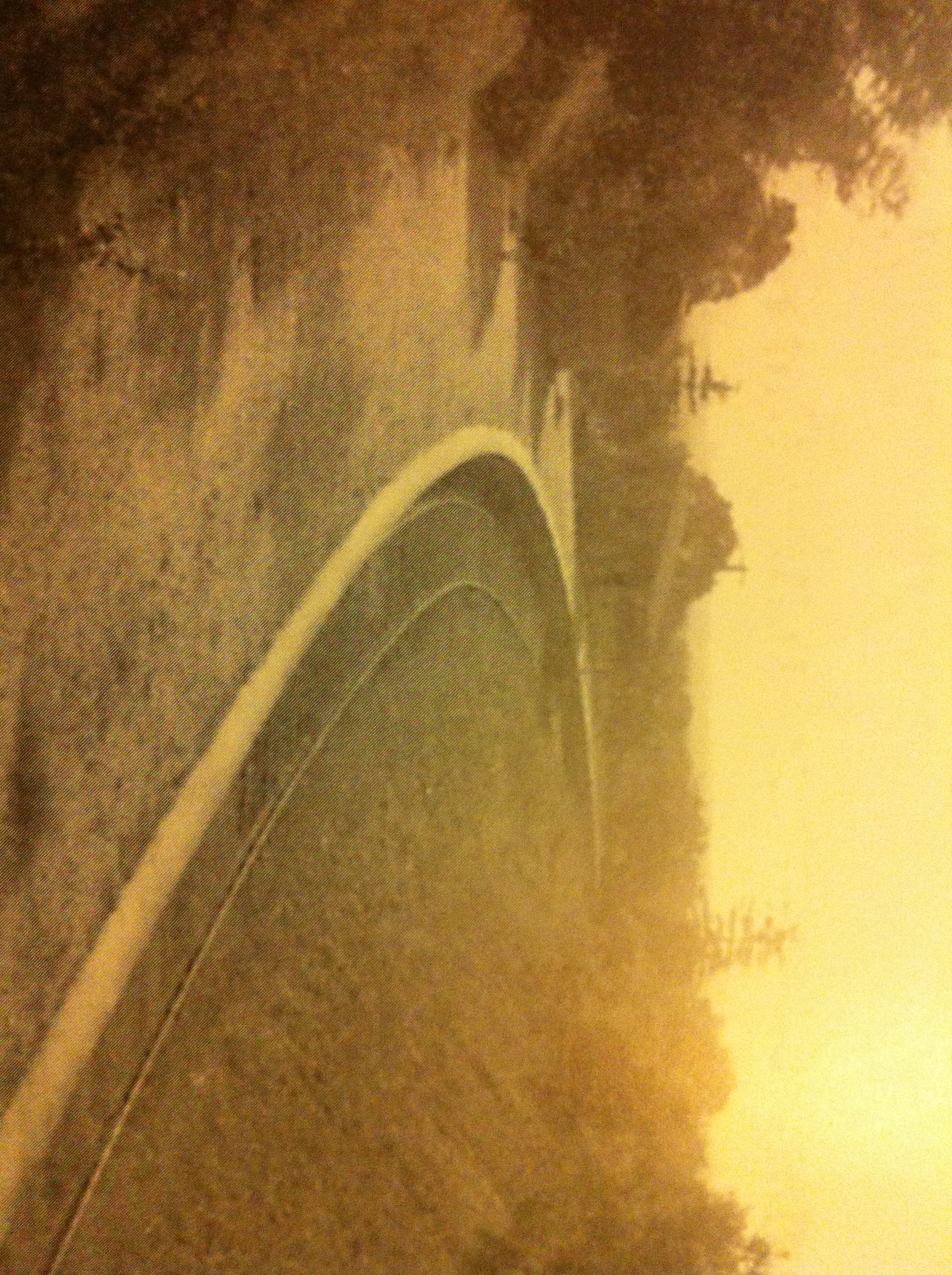
Rookwood’s Mortuary No. 2 Station, 1948. Image courtesy I. K. Winney/John Oakes.
No. 3 was the only other station in the line to have had any kind of thought put into its design, and that’s partly because it was built from the former waiting rooms of No. 1.
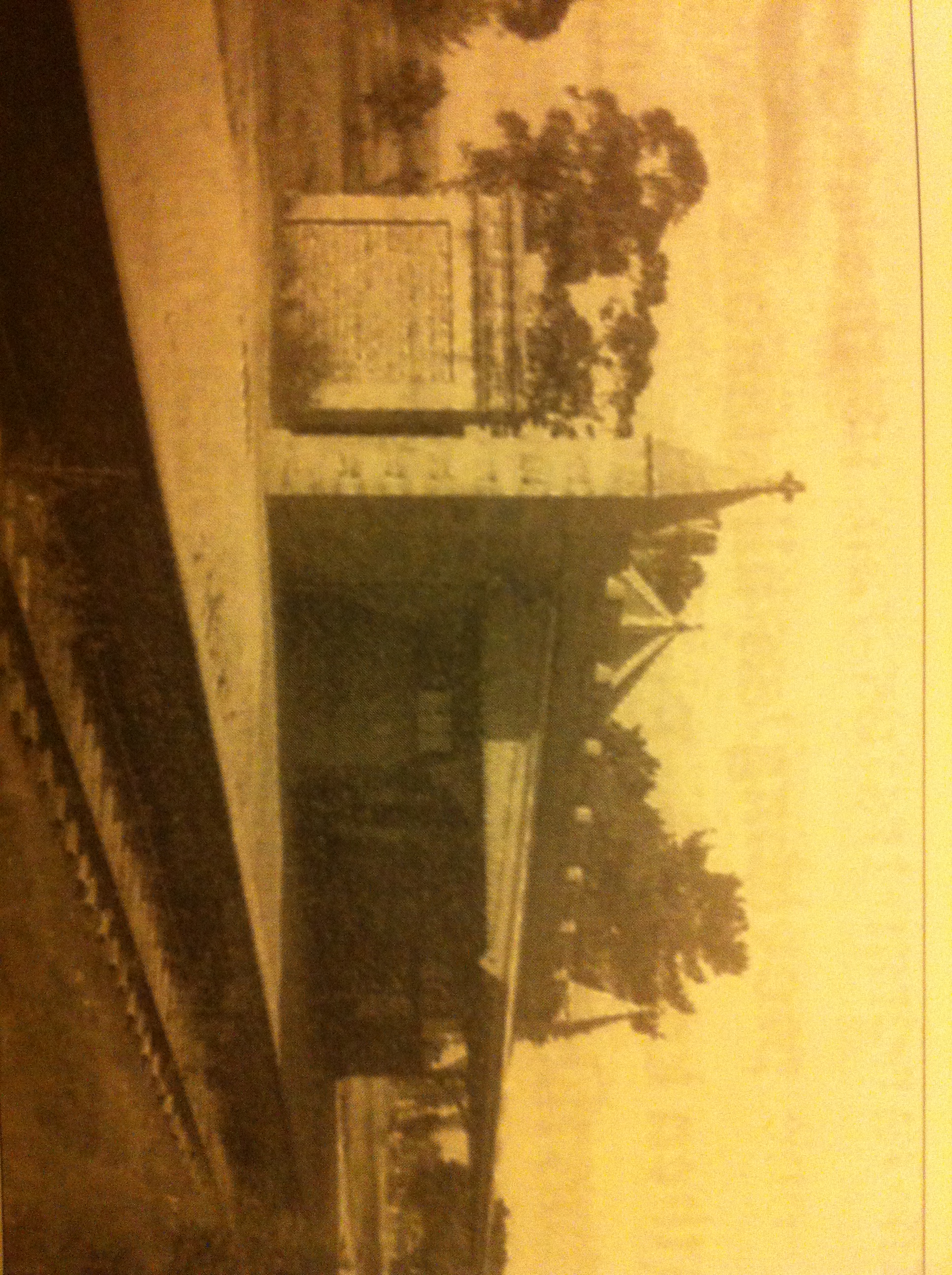
Rookwood’s Mortuary No. 3 Station, 1948. Image courtesy I. K. Winney/John Oakes.
No. 4 was added in 1908, when the line was at its peak (particularly on Mothers’ Day). Again there’s no disguising it’s really just a shack along the platform.
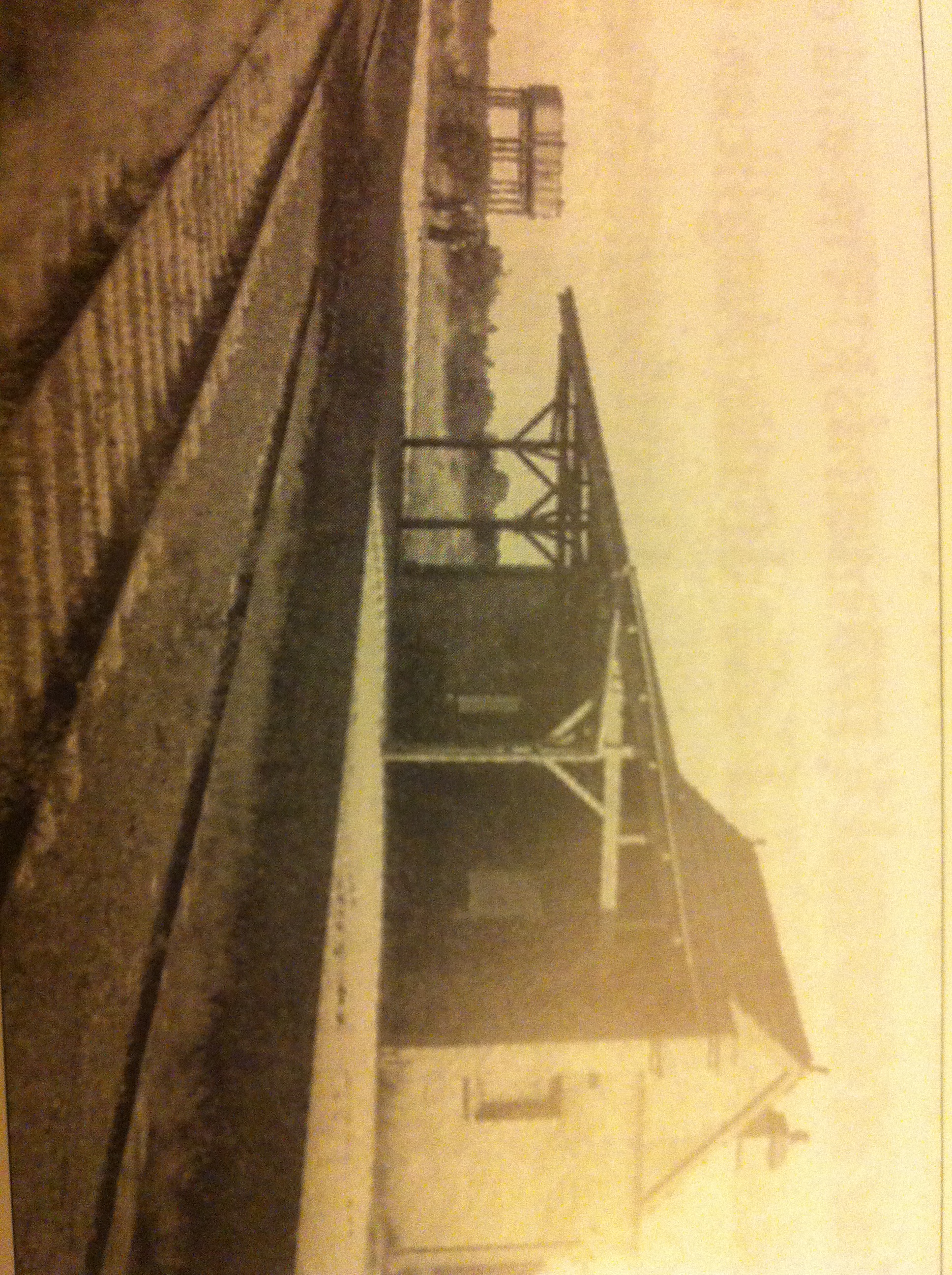
Rookwood’s Mortuary No. 4 Station, 1948. Image courtesy I. K. Winney/John Oakes.
As with Regent Street, as cars became the preferred way to get to and from (or in some cases, just to) a Rookwood funeral, the train line’s usefulness declined. It’s not like residents could catch the trains to and from work. In 1948, the line was decommissioned, and in typical CityRail style wasn’t completely removed until 1965 (even now, a Cemetery siding still exists off Lidcombe Station. Nice work, fellas). The stations themselves then passed on to their next life, some more interesting than others.
The site of No. 4 has since become a bus stop. Buses replaced trains as the public transport of choice to Rookwood after 1948. I’m assuming corpses still ride for free. Neither No. 4 or No. 2, the lesser stations, appear on the current Rookwood map. It’s almost like they don’t want you to know where they were, but the truth is that there’s not much at either site, so there’s almost no point in going there. No. 2, the least impressive of any of the stations, is today just a large green curve of grassy land bordered by tombstones – not exactly a standout spot at Rookwood.
No. 3, however, is a different story. Because it actually featured a building that would require things like foundations, the site is marked on the map, and today exists outside the Catholic Cemetery Trust office and carpark. It’s fascinating:
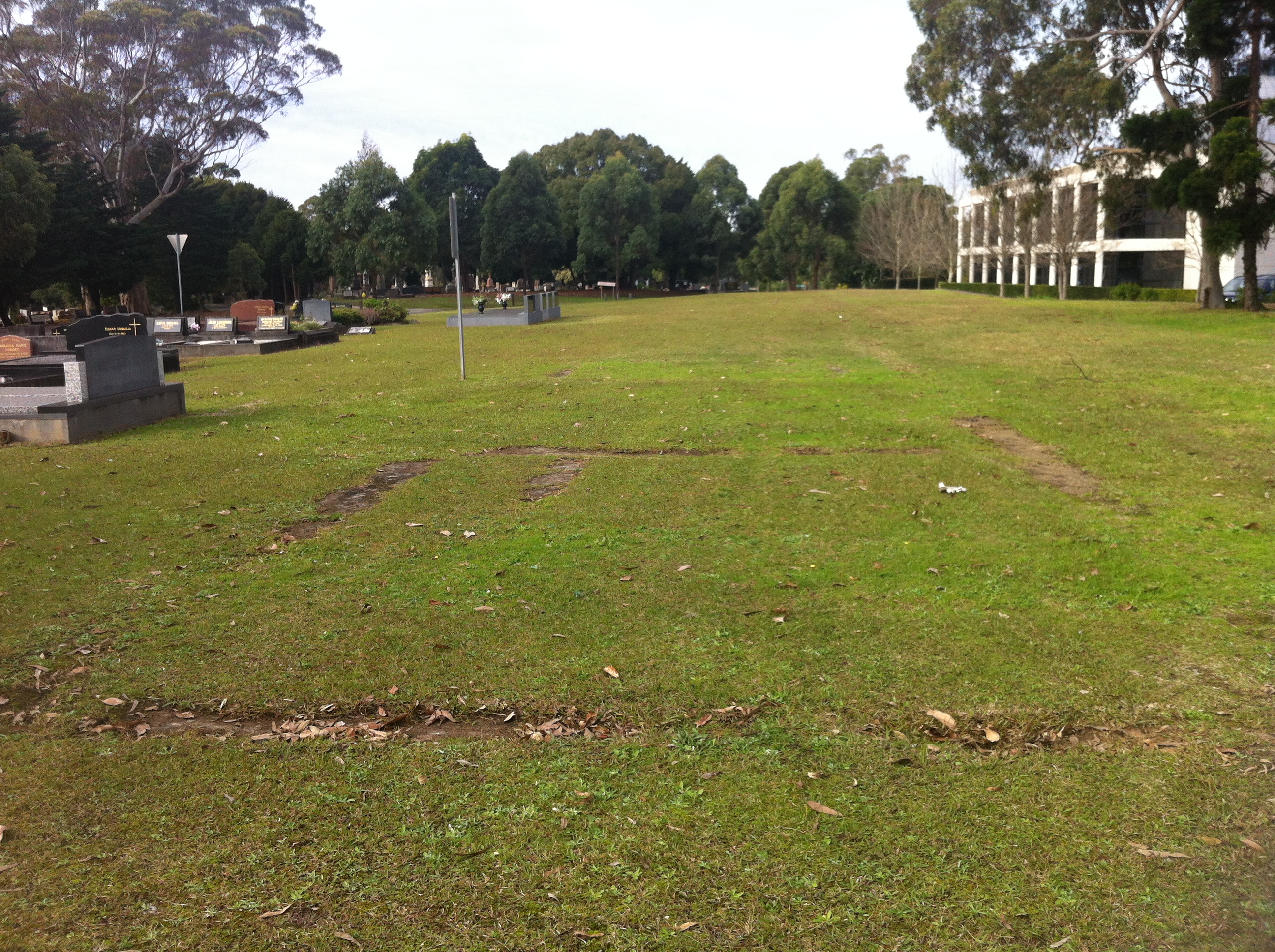
No. 3 Station, 2012.
There’s no sign or anything apart from the hint on the map to let you know what this is. It’s so nothing that you almost wonder why they bothered leaving it there, but there it is.
No, the real story behind the Rookwood stations is the fate of Receiving House No. 1.
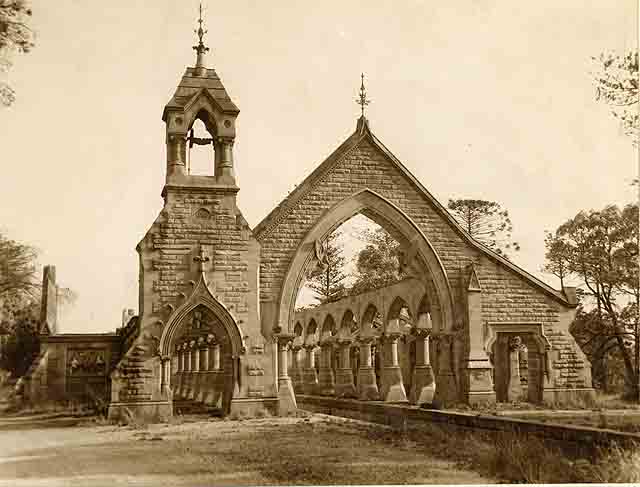
Rookwood’s Mortuary Station No. 1, 1952. Image courtesy State Records NSW.
After 1948 it fell into dereliction. A bushfire destroyed all the woodwork, it became a popular place to drink at night (why?!) and, indignity of indignities, someone pinched the bell. Now let me stop this right there; someone stole the heavy bell? Who does that? How do they do it? Did they plan it? Case the bell for a few weeks before realising that the residents couldn’t do anything about it even if they tried? Did they back up the ute and load it up? Where is it today? Baffling.
The Railway Department needed to offload this bomb, and in 1952 it went on the market. It’s a strange decision; if RailCorp suddenly decided to close, say, Croydon Station, would it appear on the market not long after? Or maybe on eBay, with the Rookwood bell? Presumably because no one had internet back then, the station still hadn’t sold by 1959, when a Reverend Ted Buckle had a brilliant notion.
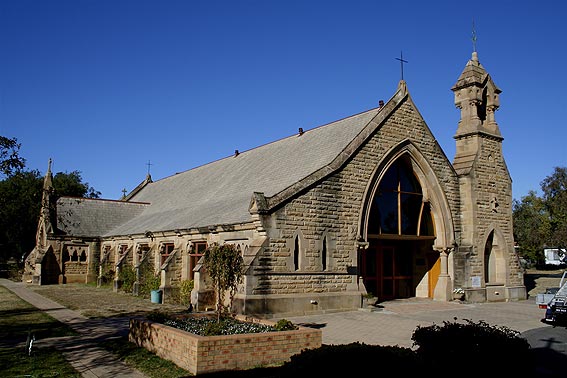
All Saints Anglican Church, Ainslie, Canberra.
The station was bought by the All Saints Anglican Church in Ainslie, Canberra, to be its new building. It was demolished and reconstructed brick for brick…well, almost. Notice anything different? First off, they had to get a new bell, but second, the bell tower’s on the opposite side. Did they just forget where it had been in the first place? Didn’t the bricks not match up? Anyway, churchgoers in Ainslie still attend Mortuary Receiving House No. 1 each week, mostly unaware of the building’s history (despite the fact that it’s discussed in detail on the Church’s website).
Meanwhile, back at Rookwood, a monument has been built to commemorate No. 1 and the Necropolis’ rail history in general.
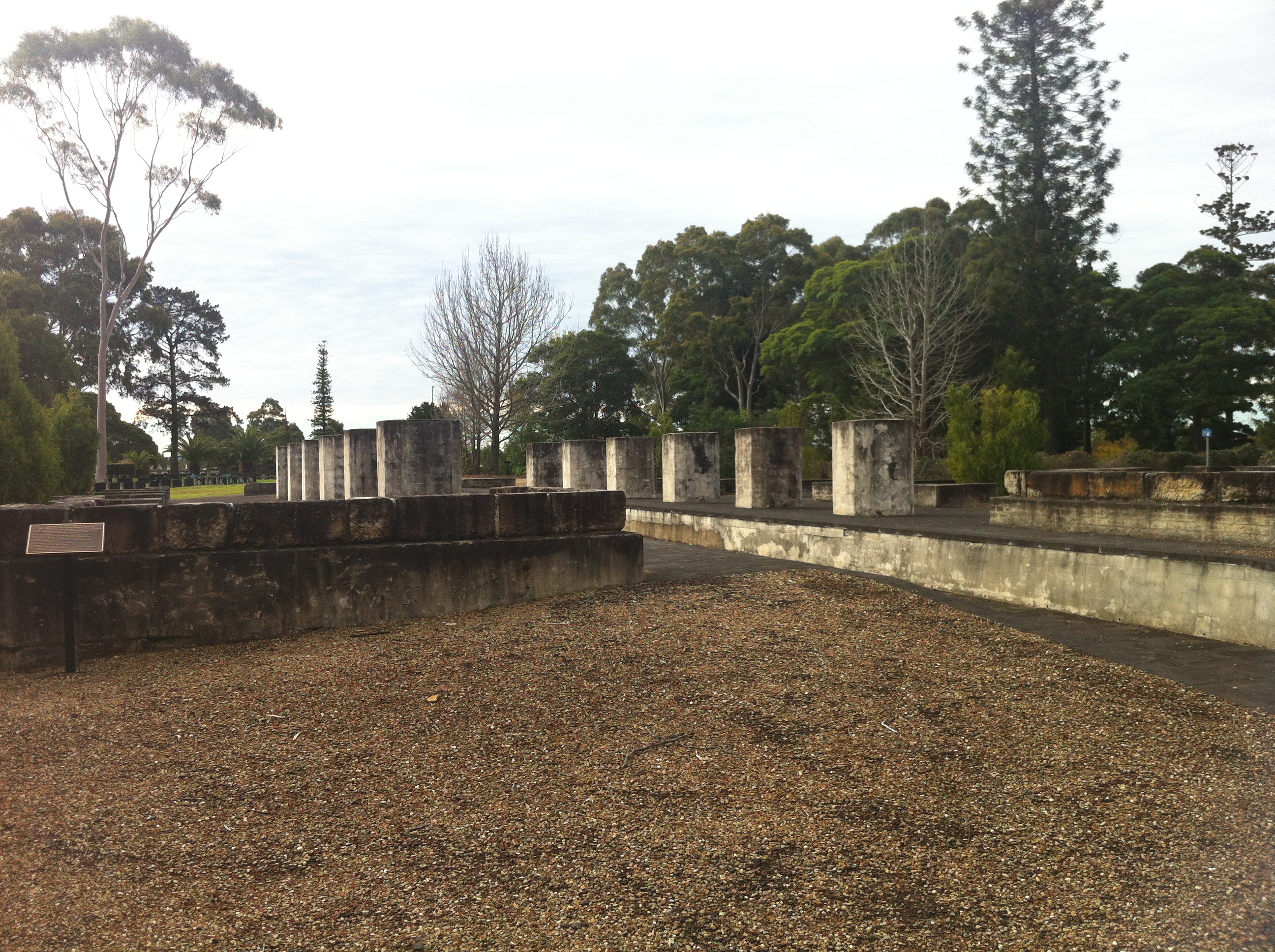
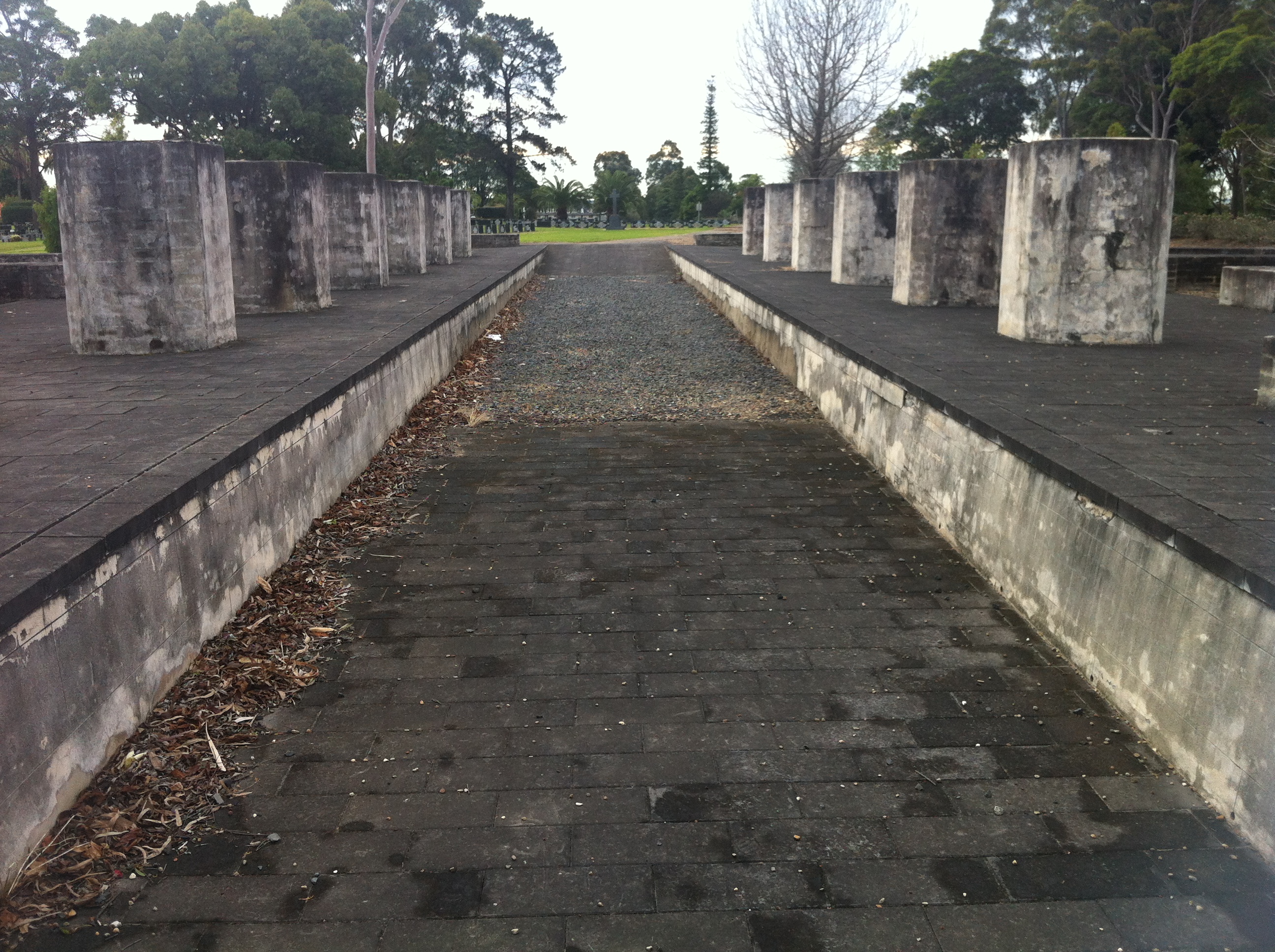
It looks nice, and it’s very subdued. It doesn’t look out of place in the gloomy surrounds of Rookwood, and residents no longer need to worry about the noise pollution of the trains. Happy endings all around…especially for that sicko who’s out there somewhere, gleefully ringing his ill-gotten bell over and over, laughing maniacally.
Mortuary Station/Regent Street Station – Chippendale, NSW
Picture this: it’s 1869, and you’re dead. The funeral’s at Rookwood Cemetery at 10am, and you’re in Chippendale. It’s 9:30am. You have no money. What to do? How will you get there in time?

Mortuary Station, 1871. Image courtesy State Library NSW.
At the time of its construction, the Mortuary Station was adjacent to the original Central Station, then known as Sydney Station. Despite a misleading mural beside the station on the train track side attributing its design to Florence Mary Taylor, Australia’s first female engineer and architect born ten years after its completion, it was in fact designed by colonial architect James Barnet. Barnet also designed Mortuary’s sister station at Rookwood, but more on that next time.

The sombre design is perfectly suited to the task performed by the station, and the gothic detail is fantastic. Standing before it, you can only imagine how many mourners boarded trains bound for their loved ones’ final stop. Funeral trains would depart from Mortuary Station each day for either Rookwood, Woronora or Sandgate cemeteries. By 1927 the cost of a ride was around four shillings (roughly 40c); corpses traveled for free.

Mortuary Station, 1871. Image courtesy State Library NSW.
And didn’t the station live up to its name! Beneath the gloomy facade was an insatiable bloodlust:

Singleton Argus, 10 Mar 1925.

Barrier Miner, 13 May 1930.
Sometimes, trains didn’t even have to be involved in the carnage:

SMH, 24 Feb 1903.
Spooky. Gotta wonder if these guys ended up on one of the trains at the station. Speaking of spooky, it is alleged that the station is haunted. Further rumours suggest that a building across the road once operated as a mortuary itself, and that there exists a tunnel beneath the road connecting this building to the station. Evidence is pretty much non-existent, but if you know more, let Past/Lives know.

Mortuary Station, Newtown, 1965. Image courtesy sydneyarchives.info.
In 1875, at the height of Mortuary-mania, a junior version of the Mortuary Station was set up at Newtown to provide a starting point for mourners unable to reach the city. It was in keeping with the design of the original, but didn’t have the staying power. It was demolished in 1965.

Eventually, Sydney’s roads got to a standard that corpses could be taken to the cemeteries by car. If the roads then were anything like they are now, I’m presuming most of the deaths were caused by starvation or perhaps boredom from being stuck in traffic for so long. There became less and less of a need for funeral trains, despite complaints like these in 1925:

SMH, 3 Dec 1925.
Overcrowded trains aren’t just a modern problem. Anyway, in 1938 the Mortuary Station closed and the cemetery services departed from Central instead until they themselves ceased operation ten years later. Not long after its closure, the Mortuary Station was renamed Regent Street Station and used for dog trains, which took dogs to races in Wollongong and Gosford. I’d like to think corpses could still travel for free.

Since 1981 the station has been restored a number of times. In 1986, it became the site of a pancake restaurant: Magic Mortuary. Four train cars were stationed beside the platform, and hosted meals, live shows and a gift shop. Thankfully, this grotesque display only lasted three years. It’s currently undergoing further refurbishment since those graffiti scallywags are always tagging it, but an optimistic sign out the front expects refurbishment to be completed by the end of 2011! Hope so!
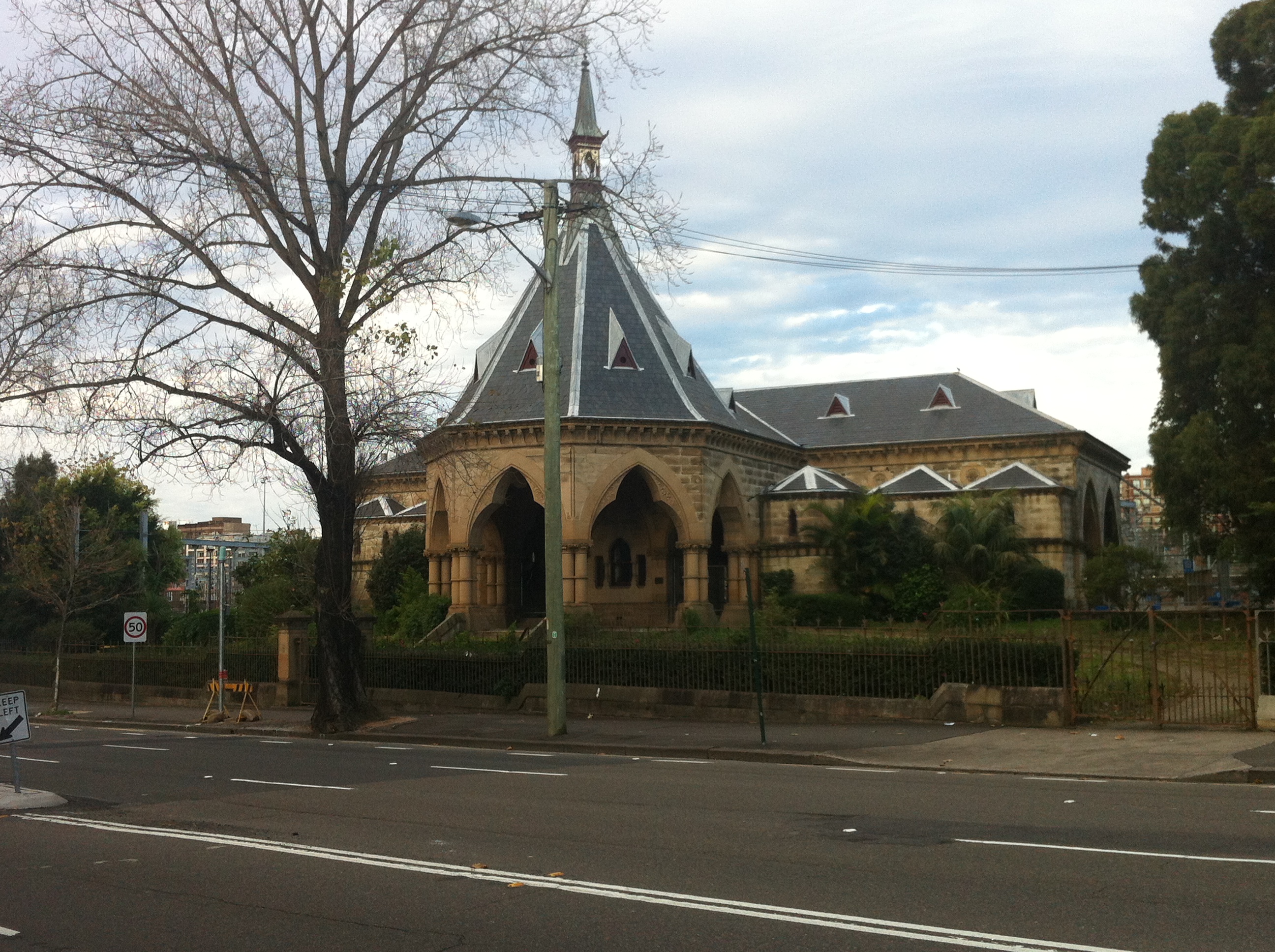
The Mortuary Station’s a strange, jarring sight along the changing face of Regent Street – across the road lie the remains of the Kent Brewery and the empty shells of the pubs that used to surround it. It’s heritage listed, but so was the Sharpie’s Golf House sign. Nothing lasts forever, and it’s only a matter of time until the station itself goes for that last ride.
Next stop, Rookwood…
Update: One year later, let’s take a closer look at that mural…
William Arnott Ltd/Bakehouse Quarter – Homebush, NSW
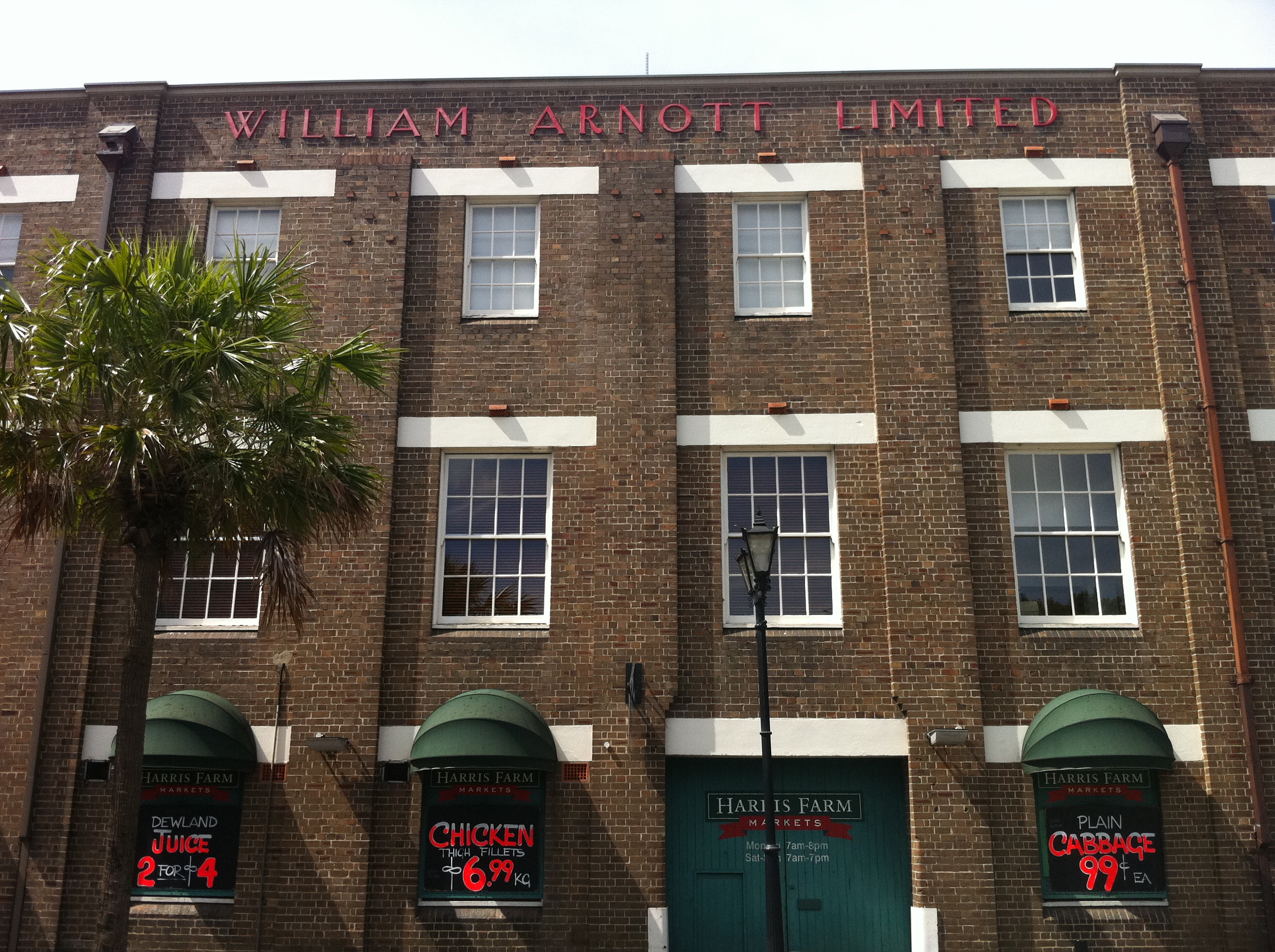
For decades, passers-by of the Arnott’s Biscuit factory at Homebush would experience delicious smells emanating from the place. From 1908 to 1997, this was where the action was for the large variety of Arnott’s products. Since the factory’s relocation to Huntingwood, the site has undergone a remarkable transformation.
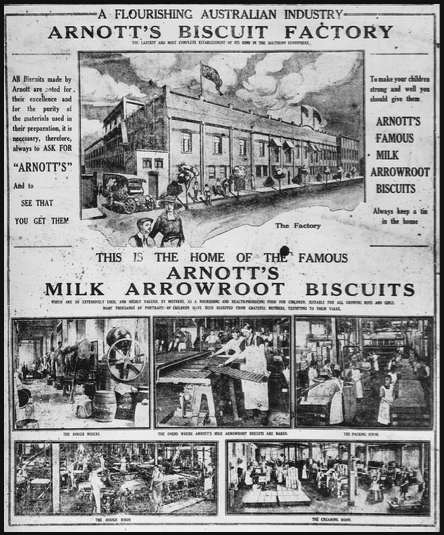
Image courtesy City of Canada Bay Library Service.
The first Arnott’s Biscuits factory opened at Forest Lodge in 1894, but when demand created the need for a larger factory, Homebush was chosen as the best location because of its proximity to the rail system. Company founder William Arnott had made the decision to move the factory closer to Sydney, but died in 1901, before he could see his dream realised. Seen at the time as a mistake on Arnott’s part due to Homebush’s then-long distance from the city, the factory eventually became the largest of its kind in the Southern Hemisphere. In fact, the Arnott’s factory was one of the foundations of economic prosperity in the growing residential suburb of Homebush in those days; there were few families in the suburb that didn’t work for Arnott’s.

Image courtesy City of Canada Bay Library Service.
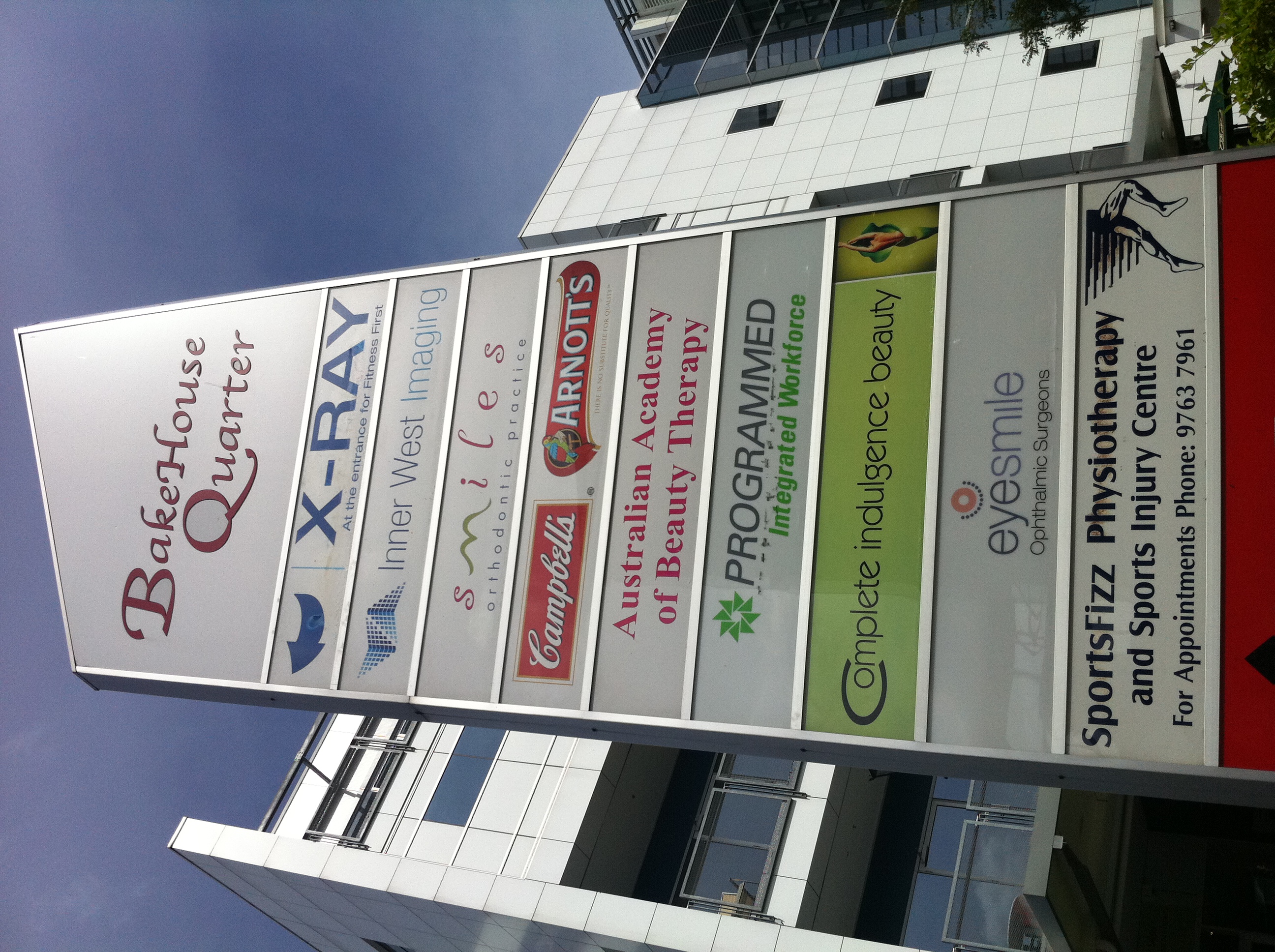
SportsFizz sounds like a drink, doesn’t it?
Arnott’s may have moved on from this location, but their biscuit range is still the most popular in Australia. Scotch Fingers, Milk Arrowroots, Iced Vo-Vos, Tiny Teddies and Sao (I get the feeling that the plural of Sao should still just be Sao, like sheep) are exported all over the world, and all the while the Homebush factory still stands, albeit with a very different purpose.
The Bakehouse Quarter redevelopment started in 1998, taking the Arnott’s factory that was so familiar to locals and converting it into a shopping and leisure precinct akin to Birkenhead Point.

While you can’t spit without hitting a cafe, there’s also the obligatory business sector, which includes the corporate HQ for Arnott’s. No substitute for a good location, I guess. That’s not the extent of the Arnott’s involvement, either: plenty of heritage Arnott’s paraphernalia exists at the site, all part of the old factory. The giant neon Sao sign is the most prominent, but even Arnie (groan), the Arnott’s parrot, gets a look-in.


Cobbled roads and Edwardian-style lighting make up the section of George Street that passes through the vicinity.

A large part of the factory itself has been converted into an AMF bowling alley and laser tag site. It’s not as farfetched as it seems – back in the day, Arnott’s had a bowling green included on the grounds, presumably as a showcase for the Iced Vo-Vo.

A car park has replaced the former oven area, which is still keen to reveal itself to those on the lookout.

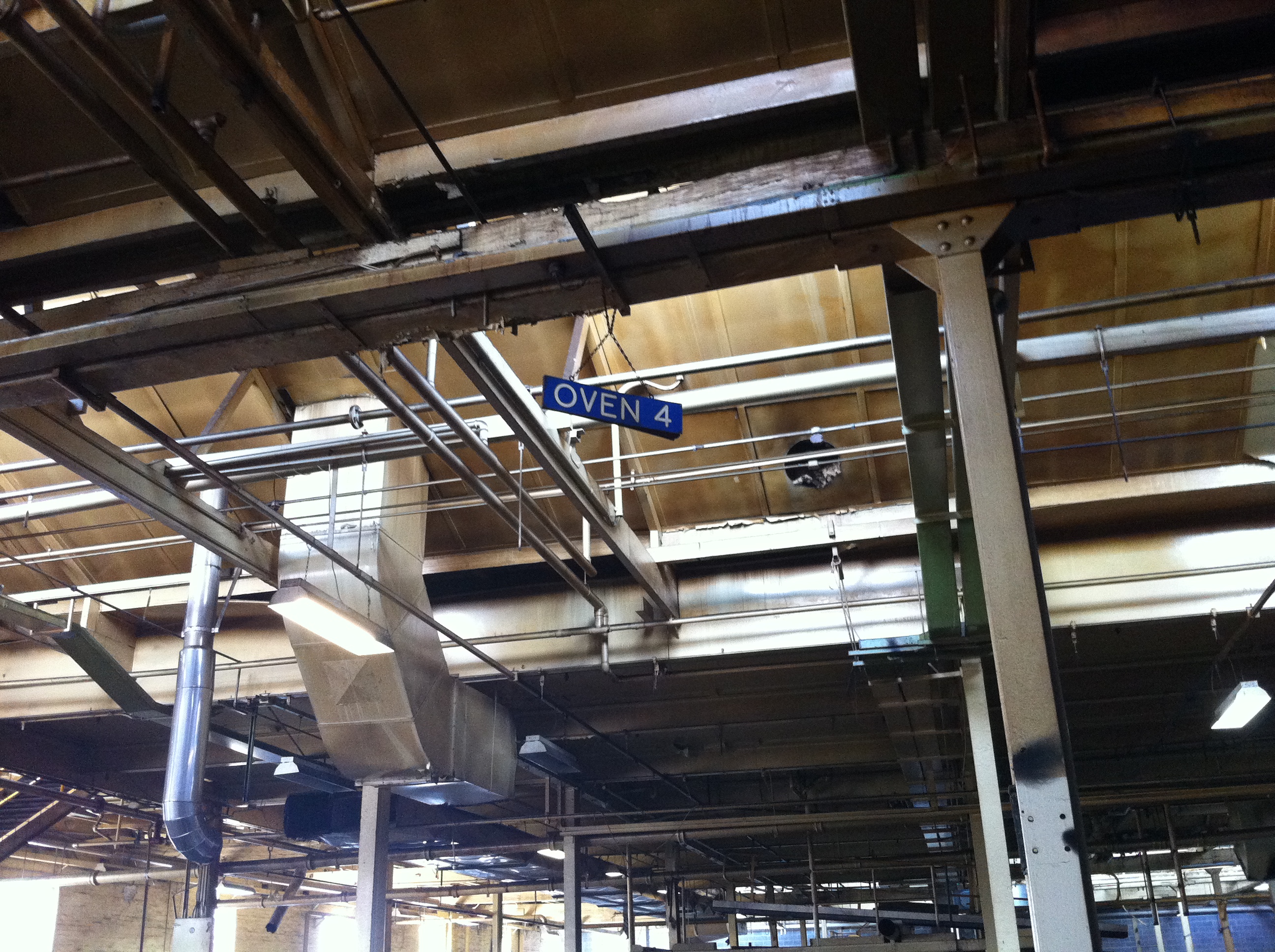
The site’s still growing, and there’s still a lot of work to do. Zumba classes and conversations over meals at the steakhouse are still constantly interrupted by the sound of construction workers striving to turn the more industrial parts of the factory into a heritage paradise.
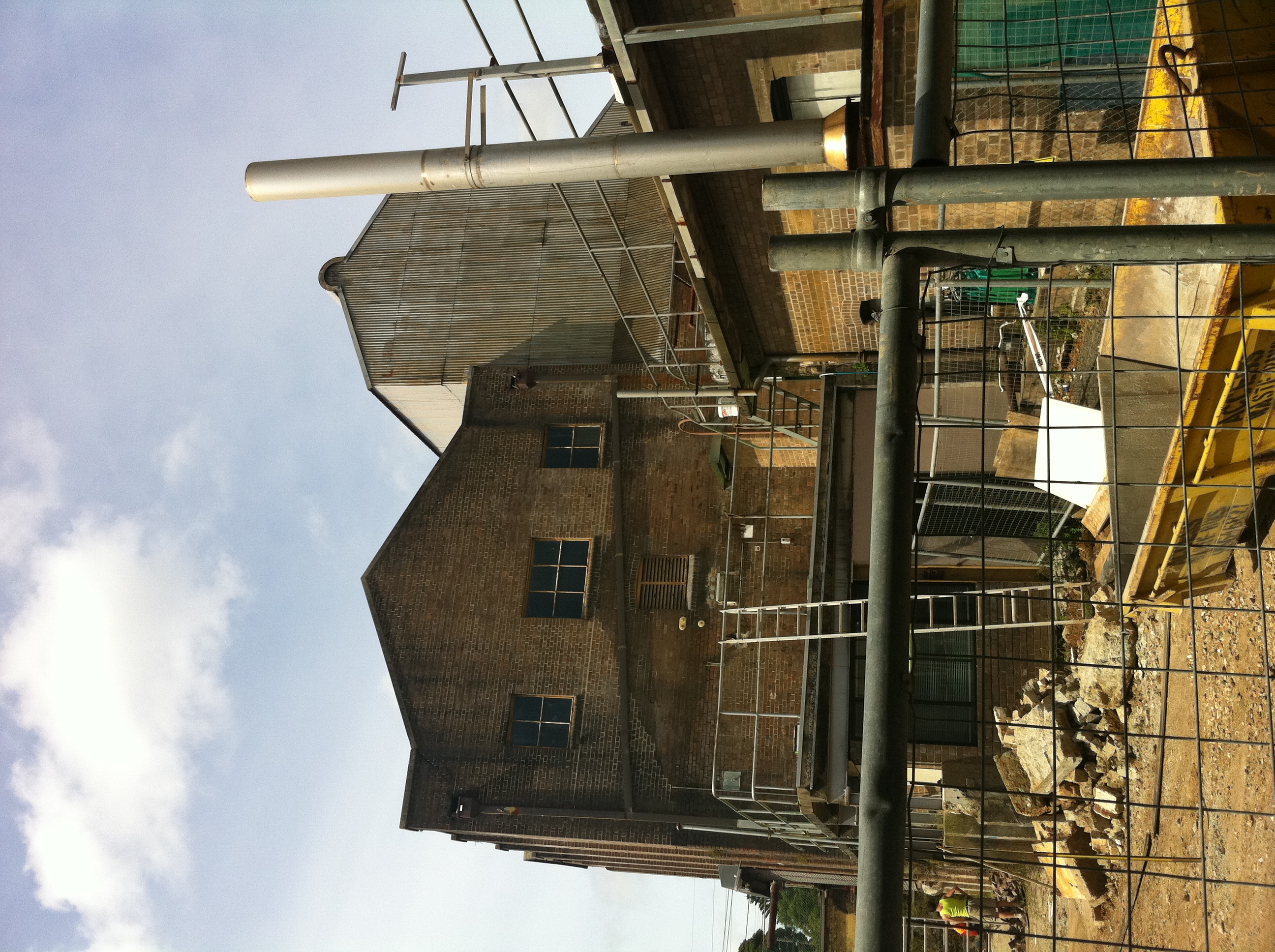
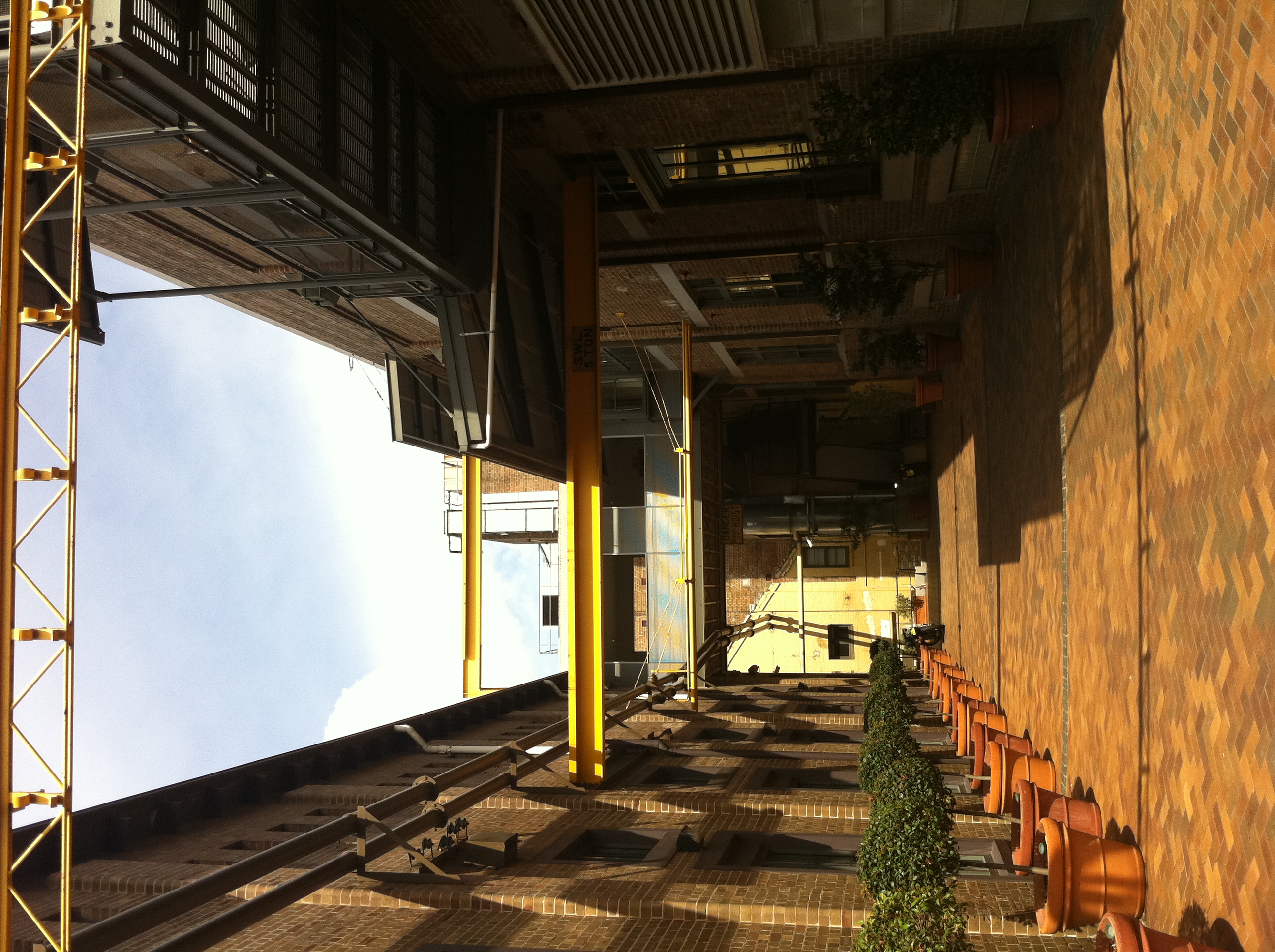
My favourite element untouched from the old days was this, the toilet to nowhere.
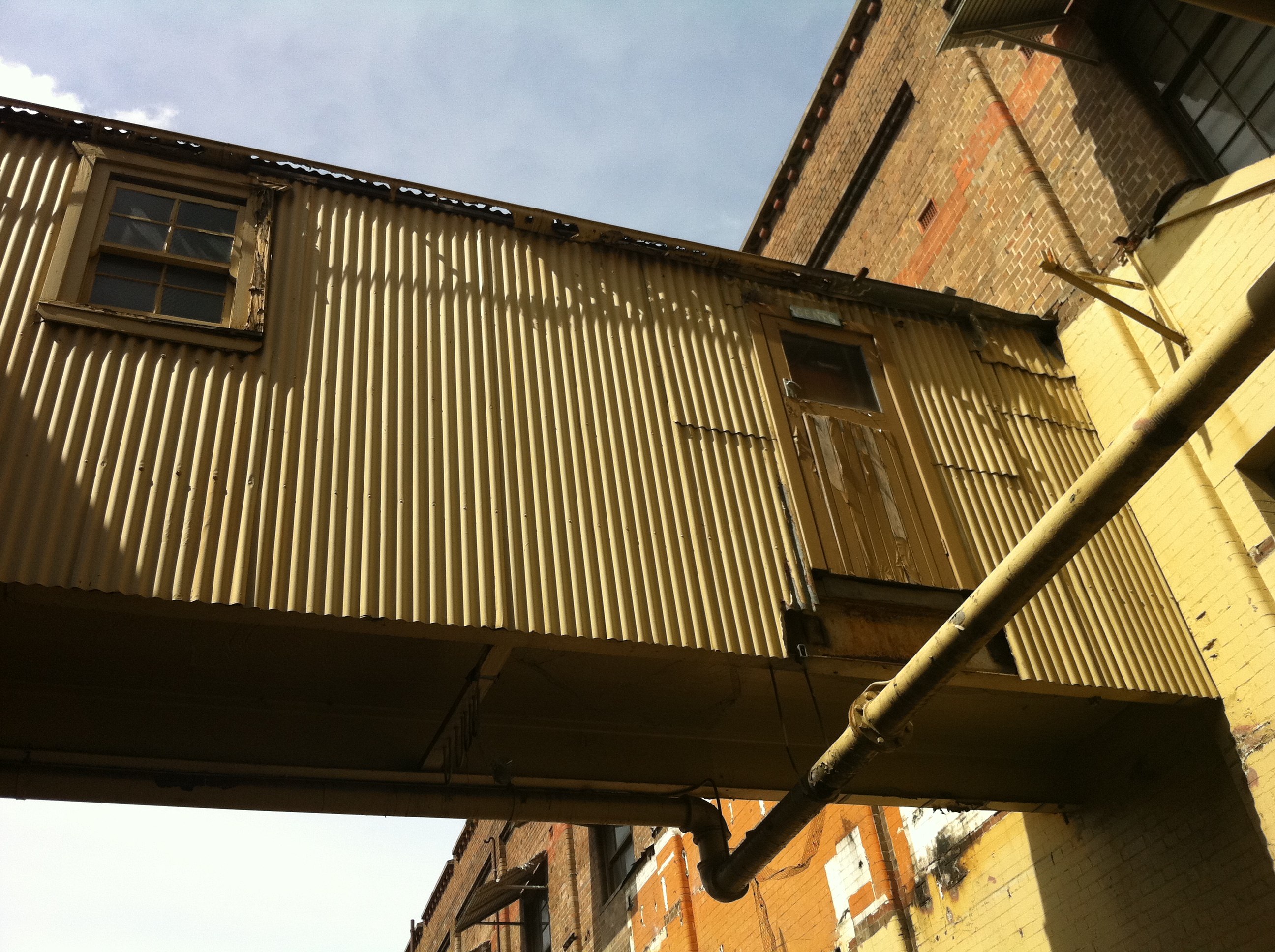
I wouldn’t be surprised if it ended up with a fair portion of residential area set aside within it, but whether that would be incorporated into the extant factory is anyone’s guess. Would it be cool or trendy to live in a former Tim Tam chocolate coating room? Probably.

One of the reasons the site was chosen by Arnott’s in the first place was because of its excellent rail infrastructure. You can still get a good view of the factory by train as you pass by between Strathfield and North Strathfield stations, and this bit of free advertising still passes over the busy Parramatta Road.

Huntingwood should keep a close eye on the Bakehouse Quarter, because when Tiny Teddies eventually grow up to become Standard Teddies, and Scotch Fingers grow to represent the entire hand, Arnott’s are gonna need more room, and that’s precisely when AMF and Zumba are gonna move in, ably proving that there is indeed no substitute for quality.
Tulloch’s Phoenix Iron Works/Rhodes Corporate Park – Rhodes, NSW
Let’s return to Rhodes one more time…

In 1913, Robert Tulloch relocated the Phoenix Iron Works from Pyrmont to Rhodes, cementing, along with the Hoskins cast iron foundry and Timbrol Chemicals, the suburb’s reputation as an industrial area.

Tulloch’s Phoenix Iron Works stood on what is now the HP building at Rhodes Corporate Park. During the Second World War, Phoenix produced a number of ships, and in the 1960s, manufactured CityRail’s rolling stock of train cars. RailCorp’s modern-day tendency to keep crusty old trains servicing high volume areas can be seen as a tribute to Tulloch’s work.
A tribute of another kind exists opposite the Corporate Park:


Yes, what better way to honour a man who’d spent his life in Iron Works than to erect an Iron Work in his memory.

Aeroplane Press, September 1974.
The Phoenix Iron Works closed in 1974, but other reminders remain in the area, including Phoenix Ave, seen above, and Tulloch Ave:
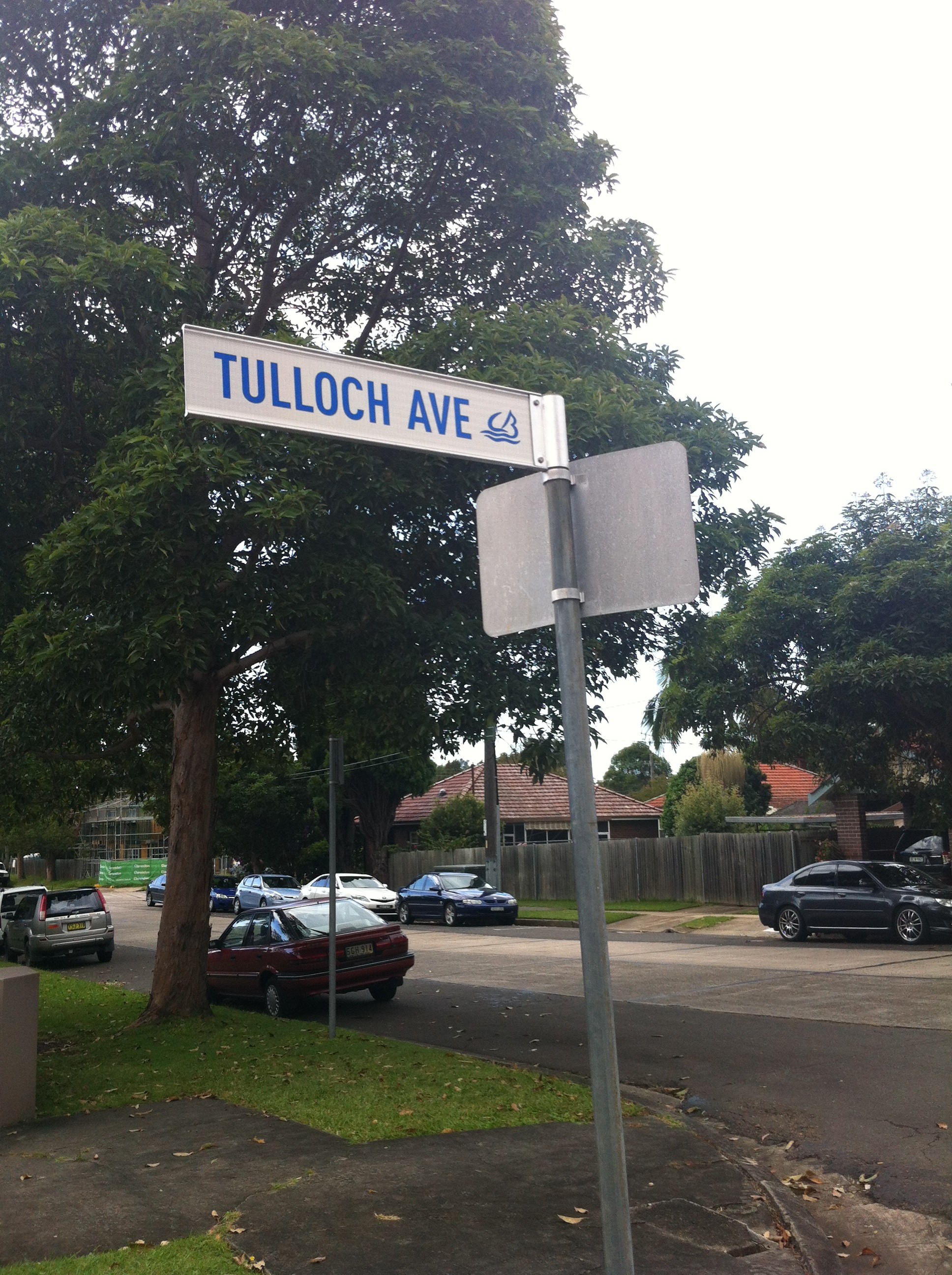
The Chinese restaurant in the nearby Rhodes shopping centre is also named Phoenix. It’s a fitting metaphor for Rhodes, rising as it did from the ashes of industrial abuse to become a vibrant suburb in the 21st century.

 Past/Lives of the Near Future