The Melton Hotel – Auburn, NSW
Get comfy, this’ll be a long one.
 Sometimes, it’s not so much about what a place has become as it is about how it got that way. This is certainly true in the case of Auburn’s Melton Hotel. Ordinarily I, like any passer-by, would take one look at the Melton and think ‘I value my life too much to go in there,’ subsequent to the instinctual thought of ‘Just another pub.’ Situated along Parramatta Road at the corner of Station Street, there’s just nothing that sticks out about the hotel in any way; not even the jovially named ‘Hey Hey Kebab’ adjoining gives cause for anything more than a mild double-take.
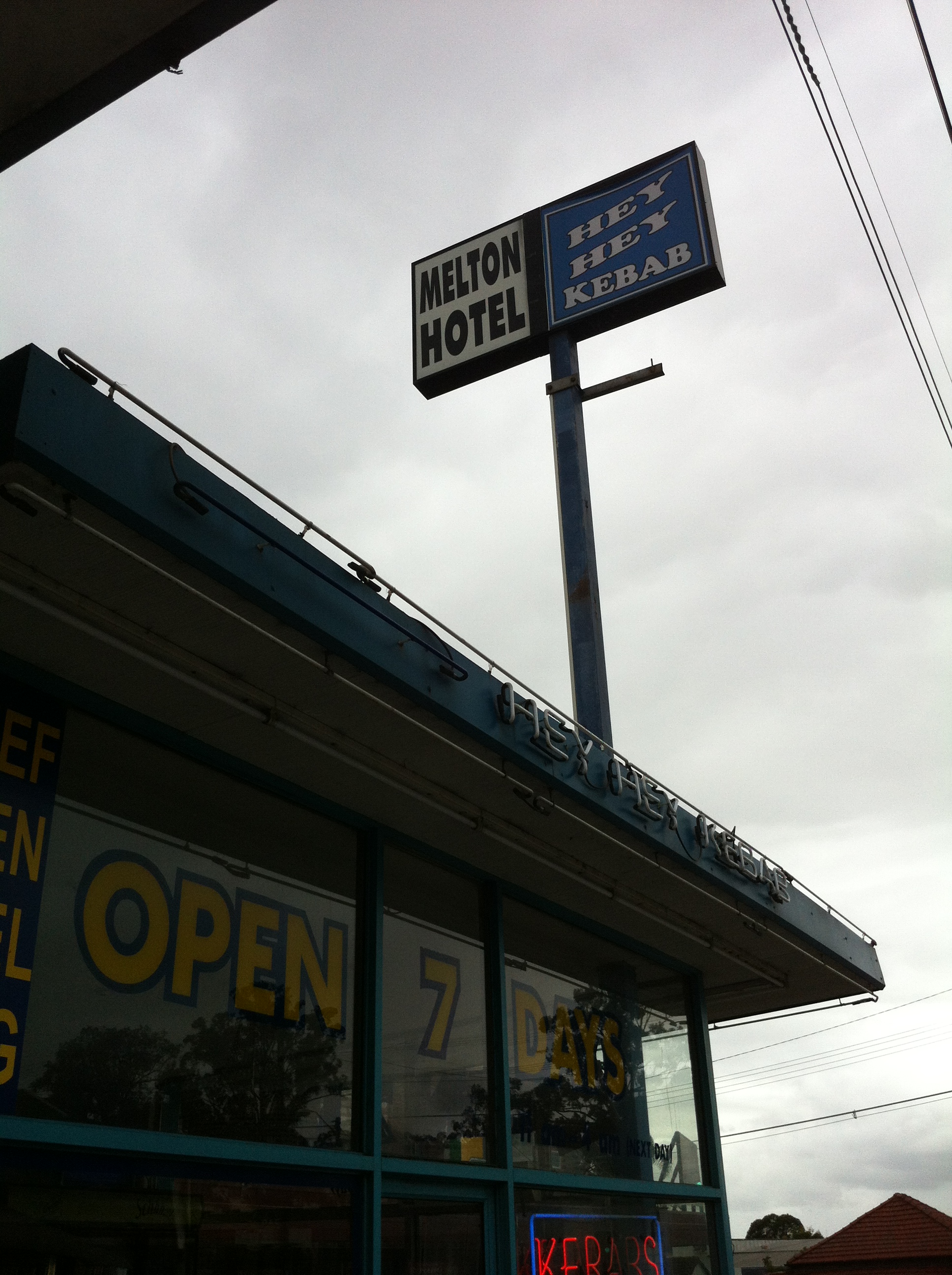 So why, dear reader, am I subjecting you to this dry account of a seemingly humdrum pub? Well, what piqued my interest (as I’m sure it will yours) was the simple fact that the street running parallel to the hotel’s side of the block is called Melton Street South.

Not pictured: Melton Street North
This got me thinking: why was the pub named the Melton Hotel if it wasn’t actually on Melton Street? Clearly it was time for some field detective work, because I knew if I didn’t solve the mystery it would bother me all day. I couldn’t find anything about anyone named Melton in the area’s history (it’s not even clear to historians why the area itself is named Silverwater), but I had a feeling if they were honouring some local hero, they wouldn’t just name a pub and a street after them. First port of call: the Atlas of the Suburbs of Sydney, ca 1885-1890.

Courtesy the Atlas of the Suburbs of Sydney, ca. 1885-1890
This map of Auburn shows that neither Station Street nor Melton Street South existed at the time. Today, they’re located between the map’s Stubbs Street and Sutherland Street (now Silverwater Road).
Next: time to research the pub itself. Thankfully, the pub in question has an illustrious history; according to the hoteliers, its license dates back to 1811 (when it was owned by Samuel Haslem, of Haslem’s Creek fame), attached to an inn located not too far from the current site. In 1877 a former jockey, Fred Martineer, became the licensee of the Melton Hotel and held that position for over 30 years, firmly establishing the pub as a favourite of the area’s myriad meat workers.
Tragedy struck in 1914 when, after too many cases like this…
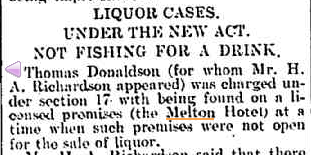
The Cumberland Argus and Fruitgrowers Advocate, 21 February 1906
…the public was swept up by a need to reinstill a sense of public decency via a series of local option acts. The acts enforced a six o’clock closing time for pubs and resulted in 293 hoteliers losing their licenses, including Martineer. Despite the pub’s closure and with flagrant disregard to the after hours prohibition, he continued to live in what became known as the ‘old Melton Hotel’ until his death in 1918:
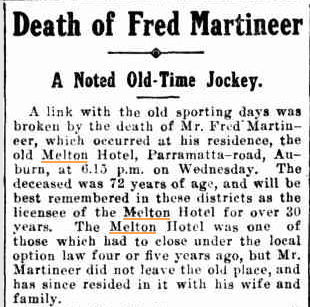
The Cumberland Argus and Fruitgrowers Advocate, 16 March 1918
The Old Melton had been named sometime prior to 1895, when it appeared on that year’s list of Hotel Licensees. It’s this hotel that sat on the corner of Melton Street South (then Melton Road), so from this we can assume the street was named after the pub. But, like me, the Martineers couldn’t let it go. In 1929, the Martineers built the NEW Melton Hotel at its current location, which at the time seemed to take up the entire section of Parramatta Road between Melton Street and Station Street.
That’s all well and good, but today it’s a very different story. Nothing remains of the Old Melton, the New Melton is nowhere near the corner of Melton Street, and there’s a string of dingy shops between it and its namesake street. What happened?
 Discounting the obvious greed associated with subletting the Melton Street side of the block to said dingy shops, the true answer seems to lie in the Melton Hotel’s parking lot. The hyperbolic claim of “stacks & stacks of parking” is betrayed by the truncated nature of the car park itself. Here it is, seen from Station Street:
 Further encroachment into the lot reveals a flimsily constructed wall on the Melton Street side. Hmm…
 And a gap in the northern end of that wall. HMM…
 The gap leads out to Melton Street, whereupon you’re immediately facing a school. This sign:
 …is all that remains of this side’s former life as an entrance/exit to the Melton’s car park, and indeed of the Melton’s connection to the street it inspired. A closer look at the other side of the fence backs this deep bit of insight up.
 The kerb is clearly a lighter shade of cement, indicating the spot where the driveway used to be. The two bushes are doing a laughable job of hiding the wooden fencing that blocks off those driveways.
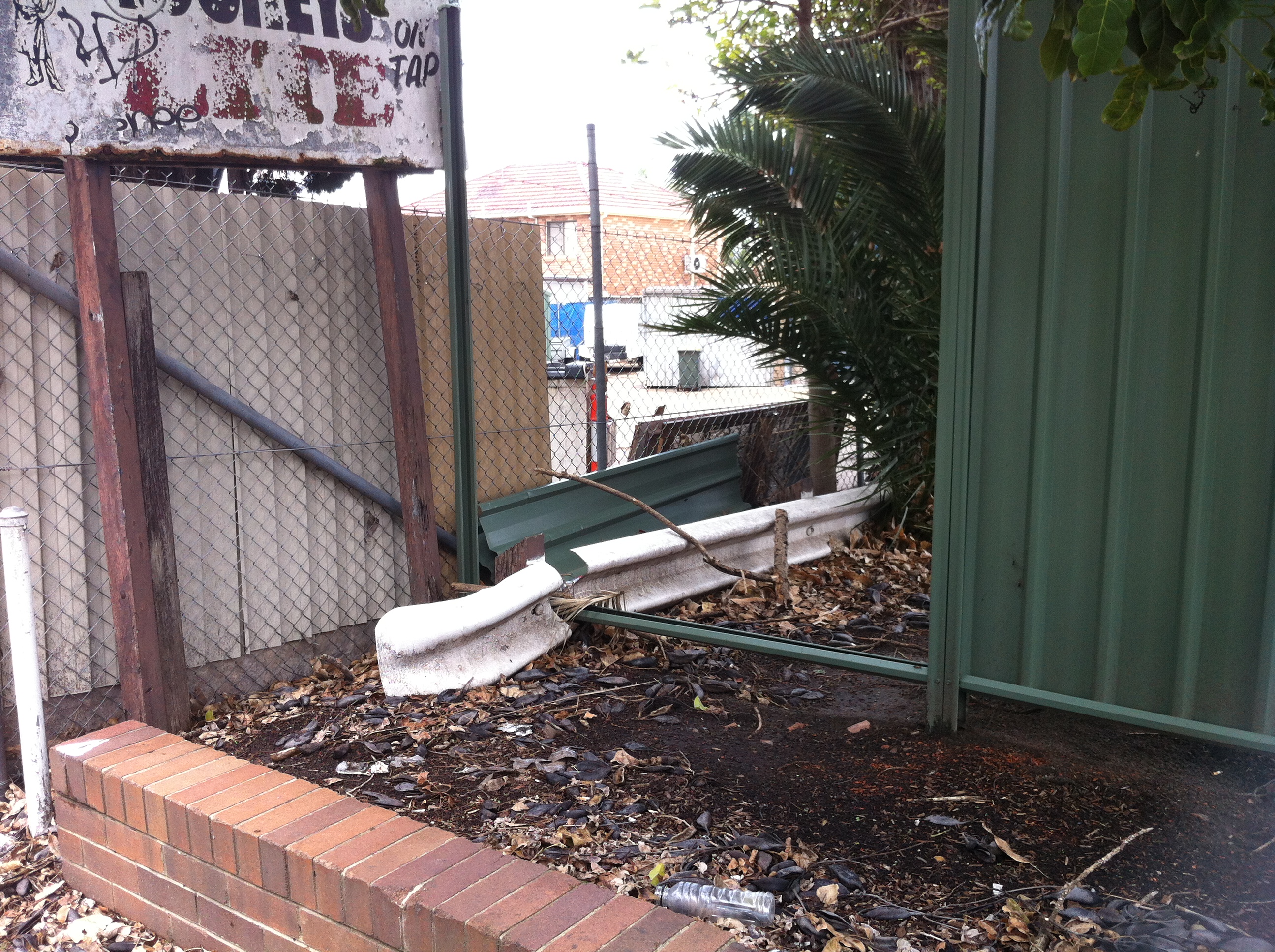 Even stranger is the choice to keep these former barriers, and simply cut them where the new fence intersects.
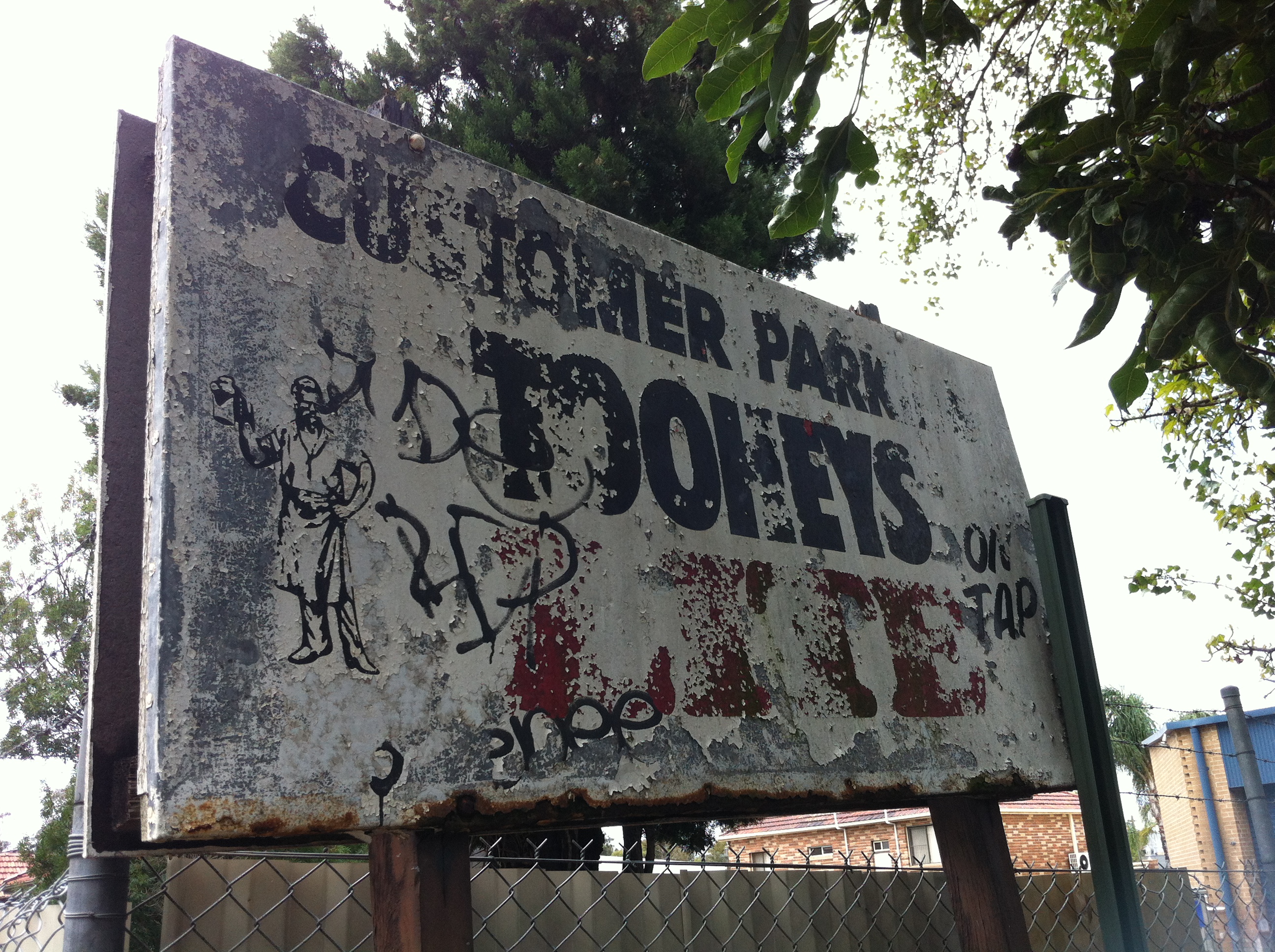 One of the more interesting aspects of all of this is the sign that once guided thirsty drivers into the parking lot. Hidden by overgrown branches and worn away by years of neglect, there’s no real reason for the hoteliers to have left it there – least of all what it’s advertising. After all, if it hadn’t been for the sign, I never would have stumbled upon this madness in the first place. No, for me, the real gold is the sign’s reverse side:
 Remarkably well-preserved, the sign advertises Tooheys 2.2, which was an attempt by Tooheys to introduce a light beer to their otherwise heavy range in the late 1980s.
While it would be nice to think that this was Tooheys doing its part to avoid another 1914 Local Option fiasco, the way the ad puts a jokey spin on drunken violence and employs a disturbing tagline clearly aimed at the breathalyser crowd suggests a more cynical set of motives. For better or worse, this didn’t take, and by 1995, 40 years after the Local Option acts were repealed, 2.2 was 6.0 feet under. It’s worth pointing out that 2.2 was supplanted in 1998 by Hahn Premium Light, which is now Australia’s top selling light beer…and owned by Tooheys. A fascinating trail of the significant episodes of 2.2’s short life can be found here (WORTH READING). I think the lesson here is don’t give your beer a name that invites terrible Richie Benaud impressions.
But back to the Melton. Also of note are the apparent remains of either a garbage can or a phone box (remember those?) located between the two driveways.
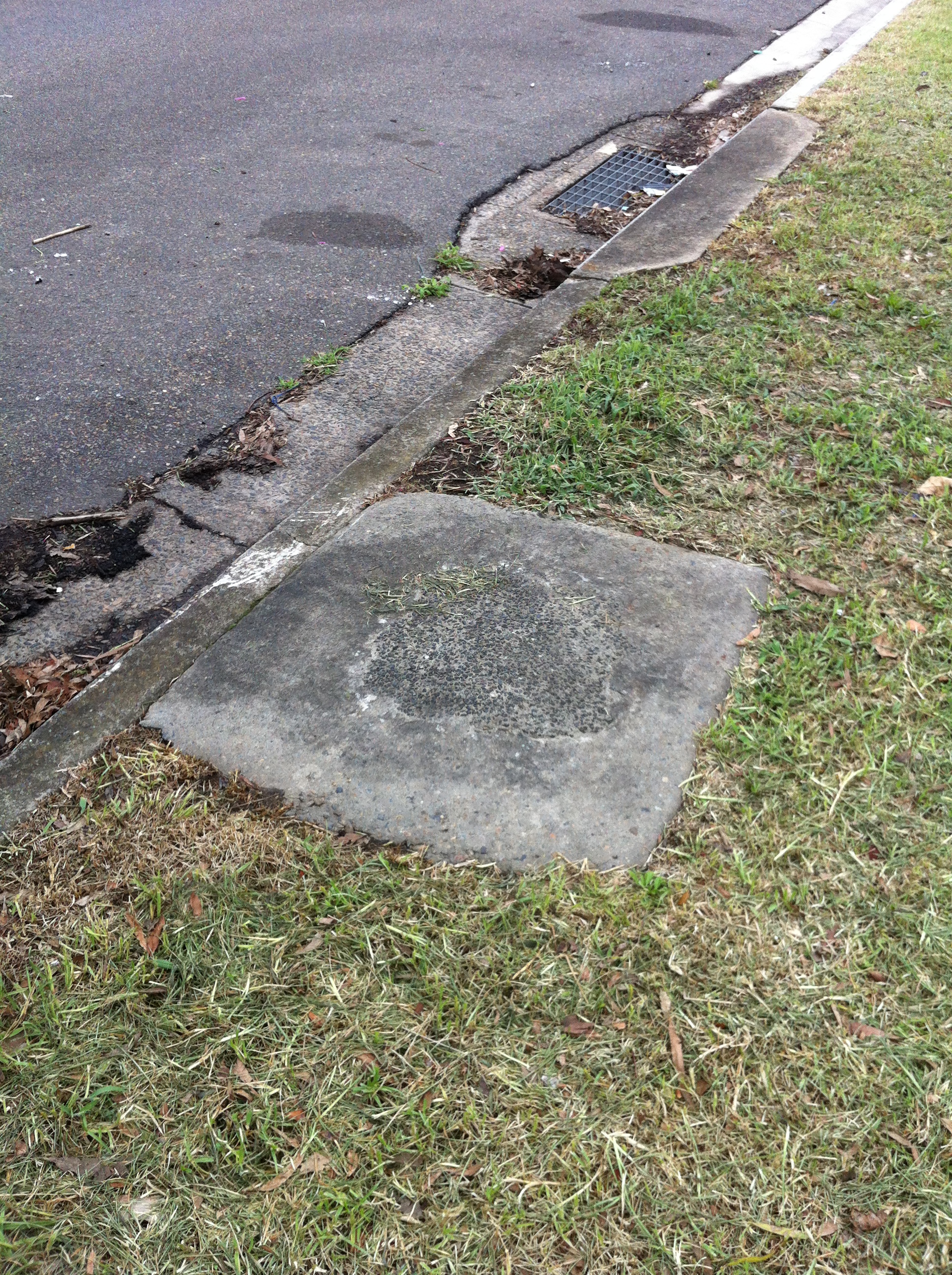 Let’s stop for just a second to process this. Regardless of whether this was in fact a garbage can which spent countless nights being chundered into by melting Meltonians, or a phone booth which spent its Friday and Saturday nights listening to endless pleas by hopelessly pissed pub patrons for their wives, girlfriends, parents or less drunk mates to come and pick them up, and then being chundered into, the fact remains that it was located BETWEEN the two driveways. How is this a spot for either of those objects which both appear as bright flames to drunken moths? The line for the phone alone would have been both long and drunkenly ignorant enough to queue across the nearest driveway. You can’t tell me this didn’t cause at least one clipped wing.
Even worse is the pub’s proximity to Auburn North Public School. Anyone foolish and drunk enough to ‘breathe easy’ and attempt to drive home via the Melton Street exit (or entrance, depending on the level of drunkenness) on a weekday afternoon ran the risk of knocking over a kid on their way home. If it didn’t happen or nearly happen, I’d be surprised.
With these reasons in mind, it’s easy to imagine just how and why the Melton would have had these driveways sealed up, thereby severing its ties to its own history. It’s also easy (and funny) to imagine particularly OCD and DUI pub patrons attempting to drive out of their usual exit and smashing the fence, otherwise why the need for the bushes and the potplants? Sure, the Melton could have chosen to seal up the Station Road driveways, which face the old Joyce Mayne complex, but it turns out that a child’s life is worth more than that of a shopper looking for bargain whitegoods. Who knew?
And all because some public spirited men didn’t know their limits and couldn’t hold their beer.
Of course, I could be wrong about everything, and I might owe both the Melton and overdrinkers everywhere an apology, but have a look at this:

The Cumberland Argus and Fruitgrowers Advocate, 10 July 1915
EPILOGUE
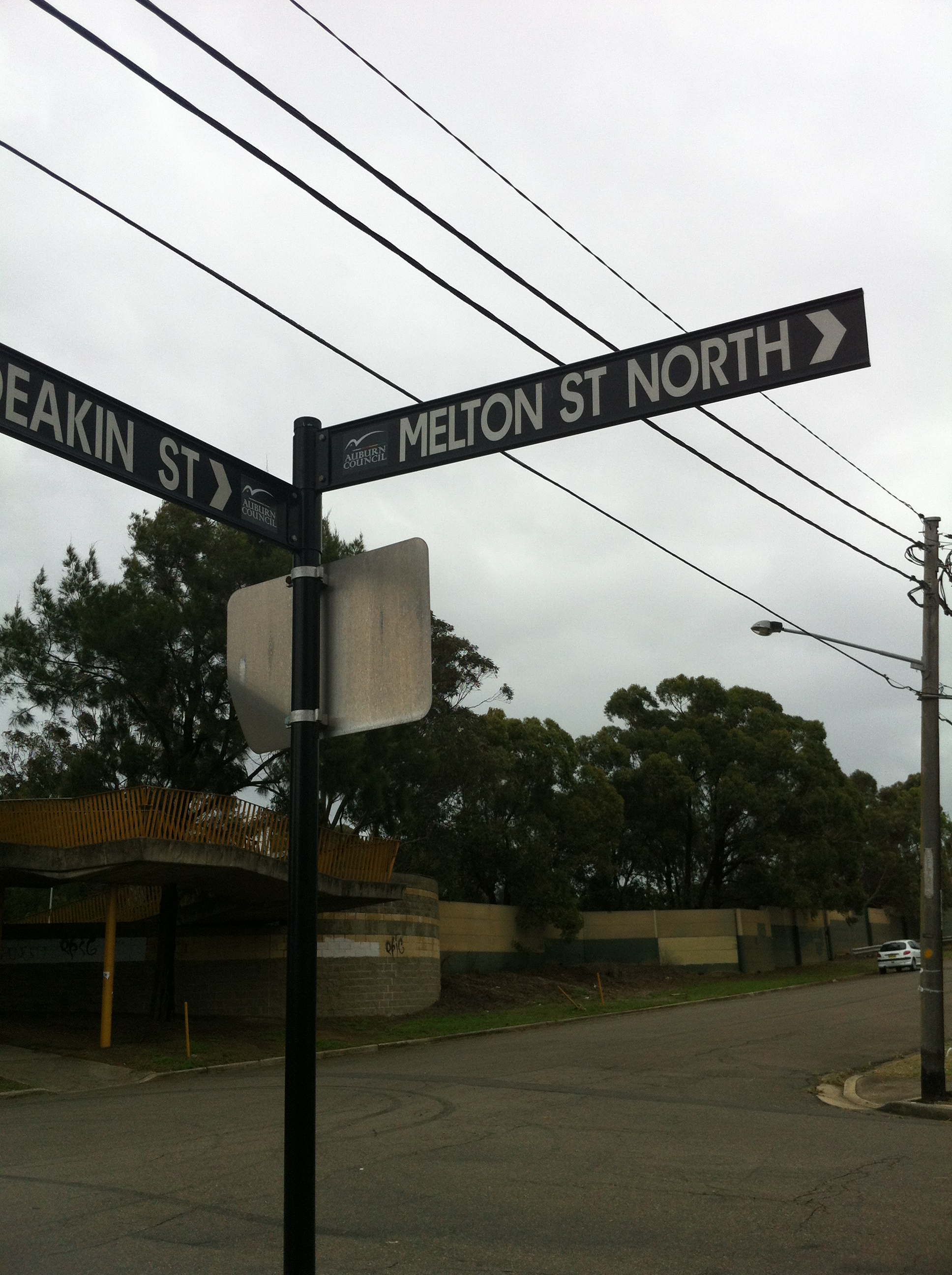
Not pictured: Melton Street South
You may have just read all that and be wondering ‘what was the point?’ or ‘where’s the remove bookmark button?’, but more inquisitive (or less demanding) readers may be wondering ‘What was so drastic that happened to Melton Road to cause it to be split into Melton Road South and Melton Road North?’
Next time, baby.

La Bettola Italian Seafood Restaurant/For Lease – Rozelle, NSW
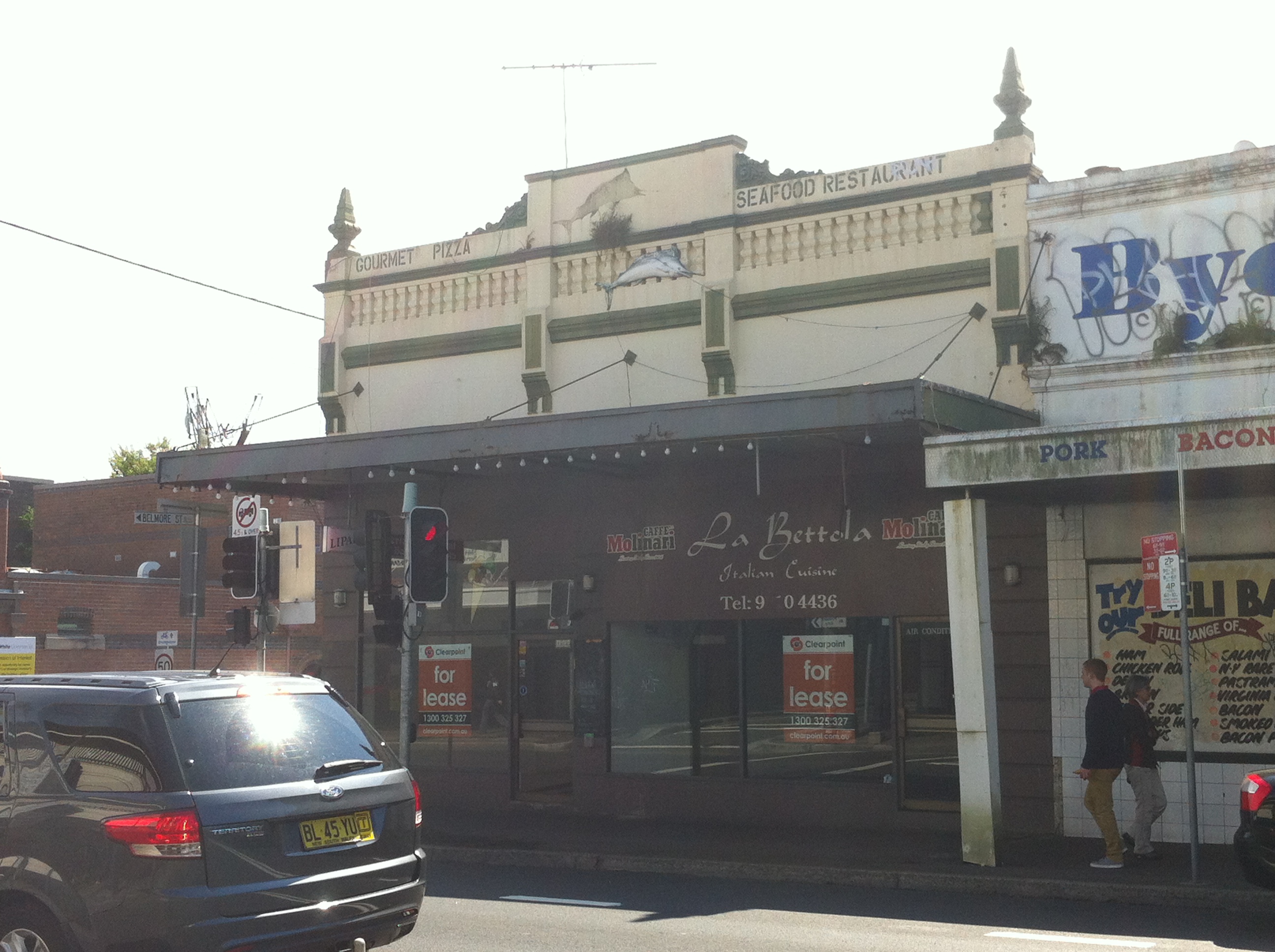
Rozelle’s an area renowned for several reasons: it’s the gateway to Balmain, there are plenty of former mental patients roaming the streets, and it plays host each weekend to fantastic markets. Darling Street is peppered with great restaurants and op shops, but since the suburb isn’t as working class as it once was, not all of these are able to stay afloat. Case in point: La Bettola, an Italian seafood restaurant. The place gets big points for having that big fish mounted above the building, and I’d like to think he fell off on the day they closed their doors for good. Why did it close?
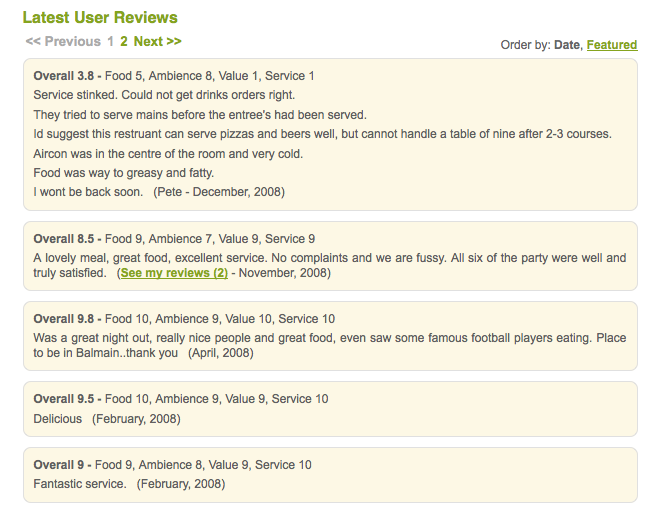
Gee, that fellow at the top wasn’t very happy, was he? Perhaps they closed in November 2008 and he just didn’t realise.
Prior to its life as La Bettola, this was a pub dating back to the 1920s. Rozelle’s pub scene dwindled once the area became less industrial – with a lack of workers needing to quench their thirst at the end of a hard day, the business dried up, so to speak. One other interesting footnote from the life of this building: in 1944, a time when lotto winner addresses were still made public much to the delight of extortionists everywhere, Mrs. P. Nolan and her aptly named “Lucky Last” lottery syndicate won fourth prize in the week’s lotto draw.
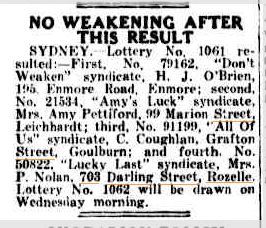
Barrier Miner, Mon 29 May, 1944
With foresight like that, you think she would have done better.
The Rawson Institute for Seamen/Bar100 – The Rocks, NSW

The snigger-inducing Rawson Institute for Seamen opened in 1859 as the Mariners’ Church, a missionary effort by the Bethel Union which followed two similar sites in Darling Harbour and Circular Quay. After initial success, the Bethel Union fell on hard times at the turn of the 20th century, and in 1895 the Church was leased to the Missions to Seamen. So wait, one seamen missionary group met financial hardship operating out of this place…and another one jumped in to take its place? Were the owners named Bond and Packer?
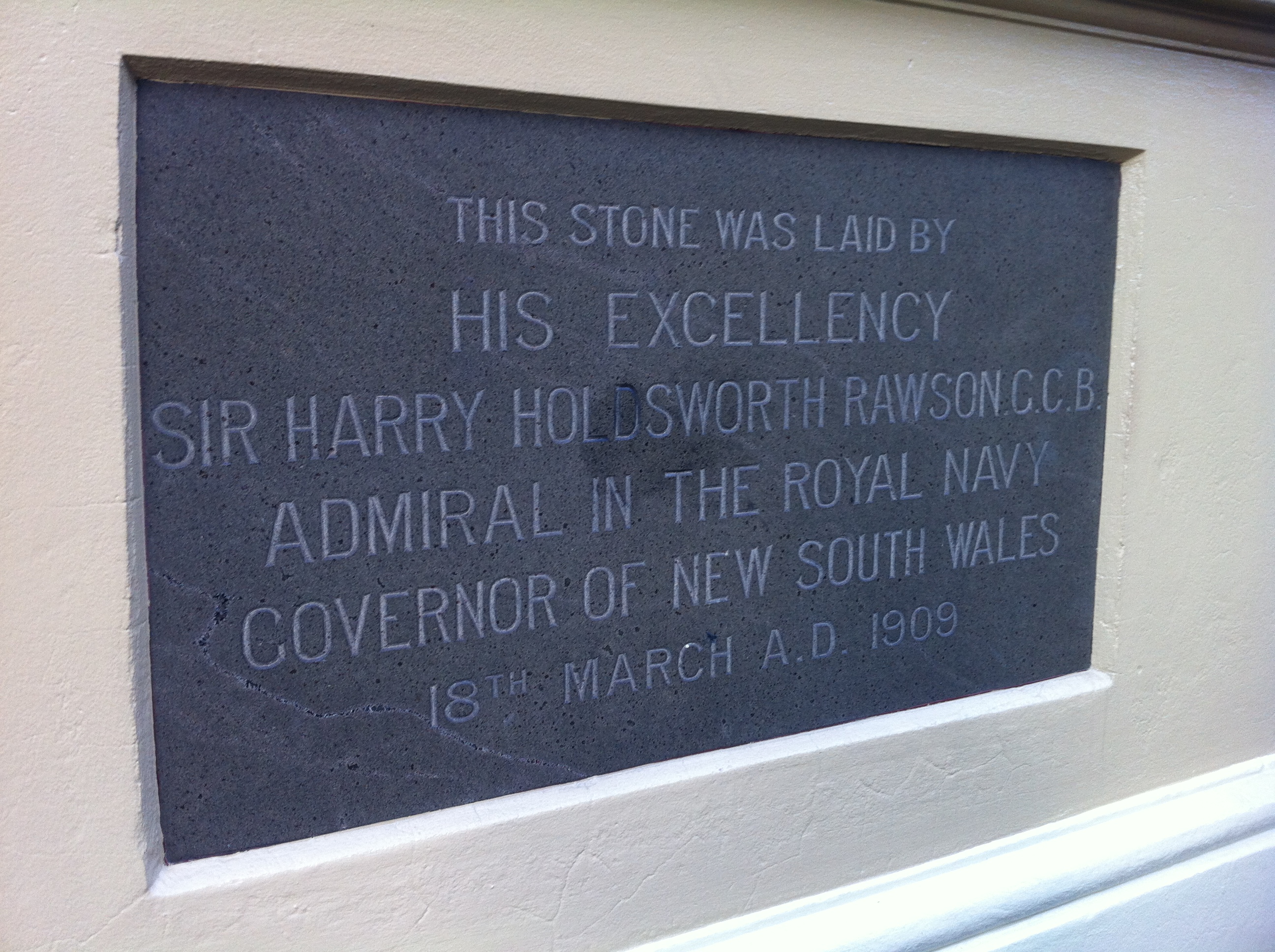
Sir Harry Rawson, who was appointed NSW Governor after his productive and incident-free trip to Benin, got a piece of the action once his governorship ended in 1909, proposing extensions to the building so important that the complex was renamed after him. Seamen everywhere could thank Rawson for providing them such a luxurious institute.
By 1960 things like this had fallen pretty much by the wayside, and the Bethel Union limped back to Flying Angel House, while the Rawson Institute became in 1981 home to the hitherto-unknown-by-me Craft Council of NSW, which lasted until 1990. Subsequently used as an art gallery and cafe, in 2011 Rawson’s changed hands yet again to much consternation. The new tenant, Bar100, hopes to rival that seamen’s institute of a different kind, the notorious Ivy nightclub. You’ll need a lot more than the name, guys.
The Tradesman’s Arms Hotel/East Village Hotel – Darlinghurst, NSW

The owners of the East Village Hotel in Darlinghurst have tried their best to reinvent the place as a hip, relaxed pub in the middle of a trendy area, but it’s hard to miss the hotel’s old name – the Tradesman’s Arms – at the top. These days it’s hard to imagine tradesmen’s arms anywhere near this place, unless it’s to subject the pub’s period interiors to another refit.

The Tradesman’s Arms, circa 1930
Speaking of period, the Tradesman’s Arms dates back to 1918, and during its lifetime was known as the ‘Bloodhouse’, due to the extreme violence often on show within. It’s creepy to think that there was a pub in the Darlinghurst-Kings Cross area that stood out for its violence; nowadays it’d probably be considered pretty tame. In a time when tradesmen were wise to arm themselves with razor blades, this place was a favourite watering hole of Sydney underworld figure Tilly Devine, which should absolutely not come as a recommendation. No wonder they changed its name.
Bookers Night Spot/For Lease – Surry Hills, NSW
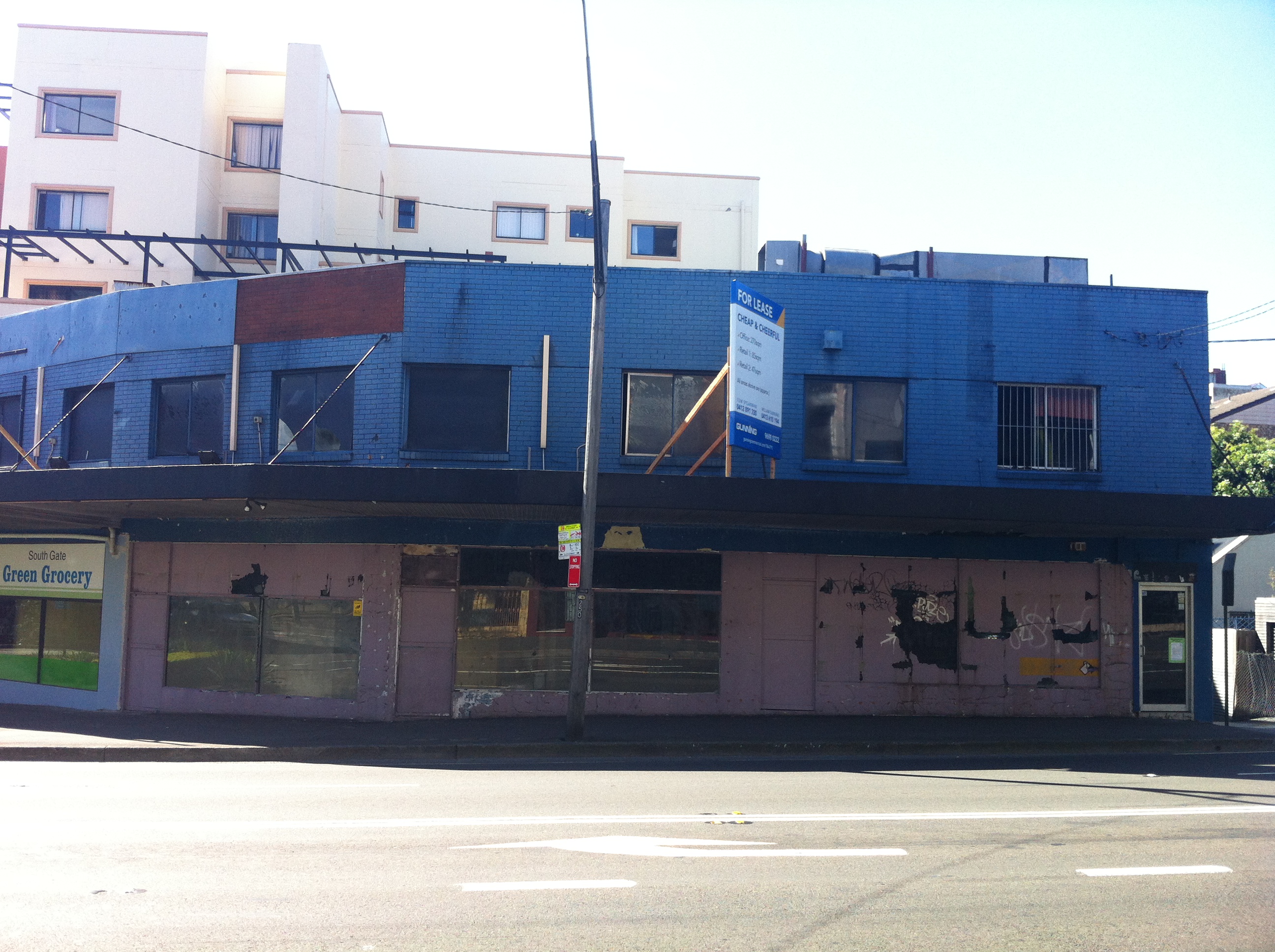
Perched at the intersection of Chalmers and Cleveland Streets are a variety of notable buildings: the old Australia Post headquarters; the colonial era Cleveland Street Public School; that ancient backpackers hostel. The odd one out is this building, which has sat unused and for lease until very recently, when part of it was turned into a greengrocer. The other part still sits dormant, waiting for another chance at life.

Around the side we can see that it was for sale long ago. So old is the sale that the sold stickers have become partially transparent. The sign to the right has been painted over along with the rest of the building, and still myriad signs and lettering can be seen underneath the coat, some of which seems to suggest the place had a restaurant…but that’s not the lettering we’re interested in.
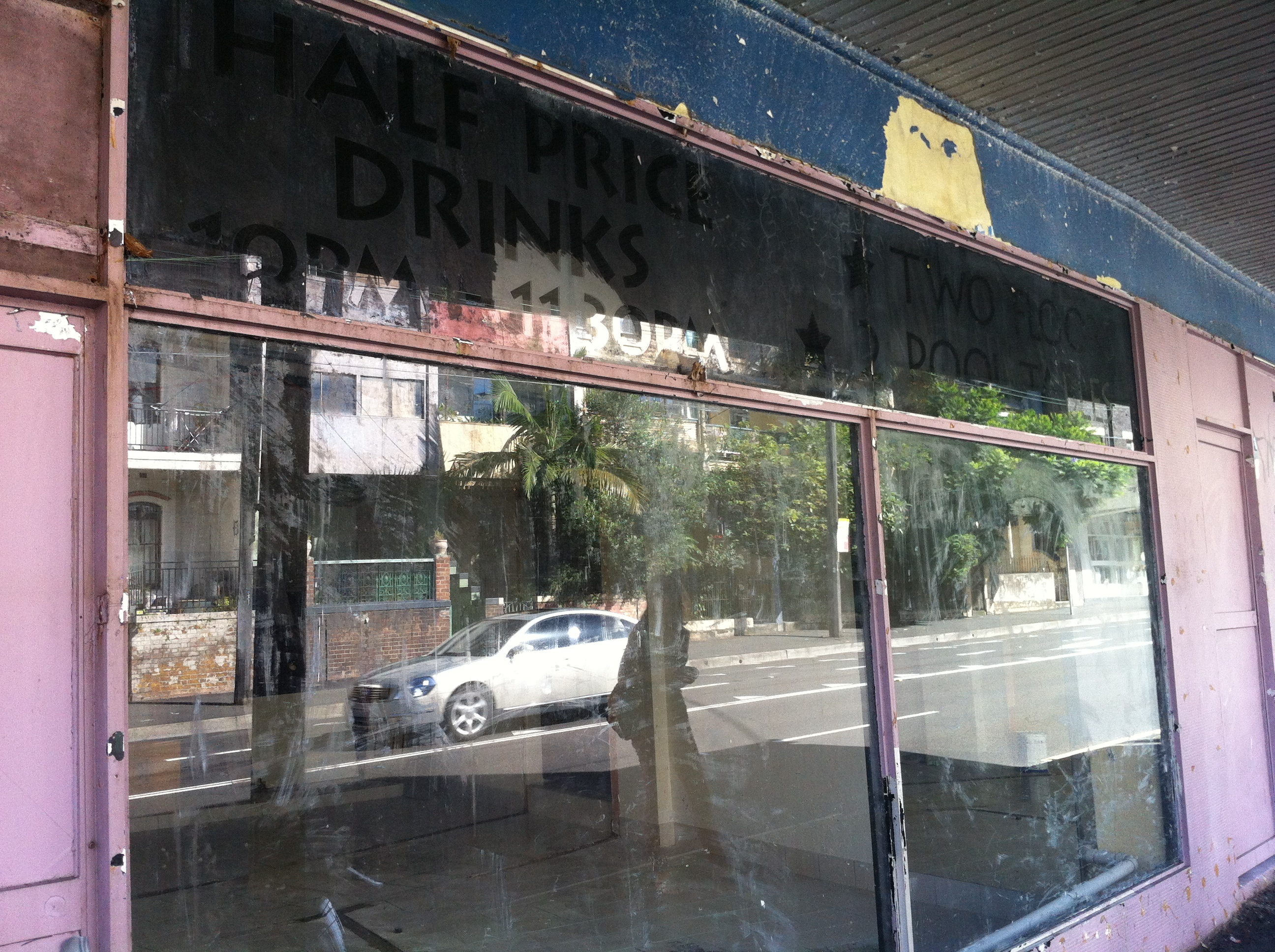
At some point in the past, this place was Bookers [sic] Night Spot, the only pub or club I could find attributed to this address. Half price drinks were on sale between 10pm-11:30pm. It featured two floors, and pool tables. Not the most dynamic attributes a night spot could have, but aside from the weak offerings it’s unclear when or why the club closed. The competition from the pubs down near Central Station or up at Crown Street might have played a part, and that the area is much more gentrified than ever. It’s easy to imagine this may have been yet another corner pub once, serving thirsty shift workers from Australia Post, or a tram stop on what was once a busy corner for the light rail.
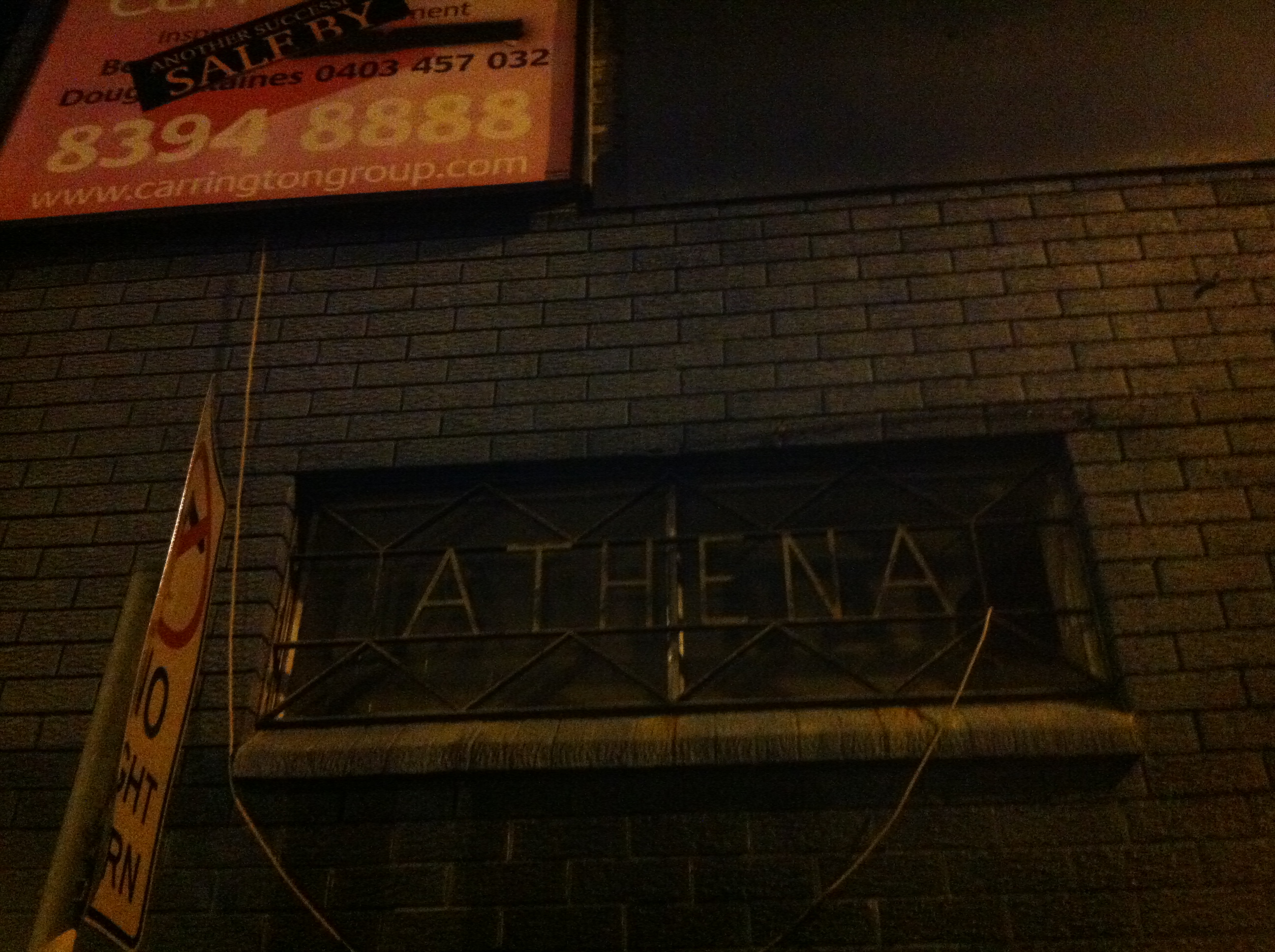
ATHENIAN UPDATE: As reader Luke says, this location was once the Athena Greek nightclub/Restaurant. The only remnant of this today is the ironwork affixed over the east window:

 Past/Lives of the Near Future