NSW State Brickworks/Brickpit Ring Walk – Homebush, NSW

In a time when building a house meant plenty of brick, mortar and asbestos as opposed to 100% pure cladding, a housing boom meant it was time to get digging. The State Brickworks at Homebush was established by the NSW Government in 1911 to (publicly) provide for the demand for public housing and (privately) to shatter the stranglehold private owners had on the brickmaking industry, because no one makes money without the NSW Government getting a piece of the action. This greedy plan backfired at the onset of the Great Depression, when demand plummeted and the site started operating at a major loss. Ironically, it was sold to a private firm in 1936, and closed soon after.

State Brickworks, Homebush, 1912. Image courtesy State Library of NSW
Of course, the history of bricks in Sydney reaches back much further than Homebush. Brickfield Hill (near Haymarket) owes its name to its brickmaking past, and the St Peters brickyards are still in plain view – I just haven’t been there yet. The Homebush site was adjacent to the State Abattoirs, presumably to maintain the ambience, but more likely because the ground was rich in necessary brick ingredients. The Homebush Brickworks had also served to replace the troublesome State-run sand lime brickmaking operation at Botany, which had in 1914 fallen victim to a labourer strike, and never recovered.
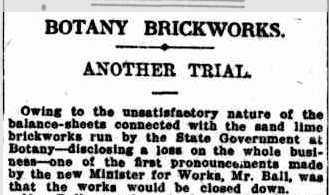
SMH, 19 Dec 1916
After World War II, during which the site had been used as an ammunitions depot by the Navy, the NSW Government sensed an opportunity to make money, and reopened the Brickpit just in time for the second housing boom. If the first boom was a Newcastle, this one was somewhere between a San Francisco and an Indonesia. Chances are that at some point during your life in Sydney, you’ve stayed in a house built with bricks from Homebush. The site even had its own train station for workers to use, which opened in 1939.

A red rattler passes the State Brickworks, 1982. Image courtesy Graeme Skeet/nswrail.net
It should be mentioned that during the 60s, 70s and 80s, the Brickworks was known by a different name to young hoons and petrolheads looking to blow off some steam on a Friday or Saturday night. ‘Brickies’ was a hot destination for drag racers setting off from the Big Chiefs (Beefy’s) burger joint on Parramatta Road, tearing off up Underwood Road in their Monaros towards Brickies Hill. This circuit can be seen in the 1977 film FJ Holden, which will be a major part of this blog sooner than later. The onset of development put a stop to this, but a subtle, if bizarre, homage to that era has been paid through the naming of certain streets around Hill Road, once the drag strip finish line: Nuvolari Place, named for Italian racing legend Tazio Nuvolari, and Monza Drive, after the endurance race of the same name. Sydney also hosted its first V8 Supercar event at the Olympic Park in 2009, echoing the days of weekend supercar stardom in less developed decades. Residents could still nostalgically enjoy extreme noise pollution and rowdy behaviour, but at least this time it was corporately sponsored.
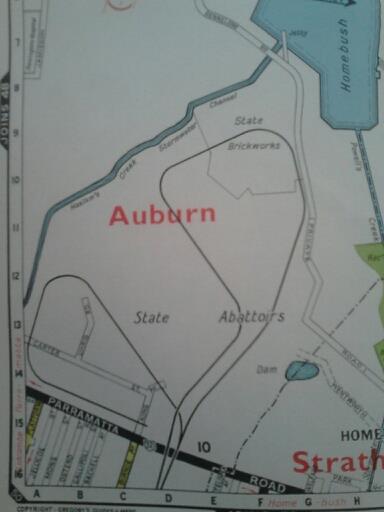
Saturday night grand prix circuit. Thanks, reader Kenny!
From an industrial standpoint, they might as well have been making gold bricks at the ‘works for the next three decades…and then the 80s happened. The boom died down, the money dried up, and the Brickworks, which had for the most part of the 20th century poisoned the surrounding land and Homebush Bay, was clumped in the same basket as the increasingly irrelevant State Abattoirs and the volatile Rhodes industrial area – it had to go, but before it did, the crew of Mad Max Beyond Thunderdome (or perhaps The Conqueror 2, just give it a few years) chose the toxic site as a filming location. In 1988, the Brickworks were closed for good. Like the rest of the State-owned Homebush industrial zone, it was included in plans to reshape the area into the Sydney Olympic Stadium in 1992. The Brickpit was to become the tennis centre.
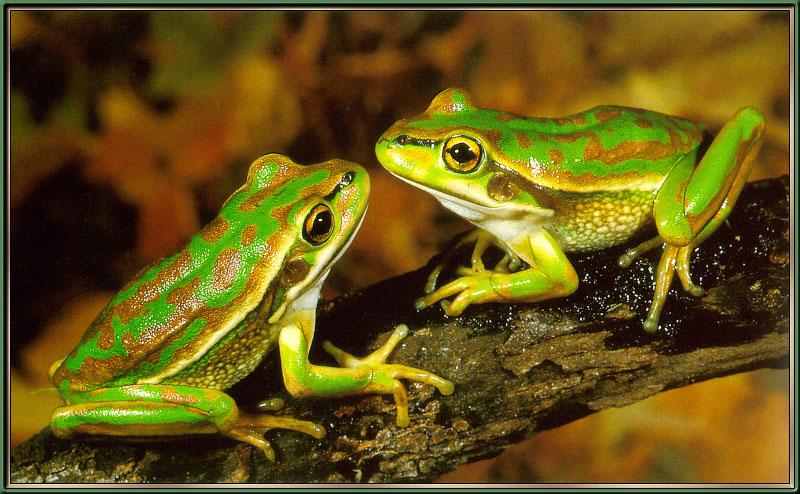
“Wait’ll they get a load of me.”
And so it would have gone, had not a funny, completely unexpected thing happened. The green and golden bell frog was nearing extinction by 1992. Once abundant in Sydney, numbers had fallen so low that a special breeding program was established at Taronga Zoo in the hope that the frog could be saved. As preliminary work was being done, 300 of the small frogs were discovered living in the quarry. Several times since, colonies of the undeniably appealing frog have turned up at proposed development sites, halting work, ruining plans, and causing PR-illiterate development bigwigs to shit a…well, you know. The frogs are no longer critically endangered, but they still have a long way to go.

As the rest of industrial Homebush was transformed for the Olympics, the Brickpit itself followed suit, undergoing heavy remediation. It’s now an environmental feature of the Olympic Park, and features the wonderful Ring Walk, a walkway suspended above the former Brickworks site complete with a giant pond filled with what can only be described as Smylex. Those frogs must be mighty happy.

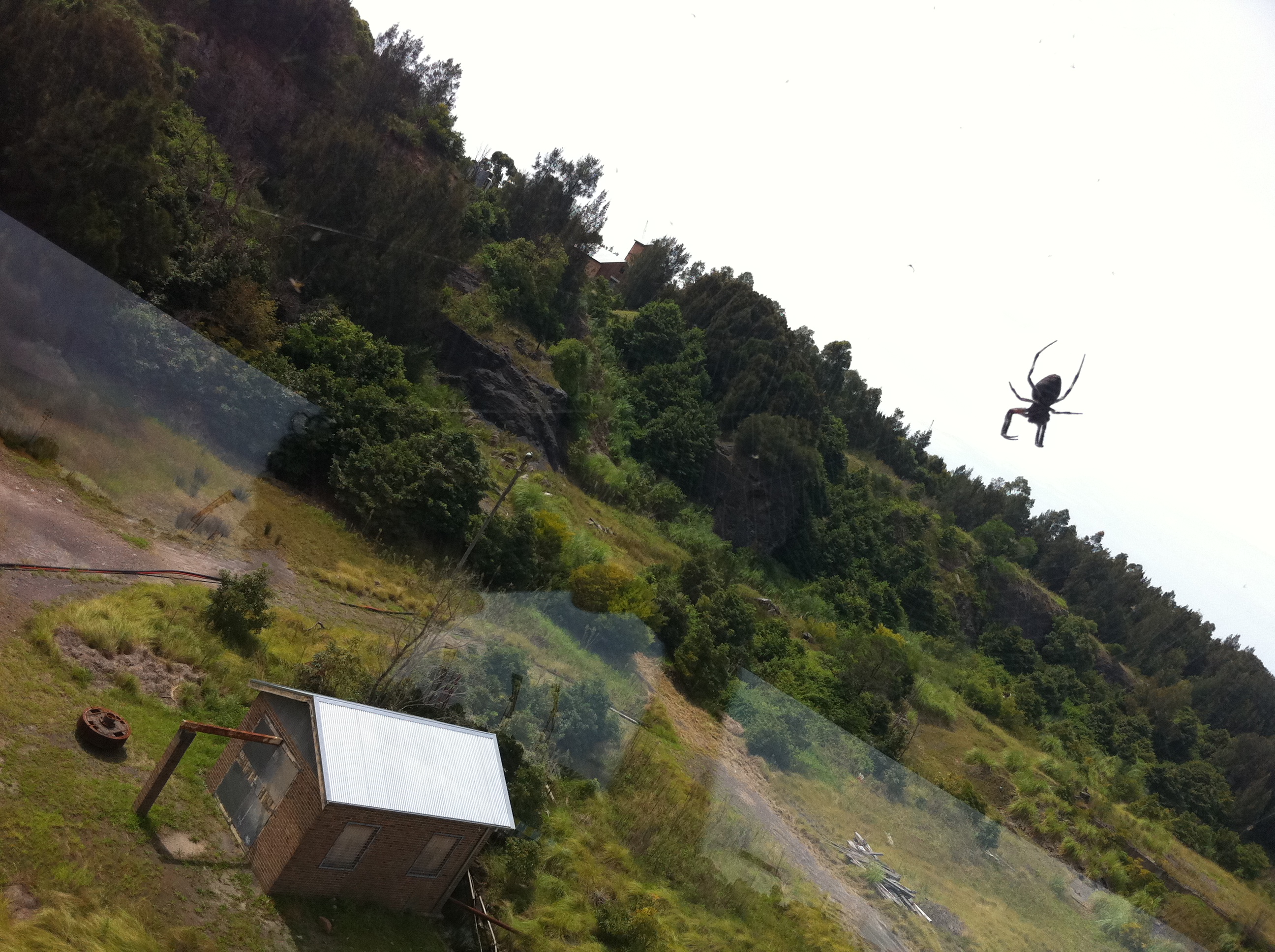

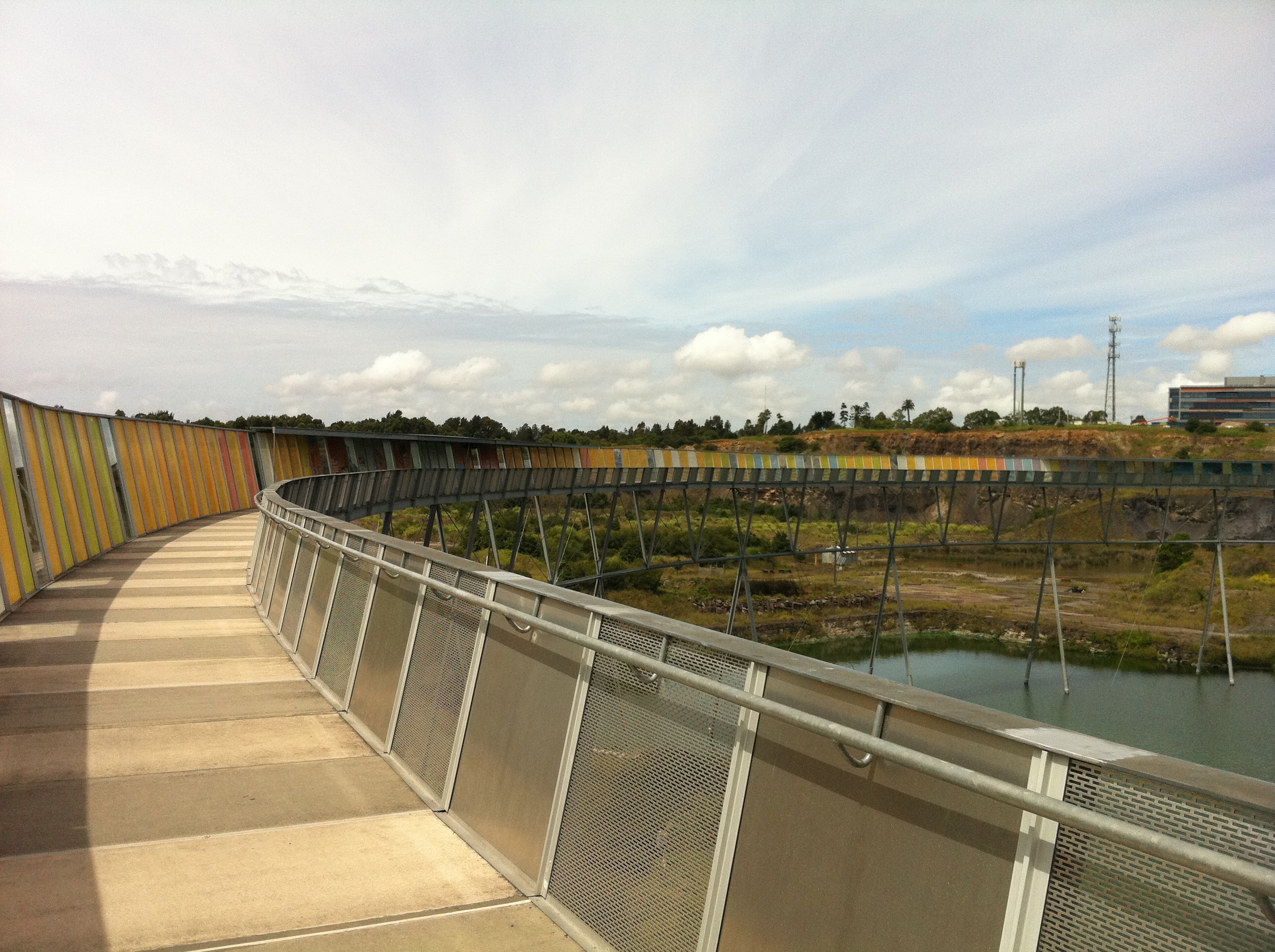
Here’s my…

…half-assed…
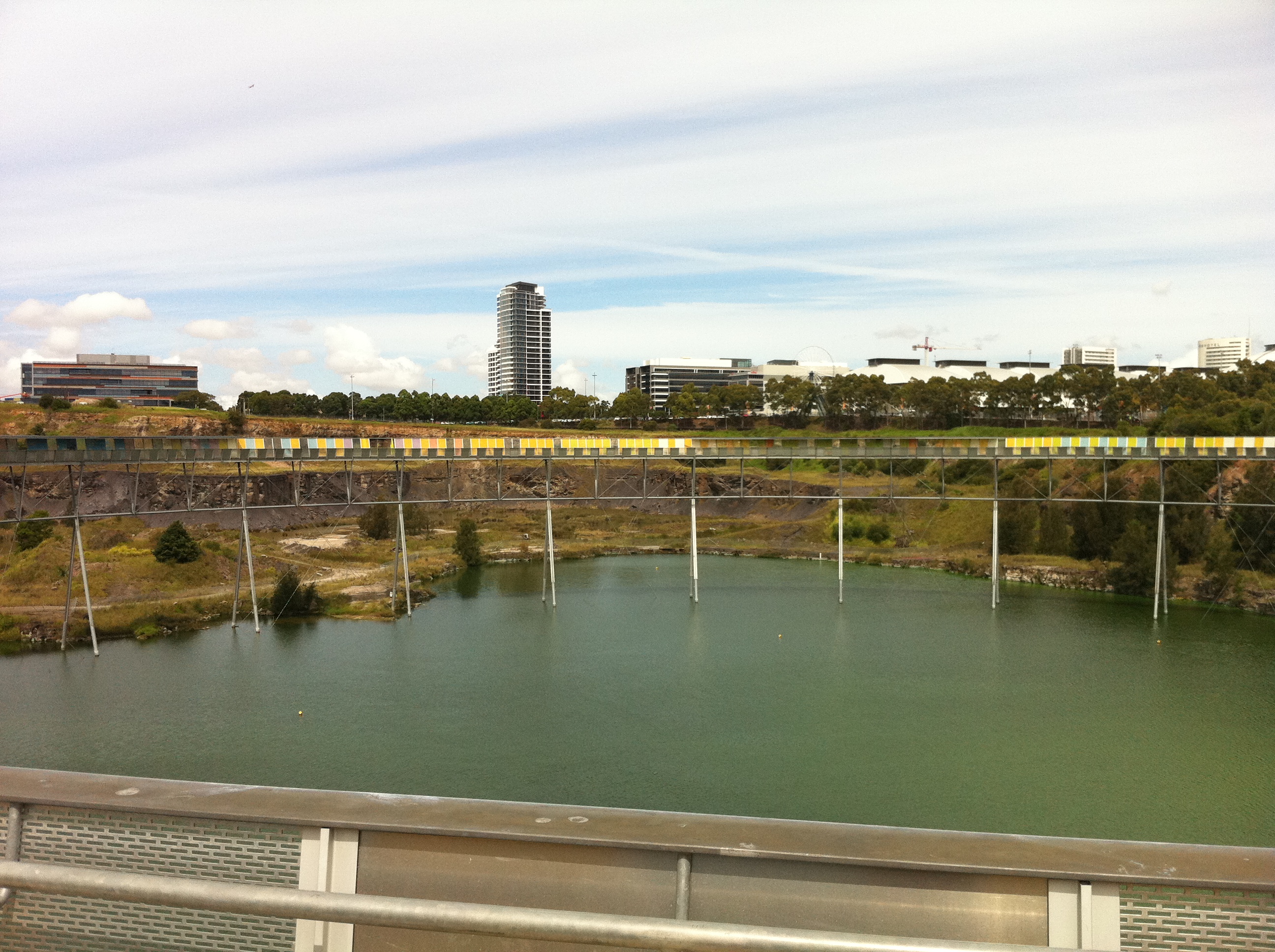
…attempt…

…at…
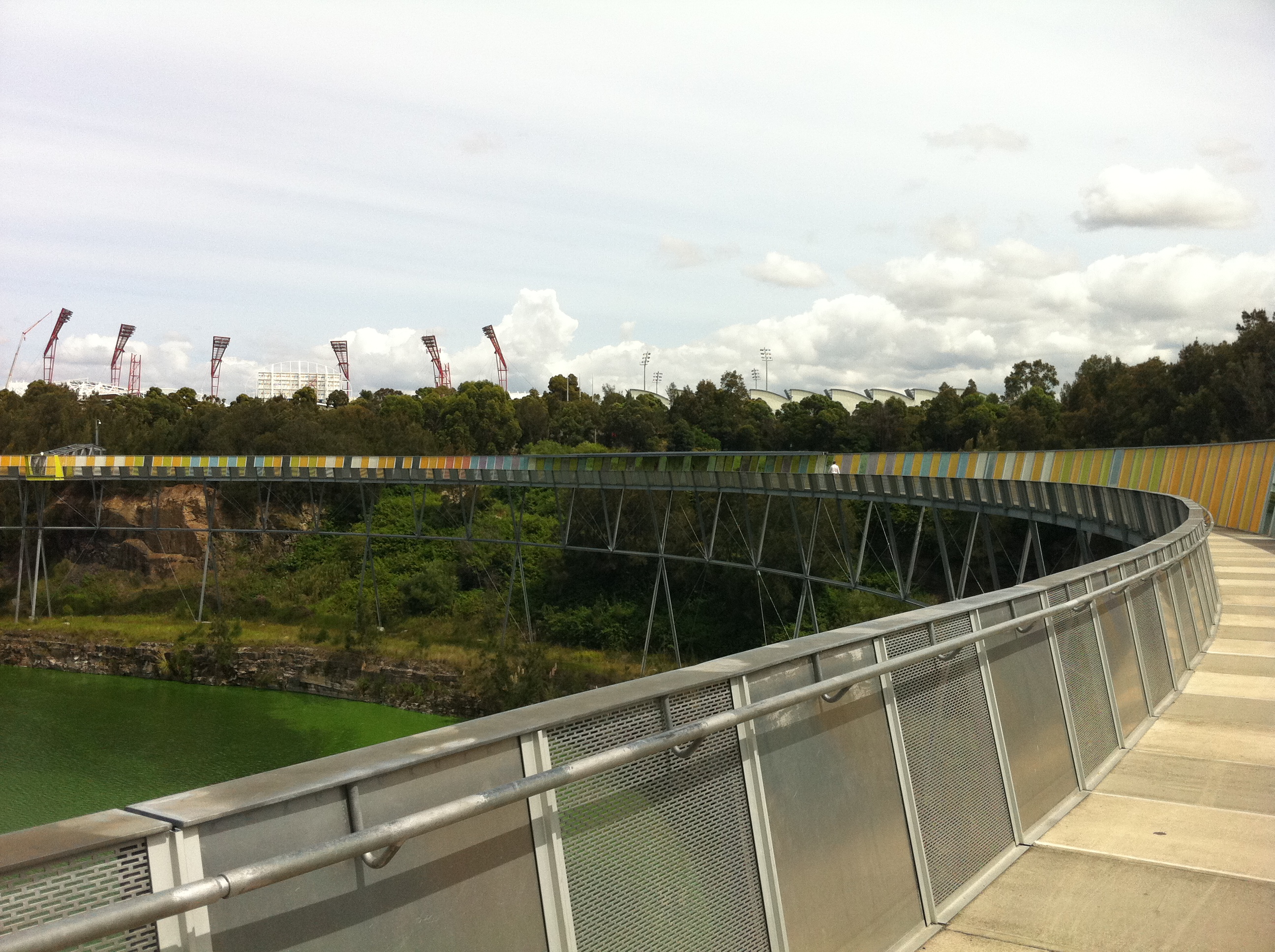
…glorious panoramia.
It’s funny…we spent the better part of last century digging this place up and sending it off all over the city for our homes, but the frogs cut out the red tape and came to the place itself, making it their home in less than a decade. We didn’t start building units here until years later. Am I saying a frog could run Mirvac or Lend Lease?
Ribbit.
Laundry/Derelict – Concord, NSW

It’s just a guess, but maybe this laundry failed because the signage was perhaps a bit too garish and overbearing. Another victim of tall poppy syndrome, you know?
A. Singer Smash Repairs/Derelict – Strathfield, NSW
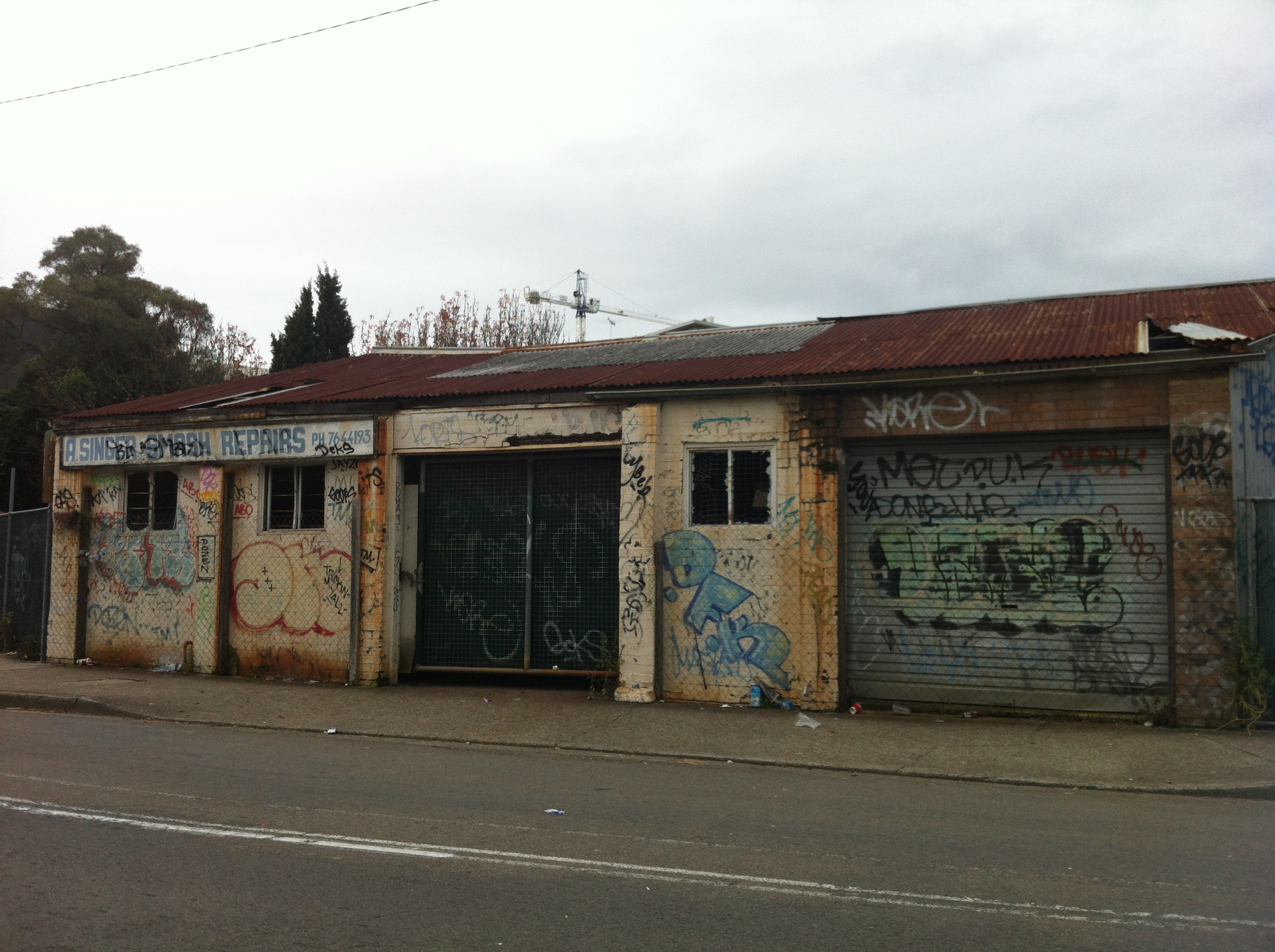
Why yes, this is the place I would go to to get my smashes repaired.
The Marina Picture Palace/Videomania/For Lease – Rosebery, NSW
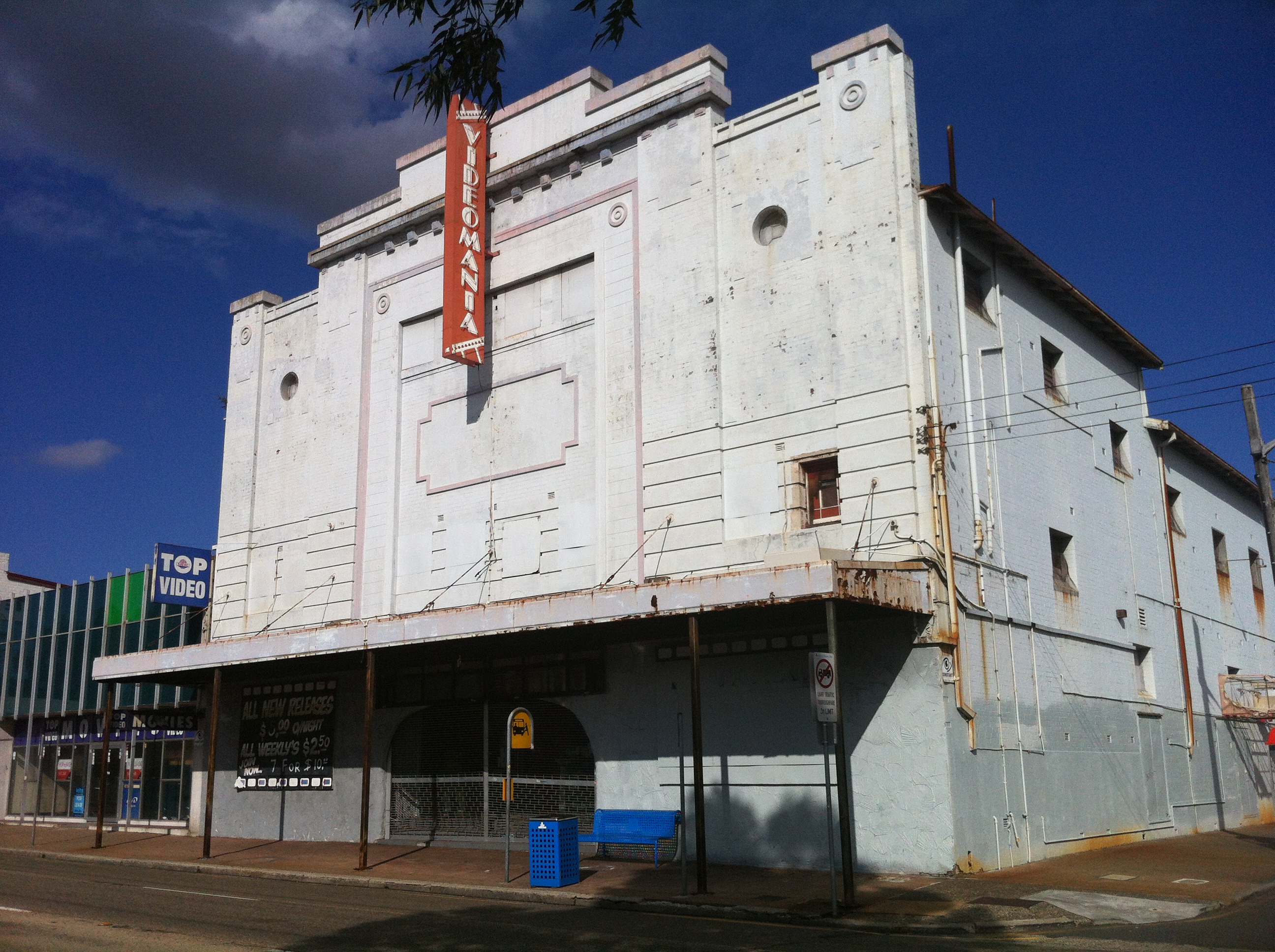
Let’s go back to the world of movies with this piece of work. It’s been sitting on Gardeners Road, Rosebery for a long time, and it shows. The signs promise ‘Videomania’, but for the last ten years it’s been derelict. Before we perform the post-mortem, let’s take a moment to reflect upon the life and times of the former Marina Theatre…
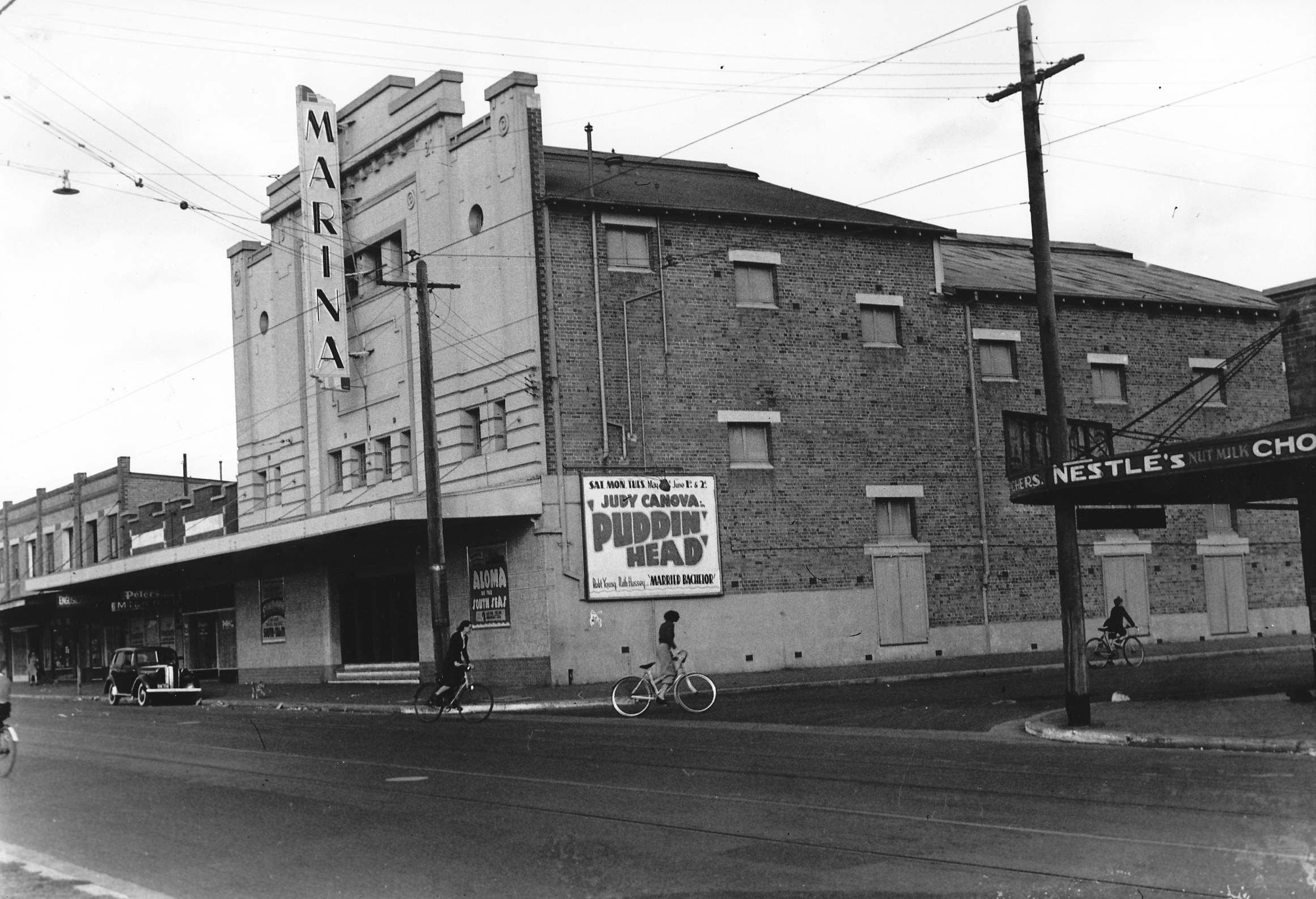
The Marina Theatre, 1941. Note the two sweet shops sitting to the left of the cinema. Also notice the bicyclists not wearing helmets, a quick way to end up with a puddin’ head. Image courtesy City of Botany Bay Local History Image Archive.
The Marina Picture Palace opened in June, 1927 with a hot double feature of Sparrows, starring Mary Pickford, and The Beloved Rogue, with John Barrymore.
Here’s an off-topic aside: The Beloved Rogue became a lost film for 40 years after its release until a well-preserved copy was found in the private collection of Mary Pickford. Now we can all enjoy Barrymore’s admitted overacting as Francois Villon. At least, we could if our video shops were as open as they used to be.
For those with a romantic image of how the cinemagoing experience used to be, and how grand it would have been back then to while away an afternoon at the picture palace, please allow me to now rain on your parade (or spoil your ending). In a scene more suited to modern-day Greater Union Hurstville, ‘excitement prevailed’ at the Marina in 1928:

Townsville Daily Bulletin, 3 Apr 1928.
The reference to ‘complete order’ is very Third Reich, isn’t it? Also, it really was ‘fortunate’, wasn’t it, that the molotov fell into the ‘side aisles’ (cheap seats). Yes, what a bit of excitement.

The Marina Theatre, 1952. Note that only one sweet shop remains. Image courtesy Sydney Reference Collection.
From the early 1960s, the cinema opened and closed a number of times under various independent ownerships. It’s safe to say that if even Hoyts wasn’t taking the bait and buying it up, it must have had something wrong with it. The Marina’s stop-start existence carried on throughout the next twenty years until it was renamed the Rosebery Cinema in the early 80s. That’ll get the crowds back in. Or maybe it was to fool the molotov throwers into thinking it was a different cinema? Either way, GOOD PLAN. So good in fact that the Marina closed for good as a theatre in 1984.

Here’s where we come in. Since that time it’s been Videomania, and now a derelict hulk. It’s a close call, but one of these incarnations is slightly more interesting. Fittingly, Videomania closed in 2002, when video-mania had all but died out, and videomaniacs had flocked to DVD. Rather than switching to a better quality format that takes up less shelf space, Videomania chose to fall on its sword.

You mean ‘weeklies’.
Even though the site is empty, the front window still contains some strange sights.

This trading hours sign indicates that the video shop NEVER CLOSED. Finding this is like finding a gravestone that reads B. 1929 D. —

A series of Greek film posters sit in the window too. Doesn’t that one on the right look enticing. Can’t wait to see that one.

There’s a poster for the Nintendo 64 game Turok: Dinosaur Hunter, which was released in 1997. The Nintendo 64 was discontinued in 2001, and Acclaim, the company responsible for Turok, went out of business in 2004. Fitting choice.

My favourite, and most bizarrely of all, is this full sized Leonardo standup. This isn’t the first time I’ve encountered the Teenage Mutant Ninja Turtles during my adventures with this blog, and I’m sure it won’t be the last. Leo stands as the building’s watchful protector – ready to cut down intruders with his blunt katana and a killer smile.

The sign at the front advertises The Full Monty, another 1997 release. Or at least, it did once upon a time. It’s often irritating to only get to see some of these places from the outside. You stand there wondering what it must be like inside given how well-preserved the exterior is, and whether the other Ninja Turtles are lurking within. Well, wonder no more, as thanks to the folks at Kelly & Sons Real Estate, we can get quite a good look at what’s happening inside the old Marina:

Image courtesy Kelly & Sons Real Estate.
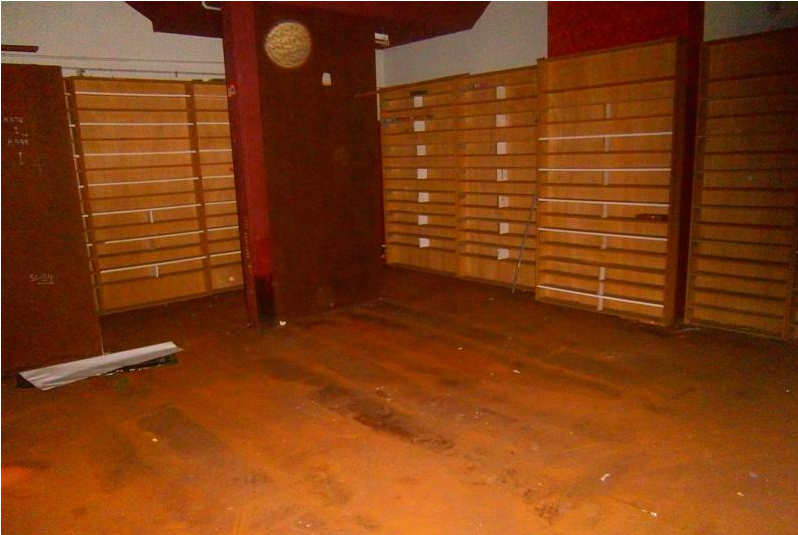
Image courtesy Kelly & Sons Real Estate.
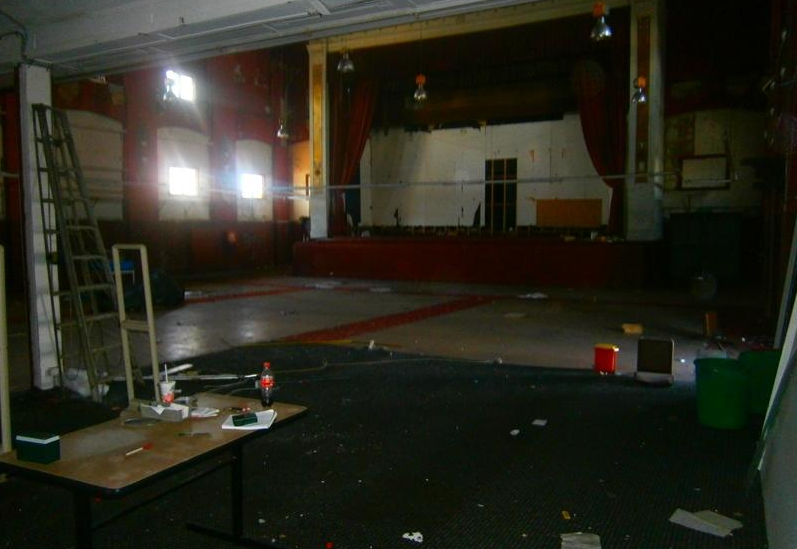
Image courtesy Kelly & Sons Real Estate.

Image courtesy Kelly & Sons Real Estate.

Image courtesy Kelly & Sons Real Estate.

Image courtesy Kelly & Sons Real Estate.
Remember, if you like what you see, you too can lease this bad boy for only $130k pa. What a steal! Kelly & Sons – holla at me so I can let you know where to send my commission.

What an ugly building. There, I said it.
Despite Videomania acting as a testament to the failure of the video shop concept in Rosebery, Top Video at some point decided to make a go of it next door. Smart thinking.

Setting up in what was clearly a bank (and before that, the Marina’s sweet shops), Top Video expected to bank fat coin on the back of Videomania’s failure.

The new release poster left inside suggests that things went wrong around 2008-09. A legacy that started with Sparrows ends with You Don’t Mess With the Zohan.
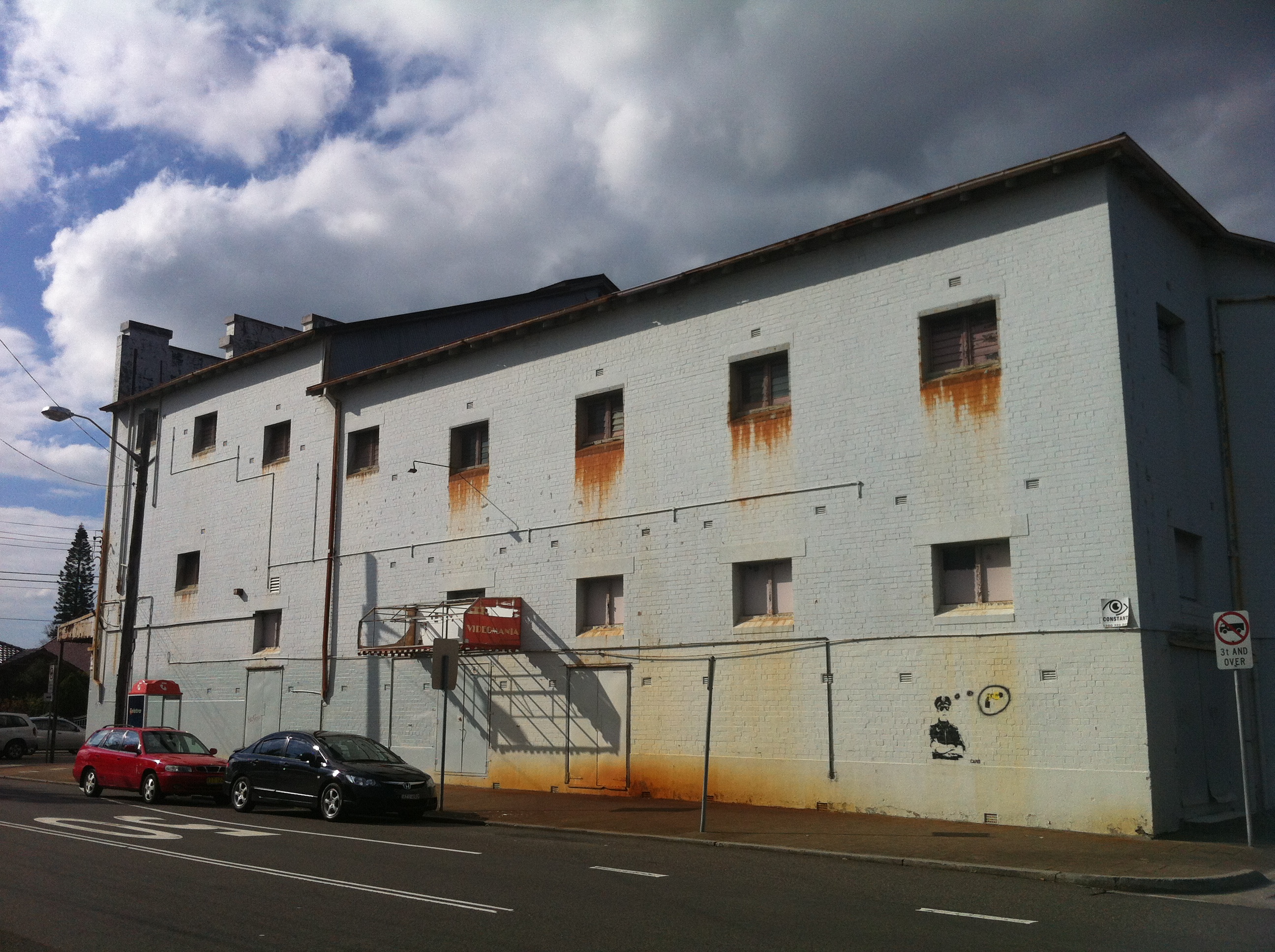
As I turned to leave, I took one last look back at Videomania, and it looked like the building was crying. Look at those top windows. It was as if the theatre was imploring me, as the only one around who cared, to put it out of its misery. I would, Marina, honestly, it’s just…that Leonardo is one intimidating dude.
VIRTUAL UPDATE: An explosive new picture of the Marina/Roxy/Videomania from 1996 has come to light! Check it:
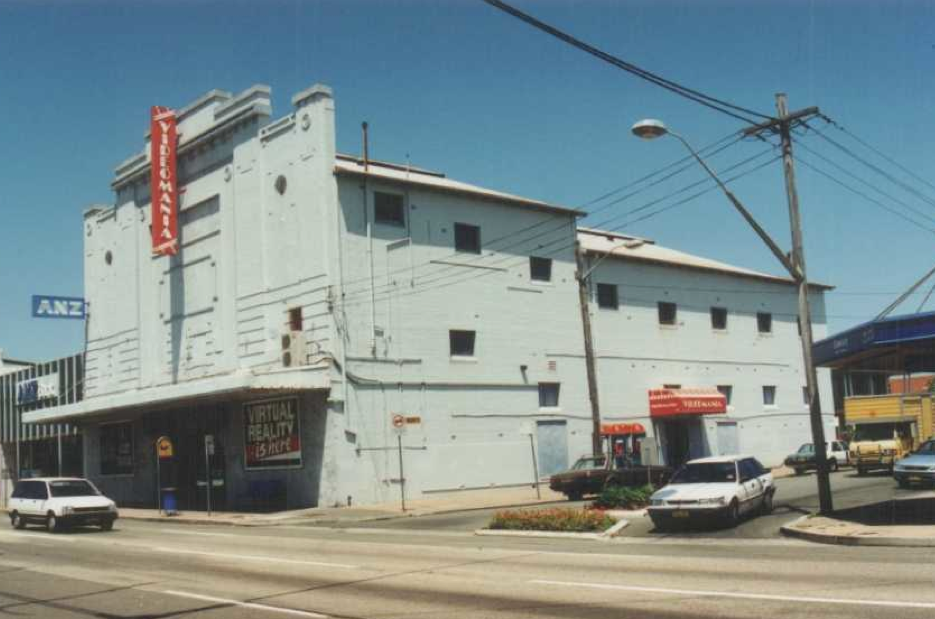
From this, we can see the bank next door was in fact an ANZ, that the Videomania side entrance was once viable, and that VIRTUAL REALITY IS HERE. How else could I have known it was from 1996?
FUTURISTIC UPDATE: I revisited the Marina a year later and made an explosive discovery.
ROCKIN’ UPDATE: The development-minded Vlattas family, owners of the Cleveland Street Theatre and the Newtown Hub, are currently renovating the Marina with the aim of turning it into a live music venue. My suggestion: keep Leonardo as your bouncer. Thanks, reader Rozie!
St. George Bowling & Recreational Club/Derelict – Bexley, NSW
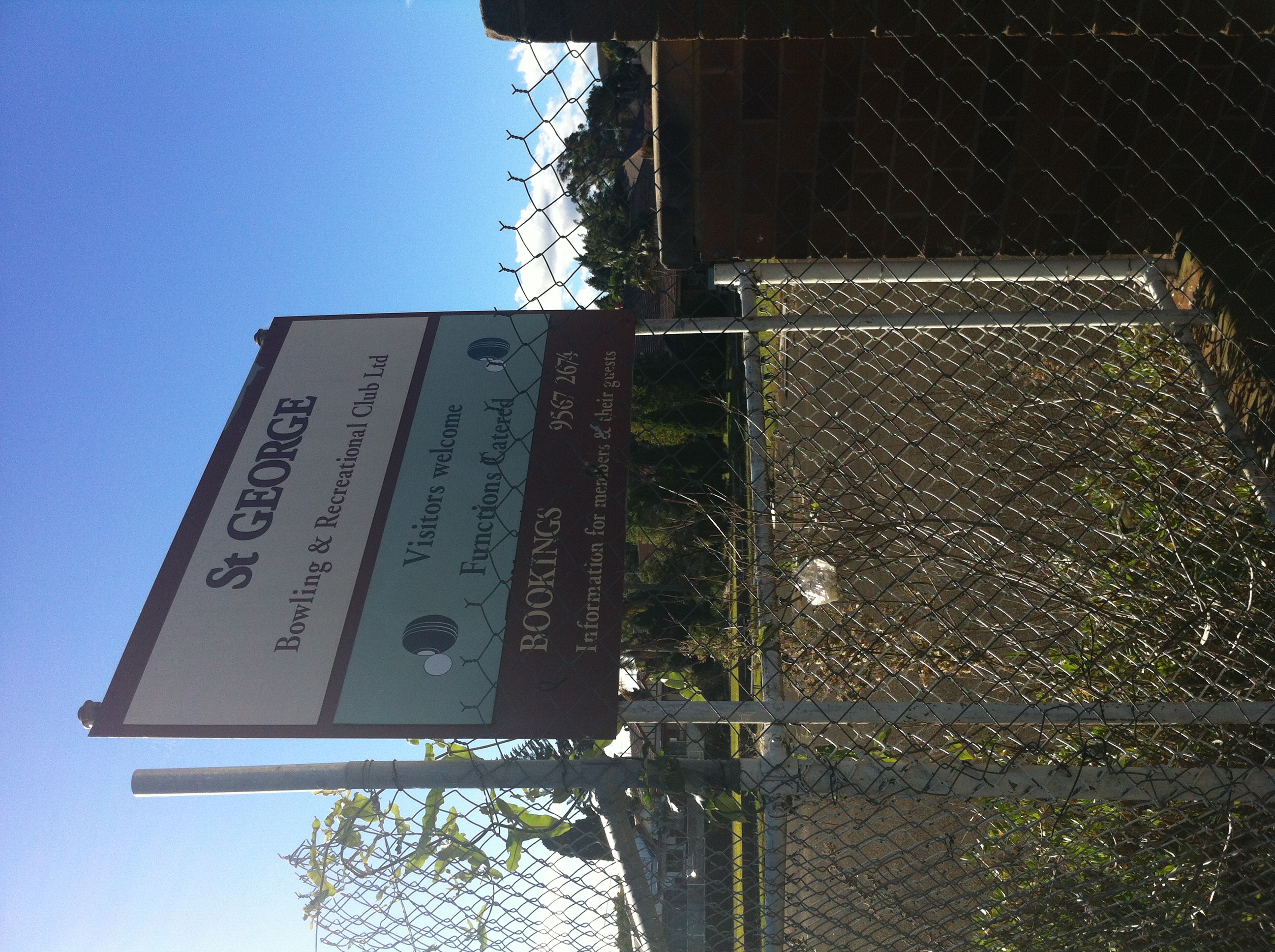
Here we have the festering remains of the St. George Bowling Club. Like many of its members, the bowling club came into existence in 1900, when a meeting at the Rockdale Town Hall ended with a decision to form a bowling club. I wonder how many town hall meetings end like that these days? For that matter, I wonder how many town hall meetings actually start these days?
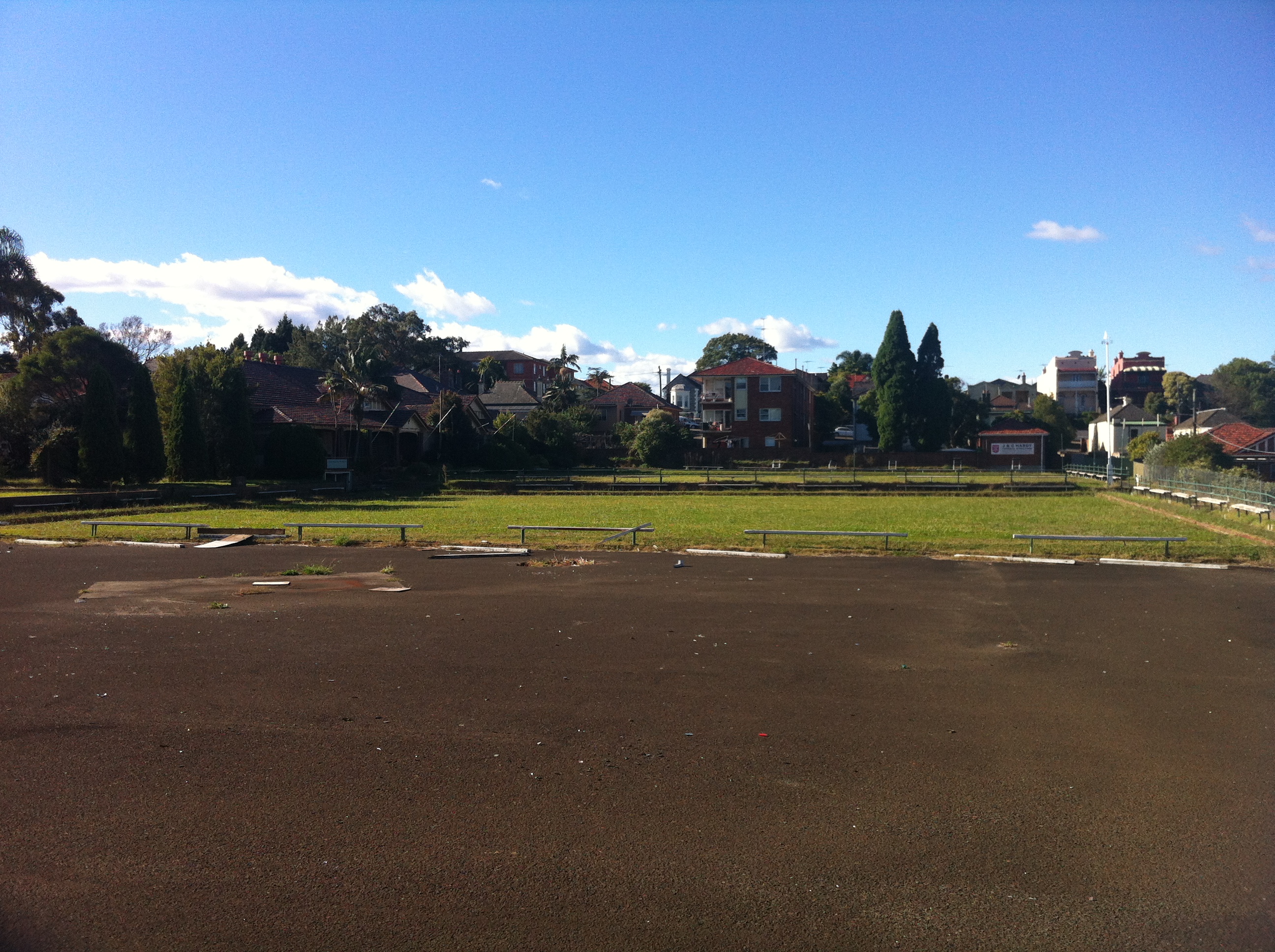
Feathers were ruffled in 1919 when the land the bowling club was built on was suddenly and urgently required by New South Wales Government Railways to enable quadruplication of the railway lines by that project’s estimated completion date of 2030. The club was moved, and seemed to land closer to the jack here on Harrow Road.
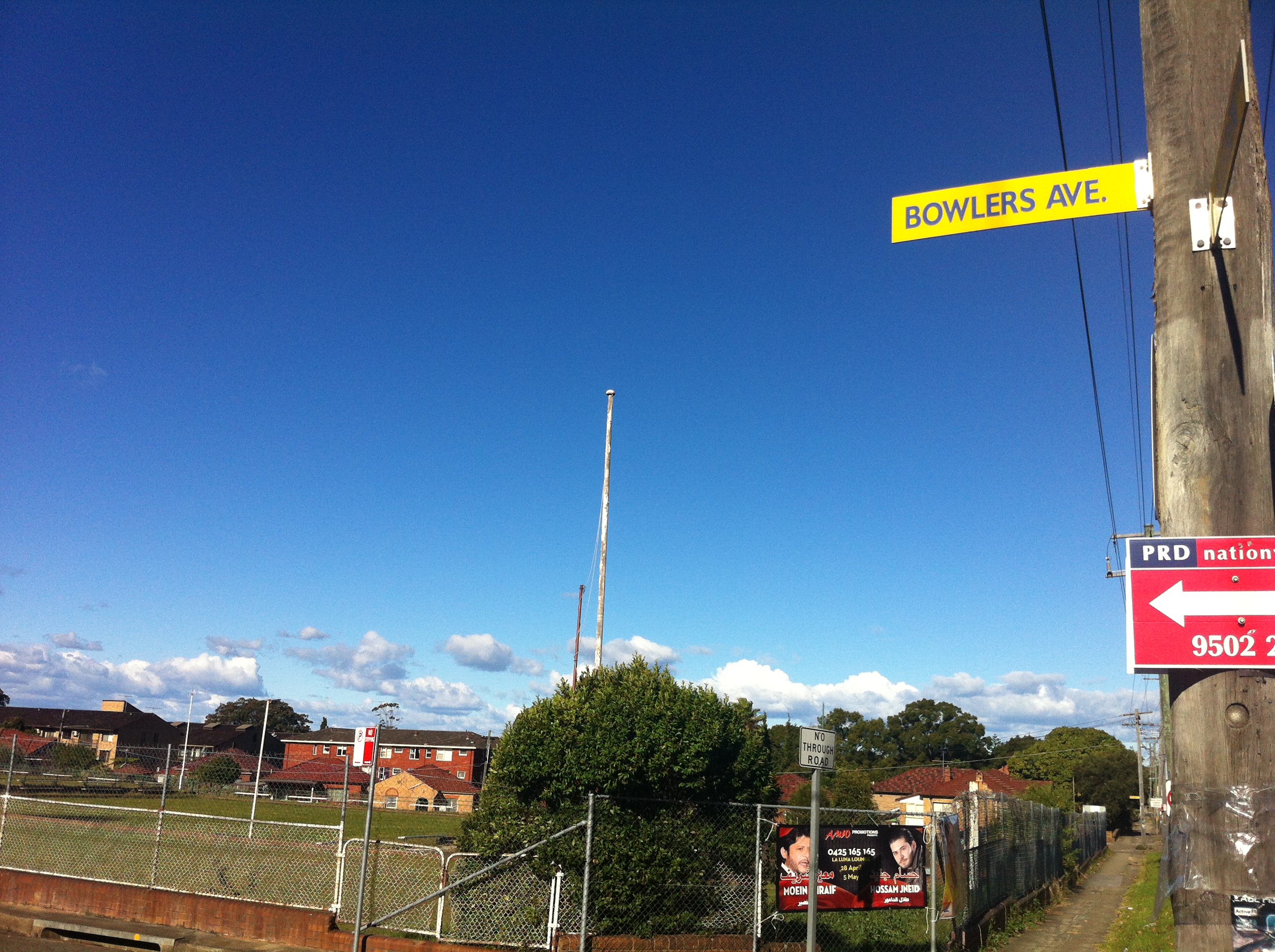
In an apparent passive-aggressive display of entrenchment, the little street beside the club is named Bowlers Avenue. Doesn’t it look silly today. Bowlers Avenue sounds more like a memorial garden in a cemetery.
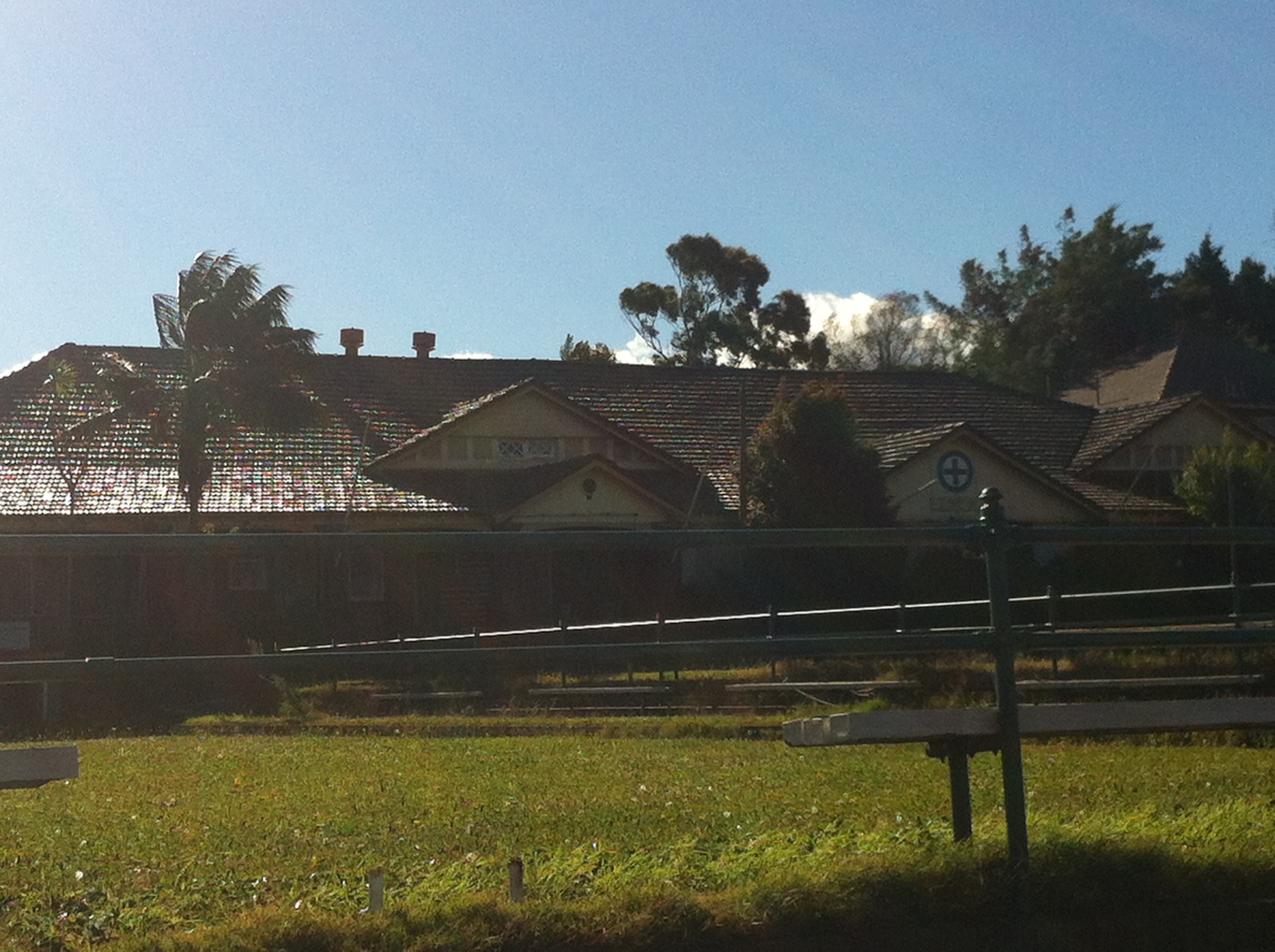
While the building is a rare example of a Federation era bowling club, it’s also been abandoned for several years. Unfriendly signs threaten would-be bowlers to stay the hell out, and many of the building’s windows have been boarded up.
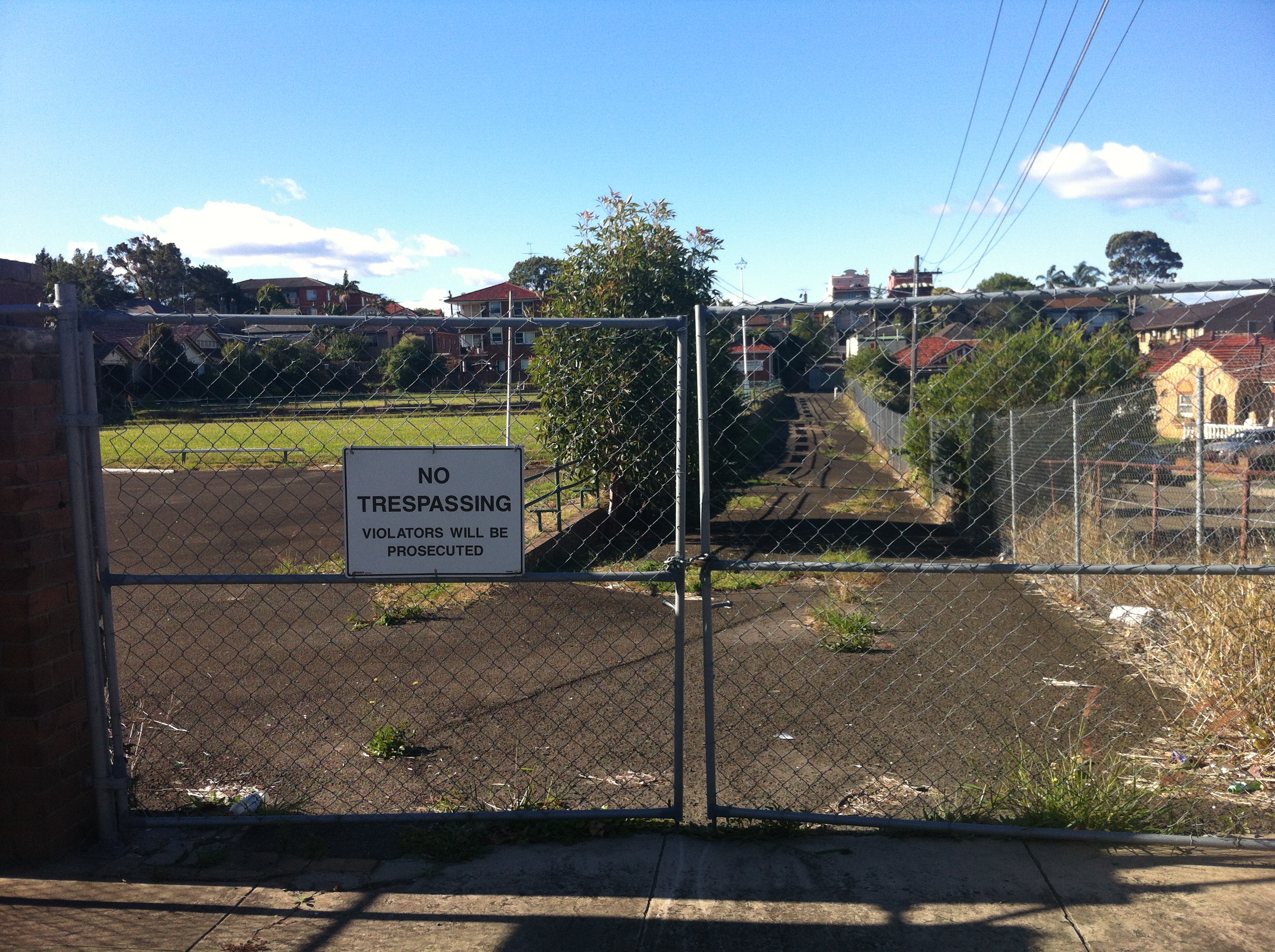
No one is picking up the sport of lawn bowls these days, and as the current superstars of the game fade away, there really is no need for these clubs. This one didn’t even have a TAB. And after all, it’s not like this is an isolated incident. Unless there’s some big recruitment drive for new members sometime soon, the game will end up with most of its players on that big Bowlers Ave in the sky.

 Past/Lives of the Near Future