Rookwood Necropolis Railway – Lidcombe, NSW
A fact which escapes many people is that Rookwood Necropolis, located in Sydney’s west, is the largest of its kind in the Southern Hemisphere. It’s huge. It has its own postcode. Originally named Haslem’s Creek Cemetery, it opened in 1867 as a replacement for the close-to-capacity Devonshire Street Cemetery, itself a replacement for Sydney’s old burial ground, where Town Hall now stands. For once, they chose a winner – nearly 150 years later and it’s still not full.
A visit to the cemetery makes clear that although much of it is made up of graves from the distant past, it’s still a working cemetery and there are new additions all the time. But back when cars weren’t so commonplace, the easiest way to get a corpse and mourners from point a to point b was by train, and the premier way to do that from 1867 onwards was by rail. Trains would depart from Regent Street’s Mortuary Station and deviate at Lidcombe to the Rookwood line.
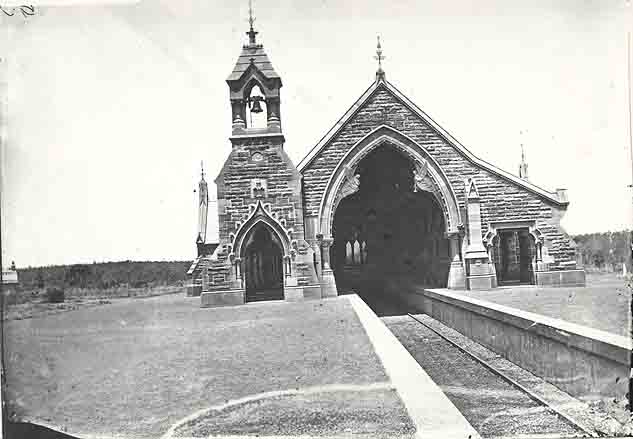
Rookwood’s Mortuary Receiving House No. 1, 1870. Image courtesy State Records NSW.
Once a train entered the Necropolis, there were four stations within the grounds at which to stop (that’s three more than Castle Hill ever had), with the main one romantically named Mortuary Receiving Station No. 1. Once again designed by James Barnet (currently a Rookwood resident), this was the most ornate of the four, and was a sister station to the one on Regent Street. Crafted to be reminiscent of a church, like Regent Street, Rookwood No. 1 featured a bell that would ring out half an hour before departure so as to let mourners know to get back on the train or get left behind. Looking at both this one and the Regent Street station it’s easy to see that they fit in perfectly with the Victorian era’s fascination with death and the afterlife (not to mention trains). It’s powerful imagery – your journey ended with angels holding scrolls and trumpets as you arrived at your final destination. Can’t say that about Epping Station. Once again, the station proved to be as murderous as its twin. That, or these are just some cases of people being in the right place at the wrong time:
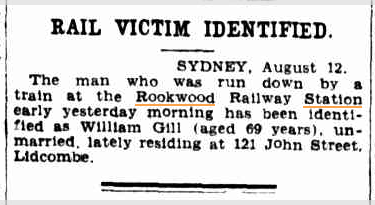
Brisbane Courier, 13 Aug 1932.
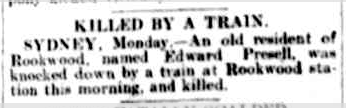
Argus, 27 Feb 1906.
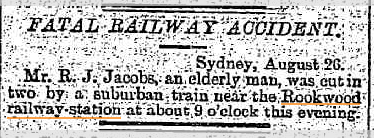
Adelaide Advertiser, 27 Aug 1896.
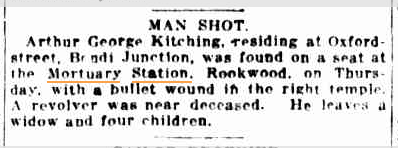
SMH, 20 Nov 1915.
In 1901, the line was expanded to include more stations within Rookwood, but none were constructed with such grandeur as No. 1 (which incidentally wasn’t as grand after the expansion, as part of its waiting rooms had to be removed to make way for the through line). No. 2 featured just a timber shelter:
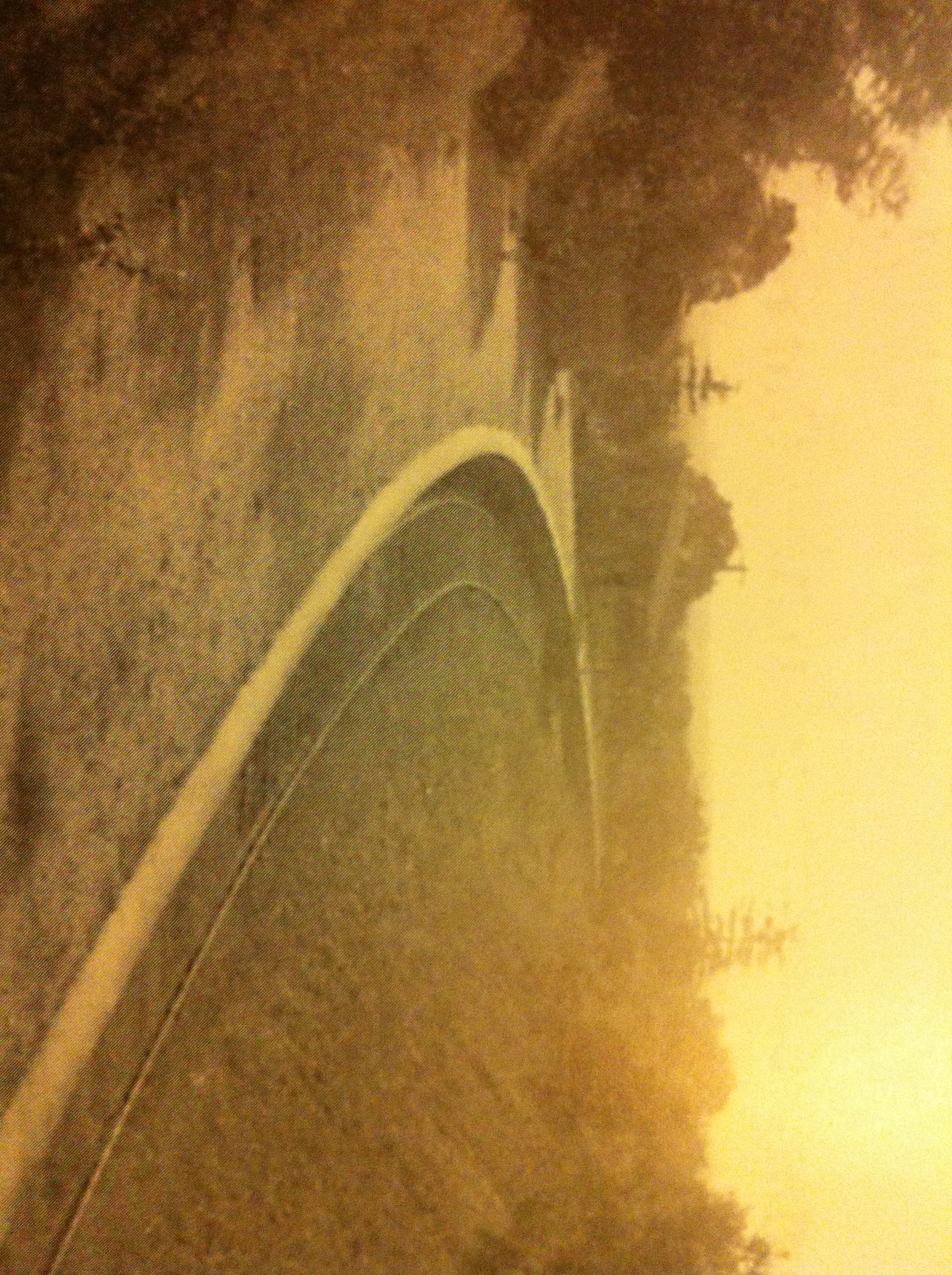
Rookwood’s Mortuary No. 2 Station, 1948. Image courtesy I. K. Winney/John Oakes.
No. 3 was the only other station in the line to have had any kind of thought put into its design, and that’s partly because it was built from the former waiting rooms of No. 1.
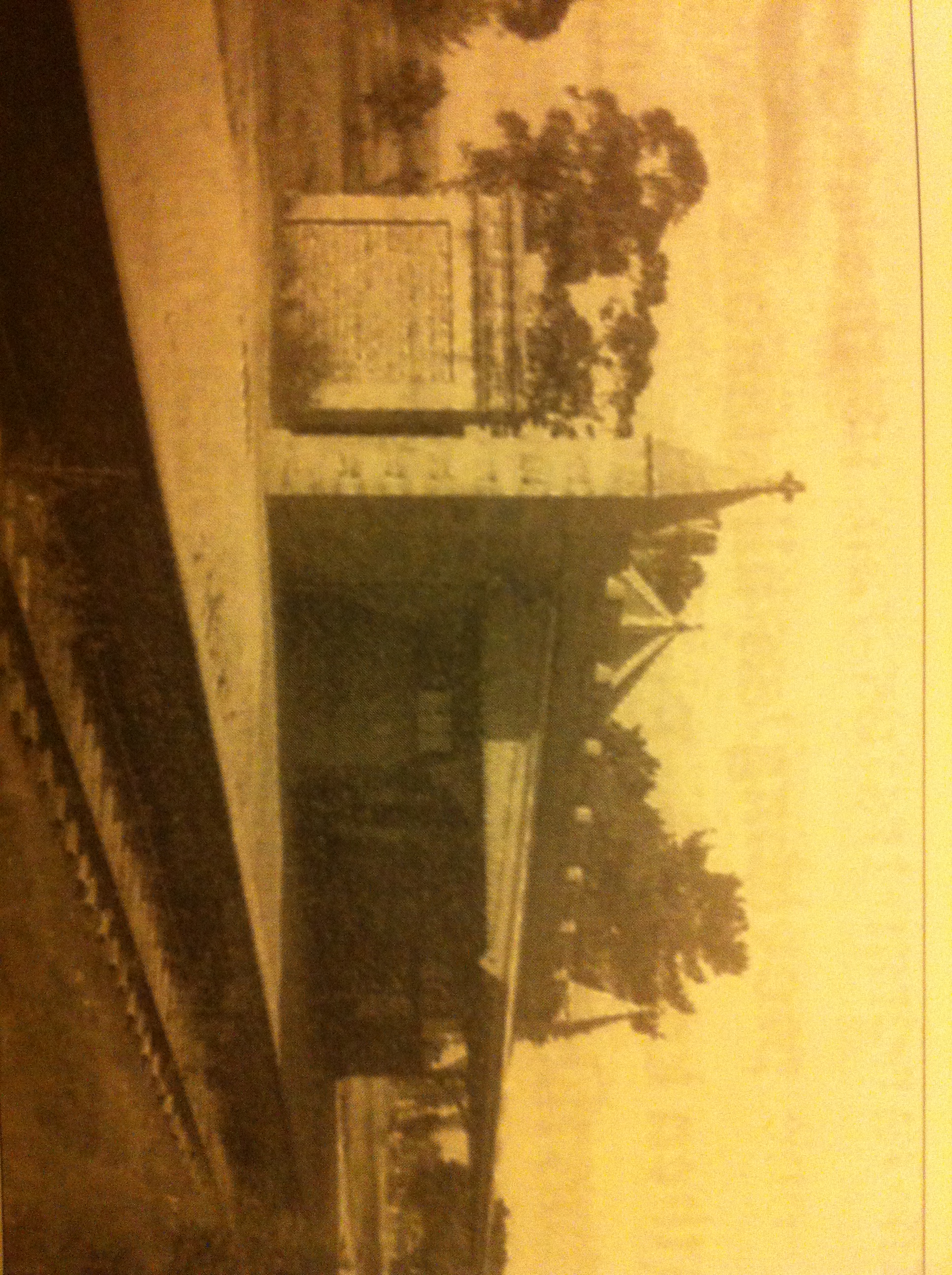
Rookwood’s Mortuary No. 3 Station, 1948. Image courtesy I. K. Winney/John Oakes.
No. 4 was added in 1908, when the line was at its peak (particularly on Mothers’ Day). Again there’s no disguising it’s really just a shack along the platform.
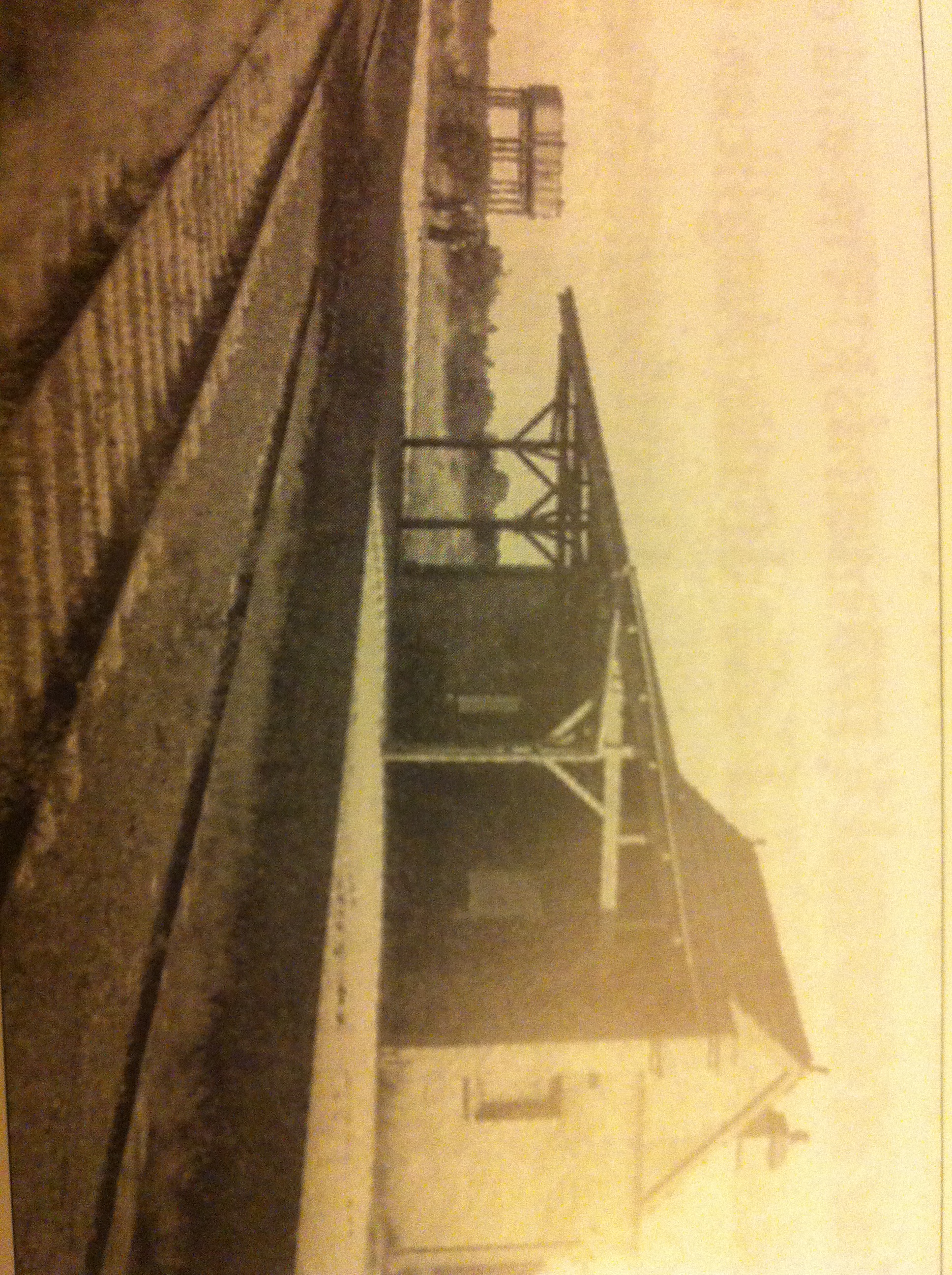
Rookwood’s Mortuary No. 4 Station, 1948. Image courtesy I. K. Winney/John Oakes.
As with Regent Street, as cars became the preferred way to get to and from (or in some cases, just to) a Rookwood funeral, the train line’s usefulness declined. It’s not like residents could catch the trains to and from work. In 1948, the line was decommissioned, and in typical CityRail style wasn’t completely removed until 1965 (even now, a Cemetery siding still exists off Lidcombe Station. Nice work, fellas). The stations themselves then passed on to their next life, some more interesting than others.
The site of No. 4 has since become a bus stop. Buses replaced trains as the public transport of choice to Rookwood after 1948. I’m assuming corpses still ride for free. Neither No. 4 or No. 2, the lesser stations, appear on the current Rookwood map. It’s almost like they don’t want you to know where they were, but the truth is that there’s not much at either site, so there’s almost no point in going there. No. 2, the least impressive of any of the stations, is today just a large green curve of grassy land bordered by tombstones – not exactly a standout spot at Rookwood.
No. 3, however, is a different story. Because it actually featured a building that would require things like foundations, the site is marked on the map, and today exists outside the Catholic Cemetery Trust office and carpark. It’s fascinating:
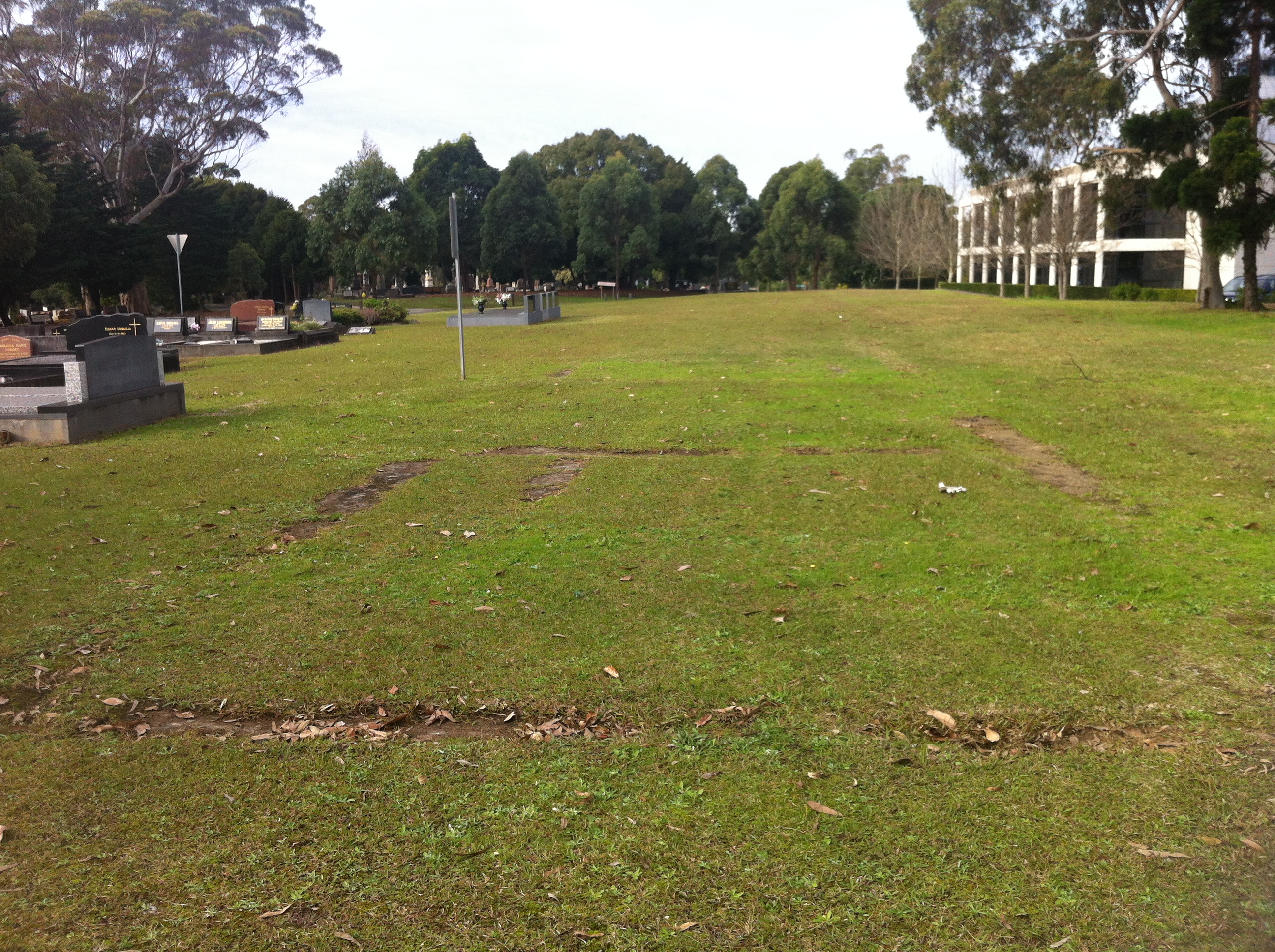
No. 3 Station, 2012.
There’s no sign or anything apart from the hint on the map to let you know what this is. It’s so nothing that you almost wonder why they bothered leaving it there, but there it is.
No, the real story behind the Rookwood stations is the fate of Receiving House No. 1.
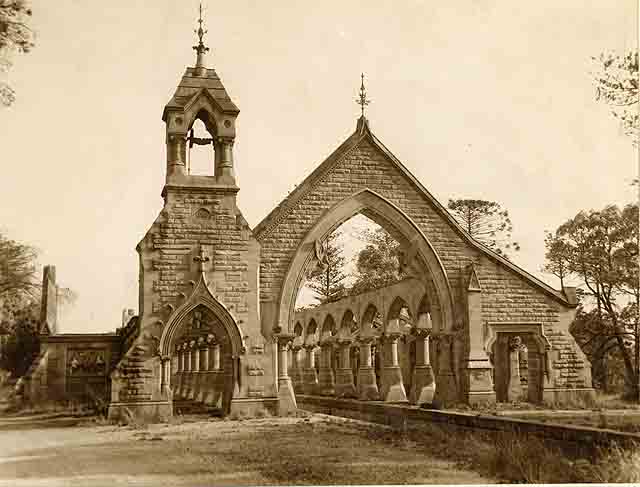
Rookwood’s Mortuary Station No. 1, 1952. Image courtesy State Records NSW.
After 1948 it fell into dereliction. A bushfire destroyed all the woodwork, it became a popular place to drink at night (why?!) and, indignity of indignities, someone pinched the bell. Now let me stop this right there; someone stole the heavy bell? Who does that? How do they do it? Did they plan it? Case the bell for a few weeks before realising that the residents couldn’t do anything about it even if they tried? Did they back up the ute and load it up? Where is it today? Baffling.
The Railway Department needed to offload this bomb, and in 1952 it went on the market. It’s a strange decision; if RailCorp suddenly decided to close, say, Croydon Station, would it appear on the market not long after? Or maybe on eBay, with the Rookwood bell? Presumably because no one had internet back then, the station still hadn’t sold by 1959, when a Reverend Ted Buckle had a brilliant notion.
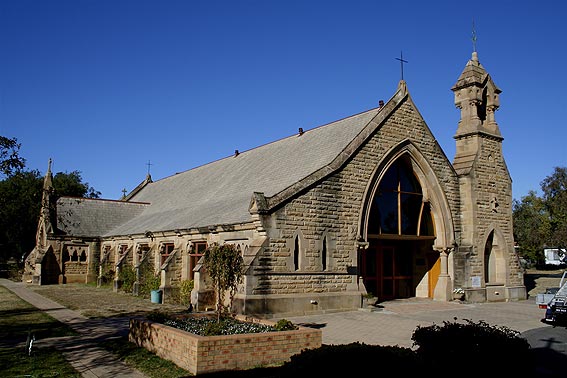
All Saints Anglican Church, Ainslie, Canberra.
The station was bought by the All Saints Anglican Church in Ainslie, Canberra, to be its new building. It was demolished and reconstructed brick for brick…well, almost. Notice anything different? First off, they had to get a new bell, but second, the bell tower’s on the opposite side. Did they just forget where it had been in the first place? Didn’t the bricks not match up? Anyway, churchgoers in Ainslie still attend Mortuary Receiving House No. 1 each week, mostly unaware of the building’s history (despite the fact that it’s discussed in detail on the Church’s website).
Meanwhile, back at Rookwood, a monument has been built to commemorate No. 1 and the Necropolis’ rail history in general.
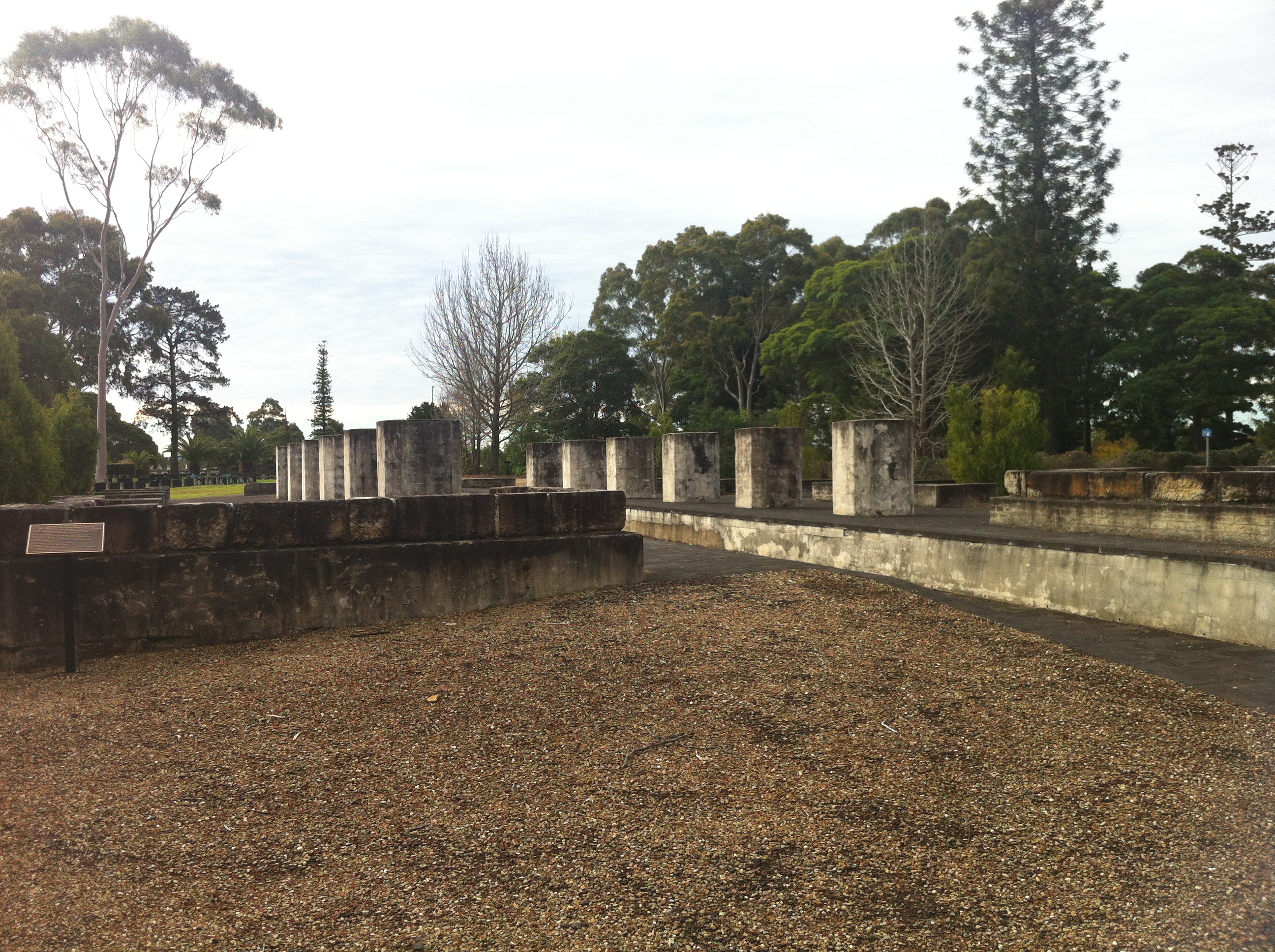
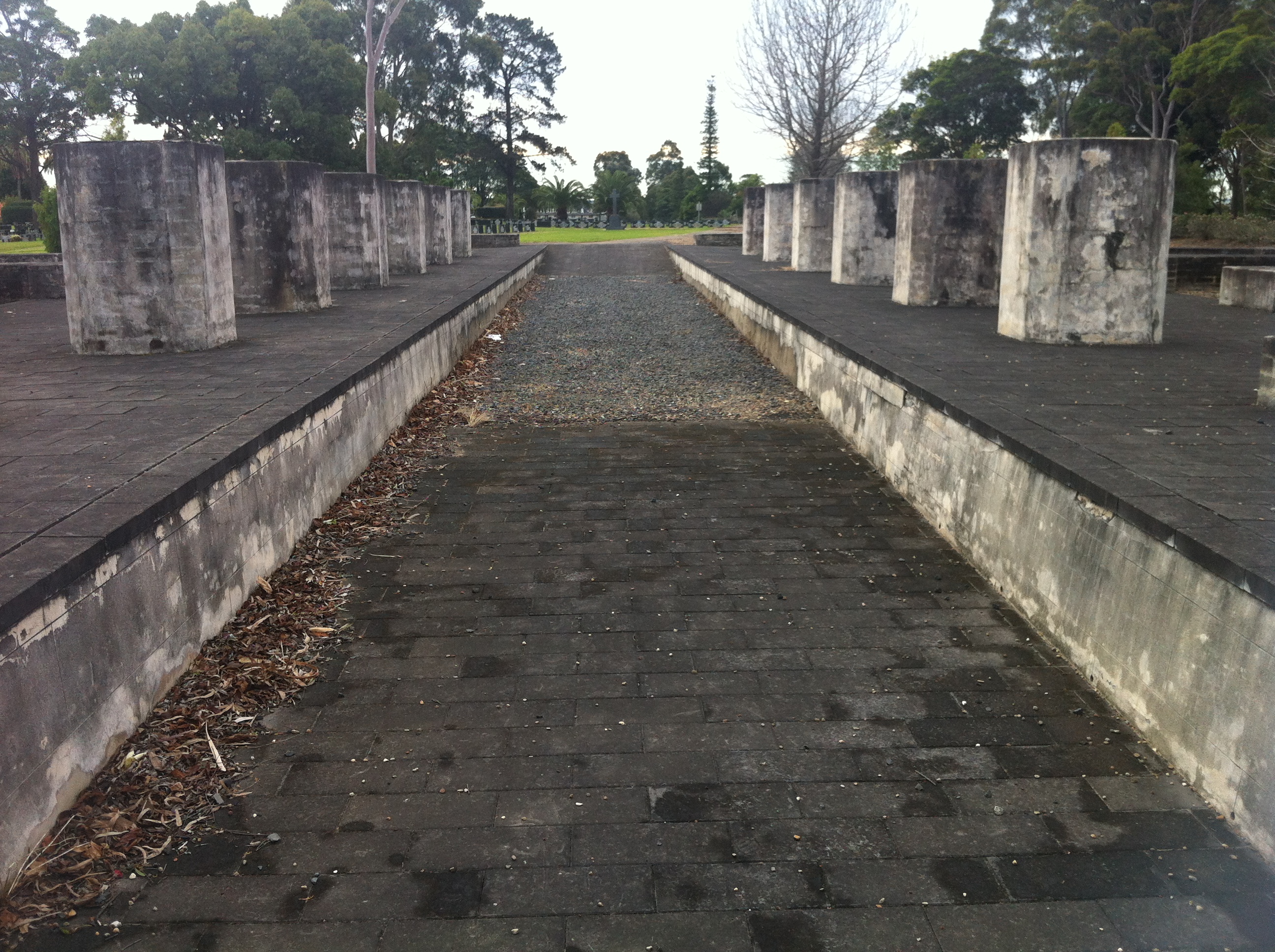
It looks nice, and it’s very subdued. It doesn’t look out of place in the gloomy surrounds of Rookwood, and residents no longer need to worry about the noise pollution of the trains. Happy endings all around…especially for that sicko who’s out there somewhere, gleefully ringing his ill-gotten bell over and over, laughing maniacally.
E. Way & Co/Pandora – Pitt Street, Sydney NSW

At the dawn of the retail era, several big names were standing out amongst the dross in Sydney. Pitt Street was quickly becoming the place to be for all department stores, and David Jones was king. One of the apparent heirs to the throne was E. Way & Company. Originally a drapery claiming to the be the cheapest in Sydney (on Pitt Street? Yeah, right), E. Way was established as a department store in 1891. E. Way was acquired in 1955 by Farmers, which itself was acquired in 1961 by the Myer juggernaut.

E. Way & Co, 1944. Image courtesy State Library NSW.
These days, jewellery store Pandora occupies the tiny building that once featured a grand display to rival DJ’s. Look at how small (yet grand) the building is in comparison to the monstrous Westfield, and you get a sense of how easily satisfied shoppers were back then. It’s sad to think about how quickly these kinds of acquisitions and mergers can absolutely eliminate a brand, and E. Way is just another victim ‘honoured’ with an unreachable, leftover facade. It’s more a case of ‘it’s not worth bothering to take it down’ than ‘leave it up for history’s sake’. Isn’t it always the Way?
Mortuary Station/Regent Street Station – Chippendale, NSW
Picture this: it’s 1869, and you’re dead. The funeral’s at Rookwood Cemetery at 10am, and you’re in Chippendale. It’s 9:30am. You have no money. What to do? How will you get there in time?

Mortuary Station, 1871. Image courtesy State Library NSW.
At the time of its construction, the Mortuary Station was adjacent to the original Central Station, then known as Sydney Station. Despite a misleading mural beside the station on the train track side attributing its design to Florence Mary Taylor, Australia’s first female engineer and architect born ten years after its completion, it was in fact designed by colonial architect James Barnet. Barnet also designed Mortuary’s sister station at Rookwood, but more on that next time.

The sombre design is perfectly suited to the task performed by the station, and the gothic detail is fantastic. Standing before it, you can only imagine how many mourners boarded trains bound for their loved ones’ final stop. Funeral trains would depart from Mortuary Station each day for either Rookwood, Woronora or Sandgate cemeteries. By 1927 the cost of a ride was around four shillings (roughly 40c); corpses traveled for free.

Mortuary Station, 1871. Image courtesy State Library NSW.
And didn’t the station live up to its name! Beneath the gloomy facade was an insatiable bloodlust:

Singleton Argus, 10 Mar 1925.

Barrier Miner, 13 May 1930.
Sometimes, trains didn’t even have to be involved in the carnage:

SMH, 24 Feb 1903.
Spooky. Gotta wonder if these guys ended up on one of the trains at the station. Speaking of spooky, it is alleged that the station is haunted. Further rumours suggest that a building across the road once operated as a mortuary itself, and that there exists a tunnel beneath the road connecting this building to the station. Evidence is pretty much non-existent, but if you know more, let Past/Lives know.

Mortuary Station, Newtown, 1965. Image courtesy sydneyarchives.info.
In 1875, at the height of Mortuary-mania, a junior version of the Mortuary Station was set up at Newtown to provide a starting point for mourners unable to reach the city. It was in keeping with the design of the original, but didn’t have the staying power. It was demolished in 1965.

Eventually, Sydney’s roads got to a standard that corpses could be taken to the cemeteries by car. If the roads then were anything like they are now, I’m presuming most of the deaths were caused by starvation or perhaps boredom from being stuck in traffic for so long. There became less and less of a need for funeral trains, despite complaints like these in 1925:

SMH, 3 Dec 1925.
Overcrowded trains aren’t just a modern problem. Anyway, in 1938 the Mortuary Station closed and the cemetery services departed from Central instead until they themselves ceased operation ten years later. Not long after its closure, the Mortuary Station was renamed Regent Street Station and used for dog trains, which took dogs to races in Wollongong and Gosford. I’d like to think corpses could still travel for free.

Since 1981 the station has been restored a number of times. In 1986, it became the site of a pancake restaurant: Magic Mortuary. Four train cars were stationed beside the platform, and hosted meals, live shows and a gift shop. Thankfully, this grotesque display only lasted three years. It’s currently undergoing further refurbishment since those graffiti scallywags are always tagging it, but an optimistic sign out the front expects refurbishment to be completed by the end of 2011! Hope so!
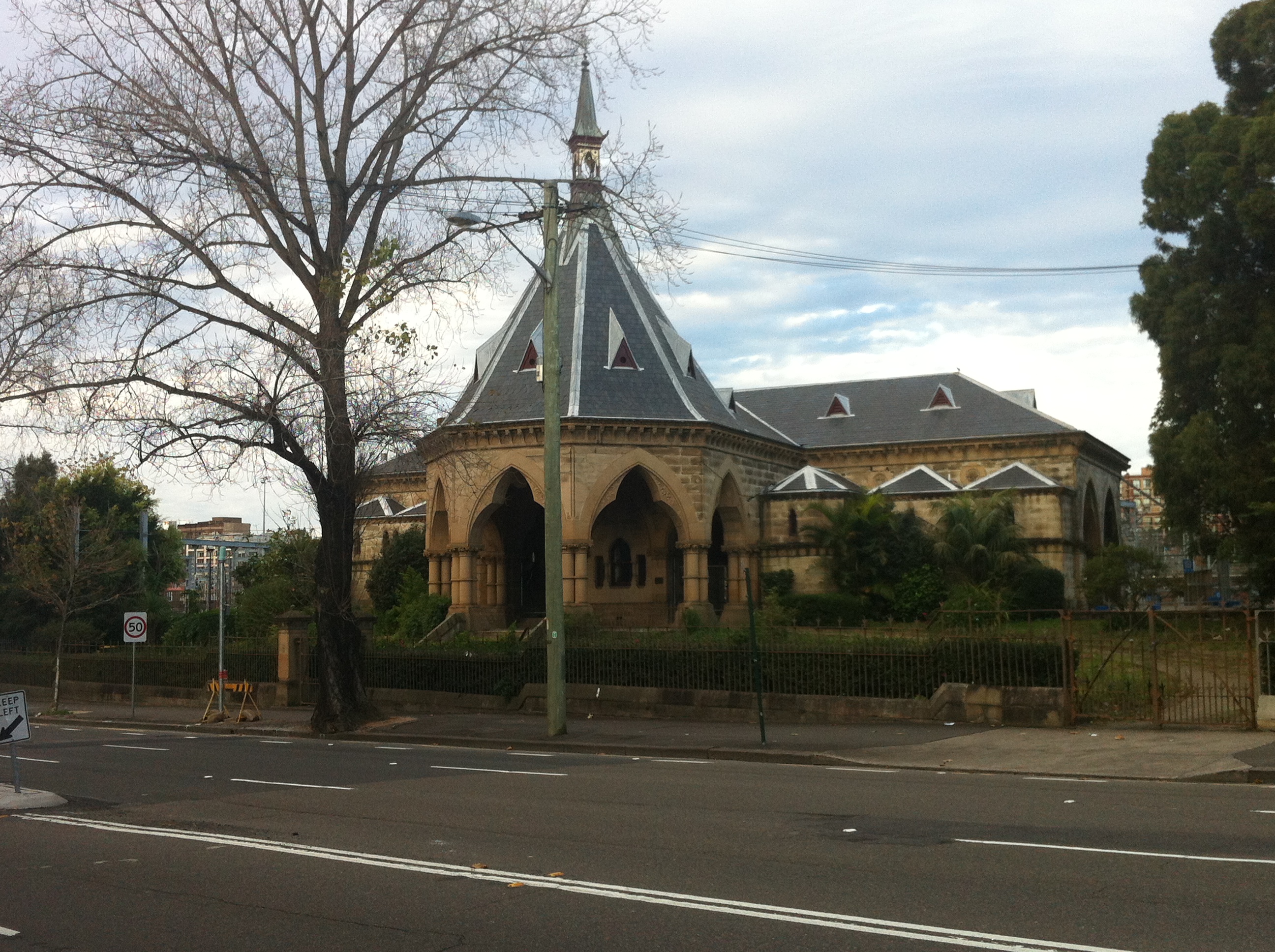
The Mortuary Station’s a strange, jarring sight along the changing face of Regent Street – across the road lie the remains of the Kent Brewery and the empty shells of the pubs that used to surround it. It’s heritage listed, but so was the Sharpie’s Golf House sign. Nothing lasts forever, and it’s only a matter of time until the station itself goes for that last ride.
Next stop, Rookwood…
Update: One year later, let’s take a closer look at that mural…
Rockdale Furnishers/Cash Converters – Rockdale, NSW
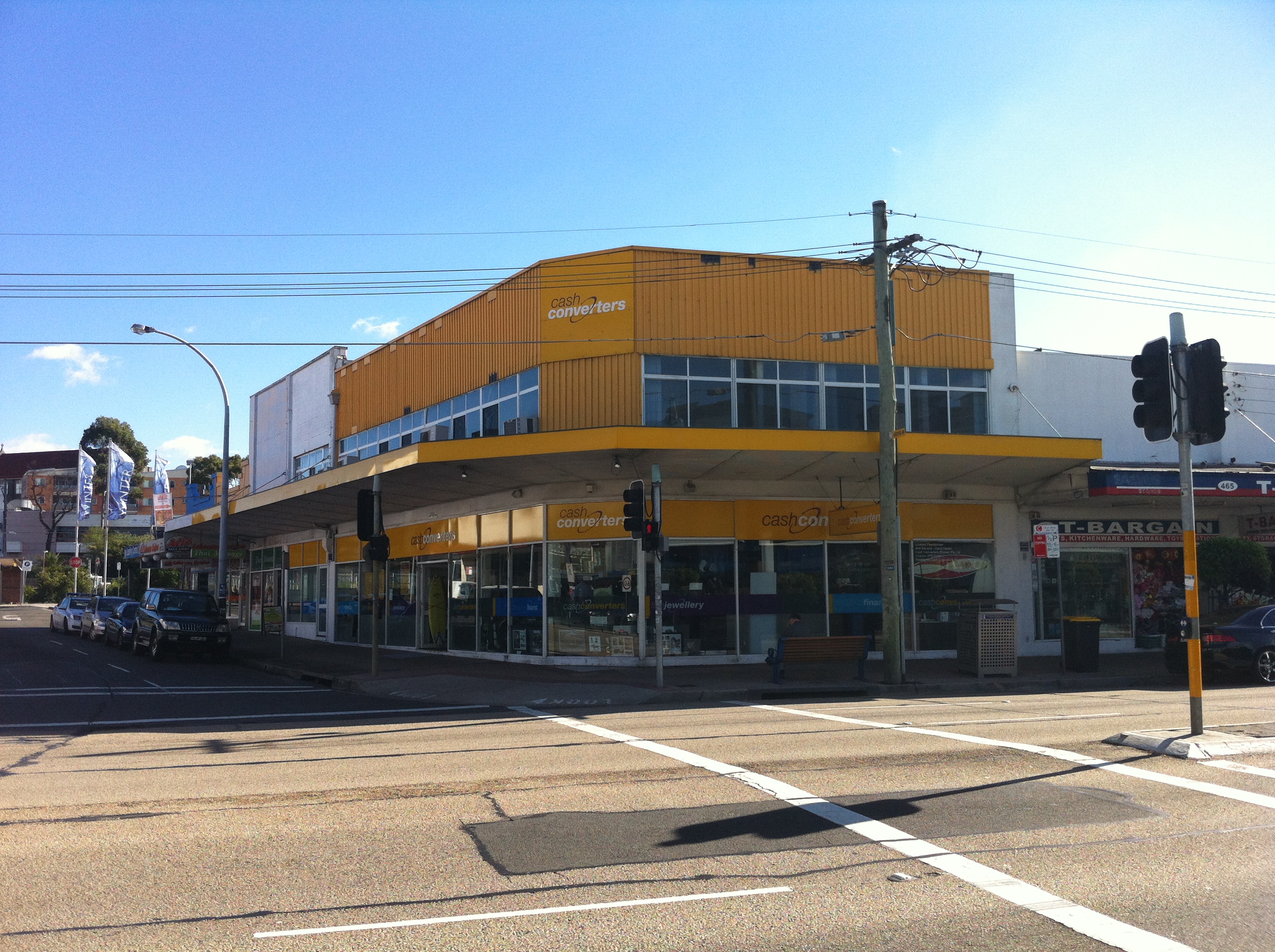
A pawnbroker adds a a kind of uncertainty to an area. If you’re walking through a small shopping arcade and one of those shops is a second hand goods seller, it’s unsettling. You make the connotations in your mind – plenty of stolen goods in there, all sold by junkies, this neighbourhood mustn’t be safe, look at all the Playstations etc etc. Without casting aspersions, Rockdale has always had a pawnbroker on the main strip of the Princes Highway in one form or another; Cash Converters, colloquially known as ‘Crime Converters’ or perhaps more favourably to the company, ‘Cashies’, isn’t the first. In fact, it wasn’t even the first business at this location. Tear your eyes away for just a moment from the framed ‘signed’ pictures of pop singers and their CDs and have a look at what was once the welcome mat:

Gadzooks! This was once the front entrance to Rockdale Furnishers Pty Ltd, which has been around for the last 80 years. When this location become unfeasible for the sale of furnishings (and these things can happen) they moved down the road to West Botany Street, where they exist today, and the building itself became cash converted. Despite that, Rockdale Furnishers managed to leave their mark for all time in a most unusual way. Before we go, I’ve gotta share this old Cash Converters commercial. It’s from a more innocent time; Cash Converters had only been around for a decade, and were attempting to present themselves as a friendly, budget-minded alternative to the retailers of the day. Note the lack of Kappa pants and hoodies among the patrons. Also note the jingle, which has been stuck in my head while I wrote this article. Thank me later:
Bank of New South Wales/Allans Music – Sydney, NSW

This building features an interesting double-shot of 19th century enterprise.
First we have the Bank of New South Wales, established in 1817, making it Australia’s oldest operating company. “But wait,” I hear you saying. “It’s not around today. How could it possibly be Australia’s oldest company?” I’m glad you asked. Between 1850 and 1910, the bank established branches around the country, and also in Fiji and Papua New Guinea (despite Bank of NSW meaning jack to people over there). From 1927 the bank went on a mad spree of acquisitions, buying out the Western Australian Bank and the Australian Bank of Commerce and culminating in a merger with the Commercial Bank of Australia in 1982 giving rise to Westpac. And thus…evil is born.
On the other side, we have Allans Music, which I was surprised to learn was established in Melbourne in 1850. Allans by the turn of the 20th century was the biggest music retailer in the southern hemisphere (but where was the competition?). In the 70s, Brashs decided it wanted a piece of the Allans action and acquired the company. When Brashs went under in the late 90s, Allans emerged unscathed and under new ownership. It merged with Billy Hyde Music in 2010 to become a kind of super music conglomerate, the sort that’ll be feeding us through tubes and stealing our vitality 200 years from now. Incidentally, the building to the right of Allans was the Greater Union Pitt Centre, and beside that lived a Brashs for many years. Even the Greater Union became a cut-price CD shop for a time after its closure, and the Galeries Victoria’s JB Hifi sits across the street. This section of Pitt Street has never managed to shake its musical heritage.

 Past/Lives of the Near Future