Hobson’s Ltd/7-Eleven – Newtown, NSW
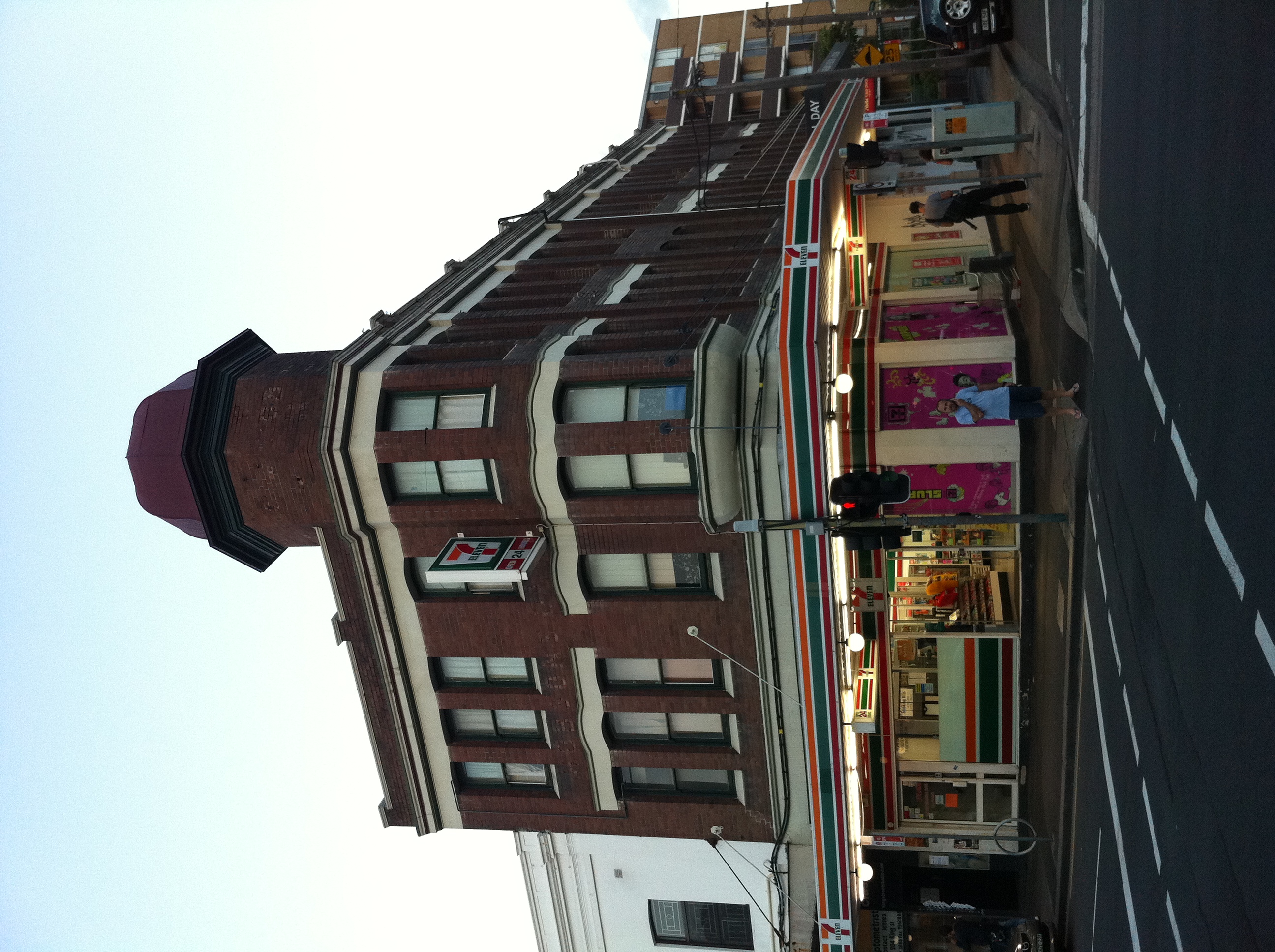
The Marcus Clark department store empire got its start in Newtown, with its first store setting up in Brown Street. This building, on the corner of King and Brown Streets, is not that store. Just as the Marcus Clark Railway Square store was pretentiously known as Bon Marche Ltd, this one was branded Hobson’s Ltd; a subsidiary of Marcus Clark which had a sister store in North Sydney. A world away from Slurpees, Hobson’s sold Pabco Rugs. Not familiar with Pabco Rugs? You must not be a housewife:

When company director Reginald Marcus Clark (Sir Reg) died in 1953, the brand entered a state of free fall. In 1966 the ailing store’s locations were bought out – and subsequently rebranded or shut down – by their bitter rival, retail heavyweight Waltons. It wouldn’t be long until Waltons got a taste of their own medicine…but don’t worry, we’ll get to that.
Prior to its time as Hobson’s, this address was home to F. W. Hartley Undertaker and Embalmer. I can’t say for certain, but I’m pretty sure embalming fluid and Slurpees have a lot in common.
Broadway Theatre/Jonathan’s Disco/Phoenician Club/Breadtop – Ultimo, NSW
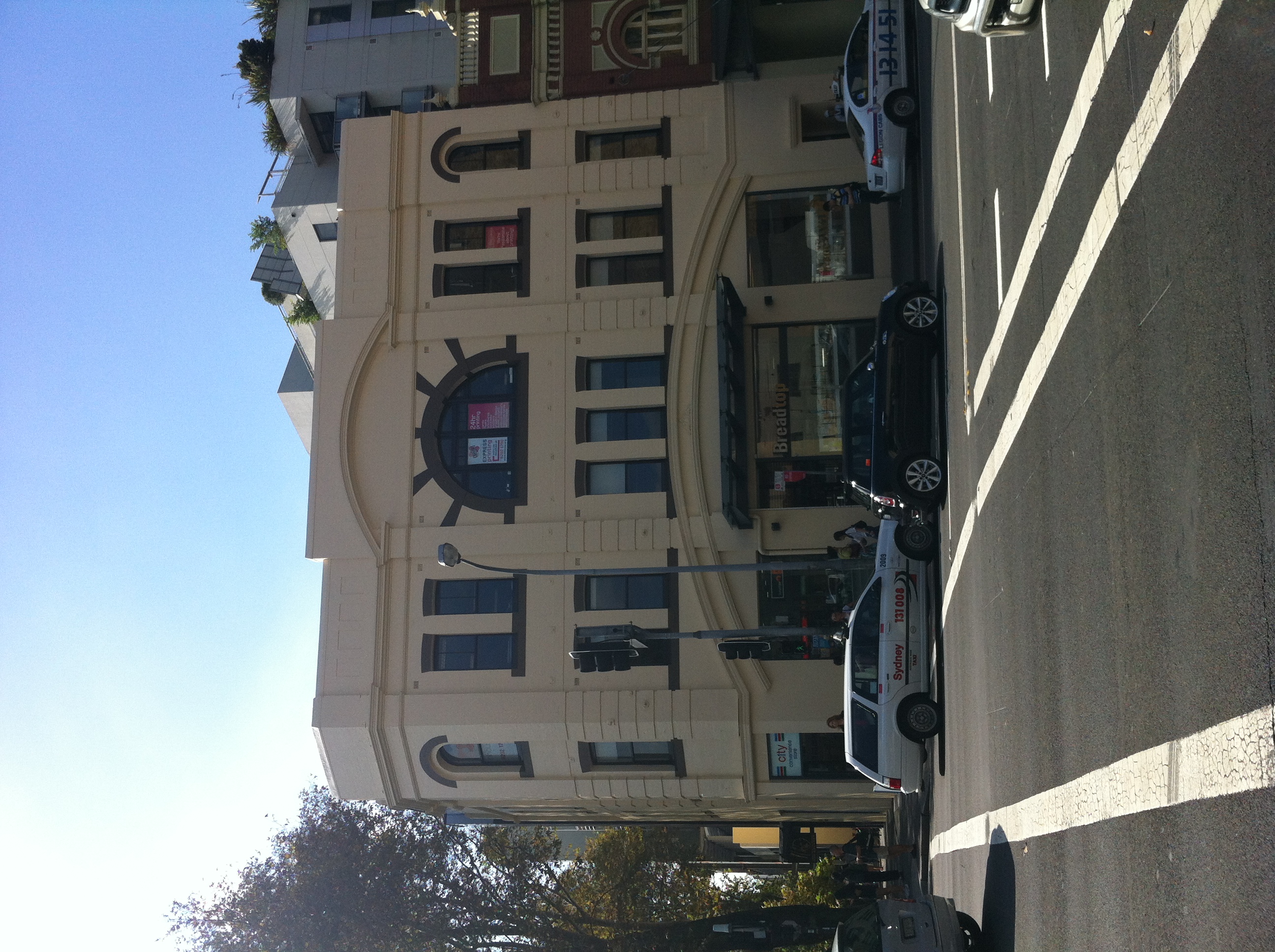
These days, this building on the corner of Mountain Street and Broadway, Ultimo, houses a convenience store, apartments, and our old friend Breadtop, but the inconspicuous facade hides a colourful and tempestuous history.
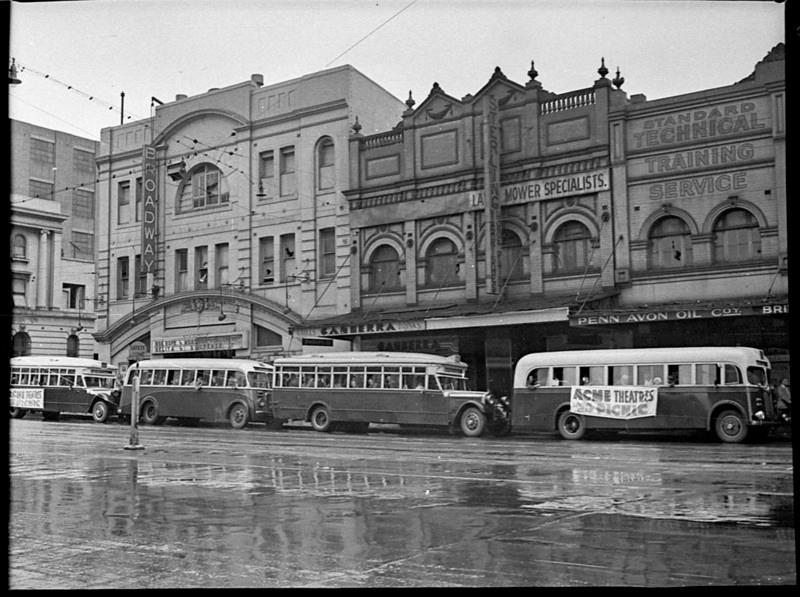
The Broadway Theatre. Image courtesy Sydney Cinema Flashbacks.
Built in 1911, the building started life as the Broadway Theatre, a cinema. With the advent of TV, this was one of many suburban cinemas that had fallen by the wayside by 1960, when it closed. In 1968, it was acquired by nightclub owner John Spooner and converted into Jonathan’s Disco, where it became well known as one of Sydney’s prime live music venues. Sherbet and Fraternity both got their big break at Jonathan’s, playing residencies involving six hour days for months on end. Imagine the poor disco staff having to listen to six hours of Sherbet a day for months. Perks of the job…

Jonathan’s Disco, post-fire, 1972. Image courtesy City of Sydney Archives.
In May 1972, Jonathan’s Disco was gutted by fire. I can’t help but think it was one of those beleaguered staff members. “HowZAT?” they’d’ve quipped as they flicked their cigarette into the freshly-poured puddle of gasoline. The damage was extensive, and required a complete internal refit before it was opened again in 1976 as a ballroom dancing studio.

Jonathan’s Disco interior, post-fire, 1972. Image courtesy City of Sydney Archives.
The Sydney City Council granted the Maltese community use of the premises as a licensed venue in 1980, when it became the Phoenician Club. Once more, the site became one of Sydney’s most popular live music venues with local bands such as Powderfinger and Ratcat playing gigs there throughout the late 80s and early 90s. Nirvana played their first Sydney show there in 1992 – a far cry from Sherbet. Around this time, the rave scene exploded in Sydney; a development that would lead to the end of the Phoenician Club.
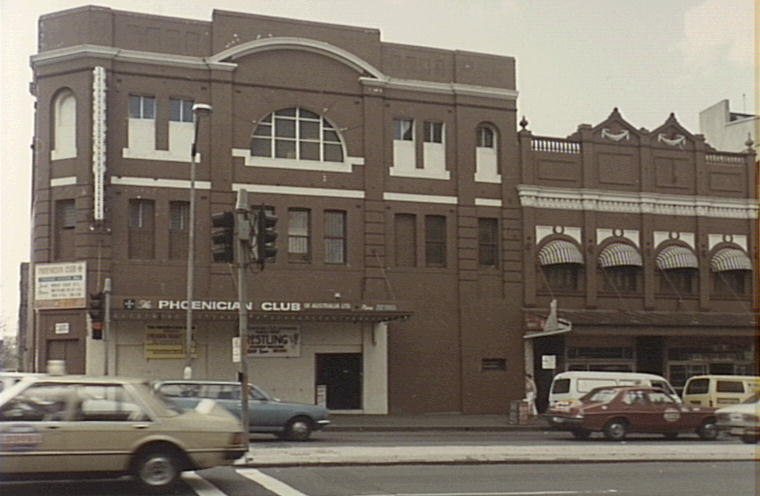
The Phoenician Club, mid-1980s. Image courtesy City of Sydney Archives.
Anna Wood, a 15yo schoolgirl from Belrose, attended an ‘Apache’ dance party at the Phoenician in October 1995, where she took ecstasy. Her resulting death shocked Sydney and enraged then-NSW Premier Bob Carr, who declared war on the Club. A series of fines and restrictions imposed on live venues in the wake of Wood’s death led to the closure of the Club in 1998 and the decline of Sydney’s live music scene which continues today. Good thing Wood wasn’t killed by a pokie machine.

The derelict Phoenician Club, 2000. Image courtesy City of Sydney Archives.
From 1998 the site sat derelict, just in time for the Olympics. Nothing international visitors like seeing more than abandoned, graffiti-tagged buildings. In 2001 it was completely redeveloped internally, and today satisfies Carr’s idea of a venue put to good use.
Hurstville United Sports Club/nothing – Hurstville, NSW
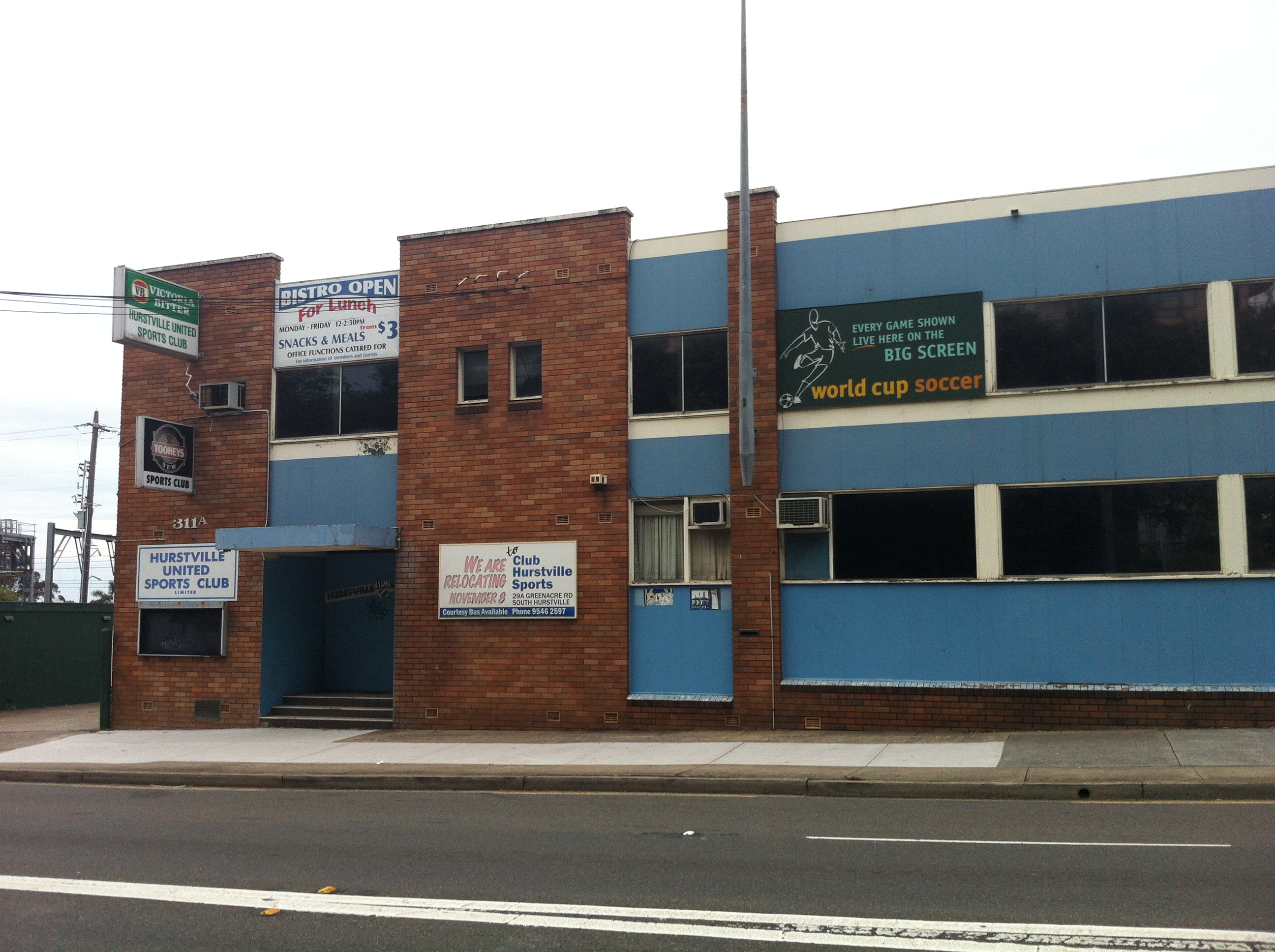
On the outside, it looks like an ordinary 80s-style sports club. The door is perfectly positioned in front of a busy main road for when drunks stumble out at the end of a night, clueless as to where they are or how much cars hurt.
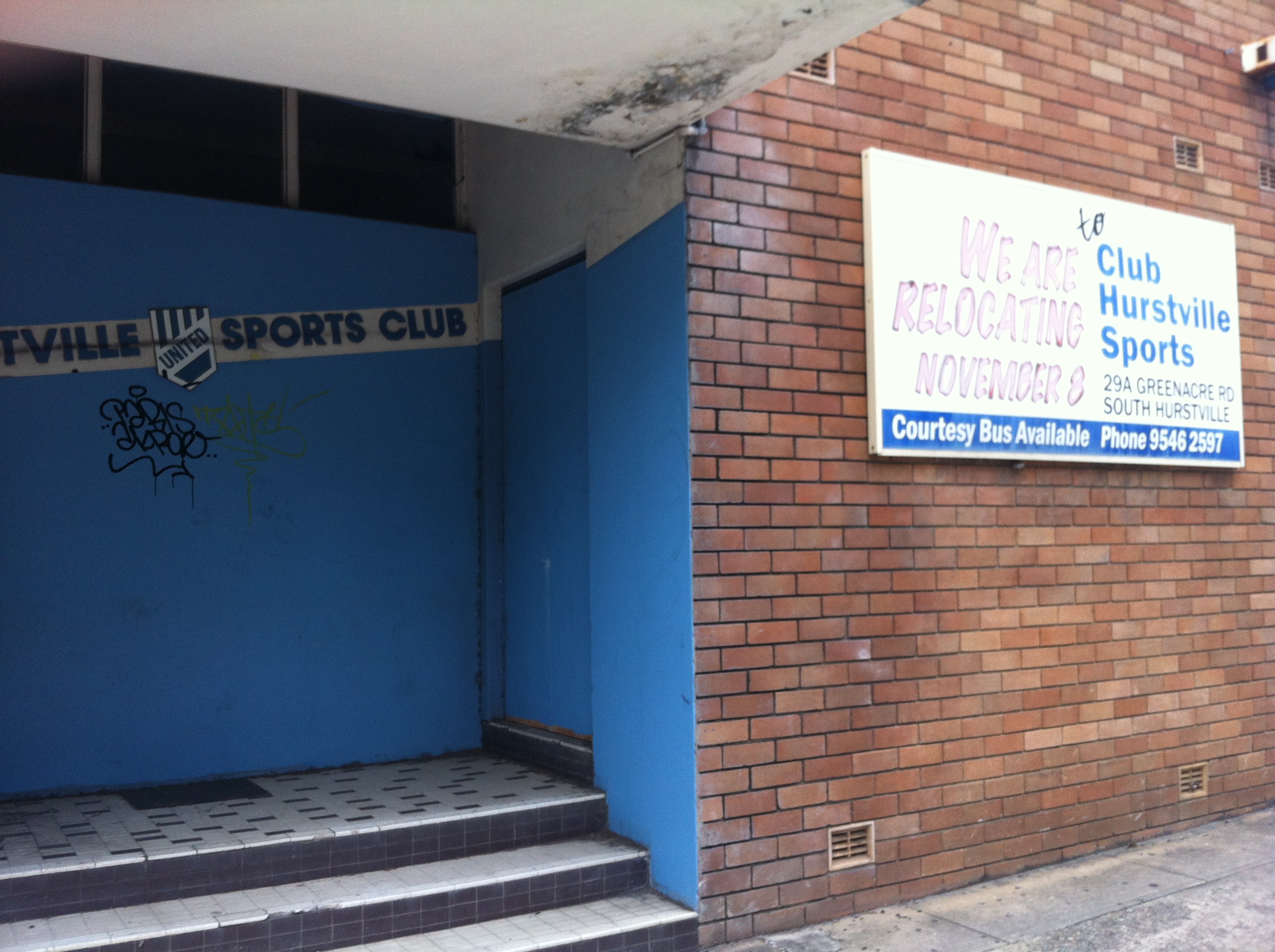
Unfortunately for fans of empty buildings, the outside is as close a look as we’re gonna get. The Hurstville United Sports Club has moved, leaving the shell of its former home behind as it establishes a new pokie storage room at South Hurstville under the shorter, trendier and more abstract name ‘Club Hurstville Sports’. One can only imagine the third iteration will be titled ‘Hurstclub Sportsville’.
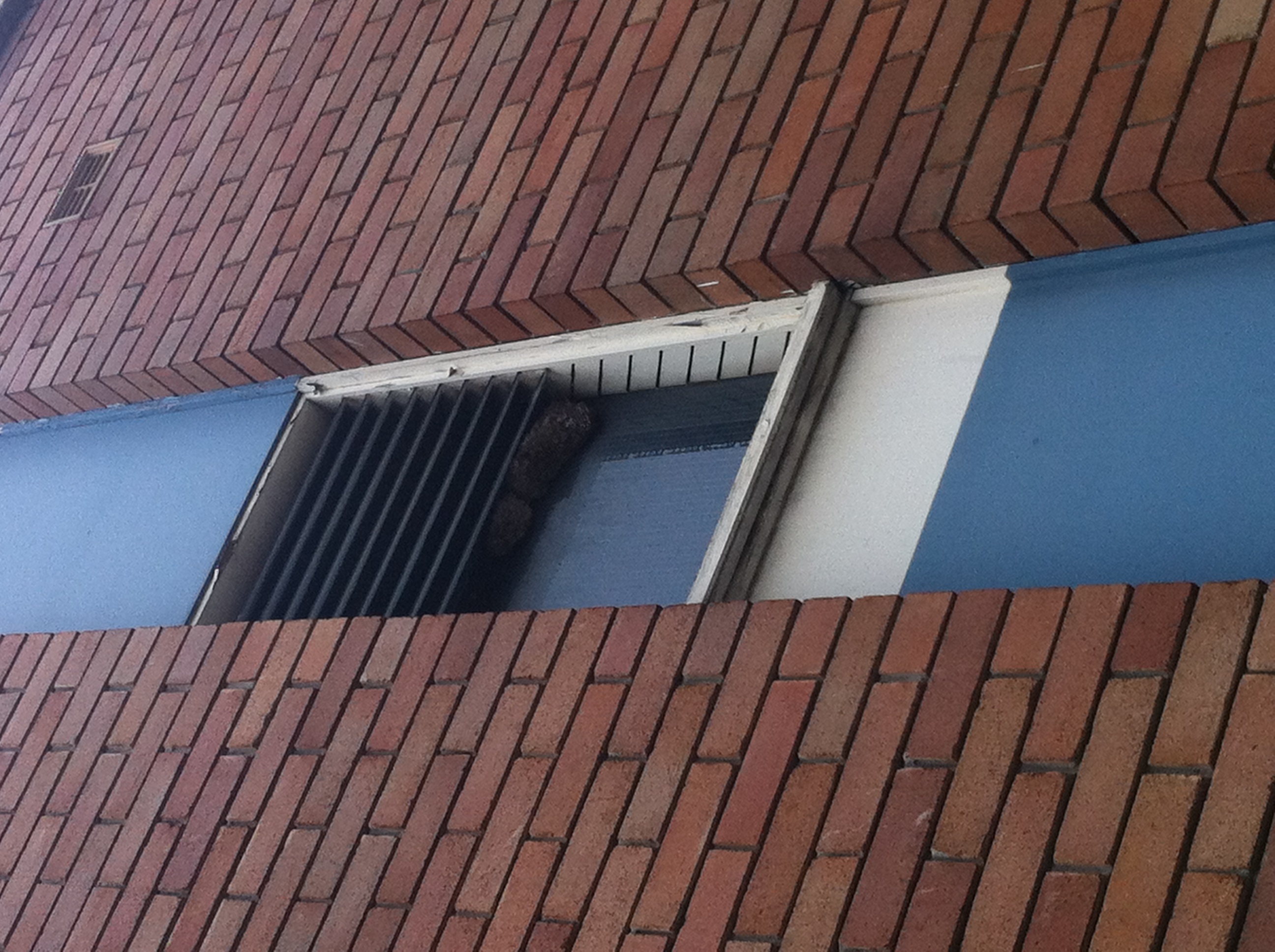
The most notable feature of this old building is the addition of what appears to be the world’s biggest wasp nest in this window. Or second biggest, in case the wasps moved to South Hurstville too.
FJ’s Pizza/Construction Site – Kingsgrove, NSW
The powers-that-be have decided that Kingsgrove needs more residents, and you know what that means. HIGH RISE.

Now I know what you’re saying. You’re sitting there saying ‘Yeah, they’re building a high rise. So what? What’s so special about this place?’ What’s special about this site will require a bit of a cheat – taking the Google Street View time machine back to 2009 – but I promise it’ll be worth it.
See, what used to be at this location was a string of old, derelict shops, each more interesting than the last. Around the back, in Mashman Avenue, was a run-down block of units, and beside that, the Mashman Pottery (a resident since 1908). All of it is gone now, including the pottery, to make way for some faceless high rise apartment buildings completely devoid of character. This character:
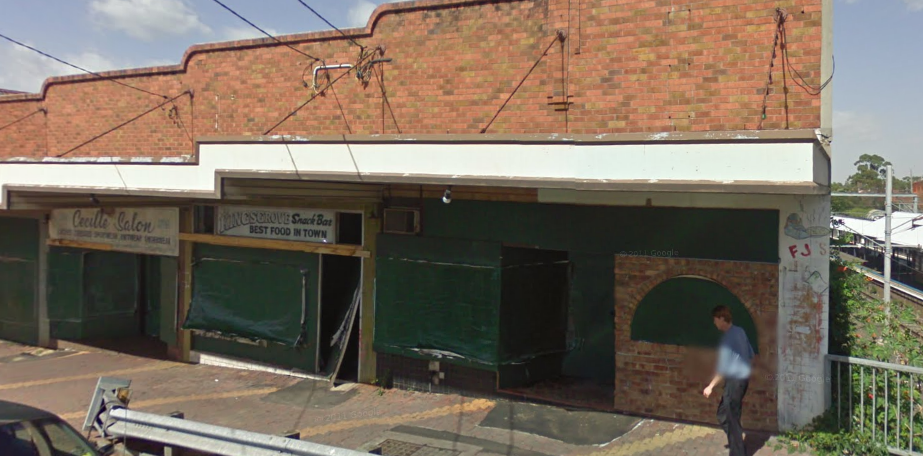
We have the Cecille Salon, the Kingsgrove Snack Bar (best food in town!), and finally and most intriguingly, FJ’s Pizza. Take a closer look there at FJ’s…who’s that holding the pizza?

Could that be…what it looks like?
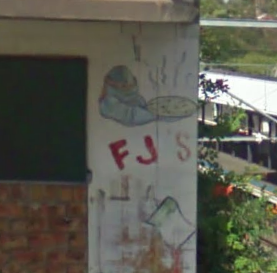
This place has been burned into my retinas for a long time, so when it was knocked down earlier this year, I wasn’t going to let it get out of appearing here. In fact, I remember when this place opened – in 1990. Someone, most likely FJ himself, thought they could get away with painting a Ninja Turtle on the side of their pizza place in the hope that kids would see it and automatically assume it was Turtle-endorsed pizza. Well…in at least one situation, they were right. Problem is, by 1992 the TMNT were has-beens, and people sure weren’t coming here for the pizza.

It’s hard to say exactly when these shops closed, and thanks to the animal magnetism of the FJTMNT, I never really paid them much attention even when they were open. With prime real estate right beside the train station, you’d think at least the snack bar would have cleaned up. Now, it’s just being cleaned up to make way for the glass tower.

Doubtless there’ll be a new wave of shops here beneath the skyscraper, but they won’t have this kind of character. The lineup also included what looks like a Chinese restaurant, Hair Enterprises, and a State Bank branch on the corner. I imagine that the Rich Uncle Pennybags style property developer sat it out for years, buying each of the shops in the strip until he had the Monopoly and then BAM – bulldozer time. Hair Enterprises was likely the last to go – it had an eight digit phone number.
It’s just a memory now, along with the best food in town, ladies knitwear, and the Ninja Turtle who never let go of that pizza. Vaya con Dios, FJ-tello.
Demco Machinery/Mao & More – Surry Hills, NSW

Demco Machinery, 1989. Image courtesy City of Sydney Archives, SRC15993.
The Demco Machinery site, on Cleveland Street in Surry Hills, is made up of two separate buildings. The one in the foreground here is the oldest, first used as a tobacco factory in 1911, and then a tea company until the 1920s. Once Demco moved in around 1930, they patiently waited for the St Margarets Hospital for Women Dispensary next door, built in 1906, to fall on hard times. They didn’t have to wait long:

SMH, April 19, 1938.
Strangely, although the building’s address is currently 267-271 Cleveland Street, advertisements prior to 1953 give Demco’s address, as well as that of the hospital and the tobacco factory, as 243-247 Cleveland Street. There must have been a renumbering of Cleveland Street around that time, as to avoid confusion, from 1948 Demco started advertising their address as ‘corner of Cleveland and Buckingham Streets’.
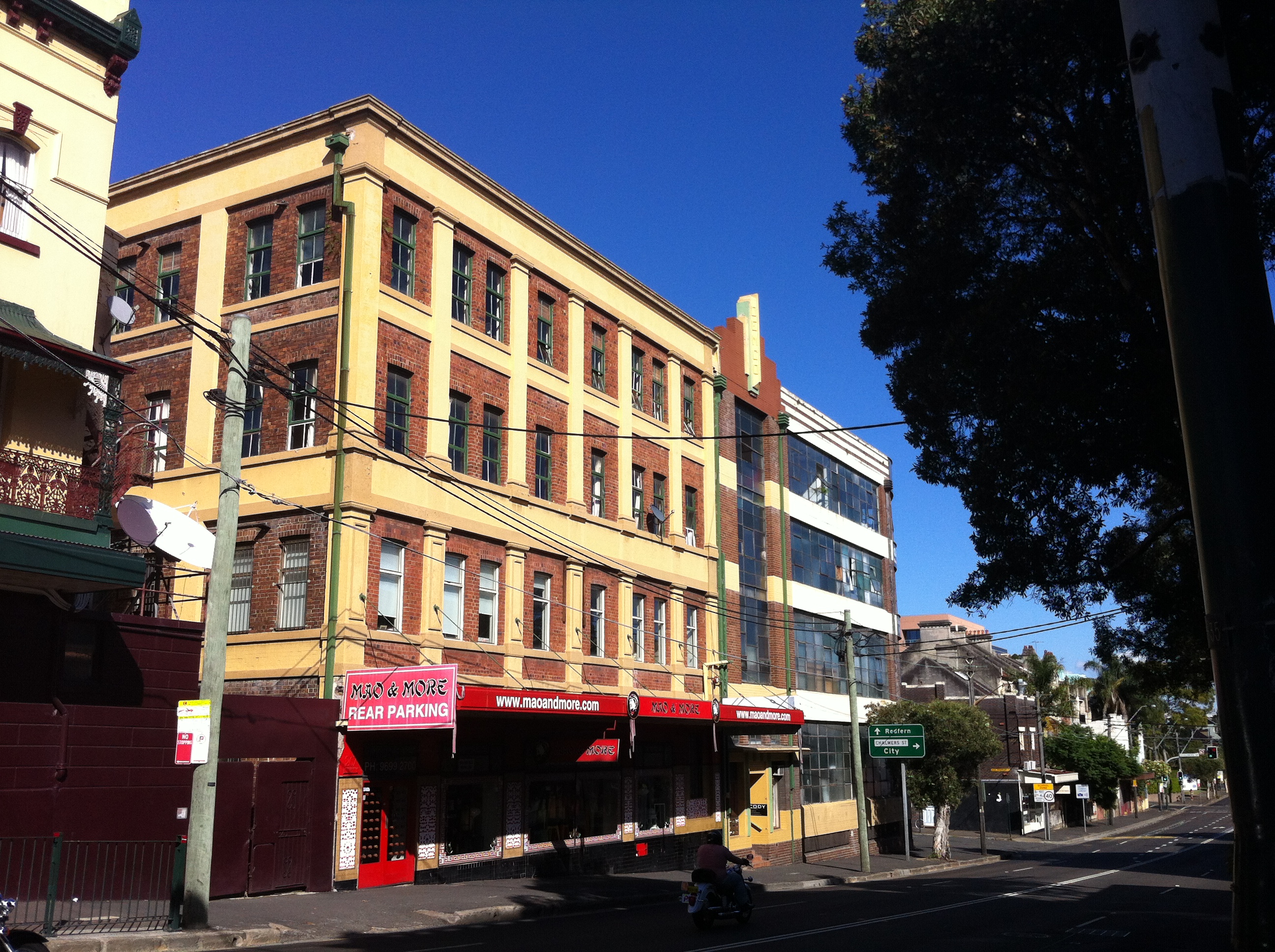
Demco building, 2012.
Demco packed up its city operations in 1989, moving out to Greenacre as part of the industrial migration to Sydney’s west. Since 2002, the older half has been occupied by Mao & More, a Sinophile’s paradise of kitschy Oriental paraphernalia very at home in the increasingly gentrified area. The showroom half of ‘modern design’ Demco were so proud of currently consists of several businesses, including The Gingerbread Man, a film and web production company located in the basement; and a sportswear manufacturer. The only evidence of Demco’s time here is the art deco Demco sign still sitting atop the building.

 Past/Lives of the Near Future