Cumberland Hotel/TK Plaza – Bankstown, NSW

There isn’t much call for an old English-style hotel pub in Bankstown these days. This particular part of the city, Old Town Plaza, is especially bereft of watering holes thanks to the enormous Bankstown Sports Club around the corner.
Yes, there’s the Bankstown Hotel and the RSL on the other side of the train line, but down here it’s the Sports Club (not to be confused with the Bankstown Sports Hotel nearby), the Oasis Hotel (or the Red Lantern depending on who you ask) or you’re going thirsty.
Those two venues, while fine, are very much products of today’s Bankstown. The Oasis looks like the kind of place you’d hit up to dump some cash into the pokies and have a smoke outside, while the Sports Club has a monopoly on the family friendly crowd. Neither enjoy the kind of maturity conducive to sitting around and making a beer last many hours.
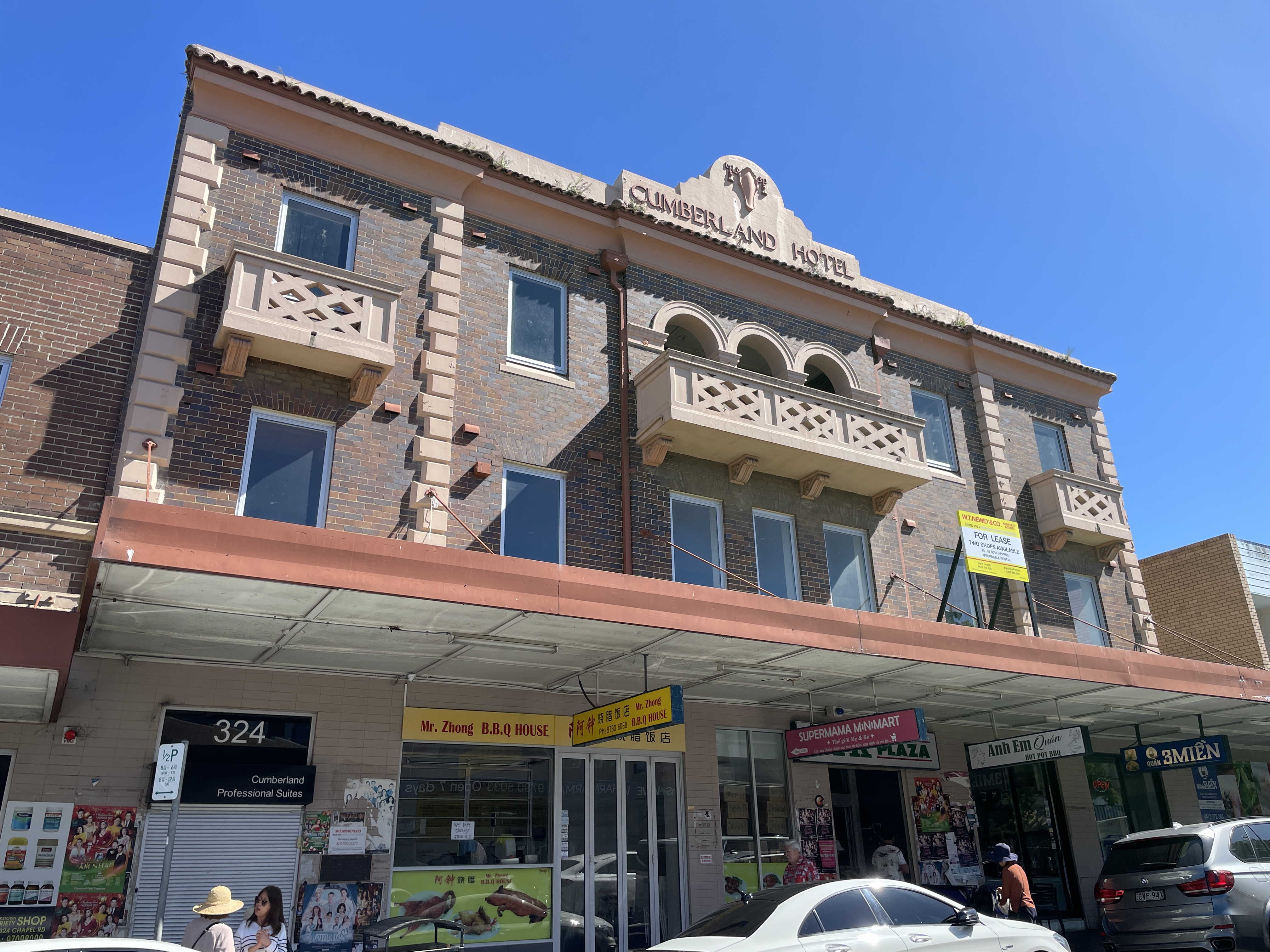
And then there’s the Cumberland Hotel, a proper glimpse into the suburb’s past. If you know Bankstown, you’ll know this venue stands out like the proverbial.
The locals have done their best to incorporate the Cumberland into the street’s mix of fresh food wholesalers, dollar shops and mini marts, but the top half speaks of a time when the working class would need to cool down after a hard day’s work; when a night at the Cumberland might even result in a cheap room upstairs; when Mr. Zhong was still afraid to play with matches.
From what I can gather, the Cumberland has its origins in 1929, when William Hoyes, the licensee of the notorious Rydalmere Hotel, transferred that pub’s licence to his newly purchased hotel in Bankstown. The ruckus at Rydalmere, and Hoyes’ hasty escape, seems to have originated in 1907, when a Dundas policeman disturbed a cadre of dudes drinking illegally – at midday! – at the Catholic Church beside the pub.
For his troubles, Constable Howard was bashed quite severely, but got his own back when he shot at the four pissed louts, injuring one of them. Turns out one of them was the hotel’s licensee, while another was the church’s caretaker. You’d think they could have had a quiet one at the hotel itself, but perhaps they had to wash down a communion wafer.
The incident left its mark on the Rydalmere Hotel to the point where even after 22 years, Hoyes opted to take his licence and start over in a suburb less tarnished by violence… for now.

In 1930, the Cumberland was up and running under the watchful eye of Tooheys. Hoyes made way for O’Regan in 1933, who gave it up to O’Reilly in 1934. The names give a clear indication of Bankstown’s cultural background at the time.

Vincent O’Reilly held onto the Cumberland until 1950, by which time the lay of the land had changed quite a bit. The following year the Cumberland Hotel fell under investigation of the Royal Commission on Liquor, which had put old mate Abe Saffron in the hot seat.

Honest Abe had apparently made some licencing deals with several hotels, including the Cumberland, the Morty in Mortdale and the Civic in Pitt Street, that had not impressed the authorities. At the heart of the matter was the improper funneling of booze between pubs under Saffron’s influence, grossly in breach of the Liquor Act.
While all this was going on, the Cumberland endured another parade of licencees including Mr Kornhauser, Mr Norman, Mr Blair and Mr Geoghegan, the latter of which applied for – and received – a 12-month dancing permit in 1957.
During Geoghegan’s tenure, on a momentous November afternoon, a meeting took place that would change New South Wales’ taxi and golf landscapes permanently.
“In November of 1954, three disgruntled members of Campsie Taxi Drivers Golf Club, while having a drink at the Cumberland Hotel in Bankstown, discussed forming a breakaway group of golfers. It wasn’t until after Melbourne Cup Day of that year that a group of up to 10 cabbies decided to form a Taxi Social Golf Club. The first game was held at East Hills Golf Club on the first Tuesday in January 1955.
The foundation meeting was held that day. A foundation committee was elected and Bankstown Taxi Drivers Golf Club was born. Tuesdays were chosen as golf day because back in those days, they were deemed to be the quietest day of the week for cabbies.”
NSW Taxi Golf Association
There it is, folks. Wonder no more. I shouldn’t think there was too much licenced dancing going on that day.
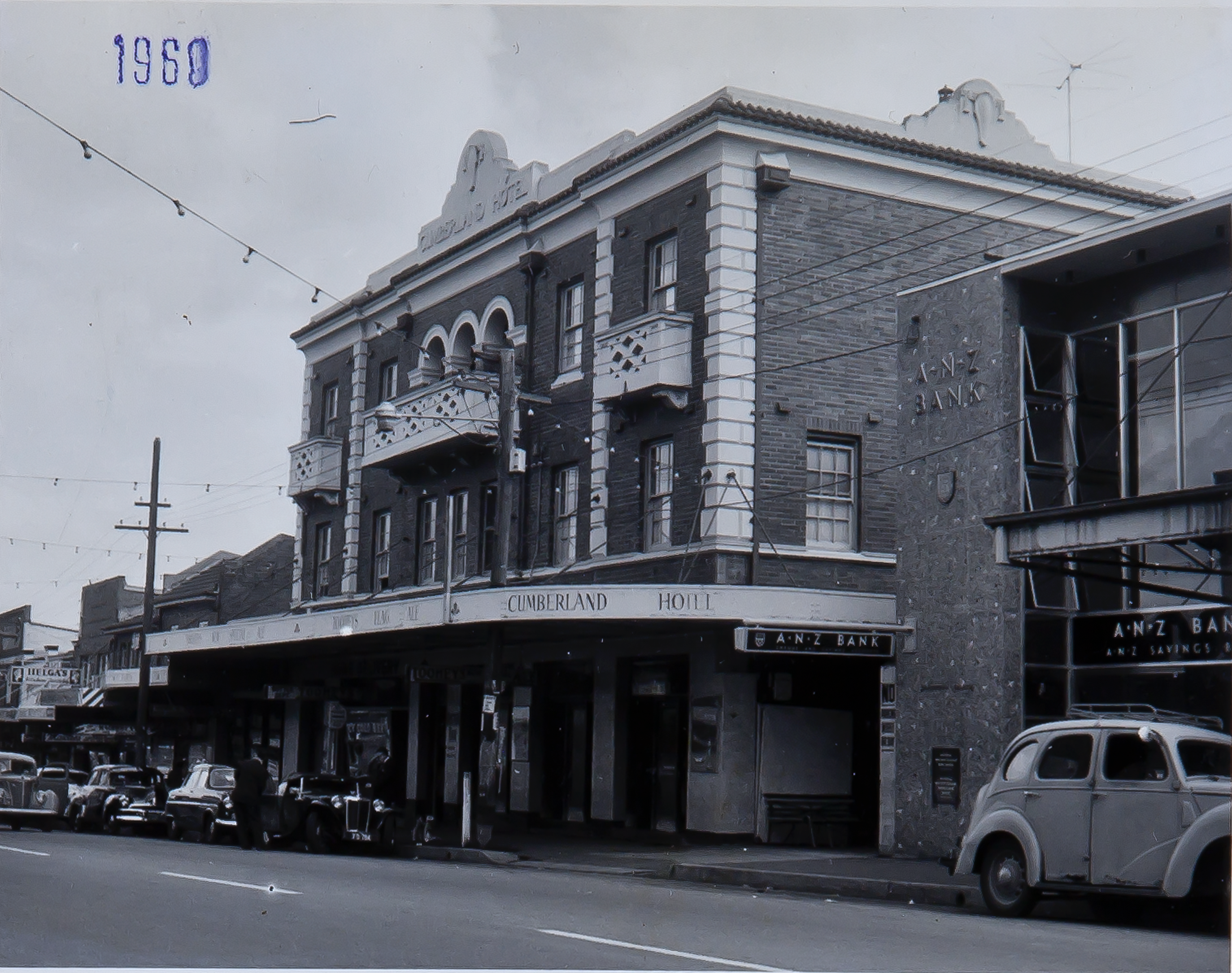
As the 1960s dawned, things changed even further. Geoghegan was out, and in his wake came Masman, Martin, Conlon, Light, Monkey and a switch to decimal currency.
The Oasis had sprung up around the corner, as had the “Bankstown Bowling Club”. In another sign of the times, a TAB in Fetherstone Street, on the other side of the train line, was seen to be impinging upon the Cumberland’s bread and butter. Blair, Heffernan, Davanzo and Lynch would endure this incursion and take the Cumberland into the 1970s.

The beginning of the end came in the 80s, however, when that old undercurrent of pub violence would again raise its ugly head. By that time, Bankstown had become home to two distinct groups of refugees fleeing overseas wars: Lebanese and Vietnamese. They didn’t always gel.
As is now well understood, youth gang crime became an issue for these two ethnic groups. One night, in July of 1986, tensions boiled over in Bankstown. A brawl started outside Bankstown Station and became so violent that wooden palings were torn from fences to be used as weapons.

It’s not hard to imagine these guys hearing of the brawl during a night at the Cumberland and rushing to the aid of their friends. By then, the Cumberland had become “a seedy old watering hole, with a cast of colourful characters, Viet gangsters being shot on the doorstep, topless barmaids, great beers and lots of laughs”. It couldn’t last.
Somehow, the Cumberland staggered into the next decade, which was awash with even more gang violence. Names like 5T and the Madonna Boys should be familiar to anyone who was around at the time. 5T was particularly notorious not only for its violence and clout in the bustling Sydney heroin trade, but for the ridiculous age of its leader, Tri Minh Tran, who took over the gang at 14.
Tran was shot dead in 1995, and gangs such as Red Dragon and the Madonna Boys, led by “Madonna” Ro Van Le, sprung up in the resulting power vacuum. Madonna himself had been convicted of murder in 1989, and a decade later had only just been released from prison when he visited the Cumberland Hotel one Friday night.
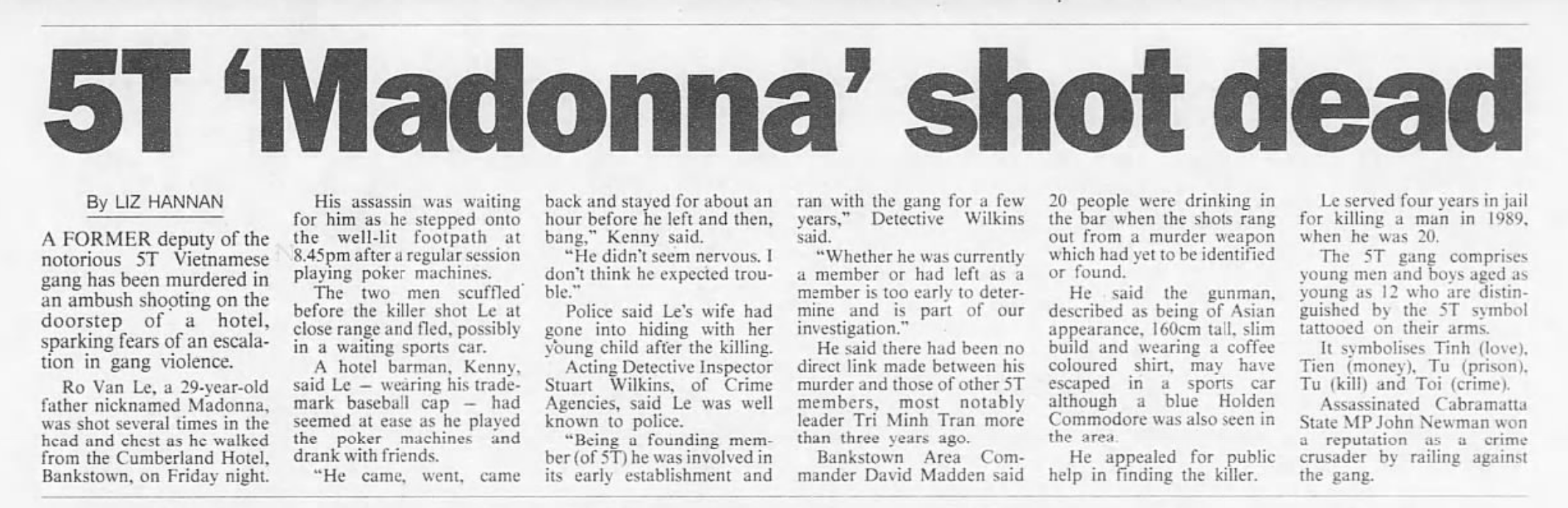
It was Madonna’s last. As the drive-by shooter’s bullets entered his head and chest on the footpath outside the Cumberland, they ostensibly ended the hotel as well.

The shooting helped prompt owners Bill and Mario Gravanis to abandon the Cumberland in favour of the Bankstown Sports Hotel further down the road.

Today’s Cumberland is a mix of smaller outlets that have carved up the spacious interior. One must first cross the fruit-laden threshold of TK Plaza…

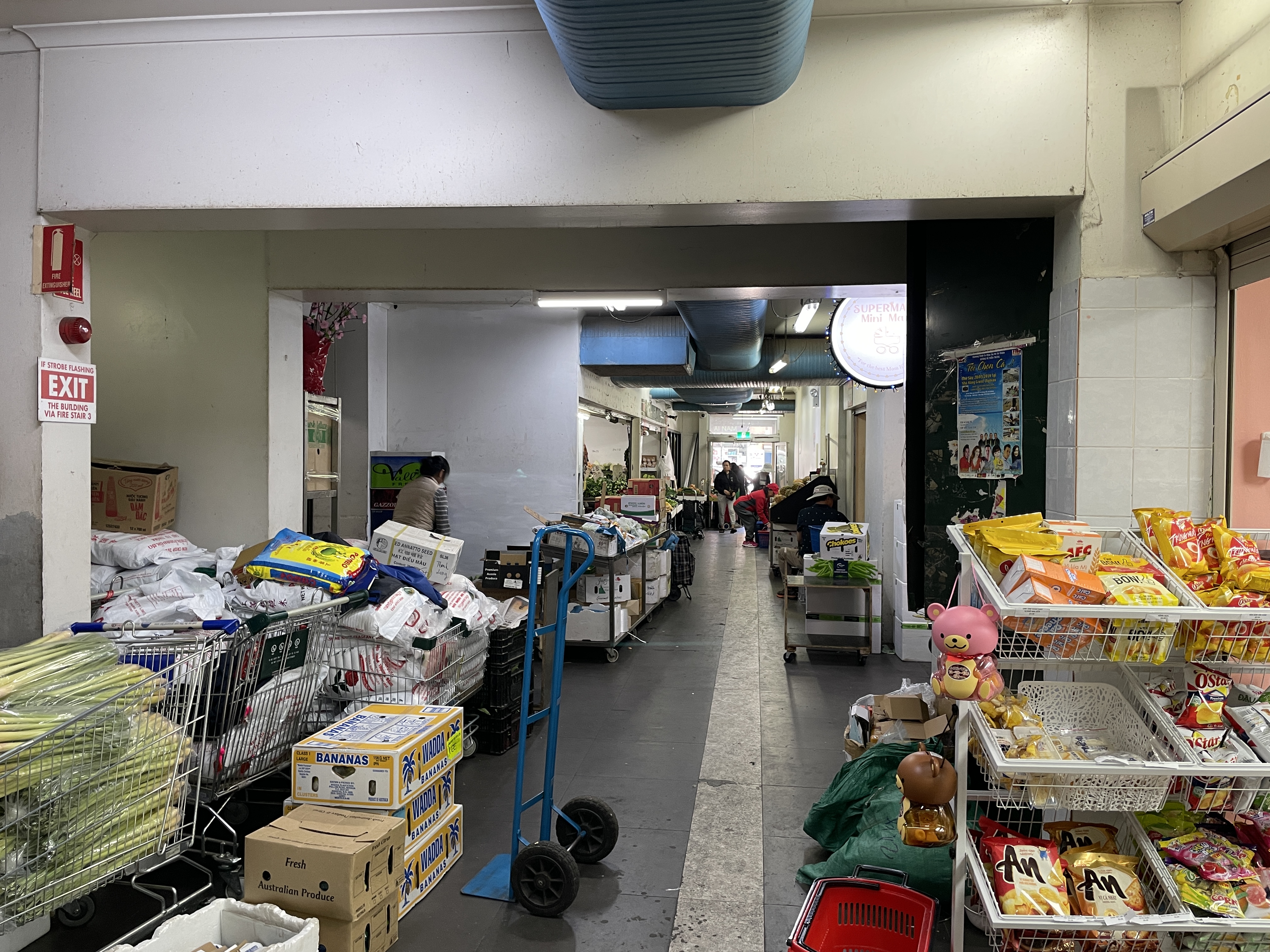
What was once Madonna’s beloved VIP lounge is likely Skybus Travel, itself no longer in operation if the room full of mangoes and canned squid is anything to go by.
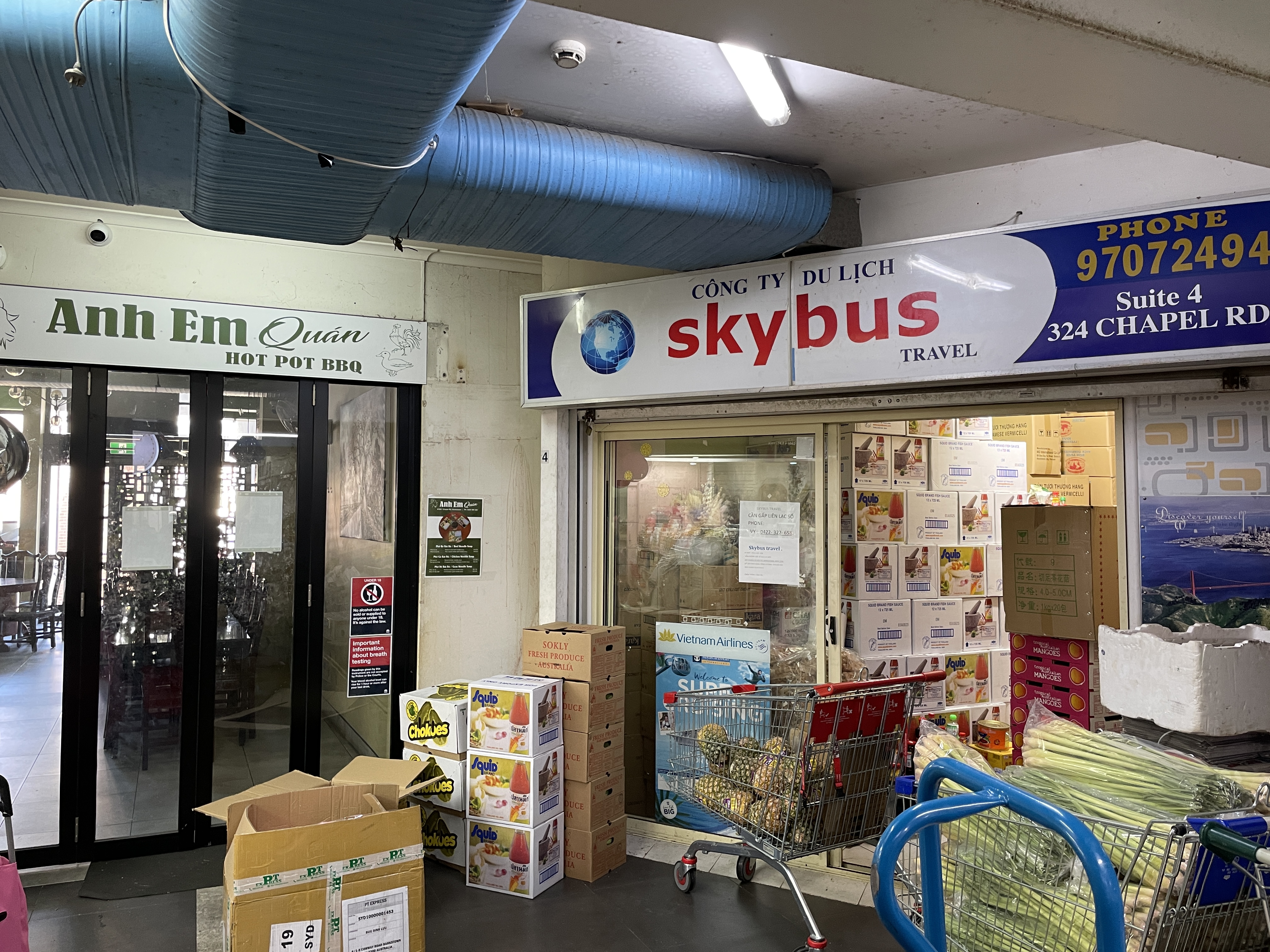
And perhaps the table favoured by those disgruntled cabbie golfers is now a part of Anh Em Quan’s Hot Pot BBQ restaurant. If they’d settled their grievances over a bowl of spicy prawns that day, who knows what kind of world we’d live in now.

Around the back, it’s hard to imagine this was ever a pub. The mural places the Cumberland firmly in the every-second-shop’s-a-fish-market vibe of Old Town Plaza, while the back alley is full of Hiaces rather than getaway cars.

It’s unlikely the Cumberland Hotel will ever serve a cold schooner of beer again. The world that defined the venue is gone. Tooth, Madonna, Constable Howard, the Geoghegans of Bankstown – all are now memories.
At 324, just under the Cumberland’s south wing, the ‘Cumberland Professional Suites’ carry on the name. They probably occupy the rooms upstairs as well, but even they have the sadly familiar For Lease sign outside.
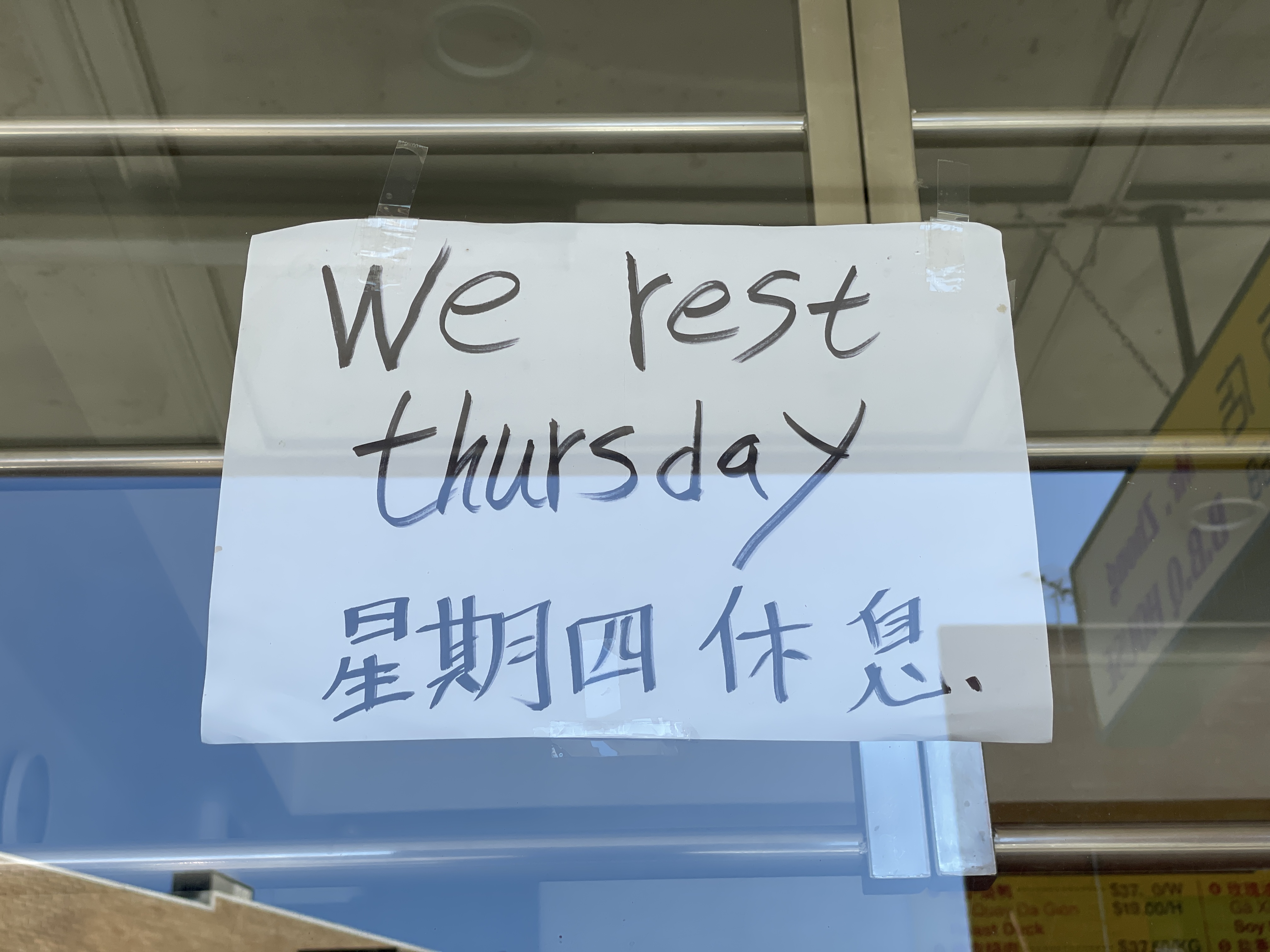
Perhaps the next tenant will take a look at the building’s history and look to maintain some kind of continuity in a way TK and Mr Zhong did not. As I departed fully intact, much to the late Madonna’s envy, I noticed this sign in one of the front windows.
Rest in peace, Cumberland Hotel.
Dental Surgeon – Bankstown, NSW

Don’t sit down – no long or in-depth story this time. Just a gentle reminder of the sort of shape a past life can sometimes take.

For those who fled South Vietnam to escape the rule of the Vietnamese People’s Army, today’s Ho Chi Minh City will always be Saigon.
No, it’s not a name like Ceylon that’s entirely out of time, but it’s use here shows that for some people, letting go of their past…
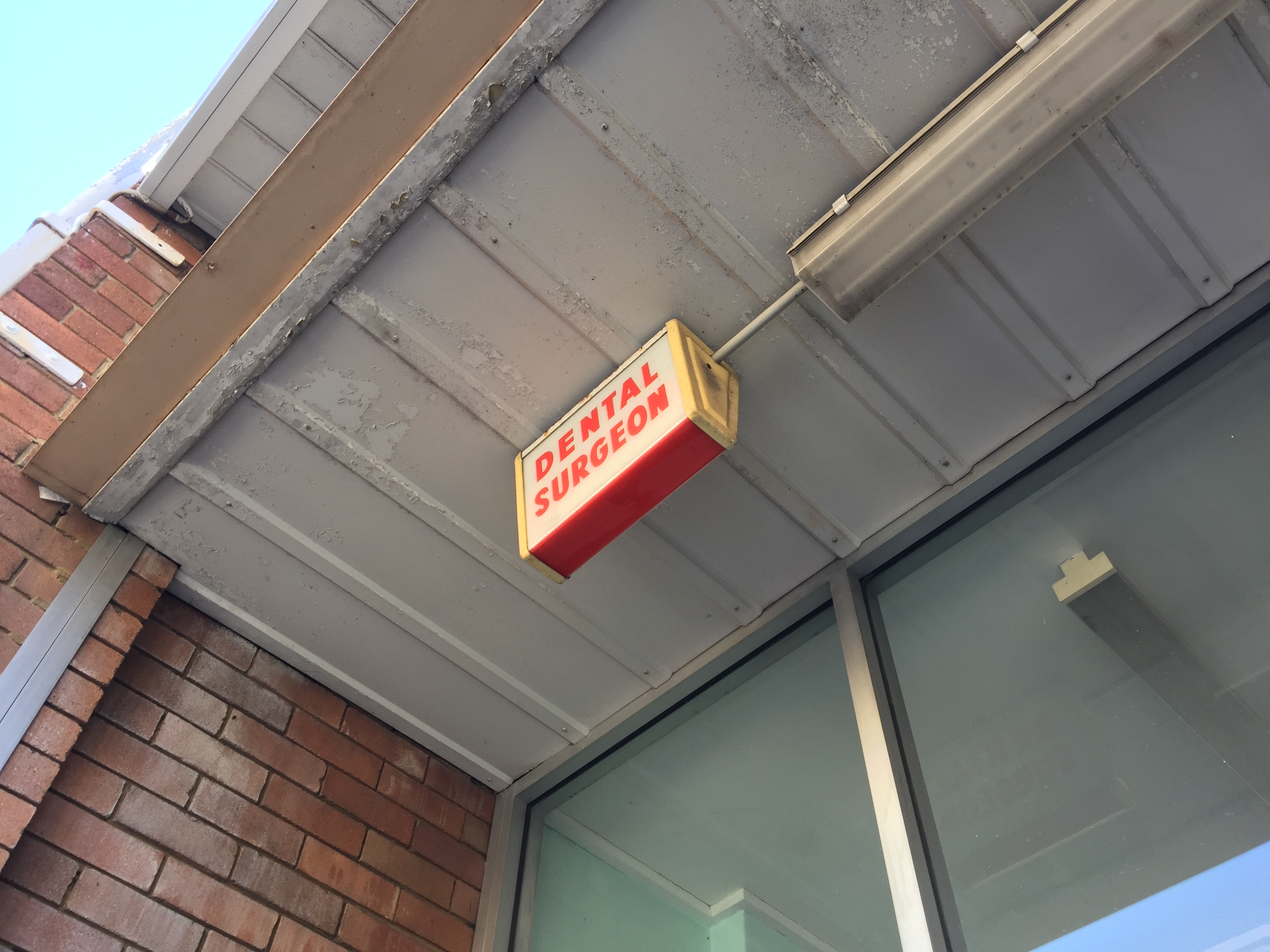
…is like pulling teeth.
Past/Lives Flashback #5: The Hartee’s Saga, Part V: Hartee’s Revenge – Manly Vale, NSW
Original articles: The Hartee’s Saga Parts I, II, III and IV
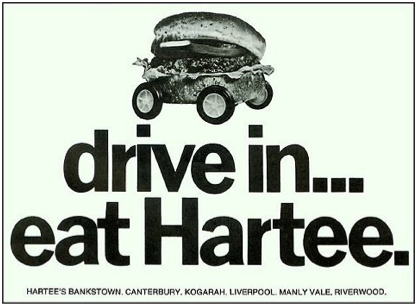
Sometimes it’s hard to keep a good burger down. For those who haven’t followed the long, sad story of the Hartee’s hamburger franchise, here’s a quick recap.

Hartee’s Earlwood
With the advent of American fast food franchises in Australia in the late 60s and early 70s, Kelloggs teamed with the US-based Hardees burger chain to start Hartee’s, the first Australian fast food restaurant (despite its very red white and blue beginnings).
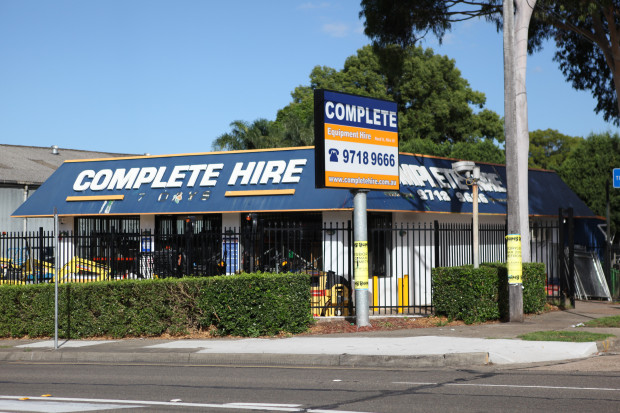
Hartee’s Canterbury.
It was a near-instant success. Whether it was down to underlying xenophobia towards overseas brand names, smart management or just plain delicious burgers, by 1973 Hartee’s was king of the fast food hill in Australia.

Hartee’s Punchbowl.
Complacency became the daily special from then on, with a series of extravagant HQ upgrades and new outlets sprouting like weeds all over Sydney. Despite this, the chain was beginning to haemorrhage cash at a pretty severe rate, and McDonald’s was aggressively making major headway into the Australian scene. Something had to give.
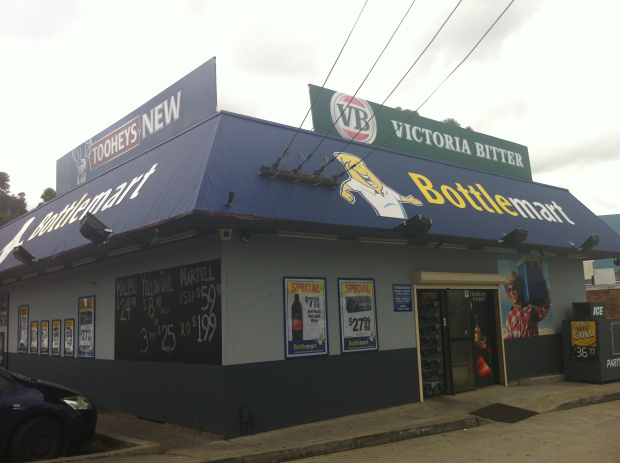
Hartee’s Bankstown. Not pictured: the Pal delivery truck.
And give it did, here at the Bankstown Hartee’s in 1975, when a current affairs program, acting on a tip-off, exposed the outlet as having served dog food in burgers. Overnight, Hartee’s packed up and disappeared, leaving only husks behind, and that’s where the story seems to end.
Except thanks to reader Phil, there’s a final piece of the puzzle to be put in place. I’d previously written that only the four former Hartee’s above still existed in any form around Sydney… Well, we all make mistakes. Just ask Bankstown Hartee’s.
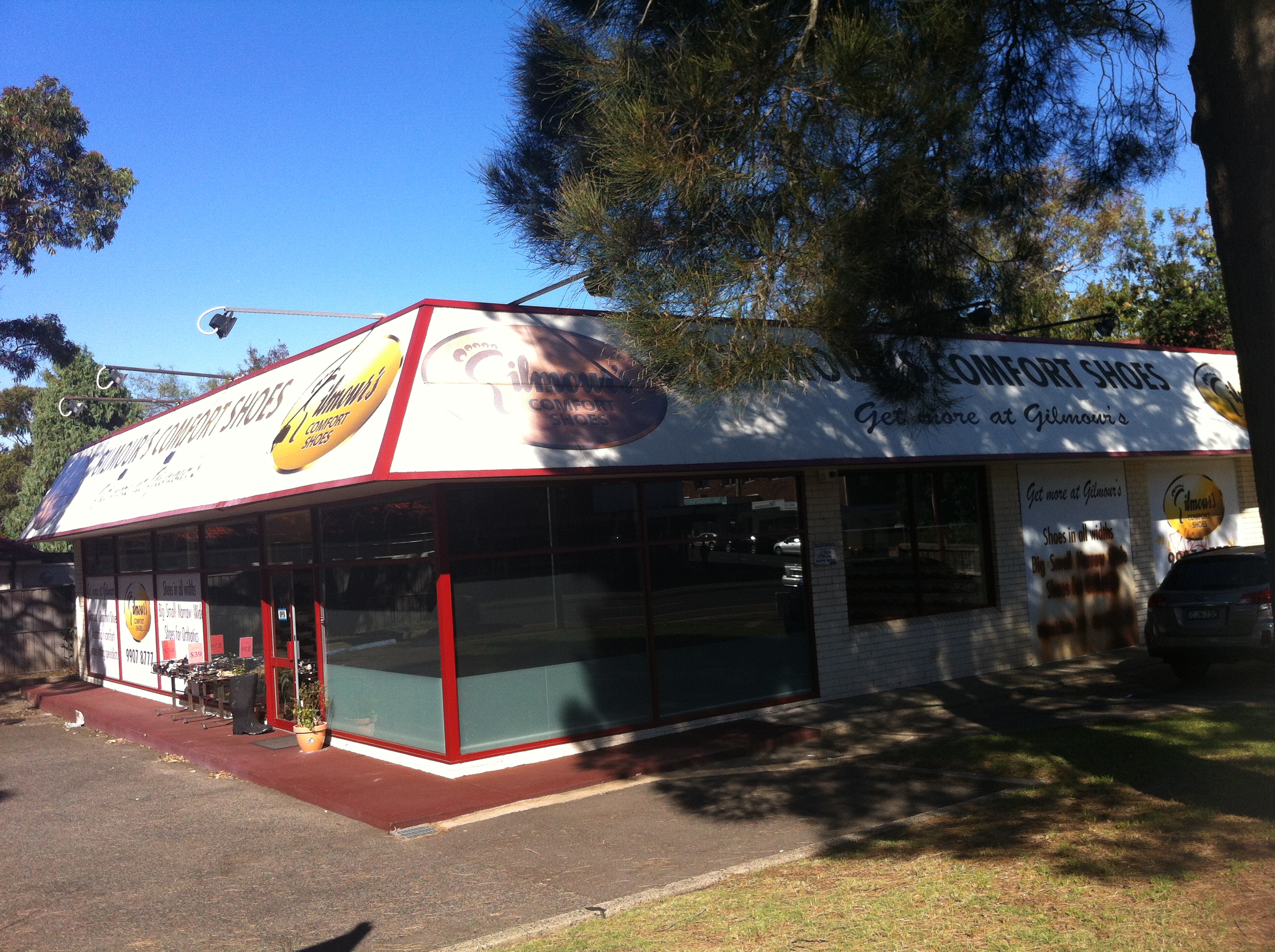
Behold, the Manly Vale Hartee’s still stands. It’s currently Gilmour’s Comfort Shoes, but it pretty obviously fits in with the Hartee design.

In fact, this may be the most well-preserved Hartee’s still in existence. The Gilmour’s sign appears to be stuck on over the red roof, so it’s possible the Hartee’s logo remains underneath.

The original lights are still in place, designed to illuminate the Hartee’s name. Also still in place, as per Phil’s advice…

The original outdoor seating area! Now it’s presumably the shoe shop manager’s car park (c’mon, look at the prestige offered by that strange piece of land). Inside are just shoes, but really, they’ve served worse and called it burgers.
It’s not really a happy ending, or an ending at all, but it is (I’m guessing) the final footnote on what by now must be the most definitive account of the Hartee’s affair out there. There are still many mysteries surrounding the story (truly, more questions are raised than answered), but maybe one day one of those faceless, guilt-ridden Hartee’s executives will come out of hiding and reveal more. Hell, I’d even settle for the guy who served the dog food. As ever, if you know more, please let Past/Lives know. And RIP Hartee’s – we hartlee knew ye.
In the meantime, let’s take a minute to remember those four powerful words that watered more mouths than Mount Franklin, that were a city’s guilty pleasure in a time before Big Macs and Whoppers…in a time when a nation could feed itself.

Hartee’s Kogarah, November 1973. Image courtesy State Library of NSW.
Darrell Lea Chocolates/Newsagent – Roselands, NSW
No doubt you’ve heard about the financial struggles faced by Darrell Lea over the past few months, and if you haven’t, you might want to rethink buying Mum and Dad a Rocklea Road for Christmas. It’s a sad thing when suddenly chocolate isn’t financially viable enough. What, did everyone just decide it was terrible after 85 years? Enough terrible puns were made by the papers at the time of Darrell Lea’s collapse, so I’ll spare us all that nightmare as today we look at the Roselands outlet of the chocolate maker.
Roselands Shopping Centre is up for an entry itself in the future, so watch this space (at the rate I’ve been going lately, it should only take another six years), but the part of Roselands Darrell Lea ended up in is one of its older areas. Located almost at the bottom of a downward escalator, you’d think maximum exposure + delicious chocolate would = maximum delicious profits. Well…
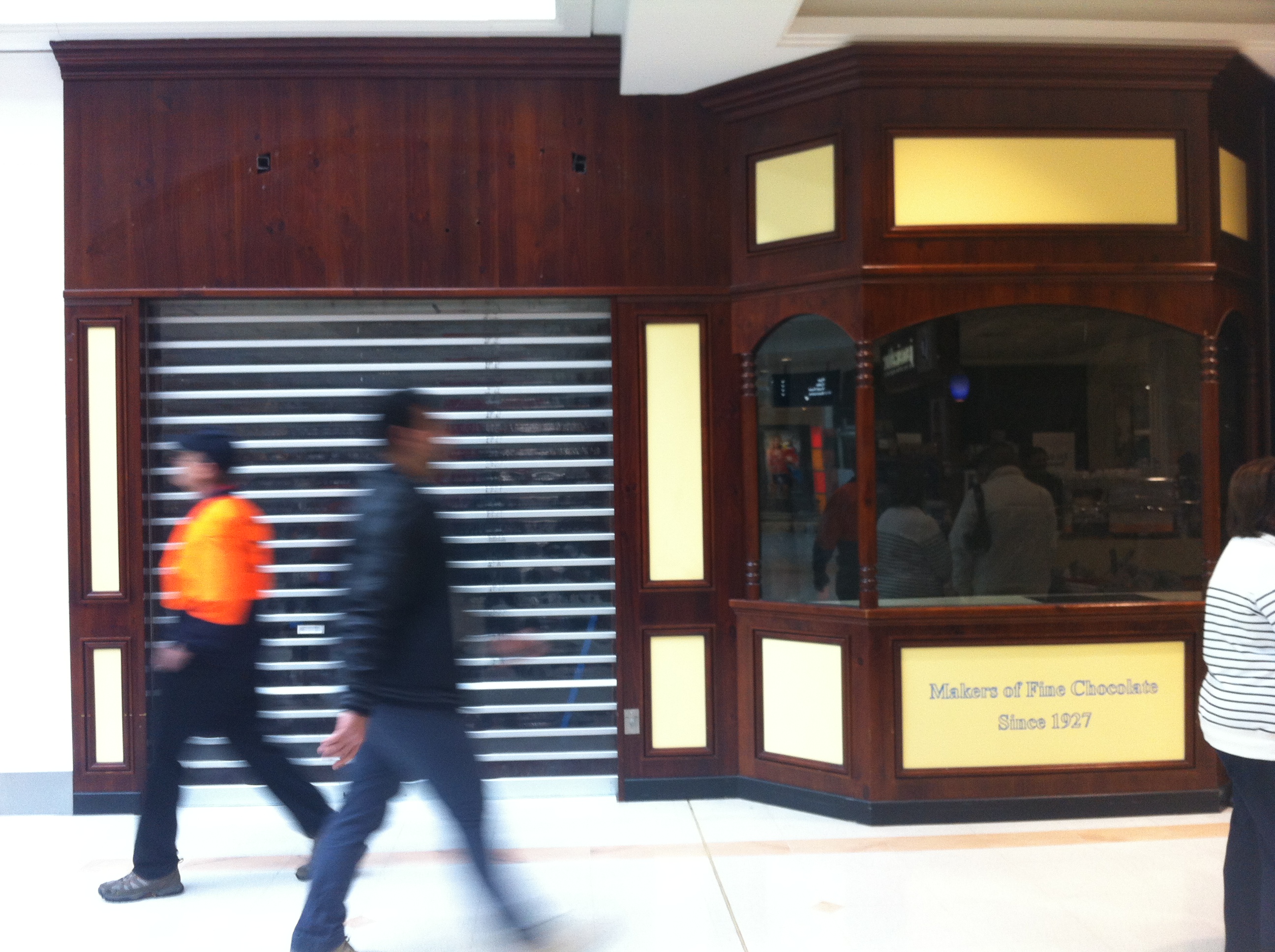
Plans for the empty shop involve an expansion by the neighbouring newsagent, which is so cramped and old it wouldn’t surprise me if they’d built the entire shopping centre around it. Hopefully, the doubling of their floorspace will allow much more room for their diligent army of plain-clothed guards to continue their campaign of death-staring at anyone they think might be shoplifting.
According to this article on the store’s closure, Darrell Lea admin chose to close Roselands (looks like I’ve met my assonance quota for the day), yet kept the Bankstown Centro store open. But commenter Brad Edwards reveals the truth:
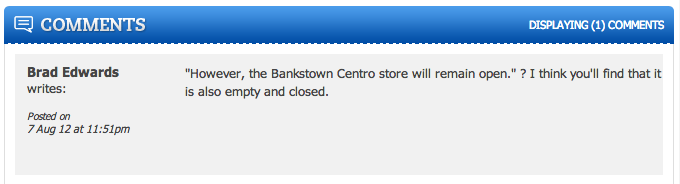 More like…Darrell LIE! Oh, sorry.
Dick Smith Powerhouse/Nothing – Bankstown, NSW
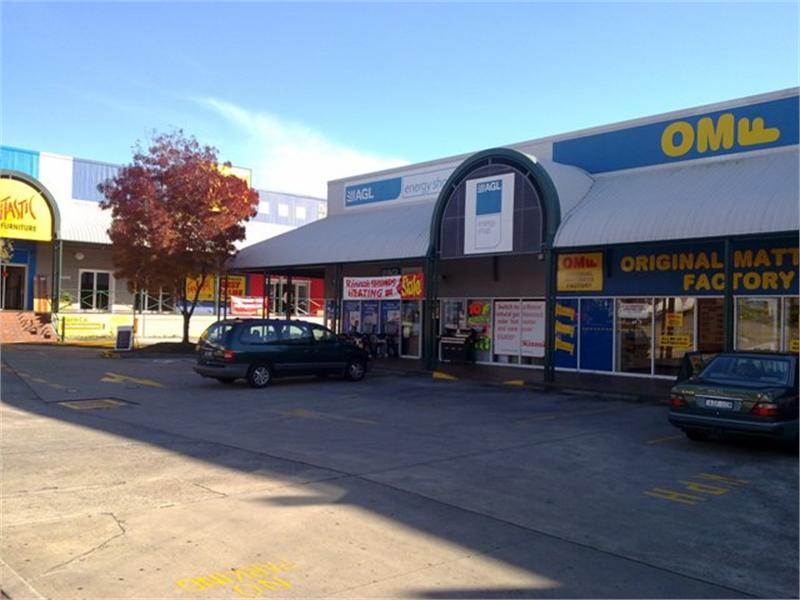
Welcome to my nightmare.
When I was a kid, growing up in a house that was developing rapidly from a tiny shag-carpeted fibre nightmare into a two-storey McMansion with cheese, the worst thing that could happen to you on a Saturday morning was being told “Get in the car, we’re going to HomeBase.” Suddenly, the Saturday that had held so much promise, that you’d worked all week at school to enjoy, was taken away from you, and replaced by a seemingly endless death march through IKEA.
Prospect’s HomeBase homemaker centre had been around since before 1982, when the IKEA opened. After that, the mindless rush to be a part of the Swedish furniture revolution put HomeBase on the map, and countless kids had their Saturday mornings ruined by the long drive out to the middle of nowhere just because the study would look better with a walnut bookshelf named ASCOT. The HomeBase centre’s other stores (yes, there were a few) surrounded IKEA, occasionally catching the eye of a customer as they left the furniture giant, but as a rule, IKEA was what you were there for. Clark Rubber wasn’t exactly a hot destination on weekends.
For the first few years, it wasn’t so bad. I was short enough to be allowed access to the ball room. Anyone who was a kid in the era of ball rooms will instantly know the thrills, the mayhem and the excitement of a ball room in a shopping centre. It was everywhere you wanted to be, because no matter how boring the prospect of a day traipsing around a shop looking for stuff you didn’t care about seemed, if there were facilities for kids you could instantly dump all your disappointment prep work from your internal cache and get stupid in the ball room.
Tragedy struck the Saturday I was suddenly too tall. The clown on the height restriction sign, my close friend for so many years, granting me private access to a wonderland, was instantly my enemy. His eyes, once alive with mischief at letting me into that private club, had turned cold and distant. “We don’t want you here,” his perma-smile seemed to say.
At this point I was faced with two options: brave the boredom of IKEA, or go to the entertainment room for older kids. It was a tough choice, but one easily made. I still wasn’t quite old enough to appreciate the challenge of a DIY entertainment unit, and as amusing as fake PROP brand computer screens were, they got old after the 1000000th bedroom mockup, so I was off to the big kids room. IKEA’s idea of entertainment for big kids involved a bunch of too-small stools stuffed into a tiny room. In the corner of the room was a mini-TV showing Superman: the Movie on a loop. Every single time I went to this room (and it was often – we had a lot of books to shelve), I was treated to either the Marlon Brando bit at the start, or the farm bit where Superman’s dad dies. Once, I even got to see the bit where Lex Luthor crushes the guy under the train – shockingly violent for a kid my height. Not once did I get to see Superman in action. This did nothing but affirm the film’s reputation as ‘a long one’ for me, because even though I knew how long a trip to IKEA could take, it was never as long as the buildup to Superman’s first appearance in the film. The movie and I have settled our differences since, but to this day I can’t watch it on a tiny TV.
The reason for this long anecdote is this: when it was deemed that our house contained enough IKEA furniture, the drive to Prospect suddenly seemed a bit too long, and further homemaker sorties were redirected to the much more local Christies Centre, on Canterbury Road at Bankstown. Long known as Dunlop Corner to locals (it was formerly the site of a Dunlop factory), the Christies homemaker centre had moved in sometime in the 80s or early 90s, and provided a bunch of lesser IKEA wannabes like Fantastic Furniture, a pottery barn, plenty of bedding shops, and my new enemy: Freedom Furniture. The Christies Centre became a new level of weekend hell, because unlike IKEA there was no kids play centre. No consideration for bored children was given anywhere on the grounds of the Christies Centre, and my attention was left to fall upon the dying, decrepit businesses that lined Canterbury Road.
Matters improved when the pottery barn was replaced by Hungry Jacks, but that can only hold one’s attention for so long. In 1996, Dick Smith Powerhouse made it to the Christies Centre. It was a breath of fresh air – suddenly there was a place that sold video games, computers, CDs, the first DVDs…even Superman: the Movie was available to buy here. Dick Smith had only recently moved away from being an electronic hobby shop to establishing a retail chain for consumer electronics, and the Powerhouse was a bold example. For many, it was the first place they were able to use the internet. The trial computers were all set up with dialup accounts, allowing customers to get a taste of the ‘information superhighway’ for the first time before making a purchase of a brand new Pentium. Suddenly, it didn’t matter how long the furniture pilgrimage was going to take, Dick Smith was the place to hang out and relieve that boredom. It was even better when I eventually had money.
These days, the Christies Centre name is long gone. It’s now Home Focus. Hungry Jacks is still enslaving teenagers, Freedom Furniture is still committing hate crimes against entertainment, bedding shops are still putting people to sleep for all the wrong reasons. There’s a new homemaker centre, Home Central, at the back of the place with a completely separate lineup of shops including a Toys R Us, which I’d’ve killed for on those initial endless Saturday mornings.

Dick Smith is gone. Only recently too, by the look of it. I went there yesterday hoping to buy a fuse, only to find the shop completely gone. When did this happen? I’d only gone there a few…months ago? Was it that long? The Dick Smith Powerhouse branding was apparently discontinued in 2009, immediately numbering the Bankstown store’s days. At the same time, Tandy electronic stores, acquired by Dick Smith, were phased out also. Remember Tandy? Everywhere when you weren’t looking for them, nowhere when you were. In January 2012, Dick Smith owner Woolworths closed 100 or so Dick Smith stores, apparently including the Bankstown Powerhouse, and announced that they were selling the chain. What a bunch of dicks.
So now, bored kids stuck at the Home Focus on an endless Saturday morning have only Hungry Jacks (or the distant Toys R Us) to entertain them. No wonder childhood obesity is such a problem. Of course, these days 4-year-olds have iPhones, so my heart isn’t exactly bleeding for them. It’s just a safe bet they didn’t get their iPhones or Nintendo DS from Dick Smith Powerhouse.

 Past/Lives of the Near Future