NSW State Brickworks/Brickpit Ring Walk – Homebush, NSW

In a time when building a house meant plenty of brick, mortar and asbestos as opposed to 100% pure cladding, a housing boom meant it was time to get digging. The State Brickworks at Homebush was established by the NSW Government in 1911 to (publicly) provide for the demand for public housing and (privately) to shatter the stranglehold private owners had on the brickmaking industry, because no one makes money without the NSW Government getting a piece of the action. This greedy plan backfired at the onset of the Great Depression, when demand plummeted and the site started operating at a major loss. Ironically, it was sold to a private firm in 1936, and closed soon after.

State Brickworks, Homebush, 1912. Image courtesy State Library of NSW
Of course, the history of bricks in Sydney reaches back much further than Homebush. Brickfield Hill (near Haymarket) owes its name to its brickmaking past, and the St Peters brickyards are still in plain view – I just haven’t been there yet. The Homebush site was adjacent to the State Abattoirs, presumably to maintain the ambience, but more likely because the ground was rich in necessary brick ingredients. The Homebush Brickworks had also served to replace the troublesome State-run sand lime brickmaking operation at Botany, which had in 1914 fallen victim to a labourer strike, and never recovered.
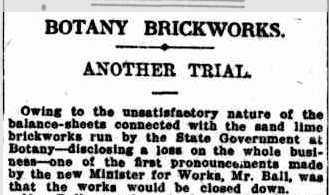
SMH, 19 Dec 1916
After World War II, during which the site had been used as an ammunitions depot by the Navy, the NSW Government sensed an opportunity to make money, and reopened the Brickpit just in time for the second housing boom. If the first boom was a Newcastle, this one was somewhere between a San Francisco and an Indonesia. Chances are that at some point during your life in Sydney, you’ve stayed in a house built with bricks from Homebush. The site even had its own train station for workers to use, which opened in 1939.

A red rattler passes the State Brickworks, 1982. Image courtesy Graeme Skeet/nswrail.net
It should be mentioned that during the 60s, 70s and 80s, the Brickworks was known by a different name to young hoons and petrolheads looking to blow off some steam on a Friday or Saturday night. ‘Brickies’ was a hot destination for drag racers setting off from the Big Chiefs (Beefy’s) burger joint on Parramatta Road, tearing off up Underwood Road in their Monaros towards Brickies Hill. This circuit can be seen in the 1977 film FJ Holden, which will be a major part of this blog sooner than later. The onset of development put a stop to this, but a subtle, if bizarre, homage to that era has been paid through the naming of certain streets around Hill Road, once the drag strip finish line: Nuvolari Place, named for Italian racing legend Tazio Nuvolari, and Monza Drive, after the endurance race of the same name. Sydney also hosted its first V8 Supercar event at the Olympic Park in 2009, echoing the days of weekend supercar stardom in less developed decades. Residents could still nostalgically enjoy extreme noise pollution and rowdy behaviour, but at least this time it was corporately sponsored.
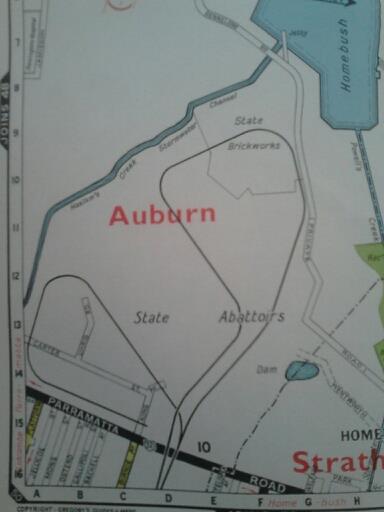
Saturday night grand prix circuit. Thanks, reader Kenny!
From an industrial standpoint, they might as well have been making gold bricks at the ‘works for the next three decades…and then the 80s happened. The boom died down, the money dried up, and the Brickworks, which had for the most part of the 20th century poisoned the surrounding land and Homebush Bay, was clumped in the same basket as the increasingly irrelevant State Abattoirs and the volatile Rhodes industrial area – it had to go, but before it did, the crew of Mad Max Beyond Thunderdome (or perhaps The Conqueror 2, just give it a few years) chose the toxic site as a filming location. In 1988, the Brickworks were closed for good. Like the rest of the State-owned Homebush industrial zone, it was included in plans to reshape the area into the Sydney Olympic Stadium in 1992. The Brickpit was to become the tennis centre.

“Wait’ll they get a load of me.”
And so it would have gone, had not a funny, completely unexpected thing happened. The green and golden bell frog was nearing extinction by 1992. Once abundant in Sydney, numbers had fallen so low that a special breeding program was established at Taronga Zoo in the hope that the frog could be saved. As preliminary work was being done, 300 of the small frogs were discovered living in the quarry. Several times since, colonies of the undeniably appealing frog have turned up at proposed development sites, halting work, ruining plans, and causing PR-illiterate development bigwigs to shit a…well, you know. The frogs are no longer critically endangered, but they still have a long way to go.

As the rest of industrial Homebush was transformed for the Olympics, the Brickpit itself followed suit, undergoing heavy remediation. It’s now an environmental feature of the Olympic Park, and features the wonderful Ring Walk, a walkway suspended above the former Brickworks site complete with a giant pond filled with what can only be described as Smylex. Those frogs must be mighty happy.

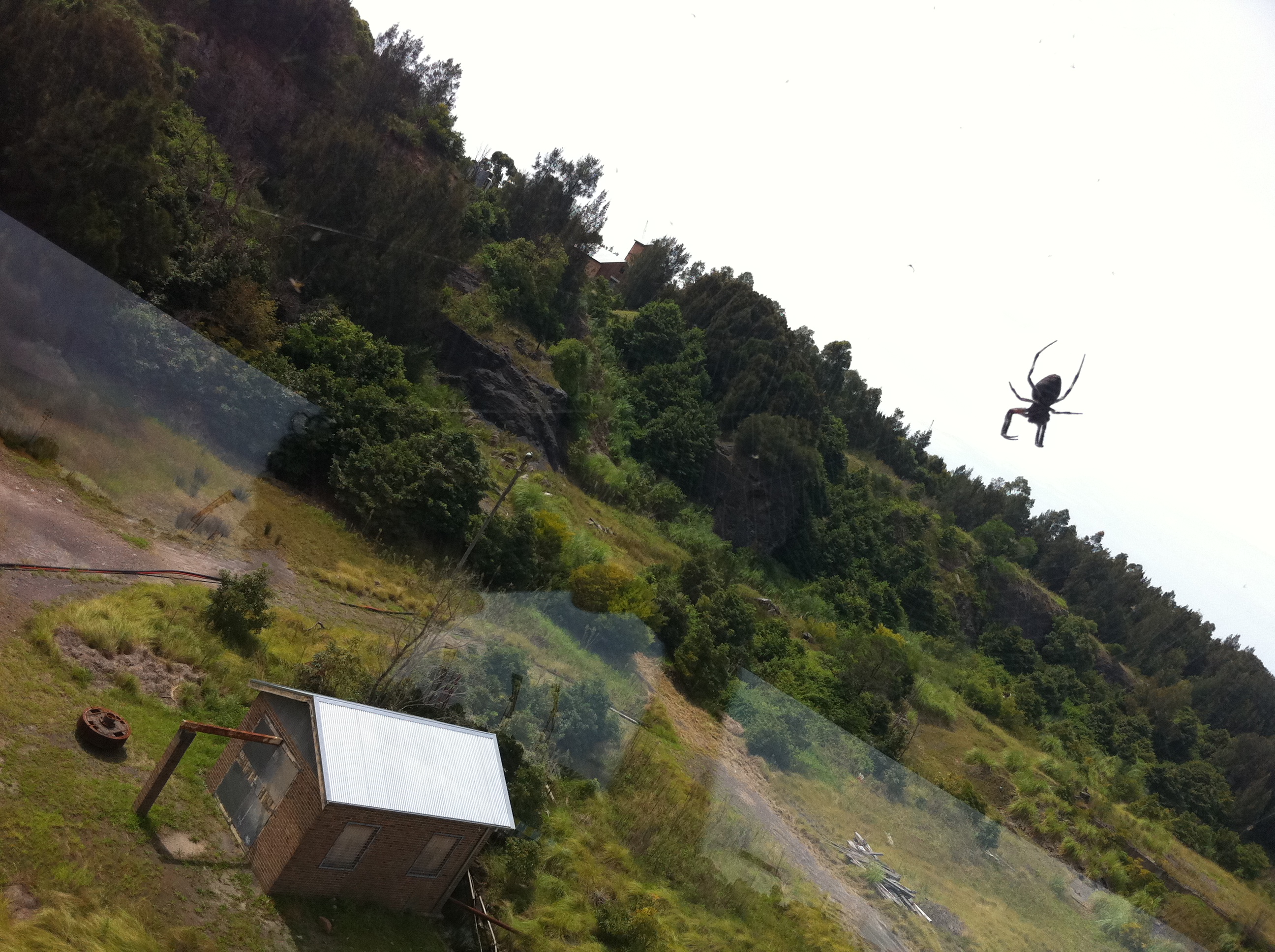

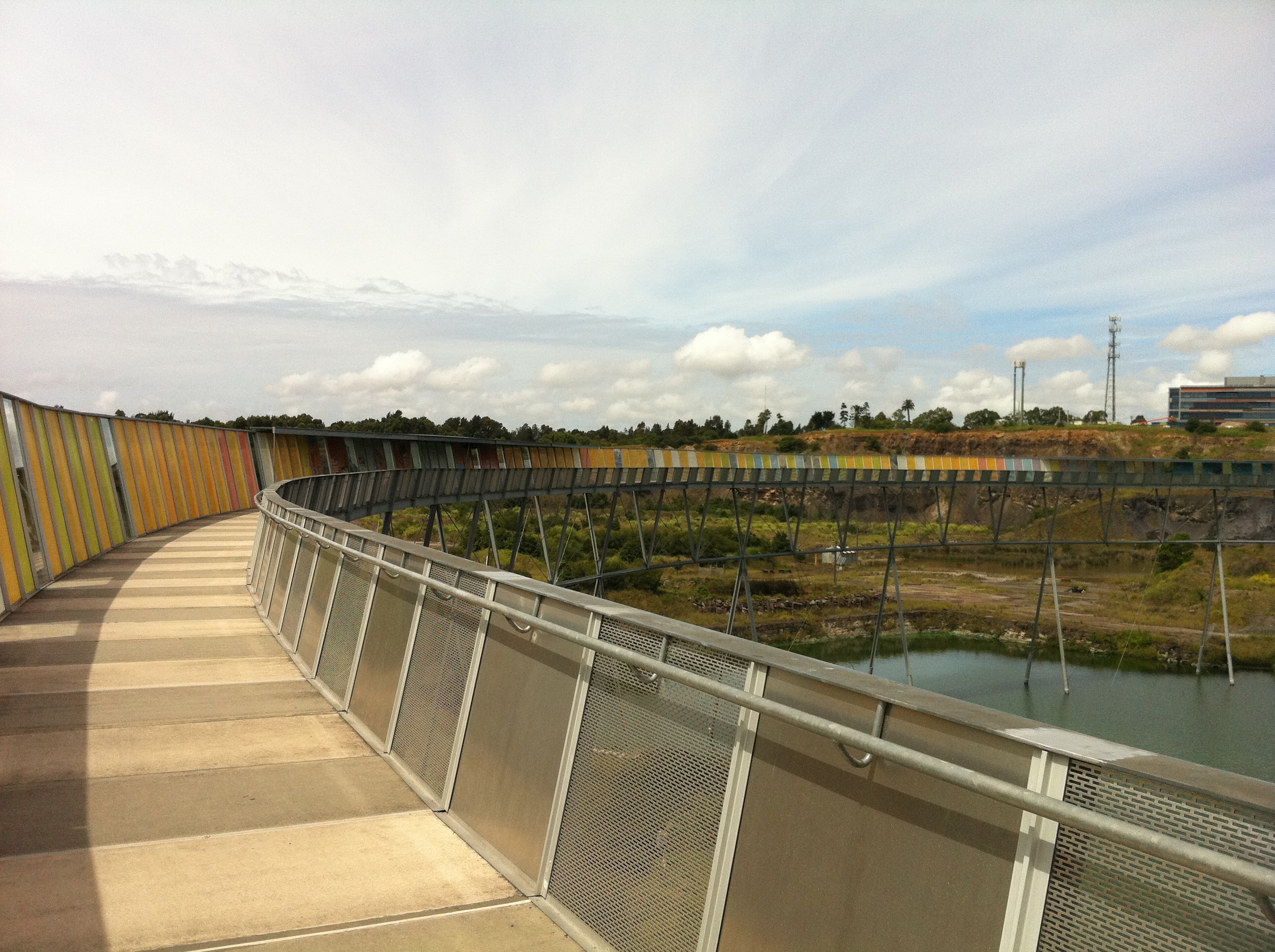
Here’s my…

…half-assed…
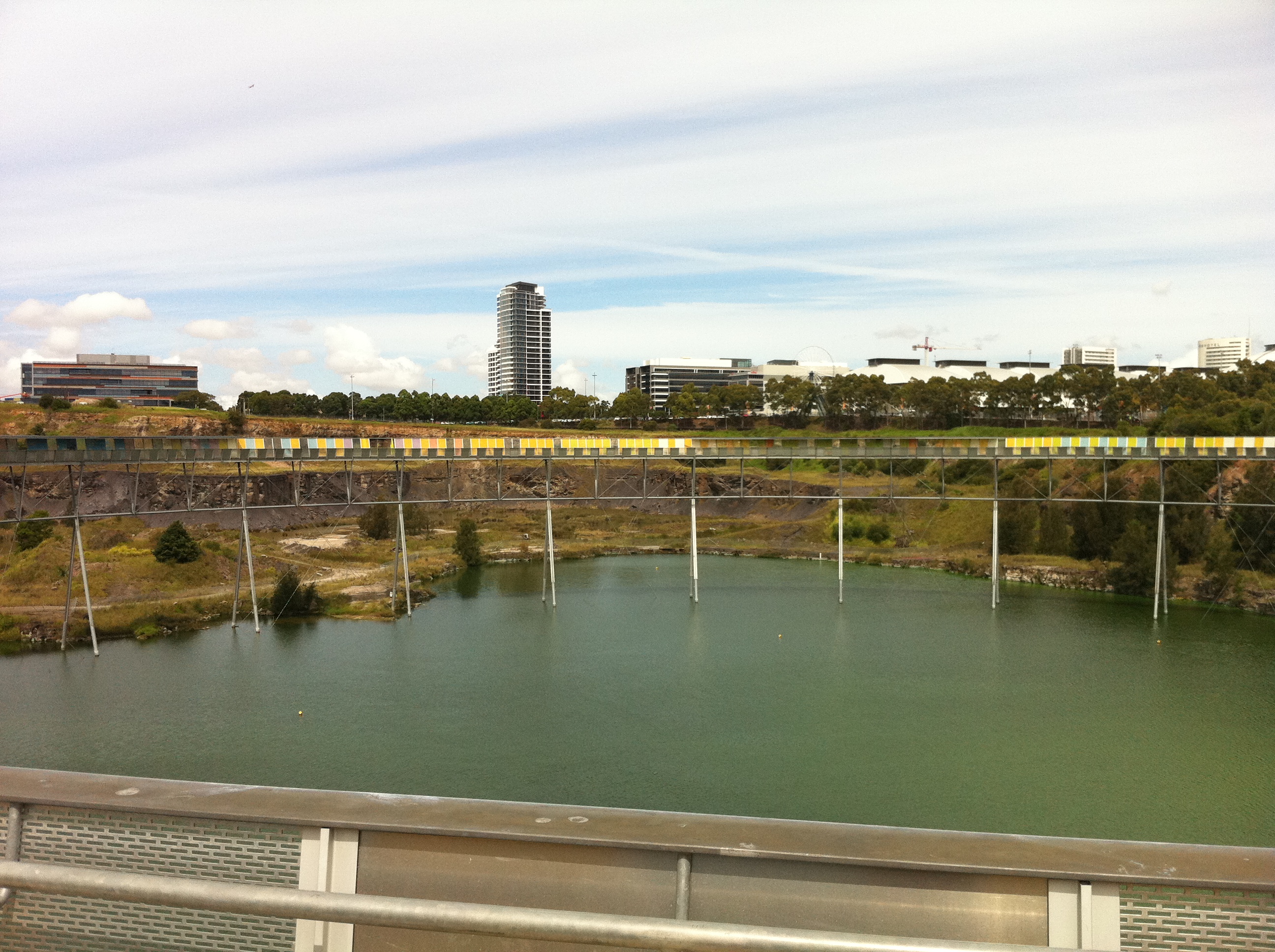
…attempt…

…at…
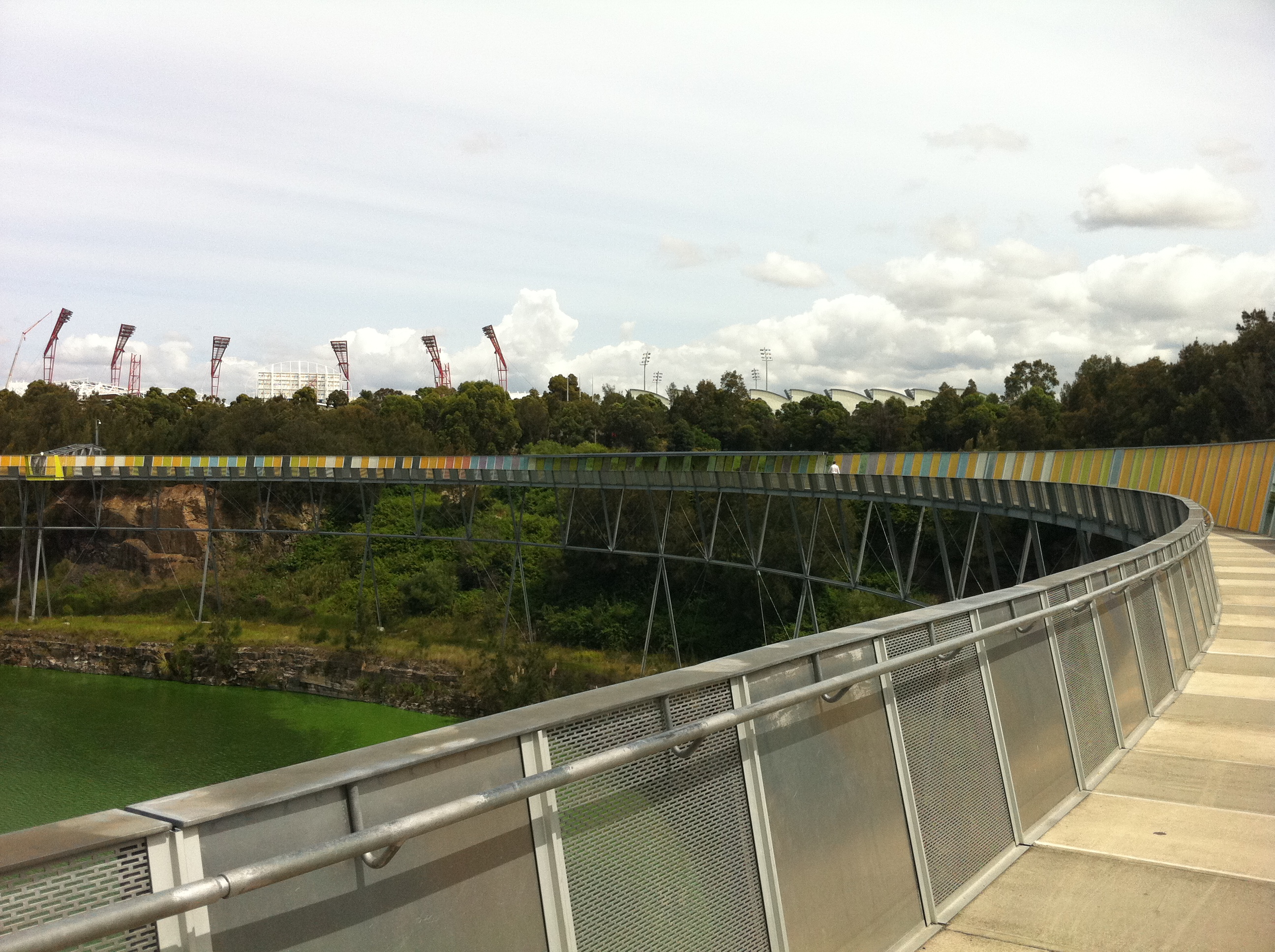
…glorious panoramia.
It’s funny…we spent the better part of last century digging this place up and sending it off all over the city for our homes, but the frogs cut out the red tape and came to the place itself, making it their home in less than a decade. We didn’t start building units here until years later. Am I saying a frog could run Mirvac or Lend Lease?
Ribbit.
Laundry/Derelict – Concord, NSW

It’s just a guess, but maybe this laundry failed because the signage was perhaps a bit too garish and overbearing. Another victim of tall poppy syndrome, you know?
Orion Theatre/Orion Function Centre – Campsie, NSW
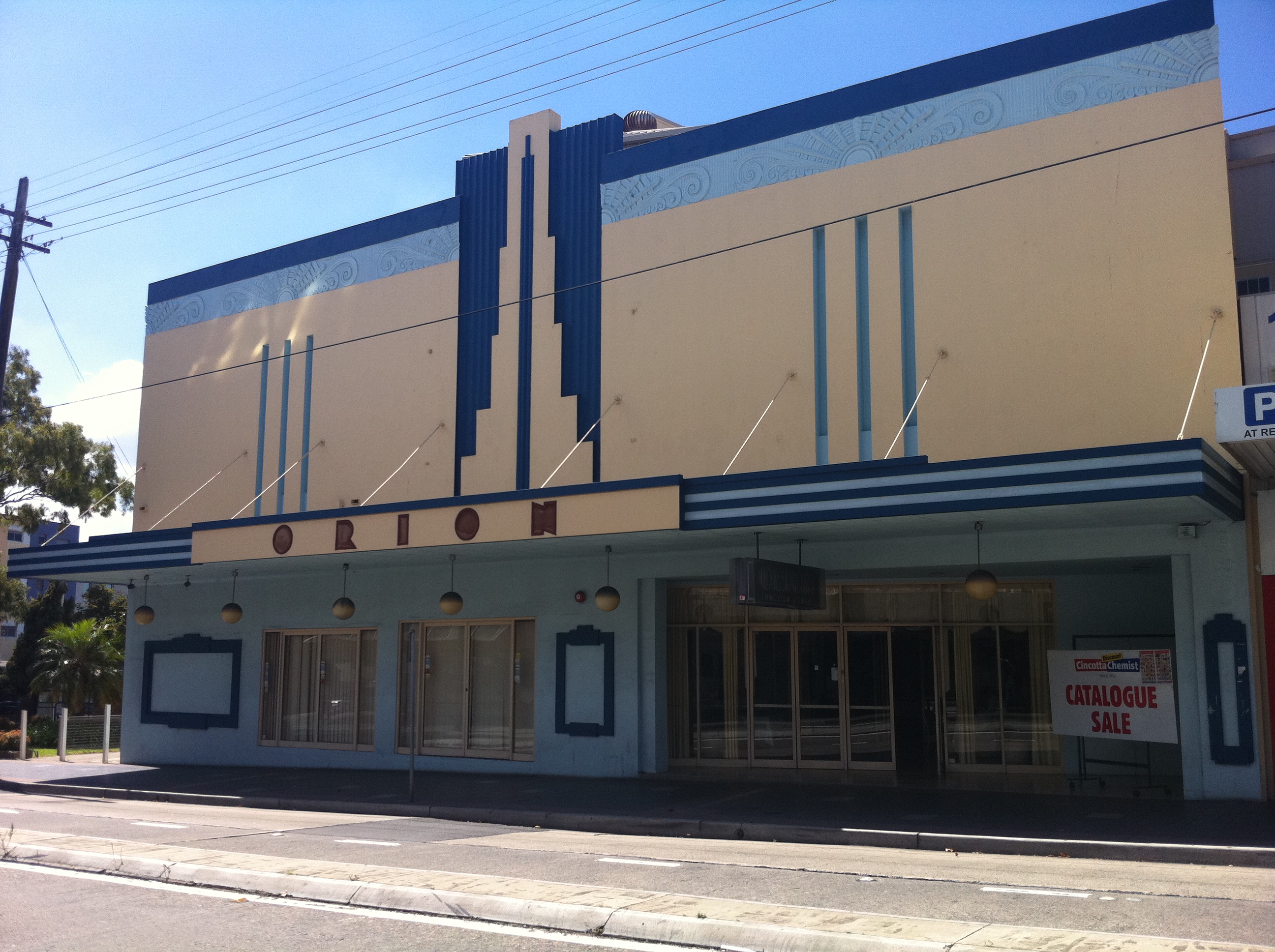
By the mid-1930s, the suburb of Campsie already had a cinema. The open-air Campsie Palace was opened in 1910, and over the next 25 years had become the Excelsis, and finally the Odeon. When the Orion (“Theatre of the Stars!”) opened in 1936 it was seen by some as overkill, but today it’s the last man standing, albeit in a different form.

Orion Theatre interior, 1960. Courtesy Barry Sharp and City of Canterbury Local History Photograph Collection.
Opening in March 1936, the Orion had close ties to the RMS Orion, an Orient Company ocean liner launched from Brisbane in 1934. A mural depicting the liner sat in the cinema’s lobby for the first phase of its life. The first films screened were Love Me Forever starring Grace Moore, and Lady Tubbs starring Alice Brady. The theatre received extensive renovations in 1949, by which time both actresses had died. Our old friends Greater Union got involved in 1953 and, typically, ran the Orion into the ground by operating on a restricted policy. Movies were only shown on Fridays and Saturdays, and the reduction in profits saw the building close as a cinema in 1959. I’m beginning to think that GU intentionally ruined these suburban cinemas just to ensure that moviegoers would flock to their multiplexes, but surely I’m just being cynical…right?

Orion Theatre, 1960. Courtesy Barry Sharp and City of Canterbury Local History Photograph Collection.
In 1964, a year after the RMS Orion was destroyed for scrap, the Canterbury Town Hall was demolished, and the Canterbury Council eyed the Orion as a possible replacement. Since the cinema closed, it was being used as a public meeting place and neighbourhood centre, so it made sense, but for one reason or another it never happened. The Council didn’t forget the ‘Theatre of the Stars’ though (oh, unless you count the years of neglect between 1959 and 1984), and in the 80s began restoring the building for use as a function centre. Renamed the Orion Centre, it can be found in pretty good nick today.

Extensive though the renovations may have been, it’s easy to see the building’s cinematic origins.
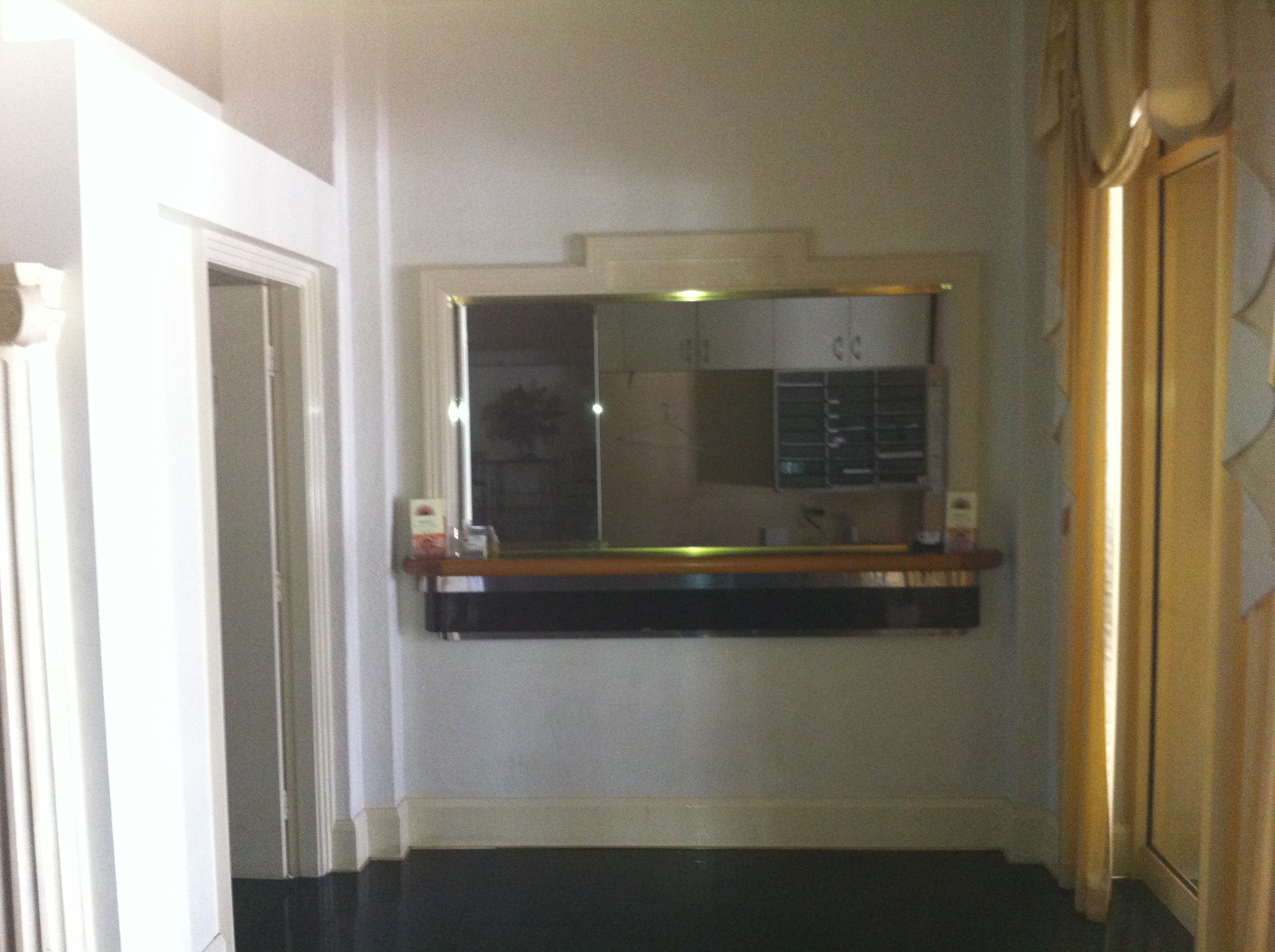

The art deco style is unavoidable inside.
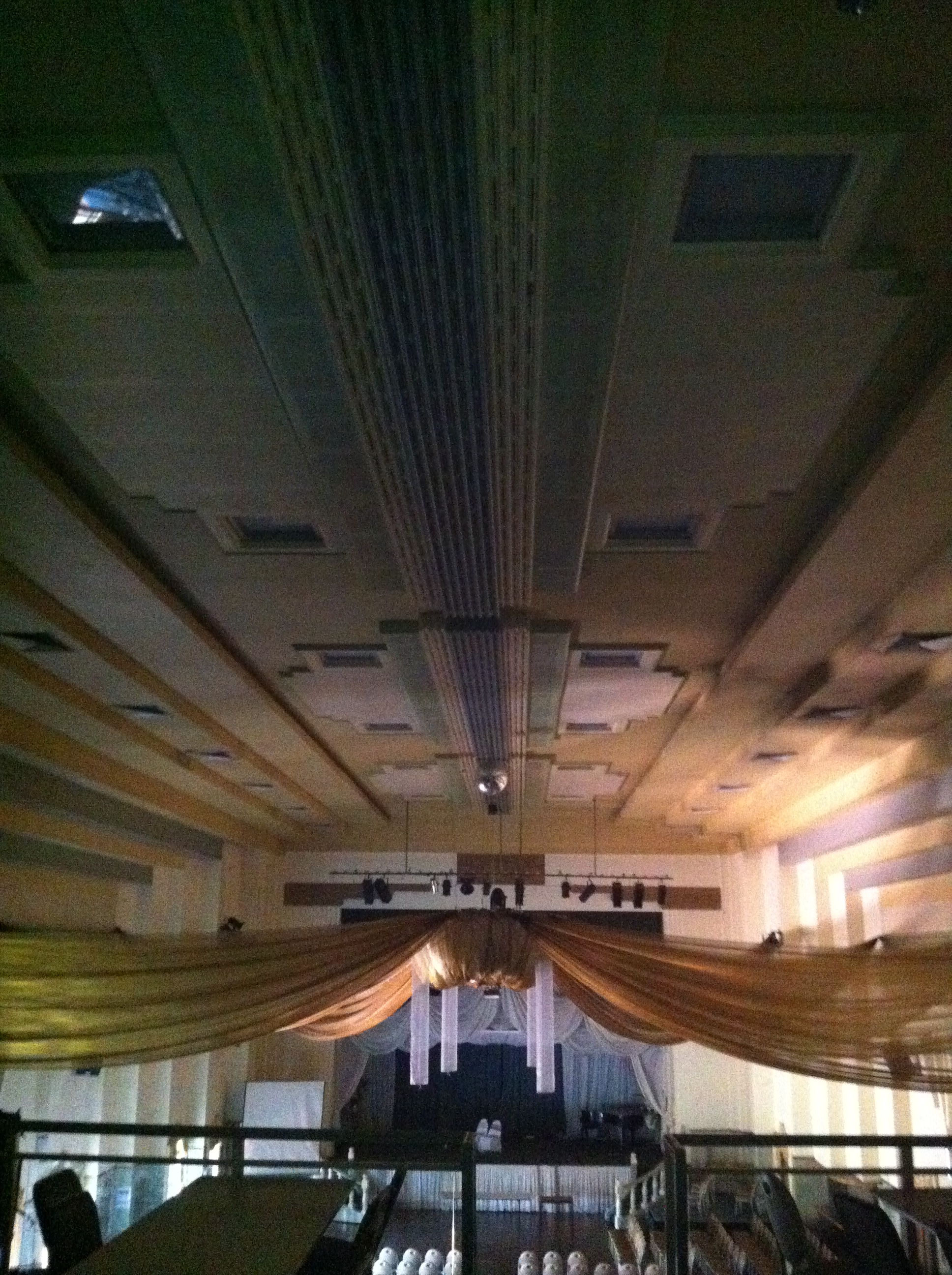
This mural offers another hint of the Orion’s former life:
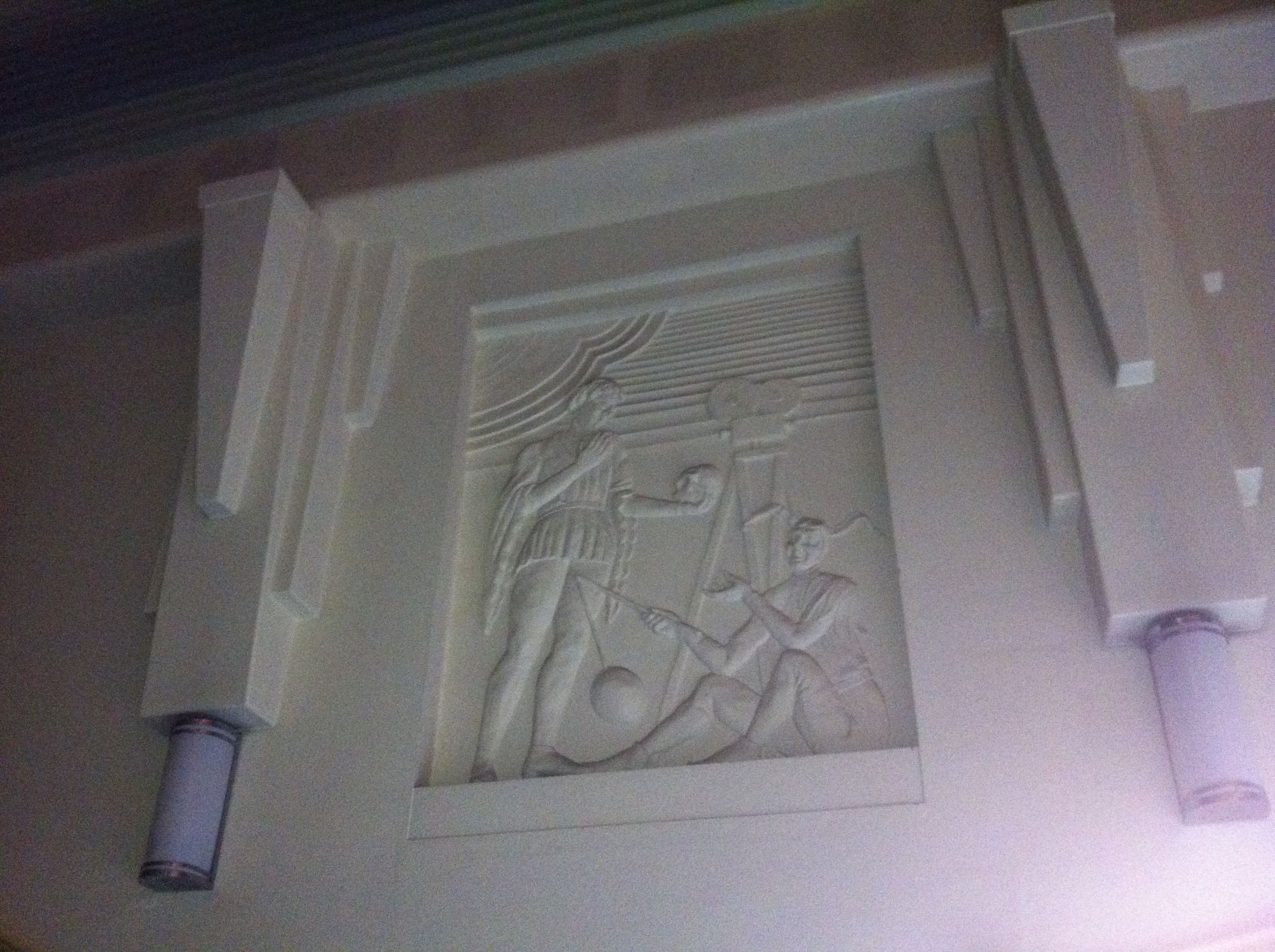

There may not be any stars on Orion’s belt these days, but the centre’s sense of style certainly evokes a time when a whole galaxy was constantly viewable from Beamish Street with a projector as a telescope.
Sussex Street Public School/Flying Angel Seafarers Centre/For Sale – Sydney, NSW

Old school: Sussex Street Public School in the 1880s. Image courtesy NSW Dept of Education
Between 1878 and 1913, Sussex Street Public School was one of the ‘most important’ schools in Sydney. Here’s a former student’s testimonial:

SMH, 10 Jun 1908
And it goes on like that. Some people are whingers, aren’t they?
A notable former pupil was the late NSW Labor politician Frank Hill, who was implicated in a Communist Party infiltration of the ALP in the early 1940s. The reds were pushing a ‘Hands off Russia campaign” following the signing of the Molotov-Ribbentrop Pact, which would have meant Australian neutrality in the Second World War. Former NSW Premier Jack Lang was so opposed to everything about that that he withdrew from the ALP and started a new party called the ‘Australian Labor Party (Non-Communist)’. These goings-on led to the disintegration of NSW Labor in the 40s, prompting the Federal ALP to intervene and sort things out, and of course during all this nonsense the Russians became our allies anyway. Hill died in 1945, widely regarded as a dupe during the scandal. Imagine if he’d gone to an unimportant school.
Also in 1945, Hill’s old school was acquired by the Sydney Technical College and used in that capacity until 1990, when it was sold to the Sydney Bethel Union. They turned it into the Flying Angel Seafarers House, run by the Mission to Seafarers. Incidentally, the Mission to Seafarers was unfortunately known as the Mission to Seamen until 2000, when they changed their name “in recognition of the changes that had occurred in merchant services and in the world of seafaring”. Sure.
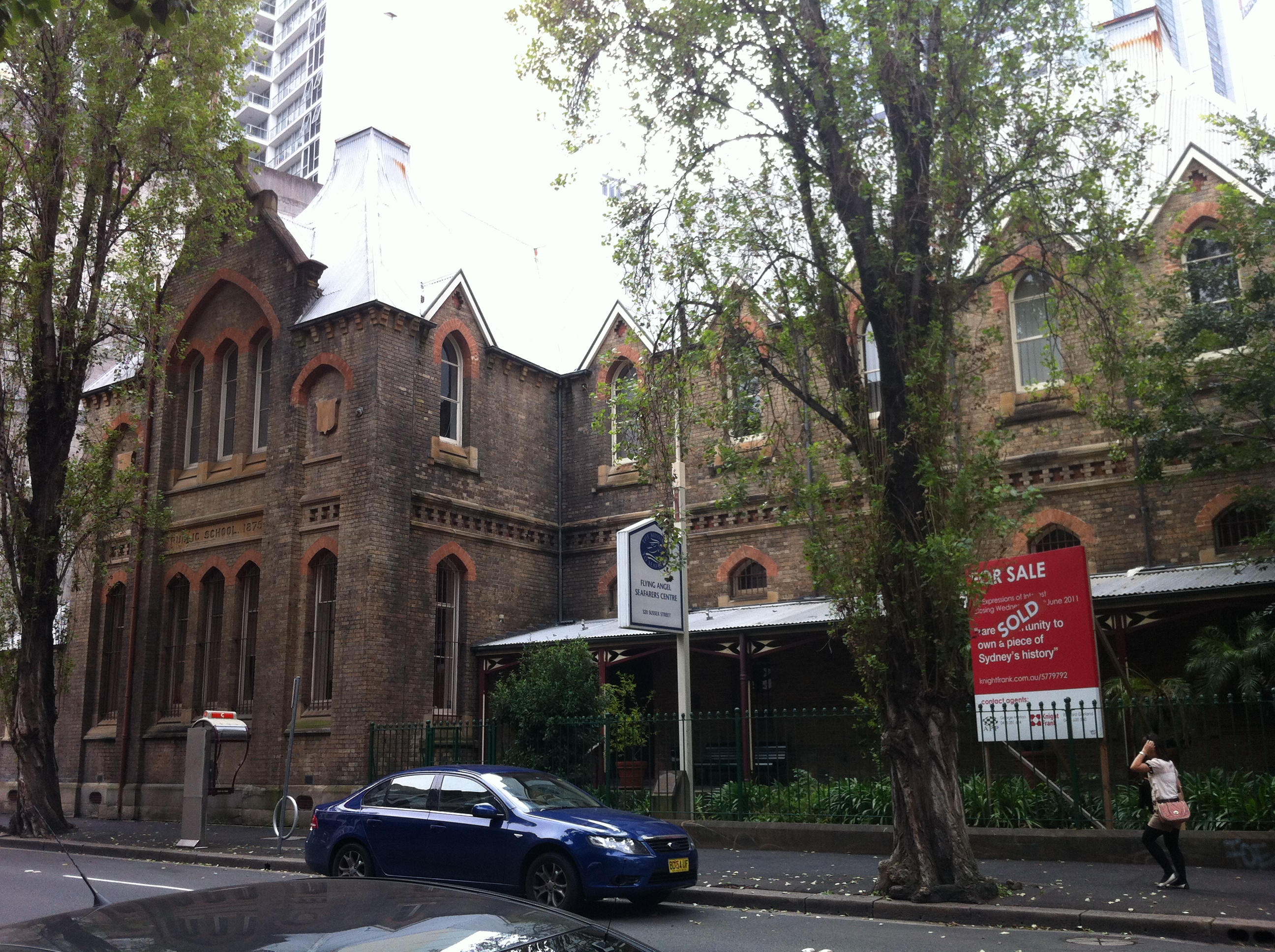
The Flying Angels decided in 2011 that they could help more seafarers down by the sea, and later this year plan to move to Walsh Bay. The building was subsequently put back on the market, and recently sold. It’s said that the Chinese Government was very close to buying the property at one stage…maybe Hill was more red than we thought?
Tempe Tip/Penfolds Wines/Ateco/IKEA – Tempe, NSW

IKEA has caused quite a stir in the suburb of Tempe over the last couple of years. Bordered by the Princes Highway and the appealingly named Swamp Road, Australia’s largest IKEA has replaced an itself-enormous Kennards (formerly Millers) Self Storage site, Tempe tip, and a manufacturing facility run by Ateco Automotive. Can I just say, who even knew Millers Storage had been taken over? I’m sorry if this is common knowledge, but I openly admit to not being up on the goings-on within the self storage industry: apparently Kennards acquired Millers’ distinctive orange storage empire in 2004. Wow. Anyway, part of the site IKEA sits upon today was owned by a widow between 1926 and 1940, when it was acquired by the Perpetual Trustee Company. In 1947, the PTC offloaded the site onto now-defunct British tobacco manufacturer W.D. & H.O. Wills.

SMH, 4 Apr 1953
With 2014’s “Grangegate” claiming the NSW premiership of Barry O’Farrell, what better time to take a closer look at the history of Penfolds Wine Cellars at Tempe?
Penfolds bought the site from Wills in 1953, but it wasn’t until 1959 (a good year, apparently) that the steadily growing company opened its new centre, planned as the most modern of its kind. Forward thinking wasn’t exactly in vogue that year, as in 1970 the site received a major update.

The fatty o’barrel greets motorists and other passers-by, 1975.
The large wine barrel out the front of this art-deco building was a familiar sight to passers-by during Penfolds’ time at Tempe, which came to a close in 1994.
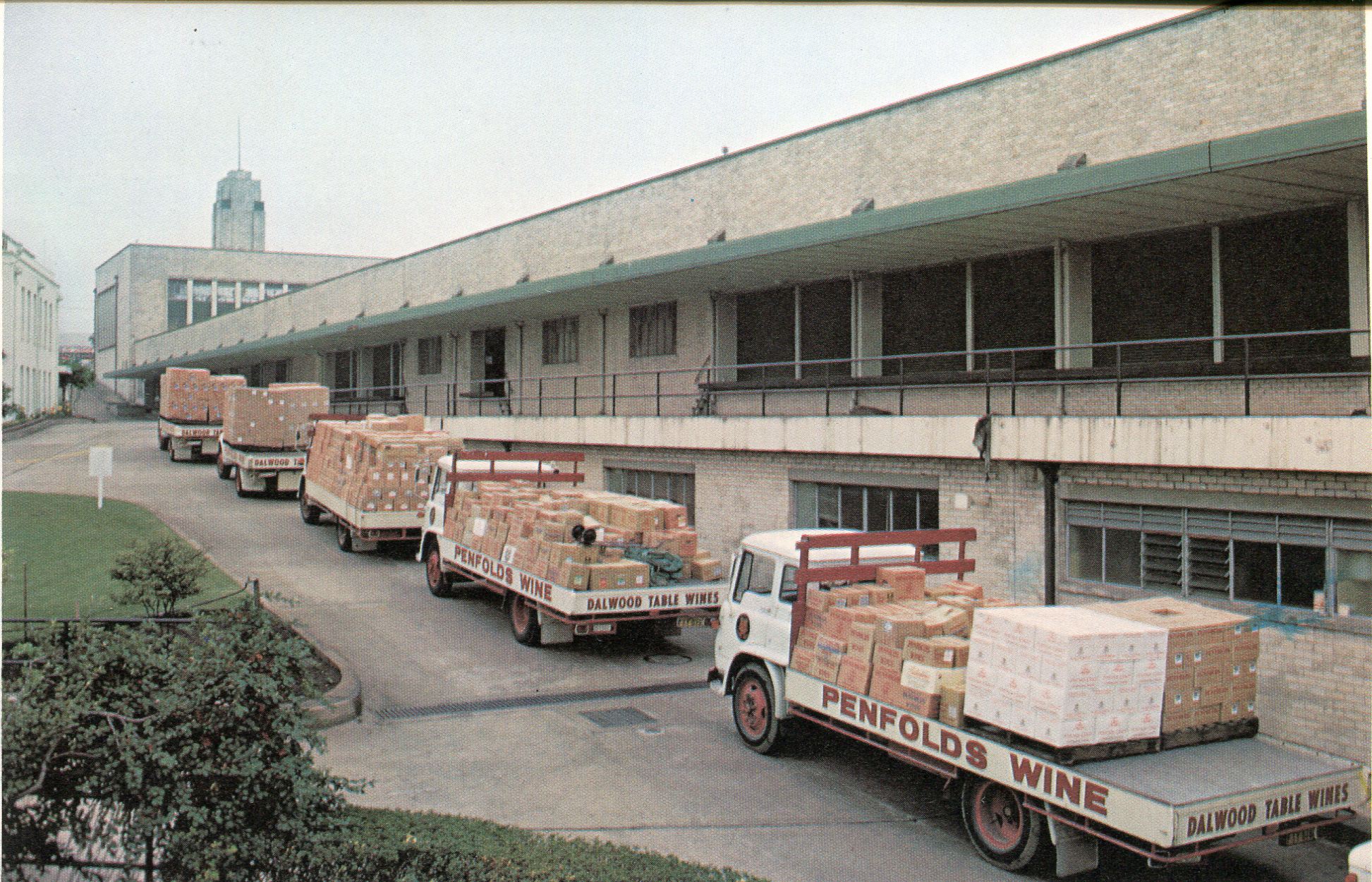
Penfolds trucks prepare to deliver several delicious drops to premier locations around NSW, 1975.
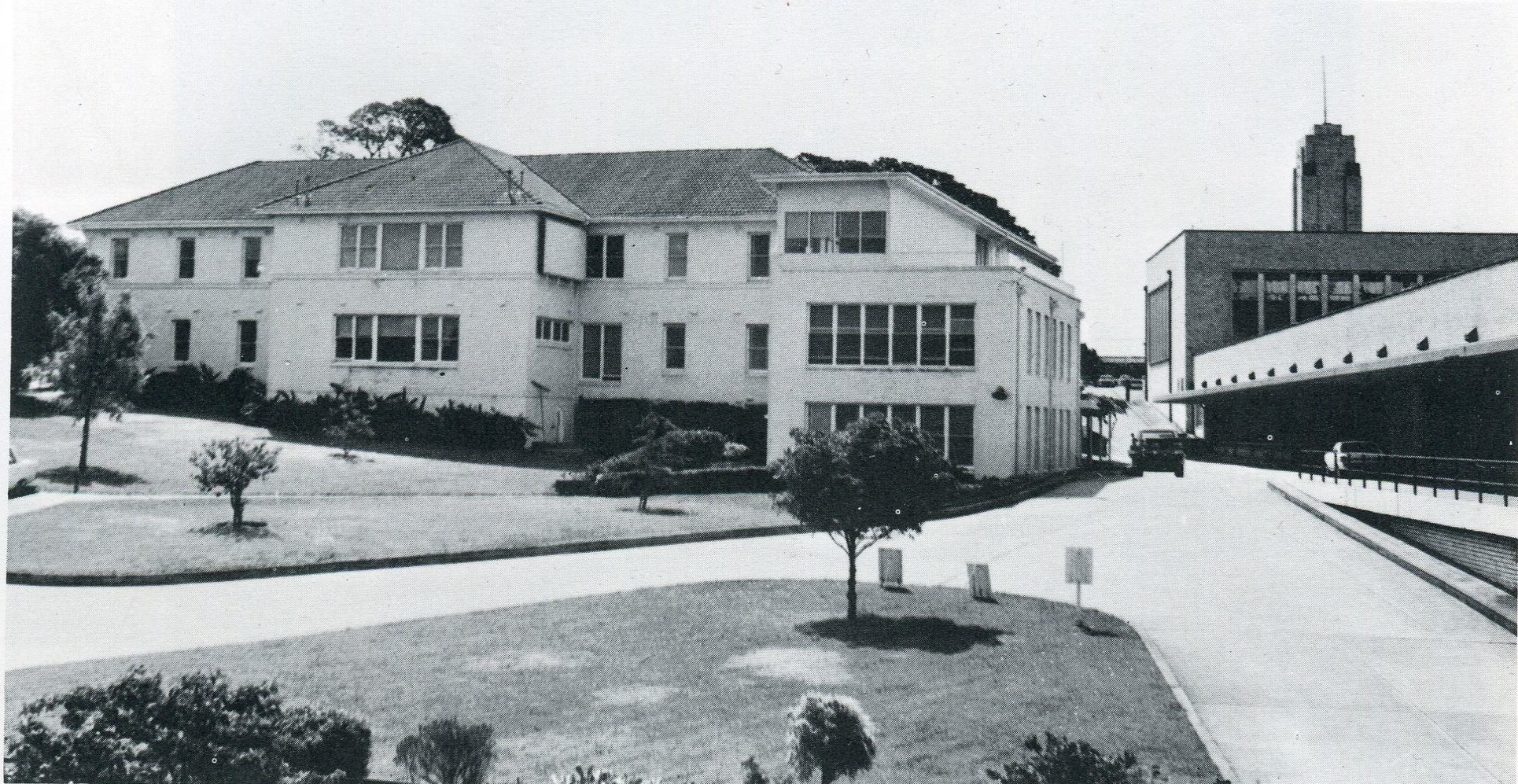
The handsome Penfolds administration buildings, no doubt filled with furniture as far from the IKEA template as possible, 1975.
Ateco Automotive moved in in 1995 and had the good taste to leave the art-deco facade alone, but for a few years prior to 2009 the building sat derelict and abandoned.

Image courtesy, as you can see, Decoworks Pty Ltd
Meanwhile, on another part of IKEA’s huge site, a landfill site known as Tempe Tip was doing its part to pollute the area. Much of the tip’s runoff ended up in Alexandra Canal. The tip was closed as a landfill in 1975 and in 1988, it caught fire. Remediation attempts were made in 2005 to turn Tempe Tip into ‘Tempe Lands’ – a wetland paradise adjacent to an existing golf driving range and duck-filled ponds. But the former tip site was found to be too unstable, and the project was put into the ‘too hard’ basket until IKEA came along – then it was their problem.
And what a problem it was; in 2010, construction of the furniture megastore screeched to a halt when tonnes of asbestos from the tip were discovered on the site. Hundreds of workers were exposed and had to be quarantined. In a surprising move, the NSW Department of Environment and Climate Change investigation found no supporting evidence of related claims that run-off from the site was laced with asbestos, since the existence of such evidence would mean IKEA would pack up and go home, taking their money with them.
Magically, the asbestos problems went away, and IKEA was able to open in 2011, much to the detriment of traffic along the Princes Highway. Especially on weekends, it’s a madhouse (appropriately enough, too, given the history of the neighbouring site…but that’s another story). Above all the chaos stands the art-deco clock tower, which for years bore the Ateco name. IKEA has appropriated the building, returning the clock to working order and affixing the IKEA name beneath it.

It’s a fitting image, really: in IKEA’s world of 9pm weekday closing times, rushed construction efforts and frenzied seizure of unsuitable land, time is money.

 Past/Lives of the Near Future