Joyce Mayne Shopping Complex/Domayne – Auburn, NSW
If you grew up glued to the TV as some of us were, you may remember this funny old lady. You might have smiled as she used her elderly belligerence to implore you to buy a washing machine, but then threw in an interest free period as if to remind you that the kindly granny look wasn’t entirely an act. You might have cringed as she attempted to entice you into her complex from a bubble bath. You might also have wondered whatever happened to Joyce Mayne, the doyenne of discount whitegoods in the dying decades of the 20th century.
 Just in case we were confused.
Born in London, Mayne started out as an actress (and who’s surprised, given those ads) and a tap dancer. She arrived in Sydney in 1956, and the very next day got a job selling TVs at a shop in Penrith. A background in demoing gas and electrical appliances back in England, not to mention being the first woman to pass her all-male management course, didn’t hurt. When the shop owner’s wife learned that *gasp* a woman was selling TVs, she demanded Joyce be fired and replaced by a respectable gentleman. Unperturbed, Mayne went on to a job managing an electrical goods store in the same area, and in 1973 opened three of her own outlets. So great was her devotion to astrology that staff were recruited according to their star signs. “We prefer to employ Sagittarians, Scorpios, Capricornians and Aquarians – they’re the birth signs that produce the best sales people,” Joyce told the Sydney Morning Herald in January, 1979 – the eve of her greatest triumph as a retailer.
The ‘Joyce Mayne Shopping Complex’ on Parramatta Road, Auburn opened amid controversial circumstances in early 1980; filling the void left in the electrical retail scene by the 1978 death of Keith Lord, Joyce had the balls to hold the grand opening on a Sunday despite Sunday trading being completely illegal for a company of her size at the time. Damn. By exploiting a loophole in the law – subletting the 25 shops that made up her complex, thereby establishing herself and her tenants as equals – she was able to cash in on the more than 7,000 shoppers the centre would receive each Sunday. The downside? As a tenant, you had to endure the indignity of managing a store with a name like ‘Joycie’s Jean Barn’ (an actual 1982 store name), but for Joyce herself, business was booming. Aside from an abortive flirtation with car sales in 1982, Joyce stuck largely to whitegoods and furniture, with locations soon sprouting at Taren Point, Camperdown, Alexandria and Newcastle. So involved was Joyce with the business that you’d often find her manning the registers during busy weekends. I bet you didn’t see Jean Lord doing that.
Once she’d created the Joyce Mayne chain, she quickly became a star of Sydney television in a long-running series of commercials. Anyone who watched late night commercial TV between 1978 and 1996 would at some point have caught a glimpse of Mayne’s ads, which showcased a shameless, unique kitsch and a garish sense of glamour, even for that era. This was in an age where furniture and whitegood chain owners all had a crack at fronting their own commercials, thus forcing an unsuspecting public to invite the vacant John Coote or the reptilian Gerry Harvey into their living rooms on an uncomfortably regular basis.
Joyce’s borderline offensive commercials, including one involving Mayne enjoying a bubble bath with Mafia types and making them offers they couldn’t refuse, didn’t immediately endear her to the public (something the low, low prices and interest free periods must have done instead). A subscriber to the ‘any publicity is good publicity’ tenet, the ads kept coming despite the public’s distaste. So too the profits – by 1990 Mayne, Harvey and Bing Lee had risen to the top of the industry. The woman herself attributes her winning ways to astrology (and a lifelong love of gambling, particularly on the horses). She took the riskiest punt of all in 1985 when she published Joyce’s Winning Ways, a bizarre part-memoir in which she claimed the stars picked winners. Unfortunately for Joyce, the stars never divined any victory for her own horse, Defilace.
 Forever second, eh Defilace?
In 1986, Joyce began winding down her involvement in the brand she’d fronted for so long, with hopes of retiring to Queensland. She’d spent the year writing a never-released followup to Joyce’s Winning Ways (perhaps she’d discovered a few more) and had fallen in love with the Sunshine State, retiring to Townsville in the late 80s but sporadically appearing in further, increasingly cantankerous TV ads in Sydney. In just a few short years she was calling herself Queensland’s Leading Progressive Astrologer, and claimed she could forecast up to ten years into the future. Given that the ads seemed to stop in about 1996, it makes you wonder…did you see this coming, Joyce?
Information on the end of Mayne’s life is scarce; she appears to have died in Townsville sometime prior to 2006, in relative obscurity. This obituary of Bing Lee’s son and Mayne contemporary Ken Lee (d. 2007) mentions that ‘the reclusive multimillionaire was last seen at the funeral of Joyce Mayne‘. Just to make sure she was dead, right Ken? The electrical retail industry is cutthroat, as evidenced by the way Mayne’s turf was carved up after her death. 1998 saw ubiquitous retail overlord Gerry Harvey step in to purchase the Mayne stores for his wife to run. Something feels very…misogynistic about that. The Joyce Mayne brand name has since been banished from Sydney, with only a handful of outlets remaining in regional NSW and Queensland. Six of Mayne’s seven ageing stores inherited by Harvey Norman were rebranded Domayne in 1999 and given a more upmarket makeover; gone were the lurid pinks and greens and all the associated tacky charm, replaced with a sleek modern finish and a very cold, corporate feel.
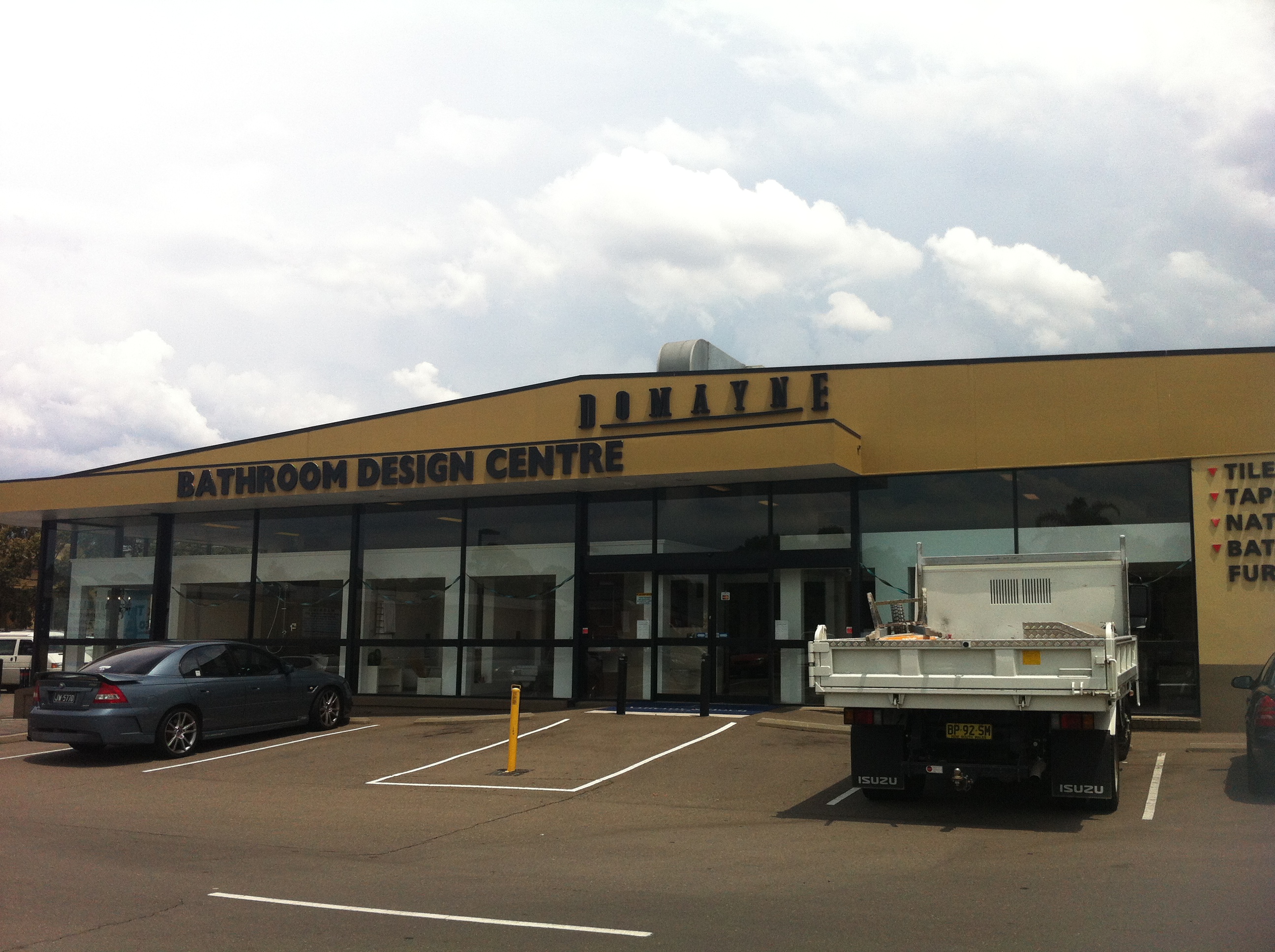 I bet there aren’t too many bubble baths in here.
And so it is at Auburn, formerly the site of the aforementioned Joyce Mayne Shopping Complex. The complex has been largely replaced by a Harvey Norman outlet and the Domayne centre itself…it’s a far cry from the pink and brown monument splashed all over town in Mayne’s commercials throughout the 1980s.
 You are the .01%…
But Joyce’s spirit lives on in this, the only feature in the entire complex that still bears her name. Yes, every time an item is taken away from the premises without a receipt, a part or fitting is pinched from a unit, a graffiti artist damages the property or the 99.99% of sensible, honest people feel the need for an apology, Joyce and her legion of invisible security cameras are there. The brutal juxtaposition of strongly worded threats in a bold, dangerous font signed by Mayne’s dainty typeface is classic Joyce, and wouldn’t seem out of place in one of her ads.
It’s sad that a pioneer like Mayne has been so thoroughly relegated to the annals of history, but by making herself the brand, Joyce may have inadvertently brought it on herself. Who was the real Joyce Mayne? An amusing excerpt from the SMH interview, January 1979 provides little illumination:
‘”And in another life I’d like to be a criminal law barrister,” she added mysteriously, without further explanation.’
Perhaps that life is being lived now, and maybe someday the full story will be told. For the time being, as always, if you know more, let Past/Lives know. Vaya con dios, Joycie.
Burwood Fruit Bowl/Chen Guang Variety Shop – Burwood, NSW
 Even as the cranes of development encroach upon Burwood Road, the clogged vein that runs between the Hume and Parramatta arteries, it’s still possible to find hints of the past. For example, here we have the Burwood Fruit Bowl, run by the Giuffre brothers.
According to the can’t-believe-it-exists Sydney’s Italian Fruit Shops dot com, a Carlo Giuffre managed a fruit shop on Burwood Road from 1910-1916 before leaving the country in 1918. Repeat: that was his reaction in 1918! Imagine if he saw Burwood Road now! Sands directories from 1908-1912 mention a Giuffre Bros fruiterer in the Newtown area, but no word on whether they employed their clever-once shop name a second time. Whether his brother stuck around and kept the shop going is also unknown, but it certainly requires a hefty suspension of disbelief to imagine this was the 1916 shopfront.
The font used in today’s vintage shopfront signage to me seems very 20s, and certainly striking enough to keep around…at least until the bulldozers get to work. Until that time, the Chen Guang Variety Shop provides Burwegians (c’mon, give me that one) with all the junk they’ll ever need, while the neighbouring Burwood Fruit Market fills the street’s Giuffre-shaped void with fruit as blandly efficient as the shop’s name.
Commonwealth Bank/Beverly Chinese Restaurant – Beverly Hills, NSW

In an incredibly novel move, the old Commonwealth Bank along King Georges Road at Beverly Hills was transformed into a Chinese restaurant by true visionaries. They noticed B-Hills’ dearth of Chinese restaurants and were brave enough to step up and take a chance on something radical. Has it paid off? Well, they’re still standing today where so many other Beverly Hills restaurants have fallen by the wayside, so I’d say that’s a big yes.
As for the Commonwealth, there first existed a dark age between the branch’s closure and the 2005 installation of a Commonwealth ATM further up the road during which ‘Which Bank?’ became more of a valid question than a slogan. The ATM has since been removed. I’d like to imagine that the proprietors of the Beverly Chinese went to this specific Commonwealth branch in order to get their loan for the restaurant. Wouldn’t that be funny? Don’t answer that.
Fat Pizza/For Sale – Chullora, NSW

Given the success of his new comedy series Housos (with a movie, Housos vs. Authority, released earlier this month), Sydney filmmaker Paul Fenech probably doesn’t spend much time thinking about this place anymore. In 2000, Fenech launched Pizza, a sitcom set in the world of pizza delivery in southwest Sydney.

The Pizza crew.
A big hit at a time when Australian television comedy was in dire straits, Pizza acted as a kind of modern Acropolis Now, and its unique approach of challenging ethnic stereotypes through very black comedy was able to sustain a five series run which ended in 2007, and its own movie, Fat Pizza, in 2003.

Located along the Hume Highway at Chullora, this low-key pizza restaurant provided the backdrop to the mayhem of the show. Since Pizza ended, the shop has sat dormant, although for much of the period between 2000 and about 2009 it operated as an actual pizzeria, reopening earlier this year after a long period of disuse…before closing again soon after. During its last era, the walls were adorned with Pizza memorabilia, making it a kind of Planet Hollywood for southwest Sydney. It’s likely it was an operating restaurant before Fenech and the Pizza crew made it their filming location – the row of shops it’s a part of is absolutely ancient.

The shop was recently purchased after having been on the market for some time. The interior’s been gutted, making the likelihood of any kind of Pizza revival here pretty unlikely. But who knows, perhaps it’s being prepared for a sixth series? It’s unknown whether Fenech’s team owned the restaurant during Pizza‘s run, but either way, they wouldn’t own it anymore. For a long time, it seemed that this little pizzeria in Chullora was as far west of Sydney Australian television was willing to go, but the success of Pizza made it possible for shows like Fenech’s Housos to further highlight the ‘inconvenient frontier’ that is western Sydney.
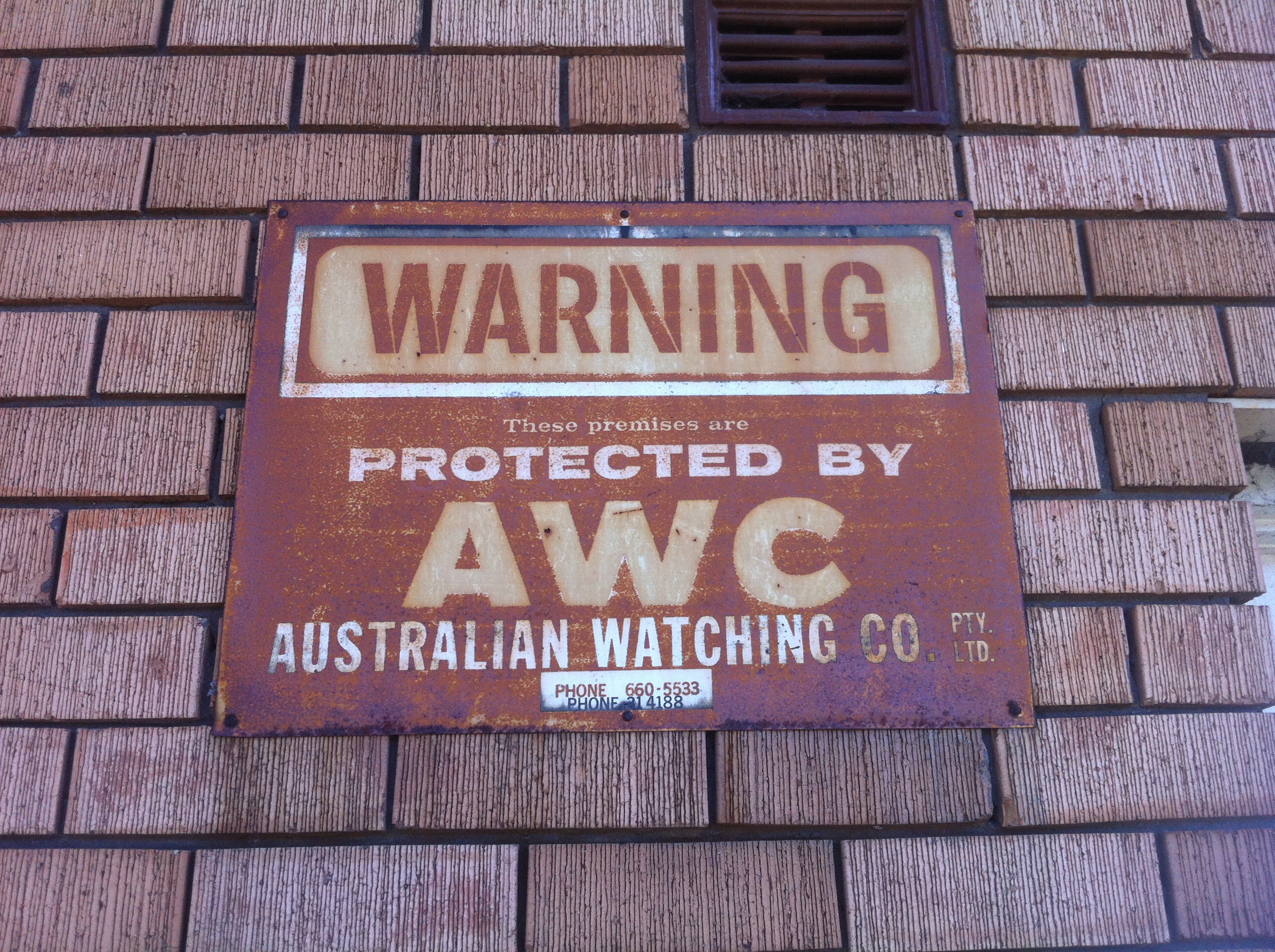
Ever get the feeling you’re being…watched?
Speaking of which, if you’re starting a security company, a surefire way to NOT intimidate anyone would be to name it the Australian Watching Co. The AWC protects the block Fat Pizza is located on (or it did a hundred years ago). Uh-oh…I think we’re being WATCHED! Here’s an interesting aside completely unrelated to Pizza: the Australian Watching Company was formed shortly after the First World War (I knew it), and in 1992 was acquired by Chubb. Now it goes under the name Southern Cross Protection – but clearly not South Western Cross Protection.
Oatley Radio Theatre/Oatley RSL Youth Club – Oatley, NSW
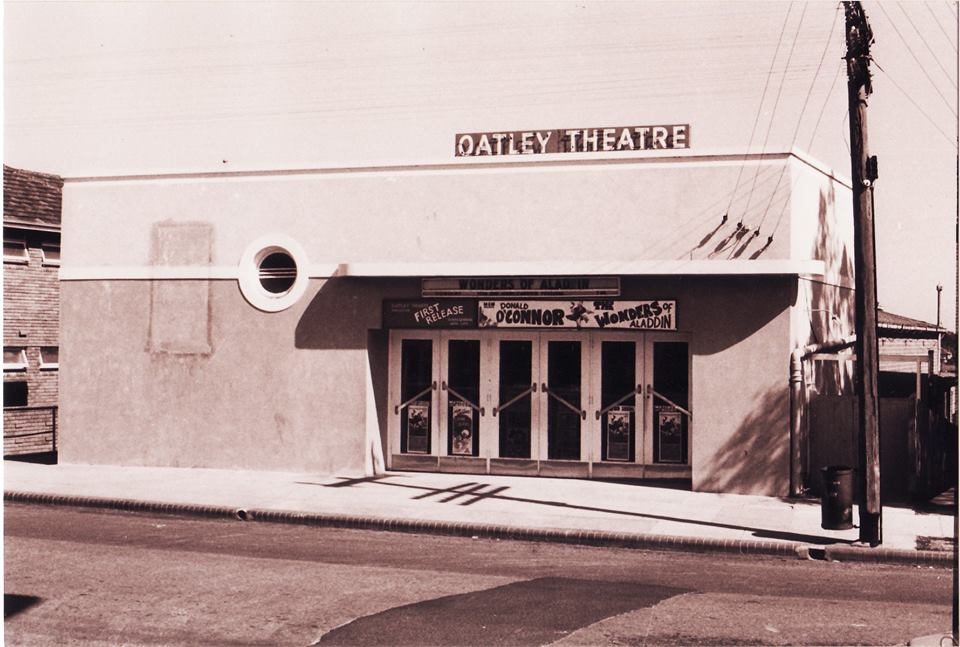
Oatley Radio screening The Wonders of Aladdin, 1961. Image courtesy reader Carmen and Mr W. Collins
It may surprise you, especially if you’re an Oatley resident, to learn that the tiny suburb once enjoyed its own theatre! Designed by Sydney theatre architect extraordinaire Aaron Bolot in 1940, the Oatley Radio opened in 1942 to the delight of cinephiles everywhere (in Oatley).
Throughout the 1940s and ’50s, the Oatley Radio played host to popular films of the day, including Easter Parade (1948) and An American in Paris (1951). In fairness, it probably played host to some unpopular ones too.

The final curtain, 1961. Image courtesy Mr. W. Collins
It’s unclear exactly when the Oatley Radio closed (if you know, let me know), but I’m estimating it was sometime in the 1960s, an era when suburban cinemas were discouraged in favour of the big boys in the city. It’s claimed that the Radio became part of the Mecca family of cinemas (alongside Kogarah and Hurstville), but I haven’t been able to find much on this.

Oatley Theatre foyer, 1961. Image courtesy Mr. W Collins
What is clear is that at some point, the Radio was bought by the Oatley RSL and turned into their Youth Club, which is how we find it today. It’s now named the Jack Fisher Hall, after the founding president of the Youth Club.
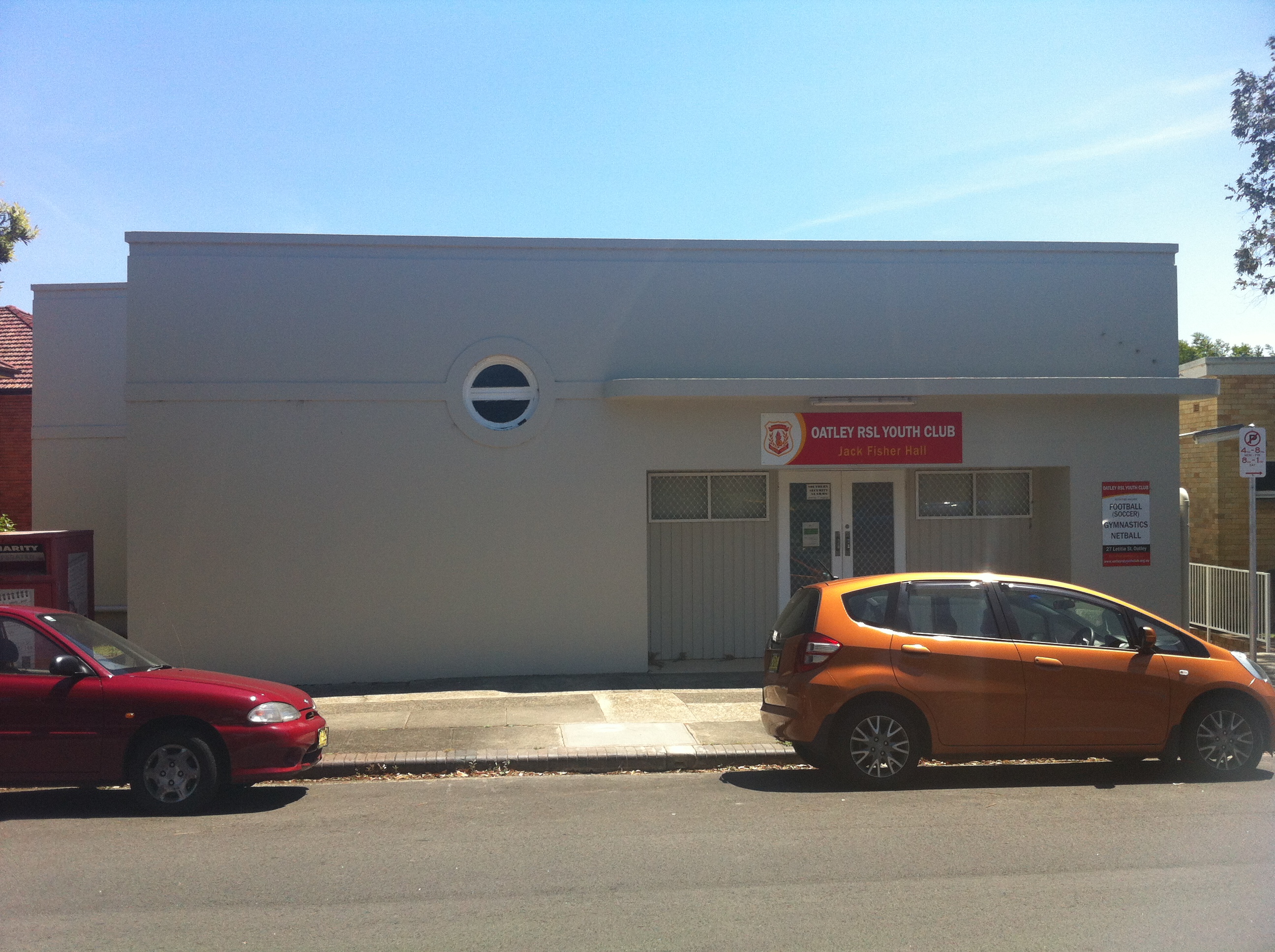
Behind the Radio, it’s all too clear that it was once a 460-seat cinema, despite the tiny, unassuming frontage.
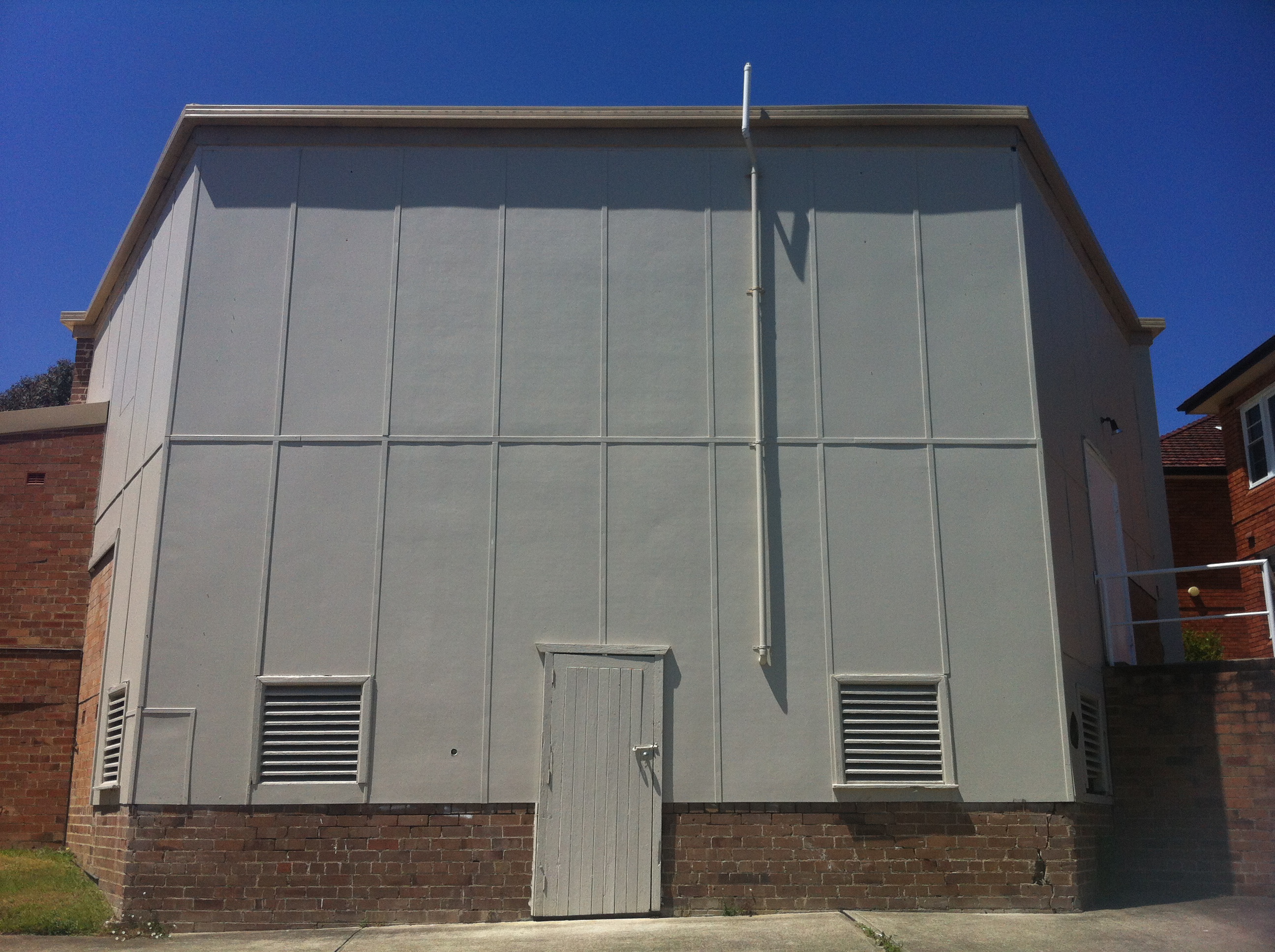
The Radio survives as one of six picture theatres in the Kogarah/Hurstville area still around today (along with the South Hurstville Paramount, the Carlton Odeon, Nash’s Penshurst Theatre, Beverly Hills Cinema and the Kogarah Mecca), but it’s largely avoided the sad fates of renovation or dereliction that have befallen those others. In a strange way, a suburban cinema like this one was the video shop of its day…I doubt anyone’s ever streamed The Wonders of Aladdin (1961).

 Past/Lives of the Near Future