Pizzeria/Sushi Bar Hiro – Beverly Hills, NSW
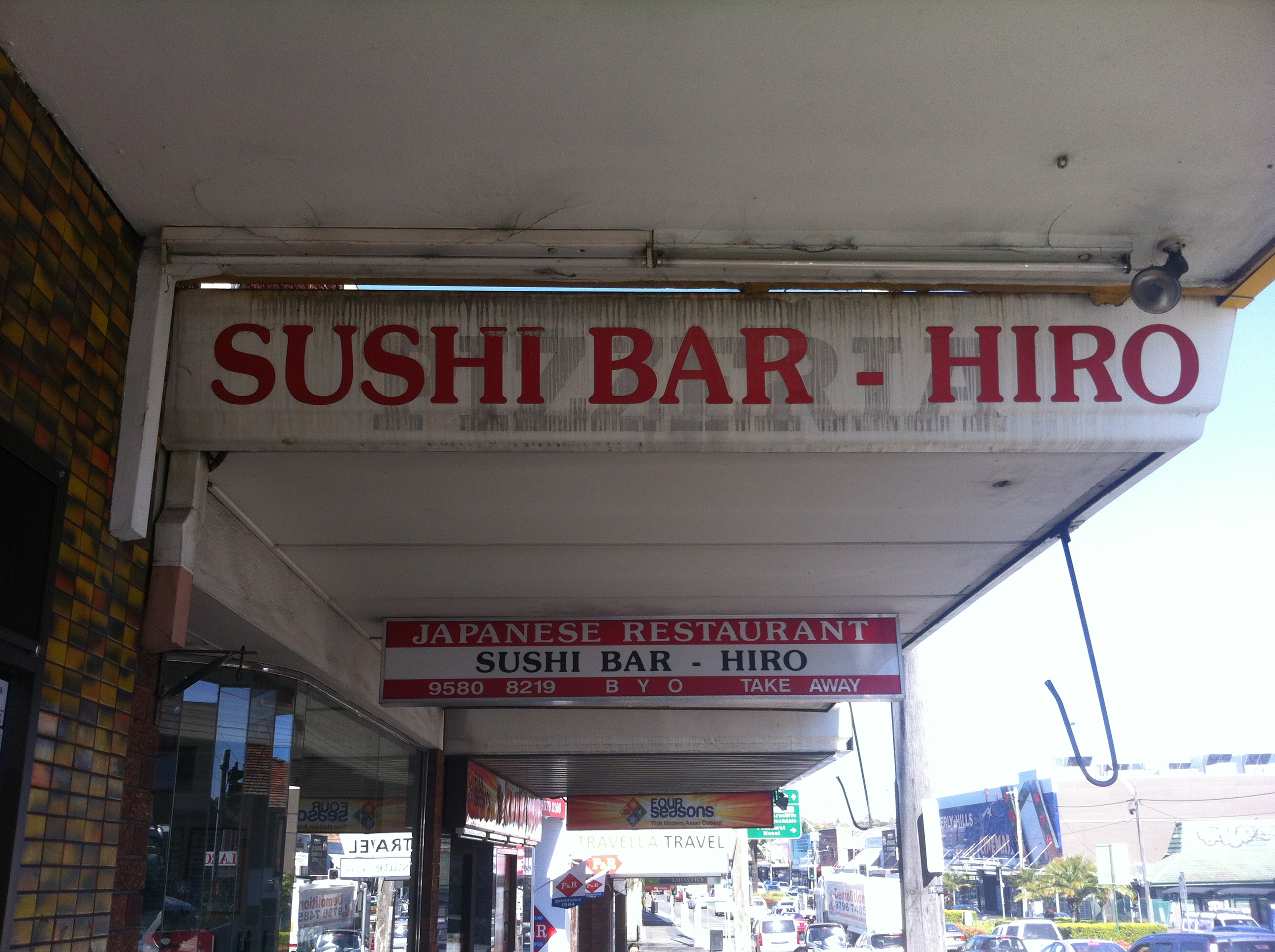
Beverly Hills is renowned for its smorgasbord of international cuisine, but it already has several Japanese restaurants. Presumably, the owners of the Hiro sushi bar attempted to balance things out, thinking that King Georges Road wouldn’t miss one little tiny pizzeria. Not quite.

Inside, the pizzeria-esque decor is still in full effect, but to be fair they’ve tried to spruce things up a bit. Eatability praises the place for its cheap and fresh menu, but gives it a big thumbs down for the decor. Don’t blame Hiro, blame the pizzeria.
Unlimited Discs/Nothing – Beverly Hills, NSW
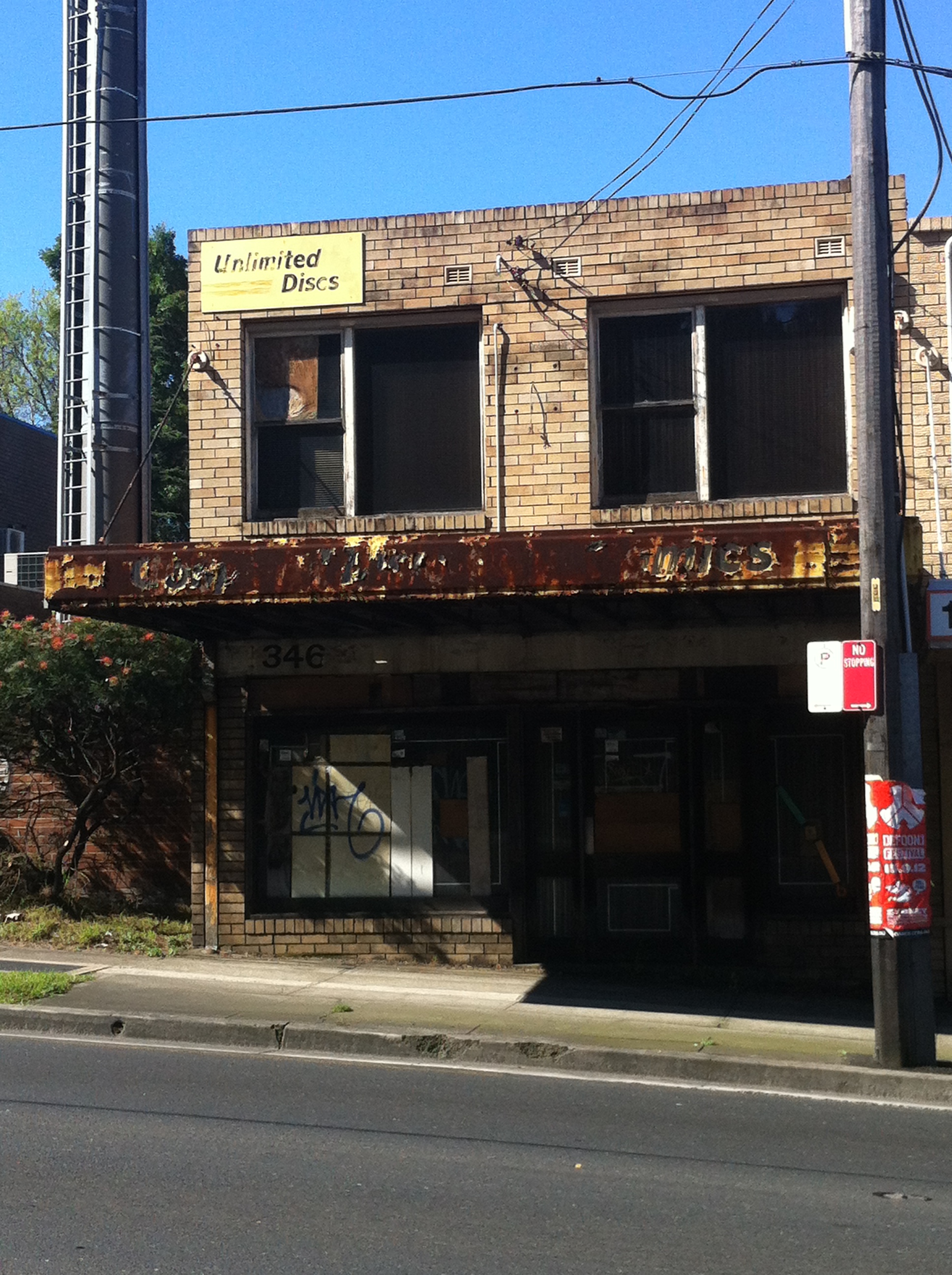
Underneath the rust and soot of this building lies a dinosaur: a. it existed years and years ago, and could not exist today. b. it died out around the same time as its brethren in some kind of mass extinction. and c. there’s plenty of evidence left behind for us to use in piecing together what happened. Spoiler: the discs weren’t so unlimited after all.
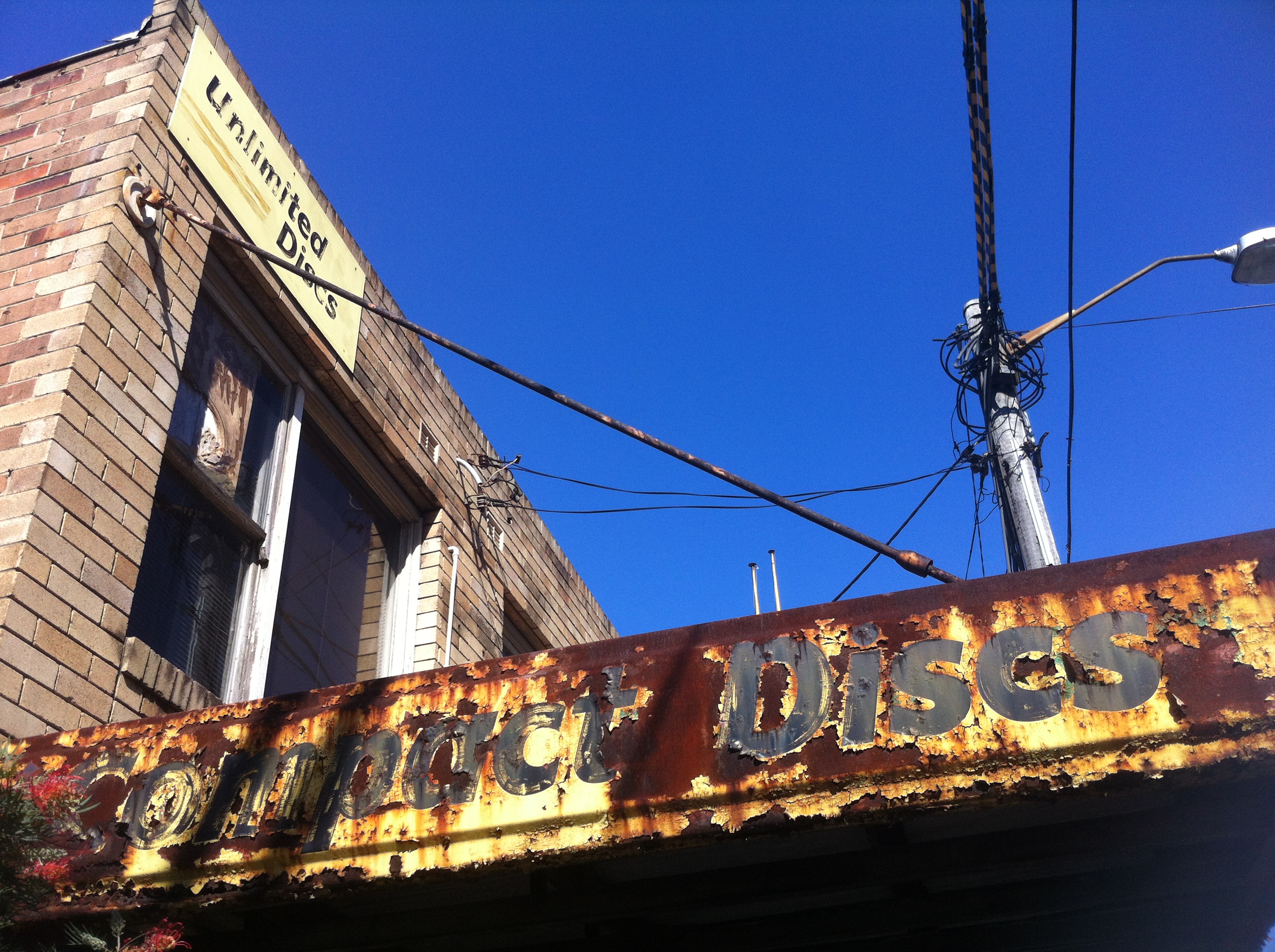
Unlimited Discs, in north Beverly Hills, sold cool stuff – vinyl, CDs, comics – and I’d wager it was both first and second hand. I never went here BITD, but if I’d been able to, I would have. While all of the shop’s touted inventory have either become obsolete or are on their way out, back in the heyday, you could get any of them easily, be it from music shops like Brashs, or in the case of comics, your local newsagent. Things have changed, obviously. Shops like Unlimited Discs existed for people wanting to buy then-prohibitively expensive CDs on the cheap, or those enthusiasts who couldn’t get what they needed (back issues, rarities etc) from mainstream outlets like newsagents or record shops. Unfortunately, as the mainstream outlets dried up and the internet rose to prominence as a shopping medium, the Unlimited Discs of the world died out.

Not helping the situation of this particular record shop is its extremely close proximity to the Beverly Hills entrance/exit of the M5 Motorway, which opened in 1992 and would have impacted upon Unlimited Discs’ business. Suddenly, in their rush to hit the motorway (presumably to go to the ‘better’ record shops in the city) no one wanted to shop local anymore. Also a factor: the shopfront appears to have been set on fire at some point, which isn’t good even if you don’t stock a tonne of vinyl. We can’t know exactly what happened here (unless YOU do, in which case let me know) but we can get an approximate date as to when it happened. The shop looks as if it’s been abandoned for years, with this Visa sticker in the window providing insight into the time when business was good:

Good luck, team.
I’d love to be able to get inside Unlimited Discs and see what’s still in there. I imagine stacks of unsold stock lying around waiting to be rediscovered and introduced to the 21st century. I imagine someone living there with hundreds of stories to tell about the golden years, when the discs really did seem unlimited. I also imagine I’m completely wrong, but I can dream, can’t I?
Bonus: around the back of this shop is Moondani Lane. Some of the locals have had some fun with it (perhaps they got the record at UD):

Liberty Service Station/Sold – Riverwood, NSW
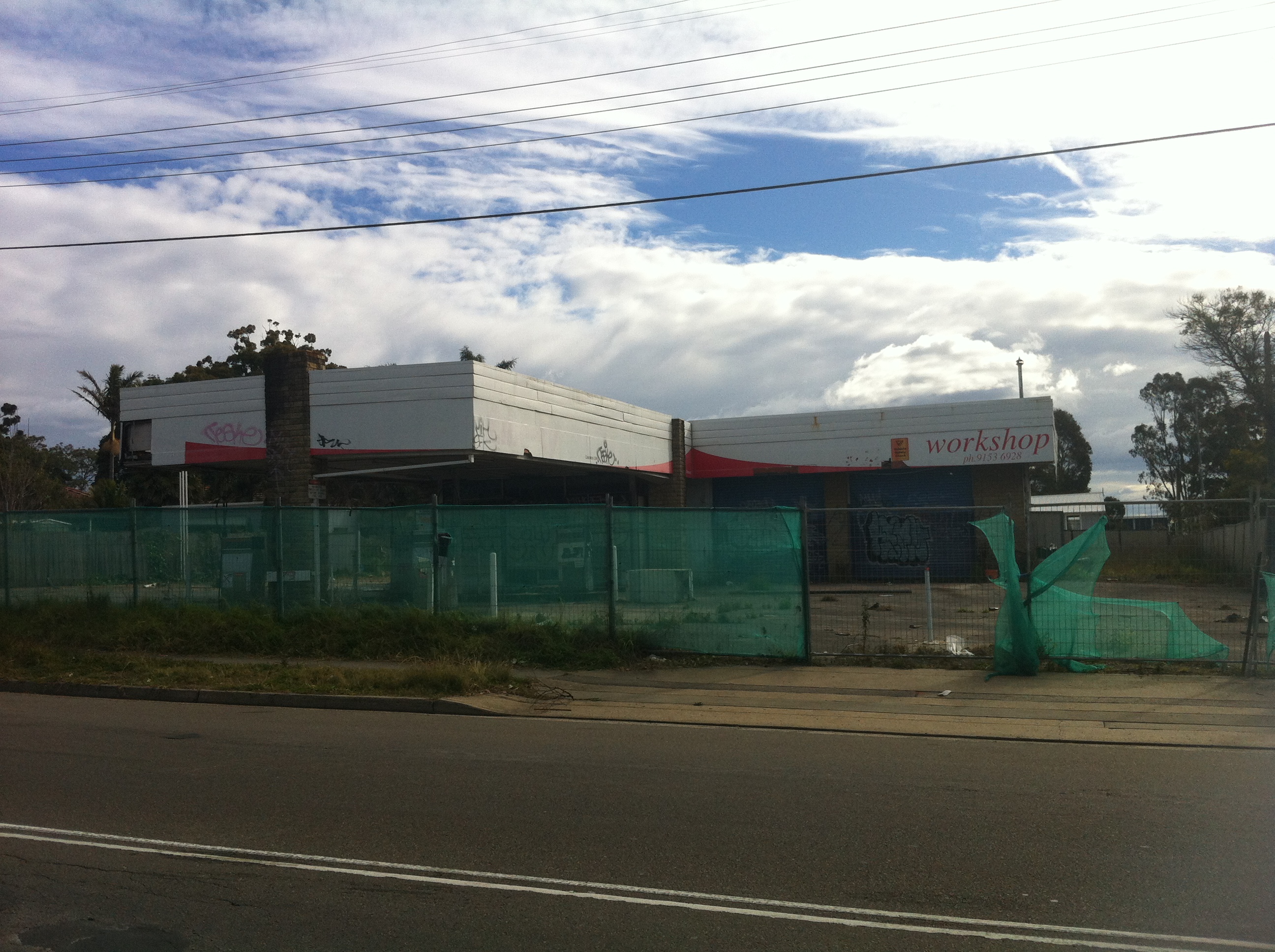
In its heyday, the Liberty budget-priced service station chain offered freedom from the high prices gouged by the big boys of the industry. Today, this Liberty offers freedom from any prices.
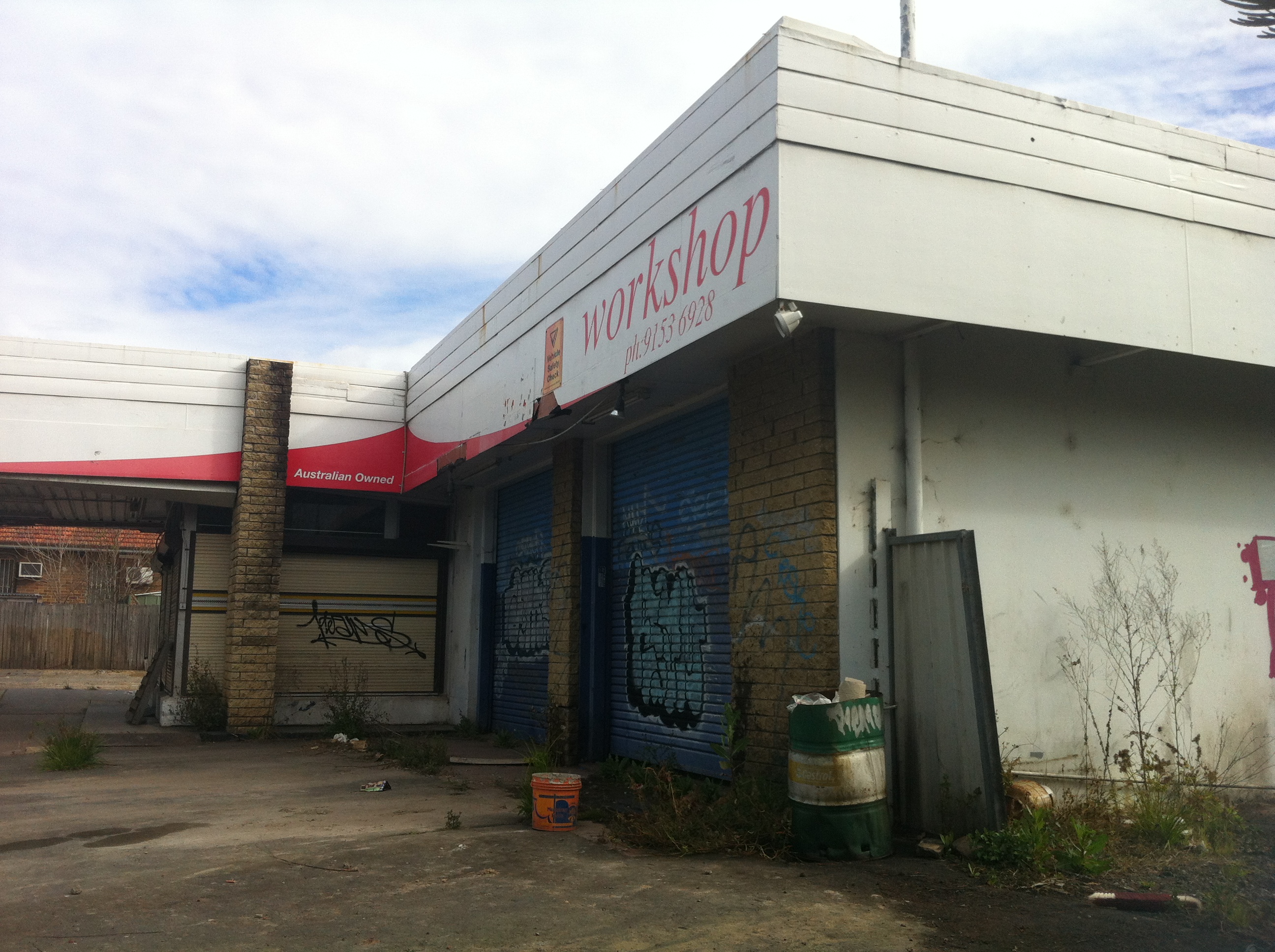
Liberty came from the old-school of servos, where workshops were par for the course. They were service stations after all, and not just because they used to fill your car up for you.
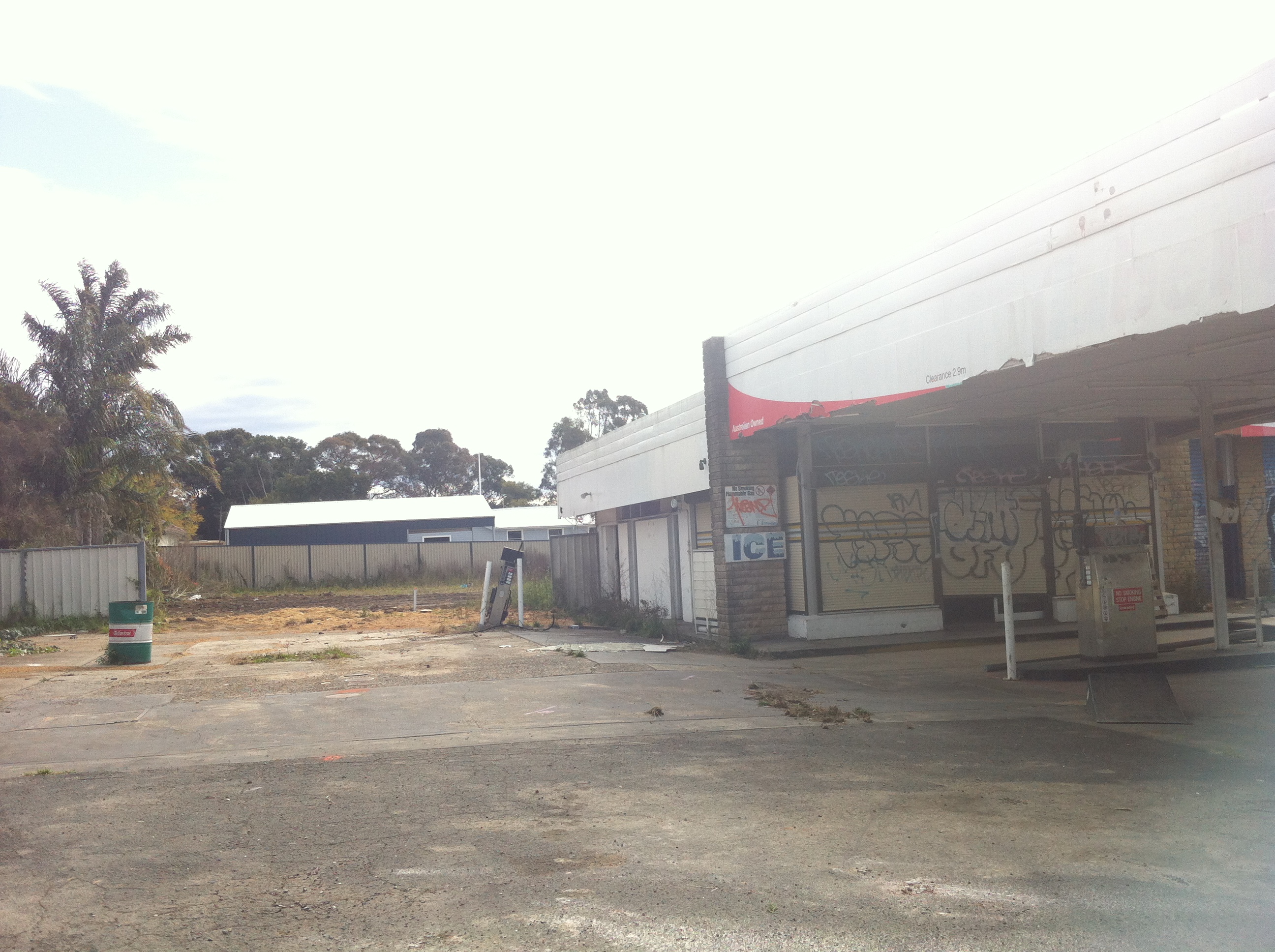
Liberty service stations are actually the modern day incarnation of the Solo service stations of the 1970s and 80s. Liberty began life as Solo in 1974, and became the largest independent servo brand in Australia. The Solo chain was part of the ACTU’s efforts in the 70s to bring about a discount retail revolution. In 1975, Solo teamed up with the ACTU to bring prices down in Victoria, leading to a 17c per litre difference in fuel prices between Victoria and NSW (imagine the fury in Albury-Wodonga). Solo’s discount revolution didn’t hit NSW until 1977, due to staunch opposition from a terrified Transport Workers Union, which feared that discount petrol would lead to mass sackings of fuel tanker drivers. Servo owners also rallied against the introduction of the discount chain, but to no avail. The first NSW Solo opened in 1977 in the then-still recovering Bold Street, Granville. Just think, all that effort and struggle to regulate and cut fuel prices, only to end up in the situation we’re in today. It’s pretty sad.
Solo was bought out by Ampol in 1989 (and didn’t that end well), and in 1995, Solo’s creators started Liberty ‘in the spirit of’ Solo. It’s alleged that they’re still going today, although from this mess you wouldn’t know it. You’d hope that Liberty head office had more confidence in the other locations than they had in this one.
Dynamic Marketing & Printing/All-Starz Performing Arts Studio – Peakhurst, NSW
If you’re anything like me, you’d find yourself wondering what purpose a series of superconductors and satellite equipment would serve atop the All-Starz Performing Arts Studio, on Henry Lawson Drive at Peakhurst. Wonder no more.

Once upon a time, this building played host to a company called Dynamic Marketing, which produced several series of trading cards back in the 1990s. Yes, only in the 90s was the global financial situation decadent enough to allow a company to receive the bulk of its income via licenced trading cards. The company was such a product of that decade that it even managed to have a token happy mascot, a smiling sun-lightbulby looking dude. Pretty sure he’s giving the finger.

Batman, Disney, the Phantom all received Dynamic sets, with the NRL being the crown jewel in the Dynamic empire. In a time when American cards like Fleer, Upper Deck and Topps were dominating the market, it was pretty incredible that Dynamic made the impact that they did. Shrewd licence choices and well-made cards were among the things they did right. (Things Dynamic did wrong: a set of cards based on the Super Mario Bros. movie.) I like to think all the folderol on the roof was for setting up crucial cross-global meetings on futuristic video-phones, with hotlines between Dynamic and Warner Bros., Disney and… David Gallop. C’mon, use your imaginations!

Dynamic magically went bust in the late 90s, a time when trading cards themselves were on their way out. It’s as if Dynamic knew something we didn’t, and as we the public sat around anxiously awaiting the next set of NRL cards complete with holoblast foil inserts (1:60 packs), Dynamic were cleaning house, severing all the fibre-optic cables attached to the faxes, and taking axes to their hard drives. Today, the All-Starz Performing Arts Studio has attempted to paint the equipment the same colour as the building so as to make it less conspicuous, but we Dynamic faithful know the truth.
UPDATE: Reader Martin says that before Dynamic occupied this location, it was home to the ill-fated Catco Developments. Catco went bust in 1987, a collapse that had a severe effect on the tradies, subbies and builders of the day.
DYNAMIC UPDATE: Reader Ken has reminded me of Scanlens, Dynamic’s cardmaking predecessor. Between 1963 and 1990, Scanlens produced various series of sports cards, focusing on the AFL and NRL. They also made several non-sports series, but these weren’t the bread and butter. Scanlens cards also came with gum, which in a time before foil-embossed noctovision inserts were the biggest treat in every pack. It’s interesting that Scanlens stopped producing cards only a year before Dynamic’s first set, ‘Attack of the Dinosaurs’, was released. It should also be noted that Scanlens didn’t operate out of this address, just in case you had the wrong idea.
The Rawson Institute for Seamen/Bar100 – The Rocks, NSW

The snigger-inducing Rawson Institute for Seamen opened in 1859 as the Mariners’ Church, a missionary effort by the Bethel Union which followed two similar sites in Darling Harbour and Circular Quay. After initial success, the Bethel Union fell on hard times at the turn of the 20th century, and in 1895 the Church was leased to the Missions to Seamen. So wait, one seamen missionary group met financial hardship operating out of this place…and another one jumped in to take its place? Were the owners named Bond and Packer?
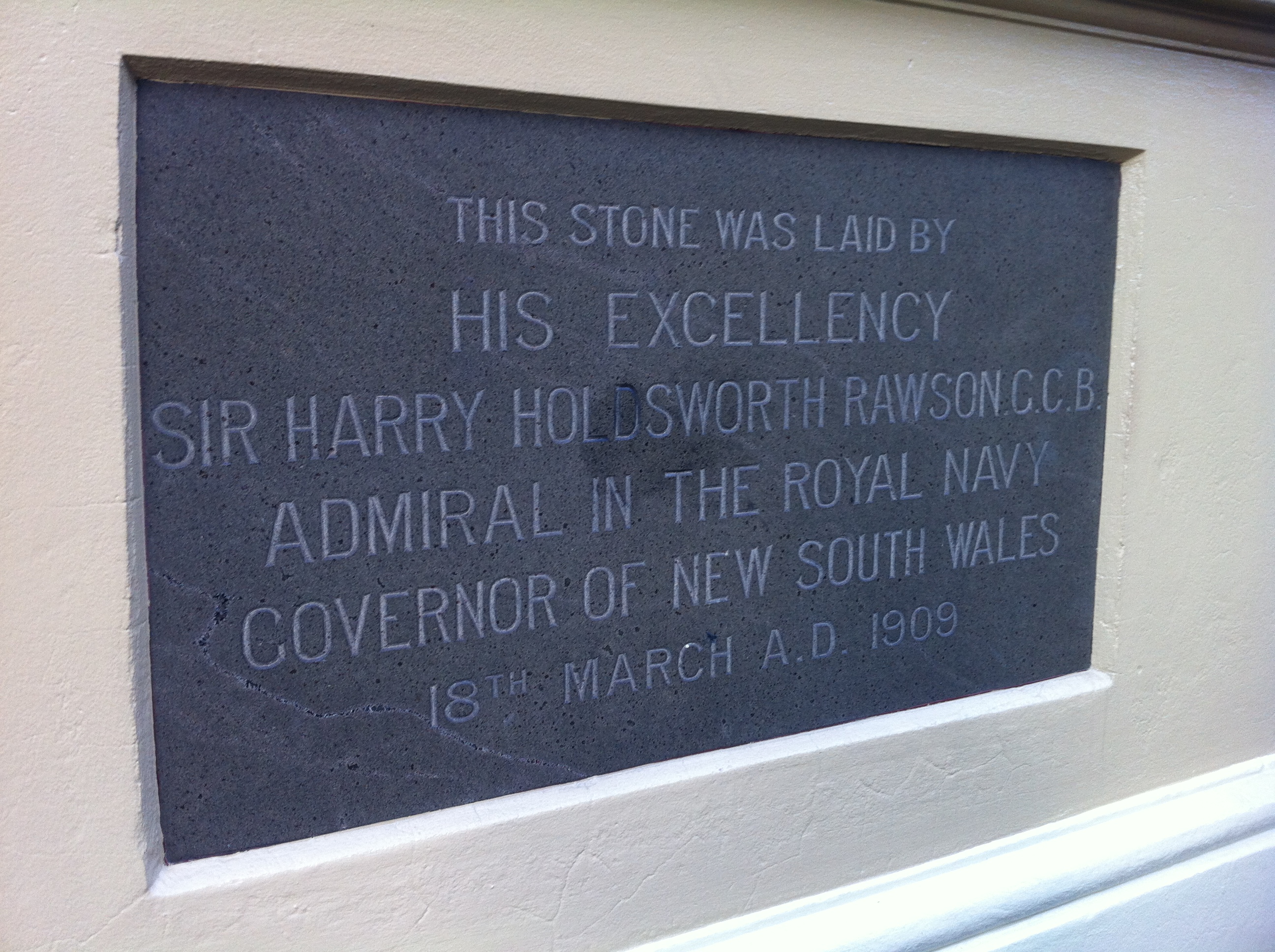
Sir Harry Rawson, who was appointed NSW Governor after his productive and incident-free trip to Benin, got a piece of the action once his governorship ended in 1909, proposing extensions to the building so important that the complex was renamed after him. Seamen everywhere could thank Rawson for providing them such a luxurious institute.
By 1960 things like this had fallen pretty much by the wayside, and the Bethel Union limped back to Flying Angel House, while the Rawson Institute became in 1981 home to the hitherto-unknown-by-me Craft Council of NSW, which lasted until 1990. Subsequently used as an art gallery and cafe, in 2011 Rawson’s changed hands yet again to much consternation. The new tenant, Bar100, hopes to rival that seamen’s institute of a different kind, the notorious Ivy nightclub. You’ll need a lot more than the name, guys.

 Past/Lives of the Near Future