Botany Access Equipment Hire/For Lease – Botany, NSW
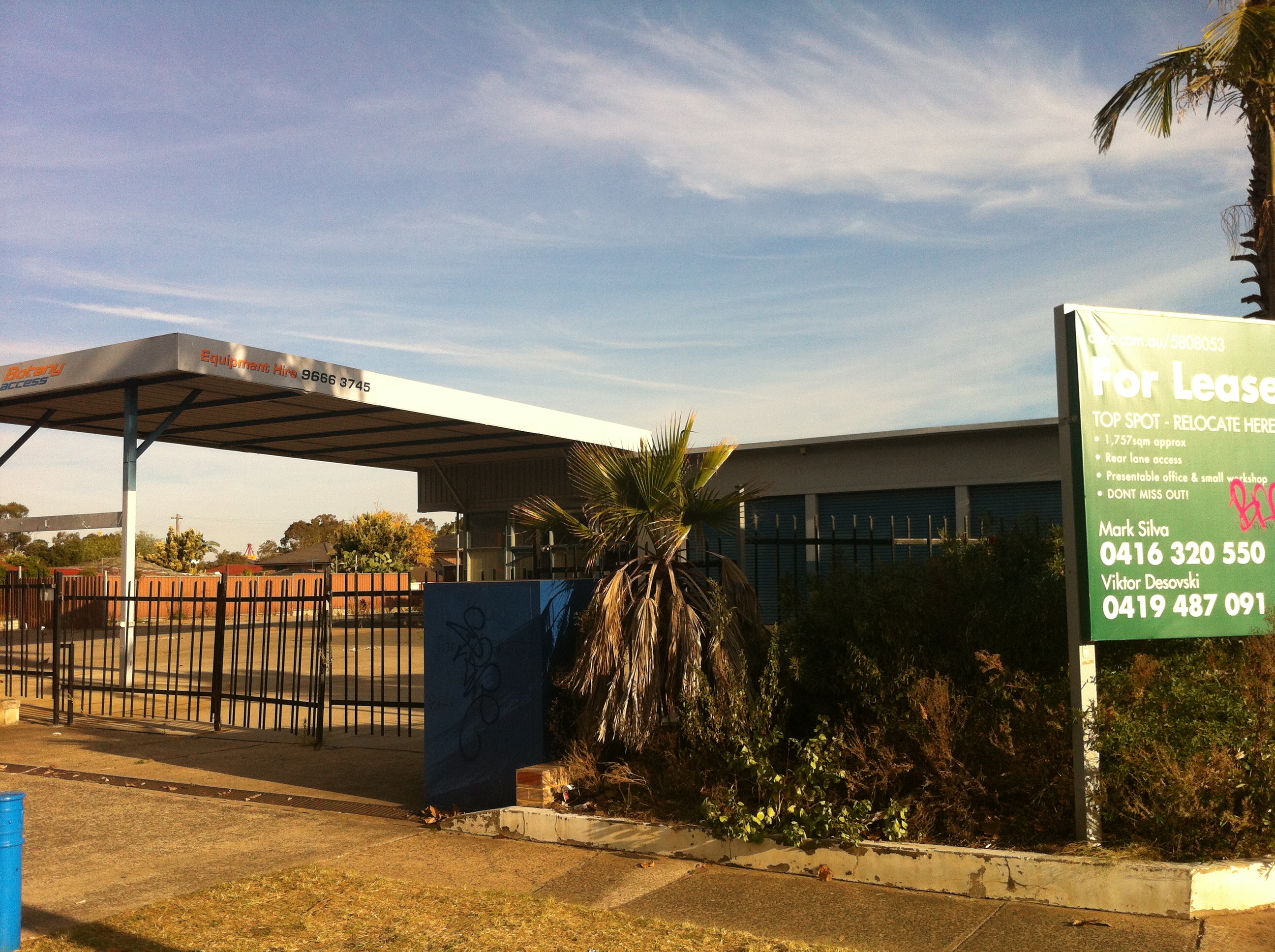
Did you ever borrow something from the library or video shop and “accidentally” never return it? Well, this is what happens. Shame on you.
World 4 Kids/Best & Less and The Reject Shop – Bankstown, NSW

Toys R Us was coming. The American toy giant had lingered on the horizon of the Australian retail scene since 1984, when it had first ventured overseas. Now, in 1993, Toys R Us had made its intentions to establish itself in Australia very clear. In a panic, and desperate to beat Toys R Us to the punch, Coles Myer set up their own chain of toy stores that attempted to outdo the American company in every conceivable way; a ‘category killer’. It wasn’t the first time Coles Myer had employed the tactic: in the same year, it had established Officeworks, basing it on the US stationery chain Office Depot. To give you an idea of just how contrived the whole concept was, here’s a 1993 ad preempting the World 4 Kids launch. If you can look past the kid’s stylish fashion, note the cynical overuse of the dinosaur to ride the success of the year’s biggest film.
I can still remember the hype surrounding World 4 Kids at the time of its launch. It was relentless. The Bankstown Square location was enormous, taking up an entire floor. To a kid, it was mind-blowing. They had video games available to try everywhere around the shop. They had aisles – not just a few shelves, like Grace Bros, but aisles – of action figures. They even had a ‘kids entry gate’ as an alternative to the regular entrance. Sure, it was just an archway over a little bridge, but that was for YOU! You weren’t meant to walk in the normal way like the grown-ups! This wasn’t just some toy department of a bigger shop. There was no threat of being dragged off to look at clothes or other boring stuff. It was ALL TOYS.
The launch of World 4 Kids didn’t stop Toys R Us from opening, and the closest store to the Bankstown World 4 Kids was at Hurstville. As expected, the Toys R Us store blew World 4 Kids away: it was two-storey, they had more of everything, and the name explicitly promised toys, rather than merely alluding to them in the case of World 4 Kids, which sounds like it could easily have been one of those lame play centres with the ball rooms.
1993 was about the start of the last big era for toys. By the end of the 90s, video games had eclipsed toys by a wide margin. Also by the end of the 90s, World 4 Kids was a world about to end. The company had bombed hard in the wake of Toys R Us, haemorrhaging millions of dollars each year it was open. By the end, it was losing $36m a year, and cost Coles Myer more than $200m during its short lifespan. World 4 Kids, supposed to be the successor to K-Mart’s dominance of the toy market prior to 1993, closed in 2002, and the brand name was absorbed back into K-Mart, which adopted it as the name of its toy department.
This particular World 4 Kids took over the floorspace of Venture, itself formerly Waltons Department Store (but more on that another time), so by failing miserably, it was only carrying on the strong tradition established by those two brands. Where the one store once took up the entire floor, a chemist, the Reject Shop and Best & Less have taken up residence. Immediately following World 4 Kids’ departure, a JB Hifi was set up in its place, but in a rare move for JB it was closed a few years later. Even Toys R Us is struggling these days, with the Hurstville location having long since been reduced to just one floor.
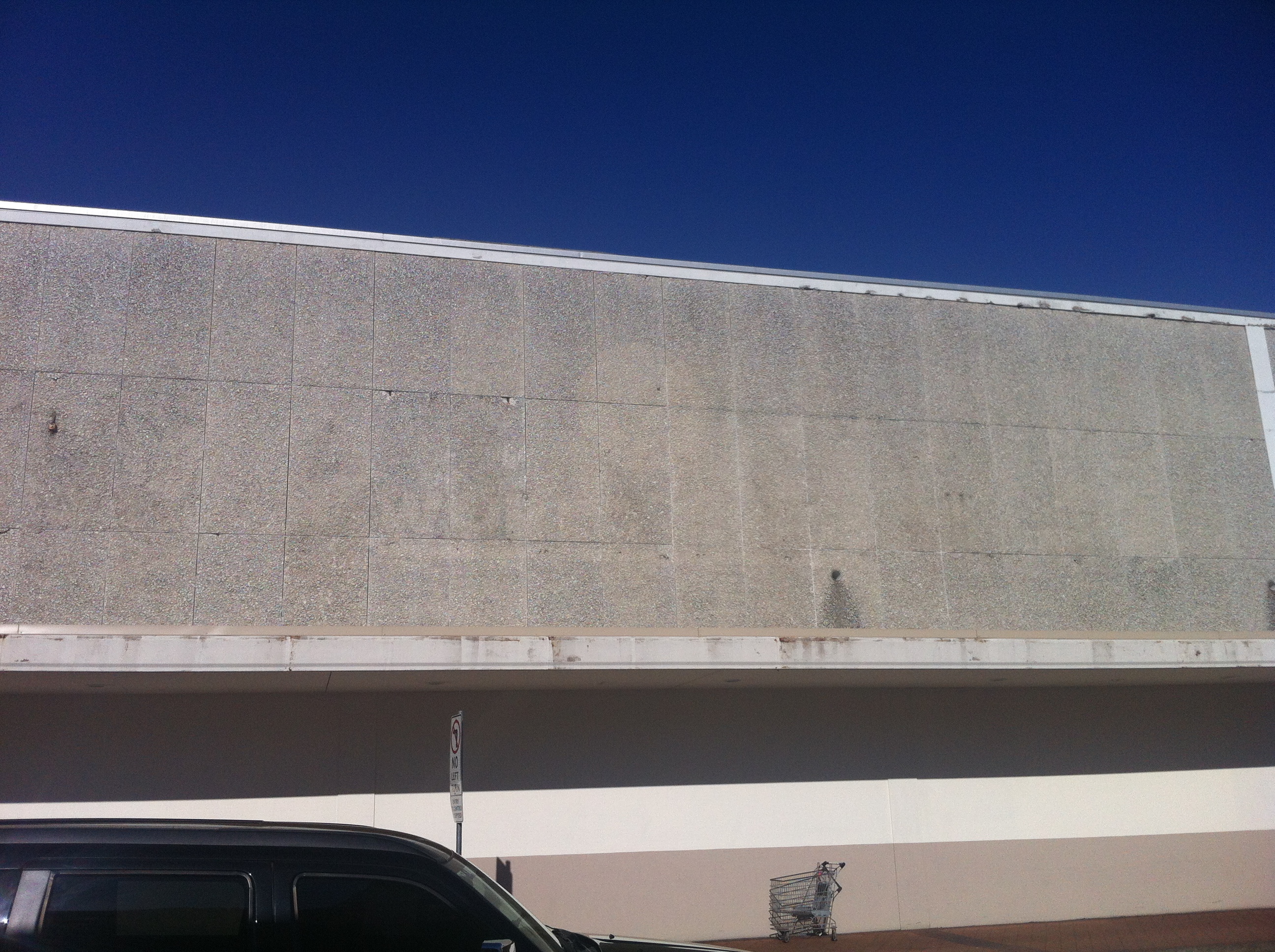
Note the poignant empty trolley.
The only evidence that World 4 Kids, the place that meant the world to so many kids in 1993, was ever a part of Bankstown Square is the faint afterimage of its sign on the outside facade of the building, along the Appian Way. Yesterday’s great hope is now just a stain on the wall. It’s a stark reminder that no matter how personally a store may appeal to you, it’s always business. After all, that’s the way of the World.
Orchard’s Corner/Raben Footwear – Haymarket, NSW

Raben Footwear may seem like it’s been at this Haymarket corner location for a thousand years, but in a time before Doc Martens and skinheads, the site belonged to Richard Beaumont Orchard, a watchmaker, jeweller and politician. Orchard’s original building had been demolished by the city in order to extend Quay Street to George Street, so to compensate he was given this building. Not sure whose idea it was to add the cheesy orchard-themed clock, though.

Orchard was a Sydney personality in the early 20th century; a sailor, an actor, founding Commissioner of the ABC and Federal Member for Nepean (Lib). By all accounts he seems like the kind of guy who’d have the ‘My Family’ stickers on the back of his car. His skills as a sloganeer left much to be desired, however; ‘Orchard’s: where the watches grow’. These days, you can find Orchard at Rookwood Cemetery, where he was buried after his watch stopped for good in 1942.
Shea’s Creek/Alexandra Canal – Mascot, St Peters, Alexandria NSW
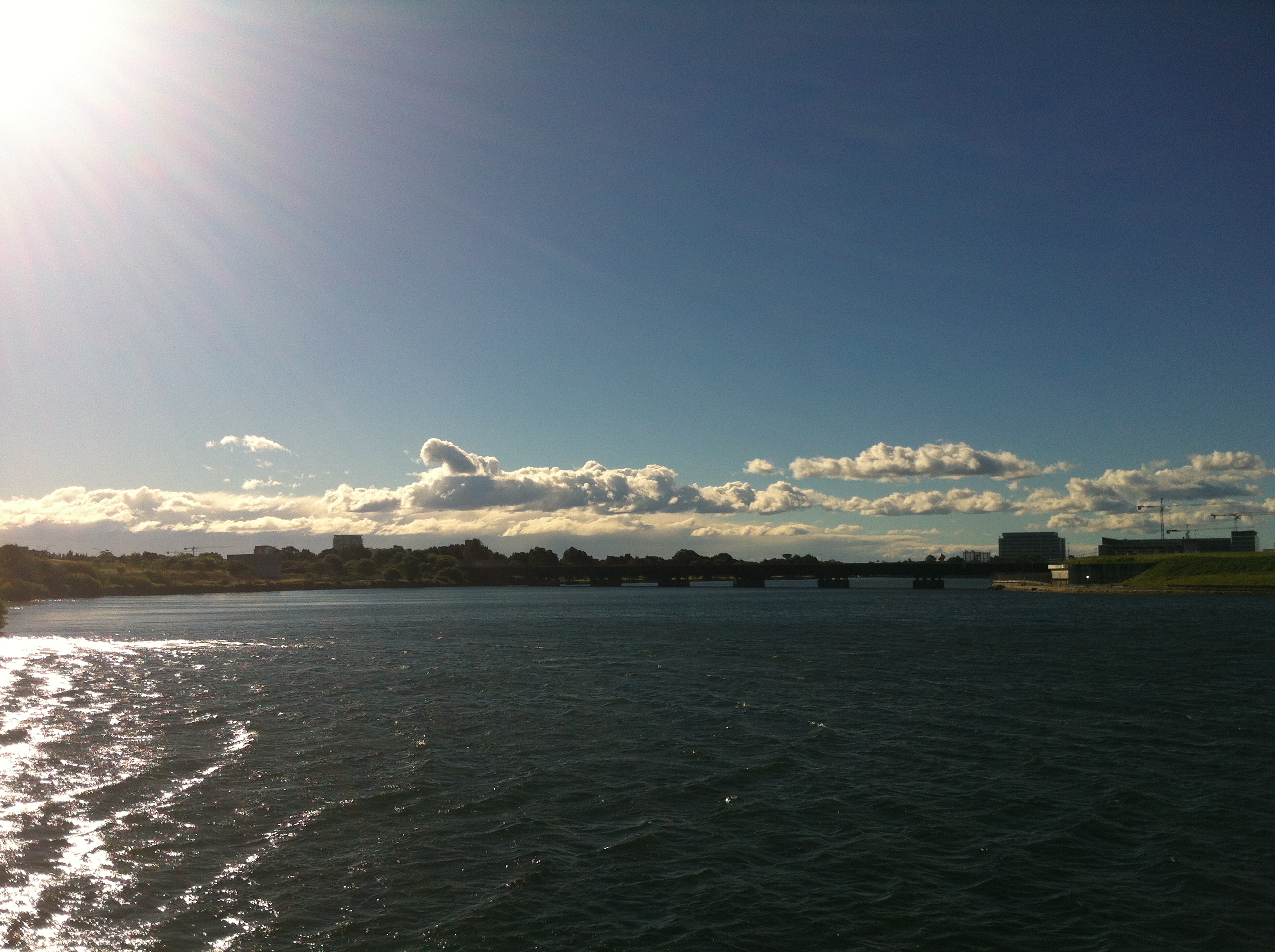
Cooks River
You’re looking at Sydney’s most polluted waterway. And I thought Rhodes was bad.
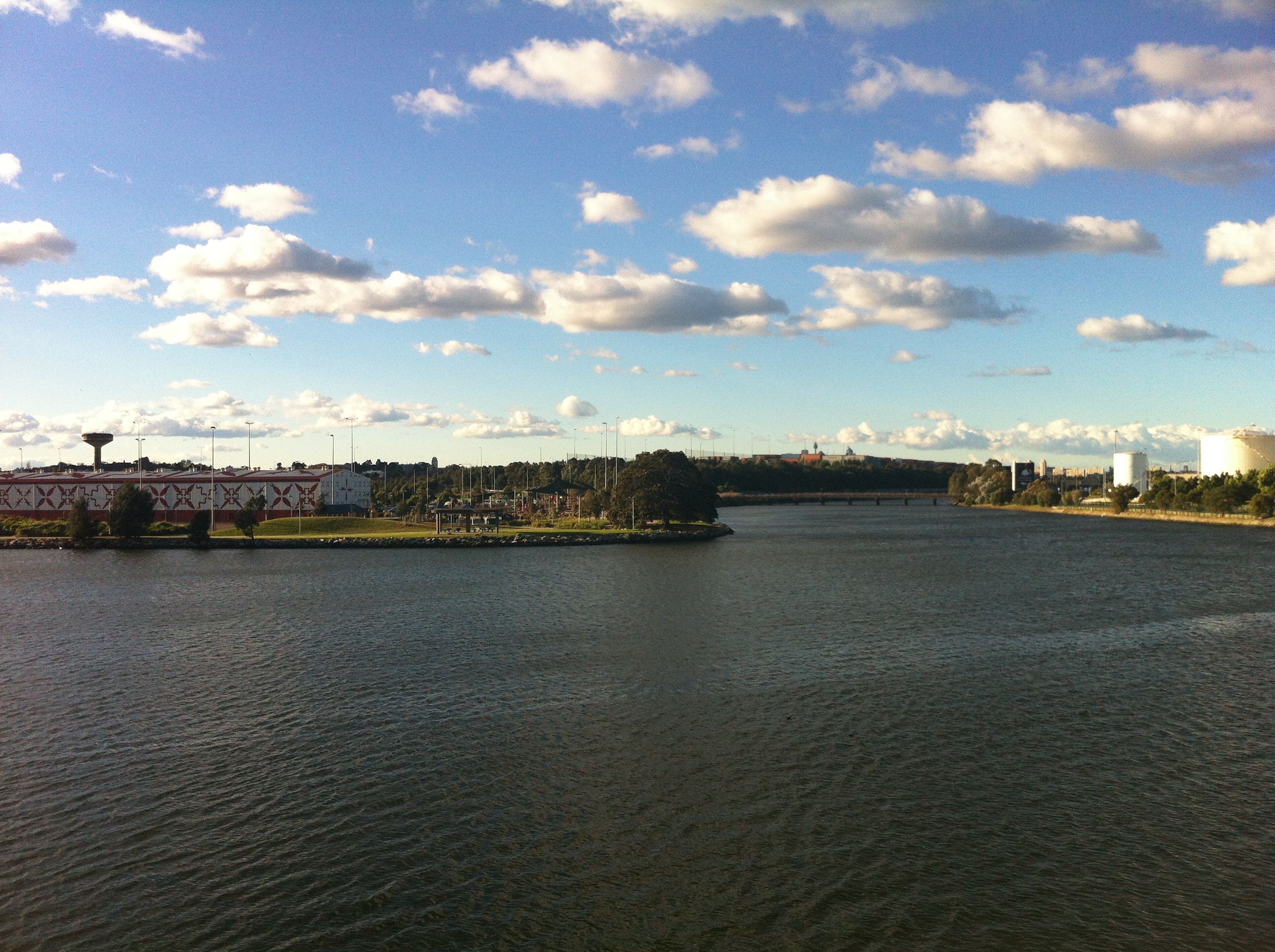
The Botany Bay end of Alexandra Canal
In the late 1880s (it’s always the 80s), someone envisaged a grand canal stretching from Botany Bay to Sydney Harbour. It would start at the Botany Bay end of the Cooks River, and lead all the way through the city before opening up at Circular Quay, thereby giving the Eastern Suburbs the island refuge from the great unwashed they’ve always wanted. To that end, I’m surprised it never happened.

Former Shea’s Creek opening
Shea’s Creek, a small offshoot of the Cooks River, was chosen as ground zero for the new tributary, which was supposed to act as an access route for barges to transport goods between the multitude of factories set up along the creek in the area. Factories including brickworks, tanneries and foundries. Factories that drained their runoff directly into the canal. A canal that is, according to the EPA, “the most severely contaminated canal in the southern hemisphere”. So keen to pollute were the industrial warlords of yesteryear that they had to invent waterways to defile.

At the time the canal was constructed, Sydney’s roads were a terrible mess completely unsuitable for transporting goods, making an aquatic access route more practical. Thankfully, Sydney’s roads today…uh…they…they’re pretty uh…let’s get more canals happening.

So near and yet so far
Between 1887 and 1900, Shea’s Creek was ripped up and turned into the canal. By 1895 it was looking unlikely that it would ever reach Sydney Harbour. The NSW Government had decided that as a sewer, the Shea’s Creek Canal as it was known then was doing a good enough job as a carrier of stormwater and runoff, and that there probably wouldn’t be a need to spend all those pounds carrying on with the project. Tenders were called again to complete the canal in 1905, but there were no takers.
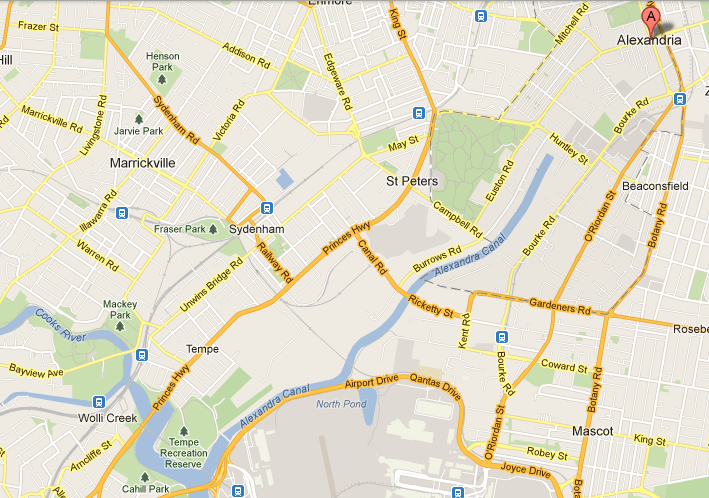
Image courtesy Google Maps
The canal was renamed the Alexandra Canal in 1902, after the then-Queen Consort Alexandra. Coincidentally, the suburb that the canal ended in, Alexandria, was also named for her. I bet she was proud, too.
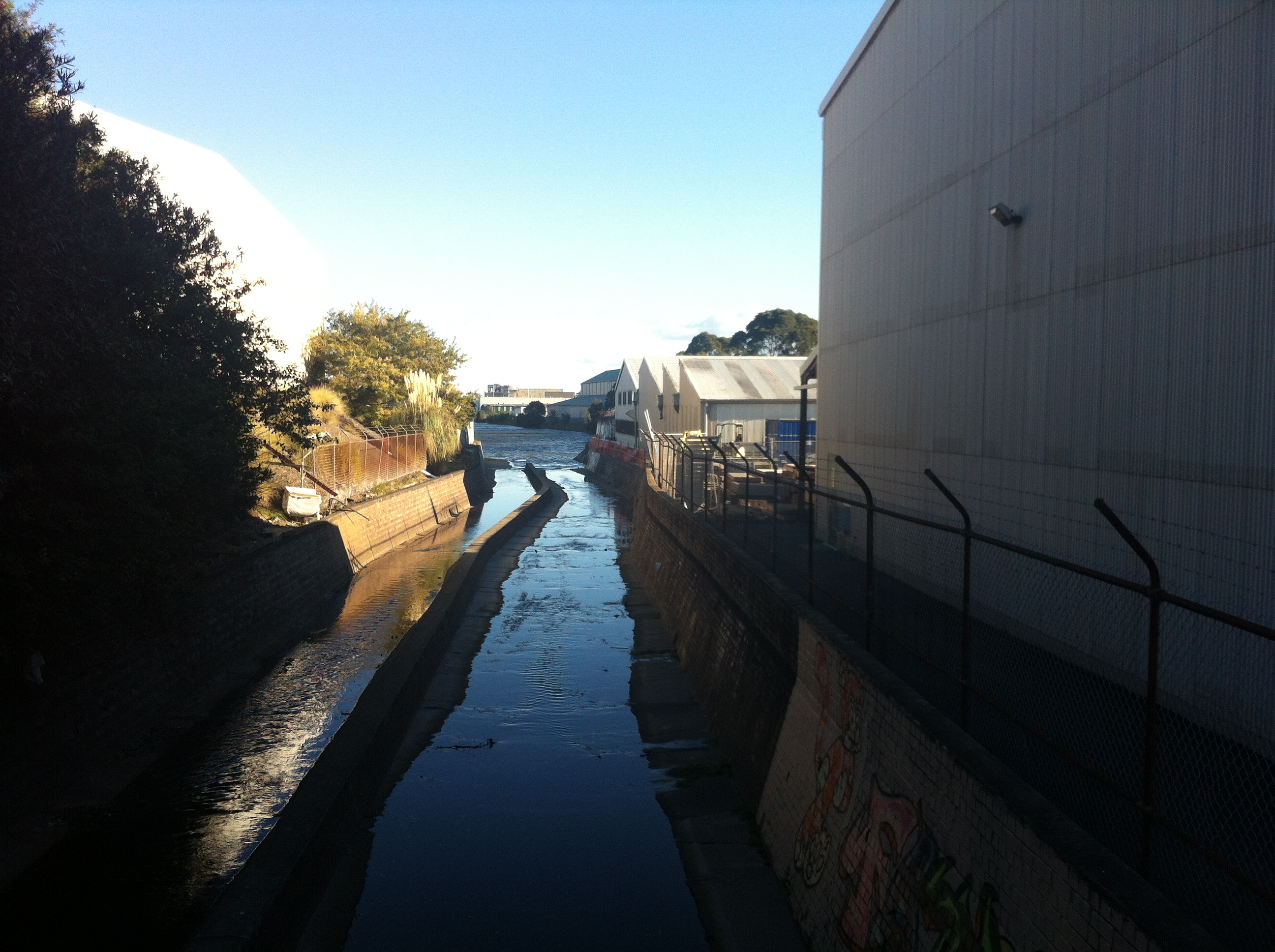
From a scream to a whimper
This is how it ends. The mighty canal winds down to a stormwater drain, which then continues to wind up through Alexandria before disappearing. Apparently, the cost of the already 4km canal was so prohibitive as to cancel the rest of the project. It might also have been that the powers that be were trying to save lives, for in creating the Alexandra Canal, they had also created…a bloodthirsty monster!
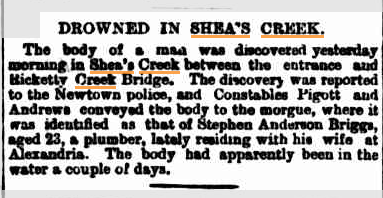
Sydney Morning Herald, 11 Dec 1903
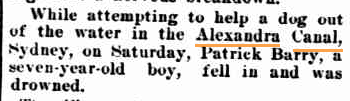
Horsham Times, 13 Jun 1919
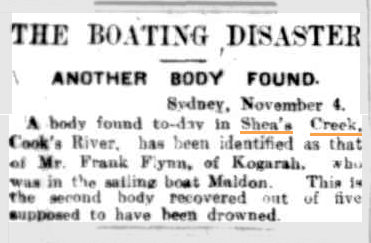
Adelaide Advertiser, 6 Nov 1922
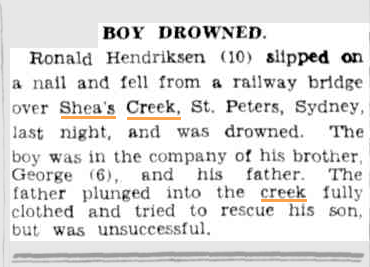
Courier Mail, 15 May 1934
There have been several attempts since 1998 to clean up the canal, add cycleways (more cycleways!), cafes and restaurants, and generally make it a nice place to be.

As you can see, it hasn’t happened yet. Maybe when the city’s insane lust for cycleways finally stretches the canal to Sydney Harbour, that fantasy can be realised.
Marchants Ltd Soft Drink Makers/R.J. McWhinney Panel Beating – Bexley, NSW

Image courtesy Museum Victoria.
In 1886, British migrant George Marchant purchased a Brisbane ginger beer manufacturing plant. By 1890, Marchants was the largest soft drink business in Australia, with a product range including hop beer, soft drinks and cordial, and with plants in Brisbane, Melbourne, Adelaide, Newcastle and Sydney. Oh, and Bexley.
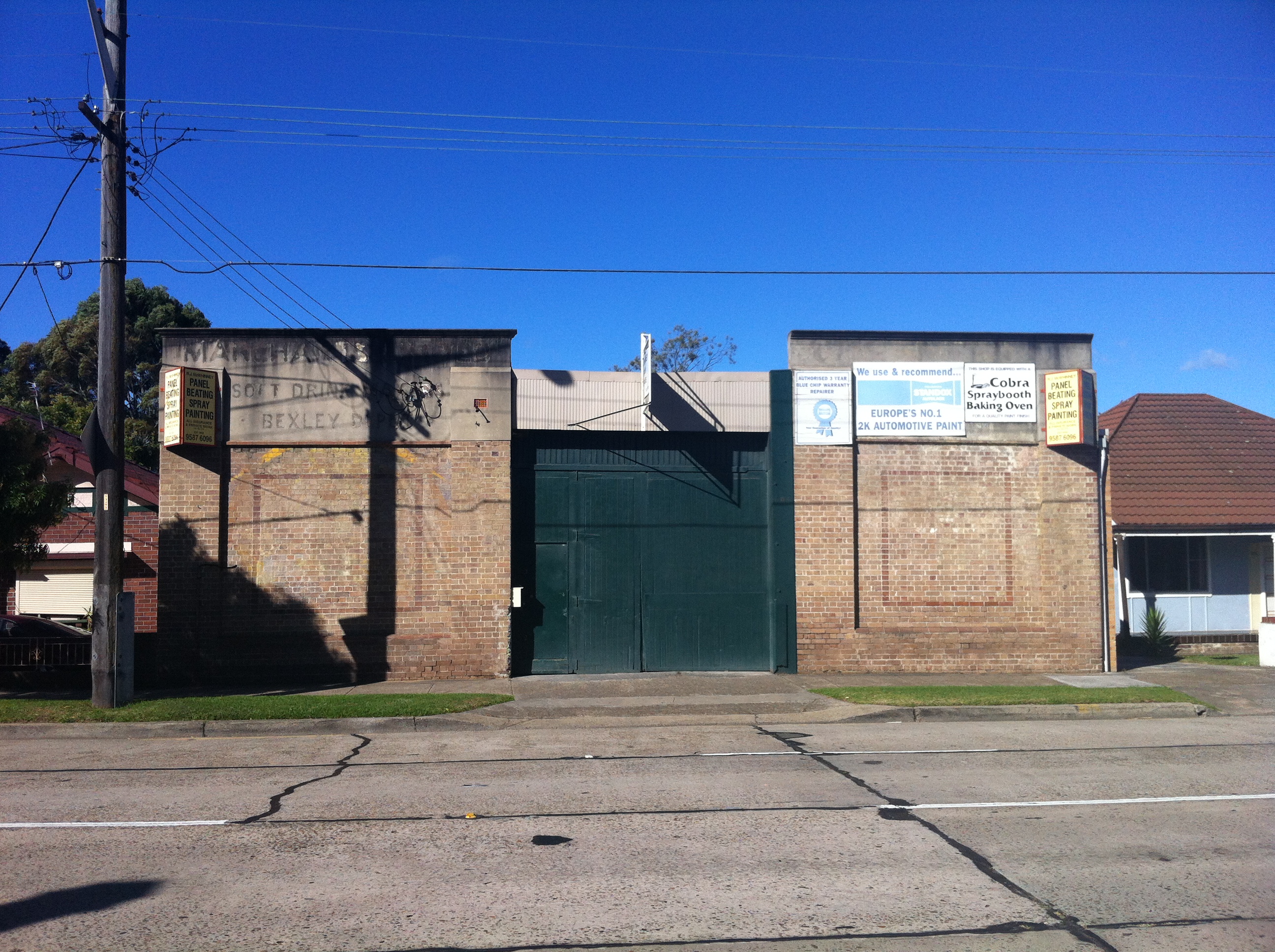
Let’s not beat around the bush – the building looks old. The Bexley depot of the Marchants soft drink empire may be a panel beater now, but it’s clear to see how it would have been back then. It looks like a horse and cart might explode from behind that door at any second in a frenzied rush to deliver kegs of creaming soda, just like in the olden days.
George Marchant was known for his strong belief in social equality, and women workers in his factories earned more than the average female wage in the food industry at the time. When the soft drink company’s registration was abandoned in 1917, the brand name was sold off and kicked around for decades between Pepsi, Shelleys, and ultimately Coca-Cola, which owns the brand today. Marchant himself died in 1941, by which time this site was long since out of the soft drink business. Hmm…I’m thirsty.

 Past/Lives of the Near Future