Stunning Flowers/Dog and Cat Beauty Salon – Kogarah, NSW
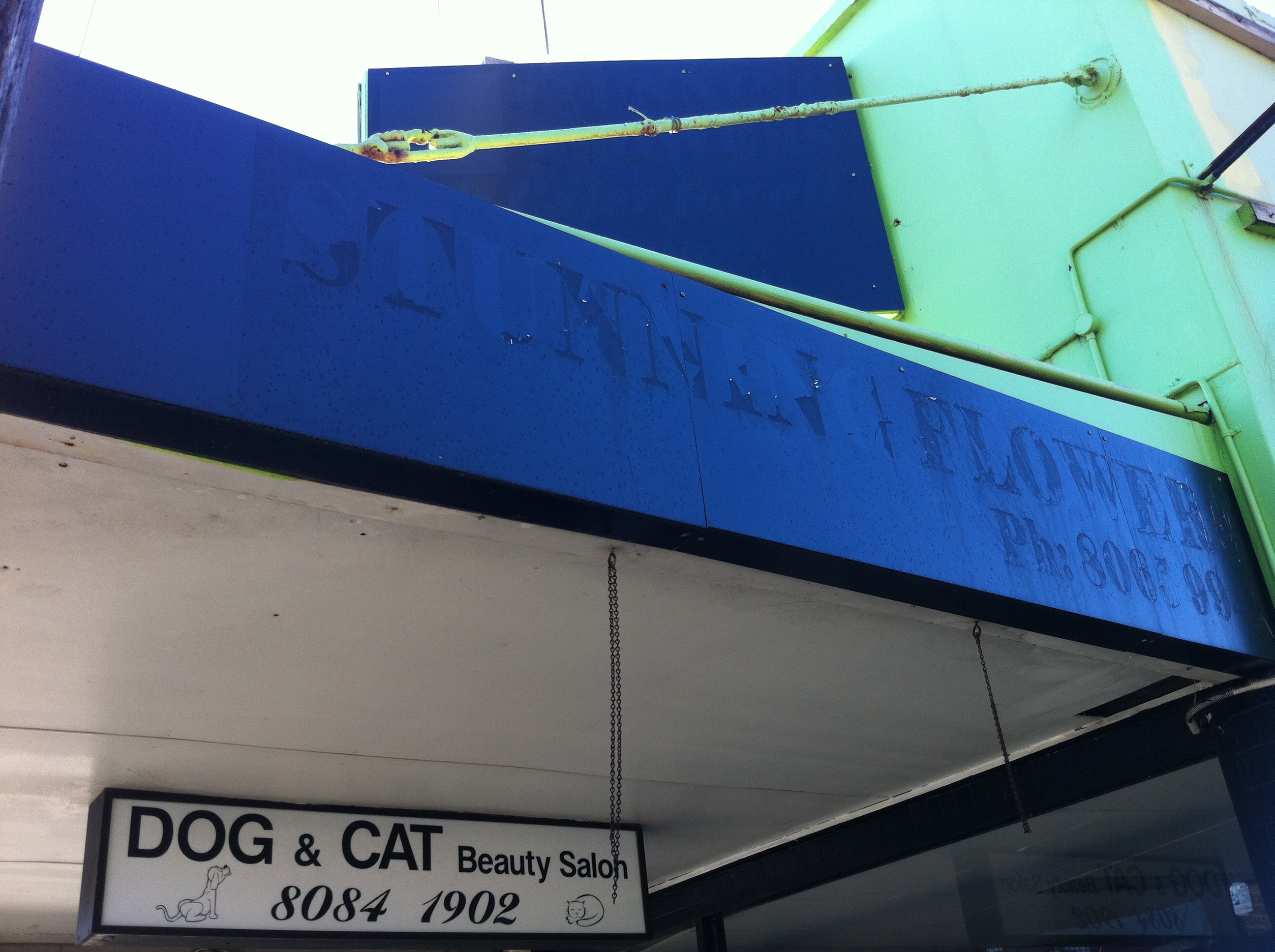
Kogarah’s dogs and cats are that much more beautiful thanks to the offputting hubris of Stunning Flowers. No one likes a braggart, least of all flower customers.
Chinese Restaurant/Hyang Won Korean Restaurant/For Lease – Strathfield, NSW
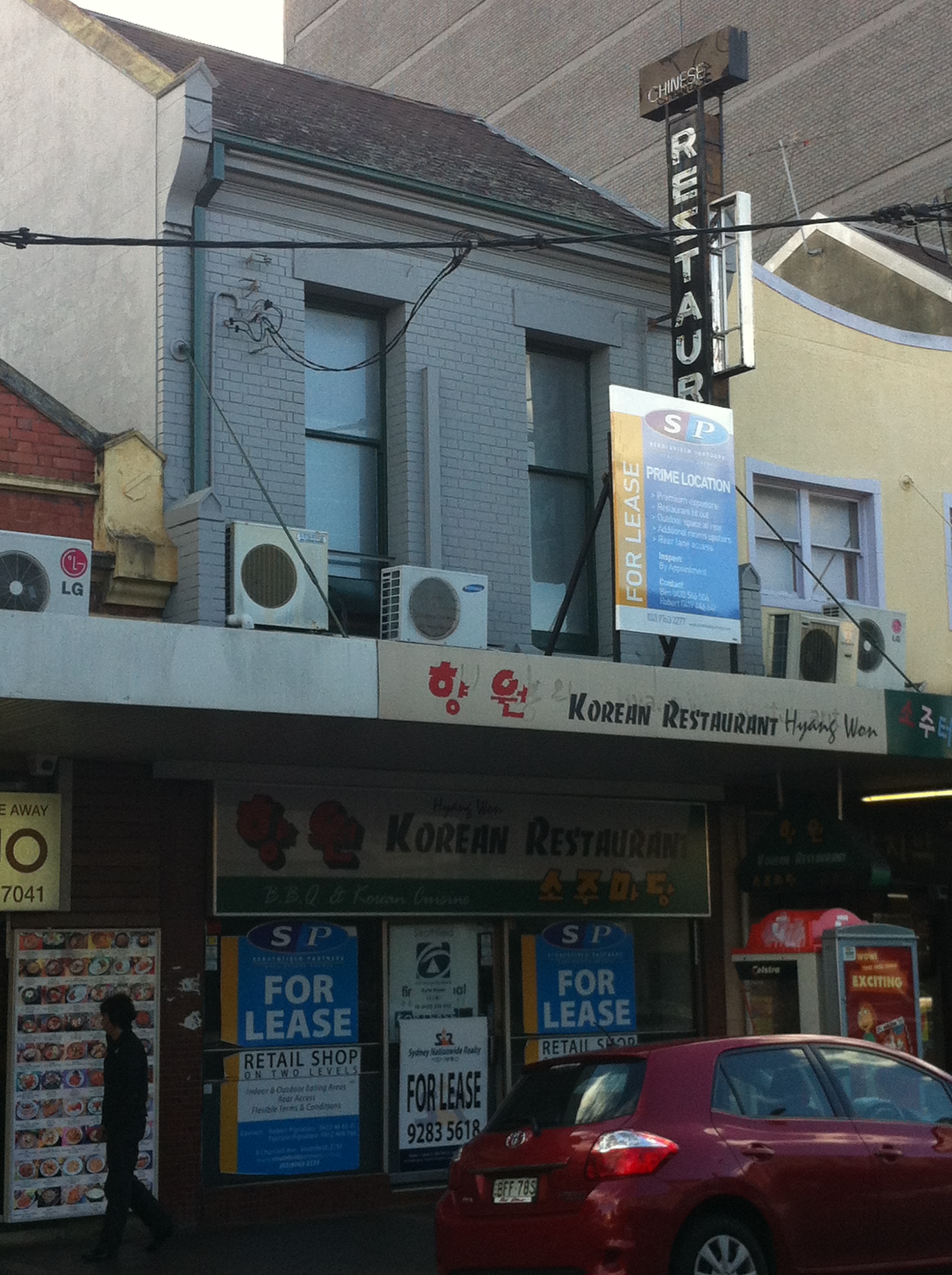
By leaving the previous tenant’s neon ‘Chinese Restaurant’ sign up, this Korean restaurant hoped to bank on an underlying current of the ‘they all look alike’ mentality to put bums on seats. Perhaps it’s a good thing then that they’re no longer in business? In reality it looks like this restaurant was part of the ‘by the people, for the people’ trend that saw Chinese restaurants originally established to appeal to the more adventurous members of white Australian communities replaced with Korean restaurants designed to cater to the area’s blossoming Korean community…and it closed because apparently, the food sucked. Japanese next time?
Maritime Services Board/Museum of Contemporary Art – The Rocks, NSW

Since 1991, the Museum of Contemporary Art has enthralled, inspired and confused Sydneysiders and tourists of all kinds. Established through a bequeathment of money from Australian artist John Power (who died in 1943, making it one very long inheritance battle), the MCA has recently undergone a much publicised redevelopment during which ruins of a colonial dockyard were discovered underground. But contrary to what you might think, their art deco building wasn’t just an attempt by the MCA itself to be trendy – they weren’t in there first.

It’s funny that despite the expensive and lengthy redevelopment process, they missed this little clue. In fact it appears it was covered up by another sign for years and only recently disturbed. As you can see, it reveals that the MCA’s building was once the site of the MSB. This is apparently common knowledge, but what was the MSB?
It makes sense that the Maritime Services Board was established in and housed at the Rocks. 90 years of confusing yet important Sydney port control laws and services were consolidated into one administrative entity, the MSB, in 1936. In 1949 construction began on the building, which was completed in 1952, so even by art deco standards it was late to the party. The MSB itself relocated in 1989, leaving behind the building for the art world to work its magic on and in. It’s just that you missed this spot, guys. Then again, knowing the MCA, maybe it’s actually one of the exhibits and I just don’t get it.
E. Way & Co/Pandora – Pitt Street, Sydney NSW

At the dawn of the retail era, several big names were standing out amongst the dross in Sydney. Pitt Street was quickly becoming the place to be for all department stores, and David Jones was king. One of the apparent heirs to the throne was E. Way & Company. Originally a drapery claiming to the be the cheapest in Sydney (on Pitt Street? Yeah, right), E. Way was established as a department store in 1891. E. Way was acquired in 1955 by Farmers, which itself was acquired in 1961 by the Myer juggernaut.

E. Way & Co, 1944. Image courtesy State Library NSW.
These days, jewellery store Pandora occupies the tiny building that once featured a grand display to rival DJ’s. Look at how small (yet grand) the building is in comparison to the monstrous Westfield, and you get a sense of how easily satisfied shoppers were back then. It’s sad to think about how quickly these kinds of acquisitions and mergers can absolutely eliminate a brand, and E. Way is just another victim ‘honoured’ with an unreachable, leftover facade. It’s more a case of ‘it’s not worth bothering to take it down’ than ‘leave it up for history’s sake’. Isn’t it always the Way?
Bank of New South Wales/Allans Music – Sydney, NSW

This building features an interesting double-shot of 19th century enterprise.
First we have the Bank of New South Wales, established in 1817, making it Australia’s oldest operating company. “But wait,” I hear you saying. “It’s not around today. How could it possibly be Australia’s oldest company?” I’m glad you asked. Between 1850 and 1910, the bank established branches around the country, and also in Fiji and Papua New Guinea (despite Bank of NSW meaning jack to people over there). From 1927 the bank went on a mad spree of acquisitions, buying out the Western Australian Bank and the Australian Bank of Commerce and culminating in a merger with the Commercial Bank of Australia in 1982 giving rise to Westpac. And thus…evil is born.
On the other side, we have Allans Music, which I was surprised to learn was established in Melbourne in 1850. Allans by the turn of the 20th century was the biggest music retailer in the southern hemisphere (but where was the competition?). In the 70s, Brashs decided it wanted a piece of the Allans action and acquired the company. When Brashs went under in the late 90s, Allans emerged unscathed and under new ownership. It merged with Billy Hyde Music in 2010 to become a kind of super music conglomerate, the sort that’ll be feeding us through tubes and stealing our vitality 200 years from now. Incidentally, the building to the right of Allans was the Greater Union Pitt Centre, and beside that lived a Brashs for many years. Even the Greater Union became a cut-price CD shop for a time after its closure, and the Galeries Victoria’s JB Hifi sits across the street. This section of Pitt Street has never managed to shake its musical heritage.

 Past/Lives of the Near Future