The Bat & Ball Hotel – Surry Hills, NSW

Here’s a perfect argument for why you should take down old signs. Who’s that hosting your trivia night, Bat & Ball?

Come on down, huh? How far? Six feet? Maybe that’s why the question mark is there, they don’t know whether trivia will be on or not because the host is perpetually late. TOO SOON?
Coles Variety/Fossey’s/Bag A Bargain/Stokland – Hurstville, NSW

The Hurstville building currently featuring Stokland Furniture Depot is a bit like your old fridge covered in magnets that vary wildly in their level of ancientness. The site has put up with a variety of variety shops (sorry) since 1914.

While it’s currently Stokland Furniture Depot (at last, furniture shopping without the c—s), in a previous life the building played host to…

…Bag A Bargain, and that Escher-esque door to nowhere – a sight so crazy it’s clearly driven the Bag A Bargain mascot downright nutty. Earlier still, the building was…

…Coles Variety store (later Fossey’s), which acted as a thoroughfare to Forest Road. I hope the equivalent sign at the front of the building on Forest Road warned thoroughfare users of the doozy of a step waiting for them on the other side of the door.
UPDATE: Thanks to this Leader article from December 1989, we can finally know what caused Coles Variety to pack up and leave. Spoiler: it was Westfield.
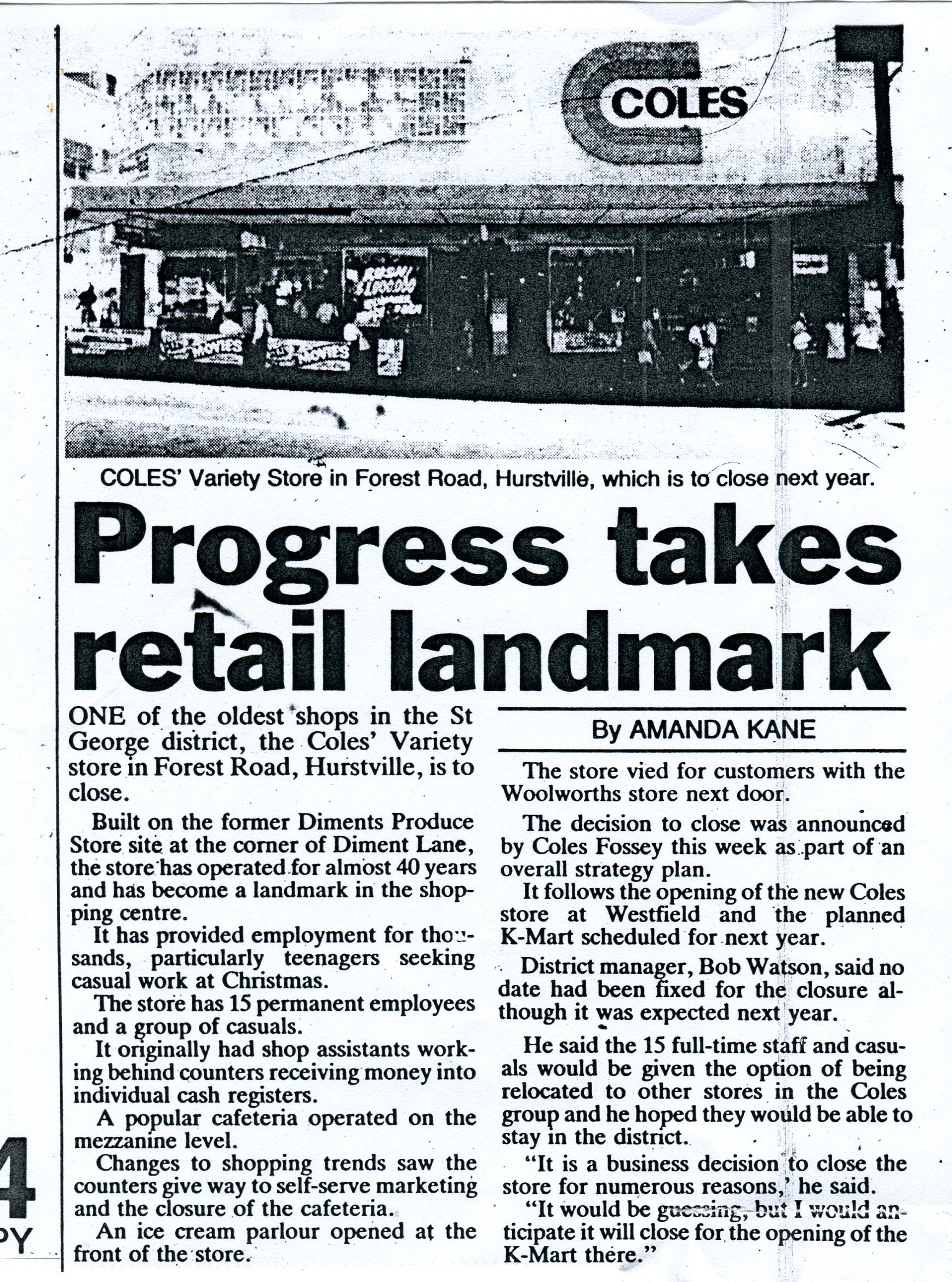
The Leader, December 5 1989
Even if we choose to accept K-Mart as the spiritual successor to Coles Variety – which I don’t – can its champions boast that it has an ice cream parlour at the front of the store? I didn’t think so.
Homebush Racecourse/Horse & Jockey Hotel – Homebush, NSW
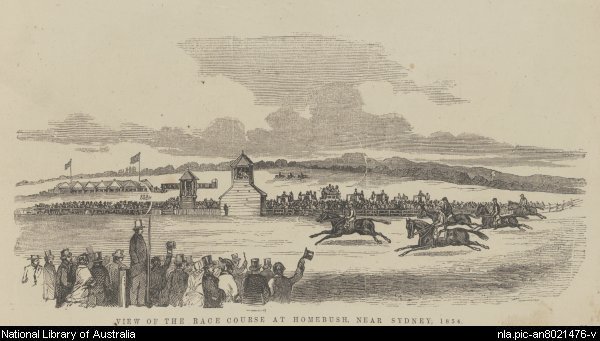
Homebush Racecourse, 1854. Image by Walter G. Mason, courtesy National Library of Australia.
Operating between 1841 and 1859, Homebush Racecourse was Sydney’s premier horseracing venue. It was located on the Wentworth Estate in the Homebush area, and stood in the approximate area encompassing the corner of today’s Underwood and Parramatta Roads. When Randwick Racecourse opened in 1859, it superseded Homebush’s track, causing the latter to fall into a period of dereliction, although it still operated as a track until 1880. A man’s body was found on the course in 1860, the grandstand spectacularly burned down in 1869, and throughout the 1870s it was used for human running races. When the Homebush Abattoir was established in 1915, the site of the racecourse was employed as the slaughterhouse saleyards.
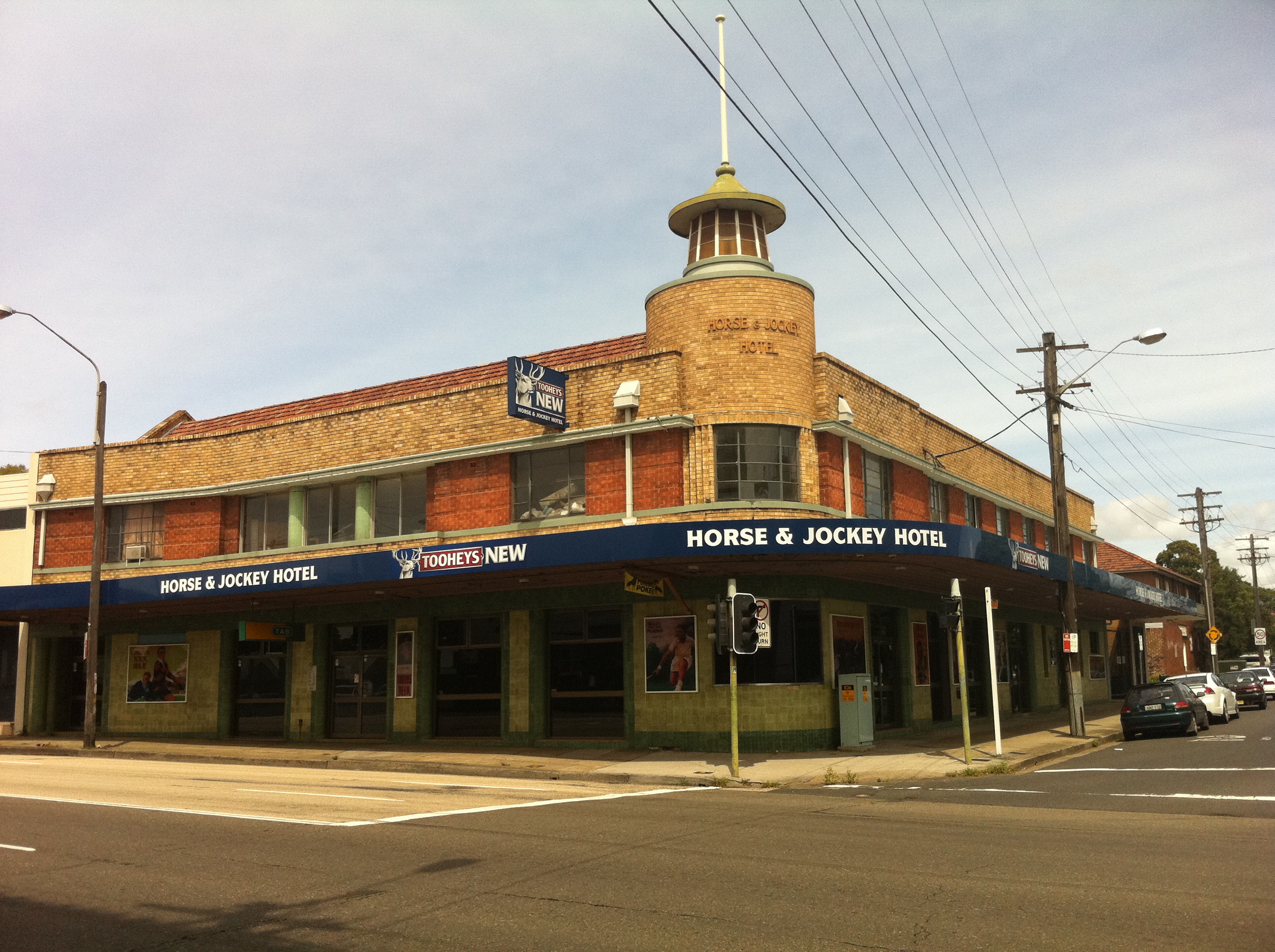
The only evidence that horseracing ever took place in the area is this pub, located along Parramatta Road, east of Underwood Road. The Horse & Jockey Hotel itself has a colourful history – it was originally the Half Way Hotel, named for its location halfway between the city and Parramatta. The site of the death of Australia’s first bushranger, and once patronised by Governor Lachlan Macquarie, the original hotel changed its name for the establishment of the racecourse (which it overlooked), and was the site of the inquest into the 1869 grandstand fire. Rebuilt beside its original site in 1876, the pub itself burned down in the early 1920s. It was rebuilt again in its present form soon after and remains as the only reminder of Homebush’s racing days.
Fowlers Shoes/’Jo-Anne’ Ladies Wear – Bankstown, NSW
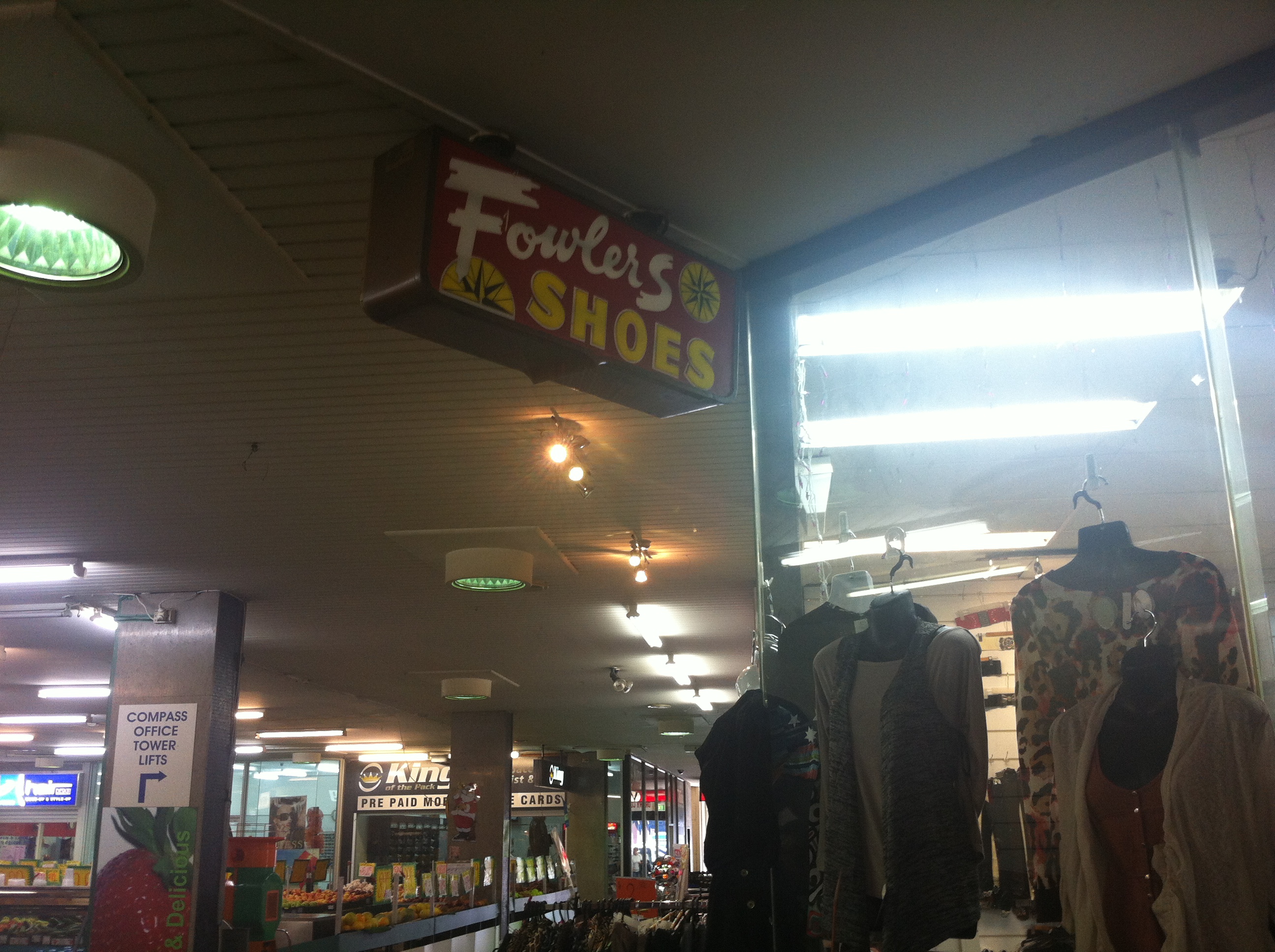
In Bankstown’s dank and decrepit Compass Centre Arcade, Fowlers Shoes once provided footwear to the populace. The sign sports the original compass logo of the centre, which appears to have never once been refurbished throughout its long and pointless existence. Fowlers dates back to the 1950s, which was a time before the Compass Centre, so obviously they knew how to sell shoes.
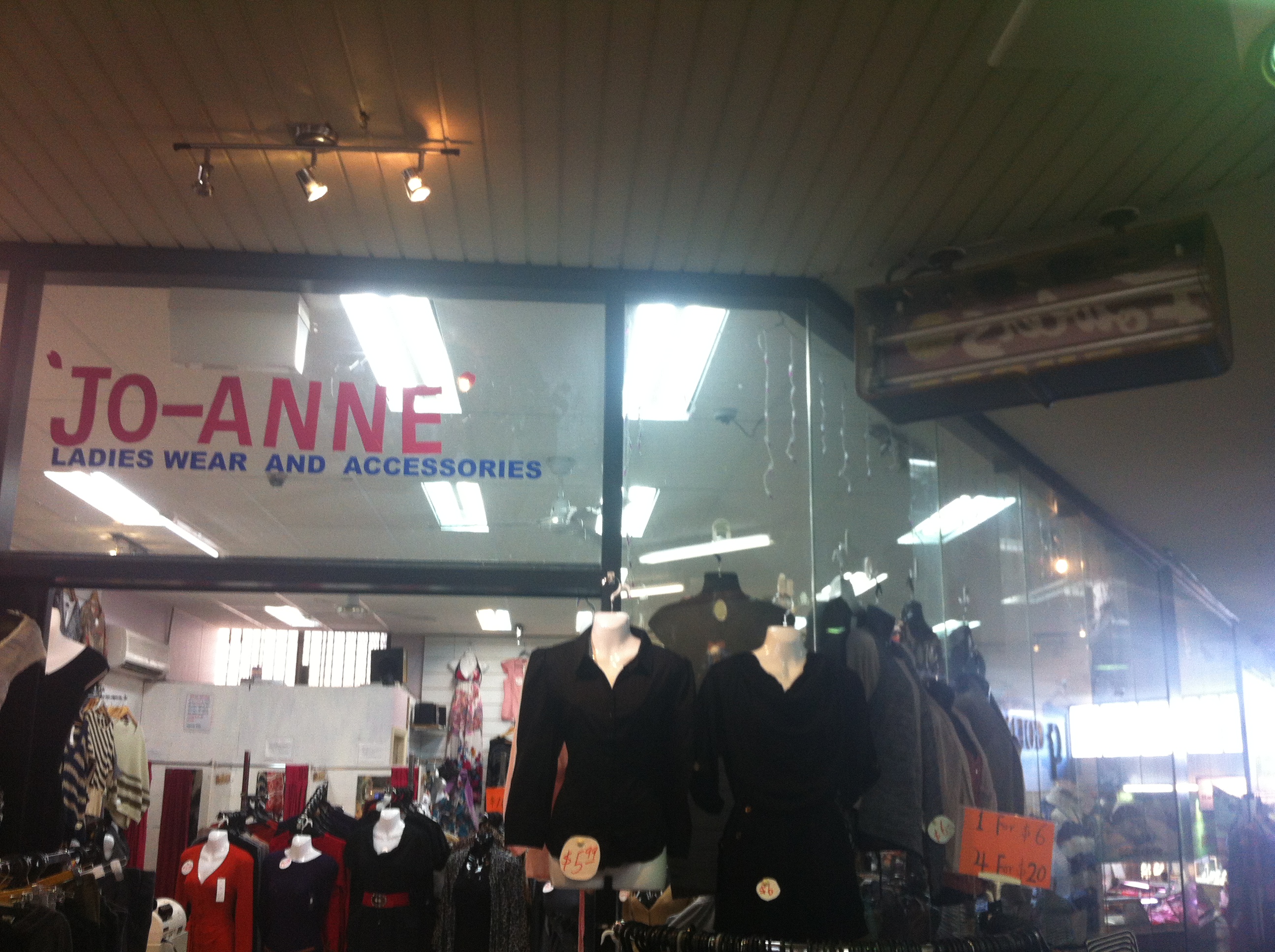
These days, as the arcade rots around her, ‘Jo-Anne’ has taken it upon herself to clothe Bankstown, one lady at a time.
Abattoir Trade Meats/True Blue Meats & Spit Roast – Homebush, NSW
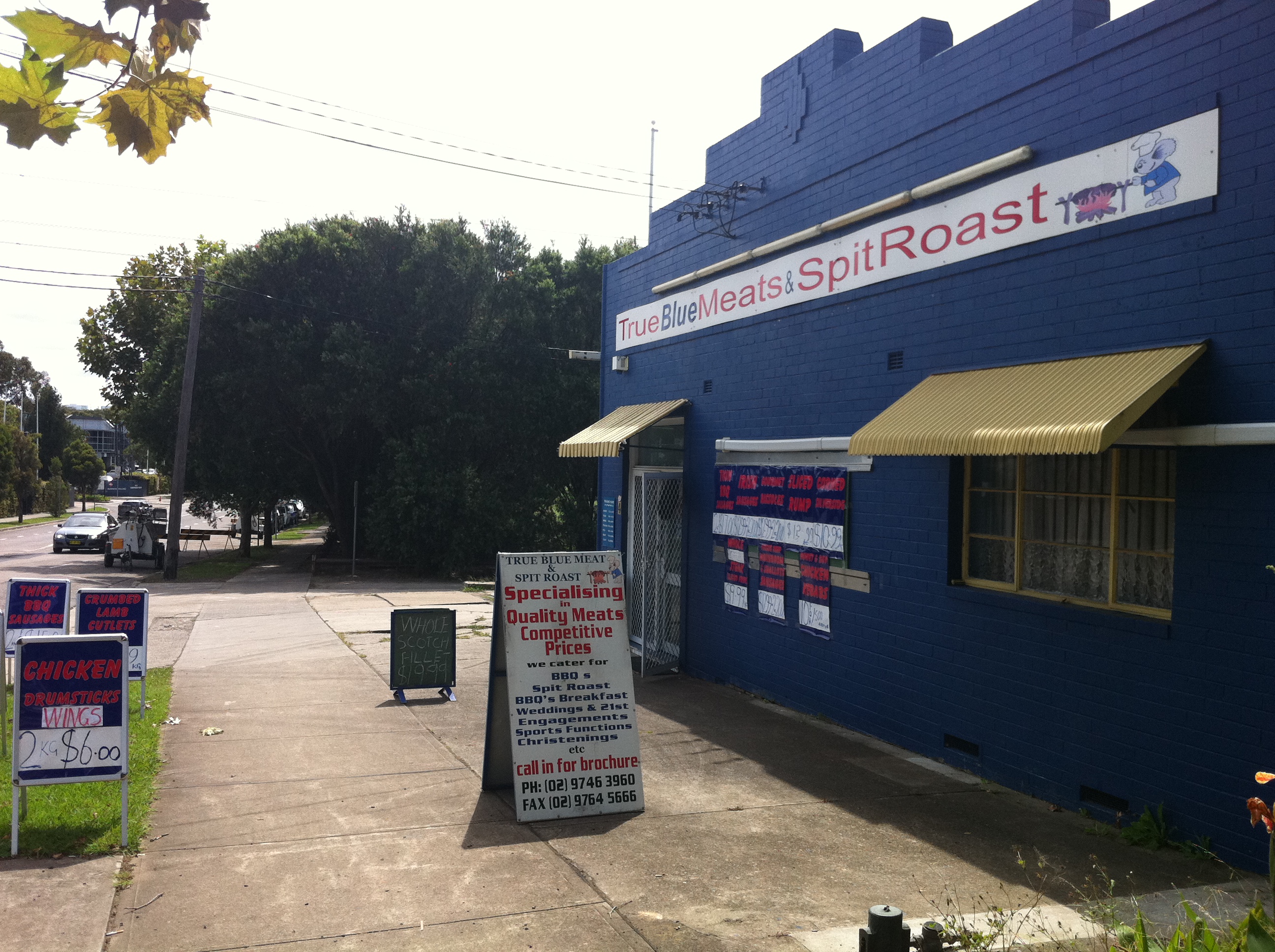
Here’s one just in time for the Royal Easter Show. Back when the Olympic Park was still the city’s abattoir, butchers, tanneries and cold storage companies cleaned up by establishing themselves on the outskirts of the area. This one, located on Underwood Road, which used to run along the abattoir site, was then known as Abattoir Trade Meats. When the abattoir closed in 1988, the butcher lived on, keeping the name until at least 2000.

When you stop and think about it, it’s strange to see a butcher standing alone in the suburbs like this without knowing the story. It looks old, and that sign is probably covering up an embossed name on the building, but the biggest tip-off was this sticker in the window:

Sure you do.

 Past/Lives of the Near Future