Orchard’s Corner/Raben Footwear – Haymarket, NSW

Raben Footwear may seem like it’s been at this Haymarket corner location for a thousand years, but in a time before Doc Martens and skinheads, the site belonged to Richard Beaumont Orchard, a watchmaker, jeweller and politician. Orchard’s original building had been demolished by the city in order to extend Quay Street to George Street, so to compensate he was given this building. Not sure whose idea it was to add the cheesy orchard-themed clock, though.

Orchard was a Sydney personality in the early 20th century; a sailor, an actor, founding Commissioner of the ABC and Federal Member for Nepean (Lib). By all accounts he seems like the kind of guy who’d have the ‘My Family’ stickers on the back of his car. His skills as a sloganeer left much to be desired, however; ‘Orchard’s: where the watches grow’. These days, you can find Orchard at Rookwood Cemetery, where he was buried after his watch stopped for good in 1942.
Shea’s Creek/Alexandra Canal – Mascot, St Peters, Alexandria NSW
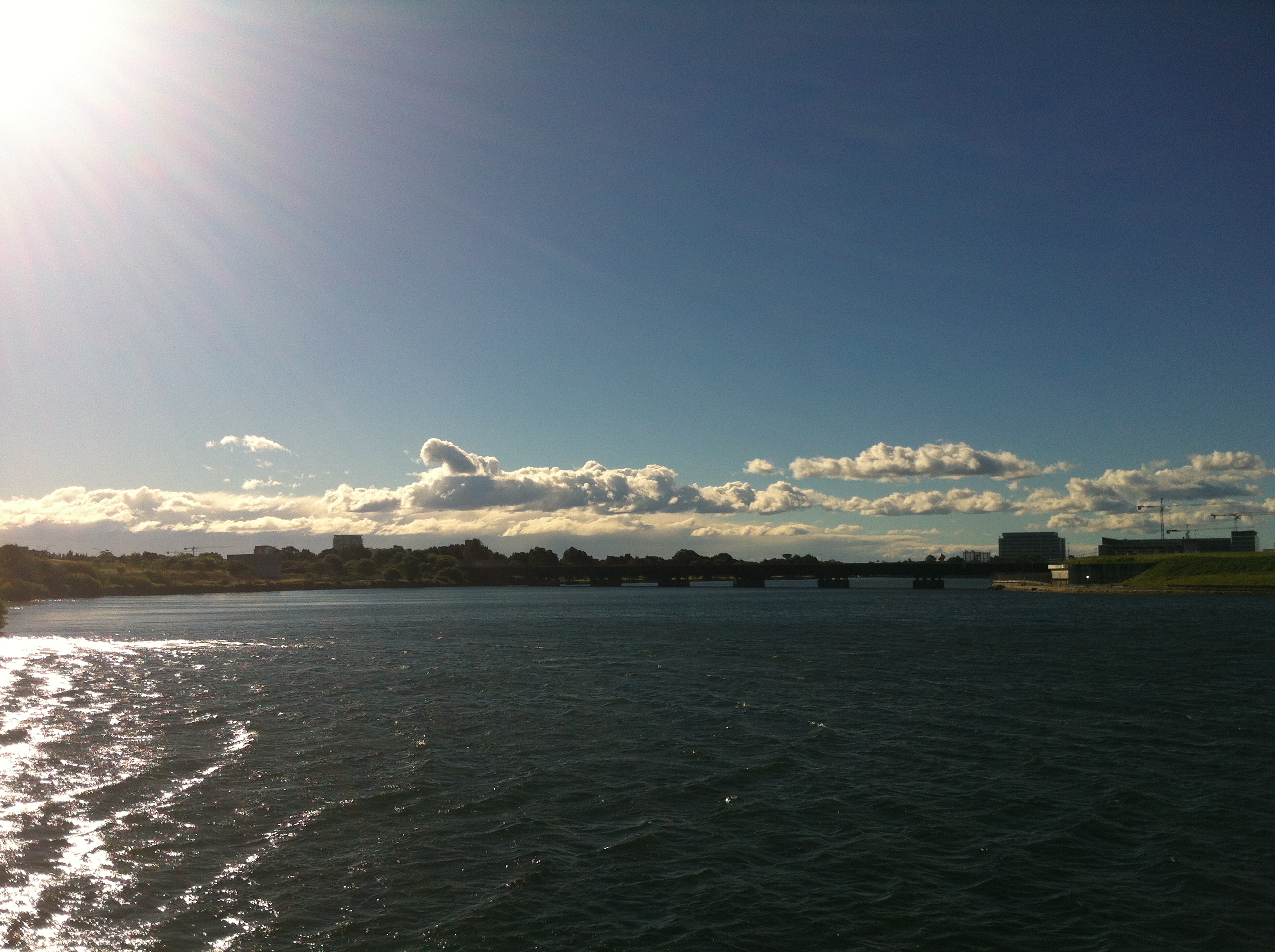
Cooks River
You’re looking at Sydney’s most polluted waterway. And I thought Rhodes was bad.
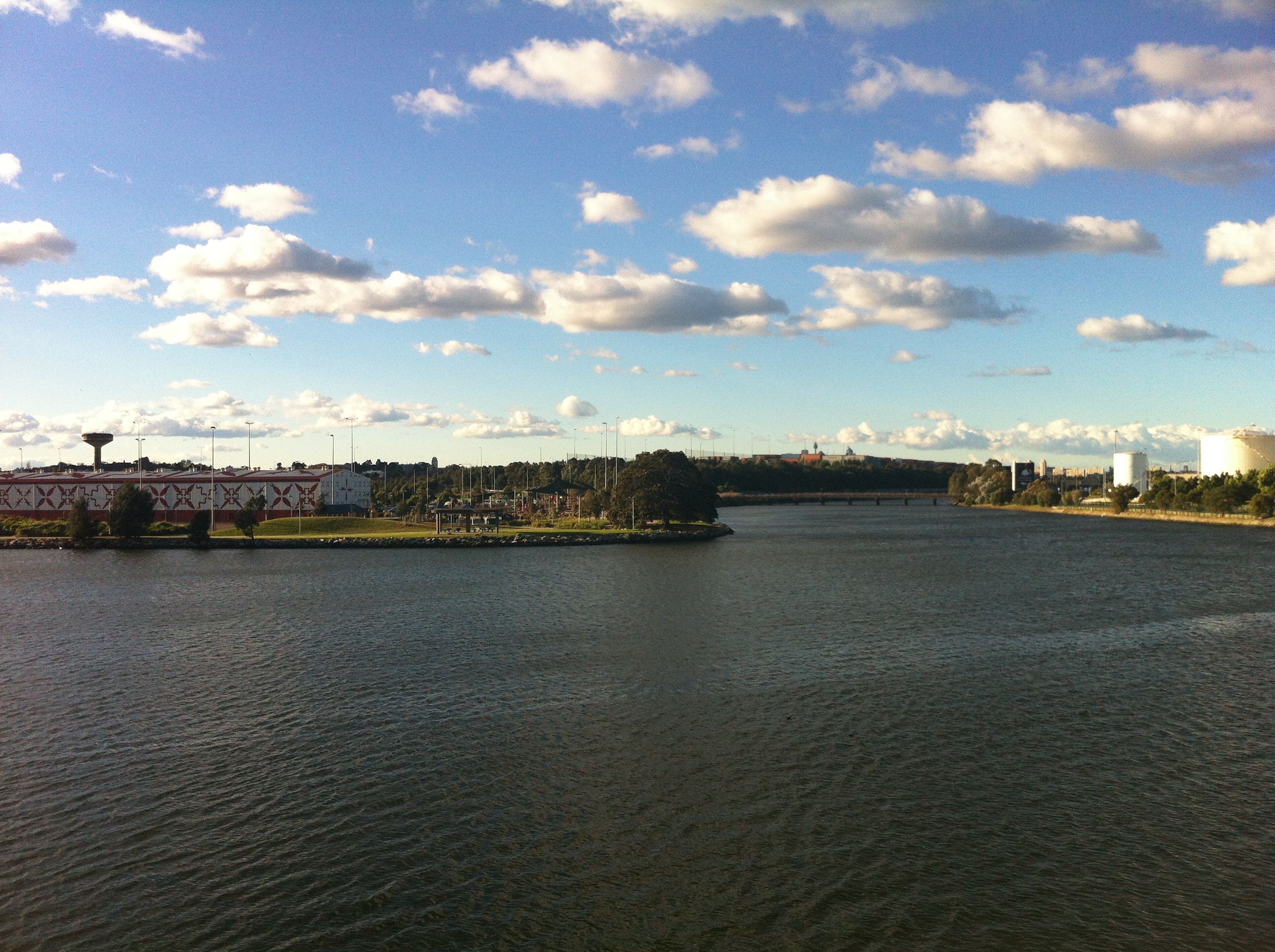
The Botany Bay end of Alexandra Canal
In the late 1880s (it’s always the 80s), someone envisaged a grand canal stretching from Botany Bay to Sydney Harbour. It would start at the Botany Bay end of the Cooks River, and lead all the way through the city before opening up at Circular Quay, thereby giving the Eastern Suburbs the island refuge from the great unwashed they’ve always wanted. To that end, I’m surprised it never happened.

Former Shea’s Creek opening
Shea’s Creek, a small offshoot of the Cooks River, was chosen as ground zero for the new tributary, which was supposed to act as an access route for barges to transport goods between the multitude of factories set up along the creek in the area. Factories including brickworks, tanneries and foundries. Factories that drained their runoff directly into the canal. A canal that is, according to the EPA, “the most severely contaminated canal in the southern hemisphere”. So keen to pollute were the industrial warlords of yesteryear that they had to invent waterways to defile.

At the time the canal was constructed, Sydney’s roads were a terrible mess completely unsuitable for transporting goods, making an aquatic access route more practical. Thankfully, Sydney’s roads today…uh…they…they’re pretty uh…let’s get more canals happening.

So near and yet so far
Between 1887 and 1900, Shea’s Creek was ripped up and turned into the canal. By 1895 it was looking unlikely that it would ever reach Sydney Harbour. The NSW Government had decided that as a sewer, the Shea’s Creek Canal as it was known then was doing a good enough job as a carrier of stormwater and runoff, and that there probably wouldn’t be a need to spend all those pounds carrying on with the project. Tenders were called again to complete the canal in 1905, but there were no takers.
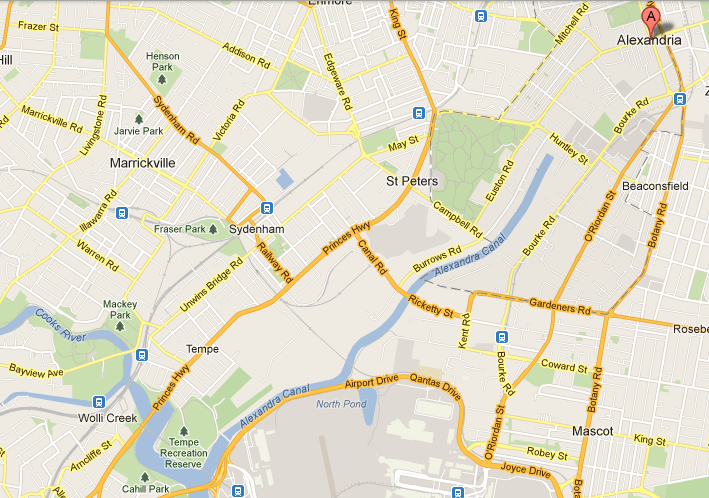
Image courtesy Google Maps
The canal was renamed the Alexandra Canal in 1902, after the then-Queen Consort Alexandra. Coincidentally, the suburb that the canal ended in, Alexandria, was also named for her. I bet she was proud, too.
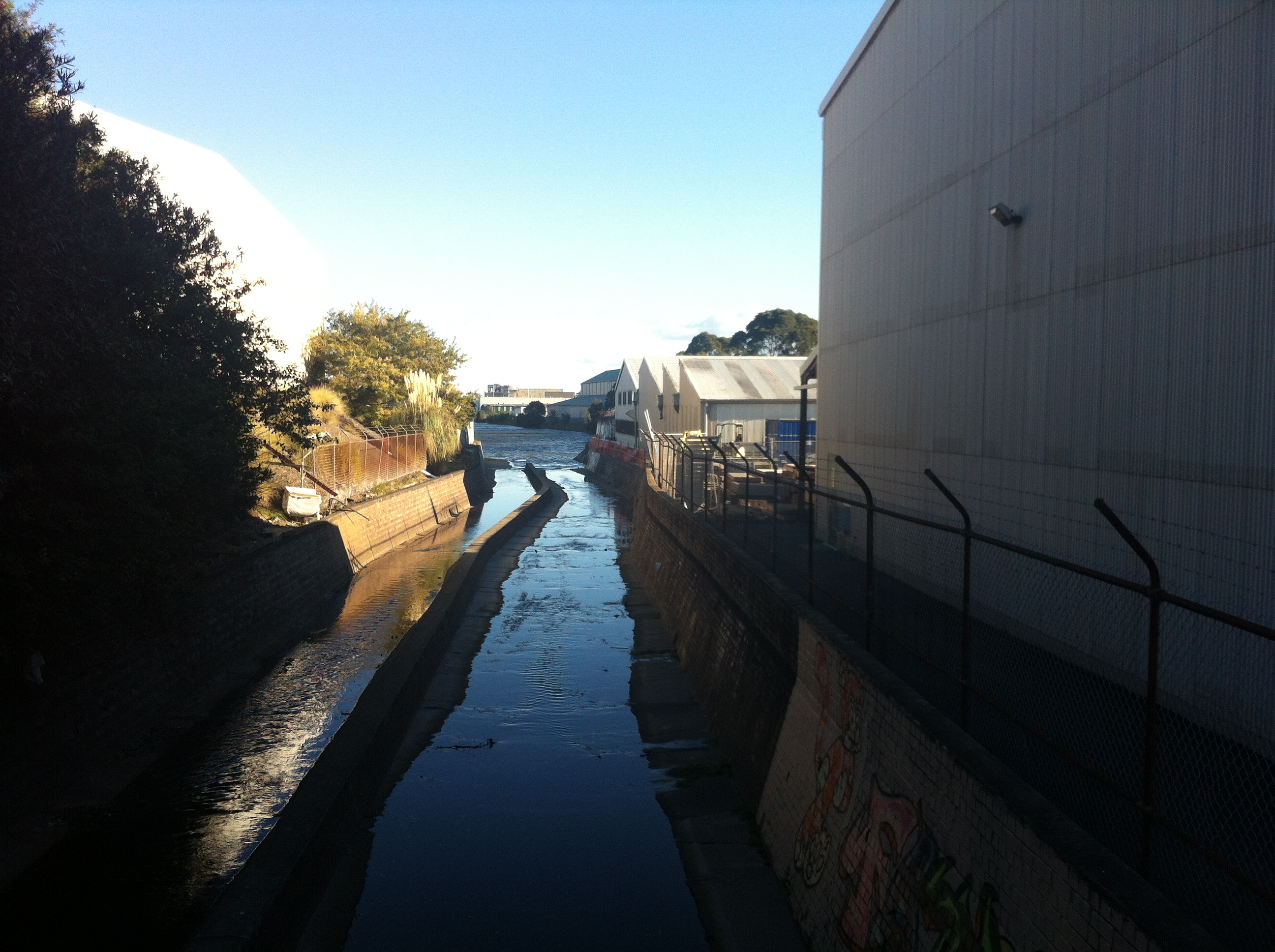
From a scream to a whimper
This is how it ends. The mighty canal winds down to a stormwater drain, which then continues to wind up through Alexandria before disappearing. Apparently, the cost of the already 4km canal was so prohibitive as to cancel the rest of the project. It might also have been that the powers that be were trying to save lives, for in creating the Alexandra Canal, they had also created…a bloodthirsty monster!
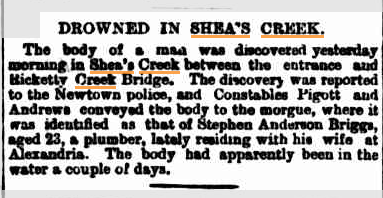
Sydney Morning Herald, 11 Dec 1903
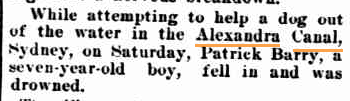
Horsham Times, 13 Jun 1919
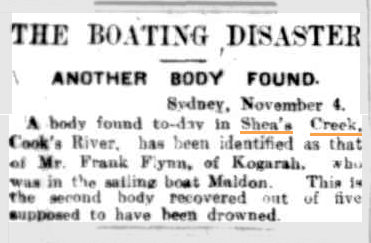
Adelaide Advertiser, 6 Nov 1922
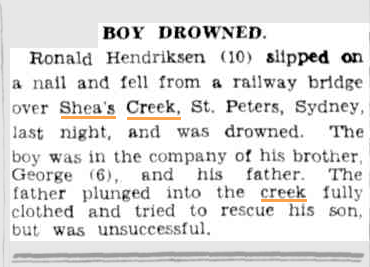
Courier Mail, 15 May 1934
There have been several attempts since 1998 to clean up the canal, add cycleways (more cycleways!), cafes and restaurants, and generally make it a nice place to be.

As you can see, it hasn’t happened yet. Maybe when the city’s insane lust for cycleways finally stretches the canal to Sydney Harbour, that fantasy can be realised.
Flemings Fabulous Food Store/Woolworths Supermarket – Bexley North, NSW

If you visit the suburb of Bexley North, you’ll find a supermarket with an identity crisis. Flemings, or in this case, Flemings Fabulous Food Store, opened as a chain of supermarkets in 1930, but in 1960 sold up to Woolworths. This particular Flemings is one of only two left in New South Wales, the other being in Jannali. Inside, it’s all Woolworths branded, but the name and the building itself (and some of the items on the shelves) are all vintage Flemings.
Why Woolies is prolonging the death of this particular Flemings should become obvious when you look to the right of the picture. When the new block of units (built on a former petrol station) opens, they’ll want a bigger supermarket, and if Woolworths can buy up the other tiny shops on this strip, expect a big budget overhaul that’ll relegate Flemings to Supermarket Heaven alongside Clancy’s and Jewel. Nothing like a bit of competition.
St. George Bowling & Recreational Club/Derelict – Bexley, NSW
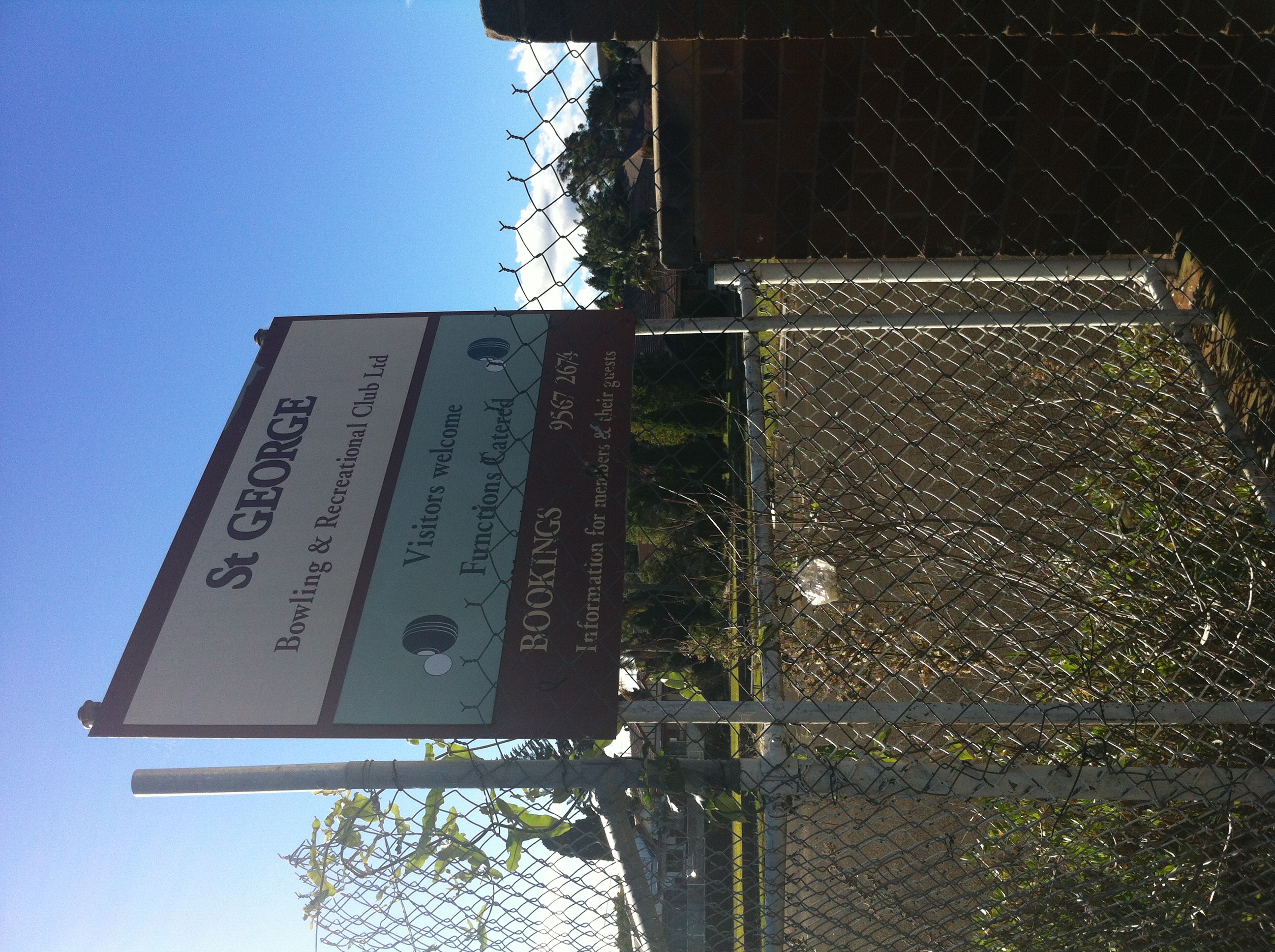
Here we have the festering remains of the St. George Bowling Club. Like many of its members, the bowling club came into existence in 1900, when a meeting at the Rockdale Town Hall ended with a decision to form a bowling club. I wonder how many town hall meetings end like that these days? For that matter, I wonder how many town hall meetings actually start these days?
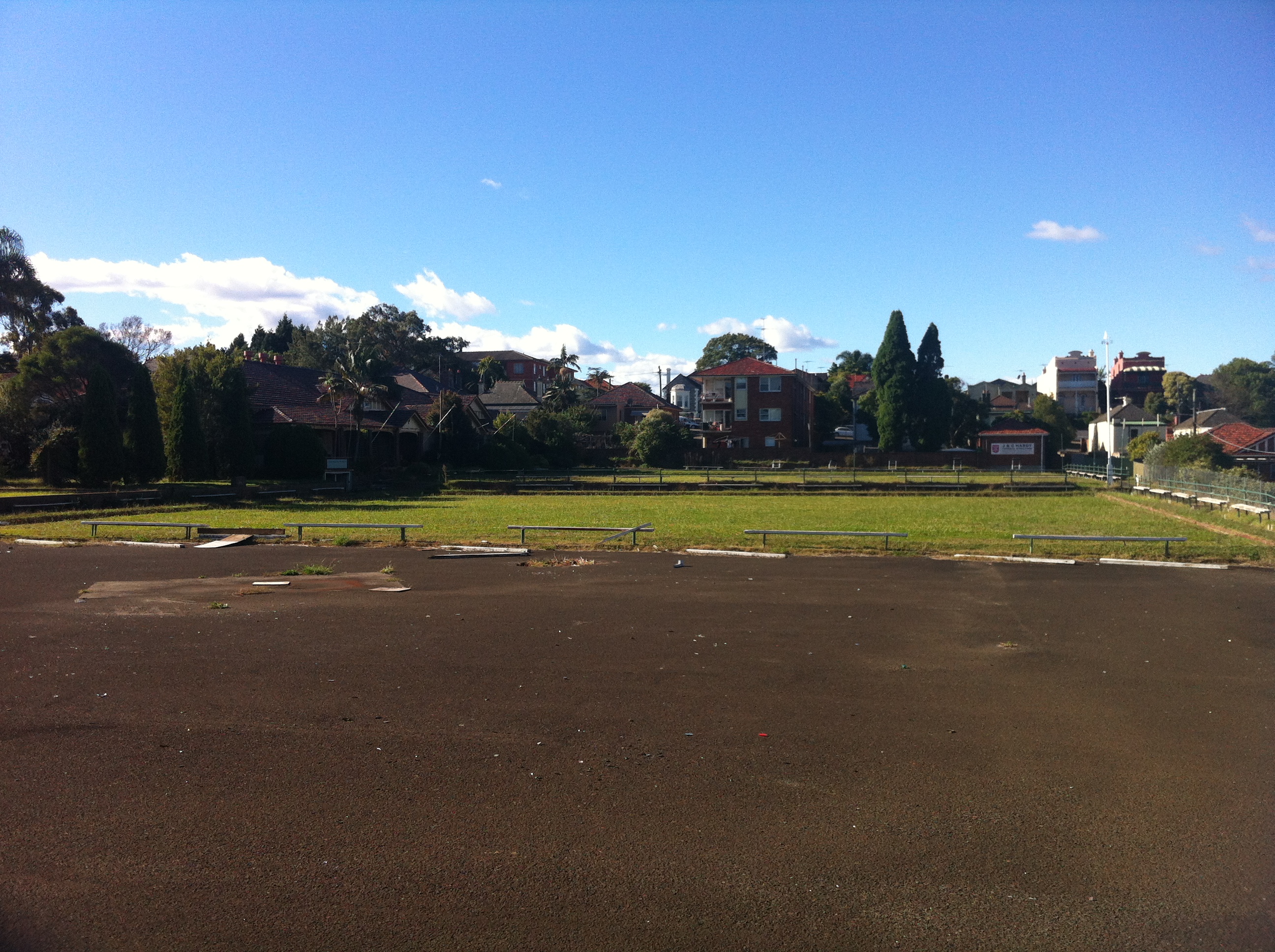
Feathers were ruffled in 1919 when the land the bowling club was built on was suddenly and urgently required by New South Wales Government Railways to enable quadruplication of the railway lines by that project’s estimated completion date of 2030. The club was moved, and seemed to land closer to the jack here on Harrow Road.
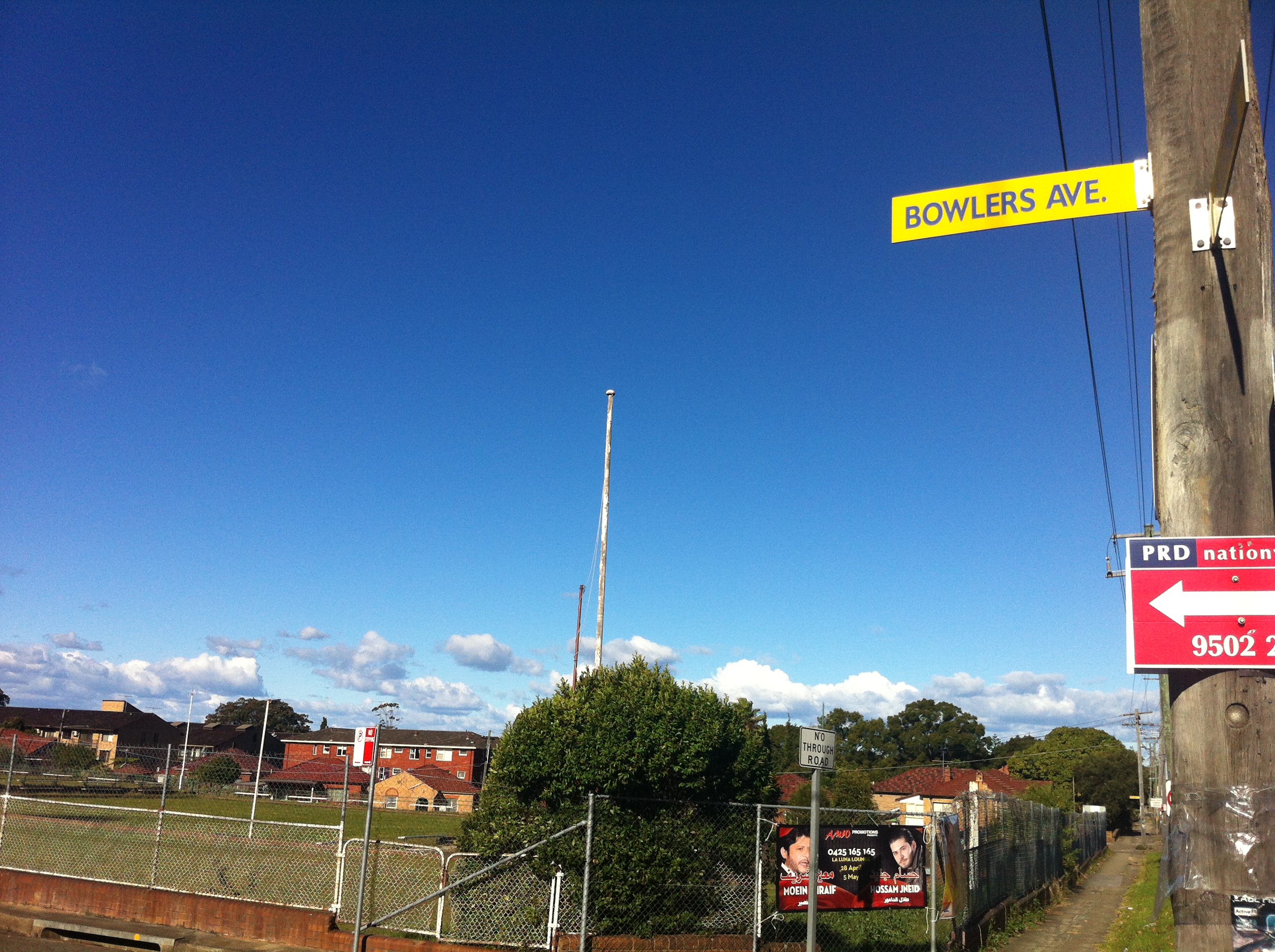
In an apparent passive-aggressive display of entrenchment, the little street beside the club is named Bowlers Avenue. Doesn’t it look silly today. Bowlers Avenue sounds more like a memorial garden in a cemetery.
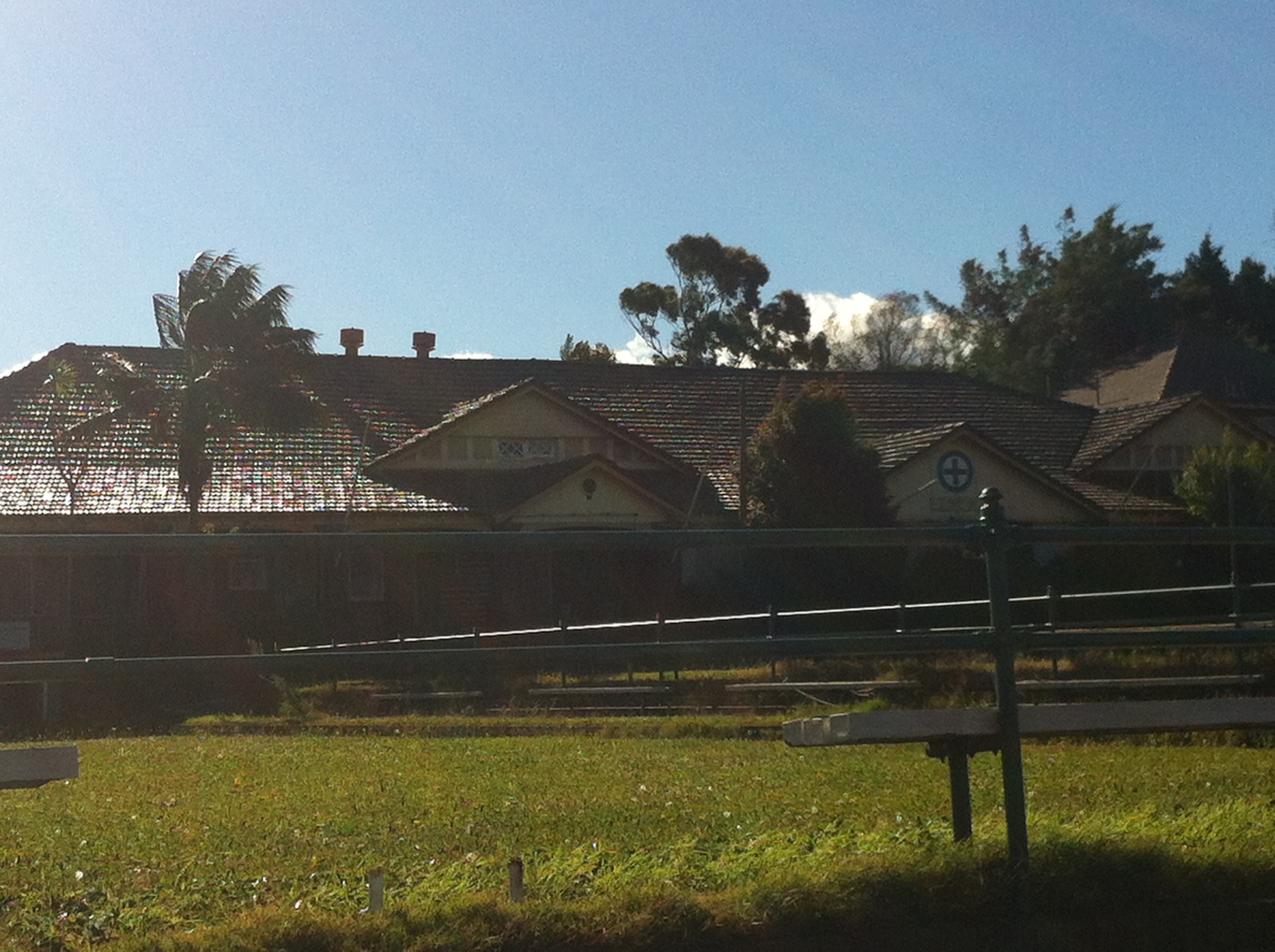
While the building is a rare example of a Federation era bowling club, it’s also been abandoned for several years. Unfriendly signs threaten would-be bowlers to stay the hell out, and many of the building’s windows have been boarded up.
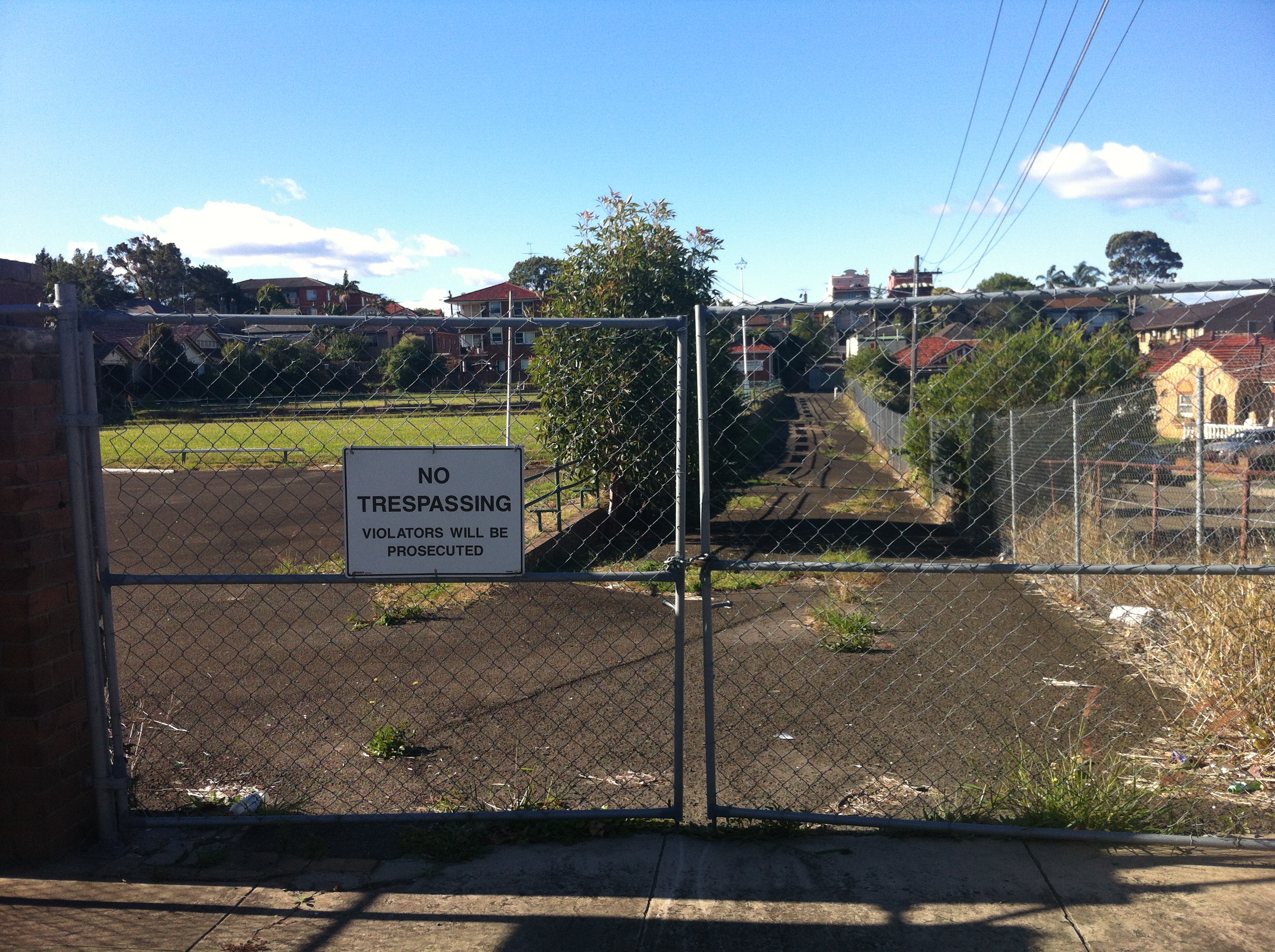
No one is picking up the sport of lawn bowls these days, and as the current superstars of the game fade away, there really is no need for these clubs. This one didn’t even have a TAB. And after all, it’s not like this is an isolated incident. Unless there’s some big recruitment drive for new members sometime soon, the game will end up with most of its players on that big Bowlers Ave in the sky.
Marchants Ltd Soft Drink Makers/R.J. McWhinney Panel Beating – Bexley, NSW

Image courtesy Museum Victoria.
In 1886, British migrant George Marchant purchased a Brisbane ginger beer manufacturing plant. By 1890, Marchants was the largest soft drink business in Australia, with a product range including hop beer, soft drinks and cordial, and with plants in Brisbane, Melbourne, Adelaide, Newcastle and Sydney. Oh, and Bexley.
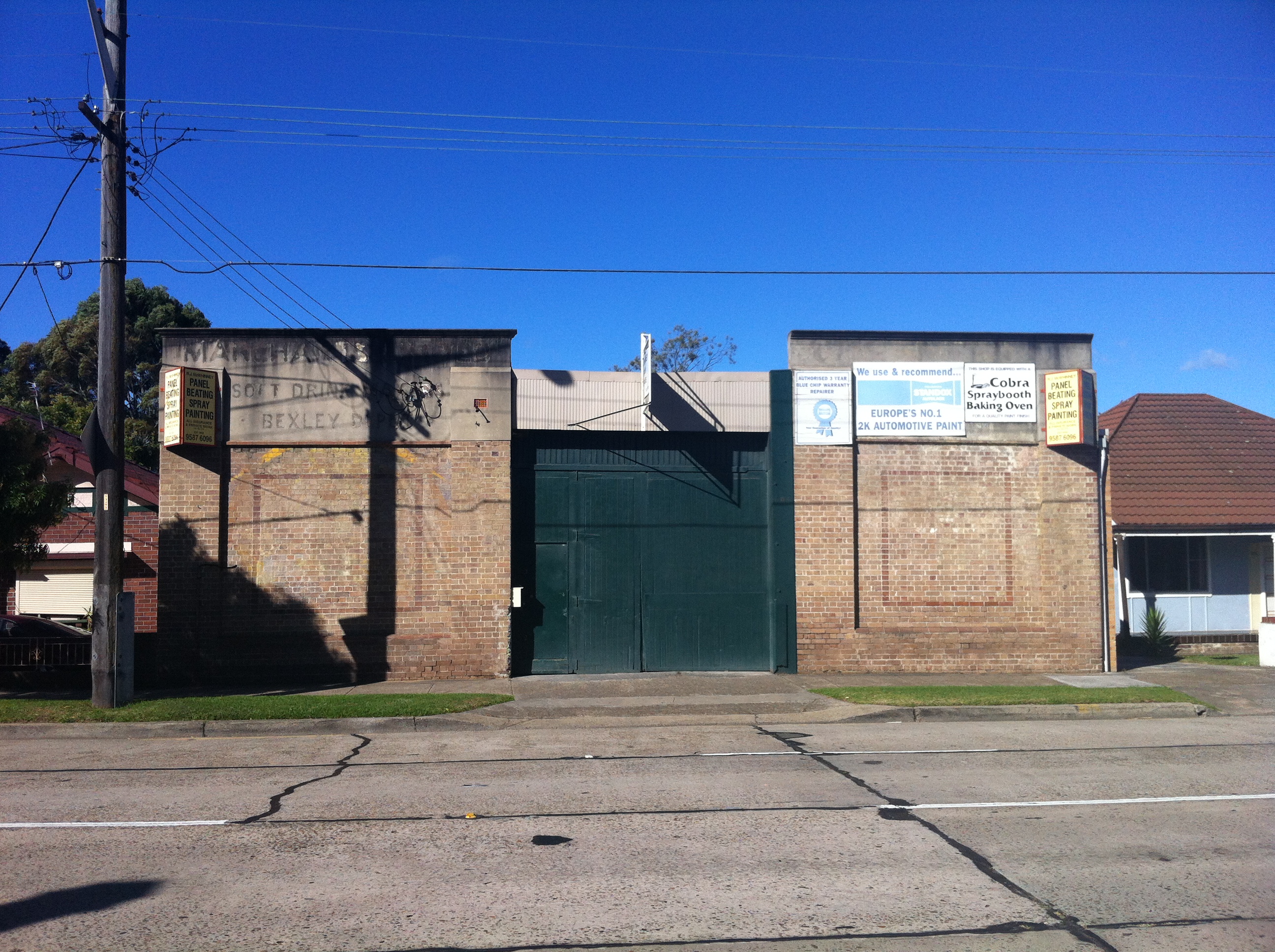
Let’s not beat around the bush – the building looks old. The Bexley depot of the Marchants soft drink empire may be a panel beater now, but it’s clear to see how it would have been back then. It looks like a horse and cart might explode from behind that door at any second in a frenzied rush to deliver kegs of creaming soda, just like in the olden days.
George Marchant was known for his strong belief in social equality, and women workers in his factories earned more than the average female wage in the food industry at the time. When the soft drink company’s registration was abandoned in 1917, the brand name was sold off and kicked around for decades between Pepsi, Shelleys, and ultimately Coca-Cola, which owns the brand today. Marchant himself died in 1941, by which time this site was long since out of the soft drink business. Hmm…I’m thirsty.

 Past/Lives of the Near Future