Wisdom Toothbrushes/Addis Toothbrushes/Derelict – Meadowbank, NSW

This factory was the home of Wisdom Toothbrushes for most of its life, and then Addis Toothbrushes towards the very end. For a factory so dedicated to hygiene, it’s not very clean.

They made toothbrushes here
If you’re thinking it’s a little too perfect that one toothbrush manufacturer followed another in occupying this factory, here’s the Finkle and Einhorn moment: Wisdom is Addis. The history is actually way more interesting than I could have fathomed the history of a toothbrush company to be: William Addis, who actually invented the toothbrush, founded the Wisdom company in 1780(!), with the first prototype toothbrush made of bone and horsehair. Whose bone? The horse’s? Maybe it’s best that we don’t know. They were still making the bone toothbrushes until 1947, when something must have happened in the world of decency to stop the practice.
Wisdom/Addis struck Australia in the 1930s, establishing a factory in Glebe. When that factory proved to be lacking in security:

SMH, 12 Sep 1930
Addis moved here, to a factory by the bank of the Parramatta River.

But the crime didn’t stop – it turned out that people just liked stealing Addis brand toothbrushes:
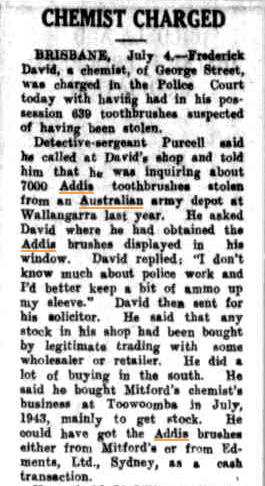
Central Qld Herald, 6 Jul 1944
By the 1970s Wisdom was flush with cash, taking out boastful ads in magazines and adding the company’s logo and a giant toothbrush to the side of the factory, which is a practice that really needs to come back in fashion.

When I get that, uh, fisdom, I need…
Market research apparently showed that by the 1990s, prospective toothbrush purchasers had lost faith in the Wisdom brand, and were instead more willing to buy from Addis. The factory complied, changing its name.

The toothbrush business moved to greener pastures (Lane Cove) around 2000, and as always happens, they left some stuff behind in the move.

They’ve probably been looking for those bricks
Oddly, there’s a Roni’s Discounts sign plastered to the back of the factory:

Could Roni’s have once used this factory to house their inventory of cheap junk? Even if they had, I doubt we could tell the difference. For about the last 10 or so years, the factory has sat here, derelict, constantly amassing more and more graffiti and grime. The doors are wide open so anyone can get in there. It’s become something of a pilgrimage for graffiti artists and, going by the bra suspended above the front door, drunk young people looking for an edgy-yet-risk free place to have sex. OOH AN ABANDONED FACTORY! ANYONE COULD WALK IN!
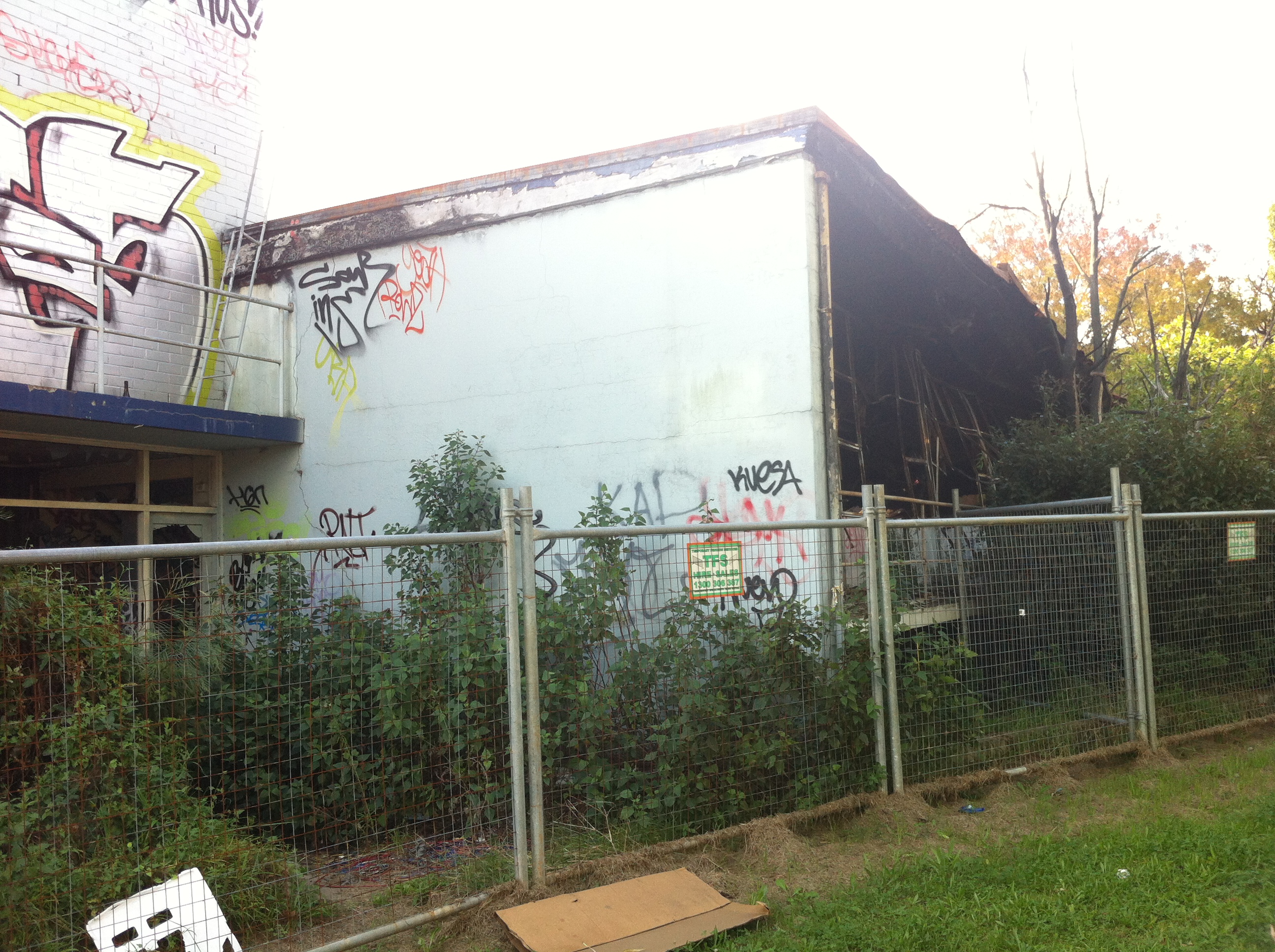
In 2007, the building caught fire, which seems to have improved its condition. As industrial Meadowbank is slowly but steadily decommissioned and gentrified around it, (Sexual) Wisdom patiently awaits its certain fate with a pearly white smile on its face.
SUPER UPD8: Thanks to reader Lawrence, we now have footage of the interior of the old Wisdom Toothbrush factory! Shot on Super 8, there’s a mega-creepy ‘found footage’ element to the video. Thanks Lawrence…I think…
NSW State Brickworks/Brickpit Ring Walk – Homebush, NSW

In a time when building a house meant plenty of brick, mortar and asbestos as opposed to 100% pure cladding, a housing boom meant it was time to get digging. The State Brickworks at Homebush was established by the NSW Government in 1911 to (publicly) provide for the demand for public housing and (privately) to shatter the stranglehold private owners had on the brickmaking industry, because no one makes money without the NSW Government getting a piece of the action. This greedy plan backfired at the onset of the Great Depression, when demand plummeted and the site started operating at a major loss. Ironically, it was sold to a private firm in 1936, and closed soon after.

State Brickworks, Homebush, 1912. Image courtesy State Library of NSW
Of course, the history of bricks in Sydney reaches back much further than Homebush. Brickfield Hill (near Haymarket) owes its name to its brickmaking past, and the St Peters brickyards are still in plain view – I just haven’t been there yet. The Homebush site was adjacent to the State Abattoirs, presumably to maintain the ambience, but more likely because the ground was rich in necessary brick ingredients. The Homebush Brickworks had also served to replace the troublesome State-run sand lime brickmaking operation at Botany, which had in 1914 fallen victim to a labourer strike, and never recovered.
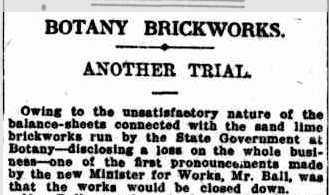
SMH, 19 Dec 1916
After World War II, during which the site had been used as an ammunitions depot by the Navy, the NSW Government sensed an opportunity to make money, and reopened the Brickpit just in time for the second housing boom. If the first boom was a Newcastle, this one was somewhere between a San Francisco and an Indonesia. Chances are that at some point during your life in Sydney, you’ve stayed in a house built with bricks from Homebush. The site even had its own train station for workers to use, which opened in 1939.

A red rattler passes the State Brickworks, 1982. Image courtesy Graeme Skeet/nswrail.net
It should be mentioned that during the 60s, 70s and 80s, the Brickworks was known by a different name to young hoons and petrolheads looking to blow off some steam on a Friday or Saturday night. ‘Brickies’ was a hot destination for drag racers setting off from the Big Chiefs (Beefy’s) burger joint on Parramatta Road, tearing off up Underwood Road in their Monaros towards Brickies Hill. This circuit can be seen in the 1977 film FJ Holden, which will be a major part of this blog sooner than later. The onset of development put a stop to this, but a subtle, if bizarre, homage to that era has been paid through the naming of certain streets around Hill Road, once the drag strip finish line: Nuvolari Place, named for Italian racing legend Tazio Nuvolari, and Monza Drive, after the endurance race of the same name. Sydney also hosted its first V8 Supercar event at the Olympic Park in 2009, echoing the days of weekend supercar stardom in less developed decades. Residents could still nostalgically enjoy extreme noise pollution and rowdy behaviour, but at least this time it was corporately sponsored.
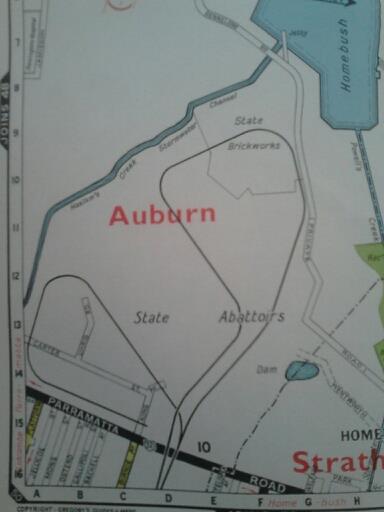
Saturday night grand prix circuit. Thanks, reader Kenny!
From an industrial standpoint, they might as well have been making gold bricks at the ‘works for the next three decades…and then the 80s happened. The boom died down, the money dried up, and the Brickworks, which had for the most part of the 20th century poisoned the surrounding land and Homebush Bay, was clumped in the same basket as the increasingly irrelevant State Abattoirs and the volatile Rhodes industrial area – it had to go, but before it did, the crew of Mad Max Beyond Thunderdome (or perhaps The Conqueror 2, just give it a few years) chose the toxic site as a filming location. In 1988, the Brickworks were closed for good. Like the rest of the State-owned Homebush industrial zone, it was included in plans to reshape the area into the Sydney Olympic Stadium in 1992. The Brickpit was to become the tennis centre.

“Wait’ll they get a load of me.”
And so it would have gone, had not a funny, completely unexpected thing happened. The green and golden bell frog was nearing extinction by 1992. Once abundant in Sydney, numbers had fallen so low that a special breeding program was established at Taronga Zoo in the hope that the frog could be saved. As preliminary work was being done, 300 of the small frogs were discovered living in the quarry. Several times since, colonies of the undeniably appealing frog have turned up at proposed development sites, halting work, ruining plans, and causing PR-illiterate development bigwigs to shit a…well, you know. The frogs are no longer critically endangered, but they still have a long way to go.

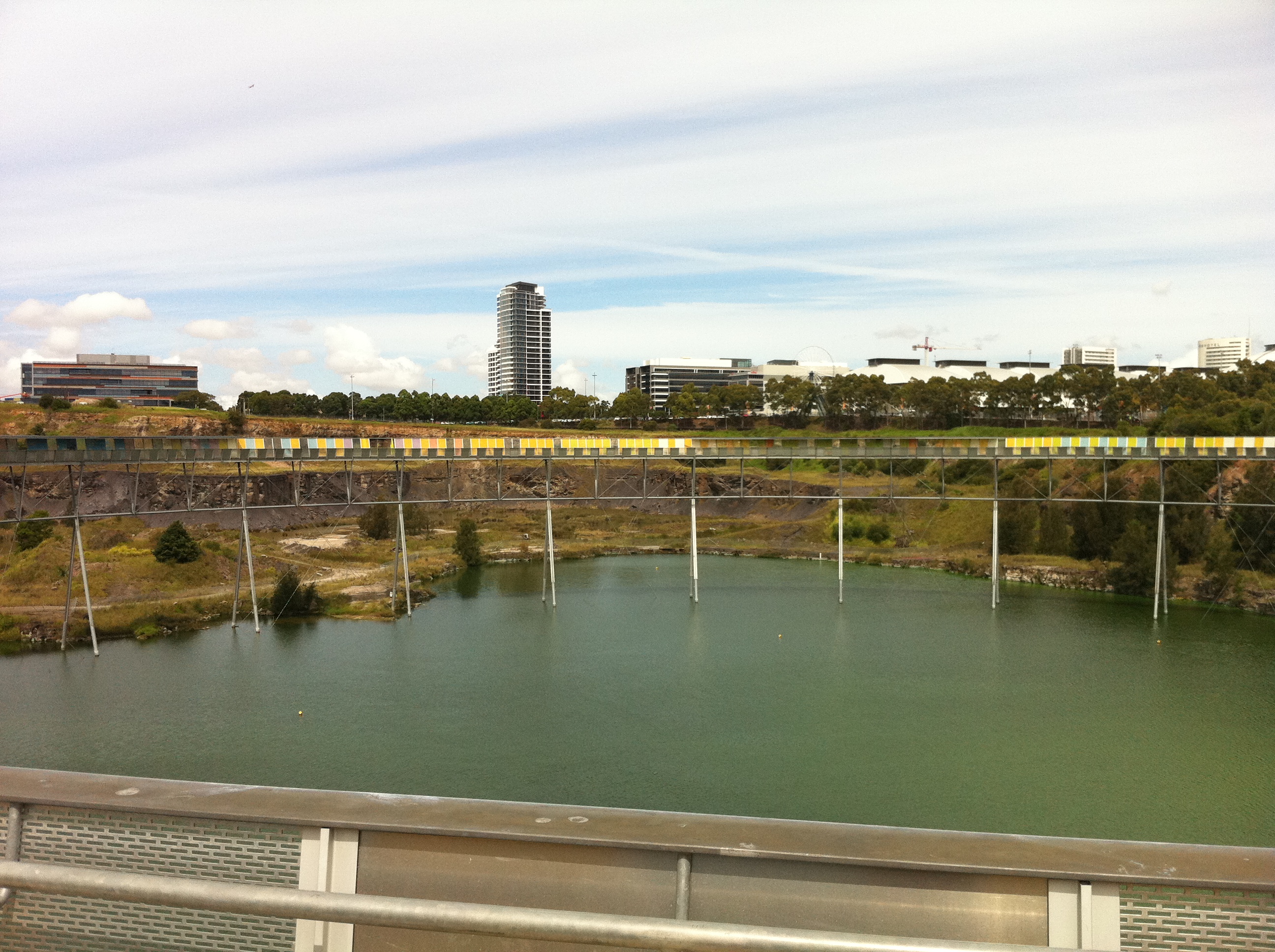
As the rest of industrial Homebush was transformed for the Olympics, the Brickpit itself followed suit, undergoing heavy remediation. It’s now an environmental feature of the Olympic Park, and features the wonderful Ring Walk, a walkway suspended above the former Brickworks site complete with a giant pond filled with what can only be described as Smylex. Those frogs must be mighty happy.


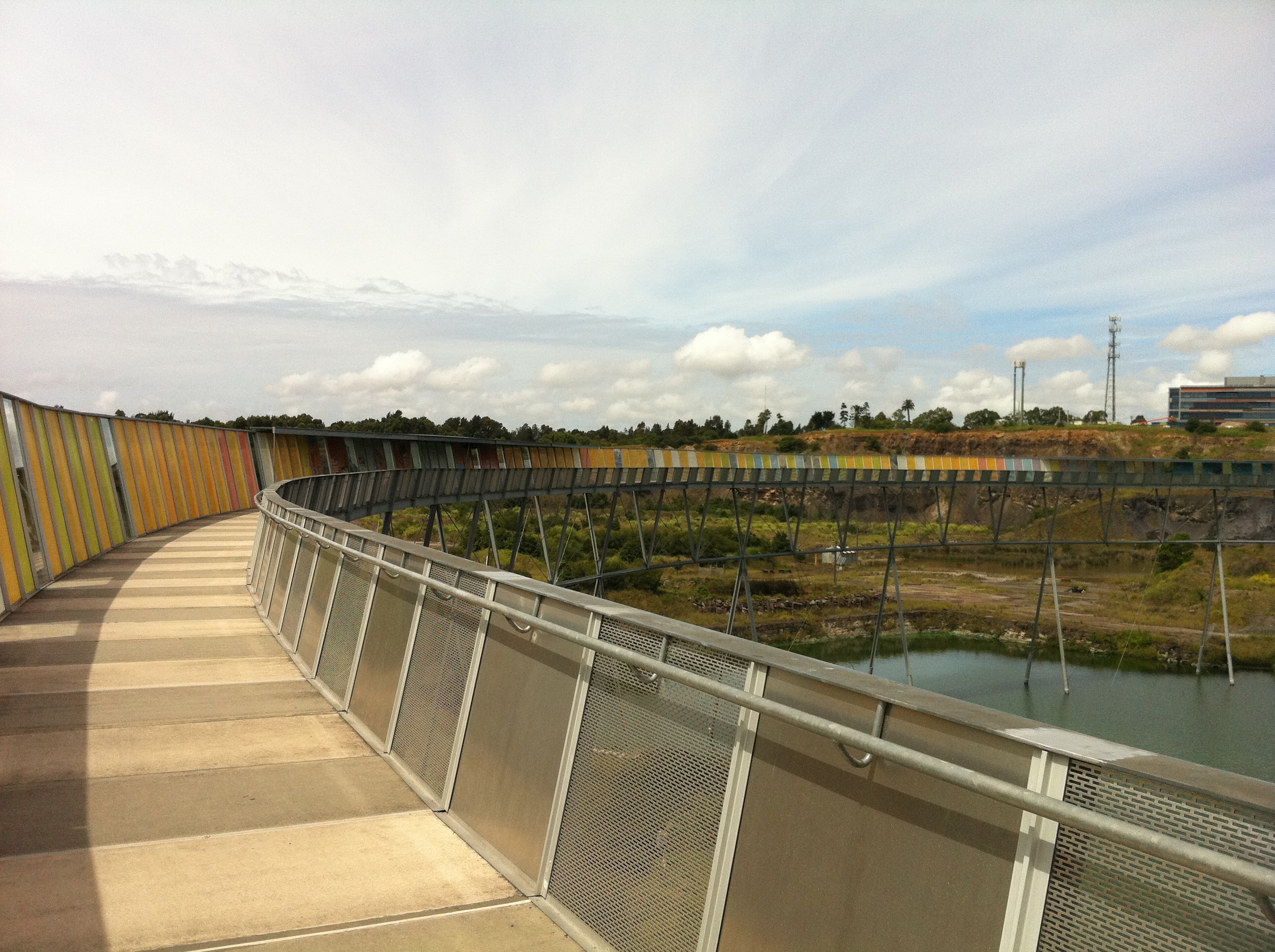
Here’s my…

…half-assed…
…attempt…

…at…
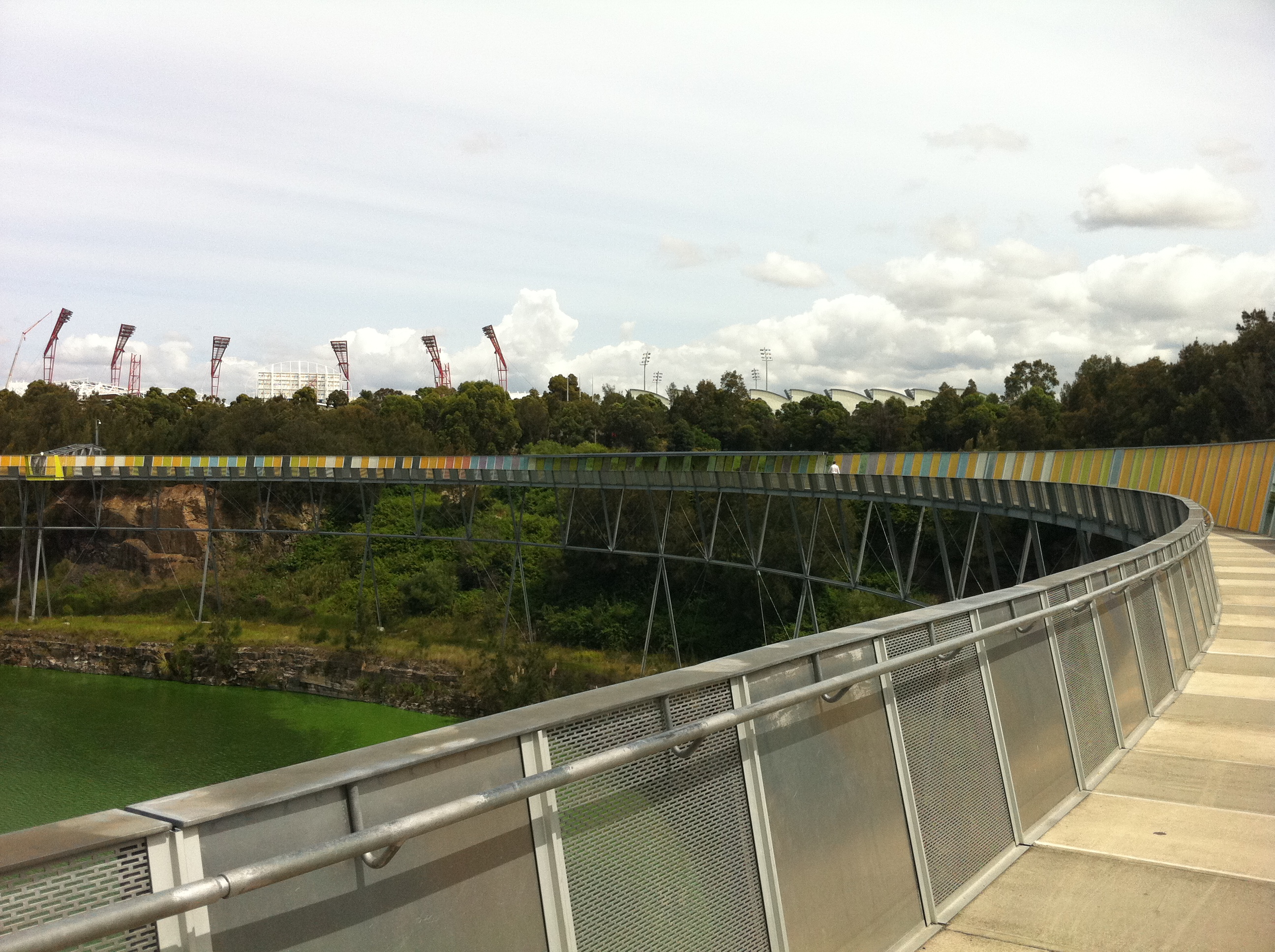
…glorious panoramia.
It’s funny…we spent the better part of last century digging this place up and sending it off all over the city for our homes, but the frogs cut out the red tape and came to the place itself, making it their home in less than a decade. We didn’t start building units here until years later. Am I saying a frog could run Mirvac or Lend Lease?
Ribbit.
Laundry/Derelict – Concord, NSW

It’s just a guess, but maybe this laundry failed because the signage was perhaps a bit too garish and overbearing. Another victim of tall poppy syndrome, you know?
Orion Theatre/Orion Function Centre – Campsie, NSW
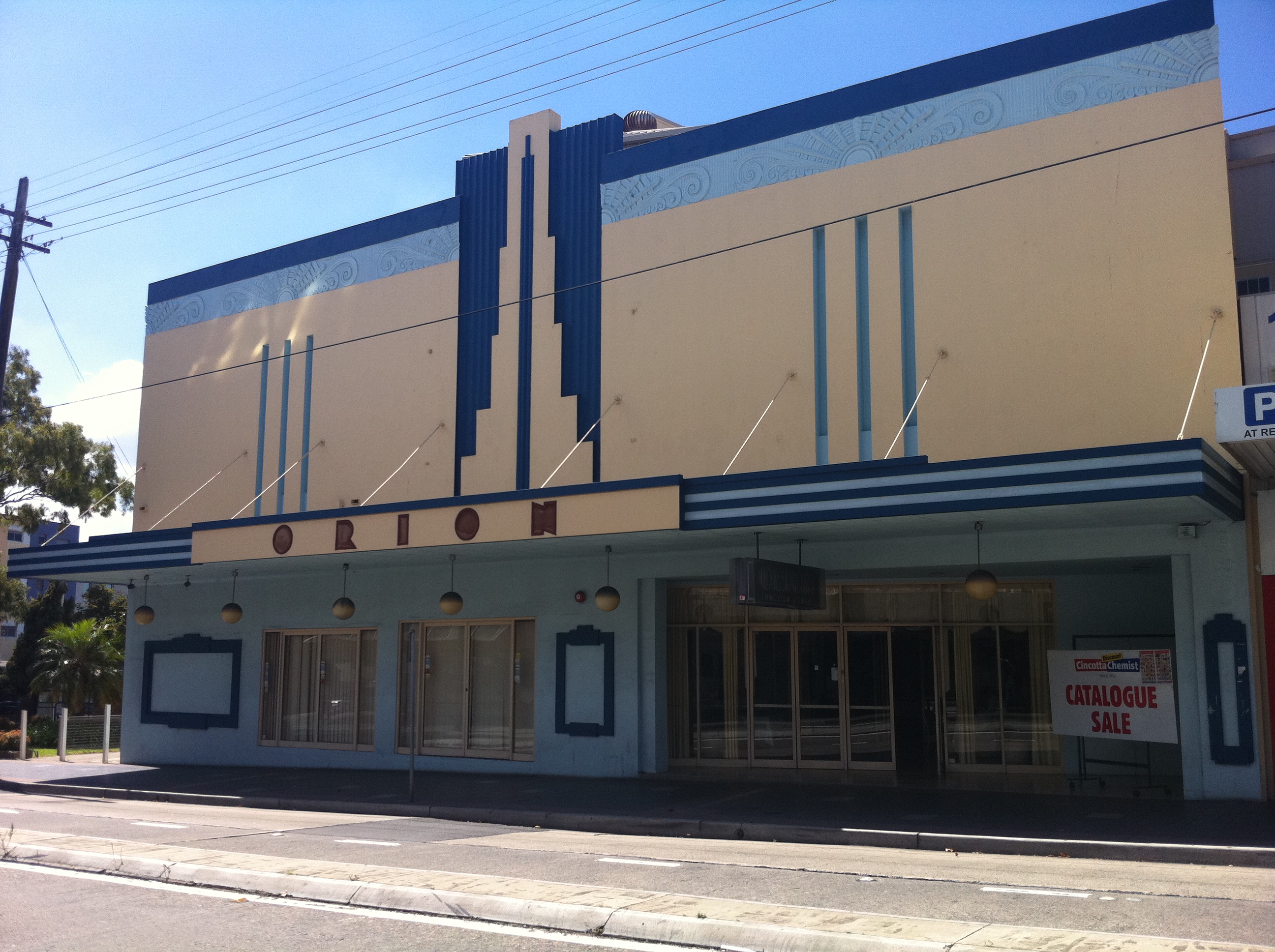
By the mid-1930s, the suburb of Campsie already had a cinema. The open-air Campsie Palace was opened in 1910, and over the next 25 years had become the Excelsis, and finally the Odeon. When the Orion (“Theatre of the Stars!”) opened in 1936 it was seen by some as overkill, but today it’s the last man standing, albeit in a different form.

Orion Theatre interior, 1960. Courtesy Barry Sharp and City of Canterbury Local History Photograph Collection.
Opening in March 1936, the Orion had close ties to the RMS Orion, an Orient Company ocean liner launched from Brisbane in 1934. A mural depicting the liner sat in the cinema’s lobby for the first phase of its life. The first films screened were Love Me Forever starring Grace Moore, and Lady Tubbs starring Alice Brady. The theatre received extensive renovations in 1949, by which time both actresses had died. Our old friends Greater Union got involved in 1953 and, typically, ran the Orion into the ground by operating on a restricted policy. Movies were only shown on Fridays and Saturdays, and the reduction in profits saw the building close as a cinema in 1959. I’m beginning to think that GU intentionally ruined these suburban cinemas just to ensure that moviegoers would flock to their multiplexes, but surely I’m just being cynical…right?

Orion Theatre, 1960. Courtesy Barry Sharp and City of Canterbury Local History Photograph Collection.
In 1964, a year after the RMS Orion was destroyed for scrap, the Canterbury Town Hall was demolished, and the Canterbury Council eyed the Orion as a possible replacement. Since the cinema closed, it was being used as a public meeting place and neighbourhood centre, so it made sense, but for one reason or another it never happened. The Council didn’t forget the ‘Theatre of the Stars’ though (oh, unless you count the years of neglect between 1959 and 1984), and in the 80s began restoring the building for use as a function centre. Renamed the Orion Centre, it can be found in pretty good nick today.

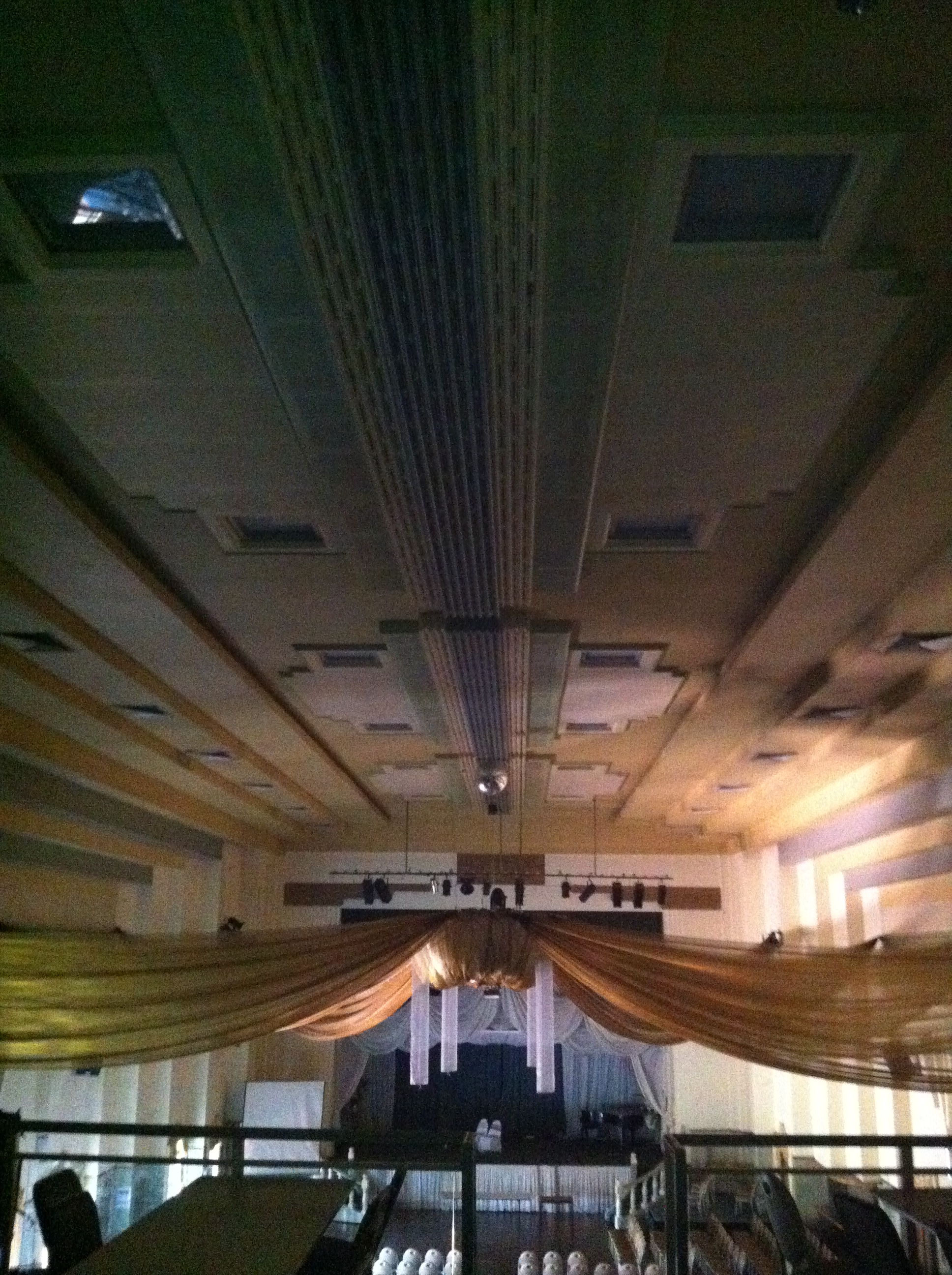
Extensive though the renovations may have been, it’s easy to see the building’s cinematic origins.
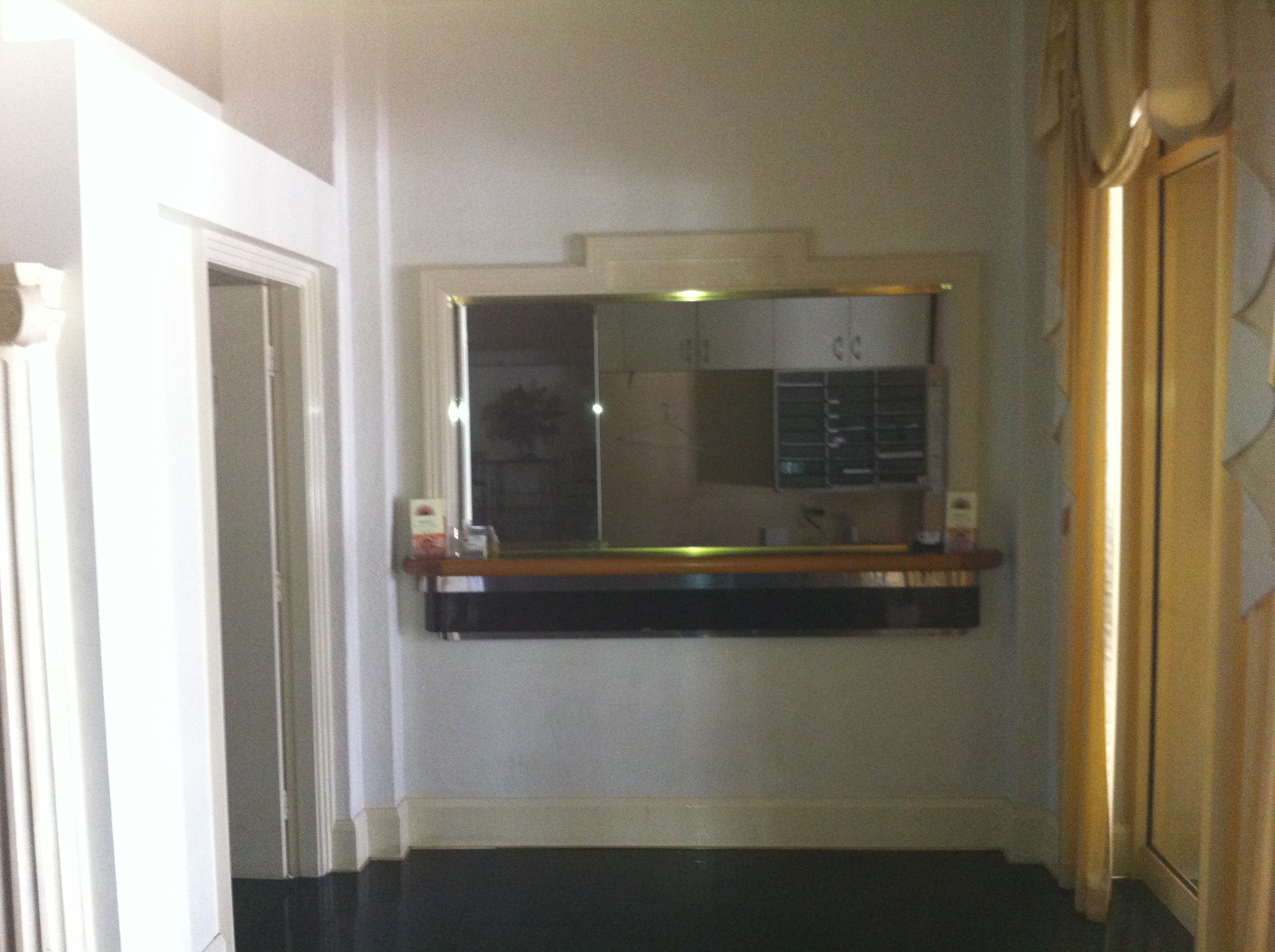

The art deco style is unavoidable inside.
This mural offers another hint of the Orion’s former life:
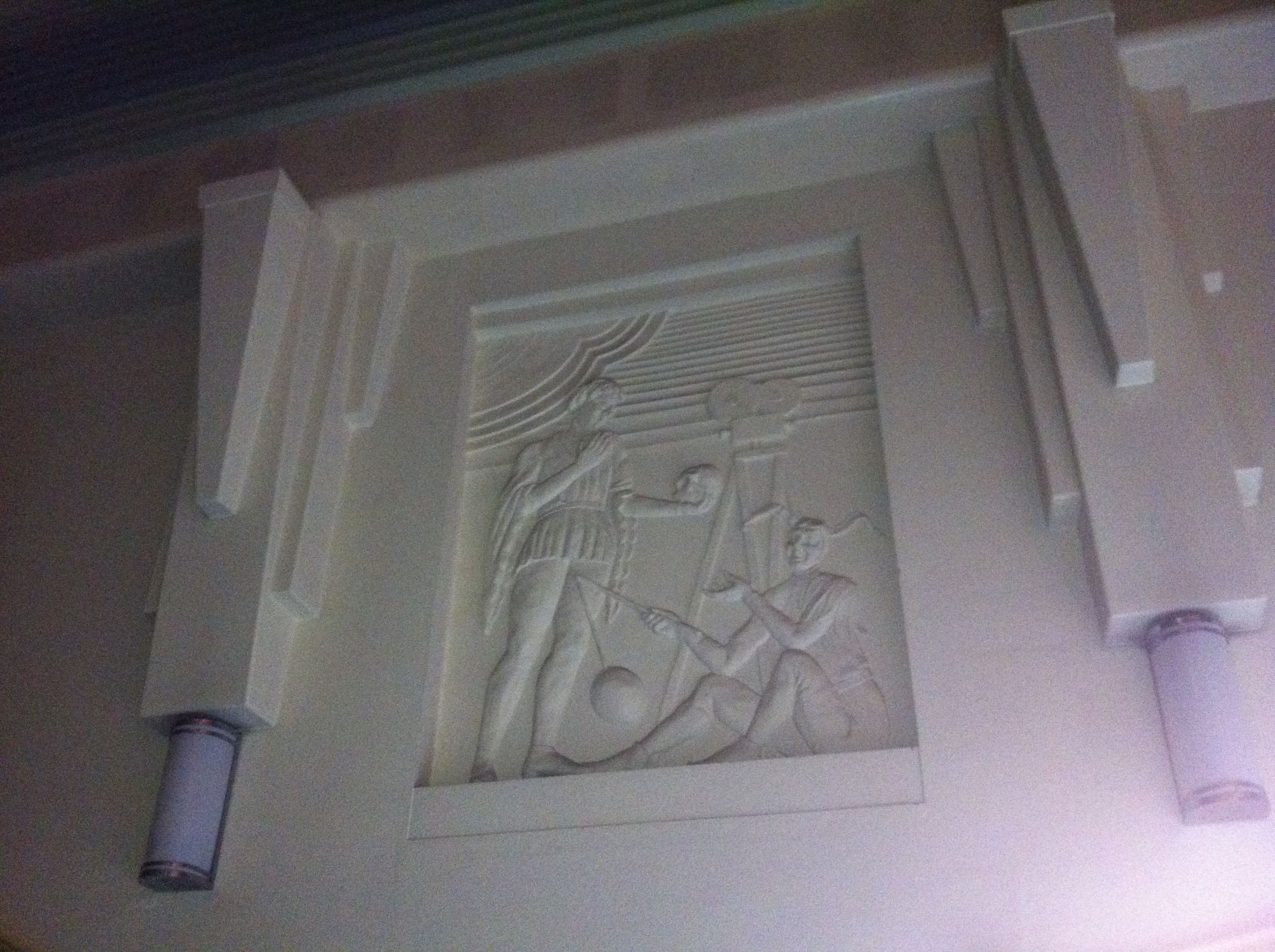

There may not be any stars on Orion’s belt these days, but the centre’s sense of style certainly evokes a time when a whole galaxy was constantly viewable from Beamish Street with a projector as a telescope.
Sussex Street Public School/Flying Angel Seafarers Centre/For Sale – Sydney, NSW

Old school: Sussex Street Public School in the 1880s. Image courtesy NSW Dept of Education
Between 1878 and 1913, Sussex Street Public School was one of the ‘most important’ schools in Sydney. Here’s a former student’s testimonial:

SMH, 10 Jun 1908
And it goes on like that. Some people are whingers, aren’t they?
A notable former pupil was the late NSW Labor politician Frank Hill, who was implicated in a Communist Party infiltration of the ALP in the early 1940s. The reds were pushing a ‘Hands off Russia campaign” following the signing of the Molotov-Ribbentrop Pact, which would have meant Australian neutrality in the Second World War. Former NSW Premier Jack Lang was so opposed to everything about that that he withdrew from the ALP and started a new party called the ‘Australian Labor Party (Non-Communist)’. These goings-on led to the disintegration of NSW Labor in the 40s, prompting the Federal ALP to intervene and sort things out, and of course during all this nonsense the Russians became our allies anyway. Hill died in 1945, widely regarded as a dupe during the scandal. Imagine if he’d gone to an unimportant school.
Also in 1945, Hill’s old school was acquired by the Sydney Technical College and used in that capacity until 1990, when it was sold to the Sydney Bethel Union. They turned it into the Flying Angel Seafarers House, run by the Mission to Seafarers. Incidentally, the Mission to Seafarers was unfortunately known as the Mission to Seamen until 2000, when they changed their name “in recognition of the changes that had occurred in merchant services and in the world of seafaring”. Sure.
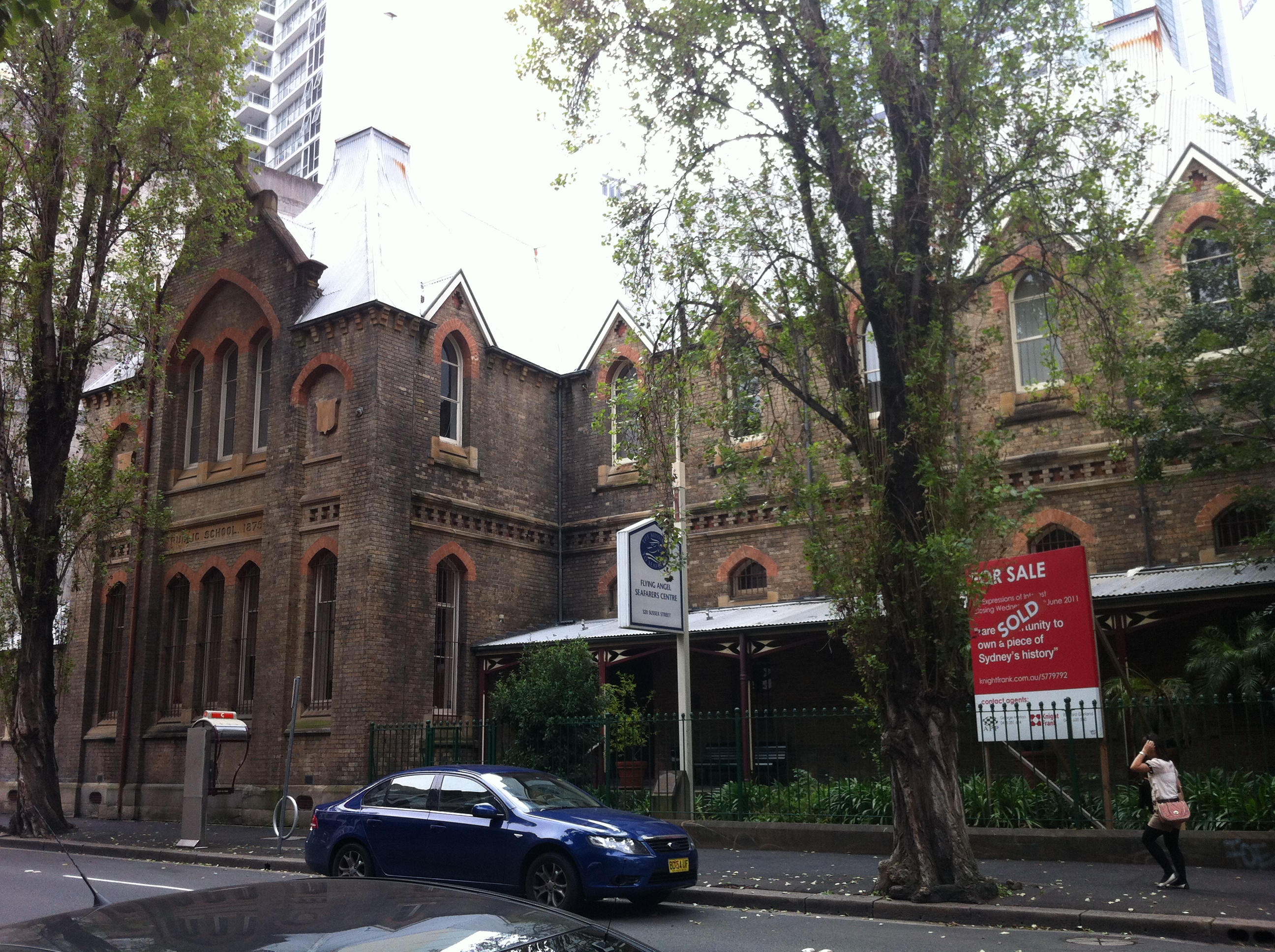
The Flying Angels decided in 2011 that they could help more seafarers down by the sea, and later this year plan to move to Walsh Bay. The building was subsequently put back on the market, and recently sold. It’s said that the Chinese Government was very close to buying the property at one stage…maybe Hill was more red than we thought?

 Past/Lives of the Near Future