Greater Union/Event Cinemas, George Street – Sydney, NSW

George Street's Greater Union and Hoyts cinemas, 1992. Image courtesy Sydney Cinema Flashbacks.
George Street’s cinema strip has undergone many drastic facelifts and overhauls, particularly since 1971, when the Trocadero dance hall was demolished to make room for the Hoyts cinemaplex. In 1983, two more cinemas, the Rapallo and the Paramount, were razed by their owner Greater Union to make way for a more modern moviegoing experience: the Greater Union cineplex above.
By the early 1990s that west side of George Street contained only the big three cinemas: Village, Greater Union and Hoyts. Around 1999, the Village was demolished and all three joined forces in the greatest union of all to form one giant megaplex. The Greater Union above was absorbed by the Hoyts complex and until 2005 operated as a joint venture. Now, Event Cinemas (formerly Greater Union) runs the entire cinema.
When the Greater Union building became a part of the Hoyts complex, the facade was brought into line with the Hoyts look. Today, almost nothing remains of the Greater Union building…

…but if we look in the alley around the back of the buildings, not only is the dated triangular awning still present on the Greater Union building, but even the Hoyts building retains its older style. When the complex became Event Cinemas, an expensive overhaul for the entire George Street face of the building was undertaken. I guess they decided the back alley wasn’t enough of an event.
How does the front of the Greater Union look today?

Big, faceless and grey: just like the rest of George Street.
The Hartee’s Saga, Part III – Punchbowl, NSW

Continued from Part II…
1974 saw further expansion by Hartee’s that almost bordered on arrogance. The original Earlwood store was deemed too small to fit into Hartee’s plan for national dominance, and was closed. The new head office at Mascot suddenly wasn’t good enough either, and a new head office was established at Botany. New outlets were still being opened in the suburbs, like this one at Punchbowl in 1975:

Until recently a Bank of Queensland branch, this location has changed hands more than a few times since Hartee’s left. This was the final Hartee’s store to open, and strangely, it isn’t a drive-thru like all other new stores had been. Maybe Hartee’s knew something we didn’t? Press reports at the time had suggested that Hartee’s had incurred an operating loss of $918,000 AUD in 1973, and were continuing to lose money as time went on. Perhaps they were starting to employ cost cutting measures…
The Commercial Banking Company of Sydney Limited/Burberry – Sydney, NSW

Yeah, this one’s an easy target but it’s Friday, so gimme a break. If we look past the brand name for a moment we can see this building belonged to the Commercial Banking Company of Sydney Limited (CBC). The CBC was established in 1834, and here’s its seal:

Now, I know what we’re all thinking: “How can I find out more about the boat in that seal?”
The CBC website answers our prayers:
“Thermopylae was an extreme composite clipper ship built in 1868 by Walter Hood & Co of Aberdeen to the design of Bernard Weymouth of London for the White Star Line of Aberdeen.
She measured 212’0″×36’0″×20’9″ and tonnage 991 GRT, 948 NRT and 927 tons under deck. The under deck coefficient was 0,58. Rigged with royal sails, single topgallant and double top-sails.
She was designed for the China tea trade, and set speed records on her maiden voyage to Melbourne — 63 days, still the fastest trip under sail. In 1872 she raced the clipper Cutty Sark from Shanghai back to London and won by seven days after Cutty Sark lost her rudder. In 1895 she was sold to Portugal and used as a naval training ship. The Portuguese Navy torpedoed her at sea in 1906.”
But for every nagging mystery solved, another pops up in its place, such as why Burberry needs a safe deposit area:
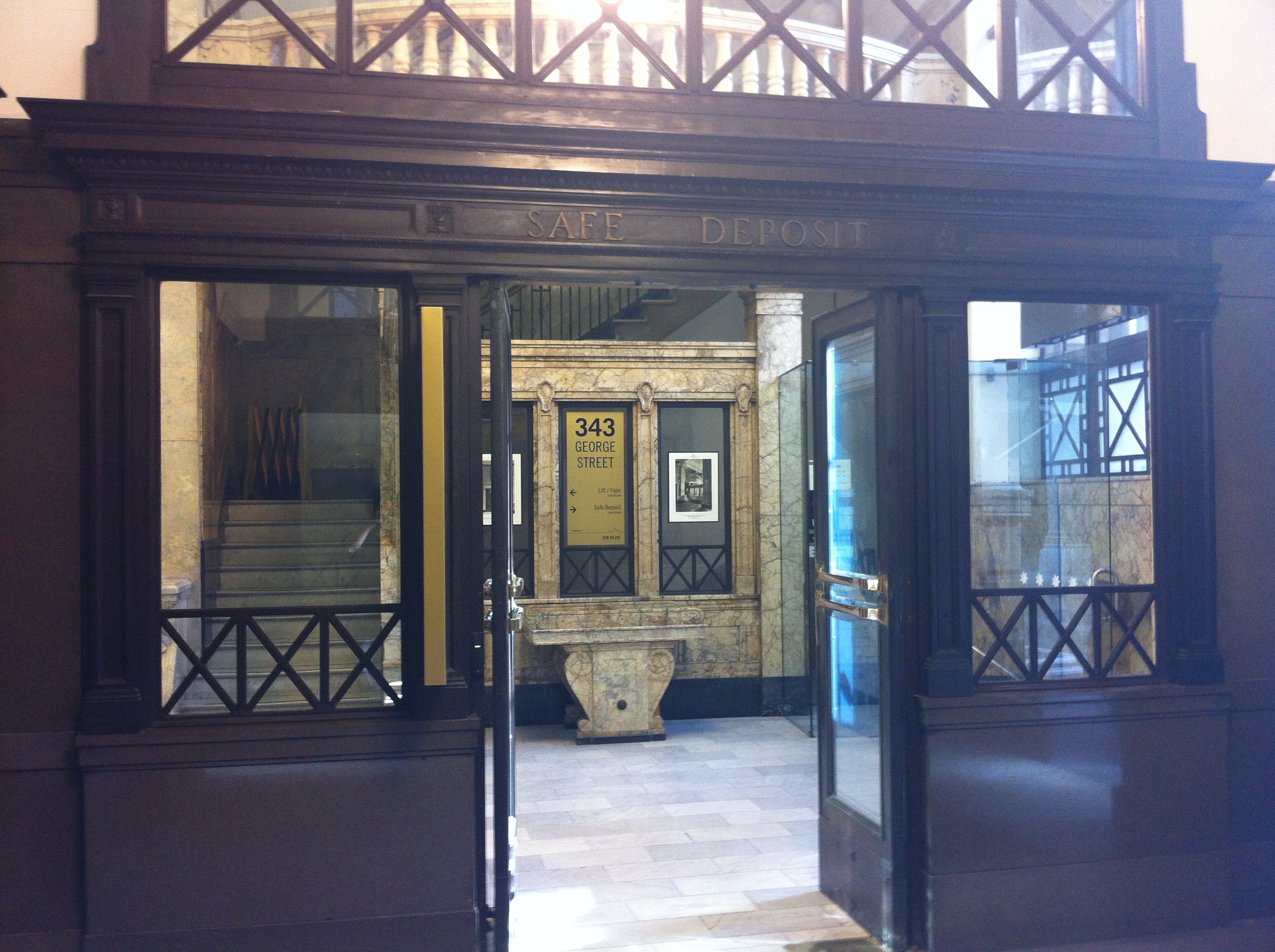
But that just goes to show that they used to build banks to last. To these designers, the CBC was going to rule the waves forever, but the truth is much more banal. In 1981 it was absorbed by the National Australia Bank, whose logo can be found bolted to the front of this building. Looking inside, we can see the extent of the bank’s lavish furnishings:

After having a look at some of those price tags, I can safely say that even though Burberry has only been at this location for a year (it was previously Sydney’s only Virgin Megastore), it’s banked fatter coin than the CBC ever did.
Garden Palace/Royal Botanic Gardens – Sydney, NSW

In 1877, the Royal Agricultural Society of NSW decided to stage an international exhibition. As planning commenced, it became clear that the Intercolonial Exhibition Building in Prince Alfred Park wasn’t going to cut it as a venue. After applying some pressure on the NSW Government, which did not want to appear foolish on the world stage, money found its way to the right place, and the enormous Garden Palace was built in the Royal Botanic Gardens in only eight months, just in time for the exhibition.

The building featured restaurants, tea rooms, a fountain, and yet another statue of Queen Victoria. It contained the city’s first hydraulic lift (they really loved their hydraulic lifts back then, didn’t they?). It also boasted primarily timber architecture, which didn’t work out so well.
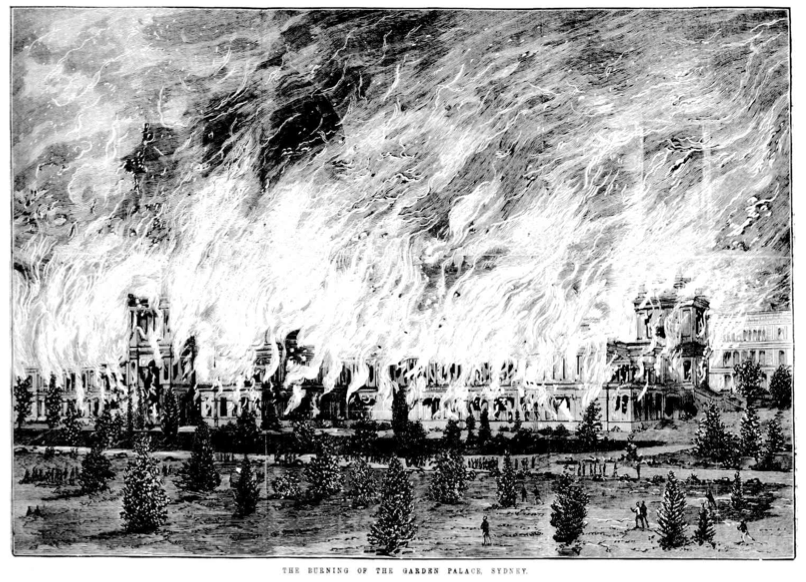
In late September, 1882, the Palace caught fire and burned to the ground. The cause of the blaze has never been established, but in the years following the International Exhibition, there was much consternation about what purpose the Palace would then serve. All I’m saying is, I’m sure there were a few people not sad to see it go. Mourners of the Palace seemed to be most upset by the wastefulness of it all, and by 1890 it had largely been forgotten.

These gates are the only reminder that it was ever there, despite having been erected in 1889 to commemorate the Palace. So wait, people were upset about the wastefulness of the Palace’s destruction, but were okay to build giant gates to a place that was no longer there? So Sydney, so chic…

This tastefully coloured fountain marks the spot of the Palace’s 210 foot tall dome. I’m surprised that’s not Queen Victoria perched on top.

NSW State Abattoirs/Sydney Olympic Park – Homebush, NSW
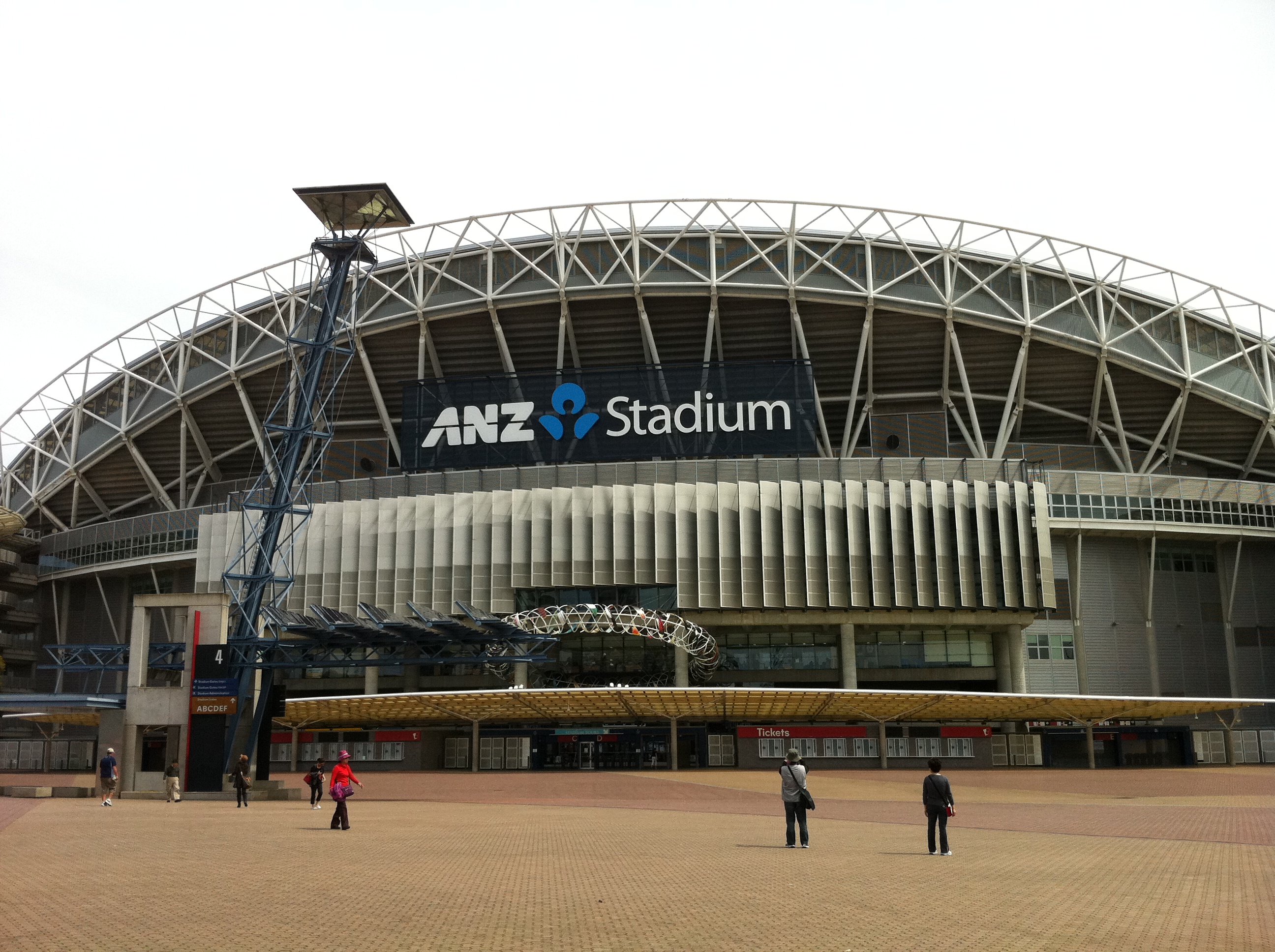
In September 1993, then-NSW Premier John Fahey famously jumped for joy as Juan Antonio Samaranch announced that Sydney would host the 2000 Olympic Games. Somewhere in the back of his mind, he must have been feeling mighty grateful for 660 hectares of land which for the previous five years had been a burden on the state.
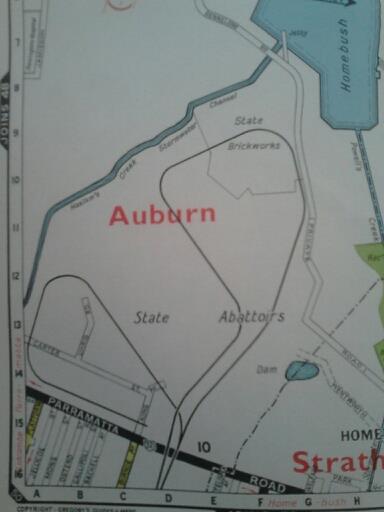
Saturday night grand prix circuit, 1966. Thanks, reader Kenny Goodman!
By 1988, Homebush Bay had long been associated with industry – the State Brickworks, the state abattoir and an armaments depot had all been located on the land since 1915. To the north, at Rhodes, chemical companies and paint factories had spilled toxic waste into the bay for just as long, turning the area into a dead zone not that far off from neighbouring Rookwood Necropolis.
The state’s abattoir had been originally located at Glebe Island, and had by 1902 been deemed too toxic for its proximity to the city. In 1906, an act of parliament authorised the construction of a new State Abattoir at Homebush.
Homebush had been named for a farm, ‘Home Bush’, established in 1794 by free settler Thomas Laycock in the area, then known as Liberty Plains. The farm was later sold to D’Arcy Wentworth, NSW Government surgeon, in 1808. Wentworth acquired even more surrounding land, and set up a private racetrack beside Parramatta Road. In 1841 the track was expanded and made public, and served as Sydney’s centre for horseracing until the opening of Randwick Racecourse in 1860.
The Wentworth Estate had fallen into disuse by 1906. A plan to subdivide and sell off parcels of the land had failed, the esteemed Home Bush House had become derelict, and the racetrack was long since abandoned. The choice of Homebush for the abattoir’s site made sense, as Thomas Playfair had established saleyards at Homebush in 1882, and the area was serviced by an efficient goods rail line.
The abattoir complex opened in April 1915, yet stock was not processed at the site for another year due to poor planning and bungled construction. These mistakes meant that the site was undergoing maintenance and upgrades for the remainder of its time as an abattoir. Tanneries, cold storage facilities and butchers sprung up around the Homebush area. Many remain.
In the 1940s, the State decided to decentralise slaughterhouses, and many country abattoirs were set up in the wake of the decision. Despite this, the Homebush facilities were upgraded in 1965 to handle meat export demands. In 1979, the facilities were again assessed, and found to be at the end of their economic life. In 1984, surplus land on the site was marked for use as an Advanced Technology Park (now known as the Australia Centre). The economic viability of the abattoir continued to decline until its closure in 1988, coinciding with bicentennial celebrations and a statewide spirit of reclamation and renewal.
Sydney’s bid for the 2000 games began in 1991 under then-NSW Premier Nick Greiner. The abattoir site, wholly owned by the NSW Government, was earmarked as a possible site for an Olympic park. The Moore Park showground facility was insufficient for the scale of the Olympic Games, and was by that point proving barely adequate for just the city’s showground needs.
When the Games were awarded to Sydney in 1993, full-scale redevelopment of the Homebush Bay area began, including efforts to rehabilitate and rejuvenate land poisoned by years of industrial abuse. Industrial ruins and empty roads suddenly found themselves once again at the centre of attention. Said filmmaker Susan Murphy in her 1999 article ‘Under Rookwood’ in the Journal of Australian Studies:
“Homebush Bay was several kinds of Vanishing Kingdoms in one: there was the Private Road that extended Underwood Road in a series of right-angle bends all the way around the mangrove swamps, to terminate in a series of decaying wharves. The roadway was known to petrolheads as `Brickie’, after the Sydney Brickworks site it wound past, and was used for Saturday night races, wheelies, lovers’ Lane. By daylight, it was a favourite place for driving lessons, nervous kangaroo-hopping cars executing three-point turns at the final dead-end.
Now it’s changed. Toxic soils are capped and the Olympic complex of stadia, showground halls, athlete villages is rising, shining, audacious, with Philip Cox parabolas and monumental walkways and rolled-in plantings. Surrounding this are two un-park-like `parks’ — Bicentennial Park with its federationesque follies scattered throughout the mangrove and banksia, and an industrial park, equally full of manicured grass that nobody uses.”
Susan is correct. Bicentennial Park, created in 1988, was previously a rubbish tip. It feels like the whole Homebush/Flemington area has been cursed to repeat history over and over. Before it was chosen by Laycock, it was known as ‘The Flats’, dry land sitting beside Parramatta River. Then, when it was chosen for the site of Wentworth’s estate, Laycock’s own mansion had been sitting derelict. When the time came for the NSW Government to buy Wentworth’s unwanted estate, it had long since fallen by the wayside – a decaying relic of another era sitting in the gutter of Parramatta Road. The abattoir was doomed from the start by poor planning, ensuring its place in the legacy of disuse experienced by the area. Even now, the Olympic Park has a strange feeling about it. Walking around, you get the sense there should be more people there, that there’s something just a bit off.
The bay itself was infused with blood and offal from the abattoirs, silt from the brickworks and all manner of poisons and Smylex from the chemical plants at Rhodes. Depending on how you look at it, it’s either a triumph or a deep tragedy that this remediation work still continues today, particularly at Rhodes. Fishing and swimming is still prohibited in the Bay, and there’s still a heavy chemical odour. The extent of the damage to the sealife is so severe that even as far away as Sydney Harbour, commercial fishing restrictions are in place and the NSW Government recommends that no fish caught west of the Sydney Harbour Bridge should be eaten.
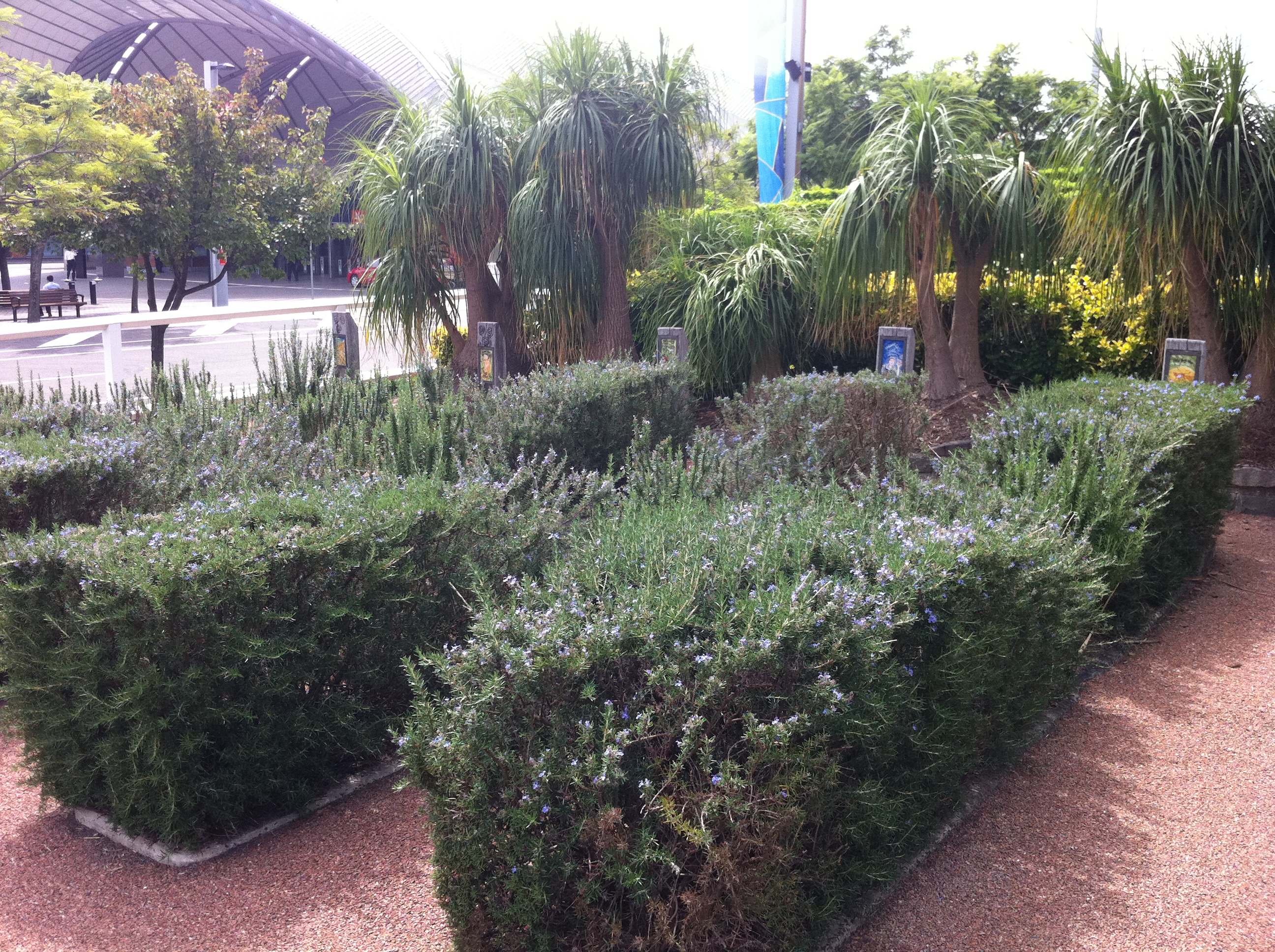
The Olympic site was completed on time and of course played host to the ‘best Olympics ever’, but the site’s bloody past wasn’t forgotten. The Abattoir Administration Precinct still sits amongst the neo-CBD that is the Olympic Park, and it’s quite a jarring site. Nearby are a series of bittersweet memorials to the millions of animals that were slaughtered during the abattoir’s history – former feeding troughs converted into artistic coffins, animal footprints set in cement. The abattoir’s private train station, disembarking point for those animals after being shuttled in from the country to their death, was converted rather morbidly into the Olympic Park station, disembarking point for millions of revelers hoping to witness Olympic glory, unaware of the site’s former glory.
Even before the Olympics, the site had been used as Sydney’s new home of the Sydney Royal Easter Show since 1998, replacing the ageing Moore Park site. It is ghoulish to imagine the cute, cuddly animals of the Easter Show being patted and fed by happy families on the site of so much slaughter. Other events held at the site, such as the V8 Supercars, do little to distract you from the park’s purpose as an Olympic vessel, and it’s not hard to imagine that before long, the nemesis of neglect will return to the site.
The Park’s information centre, once the abattoir’s gatehouse, has no information about the site’s history to speak of. The cheerful man behind the counter was happy to inform me that ‘there is nothing at all in here about the abattoir. There is nothing about the abattoir in this Park apart from these buildings. We have no photos or records here, we have nothing. There is no possible way I can help you, but you might want to try online.’ Thanks, I’ll do that.
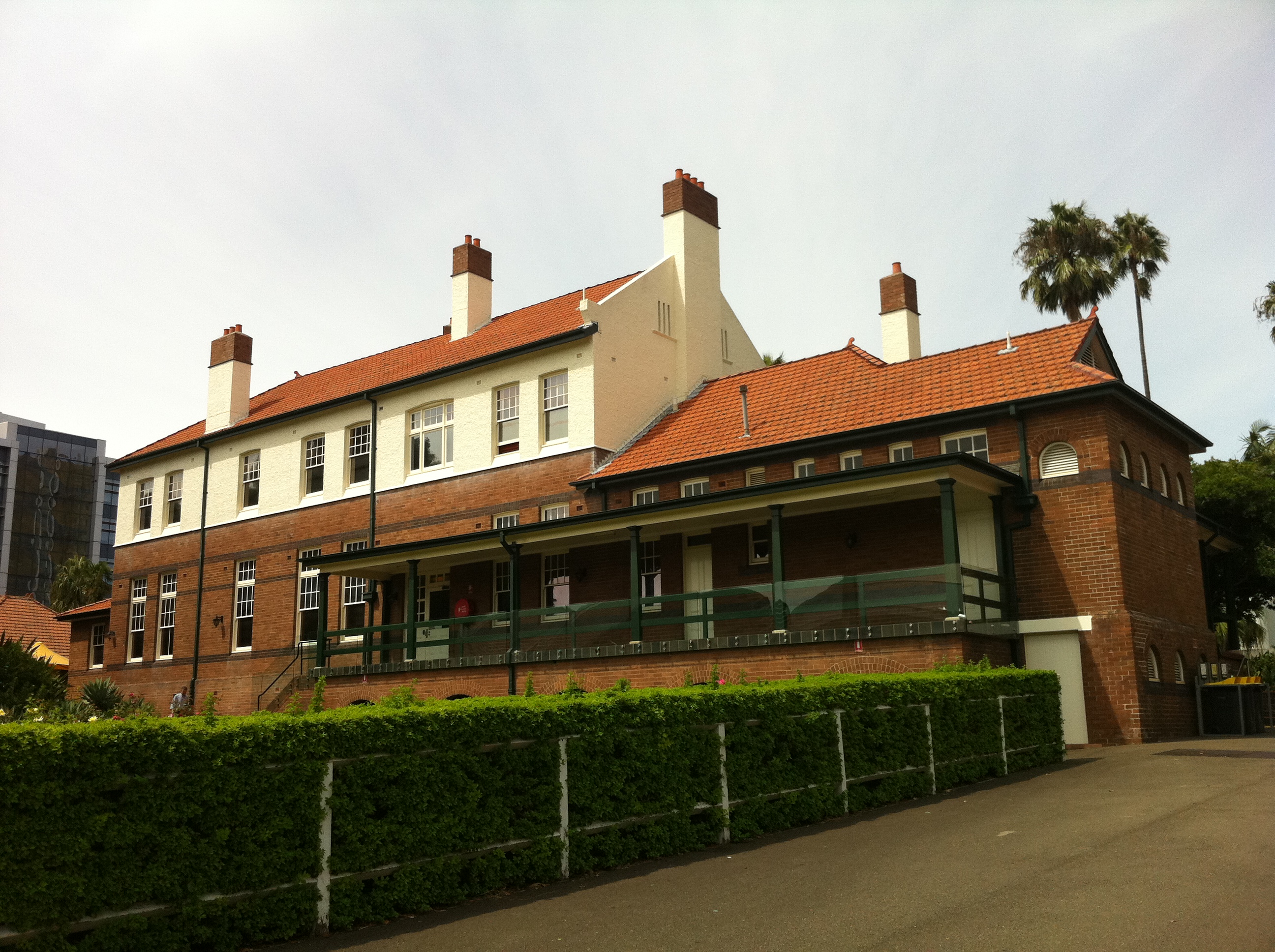
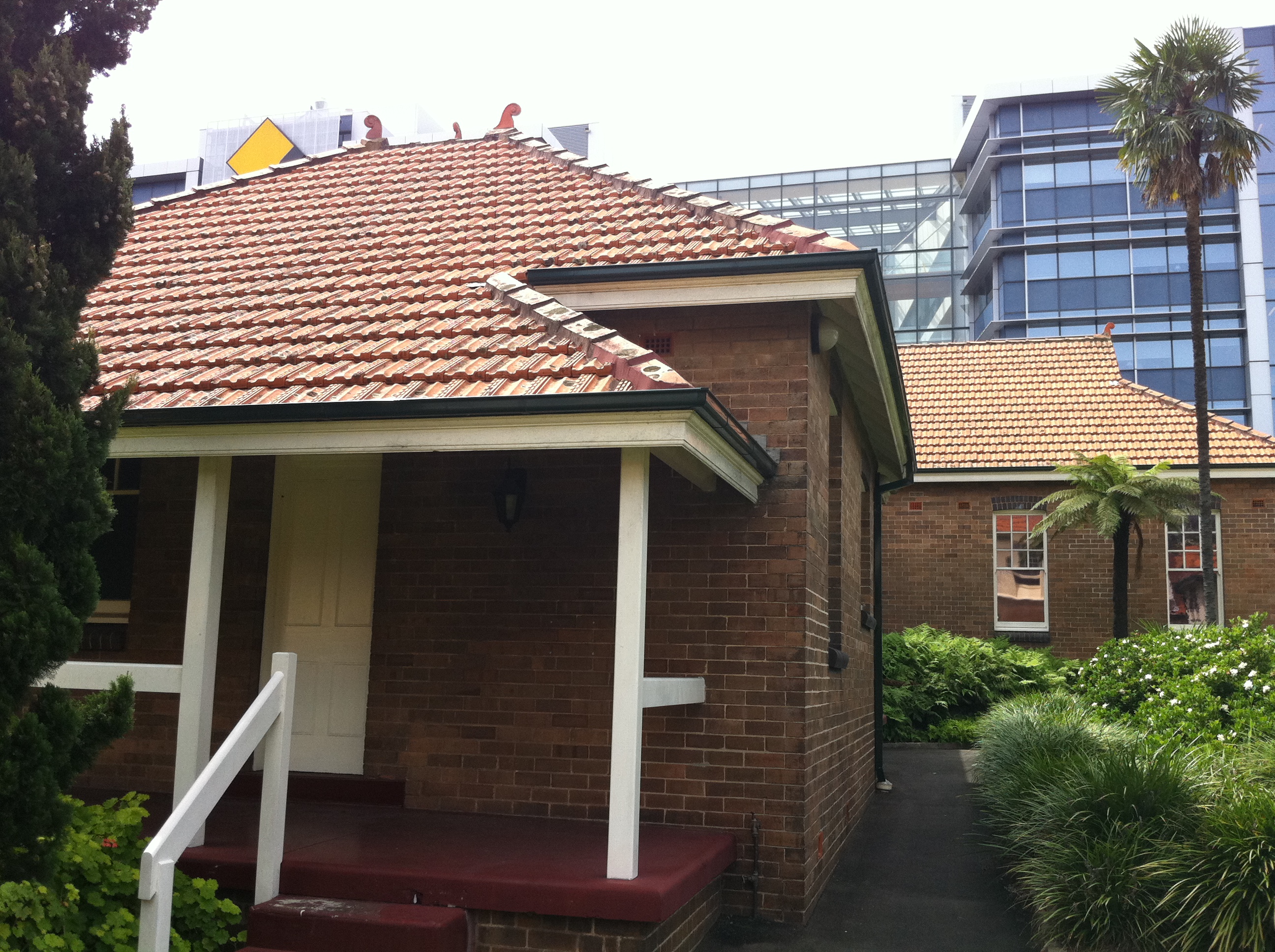
The reason you’ve been assaulted with this wall of text straight up is because I feel that the images of the Abattoir Administration Precinct should stand alone, in silence. The presence of the buildings in the heart of the Olympic Park is jarring, unnatural, and forces the weight of that sour history upon you. I thought I’d do the same for you. There are some sites around Sydney, like Luna Park or the George Street entertainment strip, that are just unpleasant to be in. I’m sorry to say this is one of them.
Update: I revisit the Olympic Park site one year later and make some interesting discoveries!