Tea rooms/Springwood Thai Kitchen – Springwood, NSW

There comes a time in the life of every history blog when one must write about tea rooms.
Up in the Blue Mountains, anyone with a thirst for high tea is spoiled for choice; between the Hydro Majestic’s Afternoon High Tea, the Lilianfels High Tea and the Katoomba Carrington’s Grand High Tea, it’s no wonder the Mountains are a place tea leaves and scones fear to tread.
And it’s also no wonder that the tea rooms of Springwood, a picturesque town sadly bypassed by most on their way up the Mountains, threw in the tea towel in the face of such stiff competition. That said, it’s not like you can’t get tea in Springwood – cake shops and cafes pepper the main street, and I’m pretty sure even the public toilets provide a cuppa while you spend a penny.
These days (and for the last few years), the former tea rooms have made way for one of Springwood’s two Thai restaurants, the Springwood Thai Kitchen. According to reviews, this place and the Thai Square are locked in an evenly matched reviewel to the death (yeah, that’s a word now). I’ve only eaten at this one and that was years ago, so I won’t dare to compare in this instance (although, you could take that as a review in itself).
It’s a tiny building – a skinny Thai, if you will (you’re fired – ed) – to try and cram all the requisite Thai accoutrements into, but it certainly conjures up images of how it would have been back in the day: refined folk coming in with a thirst only tea could quench, hanging up their bowler hats and settling down for an earl grey and lamingtons while chatting about their English country gardens. Today, all that remains of that era is the faint lettering above the shop and whatever hot beverages are on the menu. Perhaps a Thai latte.
Bottom line, I think naming the restaurant ‘Thai Rooms’ was a missed opportunity.
Burger joint/Under construction – Lilyfield, NSW
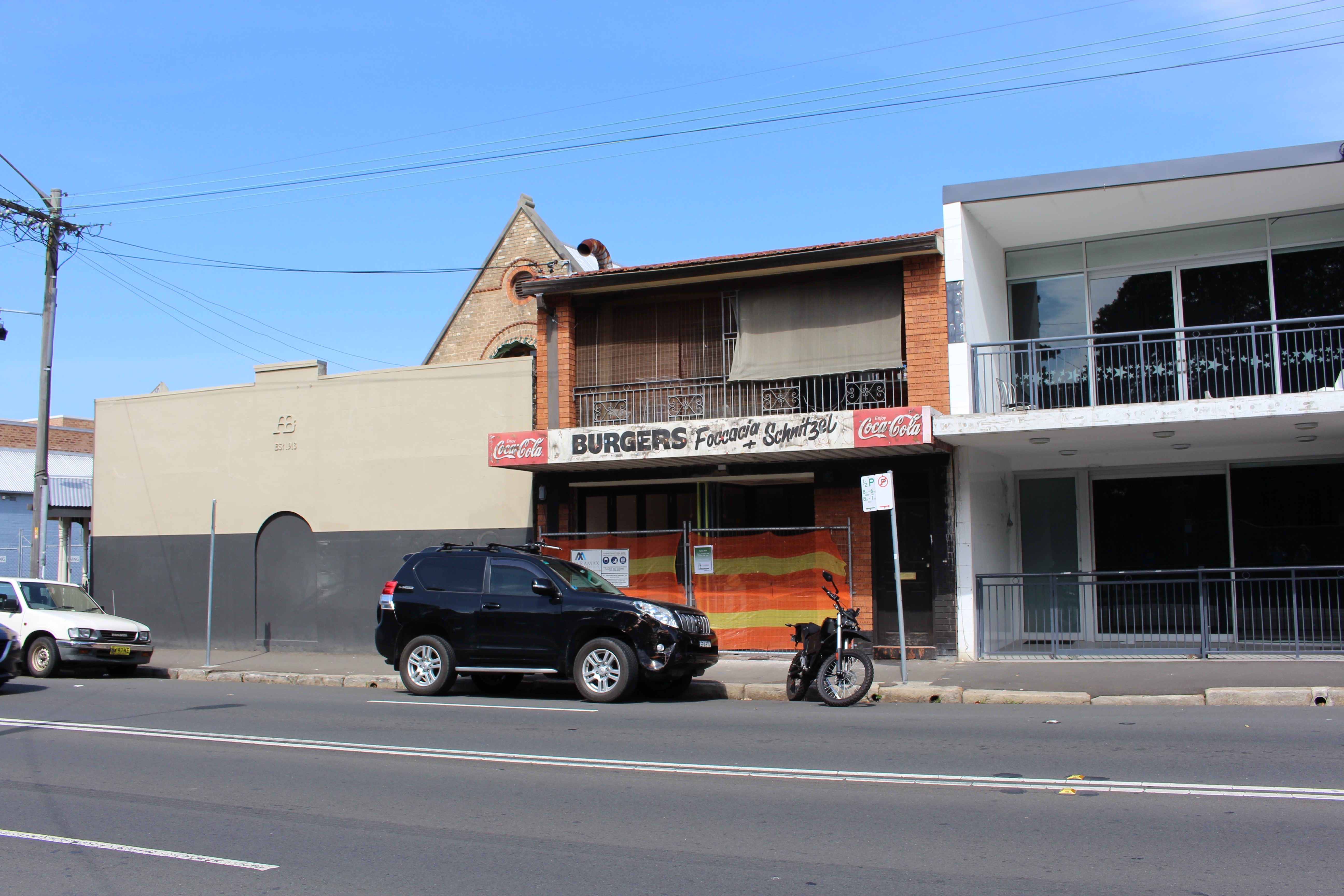
Image courtesy Andrea Cook
How common a sight is this? Even if we’re not living in the golden age of the take-away shop (and we really aren’t), you still can’t seem to swing a dead focaccia in Sydney’s suburbs without hitting one of these, or an ex-one of these.
For those readers too young (pfft, yeah right) to remember, let me take you back for a moment. In my day, you could go to these places called milk bars or take-aways, which were usually plastered in Coca-Cola advertising. Not Pepsi…never Pepsi.
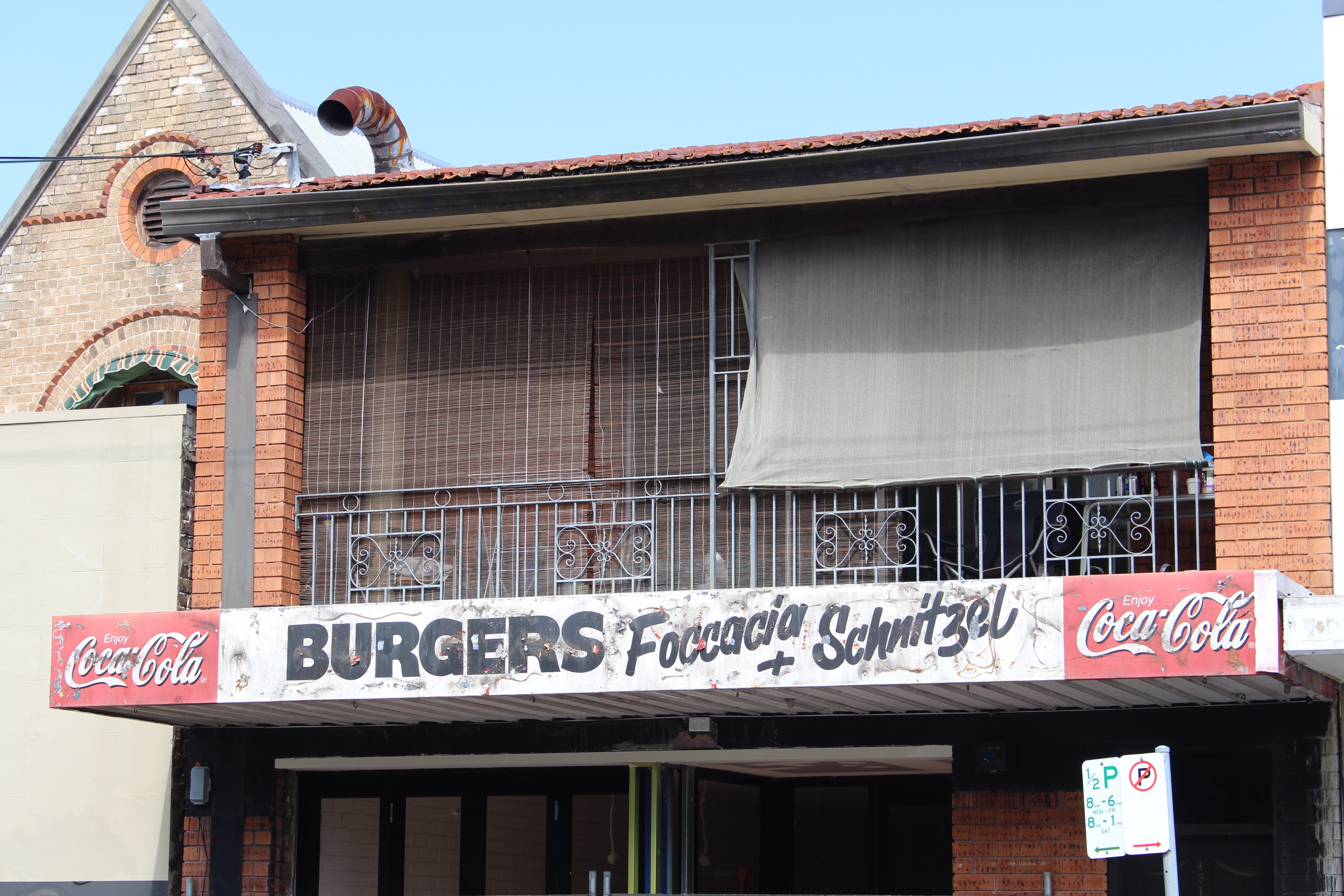
Image courtesy Andrea Cook
They’d make hot food and keep it in these giant contraptions called bain maries, which made it impossible to tell how long it’d been there. Crucially, they were also trojan horses into the then-fledgeling world of ethnic food: Australians not open minded enough to actually go to a Greek restaurant might still have a souvlaki at their local take-away. Ingenious, really.
This particular take-away seems to have spent most of its early years as a residential property before taking the plunge into the deep-fry. The kind of fatty junk sold here probably filled the stomachs of the blue-collar workers who once populated the area, or the staff and patients of Callan Park Mental Hospital which is just across the road, but as times and tastes changed it was out with the milkshakes and schnitzels (mmm, together at last), and in with the coffee and rolls.
But let’s go back even earlier, shall we, to a time before deep fried food clogged Australia’s arteries…

Dubbo Liberal and Macquarie Advocate, 11 February 1939
You’d better believe Mrs. Cutting wasn’t serving up dim sims and Chiko rolls to her 50 guests. I wonder if Dubbo’s local papers still herald the homecoming of any travelling Dubbogan (Dubsider? Dubbocastrian?)
The celebrations didn’t last long, because by 1943 the Cuttings had cut loose, and the jocks were in.
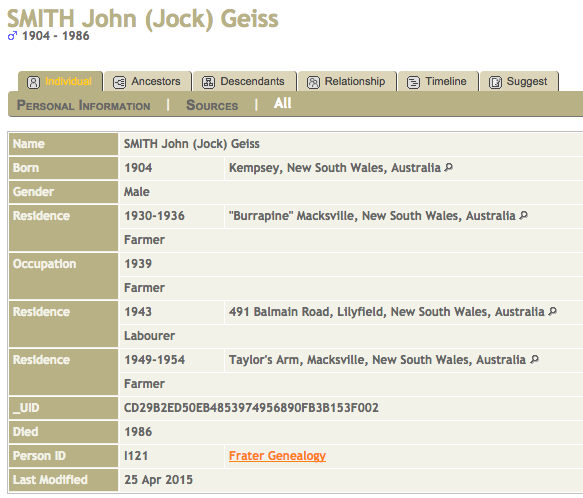
As you can see, Mr. John Smith (dynamic name, no wonder he became Jock) lived right here in the mid-1940s while working as a labourer. SEE? I WASN’T MAKING ALL THAT UP ABOUT IT BEING BLUE COLLAR!
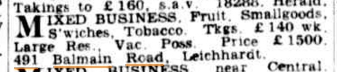
SMH 13 July 1949
Ahem. But once Jock’s labours were over, business became a little…mixed. A dynasty that would last over six decades began here for a measly 1500 pounds. I wonder if the take-away was making 140 pounds a week?

Google Street View, July 2014
As recently as last year, the newly minted Rozelle Coffee Lounge was still feeding the locals, but in a much harsher, more competitive environment. Go to Rozelle today and there are gourmet cafes on every corner, so the more meat-and-potatoes establishments face an uphill battle, and that’s probably why the Coffee Lounge isn’t around today.
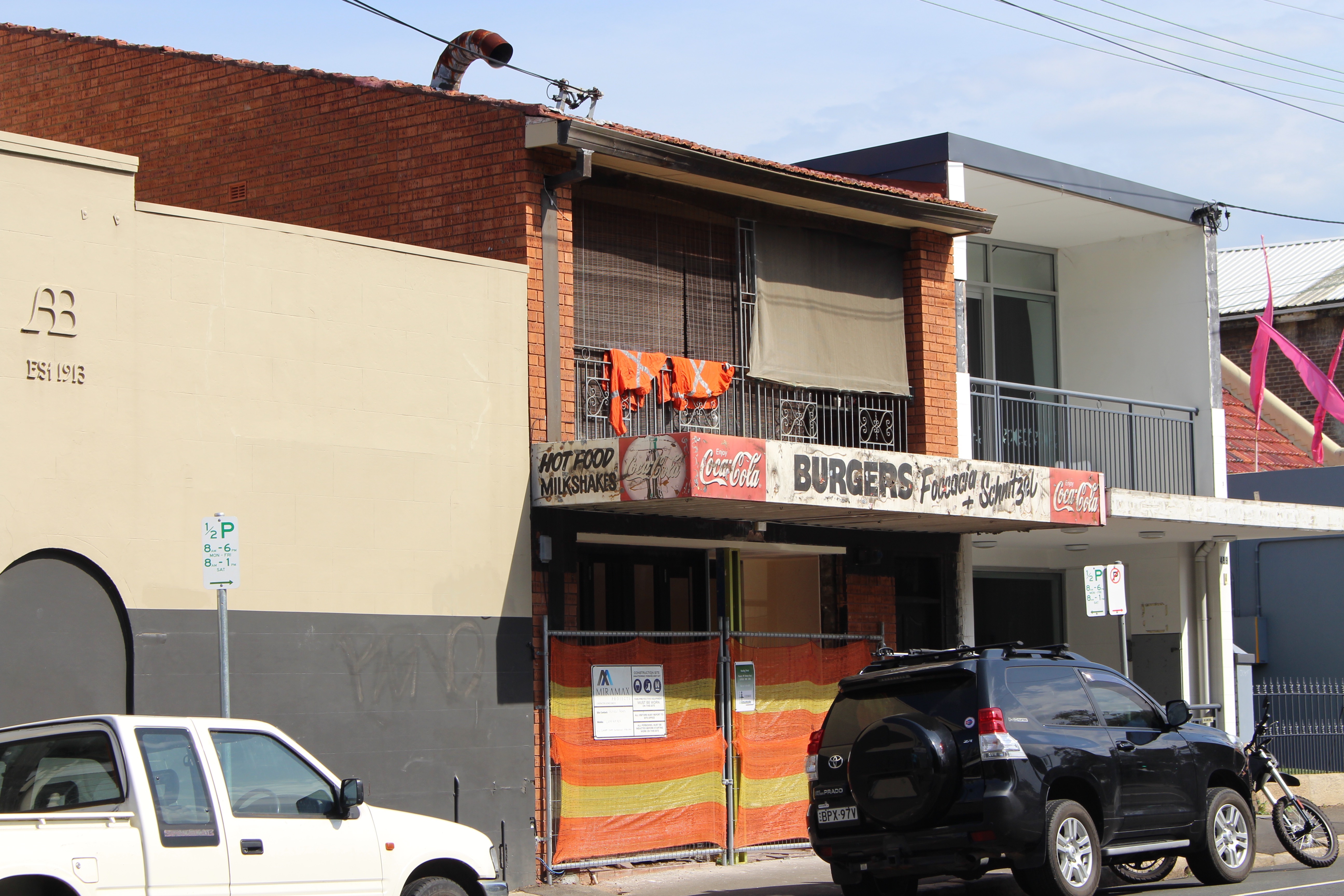
Image courtesy Andrea Cook
As the suburb has become gentrified and all the blue collars have turned to ironic skivvies, there’s no longer any call for a place like this. The Coffee Lounge knew it, as it’s currently under construction, presumably transforming into something more suitable to today’s clientele.
I don’t know about you, but I’ll always find those Coca-Cola takeaways suitable. There’s something really…comforting about them. If you drive into a country town and things are looking unfamiliar and unsettling in a Deliverance kind of way, a place like this is all you need to soften the sound of the banjos.
Then & Now – King Georges Road, Beverly Hills
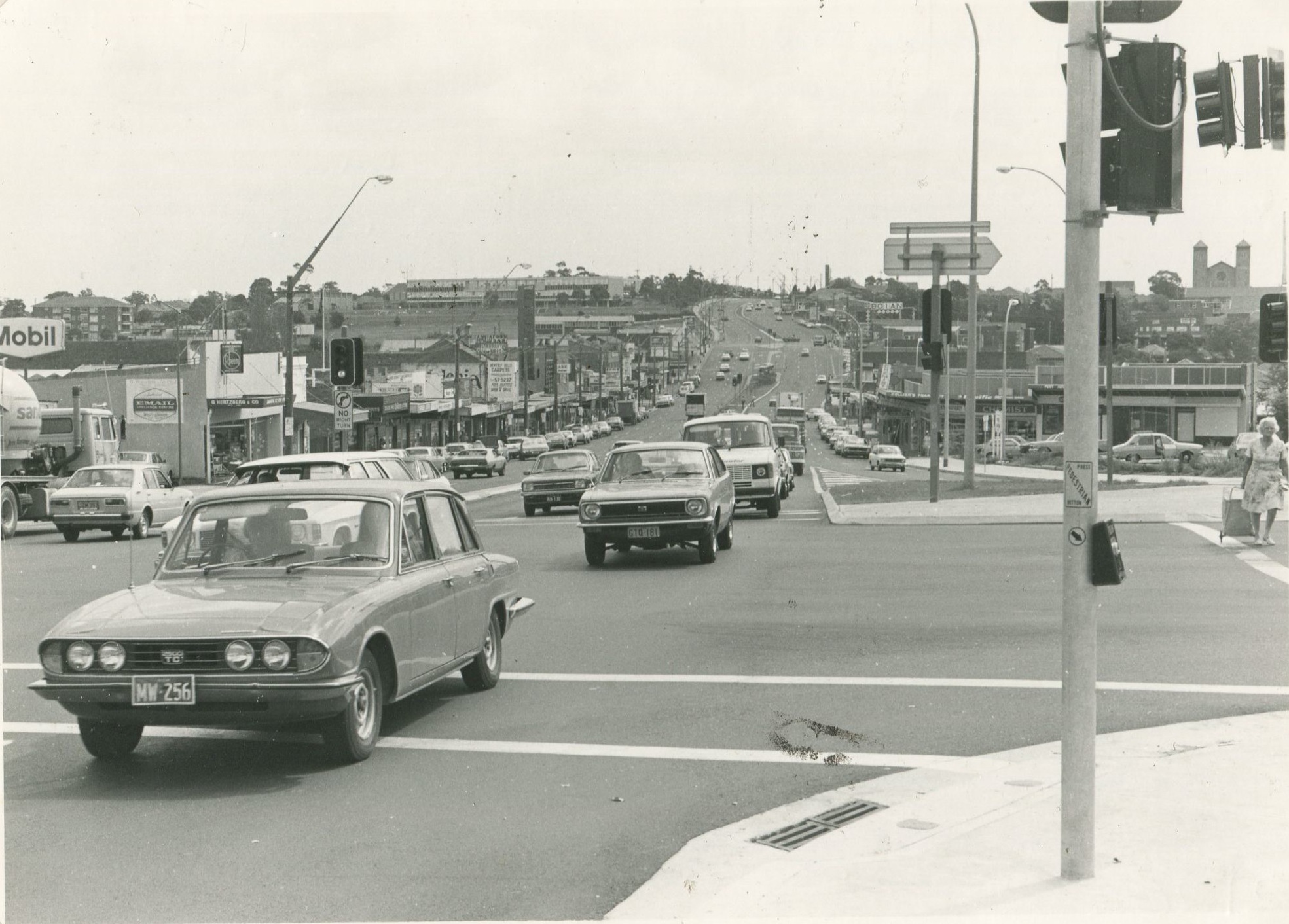
Intersection of King Georges Road and Stoney Creek Road, Beverly Hills, 1981. Image courtesy Hurstville Library
Lots to see in this bold shot from 1981 – check out the Mobil on the corner; Granny crossing the street on the right (on her way back from shopping, by the look of it. Remember when you could do that?); the No Right Turn onto Stoney Creek Road (heaven forbid!); the wide, spacious King Georges Road trailing off into the M5-less distance; the boxy pedestrian buttons; that eerie church just above Granny. But does it really look all that different today?

Not really, 2015.
These days, we can turn right from one busy road onto another; the ancient (although obviously post-1981) Chinese restaurant blocks the view of the eerie church; the Mobil has been replaced by Pancakes on the Rocks; the roads seem narrower and there are a hell of a lot more cars, and yet the air is allegedly cleaner. Must be all those extra trees. Oh, and NO PIZZA HUT.
Pizza Hut/Liquorland – Port Macquarie, NSW
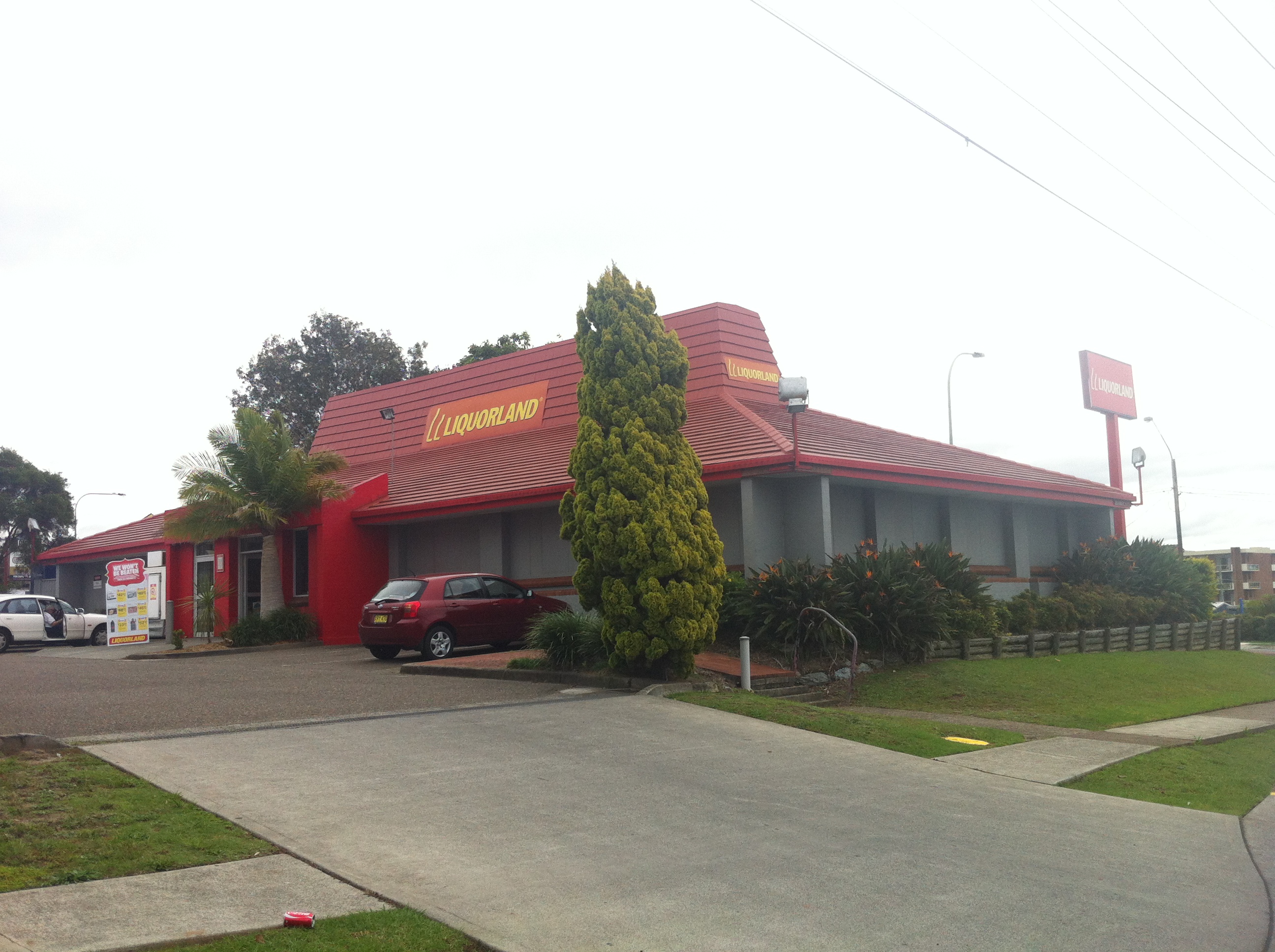
The picture says it all: it’s pretty much a textbook example of a Used To Be A Pizza Hut. But it’s actually not that much of a stretch. Pizza Hut dine-ins were fully licensed back in the day (!), so all that Liquorland have done is do away with the doughy, yeasty stuff to make room for more booze.
In Port Macquarie, that’s actually kind of an affront. Back in 2003, the town set a national record for the most amount of pizzas eaten in a day. According to the Port Macquarie News (and really, who’d be better qualified to know), 4890 pizzas were consumed on Saturday, December 13, 2003. Whether the record still stands is unclear, but since those figures came from Domino’s, you can bet a similar record for most amount of toilets clogged in a day was set on December 14.
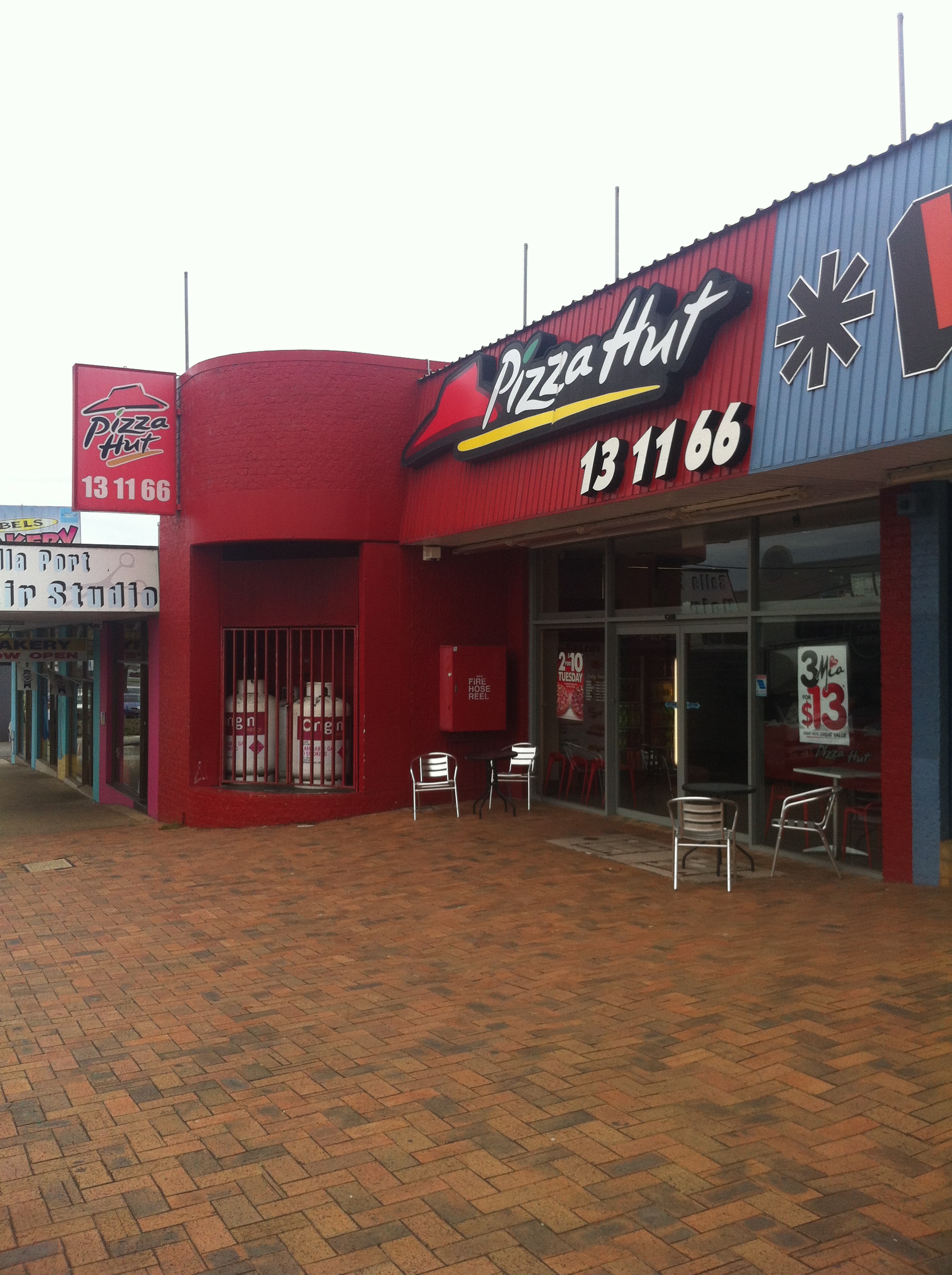
It’s not all bad news for Port Macquarians jonesing for a fix of crusts thick, thin or stuffed, however: they’re still makin’ it great at this downgraded Hut down the road. For those who knew the dine-in Pizza Hut experience biblically, the above picture is a sad sight, and for everyone else, it’s a shocking reminder that there’s a Video Ezy still in operation.
Olympia Speedway/Coral Sea Park – Maroubra, NSW
Traffic moves quite slowly in South Head Cemetery, both vehicular and otherwise. Nobody’s in that much of a hurry; even the post-hip, ridiculously overpriced motivational sportswear-clad joggers slow down to take in the breathtaking vistas the graveyard offers.
Only most of the time, there’s no breath to take.
The Victorian era saw a boom in ‘the art of death’ – society as a whole had an endless fascination with death, and paid particular attention to the manner in which deceased were committed to the void. This carried over into the early 20th century, and the ornate tombstones and mausoleums of this era are a far cry from today’s dour marble efficiency.

Bloody Sunday drivers…
Look at this. It’s kind of like the headstone equivalent of one of those racing car beds, isn’t it?
Immediately eye-catching, the final resting place of Reginald “Phil” Garlick ensures its fair share of stares. A prodigious racer, Garlick’s love of motorsport is forever tied to him in the afterlife. At the time of writing, it’s getting nigh on close to 90 years since his death aged just 39 years at…Maroubra Speedway?! What the…?

Pretty sure you can still get speed at Maroubra if you know where to look. Image courtesy James Cockington
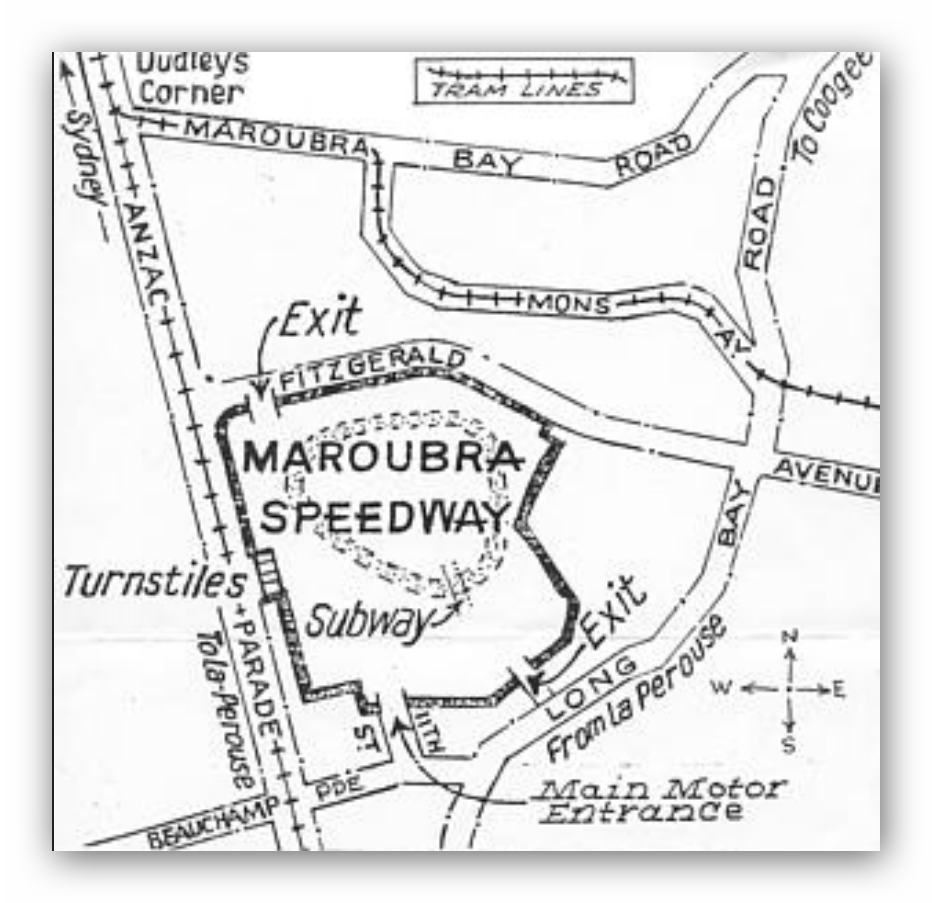
This…this couldn’t be! Where would such a racetrack even be? Superfast hoony driving and Maroubra…it just doesn’t make any sense!
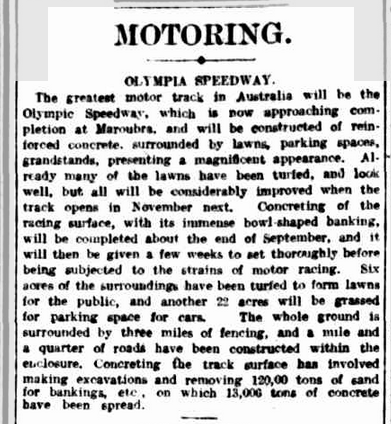
SMH, Wednesday, Sept 16 1925
Actually it makes perfect sense, and this one’s pretty common knowledge. The Olympia Speedway drew an estimated 70,000 petrolheads to its grand opening in 1925, blowing the attendance of that year’s VFL Grand Final away.

Guys, maybe you should be handing out the helmets BEFORE the race… Image courtesy SpeedwayAndRoadraceHistory.com
The Olympia became notorious for the dangerously steep incline of its concrete saucer, reaching 48 degrees in one stretch. Suddenly, helmets like Phil’s up there don’t really sound like they’ll cut the mustard, do they?

Flag girls dressed very differently in the 1920s…Olympia Speedway, late 1925. Image courtesy State Library NSW/Sam Hood
And how’s that bloodthirsty crowd! 70,000 ghouls who couldn’t get their violent thrills at the VFL filled the Olympia’s seats hoping to see one of those poor bastards lose control and wipe out. Talk about a fascination with death…
In time, the Olympia gave its audience what it wanted:

Brisbane Courier, Friday, July 30 1926
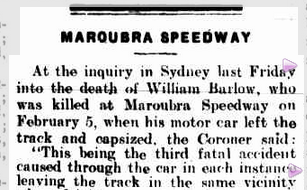
Brisbane Worker, Wednesday, Feb 23 1927

Adelaide Mail, Saturday, Nov 24 1934
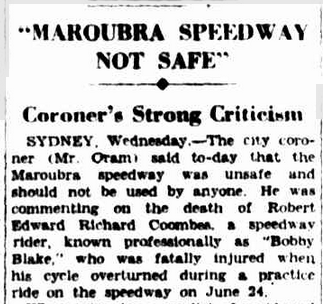
Melbourne Argus, Thursday, July 2 1936
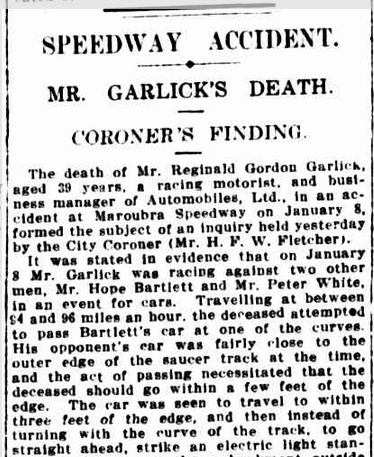
SMH, Tuesday, Feb 1 1927
And I thought Maroubra was a tough suburb these days!
The Olympia was actually shut down twice: 1927 saw the end of its days as a professionally promoted speedway due to a combination of anemic finances and negative attention surrounding the mounting death toll, and then again in the late 1930s after a series of fitful re-openings throughout that decade. By the time the light went red for good, the track was in serious disrepair. Yeah, a real HEALTH HAZARD. Could be DANGEROUS. LIVES AT RISK.
Another factor in play was the advent of public housing. The Housing Commission was snapping up as much ‘wasted’ land as it could and filling it with bland, efficient brick housing for war vets and refugees. By 1948, Maroubra was unrecognisable, a sea of brown roofs and 50km speed limits, strictly adhered to by residents at all times.
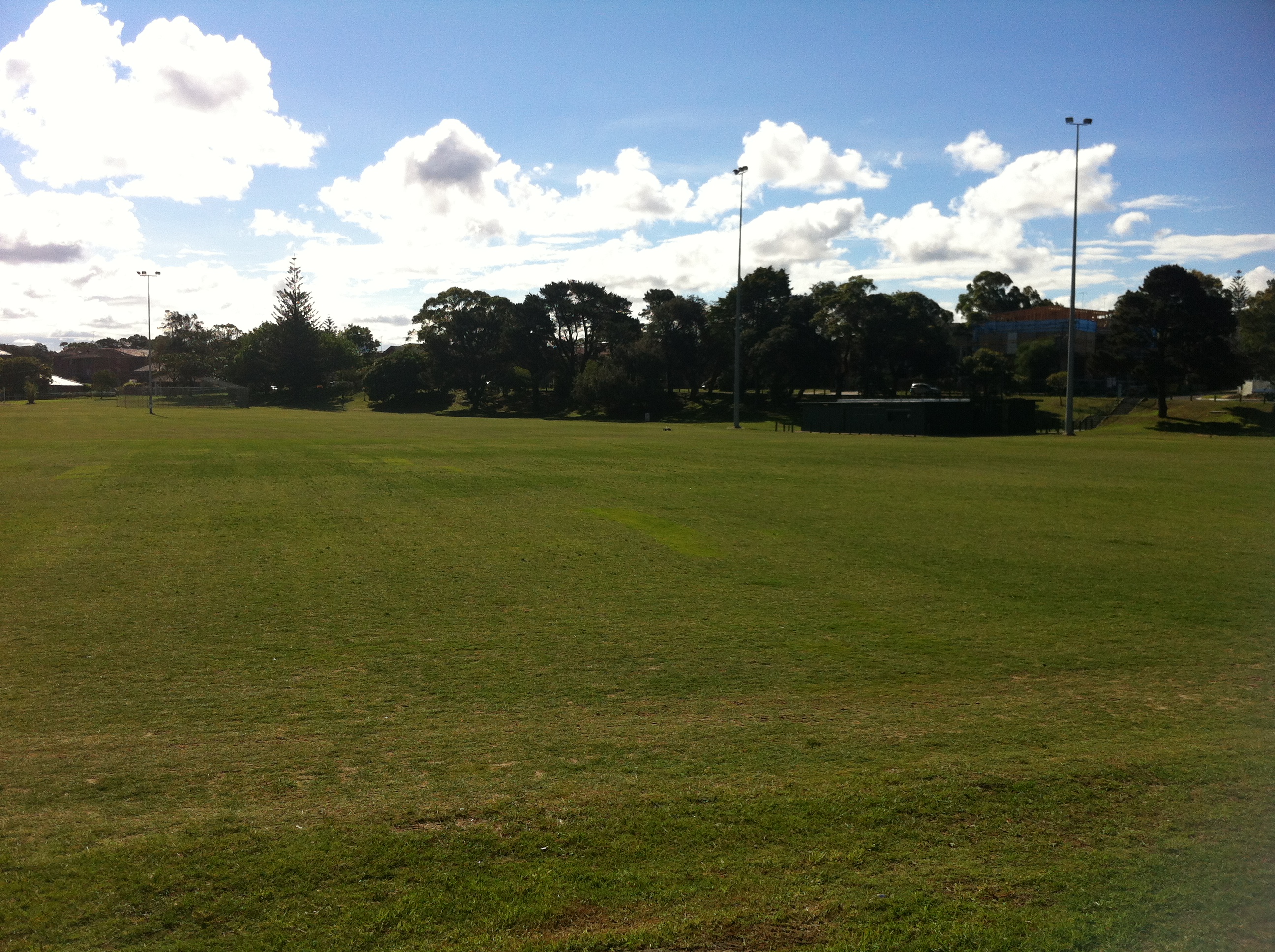
I can see why they call it Coral Sea Park!
Coral Sea Park doesn’t look like much now, but this is pretty much our ground zero today. This was the centre of the speedway track back in the day, and the edges of the park are almost as steep as they were back when Phil and the boys were tearing it up.

Take a sherpa…
It’s almost lazy, the way no effort was made to do anything but grass things over and slap a speed limit on the roads. But it does give us a great insight into just how dangerous it was to race around the Olympia. Look at the angles!

Watch your step…
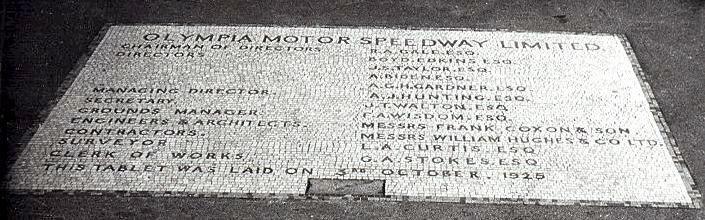
Image courtesy VintageSpeedways.com
It’s said that the tablet laid on the speedway’s opening day is still buried beneath Coral Sea Park somewhere, and that any efforts made to find it have stopped short of the finish line. In 1925, this infield area was a swampy wasteland, known and feared for an abundance of snakes. But they’re gone now, so c’mon, find the damn tablet.
It’s also said that between its lives as the track’s infield and Coral Sea Park, this portion of land was a tip, and it closed in the 1960s after a boy was found dead inside a fridge. Will the killing never end, Maroubra?! I couldn’t find any hard evidence of this, but if you know more, or you were that boy, get in touch.

IN MY DAY…
Just before we go, there’s one last interesting remnant of what was once Australia’s “killer track”: on the western side of Anzac Parade, there sits Heffron Park and the neighbouring Des Renford Leisure Centre (folks of my generation probably remember man of leisure Des Renford best from that Martin/Molloy skit. IN MY DAY…). This park too sees a sharp incline as you head east toward where the speedway would have been.
An upside to building a racetrack in the middle of a bunch of sandhills was that it was easy to get a saucer in place for the kind of angles necessary for DA THRILLZ. A downside is that tightass locals could sit their tight asses down on said sandhills – like this one – with a perfect view of the action without paying for the privilege, and that’s just what they did. And the Olympia went into voluntary liquidation, you say?
Thanks to my pal Viv for her help with the modern day photos. Gorge!

 Past/Lives of the Near Future