Movietek/Blockbuster Video/For Lease – Surry Hills, NSW

Yet another dead video shop, this ex-Blockbuster has the distinction of having taken over the location from another video shop before running it into the ground. Are Blockbuster stickers and signs really hard to get off or something? Did they foolishly build them to last?
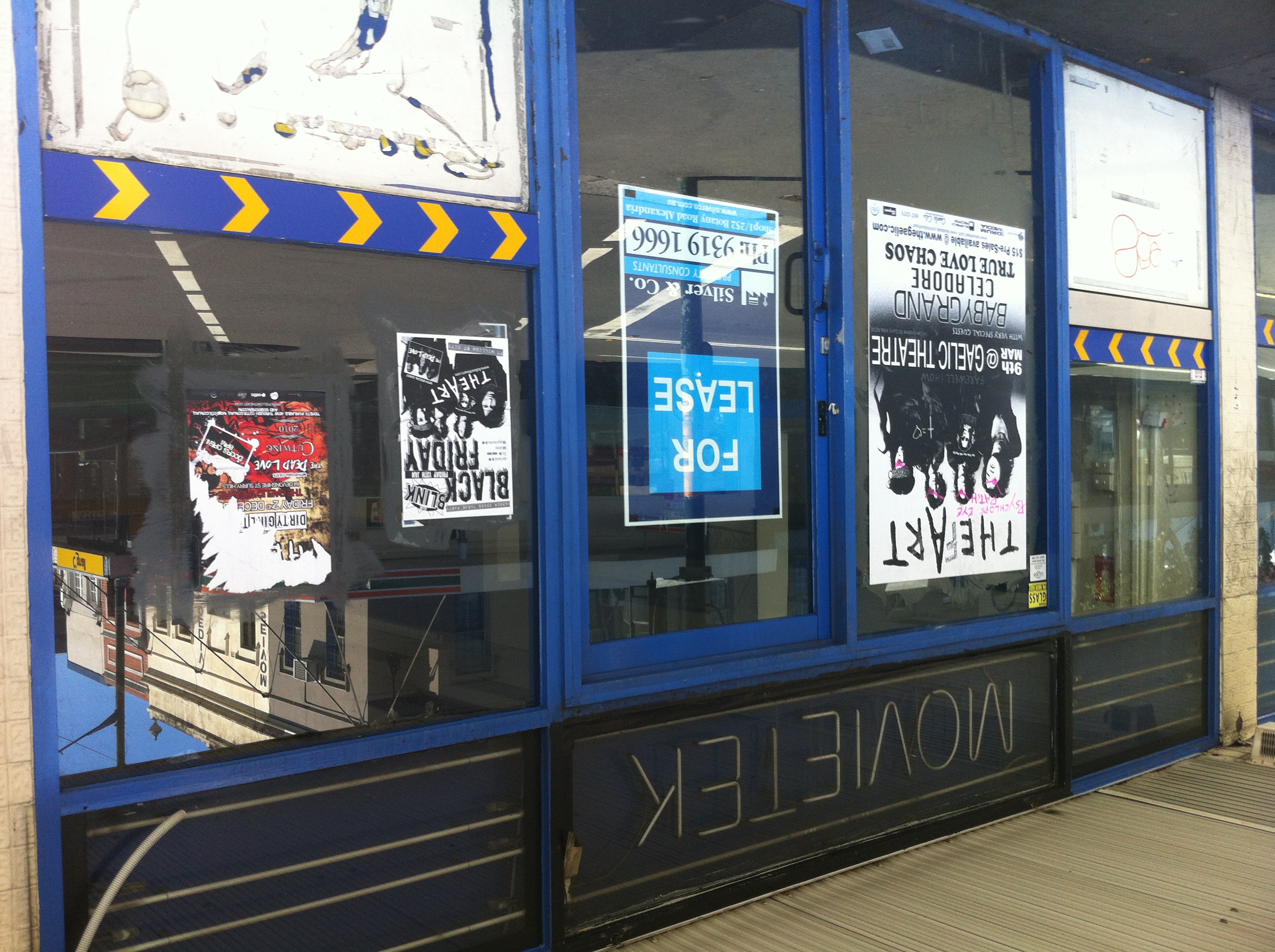
Ah, neon. This is the first and only instance of a Movietek outlet I’ve come across, so it must have been one of the independents back in the golden era of video shops. Also of interest at this location is the second floor, which until around 2007 was a costume shop (imaginatively named The Costume Shop). Pardon the pun, but it’s fitting, given that Movietek put on a Blockbuster costume to try and swim in the deep end.
Hotel Westend/Nomads Westend Backpackers Hostel – Sydney, NSW

The Hotel Westend was built in 1929 as the Hotel Morris, and replaced a business called ‘Half Price Shoe Stores’, which had filed for bankruptcy in 1925. Shoulda charged full price, guys.
From its erection in 1929 through to 1963, the building was Australia’s tallest hotel. Now, as Nomads Westend Backpackers Hostel, it’s apparently Australia’s most repulsive:
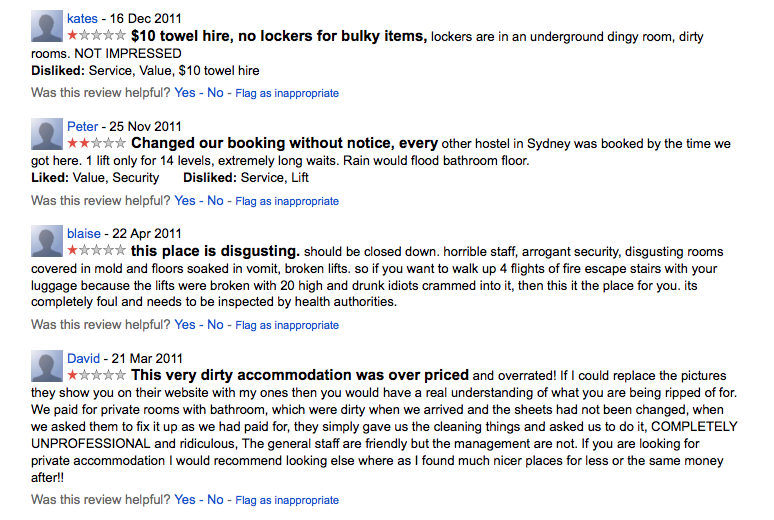
Before providing filthy rooms at a greater height than anyone else, back in 1890 the boarding house that stood at this address was embroiled…in CONTROVERSY!
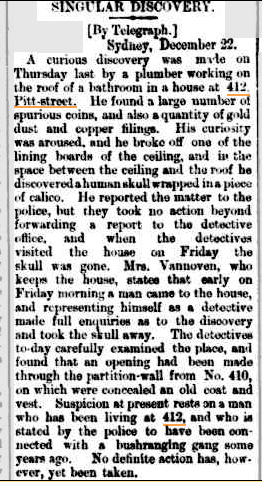
South Australian Register, December 23, 1890.
The very next day, the plot thickened:
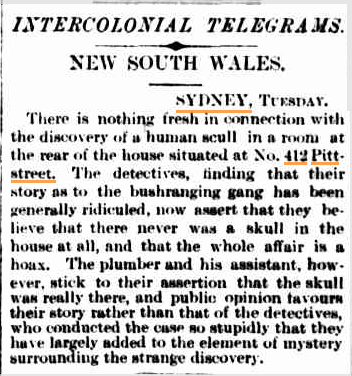
The Argus, December 24, 1890.
And then…nothing. Dodgy NSW cops? Sure it wasn’t 1980? Also, pretty ballsy of the Argus to call out the detectives as stupid given their spelling of ‘skull’.
Old Burial Ground/Sydney Town Hall – Sydney, NSW
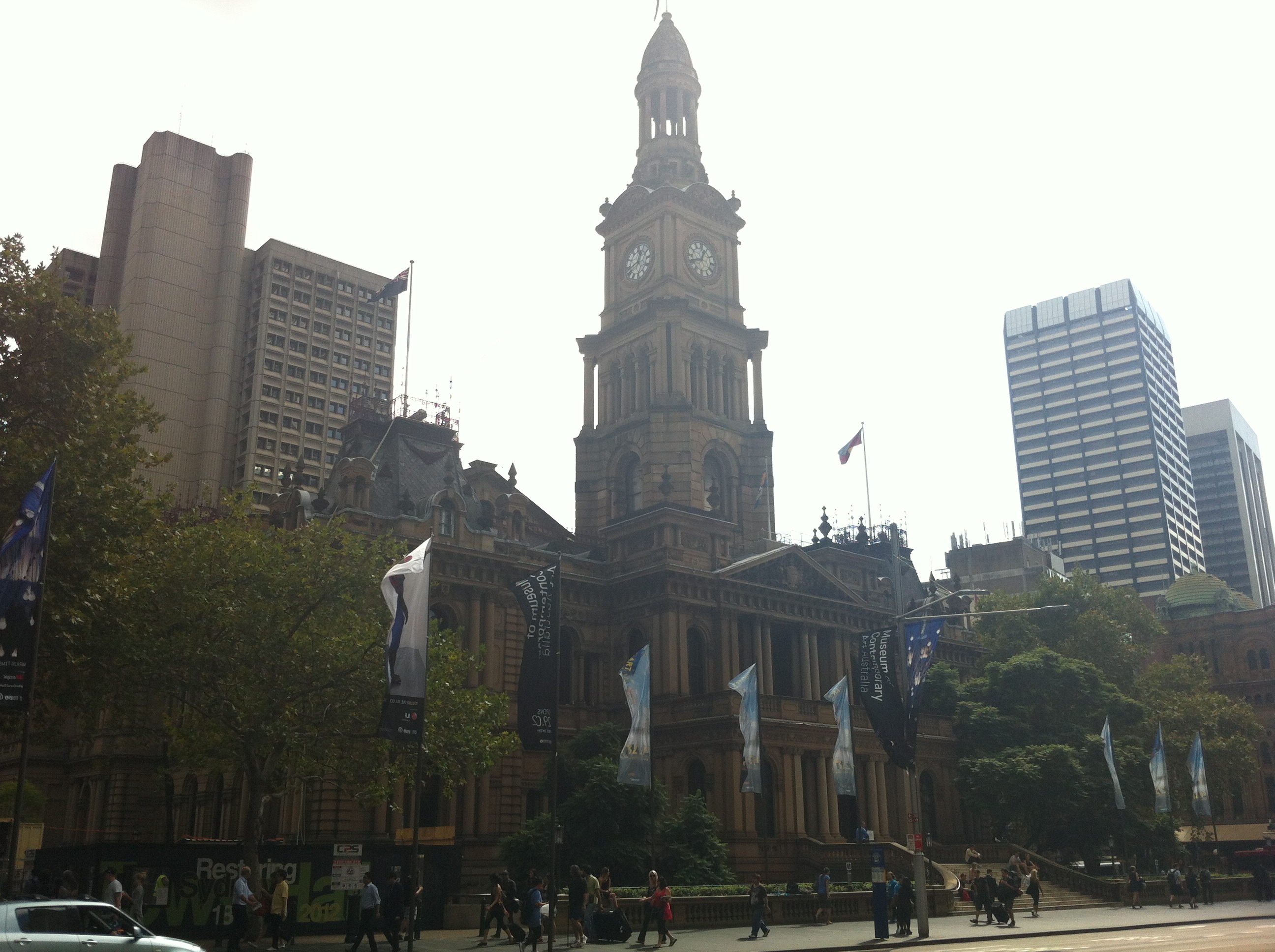
George Street, 2012.

George Street, 1844. Burial ground on the left. Image courtesy State Library NSW DG SV*/Sp Coll/Rae/7.
Considered the outskirts of town in 1792, the site at the corner of George and Druitt Streets in Sydney was chosen by Governor Arthur Phillip to be the colony of New South Wales’ primary burial ground. By 1820, however, the cemetery had become full, and was closed as a result. It fell into a period of dereliction and neglect, gaining a reputation as a place to avoid, especially on hot days and at night.
Sydney had grown exponentially by the 1840s, and it had been suggested that the burial ground be used as the site of a town hall for Sydney. Despite vehement opposition in some sectors…

And it goes on for another page. SMH, June 8, 1844.
…plans went ahead. The Sydney City Council applied for and received a grant of a portion of the burial ground in 1865. Reinterment of the bodies took place in 1869, with most moved to Rookwood Cemetery in Sydney’s west. Most…

The Argus, August 17, 1883.

Barrier Miner, July 6, 1892.
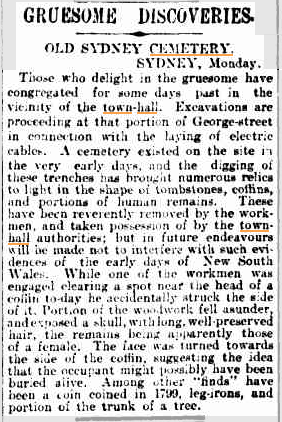
The Argus, March 8, 1904.

SMH, July 29, 1924.

Barrier Miner, June 19, 1929.

Canberra Times, October 17, 1934.
More graves were found in 1974, 1991, 2003, and as recently as 2008:

Image courtesy Casey & Lowe.
At the very least, the extreme amount of bodies left at the site ensured high turnout numbers for Town Hall events.

There is little on the site today to recognise the site’s former life as a cemetery. I guess they thought that since there were so many bodies left behind, they didn’t need one. Still, in this small, dank alcove which reeks of piss, there’s a tiny reminder:

It reads:
This plaque is dedicated to the memory of those who arrived in this country with Captain Arthur Phillip on the First Fleet in 1788 and were buried nearby.
-Fellowship of First Fleeters, 1988
“Were“? Still, Town Hall can take comfort in the fact it’s not the only former burial ground site used by a major Sydney landmark today. Yes, like Weekend at Bernie’s II, they did it again…
Benevolent Asylum/Parcels Post Office/Medina Hotel – Sydney, NSW

The Parcels Post Office, situated at Railway Square beside Central Station, was built in 1913 and operated as a post office until the 1960s. Prior to the construction of Central Station in 1901, this was roughly the site of the Benevolent Asylum:

Benevolent Asylum. Image courtesy State Records NSW.
After decades of sitting derelict, someone finally decided the former post office would be good to go with a little funky cold Medina:
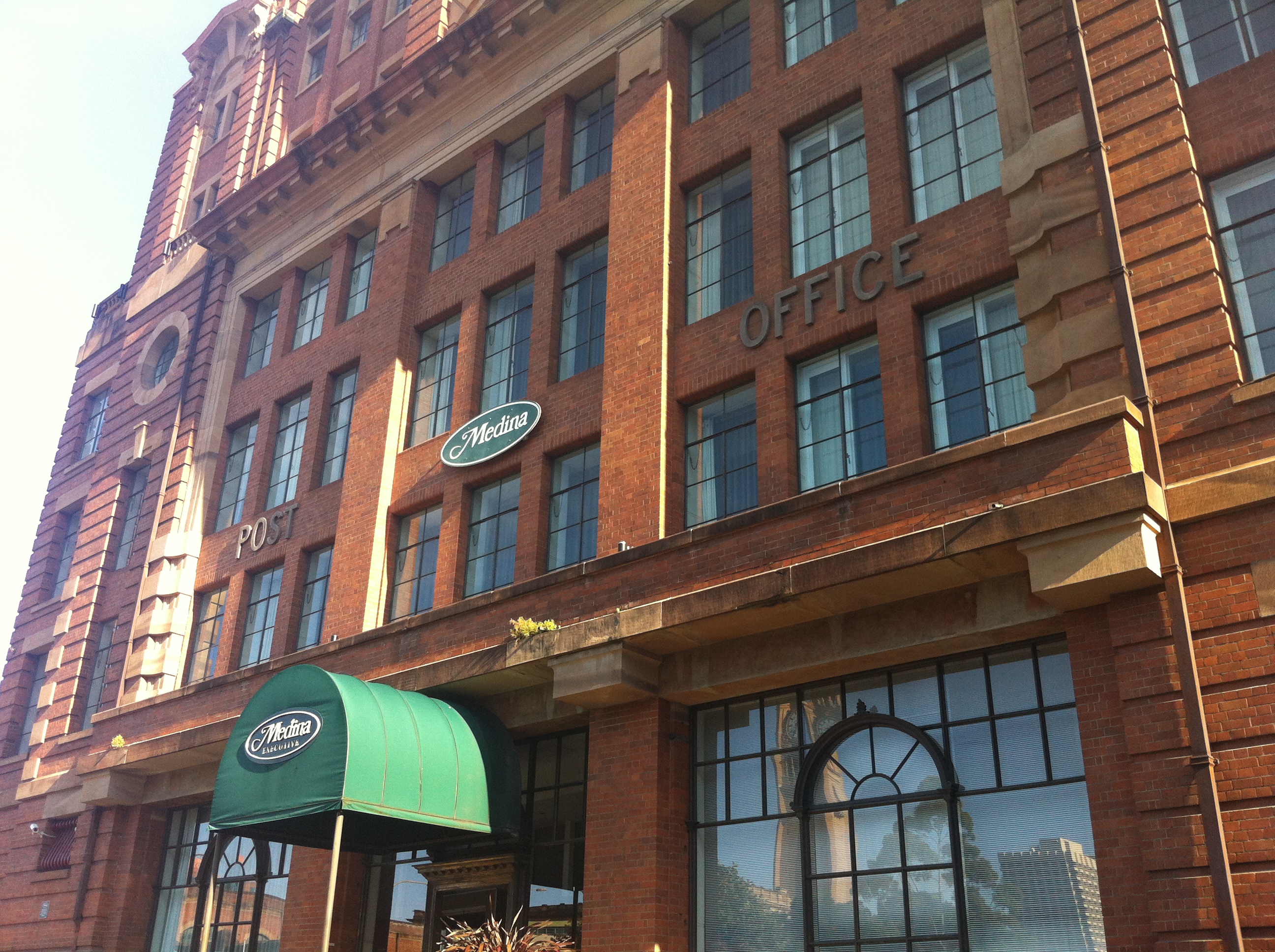
Nothing like a hotel right next to the train line!
Greater Union/Event Cinemas, George Street – Sydney, NSW

George Street's Greater Union and Hoyts cinemas, 1992. Image courtesy Sydney Cinema Flashbacks.
George Street’s cinema strip has undergone many drastic facelifts and overhauls, particularly since 1971, when the Trocadero dance hall was demolished to make room for the Hoyts cinemaplex. In 1983, two more cinemas, the Rapallo and the Paramount, were razed by their owner Greater Union to make way for a more modern moviegoing experience: the Greater Union cineplex above.
By the early 1990s that west side of George Street contained only the big three cinemas: Village, Greater Union and Hoyts. Around 1999, the Village was demolished and all three joined forces in the greatest union of all to form one giant megaplex. The Greater Union above was absorbed by the Hoyts complex and until 2005 operated as a joint venture. Now, Event Cinemas (formerly Greater Union) runs the entire cinema.
When the Greater Union building became a part of the Hoyts complex, the facade was brought into line with the Hoyts look. Today, almost nothing remains of the Greater Union building…

…but if we look in the alley around the back of the buildings, not only is the dated triangular awning still present on the Greater Union building, but even the Hoyts building retains its older style. When the complex became Event Cinemas, an expensive overhaul for the entire George Street face of the building was undertaken. I guess they decided the back alley wasn’t enough of an event.
How does the front of the Greater Union look today?

Big, faceless and grey: just like the rest of George Street.

 Past/Lives of the Near Future