Padstow Star Cinema/Civic Video – Padstow, NSW

These days, we know it as Civic Video (or just Civic, if you go by the shopfront sign. I bet they’re dying to be able to remove the word ‘video’ from the rest of their signs, despite how cost ineffective that would be), but prior to 1984 this was the Padstow Star Cinema:

Padstow Star Cinema, 1964. Image courtesy Joe Simiana.
Built in 1952 as the sister cinema to the not-too-distant Panania Star, the Padstow Star was one of many suburban cinemas of old. It’s a concept you can barely imagine now, unless you live in Beverly Hills. In 1985 the cinema closed, with Caravan of Courage: An Ewok Adventure being its last screening. See, Ewoks do ruin everything.
Ever since, it’s been a house of movies in a very different way:

The interior has been refurbished, but it’s still quite easy to see what it originally was. The screen is a dead giveaway:

The projection booth remains as well, and is now the manager’s office judging by the angry, managerial eyes staring out at me when I tried to take a picture of it. Given the impending death of video shops, it’ll be interesting to see if this building gets yet another lease on life in Civic’s wake, or whether the residents of Padstow will have to start drinking for entertainment on a Friday night, like the rest of us.
Homebush Cinema/Niterider Theatre Restaurant/Midnight Star Reception Centre/Derelict – Homebush, NSW

This site, on Parramatta Road at Homebush, is notable for several reasons, but today we’ll be looking at this structure – the Midnight Star Reception Centre. The history is long and colourful: it was built as the Homebush Cinema in 1925, and the initials HT are still prominent above the awning.

In 1930, the Homebush Cinema Ltd. company was liquidated, and the building was bought by Western Suburbs Cinemas Ltd., a company that also managed cinemas at Burwood, Parramatta, Granville, Auburn and Strathfield. In 1939 the theatre was extensively refitted and relaunched as the Vogue Cinema. Acquisition by Hoyts in 1944 saw it renamed again as the Hoyts Vogue.
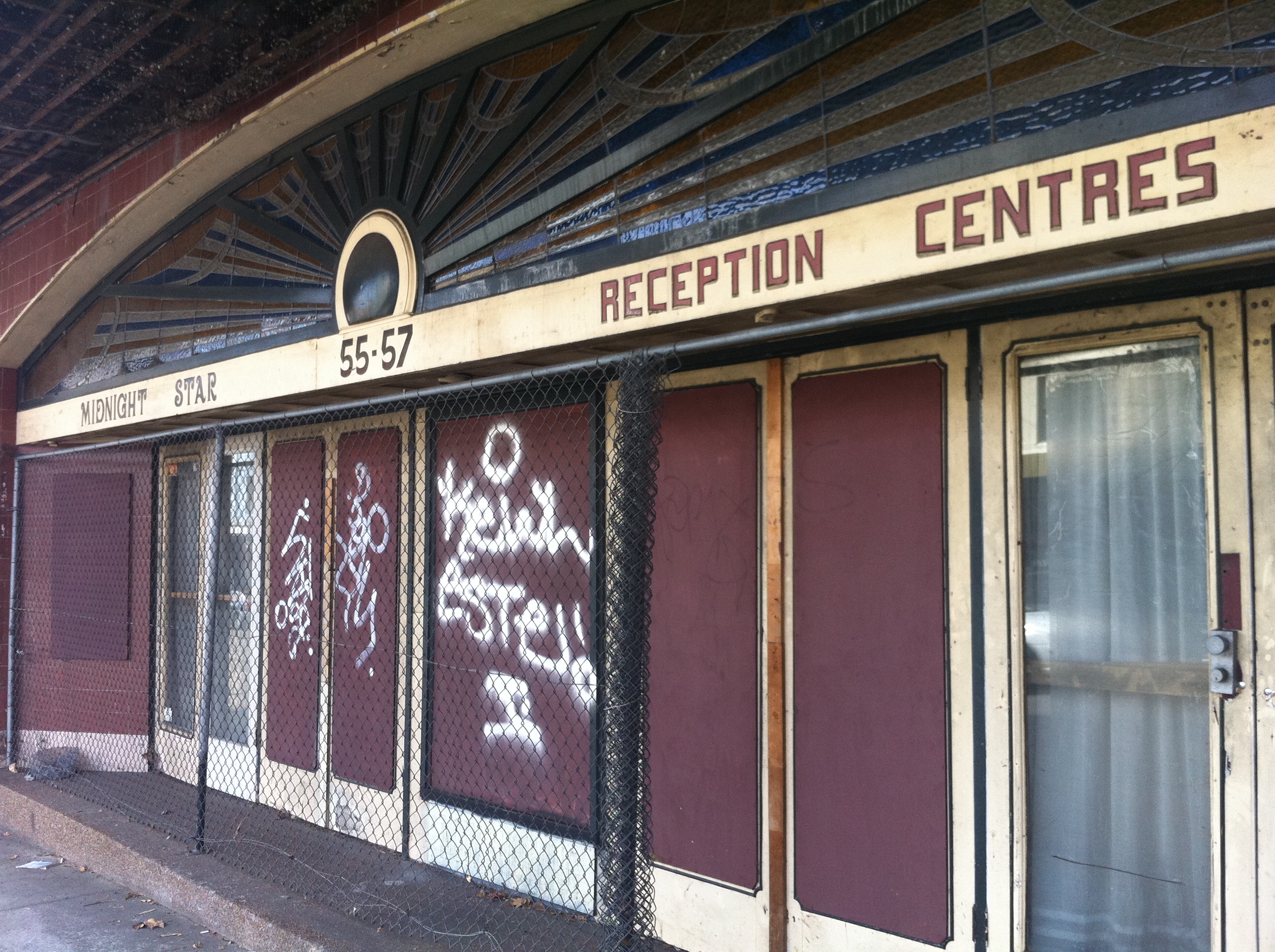
The building ceased operating as a cinema in 1959, and subsequently became an ice rink. In 1986 it was refitted again, and turned into the Niterider Theatre Restaurant.

Perhaps realising that the concept of theatre restaurant was in 1986 already past its use-by date, it was converted (badly) into the Midnight Star Reception Centre. Looking at the building now, you’d be hard pressed to decide whether it wanted to be the Niterider or the Midnight Star, such was the amount of signage left up. The refitters must have been the mob Pizza Hut used, given how sloppily it was done. The Midnight Star operated until 1996(!). This is where things really get interesting…

The building sat derelict for many years, not an unusual sight along Parramatta Road. It’s sad to say that Sydney’s most important arterial road is peppered with derelict buildings like this. Karma works in mysterious ways, however, as in 2002 the Midnight Star got another lease on life…just without a lease.
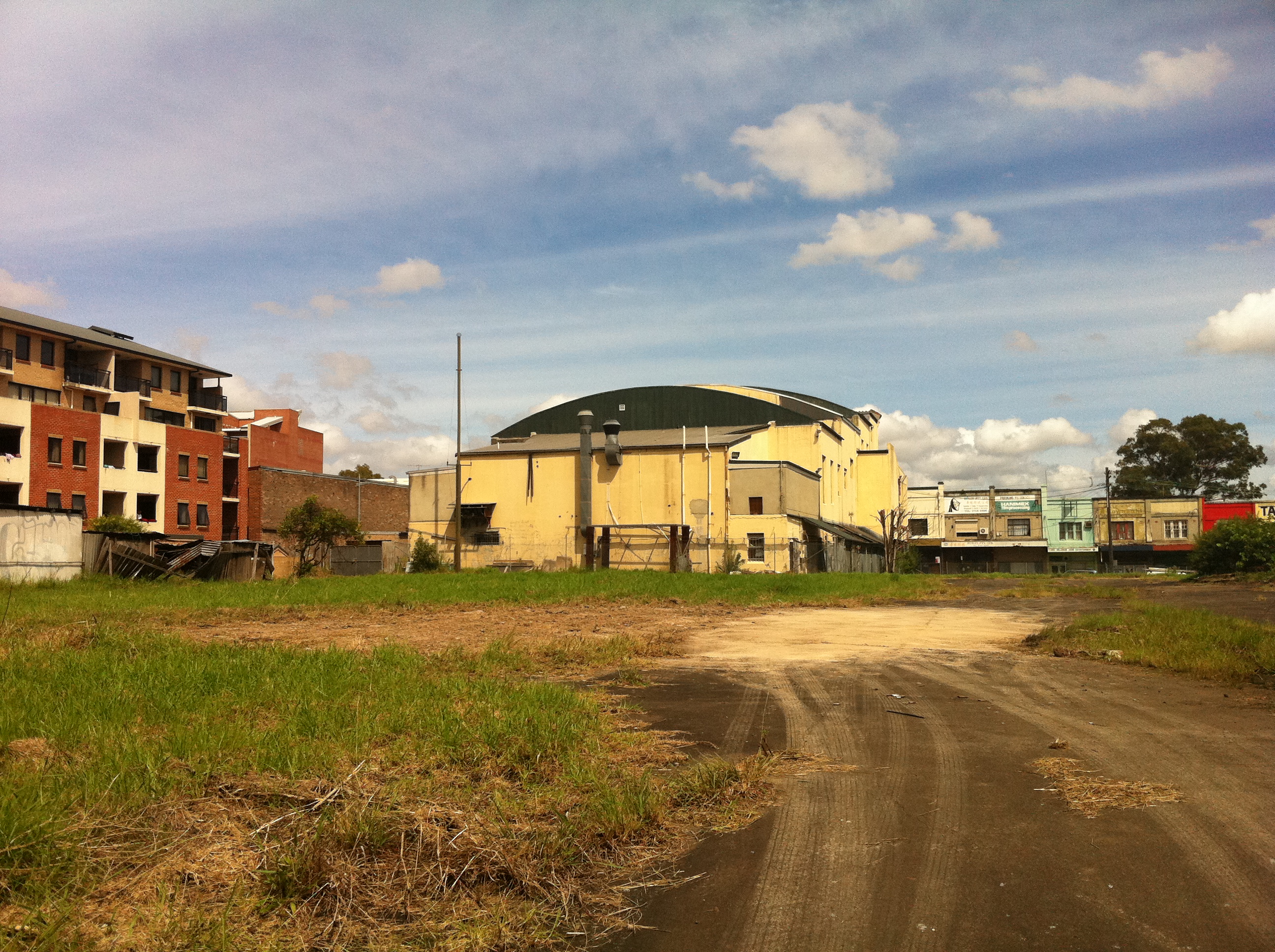
In February of that year, squatters occupied the vacant building and renamed it the Midnight Star Social Centre. For eight months, and apparently with the begrudging consent of both the owner and the police, it was used as a hub for raves, gigs, pirate cinema screenings, an internet workspace and various activist meetings. The media eventually identified the Midnight Star as a “nerve centre” for anarchists and violent and politically motivated dissent, especially in the context of a WTO meeting held in Sydney that year. The police evicted the occupants in December 2002, and the building has remained derelict ever since. It’s heritage listed on Strathfield Council’s local environment plan, but it’s yet another example of a dead cinema in Sydney no one wants to use.
DEVELOPMENTAL UPDATE: This week’s Inner West Courier reports that the Niterider Theatre has been chosen to undergo a radical restoration and redevelopment.

Inner West Courier, Tue 15 May 2012
Given how Parramatta Road is a total carpark twice a day already during peak hour, the idea of adding 460 apartments (‘I live in Unit 458’) worth of people to the mix is stupid. I think this should be taken as a sign that the M4 will never be completed. What’s also stupid is how this would look. Two towers sticking up from behind the ancient facade of the Homebush Theatre? It’ll look like a young person wearing an ancient pair of shorts got buried upside down up to their waist.
ANNUAL UPDATE: One year on, and not much has changed.
INTERNAL UPDATE: Wonder what it looks like from the inside? Wonder no more!
Windsor Theatre/Mytilenian House – Canterbury, NSW
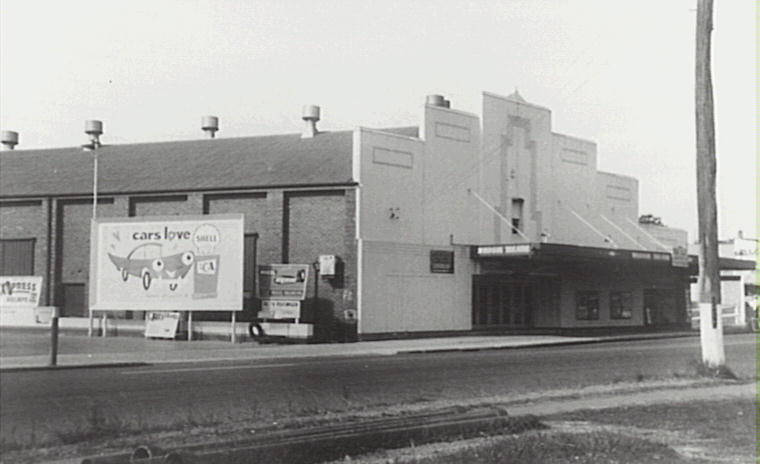
Canterbury's Windsor Theatre, 1981. Courtesy Barry Sharp and City of Canterbury Local History Photograph Collection.
Since 1938, this theatre has sat on the bank of the Cooks River, Canterbury. Originally called the Windsor Theatre, its proximity to the water made it prone to flooding and also, apparently, prone to thievery. The theatre suffered two safecrackings in the 1940s alone, a problem that doesn’t seem to have been experienced by its current tenants. The Windsor closed in 1981…
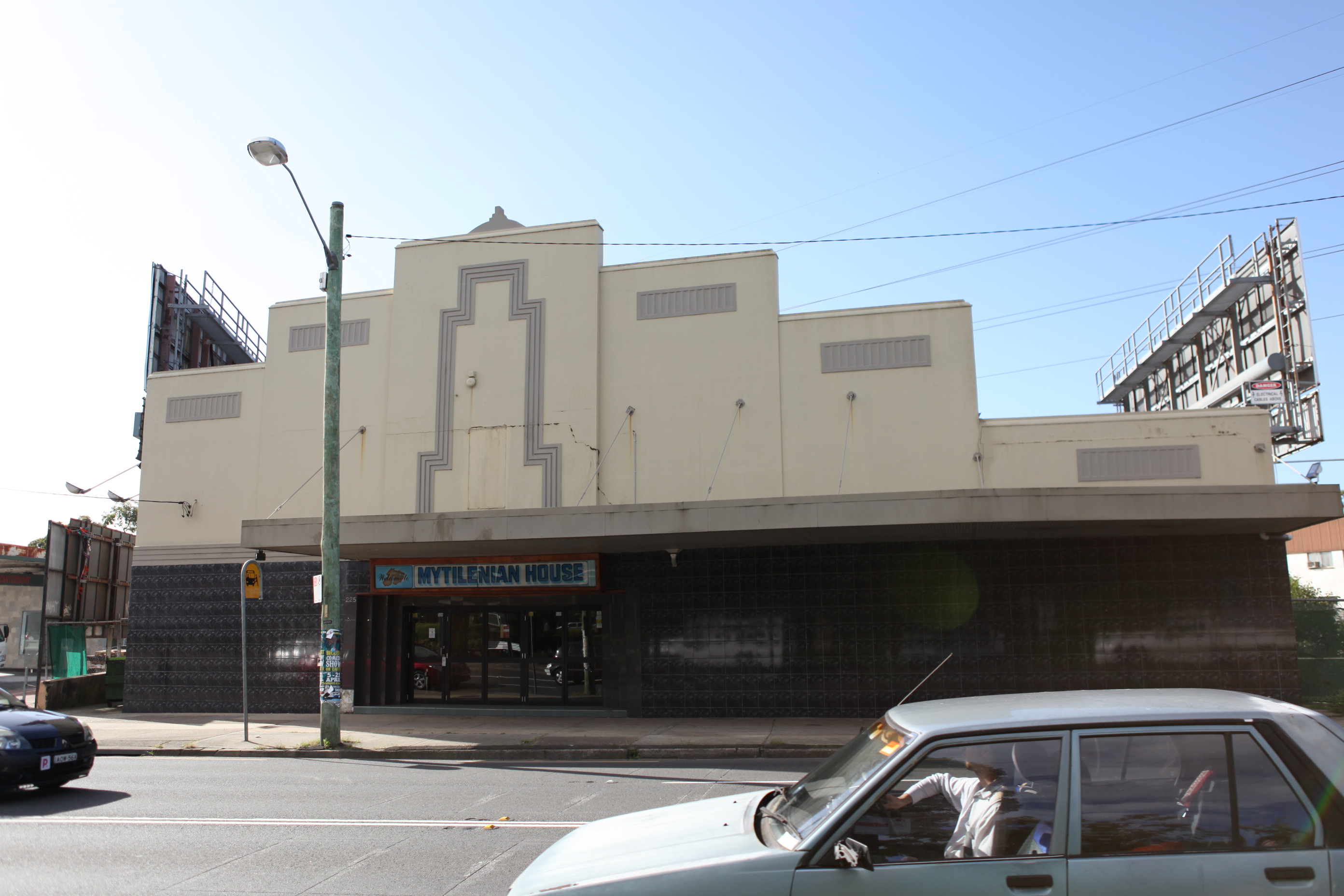
Mytilenian House, 2012.
…and was converted in 1982 into Mytilenian House, a meeting place for the Mytilenian Brotherhood, which itself was established in 1925. They’ve kept the screen area relatively intact:

I’m guessing they upgraded the safe, especially if the security around the back is anything to go by:

Savoy Cinema/Quality House/Whitewood Warehouse/Poliak Building Supply Co. – Enfield, NSW

On the Hume Highway, Enfield stands this bright orange eyecatcher. According to Strathfield Heritage, the Savoy opened as the Enfield Cinema in 1927, but was redesigned in Art Deco style in 1938.

Enfield Savoy, 1938. Image from Strathfield Heritage.

Enfield Savoy interior furnishings, 2012.
At this point it was renamed the Savoy, and reopened to the public. In 1944 it was bought by Hoyts, but was closed as a cinema in 1960. The last film shown was Some Like It Hot.

Enfield Savoy entrance, 2012.
Julian Tertini was working as a public servant in the mid-1970s when he quit his job and started a furniture company with no prior business experience. That company was Whitewood Warehouse. By 2012, the Savoy has stood as the cartoon bear-sporting Whitewood Warehouse longer than it did as a cinema.
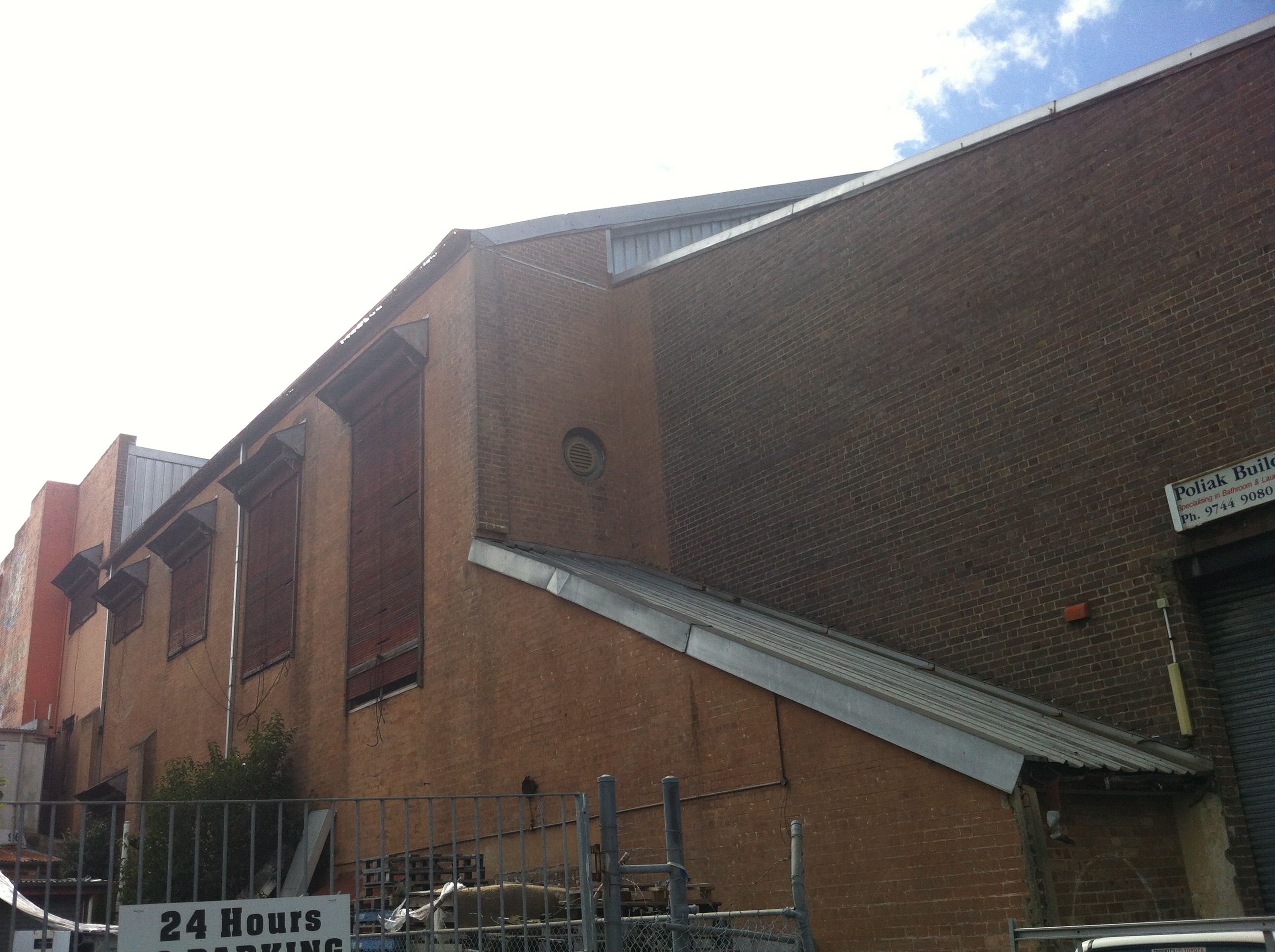
Tertini went on to start both Fantastic and Freedom Furniture, and is one of Australia’s richest people. The Savoy/Whitewood building is now home to Poliak Building Supplies. The foyer is a showroom for ovens and hot water systems, because some still like it hot.
QUALITY UPDATE: Thanks to reader Phil, Past/Lives can now reveal the hitherto unknown second phase of this building’s life! After the cinema’s 1960 closure, it began its long life as a furniture warehouse under the name of Quality House. Now there’s a name you can trust:

Quality House advertisement, June 27 1965
Greater Union Pitt Centre/ANZ Tower construction site – Pitt Street, Sydney NSW

The Greater Union Pitt Centre in better days. Image by Ken Roe/cinematreasures.org.
In 1999, I ventured into town to see Star Wars Episode I. My elaborate plan was to see it at the Pitt Centre cinema, which I’d always noticed tucked away behind the flashier George Street cinema strip. However, when I got into the city I found the cinema complex had been recently closed. My plan, my day had been ruined. Thanks, Greater Union Pitt Centre.
Opened in 1976, the cinema stood nearly derelict from 1999 to 2011, when construction work began on some sort of ANZ-themed skyscraper. It was in this condition that I found the site today:

To the left sits the former Bank of NSW, a future entry on Past/Lives.
From street level, there’s now nothing to suggest that the Pitt Centre or the neighbouring Chinese restaurant and courtyard were ever there. However, the view from above betrays an odd and long-forgotten secret:
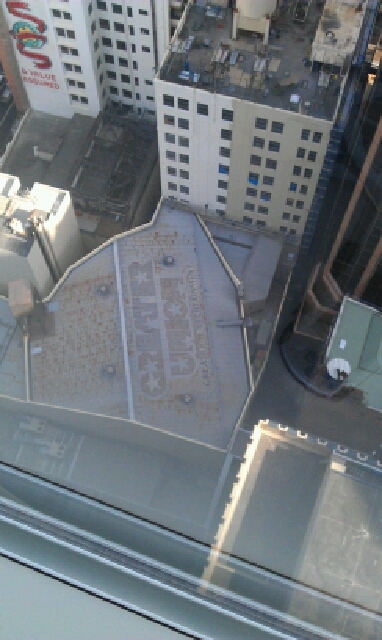
You can’t buy that kind of advertising space.
SHEEPISH UPDATE: it seems as though the above image is actually the rear of the Greater Union-owned State Theatre (see below). This revelation marks the second time the Pitt Centre has ruined my schemes. Thanks, Ellena!

Image from Google Earth.

 Past/Lives of the Near Future

