Curtain Fabric Factory Outlet/For Sale – Homebush, NSW

Curtain shops are faced with a tough promotional challenge: on one hand, you need the windows clear so that people can see inside, but on the other, you’re a curtain shop without curtains. It’s a high stakes gamble, and these guys lost everything. Let’s hope the new owner is a spray paint factory outlet, eh?
Norman Ross Discounts/Harvey Norman/Jacobs Furniture – Arncliffe, NSW

Gerry Harvey and his Harvey Norman retail empire may still be prominent and sometimes newsworthy today, but spare a thought for Norman Ross. In 1961 Harvey and his business partner Ian Norman opened their first electrical store here at Arncliffe, calling it Harvey Norman Discounts. After its success, the two decided to start a chain but couldn’t agree on a name, so they picked the name of the store’s manager, and in 1962 the first Norman Ross store opened. In 1965, this Arncliffe store’s name was changed to Norman Ross. This site saw its share of controversy in 1978, when the ever-provocative Harvey broke the hymen of Australian retail innocence and defied a NSW Government ban on after hours trading. The store remained open long after the midday closing time required by law. Shoppers poured in to the five-level store, drawn like moths to the flame of novelty and controversy, as if they couldn’t have bought that toaster a few hours earlier. Harvey risked jail time and heavy fines with the move, but it seemed to pay off.
Norman Ross was doing pretty well by 1982, when both the Coles Group and Alan Bond, the man who was allergic to money, decided they wanted a piece of the action. Coles won out after a fierce bidding war, but Bond bought the chain from Coles just three weeks later. Both Harvey and Norman were instantly sacked, but then immediately started the Harvey Norman discount chain, which flourished while Norman Ross struggled in its Bondage. Bond being Bond, the writing was on the wall for Norman Ross as soon as he took over, and it went into liquidation in 1992. In what could be seen as a patronising move, Harvey has resurrected the Norman Ross name for his stores in New Zealand. Let’s take a moment to process that – he didn’t want to attach his own name to anything over there, and would rather use the soiled, besmirched name of a failed Australian retail operation from two decades ago to sell fridges and Dells. You’d think Bond was still in charge.

But while Gerry Harvey whines to anyone who’ll listen about the unfairness of online trading, the store that he built his empire on still sits on the Princes Highway, and it’s here that for Norman Ross, the writing is still on the wall. After the chain was wound up, the store became a Hardly Normal outlet for a time, but for the last few years it’s housed a variety of fly-by-night furniture retailers. I don’t mean to cast aspersions on Jacobs Furniture, but I don’t think even Alan Bond’ll be taking out his chequebook for this one anytime soon. Even at 50% off.
El Rancho Pottery/Pure Flow Bottled Water – Ryde, NSW
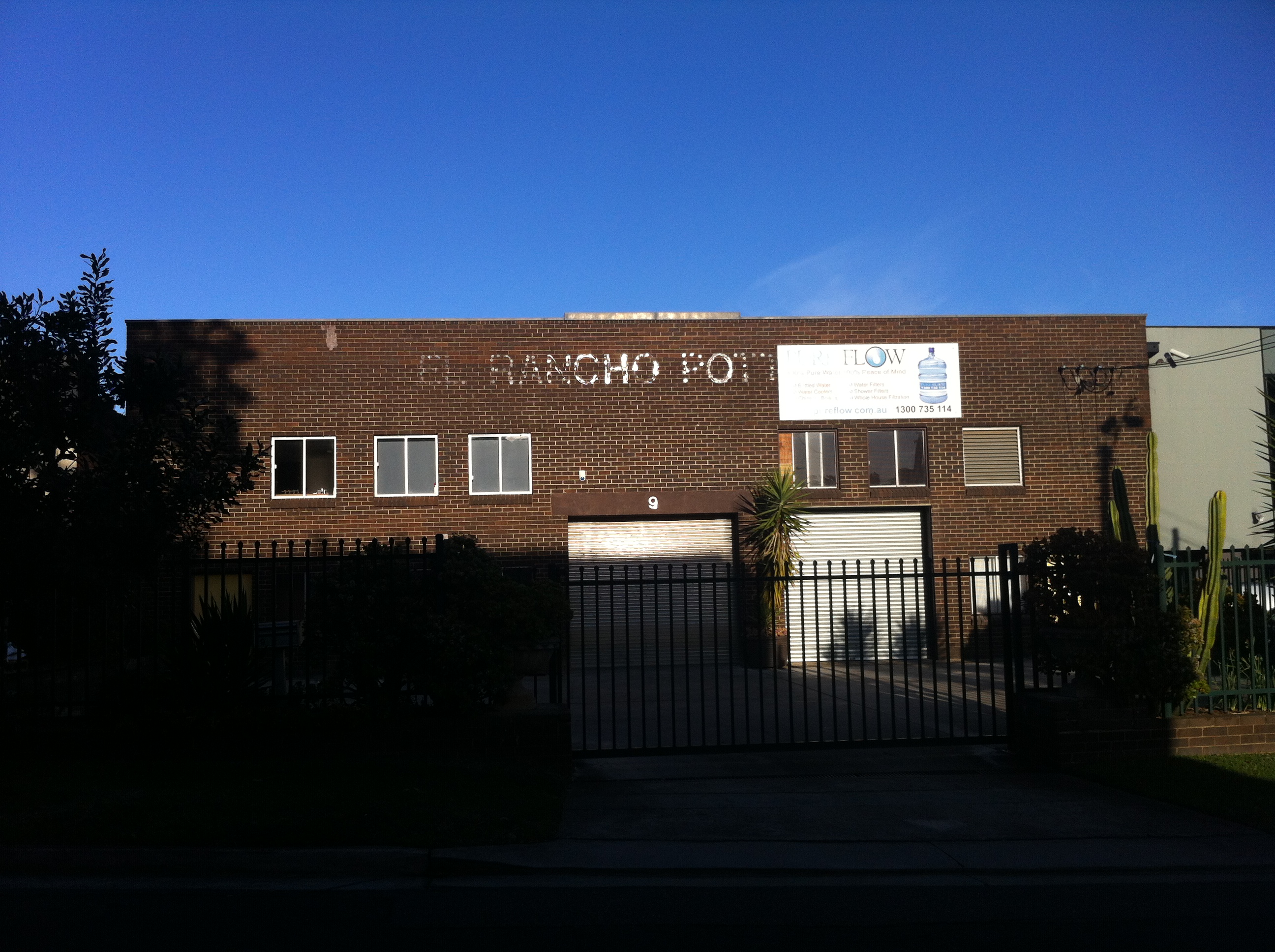
It’s sad to say, but themed businesses are really on the way out, if not already extinct. Back in the boomtime, El Rancho Pottery cared enough to maintain their Mexican theme by putting cacti in the front garden of their otherwise drab Porter Street location. Think about that – a pottery barn went the whole enchilada so to speak, and established a theme – an old west atmosphere in which to buy garden products. They cared. Hell, they even cared enough to set up on Porter Street in the off chance some dork would one day make a tenuous connection between the words Porter and pottery. Does Pure Flow care enough to draw in customers with so much as a fountain? A water feature? One of those water coolers? No.
Yet El Rancho is the past life here. It just doesn’t add up.
Then again, water does rhyme with Porter…
T. C. Whittle Pty Ltd/Belmadar Constructions/Licorice Productions – Mascot, NSW

The history of the companies emblazoned on this building is as murky as the canal flowing past outside. T.C. Whittle was a construction company responsible, from the 1940s to the 1960s, for New Selborne Chambers on Phillip Street in the CBD, the St Margaret’s Hospital for Women in Surry Hills, and the Cameron office complex in Belconnen Town Centre (demolished 2006) among others. But even that illustrious resume didn’t stop T. C. Whittle from ending up delisted from the ASX in 1980, dodgily changing its name to TCW Investments, and finally, being deregistered completely by ASIC in 2005.
Belmadar, on the other hand, was known mostly for roadworks, and we all know how well done those are in Sydney. It’s no surprise then that Belmadar is gone, and the current tenants are an events production group called Licorice Productions. It’s one of a number of new companies moving into the formerly industrial Mascot/Alexandria area to not feature heavy pollution as an output. This building in particular backs onto the Alexandra Canal, and while there immediately weren’t fish jumping happily from the water and dolphins waving hello with their flippers, there may still be hope for it yet.
Marchants Ltd Soft Drink Makers/R.J. McWhinney Panel Beating – Bexley, NSW

Image courtesy Museum Victoria.
In 1886, British migrant George Marchant purchased a Brisbane ginger beer manufacturing plant. By 1890, Marchants was the largest soft drink business in Australia, with a product range including hop beer, soft drinks and cordial, and with plants in Brisbane, Melbourne, Adelaide, Newcastle and Sydney. Oh, and Bexley.
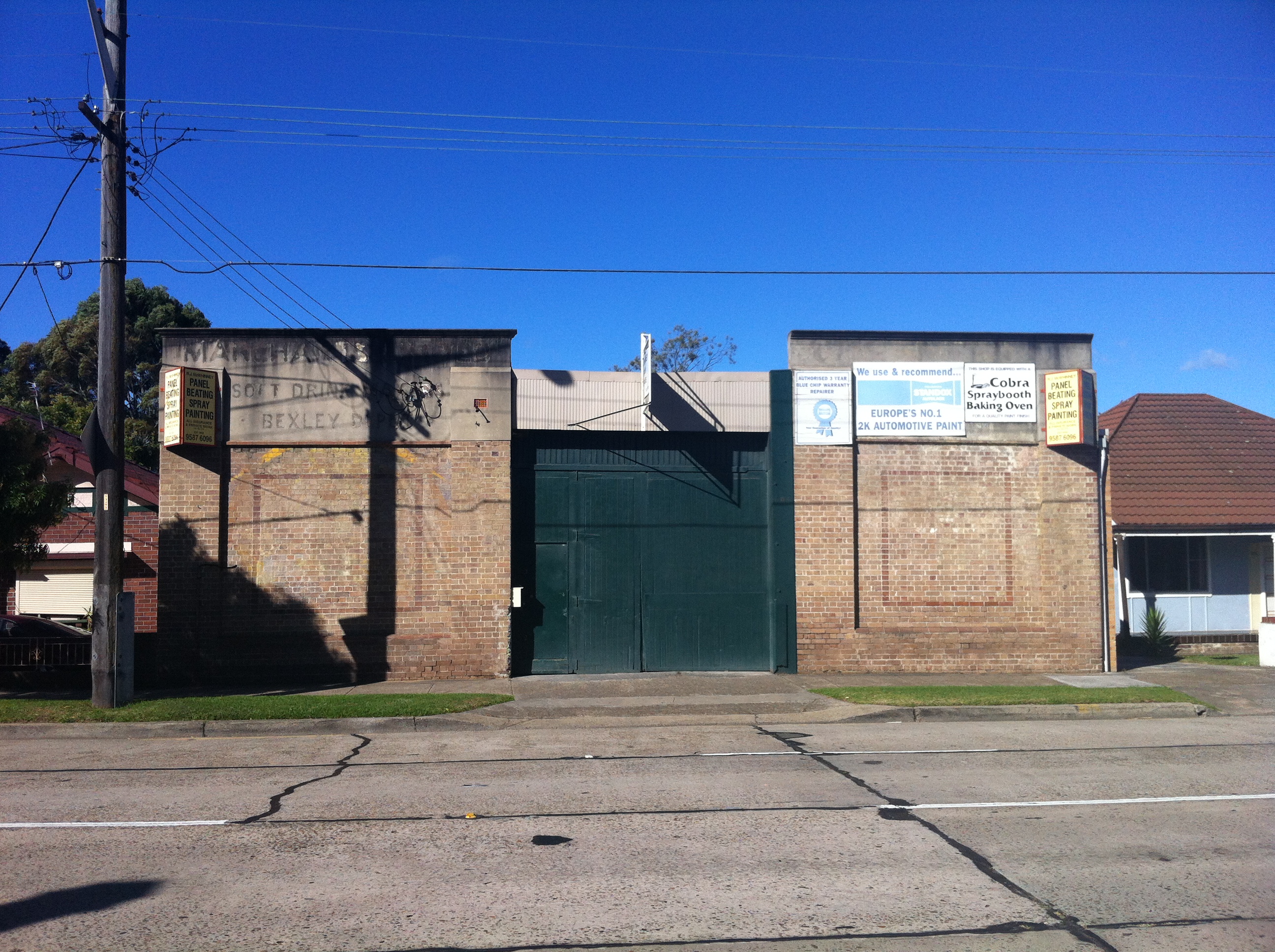
Let’s not beat around the bush – the building looks old. The Bexley depot of the Marchants soft drink empire may be a panel beater now, but it’s clear to see how it would have been back then. It looks like a horse and cart might explode from behind that door at any second in a frenzied rush to deliver kegs of creaming soda, just like in the olden days.
George Marchant was known for his strong belief in social equality, and women workers in his factories earned more than the average female wage in the food industry at the time. When the soft drink company’s registration was abandoned in 1917, the brand name was sold off and kicked around for decades between Pepsi, Shelleys, and ultimately Coca-Cola, which owns the brand today. Marchant himself died in 1941, by which time this site was long since out of the soft drink business. Hmm…I’m thirsty.

 Past/Lives of the Near Future