E. Way & Co/Pandora – Pitt Street, Sydney NSW

At the dawn of the retail era, several big names were standing out amongst the dross in Sydney. Pitt Street was quickly becoming the place to be for all department stores, and David Jones was king. One of the apparent heirs to the throne was E. Way & Company. Originally a drapery claiming to the be the cheapest in Sydney (on Pitt Street? Yeah, right), E. Way was established as a department store in 1891. E. Way was acquired in 1955 by Farmers, which itself was acquired in 1961 by the Myer juggernaut.

E. Way & Co, 1944. Image courtesy State Library NSW.
These days, jewellery store Pandora occupies the tiny building that once featured a grand display to rival DJ’s. Look at how small (yet grand) the building is in comparison to the monstrous Westfield, and you get a sense of how easily satisfied shoppers were back then. It’s sad to think about how quickly these kinds of acquisitions and mergers can absolutely eliminate a brand, and E. Way is just another victim ‘honoured’ with an unreachable, leftover facade. It’s more a case of ‘it’s not worth bothering to take it down’ than ‘leave it up for history’s sake’. Isn’t it always the Way?
Mortuary Station/Regent Street Station – Chippendale, NSW
Picture this: it’s 1869, and you’re dead. The funeral’s at Rookwood Cemetery at 10am, and you’re in Chippendale. It’s 9:30am. You have no money. What to do? How will you get there in time?

Mortuary Station, 1871. Image courtesy State Library NSW.
At the time of its construction, the Mortuary Station was adjacent to the original Central Station, then known as Sydney Station. Despite a misleading mural beside the station on the train track side attributing its design to Florence Mary Taylor, Australia’s first female engineer and architect born ten years after its completion, it was in fact designed by colonial architect James Barnet. Barnet also designed Mortuary’s sister station at Rookwood, but more on that next time.

The sombre design is perfectly suited to the task performed by the station, and the gothic detail is fantastic. Standing before it, you can only imagine how many mourners boarded trains bound for their loved ones’ final stop. Funeral trains would depart from Mortuary Station each day for either Rookwood, Woronora or Sandgate cemeteries. By 1927 the cost of a ride was around four shillings (roughly 40c); corpses traveled for free.

Mortuary Station, 1871. Image courtesy State Library NSW.
And didn’t the station live up to its name! Beneath the gloomy facade was an insatiable bloodlust:

Singleton Argus, 10 Mar 1925.

Barrier Miner, 13 May 1930.
Sometimes, trains didn’t even have to be involved in the carnage:

SMH, 24 Feb 1903.
Spooky. Gotta wonder if these guys ended up on one of the trains at the station. Speaking of spooky, it is alleged that the station is haunted. Further rumours suggest that a building across the road once operated as a mortuary itself, and that there exists a tunnel beneath the road connecting this building to the station. Evidence is pretty much non-existent, but if you know more, let Past/Lives know.

Mortuary Station, Newtown, 1965. Image courtesy sydneyarchives.info.
In 1875, at the height of Mortuary-mania, a junior version of the Mortuary Station was set up at Newtown to provide a starting point for mourners unable to reach the city. It was in keeping with the design of the original, but didn’t have the staying power. It was demolished in 1965.

Eventually, Sydney’s roads got to a standard that corpses could be taken to the cemeteries by car. If the roads then were anything like they are now, I’m presuming most of the deaths were caused by starvation or perhaps boredom from being stuck in traffic for so long. There became less and less of a need for funeral trains, despite complaints like these in 1925:

SMH, 3 Dec 1925.
Overcrowded trains aren’t just a modern problem. Anyway, in 1938 the Mortuary Station closed and the cemetery services departed from Central instead until they themselves ceased operation ten years later. Not long after its closure, the Mortuary Station was renamed Regent Street Station and used for dog trains, which took dogs to races in Wollongong and Gosford. I’d like to think corpses could still travel for free.

Since 1981 the station has been restored a number of times. In 1986, it became the site of a pancake restaurant: Magic Mortuary. Four train cars were stationed beside the platform, and hosted meals, live shows and a gift shop. Thankfully, this grotesque display only lasted three years. It’s currently undergoing further refurbishment since those graffiti scallywags are always tagging it, but an optimistic sign out the front expects refurbishment to be completed by the end of 2011! Hope so!
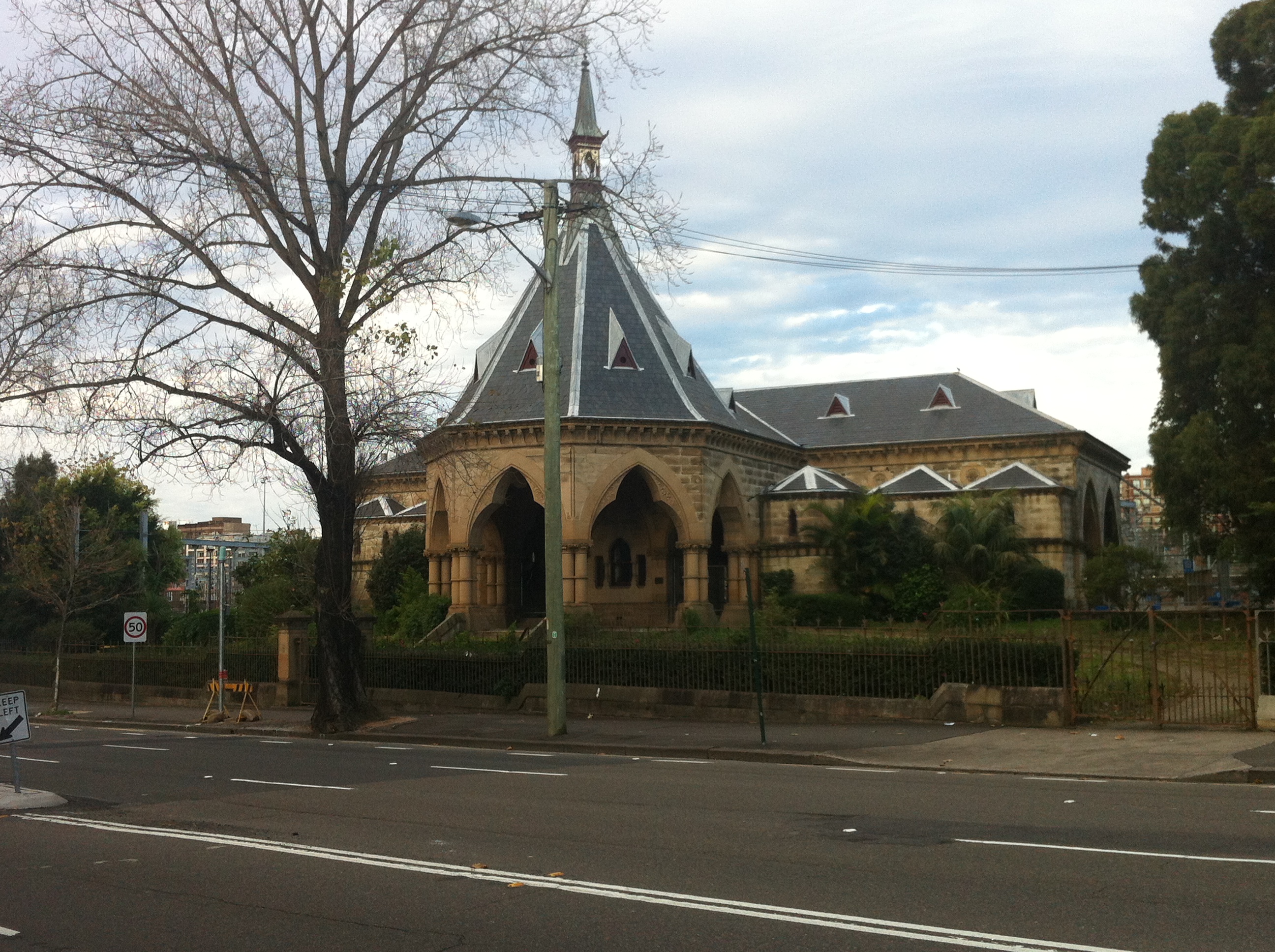
The Mortuary Station’s a strange, jarring sight along the changing face of Regent Street – across the road lie the remains of the Kent Brewery and the empty shells of the pubs that used to surround it. It’s heritage listed, but so was the Sharpie’s Golf House sign. Nothing lasts forever, and it’s only a matter of time until the station itself goes for that last ride.
Next stop, Rookwood…
Update: One year later, let’s take a closer look at that mural…
Bank of New South Wales/Allans Music – Sydney, NSW

This building features an interesting double-shot of 19th century enterprise.
First we have the Bank of New South Wales, established in 1817, making it Australia’s oldest operating company. “But wait,” I hear you saying. “It’s not around today. How could it possibly be Australia’s oldest company?” I’m glad you asked. Between 1850 and 1910, the bank established branches around the country, and also in Fiji and Papua New Guinea (despite Bank of NSW meaning jack to people over there). From 1927 the bank went on a mad spree of acquisitions, buying out the Western Australian Bank and the Australian Bank of Commerce and culminating in a merger with the Commercial Bank of Australia in 1982 giving rise to Westpac. And thus…evil is born.
On the other side, we have Allans Music, which I was surprised to learn was established in Melbourne in 1850. Allans by the turn of the 20th century was the biggest music retailer in the southern hemisphere (but where was the competition?). In the 70s, Brashs decided it wanted a piece of the Allans action and acquired the company. When Brashs went under in the late 90s, Allans emerged unscathed and under new ownership. It merged with Billy Hyde Music in 2010 to become a kind of super music conglomerate, the sort that’ll be feeding us through tubes and stealing our vitality 200 years from now. Incidentally, the building to the right of Allans was the Greater Union Pitt Centre, and beside that lived a Brashs for many years. Even the Greater Union became a cut-price CD shop for a time after its closure, and the Galeries Victoria’s JB Hifi sits across the street. This section of Pitt Street has never managed to shake its musical heritage.
Sussex Street Public School/Flying Angel Seafarers Centre/For Sale – Sydney, NSW

Old school: Sussex Street Public School in the 1880s. Image courtesy NSW Dept of Education
Between 1878 and 1913, Sussex Street Public School was one of the ‘most important’ schools in Sydney. Here’s a former student’s testimonial:

SMH, 10 Jun 1908
And it goes on like that. Some people are whingers, aren’t they?
A notable former pupil was the late NSW Labor politician Frank Hill, who was implicated in a Communist Party infiltration of the ALP in the early 1940s. The reds were pushing a ‘Hands off Russia campaign” following the signing of the Molotov-Ribbentrop Pact, which would have meant Australian neutrality in the Second World War. Former NSW Premier Jack Lang was so opposed to everything about that that he withdrew from the ALP and started a new party called the ‘Australian Labor Party (Non-Communist)’. These goings-on led to the disintegration of NSW Labor in the 40s, prompting the Federal ALP to intervene and sort things out, and of course during all this nonsense the Russians became our allies anyway. Hill died in 1945, widely regarded as a dupe during the scandal. Imagine if he’d gone to an unimportant school.
Also in 1945, Hill’s old school was acquired by the Sydney Technical College and used in that capacity until 1990, when it was sold to the Sydney Bethel Union. They turned it into the Flying Angel Seafarers House, run by the Mission to Seafarers. Incidentally, the Mission to Seafarers was unfortunately known as the Mission to Seamen until 2000, when they changed their name “in recognition of the changes that had occurred in merchant services and in the world of seafaring”. Sure.
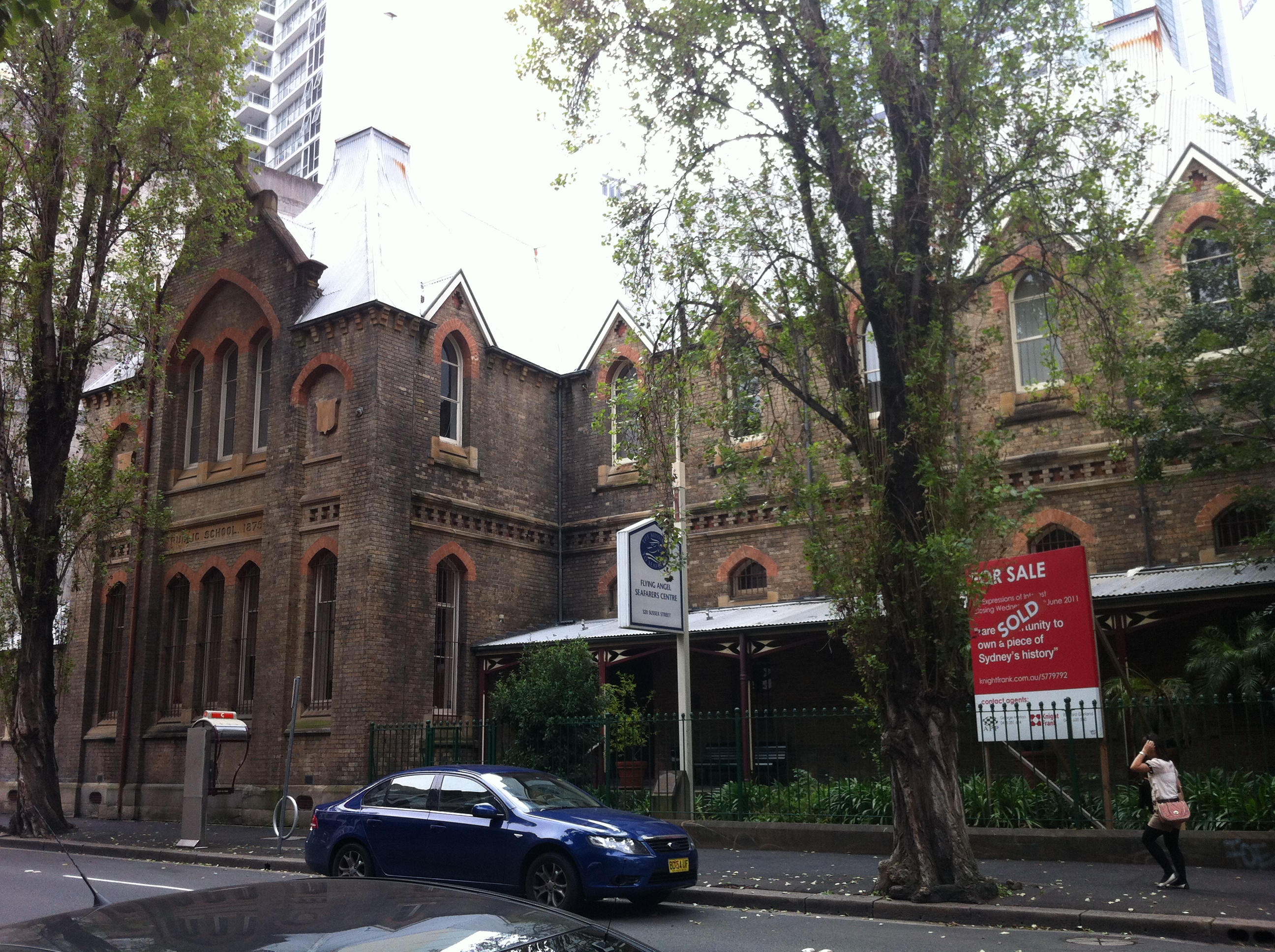
The Flying Angels decided in 2011 that they could help more seafarers down by the sea, and later this year plan to move to Walsh Bay. The building was subsequently put back on the market, and recently sold. It’s said that the Chinese Government was very close to buying the property at one stage…maybe Hill was more red than we thought?
Sir Joseph Banks Hotel/Sir Joseph Banks Hotel – Botany, NSW
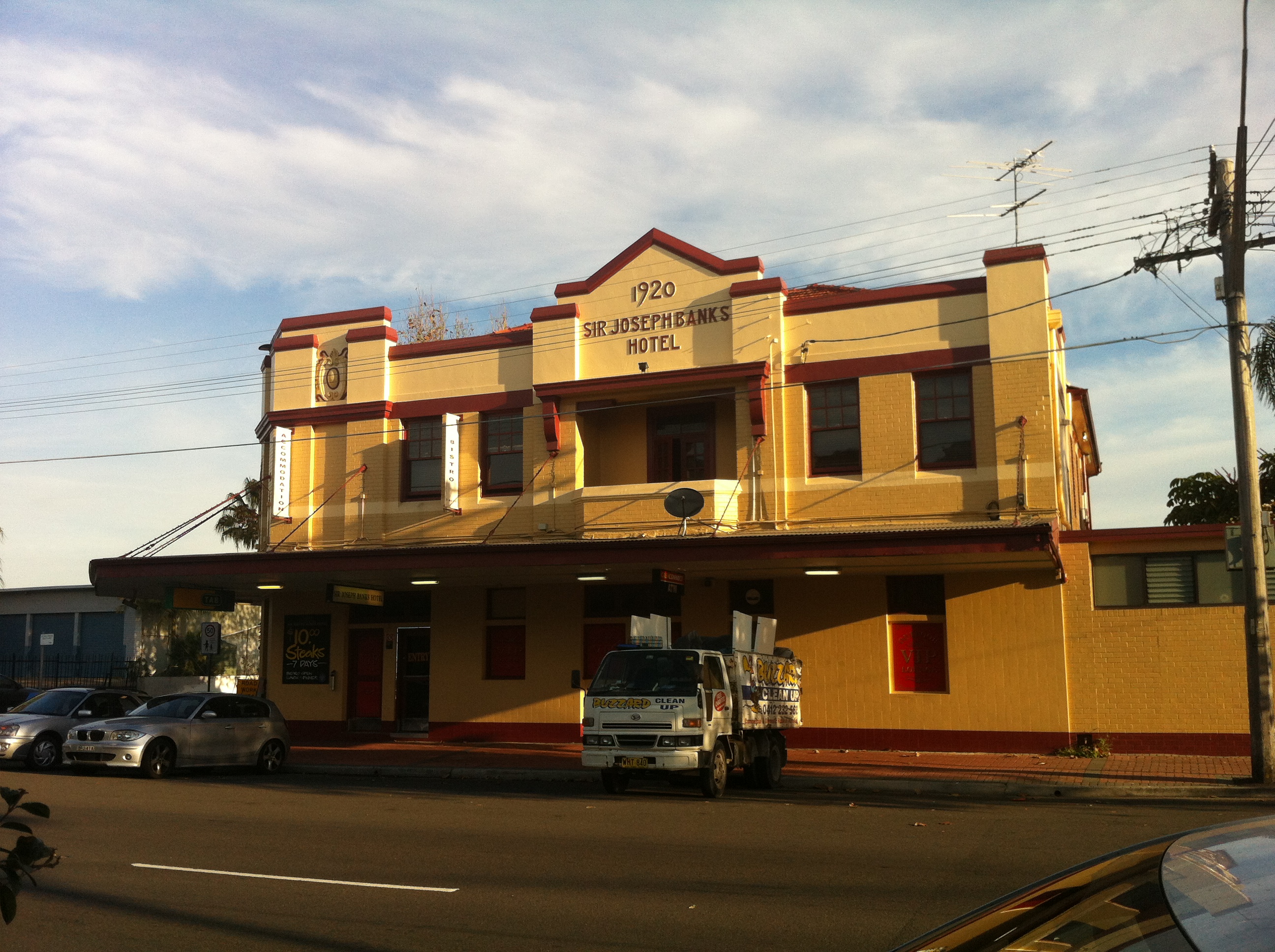
The Sir Joseph Banks Hotel, Botany Road.
While spending time in Botany yesterday, I walked past the Sir Joseph Banks Hotel on Botany Road, turned down Waratah Road, and found myself staring at…the Sir Joseph Banks Hotel? What?!
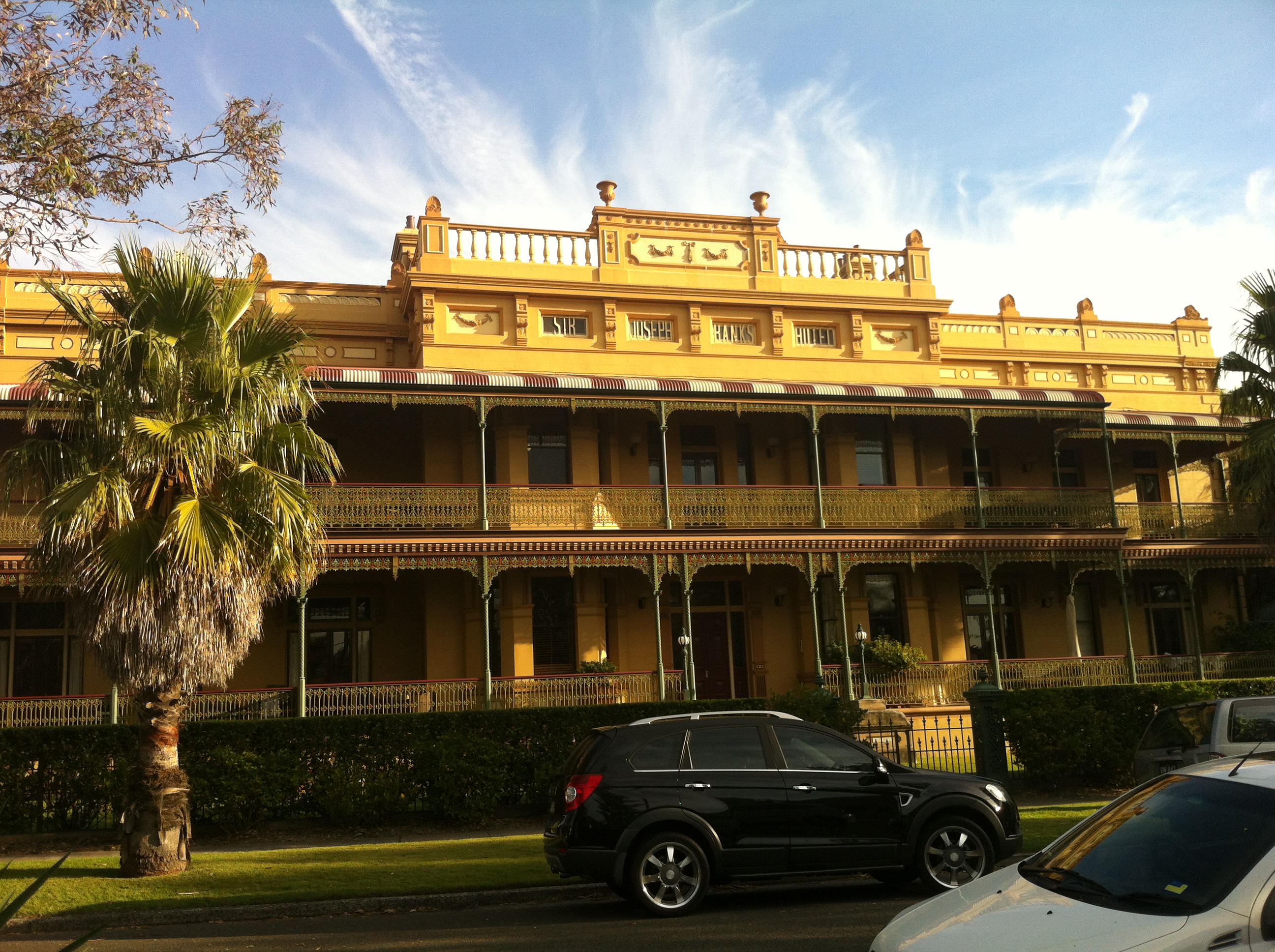
The Sir Joseph Banks Hotel, Anniversary Street.
This bigger hotel stood in front of a large park, so I’ll fill you in as we explore the park. It turned out that this hotel was the original Sir Joseph Banks Hotel, built in 1844. In 1920, the second Sir Joe was built on Botany Road, and the pub license was transferred to it, leaving the original free to become private units, which is how it is today.
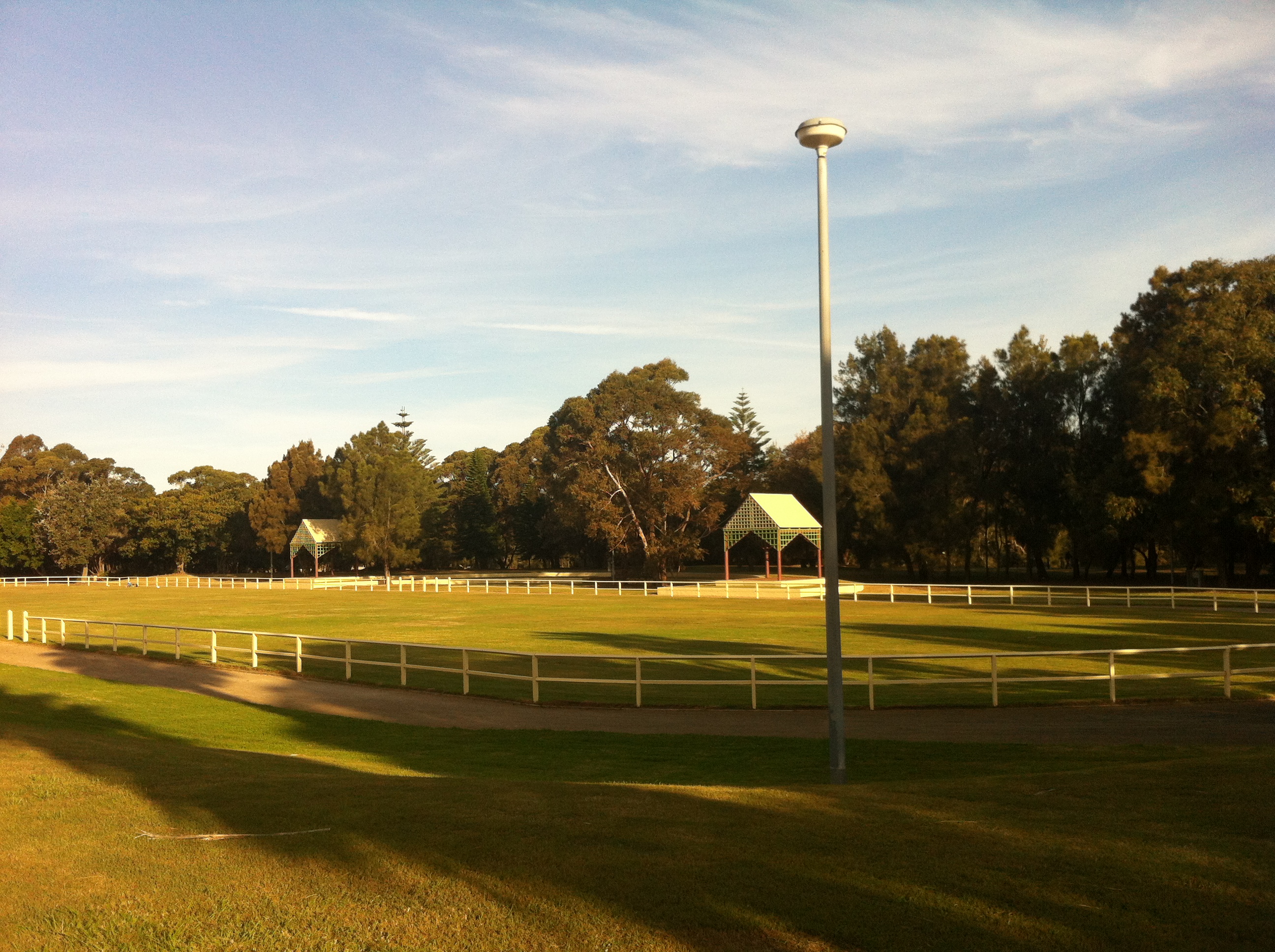
Running track, Sir Joseph Banks Pleasure Gardens.
That’s the dull part out of the way. The interesting part of this place is the garden, which has provided Sydney with a few major firsts since 1850. Here, at the garden’s running track, foot racing events were *yawn* held throughout the 1880s during the… professional running boom…I know, I know. We’ll get there.
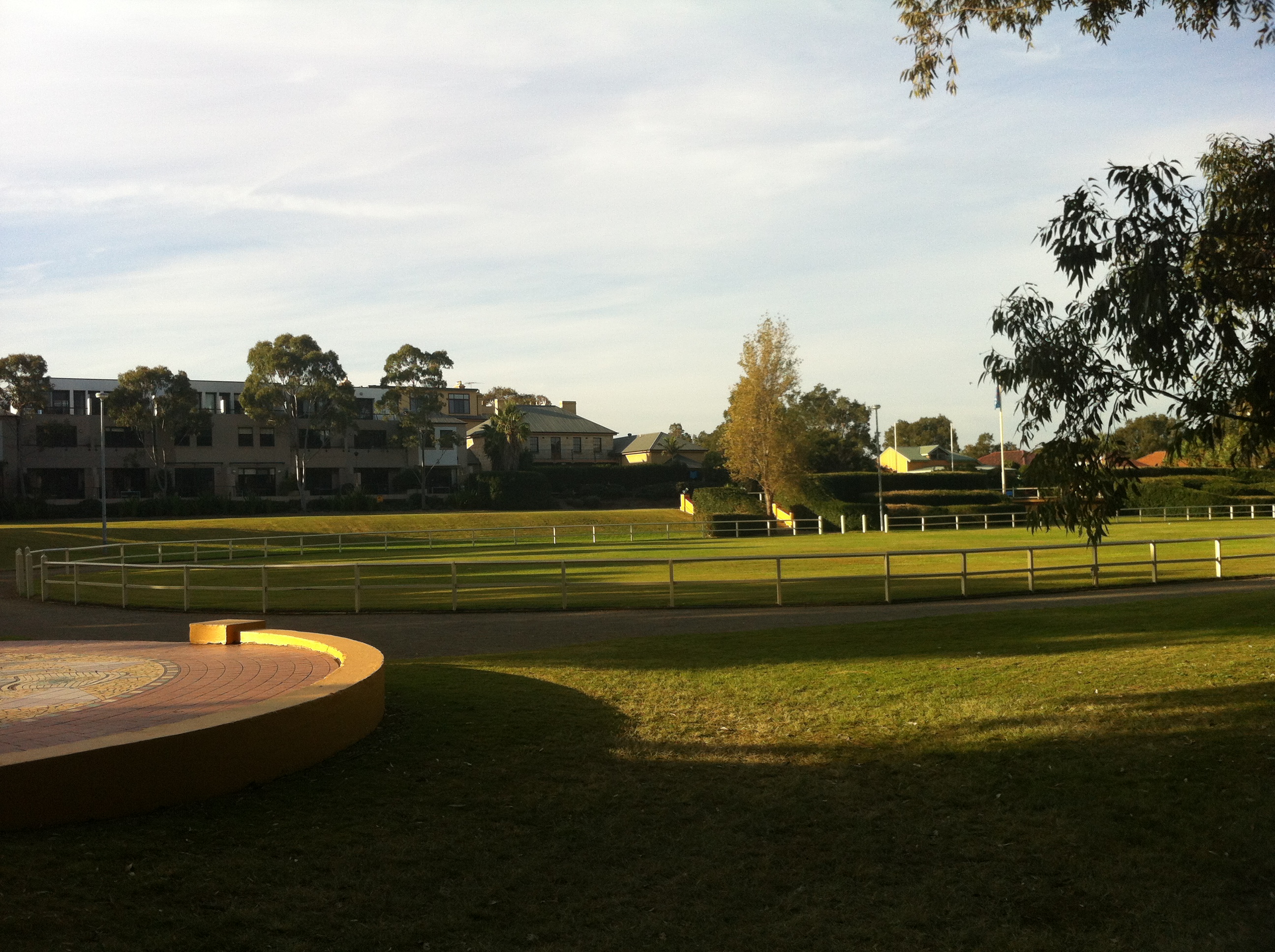
Also held at this running track was Australia’s first game of representative rugby league, in which the South Sydney Probables clashed with the Possibles. I’m guessing the Likelies played against the Maybes the week after.
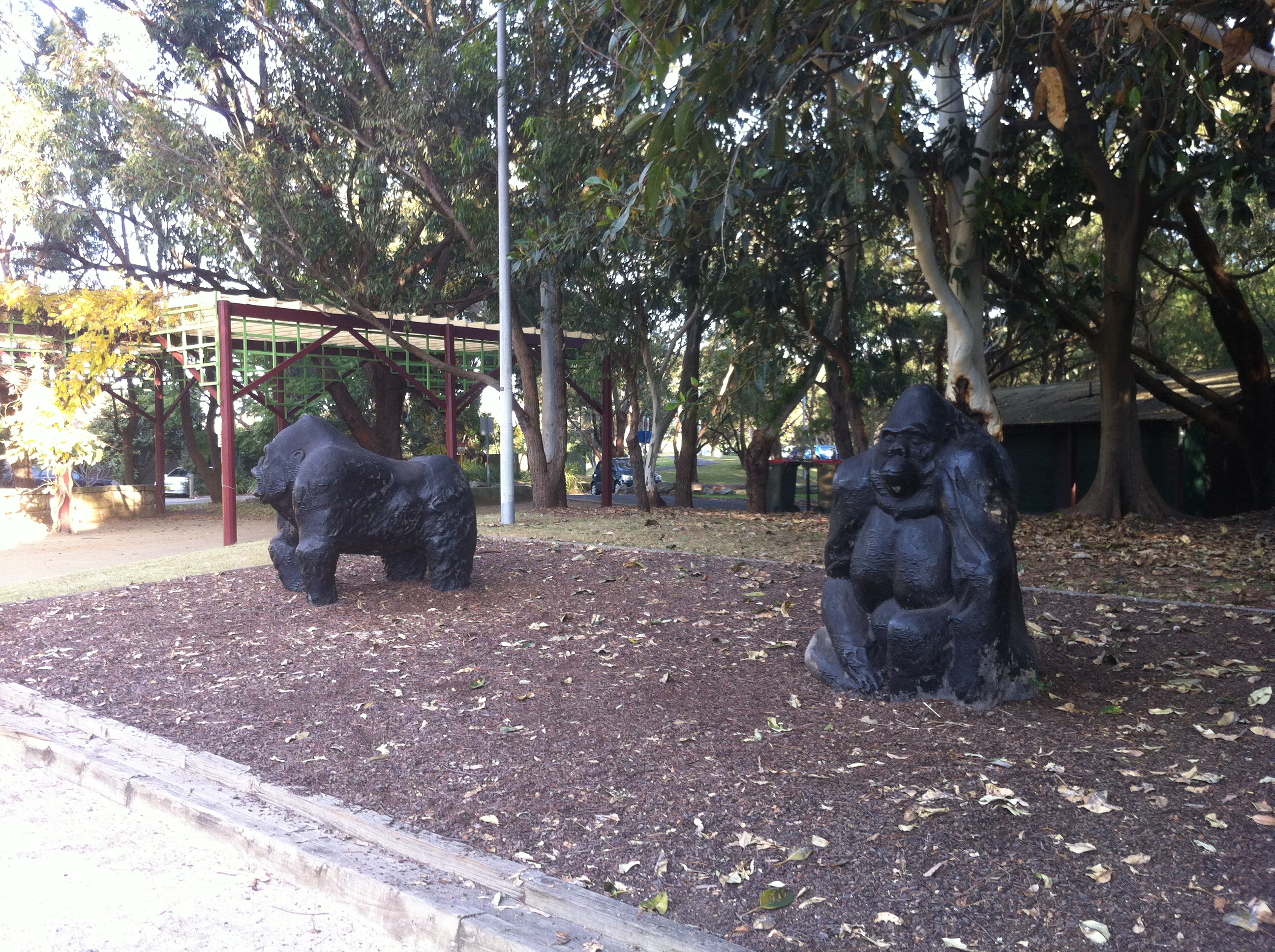
Okay, now, the most interesting thing about this park is that it was home to Australia’s first zoo. The site’s owner at the time, a timber merchant named William Beaumont, improved the hotel and created the ‘Pleasure Gardens’, which is a more scandalous and giggle-inducing name today than it would have been back then. The gardens included the private zoo.
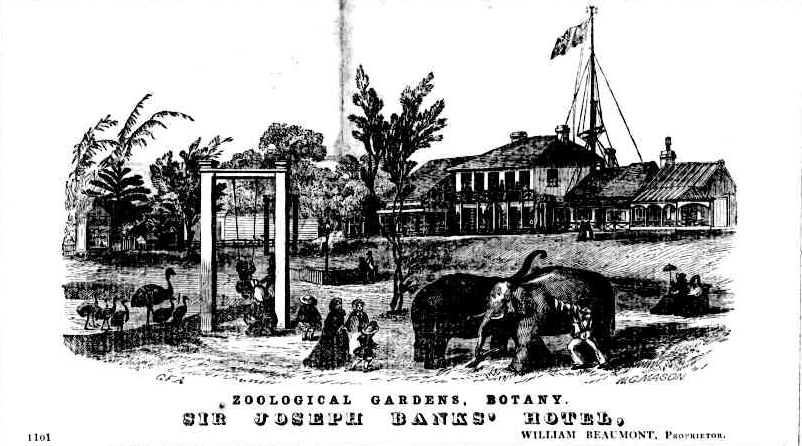
Bell’s Life in Sydney and Sporting Reviewer, Sat 27 Sep, 1856.
It’s hard to imagine tigers and elephants wandering around the grounds these days, so to assist you, the City of Botany Bay has erected a series of life size animal statues. In a way it helps, but in another way it’s kind of creepy. Judge for yourself.
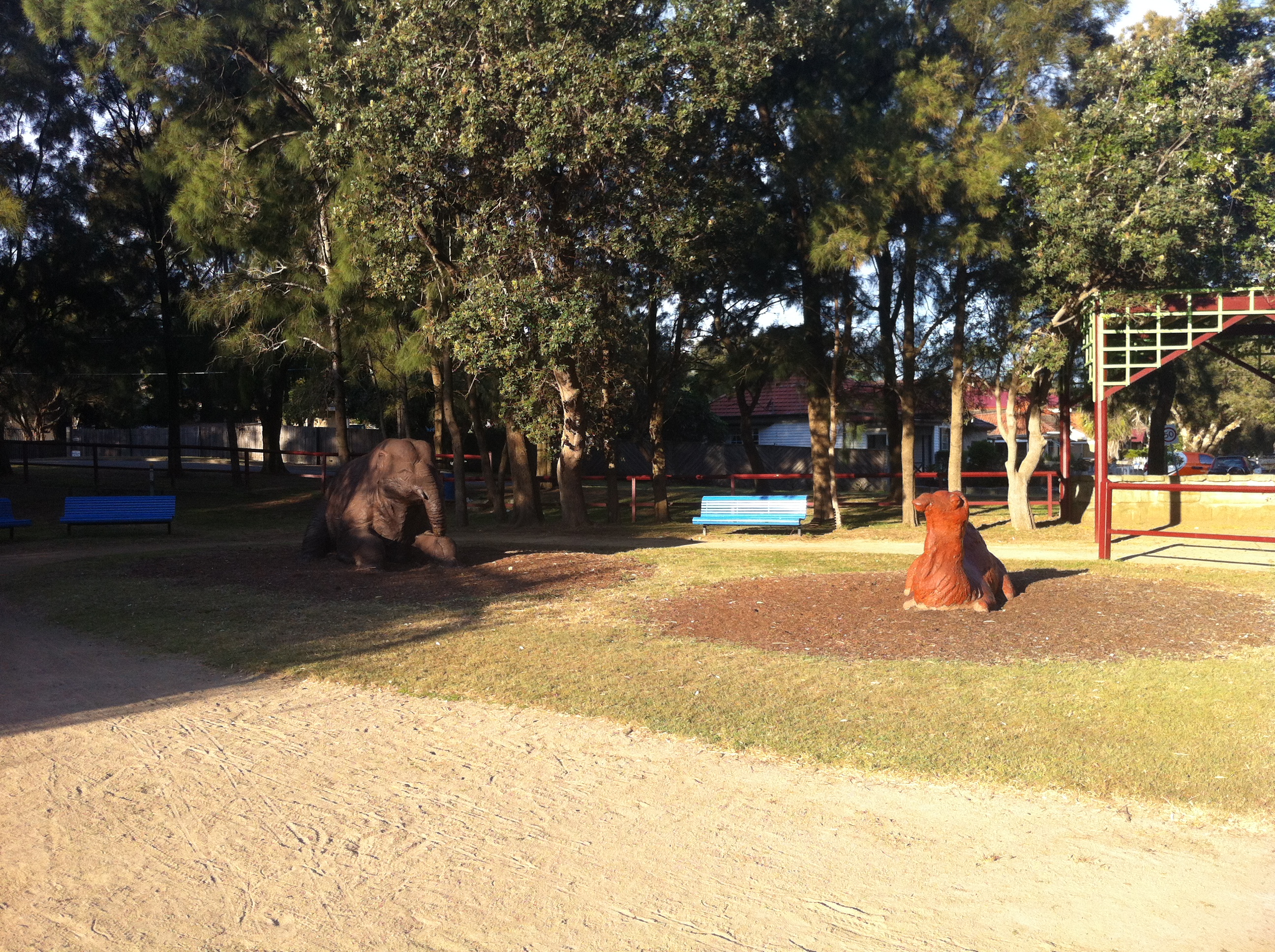
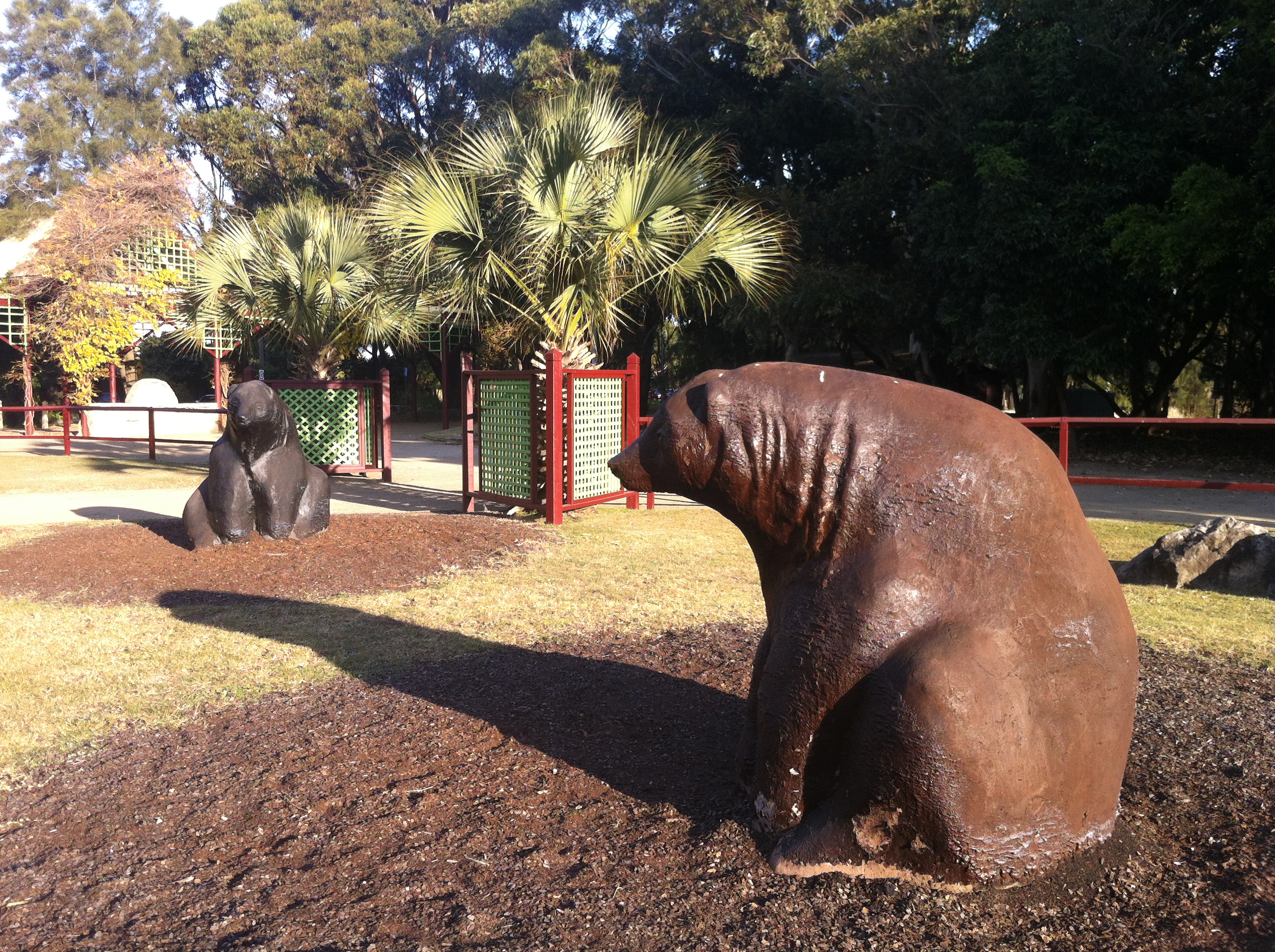
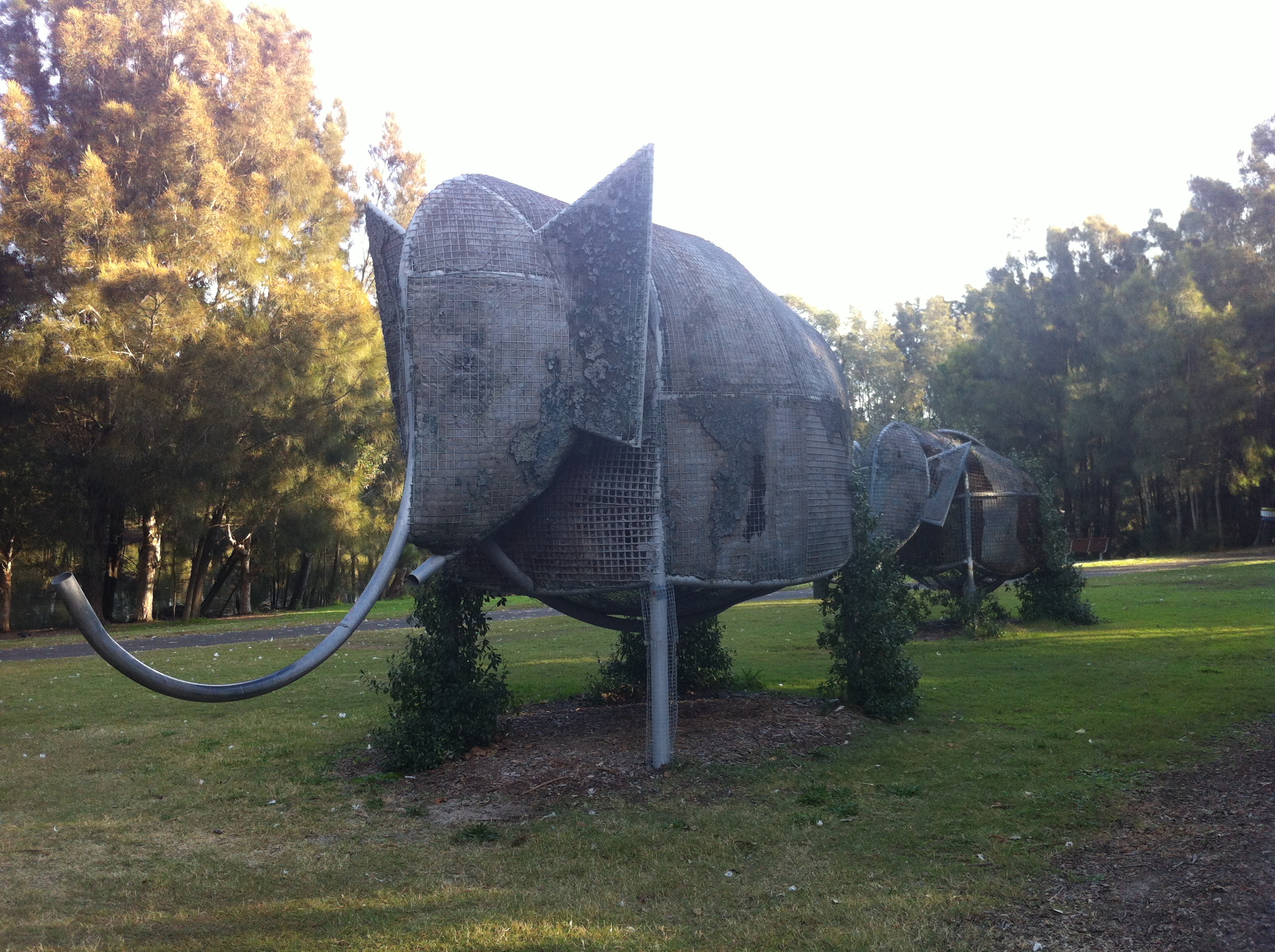
The park was entirely restored and upgraded for the Bicentenary in 1988, and the effort’s corporate sponsors were immortalised in concrete at the east end of the park.
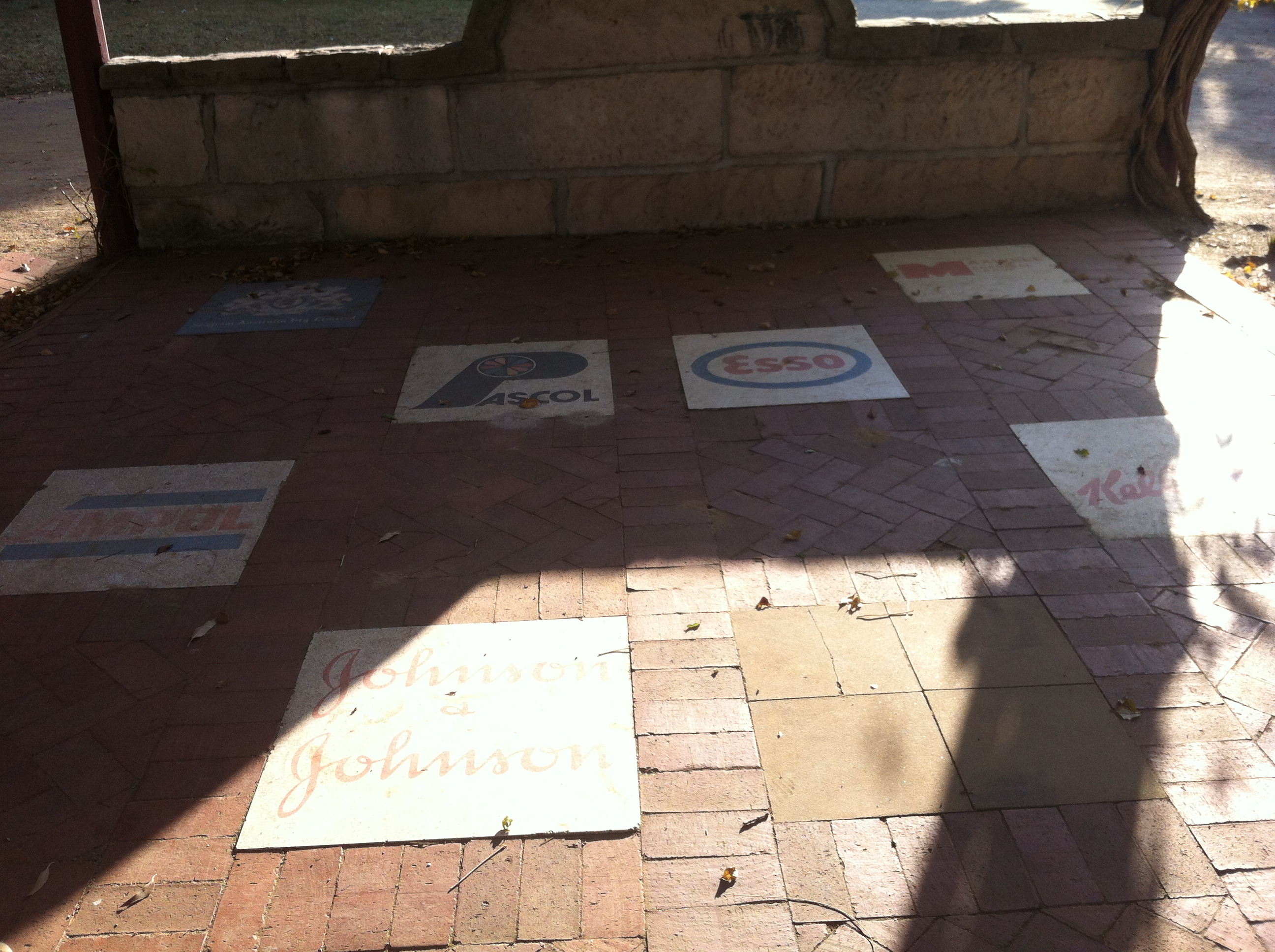
It’s interesting to note just how few of these brand names are widely visible today. Ampol and Esso were both absorbed by their parent companies, proving once again that no one is safe from the Big Oil Killuminati. Maxwell Chemical Corporation, which is just the kind of name you want to see emblazoned on your pleasure garden, has moved offshore. Seagram seems to have disappeared from the corporate environment in New South Wales, at least. Even Pascol Paints has been absorbed by Wattyl, going against all advice you were ever given about mixing paints.
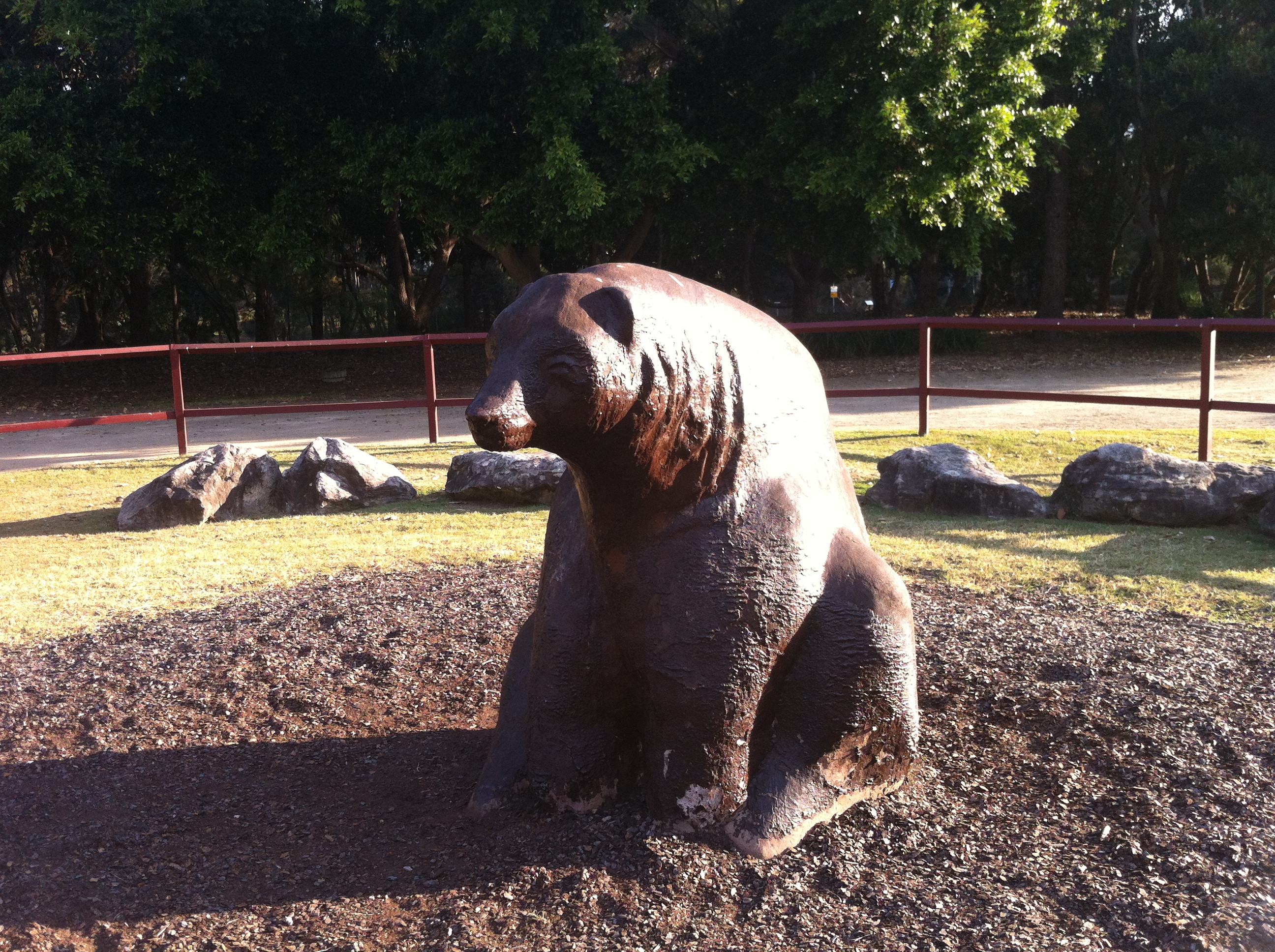
The most striking thing about this place is how secluded it feels. It’s off the main road, but the whole suburb of Botany feels a world away from Sydney as it is. I suppose in that regard, it was the perfect environment for a zoo. The most important feature of the garden today are the series of ponds that form protected wetlands. The whole park sits on land reclaimed from Botany Bay, so some attempt at looking after the marine life there is better than none at all.
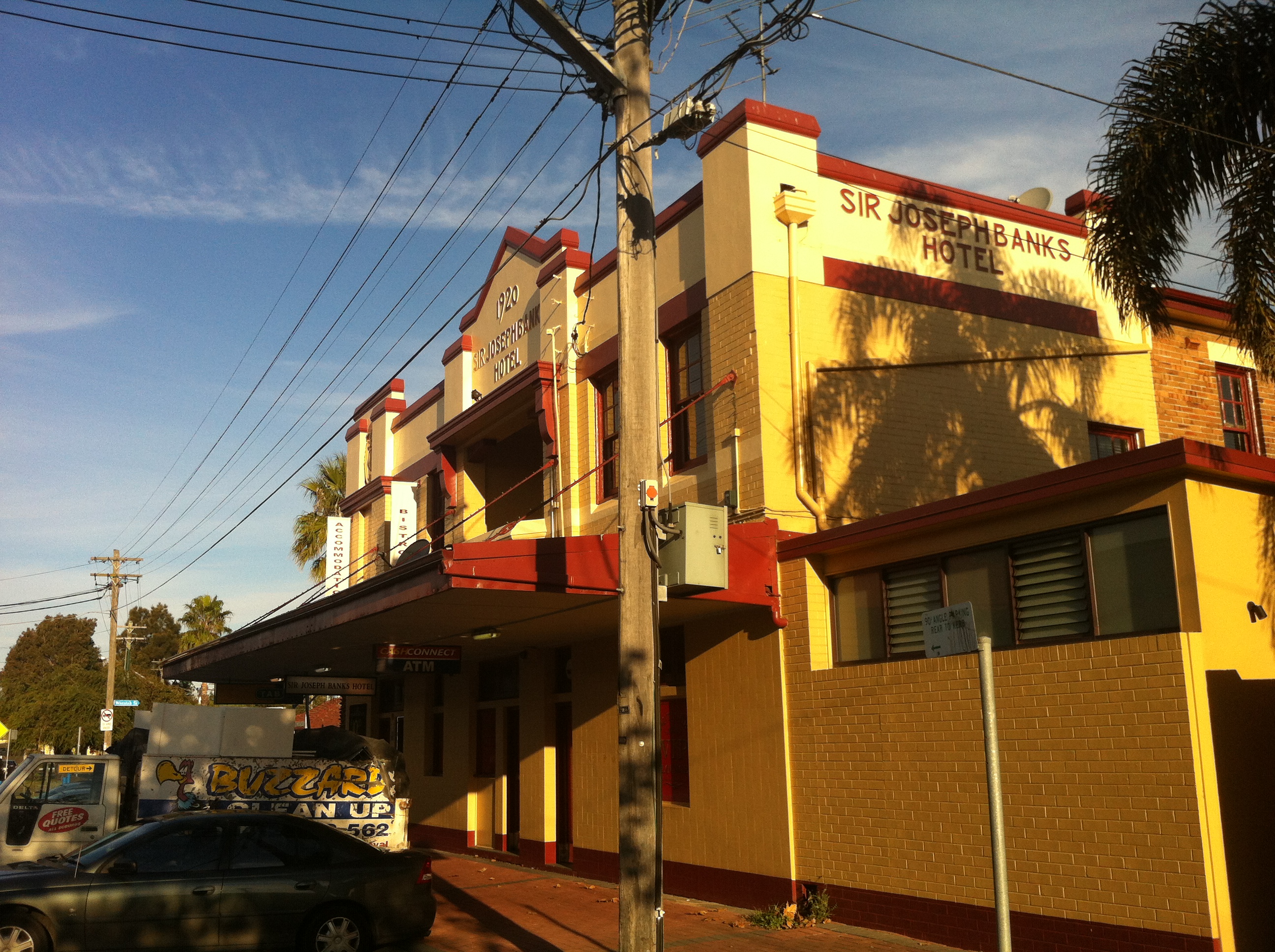
Meanwhile, up at the Sir Joseph Banks Hotel Pub Edition, you’d never know any of it was there. Here, they just sit, and drink, and smoke, and bet, and watch the millionth game of rugby league played since the days of probability vs possibility.
I think about it this way: the goings-on of the Sir Joseph Banks Pub on Botany Road are indicative of all that’s probable, but the Victorian wonderland and colourful history of the Sir Joseph Banks Hotel and Pleasure Gardens are all about what’s possible.

 Past/Lives of the Near Future