Paragon No. 2 Theatre/Australian Academy of Gymnastics – Belmore, NSW

Since 1928, the Paragon No. 2 has loomed over the intersection of Burwood Road and Knox Street, providing a monolithic eye-catcher for passers-by. It has remained remarkably well-preserved from its days as a cinema.
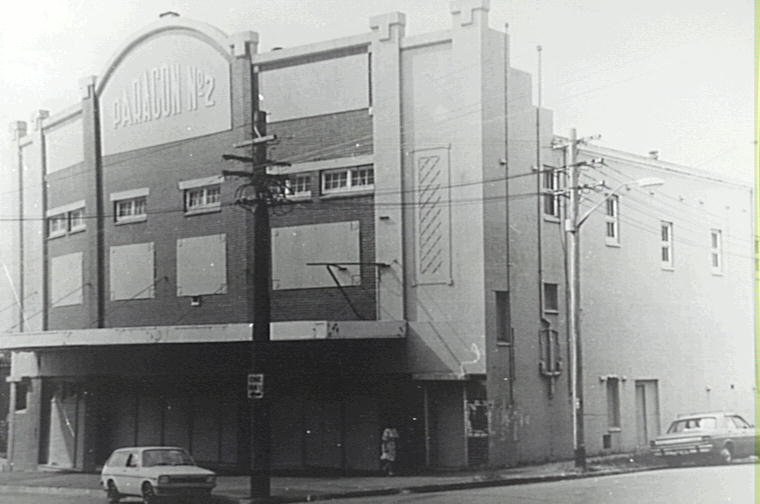
Paragon No. 2, 1981. Courtesy Barry Sharp and City of Canterbury Local History Photograph Collection
For thirty years, the Paragon No. 2 picture theatre provided Belmore locals with a venue for concerts, plays, movies and state government debates. Close to the train line, for years it was speculated that a train station would open up near the theatre, but the plan never went ahead. Knox Street was eventually cut off from Burwood Road, becoming a cul-de-sac and torpedoing easy access to the theatre by road. By June 1958, the time of its closure, the Paragon No. 2 had been operating on a restricted screening policy, further limiting its viability as a cinema.

Following its closure, the theatre was acquired by Jeldi Manufacturing, a Sydney-based textile company, who proceeded to use the building as storage for curtains and carpet.

In 1982, the site was discovered by Andre and Edwige Rizzo, a French couple who had migrated from France in 1970. Andre had represented France in gymnastics at the 1960 Rome Olympic Games, and was seeking to start a gymnastics academy. The Paragon No. 2 provided the perfect facility, enabling the gym to become the first club in NSW to provide both men’s and women’s training apparatus, and to function exclusively as a venue for artistic gymnastics.
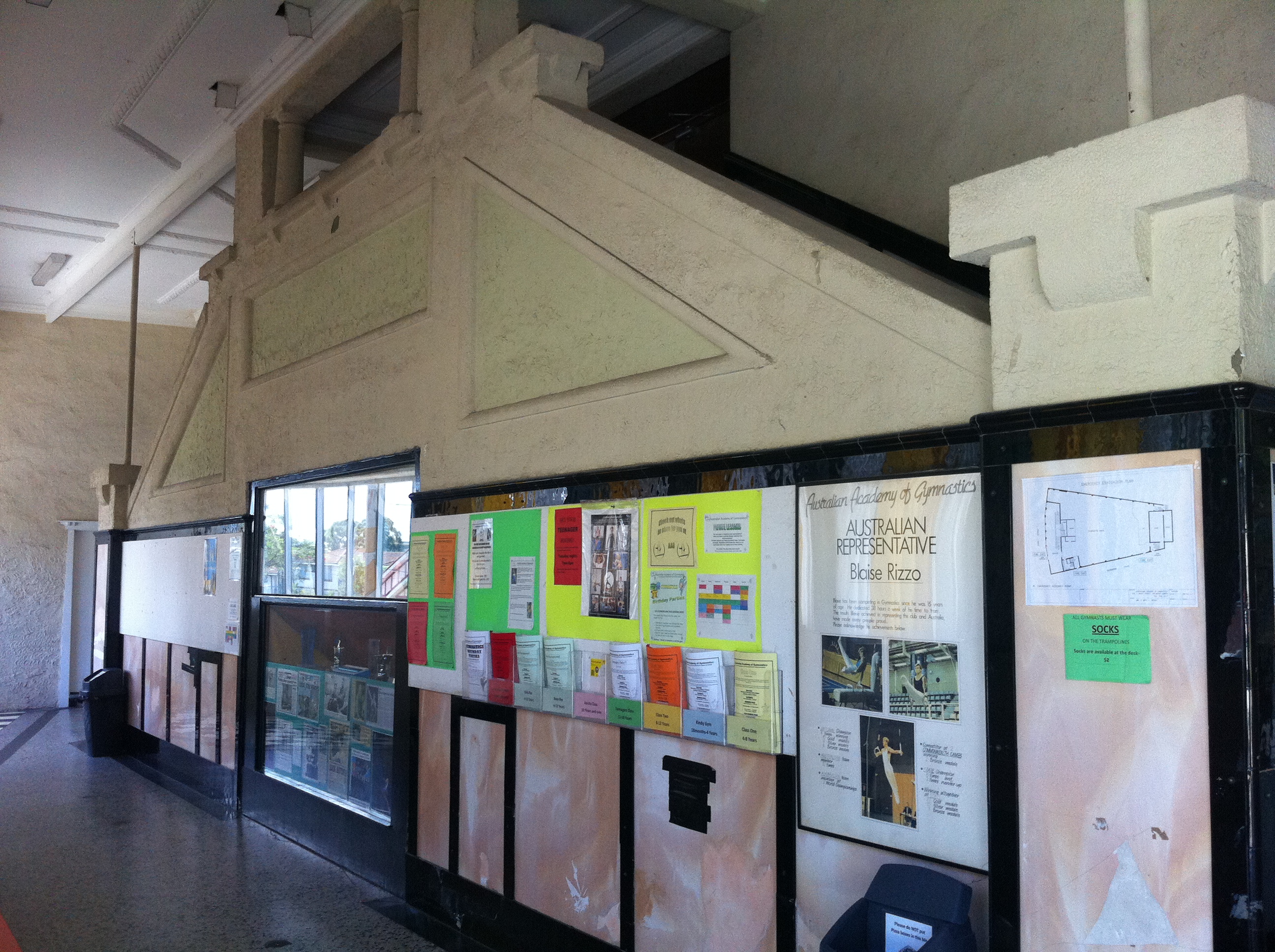
Aside from minor practical refurbishments, the lobby is in remarkable condition. At the centre of this staircase is the former box office, now a display case for the academy’s numerous achievements.
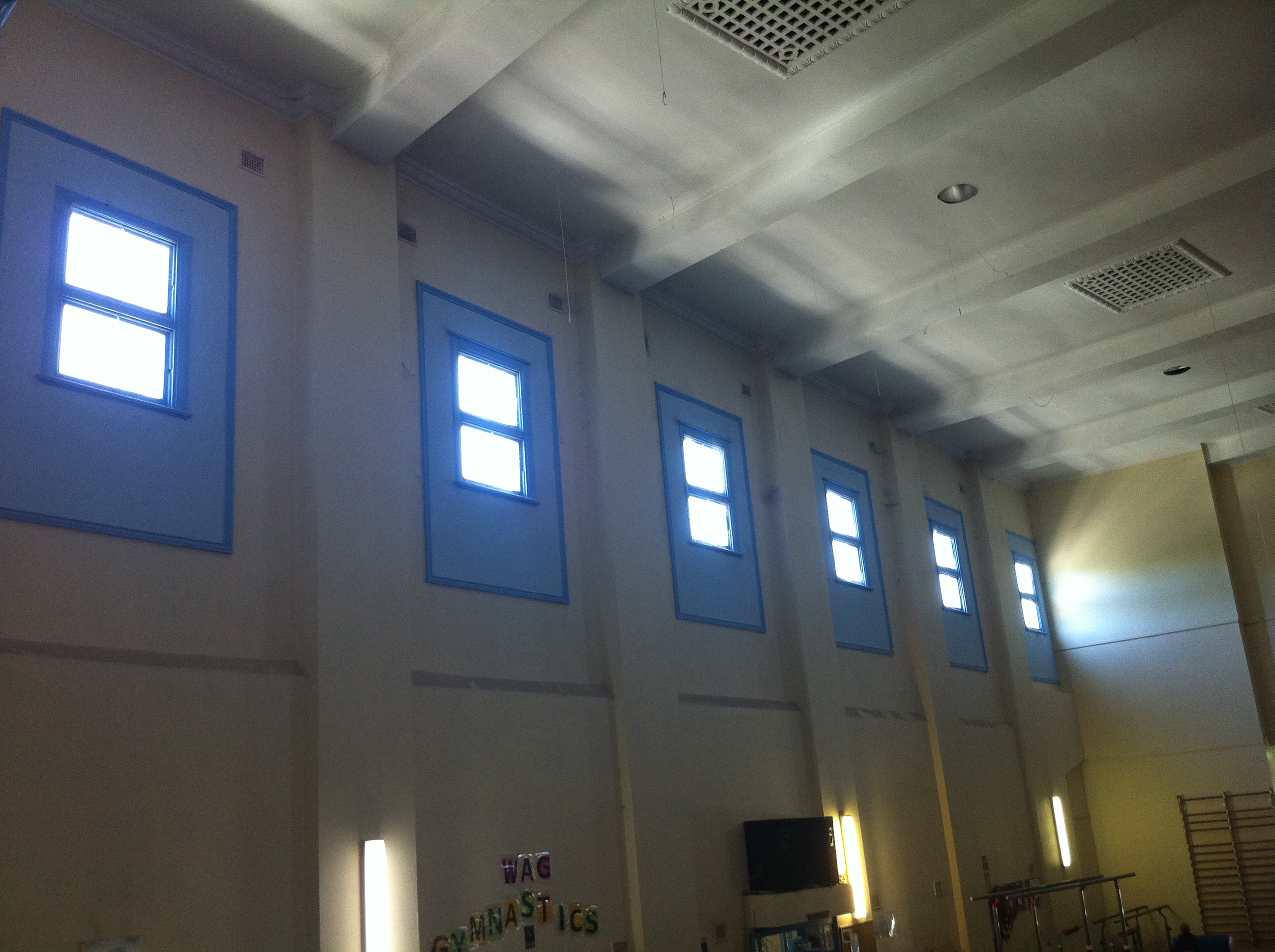
The theatre’s 1144 seats may be gone, but again, the interior isn’t unrecognisable as a cinema, and gives a good idea of what it would have looked like.
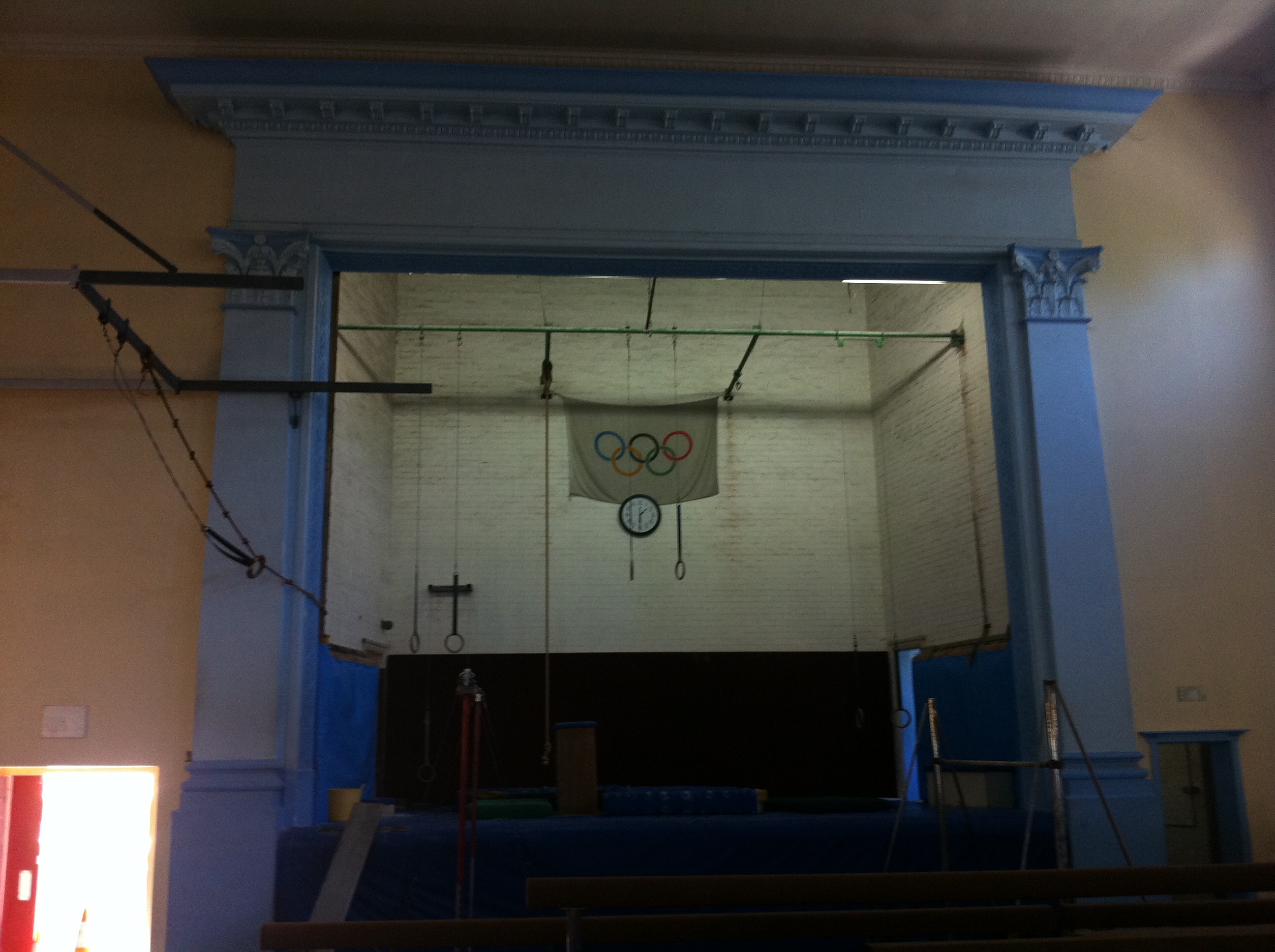
The Academy is currently run by Antoine and Shannon Rizzo, who are proud to have coached young gymnasts here for the last 30 years. At this stage, it’s been a gymnasium just about as long as it was a cinema. Given the success rate of the Academy (Antoine’s brother Philippe Rizzo is Australia’s most successful male gymnast), Paragon has proved a fitting name. I’m sure Jeldi had no complaints about the quality of storage, either.
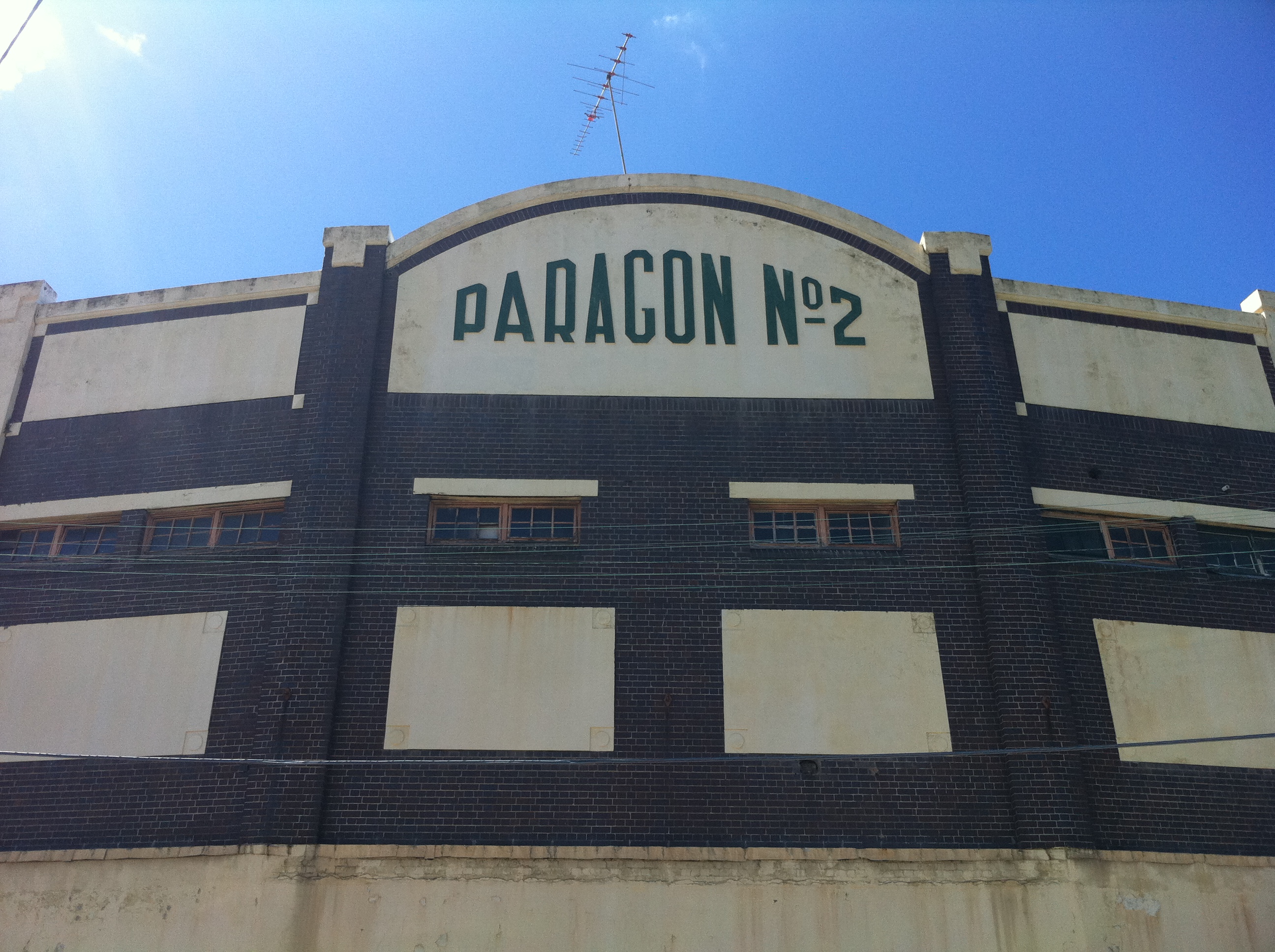
Of course, the name of the theatre begs the obvious question ‘what about Paragon No. 1 ?’. I asked Antoine Rizzo if he knew. He did:

To be continued…
A HUGE thanks to Antoine and Shannon Rizzo at the Australian Academy of Gymnastics for their generosity and assistance!
Padstow Star Cinema/Civic Video – Padstow, NSW

These days, we know it as Civic Video (or just Civic, if you go by the shopfront sign. I bet they’re dying to be able to remove the word ‘video’ from the rest of their signs, despite how cost ineffective that would be), but prior to 1984 this was the Padstow Star Cinema:

Padstow Star Cinema, 1964. Image courtesy Joe Simiana.
Built in 1952 as the sister cinema to the not-too-distant Panania Star, the Padstow Star was one of many suburban cinemas of old. It’s a concept you can barely imagine now, unless you live in Beverly Hills. In 1985 the cinema closed, with Caravan of Courage: An Ewok Adventure being its last screening. See, Ewoks do ruin everything.
Ever since, it’s been a house of movies in a very different way:

The interior has been refurbished, but it’s still quite easy to see what it originally was. The screen is a dead giveaway:

The projection booth remains as well, and is now the manager’s office judging by the angry, managerial eyes staring out at me when I tried to take a picture of it. Given the impending death of video shops, it’ll be interesting to see if this building gets yet another lease on life in Civic’s wake, or whether the residents of Padstow will have to start drinking for entertainment on a Friday night, like the rest of us.
Greater Union/Event Cinemas, George Street – Sydney, NSW

George Street's Greater Union and Hoyts cinemas, 1992. Image courtesy Sydney Cinema Flashbacks.
George Street’s cinema strip has undergone many drastic facelifts and overhauls, particularly since 1971, when the Trocadero dance hall was demolished to make room for the Hoyts cinemaplex. In 1983, two more cinemas, the Rapallo and the Paramount, were razed by their owner Greater Union to make way for a more modern moviegoing experience: the Greater Union cineplex above.
By the early 1990s that west side of George Street contained only the big three cinemas: Village, Greater Union and Hoyts. Around 1999, the Village was demolished and all three joined forces in the greatest union of all to form one giant megaplex. The Greater Union above was absorbed by the Hoyts complex and until 2005 operated as a joint venture. Now, Event Cinemas (formerly Greater Union) runs the entire cinema.
When the Greater Union building became a part of the Hoyts complex, the facade was brought into line with the Hoyts look. Today, almost nothing remains of the Greater Union building…

…but if we look in the alley around the back of the buildings, not only is the dated triangular awning still present on the Greater Union building, but even the Hoyts building retains its older style. When the complex became Event Cinemas, an expensive overhaul for the entire George Street face of the building was undertaken. I guess they decided the back alley wasn’t enough of an event.
How does the front of the Greater Union look today?

Big, faceless and grey: just like the rest of George Street.
Homebush Cinema/Niterider Theatre Restaurant/Midnight Star Reception Centre/Derelict – Homebush, NSW

This site, on Parramatta Road at Homebush, is notable for several reasons, but today we’ll be looking at this structure – the Midnight Star Reception Centre. The history is long and colourful: it was built as the Homebush Cinema in 1925, and the initials HT are still prominent above the awning.

In 1930, the Homebush Cinema Ltd. company was liquidated, and the building was bought by Western Suburbs Cinemas Ltd., a company that also managed cinemas at Burwood, Parramatta, Granville, Auburn and Strathfield. In 1939 the theatre was extensively refitted and relaunched as the Vogue Cinema. Acquisition by Hoyts in 1944 saw it renamed again as the Hoyts Vogue.
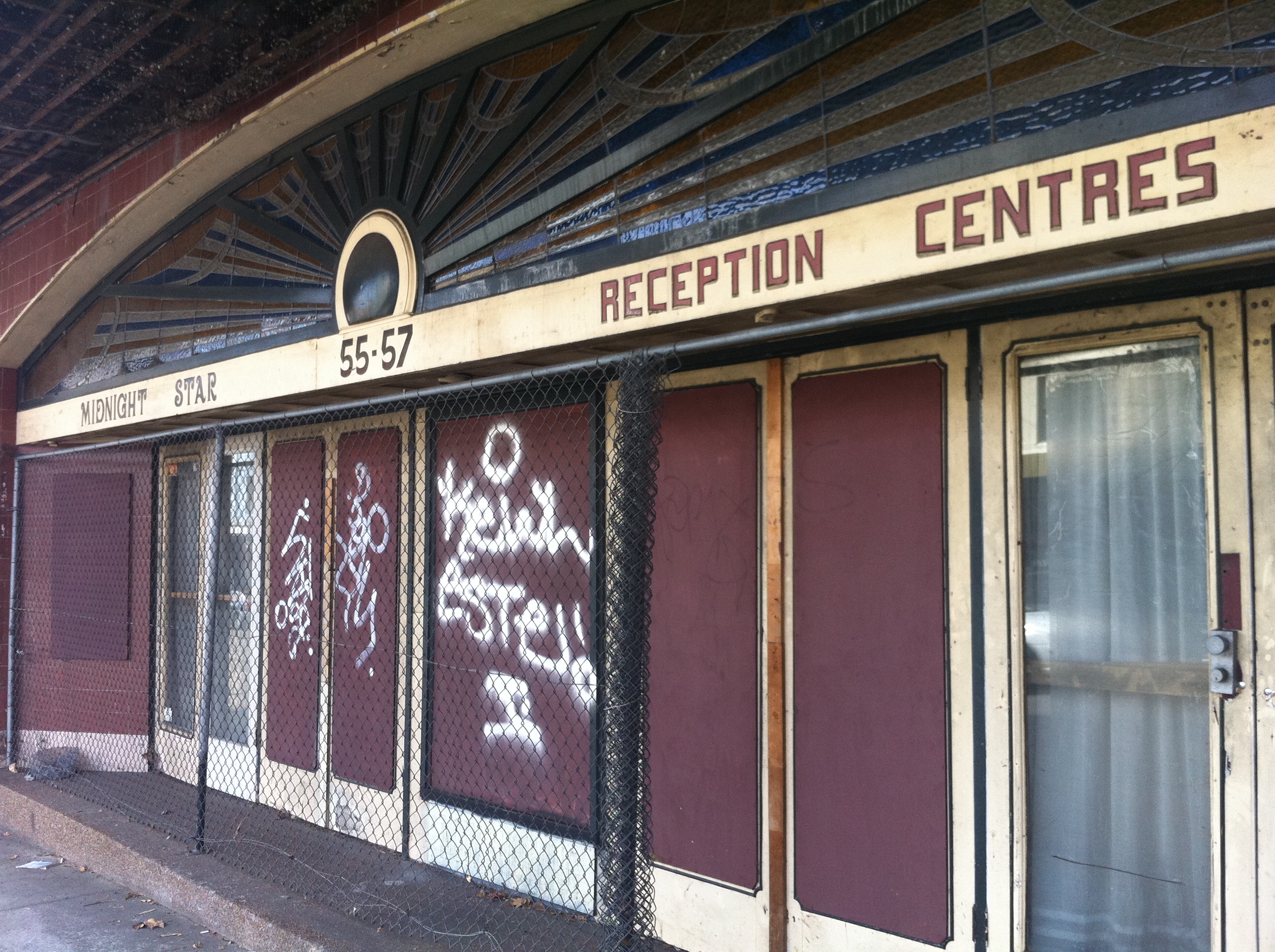
The building ceased operating as a cinema in 1959, and subsequently became an ice rink. In 1986 it was refitted again, and turned into the Niterider Theatre Restaurant.

Perhaps realising that the concept of theatre restaurant was in 1986 already past its use-by date, it was converted (badly) into the Midnight Star Reception Centre. Looking at the building now, you’d be hard pressed to decide whether it wanted to be the Niterider or the Midnight Star, such was the amount of signage left up. The refitters must have been the mob Pizza Hut used, given how sloppily it was done. The Midnight Star operated until 1996(!). This is where things really get interesting…

The building sat derelict for many years, not an unusual sight along Parramatta Road. It’s sad to say that Sydney’s most important arterial road is peppered with derelict buildings like this. Karma works in mysterious ways, however, as in 2002 the Midnight Star got another lease on life…just without a lease.
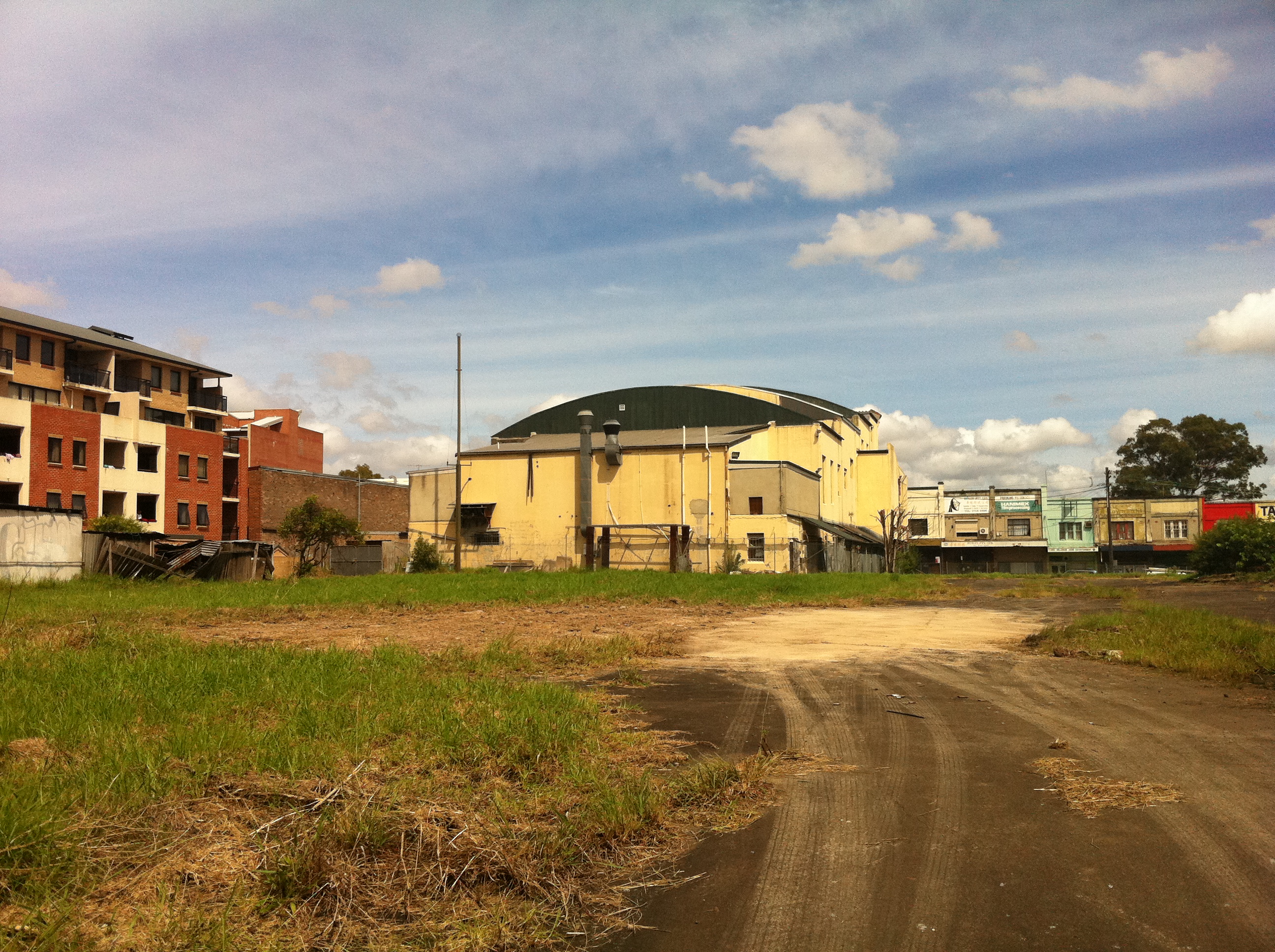
In February of that year, squatters occupied the vacant building and renamed it the Midnight Star Social Centre. For eight months, and apparently with the begrudging consent of both the owner and the police, it was used as a hub for raves, gigs, pirate cinema screenings, an internet workspace and various activist meetings. The media eventually identified the Midnight Star as a “nerve centre” for anarchists and violent and politically motivated dissent, especially in the context of a WTO meeting held in Sydney that year. The police evicted the occupants in December 2002, and the building has remained derelict ever since. It’s heritage listed on Strathfield Council’s local environment plan, but it’s yet another example of a dead cinema in Sydney no one wants to use.
DEVELOPMENTAL UPDATE: This week’s Inner West Courier reports that the Niterider Theatre has been chosen to undergo a radical restoration and redevelopment.

Inner West Courier, Tue 15 May 2012
Given how Parramatta Road is a total carpark twice a day already during peak hour, the idea of adding 460 apartments (‘I live in Unit 458’) worth of people to the mix is stupid. I think this should be taken as a sign that the M4 will never be completed. What’s also stupid is how this would look. Two towers sticking up from behind the ancient facade of the Homebush Theatre? It’ll look like a young person wearing an ancient pair of shorts got buried upside down up to their waist.
ANNUAL UPDATE: One year on, and not much has changed.
INTERNAL UPDATE: Wonder what it looks like from the inside? Wonder no more!
Windsor Theatre/Mytilenian House – Canterbury, NSW
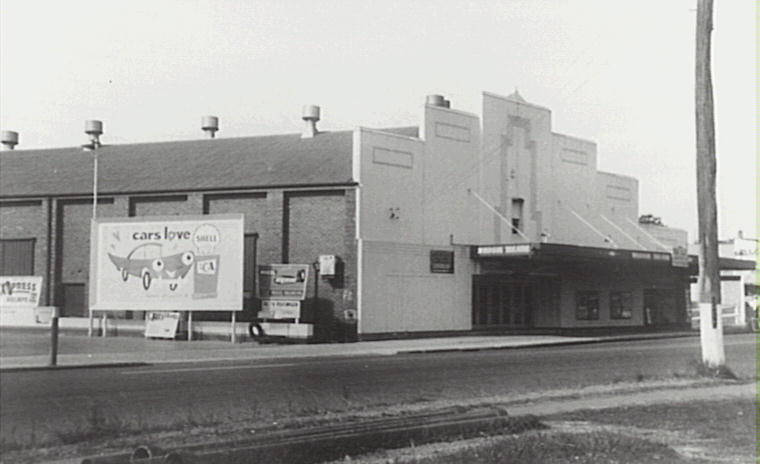
Canterbury's Windsor Theatre, 1981. Courtesy Barry Sharp and City of Canterbury Local History Photograph Collection.
Since 1938, this theatre has sat on the bank of the Cooks River, Canterbury. Originally called the Windsor Theatre, its proximity to the water made it prone to flooding and also, apparently, prone to thievery. The theatre suffered two safecrackings in the 1940s alone, a problem that doesn’t seem to have been experienced by its current tenants. The Windsor closed in 1981…
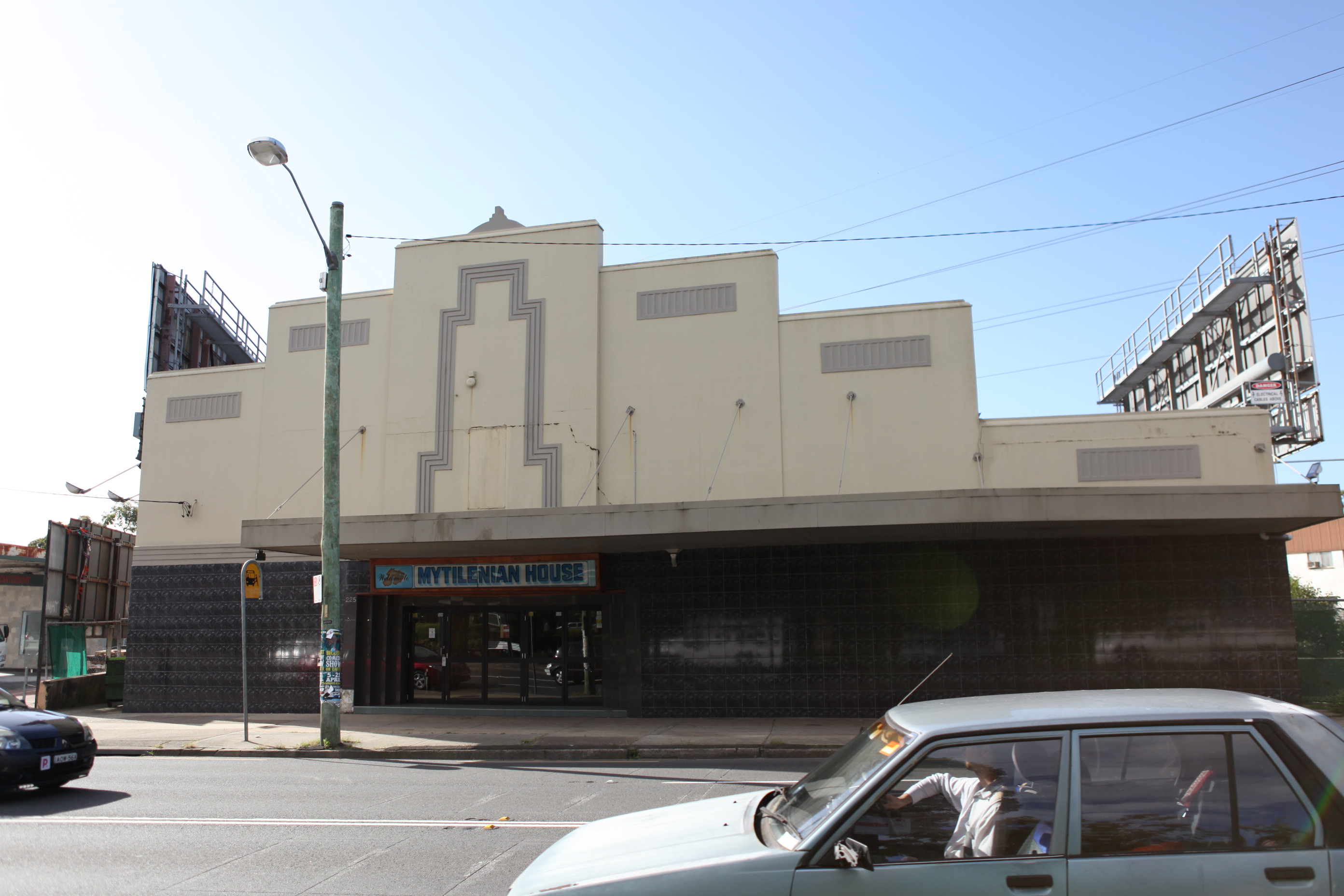
Mytilenian House, 2012.
…and was converted in 1982 into Mytilenian House, a meeting place for the Mytilenian Brotherhood, which itself was established in 1925. They’ve kept the screen area relatively intact:

I’m guessing they upgraded the safe, especially if the security around the back is anything to go by:


 Past/Lives of the Near Future

