FJ’s Pizza/Construction Site – Kingsgrove, NSW
The powers-that-be have decided that Kingsgrove needs more residents, and you know what that means. HIGH RISE.

Now I know what you’re saying. You’re sitting there saying ‘Yeah, they’re building a high rise. So what? What’s so special about this place?’ What’s special about this site will require a bit of a cheat – taking the Google Street View time machine back to 2009 – but I promise it’ll be worth it.
See, what used to be at this location was a string of old, derelict shops, each more interesting than the last. Around the back, in Mashman Avenue, was a run-down block of units, and beside that, the Mashman Pottery (a resident since 1908). All of it is gone now, including the pottery, to make way for some faceless high rise apartment buildings completely devoid of character. This character:
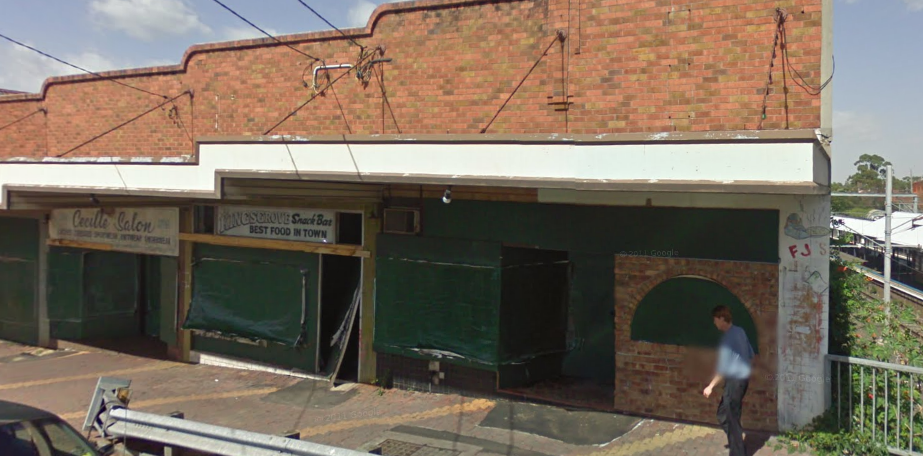
We have the Cecille Salon, the Kingsgrove Snack Bar (best food in town!), and finally and most intriguingly, FJ’s Pizza. Take a closer look there at FJ’s…who’s that holding the pizza?

Could that be…what it looks like?
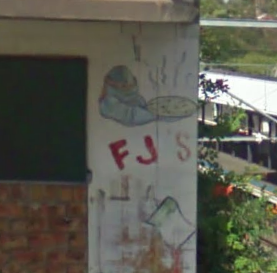
This place has been burned into my retinas for a long time, so when it was knocked down earlier this year, I wasn’t going to let it get out of appearing here. In fact, I remember when this place opened – in 1990. Someone, most likely FJ himself, thought they could get away with painting a Ninja Turtle on the side of their pizza place in the hope that kids would see it and automatically assume it was Turtle-endorsed pizza. Well…in at least one situation, they were right. Problem is, by 1992 the TMNT were has-beens, and people sure weren’t coming here for the pizza.

It’s hard to say exactly when these shops closed, and thanks to the animal magnetism of the FJTMNT, I never really paid them much attention even when they were open. With prime real estate right beside the train station, you’d think at least the snack bar would have cleaned up. Now, it’s just being cleaned up to make way for the glass tower.

Doubtless there’ll be a new wave of shops here beneath the skyscraper, but they won’t have this kind of character. The lineup also included what looks like a Chinese restaurant, Hair Enterprises, and a State Bank branch on the corner. I imagine that the Rich Uncle Pennybags style property developer sat it out for years, buying each of the shops in the strip until he had the Monopoly and then BAM – bulldozer time. Hair Enterprises was likely the last to go – it had an eight digit phone number.
It’s just a memory now, along with the best food in town, ladies knitwear, and the Ninja Turtle who never let go of that pizza. Vaya con Dios, FJ-tello.
Demco Machinery/Mao & More – Surry Hills, NSW

Demco Machinery, 1989. Image courtesy City of Sydney Archives, SRC15993.
The Demco Machinery site, on Cleveland Street in Surry Hills, is made up of two separate buildings. The one in the foreground here is the oldest, first used as a tobacco factory in 1911, and then a tea company until the 1920s. Once Demco moved in around 1930, they patiently waited for the St Margarets Hospital for Women Dispensary next door, built in 1906, to fall on hard times. They didn’t have to wait long:

SMH, April 19, 1938.
Strangely, although the building’s address is currently 267-271 Cleveland Street, advertisements prior to 1953 give Demco’s address, as well as that of the hospital and the tobacco factory, as 243-247 Cleveland Street. There must have been a renumbering of Cleveland Street around that time, as to avoid confusion, from 1948 Demco started advertising their address as ‘corner of Cleveland and Buckingham Streets’.
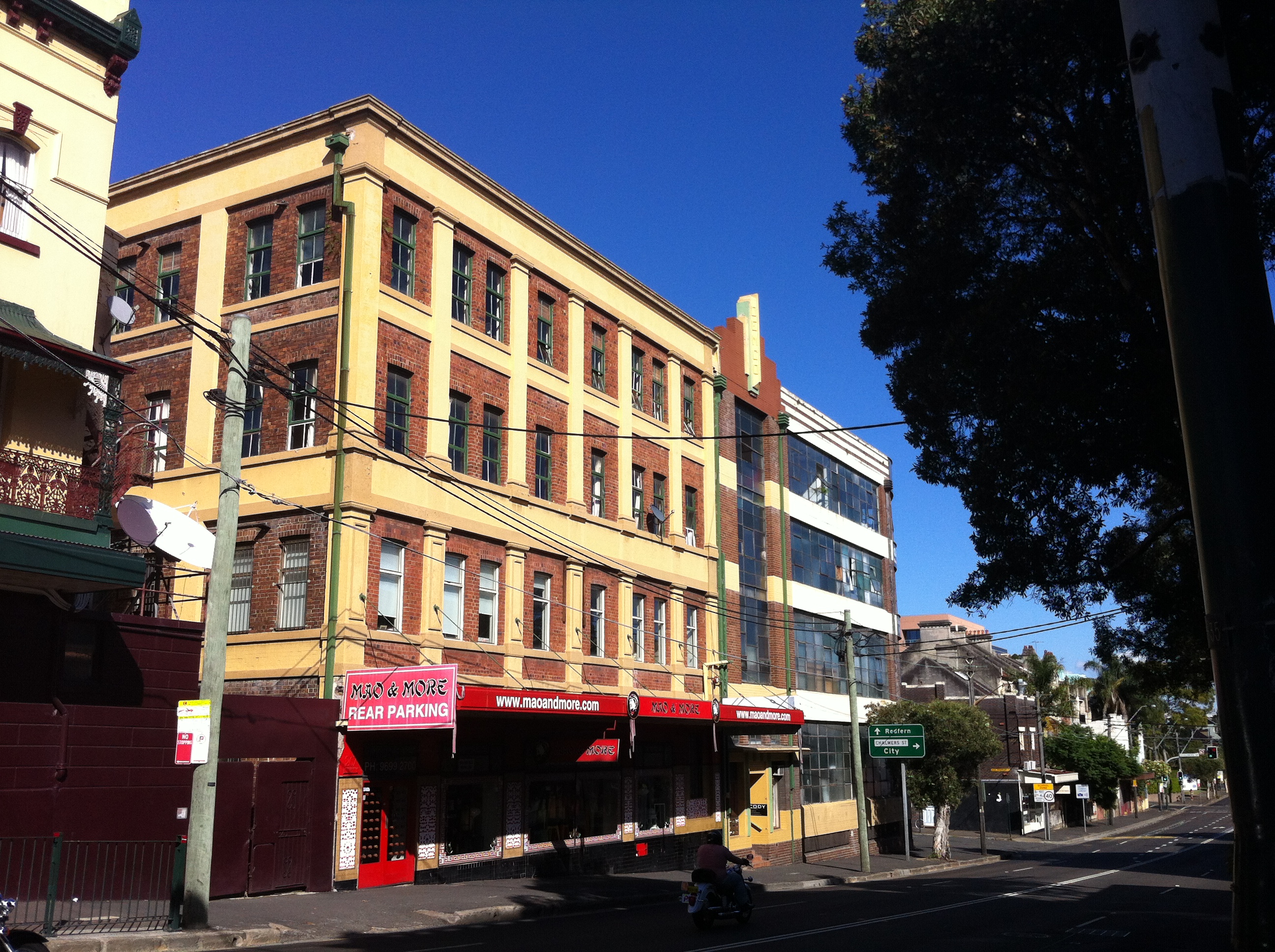
Demco building, 2012.
Demco packed up its city operations in 1989, moving out to Greenacre as part of the industrial migration to Sydney’s west. Since 2002, the older half has been occupied by Mao & More, a Sinophile’s paradise of kitschy Oriental paraphernalia very at home in the increasingly gentrified area. The showroom half of ‘modern design’ Demco were so proud of currently consists of several businesses, including The Gingerbread Man, a film and web production company located in the basement; and a sportswear manufacturer. The only evidence of Demco’s time here is the art deco Demco sign still sitting atop the building.
Odeon Theatre/Pacific Gym/Lifestyle Fitness Australia – Carlton, NSW

Doing its best to hide its 70s facade behind 21st century bleating that ‘it’s all about YOU’ is Carlton’s Lifestyle Fitness Centre. Sometime around the turn of the last decade, public consciousness as a whole decided that going to a ‘gym’ was suddenly either retro or gay, but attending a ‘lifestyle fitness centre’ was the new yoga.
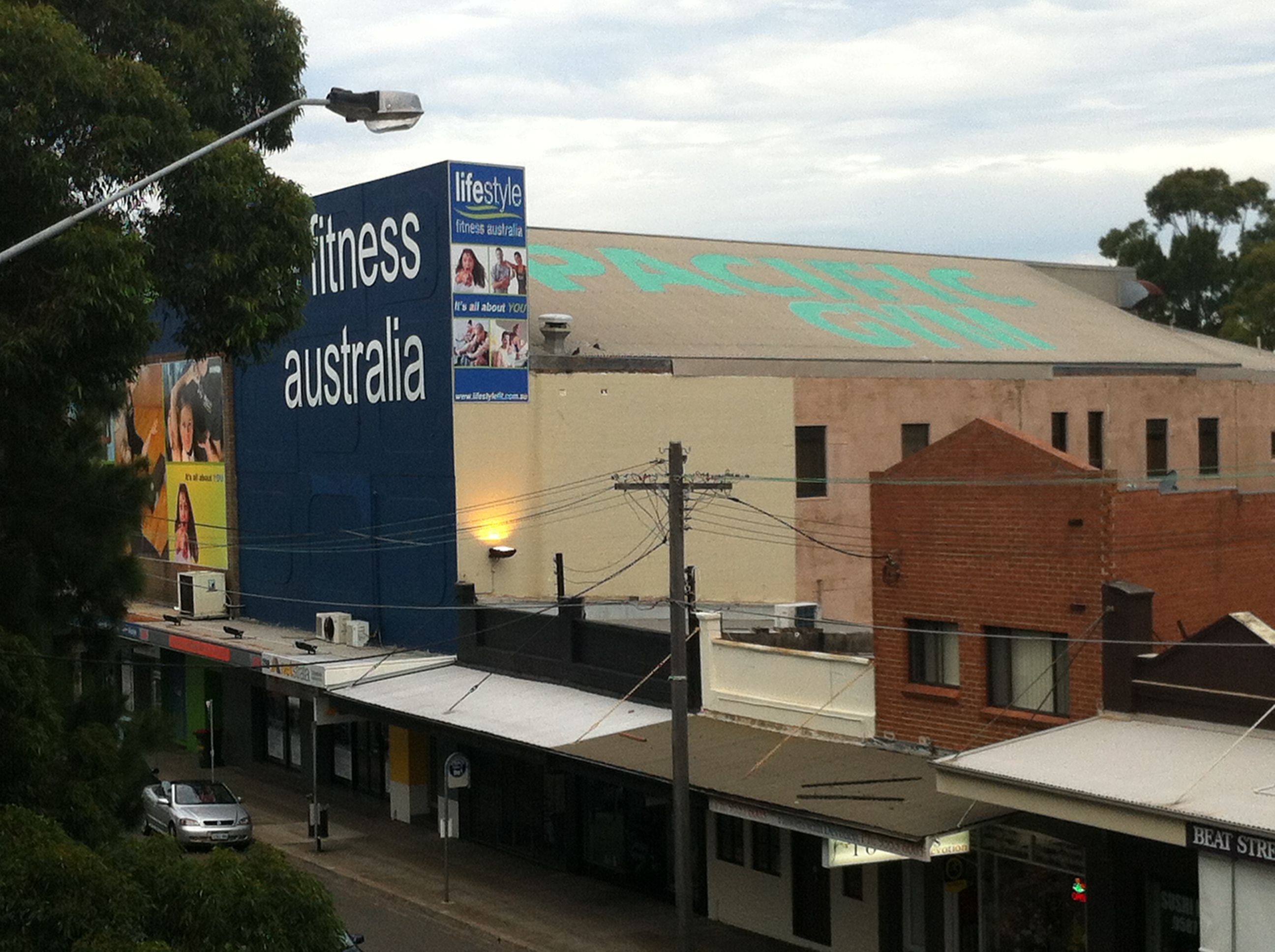
The Pacific Gym (formerly the Odeon and later, DeLuxe, Theatre from 1925-1964), not wanting to be branded retro or gay, caved to the peer pressure and started catering to lunch-break athletes and muscle-monkeys from all over the St. George district. That said, I could be completely wrong, and they just have that Pacific Gym roof mural on a standard escape-proof gym membership plan.
UPDATE: The Pacific through the ages. Here it is in 1939…
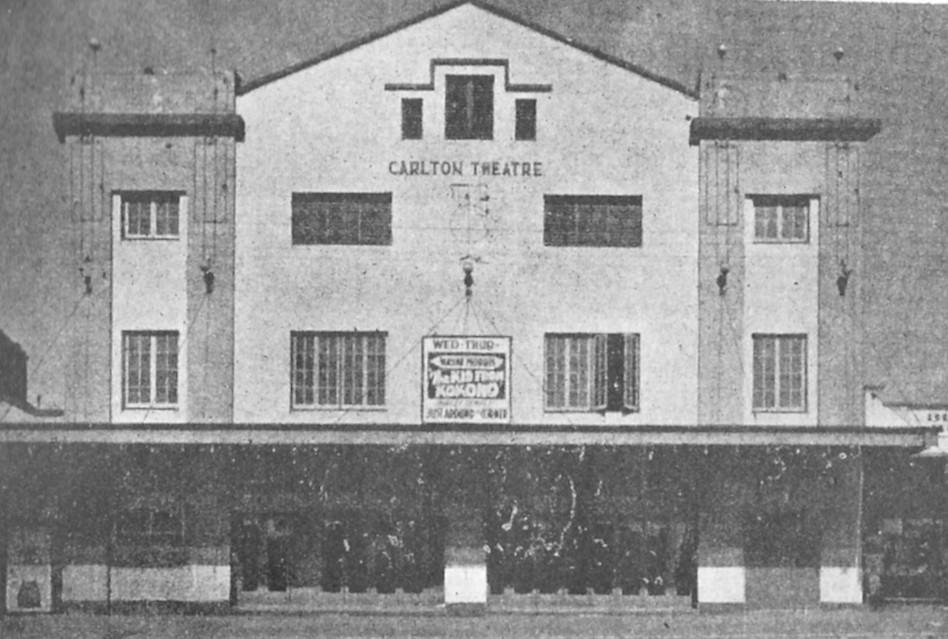
Carlton Theatre, 1939. Image courtesy Barry Sharp/Ken Taylor.
1959…

Carlton Odeon, 1959. Image courtesy Barry Sharp/Ken Taylor.
…and finally, 1970.

That colour’s jolting all of a sudden, isn’t it? Pacific Photo Lab, 1970. Image courtesy Kogarah Library.
Really makes you realise just how ugly that gym is.
Paragon No. 2 Theatre/Australian Academy of Gymnastics – Belmore, NSW

Since 1928, the Paragon No. 2 has loomed over the intersection of Burwood Road and Knox Street, providing a monolithic eye-catcher for passers-by. It has remained remarkably well-preserved from its days as a cinema.
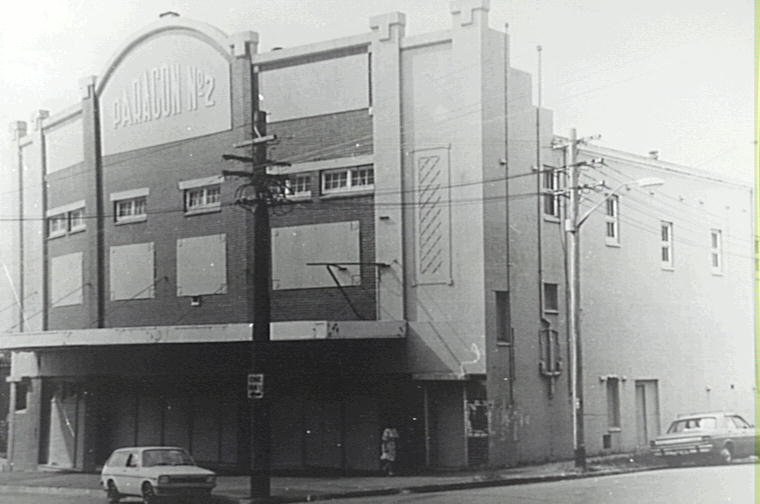
Paragon No. 2, 1981. Courtesy Barry Sharp and City of Canterbury Local History Photograph Collection
For thirty years, the Paragon No. 2 picture theatre provided Belmore locals with a venue for concerts, plays, movies and state government debates. Close to the train line, for years it was speculated that a train station would open up near the theatre, but the plan never went ahead. Knox Street was eventually cut off from Burwood Road, becoming a cul-de-sac and torpedoing easy access to the theatre by road. By June 1958, the time of its closure, the Paragon No. 2 had been operating on a restricted screening policy, further limiting its viability as a cinema.

Following its closure, the theatre was acquired by Jeldi Manufacturing, a Sydney-based textile company, who proceeded to use the building as storage for curtains and carpet.

In 1982, the site was discovered by Andre and Edwige Rizzo, a French couple who had migrated from France in 1970. Andre had represented France in gymnastics at the 1960 Rome Olympic Games, and was seeking to start a gymnastics academy. The Paragon No. 2 provided the perfect facility, enabling the gym to become the first club in NSW to provide both men’s and women’s training apparatus, and to function exclusively as a venue for artistic gymnastics.
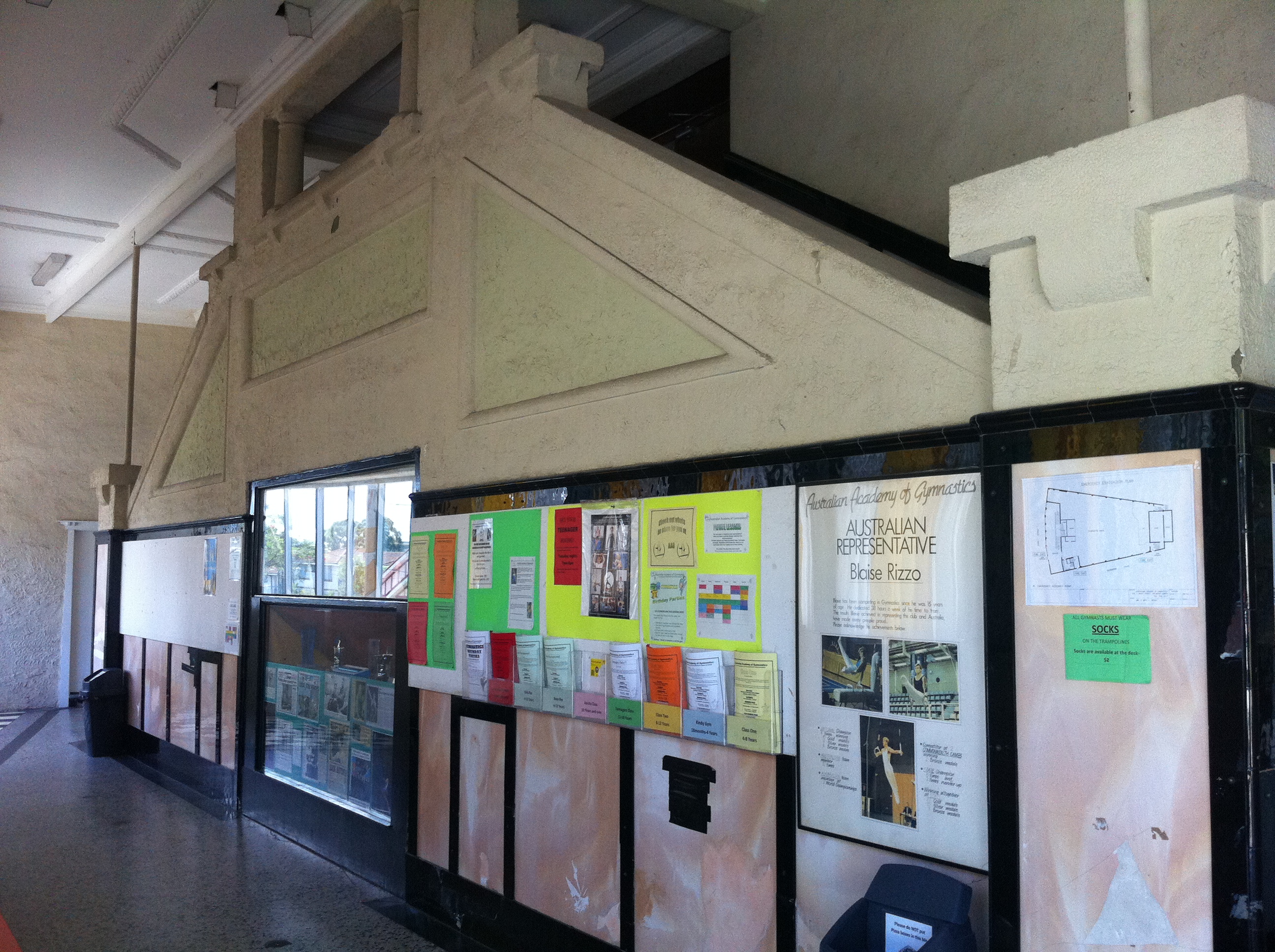
Aside from minor practical refurbishments, the lobby is in remarkable condition. At the centre of this staircase is the former box office, now a display case for the academy’s numerous achievements.
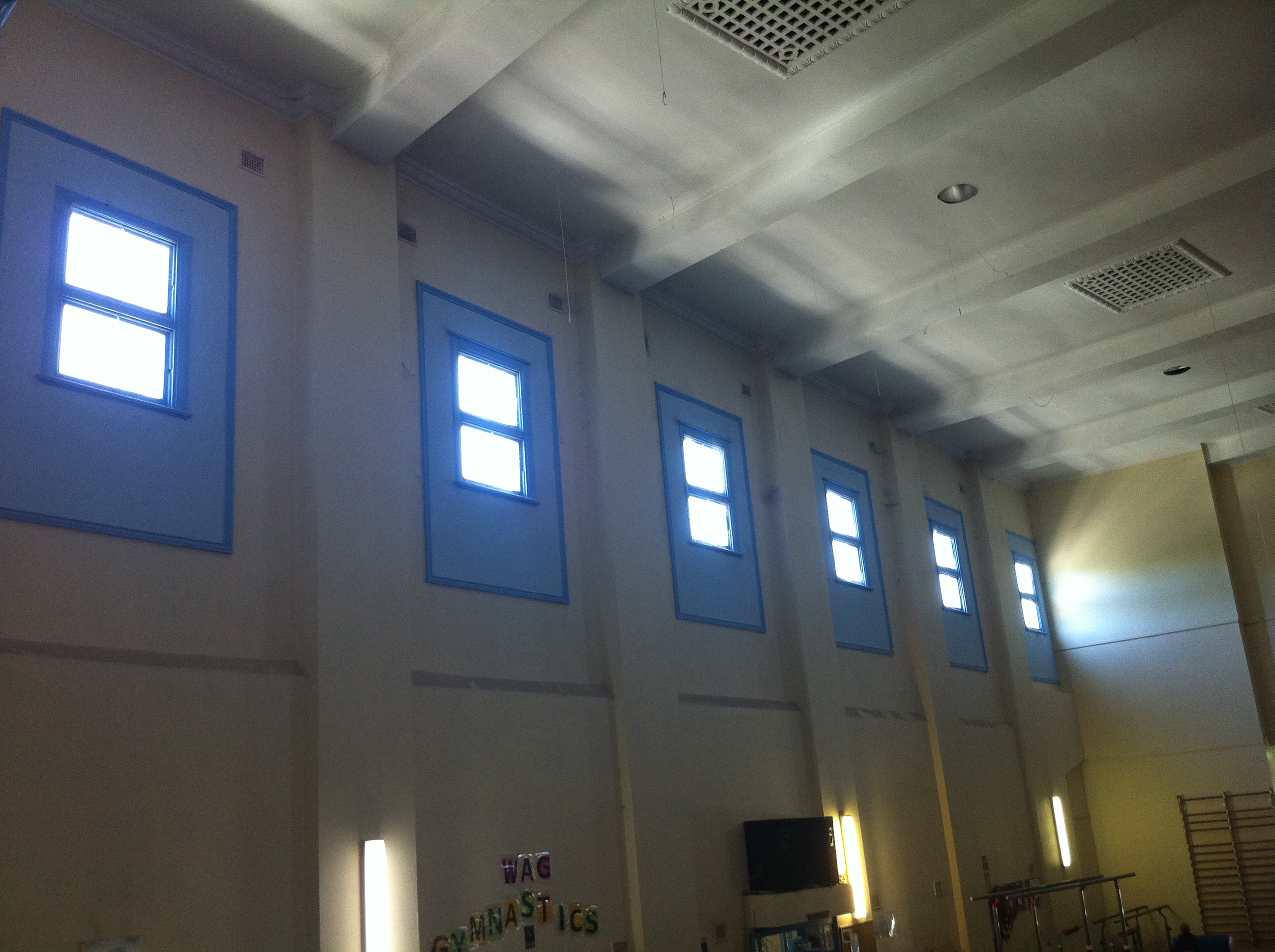
The theatre’s 1144 seats may be gone, but again, the interior isn’t unrecognisable as a cinema, and gives a good idea of what it would have looked like.
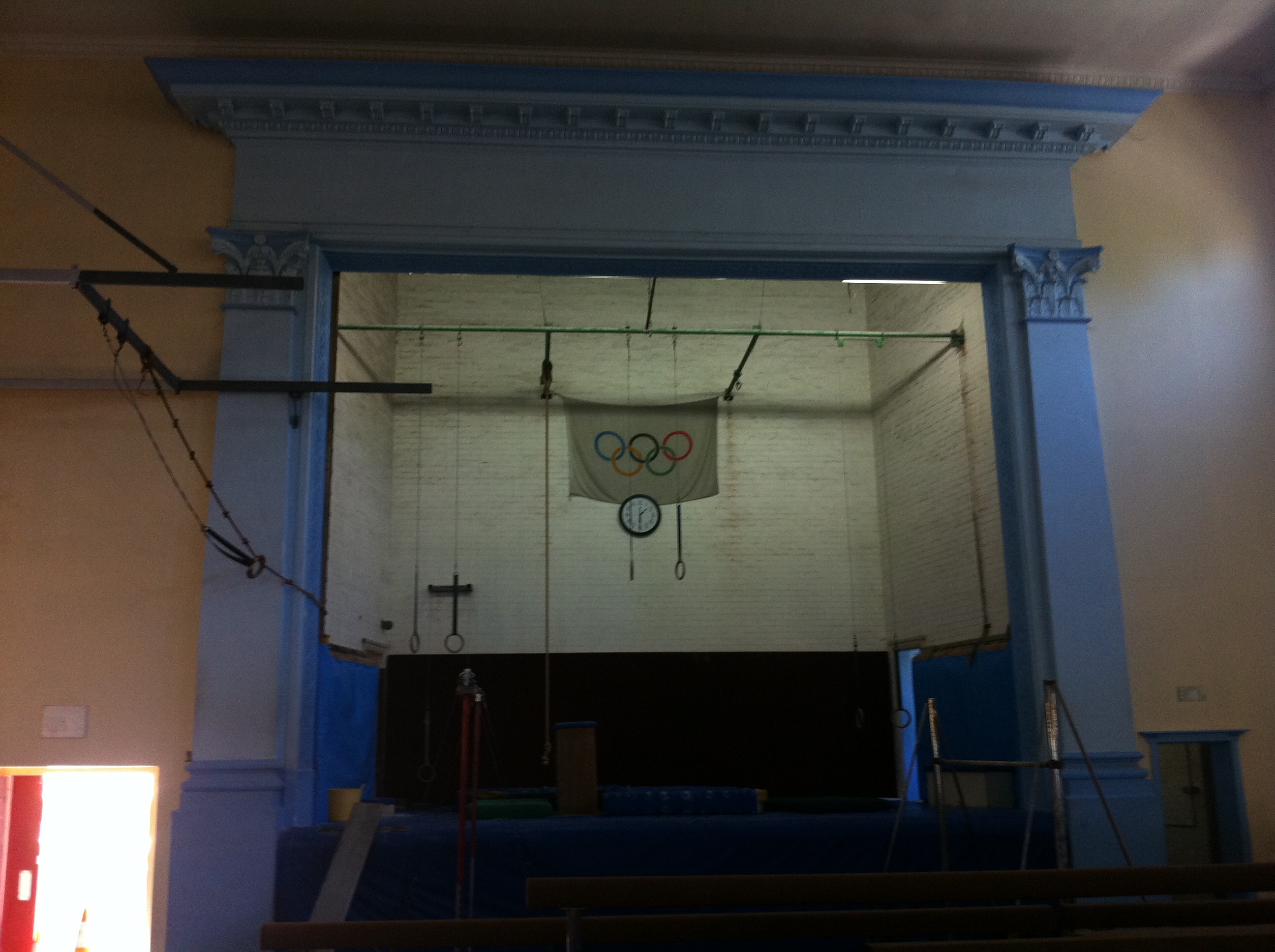
The Academy is currently run by Antoine and Shannon Rizzo, who are proud to have coached young gymnasts here for the last 30 years. At this stage, it’s been a gymnasium just about as long as it was a cinema. Given the success rate of the Academy (Antoine’s brother Philippe Rizzo is Australia’s most successful male gymnast), Paragon has proved a fitting name. I’m sure Jeldi had no complaints about the quality of storage, either.
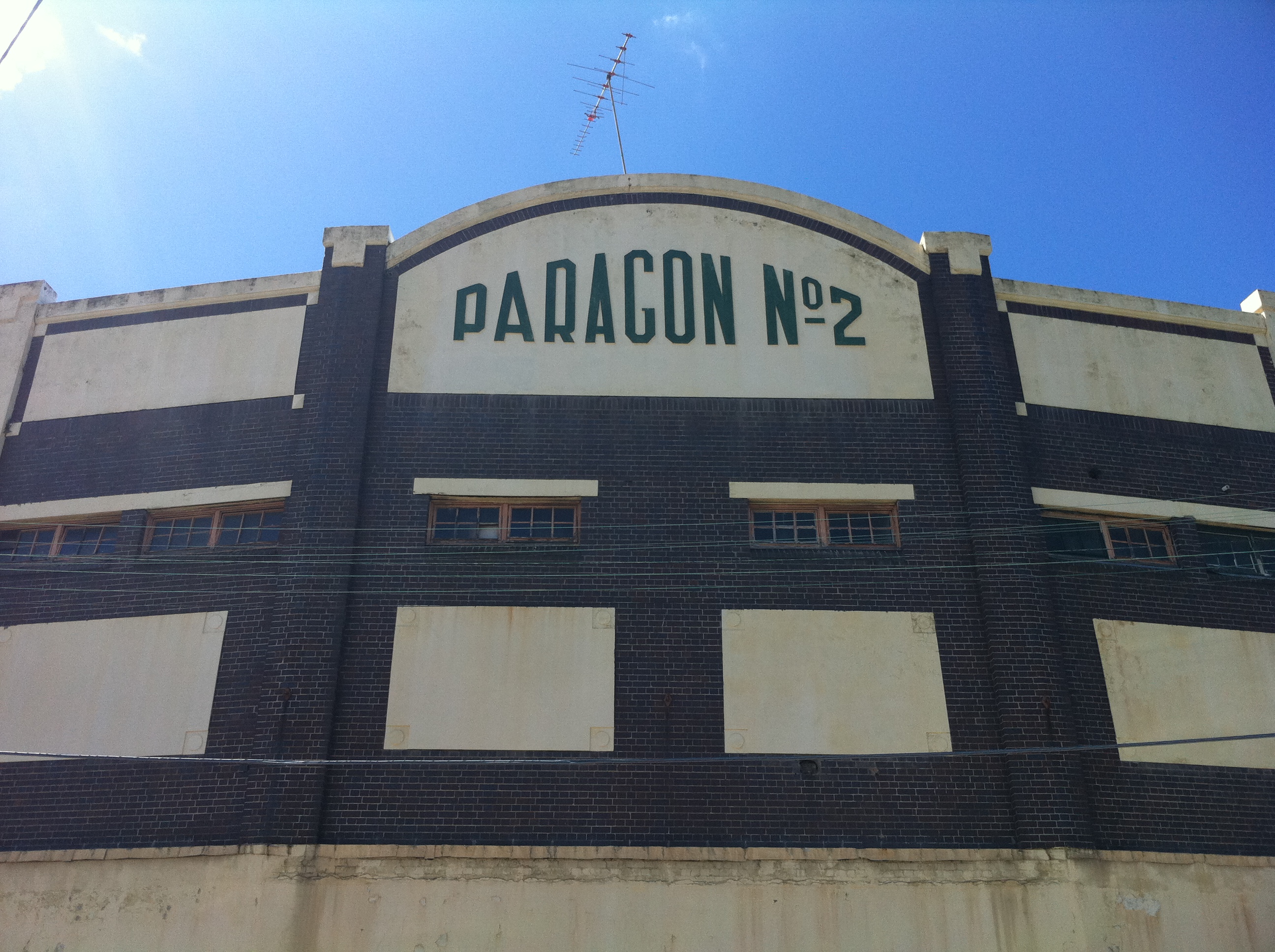
Of course, the name of the theatre begs the obvious question ‘what about Paragon No. 1 ?’. I asked Antoine Rizzo if he knew. He did:

To be continued…
A HUGE thanks to Antoine and Shannon Rizzo at the Australian Academy of Gymnastics for their generosity and assistance!
Fish ‘n’ Chips/Wok & Roast – Carlton, NSW

It just doesn’t have the same ring to it, does it?

 Past/Lives of the Near Future