Cumberland Hotel/TK Plaza – Bankstown, NSW

There isn’t much call for an old English-style hotel pub in Bankstown these days. This particular part of the city, Old Town Plaza, is especially bereft of watering holes thanks to the enormous Bankstown Sports Club around the corner.
Yes, there’s the Bankstown Hotel and the RSL on the other side of the train line, but down here it’s the Sports Club (not to be confused with the Bankstown Sports Hotel nearby), the Oasis Hotel (or the Red Lantern depending on who you ask) or you’re going thirsty.
Those two venues, while fine, are very much products of today’s Bankstown. The Oasis looks like the kind of place you’d hit up to dump some cash into the pokies and have a smoke outside, while the Sports Club has a monopoly on the family friendly crowd. Neither enjoy the kind of maturity conducive to sitting around and making a beer last many hours.
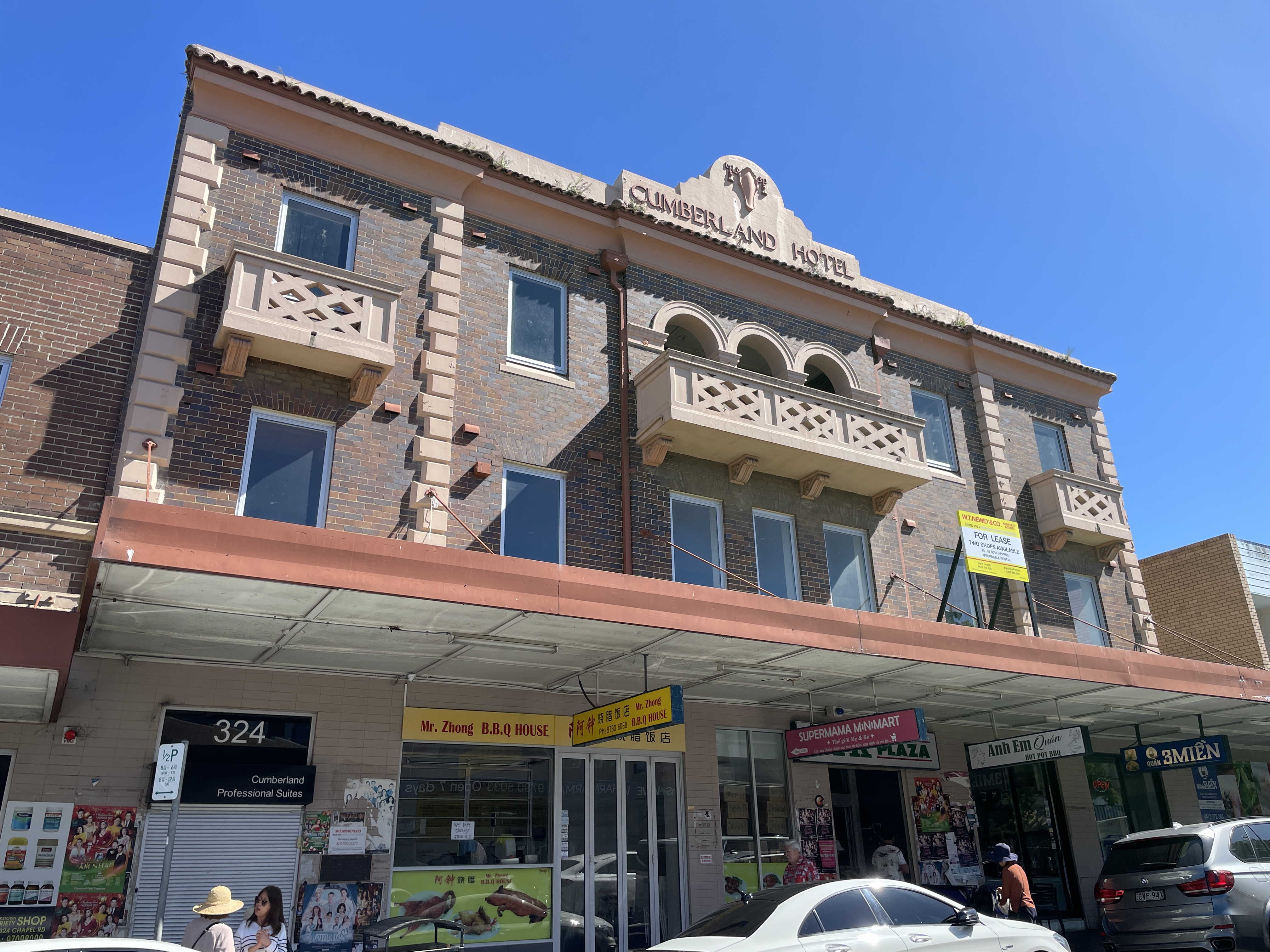
And then there’s the Cumberland Hotel, a proper glimpse into the suburb’s past. If you know Bankstown, you’ll know this venue stands out like the proverbial.
The locals have done their best to incorporate the Cumberland into the street’s mix of fresh food wholesalers, dollar shops and mini marts, but the top half speaks of a time when the working class would need to cool down after a hard day’s work; when a night at the Cumberland might even result in a cheap room upstairs; when Mr. Zhong was still afraid to play with matches.
From what I can gather, the Cumberland has its origins in 1929, when William Hoyes, the licensee of the notorious Rydalmere Hotel, transferred that pub’s licence to his newly purchased hotel in Bankstown. The ruckus at Rydalmere, and Hoyes’ hasty escape, seems to have originated in 1907, when a Dundas policeman disturbed a cadre of dudes drinking illegally – at midday! – at the Catholic Church beside the pub.
For his troubles, Constable Howard was bashed quite severely, but got his own back when he shot at the four pissed louts, injuring one of them. Turns out one of them was the hotel’s licensee, while another was the church’s caretaker. You’d think they could have had a quiet one at the hotel itself, but perhaps they had to wash down a communion wafer.
The incident left its mark on the Rydalmere Hotel to the point where even after 22 years, Hoyes opted to take his licence and start over in a suburb less tarnished by violence… for now.

In 1930, the Cumberland was up and running under the watchful eye of Tooheys. Hoyes made way for O’Regan in 1933, who gave it up to O’Reilly in 1934. The names give a clear indication of Bankstown’s cultural background at the time.

Vincent O’Reilly held onto the Cumberland until 1950, by which time the lay of the land had changed quite a bit. The following year the Cumberland Hotel fell under investigation of the Royal Commission on Liquor, which had put old mate Abe Saffron in the hot seat.

Honest Abe had apparently made some licencing deals with several hotels, including the Cumberland, the Morty in Mortdale and the Civic in Pitt Street, that had not impressed the authorities. At the heart of the matter was the improper funneling of booze between pubs under Saffron’s influence, grossly in breach of the Liquor Act.
While all this was going on, the Cumberland endured another parade of licencees including Mr Kornhauser, Mr Norman, Mr Blair and Mr Geoghegan, the latter of which applied for – and received – a 12-month dancing permit in 1957.
During Geoghegan’s tenure, on a momentous November afternoon, a meeting took place that would change New South Wales’ taxi and golf landscapes permanently.
“In November of 1954, three disgruntled members of Campsie Taxi Drivers Golf Club, while having a drink at the Cumberland Hotel in Bankstown, discussed forming a breakaway group of golfers. It wasn’t until after Melbourne Cup Day of that year that a group of up to 10 cabbies decided to form a Taxi Social Golf Club. The first game was held at East Hills Golf Club on the first Tuesday in January 1955.
The foundation meeting was held that day. A foundation committee was elected and Bankstown Taxi Drivers Golf Club was born. Tuesdays were chosen as golf day because back in those days, they were deemed to be the quietest day of the week for cabbies.”
NSW Taxi Golf Association
There it is, folks. Wonder no more. I shouldn’t think there was too much licenced dancing going on that day.
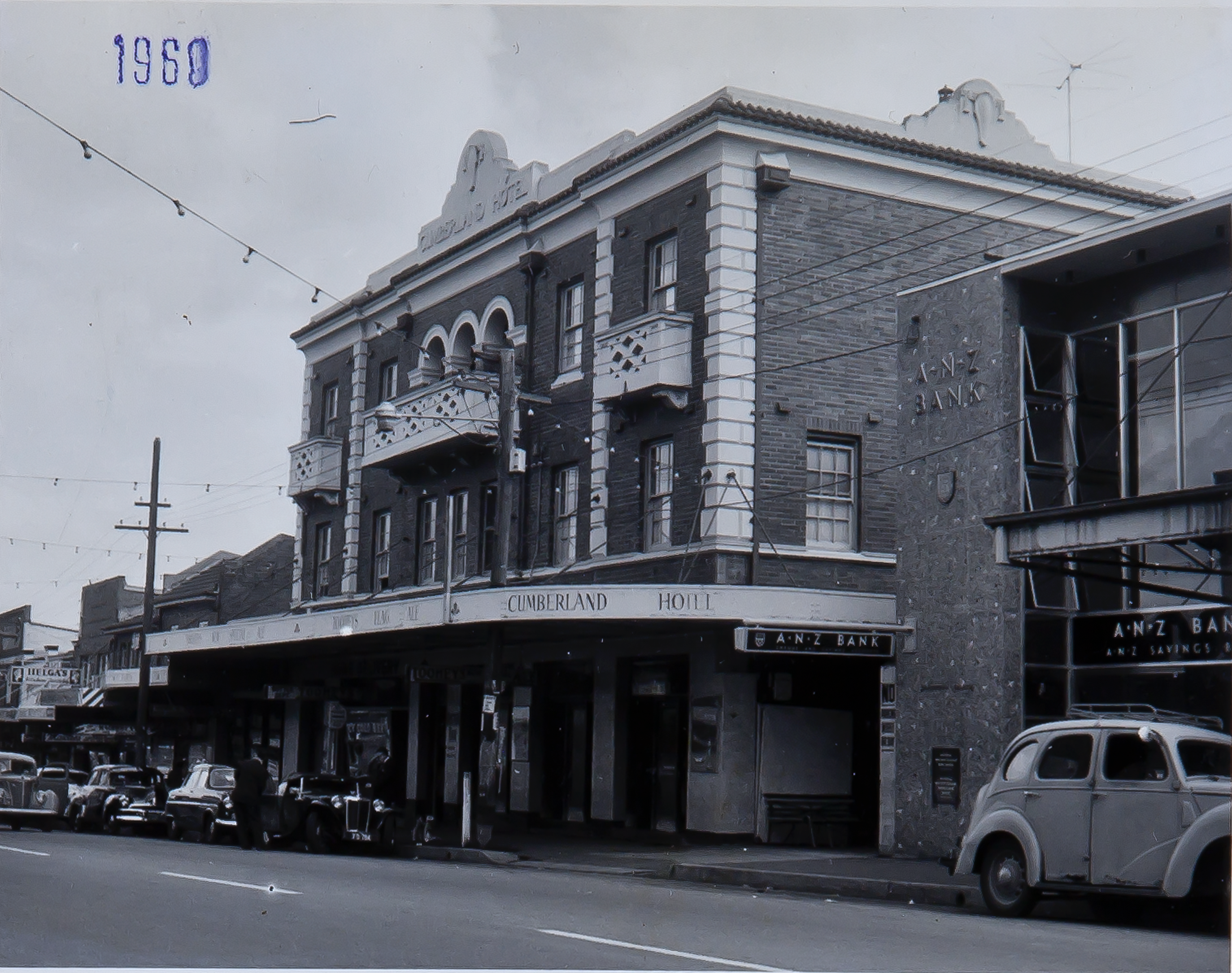
As the 1960s dawned, things changed even further. Geoghegan was out, and in his wake came Masman, Martin, Conlon, Light, Monkey and a switch to decimal currency.
The Oasis had sprung up around the corner, as had the “Bankstown Bowling Club”. In another sign of the times, a TAB in Fetherstone Street, on the other side of the train line, was seen to be impinging upon the Cumberland’s bread and butter. Blair, Heffernan, Davanzo and Lynch would endure this incursion and take the Cumberland into the 1970s.

The beginning of the end came in the 80s, however, when that old undercurrent of pub violence would again raise its ugly head. By that time, Bankstown had become home to two distinct groups of refugees fleeing overseas wars: Lebanese and Vietnamese. They didn’t always gel.
As is now well understood, youth gang crime became an issue for these two ethnic groups. One night, in July of 1986, tensions boiled over in Bankstown. A brawl started outside Bankstown Station and became so violent that wooden palings were torn from fences to be used as weapons.

It’s not hard to imagine these guys hearing of the brawl during a night at the Cumberland and rushing to the aid of their friends. By then, the Cumberland had become “a seedy old watering hole, with a cast of colourful characters, Viet gangsters being shot on the doorstep, topless barmaids, great beers and lots of laughs”. It couldn’t last.
Somehow, the Cumberland staggered into the next decade, which was awash with even more gang violence. Names like 5T and the Madonna Boys should be familiar to anyone who was around at the time. 5T was particularly notorious not only for its violence and clout in the bustling Sydney heroin trade, but for the ridiculous age of its leader, Tri Minh Tran, who took over the gang at 14.
Tran was shot dead in 1995, and gangs such as Red Dragon and the Madonna Boys, led by “Madonna” Ro Van Le, sprung up in the resulting power vacuum. Madonna himself had been convicted of murder in 1989, and a decade later had only just been released from prison when he visited the Cumberland Hotel one Friday night.
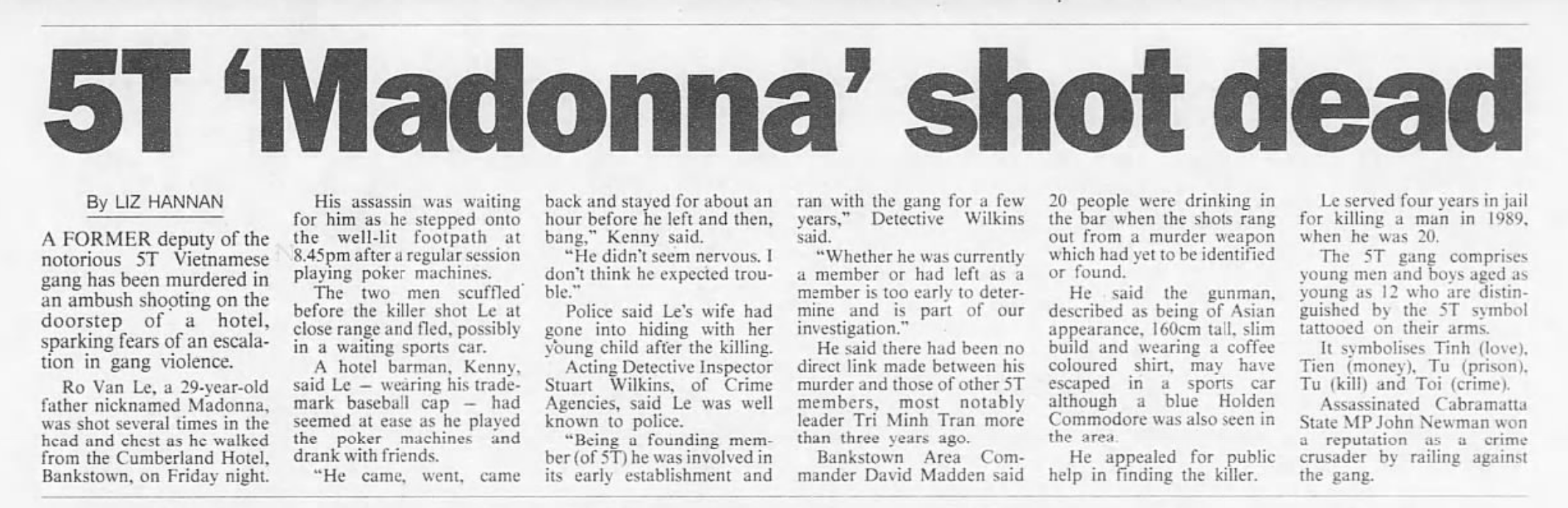
It was Madonna’s last. As the drive-by shooter’s bullets entered his head and chest on the footpath outside the Cumberland, they ostensibly ended the hotel as well.

The shooting helped prompt owners Bill and Mario Gravanis to abandon the Cumberland in favour of the Bankstown Sports Hotel further down the road.

Today’s Cumberland is a mix of smaller outlets that have carved up the spacious interior. One must first cross the fruit-laden threshold of TK Plaza…

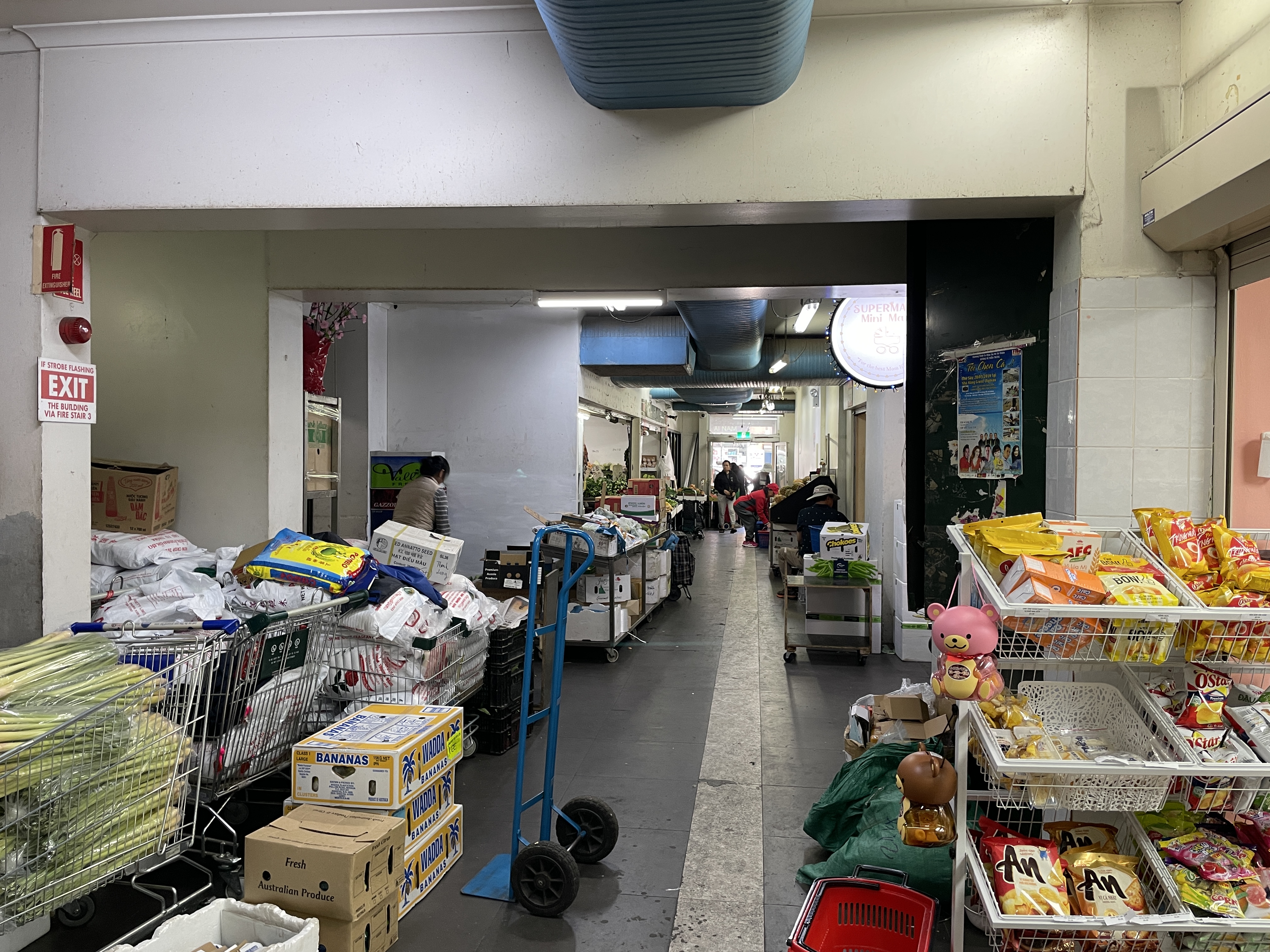
What was once Madonna’s beloved VIP lounge is likely Skybus Travel, itself no longer in operation if the room full of mangoes and canned squid is anything to go by.
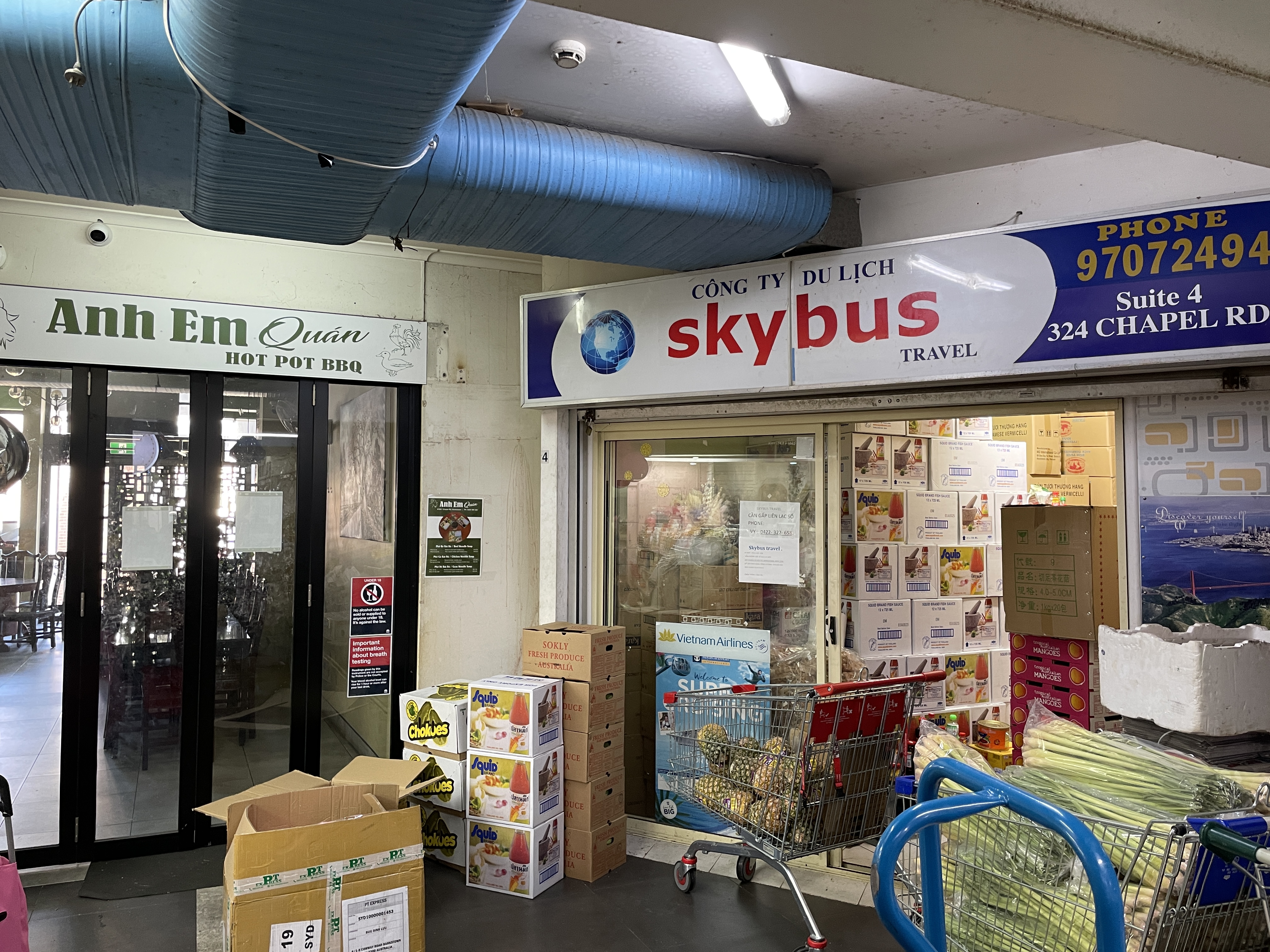
And perhaps the table favoured by those disgruntled cabbie golfers is now a part of Anh Em Quan’s Hot Pot BBQ restaurant. If they’d settled their grievances over a bowl of spicy prawns that day, who knows what kind of world we’d live in now.

Around the back, it’s hard to imagine this was ever a pub. The mural places the Cumberland firmly in the every-second-shop’s-a-fish-market vibe of Old Town Plaza, while the back alley is full of Hiaces rather than getaway cars.

It’s unlikely the Cumberland Hotel will ever serve a cold schooner of beer again. The world that defined the venue is gone. Tooth, Madonna, Constable Howard, the Geoghegans of Bankstown – all are now memories.
At 324, just under the Cumberland’s south wing, the ‘Cumberland Professional Suites’ carry on the name. They probably occupy the rooms upstairs as well, but even they have the sadly familiar For Lease sign outside.
Perhaps the next tenant will take a look at the building’s history and look to maintain some kind of continuity in a way TK and Mr Zhong did not. As I departed fully intact, much to the late Madonna’s envy, I noticed this sign in one of the front windows.
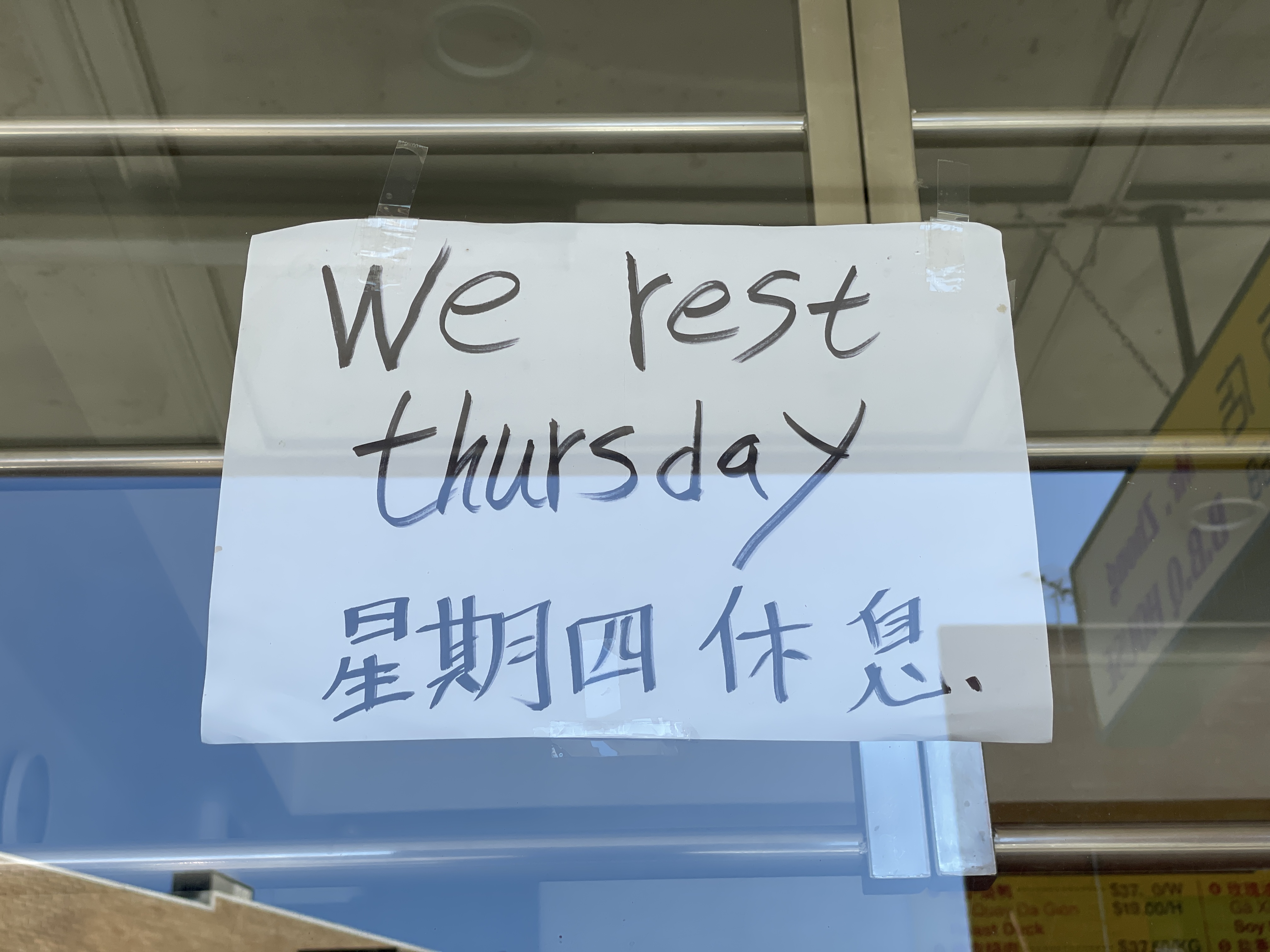
Rest in peace, Cumberland Hotel.
McDonald’s/The Eye Piece – Sydney, NSW

It seemed like a match made in heaven: a Mickey D’s right outside upper George Street’s Metropolitan Hotel. A greasy fast food basin would have been – and for many years, was – the perfect catchment area for empty stomachs hoping to dilute the copious amounts of alcohol they were about to ingest over the course of an evening out.
So what went wrong?
As a name, the Metropolitan has stood on this spot since 1879. Before that, this part of old Sydney town wasn’t so metropolitan. Prior to 1834 this was a lumber yard: thirsty work, so that year it was released from its status as Crown land for development as a hotel, originally the Castle Tavern, and later as the preposterously named La Villa de Bordeaux.
Publican P. Wilson’s continental experiment didn’t bring the boys to the yard, and by 1867 the building, which included a dispensary, a tailors and a drapers shop, was empty. 1879’s drinkers were more amenable to the idea of a pub on this corner, and thus the Metropolitan was born.
Once the shawl of sophisticated metropolitana fell over the site in the middle of the Victorian era, it wasn’t easily lifted. As with so many Sydney pubs, a brewery took ownership – in this case, Tooth & Co. The excess real estate attached to the building was employed, in 1910, to transform the Metro into a new breed of 20th century super pub. Thus Tooth’s dispensed with the dispensary and tailors, a bottle shop was added to the ground floor, and the neighbouring terrace, built at the site’s inception in 1834, was incorporated into the metropolis of George and Bridge.
In the last century the hotel has changed owners a few times. In the 1930s it was the Bateman’s Metropolitan. In the 60s, it was part of Claude Fay’s hotel portfolio. Today, it’s back to the plain old Metropolitan. This lack of ownership qualifier perhaps distills the idea of a ‘Metropolitan hotel’ to its purest essence – it belongs to no one, to everyone.
Or perhaps we should stick to talking about the ground floor.
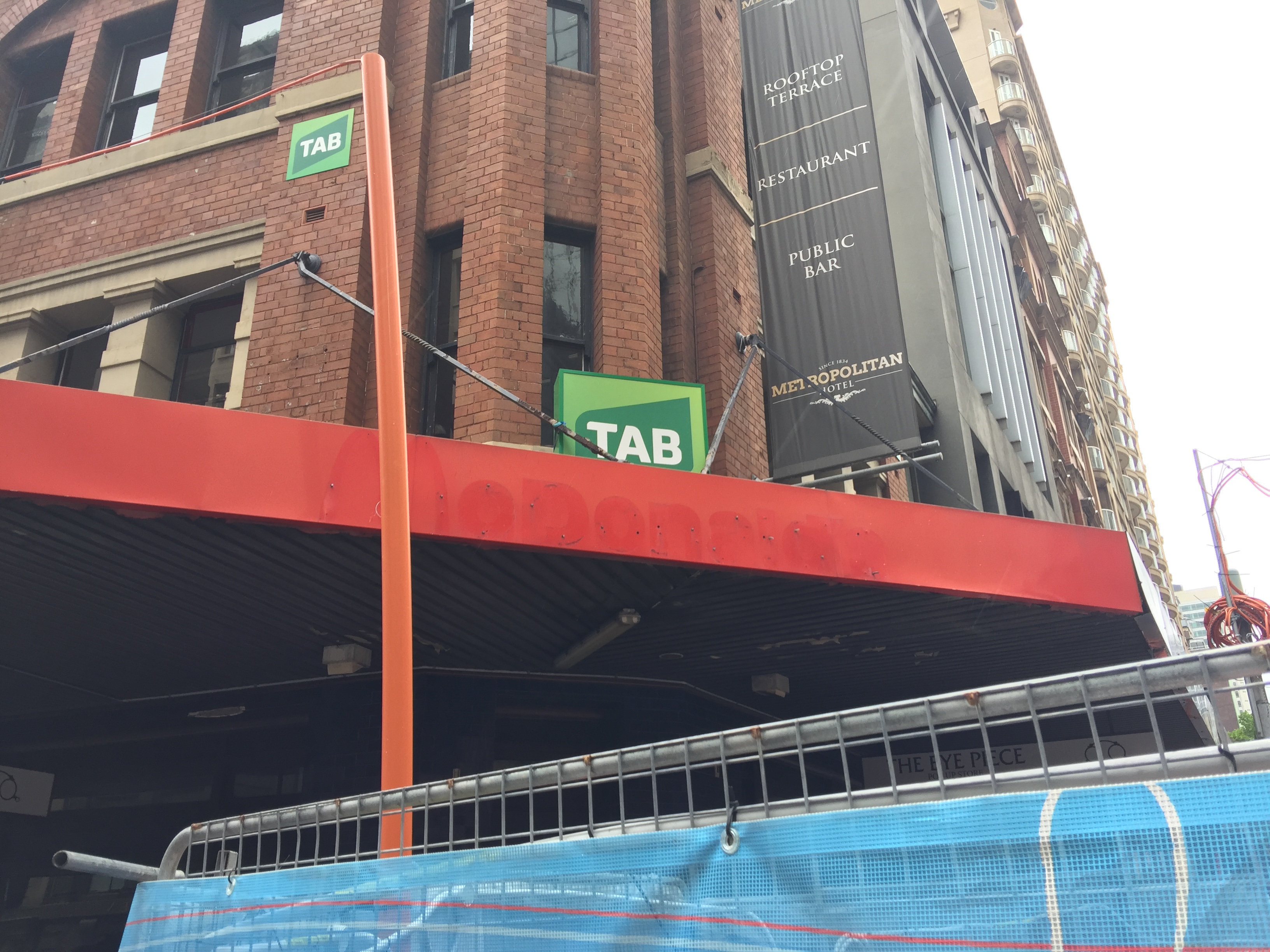
McDonald’s and a night on the plonk used to be synonymous, but over the years there’s been a move by imbibers away from processed junk and kebabs, and toward a traditional pub feed. Pubs have seized on the move, providing eateries and “classic” menus in newly renovated wings of what were once snooker rooms or smoking lounges.
Even the trusty kebab has been elbowed out of contention by the schnitty. Where did my country go?

So in a rare move, this McDonald’s beat a hasty retreat to less discerning pastures. You don’t often see the Golden Arches admitting defeat, let alone leaving up scads of damning evidence of their tenancy here.

Poor form too, the Eye Piece, which has opted only to invest in the ubiquitous trend of the pop-up store rather than a real shopfront. As Sydney rent prices continue to accelerate towards Uncle Scrooge-levels of ridiculous money, shop owners have fought back by negotiating shorter terms. This means there’s no need for a total shopfront fit out, which in this case has laid bare the failure of Ronald and associates.
Funny choice of location for an optometrist though, isn’t it? Specs downstairs, beer goggles upstairs.
It seems like a match made in heaven.
D.G.R. Sayburn/Hotel Bottle Shop/Bead Co of Australia/Little Bottler – Hurstville, NSW
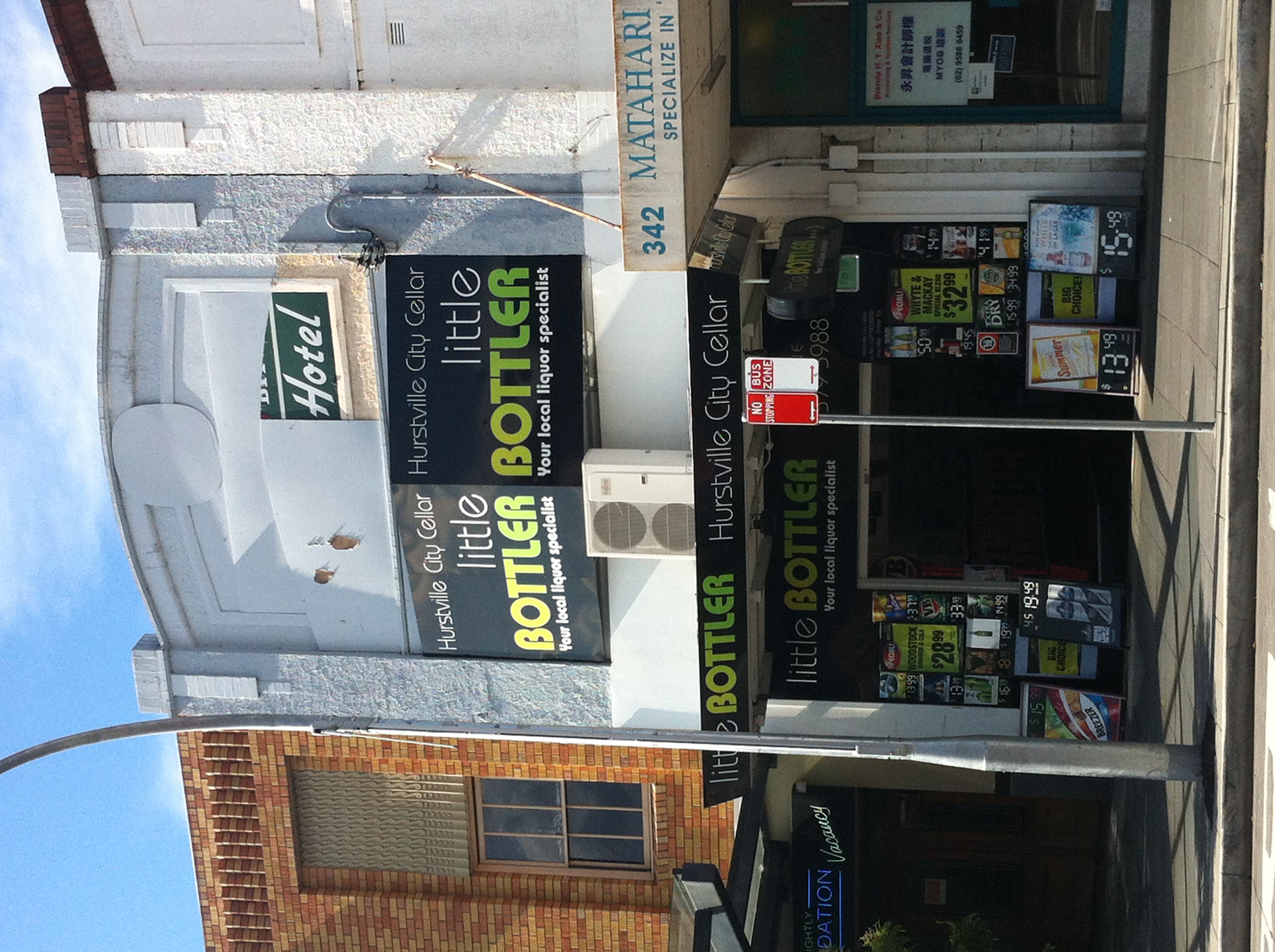
Believe it or not, this dump was once D.G.R. Sayburn, an agent of Beale & Co, ‘the largest piano manufacturers in the British Empire’. I guess that’s why the door is extra wide. If I had to speculate (and when don’t I), judging by the Victoria Bitter logo beneath the busted sign it looks to me like this was the bottle shop for the neighbouring Ritz Hotel (which itself has a rich history) sometime in the late 80s-early 90s.
After that, this was the Bead Company of Australia. That’s right – if you were in Broome or Launceston and you needed beads, you had to go through these mugs. These days it’s returned to its bottle shop state (Hurstville City Cellar – mustn’t they be proud), making you wonder if being a nation’s bead supplier was the apex of the building’s life, and will it now continue to regress until it’s once again a piano shop.

 Past/Lives of the Near Future