Victory Theatre – Kogarah, NSW
It’s 1920, and in the blossoming suburbs of Sydney, people are still on a high of post-war jubilance. We won! Business is booming! The fighting spirit imbued by victory in Europe had led to a bolstering of ‘suburban pride’, as you can see in this very boastful article from the Evening News:

Evening News, May 26 1920
The suburbs were taking shape at an ever-increasing rate, giving folks more and more reasons to move away from the bustle of the city. One such reason was the rise of suburban picture theatres. No longer did you have to get on a train (if your suburb was lucky enough to have a station) and head all the way into the city just to see the latest Hollywood bioscopy – now, you could just stroll around the corner to your local fleapit.

SMH, Nov 18 1920
And so it was for the people of Kogarah, in Sydney’s south, when Mr. F. Moore and Mrs. J. M. Rainbow opened the Victory theatre in November of 1920. Not only were we victorious over the vile Hun, it was a victory for the suburbs over the cave-of-wonders-worth of amusements promised by the big city.
For those who enjoyed music, but had no way to enjoy that music at home aside from reading the sheet music, the Victory had you covered.

–

SMH, March 20 1926
Don’t just read about it, get down to one of your nearest nickelodeon and get wired for sound!
Of course, nothing lasts forever, and by 1936 the victorious buzz was starting to wear off. New owner John Wayland knew it was time for a name change.

ca. 1936. Image courtesy Sydney Cinema Flashbacks
Coupled with an extensive remodelling in the then-chic art deco style and equipped with a boss-ass organ sound system for the phattest of phonograph-style beats, the imaginatively renamed NEW VICTORY opened to much acclaim in October of that year.
Wayland and his New Victory entertained Kogarahns (?) for the next thirty years, pumping out bangin’ organ-based choons and screening blockbuster flicks into the late 1960s, when it was renamed the Avon (a sign of the times). It managed to resist the lure of the cannibalistic Hoyts and Greater Union groups, which were buying and closing as many suburban theatres as they could at the time. With the advent of television (turns out you can show organ playing on TV), picture theatres were in decline all over the city, and even Wayland’s fortunes had begun to decline. The writing was projected onto the wall for Wayland, and it was time to sell up…
We’ll continue the saga of the Mecca next time, but for now, come with me to a time not so long ago, a time far removed from the glory days of John Wayland’s Victory. Let’s revisit 2012.

Mecca lecca hi, mecca hiney-ho
The Mecca, as it was now known, had seen better days. It closed suddenly in 2003, and had been left to rot ever since. Despite the neglect, its colourful yet tacky exterior was still a familiar sight to not only the locals, but travellers on the Hurstville to Bondi train line across the road. When something so prominent sits unused for so long, suspicions begin to arise, and curiosity gets the better of some people, just as it did for my friend Andre.
Andre had grown up around the area, and had many fond memories of seeing movies at the Mecca in the early 1990s, when it boasted of being the cheapest in Sydney.
“Let’s go and check it out,” Andre said. “It’s just sitting there.” Why not? I thought. At the very least, it’d make a hell of a blog entry. (Don’t know about that one… -Ed)
As a suburb, Kogarah is sharply divided by the train line. On one side, which we’ll call the good side, there are plenty of shops, houses, people, and the St George Hospital. It feels alive.
On the other side, which we’ll call entirely terrible, it’s…entirely terrible. The Nemesis of Neglect has the place entirely in its clutches. Derelict unit blocks, useless, mouldy shops, people who seem to always be on their way to somewhere nicer…and the Mecca. One wonders how it was allowed to stay so awful for so long. It was as if the Kogarah Council had completely forgotten about that part of town, and as it turns out, that’s not too far from the truth. It turns out that this part of Kogarah falls within the jurisdiction of Rockdale Council, which may be news to Rockdale Council.
With its hot-potato status between two neighbouring councils and its no-mans-land appearance, I started to wonder why Wayland had chosen this site for his pet project. After all, placement on the other side of the tracks would have put it in company with the Carlton Odeon…but maybe that was the point? Maybe he couldn’t stand the competition? Never mind that Kogarah had another theatre in Wayland’s day, the Subway. Maybe we’ll never know.

When Andre and I got to the Mecca, it was exactly as advertised. It was just as it had been in 2003 when its staff downed tools and walked out, and it looked like they hadn’t bothered to clean up. We peered through the front window…

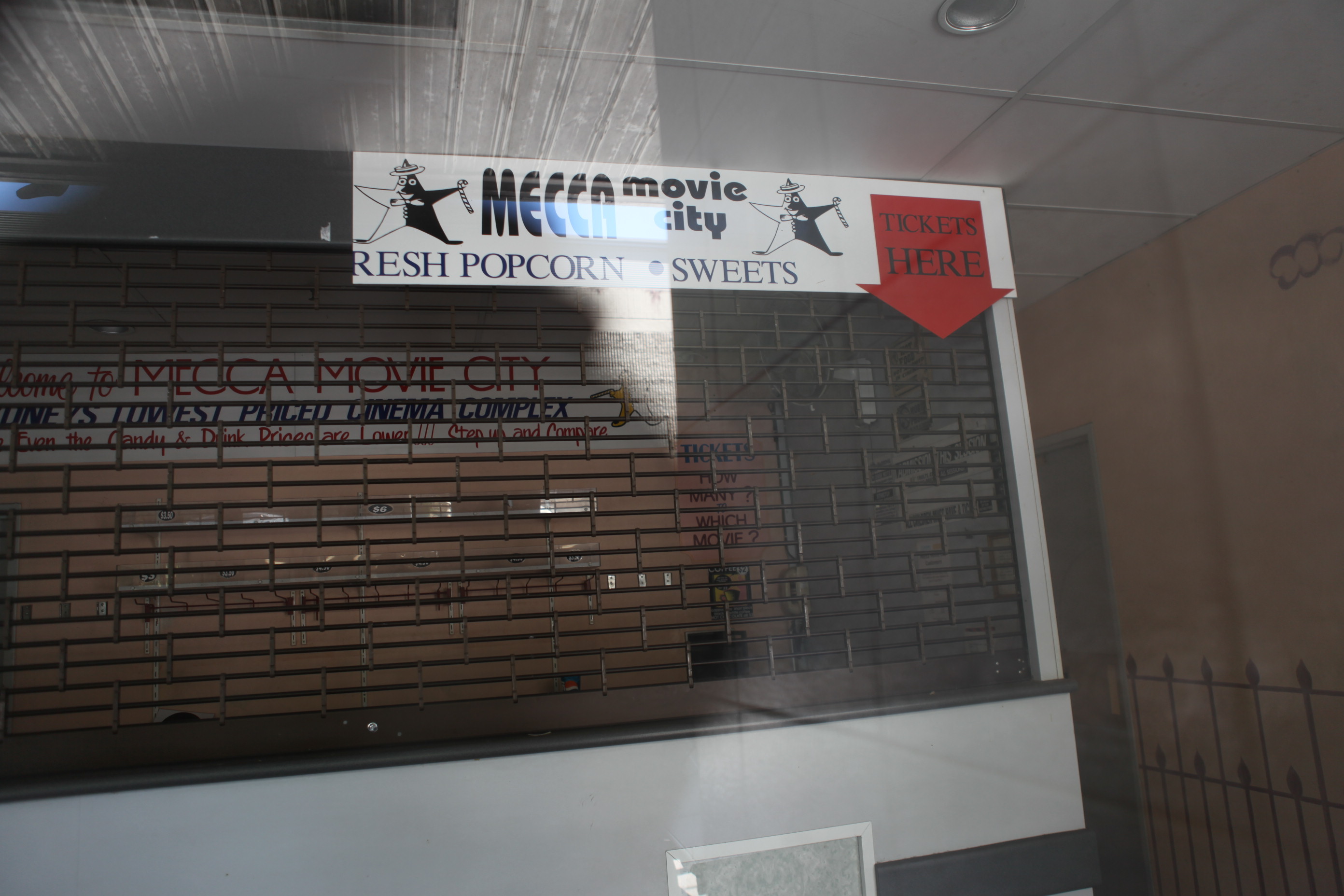
“Wouldn’t it be mad to get in there?” Andre suggested. I agreed that it would, and thought of all the cool, movie-related stuff that would surely be waiting: film prints, posters, memorabilia. You know, the kind of stuff no right-minded management would leave behind. But hell, we’d never know. Southern Security Alarms had the place wired, and-
“Hey, the side gate’s unlocked!” Andre shouted.

Well, shit.

He pushed the gate and it swung open, revealing steps down to a path. The steps were covered in wet clumps of fur…or hair. We stepped across the threshold and immediately looked around. Had we been seen? Was someone running to a payphone right now to call the cops?
The street was deserted. The neighbouring unit blocks were derelict, awaiting demolition. And there was no payphone. I breathed out, reminding myself it was no longer 1995, but Andre was already making his way down the path.

The path ended in a metal staircase that led up to a side door to the theatre itself. It was easy to see where the theatre’s original side windows had been bricked up, and the flimsy wooden door seemed like a late addition.
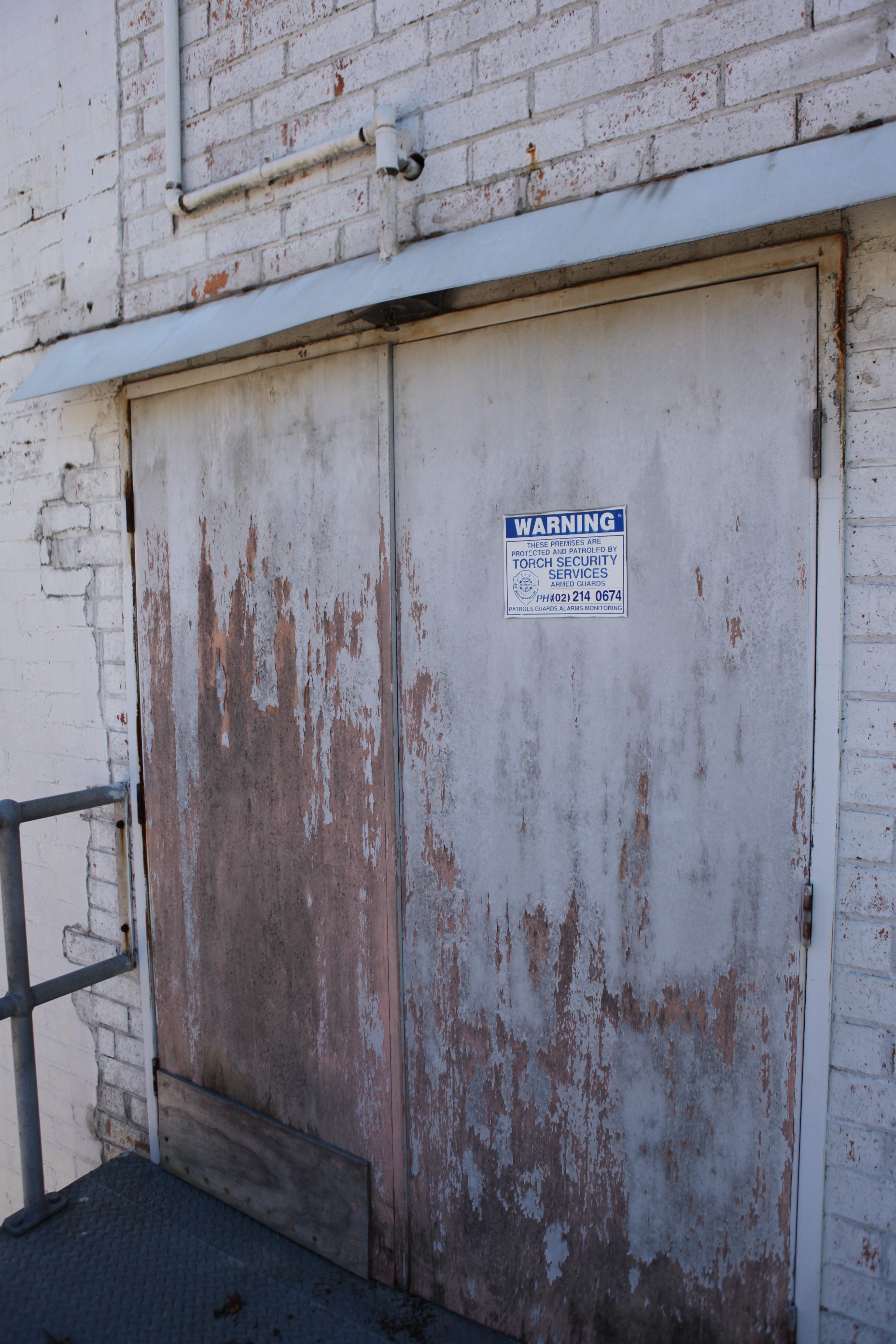
We tried to open it, but it was firmly locked.
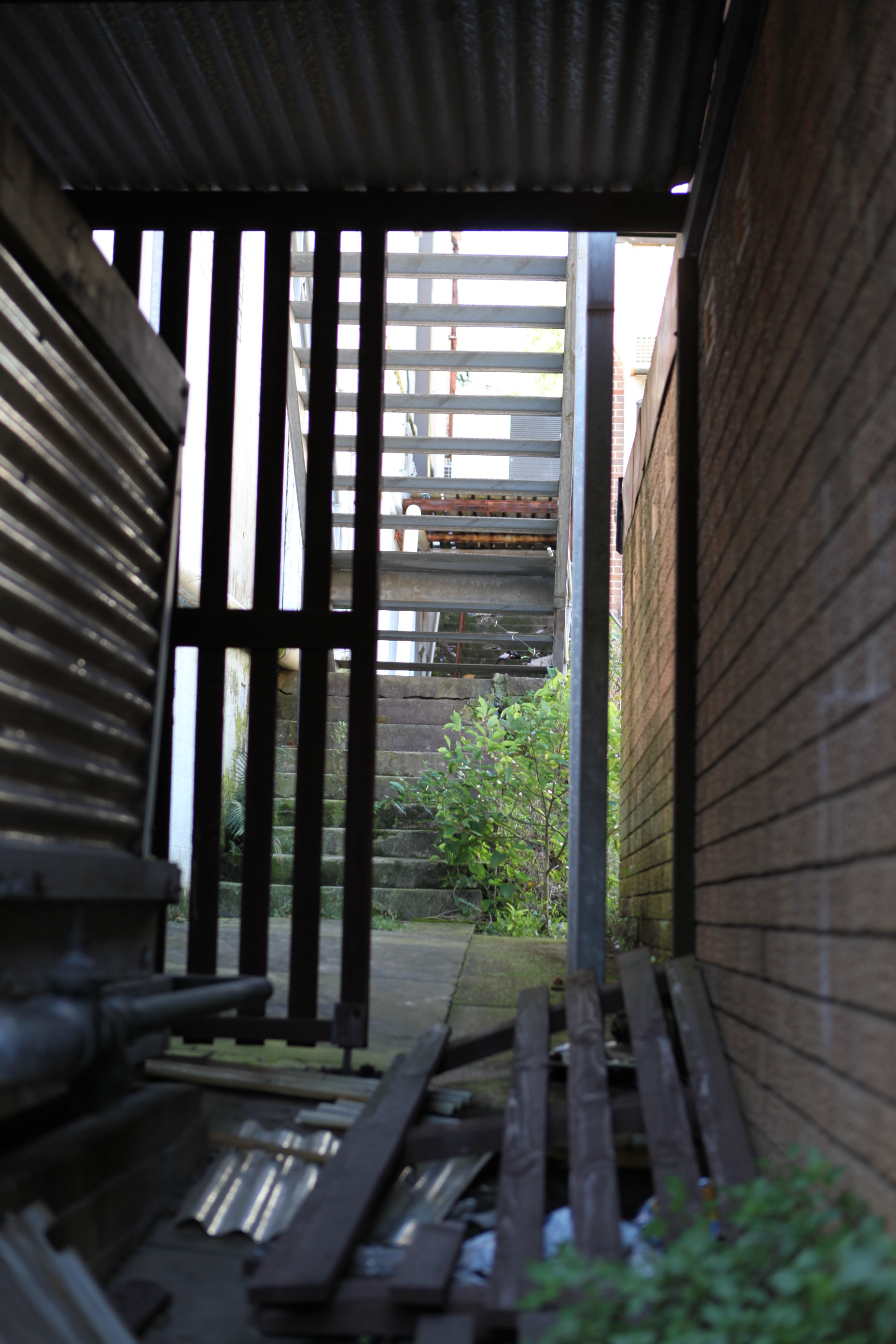
Underneath the stairs, the side path continued down to the back of the theatre. Having been thwarted by the door, we manoeuvred ourselves under the steps and continued down to the rear. Although we didn’t know it at the time, it was the same rear that had in 1930 been the scene of some commotion:
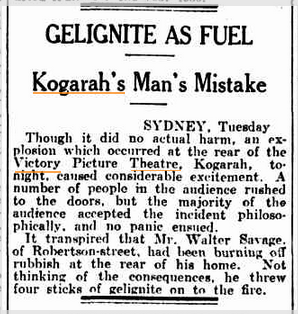
Newcastle Morning Herald and Miners’ Advocate, Feb 5 1930

The place had changed since those carefree days, but it seemed as if no one had been down there in ages.

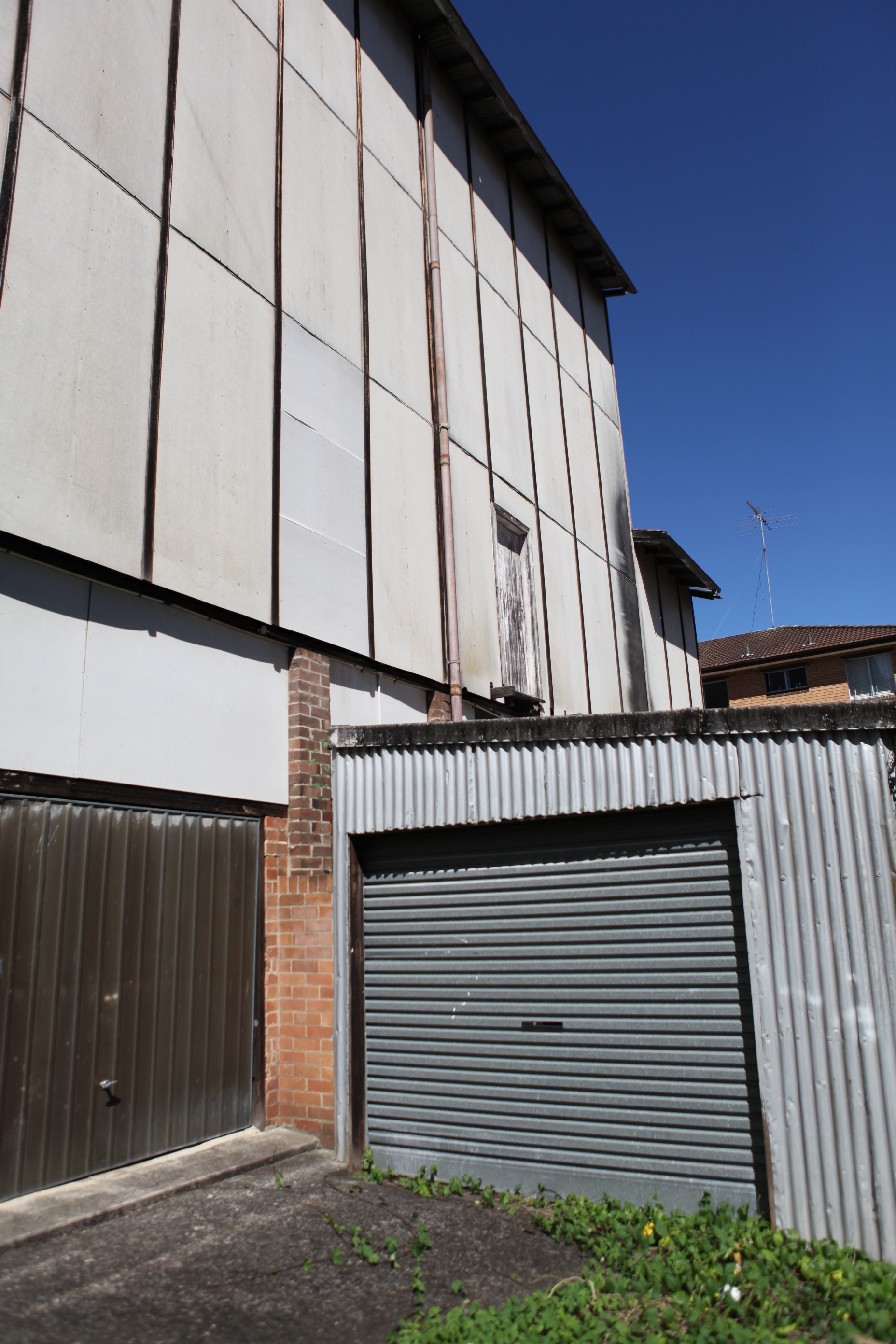
Strange pieces of stonework lay at the base of the building’s rear, and a sheet of corrugated iron covered what had once been a door about 15 feet above the ground. A garage had been hastily tacked onto the rear wall. Again, the door was locked.

Around the other side, we could see the shopping complex that sat astride the train station across the road, and…that door. A small doorway covered in a tangled mess of vines.
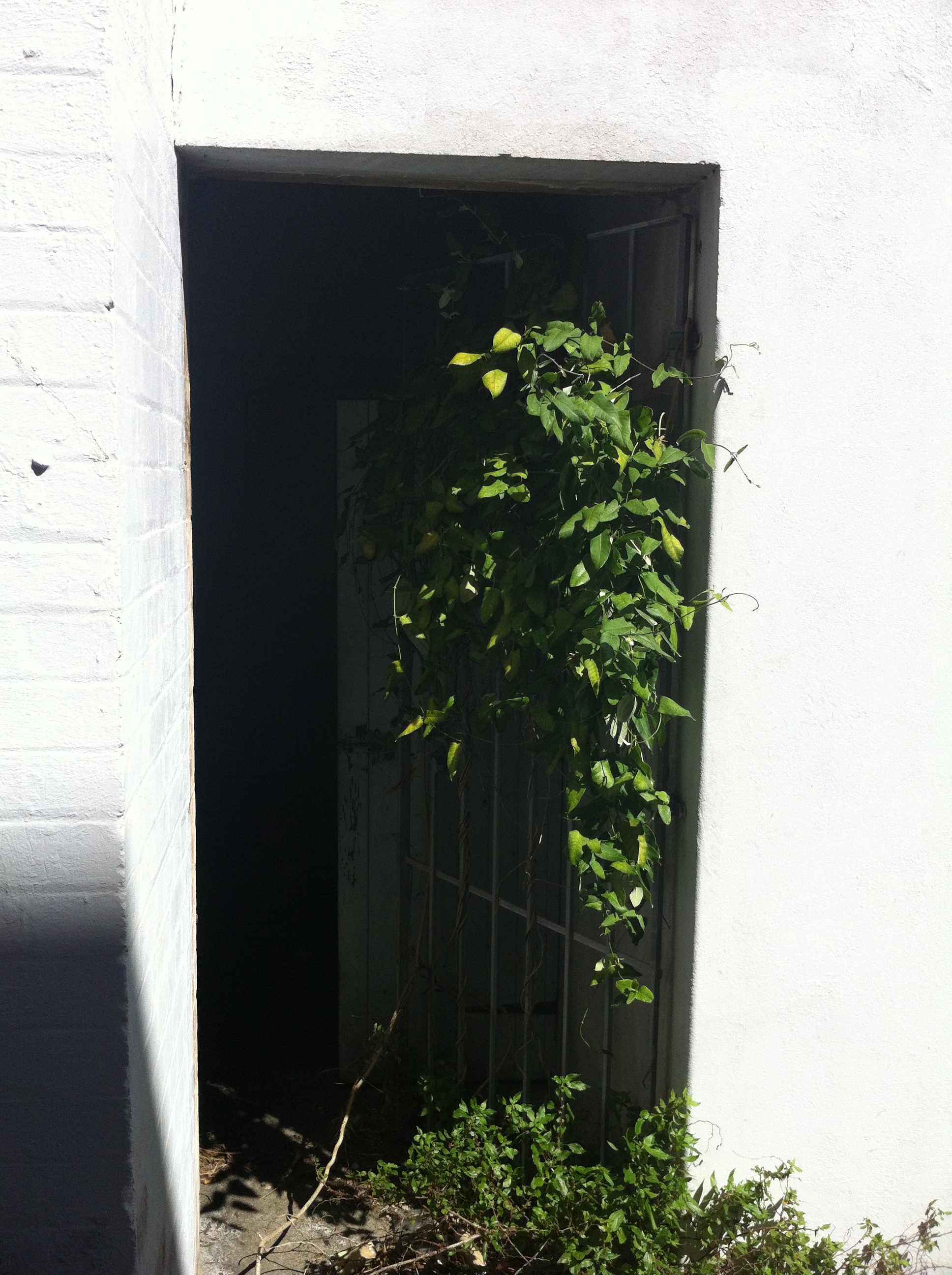
The gate yawned open, the space beyond too dark to see. What was this place?
We had to go in.

The room was ancient, even by Mecca standards, and was peppered with a dissonant assortment of objects. How long had it been since someone had last entered? What had the room originally been? We looked around, confronted from every angle by a new and disturbing sight.
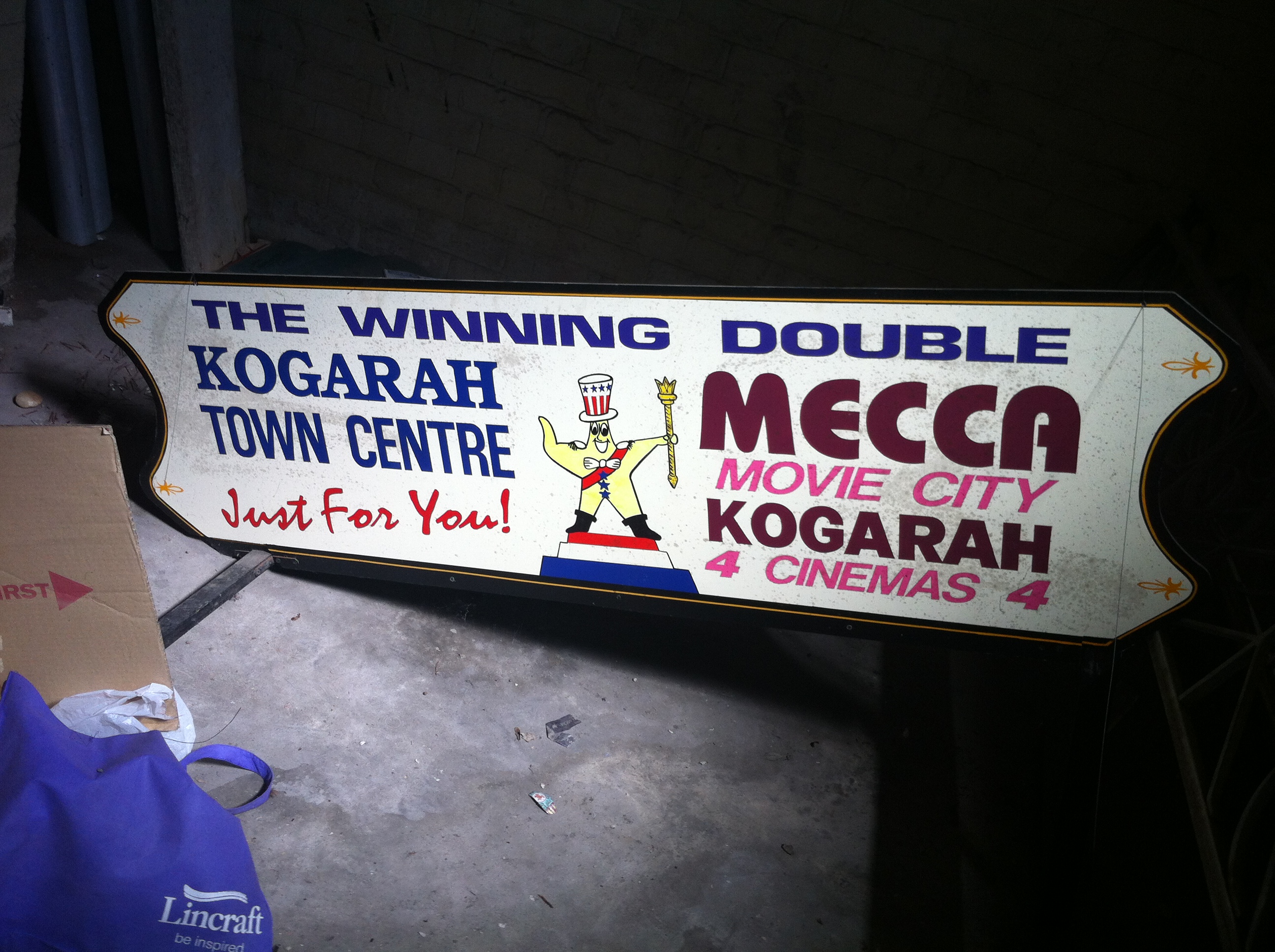


Sitting beside this smashed TV was a receipt for the very same television, dated 1999. Perhaps the most disturbing find of all was this:
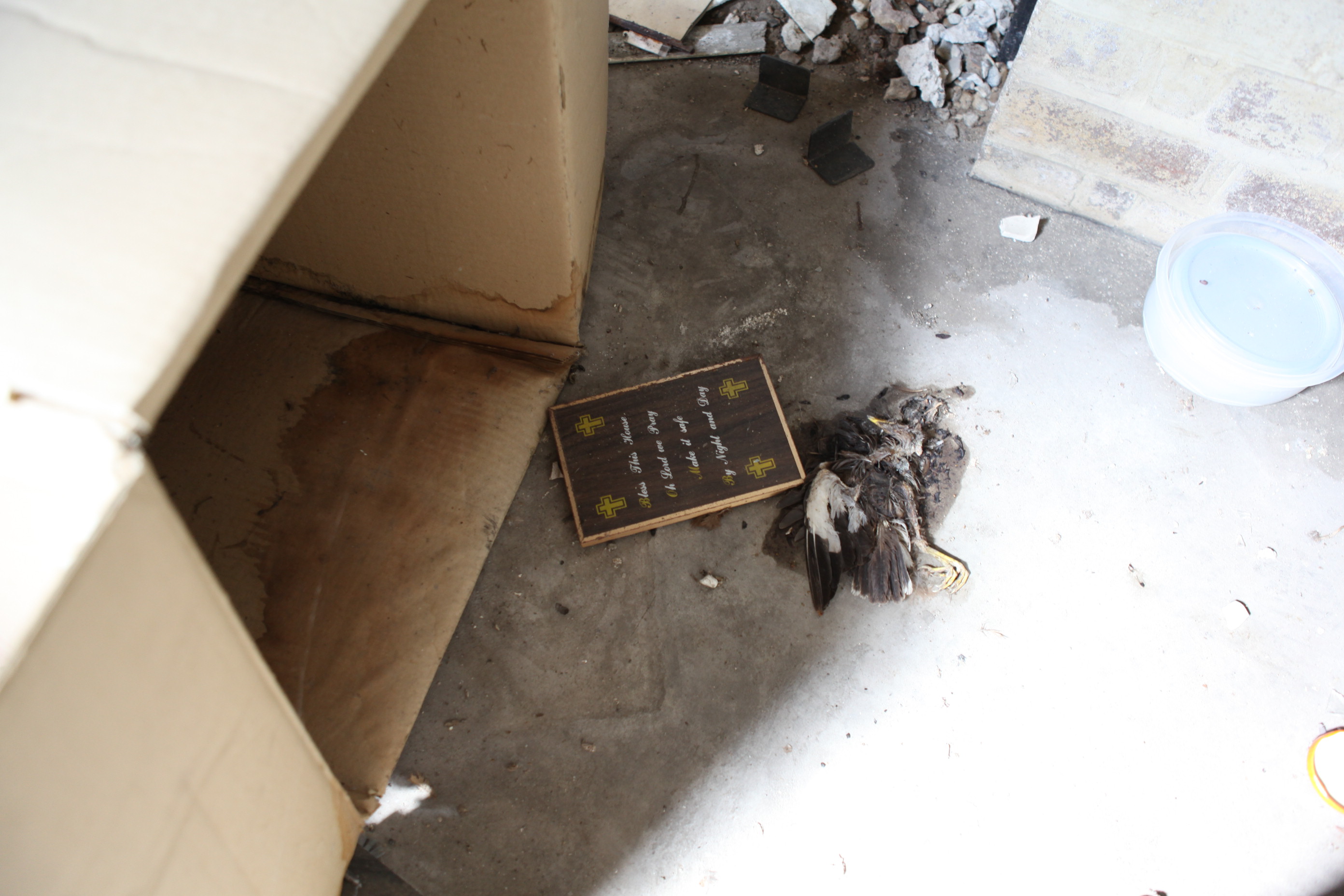
Bless this house
Oh Lord we pray
Make it safe
By night and day
It was like something out of Seven.
As we explored, it became clear what the room was.

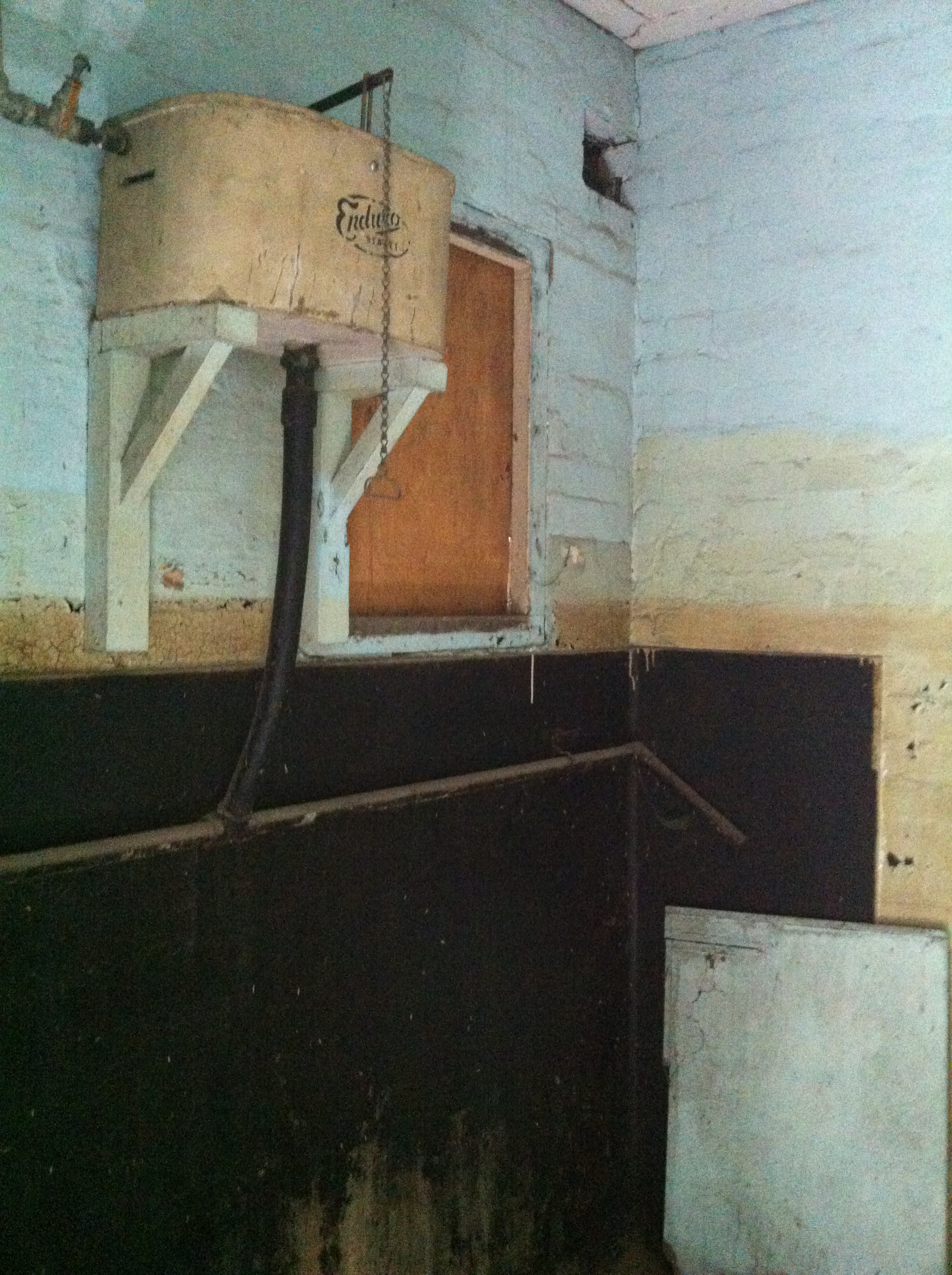
True to its smell, it was a toilet. While we weren’t sure if it had served the patrons of the original Victory, or had been tacked on later as a kind of custodian bathroom, it was still a fascinating discovery, and one that could very easily have gone unnoticed had the theatre itself been accessible. Still…

A hole in the roof provided a tantalising glimpse of the theatre above, and I knew that neither of us would be satisfied until we could get into the place. The creepy serial killer toilet had been a great find, but it was hardly the main attraction.
Before we left, I noticed something interesting affixed to the front window. I must have missed it in all the initial excitement of being able to spy on old popcorn containers.

The plot thickens…
Opening Night at the Hurstville Savoy, 1937

Hurstville Savoy, 1937. Image courtesy State Library NSW
In preparation for a pretty major article on the Kogarah Mecca cinema, much of the research conjured up stories of Hurstville’s own Mecca. In their later years, both theatres shared an owner who named them both Mecca for the sake of uniformity, and that’s all I’d care to say about that particular topic. For decades, the Savoy was the jewel of Ormonde Parade, even after they built the Supa Centre in front of it. Nice going, fellas.
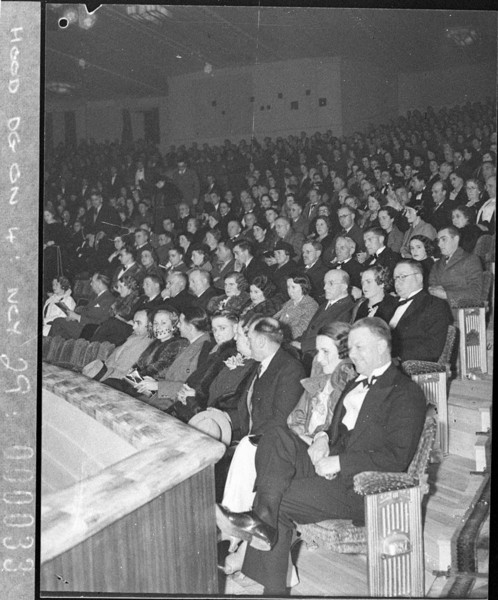
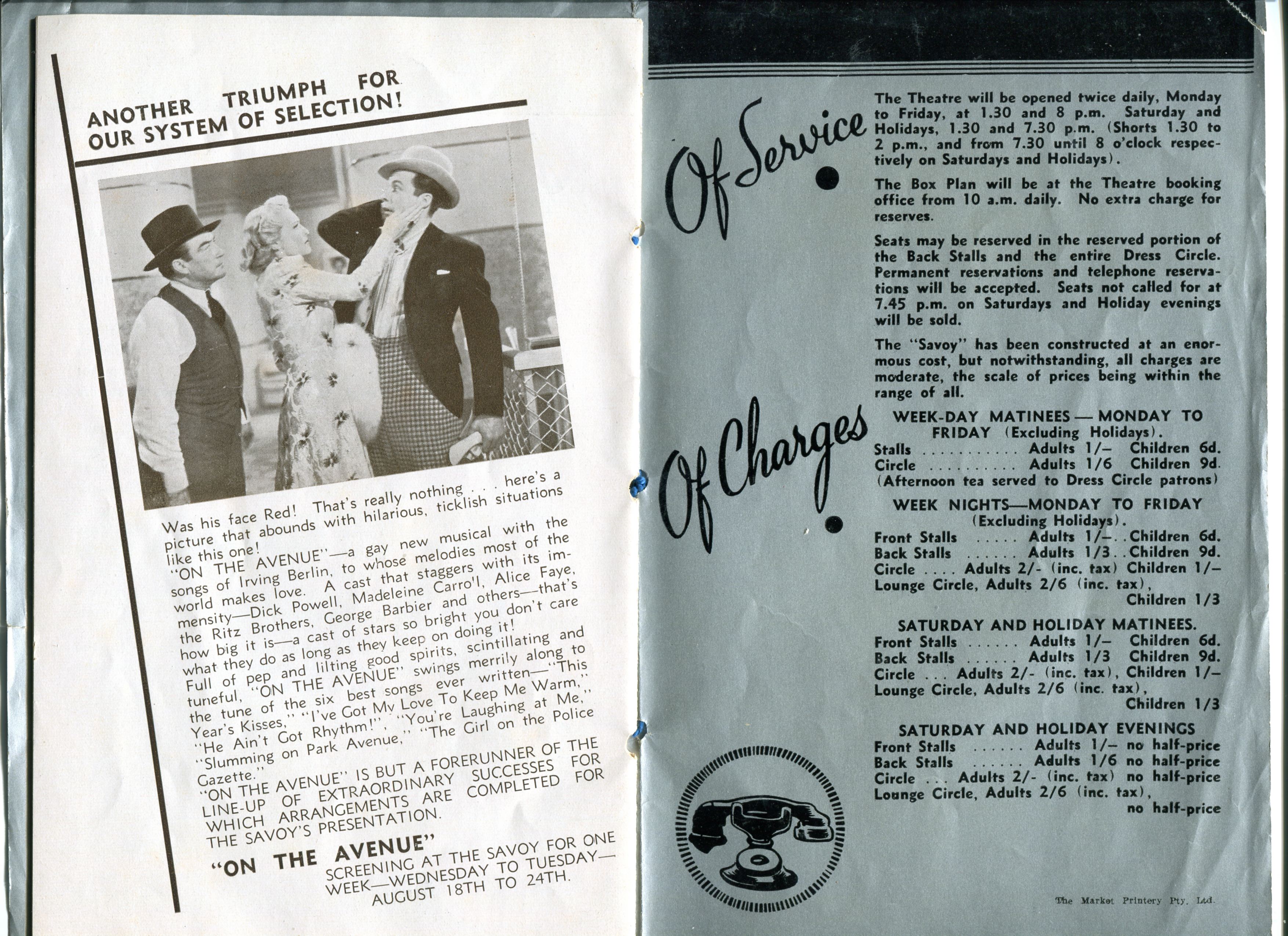
Opening night at the Savoy, 1937. Just think: each person is holding their own copy of this booklet. Image courtesy State Library NSW
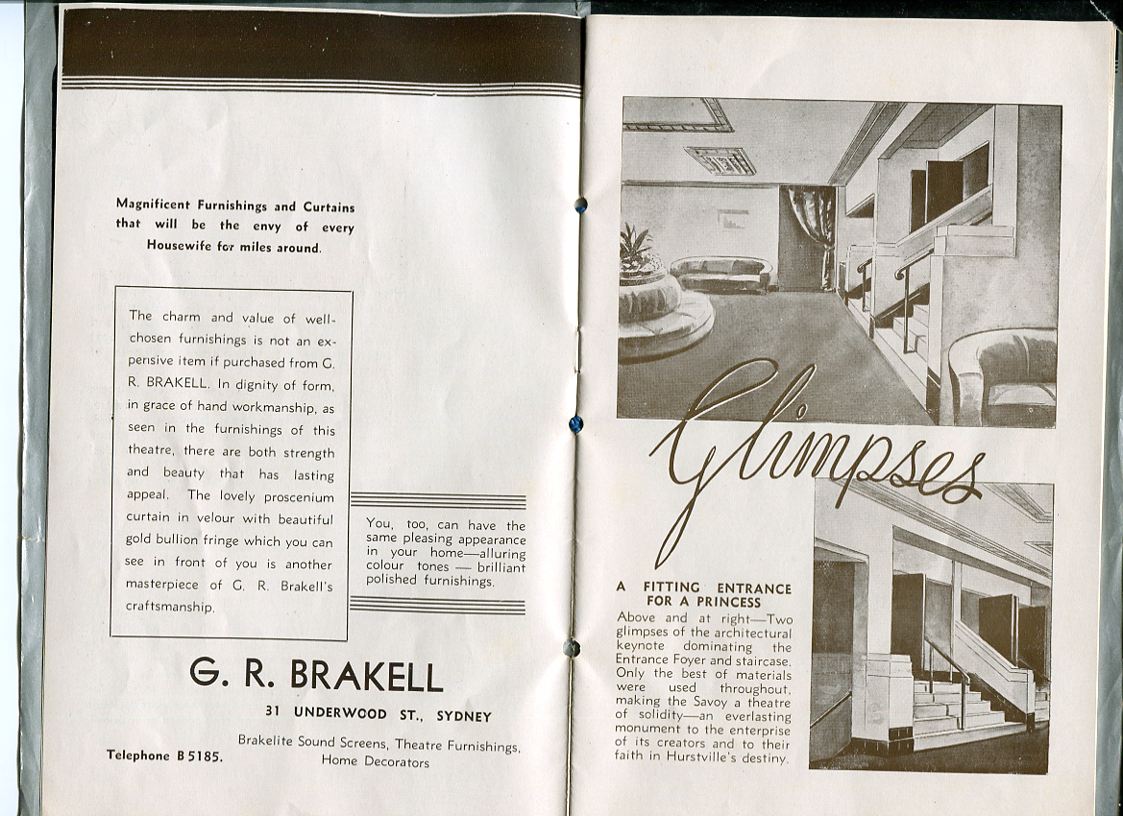
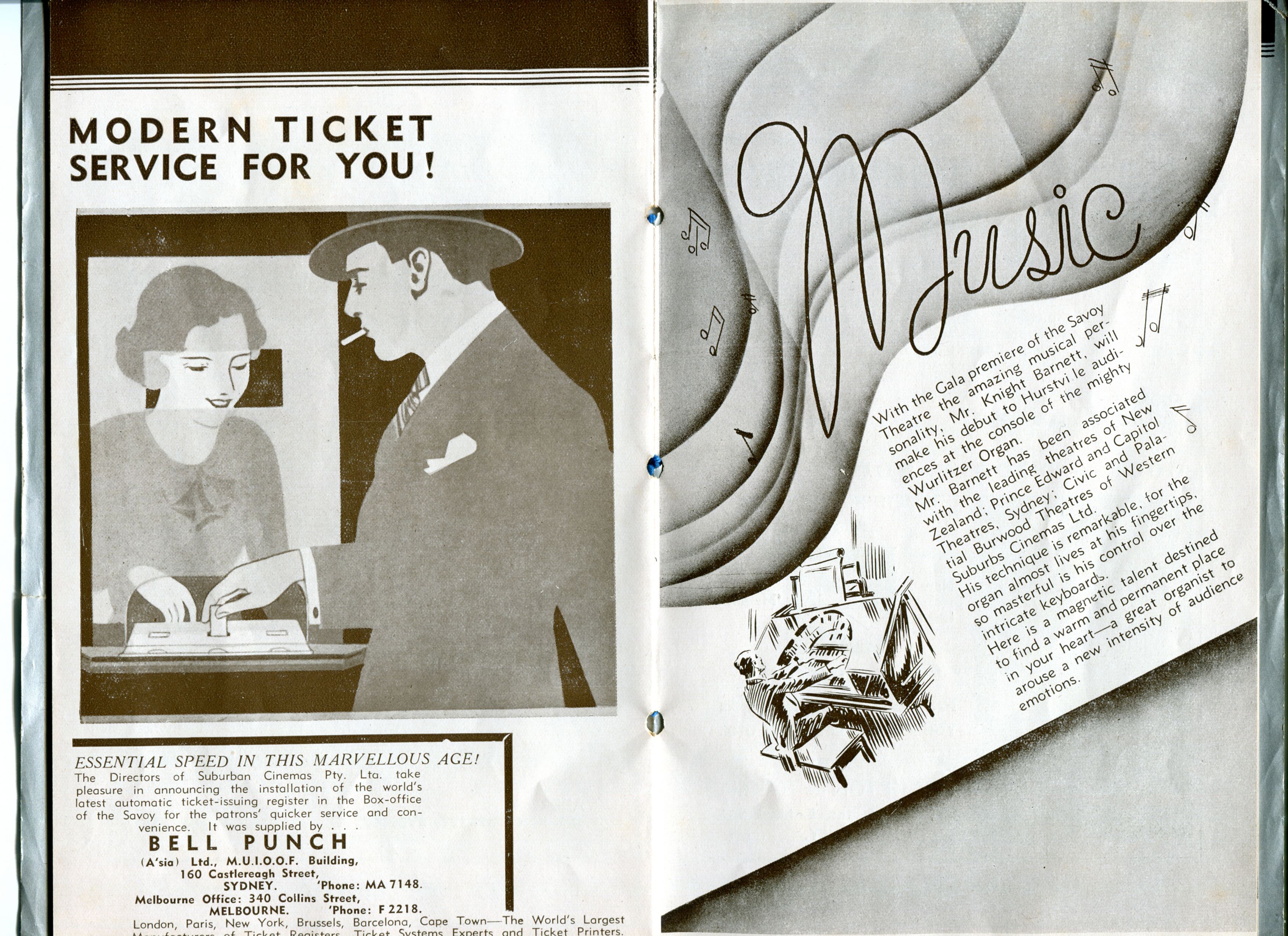
In the beginning, however, the Hurstville Savoy was a triumph of Art Deco design, a massive artistic improvement over the rather pedestrian theatres that had entertained the suburb in years prior. The more I learned, the more shocked I was that such a structure ever existed in Hurstville as I know it today. Everything about the place seemed to radiate a sense of silver-screen Hollywood elegance, and nowhere was this more evident than the evening’s handsomely designed souvenir booklet.
Demolished in 1994, nothing remains of the theatre today, so this brochure is as close as we can get to the Savoy experience short of generating 1.21 gigawatts. Be amazed, and just keep telling yourself: it came from that Hurstville.






Protestant Hall/BWS – Taree, NSW
Orange Lodges and Protestant Halls – these were the two staples of any Australian country town in the mid 1800s. If, like Taree, you were caught with your pants down as late as the 1870s, well, you’d be getting to laying that foundation stone quick smart, and you’d better make sure you do it in the presence of a large number of people:

SMH, August 11 1876
Protestant Halls have all kinds of amazing uses, not least of which is playing host to an extensive and exuberant round of preaching:

The Sydney Mail, June 13 1896
Why Reverend McIntyre, what a lovely sermon about the evils of alcohol! In most country towns, the Protestant Hall was the hub around which the town grew. Well, you know, aside from the pub. And speaking of which, I’ve seen the future and it will be:
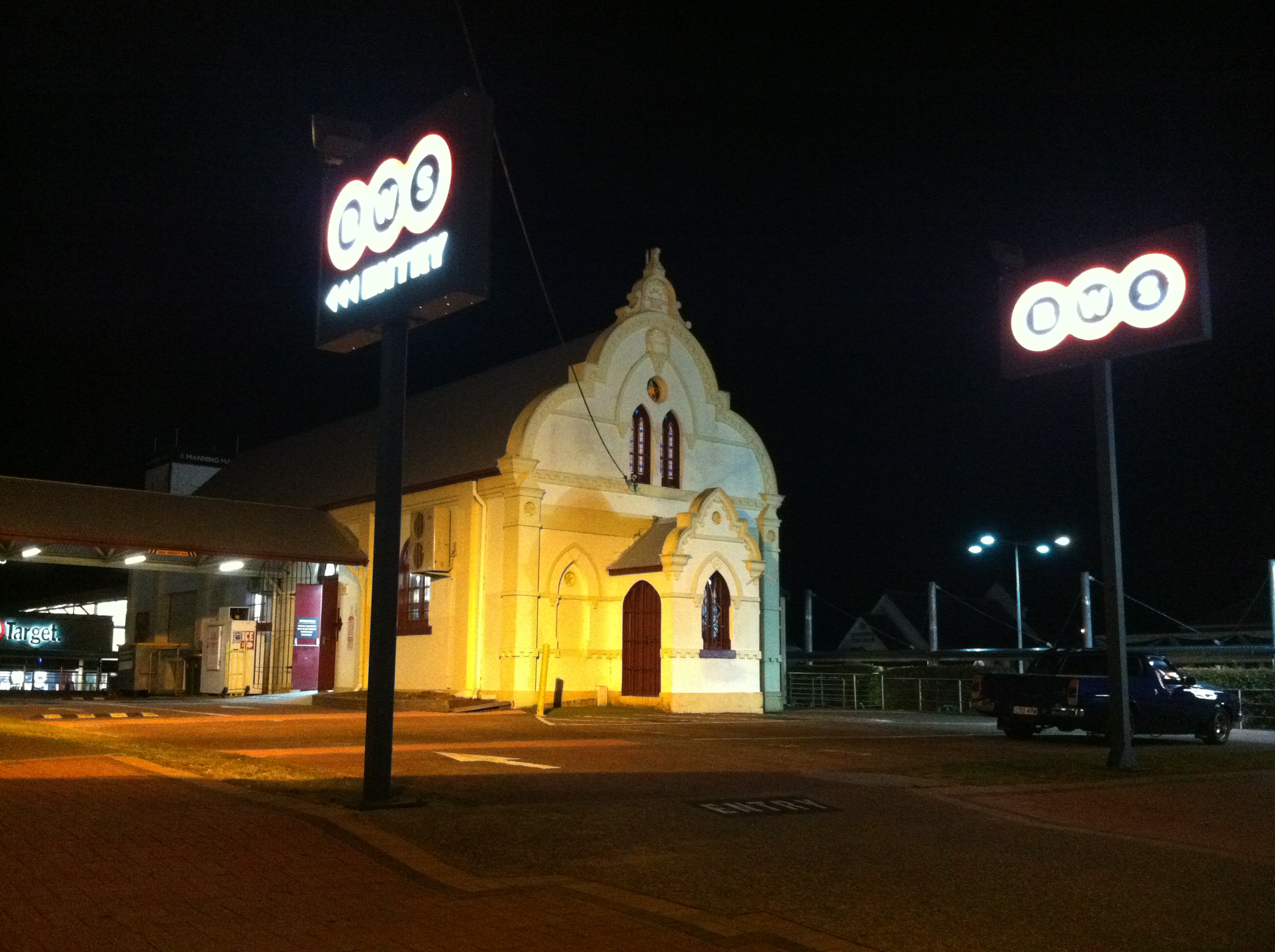
There’s something extremely sacrilegious about this, isn’t there? I don’t think it stands for Beer, Wine and the Holy Spirit, either.

Despite the incongruous, blasphemous tenancy, the building is still damn photogenic. Wha? Oh no, I meant darn!
Dew Drop Inn/State of Grace Cafe/Glitterbox – Newtown, NSW

SMH, 19 February 1947
JOHN: What do you think, darling?
ETHEL: I think I’d like to know a bit about the history of the place before we commit to anything. It looks quite old…
REAL ESTATE AGENT: That’s because it is, Mrs. Kelly. As you can see, it’s currently a lending library and a dry cleaner, but our records go back to 1895. At that time, this was the residence of a Mr. S. Spittle, furniture salesman. Spittle was a man known for his generosity, and he was likely here at home in bed on the night back in June of that year when he graciously allowed Mr. and Mrs. McKinelly use of Enterprise Hall, above his furniture warehouse, for a party.
Look, here’s the clipping from what must have been a very slow news day:
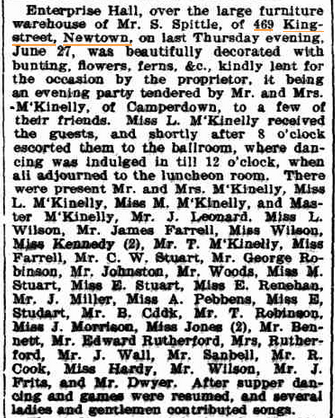
A night to remember. Evening News, 5 July 1895
REAL ESTATE AGENT: Just three years later, Mr. Spittle had moved to another part of Newtown, making way for a Mr. J. Preston and his family. Under Preston, this shop became a newsagent…

Freeman’s Journal, 6 August 1898
REAL ESTATE AGENT: …which likely sold the very paper that, in 1901, contained the details of his granddaughter Rose Anna’s funeral train, which was headed straight for the Necropolis. Very sad. It’s believed she died in this house.

SMH, 13 February 1901
The records become a little hazy for a time after that.
By the 1920s, though, they’d gone from selling newsprint to, well, printing in their own style. If you wanted to have your photo taken in your best power outfit and then have your imperfections aerographed out, Dallimore’s was the place to go:

The World’s News, 3 July 1926
REAL ESTATE AGENT: Somehow, I don’t think rough-and-tumble Newtown was quite accepting of such an arty venture. Maybe one day…
Sure enough, the Kellys bought the shop, and only two years after that, Mrs. Kelly bought the farm…

The Argus, 10 December 1949
…after which time John Kelly, formerly a milk bar proprietor, retired to Rockdale, and that’s where we lose the trail. It’s not until the mid 1980s that the chain of tenancy gets hot again, and what hotter place for it to do so than the Dew Drop Inn…

Hairdressers in Newtown are a dime a dozen, especially with slick, one-word names like Glitterbox. But if we look upwards, we see that this was once a very un-slick, many-worded Asian restaurant: the Dew Drop Inn.
It’s a name that’s usually reserved for seedy joints in 30s gangster movies. In fact the last place I’d ever expect to be associated with that name would be an Asian restaurant, especially – as the sign boasts – a gourmet one.
Unfortunately for this article’s integrity, the Dew Drop Inn seems to have dew dropped off the face of the planet, with nary a mention on the internet. All we can go on are the facts: one: it’s pre-1994 because it’s a seven digit phone number and two: it’s an Asian restaurant in Newtown without either an Asian name or a terrible pun.
And yet, for all this emptiness and lack of information, I’m intrigued. I need to know more. Did yew ever drop inn? Fess up in the comments.
Let’s dig deeper. According to this fascinating snapshot of an article from 1994, our location then became the State of Grace cafe.
Sheena Dunn, just back from New Orleans to open the State of Grace cafe, believes in the funky eclectism of the southern end. “It’s a strong neighbourhood, especially of artists and musicians,” she says. “This part of town really feels like what’s happening.” The cafe, open just one week, serves a silky Thai pumpkin soup, Spanish tortilla and home-made lemonade and coffee to the sound of S. E. Rogie and Miles Davis.
Gee, it’s truly a shame that we’ll never again be able to enjoy the eclectic funk of a Newtown cafe that serves tortillas and plays jazz music. Of note is that the article mentions the State of Grace had only been open a week; the article later provides the cafe’s phone number, which is without a 9. From this, we could assume that the shop’s preceding tenant was…the Dew Drop Inn.
But there’s one thing that’s bothering me. Given the suburb’s penchant for all things vintage and retro, could it be possible that someone just bought that sign and mounted it there as an artistic statement? Are we being tricked? Only in Newtown…
ANZ Bank/Black Pepper Clothing – Panania, NSW

With all the outrage and media attention directed toward the impending closure (or just closure, if you’re reading this in the future) of Panania’s Commonwealth Bank branch, anyone would think the community had never lost a bank before.
Just take a look directly across the road from the soon-to-be-blog-worthy Commonwealth: another ex-ANZ. You’ll note the distinctive striped shopfront design that has proven nearly impossible to remove in past instances, and the residue of the extra-strength glue they used to bolt their fitful branding above the awning. Hell, even the ugly tilework has remained (much to the detriment of current tenants Black Pepper). In fact, essentially the only thing that hasn’t stuck around are the customers. Are you listening, Commonwealth?
And if the A Current Affair story on the Panania Whichbank doesn’t tug at your heartstrings, don’t forget: every time a bank branch closes, a BSB number becomes an orphan. ;_;

 Past/Lives of the Near Future