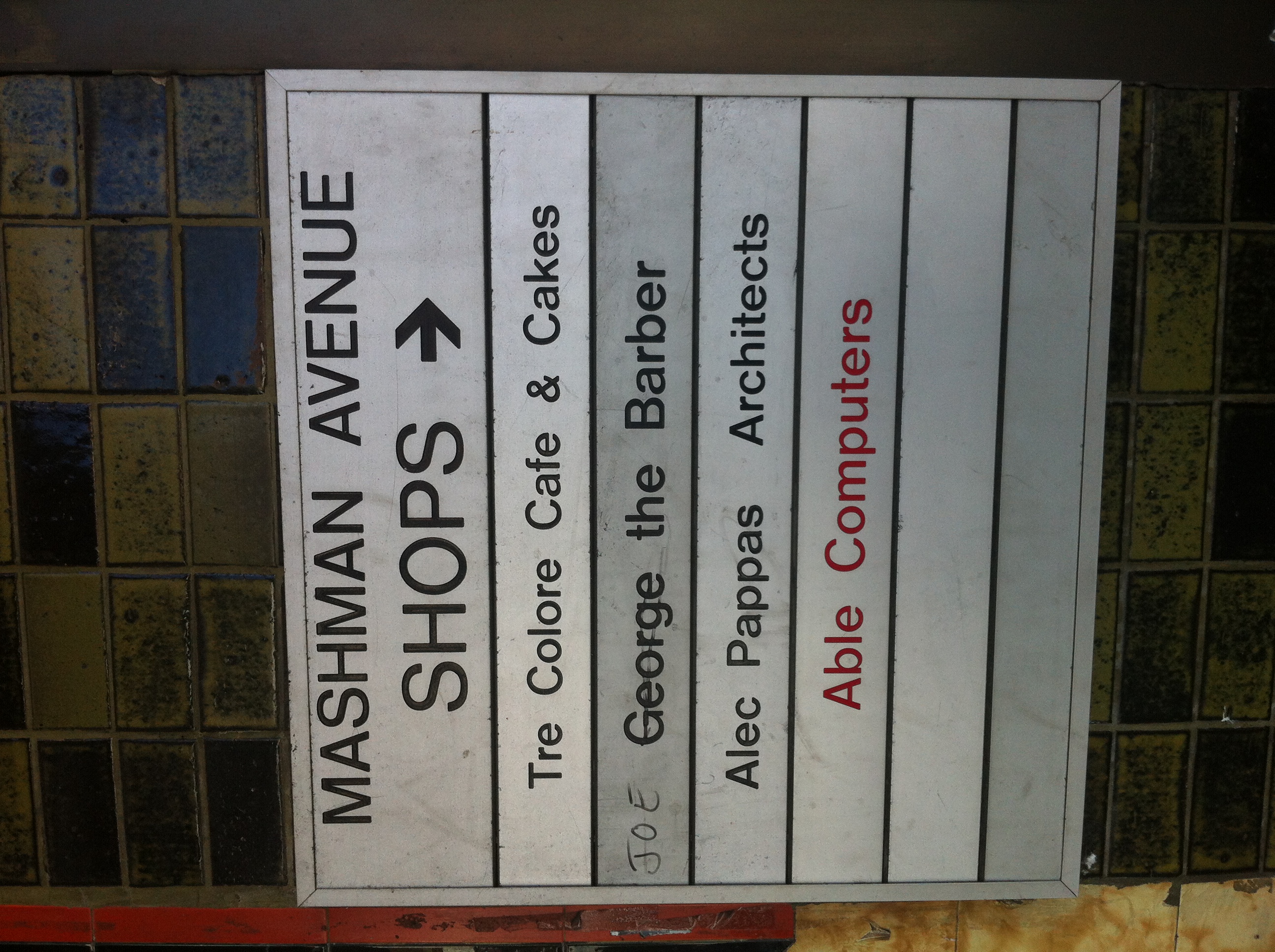
Hotel Westend/Nomads Westend Backpackers Hostel – Sydney, NSW

The Hotel Westend was built in 1929 as the Hotel Morris, and replaced a business called ‘Half Price Shoe Stores’, which had filed for bankruptcy in 1925. Shoulda charged full price, guys.
From its erection in 1929 through to 1963, the building was Australia’s tallest hotel. Now, as Nomads Westend Backpackers Hostel, it’s apparently Australia’s most repulsive:
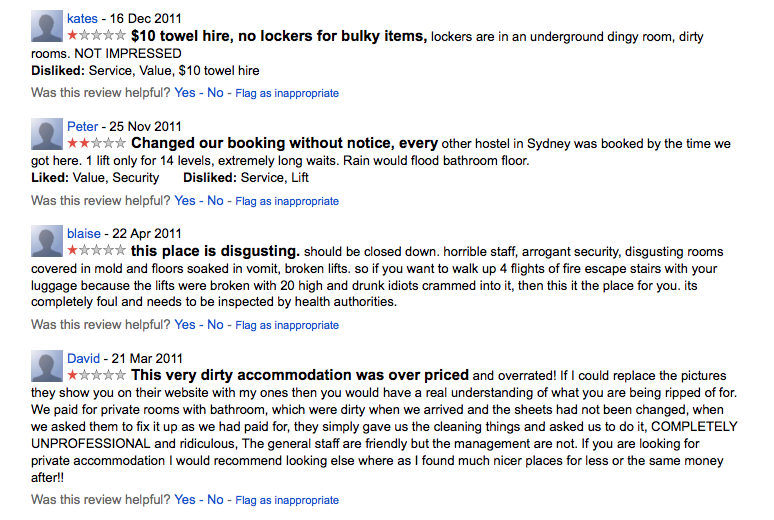
Before providing filthy rooms at a greater height than anyone else, back in 1890 the boarding house that stood at this address was embroiled…in CONTROVERSY!
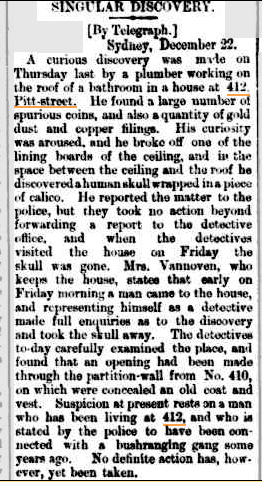
South Australian Register, December 23, 1890.
The very next day, the plot thickened:
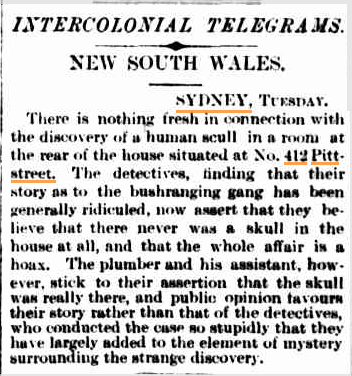
The Argus, December 24, 1890.
And then…nothing. Dodgy NSW cops? Sure it wasn’t 1980? Also, pretty ballsy of the Argus to call out the detectives as stupid given their spelling of ‘skull’.
Choys 1000 A.D./MH BBQ Restaurant – Haymarket, NSW

Since 1913, this address on Hay Street in Haymarket had been used as a produce merchant, importing and exporting goods to and from China and Hong Kong. The first leaseholder was a ‘Lee Sang & Co, and throughout the first half of the 20th century, all subsequent leaseholders were companies run by descendants of those involved in the Lee Sang & Co outfit. These companies provided fruit, vegetables and other fresh produce to the city produce markets across the street, now Paddy’s Markets. When the produce markets moved to Flemington in 1977, this address was taken over by Dominic Choy, an architect who had emigrated to Australia in 1962. He refitted the building and opened a restaurant, Choys 1000 A.D. in 1981.
At that time Choy already had other restaurants in Randwick and Gordon, and by 1989 he had six locations all around the city (you might say Sydney was spoiled for Choys), each with a distinct theme. The rustic theme of 1000 A.D. was ancient China, with large wooden tables and benches replacing the traditional restaurant setup. Choys 1000 A.D. seems to have closed sometime after 1996, and today only Choys Randwick remains of the Choy Chinese restaurant dynasty. Even its reputation appears to have declined in recent years, but it says a lot about the well-regarded 1000 A.D. that it took three businesses to replace it: MH BBQ Restaurant, the Hay Street Dental Care above that, and a massage parlour above that. You’d probably have a memorable date night taking them all on in a sort of Game of Death-style tower challenge. I’m not sure what became of the man himself, all I could find was this. For his sake, I really hope he isn’t that kind of architect.
The Commercial Banking Company of Sydney Limited/Burberry – Sydney, NSW

Yeah, this one’s an easy target but it’s Friday, so gimme a break. If we look past the brand name for a moment we can see this building belonged to the Commercial Banking Company of Sydney Limited (CBC). The CBC was established in 1834, and here’s its seal:

Now, I know what we’re all thinking: “How can I find out more about the boat in that seal?”
The CBC website answers our prayers:
“Thermopylae was an extreme composite clipper ship built in 1868 by Walter Hood & Co of Aberdeen to the design of Bernard Weymouth of London for the White Star Line of Aberdeen.
She measured 212’0″×36’0″×20’9″ and tonnage 991 GRT, 948 NRT and 927 tons under deck. The under deck coefficient was 0,58. Rigged with royal sails, single topgallant and double top-sails.
She was designed for the China tea trade, and set speed records on her maiden voyage to Melbourne — 63 days, still the fastest trip under sail. In 1872 she raced the clipper Cutty Sark from Shanghai back to London and won by seven days after Cutty Sark lost her rudder. In 1895 she was sold to Portugal and used as a naval training ship. The Portuguese Navy torpedoed her at sea in 1906.”
But for every nagging mystery solved, another pops up in its place, such as why Burberry needs a safe deposit area:
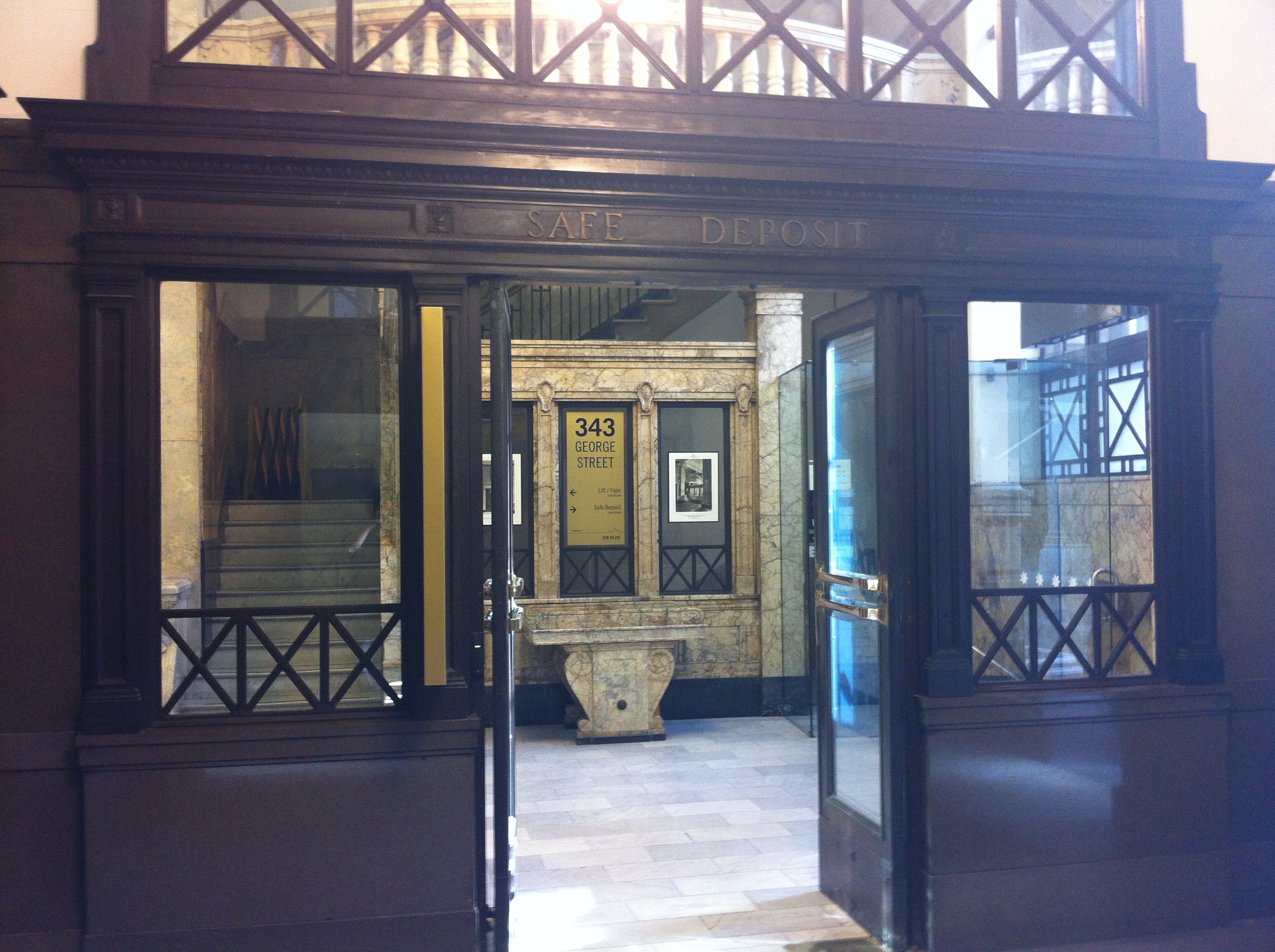
But that just goes to show that they used to build banks to last. To these designers, the CBC was going to rule the waves forever, but the truth is much more banal. In 1981 it was absorbed by the National Australia Bank, whose logo can be found bolted to the front of this building. Looking inside, we can see the extent of the bank’s lavish furnishings:

After having a look at some of those price tags, I can safely say that even though Burberry has only been at this location for a year (it was previously Sydney’s only Virgin Megastore), it’s banked fatter coin than the CBC ever did.
Scripture Book Centre/Spice World – Bankstown, NSW
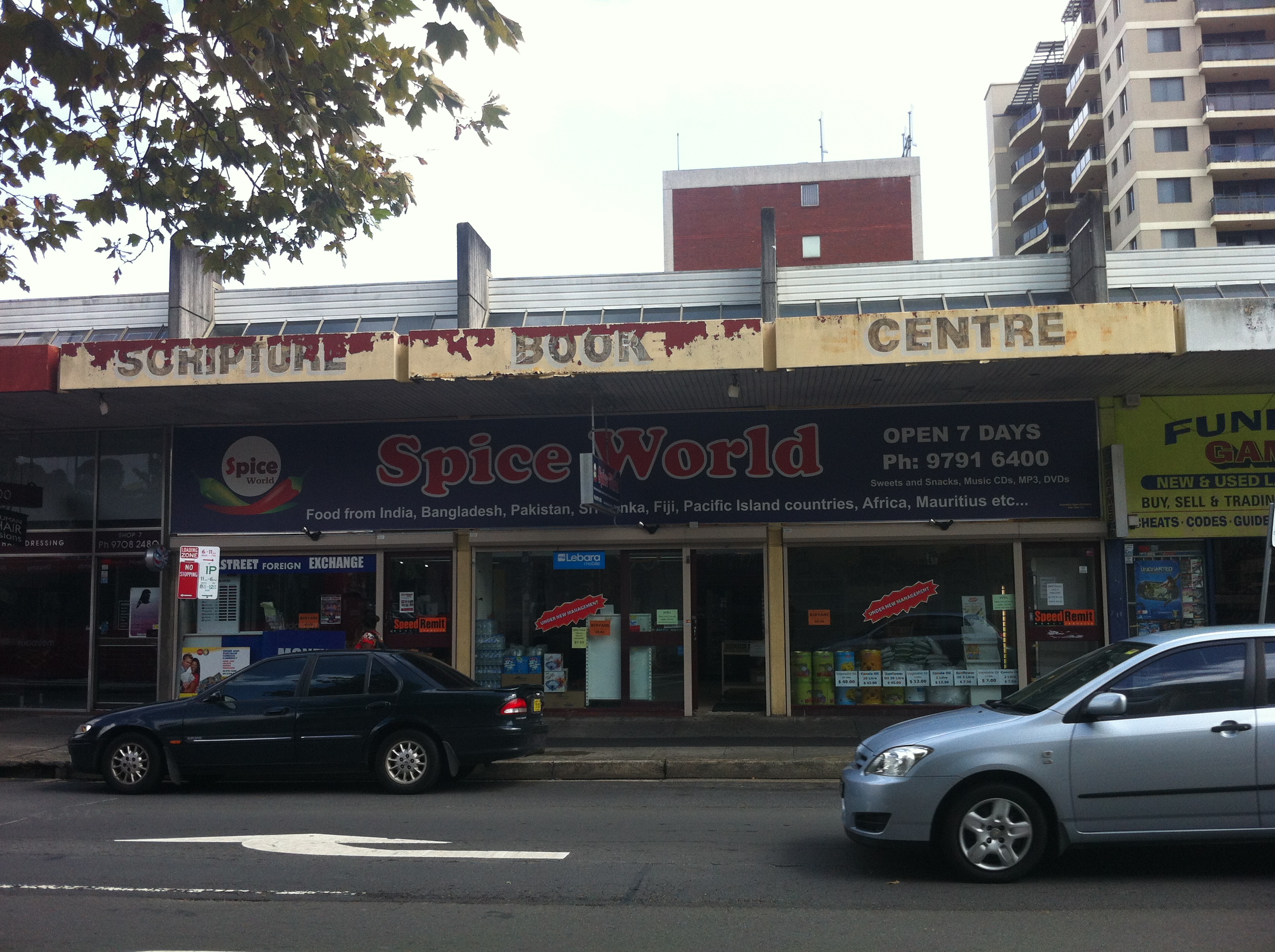
Before Ginger, Posh and Baby moved in, this was the place to go in Bankstown for your scripture book needs. Back in the late 80s and early 90s though, before it was the Scripture Book Centre, this and the neighbouring ‘Funland Games’ building were the Spin Out video arcade. If anyone has any pictures or further information about Spin Out, please let Past/Lives know.
These shops sit on the Appian Way, Bankstown, across from Bankstown Square. In 1954, the Appian Way was home to the *chortle* S & M Fox Institute, an x-ray clinic where checks were compulsory in the 50s and 60s. If you were content to stay home with your terminal case of TB just because you didn’t want a dose of pure radiation, you were fined no less than 20 pounds. Just think – adjusted for inflation that’s the equivalent of a big cash settlement from the NSW Government for having contracted cancer from dodgy x-rays in today’s money.

 Past/Lives of the Near Future