Cumberland Hotel/TK Plaza – Bankstown, NSW

There isn’t much call for an old English-style hotel pub in Bankstown these days. This particular part of the city, Old Town Plaza, is especially bereft of watering holes thanks to the enormous Bankstown Sports Club around the corner.
Yes, there’s the Bankstown Hotel and the RSL on the other side of the train line, but down here it’s the Sports Club (not to be confused with the Bankstown Sports Hotel nearby), the Oasis Hotel (or the Red Lantern depending on who you ask) or you’re going thirsty.
Those two venues, while fine, are very much products of today’s Bankstown. The Oasis looks like the kind of place you’d hit up to dump some cash into the pokies and have a smoke outside, while the Sports Club has a monopoly on the family friendly crowd. Neither enjoy the kind of maturity conducive to sitting around and making a beer last many hours.
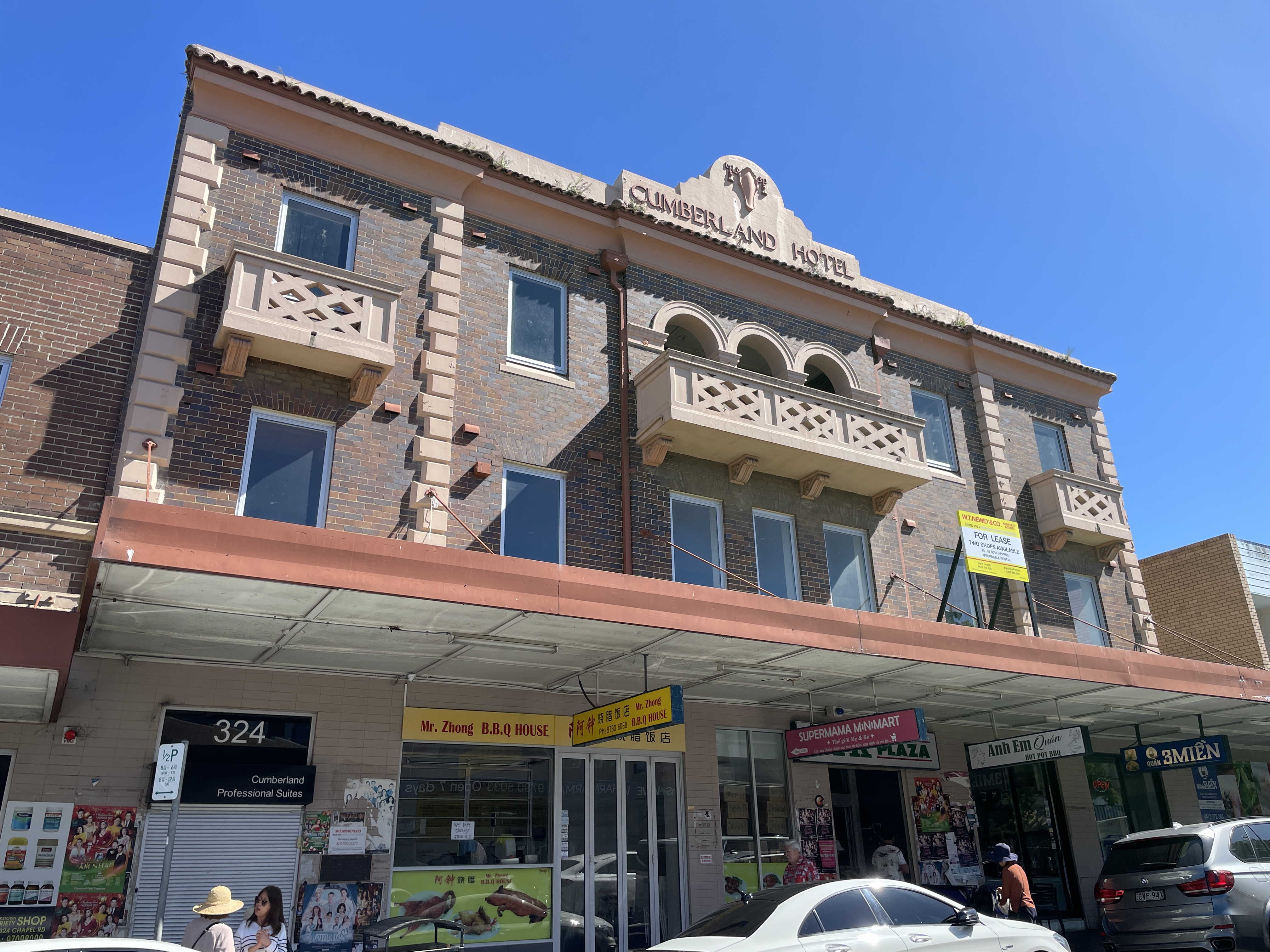
And then there’s the Cumberland Hotel, a proper glimpse into the suburb’s past. If you know Bankstown, you’ll know this venue stands out like the proverbial.
The locals have done their best to incorporate the Cumberland into the street’s mix of fresh food wholesalers, dollar shops and mini marts, but the top half speaks of a time when the working class would need to cool down after a hard day’s work; when a night at the Cumberland might even result in a cheap room upstairs; when Mr. Zhong was still afraid to play with matches.
From what I can gather, the Cumberland has its origins in 1929, when William Hoyes, the licensee of the notorious Rydalmere Hotel, transferred that pub’s licence to his newly purchased hotel in Bankstown. The ruckus at Rydalmere, and Hoyes’ hasty escape, seems to have originated in 1907, when a Dundas policeman disturbed a cadre of dudes drinking illegally – at midday! – at the Catholic Church beside the pub.
For his troubles, Constable Howard was bashed quite severely, but got his own back when he shot at the four pissed louts, injuring one of them. Turns out one of them was the hotel’s licensee, while another was the church’s caretaker. You’d think they could have had a quiet one at the hotel itself, but perhaps they had to wash down a communion wafer.
The incident left its mark on the Rydalmere Hotel to the point where even after 22 years, Hoyes opted to take his licence and start over in a suburb less tarnished by violence… for now.

In 1930, the Cumberland was up and running under the watchful eye of Tooheys. Hoyes made way for O’Regan in 1933, who gave it up to O’Reilly in 1934. The names give a clear indication of Bankstown’s cultural background at the time.

Vincent O’Reilly held onto the Cumberland until 1950, by which time the lay of the land had changed quite a bit. The following year the Cumberland Hotel fell under investigation of the Royal Commission on Liquor, which had put old mate Abe Saffron in the hot seat.

Honest Abe had apparently made some licencing deals with several hotels, including the Cumberland, the Morty in Mortdale and the Civic in Pitt Street, that had not impressed the authorities. At the heart of the matter was the improper funneling of booze between pubs under Saffron’s influence, grossly in breach of the Liquor Act.
While all this was going on, the Cumberland endured another parade of licencees including Mr Kornhauser, Mr Norman, Mr Blair and Mr Geoghegan, the latter of which applied for – and received – a 12-month dancing permit in 1957.
During Geoghegan’s tenure, on a momentous November afternoon, a meeting took place that would change New South Wales’ taxi and golf landscapes permanently.
“In November of 1954, three disgruntled members of Campsie Taxi Drivers Golf Club, while having a drink at the Cumberland Hotel in Bankstown, discussed forming a breakaway group of golfers. It wasn’t until after Melbourne Cup Day of that year that a group of up to 10 cabbies decided to form a Taxi Social Golf Club. The first game was held at East Hills Golf Club on the first Tuesday in January 1955.
The foundation meeting was held that day. A foundation committee was elected and Bankstown Taxi Drivers Golf Club was born. Tuesdays were chosen as golf day because back in those days, they were deemed to be the quietest day of the week for cabbies.”
NSW Taxi Golf Association
There it is, folks. Wonder no more. I shouldn’t think there was too much licenced dancing going on that day.
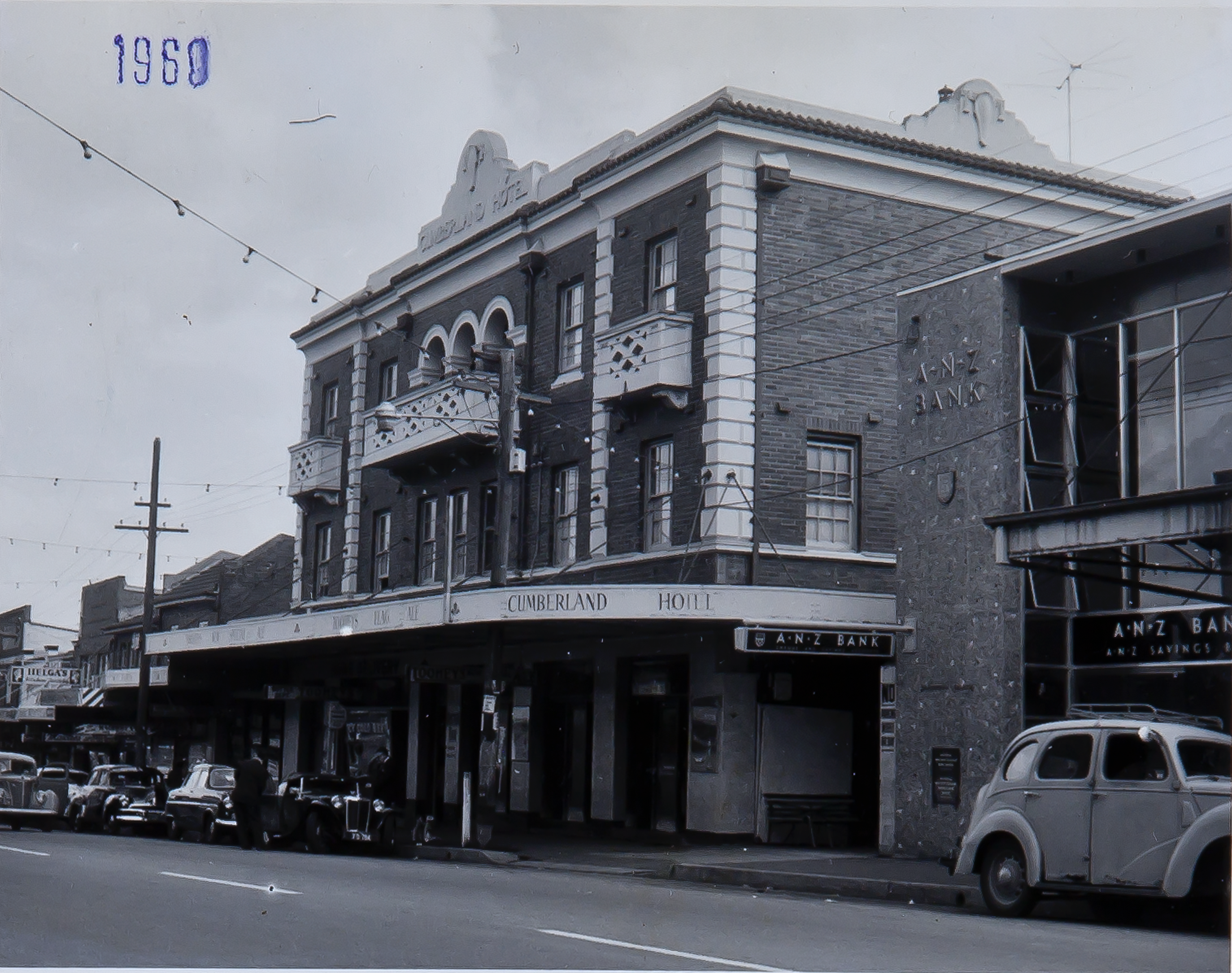
As the 1960s dawned, things changed even further. Geoghegan was out, and in his wake came Masman, Martin, Conlon, Light, Monkey and a switch to decimal currency.
The Oasis had sprung up around the corner, as had the “Bankstown Bowling Club”. In another sign of the times, a TAB in Fetherstone Street, on the other side of the train line, was seen to be impinging upon the Cumberland’s bread and butter. Blair, Heffernan, Davanzo and Lynch would endure this incursion and take the Cumberland into the 1970s.

The beginning of the end came in the 80s, however, when that old undercurrent of pub violence would again raise its ugly head. By that time, Bankstown had become home to two distinct groups of refugees fleeing overseas wars: Lebanese and Vietnamese. They didn’t always gel.
As is now well understood, youth gang crime became an issue for these two ethnic groups. One night, in July of 1986, tensions boiled over in Bankstown. A brawl started outside Bankstown Station and became so violent that wooden palings were torn from fences to be used as weapons.

It’s not hard to imagine these guys hearing of the brawl during a night at the Cumberland and rushing to the aid of their friends. By then, the Cumberland had become “a seedy old watering hole, with a cast of colourful characters, Viet gangsters being shot on the doorstep, topless barmaids, great beers and lots of laughs”. It couldn’t last.
Somehow, the Cumberland staggered into the next decade, which was awash with even more gang violence. Names like 5T and the Madonna Boys should be familiar to anyone who was around at the time. 5T was particularly notorious not only for its violence and clout in the bustling Sydney heroin trade, but for the ridiculous age of its leader, Tri Minh Tran, who took over the gang at 14.
Tran was shot dead in 1995, and gangs such as Red Dragon and the Madonna Boys, led by “Madonna” Ro Van Le, sprung up in the resulting power vacuum. Madonna himself had been convicted of murder in 1989, and a decade later had only just been released from prison when he visited the Cumberland Hotel one Friday night.
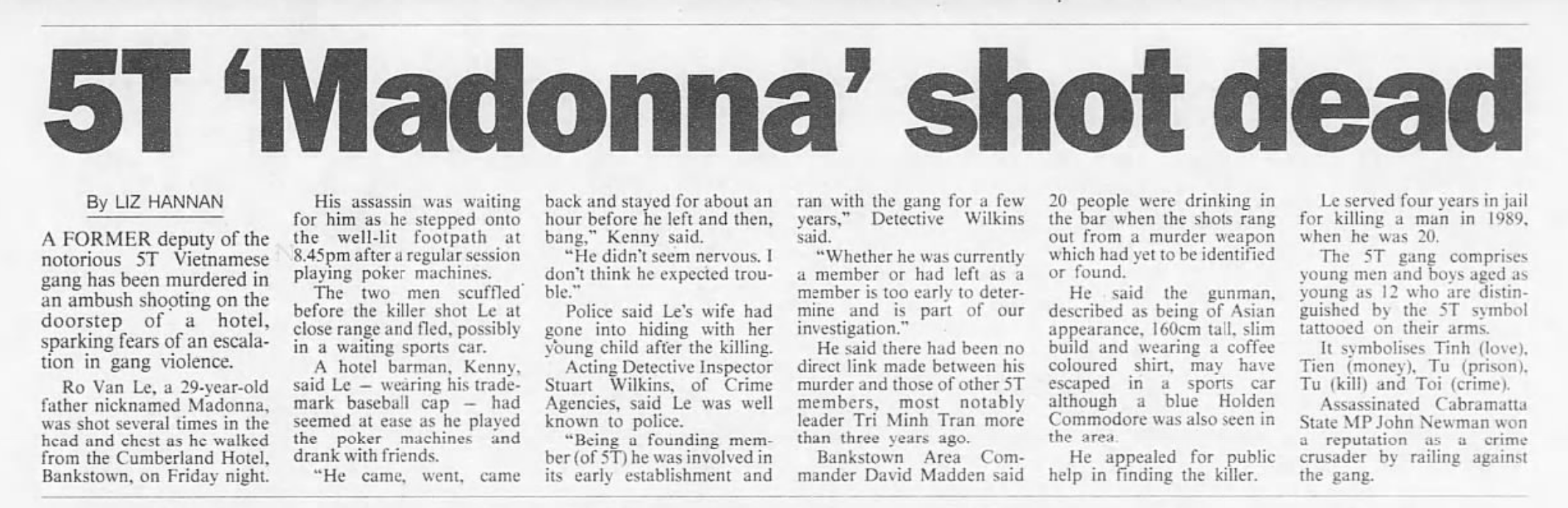
It was Madonna’s last. As the drive-by shooter’s bullets entered his head and chest on the footpath outside the Cumberland, they ostensibly ended the hotel as well.

The shooting helped prompt owners Bill and Mario Gravanis to abandon the Cumberland in favour of the Bankstown Sports Hotel further down the road.

Today’s Cumberland is a mix of smaller outlets that have carved up the spacious interior. One must first cross the fruit-laden threshold of TK Plaza…

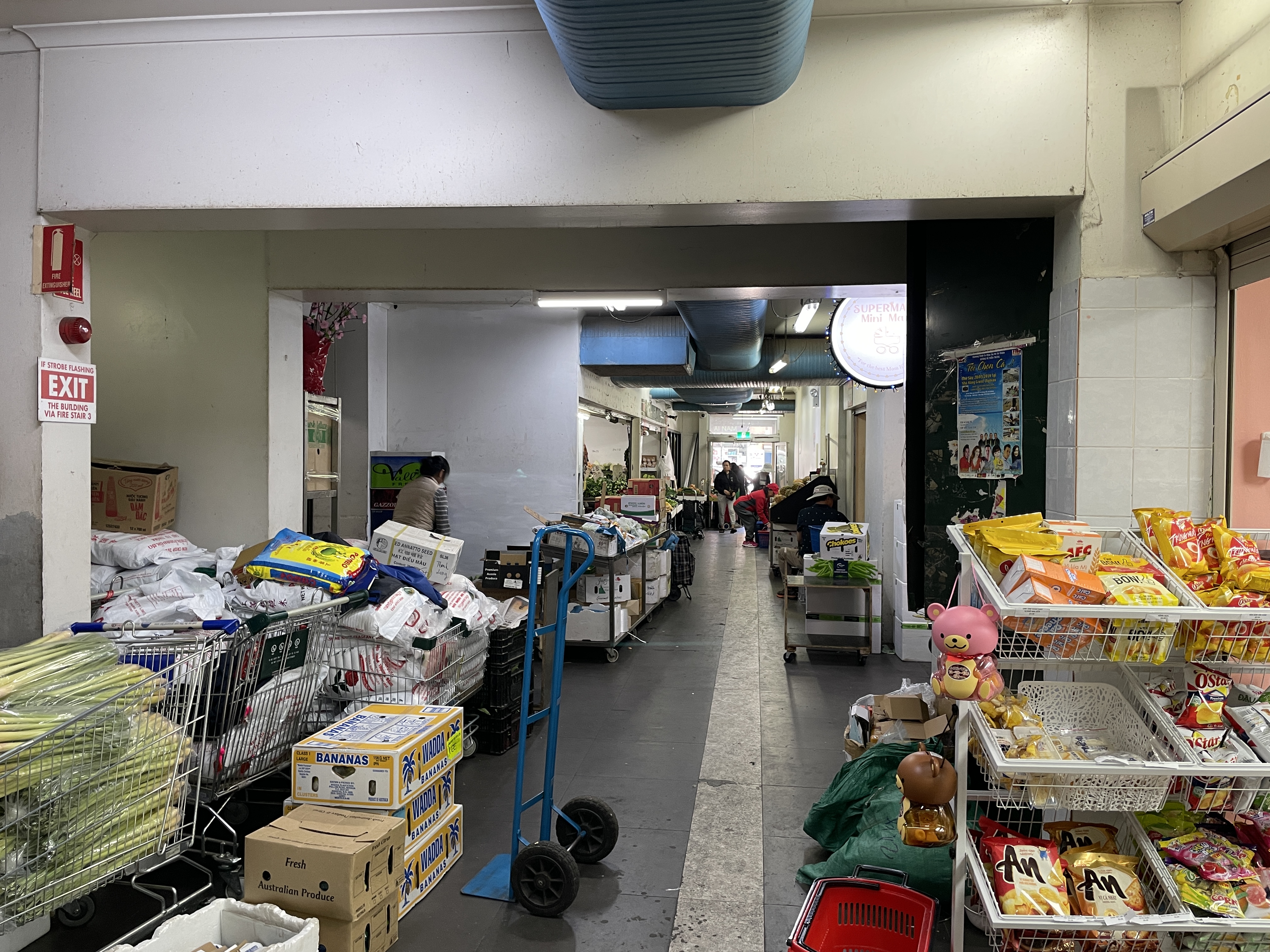
What was once Madonna’s beloved VIP lounge is likely Skybus Travel, itself no longer in operation if the room full of mangoes and canned squid is anything to go by.
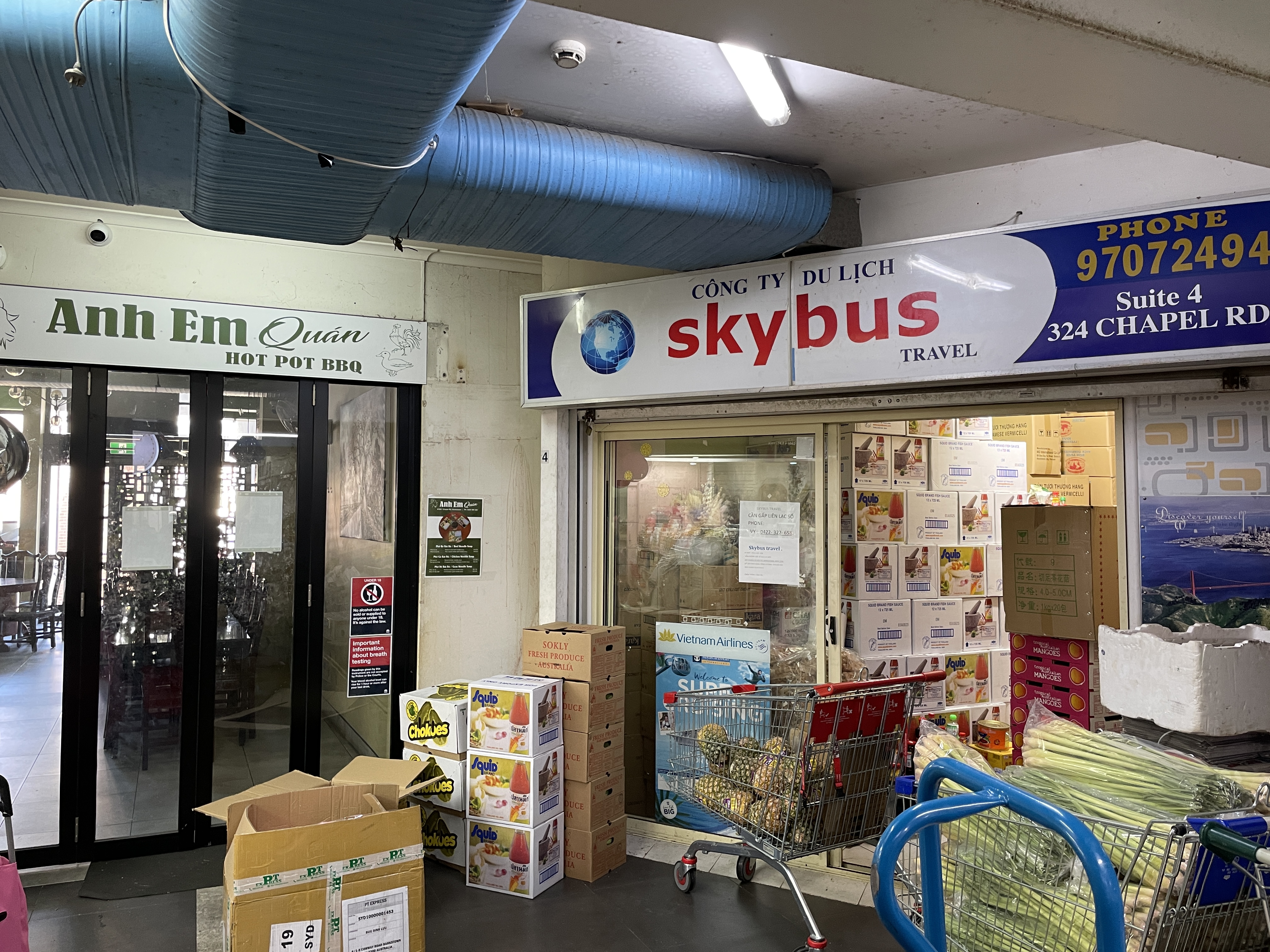
And perhaps the table favoured by those disgruntled cabbie golfers is now a part of Anh Em Quan’s Hot Pot BBQ restaurant. If they’d settled their grievances over a bowl of spicy prawns that day, who knows what kind of world we’d live in now.

Around the back, it’s hard to imagine this was ever a pub. The mural places the Cumberland firmly in the every-second-shop’s-a-fish-market vibe of Old Town Plaza, while the back alley is full of Hiaces rather than getaway cars.

It’s unlikely the Cumberland Hotel will ever serve a cold schooner of beer again. The world that defined the venue is gone. Tooth, Madonna, Constable Howard, the Geoghegans of Bankstown – all are now memories.
At 324, just under the Cumberland’s south wing, the ‘Cumberland Professional Suites’ carry on the name. They probably occupy the rooms upstairs as well, but even they have the sadly familiar For Lease sign outside.
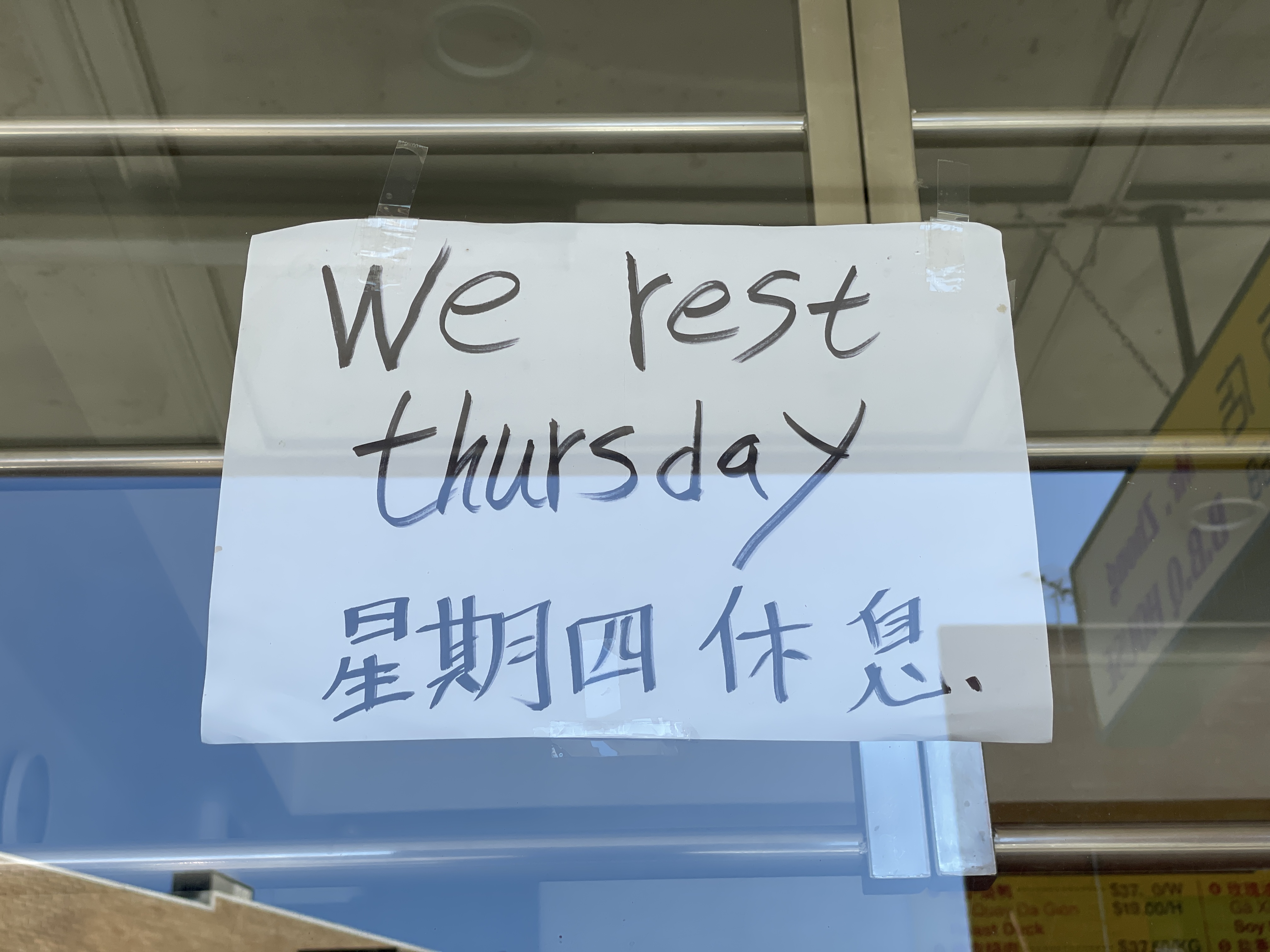
Perhaps the next tenant will take a look at the building’s history and look to maintain some kind of continuity in a way TK and Mr Zhong did not. As I departed fully intact, much to the late Madonna’s envy, I noticed this sign in one of the front windows.
Rest in peace, Cumberland Hotel.
Pizza Hut/Kiddiwinks – Warriewood, NSW
You’ll have to forgive the low-hanging fruit in this case, but when it’s been a while you need a rolling start to get back up to speed.

There’s a certain ballsiness that comes with stepping into Pizza Hut’s red shingled shoes. By inhabiting such a familiar space, you’re inviting comparisons you’re (usually) unable to support. It doesn’t matter whether you’re burying people or educating them – if you’re doing it in an old Pizza Hut, prepare for scrutiny.
When Kiddiwinks, a Northern Beaches childcare centre, accepted the Used To Be A Pizza Hut challenge, it came armed with bold colours and fencing designed to dispel all notions of what had come before.

But what had come before? The Warriewood entertainment precinct had once included all the ingredients for a great (if not fatty) night out: Pizza Hut for dinner, a cinema for a show, a McDonald’s for the car park afterwards and a sewage treatment plant to mask the odour.
That was then. Pizza Hut was the first casualty, going the way of all Huts in the late 90s. By 2008, a dark time at the farthest ebb of all-you-can-eat nostalgia, Warriewood Pizza Hut sat empty and graffiti’d.

This was exactly the kind of visage that screamed potential to the folks at the Hog’s Breath Cafe, who proved a slightly uncomfortable fit into the ‘east coast lite’ feel of Pittwater Road.

Out of breath by 2013, but with an eye-catching green mohawk, the site waited for its next denizen. It was a very long wait indeed; Kiddiwinks wouldn’t sign on the dotted line until 2019 – the furthest east the business has yet ventured.
Another first Kiddiwinks can add to the walls of its “Hampton-style interiors” is that it’s likely the first ever tenant to ever have a menu “approved by NSW Health to meet the recommended daily intake for children”. What a shame then that the kiddis are constantly staring at a burger joint all day long.

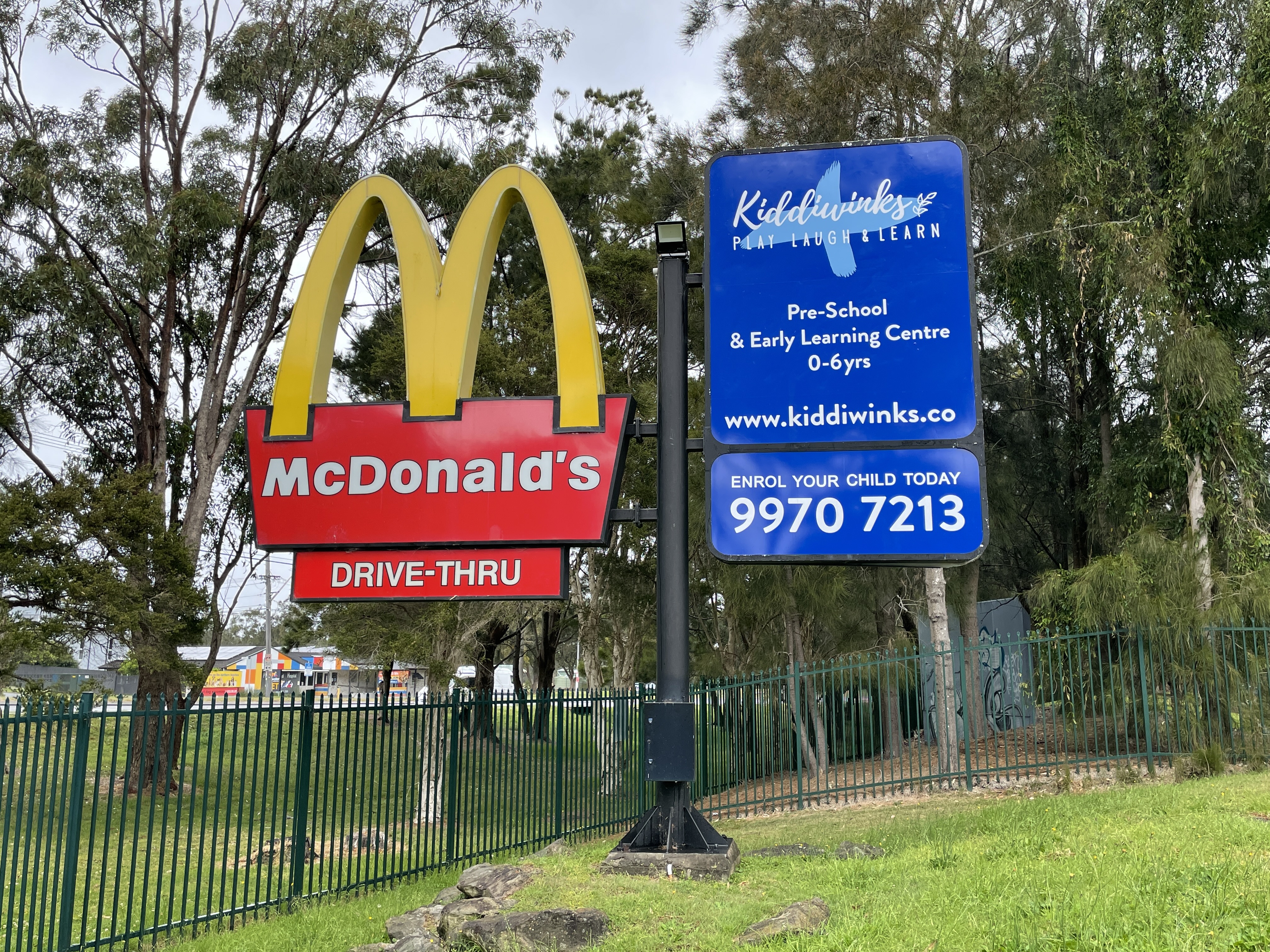
Meanwhile, McDonald’s prospered in the absence of competition. So confident is Ronald in this location’s viability that the bare minimum was done to pull the exterior into line with the boxy new Mickey D aesthetic. Going through the drive-thru (or so I’m told) is a journey past the green, angular and dare I say even Hut-like McDonald’s of old.
And perhaps that’s how it should be at a place like this. There needn’t be anything modern about a big block sitting on the curb of a busy arterial road promising flicks and a feed on a Friday night, and steady processing of post-ablutions the rest of the time. On some level even Kiddiwinks knows so, appropriating as it has the old Pizza Hut sign.
Strange bedfellows in every sense.
Hotel Cecil/Cecil Apartments – Cronulla, NSW
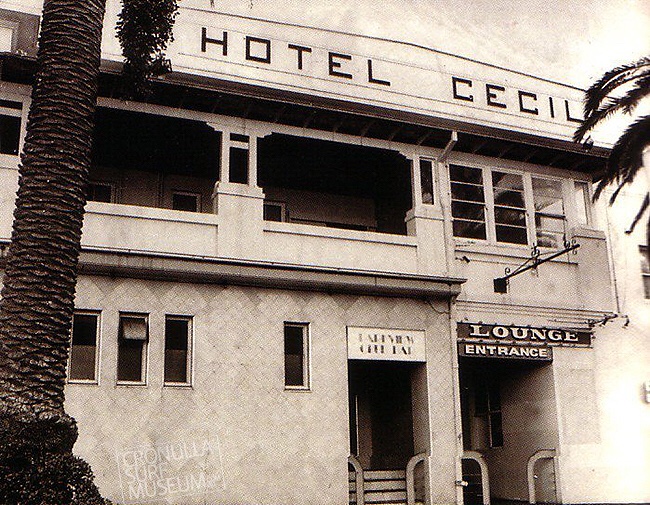
The Hotel Cecil, era unknown. Image courtesy Cronulla Surf Museum.
What’s in a name? The name Cronulla inspires certain imagery: beaches, beer and brawls. With its vibrant social life and strong sense of community, Bondi’s brother from another planet provides the kind of rough-around-the-edges seaside fun that’s expected of Australia, just with less backpackers.
Which is strange, because there’s never been a shortage of places to stay and get tanked. If you weren’t a local (in which case, what were you doing there?), you were spoiled for thirst-quenching options after your day in the sun, and one such option was the Hotel Cecil.
Tell me this now: what kind of names do you associate with Cronulla? Mark, Kai, Tyler…Cecil? Has anyone named Cecil ever set thonged foot into the Shire, let alone Cronulla Beach?

SMH, Aug 31, 1927
The answer is yes. In 1927, Cecil J. Munro was the president of the local shire, and owned a block of flats by the beach. Needless to say, when you’re the president your ego can run a little wild. Don’t ask why his name is spelled Monro in the pics and not in the history…as we all know, when people get rich they lose their minds.

Monro Flats, 1920. Image courtesy (in case you couldn’t tell) Historical Photographs.
Munro/Monro converted his block of flats into the Hotel Cecil. By the end of the year, the 70-bedroom bungalow-style hotel was ready for action.
Holiday-makers and locals alike enjoyed the opportunity to cecil down so close to the beach (You’re fired – Ed), but a problem soon became apparent: where were the balls?
Never one to miss an opportunity to stroke that ego, Cecil had a ballroom and cafe built beside the Hotel Cecil, right on the beach.
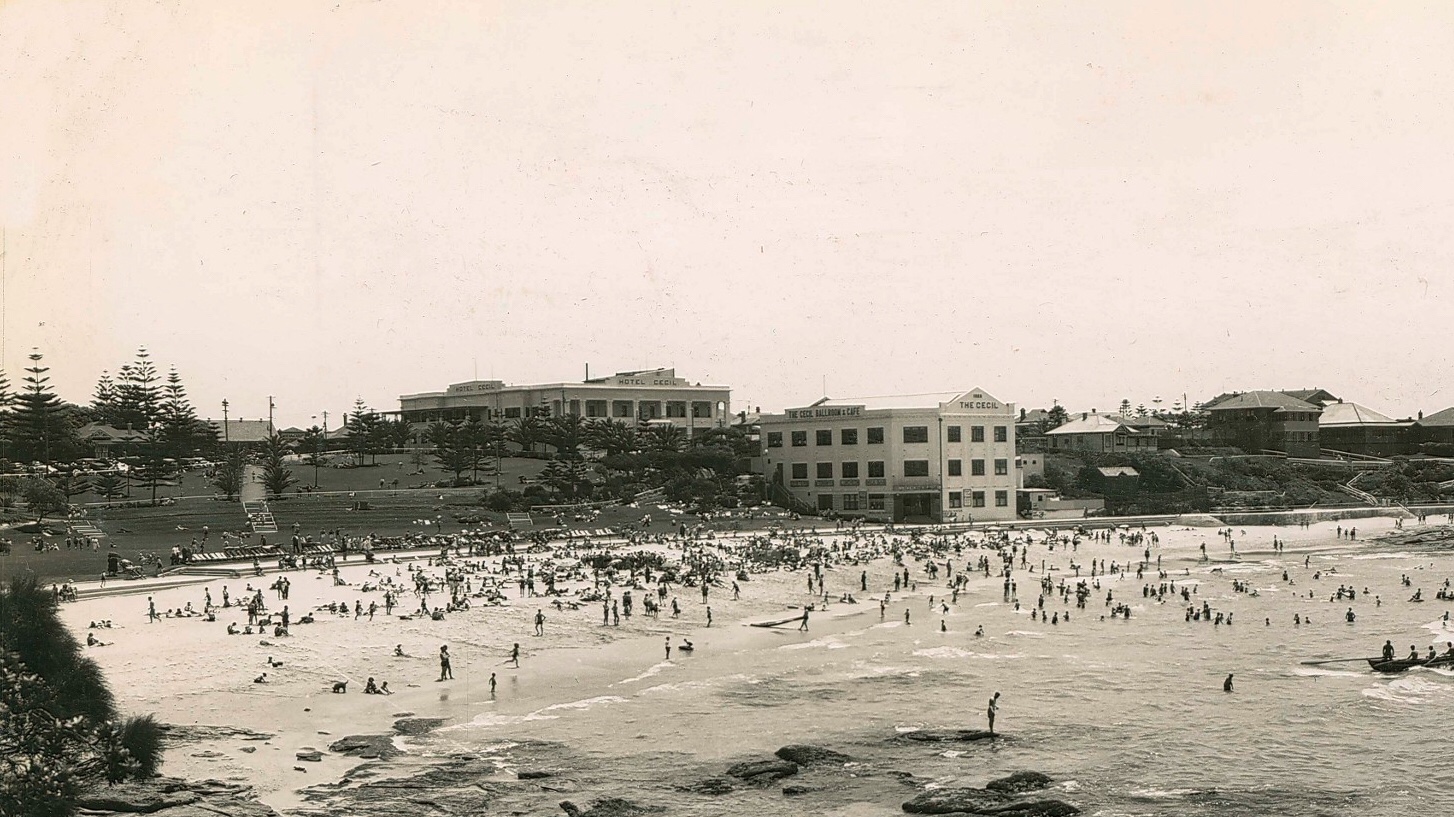
Cronulla Beach, mid-1940s. Image courtesy NSW Archives.
Today, cafes strive to be as tiny as possible, so as to maximise the saturation of lattes throughout the land. Take a look at this, and revel in the decadence of another era:

The Cecil Ballroom and Cafe as seen from Cronulla RSL, 1940s. Image courtesy Cronulla RSL.
For decades to come, the Hotel Cecil played host to debauched nights, hungover mornings, sandy feet padding across ratty carpets and vinyl flooring, and of course tall, cool schooners of Tooths.
That’s right – Tooths. The brewer purchased Hotel Cecil in 1936, and funded an expansion in 1940 that doubled the Cecil’s size.
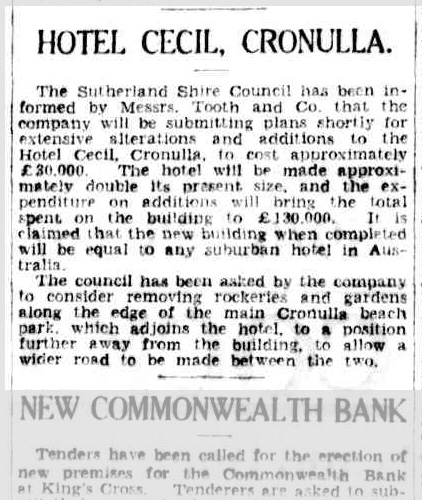
Check out that second article! FAKE NEWS! SMH, Feb 13, 1940.
By then, Munro/Monro was long out of the picture, but his enterprising spirit had ensured Cronulla was branded with all of his names. Just two streets away from Hotel Cecil is Monro Park.
All it takes to solidify an identity is a dip of the toes into the pool of popular culture, and for Cronulla, that process of galvanization happened in 1979, with the release of the novel Puberty Blues.

The novel, by Gabrielle Carey and Kathy Lette, depicted the suburb’s surf culture through the eyes of two teenage girls. It instantly struck a nerve, and acted as a kind of rite-of-passage for teenagers all over Australia – such was the broad appeal of the tenets of Cronulla.

A film version followed in 1981 to great success, cementing the sights and sounds of 2230 for all time. That image has persisted in the decades since, and will likely persist until the world ends, but Cronulla seems quite happy with that.
That said, the Cronulla of Puberty Blues doesn’t quite resemble the Cronulla of today. Like many of its residents, the suburb has undergone facelift after facelift, and certain corners are almost unrecognizable.
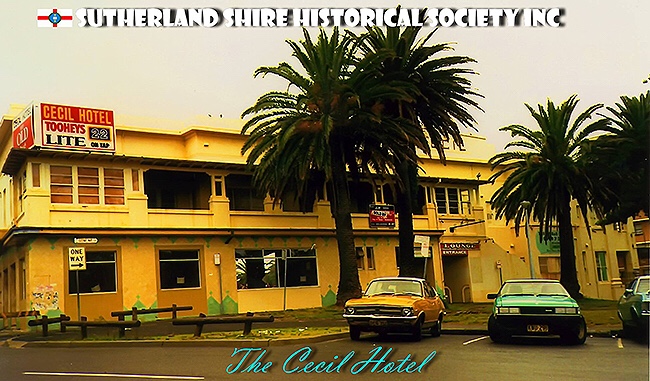
Cecil Hotel, 1970s. Image courtesy Sutherland Shire Historical Society Inc.
Like the Hotel Cecil, for example. It was neutered in the late 1950s, when the ballroom was demolished, and at some point along the way it swapped the words of its name around to suit the wider transition from hotels to pubs.
But the hotel didn’t completely close until 1988, when licensee (and Cecil’s descendant) Shane Munro (that’s more like it) sold it to a property developer. By then, Tooths was long out of the picture…but that’s another story.
Demolition began in the early 90s, and I think you know where this story is going.
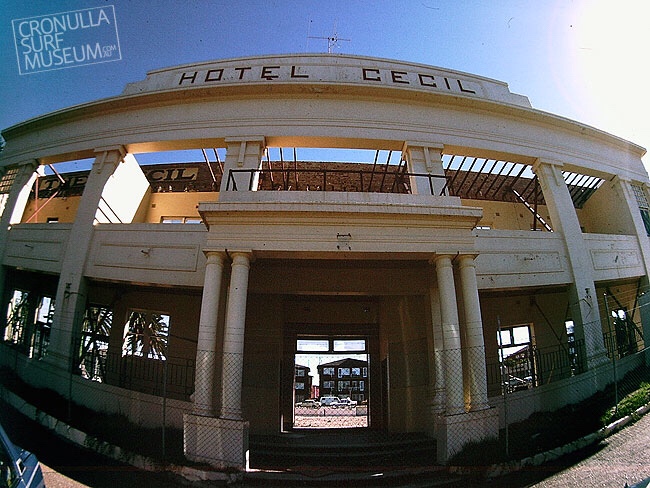
The Hotel Cecil facade, mid-1990s. Image courtesy Cronulla Surf Museum.
I can’t help but think the final night of the original Cecil would have been a wild one. A balmy March evening when hundreds of people, each of whom had forged personal relationships with the hotel over the years, raised their Tooths (or equivalent) one last time. By the end it was, along with Joe’s Milk Bar and the Cronulla Workers Club, one of Cronulla’s landmarks.
Today, it’s that old, bland story so often told in the pages of Past/Lives…

Yes, it’s another one of those “Let’s give it the same name was what was once there to try to capture some of the spirit and let the legend live on” situations, but you’re not fooling anybody. It’s a completely different, impersonal building, and the only drinking going on here is when rich loveless marrieds drink alone.
But what’s in a name? Around the back, in the oddly named Ozone Street, is the sweet spot: the original facade incorporated into the new Cecil.

I know this sort of thing is always meant to be a respectful tip of the tam-o-shanter to the original, but look at the imagery.
It’s overshadowed.
Crescent Theatre/Fair City Discount Furniture – Fairfield, NSW
First off, let’s get the past out of the way. Or one of them, anyway.

Image courtesy Cinema Treasures/John Gleeson
Believe it or not, people used to visit the western Sydney suburb of Fairfield by choice, mainly because there were things to do there. In 1908, Fairfield consisted of a train station, a sawmill and, of course, a pub – the Railway Hotel.
As has happened so often throughout Australian history, those milkshakes brought all the boys to the yard…but those in charge knew that if there wasn’t any entertainment for them when they got there, Fairfield would fall prey to anarchy, social upheaval, communism and all those other agents of chaos that happen when we’re not given the option to spend money.
The Carter family of Smithfield identified that risk, and in 1910 did the community a solid: they built a timber and corrugated iron hall.
Do you know how much fun a timber and corrugated iron hall can provide?
…it was a different time. Moving on…
After the hall caught fire (see? fun!) it was rebuilt as the Fairfield Picture Palace in 1914, wherein each Saturday up to 2000 punters could pay their bits and turn their brains off for an hour or so.
Not to be outdone, local transport and carrying baron John James Woods decided he could screen dodgy 16fps slapstick comedies for drunks better than the FPP, and in 1916, on Fairfield’s own Crescent, the imaginatively named Crescent Cinema was born. Or built. Or…you know what I’m talking about.

The Crescent Cinema, 1937. Image courtesy Cinema Treasures/John Gleeson
But Woods’ heart just wasn’t in it, and it changed hands a bunch of times before it was condemned as unsafe. Usually that’s where I’d come in, but this occurred in 1928. Maybe Fairfield just wasn’t meant to have fun?
The Crescent (the cinema, not the crescent) was rebuilt, renamed (as the Plaza), and opened to huge success. The new owners, a flamboyant (is there any other kind in olde-time theatre ownership?) couple called the Christensens, used some unorthodox promotional techniques to advertise their theatre. Beside the usual train station and back of the bus adverts, Eric and Cecilia Christensen would dress up as movie characters and swan about Fairfield handing out flyers. C’mon Event Cinemas, bring that back! I want to see Captain America and the Ghostbusters staggering around Cabramatta trying to convince people they’re not insane and that they should spend time in a dark room with them. In this social media age, it feels like a lost opportunity.

The Biz, August 10, 1934
By 1934, the Depression had taken its toll on the Christensens, so in came visionary A. J. Beszant. Just look at that article. Fairfield was crying out for a modern theatre, one that wasn’t promoted by dodgy Laurel and Hardy impersonators, and Beszant replied “I’ll give them one”. “Criptic” indeed.
Beszant’s mad plan for world domination seemed to involve building a theatre in each of Sydney’s western suburbs, a plan that almost worked. It was just a bit beyond Beszant’s scope, and by 1944 he’d merged his company with our old friend Hoyts. With that in mind, you can guess what happened next.
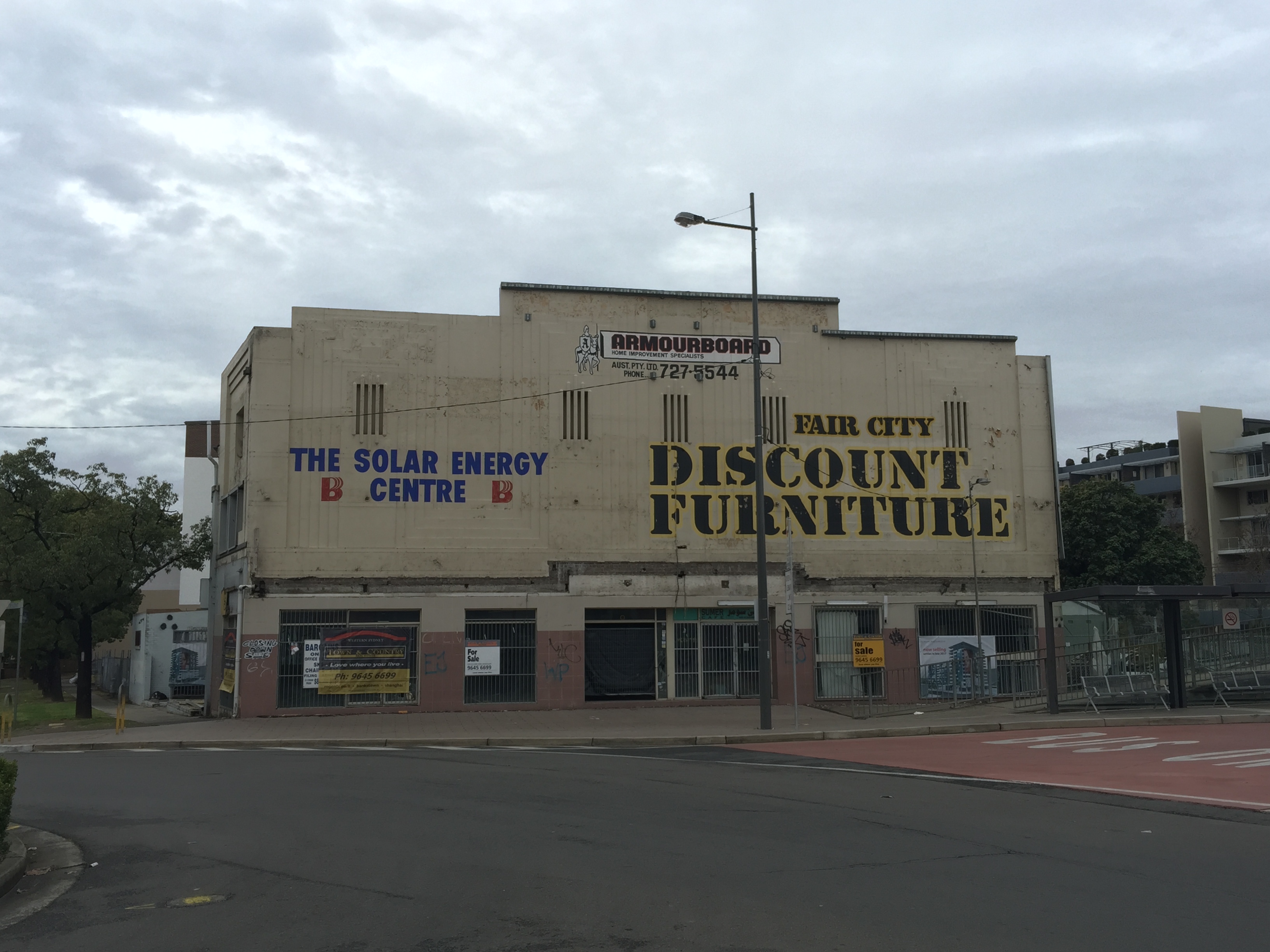
Today, the Crescent (the crescent, not the cinema) isn’t a very pleasant place to be. Fairfield’s population has boomed since Hoyts, the KAOS to Beszant’s CONTROL, closed the cinema in 1967, and the focus of the suburb is no longer the train station. The theatre itself now sits in that lonely part of town, decaying and defiled.
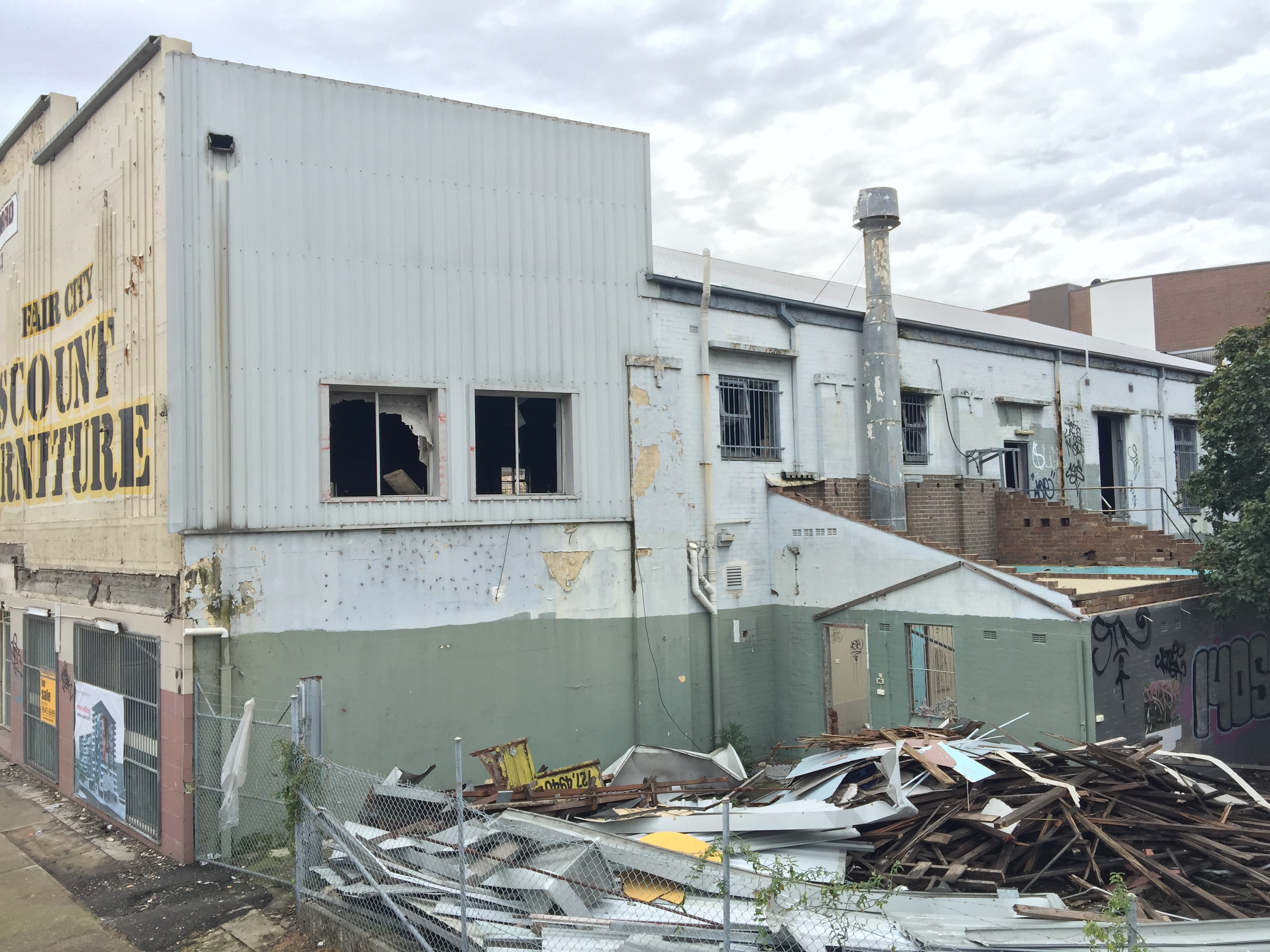
I wonder if any amount of cosplay could get people to come by here these days.
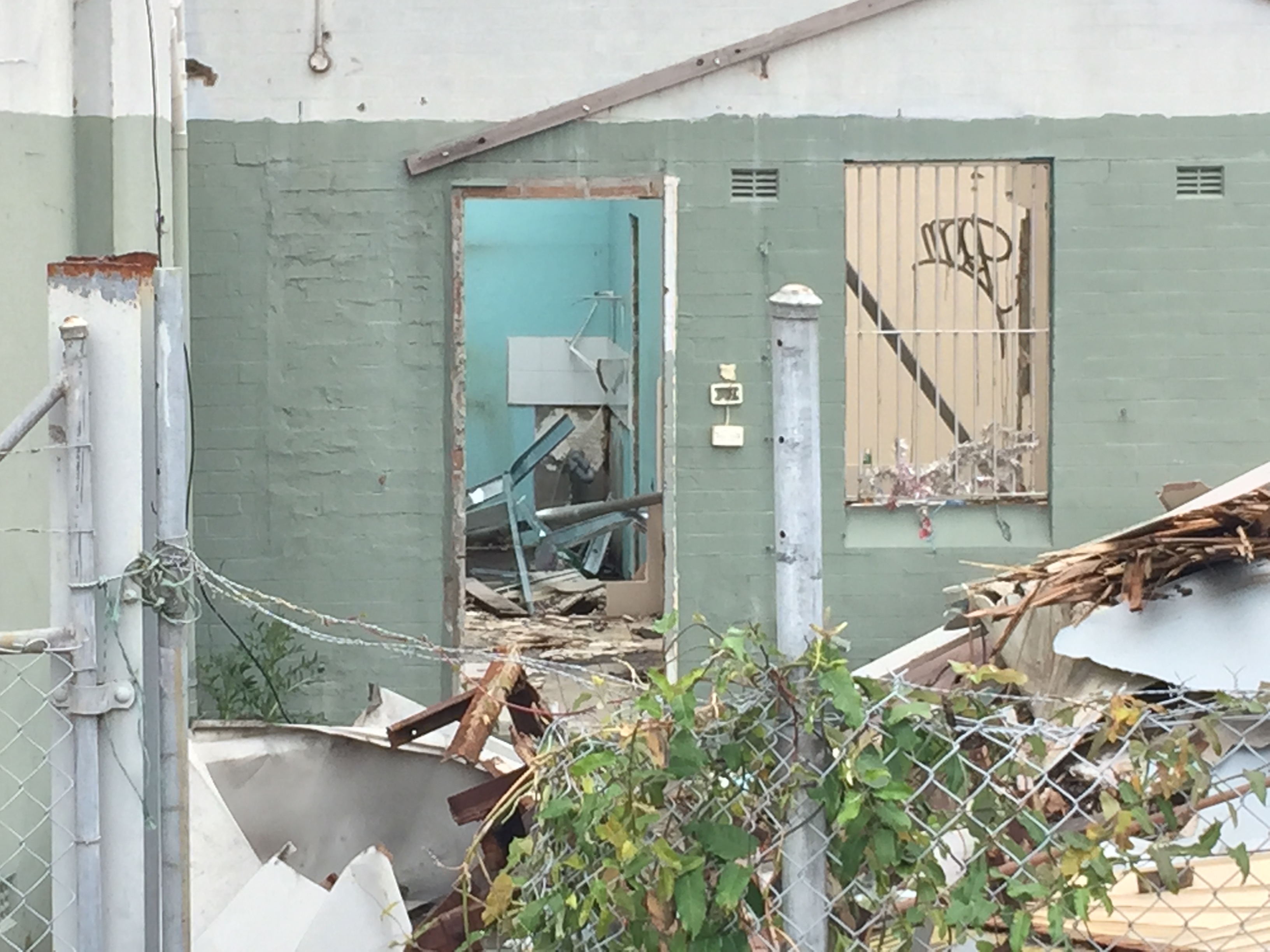
Why do I get the feeling this is probably the part least used as a toilet?

Regents Park, Bankstown…Shanghai?

Although it existed as a split amusement parlour/roller rink in the 1970s, the Crescent Cinema has gone the route of all buildings this size – discount furniture warehouse. The glory days are long behind it, and it’s only a matter of time before the developers show up with a bulldozer. In this case, however, nature might beat them to it.

Perversely, the underground billiards club was named Savoy, a name traditionally associated with cinema and entertainment. Do you really think any entertainment went on here?

Especially when the door leads to nowhere?

Inside, it’s a far cry from the 2000 seat era. Dare to compare?
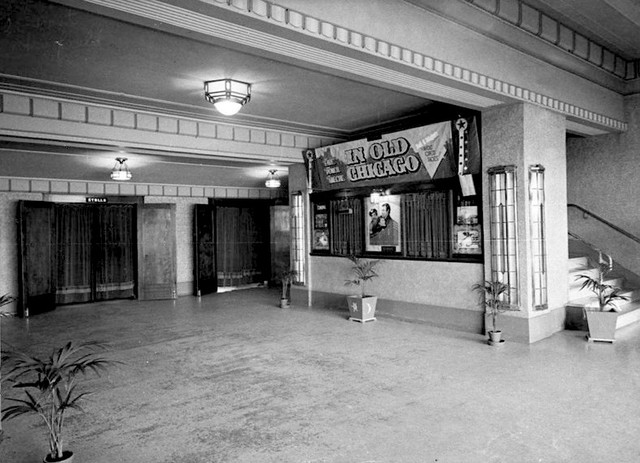
In old Fairfield… The Crescent Cinema lobby, 1937. Image courtesy Cinema Treasures/John Gleeson


The Crescent Cinema, 1937. Image courtesy Cinema Treasures/John Gleeson
Remember, you’re looking at the exact same space.

Around the back, the stormfront of progress encroaches upon a wasteland. Marvel’s comic book characters are on-hand as ever to witness the death of cinema.

Beszant died in 1950 (and buried in the Northern Suburbs cemetery, of all places!), the Christensens and Woods long before that, and with them died the dream of entertaining the west. All we seem to want to do these days is house people, but there’s no thought about what they’ll want to do once they’re settled. With pubs closing earlier than ever and options like this no longer viable, perhaps now is the time to start thinking of alternatives? Not everyone’s a gambling fan, Mike.
Pizza Hut/Liquorland – Port Macquarie, NSW
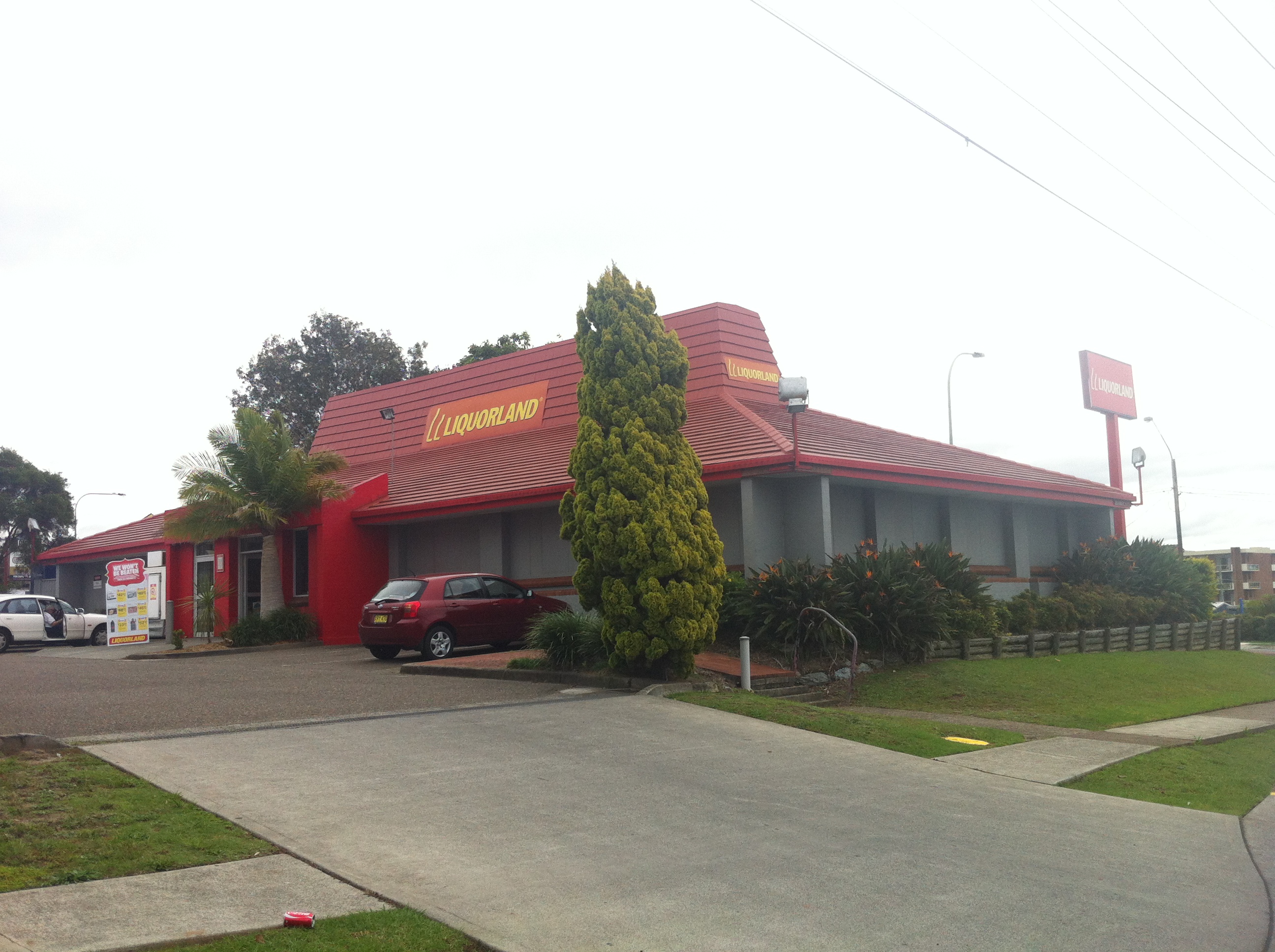
The picture says it all: it’s pretty much a textbook example of a Used To Be A Pizza Hut. But it’s actually not that much of a stretch. Pizza Hut dine-ins were fully licensed back in the day (!), so all that Liquorland have done is do away with the doughy, yeasty stuff to make room for more booze.
In Port Macquarie, that’s actually kind of an affront. Back in 2003, the town set a national record for the most amount of pizzas eaten in a day. According to the Port Macquarie News (and really, who’d be better qualified to know), 4890 pizzas were consumed on Saturday, December 13, 2003. Whether the record still stands is unclear, but since those figures came from Domino’s, you can bet a similar record for most amount of toilets clogged in a day was set on December 14.
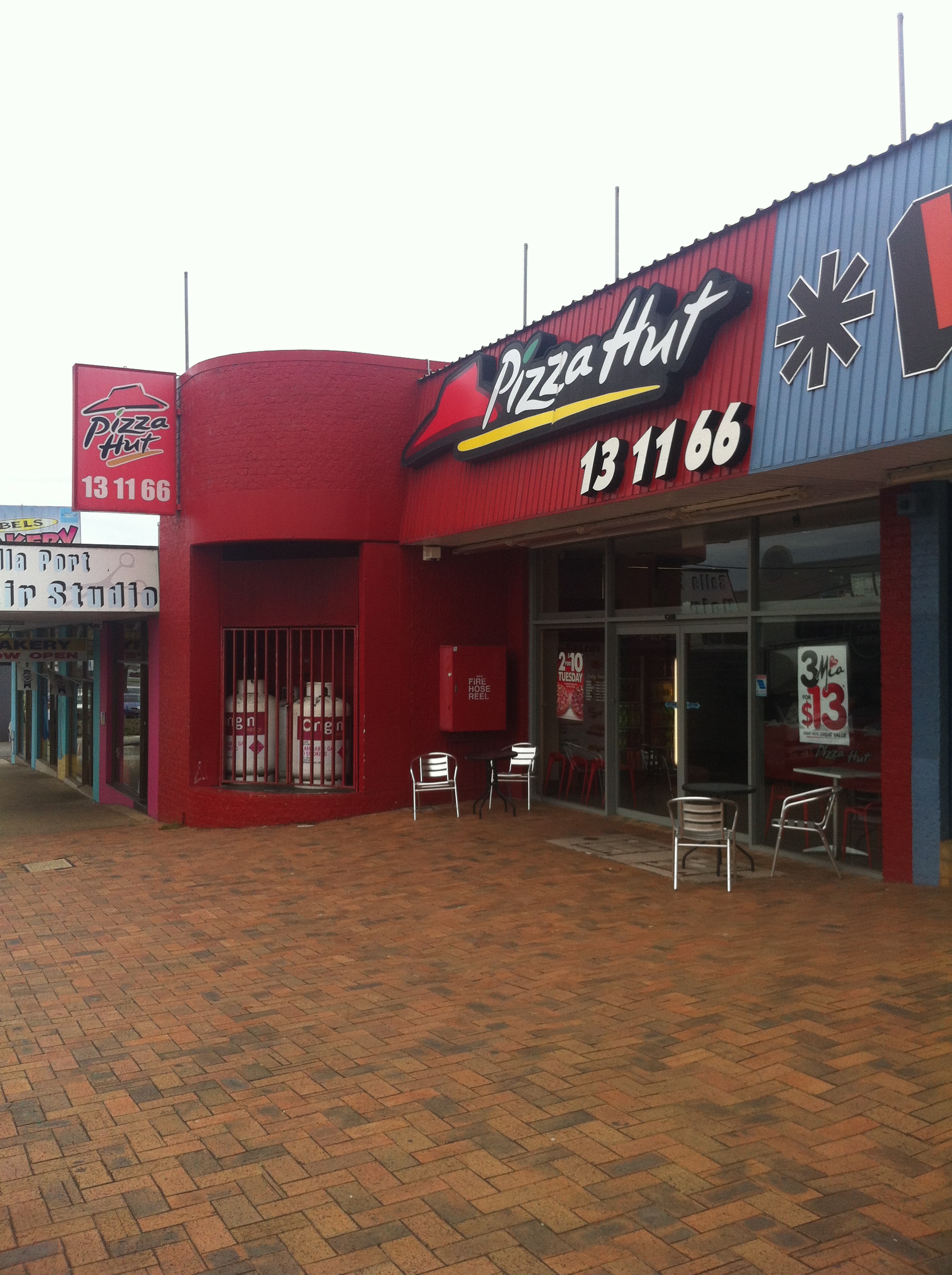
It’s not all bad news for Port Macquarians jonesing for a fix of crusts thick, thin or stuffed, however: they’re still makin’ it great at this downgraded Hut down the road. For those who knew the dine-in Pizza Hut experience biblically, the above picture is a sad sight, and for everyone else, it’s a shocking reminder that there’s a Video Ezy still in operation.

 Past/Lives of the Near Future