FJ’s Pizza/Construction Site – Kingsgrove, NSW
The powers-that-be have decided that Kingsgrove needs more residents, and you know what that means. HIGH RISE.

Now I know what you’re saying. You’re sitting there saying ‘Yeah, they’re building a high rise. So what? What’s so special about this place?’ What’s special about this site will require a bit of a cheat – taking the Google Street View time machine back to 2009 – but I promise it’ll be worth it.
See, what used to be at this location was a string of old, derelict shops, each more interesting than the last. Around the back, in Mashman Avenue, was a run-down block of units, and beside that, the Mashman Pottery (a resident since 1908). All of it is gone now, including the pottery, to make way for some faceless high rise apartment buildings completely devoid of character. This character:
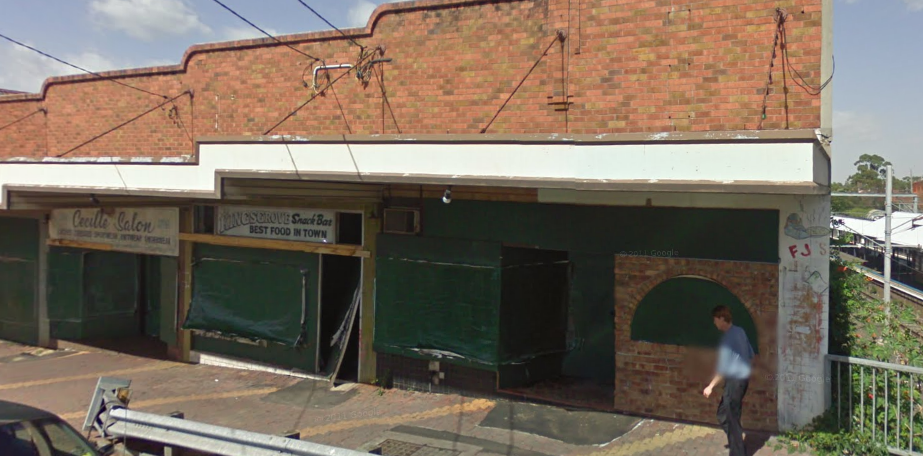
We have the Cecille Salon, the Kingsgrove Snack Bar (best food in town!), and finally and most intriguingly, FJ’s Pizza. Take a closer look there at FJ’s…who’s that holding the pizza?

Could that be…what it looks like?
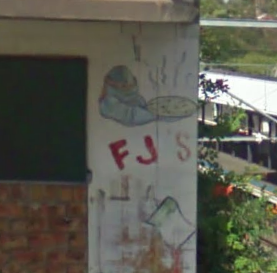
This place has been burned into my retinas for a long time, so when it was knocked down earlier this year, I wasn’t going to let it get out of appearing here. In fact, I remember when this place opened – in 1990. Someone, most likely FJ himself, thought they could get away with painting a Ninja Turtle on the side of their pizza place in the hope that kids would see it and automatically assume it was Turtle-endorsed pizza. Well…in at least one situation, they were right. Problem is, by 1992 the TMNT were has-beens, and people sure weren’t coming here for the pizza.

It’s hard to say exactly when these shops closed, and thanks to the animal magnetism of the FJTMNT, I never really paid them much attention even when they were open. With prime real estate right beside the train station, you’d think at least the snack bar would have cleaned up. Now, it’s just being cleaned up to make way for the glass tower.

Doubtless there’ll be a new wave of shops here beneath the skyscraper, but they won’t have this kind of character. The lineup also included what looks like a Chinese restaurant, Hair Enterprises, and a State Bank branch on the corner. I imagine that the Rich Uncle Pennybags style property developer sat it out for years, buying each of the shops in the strip until he had the Monopoly and then BAM – bulldozer time. Hair Enterprises was likely the last to go – it had an eight digit phone number.
It’s just a memory now, along with the best food in town, ladies knitwear, and the Ninja Turtle who never let go of that pizza. Vaya con Dios, FJ-tello.
Timbrol Chemicals/Union Carbide/Residential – Rhodes, NSW

Image courtesy retronaut.co
Following on from the Homebush Abattoir is the story of Rhodes, NSW. ‘We’re judged by the company we keep’ has never been truer than in the case of Rhodes, an industrial suburb closely identified with chemicals for most of the 20th century. The winning of the 2000 Olympic Games and subsequent renewal of the former abattoir site at Homebush Bay forced the NSW Government to remediate Rhodes, on the other side of the bay. It was hoped the suburb would be reborn as heavy residential by 2000, but this goal has still not been achieved. The primary reason is this site:

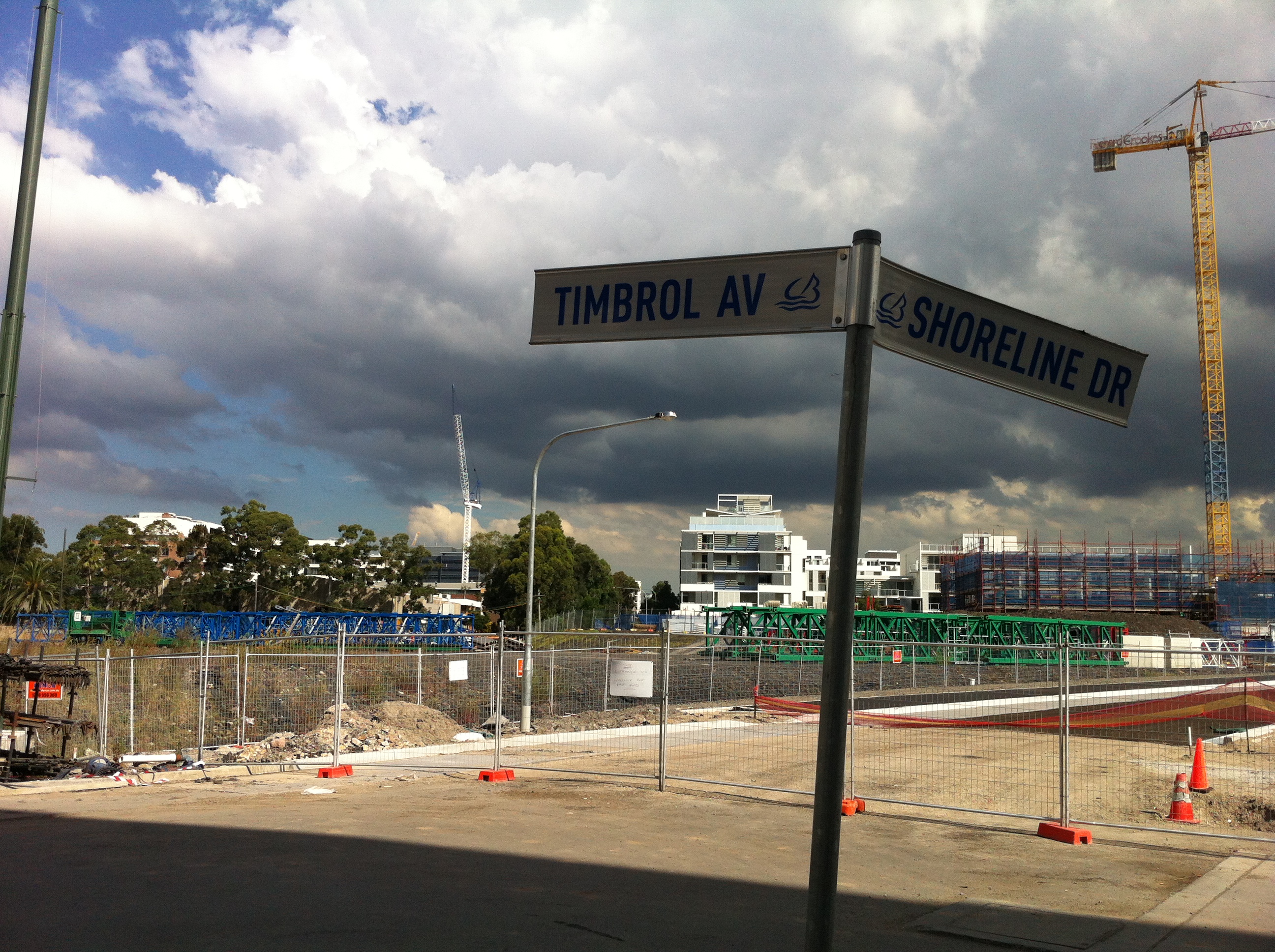
Timbrol was Australia’s first major organic chemical manufacturer, and was established here on Walker Street in 1928. Chemicals manufactured by Timbrol between 1928 and 1957 include chlorine, weed fungicide, and the insecticides DDT and DDE. To commemorate this achievement, a neighbouring street has been named after Timbrol:
In 1957, Timbrol merged with the American chemical concern Union Carbide to form Union Carbide Australia. Union Carbide had a reputation as an innovator within the chemical manufacturing industry. Facing competition from the neighbouring CSR plant, Union Carbide stepped up production of existing chemical products and created many new ones. During the Vietnam War, Union Carbide produced Agent Orange at their Rhodes site.

Union Carbide site, Rhodes, circa 1960s. Image courtesy Concord Heritage Society.
Whenever Union Carbide would reclaim land from Homebush Bay, it would do so by dumping toxic waste and building over it. This method was extended to the Allied Feeds site further up Walker Street. In 1997, Greenpeace found 36 rusting drums of toxic waste on the former Union Carbide site.
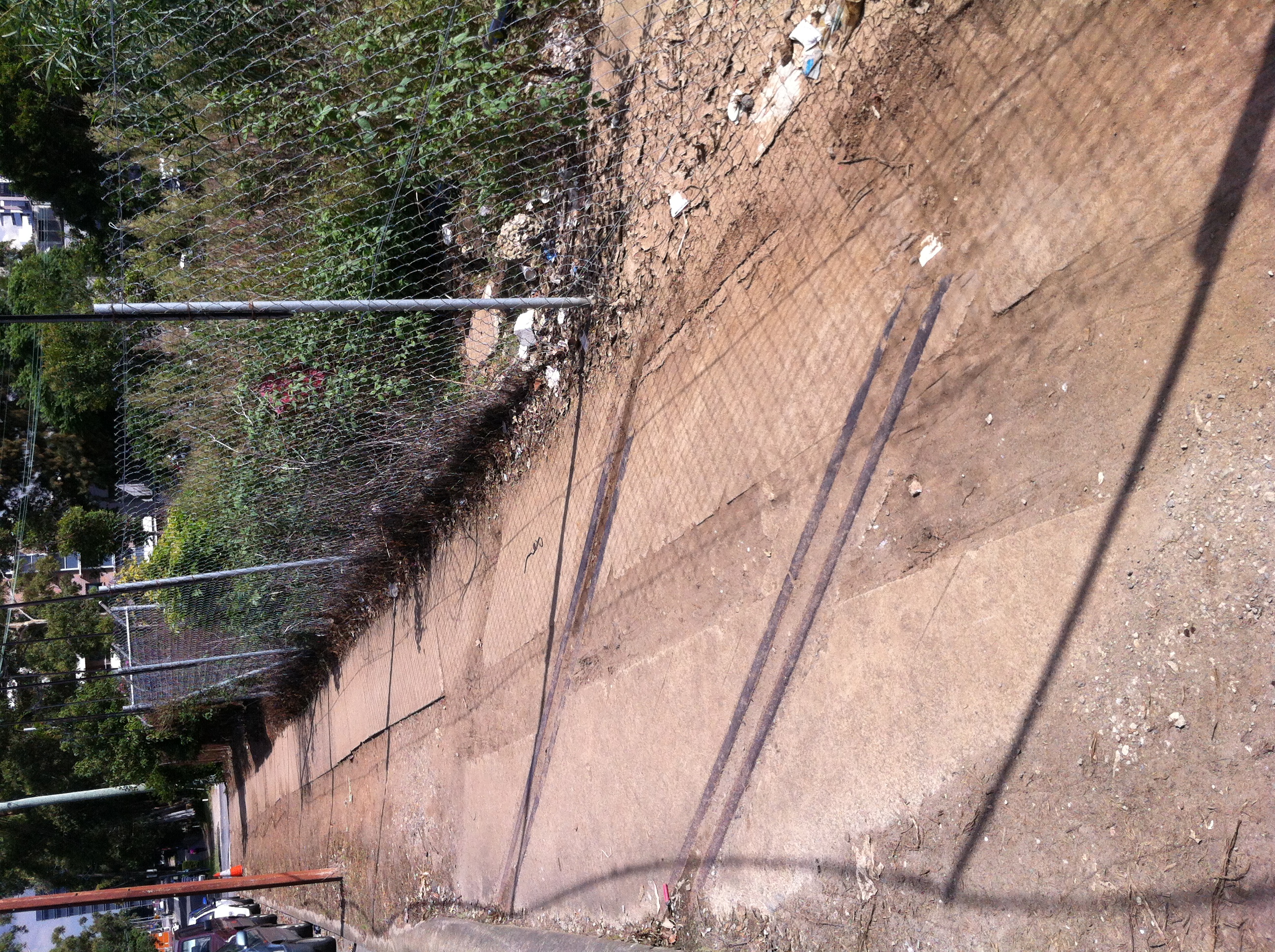
Goods train tracks still exist at the former entrance to Union Carbide.
Faced with declining demand, diminishing returns and increasing competition, Union Carbide abandoned its Australian operations entirely in 1985. They were allowed to leave without conducting any kind of cleanup of the Rhodes site. Between 1988 and 1993, the NSW Govt began remediation attempts with the intention of using Rhodes as an Olympic village for the 2000 Sydney Games, but it was only in 2005, with the onset of private residential construction on the sites, did any serious remediation work take place. Many blocks of units were completed between 2005 and 2011, but remained empty as the ongoing cleanup work made the area too toxic to live in. Remediation was completed in early 2011, and construction has resumed.
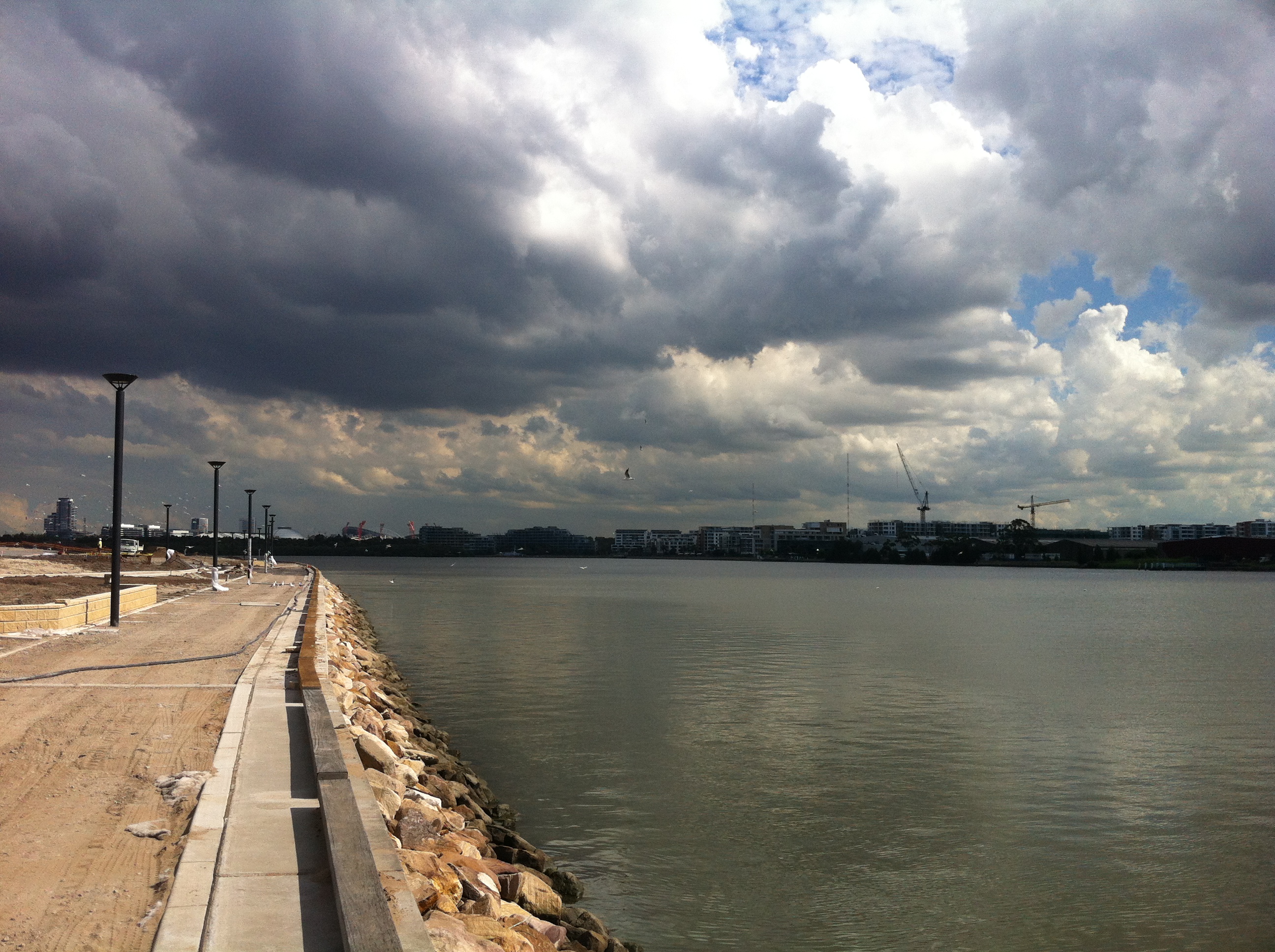
Homebush Bay remains toxic – swimming and fishing are prohibited, and any fish caught in the bay are too poisonous to eat. The remediation work by Meriton and Thiess and has supposedly made the area safe to live in, but only time will tell.
UPDATE: It’s one year later. Is it safe yet? Find out.
Penshurst Squash & Fitness Centre/Residential – Penshurst, NSW
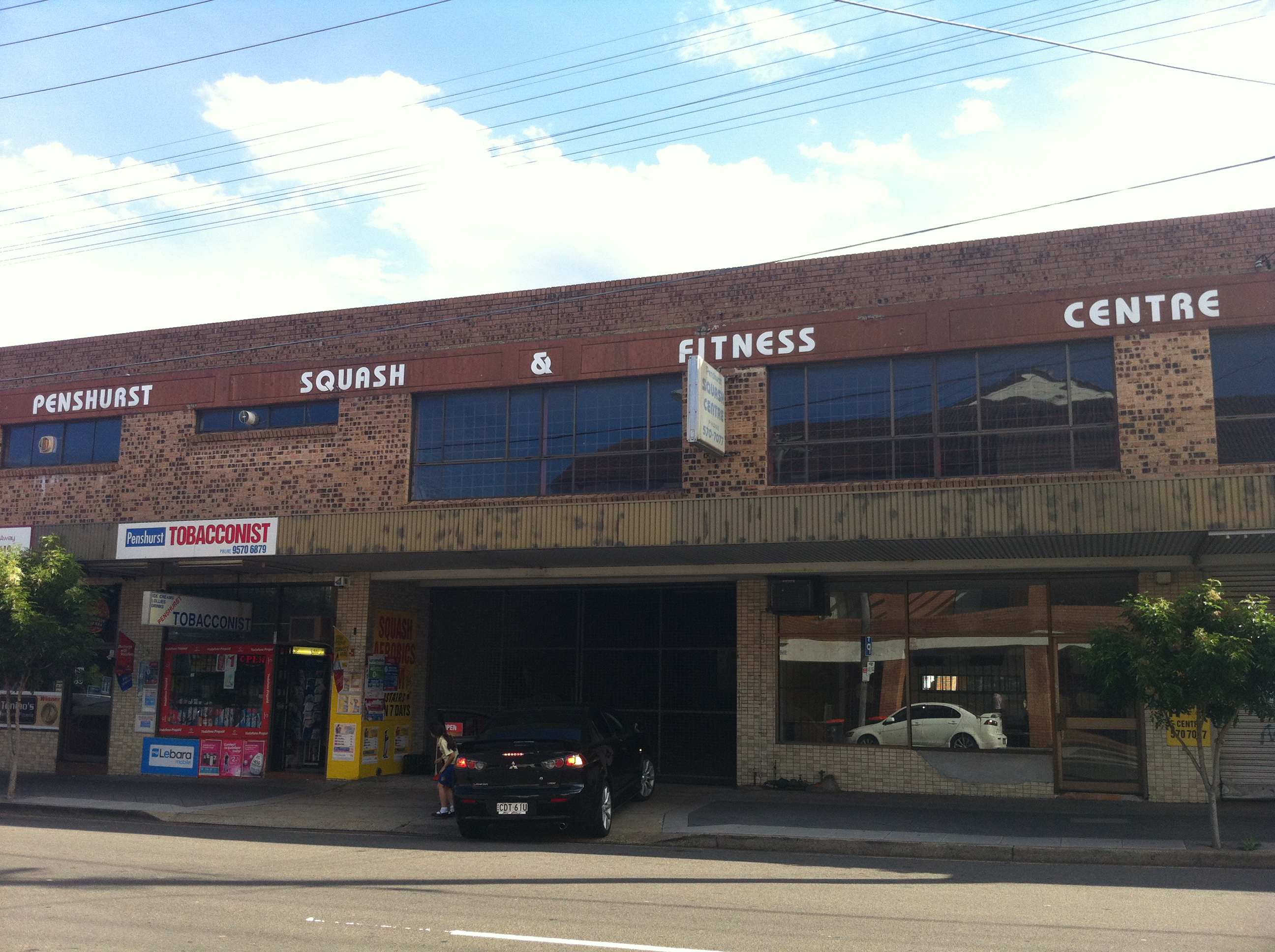
I could be wrong about this one, but let’s take a look anyway.

Despite promises of being ‘open 7 days’, I’ve not seen this place open for years. It certainly wasn’t open today.

This sign suggests that the centre hasn’t been open since 2008, and I’m willing to go with that. Also, let’s not forget the first rule of Past/Lives – if your phone number doesn’t have eight digits, you’re fair game.
Newsagent/residential – St Peters, NSW

What’s clear is that this now-residential address on Princes Highway at St Peters was once a newsagent. What isn’t clear (but will be shortly) is that in 1950, this newagent sold the first-prize winning lotto ticket for Lottery No. 2154.

Image from Barrier Miner, 11 Oct 1950.

 Past/Lives of the Near Future