Paragon No. 1 Theatre/Canterbury Leagues Club – Belmore, NSW
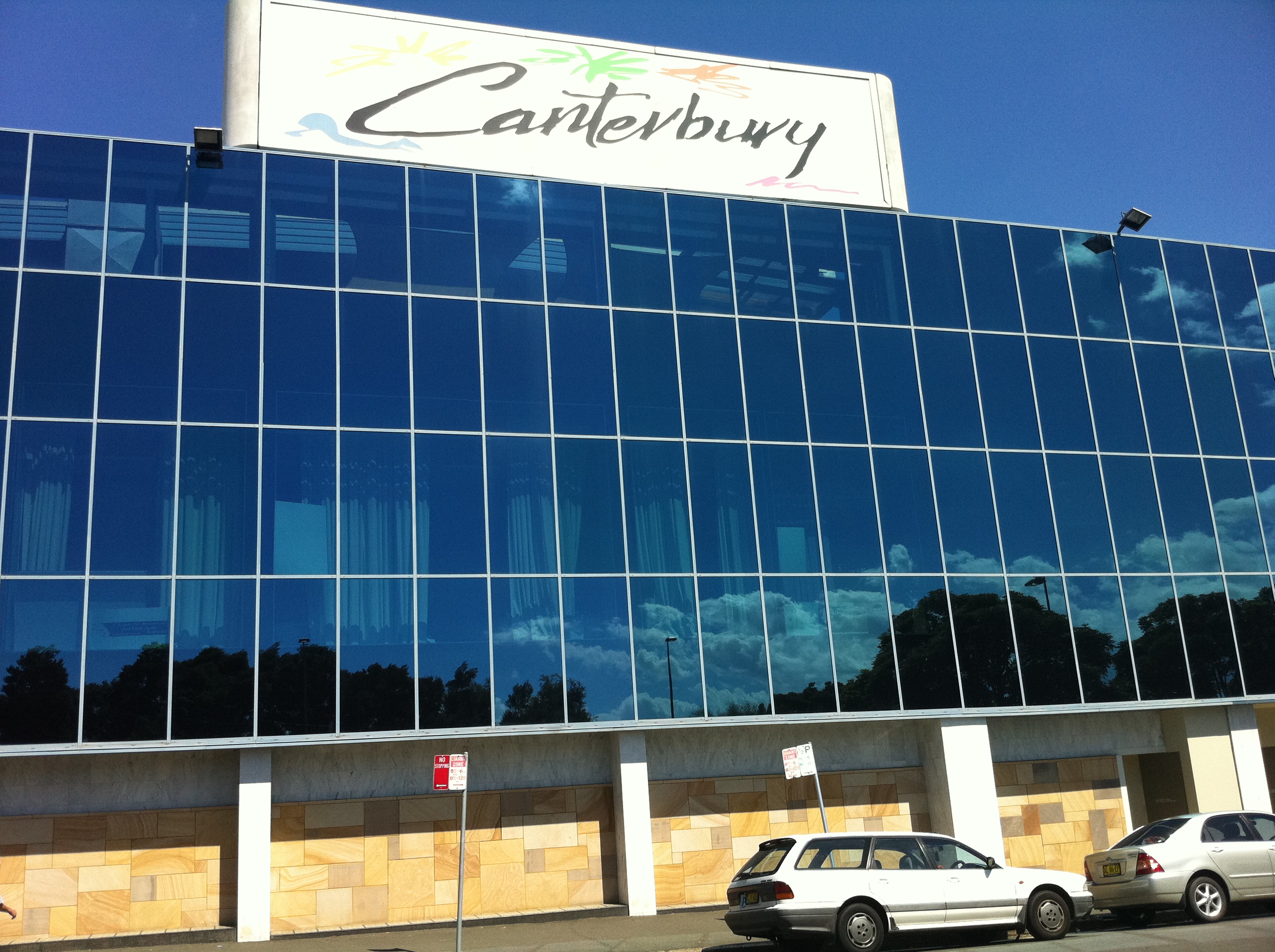
Opening in 1923 and closing in November 1958, the Paragon No. 1 Theatre had a longer life than its twin.

Paragon No. 1 Theatre, 1958. Courtesy Barry Sharp and City of Canterbury Local History Photograph Collection
Starting life as a picture theatre serving the undemanding entertainment needs of Belmore, the Paragon replaced a shed that stood on the Bridge Road site previously. Was the shed the suburb’s previous entertainment hub? Who knows. The Paragon No. 2 opened further up the road in 1928, and throughout the 30s and 40s, business was good.
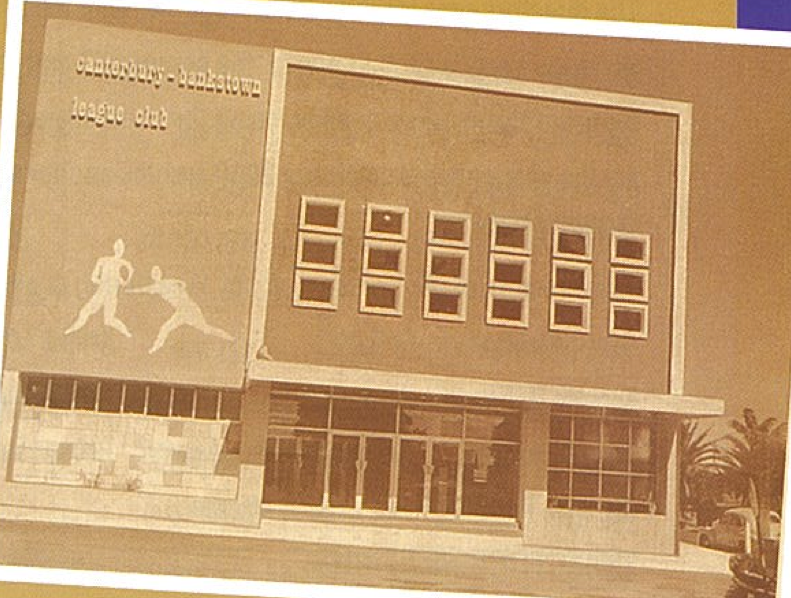
Canterbury-Bankstown League Club, 1960. Image courtesy Canterbury League Club.
The Canterbury-Bankstown Bulldogs rugby league team had been formed in 1935, and as early as 1939 the club was holding its annual meetings at the Paragon Theatre. The Paragon staff must have slighted the club somehow, because what goes around comes around. In 1957, the Canterbury-Bankstown League Club was formed to support the football club, and took up residency in a reconditioned naval hut built by club volunteers in nearby Collins Street.
By 1958, the Paragon was floundering, struggling against the introduction of TV and a decline in suburban cinemas. Meanwhile, the Canterbury-Bankstown Leagues Club was growing rapidly, and had already outgrown the naval hut. The club bought out the Paragon, and by 1960 had converted it into the spiffy new club premises seen above.
UPDATE: Courtesy of reader Tony, we’ve now got a look at the brochure handed out at the grand opening of the rejigged Leagues Club in 1960. Big thanks, Tony!

As opposed to the unofficial opening, I’m guessing.
Incidentally, Mr. Frank Stewart, M. H. R., was a World War II veteran and ex-first grade Bulldog who went on to become the Minister for Tourism and Recreation in the Whitlam Government. It was Stewart who leaked info to the Federal Opposition regarding the Loans Affair, which ‘kicked off’ (heh) the chain of events that eventually brought down the Whitlam Government, but he also played a crucial part in the establishment of the Australian Institute of Sport. Oh, and he also presided over the opening of the Canterbury Leagues Club, but you knew that already.
It’s easy to imagine that the further growth of the club over the next 50 years into the behemoth it is today is indicative of the growing enthusiasm in the suburbs for RSL and Leagues clubs, which provided myriad entertainment options the Paragon could only have dreamed of. Realistically, the growth is probably also indicative of pokie profits.
The idea of a suburban cinema now seems quaint in comparison. In honour of its fallen homie, today’s Canterbury League Club features a ballroom named the Paragon Room, and there’s a Paragon Lane that runs beside the Club. No tributes to that naval hut, though.
A HUGE thanks to Lea Thomas at the Canterbury League Club for her generosity and assistance!
Cue/Krispy Kreme/Ugg Boot Warehouse – Wynyard, NSW

Remember Krispy Kreme? That donut (or doughnut) fad that took off in 2003 and crashed hard in…late 2003? For a good part of that year, everyone was talking about Krispy Kremes. Workplaces stocked them as treats, families bought them by the boxful. I knew a guy who would spend an hour in the car driving out to the Krispy Kreme at Liverpool to buy six boxes at a time because he loved them that much, and there was a time when that was the most convenient location. Krispy Kreme responded to the demand by increasing the number of stores, failing to realise that fads are fads because they don’t last. Exhibit A: Krispy Kreme.
Now a shadow of its former self, KK’s Australian subsidiary went into voluntary administration in late 2010, citing poor sales as the reason. Imagine how poor the sales must have been for it to only give up the game in 2010, a full seven years after the honeymoon was over. Even more mindblowing is the fact that the brand has been around since 1937. In any case, this site is an example of a location that no longer wanted doughnuts (or donuts) and voted with its feet…literally: Ugg boots are the wares being peddled here now.
Before KK kame along to korrupt konsumers with krappy konfectionery, Cue clothing ran the shop. Cue has been around since 1968, and since forging a relationship with Myer in 1970 hadn’t had as much need for self-contained shops. This one opened in 1976, but closed during the 1990s due to declining sales. That’s a better run that Krispy Kreme had. Cue’s executive director Justin Levis said in 2008 that the shop closed because the surrounding shops had become tacky bargain stores. Now that the ugg boot shop has moved in, this location has finally found its place in that dynasty.
Kids Clothes/Ladies Clothing/The Shoe Depot – Kingsgrove, NSW
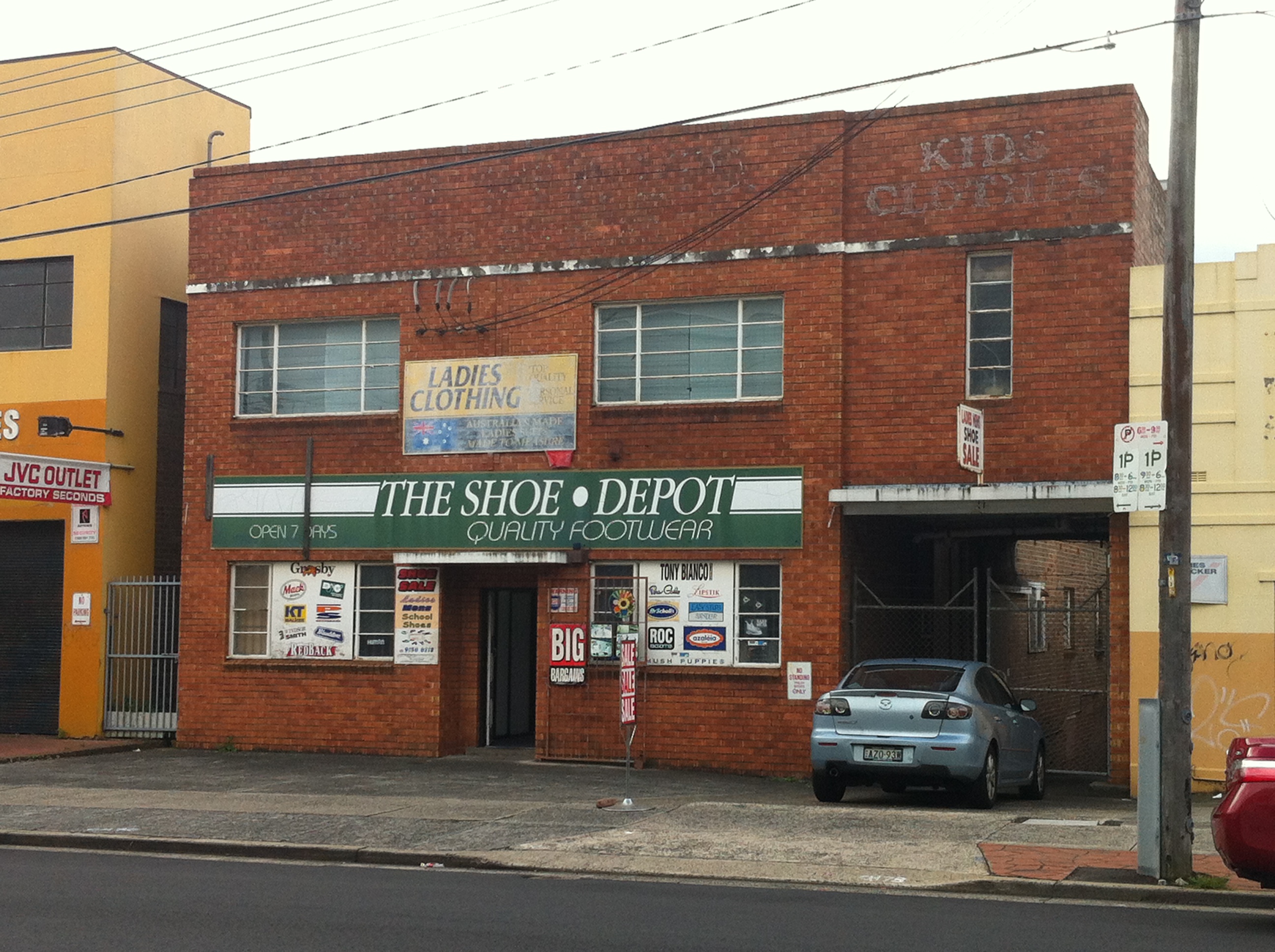
The third time’s a charm for this place. It’s more entertaining if you imagine the history like this:
EXT. KIDS CLOTHES WAREHOUSE – DAY
A bold, shiny new sign gleams from the top corner of the warehouse. The owner stands outside, waiting for the delivery of his first shipment of stock. His assistant emerges from inside.
ASSISTANT: The supplier just called to say the shipment should be here any minute!
OWNER: Great! We’re gonna make a killing!
The truck chugs up the road and pulls in. As the assistant signs for the order, the stock is unloaded. The owner notices it’s nothing but ladies clothing. He holds it up for the assistant to see.
ASSISTANT: Oops…
OWNER: You idiot!
CUT TO:
EXT. LADIES CLOTHES WAREHOUSE – DAY
A bold, shiny NEWER sign gleams above the doorway of the warehouse. The owner finishes tossing the last of the Kids Clothes sign into the skip as the truck drives up the street towards the warehouse. The assistant gingerly emerges from inside, holding an order slip.
ASSISTANT: Uh, boss…the shipment…I’m sorry…
The owner shuts his eyes and sighs.
The truck pulls up. The driver opens the back door, and hundreds of shoes pour out.
CUT TO:
EXT. THE SHOE DEPOT WAREHOUSE – DAY
The biggest, boldest sign yet sits above the doorway. The Ladies Clothing sign has been halfheartedly spraypainted over. A sign sits in the front window – it reads ‘ASSISTANT WANTED’.
Hobson’s Ltd/7-Eleven – Newtown, NSW
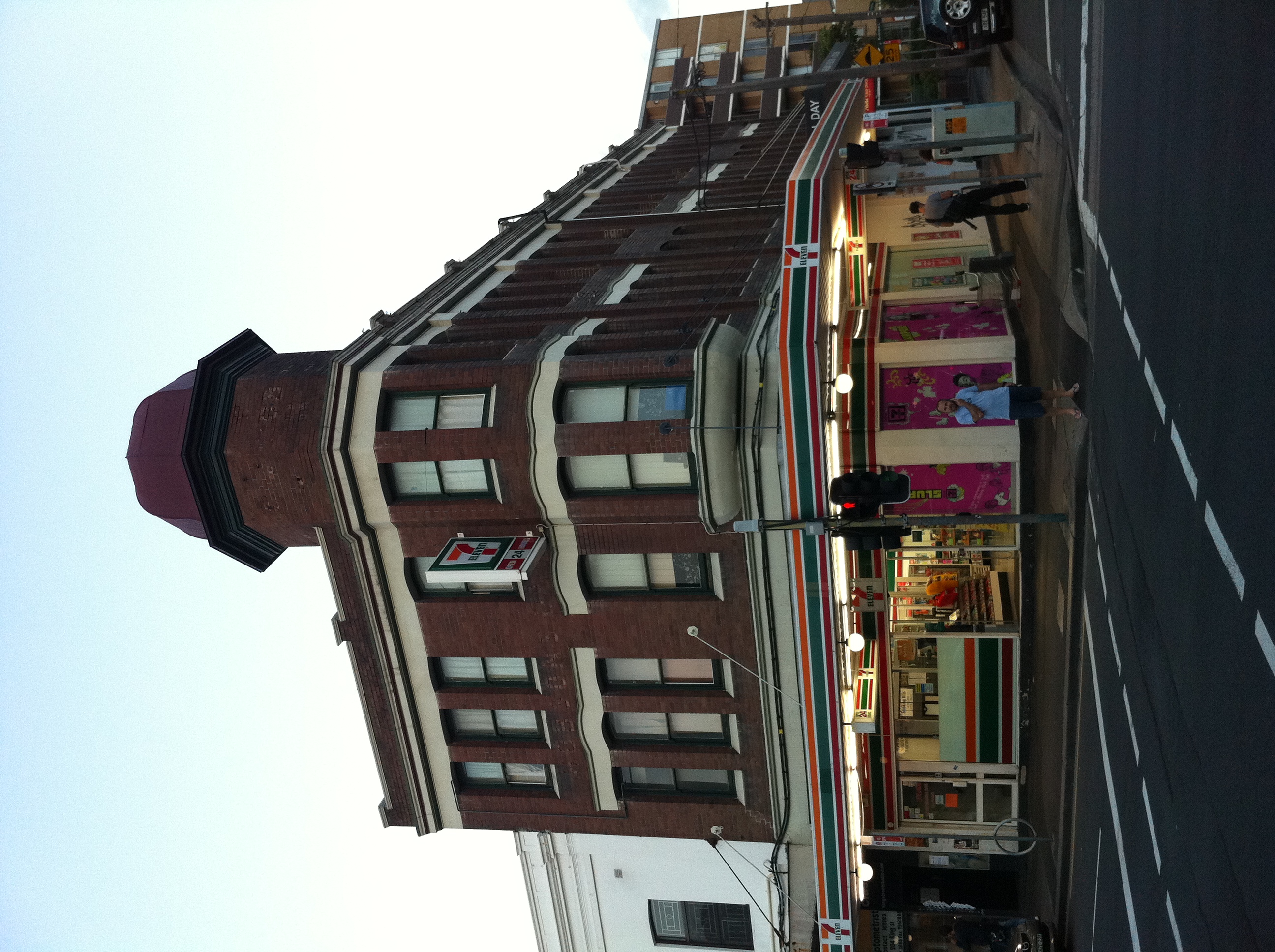
The Marcus Clark department store empire got its start in Newtown, with its first store setting up in Brown Street. This building, on the corner of King and Brown Streets, is not that store. Just as the Marcus Clark Railway Square store was pretentiously known as Bon Marche Ltd, this one was branded Hobson’s Ltd; a subsidiary of Marcus Clark which had a sister store in North Sydney. A world away from Slurpees, Hobson’s sold Pabco Rugs. Not familiar with Pabco Rugs? You must not be a housewife:

When company director Reginald Marcus Clark (Sir Reg) died in 1953, the brand entered a state of free fall. In 1966 the ailing store’s locations were bought out – and subsequently rebranded or shut down – by their bitter rival, retail heavyweight Waltons. It wouldn’t be long until Waltons got a taste of their own medicine…but don’t worry, we’ll get to that.
Prior to its time as Hobson’s, this address was home to F. W. Hartley Undertaker and Embalmer. I can’t say for certain, but I’m pretty sure embalming fluid and Slurpees have a lot in common.
Broadway Theatre/Jonathan’s Disco/Phoenician Club/Breadtop – Ultimo, NSW
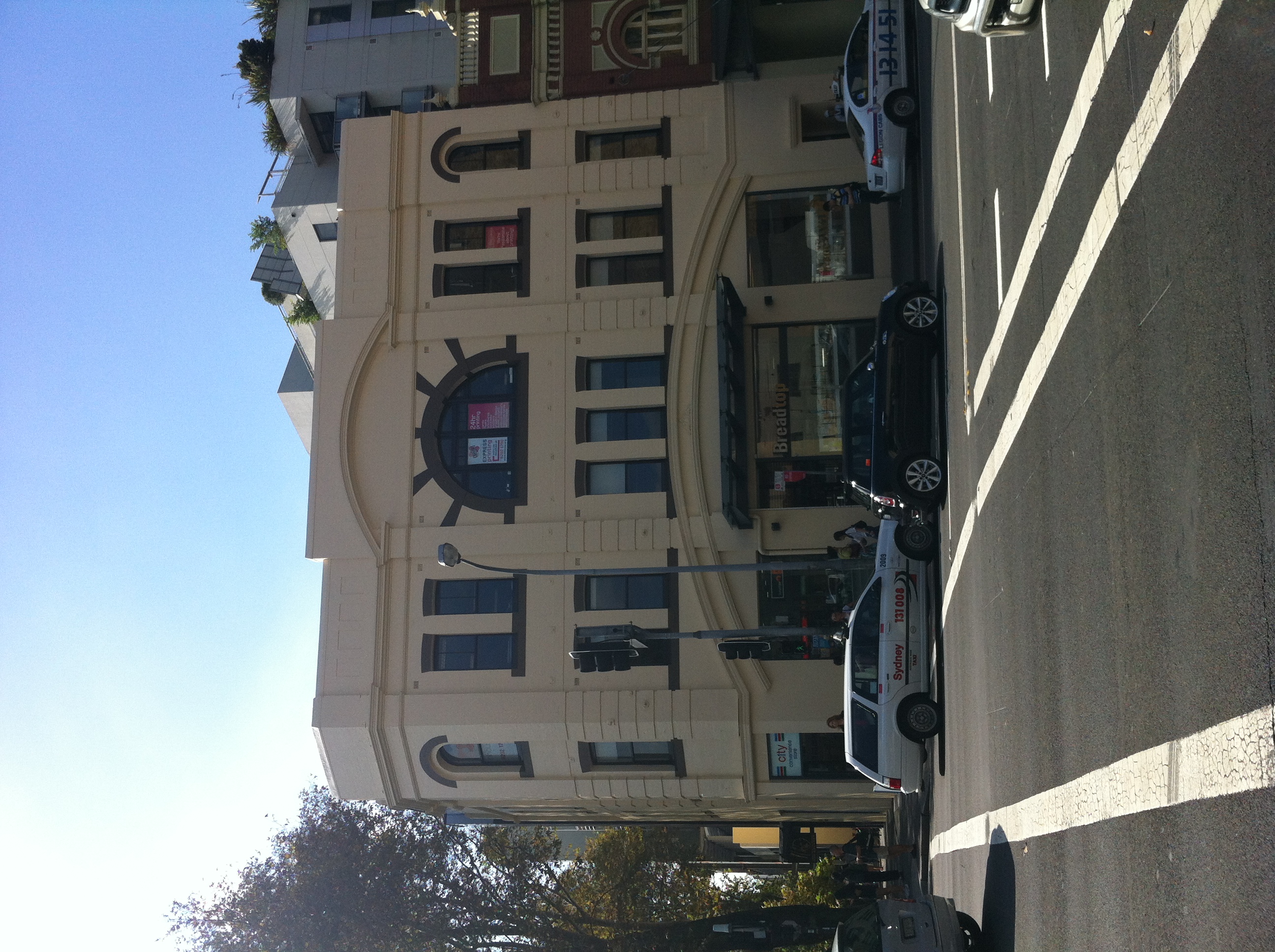
These days, this building on the corner of Mountain Street and Broadway, Ultimo, houses a convenience store, apartments, and our old friend Breadtop, but the inconspicuous facade hides a colourful and tempestuous history.
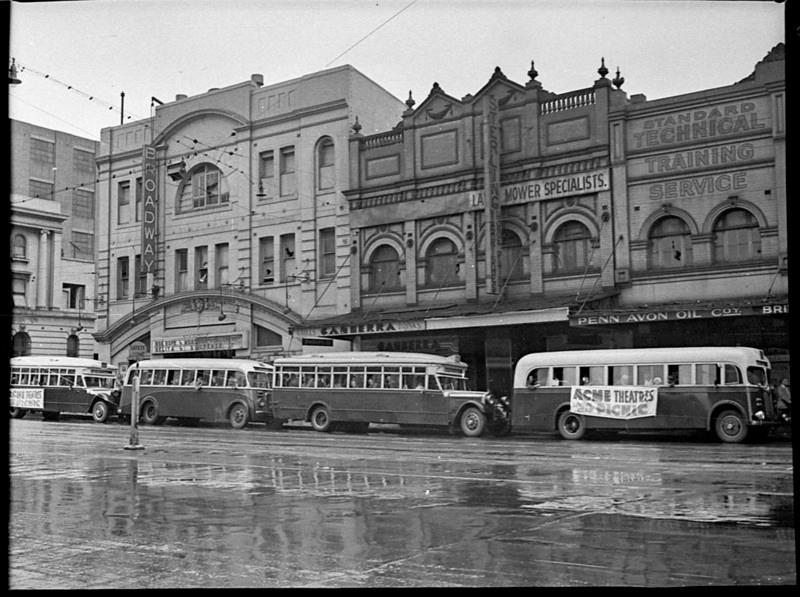
The Broadway Theatre. Image courtesy Sydney Cinema Flashbacks.
Built in 1911, the building started life as the Broadway Theatre, a cinema. With the advent of TV, this was one of many suburban cinemas that had fallen by the wayside by 1960, when it closed. In 1968, it was acquired by nightclub owner John Spooner and converted into Jonathan’s Disco, where it became well known as one of Sydney’s prime live music venues. Sherbet and Fraternity both got their big break at Jonathan’s, playing residencies involving six hour days for months on end. Imagine the poor disco staff having to listen to six hours of Sherbet a day for months. Perks of the job…

Jonathan’s Disco, post-fire, 1972. Image courtesy City of Sydney Archives.
In May 1972, Jonathan’s Disco was gutted by fire. I can’t help but think it was one of those beleaguered staff members. “HowZAT?” they’d’ve quipped as they flicked their cigarette into the freshly-poured puddle of gasoline. The damage was extensive, and required a complete internal refit before it was opened again in 1976 as a ballroom dancing studio.

Jonathan’s Disco interior, post-fire, 1972. Image courtesy City of Sydney Archives.
The Sydney City Council granted the Maltese community use of the premises as a licensed venue in 1980, when it became the Phoenician Club. Once more, the site became one of Sydney’s most popular live music venues with local bands such as Powderfinger and Ratcat playing gigs there throughout the late 80s and early 90s. Nirvana played their first Sydney show there in 1992 – a far cry from Sherbet. Around this time, the rave scene exploded in Sydney; a development that would lead to the end of the Phoenician Club.
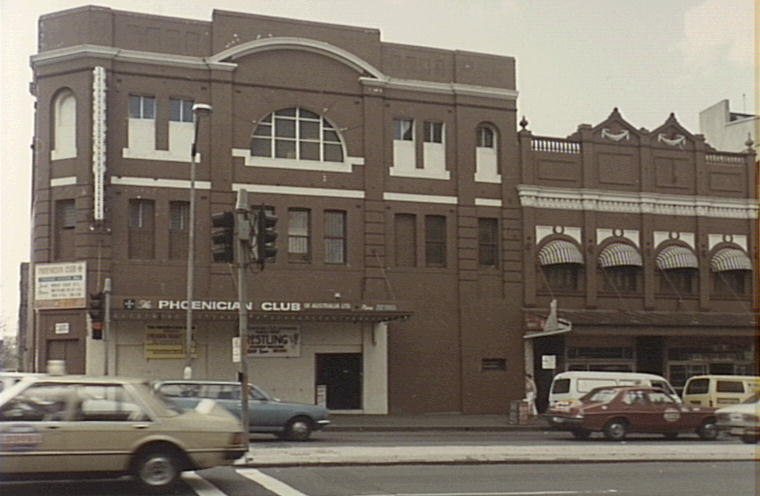
The Phoenician Club, mid-1980s. Image courtesy City of Sydney Archives.
Anna Wood, a 15yo schoolgirl from Belrose, attended an ‘Apache’ dance party at the Phoenician in October 1995, where she took ecstasy. Her resulting death shocked Sydney and enraged then-NSW Premier Bob Carr, who declared war on the Club. A series of fines and restrictions imposed on live venues in the wake of Wood’s death led to the closure of the Club in 1998 and the decline of Sydney’s live music scene which continues today. Good thing Wood wasn’t killed by a pokie machine.

The derelict Phoenician Club, 2000. Image courtesy City of Sydney Archives.
From 1998 the site sat derelict, just in time for the Olympics. Nothing international visitors like seeing more than abandoned, graffiti-tagged buildings. In 2001 it was completely redeveloped internally, and today satisfies Carr’s idea of a venue put to good use.

 Past/Lives of the Near Future