The Tradesman’s Arms Hotel/East Village Hotel – Darlinghurst, NSW

The owners of the East Village Hotel in Darlinghurst have tried their best to reinvent the place as a hip, relaxed pub in the middle of a trendy area, but it’s hard to miss the hotel’s old name – the Tradesman’s Arms – at the top. These days it’s hard to imagine tradesmen’s arms anywhere near this place, unless it’s to subject the pub’s period interiors to another refit.

The Tradesman’s Arms, circa 1930
Speaking of period, the Tradesman’s Arms dates back to 1918, and during its lifetime was known as the ‘Bloodhouse’, due to the extreme violence often on show within. It’s creepy to think that there was a pub in the Darlinghurst-Kings Cross area that stood out for its violence; nowadays it’d probably be considered pretty tame. In a time when tradesmen were wise to arm themselves with razor blades, this place was a favourite watering hole of Sydney underworld figure Tilly Devine, which should absolutely not come as a recommendation. No wonder they changed its name.
Sir Joseph Banks Hotel/Sir Joseph Banks Hotel – Botany, NSW
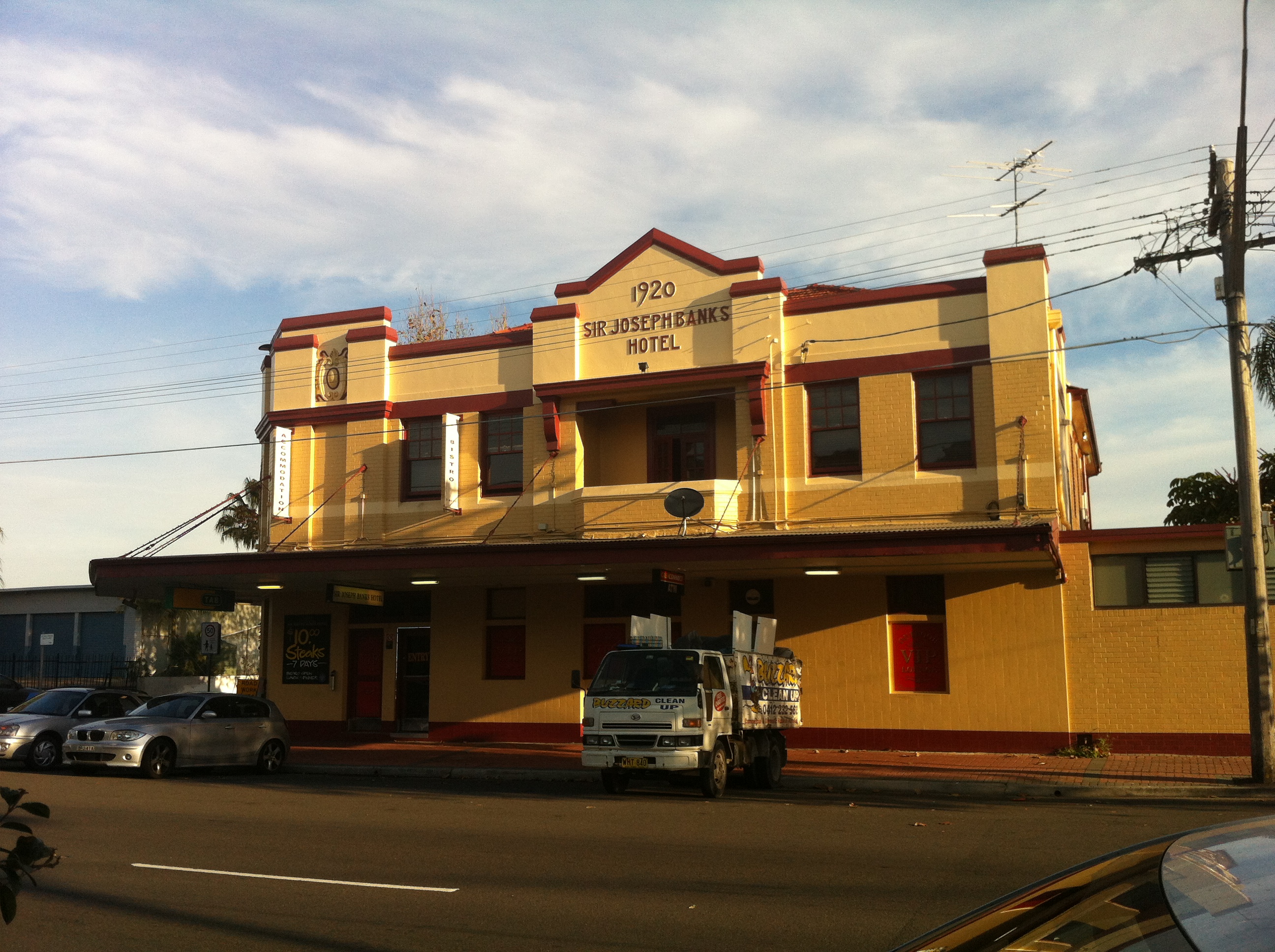
The Sir Joseph Banks Hotel, Botany Road.
While spending time in Botany yesterday, I walked past the Sir Joseph Banks Hotel on Botany Road, turned down Waratah Road, and found myself staring at…the Sir Joseph Banks Hotel? What?!
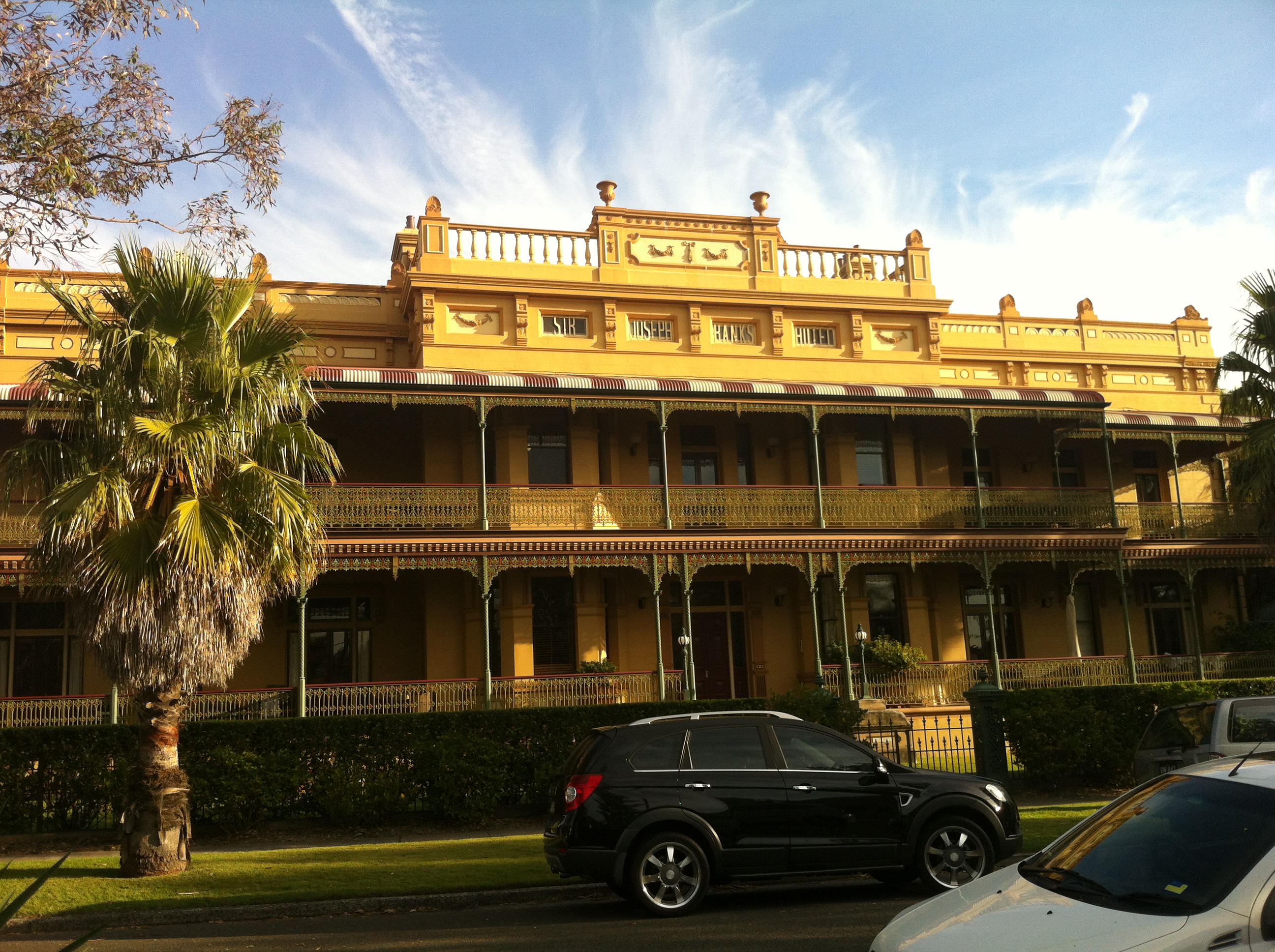
The Sir Joseph Banks Hotel, Anniversary Street.
This bigger hotel stood in front of a large park, so I’ll fill you in as we explore the park. It turned out that this hotel was the original Sir Joseph Banks Hotel, built in 1844. In 1920, the second Sir Joe was built on Botany Road, and the pub license was transferred to it, leaving the original free to become private units, which is how it is today.
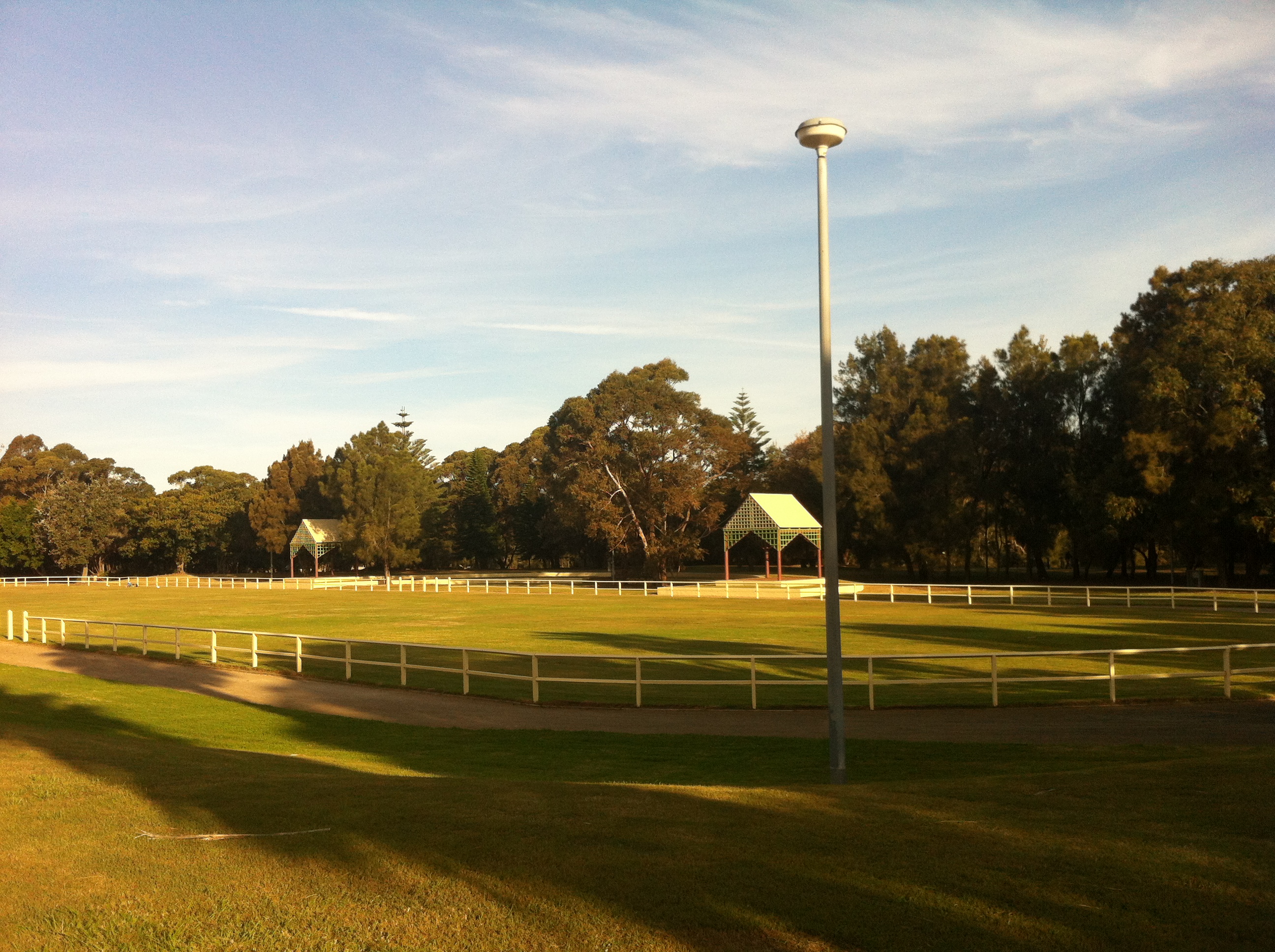
Running track, Sir Joseph Banks Pleasure Gardens.
That’s the dull part out of the way. The interesting part of this place is the garden, which has provided Sydney with a few major firsts since 1850. Here, at the garden’s running track, foot racing events were *yawn* held throughout the 1880s during the… professional running boom…I know, I know. We’ll get there.
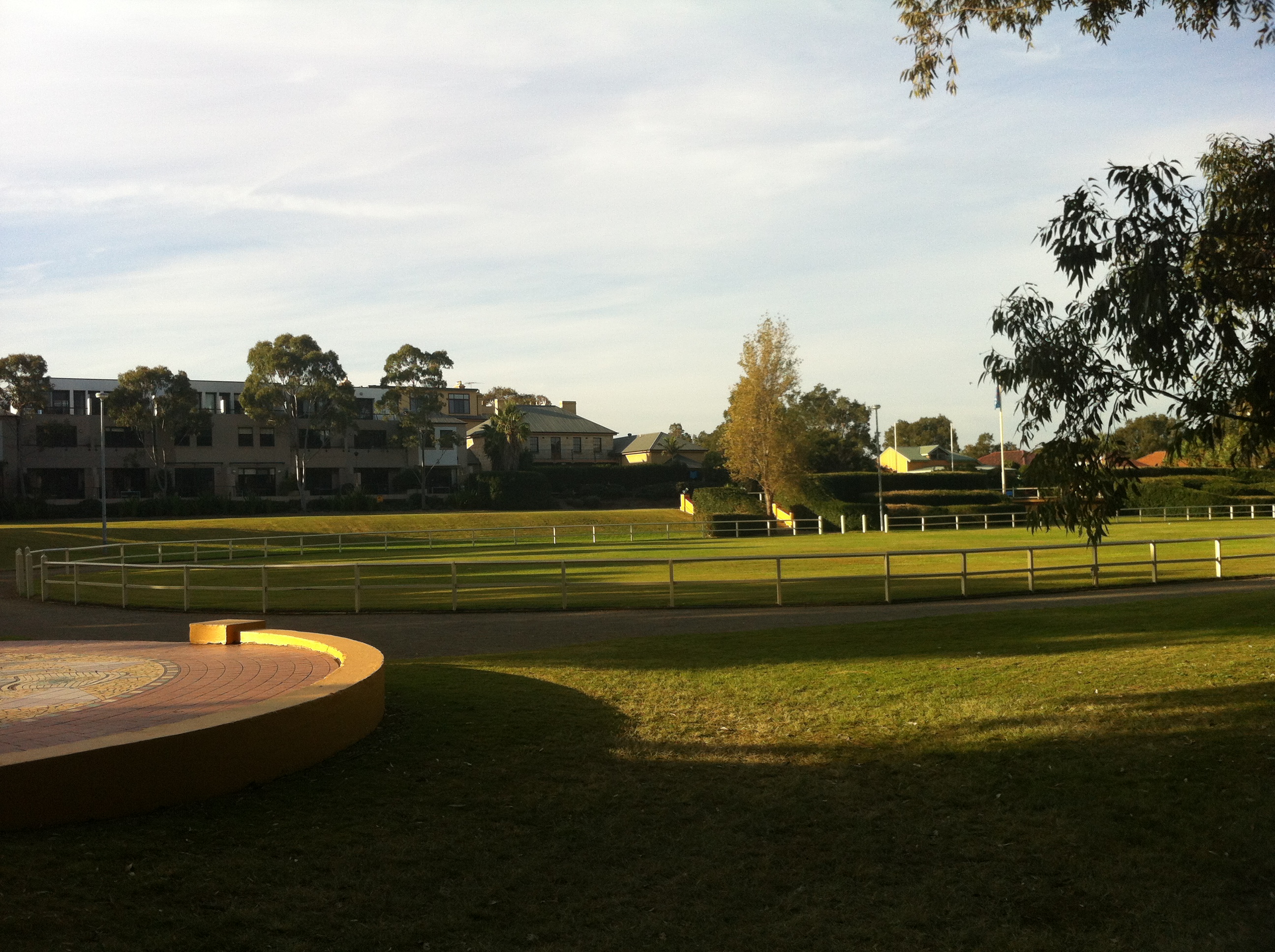
Also held at this running track was Australia’s first game of representative rugby league, in which the South Sydney Probables clashed with the Possibles. I’m guessing the Likelies played against the Maybes the week after.
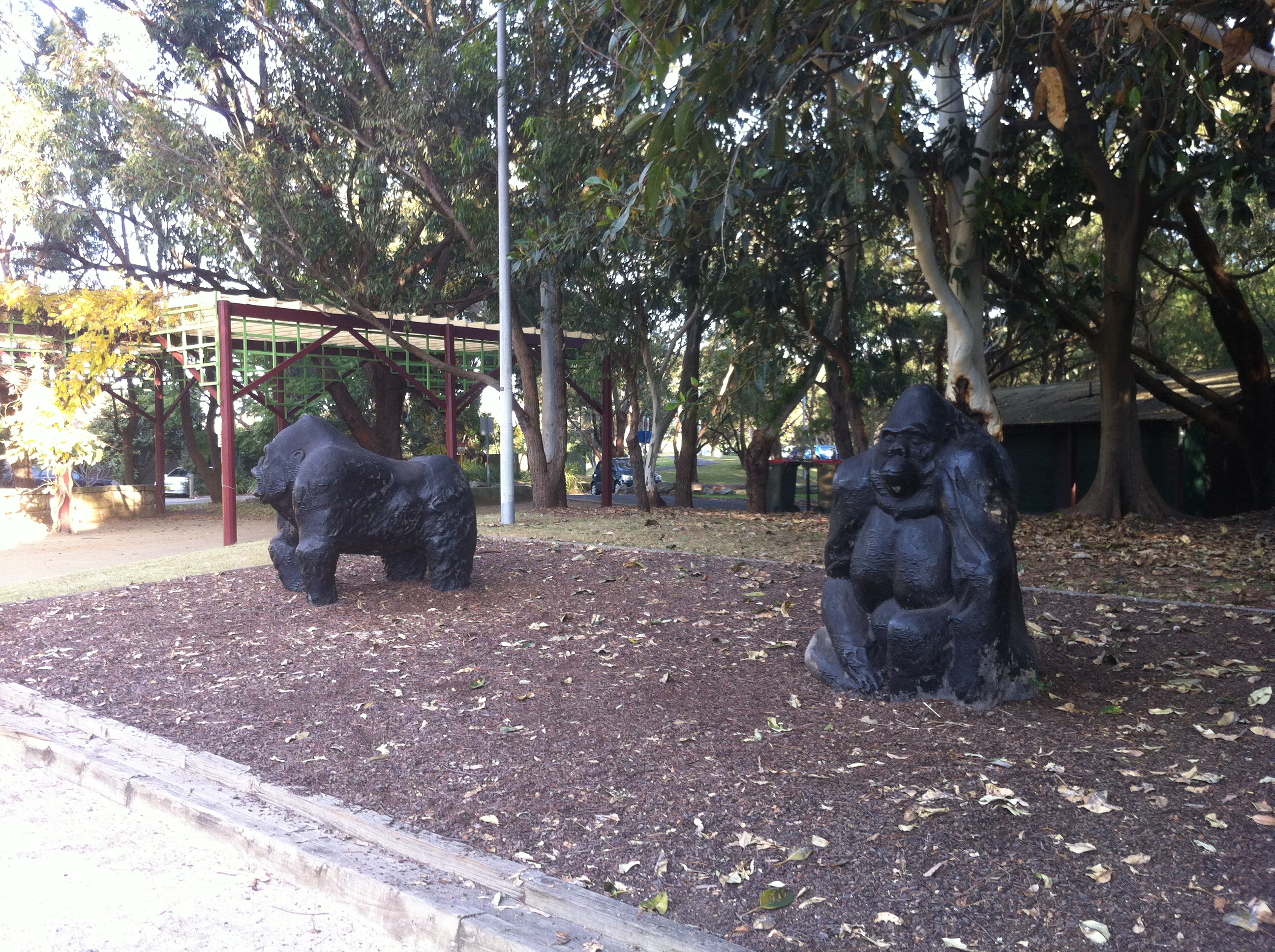
Okay, now, the most interesting thing about this park is that it was home to Australia’s first zoo. The site’s owner at the time, a timber merchant named William Beaumont, improved the hotel and created the ‘Pleasure Gardens’, which is a more scandalous and giggle-inducing name today than it would have been back then. The gardens included the private zoo.
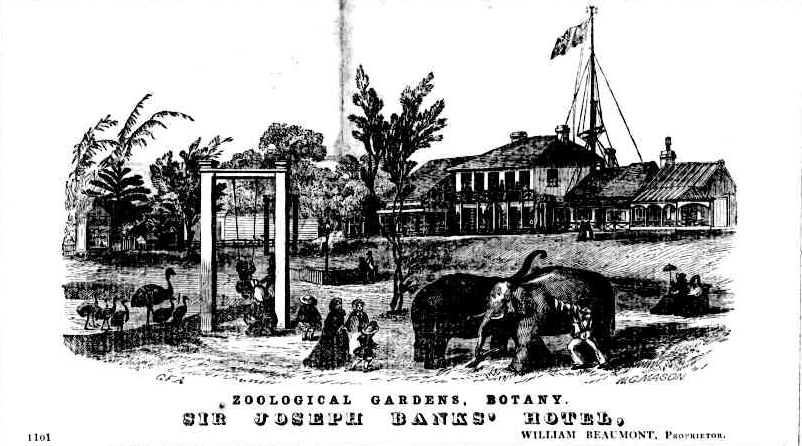
Bell’s Life in Sydney and Sporting Reviewer, Sat 27 Sep, 1856.
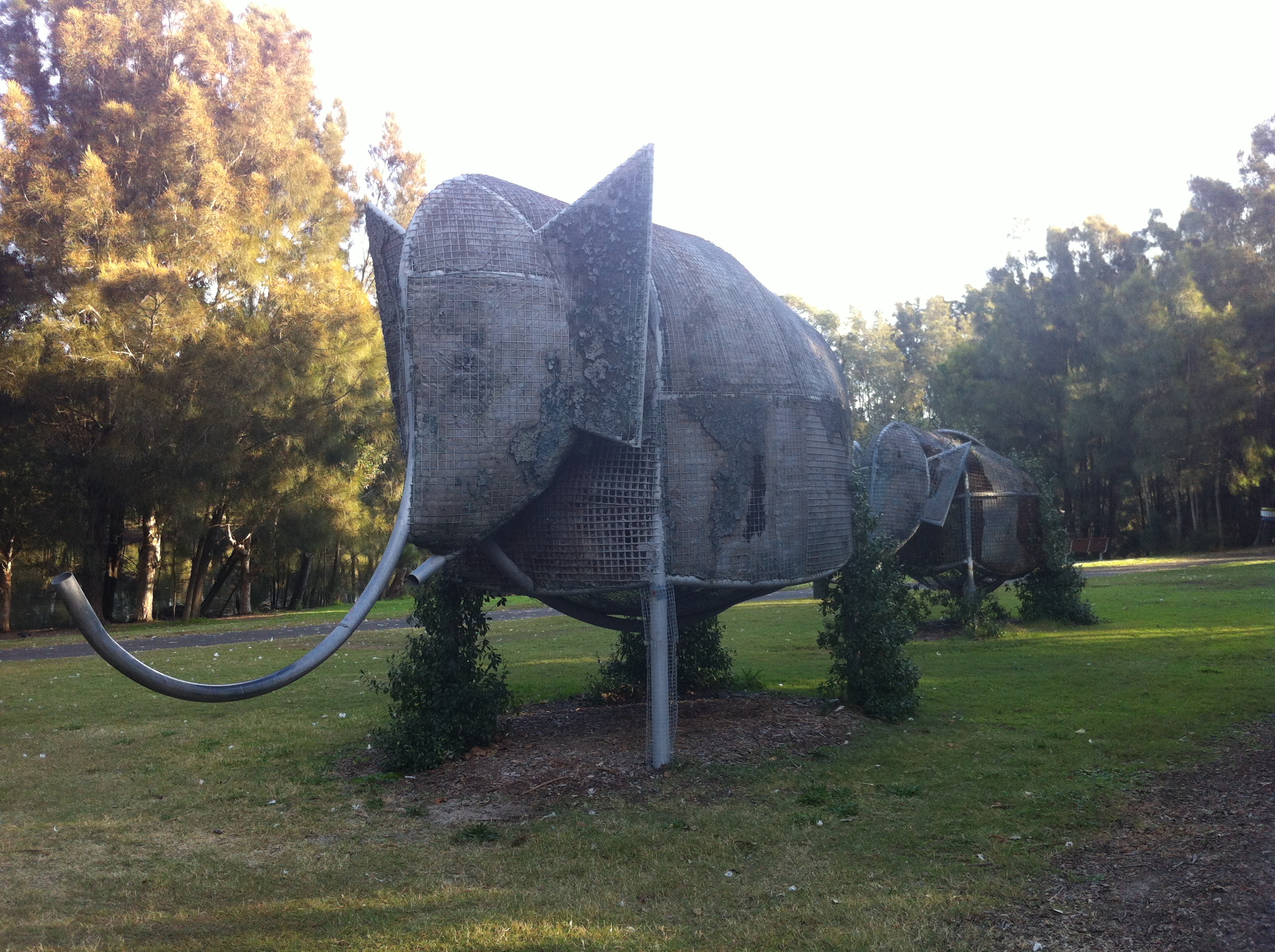
It’s hard to imagine tigers and elephants wandering around the grounds these days, so to assist you, the City of Botany Bay has erected a series of life size animal statues. In a way it helps, but in another way it’s kind of creepy. Judge for yourself.
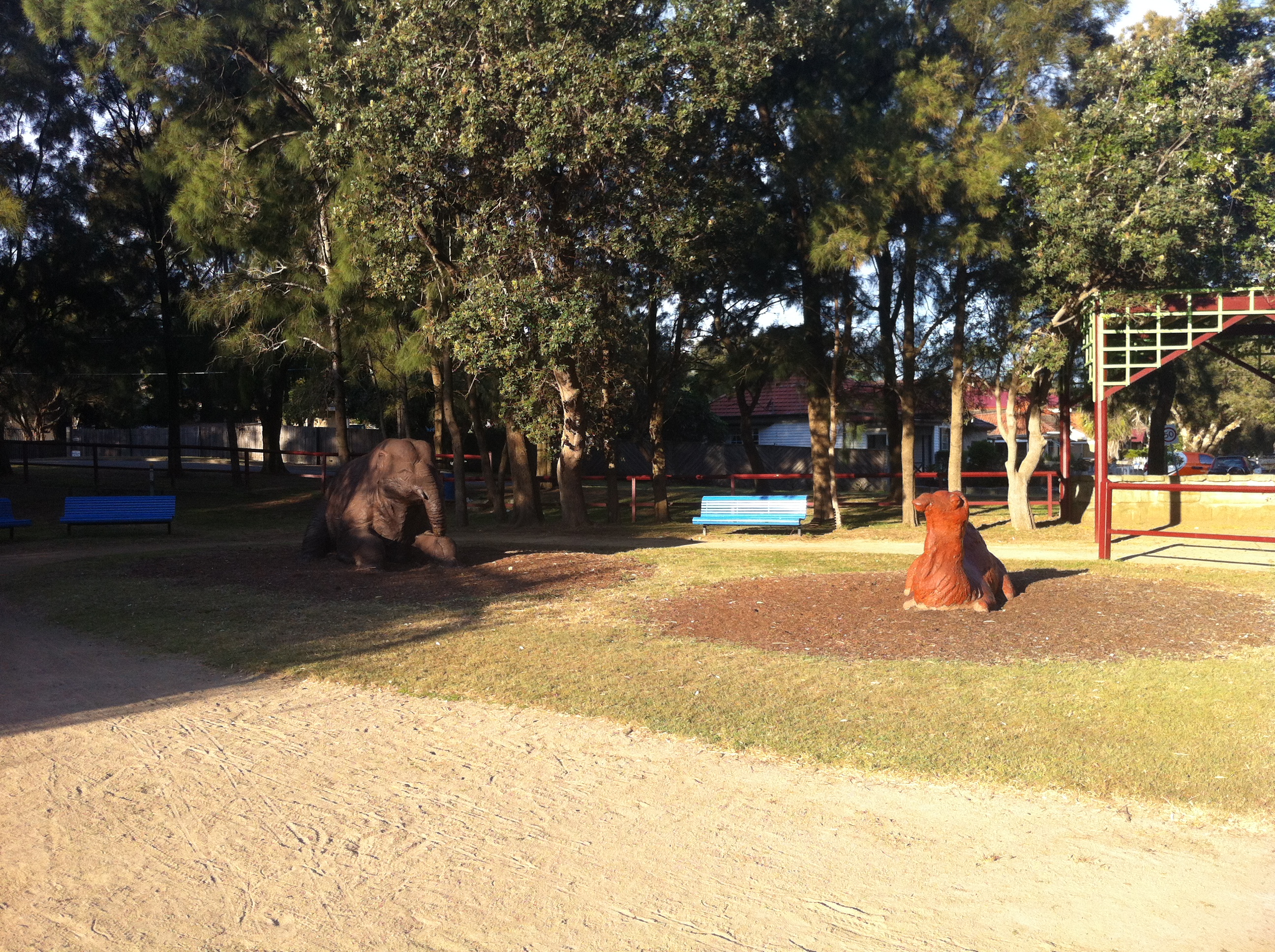
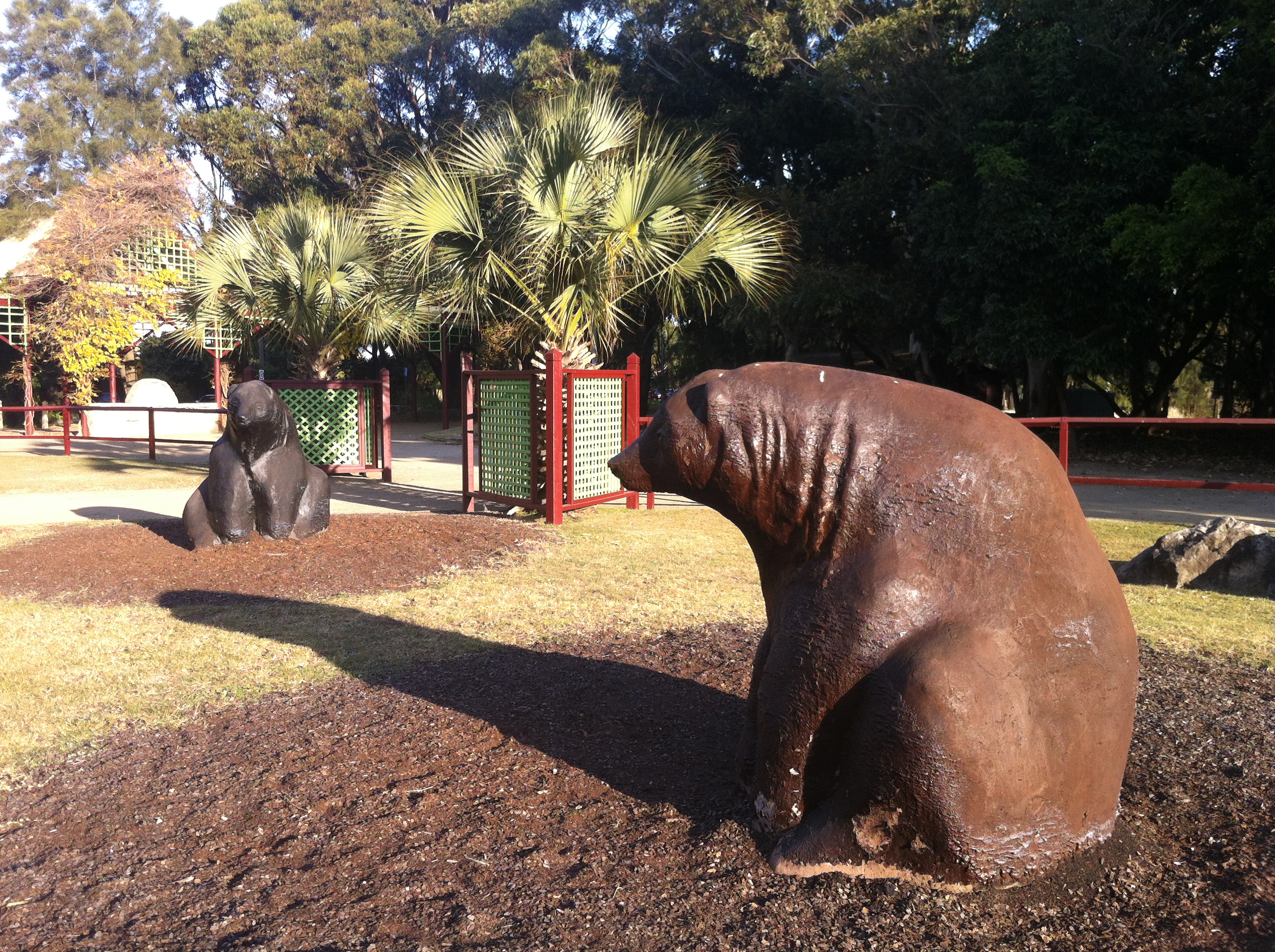
The park was entirely restored and upgraded for the Bicentenary in 1988, and the effort’s corporate sponsors were immortalised in concrete at the east end of the park.
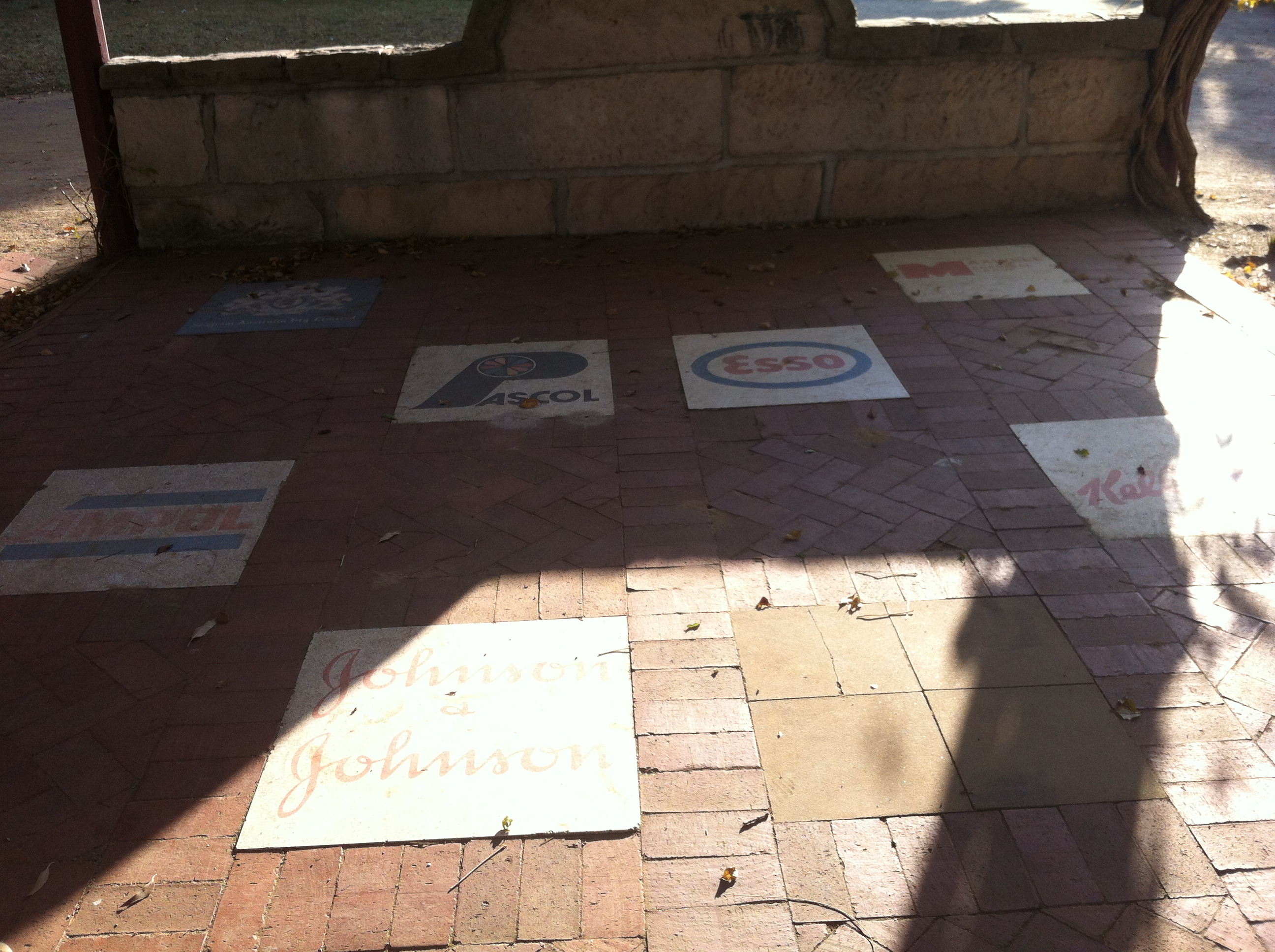
It’s interesting to note just how few of these brand names are widely visible today. Ampol and Esso were both absorbed by their parent companies, proving once again that no one is safe from the Big Oil Killuminati. Maxwell Chemical Corporation, which is just the kind of name you want to see emblazoned on your pleasure garden, has moved offshore. Seagram seems to have disappeared from the corporate environment in New South Wales, at least. Even Pascol Paints has been absorbed by Wattyl, going against all advice you were ever given about mixing paints.
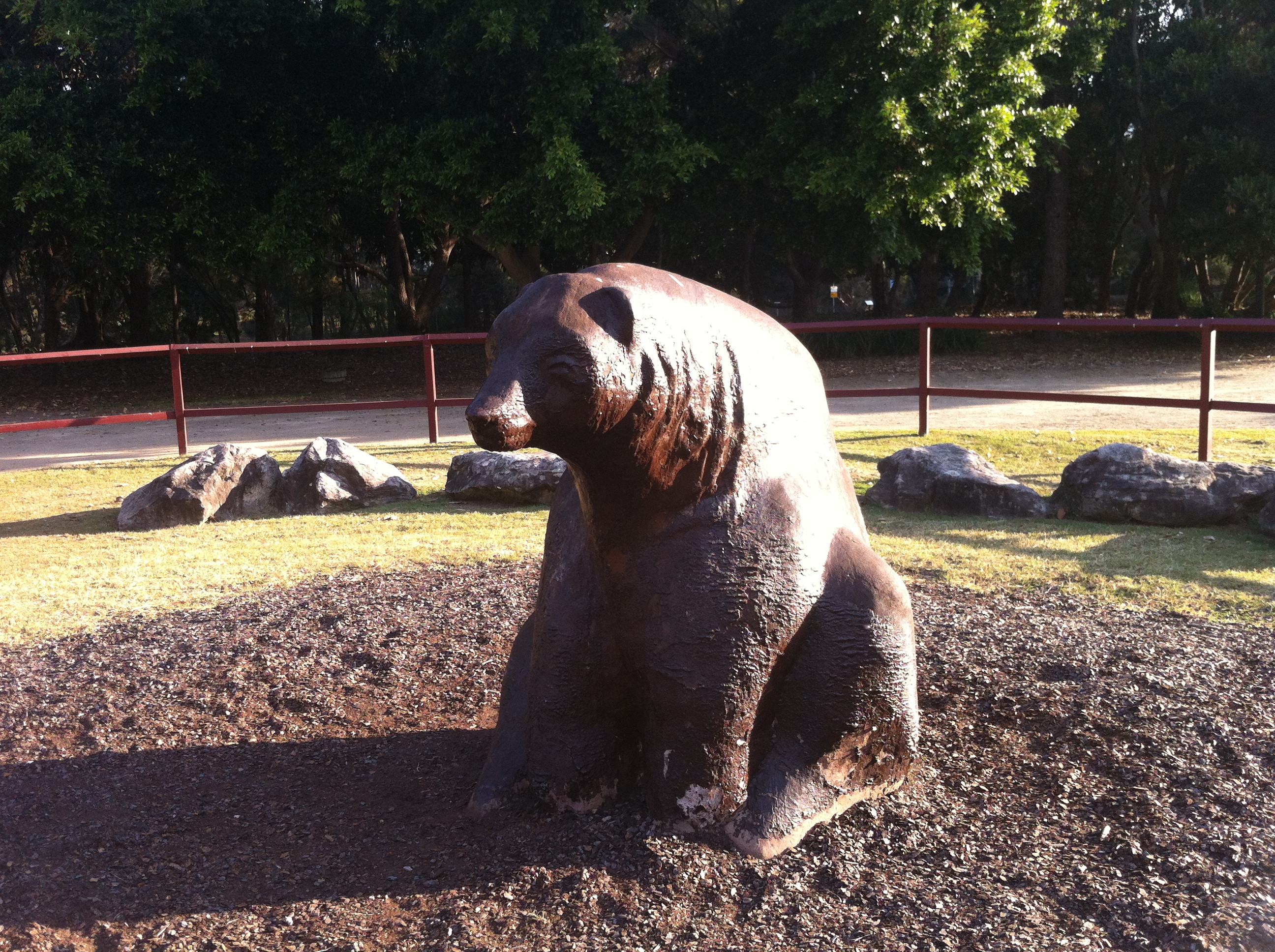
The most striking thing about this place is how secluded it feels. It’s off the main road, but the whole suburb of Botany feels a world away from Sydney as it is. I suppose in that regard, it was the perfect environment for a zoo. The most important feature of the garden today are the series of ponds that form protected wetlands. The whole park sits on land reclaimed from Botany Bay, so some attempt at looking after the marine life there is better than none at all.
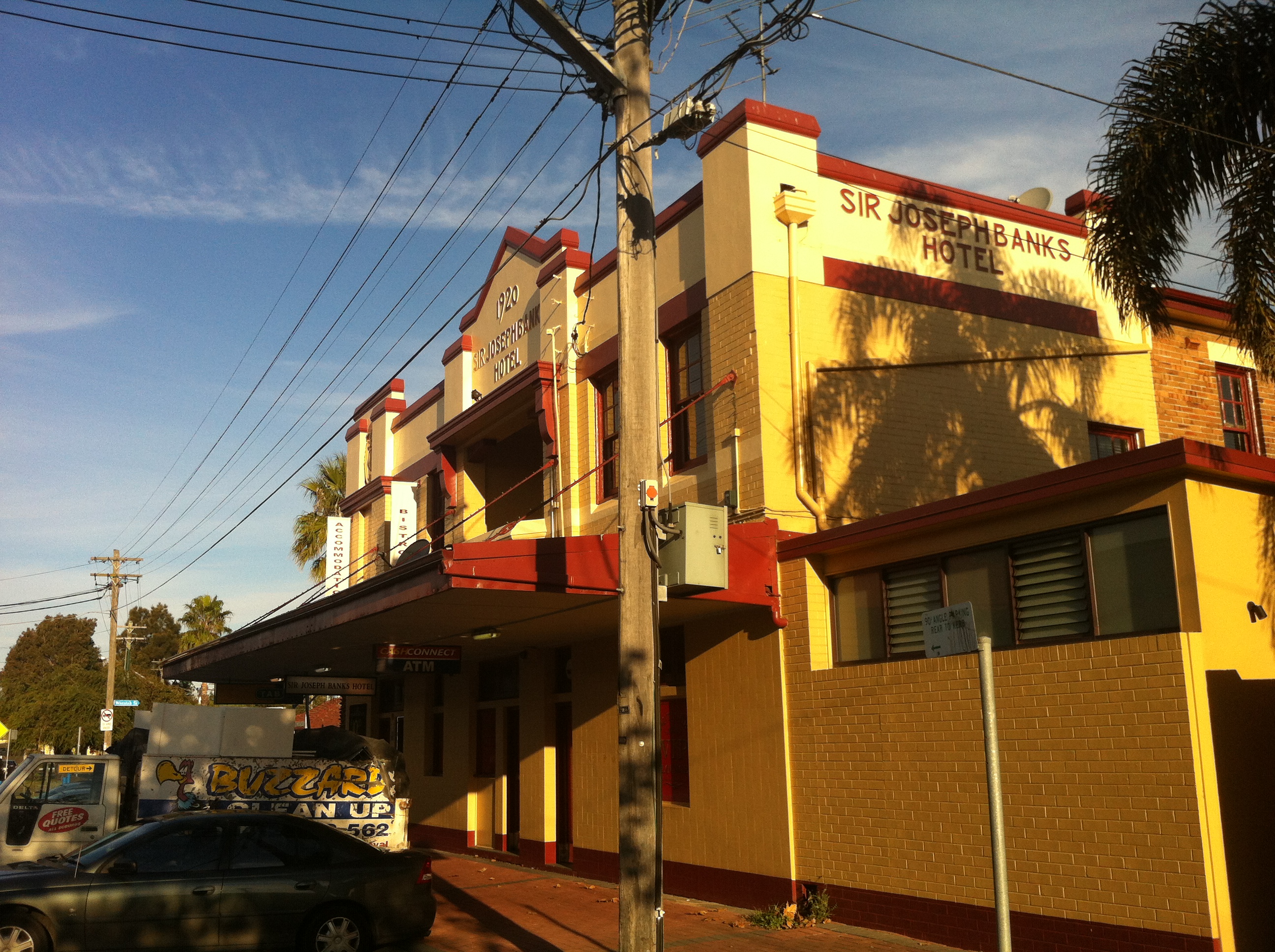
Meanwhile, up at the Sir Joseph Banks Hotel Pub Edition, you’d never know any of it was there. Here, they just sit, and drink, and smoke, and bet, and watch the millionth game of rugby league played since the days of probability vs possibility.
I think about it this way: the goings-on of the Sir Joseph Banks Pub on Botany Road are indicative of all that’s probable, but the Victorian wonderland and colourful history of the Sir Joseph Banks Hotel and Pleasure Gardens are all about what’s possible.
The Bat & Ball Hotel – Surry Hills, NSW

Here’s a perfect argument for why you should take down old signs. Who’s that hosting your trivia night, Bat & Ball?

Come on down, huh? How far? Six feet? Maybe that’s why the question mark is there, they don’t know whether trivia will be on or not because the host is perpetually late. TOO SOON?
Homebush Racecourse/Horse & Jockey Hotel – Homebush, NSW
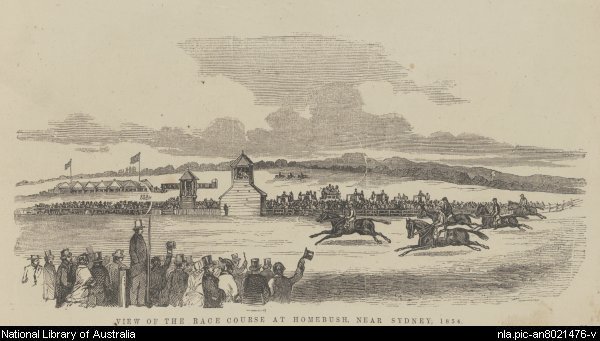
Homebush Racecourse, 1854. Image by Walter G. Mason, courtesy National Library of Australia.
Operating between 1841 and 1859, Homebush Racecourse was Sydney’s premier horseracing venue. It was located on the Wentworth Estate in the Homebush area, and stood in the approximate area encompassing the corner of today’s Underwood and Parramatta Roads. When Randwick Racecourse opened in 1859, it superseded Homebush’s track, causing the latter to fall into a period of dereliction, although it still operated as a track until 1880. A man’s body was found on the course in 1860, the grandstand spectacularly burned down in 1869, and throughout the 1870s it was used for human running races. When the Homebush Abattoir was established in 1915, the site of the racecourse was employed as the slaughterhouse saleyards.
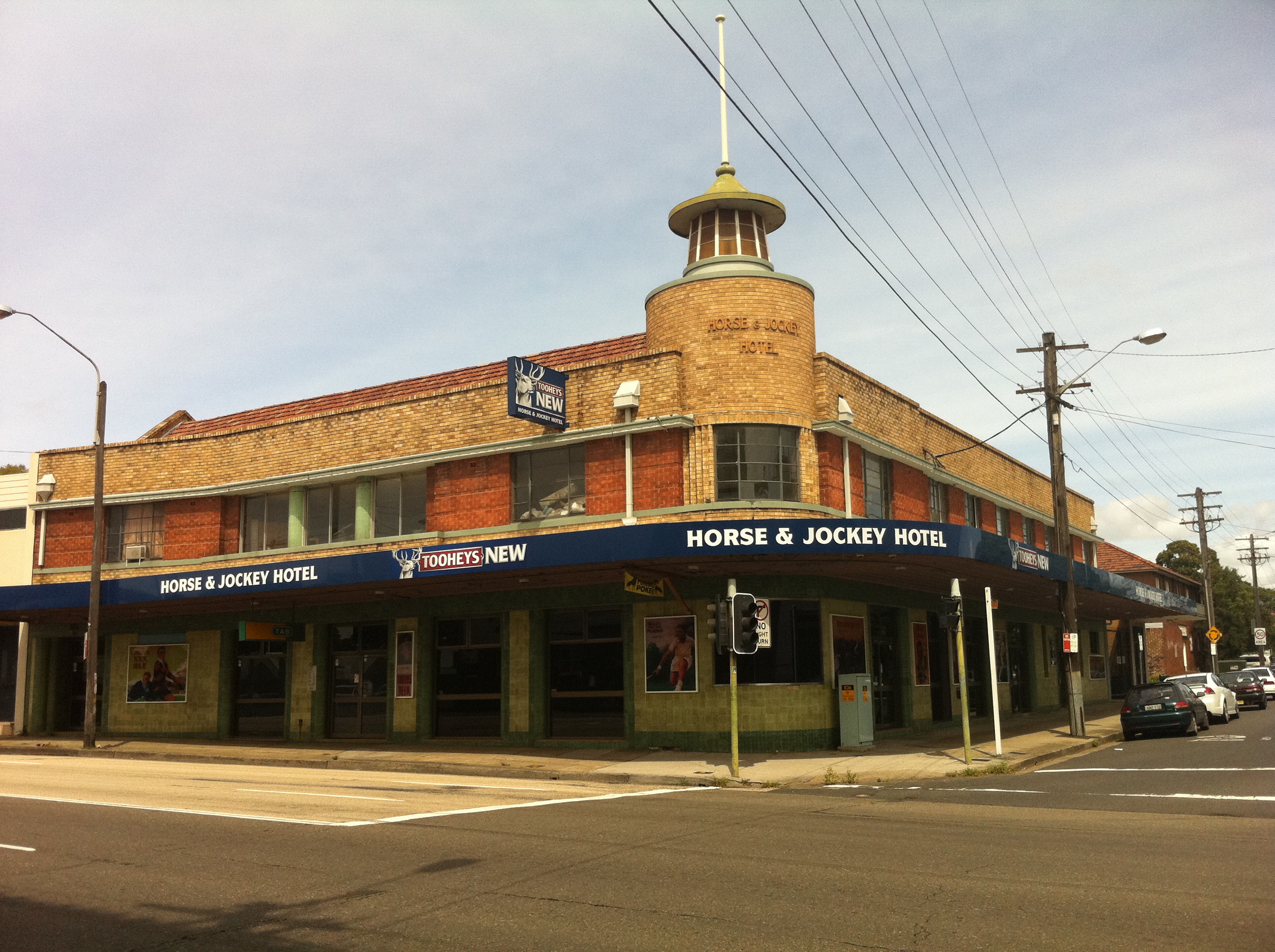
The only evidence that horseracing ever took place in the area is this pub, located along Parramatta Road, east of Underwood Road. The Horse & Jockey Hotel itself has a colourful history – it was originally the Half Way Hotel, named for its location halfway between the city and Parramatta. The site of the death of Australia’s first bushranger, and once patronised by Governor Lachlan Macquarie, the original hotel changed its name for the establishment of the racecourse (which it overlooked), and was the site of the inquest into the 1869 grandstand fire. Rebuilt beside its original site in 1876, the pub itself burned down in the early 1920s. It was rebuilt again in its present form soon after and remains as the only reminder of Homebush’s racing days.
Hotel Westend/Nomads Westend Backpackers Hostel – Sydney, NSW

The Hotel Westend was built in 1929 as the Hotel Morris, and replaced a business called ‘Half Price Shoe Stores’, which had filed for bankruptcy in 1925. Shoulda charged full price, guys.
From its erection in 1929 through to 1963, the building was Australia’s tallest hotel. Now, as Nomads Westend Backpackers Hostel, it’s apparently Australia’s most repulsive:
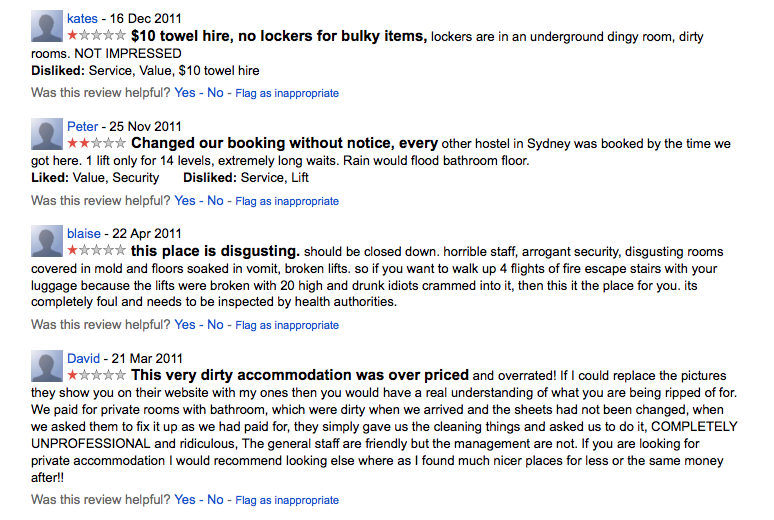
Before providing filthy rooms at a greater height than anyone else, back in 1890 the boarding house that stood at this address was embroiled…in CONTROVERSY!
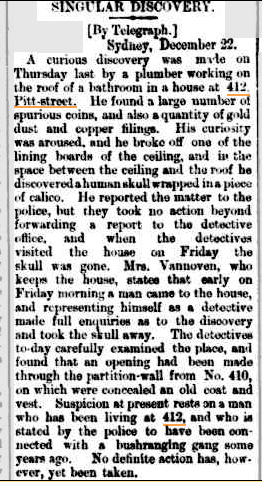
South Australian Register, December 23, 1890.
The very next day, the plot thickened:
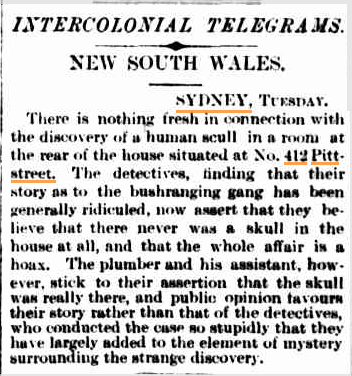
The Argus, December 24, 1890.
And then…nothing. Dodgy NSW cops? Sure it wasn’t 1980? Also, pretty ballsy of the Argus to call out the detectives as stupid given their spelling of ‘skull’.

 Past/Lives of the Near Future