Newsagency/LP & Company Home Products – Campsie, NSW

Beamish Street (above, top left to bottom right) cuts across Campsie like a knife wound, only instead of blood, a spurt of discount stores, fresh produce markets and newsagents has erupted into the populace.
A news-hungry populace. Seriously, there are no fewer than three newsagents active in a very small area here, with at least three more recently departed ones I can recall.
But is it the news, or is it something else these shops provide that has kept them in the Beamish mix when so many others (including McDonald’s – twice!) have dropped out?

Sometimes, my job here is made very easy. The Old Tab Cafe suggests another rarity: the departure of a TAB. Don’t worry, there are still at least three TABs within walking distance of this cafe, but what’s beginning to form is a picture of a suburb that loved to have a punt.
As many nostalgia websites love to remind you, Australia’s suburban demographics are in a constant state of flux. What was is very different to what is, and the habits of the old don’t necessarily appeal to the new.
Campsie is a great example. Originally so Anglo it features an Anglo Road, the suburb is now home to a large Chinese population – and the shops to match.

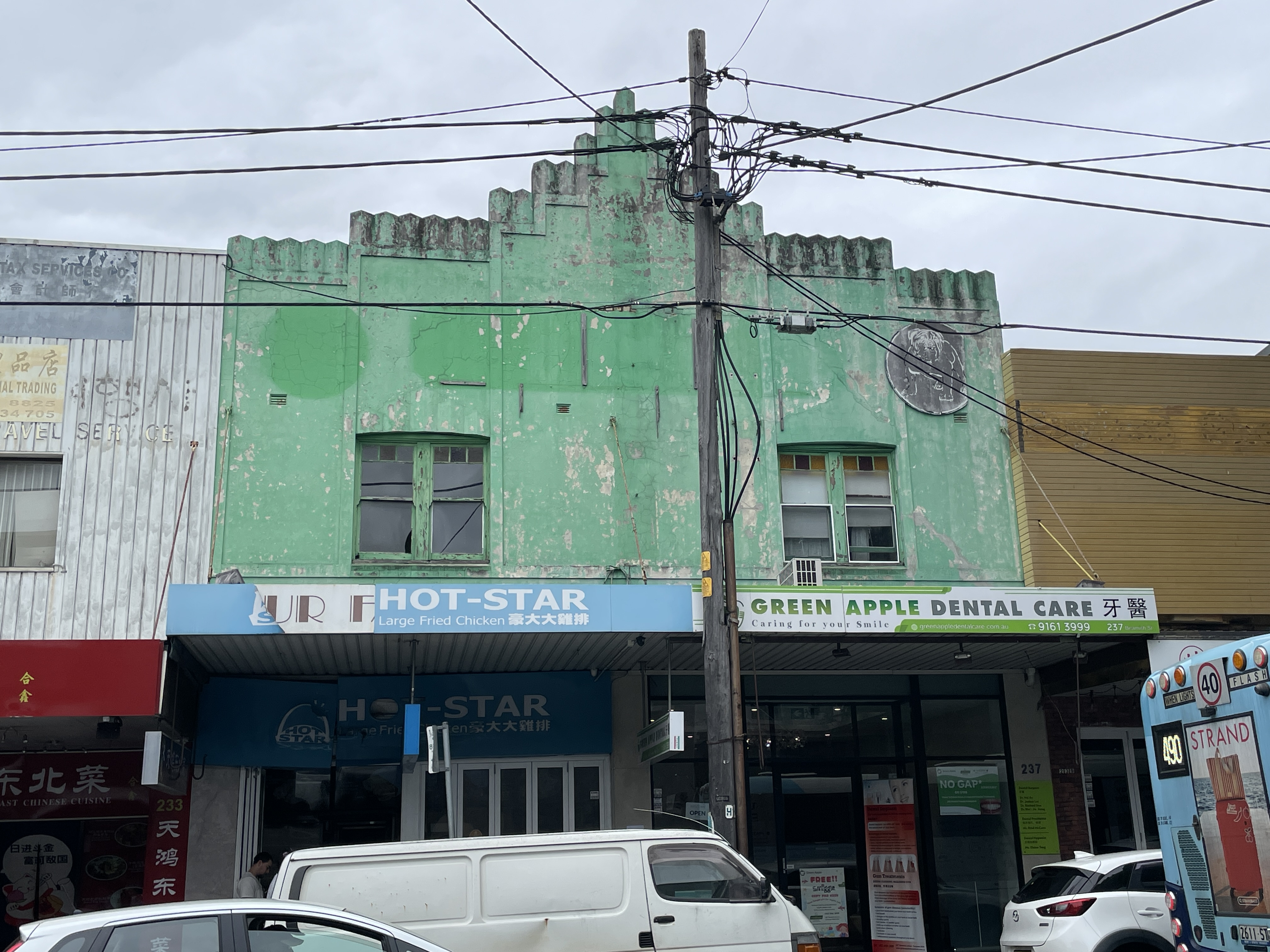
This former chemist at 235 Beamish tells you all you need to know. In are fried chicken and a dentist (what a combo); out is the passion for the Canterbury-Bankstown Bulldogs, the area’s beloved NRL team. All that remains to remind us of a more supportive era is a solitary Bulldogs insignia, ravaged by time and weather.
The appeal of Da Doggies may have burned brighter in Campsie’s TAB days, but Chinese gambling habits don’t necessarily align with those of yesterday’s Anglo Campsians. Mahjong and pokies have taken the lead as the preferred way of chasing that elusive jackpot over sports betting or that other friend of the working class, the lottery.
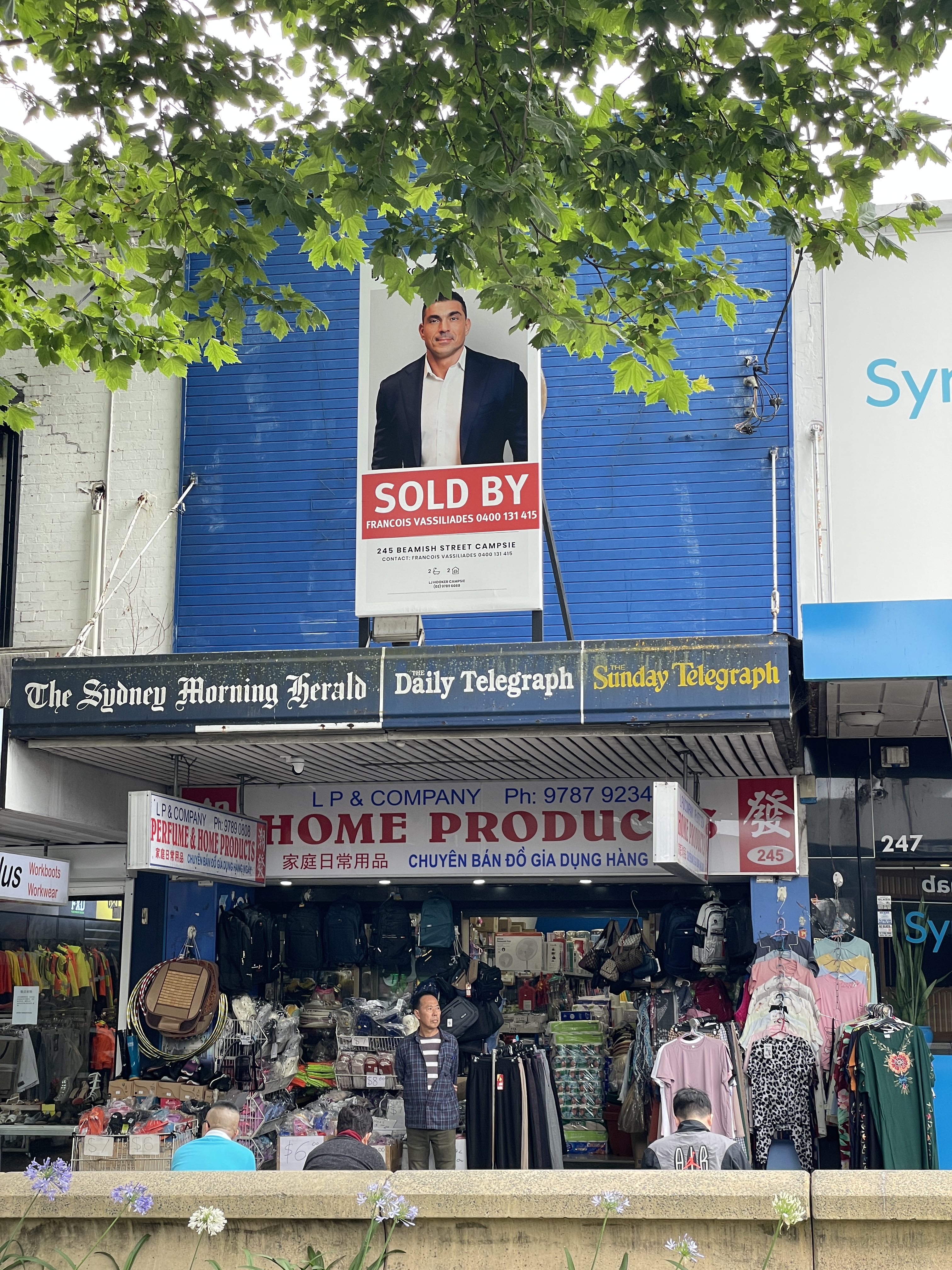
Which brings us to the star of today’s show, 245 Beamish Street.

This site was once home of a Mr John Foreman Watson, who may well have backed winners and losers during his time on earth, which ended right here in October 1954. Eerily, it could be that the paper containing Watson’s obituary was sold at the very place he checked out.
Because here too stood one of Campsie’s many newsagencies (this one with the very no-frills moniker “Newsagency”), now replaced by LP & Company Home Products. Not a Sydney Morning Herald or lotto ball in sight these days.
Or is there?

Shift your perspective and you’ll find Francois Vassiliades did his best to hide the standout feature of this former sweeps station, which now peeks out from behind the ‘sold’ sign.
The Big Lotto Ball’s placement on the shopfront is an instant and arguably unwelcome reminder of a time when the promise of a big win towered over current affairs, and jackpots and bulldogs stood side-by-side just out of reach of the common man.
Toys R Us/Gro Urban Oasis – Miranda, NSW
We spend our lives mourning our childhoods.
Our values and expectations are shaped throughout our younger years, sometimes subconsciously. Once we learn that, say, an ice cream dropped on the hot sand during a day at the beach won’t be replaced, the ice cream becomes a little part of us, a part we can’t get back. As adults we can buy another ice cream, but it’s not the same one. It’s just a band-aid over our initial carelessness, and $5 out of our retirement funds. We still feel the loss.
Every tantrum or outburst we have, every moment of joy, whenever the waterworks spring a leak…that’s a moment when the situation we’ve found adult selves in has touched a nerve from an earlier time. It’s a unique brand of pain we aren’t equipped to handle.
From the 1970s onwards, childhoods became increasingly materialistic. My own was peppered with trips to toy shops and Christmases spent unwrapping action figure after action figure. I never broke an arm climbing trees with Huck and Tom because I was inside on the PlayStation. I never knew that pain and the associated loss of innocence.
But when that PlayStation controller broke, you better believe I felt that.
The values that make the younger generation weep into adulthood are different to the ones who came before (you know, the ones who made it impossible to buy a house). When a brand that played a large part in that childhood dies, it’s a personal attack, even if we hadn’t supported or even thought about that brand for years.
At the (mostly) newly refurbished Westfield Miranda, there’s something new to mourn.

Imagine looking into those gentle brown eyes and telling that face it’s over – he’s insolvent. Imagine being the one to cause that perpetual smile to end. It’d be like pulling the moon from the night sky: the nocturnal world would hate you.
Toys R Us has gone, and there’s an entire generation full of rage at its passing. How could this happen? Don’t toy shops last forever? Where will we take our children when they come of age?
We were there at the beginning, when the American giant arrived on our shores and slew the usurper. When we were invited to meet Barbie, Sonic and Geoffrey, to come in and “have a ball”, to be seduced by wares previously unfathomable to our young eyes.
And we drank deeply.
Never mind that we hadn’t gone in there in years, that we peered inside occasionally and merely wondered why there were so many baby items. Never mind that when we wanted a new board game for game night, we hit up Amazon and their incredible range rather than hiking out to one of many inconvenient locations embedded in mouldy old shopping centres. Never mind that our own children asked for iPads and Xboxes over Barbies and Transformers, and we willingly obliged, even as Hurstville’s double-storey Toys R Us lost an entire floor to Aldi.
We took Geoffrey and his magic factory for granted, and this is the price we paid. We dropped the ice cream, and we’ve done our dash.

Rebel Sport remains – a glimpse into a past when big name retailers could team up and it meant something – but the toy story is over at Miranda. The threshold that saw so many delighted kids quivering with anticipation, birthday money firmly – but not too firmly – clutched in tiny digits, has been sealed up and replaced with an ad for a shop elsewhere in the centre.
Imagine the scene behind this wall. A big empty space that, once upon a time, someone saw so much promise in. “This place could make kids happy,” they thought. And it could, until it couldn’t. Today, that possibility has been restored.

Downstairs, just a bit away from the escalator that once elevated us to a place where we didn’t have to grow up, is this sign overlooked by Westfield’s image consultants.
The quotations around the R sometimes appear in official Toys R Us signage, and sometimes they don’t. Here they seem to be a disclaimer, as though whoever crafted the sign didn’t quite believe the claim behind the name: that “toys were them”.
It’s certainly true today.
Computer Service Centre/Pharmatex – Epping, NSW
Come gather round, children, and I’ll tell you a tale of a time when people played “computer games”.
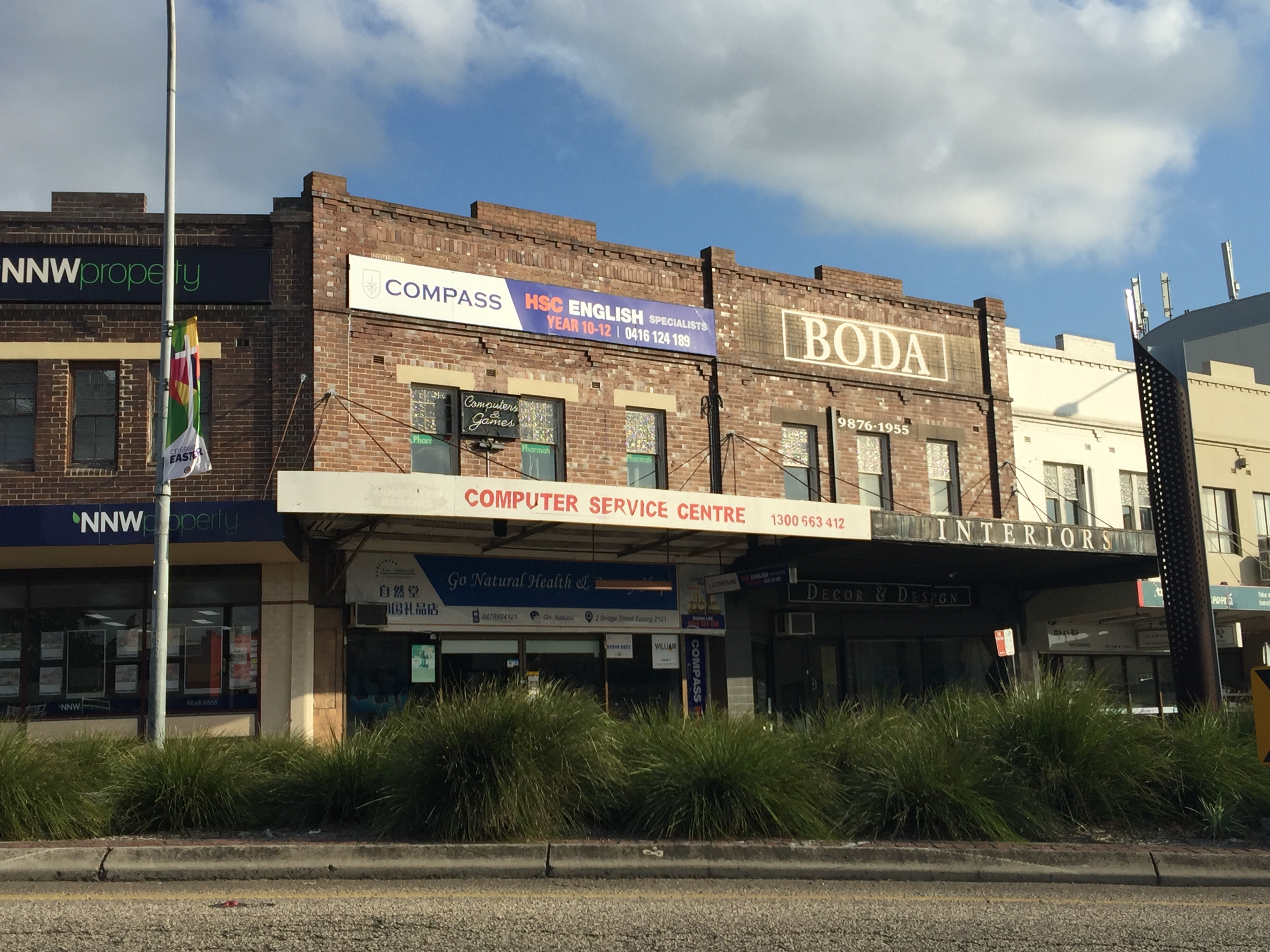
Epping is a bit of a mess these days: no two floors of a shop can seem to agree on what they’re going to be. This one in particular features voices from the future (education – the Children Are Our Future), the present (the natural health joint), and the past. We’ll get to all of them, but let’s begin yesterday.
In 1983, the market for console video games in the United States crashed and crashed hard. In a panic, the computer gaming industry (there’s a difference) sought to distance itself from its ailing cousin. IBM, Amstrad, Commodore were just a few of the names attempting to usurp Atari as household standards.
In Europe and Australia, it largely worked. By the early 90s, naff adults would refer to kids’ Sega Master Systems and Game Boys as “computer games”. Ugh.
When you’re a kid, it’s a travesty. You and your passions, tarred and feathered by misunderstanding. Or was it a lack of wanting to understand?
It took years for the computer games terminology to wear off. You’ll still hear it today if you listen (or care) hard enough. Sure, there have been some great games for computers during the past two decades, but as our old buddy Lana Del Rey likes to say, something something video games.
Which brings us to today’s focus. This place serviced computers, and wisely separates computers and games. It’s hard to tell where to place this in the gamut of understanding, but I’m going to go ahead and chuck it in the “totally gets it” pile. For one, the sign appears to be neon – cool. And two, the shop doesn’t look that old.
The computers and games and computer games have long since left the building, however. It’s symptomatic of a larger sickness – when was the last time you saw a games department at Myer? At K-Mart? It’s clear this was just another casualty of the digital takeover.
Today, it’s home to Pharmatex. Or it isn’t. Their website has the right address, but the shop itself appears to contain no less than two other pharmaceutical/health food outlets.
If you’re that curious, call them toll free on 1800 GLOVES (seriously).
As for the HSC English specialists, I wonder what percentage of these tutors exist purely to stop the students from playing computer games instead of studying?
Angelo’s for Hair/For Lease – Belfield, NSW

He came to this country from Europe, in an era that was – in many ways – of greater acceptance than the age we live in today. Barely able to speak the “native” tongue, and still scarred by the horrors of war, he attempted, to the best of his ability, to integrate into the society he found here.
Seriously, imagine the effort: the journey to get to this faraway place is in itself a hellish struggle. And then to arrive, to have to gather your bearings, to learn the language, to assess the social order where almost nobody is like you, and to gauge your place in it.
You don’t know anyone. You have nothing. Nobody is like you, and nobody cares about you.
And after all that, to actually make the effort to insert yourself into that world. To provide for it! With today’s luxuries and privileges, and the world having become a global village, it’s almost impossible to understand that experience.
But he knows.
We’re not talking about an intolerant culture, as we have today. Australia in the post-war era was arrogant, dominant. White Australia, victors of the war in the Pacific, liberator of ‘subordinate’ races found in the occupied island nations.
Today, racial and religious intolerance comes from a place of fear, fear for “our way of life”, fear of the unknown, and a deep-seated, shameful understanding that these ideals are too flimsy to be defended.
But back then, it was an arrogant patronising of these European cultures who had already been brutalised by intolerance beyond understanding. We’ll tolerate your spaghetti and fried rice, fellas.
A people person, he started his career as a hairdresser in the city. Armed with youth, energy, passion, a thirst for knowledge and a hunger for success, he began to network as he plied his trade. The ageing, well-to-do doyennes of Sydney’s east, left alone by their business-minded husbands all day, longed for an outlet for their thoughts, their stories, their plans and their dreams. They found it in him.
And who could blame them? A good-looking, upwardly mobile young man eager to listen while he cuts your hair (all the while learning the intricacies of his new language) would be the perfect ear.
“They were my ladies,” he’d tell me decades later. When I pressed for more, his brow darkened like storm clouds and he shook his head. “Sorry mate, they’re still mine.”
As now, networking paid off. Trust leads to loyalty, and when the young man was ready to move beyond the confines of the department store salon and get his own place, his ladies came with him.
Even though it was out in the wasteland of the south-west, in a tiny suburb few had heard of.
In the mid 1960s, Belfield was still relatively young. We’ve been there before, so there’s no need to go too deeply into the backstory. Catch up first, and then cast our man into the backdrop.
Although it’s the inner-west now, it was truly the outskirts of civilisation for many at the time. Many poor European migrants found themselves in the middle of growing suburbs like Belfield, and often during the worst growing pains. But land was cheap, space was plentiful, and tolerance could be found if you looked past the stares.
He told me the shop had been a deli before he bought it. He’d saved all his income from the city salon, lived hard for years but never let go of the dream to own his own business. The master of his own destiny. We’re content these days to end up wherever life tosses us. Control is too much effort, and believing in fate and destiny means it’s easier to explain away fortune both good and bad. His was a fighter’s generation, and he fought for everything he had. He’d been fighting from the day the Nazis shot his father dead.

His salon fit right into a suburb that had multiculturalised right under the white noses of the residents. An Italian laundry here, a Chinese restaurant (that serves Australian cuisine as well, natch) there, and a Greek hair salon right in the middle.
A friendly, ebullient character, everybody came to know him. The women loved him, the young men respected him, and the old ones still gave him sideways glances. He didn’t care – he’d outlive them.
“I still had my ladies,” he’d recall fifty years later. Some of his city customers had crossed the ditch, but he’d found an all-new community waiting to unload on him. He’d become family as he’d get to know the women, their children, and their children.
I came to this little shop for 25 years to get my hair cut. Always the same style: the Jon Arbuckle. In that time, I went from sitting in the baby chair and chucking a tantrum whenever it was time for a trim, to coming on my own, mainly for the conversation. As the years went on, he revealed more about himself and his life. It fascinated me.
“The hardest part,” he told me the last time I saw him “was that as the years passed, my ladies would…”
He paused. It was difficult.
“They’d stop coming in.”
Very true. Belfield is a very different suburb to what it was even ten years ago, let alone 30. Let alone 50. My grandmother was one of his women, so familiar that it seemed like they’d always be around.
But now she’s gone, and so is he.
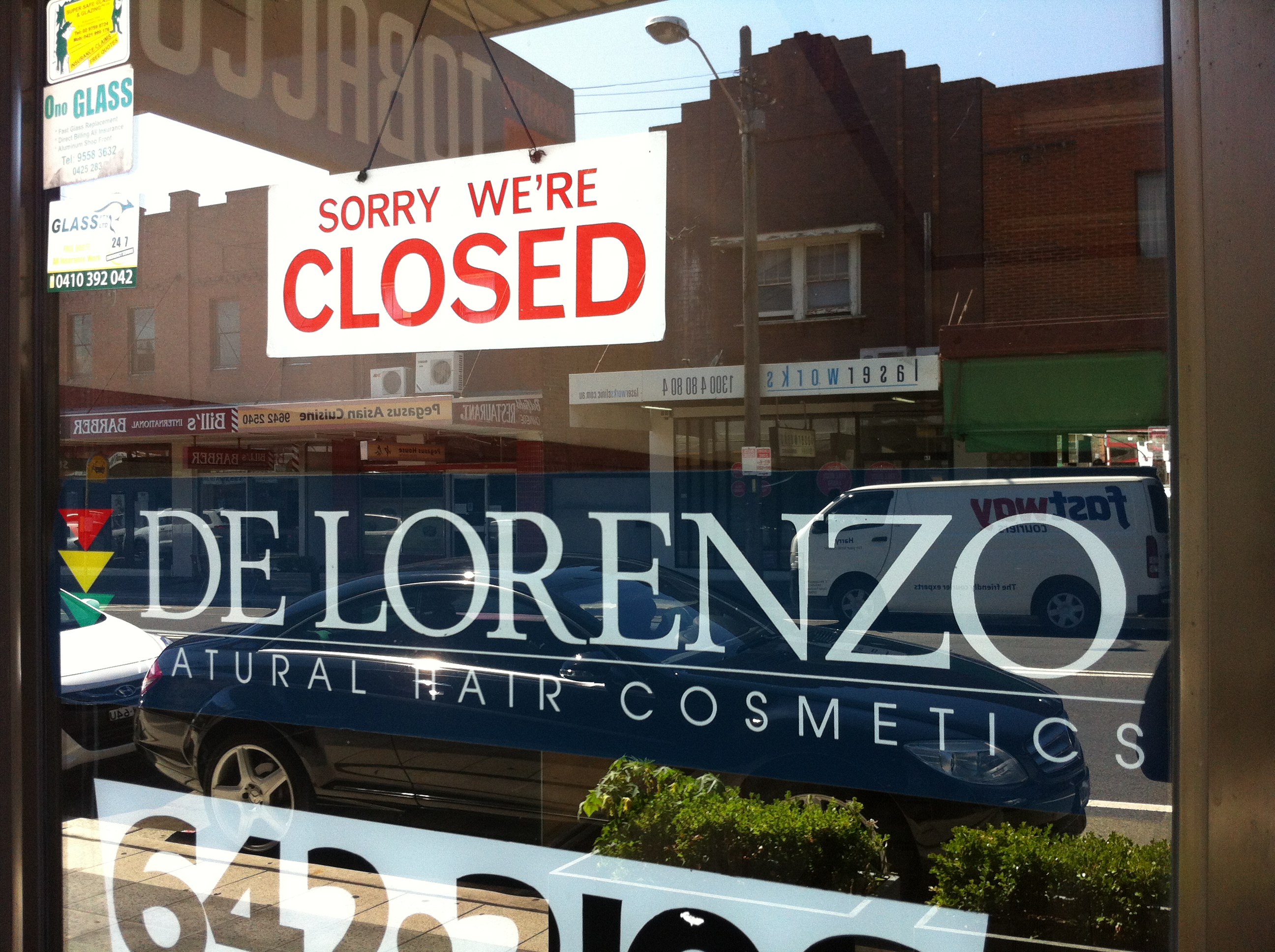
“This is it,” he’d said. What? How? Why would you sell?
“I sold years ago,” he confessed. He’d been renting ever since.
I was stunned. Was I destined to never get a haircut again? “You can come to my house if you still want me to cut your hair,” he’d offered, but the look in his eyes suggested we both knew it would never happen. It was a kind gesture, but not the kind you actually take up. No need to be a servant in your own house.
What would he do now? He’d been scaling back the business for a long time. Once, the workload had been heavy enough that he’d hired an assistant, but Toni had long since gone. He’d said he didn’t take new customers anymore, either. It was too hard, pointless to get attached. It was his great strength and his ultimate weakness, that attachment.
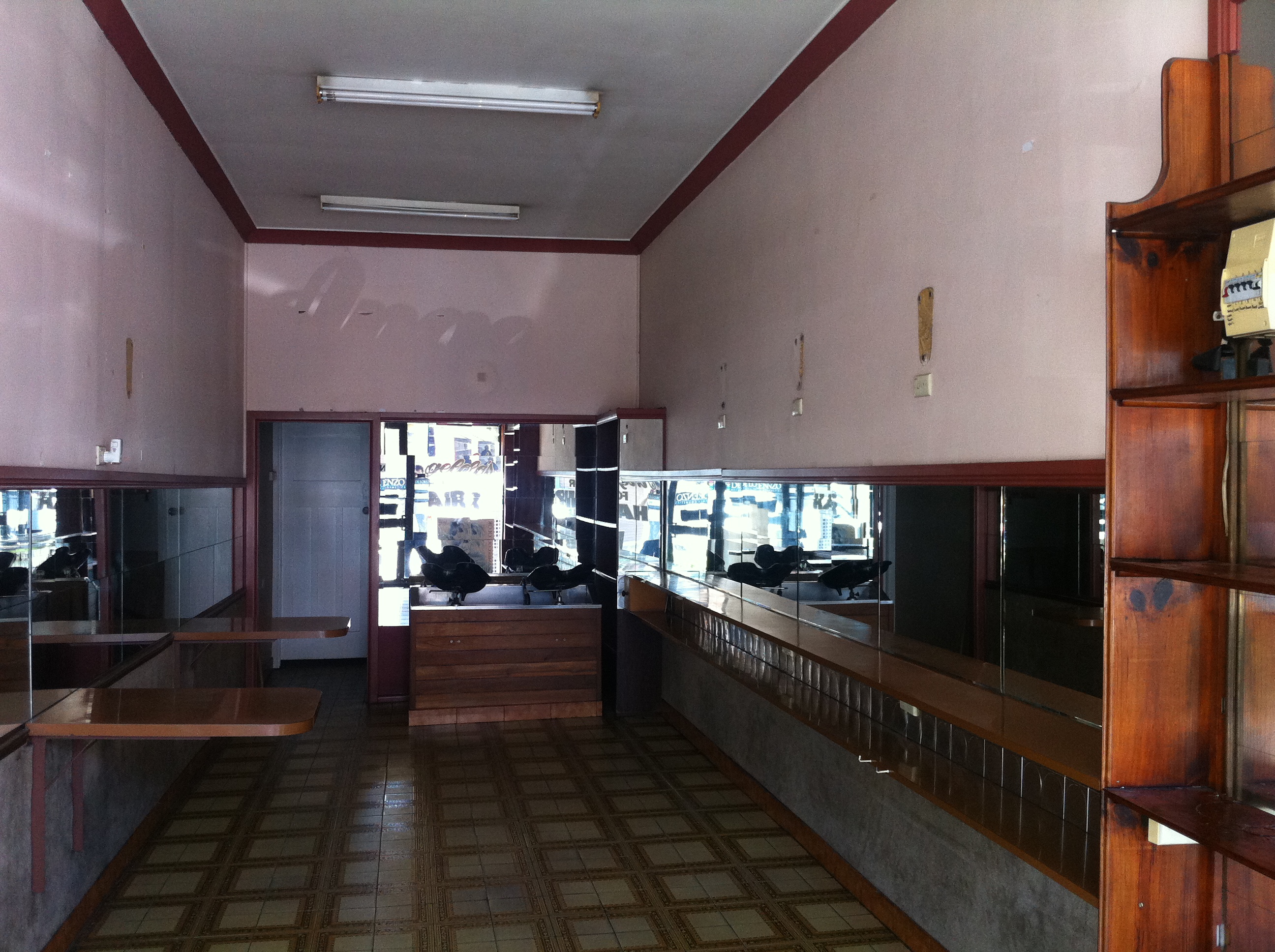
So many Saturday mornings I’d spent in that chair, hair down to my shoulders, waiting for my turn. While I waited, he’d chat to me, or Mrs. Braithwaite, or Brett (who’d done time once and it had broken his heart). In all my years of going there I never saw the same “regular” in there twice, such was the expanse of his network.
On that final Saturday, we chatted out the back while he had a smoke. As a kid I’d always wondered about that back area. Turns out it was plastered with pictures of his own kids and grandkids, old salon paraphernalia, photos from his many overseas trips, and a radio constantly blasting ABC 702.
I’d thanked him for the last haircut he’d ever give me, and told him to keep the change. We shook hands, then embraced.
In my youth, I shed many tears in this place in vain attempts to avoid haircuts. As an adult, I shed one more.

The worst part is that two years later, it’s still for lease. I haven’t had a haircut in two years.
Milk Bar/Pet Salon/For lease – Ramsgate, NSW
Cast your mind back to a time when you’d get the bus down to the beach, when the air was scented with coconut oil, Alpines, Chiko Rolls and the exhaust from the Monaro idling in the car park there while the driver chats up those bikini babes.
Back when the skies were blue, phones were hardwired to the wall, and petrol was leaded. Sound familiar? These are Brighton beach memoirs of a different kind, an experience shared by an entire generation, and one that’s just about relegated to the history blogs.
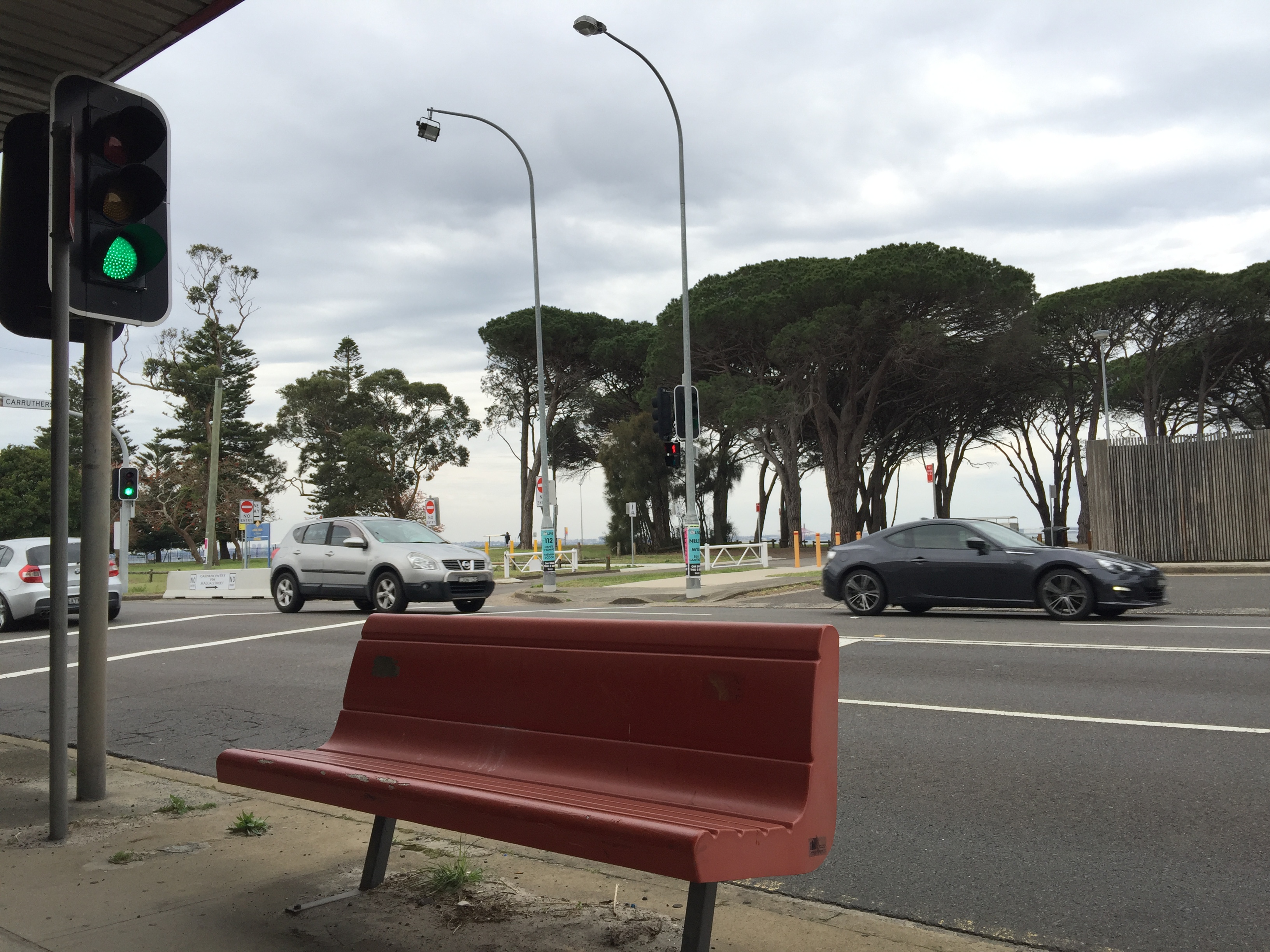
It sure doesn’t look familiar. While the bus stop seat is unmistakably 70s beach culture, the view from the Grand Parade down to Ramsgate Beach ain’t what it used to be. Sure, I’ve picked a particularly overcast day to exaggerate the point, but I wasn’t the one responsible for this:

Where once you would have run up the beach Baywatch-style, hotfooted across the scorching road, and basked in the relief of the shade before heading in for a Cornetto or a Bubble O’ Bill on a hot summer’s afternoon, today’s terrible world provides you with only painful memories.
A world so terrible that selling ice creams, icy cold cans of drink and burgers across from a beach is no longer viable. What happened?
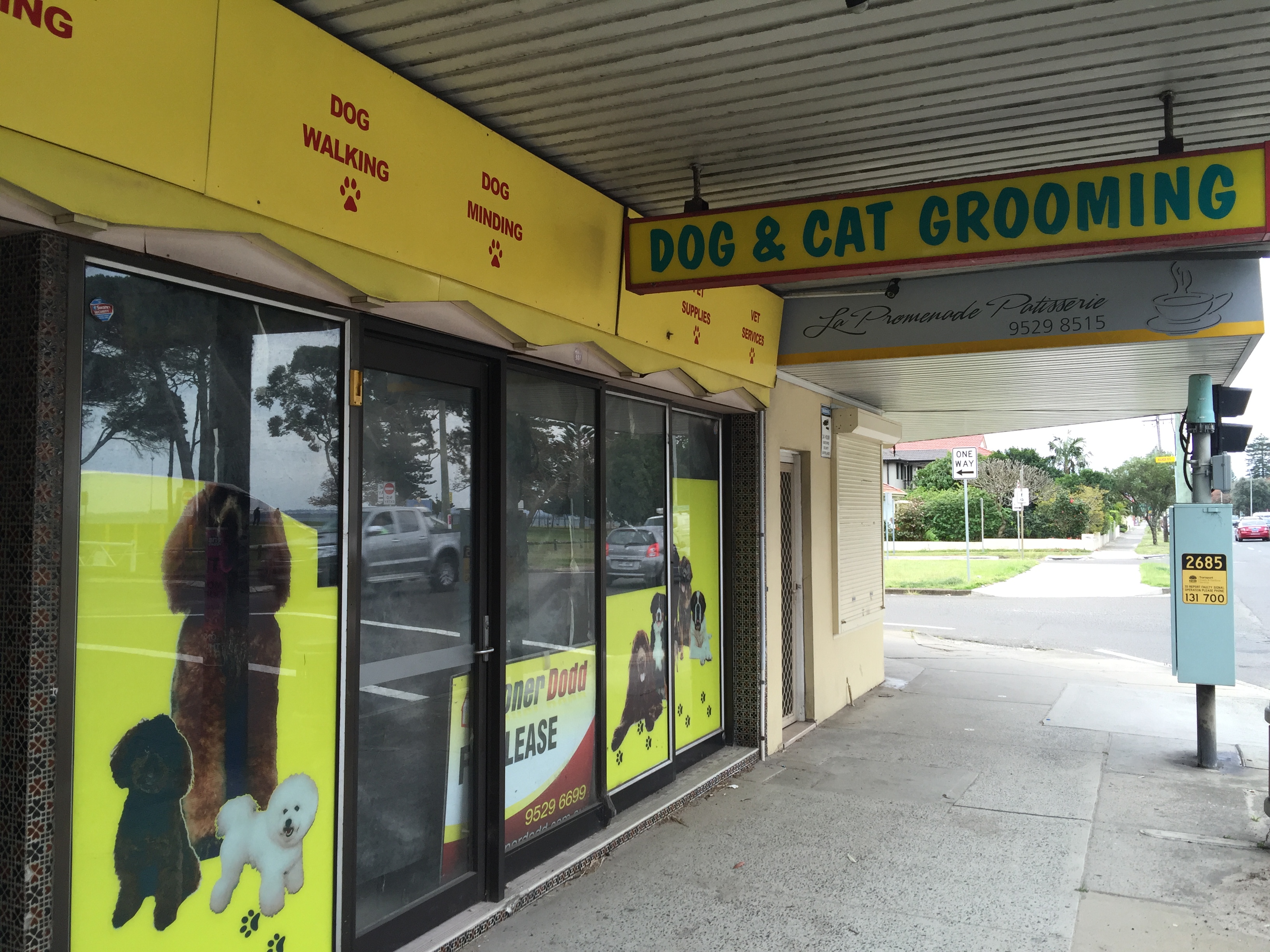
Even if you were running up the beach with your filthy-ass dog, hotfooting between hostile traffic and basking in the relief of knowing you won’t have to vacuum sand and dog hair out of the car later, you’re outta luck.
I don’t actually know why you’d start up a business like this in a location like that. This kind of shop should be zoned strictly as milk bar. It should be official. You should be hauled off to prison for even attempting a farce like this.
Then again, since it’s for lease, we don’t know that isn’t how it went…

Haunting reminders of the good times remain. The Streets sign here proves that only the most desirable ice creams would have been on offer (face facts: nobody wanted Pauls).
Luckily, we can take small comfort in the fact that that uniquely Australian Streets logo is still smiling down on the beach.

Elsewhere, we can (barely) see that the Pet Salon’s bolt-on sign is covering the familiar Coca-Cola bookend ads commonly found on milk bar awnings. Imagine the disappointment the day the local beach crew showed up here for their hot chips and Cokes, only to find lice cream and fine-tooth combs up for grabs? No wonder they hung up the Billabong shorts and Piping Hot rash shirts (ha ha, just kidding. Nobody wore Piping Hot).
I’ve made the call before, but once again it’s relevant: if we, as a nation, were to tear down these signs and expose the past we crave so often, we could transform this country overnight. We’ve buried the time machine, and all we need to do is dig it up.
It’s thirsty work, I grant you. I’ll bring the icy cold Cokes, cuz we sure ain’t getting them here.
BACKWARDS UPDATE: Straight from the formidable Google Street View, it’s a shot of this milk bar from 2007! Strangely, the Streets sign was covered by a Cornetto ad. Big thanks to reader Billy Bob for the heads-up on this one.

Dolls Point Take Away, 2007. Image courtesy Google Street View

 Past/Lives of the Near Future