Olympia Speedway/Coral Sea Park – Maroubra, NSW
Traffic moves quite slowly in South Head Cemetery, both vehicular and otherwise. Nobody’s in that much of a hurry; even the post-hip, ridiculously overpriced motivational sportswear-clad joggers slow down to take in the breathtaking vistas the graveyard offers.
Only most of the time, there’s no breath to take.
The Victorian era saw a boom in ‘the art of death’ – society as a whole had an endless fascination with death, and paid particular attention to the manner in which deceased were committed to the void. This carried over into the early 20th century, and the ornate tombstones and mausoleums of this era are a far cry from today’s dour marble efficiency.

Bloody Sunday drivers…
Look at this. It’s kind of like the headstone equivalent of one of those racing car beds, isn’t it?
Immediately eye-catching, the final resting place of Reginald “Phil” Garlick ensures its fair share of stares. A prodigious racer, Garlick’s love of motorsport is forever tied to him in the afterlife. At the time of writing, it’s getting nigh on close to 90 years since his death aged just 39 years at…Maroubra Speedway?! What the…?

Pretty sure you can still get speed at Maroubra if you know where to look. Image courtesy James Cockington
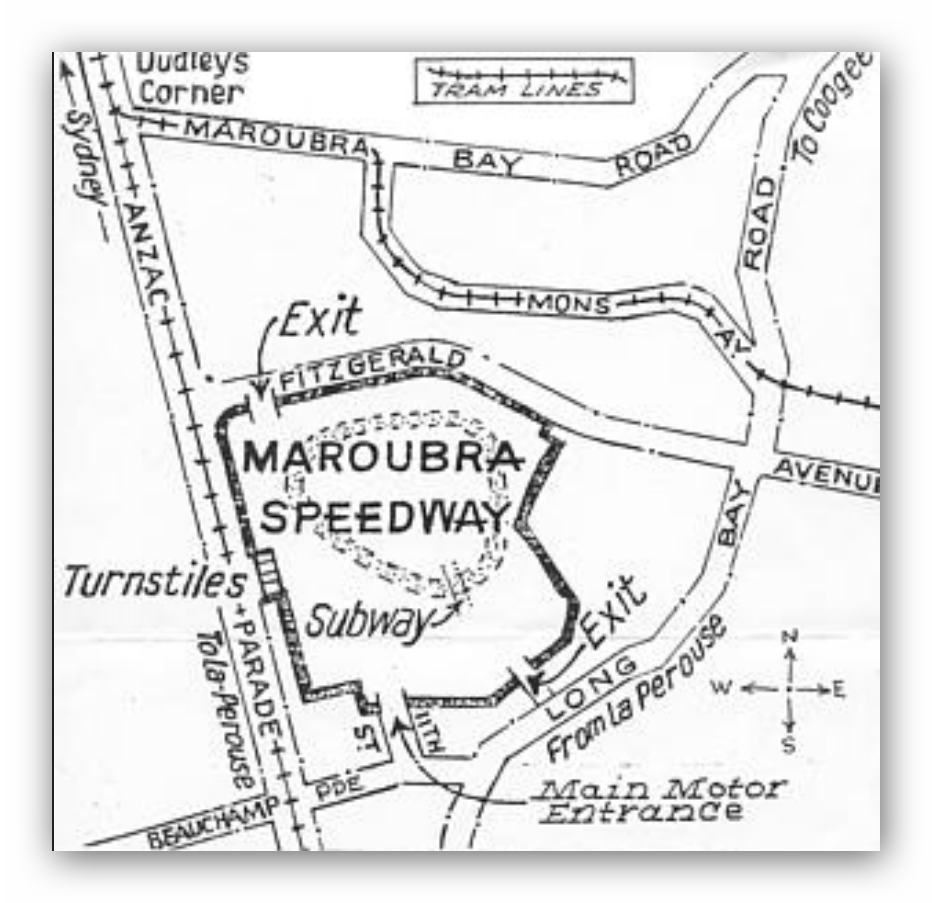
This…this couldn’t be! Where would such a racetrack even be? Superfast hoony driving and Maroubra…it just doesn’t make any sense!
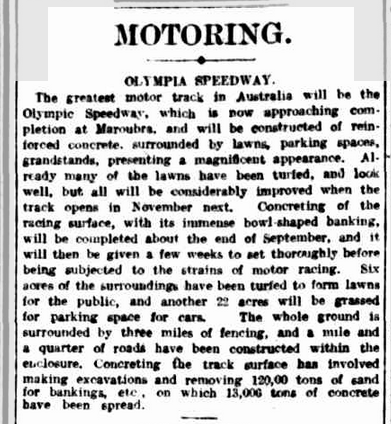
SMH, Wednesday, Sept 16 1925
Actually it makes perfect sense, and this one’s pretty common knowledge. The Olympia Speedway drew an estimated 70,000 petrolheads to its grand opening in 1925, blowing the attendance of that year’s VFL Grand Final away.

Guys, maybe you should be handing out the helmets BEFORE the race… Image courtesy SpeedwayAndRoadraceHistory.com
The Olympia became notorious for the dangerously steep incline of its concrete saucer, reaching 48 degrees in one stretch. Suddenly, helmets like Phil’s up there don’t really sound like they’ll cut the mustard, do they?

Flag girls dressed very differently in the 1920s…Olympia Speedway, late 1925. Image courtesy State Library NSW/Sam Hood
And how’s that bloodthirsty crowd! 70,000 ghouls who couldn’t get their violent thrills at the VFL filled the Olympia’s seats hoping to see one of those poor bastards lose control and wipe out. Talk about a fascination with death…
In time, the Olympia gave its audience what it wanted:

Brisbane Courier, Friday, July 30 1926
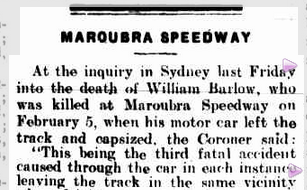
Brisbane Worker, Wednesday, Feb 23 1927

Adelaide Mail, Saturday, Nov 24 1934
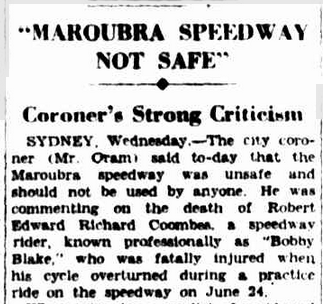
Melbourne Argus, Thursday, July 2 1936
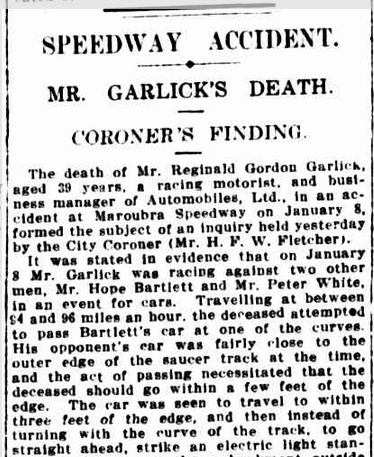
SMH, Tuesday, Feb 1 1927
And I thought Maroubra was a tough suburb these days!
The Olympia was actually shut down twice: 1927 saw the end of its days as a professionally promoted speedway due to a combination of anemic finances and negative attention surrounding the mounting death toll, and then again in the late 1930s after a series of fitful re-openings throughout that decade. By the time the light went red for good, the track was in serious disrepair. Yeah, a real HEALTH HAZARD. Could be DANGEROUS. LIVES AT RISK.
Another factor in play was the advent of public housing. The Housing Commission was snapping up as much ‘wasted’ land as it could and filling it with bland, efficient brick housing for war vets and refugees. By 1948, Maroubra was unrecognisable, a sea of brown roofs and 50km speed limits, strictly adhered to by residents at all times.
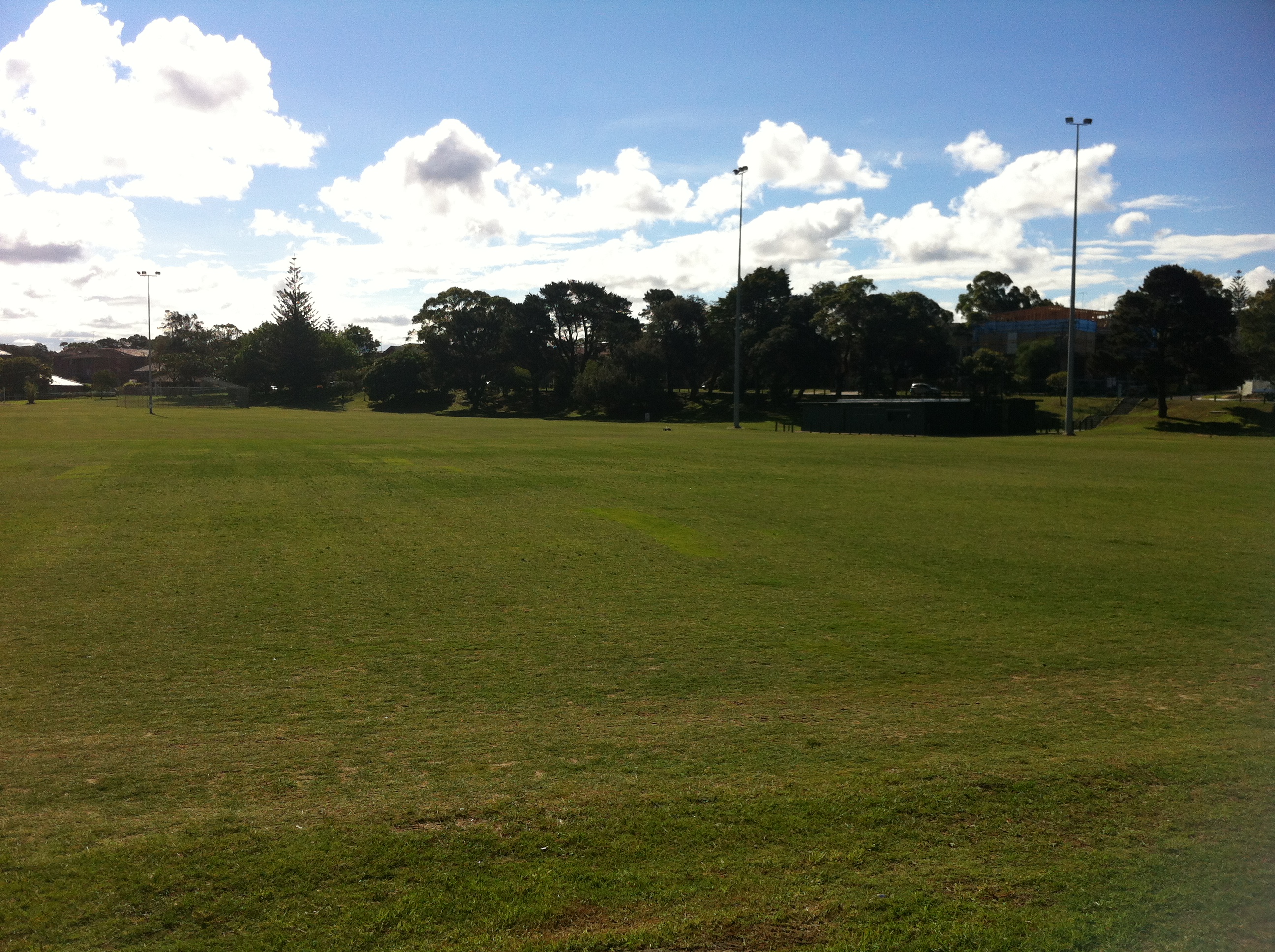
I can see why they call it Coral Sea Park!
Coral Sea Park doesn’t look like much now, but this is pretty much our ground zero today. This was the centre of the speedway track back in the day, and the edges of the park are almost as steep as they were back when Phil and the boys were tearing it up.

Take a sherpa…
It’s almost lazy, the way no effort was made to do anything but grass things over and slap a speed limit on the roads. But it does give us a great insight into just how dangerous it was to race around the Olympia. Look at the angles!

Watch your step…
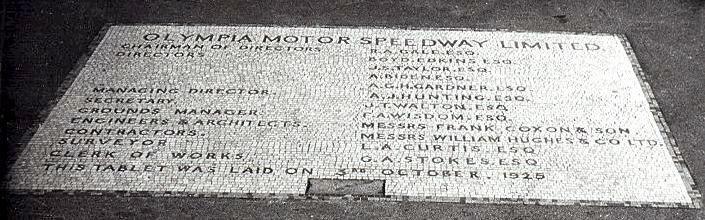
Image courtesy VintageSpeedways.com
It’s said that the tablet laid on the speedway’s opening day is still buried beneath Coral Sea Park somewhere, and that any efforts made to find it have stopped short of the finish line. In 1925, this infield area was a swampy wasteland, known and feared for an abundance of snakes. But they’re gone now, so c’mon, find the damn tablet.
It’s also said that between its lives as the track’s infield and Coral Sea Park, this portion of land was a tip, and it closed in the 1960s after a boy was found dead inside a fridge. Will the killing never end, Maroubra?! I couldn’t find any hard evidence of this, but if you know more, or you were that boy, get in touch.

IN MY DAY…
Just before we go, there’s one last interesting remnant of what was once Australia’s “killer track”: on the western side of Anzac Parade, there sits Heffron Park and the neighbouring Des Renford Leisure Centre (folks of my generation probably remember man of leisure Des Renford best from that Martin/Molloy skit. IN MY DAY…). This park too sees a sharp incline as you head east toward where the speedway would have been.
An upside to building a racetrack in the middle of a bunch of sandhills was that it was easy to get a saucer in place for the kind of angles necessary for DA THRILLZ. A downside is that tightass locals could sit their tight asses down on said sandhills – like this one – with a perfect view of the action without paying for the privilege, and that’s just what they did. And the Olympia went into voluntary liquidation, you say?
Thanks to my pal Viv for her help with the modern day photos. Gorge!
Taree City Bowling Club/Taffy’s Buffet & Pizza – Taree, NSW

Beneath the relentlessly harsh Taree sun, Taffy’s Buffet & Pizza bakes both inside and out. Across the spacious grounds, the scruffy, receding grass is beginning to brown as another long, hot summer approaches.

As the prominent ‘For Sale’ sign says, the ground covered by Taffy’s is huge – too huge for just a pizza buffet. At the same time, the building seems a little…ornate for such a place, doesn’t it?

As I approached, I was sure the place was abandoned, long since closed. Despite all the signs to the contrary, the wide open spaces and peculiar, yet familiar architectural style weren’t immediately inviting to potential all-you-can-eaters.
But I wasn’t hungry.

The gates weren’t closed, so I strolled right on in. The garden was enormous, and contained a number of exotic features that seemed to have beamed in from another dimension. From this stagnant fountain…
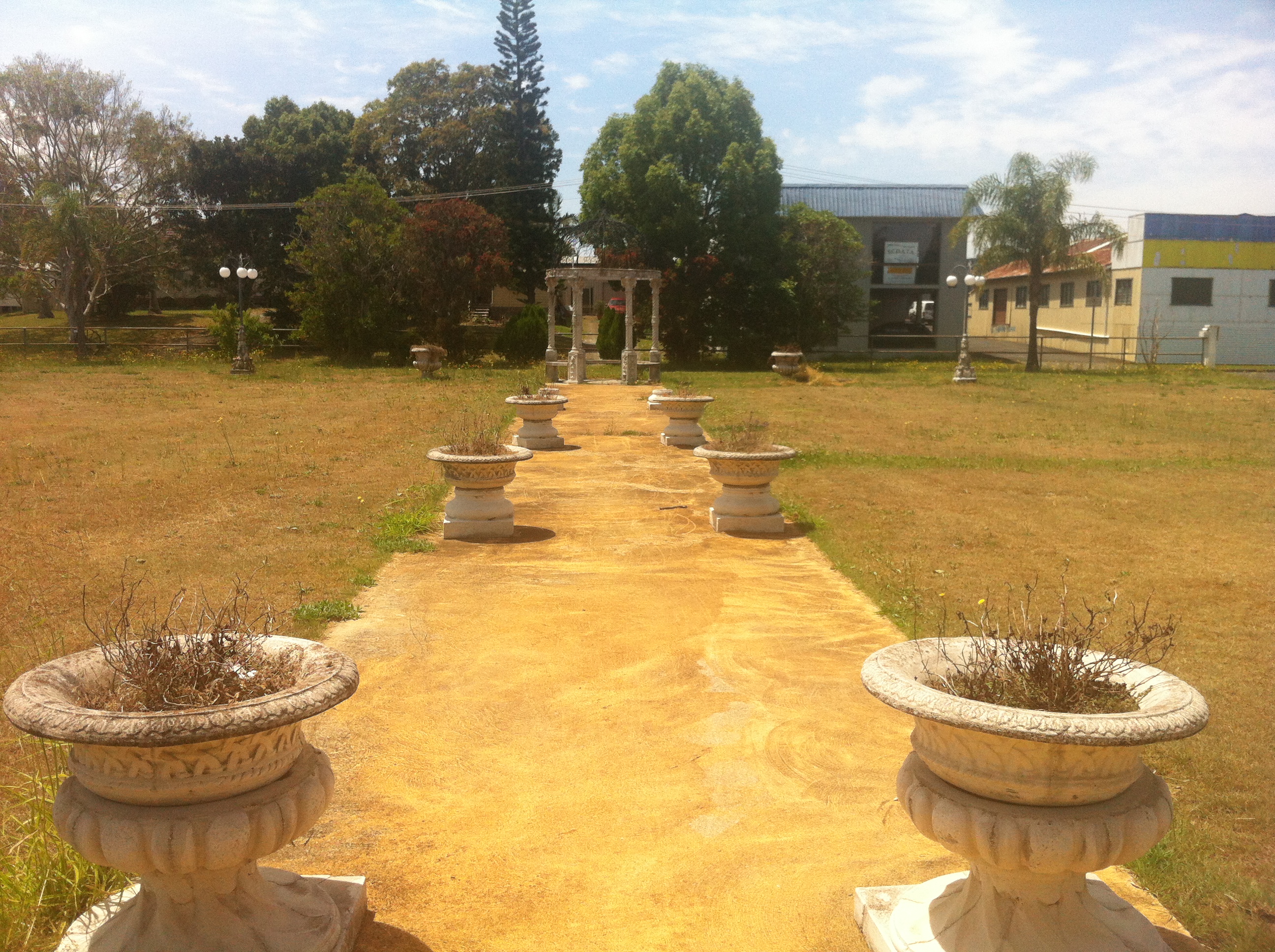
…to this baked path leading down to…
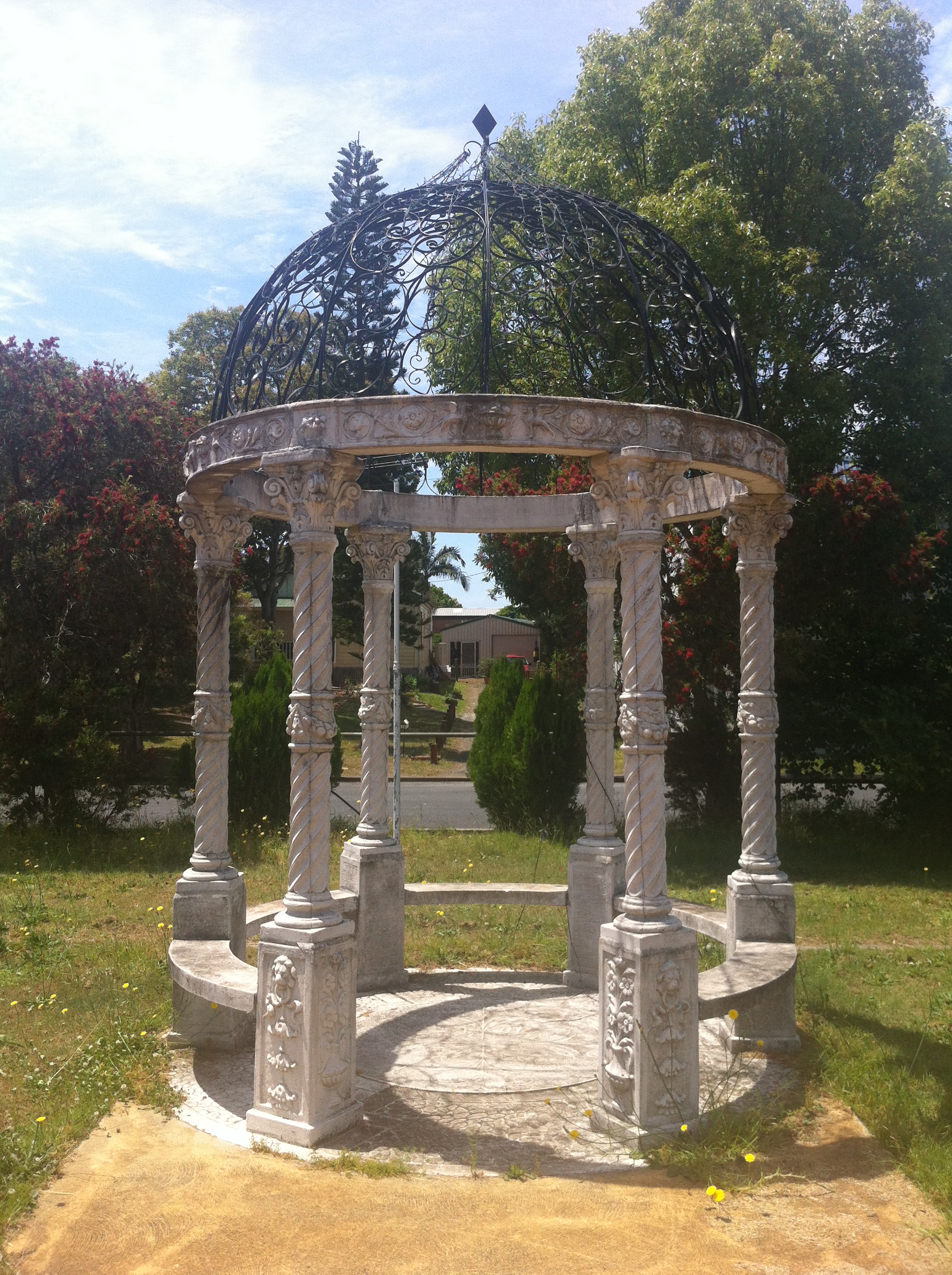
…this sterile Flower Power gazebo, there was an air of pretension about the setup. Did Taffy expect enamoured couples to wind up their evenings strolling through her garden after a buffet pizza dinner, culminating in a romantic rendezvous in the gazebo? And then years later reminisce about that unforgettable evening in Taffy’s gazebo?

And I don’t even know what this is meant to represent. If there’s an opposite to the Pearly Gates, it would look like this.
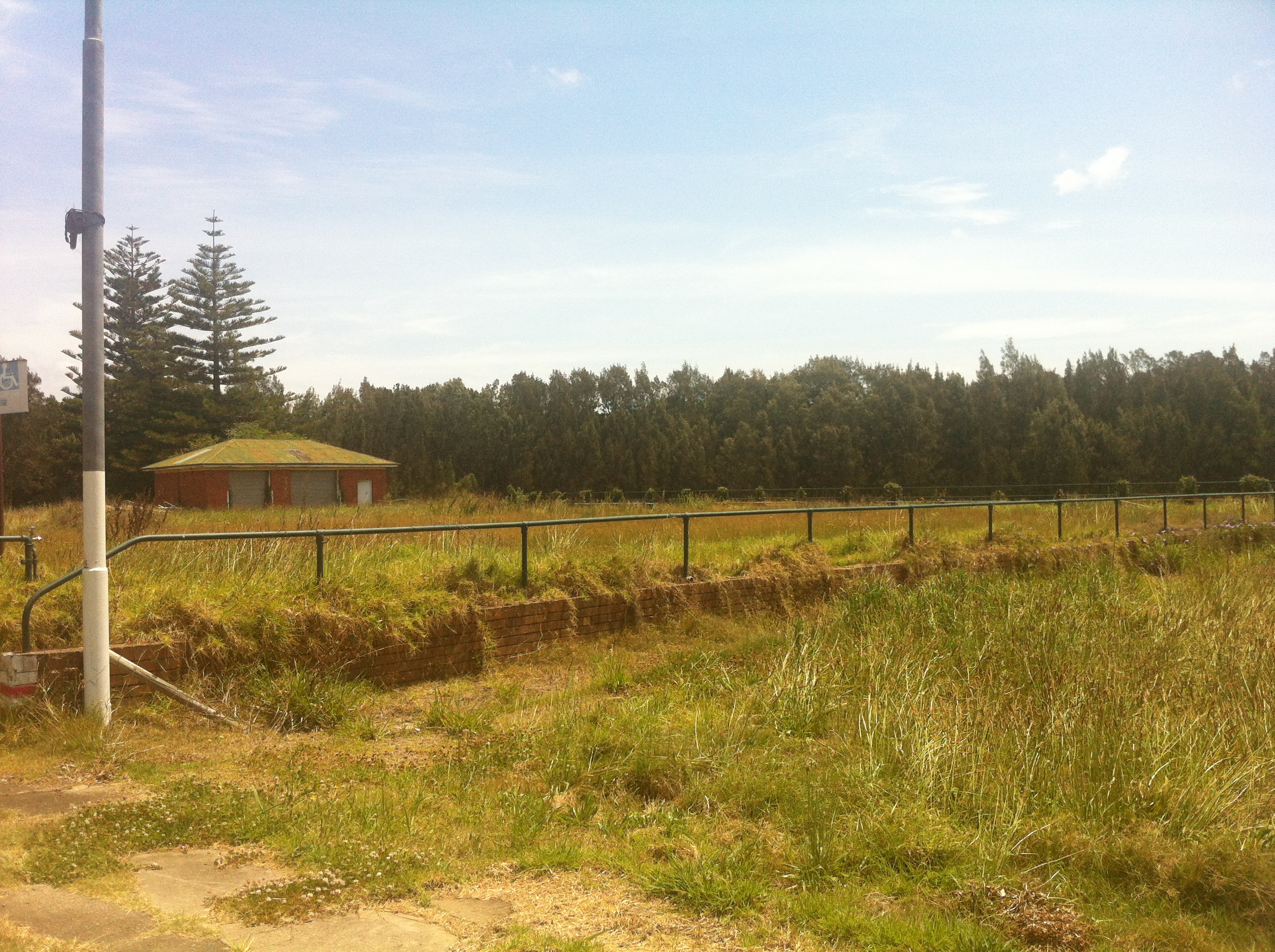
But it was from that…whatever it is that the true nature of Taffy’s became evident; the dark secret Taffy was trying so hard to divert our attention from with her strange assortment of ornaments. Yes, this was looking very familiar indeed…
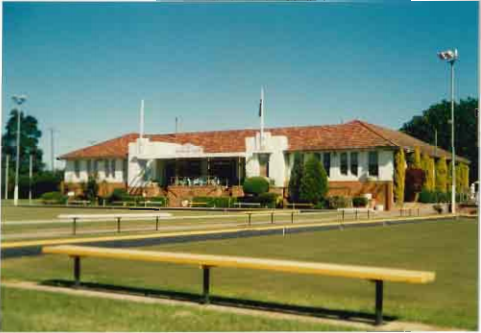
Taree City Bowling Club, 1990. Courtesy Greater Taree City Council
From 1954 to the early 2000s, this site served as Taree City Bowling Club, providing the Manning’s elderly with a place to form rinks and chuck balls around. Whatever keeps them off the streets, I guess.
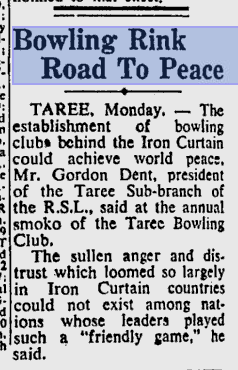
SMH, Jun 3 1952
We can laugh now, but once upon a time lawn bowls were considered an important sport, with opinions ranging from “whatever keeps them off the streets” to this hyperbolic article from 1952. Methinks Mr. Dent was trying just a bit too hard to justify his title.
And excuse me for sounding cynical, but does anyone really believe that lawn bowls is a game free from “sullen anger and distrust”? When I hear those words, white-suited old folks targeting jacks is the first image that comes to mind.
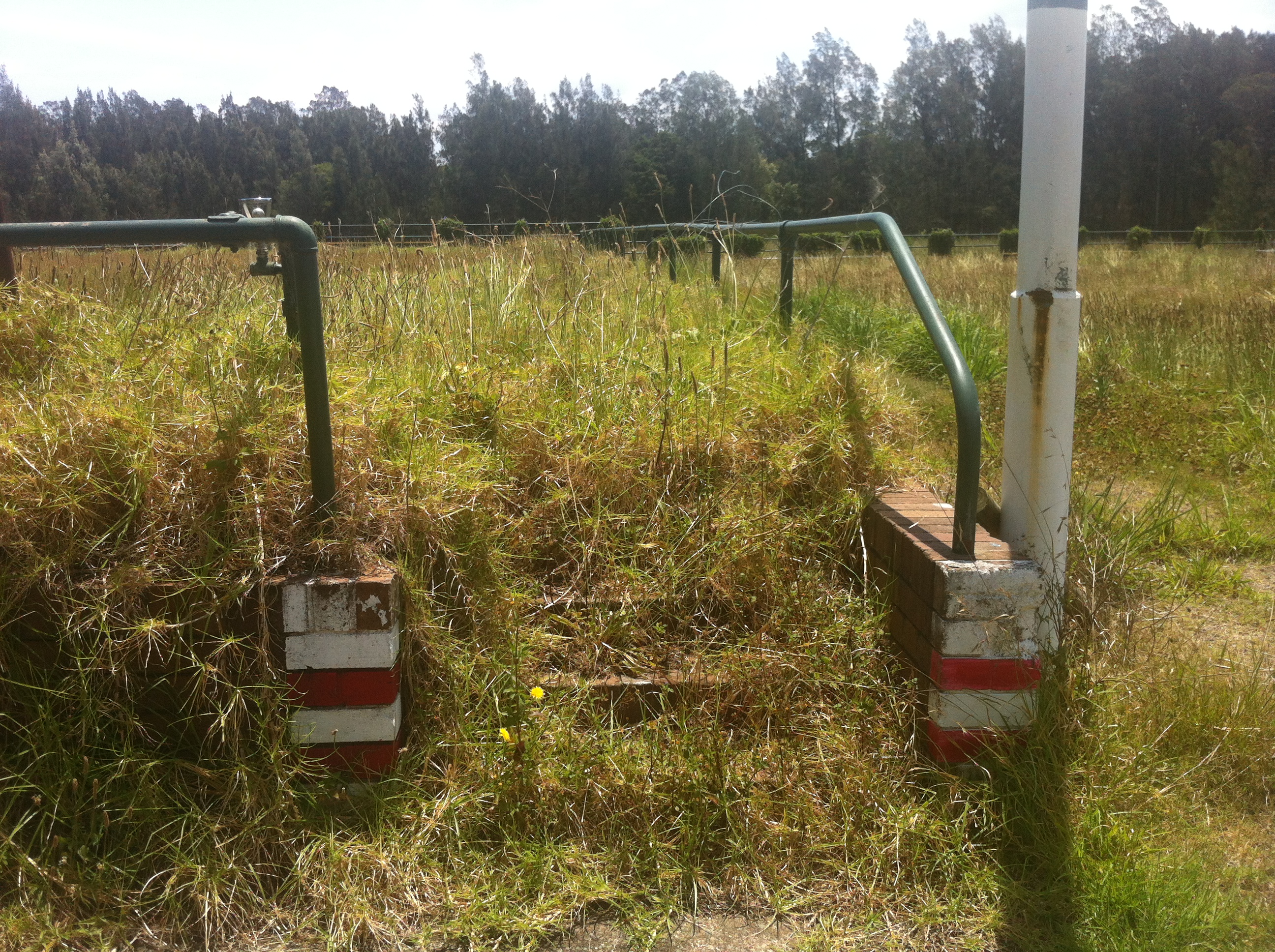
For having gone to such lengths to sculpt the front garden into something atmospheric, it was surprising that no such care had been extended to the former bowls greens. A 1990 heritage study of the then-active club recommended that future tenants “maintain greens, lawns and gardens”. Whoops.
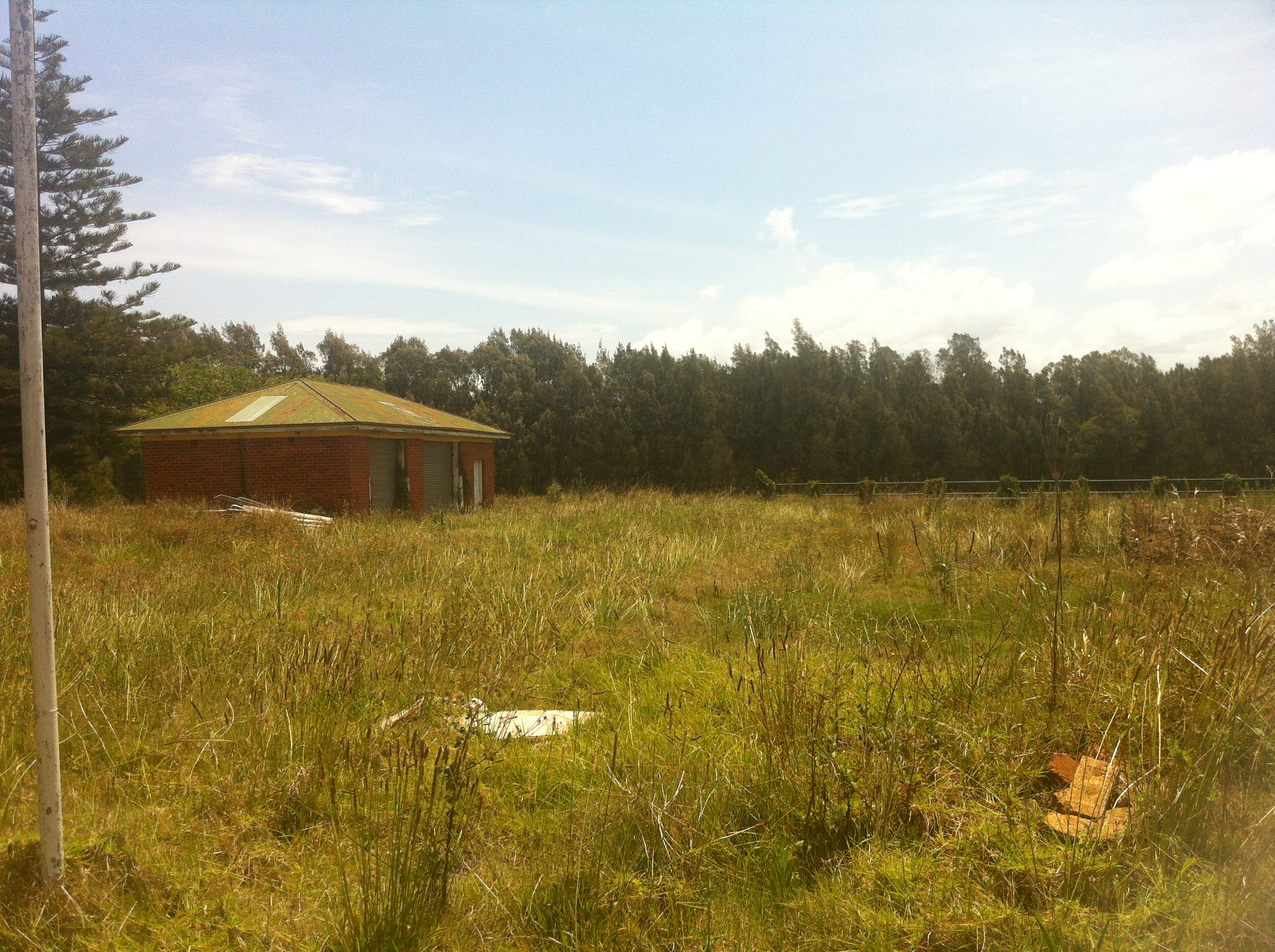
Overgrown and neglected, only the bare bones remain of what would once have been a vibrant, active sporting field.
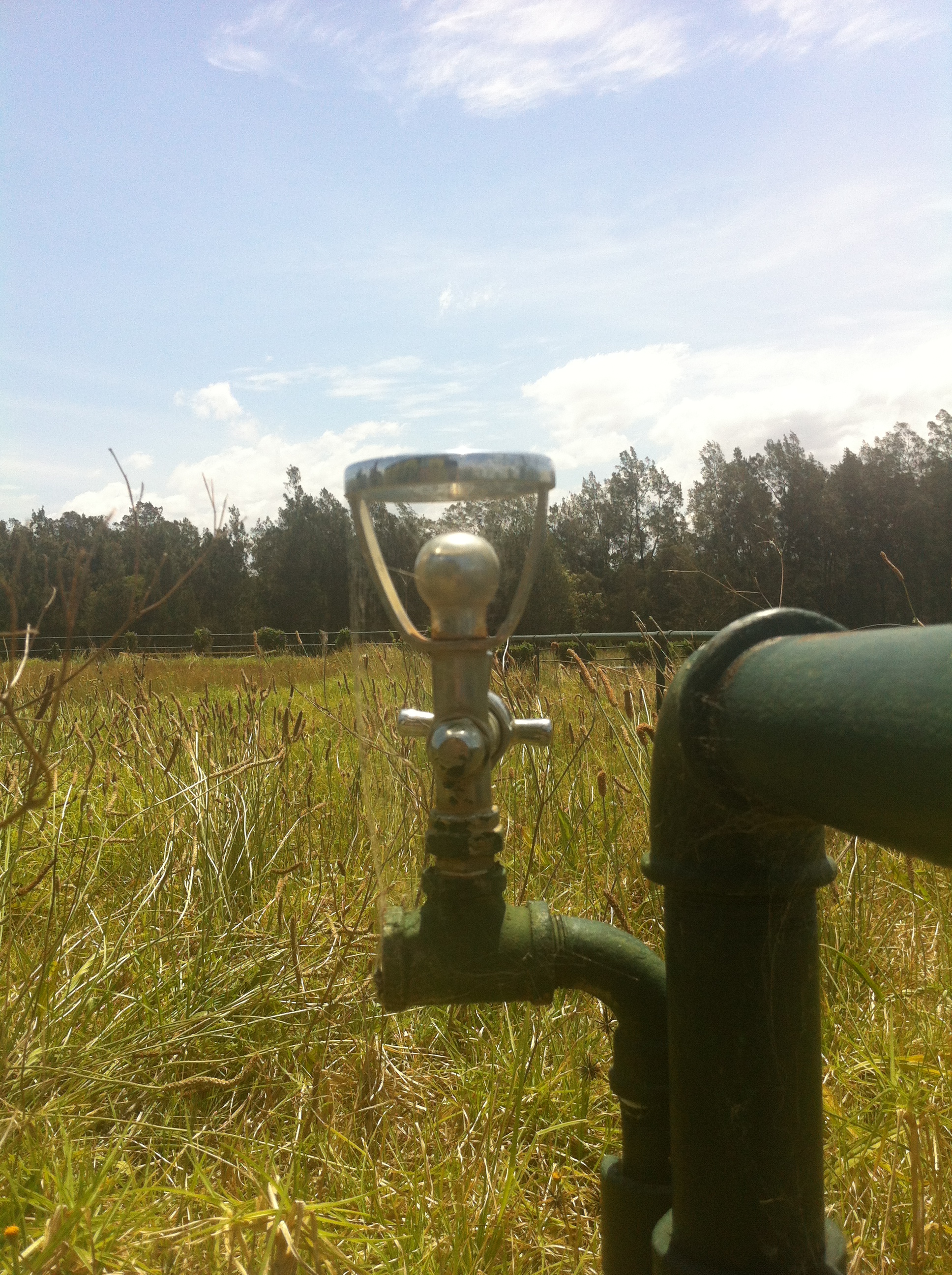
Think of all the whistles that would have been wet by this over the years.

Back at Taffy’s, all the bowls club hallmarks started to become apparent. The handrails for frail skippers was evidence enough, but I know my readers – always demanding more.

The placement of this tasteless statue seemed a bit too…deliberate. Let’s go in for the closer look I know you’re gagging to get!

“THIS CLUB WAS OFFICIALLY OPENED BY NORMAN NOSS, PRESIDENT OF NEW SOUTH WALES BOWLING ASSOCIATION ON 3RD JULY 1954”
I’ve gotta congratulate Norman Noss; he’d gone from vice-president in 1948 to president in just six years. Big deal, I hear you say, but cut the man some slack – that competition would be cutthroat, full of sullen anger and distrust. And if you think being president of NSW Bowling Association was a cushy job, all smokos and club openings, think again:

SMH, Jul 23 1955
If I were police, I’d be looking closely at Tom Shakespeare and Bill Kay’s movements leading up to that car trip. Wouldn’t it have been convenient had both the president and senior vice-president not survived that crash?
Before we leave Taffy’s, I’d just like to take a moment to direct the limelight away from the bigwigs of the bowls world and highlight someone to whom the Taree City Bowling Club meant everything. It’s only short, so have a read of the story of Bert Kroon, avid bowler and Tareean (Tareek? Tareealist?), and then stop and think about the Bert Kroons out there right now who rely on this rapidly dwindling sport.

Certainly the most freakish element of my visit was the discovery I made out the back. Where the club backs onto the uh…scenic and aptly named Browns Creek, someone had decided to position this Westpac rescue helicopter.

Why? How did this happen? Who insisted upon it? Was it Taffy, or did Taffy just slap her own name on the tail when she took over? Who went to the effort of sticking the dummy behind the controls? Why is it so small?
Once again, a Past/Lives entry has left us with more questions than answers…

 Past/Lives of the Near Future