Pizza Haven/Antique Shop – Ramsgate, NSW

Unless I’m mistaken and this antique shop has decided to name itself Pizza Haven, this address used to house one of the ubiquitous-in-the-90s pizza stores. A few years ago, Eagle Boys bought out Pizza Haven and quickly set about replacing Pizza Haven locations with their own hot pink eyesores. Eagle Boys pizza is revolting, so it was a match made in heaven; there’s a reason it used to be known as “Pizza Heavin'”.
Norman Ross Discounts/Harvey Norman/Jacobs Furniture – Arncliffe, NSW

Gerry Harvey and his Harvey Norman retail empire may still be prominent and sometimes newsworthy today, but spare a thought for Norman Ross. In 1961 Harvey and his business partner Ian Norman opened their first electrical store here at Arncliffe, calling it Harvey Norman Discounts. After its success, the two decided to start a chain but couldn’t agree on a name, so they picked the name of the store’s manager, and in 1962 the first Norman Ross store opened. In 1965, this Arncliffe store’s name was changed to Norman Ross. This site saw its share of controversy in 1978, when the ever-provocative Harvey broke the hymen of Australian retail innocence and defied a NSW Government ban on after hours trading. The store remained open long after the midday closing time required by law. Shoppers poured in to the five-level store, drawn like moths to the flame of novelty and controversy, as if they couldn’t have bought that toaster a few hours earlier. Harvey risked jail time and heavy fines with the move, but it seemed to pay off.
Norman Ross was doing pretty well by 1982, when both the Coles Group and Alan Bond, the man who was allergic to money, decided they wanted a piece of the action. Coles won out after a fierce bidding war, but Bond bought the chain from Coles just three weeks later. Both Harvey and Norman were instantly sacked, but then immediately started the Harvey Norman discount chain, which flourished while Norman Ross struggled in its Bondage. Bond being Bond, the writing was on the wall for Norman Ross as soon as he took over, and it went into liquidation in 1992. In what could be seen as a patronising move, Harvey has resurrected the Norman Ross name for his stores in New Zealand. Let’s take a moment to process that – he didn’t want to attach his own name to anything over there, and would rather use the soiled, besmirched name of a failed Australian retail operation from two decades ago to sell fridges and Dells. You’d think Bond was still in charge.

But while Gerry Harvey whines to anyone who’ll listen about the unfairness of online trading, the store that he built his empire on still sits on the Princes Highway, and it’s here that for Norman Ross, the writing is still on the wall. After the chain was wound up, the store became a Hardly Normal outlet for a time, but for the last few years it’s housed a variety of fly-by-night furniture retailers. I don’t mean to cast aspersions on Jacobs Furniture, but I don’t think even Alan Bond’ll be taking out his chequebook for this one anytime soon. Even at 50% off.
The Marina Picture Palace/Videomania/For Lease – Rosebery, NSW
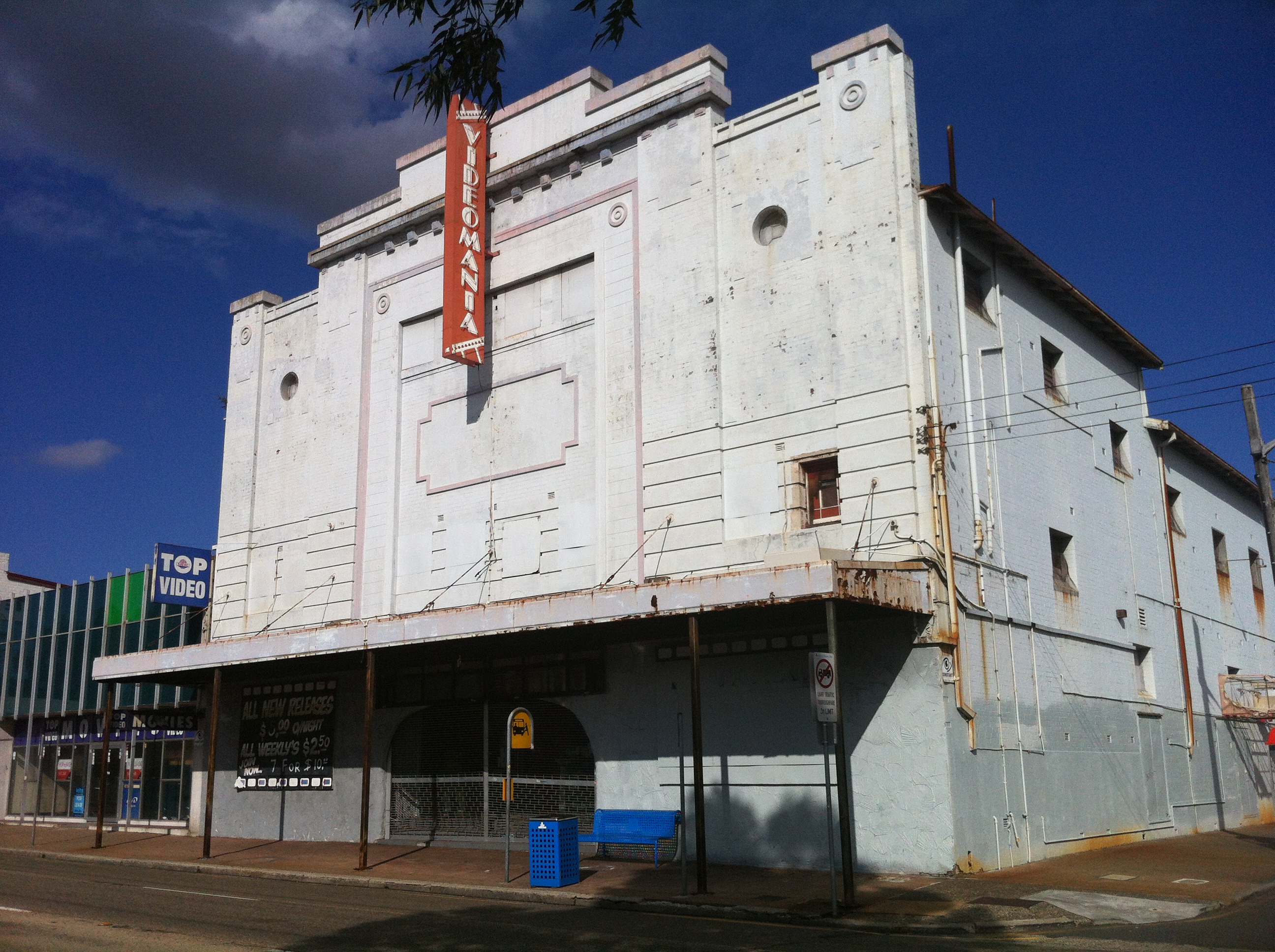
Let’s go back to the world of movies with this piece of work. It’s been sitting on Gardeners Road, Rosebery for a long time, and it shows. The signs promise ‘Videomania’, but for the last ten years it’s been derelict. Before we perform the post-mortem, let’s take a moment to reflect upon the life and times of the former Marina Theatre…
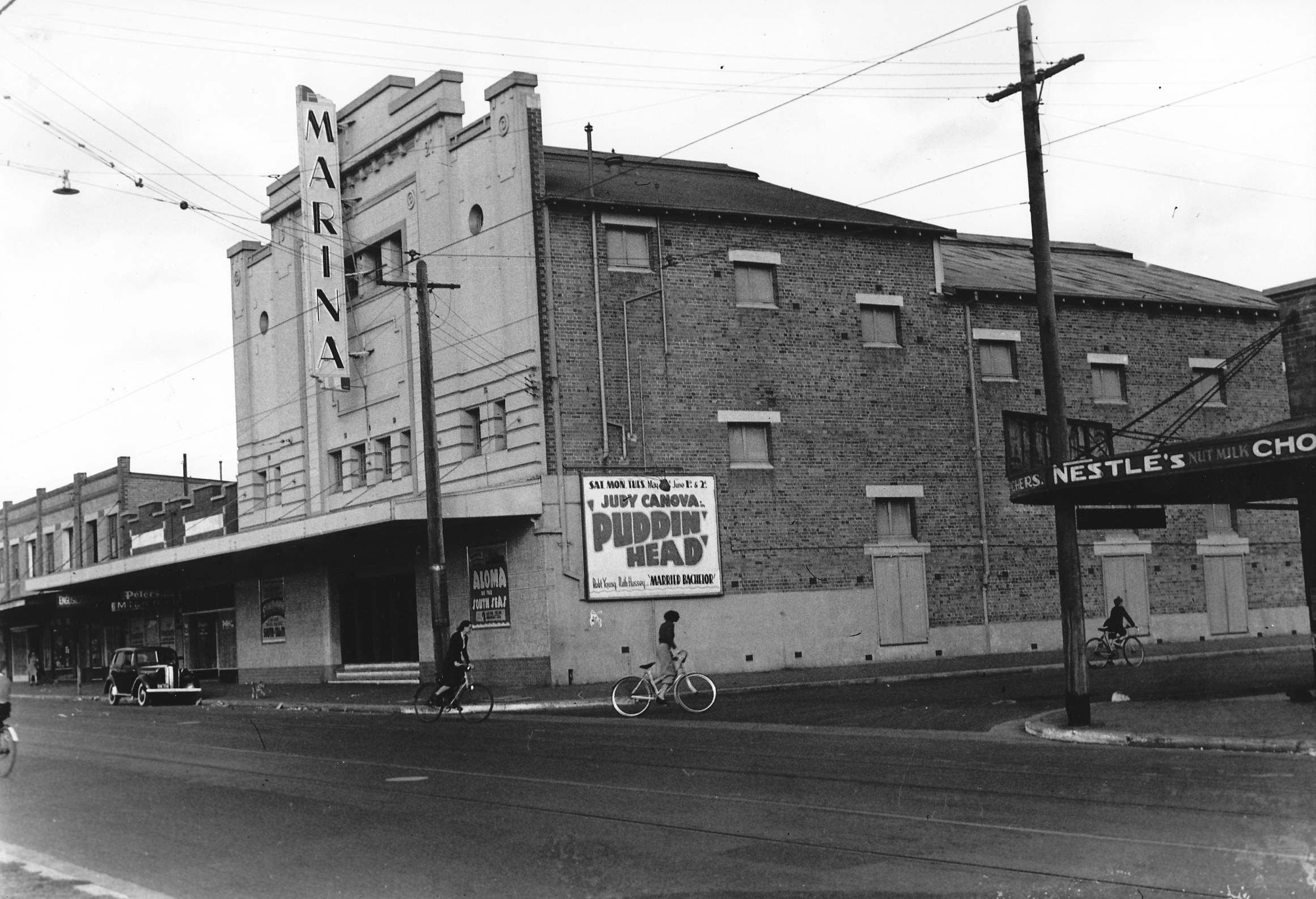
The Marina Theatre, 1941. Note the two sweet shops sitting to the left of the cinema. Also notice the bicyclists not wearing helmets, a quick way to end up with a puddin’ head. Image courtesy City of Botany Bay Local History Image Archive.
The Marina Picture Palace opened in June, 1927 with a hot double feature of Sparrows, starring Mary Pickford, and The Beloved Rogue, with John Barrymore.
Here’s an off-topic aside: The Beloved Rogue became a lost film for 40 years after its release until a well-preserved copy was found in the private collection of Mary Pickford. Now we can all enjoy Barrymore’s admitted overacting as Francois Villon. At least, we could if our video shops were as open as they used to be.
For those with a romantic image of how the cinemagoing experience used to be, and how grand it would have been back then to while away an afternoon at the picture palace, please allow me to now rain on your parade (or spoil your ending). In a scene more suited to modern-day Greater Union Hurstville, ‘excitement prevailed’ at the Marina in 1928:

Townsville Daily Bulletin, 3 Apr 1928.
The reference to ‘complete order’ is very Third Reich, isn’t it? Also, it really was ‘fortunate’, wasn’t it, that the molotov fell into the ‘side aisles’ (cheap seats). Yes, what a bit of excitement.

The Marina Theatre, 1952. Note that only one sweet shop remains. Image courtesy Sydney Reference Collection.
From the early 1960s, the cinema opened and closed a number of times under various independent ownerships. It’s safe to say that if even Hoyts wasn’t taking the bait and buying it up, it must have had something wrong with it. The Marina’s stop-start existence carried on throughout the next twenty years until it was renamed the Rosebery Cinema in the early 80s. That’ll get the crowds back in. Or maybe it was to fool the molotov throwers into thinking it was a different cinema? Either way, GOOD PLAN. So good in fact that the Marina closed for good as a theatre in 1984.

Here’s where we come in. Since that time it’s been Videomania, and now a derelict hulk. It’s a close call, but one of these incarnations is slightly more interesting. Fittingly, Videomania closed in 2002, when video-mania had all but died out, and videomaniacs had flocked to DVD. Rather than switching to a better quality format that takes up less shelf space, Videomania chose to fall on its sword.

You mean ‘weeklies’.
Even though the site is empty, the front window still contains some strange sights.

This trading hours sign indicates that the video shop NEVER CLOSED. Finding this is like finding a gravestone that reads B. 1929 D. —

A series of Greek film posters sit in the window too. Doesn’t that one on the right look enticing. Can’t wait to see that one.

There’s a poster for the Nintendo 64 game Turok: Dinosaur Hunter, which was released in 1997. The Nintendo 64 was discontinued in 2001, and Acclaim, the company responsible for Turok, went out of business in 2004. Fitting choice.

My favourite, and most bizarrely of all, is this full sized Leonardo standup. This isn’t the first time I’ve encountered the Teenage Mutant Ninja Turtles during my adventures with this blog, and I’m sure it won’t be the last. Leo stands as the building’s watchful protector – ready to cut down intruders with his blunt katana and a killer smile.

The sign at the front advertises The Full Monty, another 1997 release. Or at least, it did once upon a time. It’s often irritating to only get to see some of these places from the outside. You stand there wondering what it must be like inside given how well-preserved the exterior is, and whether the other Ninja Turtles are lurking within. Well, wonder no more, as thanks to the folks at Kelly & Sons Real Estate, we can get quite a good look at what’s happening inside the old Marina:

Image courtesy Kelly & Sons Real Estate.
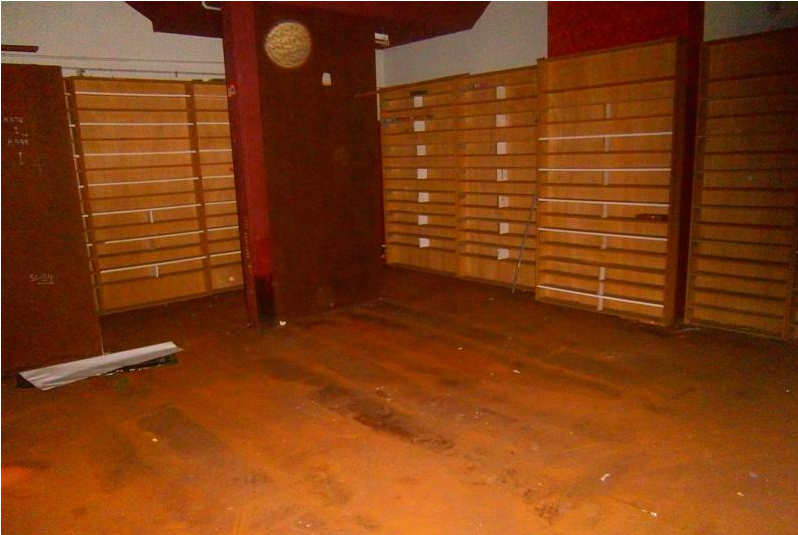
Image courtesy Kelly & Sons Real Estate.
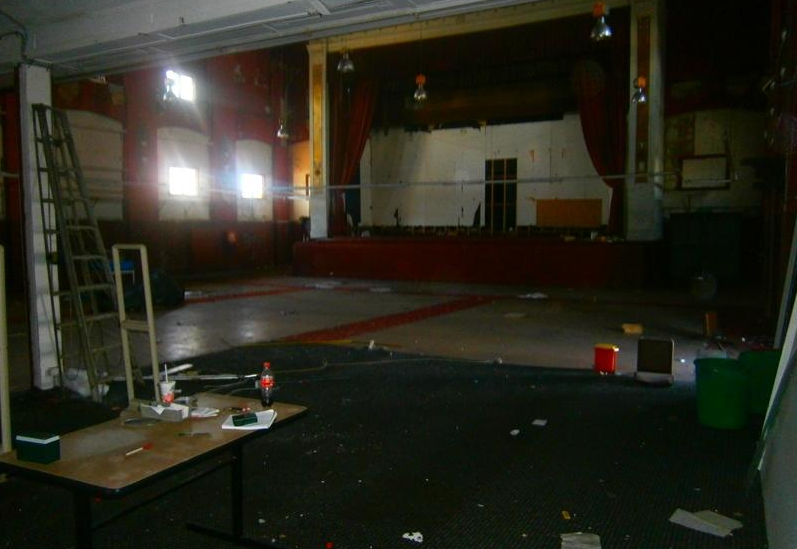
Image courtesy Kelly & Sons Real Estate.

Image courtesy Kelly & Sons Real Estate.

Image courtesy Kelly & Sons Real Estate.

Image courtesy Kelly & Sons Real Estate.
Remember, if you like what you see, you too can lease this bad boy for only $130k pa. What a steal! Kelly & Sons – holla at me so I can let you know where to send my commission.

What an ugly building. There, I said it.
Despite Videomania acting as a testament to the failure of the video shop concept in Rosebery, Top Video at some point decided to make a go of it next door. Smart thinking.

Setting up in what was clearly a bank (and before that, the Marina’s sweet shops), Top Video expected to bank fat coin on the back of Videomania’s failure.

The new release poster left inside suggests that things went wrong around 2008-09. A legacy that started with Sparrows ends with You Don’t Mess With the Zohan.
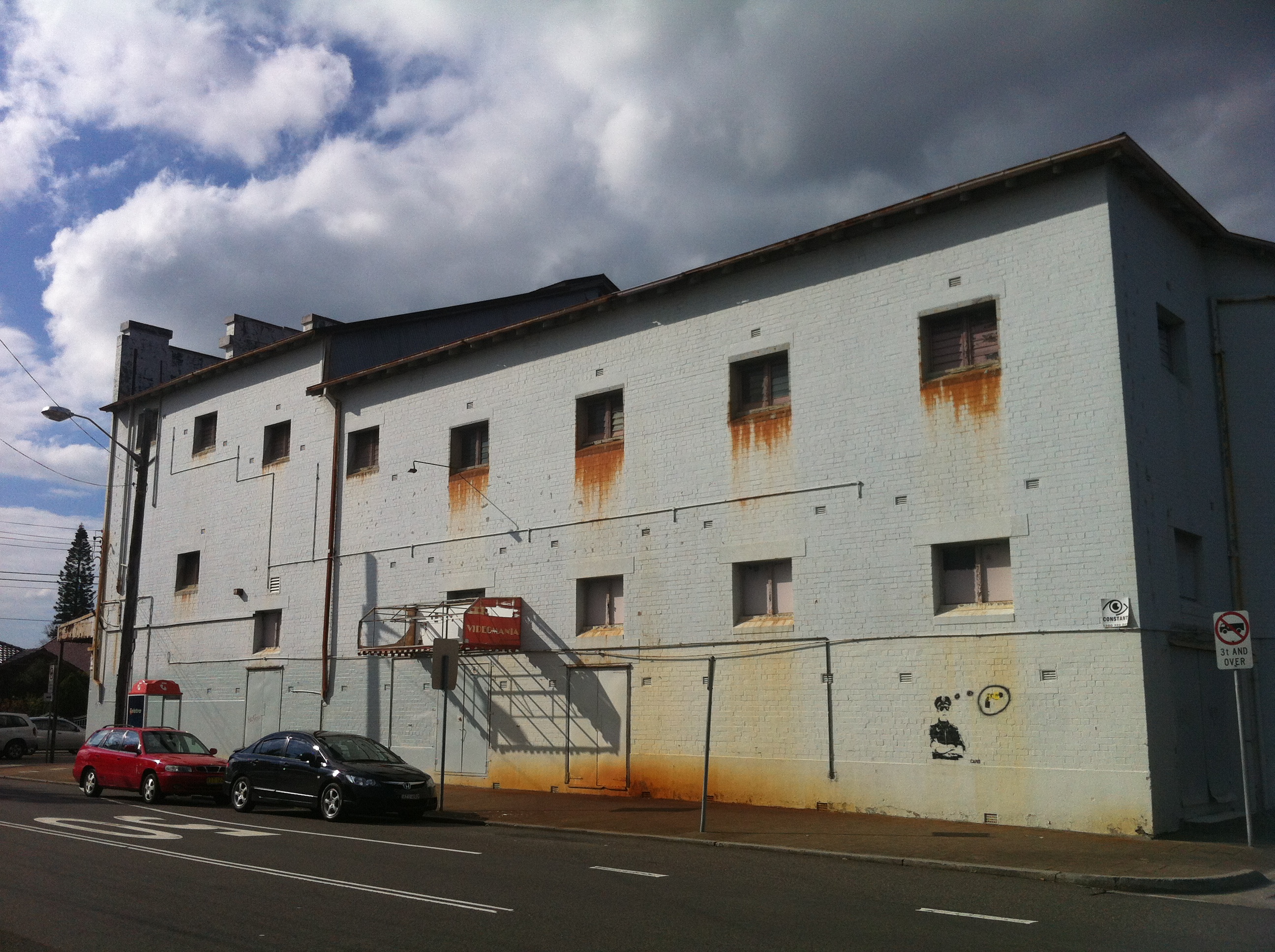
As I turned to leave, I took one last look back at Videomania, and it looked like the building was crying. Look at those top windows. It was as if the theatre was imploring me, as the only one around who cared, to put it out of its misery. I would, Marina, honestly, it’s just…that Leonardo is one intimidating dude.
VIRTUAL UPDATE: An explosive new picture of the Marina/Roxy/Videomania from 1996 has come to light! Check it:
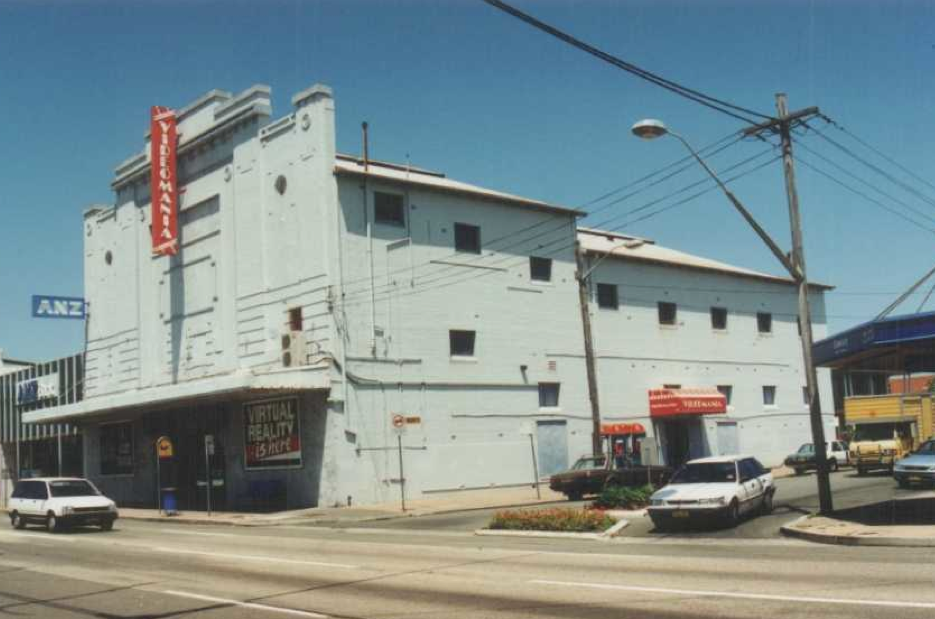
From this, we can see the bank next door was in fact an ANZ, that the Videomania side entrance was once viable, and that VIRTUAL REALITY IS HERE. How else could I have known it was from 1996?
FUTURISTIC UPDATE: I revisited the Marina a year later and made an explosive discovery.
ROCKIN’ UPDATE: The development-minded Vlattas family, owners of the Cleveland Street Theatre and the Newtown Hub, are currently renovating the Marina with the aim of turning it into a live music venue. My suggestion: keep Leonardo as your bouncer. Thanks, reader Rozie!
T. C. Whittle Pty Ltd/Belmadar Constructions/Licorice Productions – Mascot, NSW

The history of the companies emblazoned on this building is as murky as the canal flowing past outside. T.C. Whittle was a construction company responsible, from the 1940s to the 1960s, for New Selborne Chambers on Phillip Street in the CBD, the St Margaret’s Hospital for Women in Surry Hills, and the Cameron office complex in Belconnen Town Centre (demolished 2006) among others. But even that illustrious resume didn’t stop T. C. Whittle from ending up delisted from the ASX in 1980, dodgily changing its name to TCW Investments, and finally, being deregistered completely by ASIC in 2005.
Belmadar, on the other hand, was known mostly for roadworks, and we all know how well done those are in Sydney. It’s no surprise then that Belmadar is gone, and the current tenants are an events production group called Licorice Productions. It’s one of a number of new companies moving into the formerly industrial Mascot/Alexandria area to not feature heavy pollution as an output. This building in particular backs onto the Alexandra Canal, and while there immediately weren’t fish jumping happily from the water and dolphins waving hello with their flippers, there may still be hope for it yet.
Sir Joseph Banks Hotel/Sir Joseph Banks Hotel – Botany, NSW
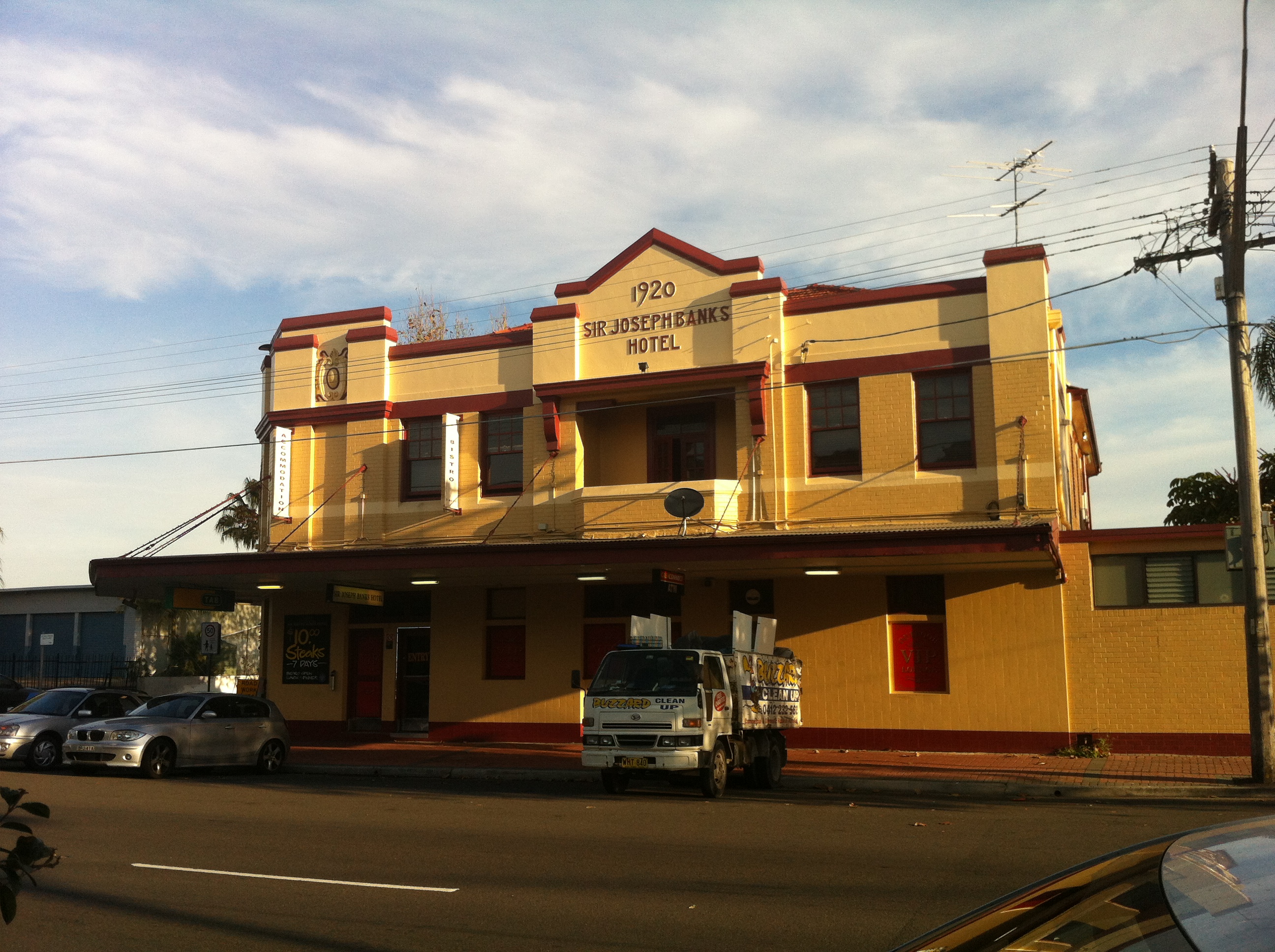
The Sir Joseph Banks Hotel, Botany Road.
While spending time in Botany yesterday, I walked past the Sir Joseph Banks Hotel on Botany Road, turned down Waratah Road, and found myself staring at…the Sir Joseph Banks Hotel? What?!
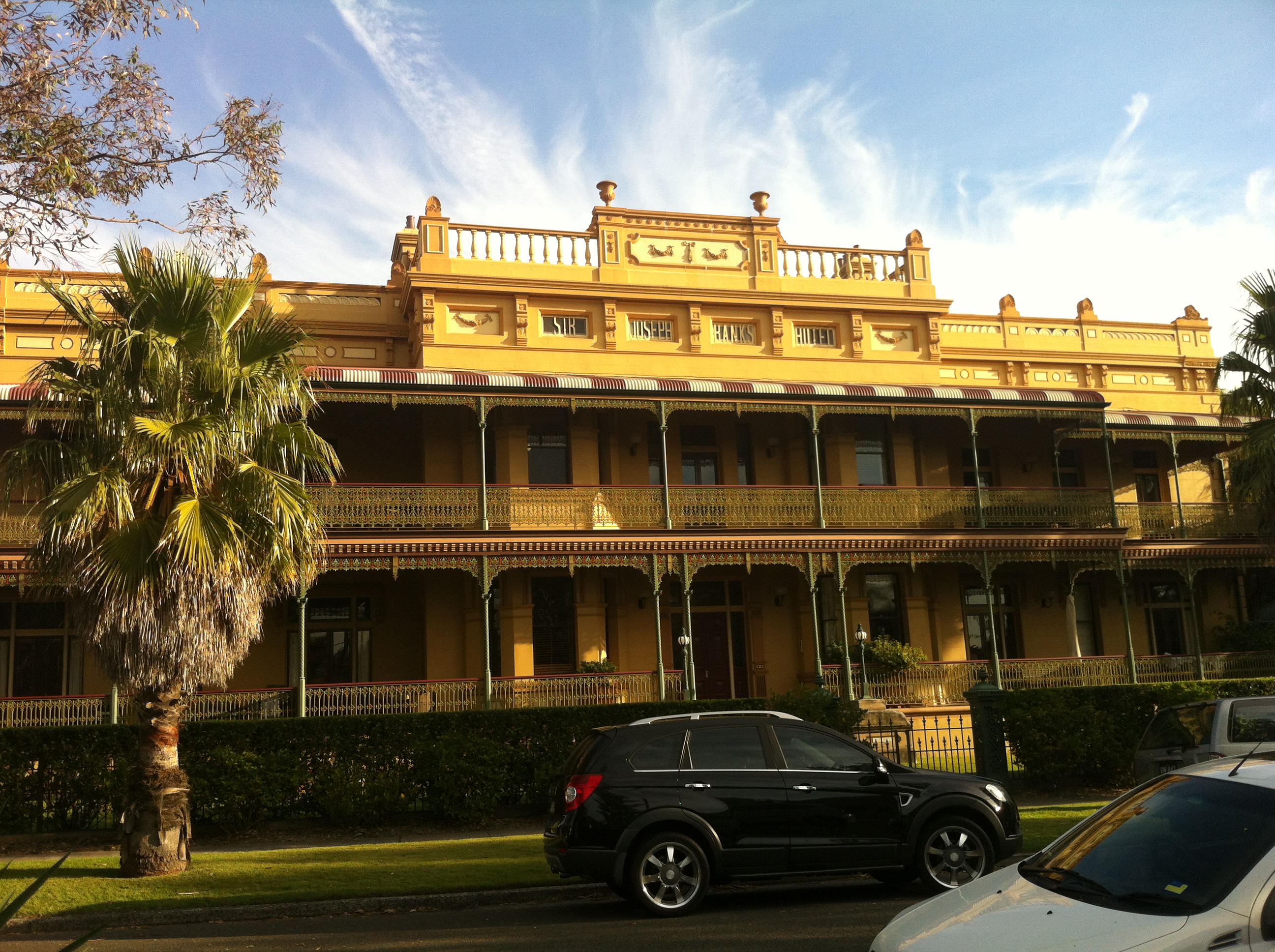
The Sir Joseph Banks Hotel, Anniversary Street.
This bigger hotel stood in front of a large park, so I’ll fill you in as we explore the park. It turned out that this hotel was the original Sir Joseph Banks Hotel, built in 1844. In 1920, the second Sir Joe was built on Botany Road, and the pub license was transferred to it, leaving the original free to become private units, which is how it is today.
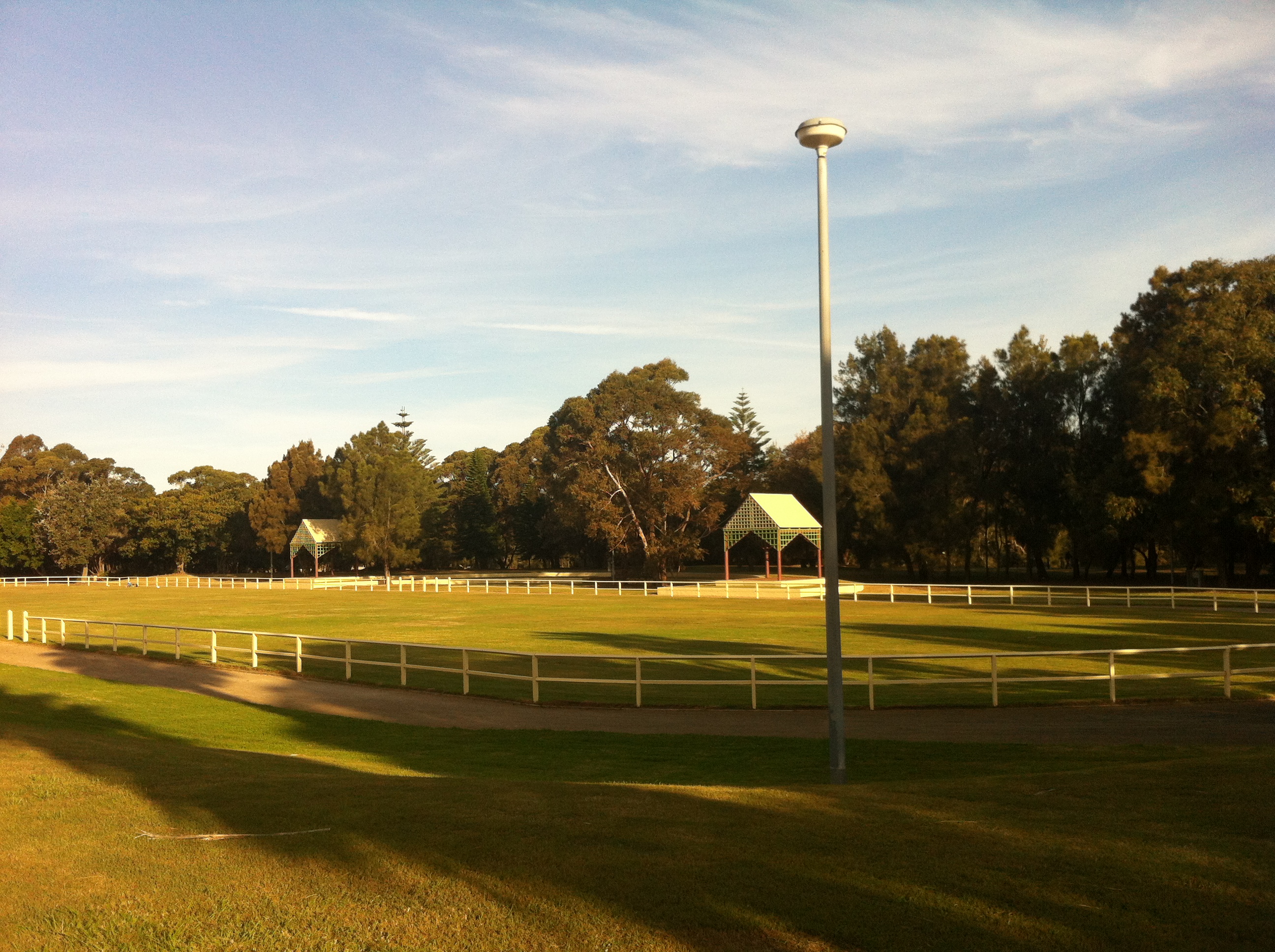
Running track, Sir Joseph Banks Pleasure Gardens.
That’s the dull part out of the way. The interesting part of this place is the garden, which has provided Sydney with a few major firsts since 1850. Here, at the garden’s running track, foot racing events were *yawn* held throughout the 1880s during the… professional running boom…I know, I know. We’ll get there.
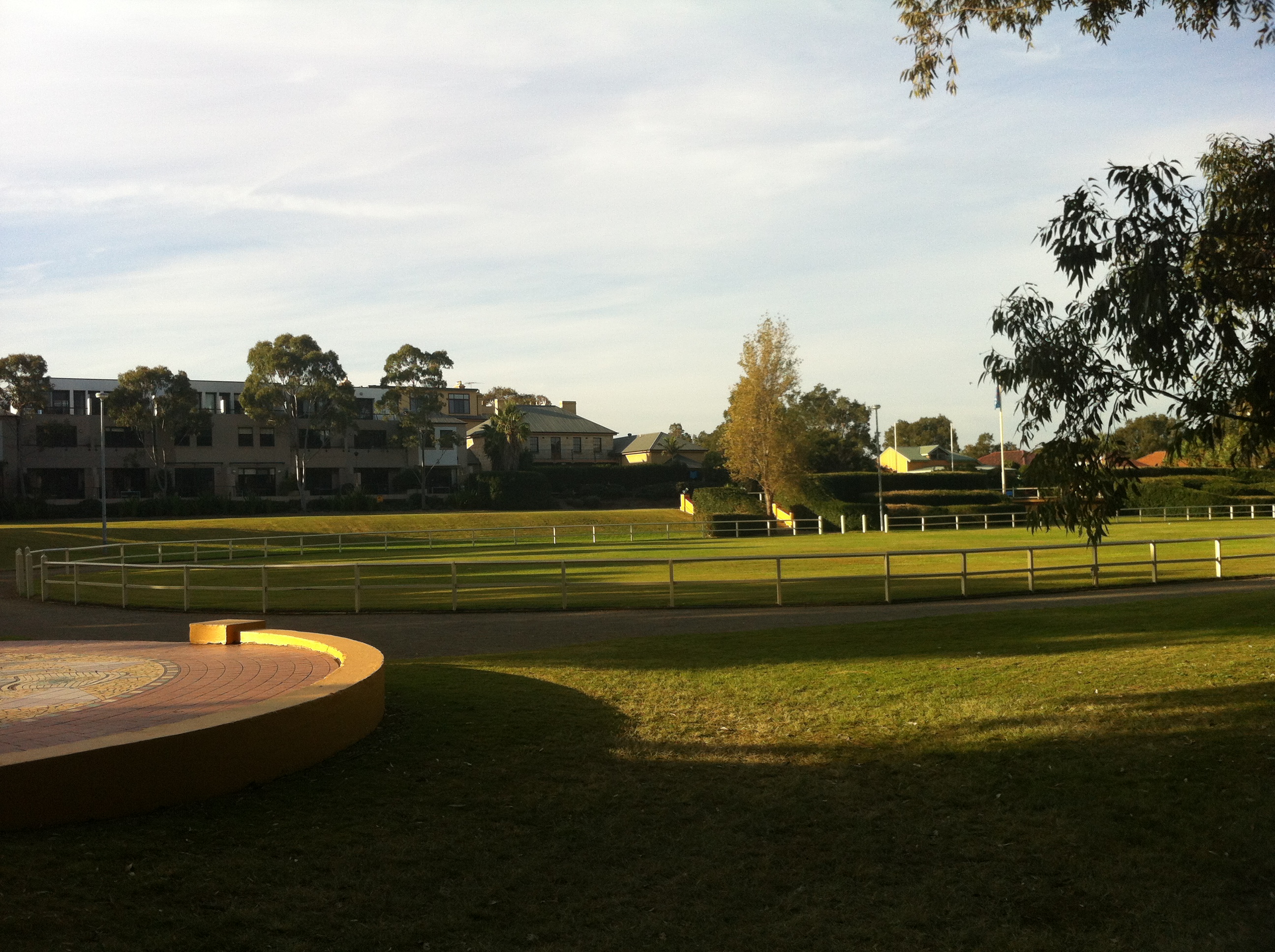
Also held at this running track was Australia’s first game of representative rugby league, in which the South Sydney Probables clashed with the Possibles. I’m guessing the Likelies played against the Maybes the week after.
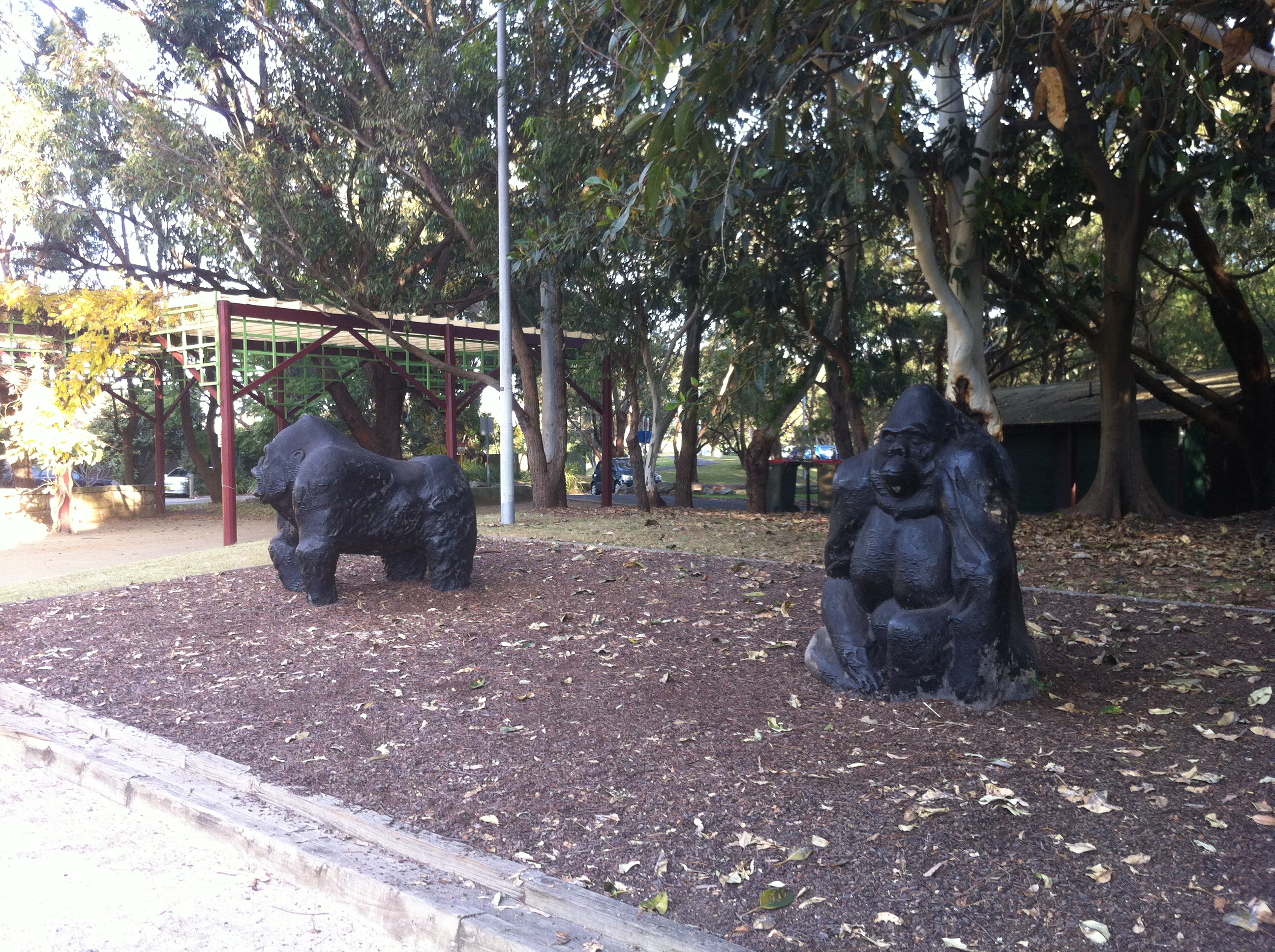
Okay, now, the most interesting thing about this park is that it was home to Australia’s first zoo. The site’s owner at the time, a timber merchant named William Beaumont, improved the hotel and created the ‘Pleasure Gardens’, which is a more scandalous and giggle-inducing name today than it would have been back then. The gardens included the private zoo.
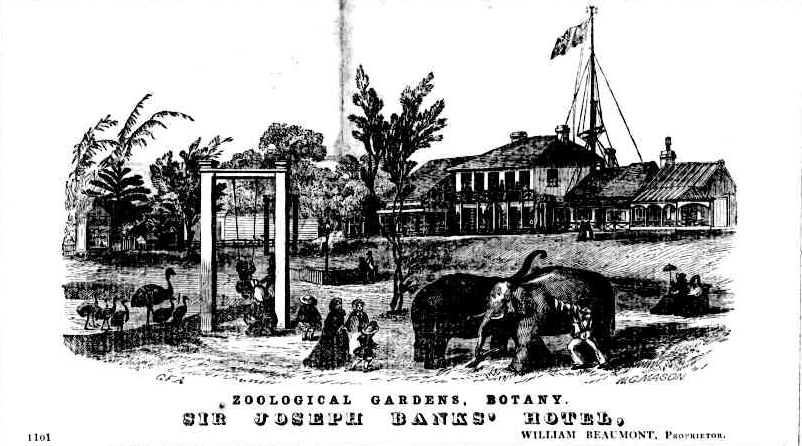
Bell’s Life in Sydney and Sporting Reviewer, Sat 27 Sep, 1856.
It’s hard to imagine tigers and elephants wandering around the grounds these days, so to assist you, the City of Botany Bay has erected a series of life size animal statues. In a way it helps, but in another way it’s kind of creepy. Judge for yourself.
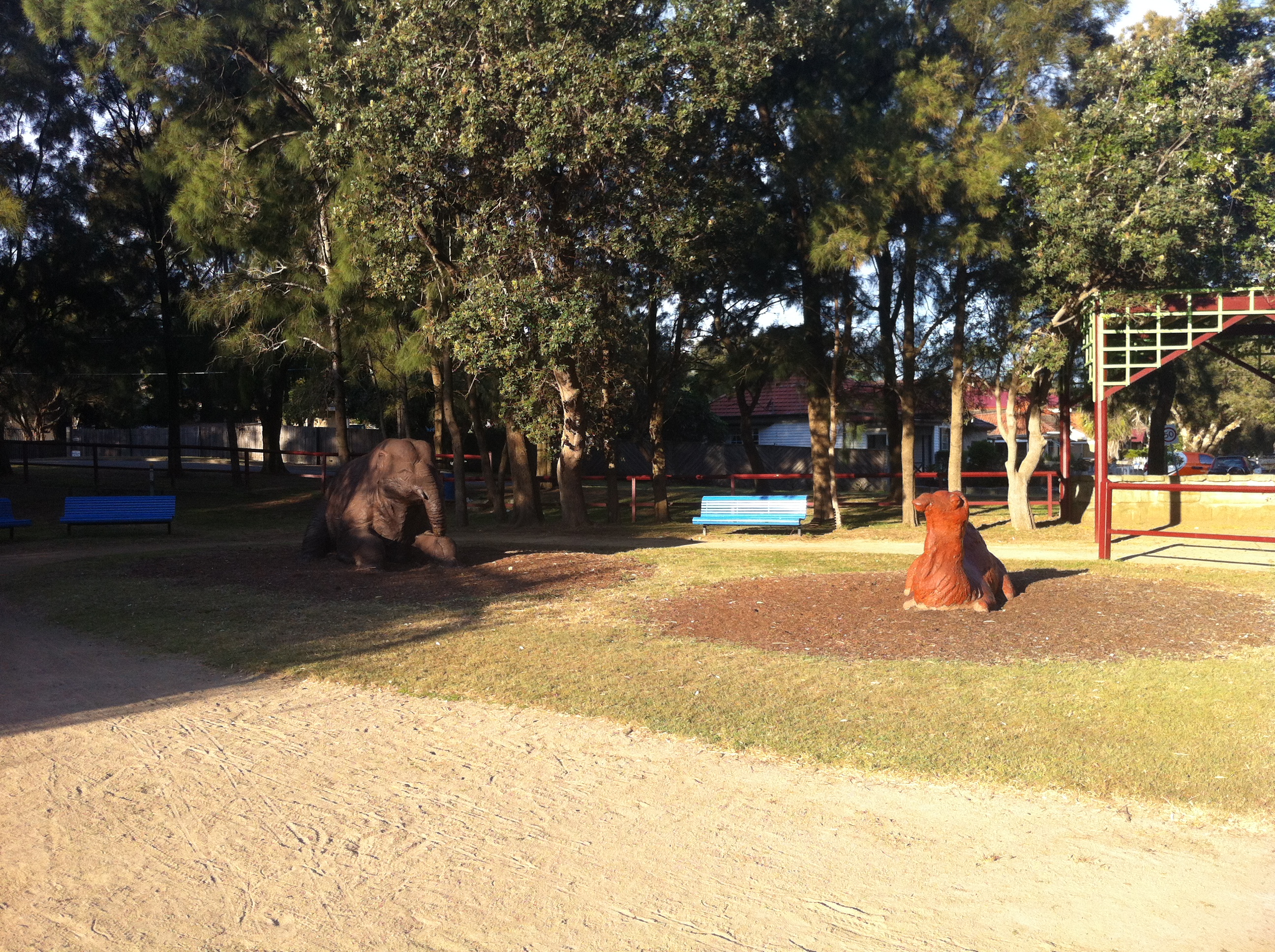
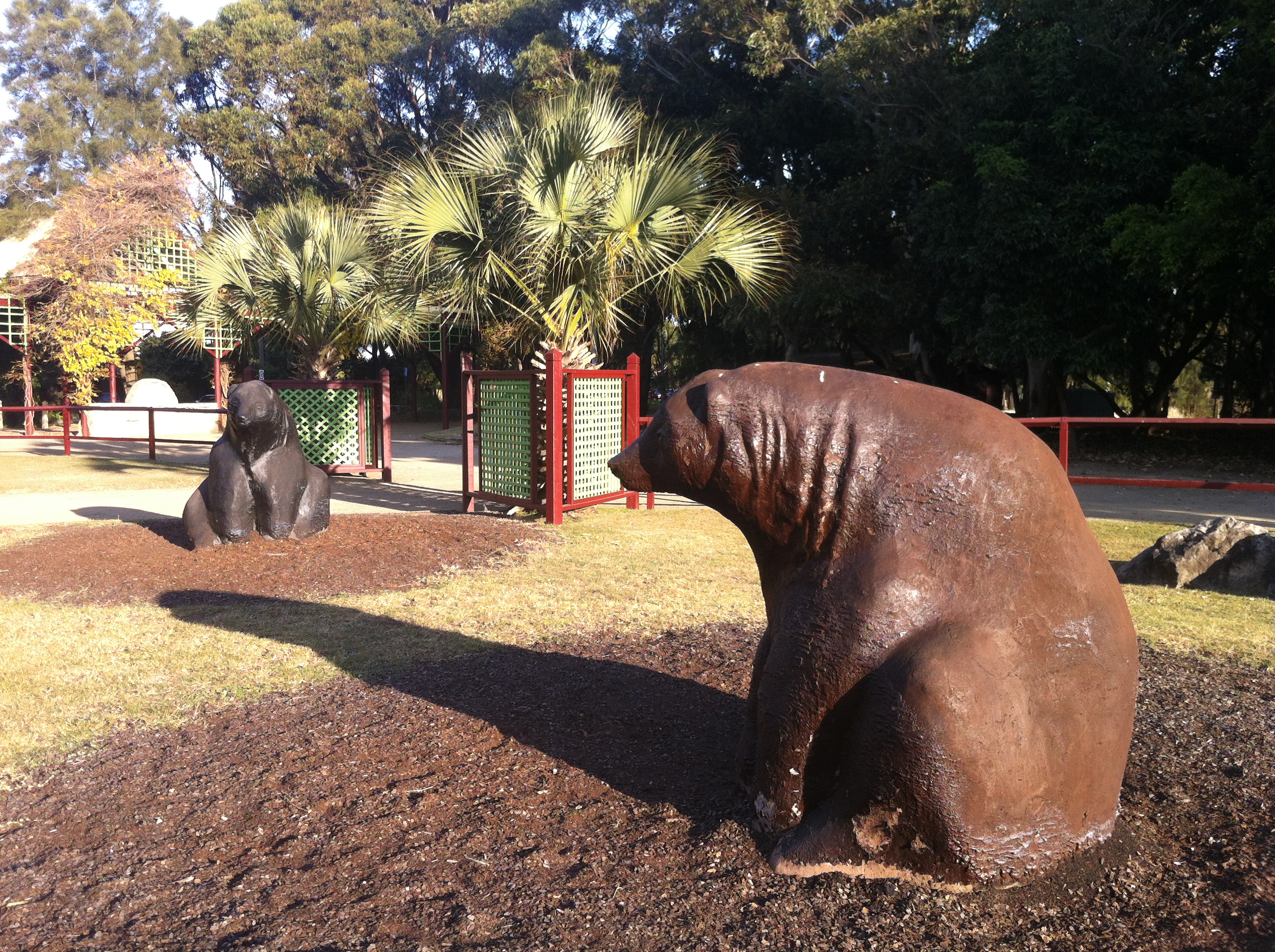
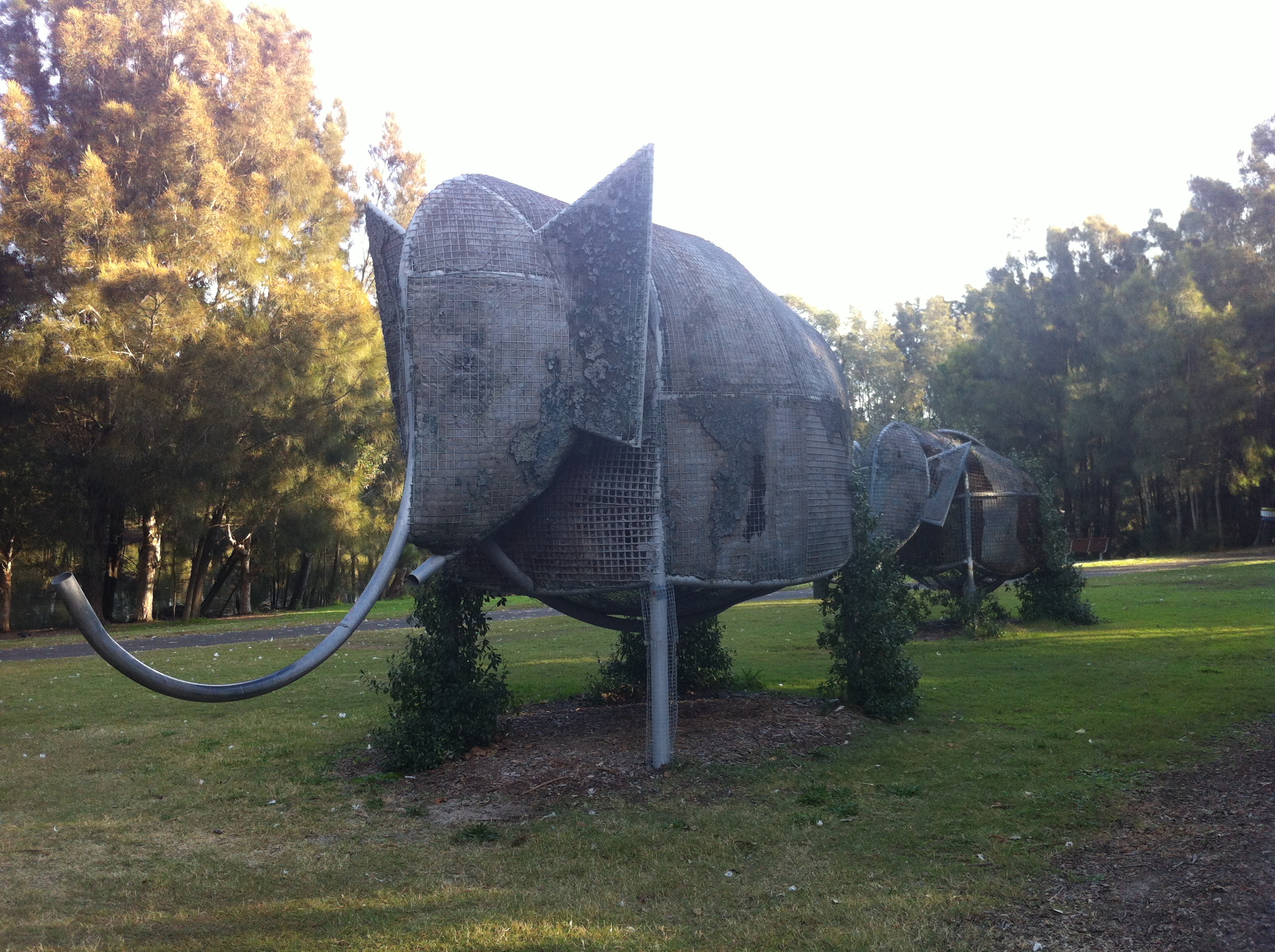
The park was entirely restored and upgraded for the Bicentenary in 1988, and the effort’s corporate sponsors were immortalised in concrete at the east end of the park.
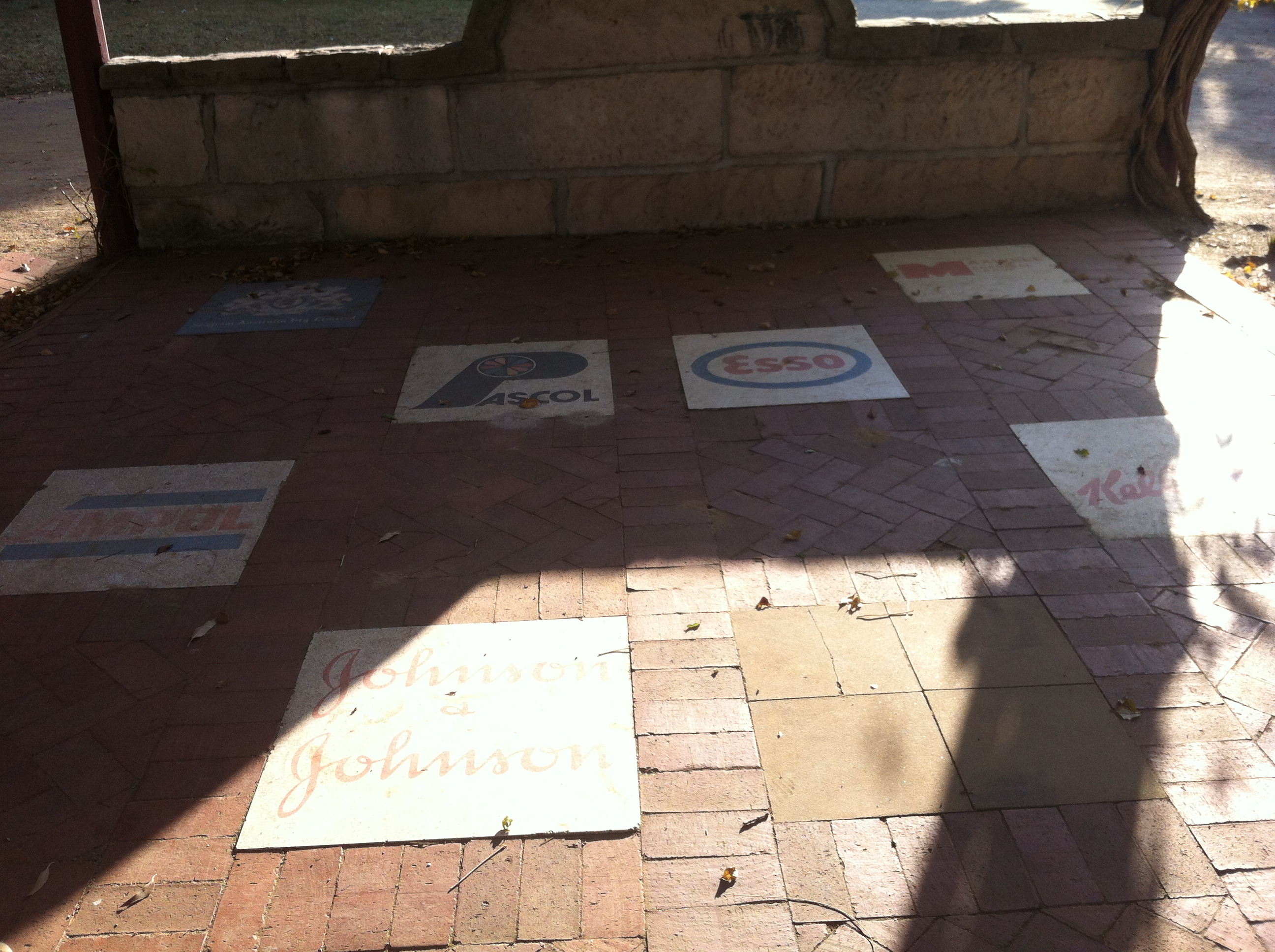
It’s interesting to note just how few of these brand names are widely visible today. Ampol and Esso were both absorbed by their parent companies, proving once again that no one is safe from the Big Oil Killuminati. Maxwell Chemical Corporation, which is just the kind of name you want to see emblazoned on your pleasure garden, has moved offshore. Seagram seems to have disappeared from the corporate environment in New South Wales, at least. Even Pascol Paints has been absorbed by Wattyl, going against all advice you were ever given about mixing paints.
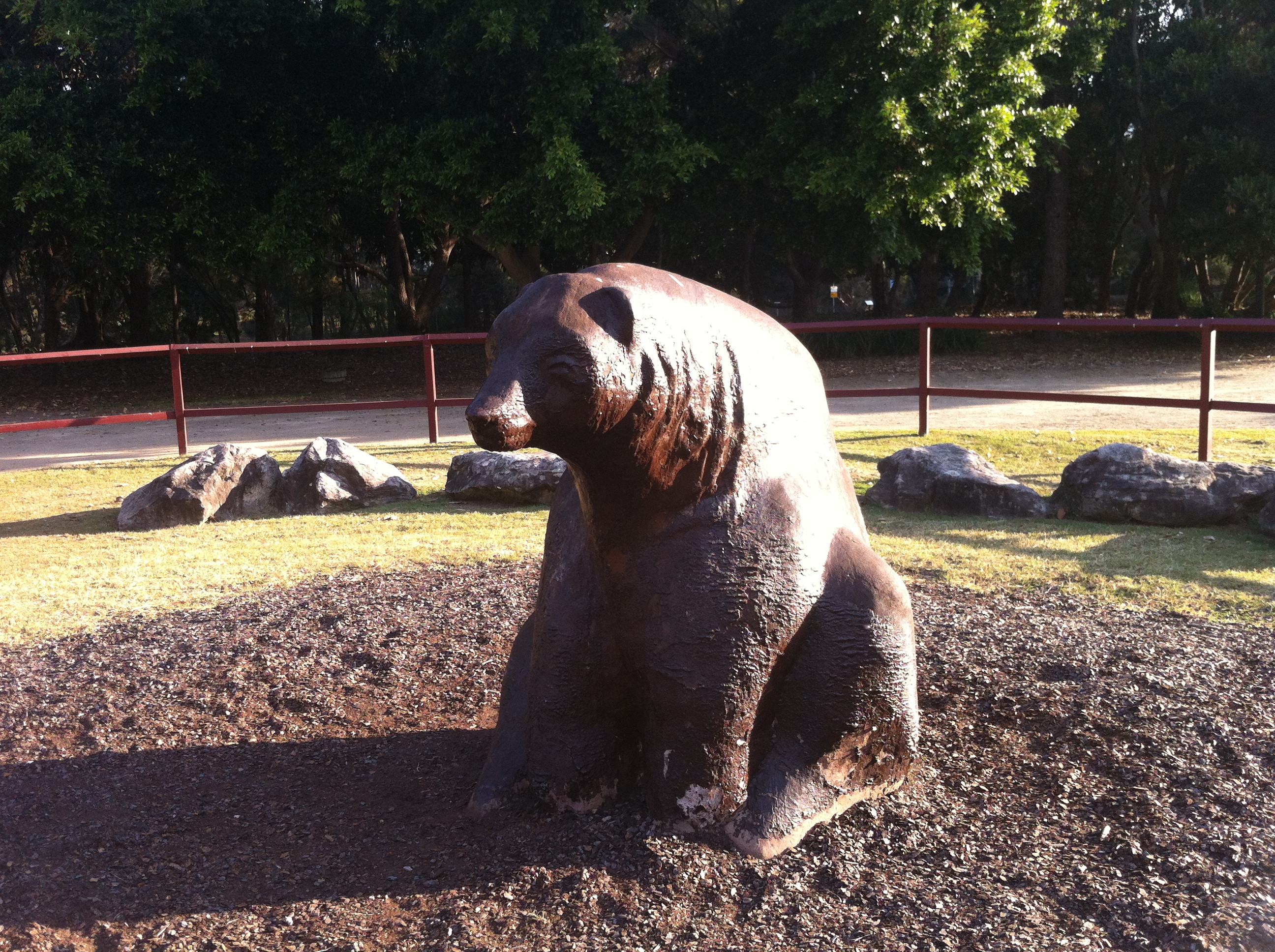
The most striking thing about this place is how secluded it feels. It’s off the main road, but the whole suburb of Botany feels a world away from Sydney as it is. I suppose in that regard, it was the perfect environment for a zoo. The most important feature of the garden today are the series of ponds that form protected wetlands. The whole park sits on land reclaimed from Botany Bay, so some attempt at looking after the marine life there is better than none at all.
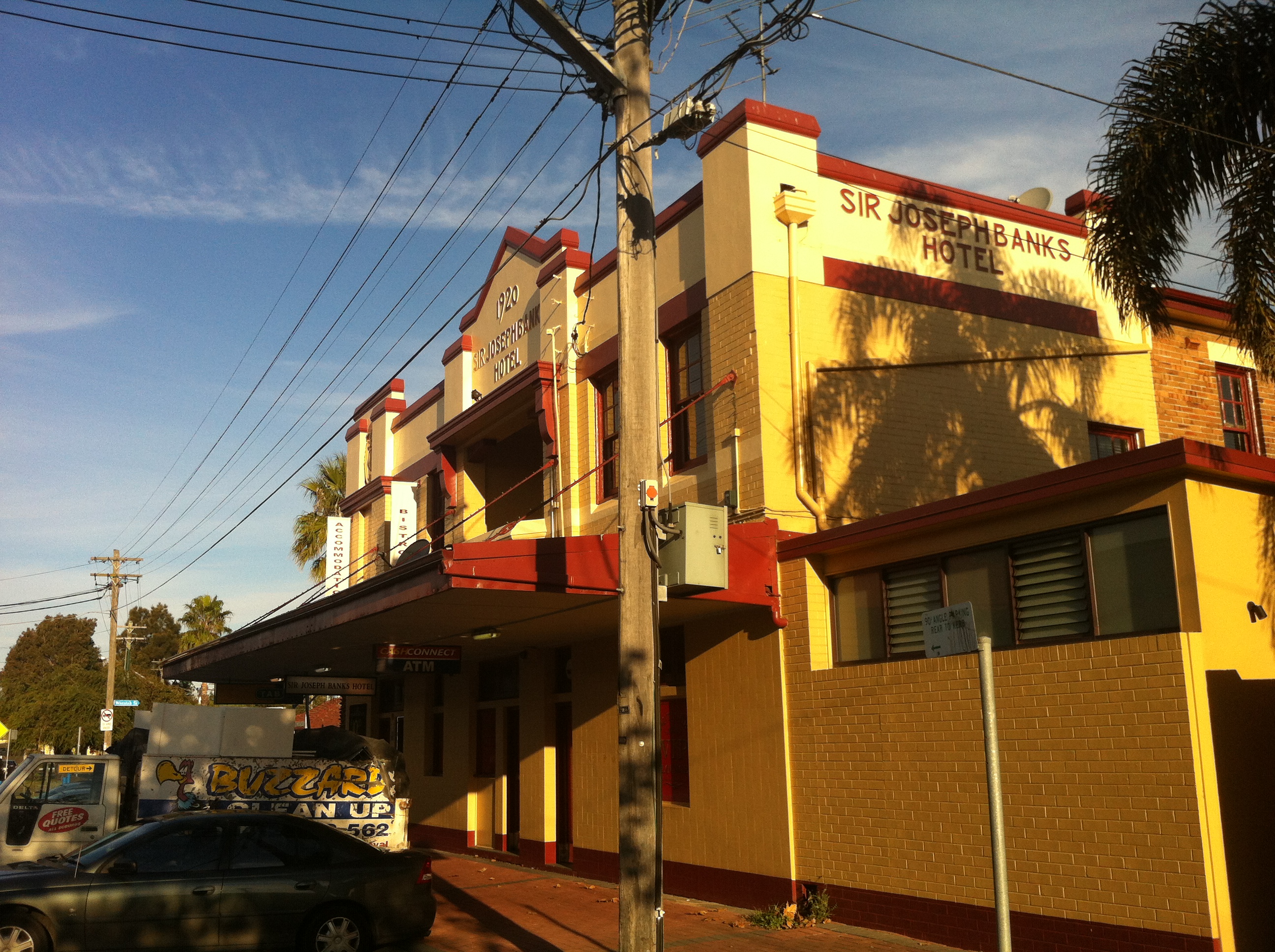
Meanwhile, up at the Sir Joseph Banks Hotel Pub Edition, you’d never know any of it was there. Here, they just sit, and drink, and smoke, and bet, and watch the millionth game of rugby league played since the days of probability vs possibility.
I think about it this way: the goings-on of the Sir Joseph Banks Pub on Botany Road are indicative of all that’s probable, but the Victorian wonderland and colourful history of the Sir Joseph Banks Hotel and Pleasure Gardens are all about what’s possible.

 Past/Lives of the Near Future