Bookers Night Spot/For Lease – Surry Hills, NSW
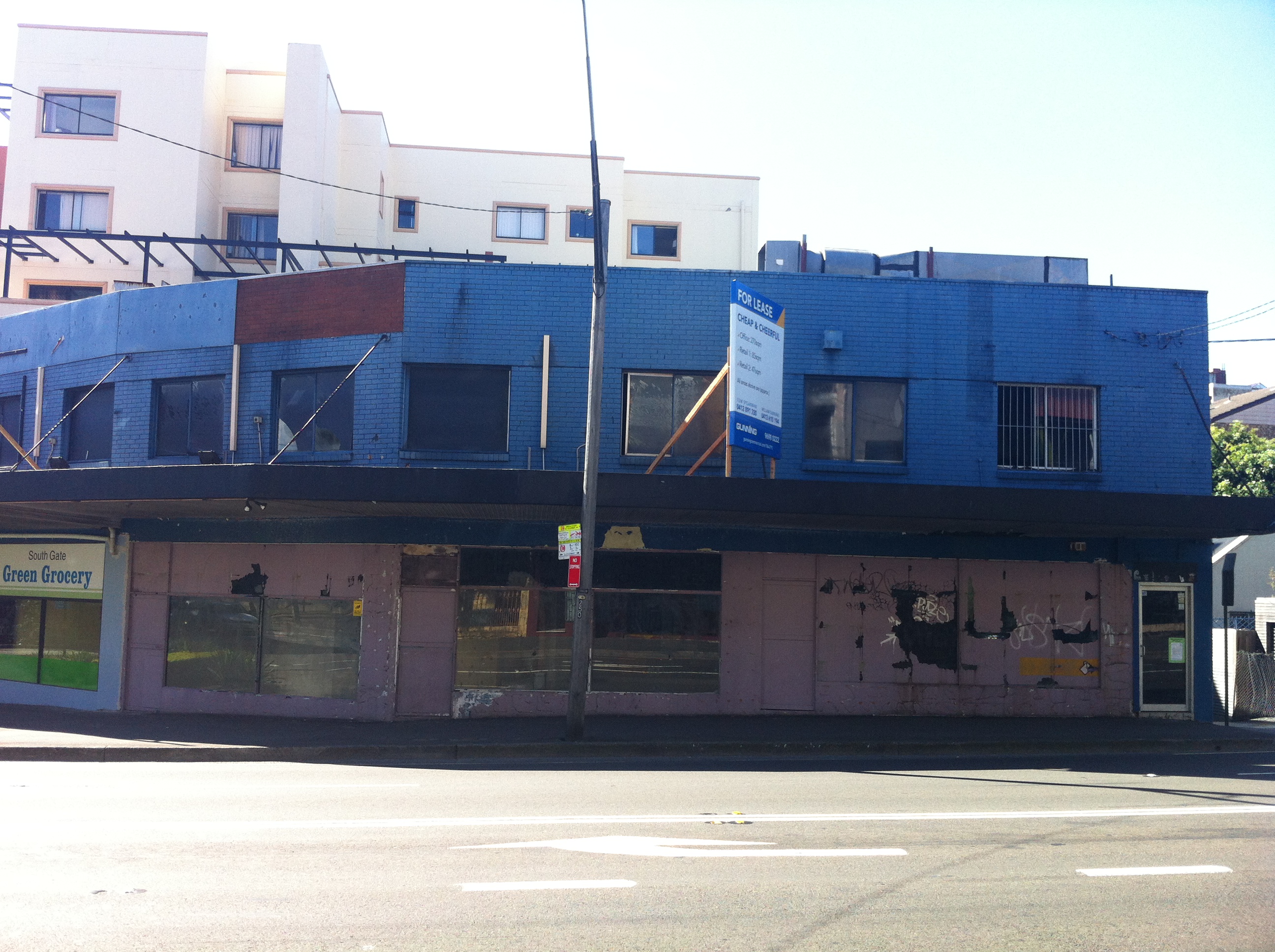
Perched at the intersection of Chalmers and Cleveland Streets are a variety of notable buildings: the old Australia Post headquarters; the colonial era Cleveland Street Public School; that ancient backpackers hostel. The odd one out is this building, which has sat unused and for lease until very recently, when part of it was turned into a greengrocer. The other part still sits dormant, waiting for another chance at life.

Around the side we can see that it was for sale long ago. So old is the sale that the sold stickers have become partially transparent. The sign to the right has been painted over along with the rest of the building, and still myriad signs and lettering can be seen underneath the coat, some of which seems to suggest the place had a restaurant…but that’s not the lettering we’re interested in.
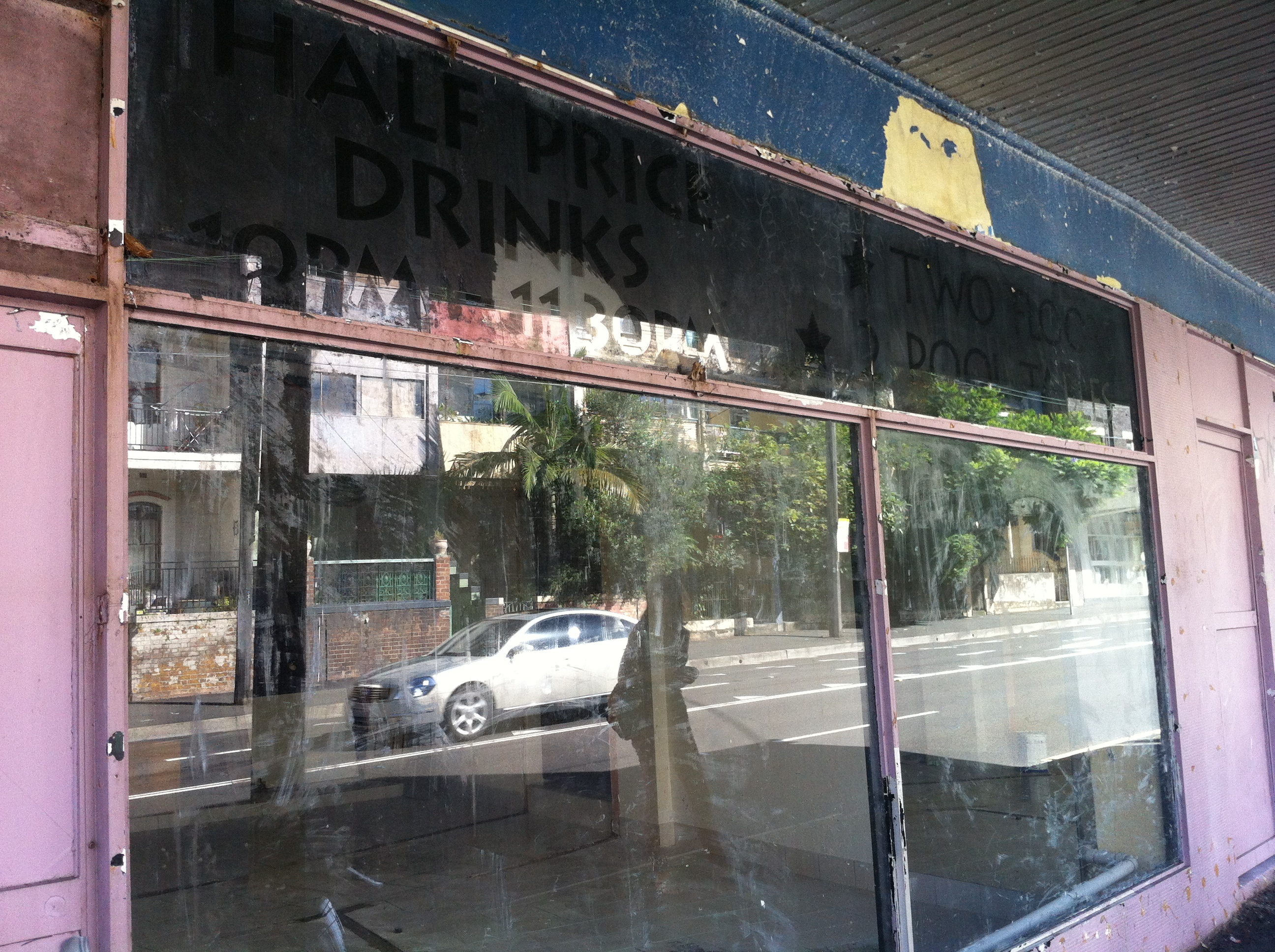
At some point in the past, this place was Bookers [sic] Night Spot, the only pub or club I could find attributed to this address. Half price drinks were on sale between 10pm-11:30pm. It featured two floors, and pool tables. Not the most dynamic attributes a night spot could have, but aside from the weak offerings it’s unclear when or why the club closed. The competition from the pubs down near Central Station or up at Crown Street might have played a part, and that the area is much more gentrified than ever. It’s easy to imagine this may have been yet another corner pub once, serving thirsty shift workers from Australia Post, or a tram stop on what was once a busy corner for the light rail.
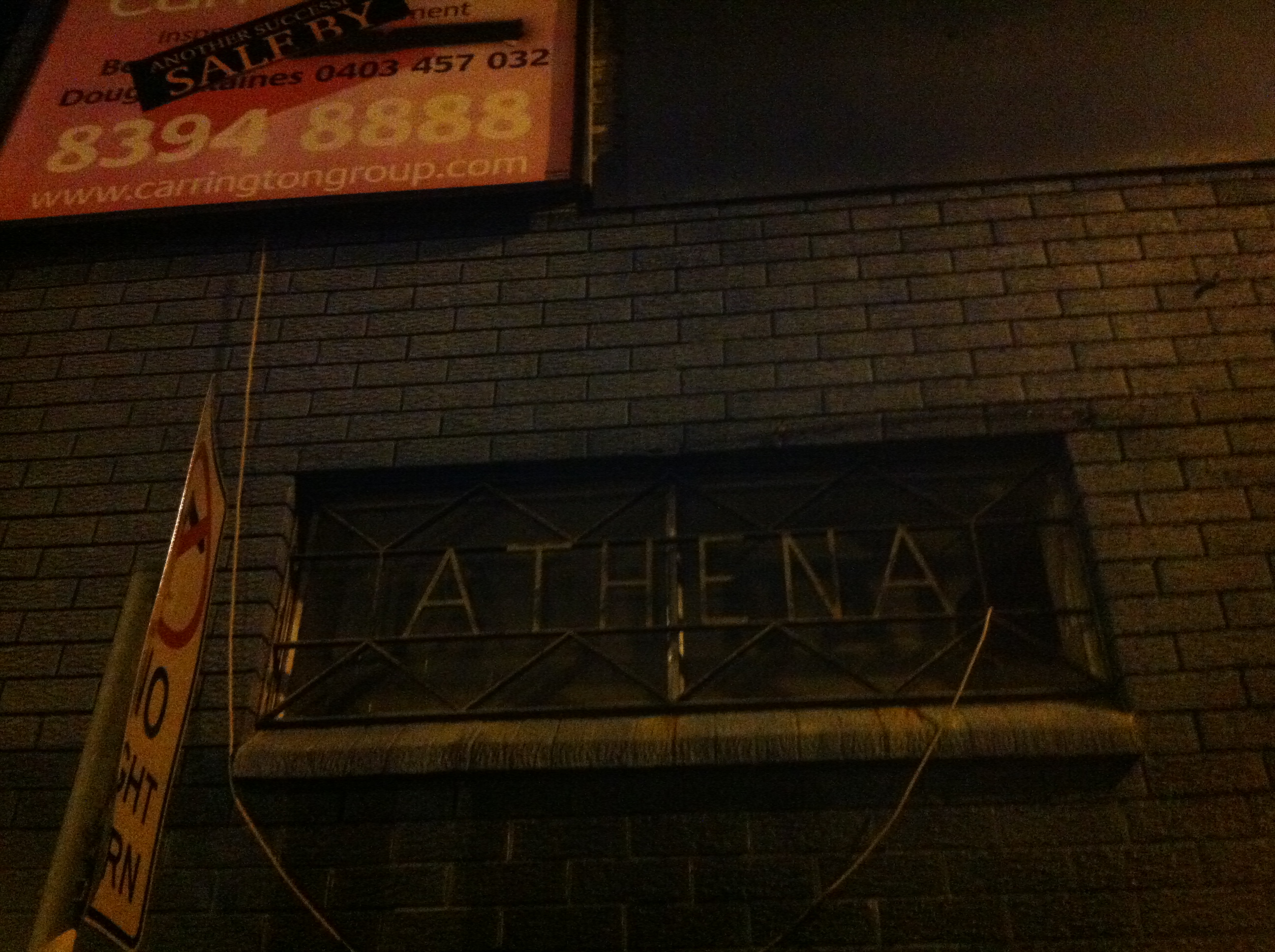
ATHENIAN UPDATE: As reader Luke says, this location was once the Athena Greek nightclub/Restaurant. The only remnant of this today is the ironwork affixed over the east window:
St. George Bowling & Recreational Club/Derelict – Bexley, NSW
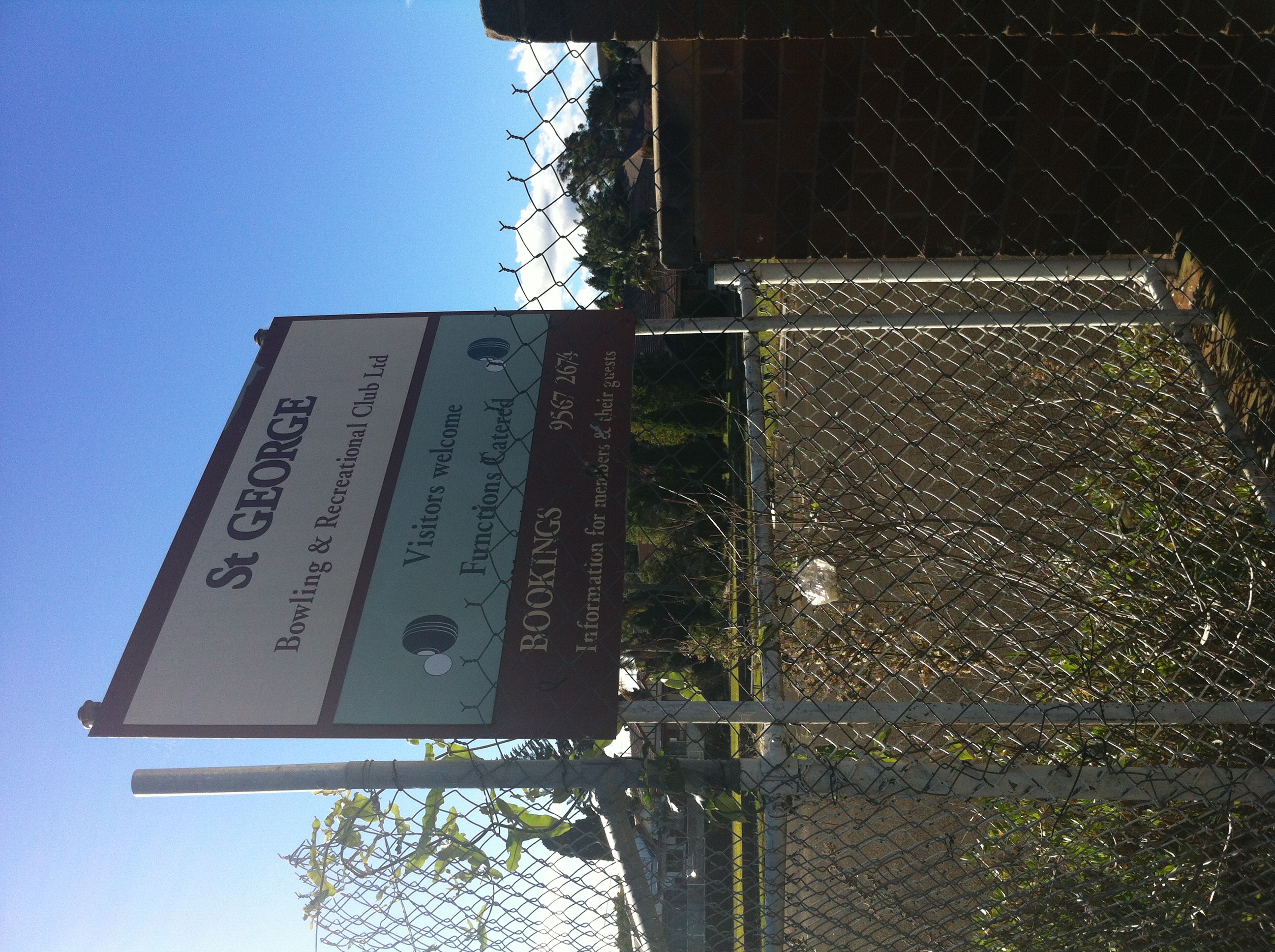
Here we have the festering remains of the St. George Bowling Club. Like many of its members, the bowling club came into existence in 1900, when a meeting at the Rockdale Town Hall ended with a decision to form a bowling club. I wonder how many town hall meetings end like that these days? For that matter, I wonder how many town hall meetings actually start these days?
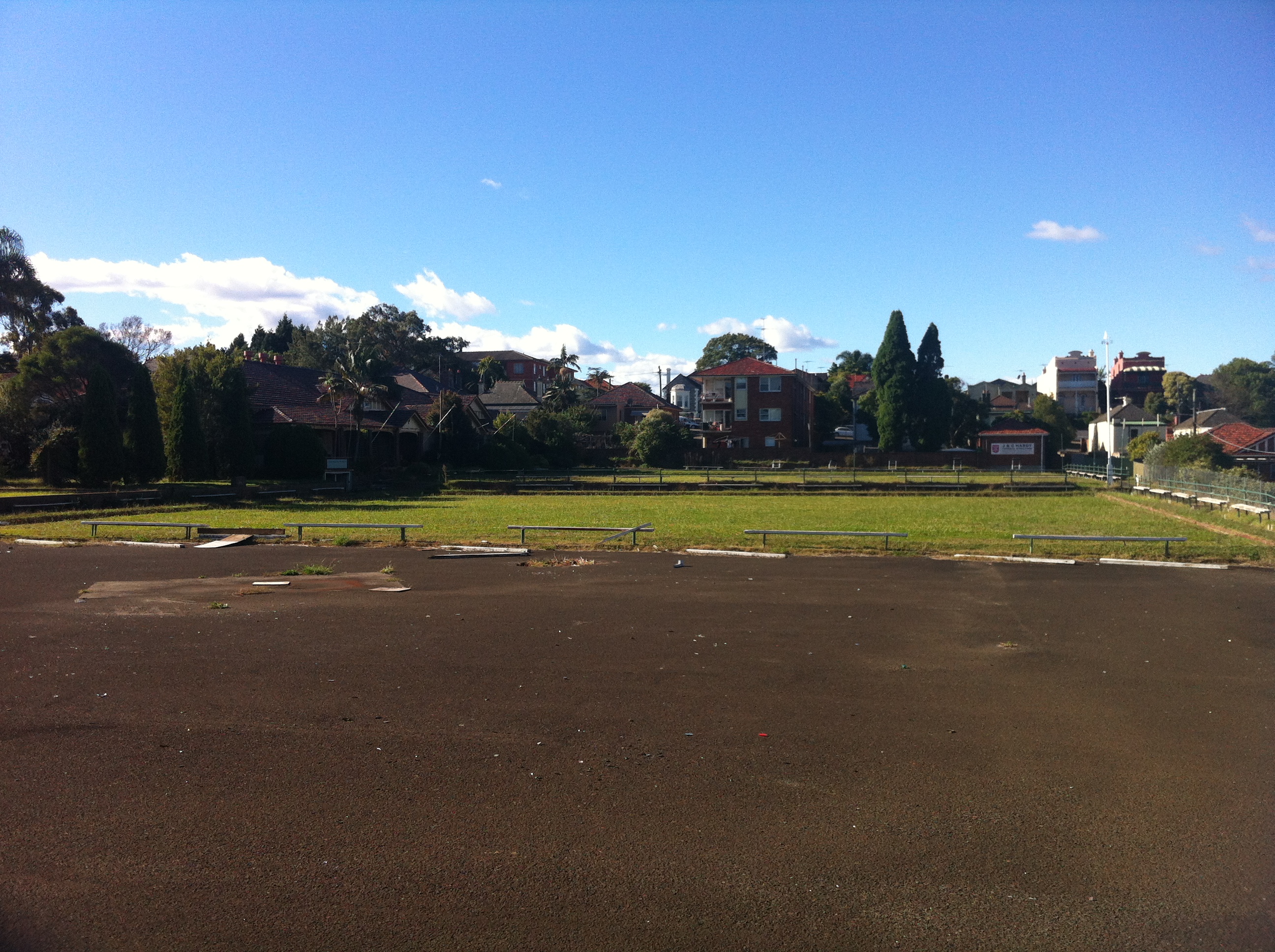
Feathers were ruffled in 1919 when the land the bowling club was built on was suddenly and urgently required by New South Wales Government Railways to enable quadruplication of the railway lines by that project’s estimated completion date of 2030. The club was moved, and seemed to land closer to the jack here on Harrow Road.
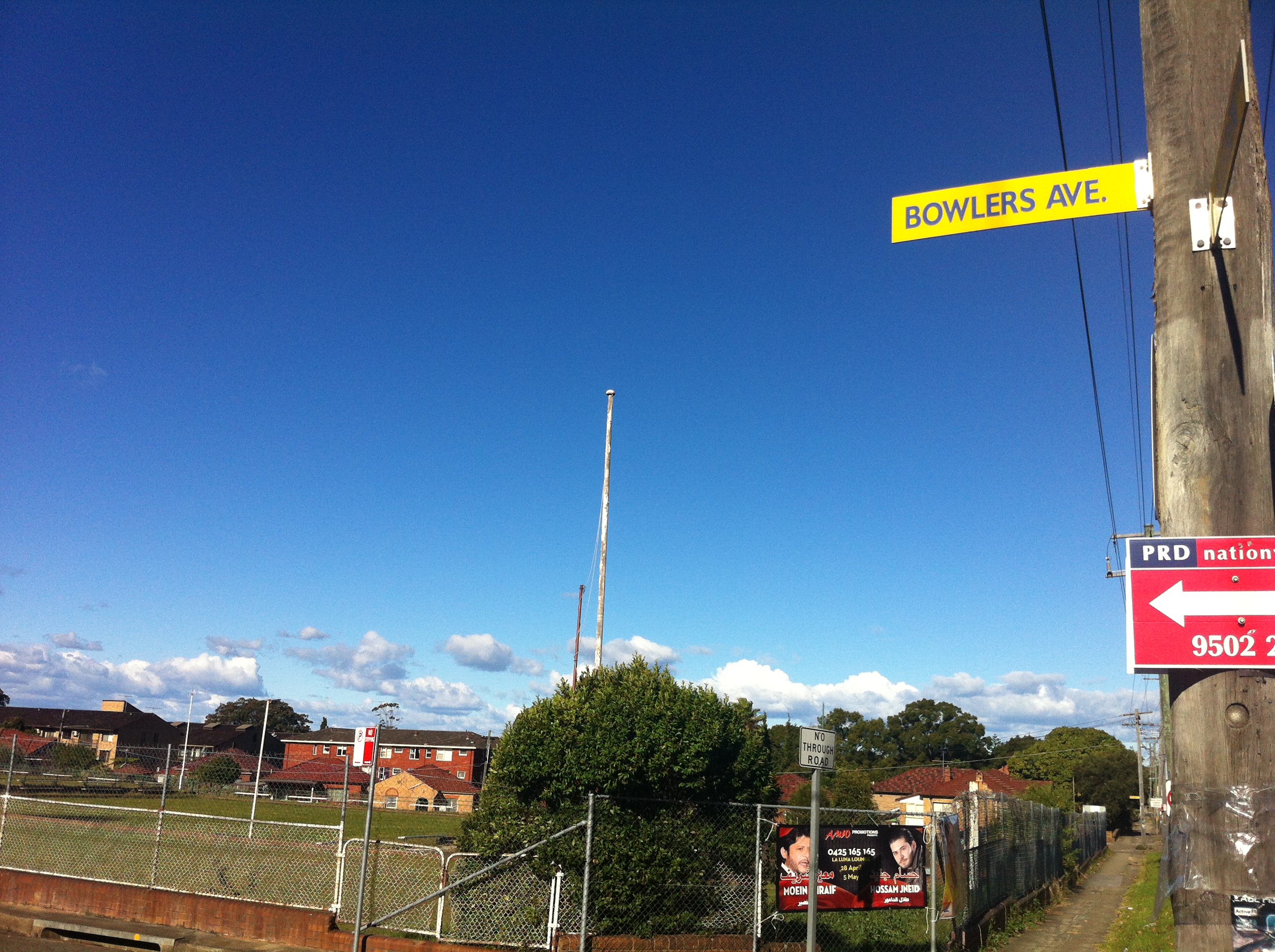
In an apparent passive-aggressive display of entrenchment, the little street beside the club is named Bowlers Avenue. Doesn’t it look silly today. Bowlers Avenue sounds more like a memorial garden in a cemetery.
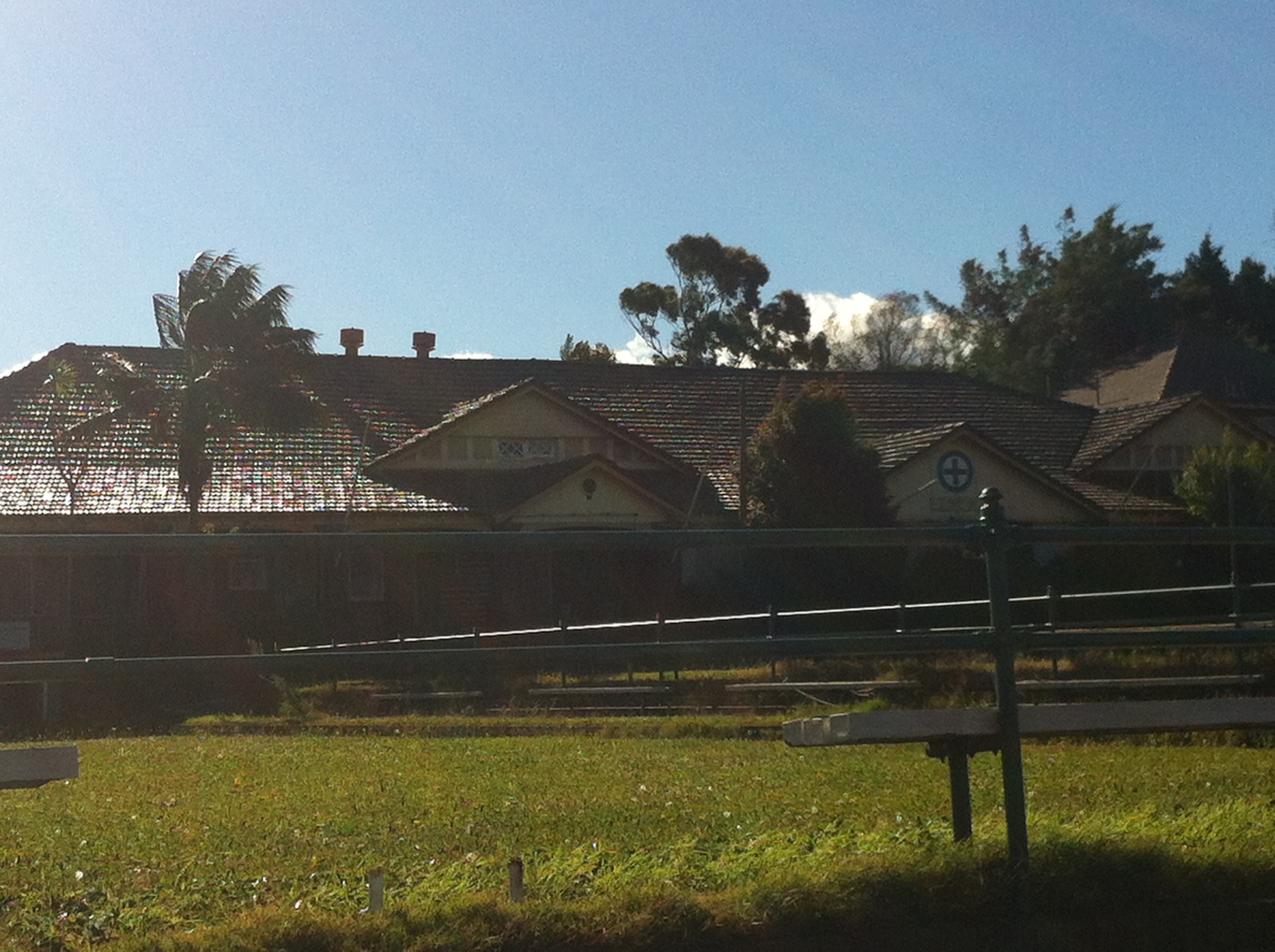
While the building is a rare example of a Federation era bowling club, it’s also been abandoned for several years. Unfriendly signs threaten would-be bowlers to stay the hell out, and many of the building’s windows have been boarded up.
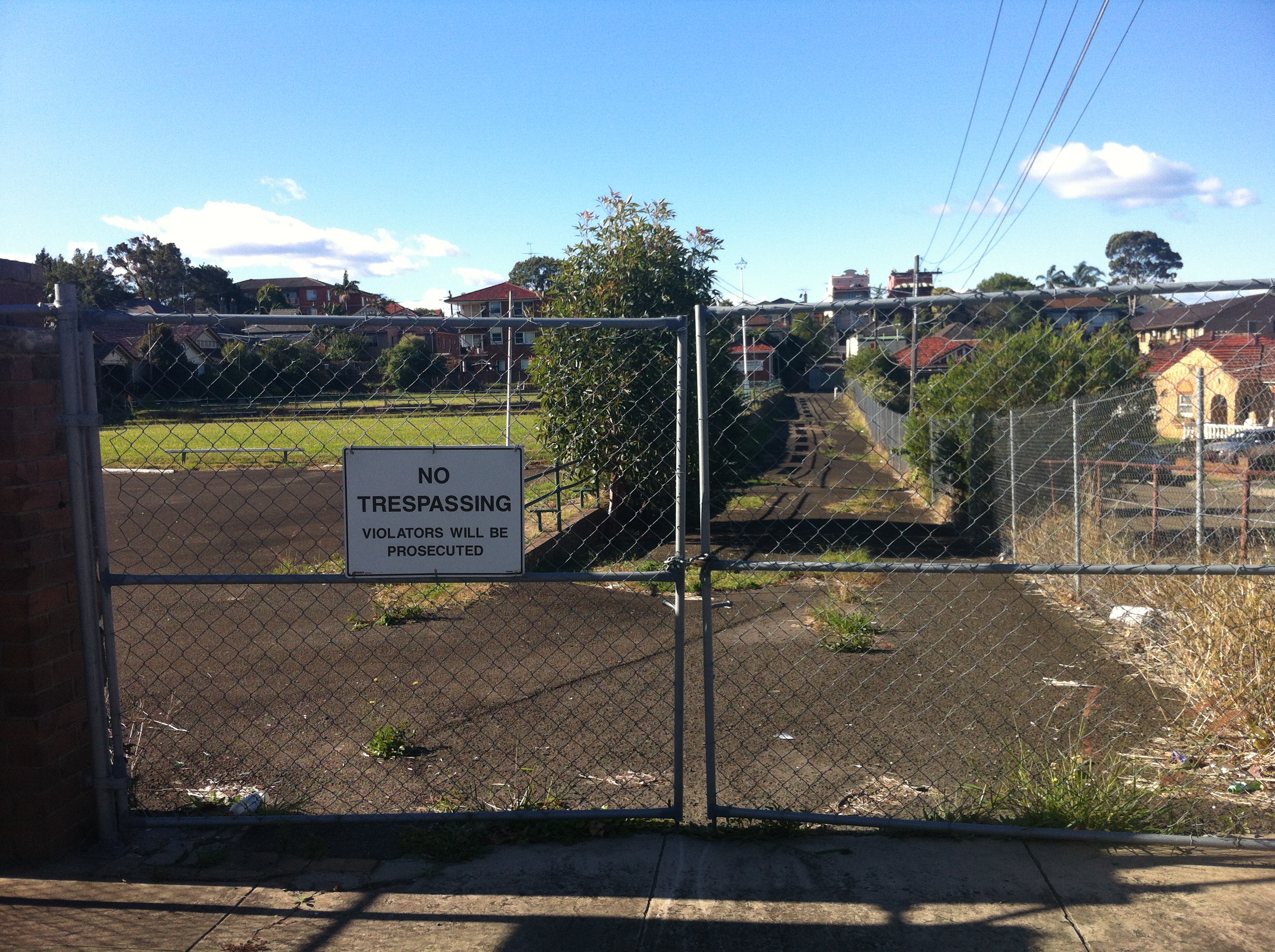
No one is picking up the sport of lawn bowls these days, and as the current superstars of the game fade away, there really is no need for these clubs. This one didn’t even have a TAB. And after all, it’s not like this is an isolated incident. Unless there’s some big recruitment drive for new members sometime soon, the game will end up with most of its players on that big Bowlers Ave in the sky.
Dianetics Volcano/Video Billboard – George Street, Sydney NSW

On a stormy night in 1996, the Church of Scientology made its mark on the George Street entertainment strip in the form of Sydney’s most bizarre advertising initiative. The site, on the east side of George Street, was formerly the Roma Complex; a row of shops including the Roma cinema torn down in the early 1990s to make way for the current setup. Now comprised of a variety of smaller shops, the address is most notable for including the Metro Theatre, a popular music venue, and as the former home of Galaxy World, a video arcade.
Someone in the Church of Scientology saw an opportunity to educate the people of George Street in the ways of Xenu et. al., and in mid-1996 a giant illuminated volcano facade was erected above Galaxy World, with a giant video screen at the peak. The screen played commercials for Scientology founder L. Ron Hubbard’s 1950 book Dianetics over and over and over as smoke burst from the volcano, while testing centre was established nearby so that anyone interested in the ad could have their situation evaluated by the experts. What had been originally intended was that the screen would be directly used by the Church of Scientology to advertise the religion/cult, but after that proposal was denied by the Sydney City Council, a compromise was reached in the form of the Dianetics ads. Celebrity Scientologists Kate Ceberano and Nancy Cartwright appeared at the unveiling, which was forced inside due to the thunderstorm.

George Street Volcano, 1996. Image courtesy suburbia.net.
After just a few months, the brightly coloured volcano had faded, and so had the public’s compulsion to humour the Church of Scientology. Then-Sydney Lord Mayor Frank Sartor offered to pull the volcano down as early as November 1996. At some time in 2000, long after the advertisements had stopped erupting, the facade caught fire, and remained in its burnt state for nearly a year afterward. When the volcano screen was first erected, it was agreed that it would only be up for six years, but here we are in 2012 and although the volcano is gone, the screen and an ugly facade remain. It’s a surprise it’s still there, given Sydney City Council’s tendency to overhaul all things George Street every couple of years.

Turn around, you fools. George Street, 1998. Image courtesy Edmund Cheng.
Speaking of erections and eruptions, a few enterprising young scallywags took the obvious opportunity to broadcast porn through the screen for a prank at some point in the late 1990s, and given that’s the least creepy thing the setup was ever used for, that’s a good place to end this article.
PS. Oh, the 24hr Bar Ace advertised alongside the volcano isn’t there anymore either. It’s two Japanese restaurants now.
Anzac Memorial Hall/Country Road – Mosman, NSW

Just in time for Anzac Day (whoops), here we have Mosman’s Anzac Memorial Hall. Built in 1922, it appears to have existed as the memorial hall until 1934, when it became the Kings Theatre (NOT the New Kings Theatre, which opened in 1937). Strangely, to make room for the cinema, the Mosman RSL vacated this building and moved into…a different cinema, the Mosman Kinematheatre, which was further along Military Road.
These days, this memorial hall is now a Country Road fashion outlet, allowing shoppers the opportunity to observe a minute’s silence as well as the latest winter looks.
Paragon No. 1 Theatre/Canterbury Leagues Club – Belmore, NSW
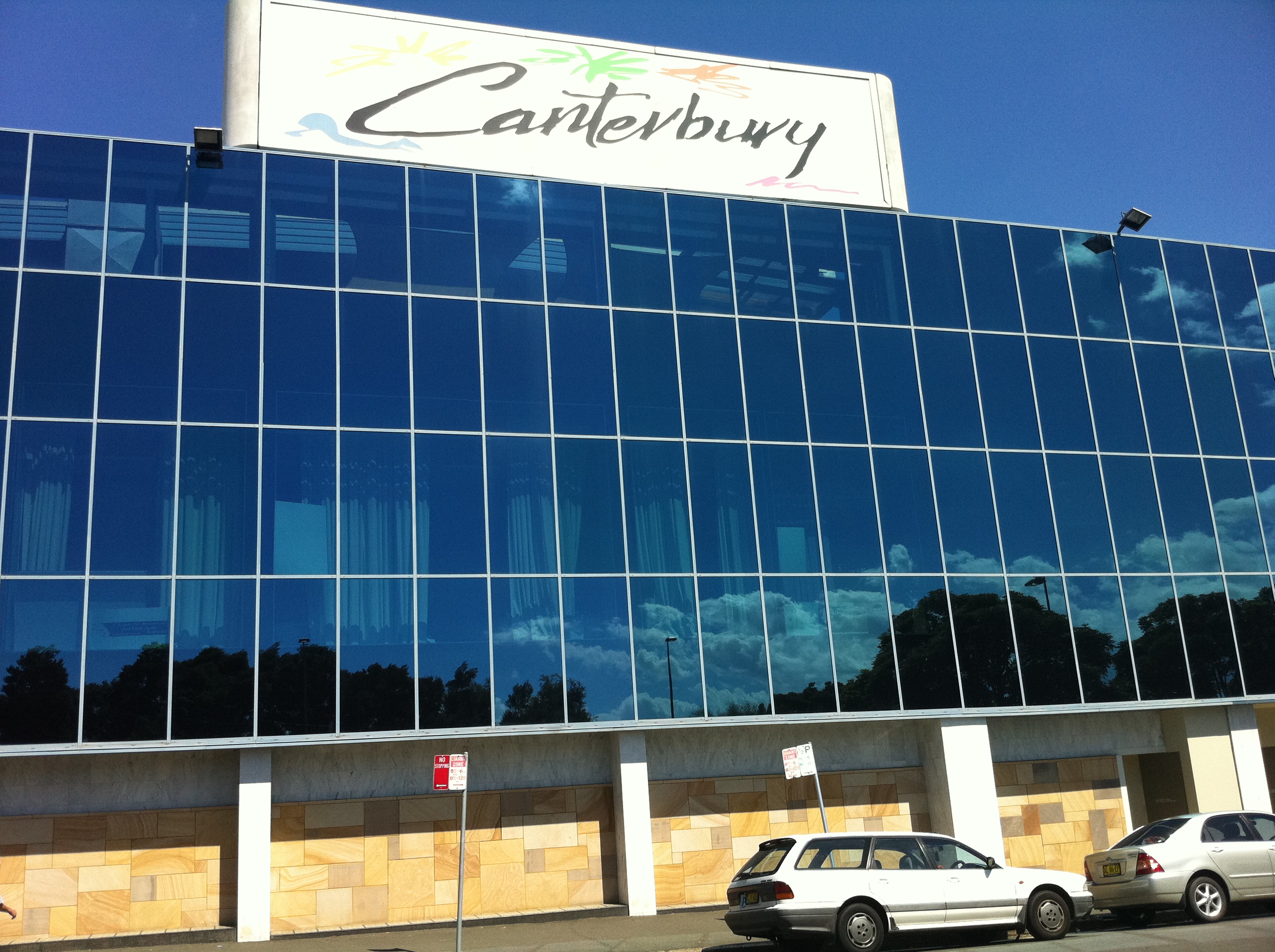
Opening in 1923 and closing in November 1958, the Paragon No. 1 Theatre had a longer life than its twin.

Paragon No. 1 Theatre, 1958. Courtesy Barry Sharp and City of Canterbury Local History Photograph Collection
Starting life as a picture theatre serving the undemanding entertainment needs of Belmore, the Paragon replaced a shed that stood on the Bridge Road site previously. Was the shed the suburb’s previous entertainment hub? Who knows. The Paragon No. 2 opened further up the road in 1928, and throughout the 30s and 40s, business was good.
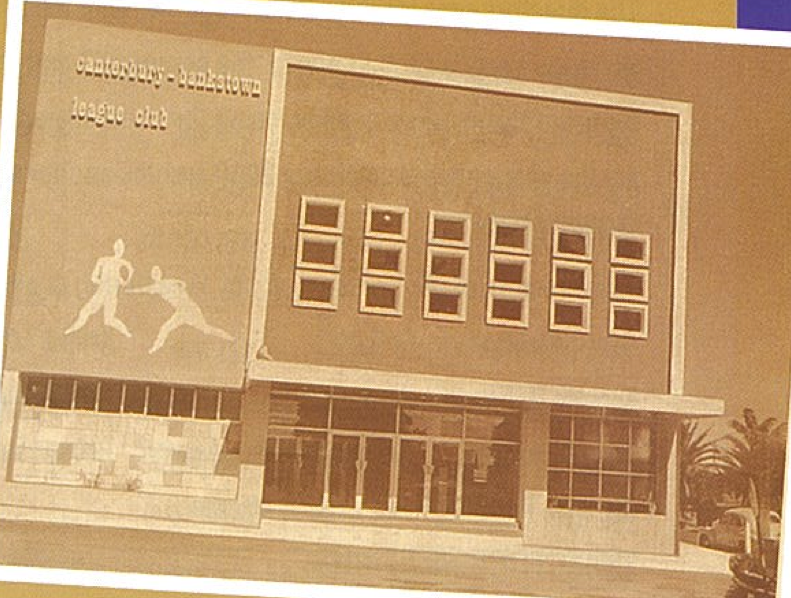
Canterbury-Bankstown League Club, 1960. Image courtesy Canterbury League Club.
The Canterbury-Bankstown Bulldogs rugby league team had been formed in 1935, and as early as 1939 the club was holding its annual meetings at the Paragon Theatre. The Paragon staff must have slighted the club somehow, because what goes around comes around. In 1957, the Canterbury-Bankstown League Club was formed to support the football club, and took up residency in a reconditioned naval hut built by club volunteers in nearby Collins Street.
By 1958, the Paragon was floundering, struggling against the introduction of TV and a decline in suburban cinemas. Meanwhile, the Canterbury-Bankstown Leagues Club was growing rapidly, and had already outgrown the naval hut. The club bought out the Paragon, and by 1960 had converted it into the spiffy new club premises seen above.
UPDATE: Courtesy of reader Tony, we’ve now got a look at the brochure handed out at the grand opening of the rejigged Leagues Club in 1960. Big thanks, Tony!

As opposed to the unofficial opening, I’m guessing.
Incidentally, Mr. Frank Stewart, M. H. R., was a World War II veteran and ex-first grade Bulldog who went on to become the Minister for Tourism and Recreation in the Whitlam Government. It was Stewart who leaked info to the Federal Opposition regarding the Loans Affair, which ‘kicked off’ (heh) the chain of events that eventually brought down the Whitlam Government, but he also played a crucial part in the establishment of the Australian Institute of Sport. Oh, and he also presided over the opening of the Canterbury Leagues Club, but you knew that already.
It’s easy to imagine that the further growth of the club over the next 50 years into the behemoth it is today is indicative of the growing enthusiasm in the suburbs for RSL and Leagues clubs, which provided myriad entertainment options the Paragon could only have dreamed of. Realistically, the growth is probably also indicative of pokie profits.
The idea of a suburban cinema now seems quaint in comparison. In honour of its fallen homie, today’s Canterbury League Club features a ballroom named the Paragon Room, and there’s a Paragon Lane that runs beside the Club. No tributes to that naval hut, though.
A HUGE thanks to Lea Thomas at the Canterbury League Club for her generosity and assistance!

 Past/Lives of the Near Future