Epping Theatre/Fashions Galore/Video Ezy/Network Video & Gloria Jean’s & Jackie’s Hair and Beauty – Epping, NSW
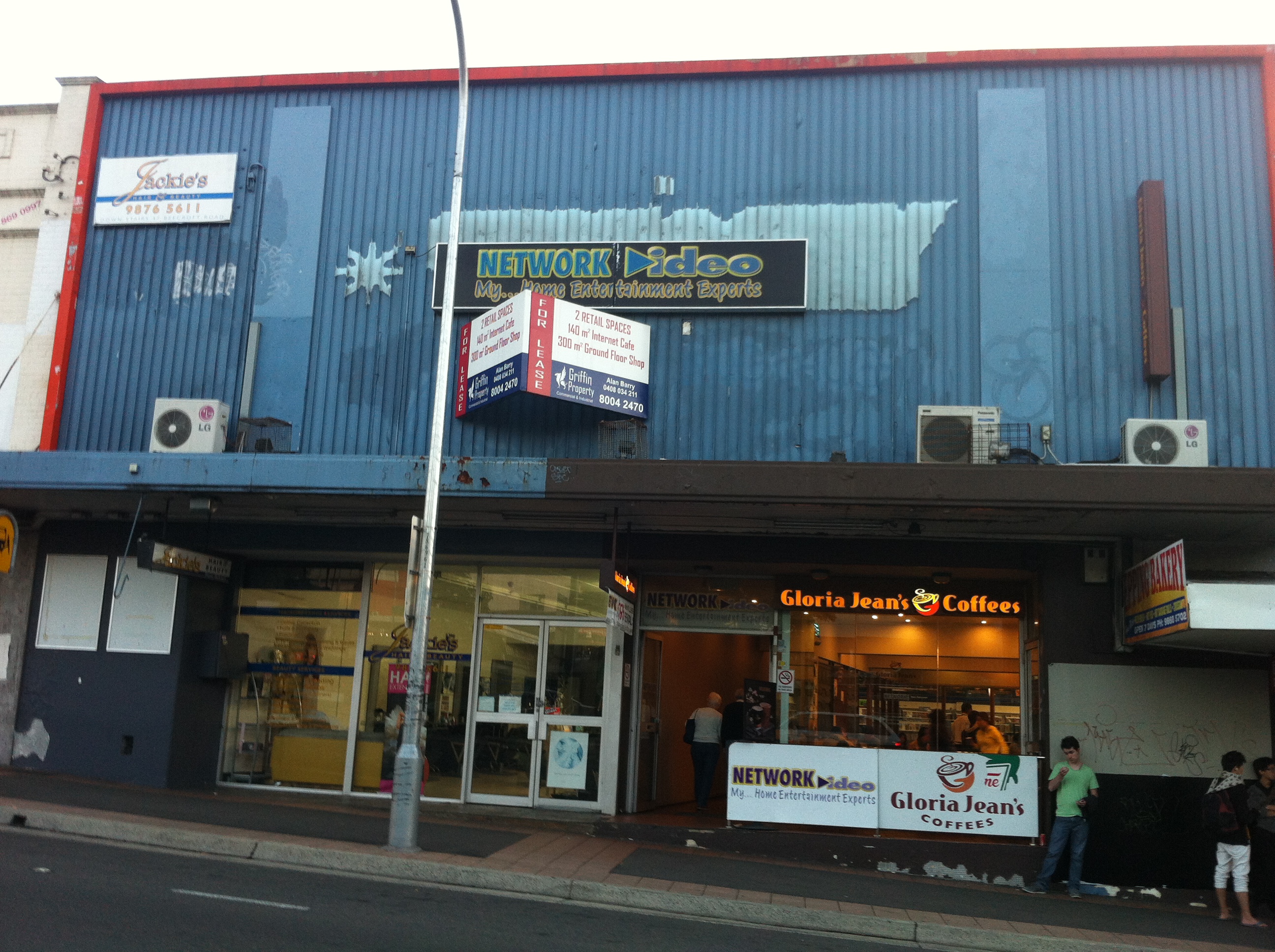
Another testament to the power and influence of video shops in the old days – it took three shops to replace one giant Video Ezy. You can see on the left the space where new release posters would have hung, luring potential new members inside and forcing them to think of a password of the easily forgettable variety in order to get a video card just to be able to hire Maverick for the night. Sadly for the former king of weekly entertainment, Ezy Street is a long way away these days.
Meanwhile, if you paired up locations of the ubiquitous Gloria Jean’s with Thai restaurants, you might find the number is a perfect match. Even Mickey D’s doesn’t cover this kind of territory.
THEATRICAL UPDATE: After digging a bit deeper (read: having a look around the back), it’s become apparent that this location has a bit more to it than it would seem. From the 1930s to at least the 1950s, this was the site of Epping Theatre, which is laughably obvious when you check out the rear:

If it looks like a theatre etc… The discovery of the ‘Fashions Galore’ sign means that this is now probably the longest titled entry on this blog – quite an achievement given the competition. Epping Theatre is a bit of a mystery; apart from some old ‘staff wanted’ ads and its listing in several State Library photo archives (currently unseen), there’s not much out there. Or is there? Readers, if you can help, you know what to do.
HELPFUL UPDATE: Reader Carmen was kind enough to send in a picture of Epping Theatre in its prime. Judging by the films on show – Johnny Belinda, The Gallant Blade and Red Canyon – this was taken in 1949. Check it out:

Epping Theatre, 1949. Thanks to reader Carmen for the image!
PS. Just in case you didn’t believe this was at any stage a Video Ezy, check out this solid gold proof that awaits those brave enough to wander up the back alley:
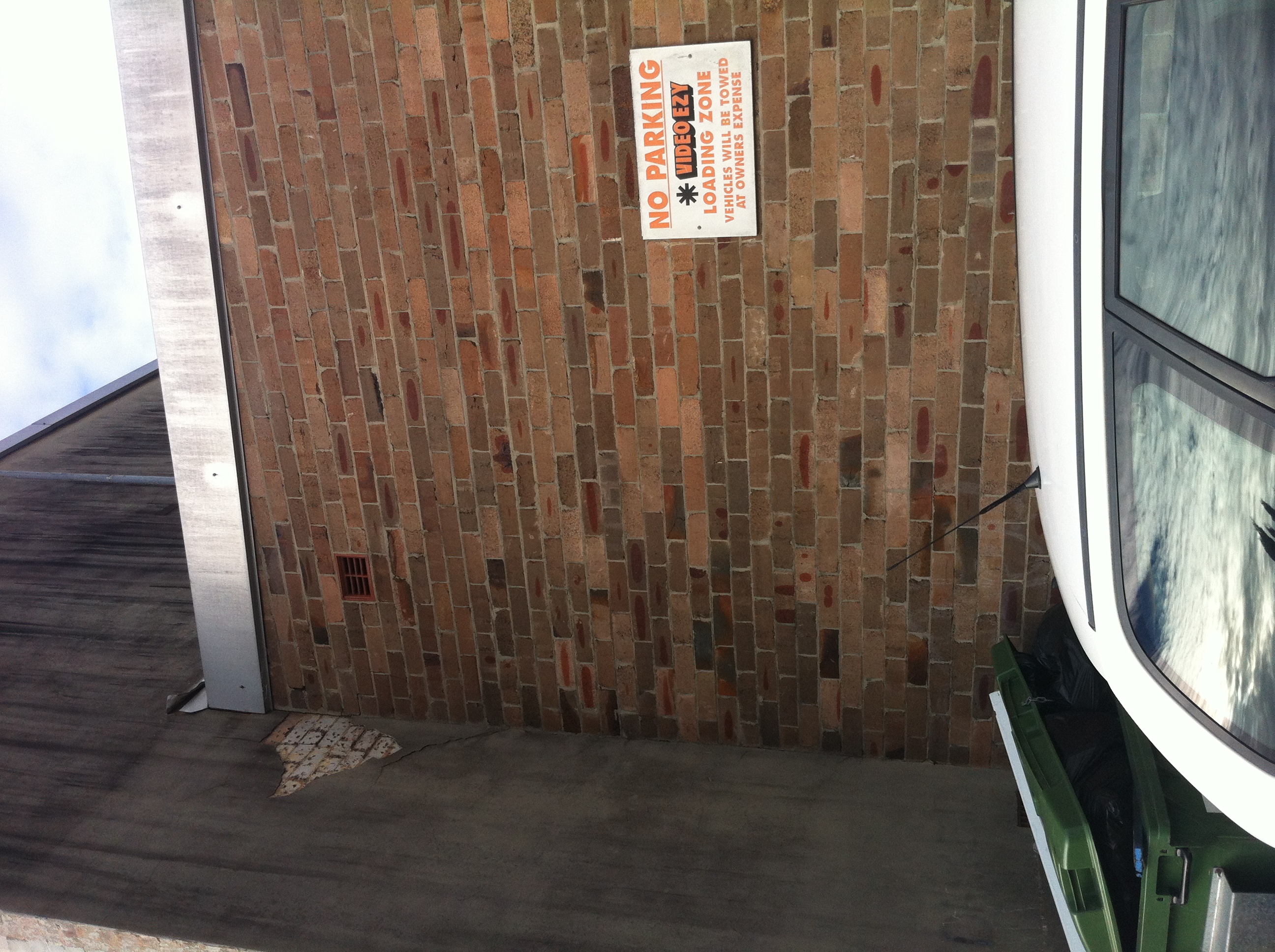
It says a lot about the current state of Video Ezy that this guy’s chosen to park there despite the sign. Ballsy.
New Kings Theatre/Greater Union/For Lease – Mosman, NSW

The New Kings Theatre, Mosman, 1937. Image courtesy State Library of NSW.
Over the years, the New Kings Theatre at Mosman went by a variety of names – the Kings, the Classic – until it was finally caught in the current of progress in 1976. The Village cinema chain took over the art deco theatre that year, and it ran in friendly competition with its nearby contemporary, the Cremorne Orpheum.
But in a story that’s all too familiar in the world of old theatres, suits suddenly appeared on the scene and started making decisions on behalf of business. Greater Union demolished the New Classic Kings Village in 1986, a move which shocked the community. The twin cinema that replaced it opened in 1988 to much fanfare; so cheesy and contrived was the whole venture that even the cinema’s phone number was 9969 1988. Sheesh.

On paper, you’d think replacing an old 30s single screen picture theatre with a modern twin would be like printing money, but 23 years after its grand opening, the Greater Union Mosman was printing termination notices for its staff.

The GU’s profits didn’t come anywhere close to those at the still-vintage Cremorne Orpheum, and in 2011 the twin closed its doors for the final time. It’s currently waiting, like much of Mosman’s shopping district, to be demolished and redeveloped into residential/commercial towers, but until that happens it stands as a testament to the Orpheum’s appeal and triumph over progress.
Paragon No. 1 Theatre/Canterbury Leagues Club – Belmore, NSW
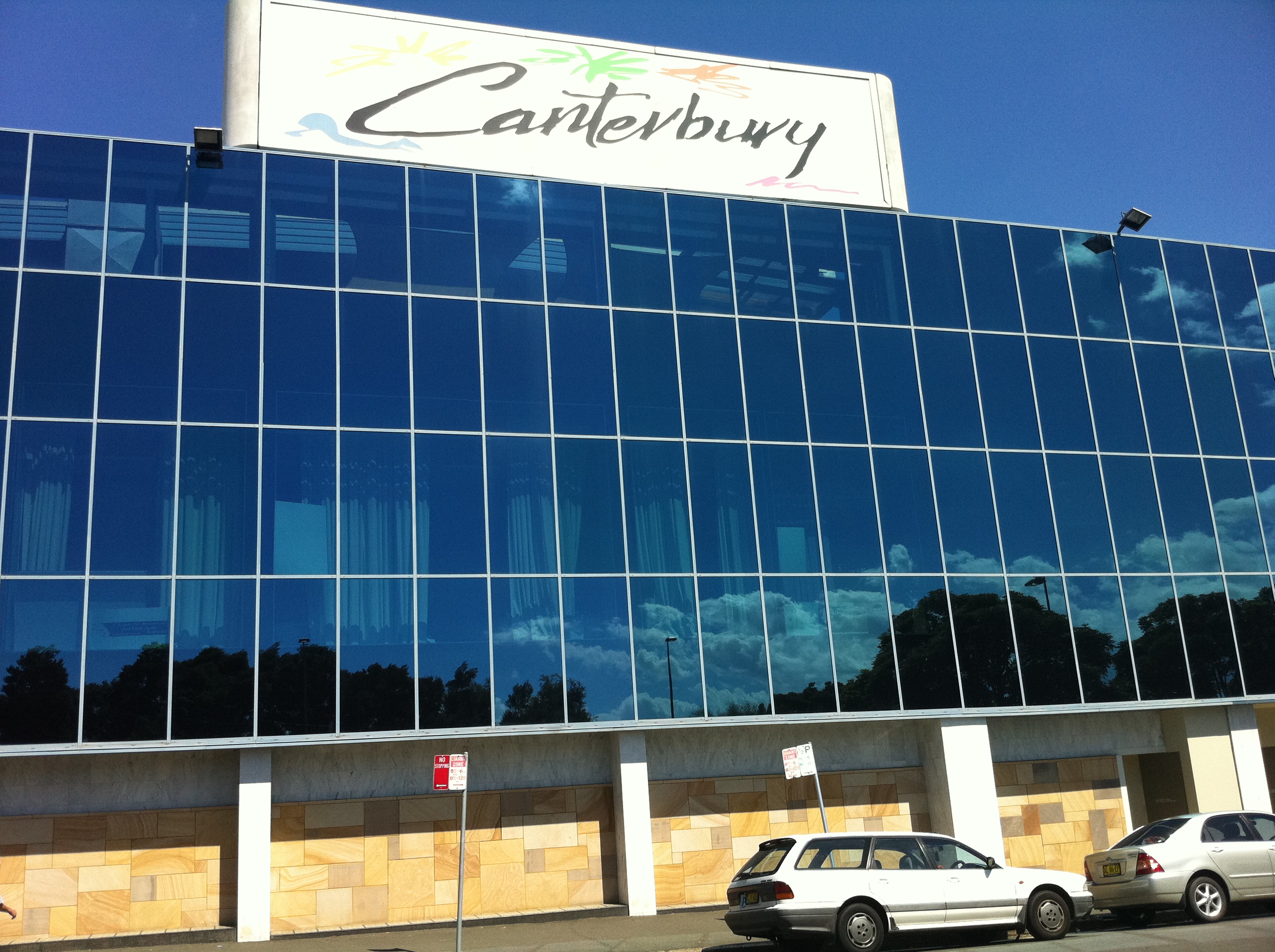
Opening in 1923 and closing in November 1958, the Paragon No. 1 Theatre had a longer life than its twin.

Paragon No. 1 Theatre, 1958. Courtesy Barry Sharp and City of Canterbury Local History Photograph Collection
Starting life as a picture theatre serving the undemanding entertainment needs of Belmore, the Paragon replaced a shed that stood on the Bridge Road site previously. Was the shed the suburb’s previous entertainment hub? Who knows. The Paragon No. 2 opened further up the road in 1928, and throughout the 30s and 40s, business was good.
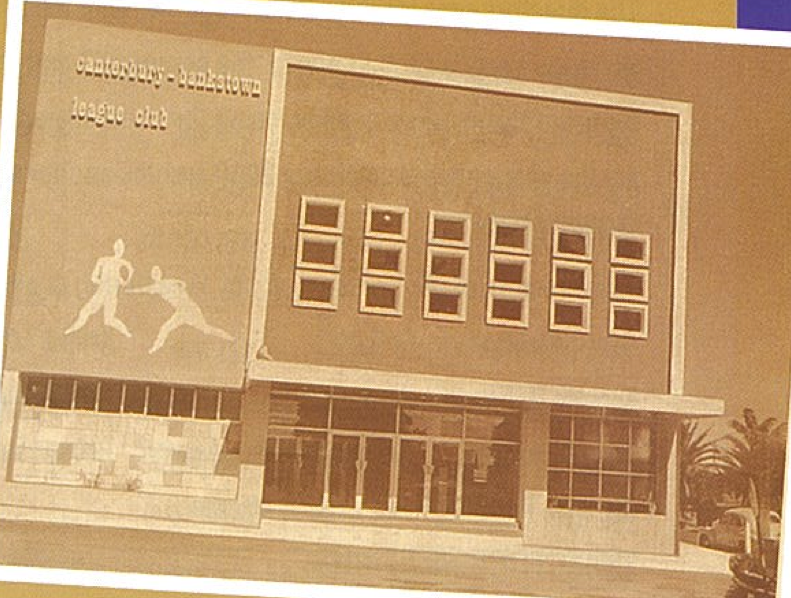
Canterbury-Bankstown League Club, 1960. Image courtesy Canterbury League Club.
The Canterbury-Bankstown Bulldogs rugby league team had been formed in 1935, and as early as 1939 the club was holding its annual meetings at the Paragon Theatre. The Paragon staff must have slighted the club somehow, because what goes around comes around. In 1957, the Canterbury-Bankstown League Club was formed to support the football club, and took up residency in a reconditioned naval hut built by club volunteers in nearby Collins Street.
By 1958, the Paragon was floundering, struggling against the introduction of TV and a decline in suburban cinemas. Meanwhile, the Canterbury-Bankstown Leagues Club was growing rapidly, and had already outgrown the naval hut. The club bought out the Paragon, and by 1960 had converted it into the spiffy new club premises seen above.
UPDATE: Courtesy of reader Tony, we’ve now got a look at the brochure handed out at the grand opening of the rejigged Leagues Club in 1960. Big thanks, Tony!

As opposed to the unofficial opening, I’m guessing.
Incidentally, Mr. Frank Stewart, M. H. R., was a World War II veteran and ex-first grade Bulldog who went on to become the Minister for Tourism and Recreation in the Whitlam Government. It was Stewart who leaked info to the Federal Opposition regarding the Loans Affair, which ‘kicked off’ (heh) the chain of events that eventually brought down the Whitlam Government, but he also played a crucial part in the establishment of the Australian Institute of Sport. Oh, and he also presided over the opening of the Canterbury Leagues Club, but you knew that already.
It’s easy to imagine that the further growth of the club over the next 50 years into the behemoth it is today is indicative of the growing enthusiasm in the suburbs for RSL and Leagues clubs, which provided myriad entertainment options the Paragon could only have dreamed of. Realistically, the growth is probably also indicative of pokie profits.
The idea of a suburban cinema now seems quaint in comparison. In honour of its fallen homie, today’s Canterbury League Club features a ballroom named the Paragon Room, and there’s a Paragon Lane that runs beside the Club. No tributes to that naval hut, though.
A HUGE thanks to Lea Thomas at the Canterbury League Club for her generosity and assistance!
Broadway Theatre/Jonathan’s Disco/Phoenician Club/Breadtop – Ultimo, NSW
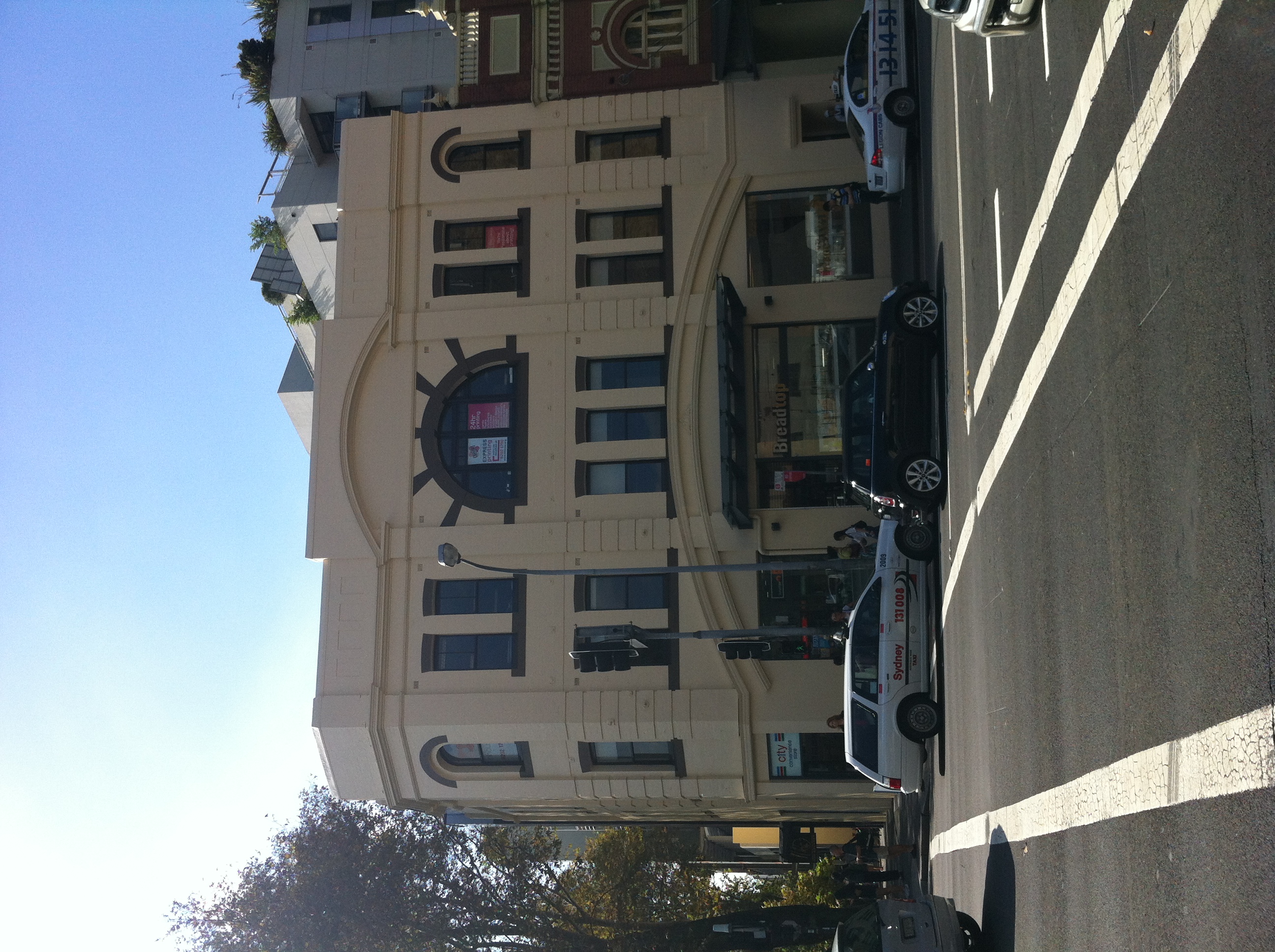
These days, this building on the corner of Mountain Street and Broadway, Ultimo, houses a convenience store, apartments, and our old friend Breadtop, but the inconspicuous facade hides a colourful and tempestuous history.
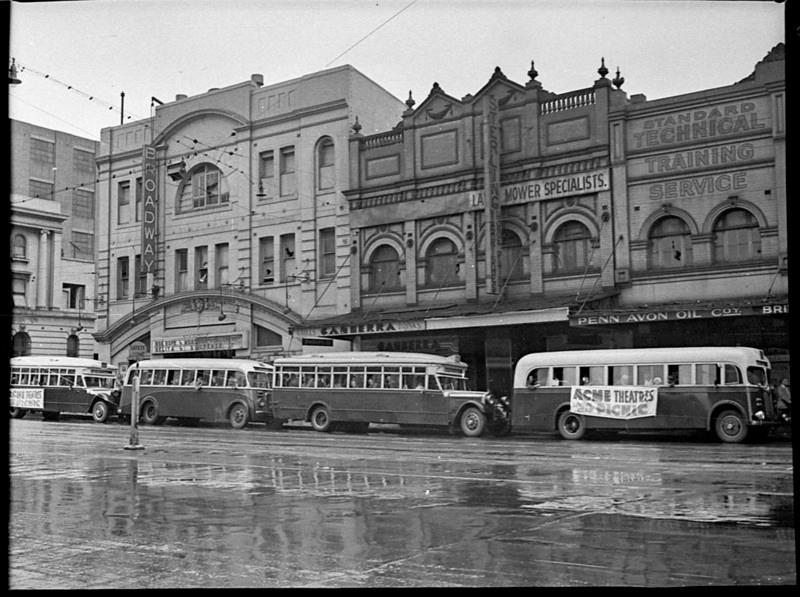
The Broadway Theatre. Image courtesy Sydney Cinema Flashbacks.
Built in 1911, the building started life as the Broadway Theatre, a cinema. With the advent of TV, this was one of many suburban cinemas that had fallen by the wayside by 1960, when it closed. In 1968, it was acquired by nightclub owner John Spooner and converted into Jonathan’s Disco, where it became well known as one of Sydney’s prime live music venues. Sherbet and Fraternity both got their big break at Jonathan’s, playing residencies involving six hour days for months on end. Imagine the poor disco staff having to listen to six hours of Sherbet a day for months. Perks of the job…

Jonathan’s Disco, post-fire, 1972. Image courtesy City of Sydney Archives.
In May 1972, Jonathan’s Disco was gutted by fire. I can’t help but think it was one of those beleaguered staff members. “HowZAT?” they’d’ve quipped as they flicked their cigarette into the freshly-poured puddle of gasoline. The damage was extensive, and required a complete internal refit before it was opened again in 1976 as a ballroom dancing studio.

Jonathan’s Disco interior, post-fire, 1972. Image courtesy City of Sydney Archives.
The Sydney City Council granted the Maltese community use of the premises as a licensed venue in 1980, when it became the Phoenician Club. Once more, the site became one of Sydney’s most popular live music venues with local bands such as Powderfinger and Ratcat playing gigs there throughout the late 80s and early 90s. Nirvana played their first Sydney show there in 1992 – a far cry from Sherbet. Around this time, the rave scene exploded in Sydney; a development that would lead to the end of the Phoenician Club.
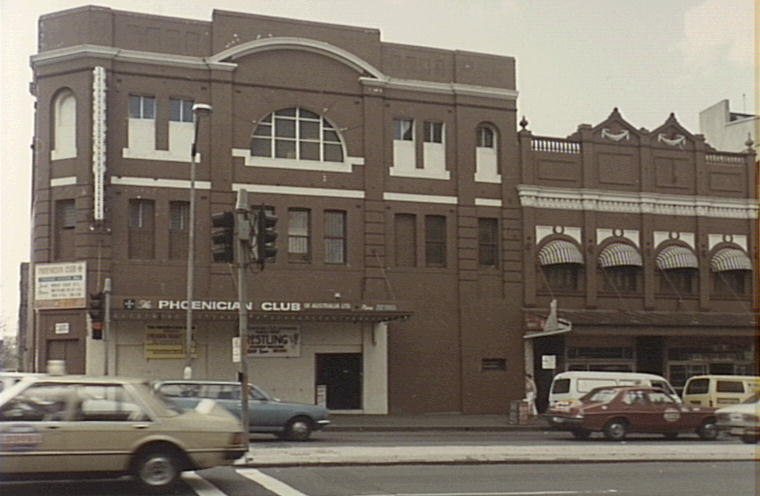
The Phoenician Club, mid-1980s. Image courtesy City of Sydney Archives.
Anna Wood, a 15yo schoolgirl from Belrose, attended an ‘Apache’ dance party at the Phoenician in October 1995, where she took ecstasy. Her resulting death shocked Sydney and enraged then-NSW Premier Bob Carr, who declared war on the Club. A series of fines and restrictions imposed on live venues in the wake of Wood’s death led to the closure of the Club in 1998 and the decline of Sydney’s live music scene which continues today. Good thing Wood wasn’t killed by a pokie machine.

The derelict Phoenician Club, 2000. Image courtesy City of Sydney Archives.
From 1998 the site sat derelict, just in time for the Olympics. Nothing international visitors like seeing more than abandoned, graffiti-tagged buildings. In 2001 it was completely redeveloped internally, and today satisfies Carr’s idea of a venue put to good use.
Odeon Theatre/Pacific Gym/Lifestyle Fitness Australia – Carlton, NSW

Doing its best to hide its 70s facade behind 21st century bleating that ‘it’s all about YOU’ is Carlton’s Lifestyle Fitness Centre. Sometime around the turn of the last decade, public consciousness as a whole decided that going to a ‘gym’ was suddenly either retro or gay, but attending a ‘lifestyle fitness centre’ was the new yoga.
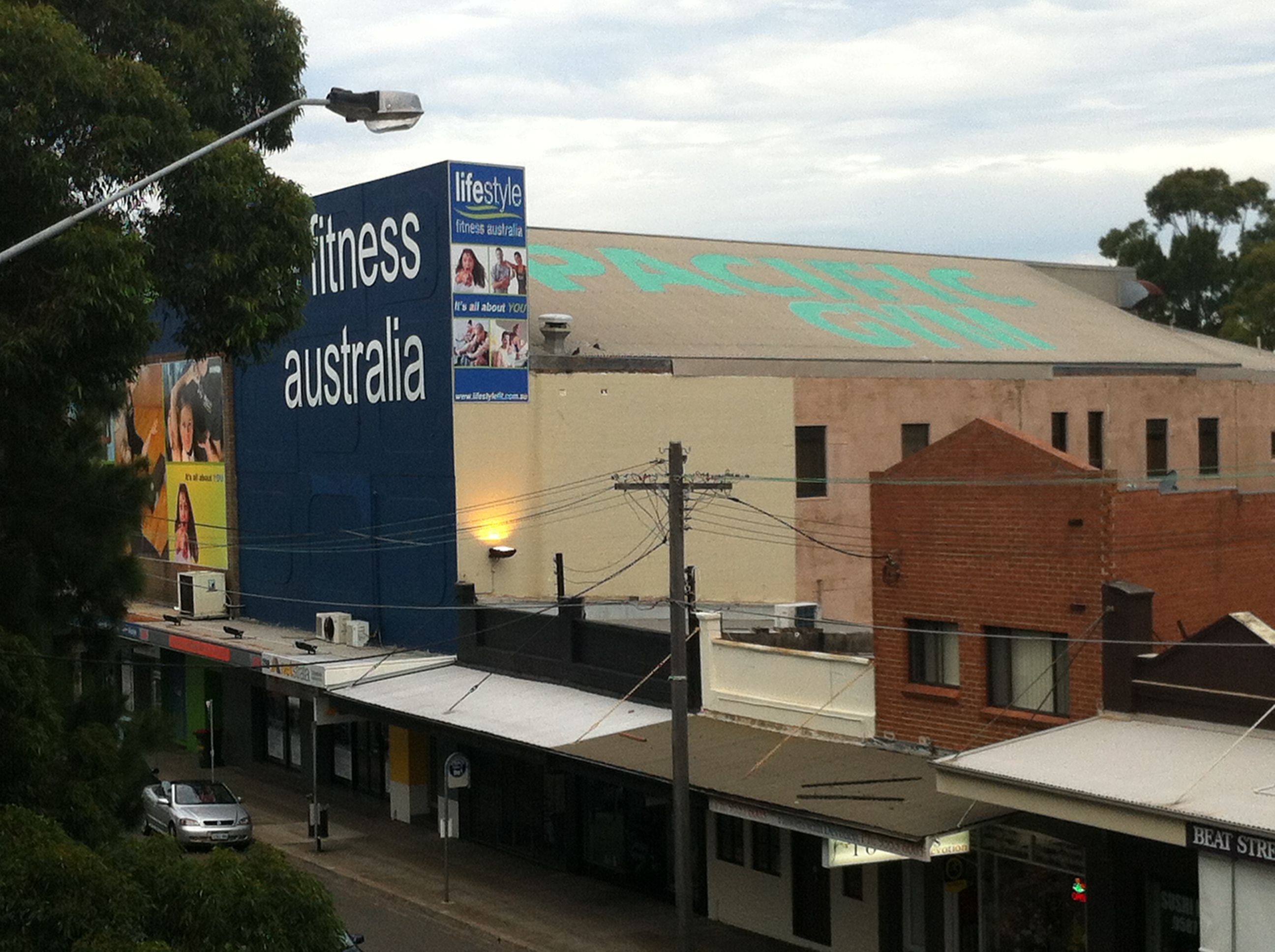
The Pacific Gym (formerly the Odeon and later, DeLuxe, Theatre from 1925-1964), not wanting to be branded retro or gay, caved to the peer pressure and started catering to lunch-break athletes and muscle-monkeys from all over the St. George district. That said, I could be completely wrong, and they just have that Pacific Gym roof mural on a standard escape-proof gym membership plan.
UPDATE: The Pacific through the ages. Here it is in 1939…
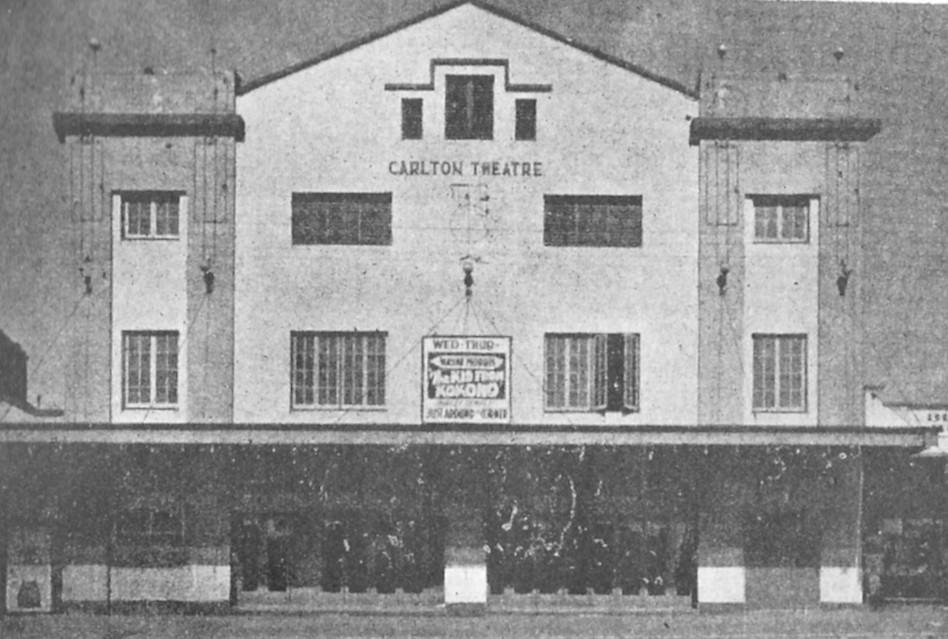
Carlton Theatre, 1939. Image courtesy Barry Sharp/Ken Taylor.
1959…

Carlton Odeon, 1959. Image courtesy Barry Sharp/Ken Taylor.
…and finally, 1970.

That colour’s jolting all of a sudden, isn’t it? Pacific Photo Lab, 1970. Image courtesy Kogarah Library.
Really makes you realise just how ugly that gym is.

 Past/Lives of the Near Future