John Sands Building/For Lease – Wynyard, NSW
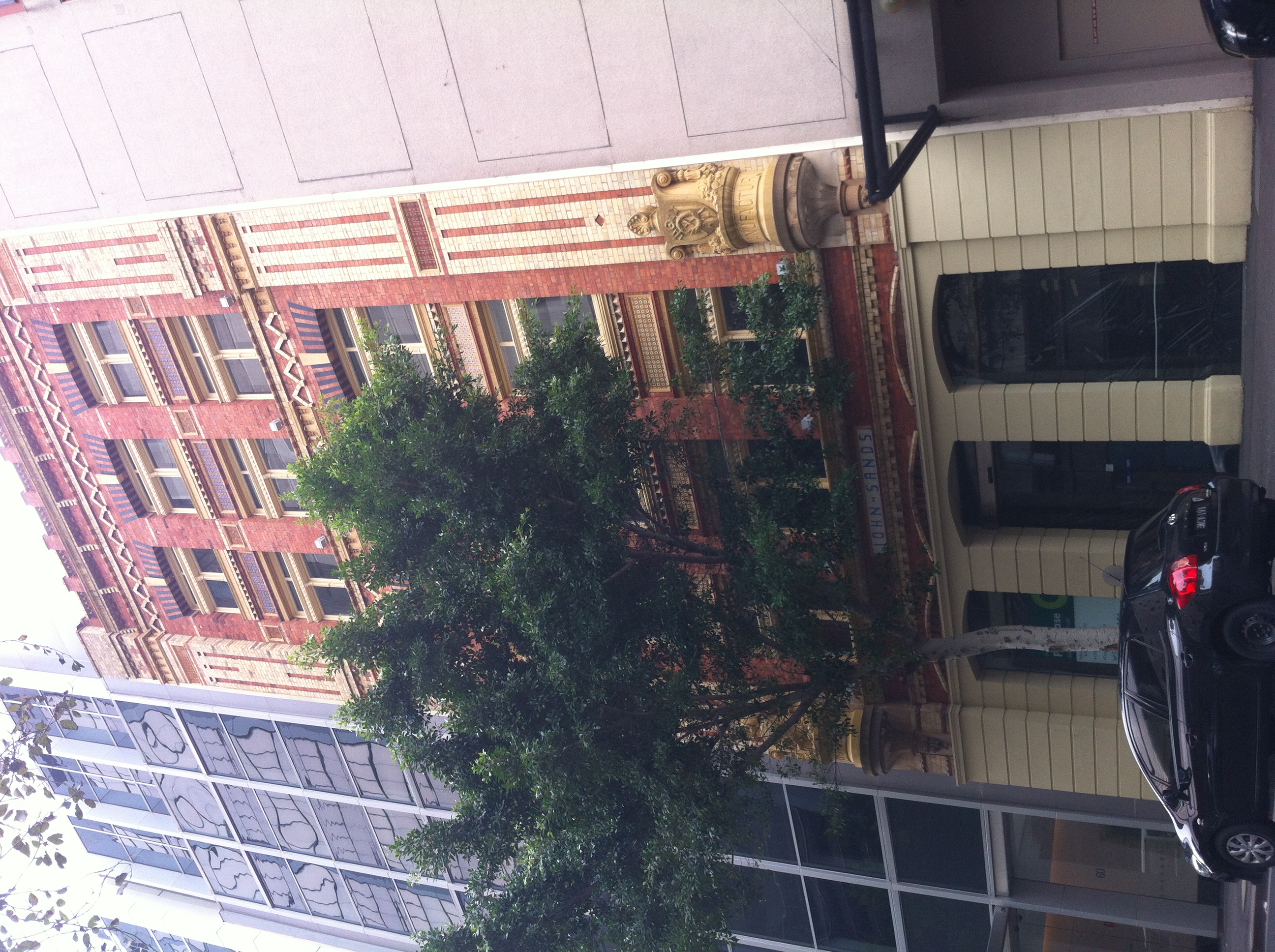
If you’ve ever had a birthday, chances are you’ve received a card from John Sands. Although John (1818-1873) has been indisposed for a fair period of time now, he never forgets a birthday, a funeral, an unexpected pregnancy, or any other occasion requiring a “social expression”. These days, John Sands is owned by the fittingly named faceless corporation American Greetings, but back before he sold out, Sands ran his operations from locations (dunes?) in Druitt Street, the flagshop in George Street, and here, in Clarence Street.
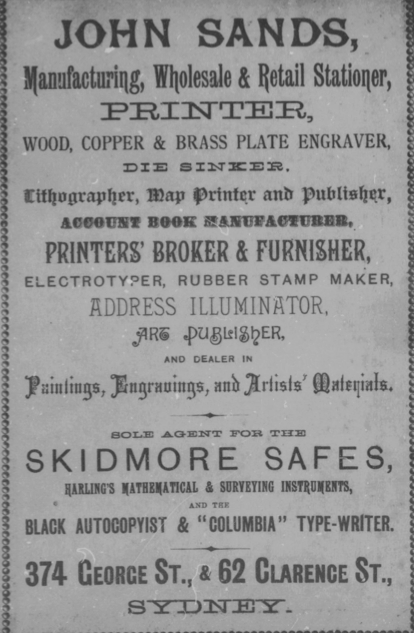
As you can see, John and the other Sands made a living sinking dies, engraving plates and printing all manner of stationery. Someone was canny enough to have engraved the business name all over this building too, because now it’s heritage listed. Despite the listing, it’s currently for lease, despite plans in recent years to convert it into an Italian restaurant and a Nando’s chicken shop, among other things. To survive a Nando’s incursion…that’s staying power. I guess you might say [Terrible sand erosion pun removed for everybody’s sake – Ed].
Bank of Australasia/3 Wise Monkeys – Sydney, NSW
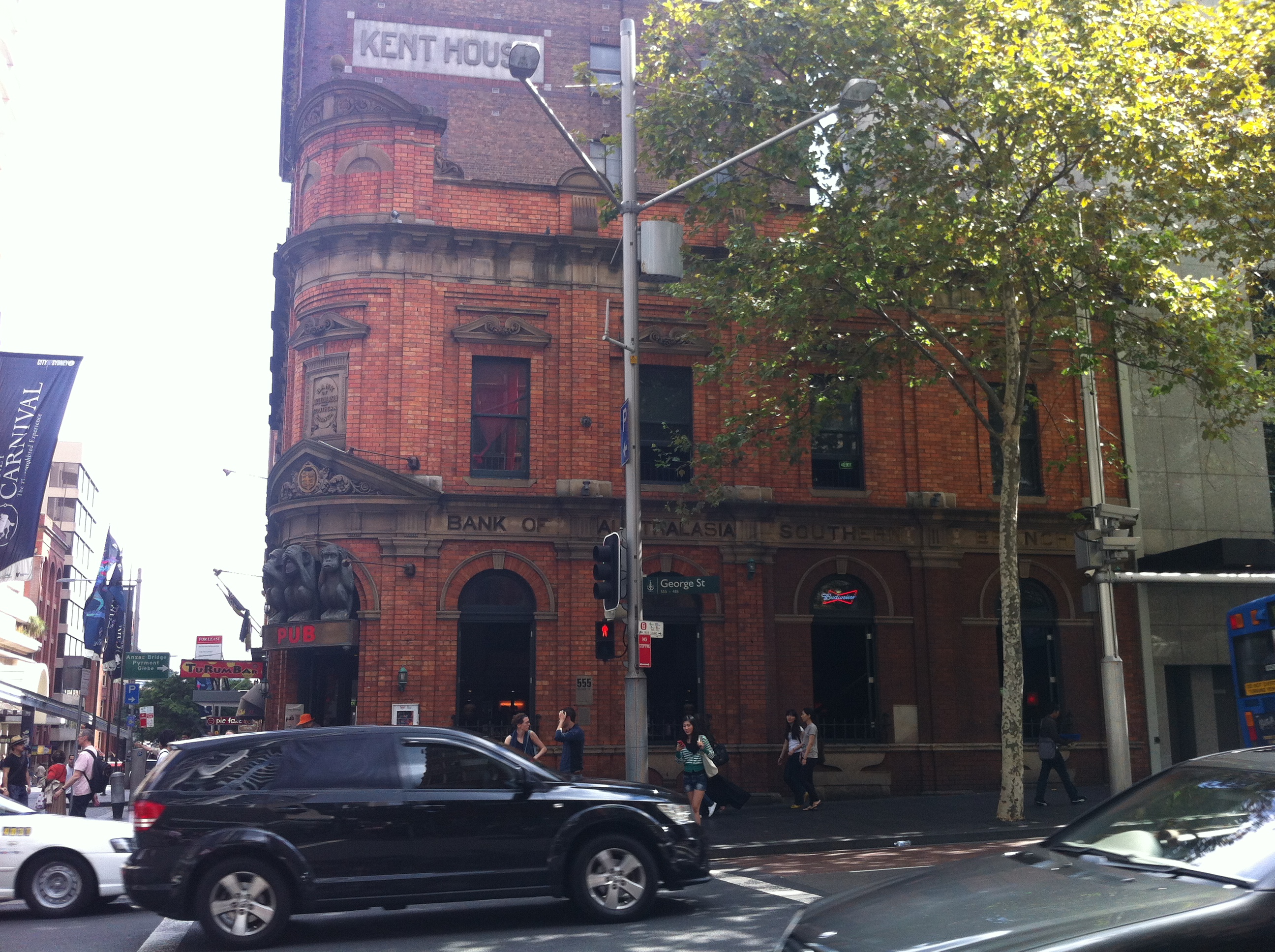
The Bank of Australasia first moved into this address in 1879, establishing their ‘Southern Sydney’ branch in a rented building. The current building was erected in 1886, but remained under the ownership of the Estate of a James Powell until 1902, when the BOA suddenly remembered it was a bank and could take any property it wanted. It bought out the site, which remained a bank until 1998. The Bank of Australasia became a part of the ANZ in 1951, and rebranded this site as an ANZ bank in 1970.

Although the interiors have been refurbished, the exterior of the building is in remarkably good condition considering what the site is now – the 3 Wise Monkeys pub. Established in 2000, the 3 Wise Monkeys has a reputation as a live music venue and as a place where wisdom is not on tap. Of all the places in Sydney to not want to be seeing, hearing or speaking evil, George Street is probably at the top of the list.
Anzac Memorial Hall/Country Road – Mosman, NSW

Just in time for Anzac Day (whoops), here we have Mosman’s Anzac Memorial Hall. Built in 1922, it appears to have existed as the memorial hall until 1934, when it became the Kings Theatre (NOT the New Kings Theatre, which opened in 1937). Strangely, to make room for the cinema, the Mosman RSL vacated this building and moved into…a different cinema, the Mosman Kinematheatre, which was further along Military Road.
These days, this memorial hall is now a Country Road fashion outlet, allowing shoppers the opportunity to observe a minute’s silence as well as the latest winter looks.
New Kings Theatre/Greater Union/For Lease – Mosman, NSW

The New Kings Theatre, Mosman, 1937. Image courtesy State Library of NSW.
Over the years, the New Kings Theatre at Mosman went by a variety of names – the Kings, the Classic – until it was finally caught in the current of progress in 1976. The Village cinema chain took over the art deco theatre that year, and it ran in friendly competition with its nearby contemporary, the Cremorne Orpheum.
But in a story that’s all too familiar in the world of old theatres, suits suddenly appeared on the scene and started making decisions on behalf of business. Greater Union demolished the New Classic Kings Village in 1986, a move which shocked the community. The twin cinema that replaced it opened in 1988 to much fanfare; so cheesy and contrived was the whole venture that even the cinema’s phone number was 9969 1988. Sheesh.

On paper, you’d think replacing an old 30s single screen picture theatre with a modern twin would be like printing money, but 23 years after its grand opening, the Greater Union Mosman was printing termination notices for its staff.

The GU’s profits didn’t come anywhere close to those at the still-vintage Cremorne Orpheum, and in 2011 the twin closed its doors for the final time. It’s currently waiting, like much of Mosman’s shopping district, to be demolished and redeveloped into residential/commercial towers, but until that happens it stands as a testament to the Orpheum’s appeal and triumph over progress.
Paragon No. 1 Theatre/Canterbury Leagues Club – Belmore, NSW
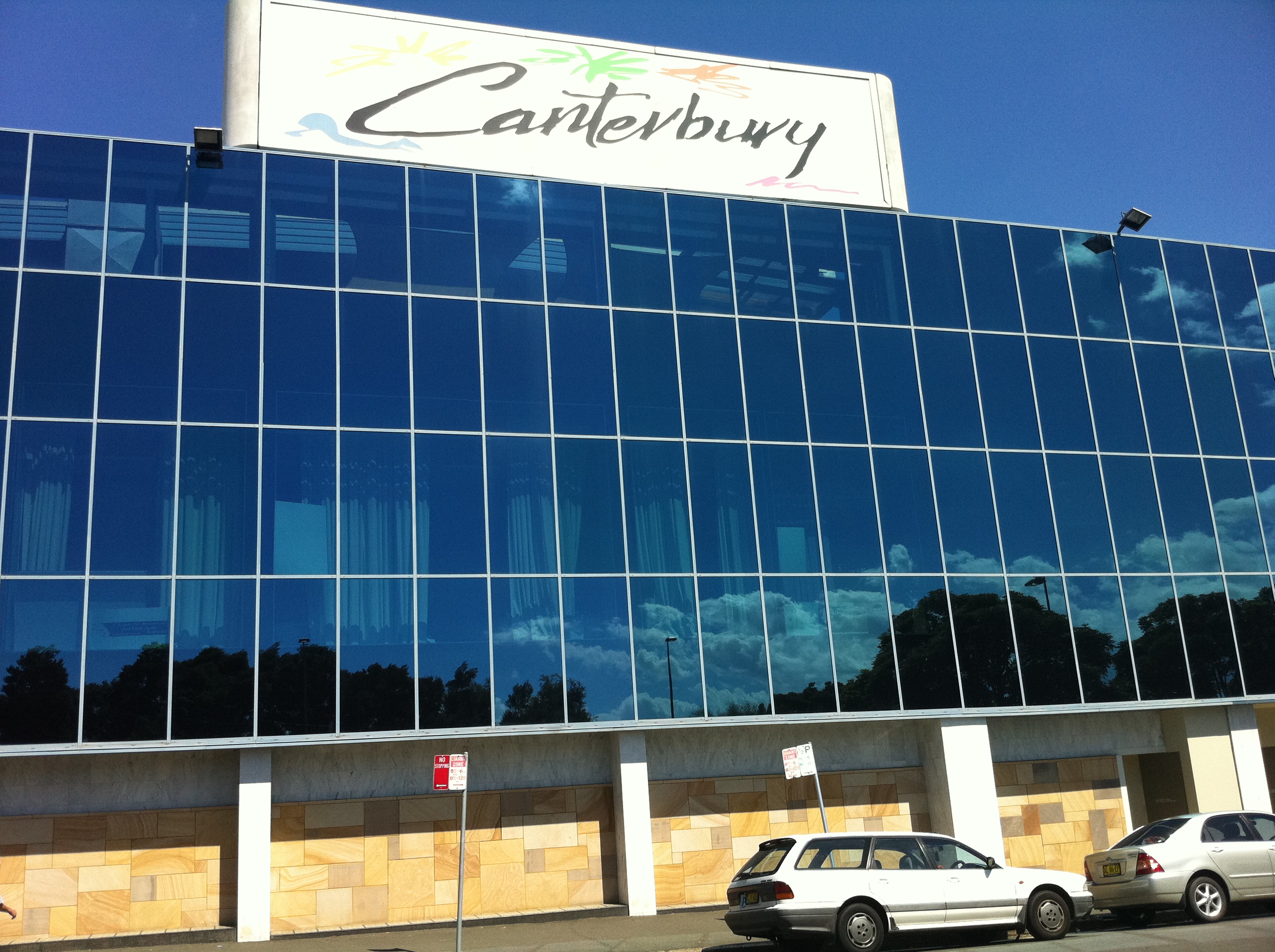
Opening in 1923 and closing in November 1958, the Paragon No. 1 Theatre had a longer life than its twin.

Paragon No. 1 Theatre, 1958. Courtesy Barry Sharp and City of Canterbury Local History Photograph Collection
Starting life as a picture theatre serving the undemanding entertainment needs of Belmore, the Paragon replaced a shed that stood on the Bridge Road site previously. Was the shed the suburb’s previous entertainment hub? Who knows. The Paragon No. 2 opened further up the road in 1928, and throughout the 30s and 40s, business was good.
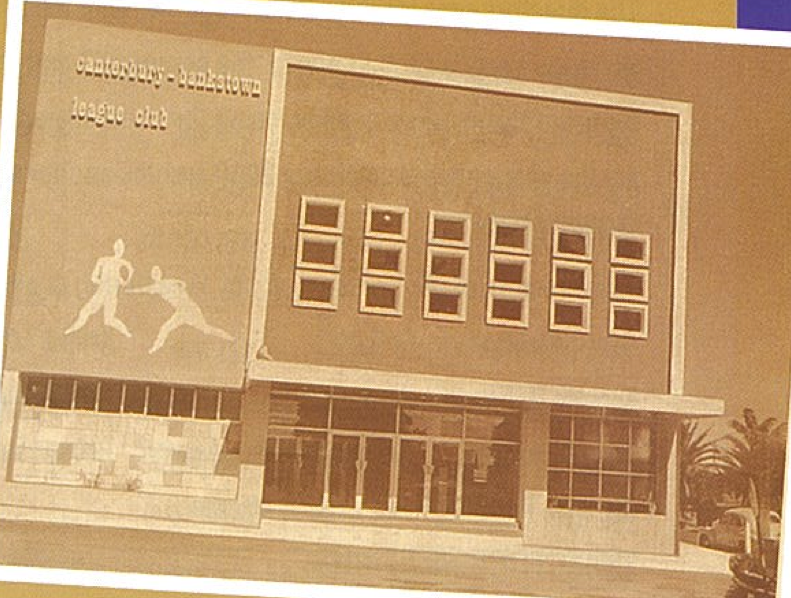
Canterbury-Bankstown League Club, 1960. Image courtesy Canterbury League Club.
The Canterbury-Bankstown Bulldogs rugby league team had been formed in 1935, and as early as 1939 the club was holding its annual meetings at the Paragon Theatre. The Paragon staff must have slighted the club somehow, because what goes around comes around. In 1957, the Canterbury-Bankstown League Club was formed to support the football club, and took up residency in a reconditioned naval hut built by club volunteers in nearby Collins Street.
By 1958, the Paragon was floundering, struggling against the introduction of TV and a decline in suburban cinemas. Meanwhile, the Canterbury-Bankstown Leagues Club was growing rapidly, and had already outgrown the naval hut. The club bought out the Paragon, and by 1960 had converted it into the spiffy new club premises seen above.
UPDATE: Courtesy of reader Tony, we’ve now got a look at the brochure handed out at the grand opening of the rejigged Leagues Club in 1960. Big thanks, Tony!

As opposed to the unofficial opening, I’m guessing.
Incidentally, Mr. Frank Stewart, M. H. R., was a World War II veteran and ex-first grade Bulldog who went on to become the Minister for Tourism and Recreation in the Whitlam Government. It was Stewart who leaked info to the Federal Opposition regarding the Loans Affair, which ‘kicked off’ (heh) the chain of events that eventually brought down the Whitlam Government, but he also played a crucial part in the establishment of the Australian Institute of Sport. Oh, and he also presided over the opening of the Canterbury Leagues Club, but you knew that already.
It’s easy to imagine that the further growth of the club over the next 50 years into the behemoth it is today is indicative of the growing enthusiasm in the suburbs for RSL and Leagues clubs, which provided myriad entertainment options the Paragon could only have dreamed of. Realistically, the growth is probably also indicative of pokie profits.
The idea of a suburban cinema now seems quaint in comparison. In honour of its fallen homie, today’s Canterbury League Club features a ballroom named the Paragon Room, and there’s a Paragon Lane that runs beside the Club. No tributes to that naval hut, though.
A HUGE thanks to Lea Thomas at the Canterbury League Club for her generosity and assistance!

 Past/Lives of the Near Future