T. C. Whittle Pty Ltd/Belmadar Constructions/Licorice Productions – Mascot, NSW

The history of the companies emblazoned on this building is as murky as the canal flowing past outside. T.C. Whittle was a construction company responsible, from the 1940s to the 1960s, for New Selborne Chambers on Phillip Street in the CBD, the St Margaret’s Hospital for Women in Surry Hills, and the Cameron office complex in Belconnen Town Centre (demolished 2006) among others. But even that illustrious resume didn’t stop T. C. Whittle from ending up delisted from the ASX in 1980, dodgily changing its name to TCW Investments, and finally, being deregistered completely by ASIC in 2005.
Belmadar, on the other hand, was known mostly for roadworks, and we all know how well done those are in Sydney. It’s no surprise then that Belmadar is gone, and the current tenants are an events production group called Licorice Productions. It’s one of a number of new companies moving into the formerly industrial Mascot/Alexandria area to not feature heavy pollution as an output. This building in particular backs onto the Alexandra Canal, and while there immediately weren’t fish jumping happily from the water and dolphins waving hello with their flippers, there may still be hope for it yet.
H. & E. Yee Mixed Business/Beverly Hills Pharmacy/Nothing – Beverly Hills, NSW
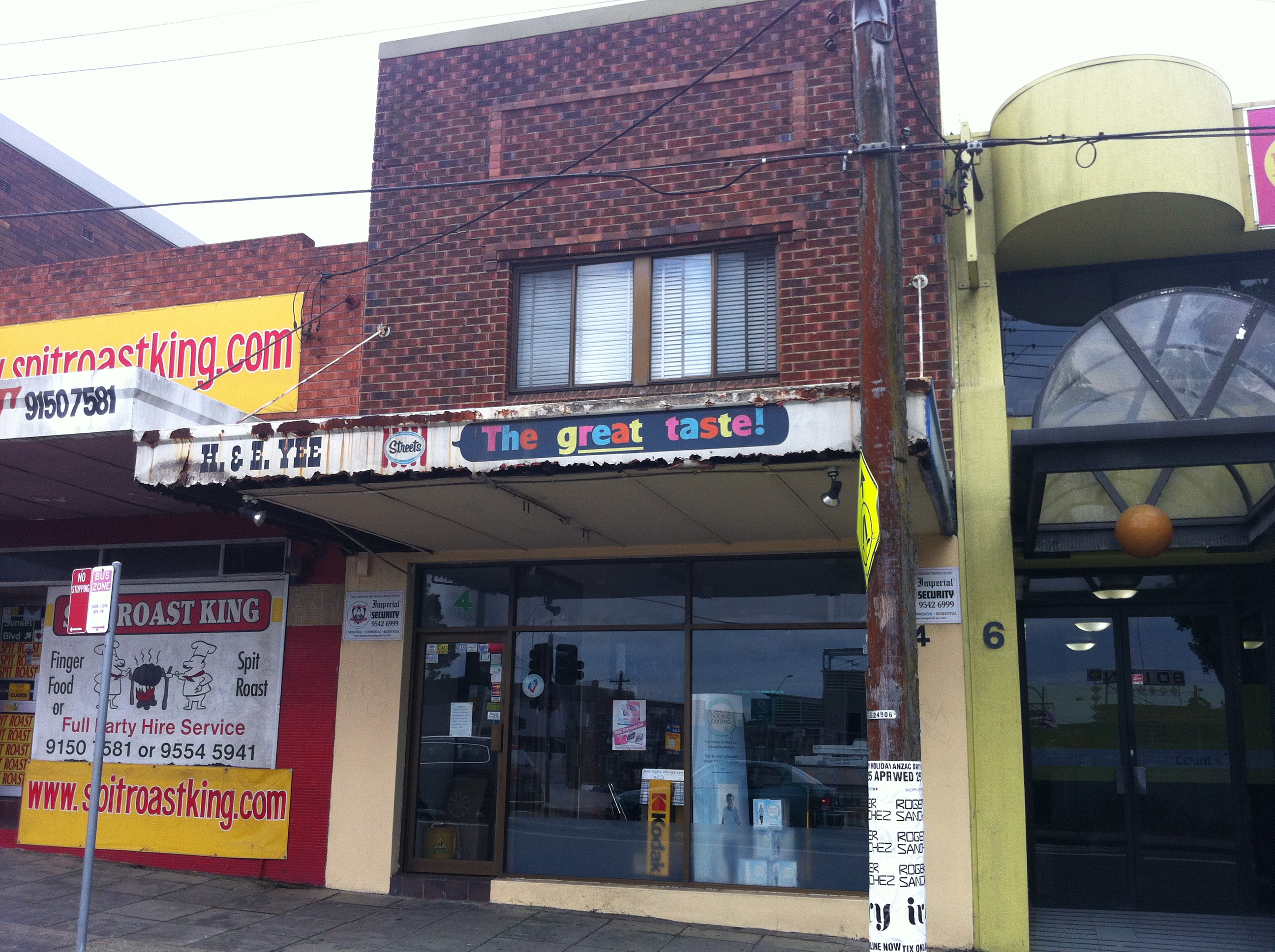
Here’s something bound to make you feel giddy – an old ice cream logo. H. & E. Yee packed it in years ago, and the new tenants, Beverly Hills Pharmacy, lazily stapled their awning sign over the top of the colourful Streets ad:

Image courtesy Google Street View.
We should have a day where we go around tearing down these stuck-on signs, revealing the age-old signs of yesterday perfectly preserved underneath. Stanmore alone would provide this blog with enough material to last into the next century.
Anyway, because everyone in Beverly Hills suddenly and instantaneously became immune to all illnesses, the pharmacy closed. The stuff is still inside, as you can see, but it’s never open. The sour taste…
Sir Joseph Banks Hotel/Sir Joseph Banks Hotel – Botany, NSW
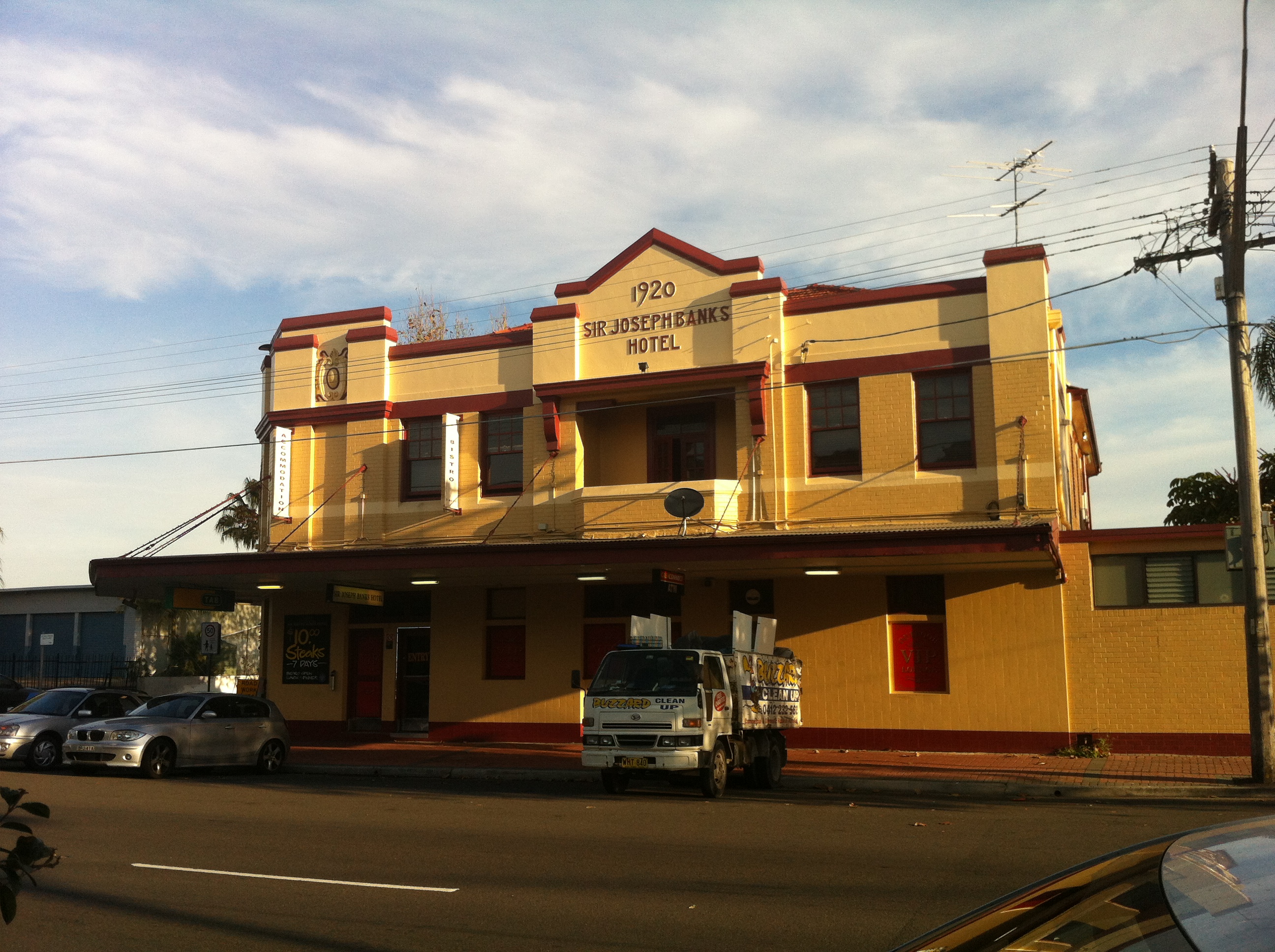
The Sir Joseph Banks Hotel, Botany Road.
While spending time in Botany yesterday, I walked past the Sir Joseph Banks Hotel on Botany Road, turned down Waratah Road, and found myself staring at…the Sir Joseph Banks Hotel? What?!
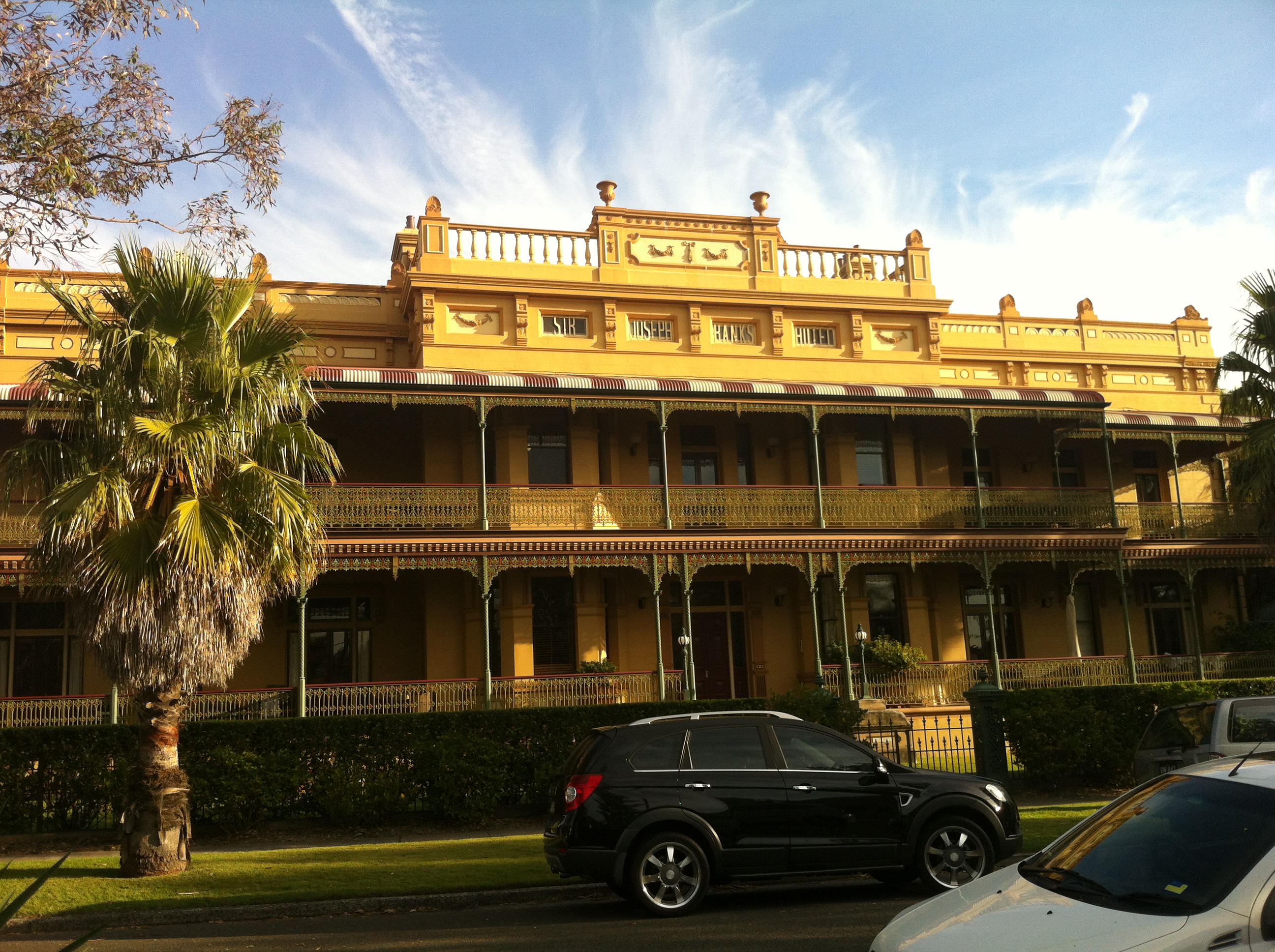
The Sir Joseph Banks Hotel, Anniversary Street.
This bigger hotel stood in front of a large park, so I’ll fill you in as we explore the park. It turned out that this hotel was the original Sir Joseph Banks Hotel, built in 1844. In 1920, the second Sir Joe was built on Botany Road, and the pub license was transferred to it, leaving the original free to become private units, which is how it is today.
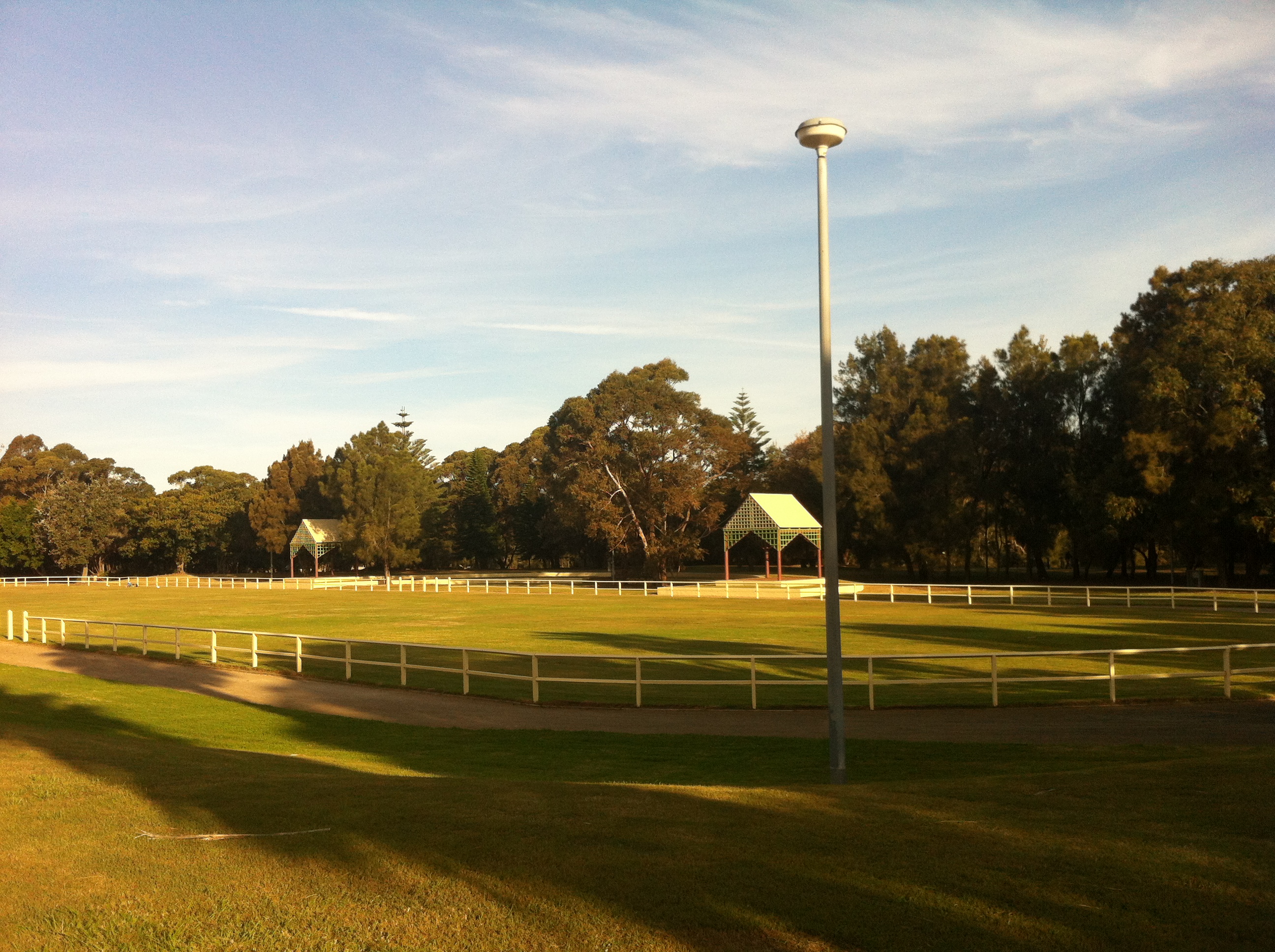
Running track, Sir Joseph Banks Pleasure Gardens.
That’s the dull part out of the way. The interesting part of this place is the garden, which has provided Sydney with a few major firsts since 1850. Here, at the garden’s running track, foot racing events were *yawn* held throughout the 1880s during the… professional running boom…I know, I know. We’ll get there.
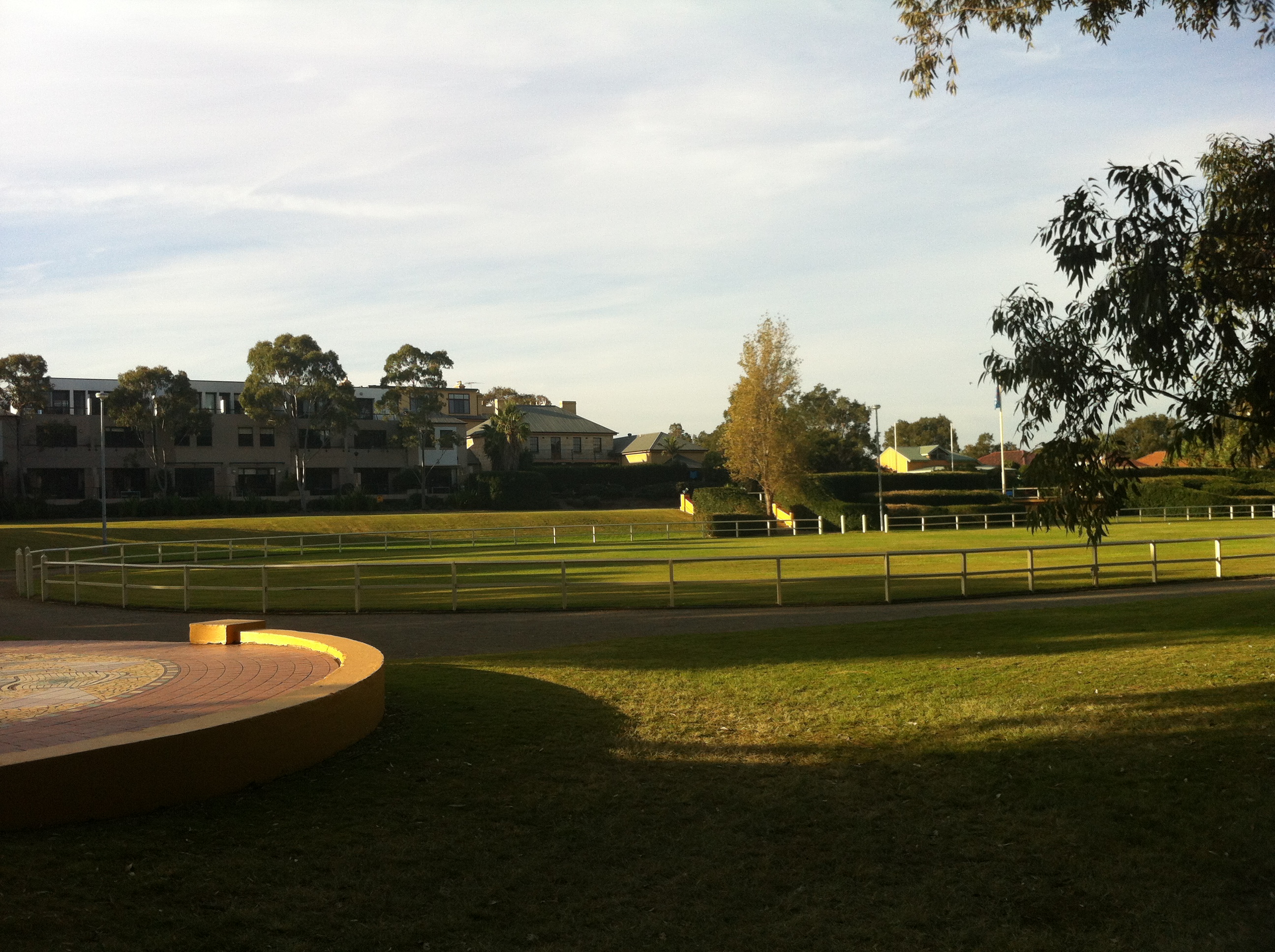
Also held at this running track was Australia’s first game of representative rugby league, in which the South Sydney Probables clashed with the Possibles. I’m guessing the Likelies played against the Maybes the week after.
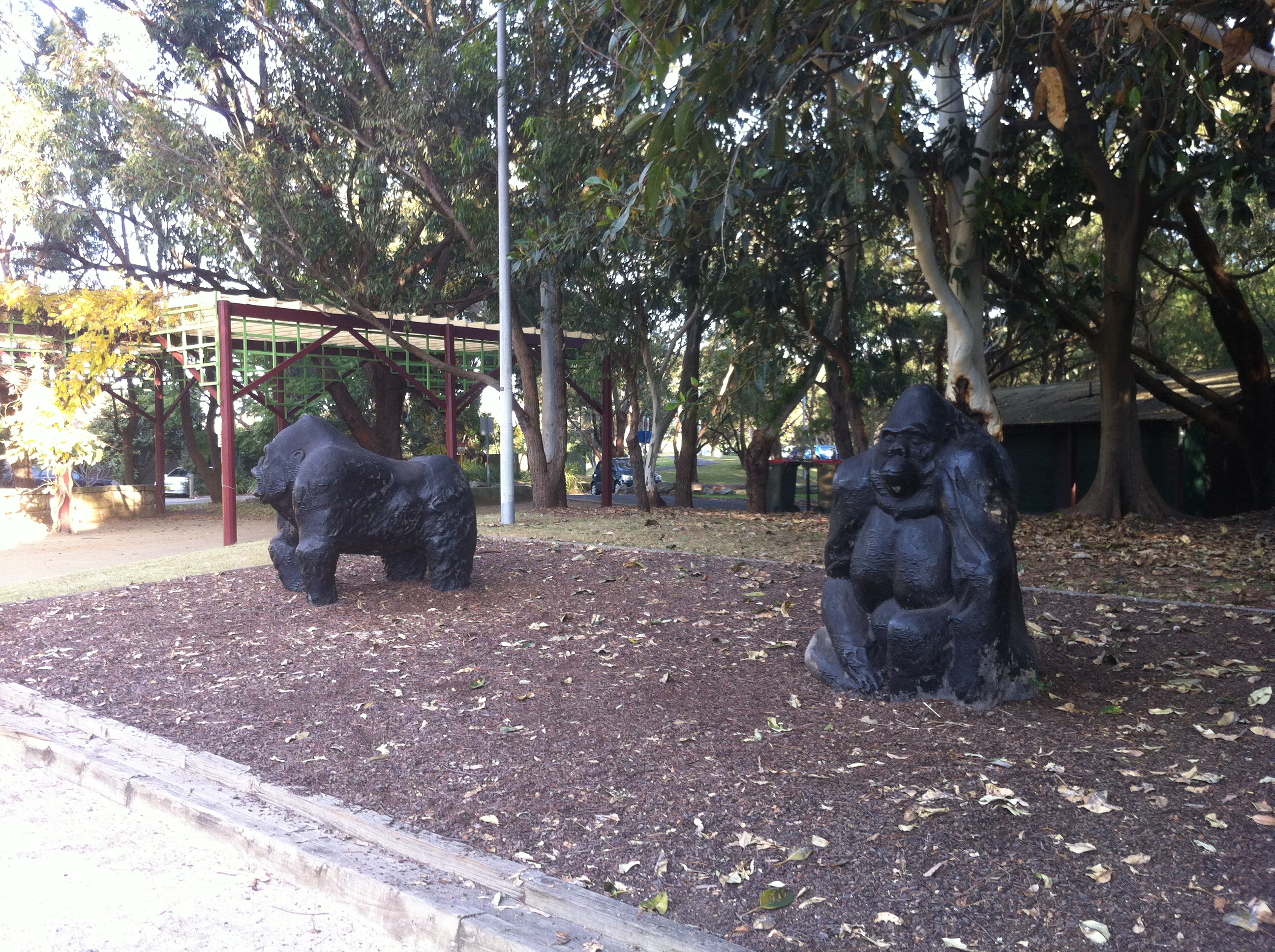
Okay, now, the most interesting thing about this park is that it was home to Australia’s first zoo. The site’s owner at the time, a timber merchant named William Beaumont, improved the hotel and created the ‘Pleasure Gardens’, which is a more scandalous and giggle-inducing name today than it would have been back then. The gardens included the private zoo.
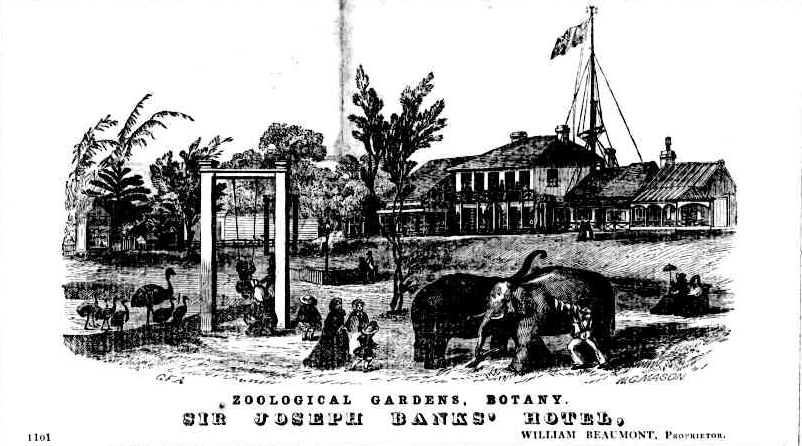
Bell’s Life in Sydney and Sporting Reviewer, Sat 27 Sep, 1856.
It’s hard to imagine tigers and elephants wandering around the grounds these days, so to assist you, the City of Botany Bay has erected a series of life size animal statues. In a way it helps, but in another way it’s kind of creepy. Judge for yourself.
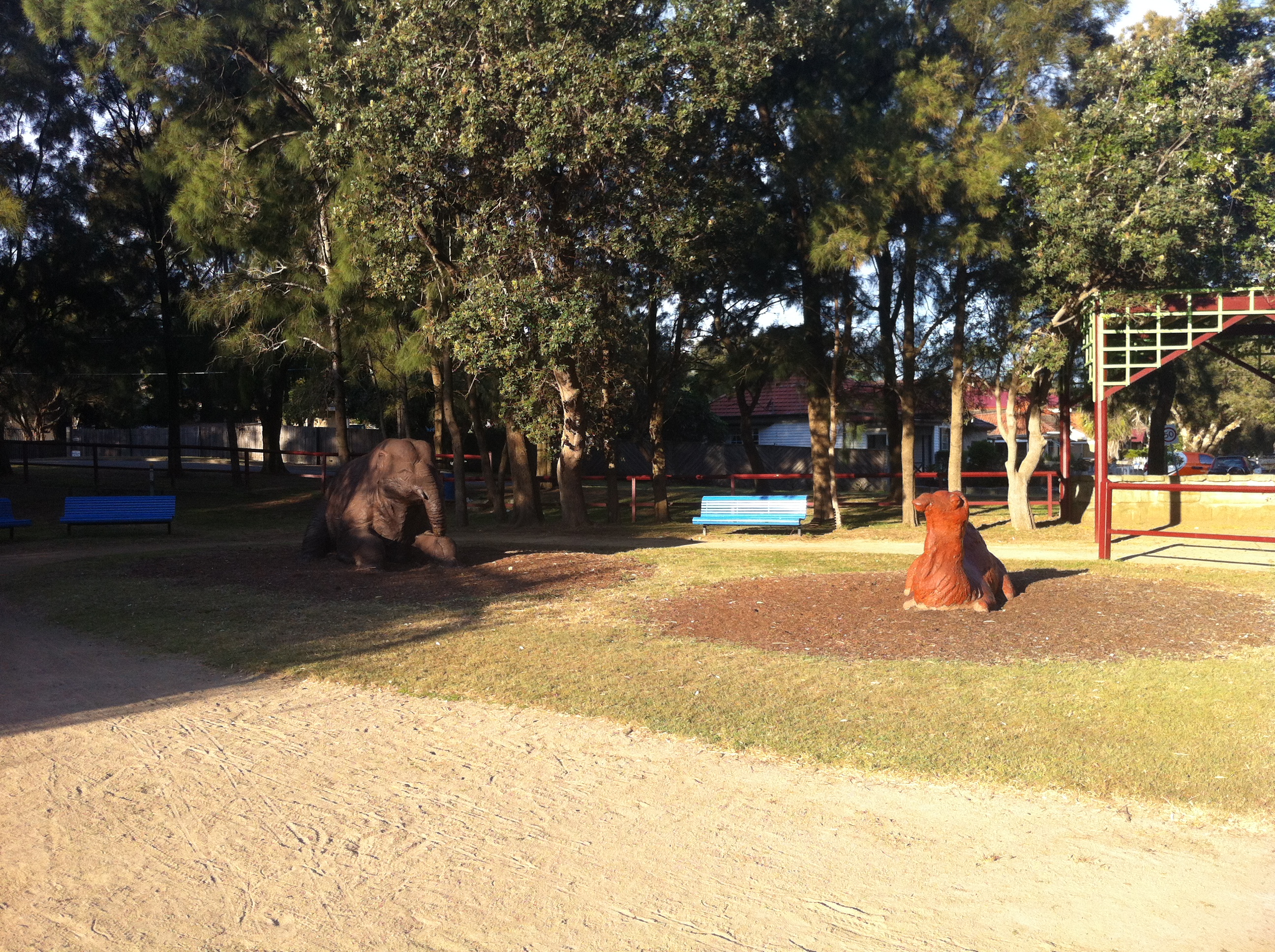
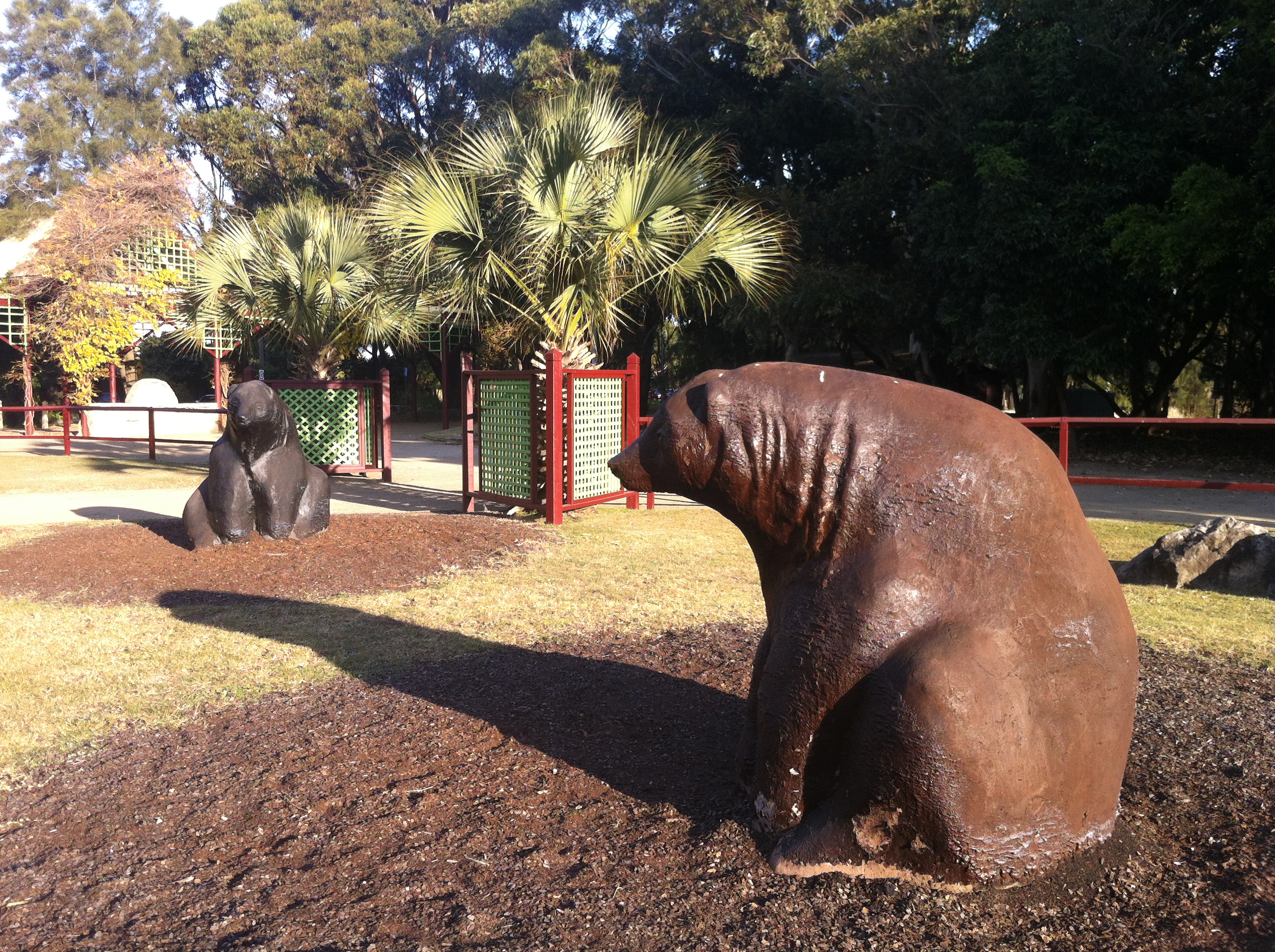
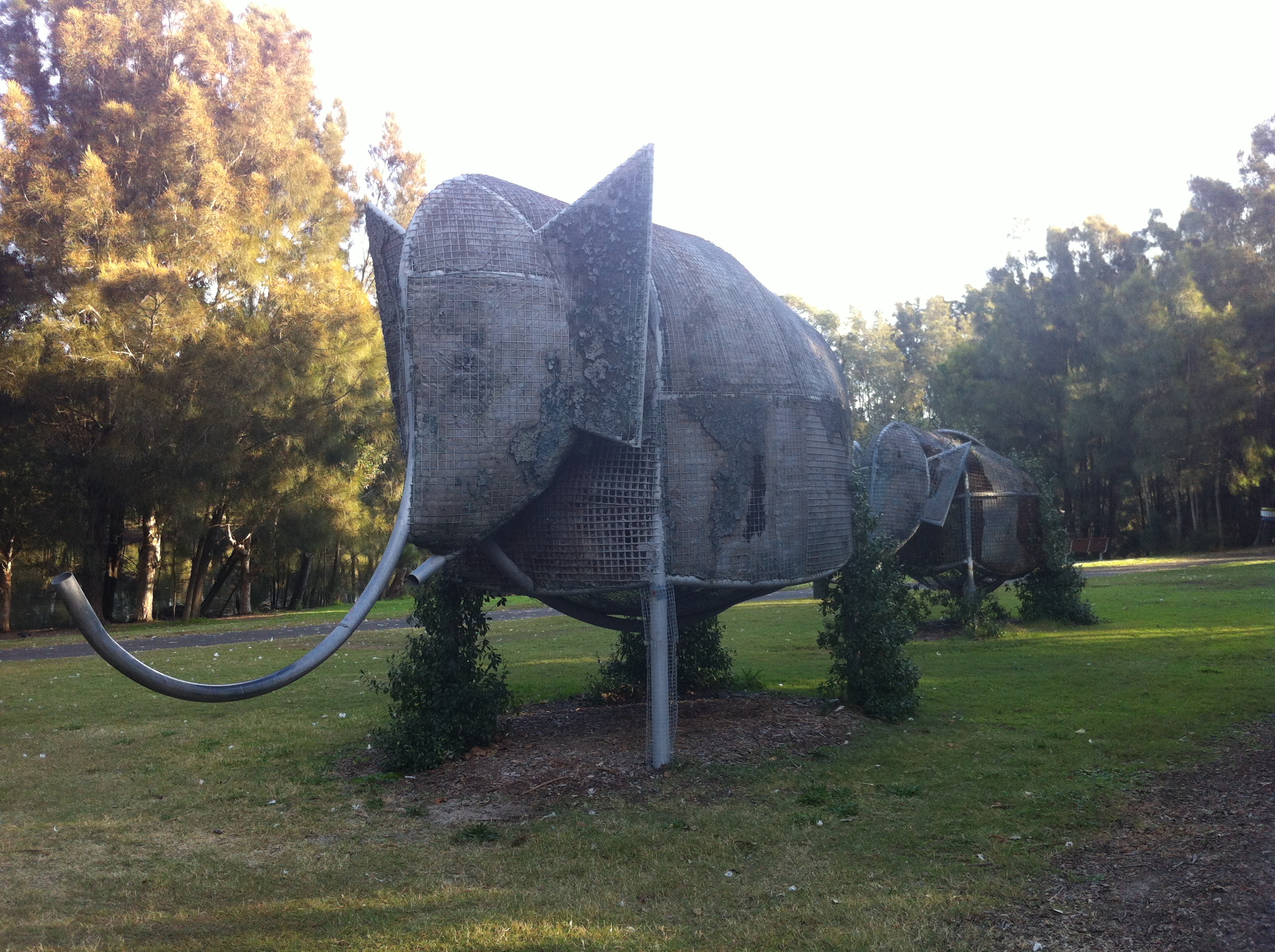
The park was entirely restored and upgraded for the Bicentenary in 1988, and the effort’s corporate sponsors were immortalised in concrete at the east end of the park.
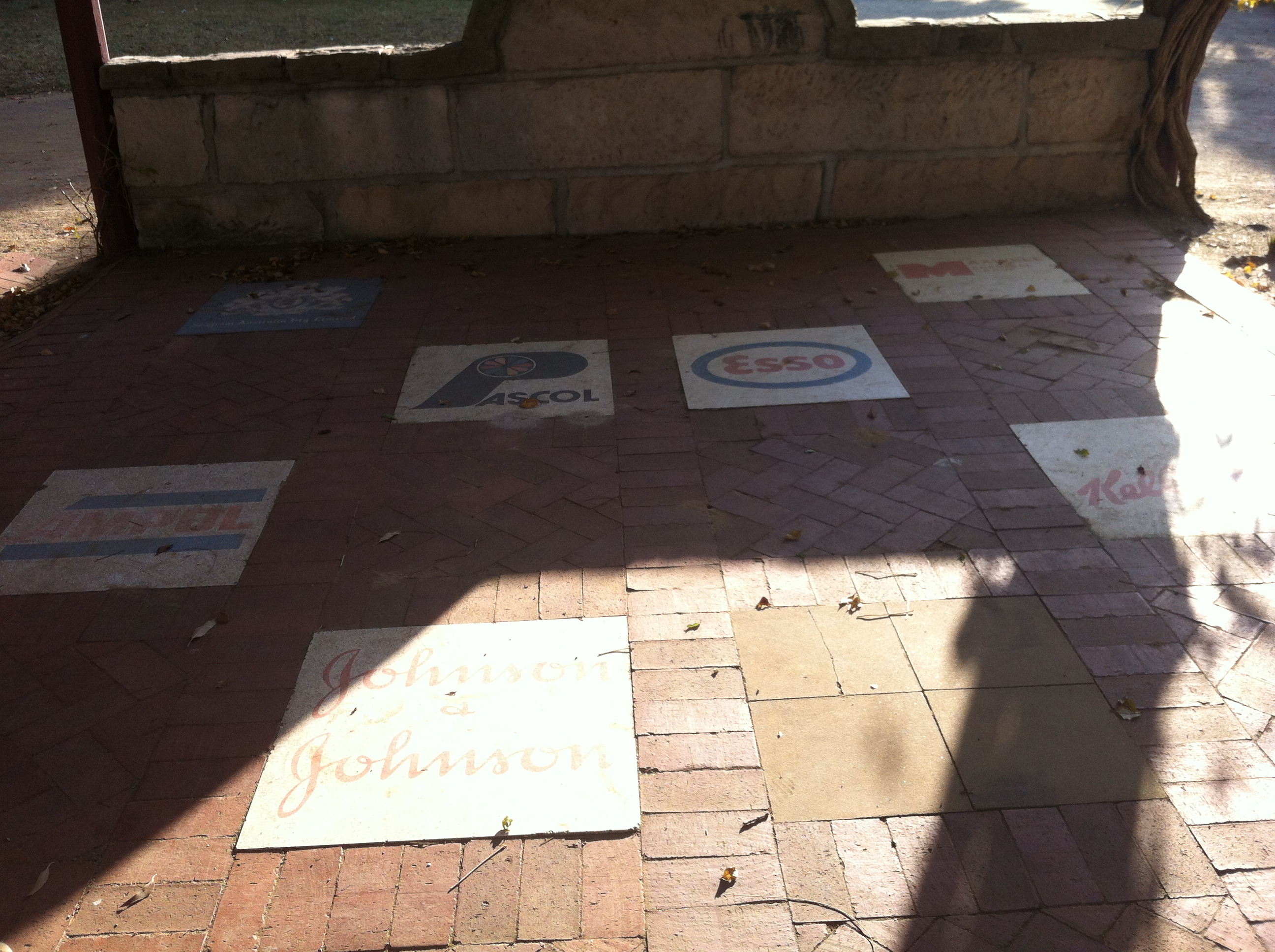
It’s interesting to note just how few of these brand names are widely visible today. Ampol and Esso were both absorbed by their parent companies, proving once again that no one is safe from the Big Oil Killuminati. Maxwell Chemical Corporation, which is just the kind of name you want to see emblazoned on your pleasure garden, has moved offshore. Seagram seems to have disappeared from the corporate environment in New South Wales, at least. Even Pascol Paints has been absorbed by Wattyl, going against all advice you were ever given about mixing paints.
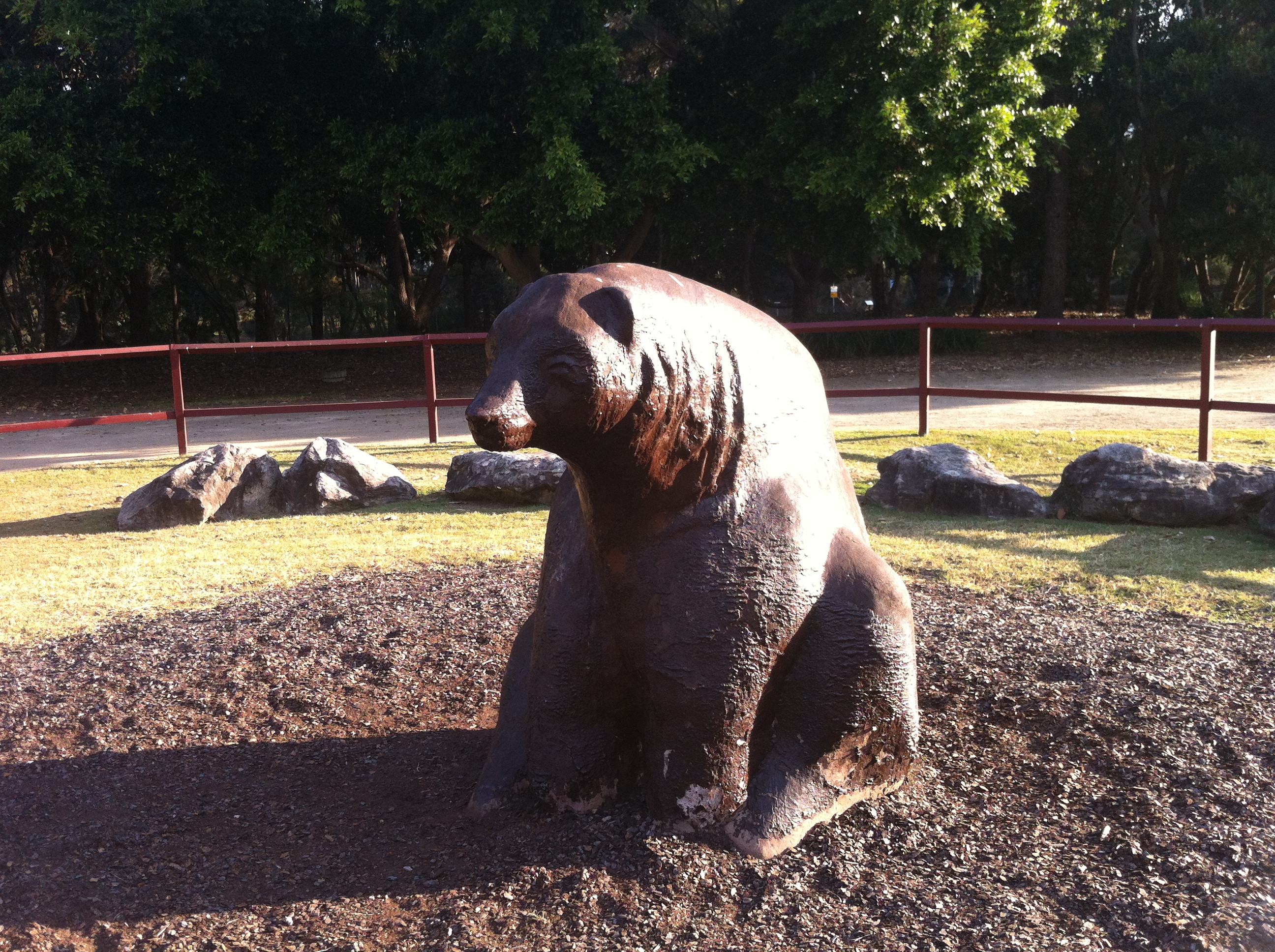
The most striking thing about this place is how secluded it feels. It’s off the main road, but the whole suburb of Botany feels a world away from Sydney as it is. I suppose in that regard, it was the perfect environment for a zoo. The most important feature of the garden today are the series of ponds that form protected wetlands. The whole park sits on land reclaimed from Botany Bay, so some attempt at looking after the marine life there is better than none at all.
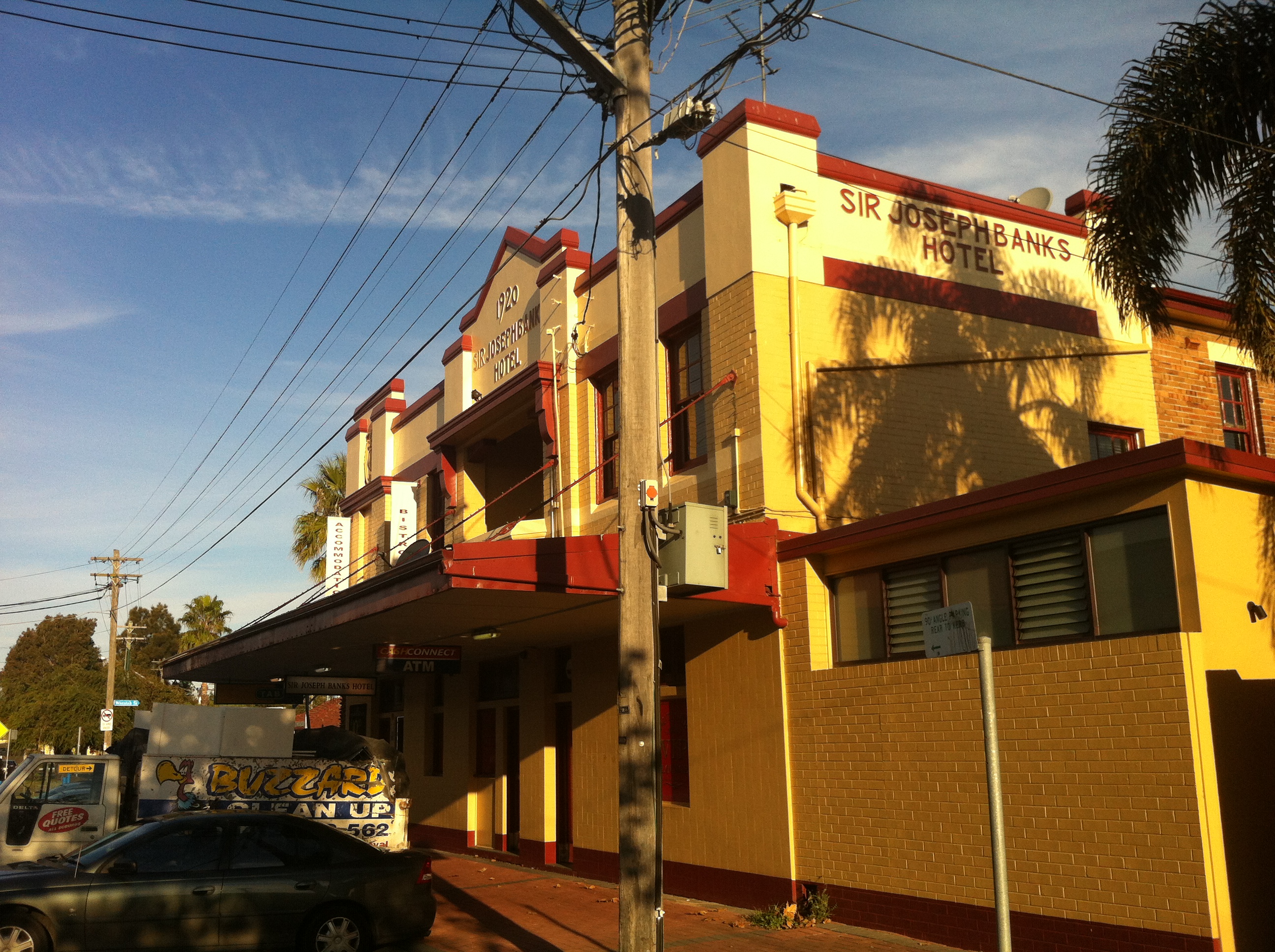
Meanwhile, up at the Sir Joseph Banks Hotel Pub Edition, you’d never know any of it was there. Here, they just sit, and drink, and smoke, and bet, and watch the millionth game of rugby league played since the days of probability vs possibility.
I think about it this way: the goings-on of the Sir Joseph Banks Pub on Botany Road are indicative of all that’s probable, but the Victorian wonderland and colourful history of the Sir Joseph Banks Hotel and Pleasure Gardens are all about what’s possible.
Botany Access Equipment Hire/For Lease – Botany, NSW
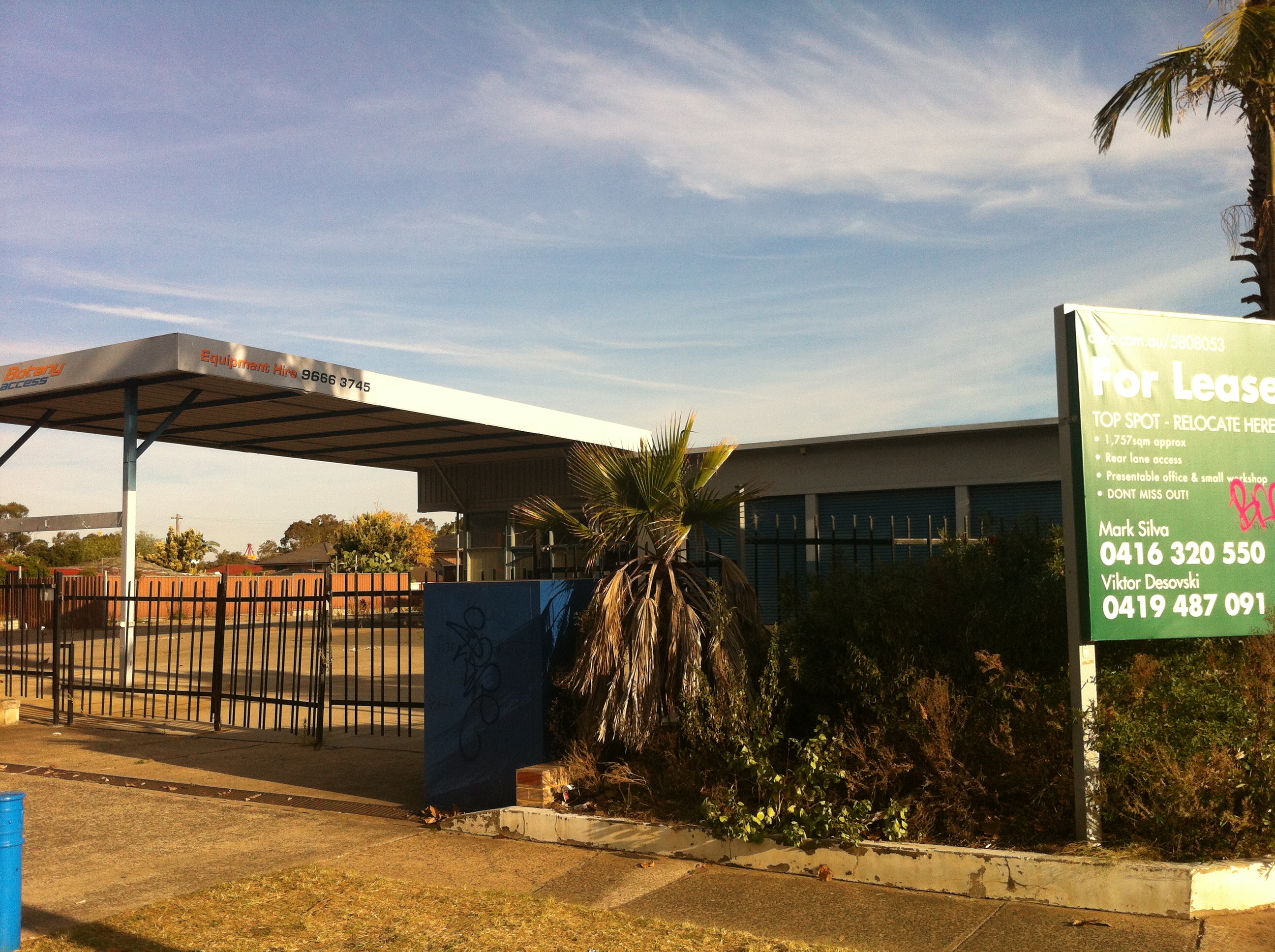
Did you ever borrow something from the library or video shop and “accidentally” never return it? Well, this is what happens. Shame on you.
World 4 Kids/Best & Less and The Reject Shop – Bankstown, NSW

Toys R Us was coming. The American toy giant had lingered on the horizon of the Australian retail scene since 1984, when it had first ventured overseas. Now, in 1993, Toys R Us had made its intentions to establish itself in Australia very clear. In a panic, and desperate to beat Toys R Us to the punch, Coles Myer set up their own chain of toy stores that attempted to outdo the American company in every conceivable way; a ‘category killer’. It wasn’t the first time Coles Myer had employed the tactic: in the same year, it had established Officeworks, basing it on the US stationery chain Office Depot. To give you an idea of just how contrived the whole concept was, here’s a 1993 ad preempting the World 4 Kids launch. If you can look past the kid’s stylish fashion, note the cynical overuse of the dinosaur to ride the success of the year’s biggest film.
I can still remember the hype surrounding World 4 Kids at the time of its launch. It was relentless. The Bankstown Square location was enormous, taking up an entire floor. To a kid, it was mind-blowing. They had video games available to try everywhere around the shop. They had aisles – not just a few shelves, like Grace Bros, but aisles – of action figures. They even had a ‘kids entry gate’ as an alternative to the regular entrance. Sure, it was just an archway over a little bridge, but that was for YOU! You weren’t meant to walk in the normal way like the grown-ups! This wasn’t just some toy department of a bigger shop. There was no threat of being dragged off to look at clothes or other boring stuff. It was ALL TOYS.
The launch of World 4 Kids didn’t stop Toys R Us from opening, and the closest store to the Bankstown World 4 Kids was at Hurstville. As expected, the Toys R Us store blew World 4 Kids away: it was two-storey, they had more of everything, and the name explicitly promised toys, rather than merely alluding to them in the case of World 4 Kids, which sounds like it could easily have been one of those lame play centres with the ball rooms.
1993 was about the start of the last big era for toys. By the end of the 90s, video games had eclipsed toys by a wide margin. Also by the end of the 90s, World 4 Kids was a world about to end. The company had bombed hard in the wake of Toys R Us, haemorrhaging millions of dollars each year it was open. By the end, it was losing $36m a year, and cost Coles Myer more than $200m during its short lifespan. World 4 Kids, supposed to be the successor to K-Mart’s dominance of the toy market prior to 1993, closed in 2002, and the brand name was absorbed back into K-Mart, which adopted it as the name of its toy department.
This particular World 4 Kids took over the floorspace of Venture, itself formerly Waltons Department Store (but more on that another time), so by failing miserably, it was only carrying on the strong tradition established by those two brands. Where the one store once took up the entire floor, a chemist, the Reject Shop and Best & Less have taken up residence. Immediately following World 4 Kids’ departure, a JB Hifi was set up in its place, but in a rare move for JB it was closed a few years later. Even Toys R Us is struggling these days, with the Hurstville location having long since been reduced to just one floor.
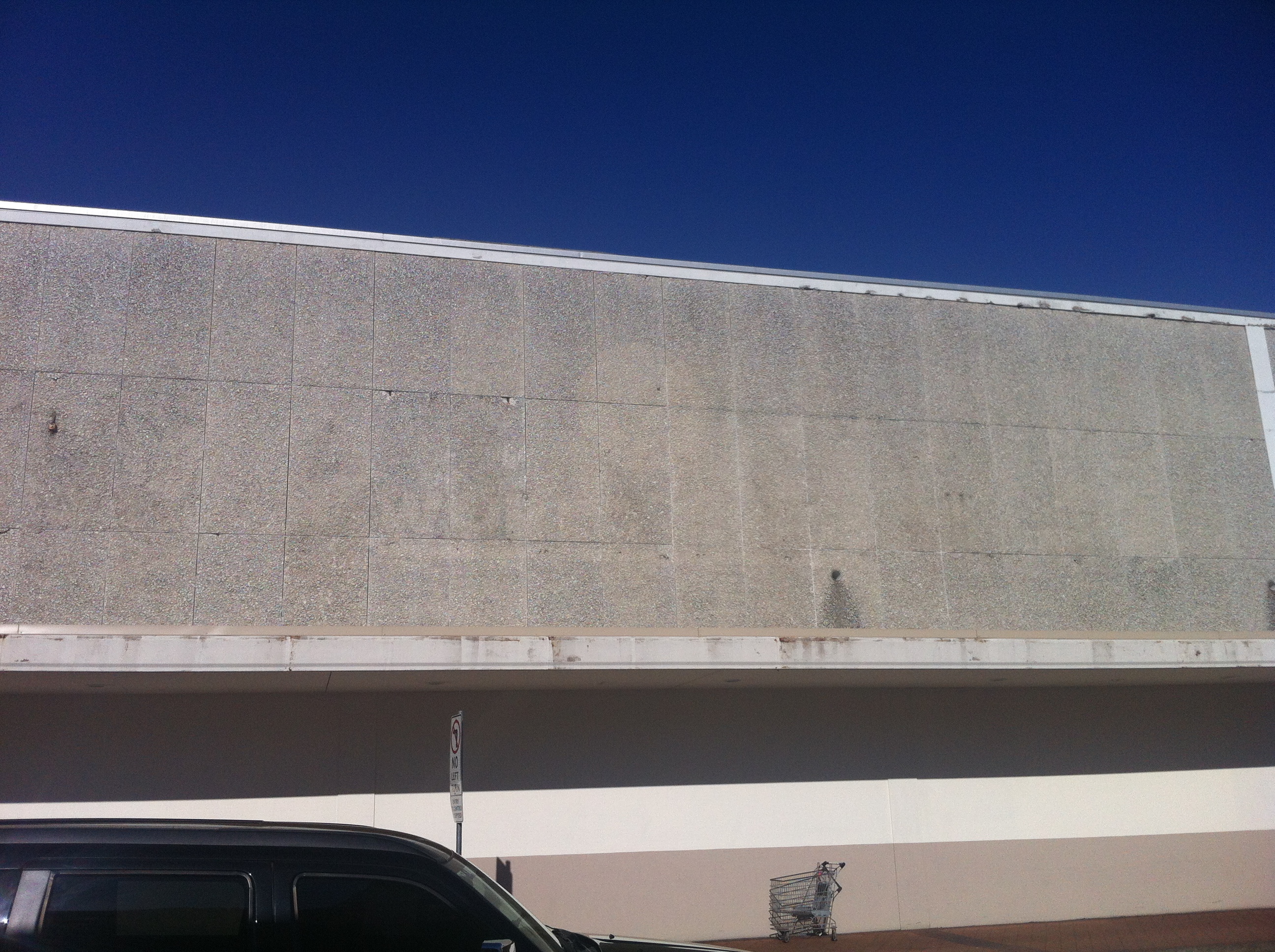
Note the poignant empty trolley.
The only evidence that World 4 Kids, the place that meant the world to so many kids in 1993, was ever a part of Bankstown Square is the faint afterimage of its sign on the outside facade of the building, along the Appian Way. Yesterday’s great hope is now just a stain on the wall. It’s a stark reminder that no matter how personally a store may appeal to you, it’s always business. After all, that’s the way of the World.

 Past/Lives of the Near Future