Abused retail outlet/T.I.M. All Mobile Needs – Tempe, NSW
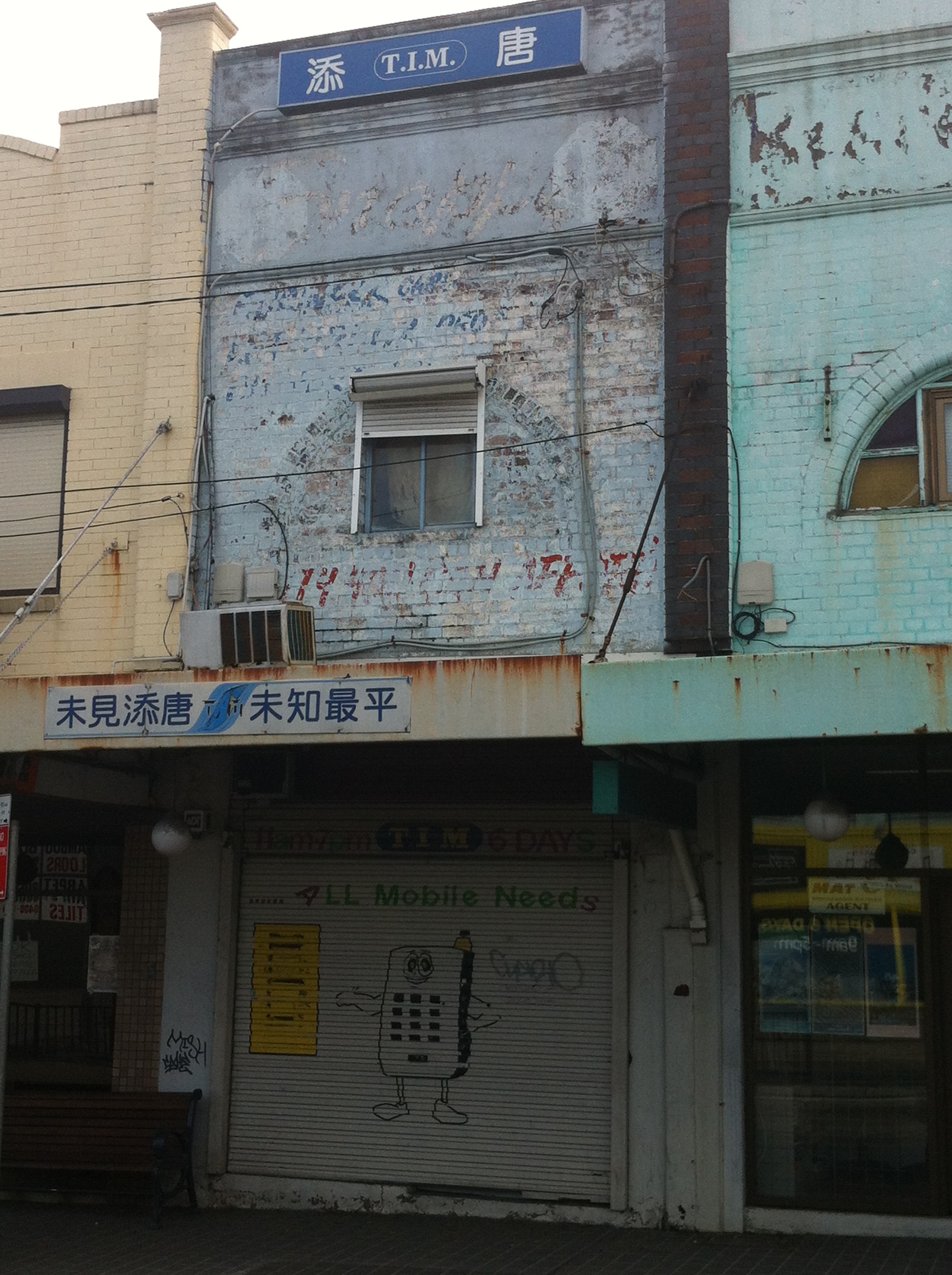
As you can see, this shopfront is a mishmash of previous owners. It’s like every one of them was part dog, such was their rabid desire to leave their mark on the place. First off there’s the faint Snapple logo, suggesting it was once a mixed business. Then bookending that there’s what looks like twin stop signs, the most likely explanation for which is it once sold bargains (perhaps even in its current incarnation), and the signs begged passers-by to ‘STOP!’ and possibly ‘L@@K!’ at them. Looking further down we can see what might have once said ‘cards’, indicating the possible existence of a newsagent. The red letters at the bottom are a bit of a mystery, though – as is the seemingly discarded air conditioner which appears to have fallen off the wall. Whatever the case may be, what’s impossible to ignore is that today the shop is T.I.M. All Mobile Needs.

T.I.M.bo claims to be open six days a week from 11am to 6pm, so I’m guessing I went on the one day it’s closed. Google Street view shows the same closed rollerdoor, so the only explanation is that Google Street View’s car drove past on the same one day three years ago. I think it’s a bit rich to advertise that you provide ALL MOBILE NEEDS while at the same time presenting a mascot who clearly hasn’t a need in the world. Even the rollerdoor handle is strategically placed to satisfy certain needs. Thoughtful.
Bank of New South Wales/Allans Music – Sydney, NSW

This building features an interesting double-shot of 19th century enterprise.
First we have the Bank of New South Wales, established in 1817, making it Australia’s oldest operating company. “But wait,” I hear you saying. “It’s not around today. How could it possibly be Australia’s oldest company?” I’m glad you asked. Between 1850 and 1910, the bank established branches around the country, and also in Fiji and Papua New Guinea (despite Bank of NSW meaning jack to people over there). From 1927 the bank went on a mad spree of acquisitions, buying out the Western Australian Bank and the Australian Bank of Commerce and culminating in a merger with the Commercial Bank of Australia in 1982 giving rise to Westpac. And thus…evil is born.
On the other side, we have Allans Music, which I was surprised to learn was established in Melbourne in 1850. Allans by the turn of the 20th century was the biggest music retailer in the southern hemisphere (but where was the competition?). In the 70s, Brashs decided it wanted a piece of the Allans action and acquired the company. When Brashs went under in the late 90s, Allans emerged unscathed and under new ownership. It merged with Billy Hyde Music in 2010 to become a kind of super music conglomerate, the sort that’ll be feeding us through tubes and stealing our vitality 200 years from now. Incidentally, the building to the right of Allans was the Greater Union Pitt Centre, and beside that lived a Brashs for many years. Even the Greater Union became a cut-price CD shop for a time after its closure, and the Galeries Victoria’s JB Hifi sits across the street. This section of Pitt Street has never managed to shake its musical heritage.
Bookers Night Spot/For Lease – Surry Hills, NSW
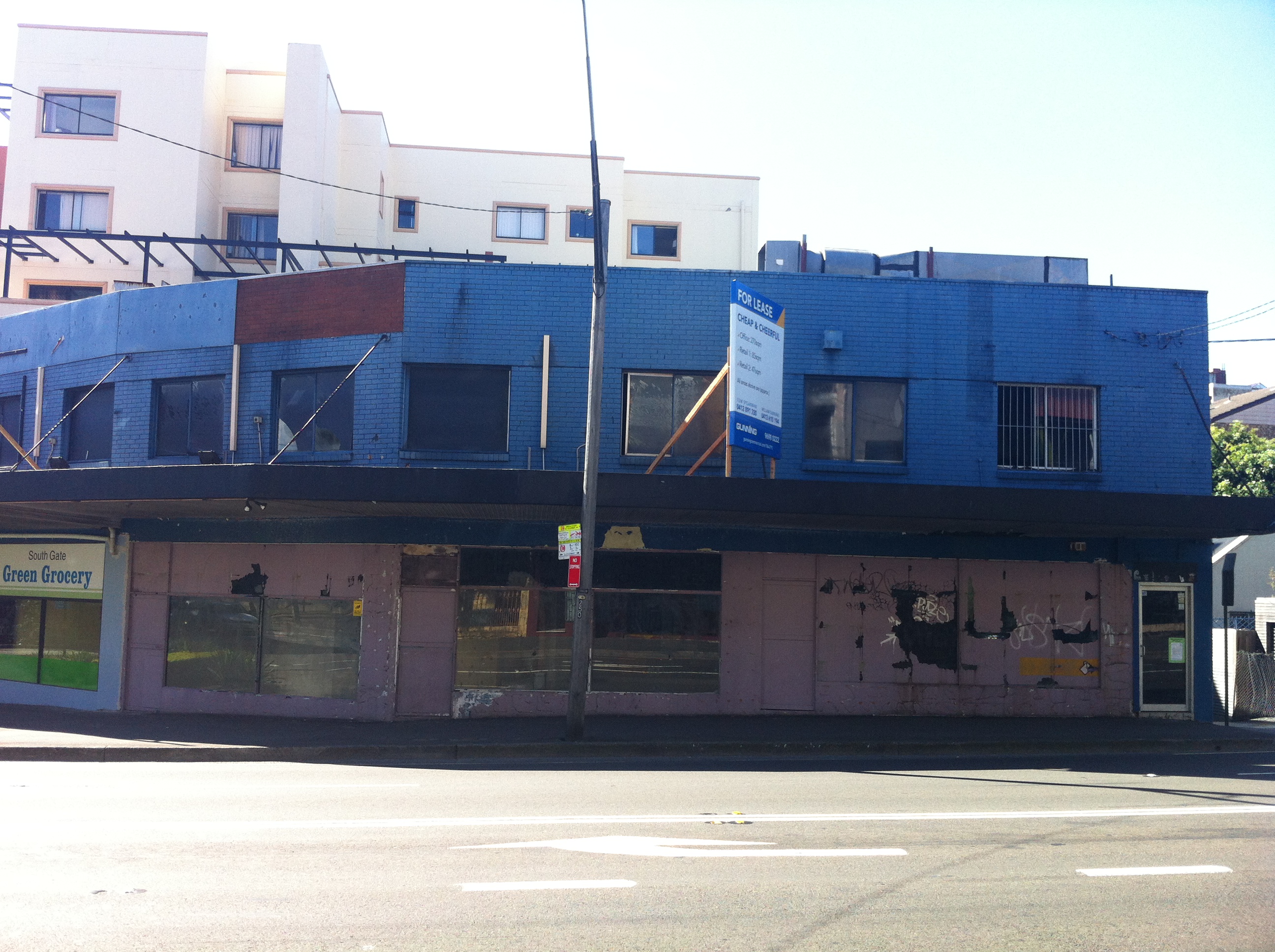
Perched at the intersection of Chalmers and Cleveland Streets are a variety of notable buildings: the old Australia Post headquarters; the colonial era Cleveland Street Public School; that ancient backpackers hostel. The odd one out is this building, which has sat unused and for lease until very recently, when part of it was turned into a greengrocer. The other part still sits dormant, waiting for another chance at life.

Around the side we can see that it was for sale long ago. So old is the sale that the sold stickers have become partially transparent. The sign to the right has been painted over along with the rest of the building, and still myriad signs and lettering can be seen underneath the coat, some of which seems to suggest the place had a restaurant…but that’s not the lettering we’re interested in.
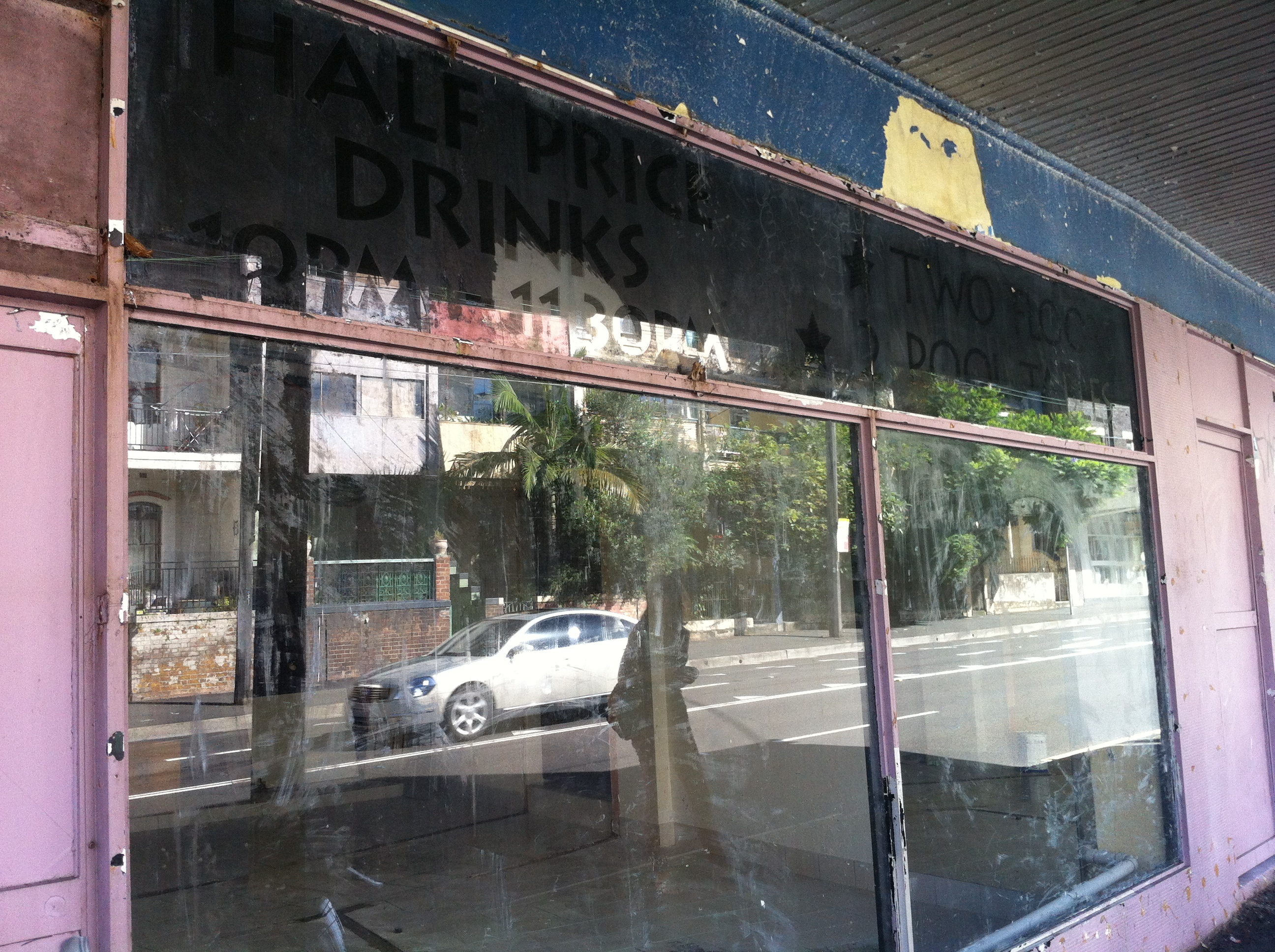
At some point in the past, this place was Bookers [sic] Night Spot, the only pub or club I could find attributed to this address. Half price drinks were on sale between 10pm-11:30pm. It featured two floors, and pool tables. Not the most dynamic attributes a night spot could have, but aside from the weak offerings it’s unclear when or why the club closed. The competition from the pubs down near Central Station or up at Crown Street might have played a part, and that the area is much more gentrified than ever. It’s easy to imagine this may have been yet another corner pub once, serving thirsty shift workers from Australia Post, or a tram stop on what was once a busy corner for the light rail.
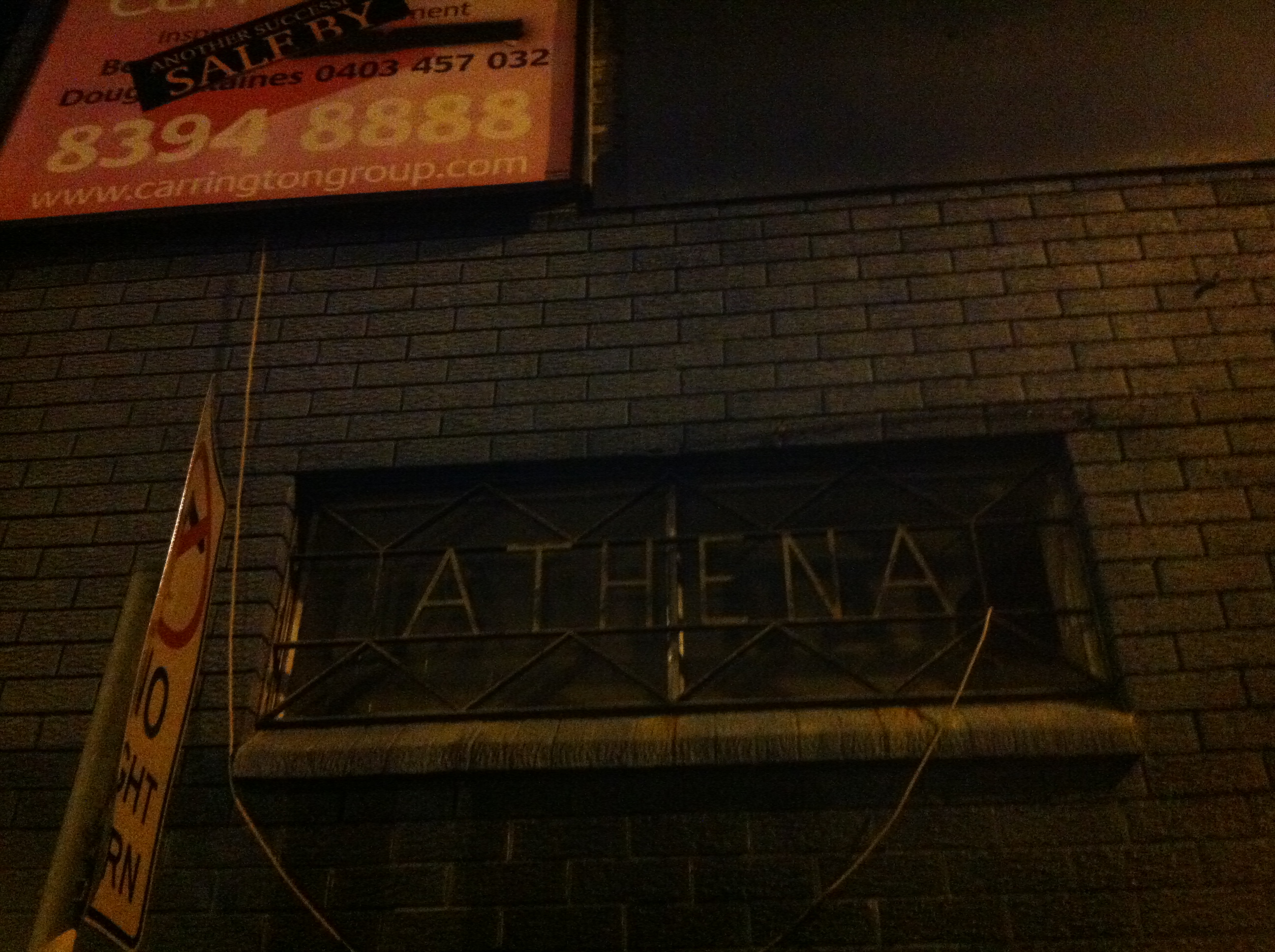
ATHENIAN UPDATE: As reader Luke says, this location was once the Athena Greek nightclub/Restaurant. The only remnant of this today is the ironwork affixed over the east window:
Old Advertising – Belmore, NSW
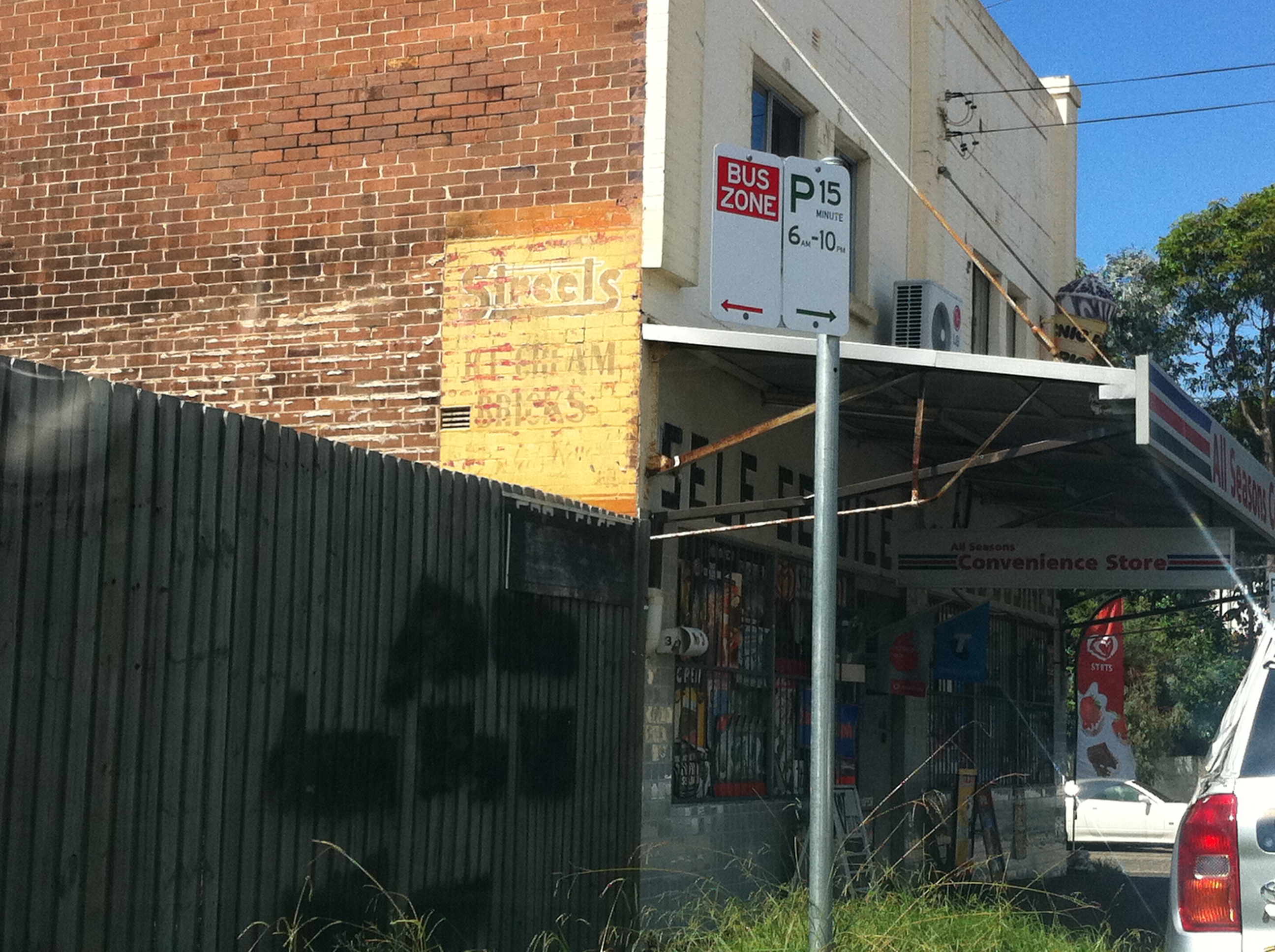
Ice cream bricks sound like things you’d get in a Lego set.
Rex Simpson Clothes/OPSM & Josephs Shoes – Sydney, NSW
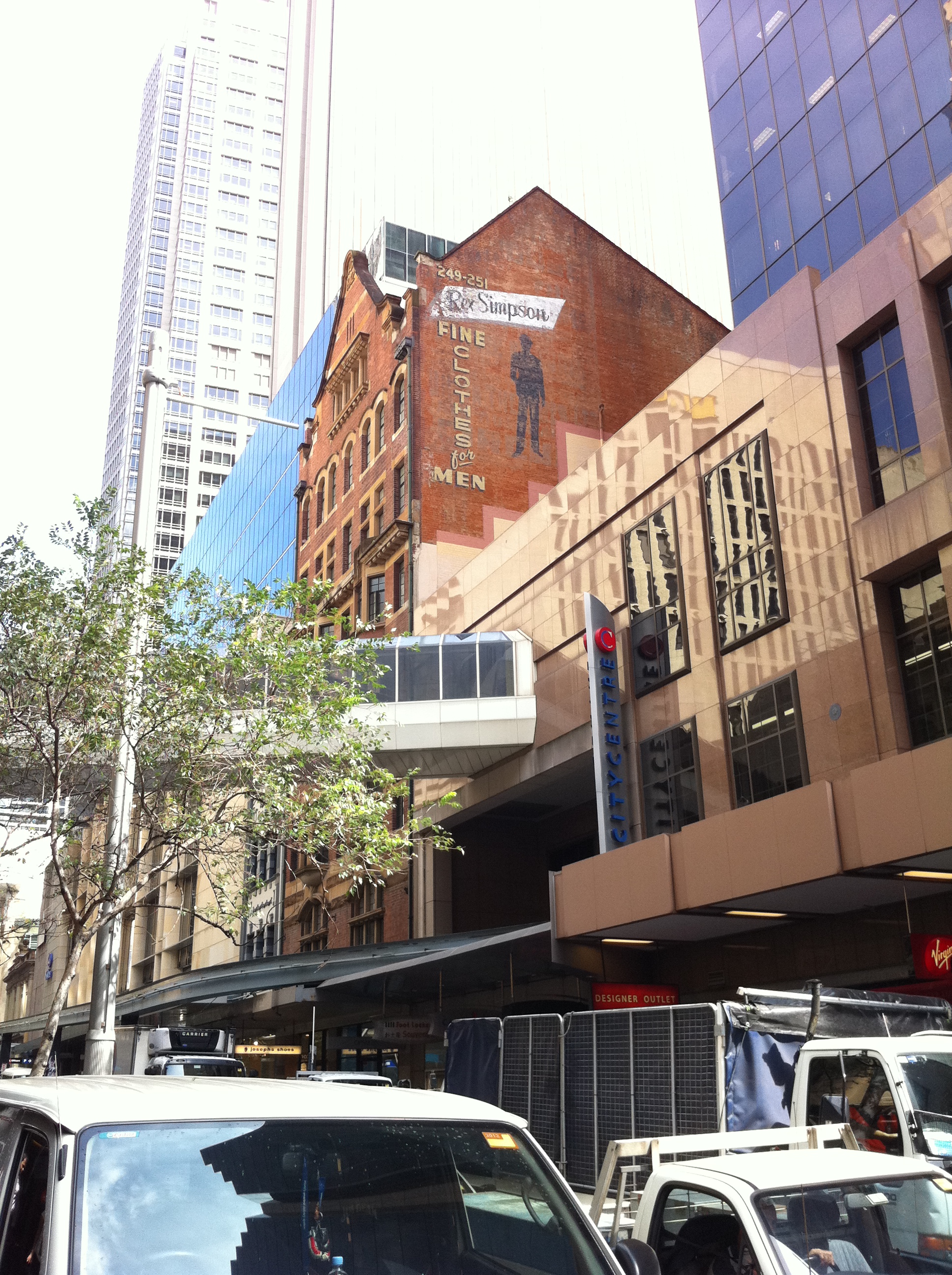
Rex (the kind of name we’d mock these days for being pretentious) Simpson burst onto the men’s fashion scene in the 1950s with one goal: to swathe men in fine clothes. He must have done well, because this building is named Simpson House for his efforts.
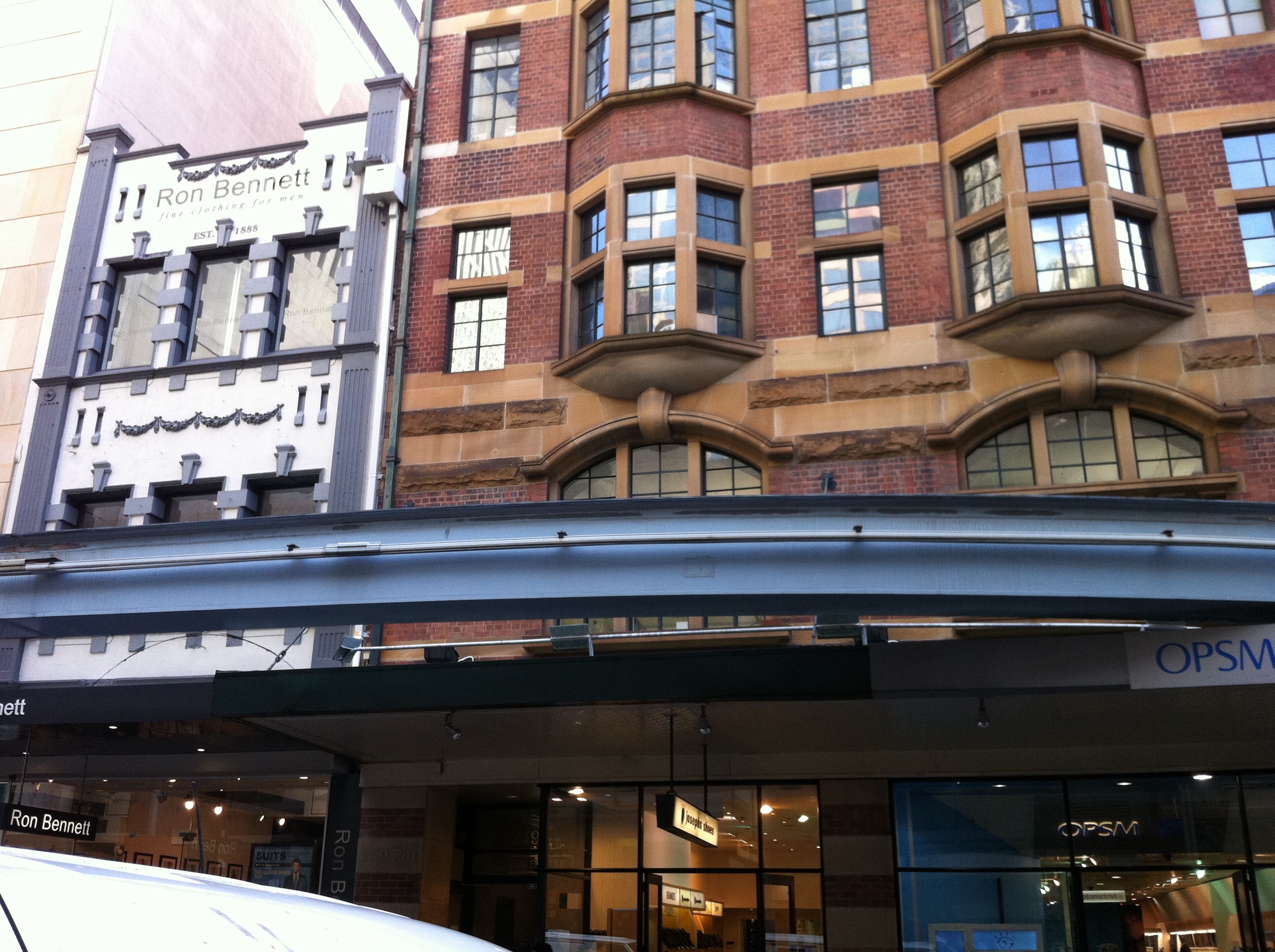
As with so many big stores from the olden days, it’s taken two modern shops to replace it; in this case, Josephs [sic] Shoes and OPSM. The real interesting point to note here is neighbour Ron Bennett’s tagline: “Fine Clothing for Men”. What a thief! That said, Ron’s been making men look fine since 1888, so it’s more likely that Rex pinched the line for his own bigger shop. That’s why he’s the king…
TRUTHFUL UPDATE: Reader Ruth has written in to reveal the heretofore unknown true story of Rex Simpson’s ownership. Writes Ruth, “Rex Simpson wasn’t actually the store’s owner; the store was owned by my grandfather, John Bell. l remember visiting at the shop many times in the late 1960s when l was in my late teens. He also owned the factory that made the clothes.”
I guess John Bell Clothes didn’t sound quite as dynamic. Thanks, Ruth!

 Past/Lives of the Near Future