Newsagency/LP & Company Home Products – Campsie, NSW

Beamish Street (above, top left to bottom right) cuts across Campsie like a knife wound, only instead of blood, a spurt of discount stores, fresh produce markets and newsagents has erupted into the populace.
A news-hungry populace. Seriously, there are no fewer than three newsagents active in a very small area here, with at least three more recently departed ones I can recall.
But is it the news, or is it something else these shops provide that has kept them in the Beamish mix when so many others (including McDonald’s – twice!) have dropped out?

Sometimes, my job here is made very easy. The Old Tab Cafe suggests another rarity: the departure of a TAB. Don’t worry, there are still at least three TABs within walking distance of this cafe, but what’s beginning to form is a picture of a suburb that loved to have a punt.
As many nostalgia websites love to remind you, Australia’s suburban demographics are in a constant state of flux. What was is very different to what is, and the habits of the old don’t necessarily appeal to the new.
Campsie is a great example. Originally so Anglo it features an Anglo Road, the suburb is now home to a large Chinese population – and the shops to match.

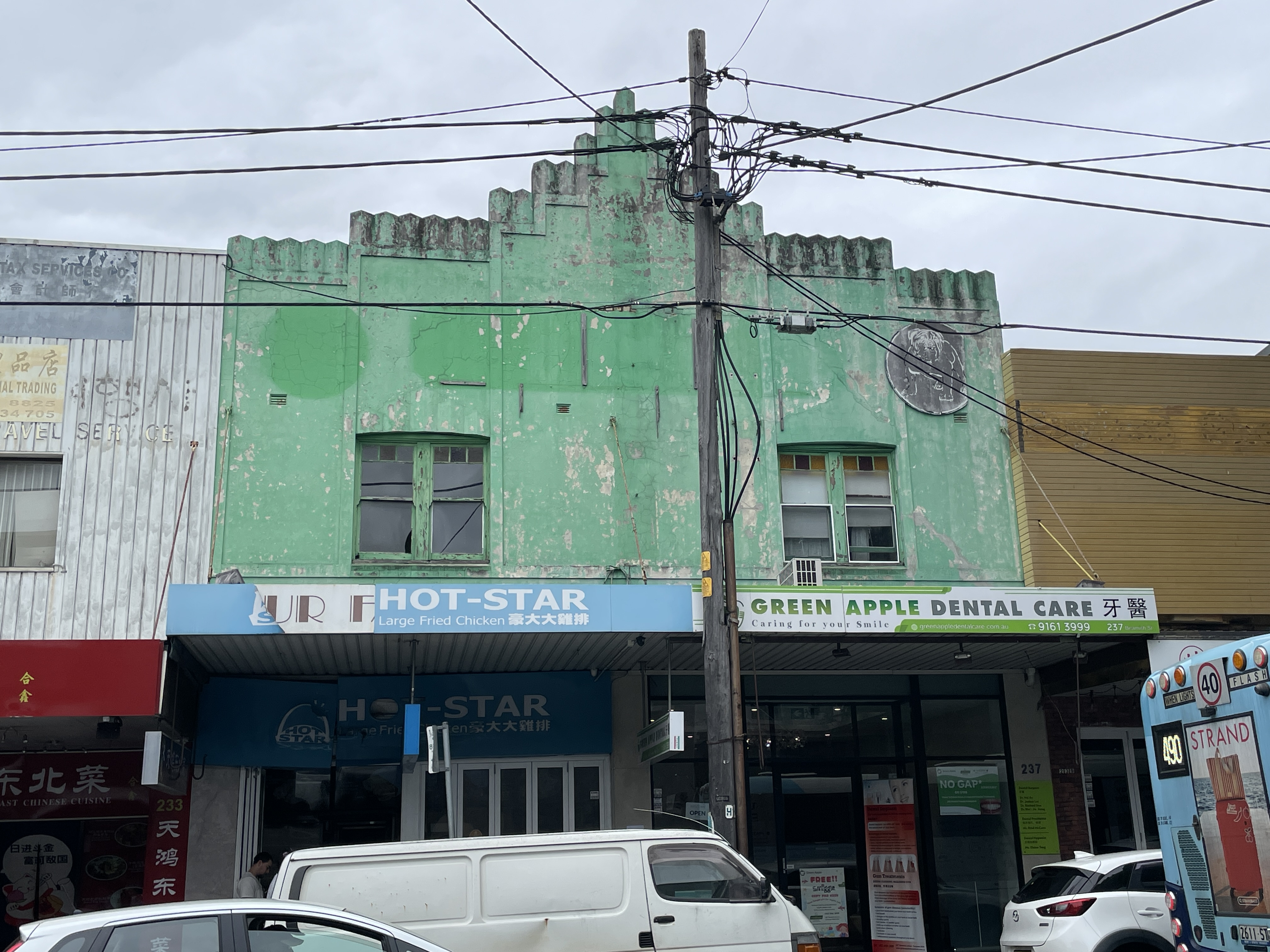
This former chemist at 235 Beamish tells you all you need to know. In are fried chicken and a dentist (what a combo); out is the passion for the Canterbury-Bankstown Bulldogs, the area’s beloved NRL team. All that remains to remind us of a more supportive era is a solitary Bulldogs insignia, ravaged by time and weather.
The appeal of Da Doggies may have burned brighter in Campsie’s TAB days, but Chinese gambling habits don’t necessarily align with those of yesterday’s Anglo Campsians. Mahjong and pokies have taken the lead as the preferred way of chasing that elusive jackpot over sports betting or that other friend of the working class, the lottery.
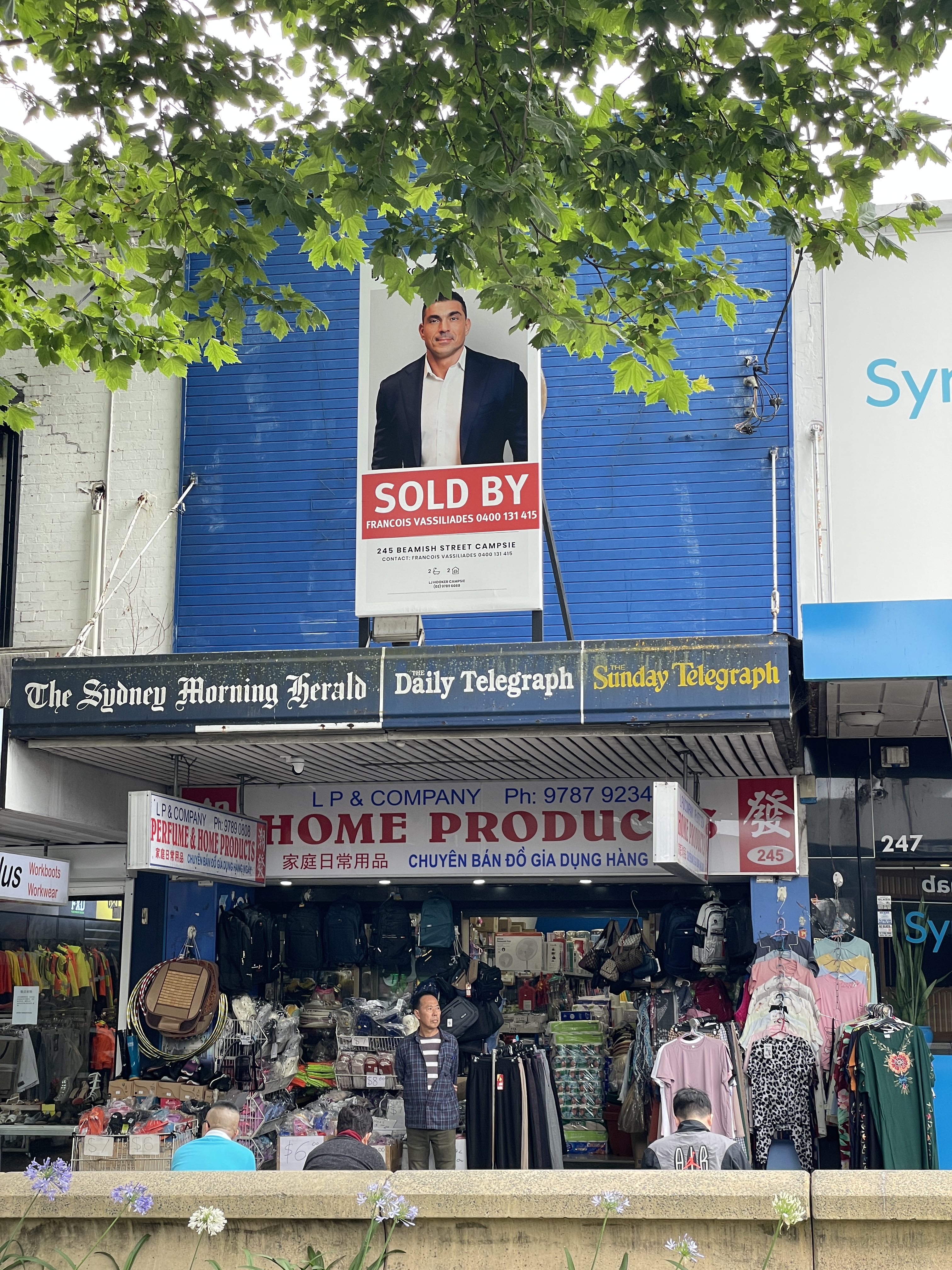
Which brings us to the star of today’s show, 245 Beamish Street.

This site was once home of a Mr John Foreman Watson, who may well have backed winners and losers during his time on earth, which ended right here in October 1954. Eerily, it could be that the paper containing Watson’s obituary was sold at the very place he checked out.
Because here too stood one of Campsie’s many newsagencies (this one with the very no-frills moniker “Newsagency”), now replaced by LP & Company Home Products. Not a Sydney Morning Herald or lotto ball in sight these days.
Or is there?

Shift your perspective and you’ll find Francois Vassiliades did his best to hide the standout feature of this former sweeps station, which now peeks out from behind the ‘sold’ sign.
The Big Lotto Ball’s placement on the shopfront is an instant and arguably unwelcome reminder of a time when the promise of a big win towered over current affairs, and jackpots and bulldogs stood side-by-side just out of reach of the common man.
Paragon No. 1 Theatre/Canterbury Leagues Club – Belmore, NSW
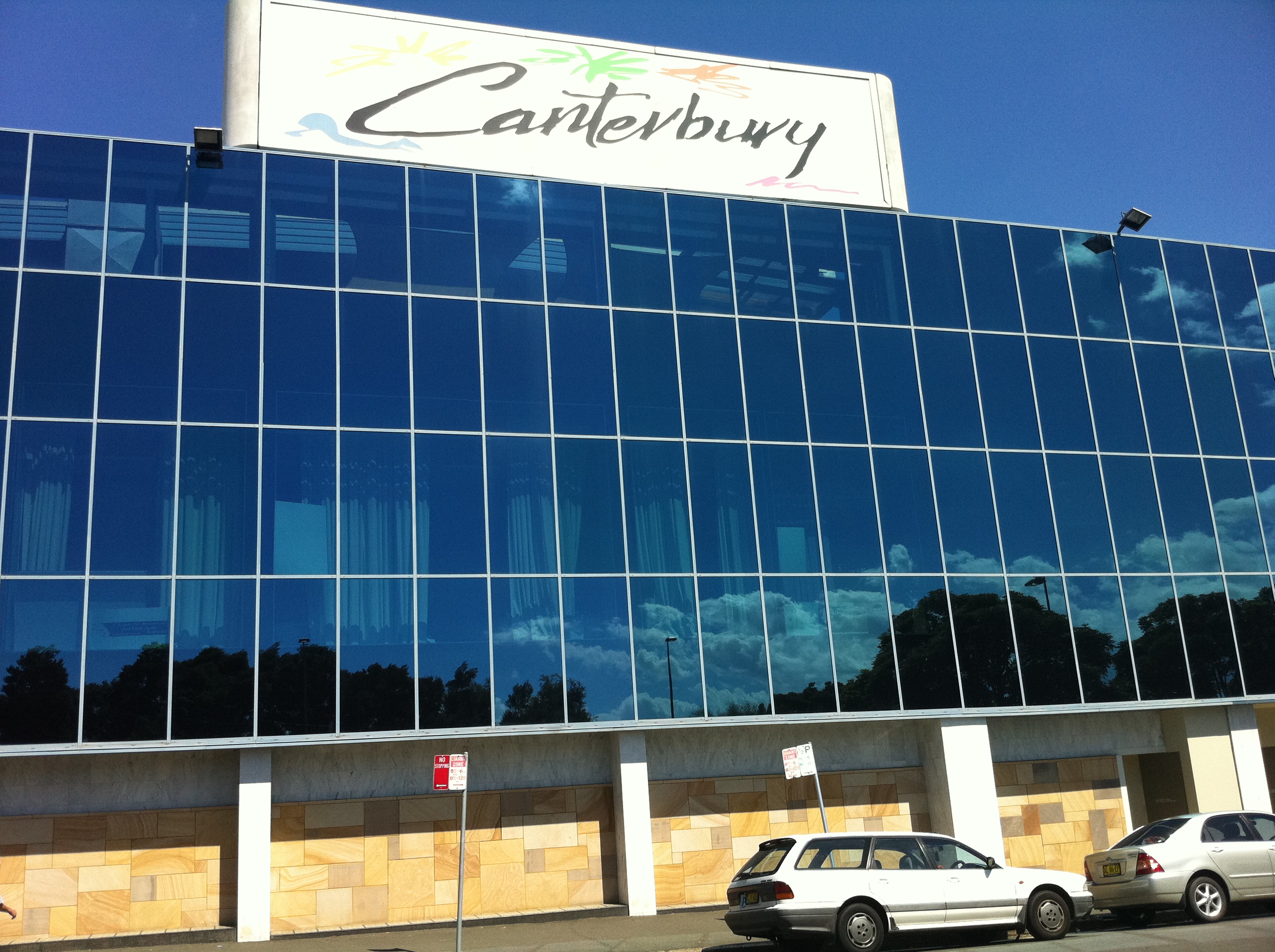
Opening in 1923 and closing in November 1958, the Paragon No. 1 Theatre had a longer life than its twin.

Paragon No. 1 Theatre, 1958. Courtesy Barry Sharp and City of Canterbury Local History Photograph Collection
Starting life as a picture theatre serving the undemanding entertainment needs of Belmore, the Paragon replaced a shed that stood on the Bridge Road site previously. Was the shed the suburb’s previous entertainment hub? Who knows. The Paragon No. 2 opened further up the road in 1928, and throughout the 30s and 40s, business was good.
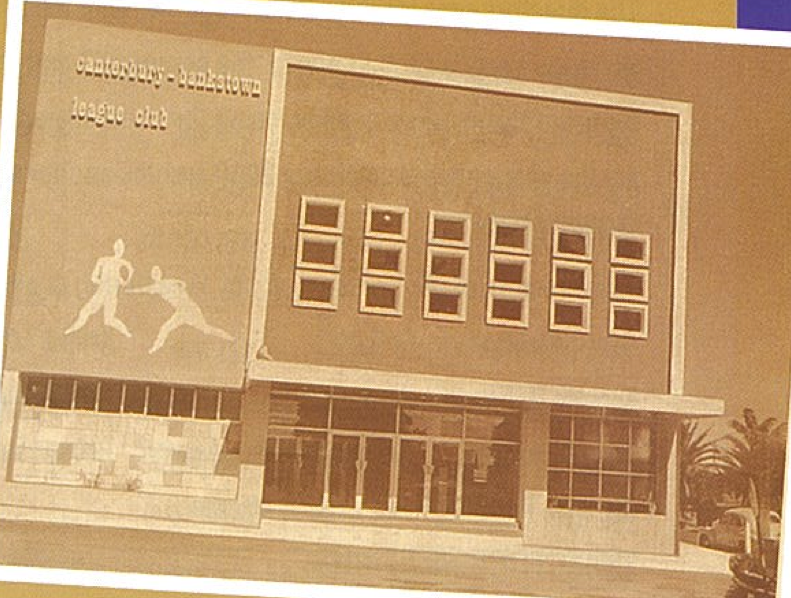
Canterbury-Bankstown League Club, 1960. Image courtesy Canterbury League Club.
The Canterbury-Bankstown Bulldogs rugby league team had been formed in 1935, and as early as 1939 the club was holding its annual meetings at the Paragon Theatre. The Paragon staff must have slighted the club somehow, because what goes around comes around. In 1957, the Canterbury-Bankstown League Club was formed to support the football club, and took up residency in a reconditioned naval hut built by club volunteers in nearby Collins Street.
By 1958, the Paragon was floundering, struggling against the introduction of TV and a decline in suburban cinemas. Meanwhile, the Canterbury-Bankstown Leagues Club was growing rapidly, and had already outgrown the naval hut. The club bought out the Paragon, and by 1960 had converted it into the spiffy new club premises seen above.
UPDATE: Courtesy of reader Tony, we’ve now got a look at the brochure handed out at the grand opening of the rejigged Leagues Club in 1960. Big thanks, Tony!

As opposed to the unofficial opening, I’m guessing.
Incidentally, Mr. Frank Stewart, M. H. R., was a World War II veteran and ex-first grade Bulldog who went on to become the Minister for Tourism and Recreation in the Whitlam Government. It was Stewart who leaked info to the Federal Opposition regarding the Loans Affair, which ‘kicked off’ (heh) the chain of events that eventually brought down the Whitlam Government, but he also played a crucial part in the establishment of the Australian Institute of Sport. Oh, and he also presided over the opening of the Canterbury Leagues Club, but you knew that already.
It’s easy to imagine that the further growth of the club over the next 50 years into the behemoth it is today is indicative of the growing enthusiasm in the suburbs for RSL and Leagues clubs, which provided myriad entertainment options the Paragon could only have dreamed of. Realistically, the growth is probably also indicative of pokie profits.
The idea of a suburban cinema now seems quaint in comparison. In honour of its fallen homie, today’s Canterbury League Club features a ballroom named the Paragon Room, and there’s a Paragon Lane that runs beside the Club. No tributes to that naval hut, though.
A HUGE thanks to Lea Thomas at the Canterbury League Club for her generosity and assistance!

 Past/Lives of the Near Future